Five Questions to Ask Your Election Candidate (English Version)

This is the English version of the flyer circulated a little before the last general elections. As mentioned, it got results, but was a little late in the campaign.


IGNUS-PAHAL
The one who fights for children’s rights!                         Is the one who will get our vote!
Five Questions On Our Children’s Rights
This election may affect your children.  Especially if your would-be representative in legislative assembly keeps the following in mind.
·       Education – good / quality education – is everyone’s right. Especially after the RTE, education in every government school should be such that everyone finds it good. But even very poor parents are removing their children from government schools and making sacrifices to send their children to private schools.
Ask your would-be representative – Question 1: What will you do to ensure appropriate and quality education in government schools?
·       Teachers’ salaries have gone up. They now get training from time to time to enable good education for children. There is provision for mid-day-meals, school uniforms, play equipment, learning material – all free. But there is demotivation among teachers. They feel neglected. They feel as if they are not being respected.
Ask your would-be representative – Question 2: What will you do so that teachers take interest in their work and are committed to the good education of their children?
·       According to RTE the responsibility of running/managing the schools will now be with community and panchayats. But the community and the panchayats feel: how can we give any advice to the school? They do not find themselves capable of advising / supporting schools. And they feel this is not even their work.
Ask your would-be representative – Question 3: What will you do to enable the active involvement of community and panchayats in improving education in our schools?
·       Community and parents both expect that education will ensure children’s development as well as employment. But now people say: All this education is going to lead only to unemployment, so it is better that the child be engaged in some wage-earning work right away.
Ask your would-be representative – Question 4: What will you do so that every member of the community is aware and committed towards the education of their children?
·       If we look at the money spent on education, most of it is used for salries, infrastructure and maintenance. Crores of rupees are spent every year on this. Even then our schools and education offices look dirty and disorganized compared to private institutions. And the people responsible for improving education for children cannot even be heard talking about it.
Ask your would-be representative – Question 5: What will you do so that government schools and education offices look attractive? So that people in the system not only think of children’s improvement but also do what is needed?
Your views will have an impact, won’t they? But only if you raise these questions! Give your vote only if you get an answer! So go ahead, ask questions, get others to ask, and let us know!!

Rajya Sabha to form an informal group of MPs to discuss challenges posed by social media- Vice President

The Vice President, Shri M. Venkaiah Naidu today advised media to provide more coverage to the substantive work being done by the parliament rather than only focusing on sensational remarks or disruptive behavior by some members.

Presenting the first ‘TVR Shenoy Award for Excellence in Parliamentary Journalism’ to veteran political journalist Shri Vinod Sharma, Shri Naidu called the press as the extension of parliament as it holds the elected representatives accountable to the people whom they represent.

The Vice President called the parliamentary committees as a beautiful system within our parliamentary system. All members discuss and debate there constructively as there is no media glare, he said.

However, Shri Naidu expressed concern that the Chairman of the several parliamentary standing committees now complain of only one third of the members attending the meetings on an average. This is a worrying trend, he said. He also said that he is planning to write to all political parties regarding this.

The Vice President called the role of a parliamentary journalist of critical importance, as people form their opinions based on the information provided by the press. With this information, they analyze and evaluate the performance of their elected representatives and the government.

Therefore, VP urged the media to not color news with views and stressed the need to maintain objectivity, fairness and accuracy in reporting. “Impartiality and objectivity of press is of supreme importance for a democracy to survive and flourish”, he said.

Quoting Mahatma Gandhi, who described journalism as ‘service’, Shri Naidu expressed concern over politicians and business groups setting up newspapers and TV channels. “This erodes the credibility and core values of journalism”, he observed.

He also called upon media bodies to come up with some sort of self regulation to ensure that credibility and reliability of press remains steadfast.

Highlighting that press fought hard for its freedom, the Vice President called for using this freedom judiciously. He also drew media’s attention towards its responsibility to provide people correct information and educate them on their rights.

Further, Shri Naidu appealed to media to demystify parliament’s procedures and work, insisting that “people should be able to understand parliament’s functioning in easy and friendly language”. This will inspire them to become active stakeholders in the political processes, he opined.

Talking about the growing volume of parliamentary data, the Vice President felt a need to invest more in creating infrastructure, tools, capacity and skills for ‘data smart’ journalists.

“A good data journalist can help the citizens better understand the institution of parliament”, he said, adding that this may also improve the output of MPs as they would become more aware of their performance.

Shri Naidu also advocated for unhindered access to the important information generated by parliament on a day to day basis in a user friendly format.

Calling the people’s ‘right to know’ as a vital component for an informed society, Shri Naidu called for a good working relationship between the parliamentarians and journalists. If their relationship becomes too adversarial or too close, it would undermine the public’s ‘right to know’, he added.

Talking about the impact of social media on the institution of parliament and parliamentarians, VP said that it enables MPs to reach their constituencies directly and is also a good medium for obtaining public feedback.

However, he also cautioned the parliamentarians to be aware of social media’s potential to spread fake news and misinformation. In this regard, he called for the creation of a system of checks and balances to curb the possible misuse of social media by anti social elements.

In this regard, Shri Naidu said that Rajya Sabha will form an informal group of MPs to discuss various challenges posed by social media, such as the spread of pornographic content.

He expressed worry that this trend on social media is misleading the children and posing the biggest challenge to Indian values by devaluing our age old family system.

Appreciating the initiative by Prof. K.V. Thomas Vidyadhanam Trust to institute an award to honour late Shri T.V.R. Shenoy, Vice President said that Shri Shenoy was an illustrious journalist and editor who served the public cause through his writings for five decades.

I also congratulate Shri Vinod Sharma, Political Bureau Chief, Hindustan Times on being conferred first TVR Shenoy Award for Excellence in Parliamentary Journalism.

Shri A.K Antony, former Defence Minister, Prof. K.V. Thomas, Chairman, Trust, Dr. Omcheri NN Pillai, Chairman of Jury and Smt. Sarojam, wife of late Shri TVR Shenoy were among the dignitaries present at the event.

Following is the full text of the speech –

“Dear Shri A.K Antony Ji, former Defence Minister

Priof. K.V. Thomas, Chairman, Trust,

Shri Vinod Sharma, Political Chief of Bureau, Hindustan Times

Dr. Omcheri NN Pillai, Chairman of Jury

Mrs. TVR Shenoy

Ladies and gentlemen,

I am very happy to be among you on this special occasion of presenting the TVR Shenoy Award for Excellence in Parliamentary Journalism.

Friends,

Shri T.V.R. Shenoy was an illustrious journalist and editor who served the public cause through his writings for five decades. A reporter par excellence, he wrote extensively on issues ranging from politics, economy to international affairs and wars.

In early nineties, his investigative journalism led to the expose of several banking and stock market scams including the Harshad Mehta scam.

Shri Shenoy was honored with the Padma Bhushan in 2003 for his services to the nation.

I appreciate the initiative by Prof. K.V. Thomas Vidyadhanam Trust to honour late Shri Shenoy by instituting an award in his name.

I also congratulate Shri Vinod Sharma, Political Bureau Chief, Hindustan Times on being conferred first TVR Shenoy Award for Excellence in Parliamentary Journalism. Shri Sharma is a very familiar face to me as he has been reporting on the parliament for more than 25 years.

Dear friends,

The importance of a parliamentary journalist can not be overemphasized in a parliamentary democracy.

Our parliament debates and discusses various issues of national importance everyday.

It is a place where major policy decisions are taken.

It is the place where governments form and collapse.

It is the source of valuable political ideas and points of view.

And the people as important stakeholders in democratic process have a right to know how parliament is functioning, what it is discussing and debating.

They want to know what their elected representatives are saying or doing.

A parliamentary reporter has crucial responsibility of reporting all of this to the public.

People form their opinions based on this information provided by the press. With this information, they make up their minds whether or not to support a candidate in next election …. They analyze and evaluate the performance of their government.

That is why the role of a parliamentary journalist assumes critical importance in the way he decides which issues to publicise or what angle to give to a new story.  His work and orientation plays an important role in scrutinizing the functioning of the parliament, government and the oppostion.

That is why press is often called as the extension of parliament. It holds the elected representatives accountable to the people whom they represent.

Therefore impartiality and objectivity of press is of supreme importance for a democracy to survive and flourish.

Friends,

Time and again, I have urged the media to not color news with views and stressed the need to maintain objectivity, fairness and accuracy. The neutrality and sanctity of newsrooms should be upheld at all times.

Our Father of Nation, Mahatma Gandhi, who was an eminent journalist is his own right had said that, –

“I realized that the sole aim of journalism should be service. The newspaper press is a great power, but just as an unchained torrent of water submerges whole countryside and devastates crops, even so an uncontrolled pen serves but to destroy. If the control is from without, it proves more poisonous than want of control. It can be profitable only when exercised from within.”

But today we see even many politicians and business groups setting up newspapers and TV channels. With these mediums under their control, the reporting can become distorted. This erodes the credibility and core values of journalism.

Therefore, I feel that media bodies need to come up with some sort of self regulation to ensure that credibility and reliability of press remains steadfast.

Friends,

The cardinal principle of journalism is to present fair, objective, accurate and balanced information to the reader and viewer without journalists assuming the role of the gatekeepers. This is particularly true while reporting on a political controversy. Rather than opining which argument is the strongest, a good political reporter should lays out all the arguments and facts without bias, and let the people take a decision on the relative merits of the arguments.

Dear friends,

Press fought hard for its freedom and this freedom should be used judiciously.  Article 19 (1)(a) of the Constitution guarantees to the citizen, the right to “Freedom of speech and expression”. With regard to parliamentary privileges also, press has full protection as long as reporting is true, without malice and for public good.

However, freedom and responsibility cannot be considered as inseparable. There can not be unfettered freedom without any responsibility.

The media has the onerous responsibility to not only provide unadulterated and correct information, but also educate the people on their rights as well.

Friends,

When it comes to reporting on the parliament, media has one more special responsibility.

It should uncode and demystify parliamentary proceedings and procedures to the larger public. People should be able to understand parliament’s functioning in easy and friendly language.

I appreciate that many news organizations are already doing good work in this direction, specially while reporting the budget, but more needs to be done.

Many parliamentarians do a lot of research and put forth their views in the parliament. This should be covered more extensively rather than only some sensational remarks or disruptive behavior.

This will enable a deeper understanding of the functioning of Indian parliamentary system among the masses inspiring them to become active stakeholders in the political processes shaping the destiny of their lives and the nation.

I suggest that similar efforts need to be made with respect to the growing volume of the parliamentary data.

Friends,

Recently, I saw a new story titled as ‘Rajya Sabha records 90% productivity in first week of winter session’.

This is the power of data.

A good data journalist can help the citizens better understand the institution of parliament. The members of parliament may also become more aware of their performance. The output may improve as a consequence.

Therefore, I feel that there is a need to invest in creating infrastructure, tools, capacity and skills for ‘data smart’ journalists.

At the same time, there should be unhindered access to the important information generated by parliament on a day to day basis in a user friendly format. This would help masses in gaining better understanding of the functioning of Parliament, participation of MPs and various legislative proposals under consideration.

Dear friends,

For a democracy to thrive, it is desirable that there should be a good working relationship between the parliamentarians and journalists.

The media on one hand, communicates parliamentary activities to the citizens, and on the other it also provides valuable feedback on public opinions.

Thus media creates a two-way flow of information which is vital for the healthy functioning of democracy and good governance.

Dear friends,

If this relationship between the parliamentarians and journalists becomes too adversarial or too close, it would undermine the public’s ‘right to know’.

And this ‘right to know’ is a vital component in our quest for an informed society and informed democracy.

This is important for empowerment of our citizens.

But at times it is observed that adjournments and commotion tend to make news rather than substantive debates on important issues.

Therefore, I would urge my friends in media to not focus on sensationalism and ‘bite journalism’ and impartially report the multiplicity of views expressed by Members in the parliament.

Friends,

In the end, I come to the impact of latest technological developments – such as social media – on the institution of parliament and parliamentarians.

It is true that social media has enabled parliamentarians to reach their constituencies directly, bypassing journalists. Social media also provides a good medium for obtaining public feedback.

But, the parliamentarians have to be aware of the pitfalls of the social media which has tremendous scope to spread fake news and misinformation. We need to create a system of checks and balances to curb the possible misuse of social media by anti social elements.

Dear friends,

In the end, I once again congratulate Shri Vinod Sharma for the prestigious award.

Wishing you all the best.

Jai Hind!”

*****

National Conference on PSYCHOLOGICAL CONTRIBUTIONS IN SUSTAINABLE HUMAN DEVELOPMENT IN SPORTS, ORGANIZATIONS & COMMUNITY HEALTH

ABOUT CONFERENCE

l       l      l       l       l       l
Sustainable Human development is development that meets the needs of the present, without compromising the ability of future generations to meet their own needs. In this regards the practice and research in Psychology provides culturally appropriate Psychological Science, Interventions, behavioural approaches and the Environment for Sustainable Human Development in Sports, Organizations and Community Health. This conference provides a critical platform to the ideas and work emerging from for learners, practitioners, educators of Psychology to seek the ways are fostered and Sustainable Human Development within Sports, Organizations and Community Health contexts, through process of knowledge production.
OBJECTIVES OF THE CONFERENCE
l       l      l       l       l       l
*      This conference provides a critical platform to the ideas and work emerging from for learners, practitioners, educators of Psychology to seek the ways are fostered and Sustainable Human Development within Sports, Organizations and Community Health contexts, through process of knowledge production.
*      We are interested in exploring and showcasing scholastics, activism, practice, and basic academic commitment, from around the globe that tries to bring about sustainability, inclusivity, and wellbeing for all through Psychological Contributions.
SIGNIFICANCE AND ADVANTAGES TO WHO ATTEND THE CONFERENCE
l       l      l       l       l       l
The event goes for bringing a broad assortment of Psychology specialists running from standard Psychologists to for the most part abnormal study of mind, behaviourism and so on and moreover put something an excellent highlight at Educating and illuminating psychology specialists with the latest information of marketing methods that can be associated with counter the undervaluation psychology practices face. Psychological contribute to Sustainable Human Development in Sports, Organizations and Community Health, is a generally recent issue. One manner by which psychology is important, is its application to fix a portion of the drop out of unsustainable human development e.g., disaster relief and psychological versatility building in the wake of cataclysmic events realized by man-made environmental change, or strife decrease through peaceful correspondence, injury interventions and harmony building in the wake of contentions between ethnic gatherings or over extraction of assets. Another noteworthy way psychology can be applicable is as an indicator of unsustainable human development. Health is at the focal point of sustainable human development and a general public is unsustainable if its monetary and social frameworks and institutions are compromising mental just as physical health. A diminishing in prosperity, for example, rising rates of pressure related issue, melancholy and suicide, dementias, perpetual insomnia, consideration shortfall and momentary memory issues, all point to unhealthy and in the long haul, unsustainable parts of the earth, particularly for youth 
The Conference is simply the perfect way to deal with place assets into yourself and your occupation. Get inspiration and a fresh viewpoint from the imperativeness of your partners as you submerge yourself in instructive learning sessions drove by a bit of the business\’ most brilliant, most inventive characters who will outfit you with information about the key drivers of fundamental business limits, answers for legitimate challenges, and methods and vital ideas with quantifiable outcomes.
VENUE OF THE CONFERENCE
l       l      l       l       l       l
V. P. S. P. M. S. Arts, Commerce & Science College, Kannad, Hivarkheda – Gautala Road, Tq. Kannad, Dist Aurangabad, Maharashtra, 431103
ABOUT COLLEGE
l       l      l       l       l       l
Welcome to V. P. S. P. M. S. Arts, Science & Commerce College, Kannad. This college is started with the Nobel aim of spreading light of knowledge to the rural hilly economically backward class students of this area. This area has sizable number of tribal students. The college provides quality educations to the socially backward class students. The college has 10 acres of land with beautiful natural ambience. We cater according to the need of students in the era of globalization. The college arranges various programmes and activities for all round personality developments of the students. The college emphasizes on computer education, science & English language. College imparts update knowledge to the students by providing internet facility, library books & magazines. Our college interacts with people from all walks of the life. It has become leading institute imparting education.
ABOUT KANNAD

Kannad city is located in Kannad Taluka, in Aurangabad district of Maharashtra state, India. It is located 56 KM towards North from District head quarters Aurangabad. 

Gautala Autramghat Sanctuary is located within its borders. Gautala Autramghat Sanctuary is a protected area of Maharashtra state, India. It lies in the Satmala and Ajantha hill ranges of the Western Ghats, and administratively is in Aurangabad District and Jalgaon District. The wildlife sanctuary was established in 1986 in an existing reserved forest area. Its name comes the nearby village of Gautala, which was itself named after Gautam Rishi, a Hindu ascetic mentioned in the Ramcharitmanas.

v Pitalkhora Caves located 20 km away from Kannad. The Pitalkhora Caves, in the Satamala range of the Western Ghats of Maharashtra, India, are an ancient Buddhist site consisting of 14 rock-cut cave monuments which date back to the third century BCE, making them one of the earliest examples of rock-cut architecture in India.
v Ellora Caves located 30 km away from Kannad. Ellora is a World Heritage Site located in the Aurangabad district of Maharashtra, India. It is one of the largest rock-cut monastery-temple cave complexes in the world, featuring Buddhist, Hindu and Jain monuments, and artwork, dating from the 600–1000 CE period.
v Grishneshwar Temple, sometimes referred to as the Ghrneshwar or Dhushmeshwar temple, is one of the shrines dedicated to Lord Shiva that is referenced in the Shiva Purana. The word Ghrneshwara means \”lord of compassion\”. The temple is an important pilgrimage site in the Shaiva tradition of Hinduism, which considers it as the last or twelfth Jyotirlinga (linga of light). This pilgrimage site is located in Ellora (also called Verul), less than a kilometer from Ellora Caves. It is about 30 km away from Kannad,
v Ajanta Caves located 98 km away from Kannad. The Ajanta Caves are rock-cut Buddhist cave monuments which date from the 2nd century BCE to about 480 CE in Aurangabad district of Maharashtra state of India. The caves include paintings and rock-cut sculptures described as among the finest surviving examples of ancient Indian art, particularly expressive paintings that present emotion through gesture, pose and form.
HOW TO REACH KANNAD
l       l      l       l       l       l
Kannad town is reachable from Aurangabad and Chalisgaon Rail Way Station. Distance between Aurangabad to Kannad is 56 km by road and Chalisgaon to Kannad is 34 km by road
The convenient and fastest way for people who came through South Central Railway zone i.e. Aurangabad Railway Station may get the MSRTC Bus from the Central Bus Stand Aurangabad to reach Kannad City.  

THEMATIC AREAS

l       l      l       l       l       l


Ø  Sports and Mental Health
Ø  Anxiety or Energy Management
Ø  Attention and Concentration Control (focusing)
Ø  Imagery, Visualization, Self-talk & Mental Practice
Ø  Goal Setting, Team Building
Ø  Time Management/Organization
Ø  Organizational Behaviour
Ø  Personal Management in Organization
Ø  Conflict and Communication in Organizations
Ø  Leadership in Sports, Organizations and Community
Ø  Interpersonal Relationship in Sports, Organizations and Community
Ø  Diversity related to interpersonal relation
Ø  Conflict and Communication in Organizations
Ø  Motivation and human behaviour
Ø  Yoga & Meditation
Ø  Community mental health
Ø  Stressful aspects of sports, community and organizational environments
Ø  Stressful life events in sports, community and organizational environments
Ø  Attitude and Values in sports, Organizations and community
Ø  Community Based Intervention
Ø  Psychological sense of community
Ø  Preventative strategy in social and mental health
Ø  Support systems and community mental health
Ø  Community experimentation
Ø  Culture and Community Psychology 
Ø Capacity building in sports, Organizations and community
Ø  Community health and wellbeing
Ø  Sustainable communities 
Ø  Prevention in substance abuse, delinquency
Ø  Building relationships between individuals and community groups
Ø  Social Ecological Thinking to Community Psychology
Ø  Positioning the Critical in Community Psychology
Ø  Feminism and Community Psychology
Ø  Community Psychology in the Policy Arena
Ø  Policy of Government in Psycho-Social and its Implication.
Ø  Emerging Global Trends in Life Span Development Child Care
Ø  Perspectives of Community Development
Ø  Home Science/ Home Economics towards Young India
Ø   Public health, Nutrition and Food Safety
Ø  Issues and challenges of contemporary families
Ø  Ascertaining quality care in early childhood
Ø  Innovative strategies for promoting family and community well- being
Ø  Home Science for sustainable human development
Ø   Community mobilization and gender sensitization
Ø  Ergonomics and drudgery reduction
Ø  Emerging trends in Home Science/ Home Economics
Ø  Community Health Problems related to sanitation, environment, personal hygiene & pollution
Ø  Community Health and nutritional education
Ø  Nutritional problems of the community and its remedies
Ø  Health needs of special groups – women, infants, children and adolescents
Ø  Community nutrition and health problems


IMPORTANT DATES

October 25th, 2019
Abstracts Submission Deadline
October 31st, 2019
Notification Regarding Acceptance of Abstracts Submission
November 15th, 2019
Final Paper Submission & Early Bird Registration Deadline
December 20-21, 2019
Conference Dates
December 20th, 2019
Conference Opening ceremony
December 21st, 2019
Conference Closing ceremony
Abstracts for oral presentations, posters, and symposia may be submitted only electronically using the Scientific Committee at email address vpconfpsy@gmail.com.

Government has set up Atal Innovation Mission (AIM) to provide exposure to science and technology to students

The Government of India is encouraging the schools to provide exposure to science and technology to students so that they can be acquainted with futuristic technology platforms. Government has setup the Atal Innovation Mission (AIM) at NITI Aayog. The objective of establishing AIM is to create scientific temper and cultivate the spirit of curiosity and innovation among young minds. Towards this end, AIM is establishing Atal Tinkering Laboratories (ATL) across the country for students between grade 6th to 12th, equipped with latest emerging technologies such as electronics, IoT, 3D printing, Robotics, etc.

In schools, AIM facilitates to set up network of ATL in India. The vision of ATL initiative is to ‘Cultivate 1 Million children in India as Neoteric Innovators’. The objective of this scheme is to foster curiosity, creativity and imagination in young minds and inculcate skills such as design mind-set, computational thinking, adaptive learning, physical computing, rapid calculations, measurements, etc.  As on date, 8878 schools have been selected and 4680 schools have been given the ATL grant in aid for establishment of ATL.

A total of Rs. 1000 crores are currently earmarked for AIM up to financial year 2019-20. There is no direct allocation of funds at a state/district level by AIM. The disbursement of the funds is directly made by AIM to the beneficiaries and administered centrally.

This information was given by the Union Minister for Human Resource Development, Dr. Ramesh Pokhriyal ‘Nishank’ in a written reply in the Rajya Sabha today.

*****

Cyber Attacks on Indian Nuclear Power Plants

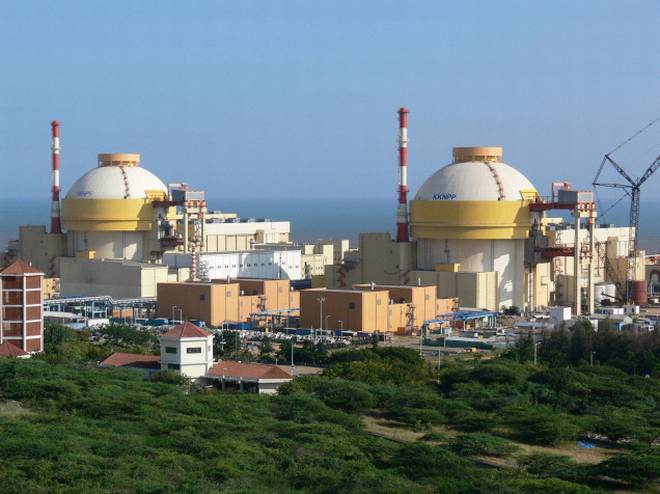
Recently, there was an identification of a malware infection on Kudankulam Nuclear Power Plant (KKNPP) administrative network which is used for day to day administrative activities.  The affected system contains data related to administrative function. Plant control and instrumentation system is not connected to any external network such as Intranet, Internet and administrative system. The plant systems, which are isolated and not accessible from this administrative network, were not affected.

Various measures for further strengthening of Information Security in administrative networks have been taken up viz. hardening of internet and administrative intranet connectivity, restriction on removable media, blocking of websites & IPs which have been identified with malicious activity etc.

The Computer & Information Security Advisory Group (CISAG) of Department of Atomic Energy (DAE) has recommended certain measures for immediate and short term implementation. These are being complied with.

The expenditure towards cyber security is a part of the regular revenue expenditure.

This information was provided by the Union Minister of State (Independent Charge) Development of North-Eastern Region (DoNER), MoS PMO, Personnel, Public Grievances & Pensions, Atomic Energy and Space, Dr Jitendra Singh in written reply to a question in Rajya Sabha today.


****