
We have to leave the teacher in the classroom, isn\’t it?

Parimal Patel, a CRC coordinator from Gujarat, faced the following difficulty. To which there are no easy answers, but here\’s an attempt. Feel free to add your views!
Parimal Patel
Two days ago, I had a discussion in my cluster to make school history and to make school bio-data (which was made by me for my school by spending extra time in the school). Teachers liked  my idea but said that that in which time they would make it? They have had a lot of work since June. I\’m asking this question because this is only one example – but there are so many policy-makers and the worker is only one. If we want quality we have to leave teacher in the classroom, isn\’t it? Please think about it – this is a more difficult question in primary education than any other.

Subir\’s response

Parimal (and many other friends struggling with the same problem) – you are right that the worker is one and policy makers are many, and all of them are trying to get the worker to do something or the other! So what can be done? Here are a few points for you all to consider:
  • The curriculum development process is one very important way to create a framework and common understanding so that the different decision-makers and policy-makers can think in a coordinated way. In the next few months this will be shared across the state and a process to coordinate accordingly will start. In the beginning, though, you can expect a lot of struggle, since everyone will not agree on what the SRG has developed! Be prepared for different ideas all trying to occupy the same place. 
  • When we work in the field, we do have to keep in mind specific actions. At the same time, don\’t worry if the teacher does not do what you are asking for – AS LONG AS HE/SHE IS WORKING TOWARDS THE SAME OBJECTIVE. The problem arises when the objectives themselves are different (as will happen this year in the Gunotsav). 
  • The need to leave the teacher to work in the classroom is really important. We have opposite views about what is happening: some claim the teacher has got too many non-teaching tasks, and some say that the teacher is simply not spending the time in the class. Which view is the correct one? I think both are. People like me will keep on working with policy makers to ensure that non-teaching tasks are reduced, and other colleagues at field level will have to keep on working to ensure that teachers do spend the time available in the classroom. 
  • I like the idea of the school bio-data. Maybe it does not have to be done in one go. How about putting up a chart or board, and letting teachers, children, even community members add things to it when they have the time. Then, perhaps after a month, in the morning assembly this can be shared (it is not necessary to keep doing the same things in morning assembly every day!). Different classes could be given the tasks in different subjects, related to the school bio-data (in language – do the writing work; in maths – make maps, tables with data; in social studies – trace the history; in drawing – make pictures of different aspects of the school, etc.). So making it a project, spreading it over time, and connecting it with ongoing processes might help. This has to do with how we imagine different things being done. 
  • Finally, pl also read the post on \’How Teachers Change\’, and also \’How Teachers Learn\’ in my blog.
We have to leave the teacher in the classroom, isn\’t it?

Parimal Patel, a CRC coordinator from Gujarat, faced the following difficulty. To which there are no easy answers, but here\’s an attempt. Feel free to add your views!
Parimal Patel
Two days ago, I had a discussion in my cluster to make school history and to make school bio-data (which was made by me for my school by spending extra time in the school). Teachers liked  my idea but said that that in which time they would make it? They have had a lot of work since June. I\’m asking this question because this is only one example – but there are so many policy-makers and the worker is only one. If we want quality we have to leave teacher in the classroom, isn\’t it? Please think about it – this is a more difficult question in primary education than any other.

Subir\’s response

Parimal (and many other friends struggling with the same problem) – you are right that the worker is one and policy makers are many, and all of them are trying to get the worker to do something or the other! So what can be done? Here are a few points for you all to consider:
  • The curriculum development process is one very important way to create a framework and common understanding so that the different decision-makers and policy-makers can think in a coordinated way. In the next few months this will be shared across the state and a process to coordinate accordingly will start. In the beginning, though, you can expect a lot of struggle, since everyone will not agree on what the SRG has developed! Be prepared for different ideas all trying to occupy the same place. 
  • When we work in the field, we do have to keep in mind specific actions. At the same time, don\’t worry if the teacher does not do what you are asking for – AS LONG AS HE/SHE IS WORKING TOWARDS THE SAME OBJECTIVE. The problem arises when the objectives themselves are different (as will happen this year in the Gunotsav). 
  • The need to leave the teacher to work in the classroom is really important. We have opposite views about what is happening: some claim the teacher has got too many non-teaching tasks, and some say that the teacher is simply not spending the time in the class. Which view is the correct one? I think both are. People like me will keep on working with policy makers to ensure that non-teaching tasks are reduced, and other colleagues at field level will have to keep on working to ensure that teachers do spend the time available in the classroom. 
  • I like the idea of the school bio-data. Maybe it does not have to be done in one go. How about putting up a chart or board, and letting teachers, children, even community members add things to it when they have the time. Then, perhaps after a month, in the morning assembly this can be shared (it is not necessary to keep doing the same things in morning assembly every day!). Different classes could be given the tasks in different subjects, related to the school bio-data (in language – do the writing work; in maths – make maps, tables with data; in social studies – trace the history; in drawing – make pictures of different aspects of the school, etc.). So making it a project, spreading it over time, and connecting it with ongoing processes might help. This has to do with how we imagine different things being done. 
  • Finally, pl also read the post on \’How Teachers Change\’, and also \’How Teachers Learn\’ in my blog.

We have to leave the teacher in the classroom, isn\’t it?

Parimal Patel, a CRC coordinator from Gujarat, faced the following difficulty. To which there are no easy answers, but here\’s an attempt. Feel free to add your views!
Parimal Patel
Two days ago, I had a discussion in my cluster to make school history and to make school bio-data (which was made by me for my school by spending extra time in the school). Teachers liked  my idea but said that that in which time they would make it? They have had a lot of work since June. I\’m asking this question because this is only one example – but there are so many policy-makers and the worker is only one. If we want quality we have to leave teacher in the classroom, isn\’t it? Please think about it – this is a more difficult question in primary education than any other.

Subir\’s response

Parimal (and many other friends struggling with the same problem) – you are right that the worker is one and policy makers are many, and all of them are trying to get the worker to do something or the other! So what can be done? Here are a few points for you all to consider:
  • The curriculum development process is one very important way to create a framework and common understanding so that the different decision-makers and policy-makers can think in a coordinated way. In the next few months this will be shared across the state and a process to coordinate accordingly will start. In the beginning, though, you can expect a lot of struggle, since everyone will not agree on what the SRG has developed! Be prepared for different ideas all trying to occupy the same place. 
  • When we work in the field, we do have to keep in mind specific actions. At the same time, don\’t worry if the teacher does not do what you are asking for – AS LONG AS HE/SHE IS WORKING TOWARDS THE SAME OBJECTIVE. The problem arises when the objectives themselves are different (as will happen this year in the Gunotsav). 
  • The need to leave the teacher to work in the classroom is really important. We have opposite views about what is happening: some claim the teacher has got too many non-teaching tasks, and some say that the teacher is simply not spending the time in the class. Which view is the correct one? I think both are. People like me will keep on working with policy makers to ensure that non-teaching tasks are reduced, and other colleagues at field level will have to keep on working to ensure that teachers do spend the time available in the classroom. 
  • I like the idea of the school bio-data. Maybe it does not have to be done in one go. How about putting up a chart or board, and letting teachers, children, even community members add things to it when they have the time. Then, perhaps after a month, in the morning assembly this can be shared (it is not necessary to keep doing the same things in morning assembly every day!). Different classes could be given the tasks in different subjects, related to the school bio-data (in language – do the writing work; in maths – make maps, tables with data; in social studies – trace the history; in drawing – make pictures of different aspects of the school, etc.). So making it a project, spreading it over time, and connecting it with ongoing processes might help. This has to do with how we imagine different things being done. 
  • Finally, pl also read the post on \’How Teachers Change\’, and also \’How Teachers Learn\’ in my blog.

We have to leave the teacher in the classroom, isn\’t it?

Parimal Patel, a CRC coordinator from Gujarat, faced the following difficulty. To which there are no easy answers, but here\’s an attempt. Feel free to add your views!
Parimal Patel
Two days ago, I had a discussion in my cluster to make school history and to make school bio-data (which was made by me for my school by spending extra time in the school). Teachers liked  my idea but said that that in which time they would make it? They have had a lot of work since June. I\’m asking this question because this is only one example – but there are so many policy-makers and the worker is only one. If we want quality we have to leave teacher in the classroom, isn\’t it? Please think about it – this is a more difficult question in primary education than any other.

Subir\’s response

Parimal (and many other friends struggling with the same problem) – you are right that the worker is one and policy makers are many, and all of them are trying to get the worker to do something or the other! So what can be done? Here are a few points for you all to consider:
  • The curriculum development process is one very important way to create a framework and common understanding so that the different decision-makers and policy-makers can think in a coordinated way. In the next few months this will be shared across the state and a process to coordinate accordingly will start. In the beginning, though, you can expect a lot of struggle, since everyone will not agree on what the SRG has developed! Be prepared for different ideas all trying to occupy the same place. 
  • When we work in the field, we do have to keep in mind specific actions. At the same time, don\’t worry if the teacher does not do what you are asking for – AS LONG AS HE/SHE IS WORKING TOWARDS THE SAME OBJECTIVE. The problem arises when the objectives themselves are different (as will happen this year in the Gunotsav). 
  • The need to leave the teacher to work in the classroom is really important. We have opposite views about what is happening: some claim the teacher has got too many non-teaching tasks, and some say that the teacher is simply not spending the time in the class. Which view is the correct one? I think both are. People like me will keep on working with policy makers to ensure that non-teaching tasks are reduced, and other colleagues at field level will have to keep on working to ensure that teachers do spend the time available in the classroom. 
  • I like the idea of the school bio-data. Maybe it does not have to be done in one go. How about putting up a chart or board, and letting teachers, children, even community members add things to it when they have the time. Then, perhaps after a month, in the morning assembly this can be shared (it is not necessary to keep doing the same things in morning assembly every day!). Different classes could be given the tasks in different subjects, related to the school bio-data (in language – do the writing work; in maths – make maps, tables with data; in social studies – trace the history; in drawing – make pictures of different aspects of the school, etc.). So making it a project, spreading it over time, and connecting it with ongoing processes might help. This has to do with how we imagine different things being done. 
  • Finally, pl also read the post on \’How Teachers Change\’, and also \’How Teachers Learn\’ in my blog.

We have to leave the teacher in the classroom, isn\’t it?

Parimal Patel, a CRC coordinator from Gujarat, faced the following difficulty. To which there are no easy answers, but here\’s an attempt. Feel free to add your views!
Parimal Patel
Two days ago, I had a discussion in my cluster to make school history and to make school bio-data (which was made by me for my school by spending extra time in the school). Teachers liked  my idea but said that that in which time they would make it? They have had a lot of work since June. I\’m asking this question because this is only one example – but there are so many policy-makers and the worker is only one. If we want quality we have to leave teacher in the classroom, isn\’t it? Please think about it – this is a more difficult question in primary education than any other.

Subir\’s response

Parimal (and many other friends struggling with the same problem) – you are right that the worker is one and policy makers are many, and all of them are trying to get the worker to do something or the other! So what can be done? Here are a few points for you all to consider:
  • The curriculum development process is one very important way to create a framework and common understanding so that the different decision-makers and policy-makers can think in a coordinated way. In the next few months this will be shared across the state and a process to coordinate accordingly will start. In the beginning, though, you can expect a lot of struggle, since everyone will not agree on what the SRG has developed! Be prepared for different ideas all trying to occupy the same place. 
  • When we work in the field, we do have to keep in mind specific actions. At the same time, don\’t worry if the teacher does not do what you are asking for – AS LONG AS HE/SHE IS WORKING TOWARDS THE SAME OBJECTIVE. The problem arises when the objectives themselves are different (as will happen this year in the Gunotsav). 
  • The need to leave the teacher to work in the classroom is really important. We have opposite views about what is happening: some claim the teacher has got too many non-teaching tasks, and some say that the teacher is simply not spending the time in the class. Which view is the correct one? I think both are. People like me will keep on working with policy makers to ensure that non-teaching tasks are reduced, and other colleagues at field level will have to keep on working to ensure that teachers do spend the time available in the classroom. 
  • I like the idea of the school bio-data. Maybe it does not have to be done in one go. How about putting up a chart or board, and letting teachers, children, even community members add things to it when they have the time. Then, perhaps after a month, in the morning assembly this can be shared (it is not necessary to keep doing the same things in morning assembly every day!). Different classes could be given the tasks in different subjects, related to the school bio-data (in language – do the writing work; in maths – make maps, tables with data; in social studies – trace the history; in drawing – make pictures of different aspects of the school, etc.). So making it a project, spreading it over time, and connecting it with ongoing processes might help. This has to do with how we imagine different things being done. 
  • Finally, pl also read the post on \’How Teachers Change\’, and also \’How Teachers Learn\’ in my blog.

We have to leave the teacher in the classroom, isn\’t it?

Parimal Patel, a CRC coordinator from Gujarat, faced the following difficulty. To which there are no easy answers, but here\’s an attempt. Feel free to add your views!
Parimal Patel
Two days ago, I had a discussion in my cluster to make school history and to make school bio-data (which was made by me for my school by spending extra time in the school). Teachers liked  my idea but said that that in which time they would make it? They have had a lot of work since June. I\’m asking this question because this is only one example – but there are so many policy-makers and the worker is only one. If we want quality we have to leave teacher in the classroom, isn\’t it? Please think about it – this is a more difficult question in primary education than any other.

Subir\’s response

Parimal (and many other friends struggling with the same problem) – you are right that the worker is one and policy makers are many, and all of them are trying to get the worker to do something or the other! So what can be done? Here are a few points for you all to consider:
  • The curriculum development process is one very important way to create a framework and common understanding so that the different decision-makers and policy-makers can think in a coordinated way. In the next few months this will be shared across the state and a process to coordinate accordingly will start. In the beginning, though, you can expect a lot of struggle, since everyone will not agree on what the SRG has developed! Be prepared for different ideas all trying to occupy the same place. 
  • When we work in the field, we do have to keep in mind specific actions. At the same time, don\’t worry if the teacher does not do what you are asking for – AS LONG AS HE/SHE IS WORKING TOWARDS THE SAME OBJECTIVE. The problem arises when the objectives themselves are different (as will happen this year in the Gunotsav). 
  • The need to leave the teacher to work in the classroom is really important. We have opposite views about what is happening: some claim the teacher has got too many non-teaching tasks, and some say that the teacher is simply not spending the time in the class. Which view is the correct one? I think both are. People like me will keep on working with policy makers to ensure that non-teaching tasks are reduced, and other colleagues at field level will have to keep on working to ensure that teachers do spend the time available in the classroom. 
  • I like the idea of the school bio-data. Maybe it does not have to be done in one go. How about putting up a chart or board, and letting teachers, children, even community members add things to it when they have the time. Then, perhaps after a month, in the morning assembly this can be shared (it is not necessary to keep doing the same things in morning assembly every day!). Different classes could be given the tasks in different subjects, related to the school bio-data (in language – do the writing work; in maths – make maps, tables with data; in social studies – trace the history; in drawing – make pictures of different aspects of the school, etc.). So making it a project, spreading it over time, and connecting it with ongoing processes might help. This has to do with how we imagine different things being done. 
  • Finally, pl also read the post on \’How Teachers Change\’, and also \’How Teachers Learn\’ in my blog.

Reading this post may make you blind

We’ve all made fun of Americans and their crazy law of torts. That’s why you have such gems such as “Contents Hot” on a coffee cup or a “Remove baby before folding” sticker on a pram. In that same vein is the recent move in California that may soon have the warning “Coffee Causes Cancer” in coffee shops !  Granted that the land of the free scores somewhere mid tier in the international rankings of IQ, but still …..
A news item about P&G and Tide laundry pods however made me pause. P&G has released an ad featuring  Rob Gronkowski, the New England Patriots’ star exhorting people not to eat Tide laundry pods ! WTF ? 
Apparently some teenagers have started a campaign called the ‘Tide Pod Challenge”. You are supposed to eat a Tide Pod and then post the video online. Reportedly some 40 cases of this nonsense have already happened in the first 15 days of 2018. It became serious enough for P&G to take note and issue the aforementioned ad exhorting people to wash clothes with their Tide laundry pod and not eat it. Without a doubt, their legal department opined that if they kept quiet, it was only a matter of time before they were slapped with a class action suit from a parent that the company was liable because they did nothing to prevent their children from eating the damned pod !
The purpose of this post is not to rail against the stupidity of on line antics. There is enough and more written on that. But where does personal responsibility end and where does company liability begin ? We seem to be living in a day and age where there is no personal responsibility whatsoever and its always someone else to blame. If its a rich juicy company, then great. Blame them and sue for a zillion dollars.  Is it the job of a company to monitor every nonsense that’s happening on social media and guard against them ?


I am taking no chances. I am a poor man and will be bankrupted if you sue me ! Please therefore take note that reading this post on a screen may be injurious to your eyes. Please also note that if you are sipping coffee at the same time it might spill and burn your thighs as it is hot !!

Missing the Aim(s) of Education!

It\’s a perennial struggle to define what we really want out of education. That is, it is a struggle for those who are vested with the responsibility of developing the curriculum, materials, evaluation and the like. For others, such as parents, things are reasonably clear. Which is where part of the problem lies.
The common man, or the consumer, or the parents of children who come to a majority of our schools, have no doubt at all that the purpose of education is to prepare children so that they can get a job (and be a worry off their heads). Many others – such as owners of private schools – boast that they get hundred percent results in the various examinations. Implying that the purpose of education is to get children to pass through examinations with flying colours (and what the purpose of the examinations is of course well known to all!)
And if you ask teachers in government schools, the ones who actually teach and are considered \’sincere\’, they will usually come out with statements such as: \’to develop a citizen, for all round development, someone with values, someone who can be called an educated person.\’
But when it comes to developing the curriculum we are somehow so reluctant to agree with these commonly held perceptions. We want something better, higher, more durable (our own approximation of the Olympics motto?) \’To produce someone who has a deep sense of values\’ is one of the most common aspirations. But what kind of values? And what to do about the fact that values are so relative (e.g. in certain situations, you actually get a medal for killing a man!). What is needed in order to be able to exercise values appropriately in a contextual and relative manner? And is that more a cognitive rather than ethical function (e.g. identifying options, weighing them against each other on various criteria, etc.)?
\’Education should develop the right kind of sanskars / culture in the student\’ is the next most popular choice. But whose culture are we talking about? A teacher trying to teach children how to use a handkerchief to blow their nose was left aghast when they reacted with amused horror as he put his handkerchief back into his pocket – they said they always threw things away after blowing their nose with rather than putting them back into their pocket! In a context as diverse as ours where the good manners of one group are easily the bad manners of others would we not end up simply extending the social control of dominant cultural group/s?
Unable to resolve this we move to discussing: what kind of society do we want to see? What would we consider a developed society? Where everyone has a job and the per capita income is high (back to jobs as the most important criterion?).  Slowly the discussion moves to recognizing the diversity in society and the need for each group / person to respect the \’other\’ and cherish, even celebrate this diversity. The need for a dynamic society that is able to overcome the divides of caste and class, race and gender is emphasized. A society where collaboration is valued and practiced, where resources are more equitably distributed and opportunity is available to each person to better his or her lot is portrayed as the desired one.
So what are the qualities needed in the children emerging from our schools in order that this vision come close to reality. Now a little more concrete set of indicators emerges – self-confidence, autonomy, decision-making ability, the ability to accept one\’s own shortcomings and confront / improve them, a more scientific attitude that helps them question given conclusions and arrive at their own inferences, and so on.
So how would this impact the subjects we are teaching? Here again we run into difficulties – since, despite our best efforts, we continue to be the prisoners of our past. The kind of ideas that come up are: include a lesson on self-confidence and one on self-dependence as well, have guidance and counselling, do scouts and guides\’ activities, and the like. As if a lesson in self-confidence or the description of a great person\’s life will help attain self-dependence!
When this is explored further, the true import of some of these \’small indicators\’ begins to sink in. To ensure that children develop self-confidence, for example, they need to experience challenges as well as successes, repeatedly.  This will generate the necessary self-belief. Clearly, then, instead of simply teaching in the regular way and appreciating the child\’s efforts, the teacher instead needs to challenge the child – by introducing tasks of which some part children can do, along with others that they would find difficult. Then it would be important to ask children to plan it by themselves, share and justify their plan to a larger set of friends and finally implementing it on their own. The experience of this implementation needs to be discussed so that lessons may be drawn for the next time. It is repeated experiences of this kind that lead to self-confidence.
For each of the changes / developments we want in our children, identifying its implications is a harrowing task. Not only is it difficult to know what to do so that the desired outcomes happen (e.g. how do you \’teach\’ to accept one\’s limitations and also go beyond them?), the emerging discussion tends to doubly challenge long-held notions and deep-rooted practice. (Such as supporting children as they learn on their own rather than teaching them as we are used to.) And if these are the qualities we desire in our children, we are really left wondering why it is that we should be teaching things such as physics or chemistry or past participle and geometric progression.
As we progress further in defining the aims of education, we seem to be moving further away from \’education\’ itself as we know it and into something that is still quite undefined and yet to be evolved. Somehow even as we define the aims, we seem to be missing them.

Unexpected and Unintended – Consequences of Curriculum and Material Development Processes

What started in Nagaland…
It was in the fourth workshop in Nagaland, in 2000, that participants stopped me and said they had something to share. All the education stuff they were learning was certainly very useful but what they valued far more was this: People from all the 16 tribes of the state were present in one room and, for the first time, they said, were not fighting! The process had somehow led all of them to feel like a family and they cherished this even more than the curriculum that was emerging from it.
How did this happen, I wondered. It was not being attempted (and in fact there was not even the awareness that something like this was required in the first place). So what went right? A little probing led to the realization that not being aware of who was from which tribe or occupied what social / professional position, the facilitation process could not distinguish between participants – no one was treated as being more ‘important’ or ‘different’.
A second feature was that much of the process revolved around generating a common set of experiences such as activities, school observations, classroom trialling, and intensive group discussions around key questions that had a larger canvas while also affecting state-specific decisions and implementation. The opportunity to evolve a common vision, agree upon the aims and objectives around which the curriculum would be built and developing consensus around the practical means to be adopted – all this led to ‘feeling like a family.’
Could this effect – that had happened ‘by mistake’ – actually be deliberately implemented? That is, could disparate groups who believed they had conflicting interests be brought together to ‘feel like a family’ through a consciously implemented version of this process?
It was not long before an opportunity to test this presented itself – in Afghanistan.
…Continued in Afghanistan
‘My brother from India,’ said a fearsome-looking senior member of the National Resource Group in Kabul, part of the Teacher Empowerment Programme, in 2003-04. It was the first effort to implement a country-wide in-service teacher training programme after the war. ‘My brother from India, do you know that we have in our group some people who are bandits! And we have to develop training with them!’
Before I could respond, another equally fierce gentleman thumped his desk, stood up and bellowed, ‘Our professor from India, when we were fighting the Russians in the mountains, some people were sitting in luxury in the USA!’ No one else seemed discomfited by this except me. How do you work with a group where members seemed intent on settling long-standing personal scores through you?
Once again it was really useful not to know who was exactly what. During the security briefing, I had been given a small chart depicting the various factions that had been at war with each other and now comprised the post-war nation. I had carefully put the chart away without looking at it. And had then thought about the kind of questions would work with this gathering of conflicting factions.
Therefore, as in many other places, the first question the participants got to work on was: ‘What games did you play as a child? And can you name at least 40 of them?’ In just a few moments the mood in the group had changed dramatically. People were gesturing, doing actions of the games they were describing, prodding each other to remember the names of the games they could recall, smiling more and more as their childhood seeped up and transported them into another time when they didn’t have this animosity. From then on, over the next several months, the process continued, with the fearsome gentlemen becoming less and less ferocious till they were actually good friends, and contributed greatly to the outcomes. Along with them, whatever factions that might have been there within the group also shed such reservations as they might have had about the ‘others’. By the end, in fact, it really was difficult to make out the groups that might have been there earlier….
And in a very different setting
Could there be a more difficult situation than Afghanistan? Actually, there could. During the thick of the LTTE-Sri Lankan Army war, I found myself in a workshop for writers, about half of whom were Tamil with the other half being Sinhala. Tamil writers arrived late to the venue, a few hours away from Colombo, as they had been held up again and again along the way by police and other security authorities – on the ground that they were Tamils moving around. One of the writers had just learnt that his brother had been arrested by the Sri Lankan police, on suspicion. Tamil and Sinhala writers were clearly unwilling to mix; in fact, there were many who did not know the other group’s language or English. It was the sensitivity displayed by the organizers and all others present that enabled the workshop to be held at all. However, a sense of awkwardness and whispered conversations pervaded the atmosphere and made it difficult to start.
Working through interpreters, one for each language, the challenge was to have a group that achieved some degree of comfort with each other and would relax sufficiently to enable a creative process to flow. Listening to lectures from the facilitator, however wonderful, was unlikely to achieve this. In this case the strategy of not knowing who was who was obviously not going to work…
What did work, however, was the use of ‘idea triggers’, which are ways to get people to think of things they otherwise would not. For example, take two completely unrelated words (such as ‘rocket’ and ‘goat’) and see if you can make a long and interesting sentence (at least 10 words long) that contains both the words. (Try this out a few times with the same two words and see what happens). Or, take an ordinary object – such as a spoon – and think of a place where it will usually never be found (e.g. on a branch high up on a tree) – and think of how it got there, what happened afterwards – and you will soon begin to get a story in your head.
As these ‘triggers’ began to be used, the ‘writer’ in the participants began to come to the fore. They bounced ideas off each other, laughing at the ridiculous and funny juxtapositions that were cropping up, teasing them into ideas for stories, applauding each others\’ creativity and slowly forgetting that that they were two peoples affected by being on the opposite sides of an ongoing war…

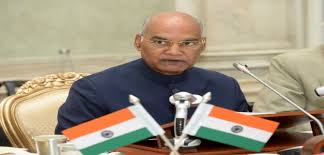
President of India Inaugurates Constitution Day Celebrations; Says Interpretation of the Constitution is a Work in Progress, and it will be up to the Youth of the Nation to Carry Forward the Task of Realizing its Ideals

The President of India, Shri Ram Nath Kovind, inaugurated the Constitution Day celebrations, organised by the Supreme Court, to mark the 70th anniversary of the adoption of our Constitution, today (November 26, 2019) in New Delhi.

Speaking on the occasion, the President said that the Constitution is the scripture of our nation that has to be read in a sensitive and delicate manner. The Constitution gave this onerous task to the judiciary. Keeping the role of the Supreme Court as final interpreter of the Constitution and the laws enacted under it, the judiciary assumes the role of its guardian. The authors of our Constitution took extra care in providing it the necessary powers and freedoms to function without any undue influence. Over these eventful seven decades, the judiciary has remained alive to the high responsibility placed on it.

The President noted that the Supreme Court has initiated several innovative measures to reach out to people. But for a large section of people, justice is still beyond reach.

Pointing the issue of making justice accessible to all, the President said that one way out of the high cost is the provision of free legal aid. Remembering, veteran lawyer Ashoke Sen, he said that in the multiple roles Shri Sen played in the field over a long career, his sole objective was the pursuit of justice, for one and all. He expressed hope that more and more law professionals will take inspiration from the example of Shri Sen and distribute freely the fruits of their knowledge among the needy. He said that the task of making justice more accessible to all has to be a collective effort of all the stakeholders in the bench and the bar.

The President said that the question of access is not limited to the cost factor alone. Language too has been a barrier for many, for a long time. He was happy to note that the Supreme Court has started making its judgments available in nine regional languages. He said that another hurdle in the way of justice is the delay and the resulting backlog. Clearing this bottleneck requires detailed deliberations and systemic efforts. Information and communication technology can bring about amazing results in this domain. He was happy to note that beginnings have been made to take help of technological innovations.

The President said that we should strive to spread the awareness about the making of the Constitution, its provisions and its fundamental principle of equality. We need to especially narrate to the young generation the grand vision of our founding fathers. After all, we stand as a mere link between two generations in the continuing saga of this nation. Interpretation of the Constitution is a work in progress, and it will be up to the youth of the nation to carry forward the task of realizing its ideals.


*****

When Is It GOOD To Get Angry?

Have you ever noticed that we get angry (or at least show it) only with those who we think are weaker than us? Thus it seems OK for parents or teachers to be angry with children, for officers and trainers to shout at teachers. But if children are angry with adults, even if they are in the right and the adult is in the wrong, it is considered NOT OK! And teachers, when upset with their so-called \’superiors\’ either keep quiet or make some sort of mild protest. Only occasionally does it boil over, and when it does, it is again considered NOT OK!
So what is the view we should take? Is it a good idea not to get angry at all? This is the advocated position of many. In fact there are training programmes (including those for teachers) on anger management (i.e., about managing the anger we show to those who we consider our \’inferiors\’). These include things called \’positive discipline\’ and \’emotional punishment\’ – as if it is OK to do the same old thing in another way.
 In case this is not clear, the \’same old thing\’ means the belief that it is OK for adults to have power over children, or for some to be considered \’superiors\’ of others. The \’anger management\’ and \’positive\’ approach does not question this right to discipline or punish – it only says \’do it less violently please, but do it because you have a right to do it.\’ Something wrong there, isn\’t it?
The other approach would be – get angry wherever you should! That is, if you are in the right, get angry with your boss or with the adult (if you are a child or an adolescent), if they are in the wrong. Do I hear you clicking your tongue again? Something doesn\’t sound QUITE OK about this, isn\’t it? How can those who are \’below\’ scream at those who are \’above\’? You fear it will lead to conflict, division and general breakdown of order (i.e. of who should listen to whom).
Hmm, perhaps this kind of all-round getting angry business won\’t really help. We\’re too scared of it anyway.
But it also seems there are areas where we SHOULD GET ANGRY – and we don\’t. When a child is molested or deprived or hurt or demeaned – we don\’t see much anger. When teachers who really want to teach better and teach differently are ridiculed to the extent that they give up trying to improve – we see NO anger. When a girl is brutalized (or even killed) because she refused to get married at 14, we don\’t seethe with anger! When an education system is run year after year and the children who\’ve invested their entire childhood in it, emerge without any learning to show for it – we are simply not consumed with anger!
IT – IS – NOT – OK.
WE MUST – REPEAT, MUST –
GET ANGRY!

Go out. Get angry. Preserve this anger. Don\’t let it dry up. Spend it – drop by drop. Keep at it. And at it. Till that which makes you angry is snuffed out. Totally.

References on Islam

The contemporary literature on Islam is rife with ideological and religious bias. It is difficult to wade through the mountain of books on Islam and get to the truth. In the last several decades, the newly created Mid-East Studies departments of American universities are dominated by multi-culturalism and post-modern political ideologues. The vast output from academia – virtually all pro-Islamic propaganda – is completely useless with a few rare exceptions. Today, true scholars and objective writers exist either outside of the academy or in other departments. We must look to these brave few who are willing to stand up for the truth.

I highly recommend Ibn Warraq’s “Why I Am Not A Muslim”. Raised as a Muslim, Warraq now lives in the West and is an outspoken critic of Islam. He has a secular humanist approach. The name of the book is deliberately similar to Bertrand Russell’s “Why I Am Not A Christian”. Since the punishment for Islamic apostasy is death, he, like many other ex-Muslims, uses a pseudonym. There are several informative websites run by ex-Muslims: Institute for the Secularization of Islamic SocietyAli Sina’s Faith FreedomApostates Of Islam.

Robert Spencer’s, “Islam Unveiled”, is an excellent book for people knowledgeable about Christianity. He contrasts these two religions – a very effective way to get a sense of the magnitude of Islam’s inherent flaws. See his website: Jihad Watch.
Serge Trifkovic’s, “The Sword of the Prophet,” reviews the full bloody history of Islam with a no-holds-barred approach. Read, for example, the horrific Muslim invasion of India. Historians have described it as the bloodiest atrocity prior to the 20th century. Remember, Hindus and Buddhists do not practice a “religion of the book”; strict Islam requires their conversion or death. Read his interview.
Bat Ye’or’s, “ Islam and Dhimmitude: Where Civilizations Collide,” gives a voice to the suffering of non-Muslims forced to live under oppressive Islamic rule. Bat Ye’or, a leading Islamic scholar, rejects Islamic mythology in favor of sound historical analysis. Her website is an excellent source of information on Islam: Dhimmitude.
The above are excellent introductory books. For more indepth studies see Andrew BostomBruce BawerPaul SperrySteven Emerson, and Sam Harris.

The land of the dinosaurs

The dinosaurs missed a trick when the comet (asteroid ?) hit the Yucatan peninsula 65 million years ago. They should have taken refuge in India. They wouldn\’t have gone extinct. India is veritably the land of the dinosaurs.
Well, at least corporate India is. In India, no company ever dies. It is extremely difficult to shut a company down in this country. They will live on for ever. Take the case of Andrew Yule.
If you had lived in British India and looked for a job, the bonanza would have been a job in Andrew Yule. It was one of the largest conglomerates of that time with businesses in jute, cotton, coal, tea, engineering, electrical, power, chemicals, insurance, railways, shipping, paper and printing, in addition to being a zamindar (land owner). The company was founded by, yes, a Mr Andrew Yule in 1863. He and his family ran it until India\’s independence in 1947.  The Indian government took majority control in 1948 under circumstances not very clear – perhaps it was socialism, perhaps the family decided to leave. It became a government majority owned company and then under the wave of socialism that Mrs Gandhi championed, the government took it over entirely.
It today is a pale shadow of its British India days. It currently does some engineering business and also owns some tea gardens. Long ago it became \”sick\” – Indian euphemism for bankrupt. Dinosaurs which fall sick come under the umbrella of the Bureau of Industrial and Financial Restructuring (BIFR), which is Ramamritham\’s idea of socialist utopia. Today , it has a turnover of Rs 400 crores ($ 70 m) and is still lumbering along. This year it managed to turn a small profit and declared its first dividend in 21 years.
Companies like this abound . Many have been taken over by the government under the misguided view that nothing should ever be closed down. The taxpayer funds this indulgence. The accumulated losses of such dinosaurs is Rs 60,000 crores ($10 bn). Veritable luminaries adorn this list. Air India is of course, numero uno, but there are other stars like Hindustan Photo Films (which still makes  the old film rolls), ITI (which presumably turns out analog telephone exchanges) and HMT (which makes mechanical watches). I have little doubt that there is also a company existing which makes music cassette tapes, or the telex machine, or something like that.
India is a culture that believes in the cycle of birth, death and rebirth. Regeneration is intrinsic to the belief of the Hindu faith. And yet, when it comes to companies, we do not accept the same philosophy. Maybe the companies are not Hindu !
And yes, in case you wondered, the East India Company is very much alive. In a nice twist of fate, it is now majority owned by a Mr Sanjiv Mehta !

Reading this post may make you blind

We\’ve all made fun of Americans and their crazy law of torts. That\’s why you have such gems such as \”Contents Hot\” on a coffee cup or a \”Remove baby before folding\” sticker on a pram. In that same vein is the recent move in California that may soon have the warning \”Coffee Causes Cancer\” in coffee shops !  Granted that the land of the free scores somewhere mid tier in the international rankings of IQ, but still …..
A news item about P&G and Tide laundry pods however made me pause. P&G has released an ad featuring  Rob Gronkowski, the New England Patriots\’ star exhorting people not to eat Tide laundry pods ! WTF ? 
Apparently some teenagers have started a campaign called the \’Tide Pod Challenge\”. You are supposed to eat a Tide Pod and then post the video online. Reportedly some 40 cases of this nonsense have already happened in the first 15 days of 2018. It became serious enough for P&G to take note and issue the aforementioned ad exhorting people to wash clothes with their Tide laundry pod and not eat it. Without a doubt, their legal department opined that if they kept quiet, it was only a matter of time before they were slapped with a class action suit from a parent that the company was liable because they did nothing to prevent their children from eating the damned pod !
The purpose of this post is not to rail against the stupidity of on line antics. There is enough and more written on that. But where does personal responsibility end and where does company liability begin ? We seem to be living in a day and age where there is no personal responsibility whatsoever and its always someone else to blame. If its a rich juicy company, then great. Blame them and sue for a zillion dollars.  Is it the job of a company to monitor every nonsense that\’s happening on social media and guard against them ?


I am taking no chances. I am a poor man and will be bankrupted if you sue me ! Please therefore take note that reading this post on a screen may be injurious to your eyes. Please also note that if you are sipping coffee at the same time it might spill and burn your thighs as it is hot !!