Odisha under “Jal Jeevan Mission (Har Ghar Jal)

Through ‘Jal Jeevan Mission’, Government of India is making all efforts to provide every rural household in the country a Functional Household Tap Connection for water in adequate quantity of prescribed quality on regular and long-term basis. Following the true spirit of cooperative federalism, State Governments are steering this flagship programme to realise the objectives of the Mission so as to bring cheers in the lives of rural people by providing potable water at their doorstep and ensure ‘ease of living’. It is envisaged that through this life changing Mission, each household will get potable water supply of 55 lpcd of prescribed quality on regular and long-term basis.

The estimated outlay of the mission is Rs 3.60 Lakh Crore with Central and State share of Rs. 2.08 Lakh Crore and Rs.1.52 Lakh Crore respectively.

Odisha state presented their Annual Action Plan before the National Committee headed by Secretary, Drinking Water & Sanitation, Ministry of Jal Shakti for consideration and approval for 2020-21. Govt of India approved Rs 812 Crores for implementation of the Mission in the State for the financial year. This allocation is a significant jump from last year’s allocation of Rs 297 Crore. Out of 81 lakh rural households in the State, Govt of Odisha plans to provide 16.21 lakh household connections in 2020-21. The State is planning 100% household tap connections by the year 2024. Priority is being given for 100% coverage of villages under water scare areas, quality-affected areas, Sansad Adarsh Gram Yojna villages, villages in aspirational districts and SC/ ST dominated habitations.

Laying emphasis on capitalising on ‘low-hanging fruits’ i.e. in the villages/ habitations where piped water supply schemes already exist, State is making all out efforts to immediately provide household tap connections to remaining households belonging to weaker and marginalised sections on priority. A roadmap is prepared for the effective implementation of Village Action Plan (VAP) with the active participation of the rural community. Strengthening of existing drinking water sources for long-term sustainability of drinking water supply systems through convergence of various programmes like MGNREGS, SBM (G), 15th FC Grants to PRIs, District Mineral Development Fund, CAMPA, Local Area Development Fund, etc. at village level is planned for judicious use of all available resources. The State has been allocated Rs. 2,258 Crore under 15th Finance Commission Grants to PRIs during 2020-21; 50% of this amount has to be mandatorily spent on water and sanitation.

To implement the mission, institutional arrangements at various levels have been made and State’s PHE Department is to play a critical role. To instil sense of ownership among the village community, Mission strives to involve the community in planning, managing, implementing, operation and maintaining the water supply schemes meant for them for long-term sustainability. State Government will start engaging the Self Help Groups and voluntary organisations for community mobilization.

Jal Jeevan Mission encourages participation of local community in surveillance of water quality. For this, action plan carried out to incorporate the timely procurement of kits, supply of kits to the community, identification of at least five women in every village, training women for use of Field Test Kits and reporting and collating the reports with laboratory-based findings of the water sources. State also proposed taking NABL accreditation for 18 of its water testing labs. At present, it has one state-level lab and 32 district level labs. 

Odisha state reels under two extreme conditions of water scarcity and also excess of it. There is one part which is water-stressed for most of the year, while the other part is marooned in monsoon. With the mercury soaring above 40 degrees Celsius, and during the prevailing Covid–19 pandemic, it is important that people don’t crowd public stand posts/ drinking water sources to fetch drinking water. Therefore, State was advised for taking up water supply works in villages to provide household tap connections, which will help in practicing social distancing, and will additionally help local people in getting employment and boost rural economy.

In the present context, when lot of migrants are returning to the State, it has become very important to provide livelihood to them. These personnel could be utilized in water supply related works especially plumbing, fitting, water conservation works, etc. in every village to ensure sufficient ground water availability leading to water security, water availability for agriculture and most importantly will help in provision of drinking water to every rural household as per the objective of Jal Jeevan Mission.

Stories of Tragedy: Chernobyl

Sky documentary The Real Chernobyl tracks the true tragedy | Metro ...

Hello Reader.

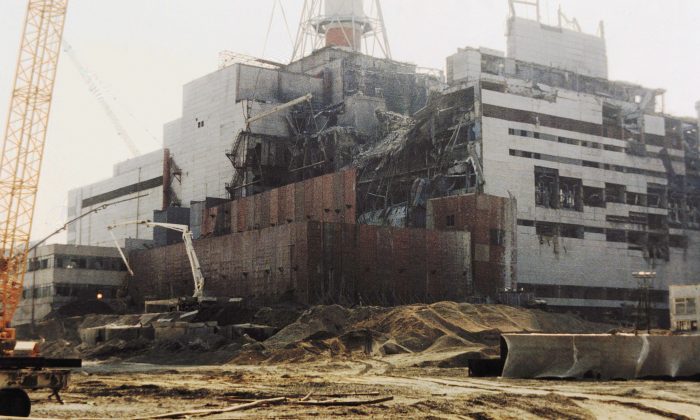
Today we look back at one of the worst man made disasters of our civilization. The Chernobyl Nuclear Accident. Late 20th century, times of nuclear expansion. Soviet Union, under the leadership of General Secretary Mikhail Gorbachev, was steaming forward with their nuclear policy. Several nuclear plants were setup to harness clean energy. But several policy decisions and human elements came back to haunt mankind after the reactor 4 of the Vladimir Ilyich Lenin Nuclear Power Plant, Chernobyl, Ukraine, exploded early in the night of April 26, 1986, giving out huge quantities of radiation in the surrounding areas.

Town of Pripyat

Chernobyl and Pripyat: where time came to a standstill in 1986 ...

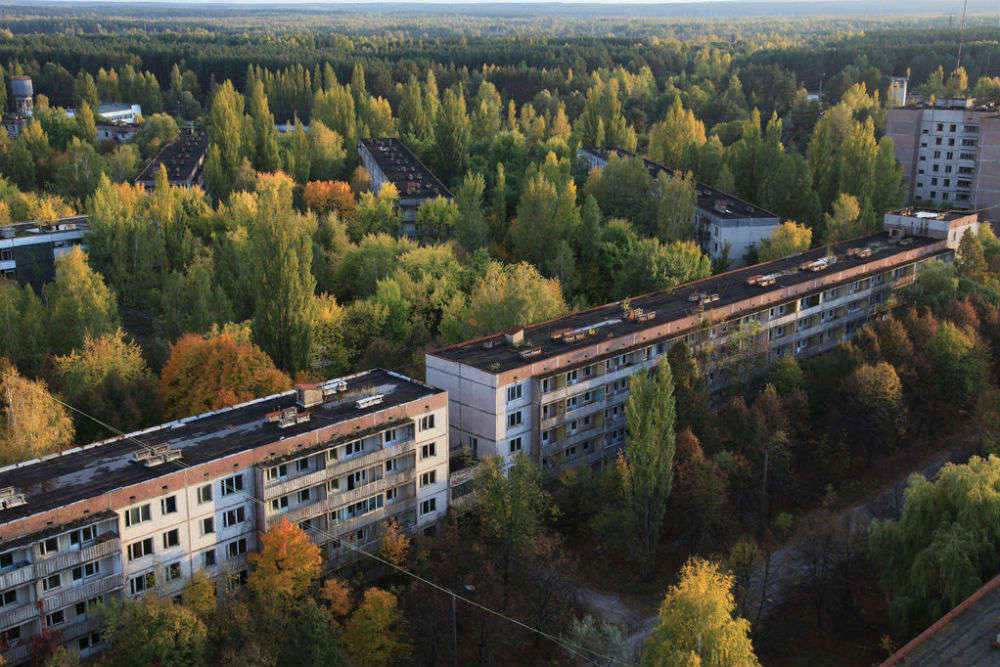
The plant was located 130 km North of Ukraine capital Kiev, near the Belarusian border. To accommodate the families of people working at the plant, a new town was built about 3 km away in 1970. They called it Pripyat. During the accident it was host to nearly 49,000 souls. The town was surrounded by woodland and was a pleasant place. There were several schools, parks, theaters, hospital. Everything a town can ask for. This was the worst affected human settlement in the accident. Everyone was forced to evacuate within three days of the accident. People were told it would be for a couple of weeks. But they never returned. Radiation level to this day remains too high for this place to be inhabited. Today this town stands covered by the woods, infested by wild animals and everything it’s inhabitants left behind, a true ghost town.

April 26, 1986

What went wrong on that fateful night? Some human error coupled with some huge design flaws of the reactor put a question mark in global nuclear safety for decades to come. Chernobyl, like most Soviet nuclear power plants back in the day, used Soviet made RBMK-1000 reactors with Uranium as it’s chief fuel. This fuel when starts reacting through fission generates huge amount of energy in form of heat. That heat is used to convert water into pressurized steam and then steam is channeled on to turbines to generate electricity. Simple. But there’s a catch. The energy rising from fission is too high if remained unchecked and this energy release is continuous as Uranium neutrons doesn’t stop reacting. So to control this high rate they had something called Control rods. These are columns made of Boron which enters the reactor and reduces this huge energy surge. So when there was too much output, you simply push the control rods in and reduce reactivity.

Scientists Develop New Theory on Chernobyl Blasts

But this system had a design flaw. For a fraction of second control rods increased reactivity, instead of reducing it. They were lined with graphite as a measure to cut costs. This was not known to the operators. And on the day of accident, a test was going on to reduce the output of the reactor to see if it can still support the water pumps through turbine. The output went too low, but the management still went ahead with the test and the result was a huge surge. Seeing this, the operator decided to push the control rods to kill the reactor function, unaware of the hidden consequence. Just as he pushed the button, the reactivity skyrocketed, converting every bit of water into steam and under high pressure there was an explosion. Hydrogen was produced from the fuels reaction with the steam and another explosion blew the roof off. Oxygen from outside rushed in and several fires started. Reactor with a capacity of 3200 MW output showed a last recorded output of 12000 MW before going off. Open roof carried the radioactive vapor into the atmosphere and wind distributed it all over Europe. It was felt in far away places like Sweden and England.

Consequences

Chernobyl New Safe Confinement - Wikipedia

2 operators died due to the explosion. 28 others died due to radiation related causes within few weeks. Thousands were exposed to radiation. There was an instant spike in cancer rates in the areas of Ukraine and Belarus after this accident. A 30 km Chernobyl exclusion zone was declared by Soviets. Thousands had to leave never to return. State did their best to hide the actual causes and consequences. Eventually had to give in and review the safety norms. The world scientific community blamed the Soviet isolation policy of the cold war era as a catalyst for this disaster. Maybe they were right. 34 years have passed since. Life has moved on. A steel structure, called New Safe Confinement, has recently been mounted over the old sarcophagus of Reactor 4 to keep the radiation in check. But Chernobyl still stays one of the most costly and haunting tragedies of the era.

Until next time…

Kisan Credit Cards (KCC) campaign launched for 1.5 crore dairy farmers

The Government will provide Kisan Credit Card (KCC) to 1.5 crore dairy farmers belonging to Milk Unions and Milk producing Companies within the next two months (1st June-31st July 2020) under a special drive. The Department of Animal Husbandry and Dairyingin association with Department of Financial Services has already circulated relevant circulars and KCC application format to all State Milk Federation and Milk Unions for implementing the same on a mission mode.

Under the dairy cooperative movement, approximately 1.7 crore farmers are associated with 230 Milk Unions in the country.

In the first phase of this campaign, the target is to cover all farmers who are members of dairy cooperative societies and associated with different Milk Unions and who do not have KCC. Farmers who already have KCC based on their land ownership, can get their KCC credit limit enhanced, though interest subvention shall be available only to the extent of Rs 3 lakhs. Although the general limit for KCC credit without collateral remains Rs. 1.6 lakh, but the case of farmers whose milk is directlyprocured by Milk Unions falls under tie up arrangements between the producers and processing units without any intermediaries, and hence the credit limits without Collateral can be upto Rs.3 lakh.This will ensure more credit availabilityfordairy farmers associated with Milk Unions as well as assuring repayment of loans to banks.

The special drive to provide KCC to 1.5 crore dairy farmers is part of the Prime Minister’s Atma Nirbhar Bharat package for Farmers. Finance Minister on 15 May 2020 has announced to cover 2.5 crore new farmers under the KCC scheme. This will provide an additional liquidity of Rs.5 lakh crore in the hands of farmers, who are suffering from the recent downturn of economy.

As, dairy is among the fastest growing sectors of the economy with a CAGR of above 6% in the last 5 years, providing short term credit to dairy farmers for meeting their requirements for working capital, marketing etc. will boost their productivity tremendously.

Bama’s Karukku: A Book Review

One of the most popular Dalit woman writers, Bama Faustina Soosairaj is a teacher by profession. Many of her works got translated into English, German, French, Telugu, and Malayalam. Karukku is based on her own life, which focuses on caste structures in the Catholic Community. In her autobiography, Bama pens down her struggles with the oppression of the society, and how she comes out stronger and mightier than ever.

Karukku became a turning point in Bama’s life. She received immense applause and support for bringing up the pain she had experienced in her life. The autobiography spoke to the Dalit community in a way, no other book did. It was read by innumerable numbers of people and it paved the way to a new genre in Tamil Literature. Karukku was first published in the Tamil language by Mini Krishnan, who was then the editor of Macmillan India. After the publication of Karukku in Tamil, it was translated by Lakshmi Holmström into English. The autobiography has won the Crossword Award, which brought the book into the limelight. Now, it has been read by several numbers of students worldwide. Karukku has been translated into languages other than English and Tamil. It is published in Kannada, Telugu, and Malayalam. It has gone on to become a part of the University curriculum for many disciplines likes Feminist Literature, Dalit Literature, Subaltern Literature, and others. After the success of Karukku, many Dalit woman writers came out of their cocoons and published excellent pieces of literature.

Karukku has proved to be a timeless autobiographical novel. It has worked as medicine for all those victims who have suffered due to caste discrimination, oppression, poverty, and such. Karukku brings out not only the real struggles of the Dalit community but also, the pain that every Dalit women go through in their lives. It has provided strength to the readers to speak up, protest, fight back, and not remain as the oppressed class of the society. Bama’s honest words have healed many wounds that were left unnoticed for years. Karukku becomes the pathway to the movement of the oppressed classes.

Karukku is a tale of the brave-hearted, of the courageous soul and has been very open and direct from the very first line of the book. The book shows not only the struggles of a Tamil Dalit Christian woman, but also how she fights back, how she survives, and how she rises from the ashes. Bama has asked innumerable questions which have shaken the pillars of the society. She questions the oppression and the pain she has faced in her life. She questions about the caste oppression she has faced all her life, and the struggles she had to go through just because she was born a Dalit. She questions her identity as a woman, as a Christian and as a Dalit.

Bama focuses on the experiences she has faced because of being a Catholic. She brings to light the rules and regulations that the Catholic community has to follow, as ordered by the Church. She talks about her day to day life of being both a Catholic and a Dalit. She brings forth the workings of the Catholic Church and how her days were dictated by the Church. From the very beginning of her life, she has faced the oppression of the Catholic Church. Her entire childhood was directed by the orders of the Church. There was no escape for her, as she was born in the Catholic community and her struggle for equality, for love, for justice has been emphasized throughout the autobiography. Karukku tells about the pain she has faced in her daily life, even after she becomes a nun. She wanted to work for the people of her oppressed community, to bring equality, to bring justice for the people who have struggled all their lives. But, only she couldn’t. She was not supported by the Church and also, the convent she was a part of. She couldn’t fulfill her wish to liberate her community from the clutches of oppression. She couldn’t liberate her soul from the pain of daily oppression.

Karukku is the struggle between her self and the community she belongs from. It is the constant struggle of escaping the Catholic community, to free herself from oppression. It is the constant struggle of being a part of the Dalit community, only. It is the struggle to leave her life of oppression and pain behind, to achieve her freedom, to achieve her identity. The use of language, used by Bama, is simple and it is written for the people of Dalit community to understand and feel her pain, to be a part of her struggle. Her use of language is not at all complex, and that’s why it has spoken on deeper levels to the readers across the world.

To conclude, Bama has written her heart and soul into her autobiography. She has successfully shown the true colors of the Catholic community and how she has struggled to come out of the oppression. To read Karukku, you have to open up your mind and feel the pain that Bama has experienced. You have to wear her shoes and be a witness to her life, to her quest to find the self free of oppression, to her protest to not be a part of the community she was born into. Karukku opens up the bitter truth of the experiences and lives of the people of the Catholic community. It is a must-read, and it has the potentiality to change your perception towards the political scenario of their lives. The novel would urge you to consider the importance of equality, love, and respect for each other. It doesn’t matter if you belong to another community or caste. It doesn’t matter where you are born. The only thing that matters is one’s own identity, one’s own aspirations, and every individual has the right to live free of oppression. Every individual has the right to act the way they want to act.

Issue of GST late fee for the past period (August 2017 to January 2020)

In the recent past, tweets have been noticed by the Government on the issue of waiver of late fee applicable on non-filing of GSTR 3B returns. The demands are largely for the waiver of late fee for the returns which were required to be filed from the beginning of Goods & Services Tax (GST) i.e. August, 2017.

It may be noted that for helping the small businesses having turnover less than Rs 5 crore in the current situation arising out of COVID-19, Finance Minister Smt. Nirmala Sitharaman had already announced extension of GST returns of February, March, April and May 2020 till June 2020. No late fee will be charged for this period.

The current requests for waiver of late fee pertain to the old period (August 2017 to January 2020). It may be appreciated that the late fee is imposed to ensure that the taxpayers file return in time and pay taxes on the amount collected from buyers and due to the Government. This is a step to ensure that a certain discipline is maintained regarding compliance. Honest and compliant taxpayers would be discriminated negatively in the absence of such a provision.

In GST, all decisions are taken by the Centre and the State with the approval of the GST Council. It would not be possible or desirable for the Central Government to unilaterally take a view on this issue and therefore, the trade is informed that the issue of late fee would be taken up for discussion in the next GST Council meeting.

Racism a common Practice

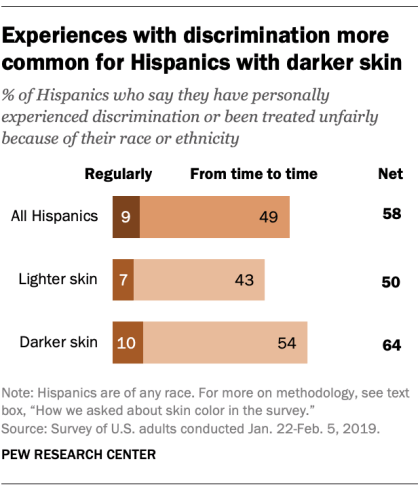
Racism is a term that is being used only when there is a need but, everyone in every walk of life does use this term to discriminate every person they meet and this discrimination does not have any religion or region but by their skin color as Martin Luther King Jr. rightly said: ” The ultimate measure of a man is not where he stands in moments of comfort and convenience, but where he stands at times of challenge and controversy”. When the civil rights moment was won in 1968 it bought a sense of relief to a black person thinking that Racism is the end but history has its play but in 2014 a black 18-year-old student, Micheal Brown was shoot down by a White Police officer and currently this is the time where the man has to measure himself as the United States is Gripping itself to its laws and the protests are erupting across the districts of the United States and all across the globe and the reason behind this simply a term that has a deep meaning ” Racism” and this term led to the death of a man named of George Floyd who was killed by a White Policeman by strangling George’s neck with his knees for about 9 minutes. This act of the white policeman has condemned by many citizens across the globe and demonstrations and protests and clashes with the police in the United States very saddening. Due to this crisis, there have been curfews in several districts in the United States and with the COVID-19 cases escalating past 6 million all over the globe and the United States being in the epicenter of this pandemic and many experts feel that due large gathering there may a large hike in the COVID-19. This is a disaster for mankind as this has violent eruptions during this pandemic crisis as there is spread of violence, clashes with police, looting and burning the stores and currently, the actions of the Civil rights movement is trending all over the internet and all the facts and related to racism is true as it is proven by everyone and by Statistics, in 2019 around 58% of people have been or felt discriminated by fellow mates or by society, but the real question here is “Whether the real heroes of the Civil rights movement would have wanted this clashes or the activities that are taking place”?

ACCORDING TO PEW RESEARCH CENTRE

A LOOK BACK TO PAST

Oppression of the black people and colored have been in the history of human civilization a long time ago and as the civilization was becoming modernized the idea of this oppression was expected to be dropped but it gained momentum and made the oppressed people fight for equal rights and this fights have been in many countries like South Africa, United States, India, Britain and in other many countries as well and in the United States it gained momentum when Rosa parks refused to give her seat to the white that resulted in starting the Civil rights movement by Martin Luther King. Jr and this became a mass movement until the Civil rights bill was passed and this idea inspired to banish the Apartheid idea in South Africa by Nelson Mandela. Martin Luther King always stood by the side of Non-Violence and this was his Philosophy until death and his inspiration behind this is Mahatma Gandhi who used the same Non-Violence for the freedom.

Martin Luther King considered the triple evil of the society like poverty, Militarism, and racism and always stood against it and proved to be true. Martin Luther King has leaven behind a legacy to win a battle using Non-Violence as a tool but is his idea is being heard and those who use violence in this situation needs to rethink about their actions as it cause good in any way, of course not it just causes spreading of hatred among all the people and this has to be stopped and if anyone wants to prove that the reason for this protests and demonstrations is equal rights then bring back the Civil rights Movement as 2.0 and recreate the Civil Rights Movement again to win this battle with Non-Violence.

Man with the Magic bat, Hand, and Skill

Sachin new bat 2Sachin Ramesh Tendulkar

cricket is one of the most popular games in India, even though the national game is hockey, in each country and street give birth to the new batsman and bowler, many of them wont to build their career in cricket but some of them get success in it. There are some stories of a famous player which magical abilities, which you have to know about it.
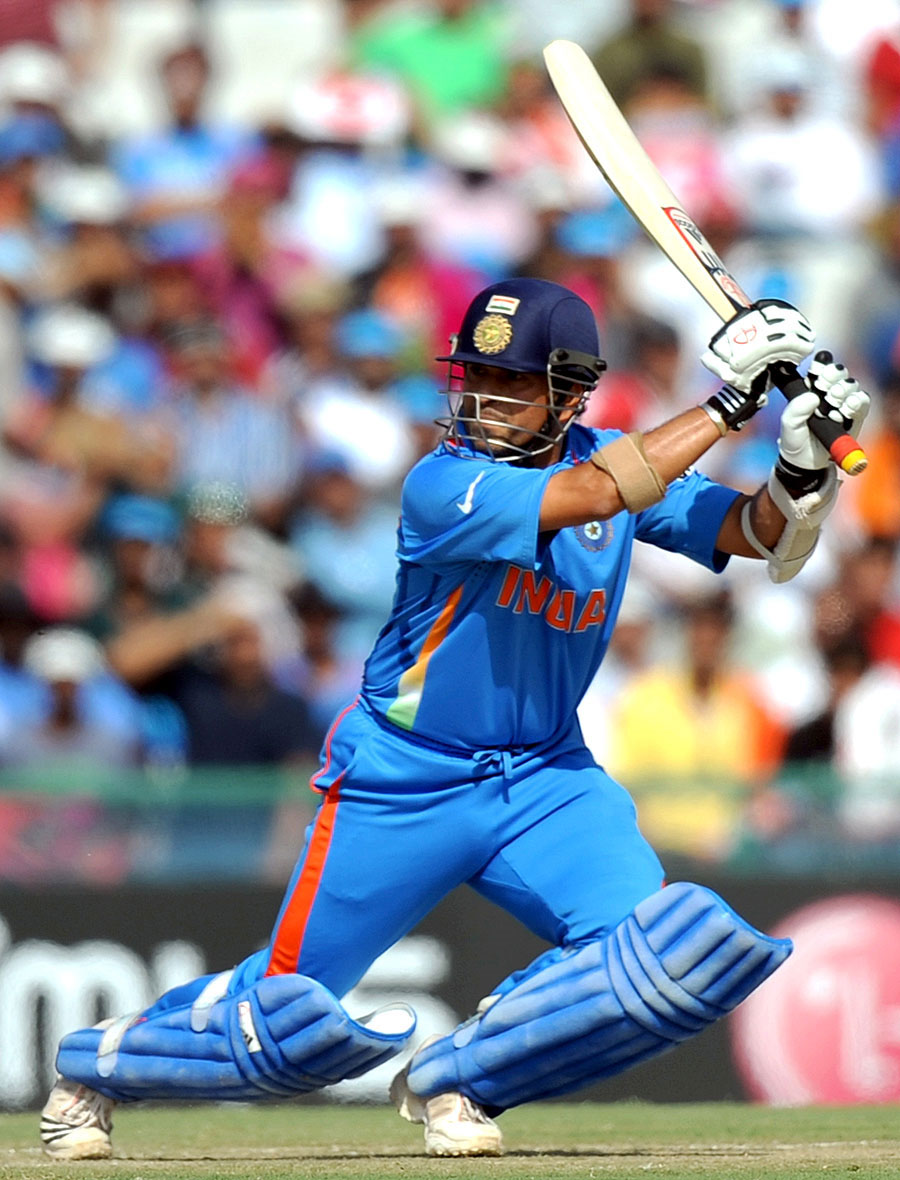
the first story is about the world-famous, the world’s most prolific batsman of all time batsman Sachin Ramesh Tendulkar, he was born at 24 April 1973 in Nirmal Nursing Home Dadar, Bombay in a Maharashtrian family. Moreover, he spent his formative years in the Sahitya Sahawas Cooperative Housing Society in Bandra (East). At the age of eleven, Ajit introduced the young Sachin to cricket in 1984. Ajit introduced him to Ramakant Achrekar, a famous cricket coach and a club cricketer of repute, at Shivaji Park, Dadar. at the first stage he did not play well, he did a lot of hard work on batting stock, and with the help of luck, he got chance to play in India team Tendulkar made his Test debut on 15 November 1989 against Pakistan in Karachi at the age of sixteen and went on to represent Mumbai and India for close to twenty-four years. Yet, with the help of magic bat he made may record in cricket, which is never broken till date, furthermore, in 2002 in his half career, he gets the title of the second greatest Test batsman of all time, after the Don Bradman and the second greatest ODI batsman of all time, behind Viv Richards. he has the highest score in international cricket.
Here are some records of Sachin Tendulkar:
1) is earliest cricket debut at the age of 16.
2) Most One-Day Internationals: 463,
3) Most Man of the Match awards: 62,
4) Most Man of the Series awards: 15,
5) Longest ODI career: 22 years 91 days,
6) Only one to do rare ODI triple: 15000 runs (18426), 100 wickets (154) and 100 catches (140),
7) Most ODI runs: 18426 (ave.44.83) in 463 matches,
8) Most ODI centuries: 49 ,
9) Most hundreds against any team: 9 vs Australia,
10) The only batsman to register 8 or more hundreds against two nations: 9 vs Australia and 8 vs Sri Lanka,
11 ) Most 50-plus innings: 195 (49 centuries and 96 fifties),
12) Most runs in a calendar year: 1894 (ave.65.31) in 34 matches in 1998,
13) Most hundreds in a calendar year: 9 in 34 matches in 1998,
14) Most times to score 1000 runs in a calendar year: 7 times,
15) Most fours: 2016,
16) Most runs against Australia: 3077 at an average of 44.59 in 71 matches,
17) Most runs against Sri Lanka: 3113 (ave.43.84) in 84 matches,
18) Most runs against South Africa: 2001 runs at an average of 35.73 in 57 matches, 19) Most runs against Pakistan: 2526 (ave.40.09) in 69 matches,
20) the First batsman to score an ODI double hundred: 200 not out against South Africa on Feb.24,2010,
21) Most runs in World Cups: 2278 runs at an average of 56.95 in 45 matches.
thumbCaption cool MS.Dhoni
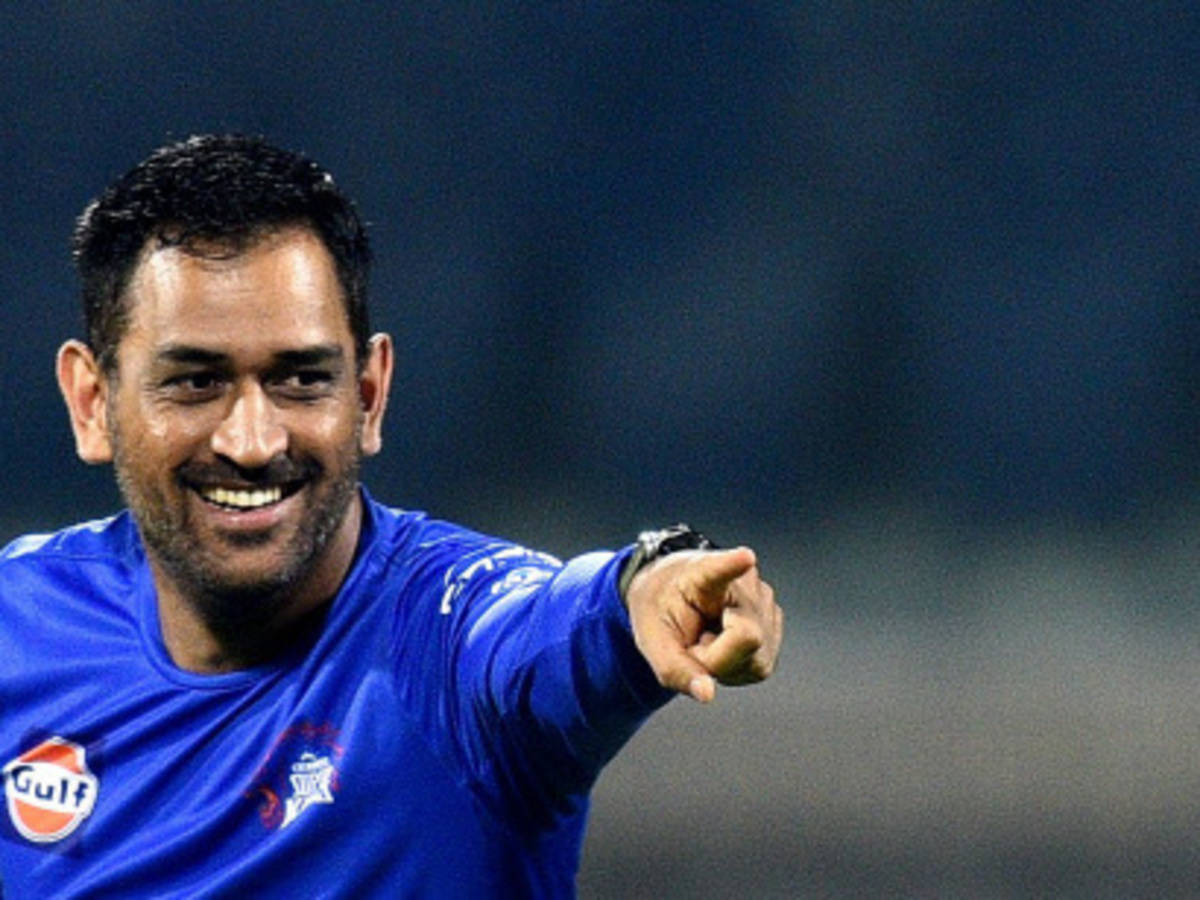
Who not know Caption cool here some background history of Mahendra Singh Dhoni, he was born on 7 July 1981 in Ranchi, Bihar and he identifies as a Hindu Rajput. His father Pan Singh worked in junior management positions and his mother is a housewife. Dhoni is a fan of Adam Gilchrist, and his childhood idols were cricket teammate Sachin Tendulkar. He has good hand in badminton and football, he played goalkeeper role in a football match. Though he had not played cricket, He impressed with his wicket-keeping skills and became the regular wicketkeeper at the Commando cricket club (1995–1998). based on his wicketkeeping skill he was selected for Vinoo Mankad Trophy Under-16 Championship and he performed well and the journey of his career is started of this match.At the young age, he was a Travelling Ticket Examiner (TTE) at Kharagpur railway station from 2001 to 2003, under South Eastern Railway in Midnapore, a district in West Bengal. He made lot of friends in railway quarters when he was TTE. However, on early stage of the career, he struggled a lot to impress the selector of the Indian cricket team, many times he tries to give up, he couldn’t. he played form Junior cricket in Bihar, Bihar cricket team, and Jharkhand cricket team. After sent a report to the National Cricket Academy from Jamshedpur in 2003. he was selected in India A team in 2003, the first match was against the Zimbabwe XI he did a great wicketkeeping with 7 catches and 4 stumping, and then after he played against Pakistan A, he helped the team to chase the score of 223 with his half-century. On the bases of those matches performance, he received the attention of caption and coach of Indian cricket team Sourav Ganguly and Ravi Sastri.
On 2004,the ODI squad for the Bangladesh tour in 2004/05,but the ODI career did not give boot to him in the first match he got runout whit the duck. However,by the luck he got second chance in Sri Lanka tour in the first two matches he did not get the chance to perform in batting, he get chance to bat on early order to bust the run rate, he endade the whole match with 183* runs in 145 balls. after this match, he done well in whole career, however in 2007 under the ms. dhoni’s captainship  India won the ICC World T20, 2010&2016 Asia cup and 2013 ICC champions trophy. Additionally, when the India Premier League(IPL) started in 2008, Ms.dhoni was contracted by the Chennai Super Kings for US$1.5 million. in this year he was the costliest player and caption in whole IPL. Under the captainship C.S.K. won the tile of I.P.L. in 2010, 2011, and 2018. But, because of ban on C.S.K. for two year 2016&2017. the Career of Ms.Dhoni never stops,in 2016  Rising Pune Supergiant bought caprion cool at 1.9 million, however his team did not perform well in that year, in next year his time reached filal and lost form Mumbai Indian,moreover he done grate came back in 2019 and chase all match and enter final again Mumbai beat Chennai. The grate thing is that he always guide all baller from back side of stumps and take wicket with the fastest stumping with the fastest hand.He also have magical abilities in 3rd umpire review, he never get fail in it, and he also made record to never fail in 3rd umpire review.
Here are some record of MS.Dhoni(caption cool):
1) Only Captain to win all three ICC Trophies
2) Most Successful Indian Captain in all three formats
3) First Captain to take India at No. 1 in Tests
4) Most Successful IPL Captain
5) Most T20 International wins as captain
6) First Player to pass 10,000 ODI runs with 50+ average
7) Most Successful Indian wicket-keeper
8) Most Stumpings in International Cricket
9) Most centuries at No. 7 batting position in ODIs
10) Most Not-Outs
11) Most Times Bowled while playing as a WK
12) Most Expensive Bat( £ 100,000)
13) Most ODI Games finished with a Six
14) Only Captain to whitewash Australia in Australia in 140 Years
15) Highest Individual Score by a wicket-keeper batsman in ODIs

E-learning boon or bane

Nowadays, there is an increase in trend of distance learning. Several people believe that this method has a total of positive impacts and it will alter conventional education while others say that argue that it is impossible to eliminate brick and mortal classroom.

To begin with, there are some advantages in attending virtual classroom. First and foremost, learning via internet is time-saving for both students and schools. For example, students can learn anything and anywhere provided that they have computer connecting the internet. In terms of teachers, they can deliver a lesson to all classes by video instead of teaching the same things again and again. Secondly, online education saves costs for country. For instance, schools can reduce overheat costs or decline budget for investing on facilities since expanding campus is not necessary. In addition, e-learning provides opportunity for people who live far from university. The fact shows that many residents in remote rural area still have chances to achieve degree thanks to this advanced technology.


On the other hands, face – to – face learning plays an integral part in education. Firstly, interactive learning is more effective than online learning. In detailed, when discussing about one topic, teachers can give some feedback for students to make sure that they understand all their mistakes and improve these errors. Moreover, studying under supervision motivates students to learn hard. Due to the fact that there are a huge number of students who are lazy and not self-awareness is learning, it is essential for them to have tutors who control students’ studies and help them have good academic results.


In conclusion, although there are a bunch of positive influences which online learning brings, I strongly believe that traditional education is a good teaching method which is irreplaceable. It not only helps students have more interaction with classmates but also provide them an environment to improve skills and learn new things together.

DRDO develops Ultra Swachh for disinfection of PPEs and other materials

Defence Research and Development Organisation (DRDO) has developed a disinfection unit named Ultra Swachh to disinfect a wide range of materials, including Personal Protective Equipment (PPEs), electronics items, fabrics, etc.

Institute of Nuclear Medicine & Allied Sciences (INMAS), the Delhi based laboratory of DRDO has developed this product with industry partner M/s Gel Craft Healthcare Private Ltd, Ghaziabad.

The system uses an advanced oxidative process comprising of multiple barrier disruption approach using Ozonated Space Technology for disinfection. 

The system is double layered with specialised Ozone sealant technology assuring trapping of ozone for the necessary disinfection cycle. It also has catalytic converter to ensure environment friendly exhaust i.e. only oxygen and water. 

The system is in compliance with International Standards of Industrial, Occupational, Personal and Environmental Safety. The Ultra Swachh comes in two variants namely Ozonated Space and Trinetra Technology. Trinetra technology is the combination of Ozonated space and radical dispenser. Treatment is optimised with automation for quick disinfection cycle. 

The system operates on 15 Ampere, 220 Volts, 50 Hertz power supply. The system has been provided with various safety features such as emergency shutdown, door interlocks, dual door, delay cycle, and leak monitors, etc to ensure safe operations for longer duration. Dimensions of the Industrial Cabinet are 7’x4’x3.25’ to disinfect large quantity at a time. Cabinets of different sizes will be available for the industry. 

20 States under ONOC to commence national/ inter-State portability transactions to benefit migrants

The Union Minister of Consumer Affairs, Food & Public Distribution Shri Ram Vilas Paswan today announced the inclusion of three more states namely – Odisha, Sikkim and Mizoram in the scheme on ‘Integrated Management of Public Distribution System’ (IM-PDS).Under this system nation-wide portability of the benefits under NFSA through “One Nation One Ration Card” plan is implemented to enable the NFSA ration card holders to lift their entitled quota of subsidised foodgrains from any ePoS enabled FPS of their choice anywhere in the country, by using the existing/same ration card after Aadhaar authentication on ePoS device.

The facility so far is enabled in 17 States/UTs, namely – Andhra Pradesh, Bihar, Dadra & Nagar Haveli and Daman & Diu, Goa, Gujarat, Haryana, Himachal Pradesh, Jharkhand, Kerala, Karnataka, Madhya Pradesh, Maharashtra, Rajasthan, Punjab, Telangana, Tripura and Uttar Pradesh. Further, constant efforts are being made by this Department of Food & Public Distribution to expand the reach of national portability to the beneficiaries of other States/UTs also in association with respective State/UT Governments. In this endeavour, necessary preparatory activities to integrate these three new States with the national cluster viz. upgradation of ePoS software, integration with central IM-PDS and Annavitran portals, availability of ration cards/beneficiaries data in Central Repository, requisite testing of national portability transactions has also been completed with the support of central NIC team. After completing all these arrangements, the national/ inter-State portability transactions under ‘One Nation One Ration Card’ plan has been enabled in these States w.e.f distribution month of June 2020. By August 2020 three more States namely – Uttarakhand, Nagaland and Manipur will also be added to the national cluster. Department is doing all necessary arrangements to include remaining all 13 States namely – West Bengal, Arunachal Pradesh, Assam, Meghalaya, Delhi, J&K, Ladakh, Chandigarh, Puducherry, Tamil Nadu, Chhattisgarh, Andaman&Nicobar and Lakshadweep island to the national cluster. It is confirmed that by 31st March 2021 all States will be added to One Nation One Ration Card scheme and the scheme will be operational all over India.

Shri Paswan highlighted that central technical team has imparted the requisite orientation trainings to the technical team and concerned officers of these States/UTs through Video Conferencing and necessary guidelines/ instructions for the implementation of national/inter-State portability were also provided to them. It is reiterated that those NFSA ration cards which have recorded atleast one Aadhaar authenticated transaction during the last 6-months shall be eligible for the national portability transactions under this plan. This feature has been enabled through the central repository of ration cards/beneficiaries maintained by NIC. Further, it is mentioned that requisite web-services for reporting of portability transaction details to central dashboard are also enabled for these States with immediate effect and the central NIC team shall be continuously assisting the State Governments in seamless rollout of ‘One Nation One Ration Card’ plan.

Shri Paswan requested all these States to commence the national/ inter-State portability transactions in June 2020. This would also enable the beneficiaries of these States anywhere in the national cluster of States/UTs to access their quota of foodgrains through national portability with immediate effect. In this regard, efforts/activities to generate necessary awareness among the NFSA beneficiaries and FPS dealers may also be undertaken on priority.

Ministry of Environment, Forest and Climate Change on Issues Related to Air Quality in Urban Areas

The 15th Finance Commission headed by Sh. N. K. Singh and including its Members and senior officials held a detailed meeting with the Ministry of Environment, Forest and Climate Change headed by the Union Minister for  Environment, Forest and Climate Change, Shri Prakash Javadekar, senior officers on issues relating to Air Quality(AQ) specially that in Urban Areas. It may be recalled that the XVFC Report 2020-2021 was the first time that any Commission has given attention to air quality (AQ) as a major focus and this FC had not only recommended grants for 2020-21 and also provided road map for its award period. The meeting started with the Minister applauding the Commission for this path breaking step.

The Commission is currently deliberating the recommendations to be made for the next five years from 2021-22 to 2025-26 and needs to formulate suitable provisions for continuing the grants for these cities/UAs for improving ambient air quality in a sustainable manner. In this regard it needed to understand the procedure and operational guidelines finalised in administering these grants and monitoring the outcomes for 2020-21, the meeting with the MoEF&CC was called for.

            The objective of the meeting focused was to was to discuss on the status of the implementation of the FC’s recommendations for 2020-21 for administering the grants to improve AQ in million-plus cities and also to seek inputs from the Ministry on what should be considered for the next five years from 2021 to 2026 and this was elaborated by the Chairman, Shri N. K. Singh to the Minister and the officials.

            The Commission was given the following information: 

  • Regarding reliable data on AQ measurement, it was explained that there is a network of around 984 stations covering a wide range of cities and towns, around 779 manual stations and 205 continuous monitoring stations in around 500 cities which were set up under the National  Control  of   Air   Pollution   (NACP)  to meet its  objectives. Though a network of AQI monitoring stations are in place, there is a need for strengthening and expanding these along with the geographical area to cover the air-shed areas in order to make it more robust and accurate. 
  • The Ministry has begun this work earlier as part of roll-out of NACP and various think-tanks like IITs, IIMs and NITs have been made local partners for different cities/towns. Ministry will also seek their expert guidance on what the Commission need to consider for the five years from 2021.
  • As the problem of AQ is mostly not a localized phenomenon and is influenced by many factors beyond the control of a particular region, the Central Pollution Control Board (CPCB) is now focusing on air-shed management approach.
  • Construction & Demolition Waste Management was a priority of the Government and that the Government would seek the support of the Commission for the same.

The Minister (MoEF&CC) Shri Prakash Javadekar, appreciated the inclusion of Air Quality(AQ) of Delhi in the XVFC’s Report of 2020-2021 and added that there would be a basic structural change in sources of AQ in the next few years and particularly in larger cities of the country due to the new regime to emission norms which would lead to a estimated reduction of 30 to 40 per cent in vehicular emission. 

He opined that strict implementation of pollution and emission laws with harsh punishment and penalties to the defaulters is the pre-requisite for ambient AQ. 

He informed that with the launching National AQ Index in 2015, we now have reliable data of AQ with respect to 42 million plus cities from 2017 onwards. 

The Minister also informed the Commission that his Ministry was coming up with the rules for implementation of Construction and Demolition Waste Control so as to control dust, a major source of pollution in cities.

The Minister emphasized that the grants by FC-XV should continue for the next five years to strengthen the network and coordination between SPCBs of various cities for enforcement of AQ improvement measures. Third party assessment could be done through institutes like IITs and IIMs. He also stated that the Ministry is planning to hold a conference with the SPCBs to ensure effective implementation of this programme, to which the Chairman XVFC has been invited as a participant.

He also briefed about various reforms are being taken up by the Ministry at a break-neck speed and stated that the time delays in approval of application/liences were drastically brought down from earlier 640 days  to 108 days now. Further, this period will be brought down to 50 days within next six months. As regards ease of doing business, the Ministry is coming up with an amendment to the notification of environment impact assessment. He also mentioned the various reforms Page 6 of 7 implemented in the coal washeries that brought down the pollution by several fold and many other steps have been initiated by the Ministry as part of ease of doing business at national and international level.

The Commission unilaterally appreciated the Ministry’s effort in building up capacity to monitor Air Quality.  The Commission also stressed on the need for controlling agricultural pollution.

It will be recalled that the 15th Finance Commission in its report for the Financial Year 2020-2021 had  recommended grants of Rs. 4,400 crore for the year 2020-21 to improve the ambient air quality in fifty million plus cities/Urban Agglomerations (UAs). For this, Ministry of Environment, Forest and Climate Challenge has been entrusted with the responsibility to facilitate the desired outcomes through these urban local bodies.

The Chairman while stressing on the need for consistent and reliable data on AQ, stated that Commission was concerned about the pollution of NCR and would address the same within the mandate of the Finance Commission.  He assured that MoEF&CC that the XVFC would continue it consultations with the Ministry on this critical issue of AQ in million plus cities to firm up its recommendations.

Introverts make Great Writers

“We write to taste life twice, in the 
Moment and in retrospect.”
-Anaïs Nin

As an introvert, social interactions can be draining for me. If people don’t ask me questions about myself or what I do, chances are I won’t open up and tell them. If you’ve been reading my stories, it may come as a surprise to you since I’m pretty much on open book when it comes to writing.I don’t open up when people don’t ask me questionsI ask questions, but I feel awkward following up on subjects I don’t know.If you’re an introvert, you may have noticed the same.That made me reflect back on my writing. I couldn’t understand why I wasn’t able to talk about myself when I so easily do it in writing.For the longest time, because of my introversion, I thought I had nothing “original” to say. I thought I was just a timid girl and that what I had to say was not necessarily important. Obviously, I’m being a little over-dramatic here.And of course, I was wrong.Introverts have so much to say. Potentially more so than extroverts.

3 Ways Writing Has Been Therapeutic for Me and Could Be for You Too:-

1. It allows you to express yourself the way you really feel.

“Your visions will become clear only when you can look into your own heart. Who looks outside, dreams; who looks inside, awakes”―C.G. Jung

As introverts, we tend to keep our good and bad emotions inside. We have close friends we can talk to, but sometimes we don’t want to bother them.Writing is a phenomenal way to express oneself.

2. It helps you connect with other like-minded people

“A small group of like-minded people can change the course of history.” — Mahatma Gandhi

Extroverts have it a little easier when it comes to meeting new people and making friends, if not simply by the fact that they like to surround themselves with people more frequently.Ever since I started writing, more people have opened up to me because they can relate to my stories. I’ve made deeper connections and met amazing people.But more importantly, it showed me that there are many others like me, and that introversion is not a bad thing. In fact, I’m happy to be introverted.

3. It makes you go out of your comfort zone and expands your horizons 

“Life begins at the end of your comfort zone.” — Neale Donald Walsh

I love the quote above. I found that to be so true. Expressing my feelings is certainly not in my comfort zone, but writing as made it easier. When you’re able to get out of your comfort zone, suddenly you’re more in peace with the idea that you’re more than you thought you were. Your self-esteem goes up and you’re more willing to try new things.

Conclusion

Writing allows you to express yourself freely, helps you connect with like-minded people, make you go outside your comfort zone and expands your horizons.I found that to be extremely beneficial in my life. In fact, it was so beneficial that after my first month writing.I can’t stop writing now. Every morning I must write. It’s my way of always being myself and staying out of my comfort zone.

Are you an introvert?

Have you tried writing?

Where do you write?

What do you write about?

What benefits have you gotten from writing?

If you don’t write, why not?

What’s holding you back?

          “Fill your paper With the breathings of your heart.”- William Wordsworth

Writing is not for everyone. But if you’re an in introvert, I dare you to try it. Start with a journal. It may sound ridiculous at first, but you’ll realize soon enough that it isn’t. Write about your life. Write about who you are. What you want to be. Dare publish, if only for yourself.You can do this!

Thanks for reading, sharing, and following! 🙂


Date of Poll and Counting of Votes for Deferred Rajya Sabha Poll

On 25.02.2020, Election Commission of India announced elections to the Council of States to fill 55 seats of Members from 17 States, retiring in the month of April,2020, which were notified vide Notification No. 318/CS-Multi/2020(1) dated 06.03.2020. After the last date of withdrawal on 18.03.2020, respective Returning Officers declared 37 seats from 10 States filled in uncontested. Further, as per the reports received from the concerned Returning Officers, the biennial elections for 18 seats from the States of Andhra Pradesh, Gujarat, Jharkhand, Madhya Pradesh, Manipur, Meghalaya and Rajasthan were to be conducted on 26.03.2020 (Thursday) and the date before which election was to be completed as earlier announced by the Commission was 30.03.2020 (Monday) as per the notification dated 06.03.2020.

          Section 153 of the Representation of the People Act, 1951 specifies that the Election Commission for reasons which it considers sufficient, may extend the time for the completion of any election by making necessary amendments in the notification issued by it under section 30 or sub-section (1) of section 39 of the said Act. Accordingly, considering the prevailing unforeseen situation of public health emergency due to COVID-19 and related advisories in the country, the Election Commission, vide its press note, dated 24.03.2020, deferred the poll and extended the period of said election under the provisions of section 153 of the said Act and decided that the announcement of fresh date of poll and counting for the said biennial elections will be made by the ECI after reviewing the prevailing situation. The Press Note also specified that the list of contesting candidates already published for the said election by the respective Returning Officers, is to remain valid for the purpose of remaining activities as was prescribed under the said notification (dated 06.03.2020).

          Now, Commission has reviewed the matter in detail. Considering all factors, including the guidelines dated 30.05.2020 issued by Union Home Secretary and Chairman, national Executive Committee (NEC) under the National Disaster Management Act, 2005, and taking into account the inputs obtained from the Chief Electoral Officers concerned, the Commission has decided that the date of poll and counting of votes in respect of the biennial elections for 18 seats from the States of Andhra Pradesh (4 seats), Gujarat (4 seats), Jharkhand (2 seats), Madhya Pradesh (3 seats), Manipur (1 seat), Meghalaya (1 seat) and Rajasthan (3 seats) shall be as per the following schedule: 

EventsDate
Date of Poll19th June, 2020 (Friday)
Hours of Poll09:00 am to 04:00 pm
Counting of Votes19th June, 2020 (Friday) at 05:00 pm
Date before which election shall be completed22th June, 2020 (Monday)

          Commission has also decided that the Chief Secretaries shall depute a senior officer from the State to ensure that the extant instructions regarding COVID-19 containment measures are complied with while making arrangements for conducting the elections.

          Further Commission has appointed Chief Electoral Officer concerned as Observer for the election in the respective State.

Energising the MSME Sector through entire gamut of ‘Atmanirbhar Bharat Package’

In line with Government of India’s top focus on energising MSMEs in the country, a special meeting of Cabinet Committee on Economic Affairs (CCEA) was convened under the Chairmanship of Prime Minister Shri Narendra Modi, here today, which approved the upward revision of MSME definition and modalities/ road map for laying down effective implementation mechanism for the remaining two announcements under the Atmanirbhar Bharat Package. These include:

  • In the package announcement, the definition of micro manufacturing and services unit was increased to Rs. 1 crore of investment and Rs. 5 crore of turnover. The limit of small unit was increased to Rs. 10 crore of investment and Rs 50 crore of turnover. Similarly, the limit of a medium unit was increased to Rs 20 crore of investment and Rs. 100 crore of turnover. It may be noted that this revision was done after 14 years since the MSME Development Act came into existence in 2006. After the package announcement on 13th May, 2020, there were several representations that the announced revision is still not in tune with market and pricing conditions and it should be further revised upwards. Keeping in mind these representations, it was decided to further increase the limit for medium manufacturing and service units. Now it will be Rs. 50 crore of investment and Rs. 250 crore of turnover. It has also been decided that the turnover with respect to exports will not be counted in the limits of turnover for any category of MSME units whether micro, small or medium. This is yet another step towards ease of doing business. This will help in attracting investments and creating more jobs in the MSME sector. The following table provides the details of revised limits:
 CategoryOldCapitalOldTurnoverNewCapitalNewTurnover
Micro25 Lakh10 Lakh1 Crore5 Crore
Small5 Crore2 Crore10 Crore50 Crore
Medium10 crore5 Crore50 Crore250 Crore
  • Approval for provisioning of Rs 20,000 crore as subordinate debt to provide equity support to the stressed MSMEs. This will benefit 2 lakh stressed MSMEs.
  • Approval for equity infusion of Rs. 50,000 crore for MSMEs through Fund of Funds (FoF). This will establish a framework to help MSMEs in capacity augmentation. This will also provide an opportunity to get listed in stock exchanges.

With today’s approval, implementation Modalities and Road Map for entire components of the Atmnirbhar Bharat Abhiyan package are in place. This will help in attracting investments and creating more jobs in the MSME sector.

In the aftermath of COVID-19 pandemic, Prime Minister Shri Modi was quick to recognise the role of MSMEs in building the Nation. As such, MSMEs formed a very prominent part of the announcements made under the Atmanirbhar Bharat Abhiyaan. Under this package, the MSME sector has not only been given substantial allocation but has also been accorded priority in implementation of the measures to revive the economy. To provide immediate relief to MSME sector, various announcements have been made under the Package. The most important ones also included:

  • Rupees Three lakh crore collateral-free automatic loans for MSMEs to meet operational liabilities, buy raw material and restart businesses.
  • Revision of MSME definition to render maximum benefits to the sector;
  • Disallowing global tenders in procurements uptoRs. 200 crores- to create more opportunities for domestic players,
  • And clearing of MSME dues by the Government and Public Sector Units within 45 days.

Government of India has been taking all necessary steps to ensure that the benefit of these landmark decisions reaches to the MSMEs at the earliest. In this regard, following necessary policy decisions have been already taken and the implementation strategy has been put in place.

  • The scheme for Rs. Three lakh crore col lateral-free automatic loans was earlier approved by CCEA and has been formally launched.
  • Modalities have been worked out for Upward revision of MSME Definition making it more inclusive broad-based providing greater avenues to MSMEs to harness their potentials.
  • Similarly, amendments in General Financial Rules mandating no global tenders for procurement upto 200 crore have been carried out. The new rules have already been issued and effected. This will open up new business avenues for Indian MSMEs.
  • To ensure that MSME payments are released within the timeframe of 45 days, directions have been issued at the level of Cabinet Secretary, Expenditure Secretary and Secretary, MSME.
  • To further ease the burden on MSMEs, RBI has extended moratorium on repayment of loans for another three months.

To manage all this, a robust ICT based system called CHAMPIONS has also been launched by the Ministry of MSME. The portal is not only helping and handholding MSMEs in the present situation, but is also providing guidance to grab the new business opportunities and in the long run, become national and international Champions.

MSME Ministry is committed to support the MSMEs, and the people who depend on them. All efforts are being made to encourage MSMEs to take benefit of the initiatives under the Atmanirbhar Bharat package and our other schemes.

Background:

Micro, small and Medium Enterprises (MSMEs) popularly called as MSMEs are the backbone of Indian economy. Silently operating in different areas across the country, more than 6 crore MSMEs have a crucial role to play in building a stronger and self-reliant India. These small economic engines have a huge impact on the country’s GDP-making a contribution of 29 percent. They contribute to almost half of exports from the country. Additionally, more than 11 crore people are employed in the MSME sector.

******

Curse of human life : value of Values

The real illiteracy today’s world facing is lack of sacraments . Parents send their children to school so teacher can teach them but they forgets that they are the first teacher who teaches moral values to their child such as respect , humbleness , honesty. That’s their duty to give sacrament to their children . School can provide them only academic knowledge, but the basic etiquettes has to be taught by their parents only . Parents generally avoid their responsibility of teaching their childern the basic ethics and blames the school for children’s wrong deeds and instead of exhorting their child, they rather scolds them and says “What are you learning in school” . Parents should remember that they are giving fees to school only to provide academic knowledge and basic ethics described in the books but it’s actually the duty of the parents to make children to follow those etiquettes. Child spends maximum of 8 hours of his day in school but the rest of the 16 hours with family.
Hence, when a person makes ethical mistakes after growing , the blame goes to their parents who didn’t taught them to respect people, to take right decision ,  who didn’t taught them the difference between the good and bad deeds ,who let them be a part of a bad company which developed such mentality & influenced them to do bad activities.These are the things which has to be taught to a person from the childhood itself . So, it’s the duty of all the parents that rather than scolding children even for their smaller mistakes ,explain them the right thing.
That’s how a true & cherish development of a child takes place to be a better human ,better citizen.