In our series ‘Expert Speak’ on All India Radio, we bring you the views of the leading medical experts on COVID-19.

Talking to AIR News, Dr. Uma Kumar, Head of  Rheumatology Department, AIIMS suggested to the people to follow social distancing, hand hygiene and cough etiquettes.

President of Public Health Foundation of India, Dr K Srinath Reddy said, India is in a much better position as compared to rest of the world as far as the COVID-19 cases are concerned and the measures taken are yielding results.

‘Expert Speak’ on AIR: People must follow social distancing, hand hygiene, cough etiquettes

In our series ‘Expert Speak’ on All India Radio, we bring you the views of the leading medical experts on COVID-19.

Talking to AIR News, Dr. Uma Kumar, Head of  Rheumatology Department, AIIMS suggested to the people to follow social distancing, hand hygiene and cough etiquettes.

President of Public Health Foundation of India, Dr K Srinath Reddy said, India is in a much better position as compared to rest of the world as far as the COVID-19 cases are concerned and the measures taken are yielding results.

The New Normal

­In these times of COVID-19, the big challenge for most of us is how to protect ourselves and our families from the virus and how to hold on to our jobs. For policymakers that translates into beating the pandemic without doing irreversible damage to the economy in the process.

With over 4 million cases and some 250,000 victims of the virus to date globally, and the expected loss of the equivalent of 305 million jobs worldwide by mid-year, the stakes have never been higher. Governments continue to “follow the science” in the search for the best solutions while foregoing the obvious benefits of much greater international cooperation in building the needed global response to the global challenge.

This is moreover a global crisis, and vision has not yet focused on the new realities in other leading powers and major economies. If we try to take an unflinching measure of the impact globally, we can see both good news and bad news—although the two are by no means equally balanced.

But with the fight against COVID-19 still to be won, it has become commonplace that what awaits us after victory is a “new normal” in the way society is organized and the way we will work.

The bad news, on the other hand, lies in the nature of the virus itself and in its implications for human life and socioeconomic arrangements. Covid-19 is an extremely contagious virus with high lethality for those exposed to it, and it can be transmitted by asymptomatic “super spreaders.” Further, since this disease is zoonotic (contracted from another species) and novel (our species has no preexisting immunity), the pandemic will roam the world in search of human quarry until an effective vaccine is invented and mass-produced—or until so many people are infected that herd immunity is conferred.

The potential downside of this crisis looks dire enough for affluent societies: even with excellent economic management, they may be in for gruesome recessions, both painful and prolonged. But the situation for the populations of low-income countries—and for least-developed, fragile states—could prove positively catastrophic. Not only are governments in these locales much less capable of responding to pandemics, but malnourished and health-compromised people are much more likely to succumb to them. Even apart from the humanitarian disasters that may result directly from raging outbreaks in poor countries, terrible indirect consequences may also lie in wait for these vulnerable societies. The collapse of economic activity, including demand for commodities, such as minerals and energy, will mean that export earnings and international remittances to poor countries are set to crash in the months ahead and remain low for an indefinite period. Entirely apart from contagion and lockdowns, this can only mean an unavoidable explosion of desperate need—and under governments least equipped to deal with this. While we can hope for the best, the worst could be much, much worse than most observers currently imagine.

This is hardly reassuring.

We are still very much in the “fog of war” phase of the calamity. The novel coronavirus and its worldwide carnage have come as a strategic surprise to thought leaders and political decision-makers alike. Indeed, it appears to be the intellectual equivalent of an unexpected asteroid strike for almost all who must cope in these unfamiliar new surroundings. Few had seriously considered the contingency that the world economy might be shaken to its foundations by a communicable disease. And even now that this has happened, many remain trapped in the mental coordinates of a world that no longer exists.

Because nobody seems able to say what the new normal will be. Because the message is that it will be dictated by the constraints imposed by the pandemic rather than our choices and preferences. And because we’ve heard it before. The mantra which provided the mood music of the crash of 2008-2009 was that once the vaccine to the virus of financial excess had been developed and applied, the global economy would be safer, fairer, and more sustainable. But that didn’t happen. The old normal was restored with a vengeance and those on the lower echelons of labor markets found themselves even further behind.

So May 1, the International Day of Labor is the right occasion to look more closely at this new normal, and start on the task of making it a better normal, not so much for those who already have much, but for those who so obviously have too little.

This pandemic has laid bare in the cruelest way, the extraordinary precariousness and injustices of our world of work. It is the decimation of livelihoods in the informal economy – where six out of 10 workers make a living – which has ignited the warnings from our colleagues in the World Food Program, of the coming pandemic of hunger.

It is the gaping holes in the social protection systems of even the richest countries, which have left millions in situations of deprivation. It is the failure to guarantee workplace safety that condemns nearly 3 million to die each year because of the work they do.

And it is the unchecked dynamic of growing inequality which means that if, in medical terms, the virus does not discriminate between its victims in its social and economic impact, it discriminates brutally against the poorest and the powerless.

The only thing that should surprise us in all this is that we are surprised. Before the pandemic, the manifest deficits in decent work were mostly played out in individual episodes of quiet desperation. It has taken the calamity of COVID-19 to aggregate them into the collective social cataclysm the world faces today. But we always knew: we simply chose not to care. By and large, policy choices by commission or omission accentuated rather than alleviated the problem.

Fifty-two years ago, Martin Luther King, in a speech to striking sanitation workers on the eve of his assassination reminded the world that there is dignity in all labor. Today, the virus has similarly highlighted the always essential and sometimes heroic role of the working heroes of this pandemic. People who are usually invisible, unconsidered, undervalued, even ignored. Health and care workers, cleaners, supermarket cashiers, transport staff – too often numbered among the ranks of the working poor and the insecure.

Today the denial of dignity to these, and to millions of others, stand as a symbol of past policy failures and our future responsibilities.

On May Day next year we trust that the pressing emergency of COVID-19 will be behind us. But we will have before us the task of building a future of work which tackles the injustices that the pandemic has highlighted, together with the permanent and no longer postponable challenges of climate, digital and demographic transition.

This is what defines the better normal that has to be the lasting legacy of the global health emergency of 2020.


What’s so special about Burj Khalifa

Burj Khalifa, the tallest building of world with a height of about 829.8 metres, is situated in Dubai. Spire at the top of this building of height around 244 metres contributes a lot to remark this building as the tallest building of the world. It’s construction started in 2004 and ended up in 2009. It was officially opened in 2010. In the starting, during its construction it was known as burj dubai but later renamed as burj khalifa due to the fund provided by the ‘Shiekh khalifa’ for the construction of this building. The building is made up of reinforced cement concrete, steel, aluminium, and covered by glasses. The glasses prevent hight heat and wind to enter into the building. As we goes upward in the sky the temperature decreases, hence the temperature at the top of the building is less than the bottom. It takes a lot of time to clear the exterior of the building, the building is also installed with cleaning machines to clean the building.

This building has broken many records such as tallest building in the world, building with most number of floors i.e. 163, world’s highest nightclub, restaurant etc.

One of the reason to build this building was to bring the dubai in recognition and limelight. Burj khalifa consists of hotel, restaurant, offices, swimming pools
and residential apartments. Arman hotel of burj khalifa consists of 15 floors. The building has around 900 residential apartments. This building consist of 57 elevators and 8 escalators.

The buildings such as hotel restaurants near the Burj khalifa gain a lot of profit due to construction of burj khalifa but the burj khalifa itself gained very low profit.

In 2011, a man jumped form the building and committed suicide. Many times it is reported that people did suicide by jumping form the building, and many times it is reviewed as false news also.

Burj khalifa is a centre of attraction for tourists. Millions of people comes to visit Burj khalifa every year. This building is one of the vital example about statement ” Technology & skills both are getting upgraded with time”.

THE WEIRD SCIENCE

Hello everyone, Today we are going to review about Science. I know some must be thinking I had written a film name, but this is not the topic I am going to discuss. I am going to explain, most weirdest science facts and the story that you will be surprised and also get shocked.

So as we all know what does Science mean, If we say in simple word Science is neither separate from the study of nature and behavior of natural things. Through Science, we discovered many wonders around our World. Science had also made our so easier to exist. So here we knew brief about Science.

So now comes how can Science have the most mysterious thing! In our world, some mysteries are there which we may know or may not know.

If we study about some weird stuff of Science, there are like spirits and also things which knock in the night. Have you ever heard about Evil twins? The evil twins are the sub-atomic particles as they have the potential to destroy us and everything we loved. So this can be a mystery of science.

Another weird person you might have heard that is “Little Green Man”. The Fermi Paradox, helps us know about the simple question was why the universe is so. He also won the noble prize in 1938.

So let’s, know some more facts about Science.

1. The Great Barrier:- The great barrier is the largest living formation of the earth, as it is around 2,000 km distant. It is interlinked with 3,000 reefs and 900 coral islands just underneath the surface of the coral sea.

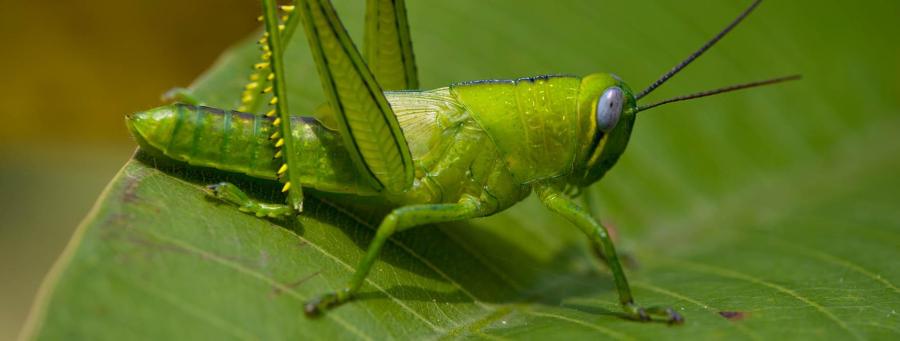
2. Grasshopper who has their ears in bellies, as it is the most astonishing and grasshopper sound detector is like the human body known as Eardrum.

3. If you don’t have saliva we would never able to taste the food. The chemical which comes out from the food mix with saliva through which we can know the taste of food.

4. If we think we are alone in the whole galaxy it is wrong as only the milky way galaxies contain more than 100,000,000,000 stars so if there will be more galaxy than milky way so just think how many stars would have been there in other galaxies. Just think!

So those signified some interesting facts about science.

Do you most deadliest animals in the world? Yes, it’s Snail. You read correct snail is the most deadliest animal in the world, as snails can kill over 20,000 people in a year. The people who eat snail there is an unpleasant condition called schistosomiasis. Through the unpleasant smell, the snails kill the people. So those who eat snail you should stop eating or you should be careful!

So now science and technology had mixed which has a reflective effect on Individual activities. The relation between science and technology is likely to be assuming many aspects with new times. It depends on us how we are going to make science useful.

So I hope you all enjoyed my article on Science.

Let me know in the comment, what you all thing about Science, how also Science made you amazed in any way.

Thank You for reading the article and have a pleasant day.

COVID-19 aggravating Yemen’s crisis!

COVID-19 has had a devastating effect on the whole world, be it peoples’ precious lives and wellbeing, the economy or the lifestyle. But already in a country that is known as the “land of milk and honey” which is going through a grave crisis corona has added to the pot of misery for the innocent lives living in Yemen who were already suffering. The situation is so dire that it has been declared an emergency.

 According to UNICEF Yemen  is going through the world’s largest humanitarian crisis and due to this many localities who reside in Yemen would like to migrate in search of better lives to UK and other countries. The children who are yet to explore the world have not even been given a chance to go to schools. Due to the disturbing scenario surrounding the people the suicide rates have increased and the county might soon be wiped out from the world map if this continues. Yemen is one of the countries which a high population of youth that is around 40% of the people living in Yemen are under the age of 15.

The population of Yemen is 2.85 crore and  it is a country located in the extreme west of Asia, not only are most of the people in Yemen facing a hunger crisis, most of them don’t even get one meal to eat in a day and on the other hand the country is struck by war and terrorism. The war has left more than half of the population without any resource and starvation is accompanied by lack of safe drinking water, access to other basic sanities and unemployment is not there and it also had one of the worst cholera outbreaks in the world.

Yemen is going through a violent phase where a civil war is raging its fire on the lives and this war is known as the proxy war, Saudi Arabia vs Iran is waging a war against Yemen  whose consequences are affecting the people.

It already has the lowest HDI rank amongst all the Arab countries and is in dire need of a change which would foster growth and development.

With all this going on, corona virus came like the wind and has created even more damage, corona virus has made the scenario even more worse as it has gripped the whole country under its vicious cycle. According to UNICEF around 2 million children didn’t have the privilege to go to school and post COVID-19 around 5 million children are now at home.

The post COVID -19 scenario is extremely tragic as they do not have half of the essential medical aid and the infrastructure of the hospital is not upgraded, they don’t have the essential medicines and lack other basic equipments as well. Many experts have stated that the health system has stopped functioning in the right manner due to lack of medical facilities, timely treatment and the lack of doctors which has collapsed the health system in Yemen. Till now from the 705 COVID-19 cases there have been 160 deaths.

Many helping hands, organisation and Charity workers are lending their energy in this alarming situation where the country is on the brink of dying. Already more than half of the population is going through starvation and with super low immunity levels to overcome the pandemic is going to be tedious task. Saudi Arabia along with other donors conducted a conference on the improvement of the devastating situation in Yemen, hopefully with timely intervention good times will be approaching Yemen.

Abdhi Upadhyay

Instagram Envy

Today’s world is full of influencers. What you eat, what you wear, where you go on holiday, and even what you speak is heavily influenced by social media. Although people today are smart enough to realize that it is not okay to compare yourself to other people, social media still provides you numerous opportunities to do just that.

Recall that heavy feeling in your heart when you see your friends and celebrities posting photos doing exciting things like going on long drives, attending glamorous parties, and visiting rare places. This sinking feeling is known as Instagram Envy.

Instagram is all about unadulterated voyeurism. You will not find Facebook’s messiness or Twitter’s relatable content in the posts here. Instagram is almost a photo site with built-in vintage filters idealizing your every moment. It encourages its users to create these perfect layouts of their lives, almost as if everyone is living their fairy tale.

Why Instagram Envy Happens

There is an unspoken rule adopted by the users worldwide to avoid populating the feeds with any mediocre or unedited pictures. Now you might feel that it is all about showing off to your followers, but that is not the case here. It is trying to level with everyone else posting one amazing picture after another; it is trying to feel good about yourself that you are in no way less than any of your friends. Owing to this rule, people often end up spending hours in hopes of composing an image of food as simple as a glass of coke over a dish of pizza worthy enough for their Instagram feed.

envy

The followers, on the other hand, are expected to indulge in the ethics of impress rather than confess, all the while being swept away from the sumptuous photos and chipping in with beautiful comments. Even the likes are shaped like little hearts, reinforcing in the minds of the viewers, the idea that each shot is a performance worthy of applause. Every last image is an advertisement for the self.

In a society focused on physical appearance, this is perhaps no surprise that there is an element of narcissism to Insta-bragging. People with a higher level of narcissism post more self-presented photos and update their profile picture often.

Dealing with Instagram Envy

One approach to counteract Instagram envy is to showcase love, not luxury. People who generate Instagram envy can also use the same platform to demonstrate that they understand and embrace the value of citizens of all social and economic strata by posting about them. They will gain more followers than foes by showcasing love.

instagram

Another aspect you need to understand is that living through the lens is not all bad. Social media has made us all social, without a doubt. You catch up with long lost friends in no time because you already have an idea of what is going on in their lives. But you need to accept social media for what it is – it is social and it is, after all, media. You really shouldn’t blindly believe everything you see. You learn through experience that it is better to know how to post than to boast.

Image Courtesy: Google

Wonder Material Graphene Revolutions :Super Exclusive

Thanks to the application of the wonder material graphene, the quest for producing durable, affordable, and mass-produced “smart textiles” has been given a new push.

Headed by Professor Monica Craciun from the University of Exeter Engineering department, an international group of researchers has developed a novel method for producing fully electronic fibers that can be integrated into the production of day-to-day clothing.

The development of the current generation of wearable electronics involves fixing devices to fabrics, which could make them extremely rigid and prone to malfunctioning. However, in the latest study, the electronic devices are embedded in the material’s fabric, and this is done by coating electronic fibers with durable and lightweight components that will enable showing images directly on the fabric.

Credit: Third Party Reference

According to the scientists, the discovery could transform the development of wearable electronic devices for applications in many different day-to-day applications, and also medical diagnostics and health monitoring, like blood pressure and heart rates. The international collaborative study has been reported in the scientific journal Flexible Electronics. Experts from the Centre for Graphene Science at the University of Exeter, CenTexBel in Belgium, and the Universities of Aveiro and Lisbon in Portugal took part in the study.

For truly wearable electronic devices to be achieved, it is vital that the components are able to be incorporated within the material, and not simply added to it.

Monica Craciun, Professor and Study Co-Author, Engineering Department, University of Exeter. & “Dr Elias Torres Alonso, former PhD student in Professor Craciun’s team at Exeter and now Research Scientist at Graphenea.”

“This new research opens up the gateway for smart textiles to play a pivotal role in so many fields in the not-too-distant future. By weaving the graphene fibres into the fabric, we have created a new technique to all the full integration of electronics into textiles. The only limits from now are really within our own imagination.”

Credit: Third Party Reference

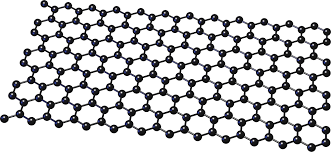
Graphene is only one-atom thick, which makes it the thinnest substance with the ability to conduct electricity. It is also one of the strongest known materials and quite flexible. In recent years, the race has been on for engineers and scientists to adapt graphene for applications in wearable electronic devices.

The latest study applied existing polypropylene fibers—often employed in an array of commercial applications in the textile sector—to fix the novel, graphene-based electronic fibers to develop light-emitting and touch-sensor devices. The innovative method means that the fabrics will be capable of integrating truly wearable displays but without the requirement for electrodes—wires of extra materials.

The incorporation of electronic devices on fabrics is something that scientists have tried to produce for a number of years, and is a truly game-changing advancement for modern technology.“Saverio Russo, Professor and Study Co-Author, Physics Department, University of Exeter.”

The key to this new technique is that the textile fibres are flexible, comfortable and light, while being durable enough to cope with the demands of modern life.“Dr Ana Neves, Study Co-Author, Engineering Department, University of Exeter.”

Credit: Third Party Reference

Earlier in 2015, an international group of researchers, including Dr Ana Neves, Professor Russo, and Professor Craciun from the University of Exeter, had developed a novel method to integrate flexible, transparent graphene electrodes into fibers often associated with the textile sector.

Reference- https://divyanshspacetech.wordpress.com

You can’t make them desire for you!

The questions linger in your head, even when you try to ignore them.

“Why don’t they want me? What’s wrong with me?”

The truth is, it’s not always about you. It’s not that something is wrong with you. It’s not that you did or said anything wrong. It’s not that you drove them away. They just didn’t want to be part of your life. And that hurts. It painstakingly and irrevocably hurts.

You wonder if only you had said more, or said less. If only you had tried harder, or played it cool. If only you had been more open or been more aloof. If only you had been precisely what they were looking for, even if that meant changing who you were.

I need you to ask yourself why you want someone who doesn’t want to be with the authentic, genuine version of yourself that you’re working so hard on every day? I know that the answer is you want them, and you want them badly. Feelings drive us to do crazy things. A sense of connection can push us to believe we have to do anything to keep it alive. The possibility of “what if?” convinces us to bend the “what is,” in order to make it happen.

Yet I need you to ask yourself again, why do you want someone who doesn’t want to be with you? Because what if you did change? What if you did become the person they were seeking after? Then what? Because that person isn’t who you are- it’s an idea. That means you have to keep up that idea for as long as you’re with them. It means you spend every moment with them not being yourself.

Because if you think for a moment that you can pretend to be someone different, until they get comfortable enough to know the real you, and then try to be the person you’ve always been? It’s not going to last. They aren’t going to stay. Heck, they may not even stay if you keep being the fake version of yourself- they may decide they want something different.

We want people because they make us feel something incredible. They fill our minds and our hearts, and we love that. We love that this person is with us right now. We are willing to do so much to keep it that way. Yet the good news is, there are billions of people on this planet. You haven’t met even a fraction of them. This person may not want you, and that doesn’t mean it’s your fault.

You can’t make them want you. You just can’t. Maybe they have their own issues. Maybe they aren’t in a healthy state to appreciate what you have. Maybe you’re not in a healthy state to be what they need. Maybe they just have different preferences that don’t add up to you- and that isn’t a sign that you’re broken or need to change. It means that one person, out of everyone on the planet, doesn’t want to be with you. And that while it feels like it, it’s not the end of the world.

I know that either way, it sucks. You’re allowed to feel hurt. You’re allowed to be sad. You’re allowed to wish that things were different. You’re allowed to wish they wanted you. It’s not a crime. It’s not a sin.

But you also have to get to the other side, where you realize this doesn’t mean you’re not worthy of love. This doesn’t mean you’re undesirable. That you’re unlovable. You can’t let this one person dictate how you see yourself for the rest of your life. They are just a person. They aren’t a god. They aren’t the end-all and be-all of your happiness. They are not the only chance you will ever have to find connection, love, and joy. There are others out there who want you for exactly who you are. You will find them. They will find you. You have your whole life ahead of you, so why waste it on someone who isn’t worth the time?

You can’t make them want you, but I promise that one day, you won’t even want them to.

Population of Asiatic lions increase by 28.87 percent

In Gujarat, the Asiatic lions which once faced imminent extinction has shown a population recovery. In the recent exercise called Poonam Avalokan which was carried out in the last week exclusively by the forest department, the population of Asiatic lions has shown a steady increase by 28.87 percent. The recent exercise shows that the population of lions has gone up to 674 against the 523 which was reported in 2015.

AIR correspondent reports that the 15th lion census which was scheduled to take place this month was not carried out due to Coronavirus pandemic.

The Poonam avalokan exercise was conducted on 5th and 6th of this month in 9 districts of Saurashtra in which the Forest department used the block count method. Around 1400 forest personnel were involved in the exercise. Apart from the direct count, various additional tools such as GPS location, individual identification marks, radio collars have also been used. The exercise shows that the lion distribution area has increased by 36 percent.

In 2015, the lion population was seen in 22,000 sq km of Gir forest which has increased to 30,000 sq km in 2020. Talking to AIR, Chief Conservator of Gir Forest of Junagadh division Dushyant Vasavda said multiple strategies and interventions have been implemented to conserve the population of Asiatic lions which include people’s participation, use of modern technology, wildlife health care such as import of CDV vaccine and human-lion conflict mitigation. The Gir forest in Gujarat is the last abode of Asiatic lions

Multi-Polarism In The Context Of Sino-Indian Relations…

“The world has enough for both of us”, has come to be a regular refrain of Chinese and Indian leaders. Even academic commentaries sometimes use this argument to explain why Asia’s two fastest growing economies and increasingly dynamic-billion-plus strong societies will not clash as they pursue peaceful development. Today, we can see that the whole world is threatened because of a miasmic environment created by China, soon the Sino-Indian relations would be hit hard by multi-polarism.

It can be seen that in the current scenario India tied up with US whereas, China tied up with Pakistan, which is affecting the Sino-Indian relationship more than ever. Multi-polarism has already hit the relationship between the two. It is also observed that controversies between US and China are moderated by India and other settlements are also done by either US or India. No doubt, Sino-Indian difficult bilateral engagement also impacts their interactions at a multilateral level and their mutual trust deficit circumscribes their joint strategies in the multilateral forums.

India-China Trade relations:-

The bilateral trade between India and China has grown four-fold in the past decade. But the trade
was tilted more in favour of China. India had unfavorable balance of trade with China. While China continues to enjoy a huge favourable balance of trade vis-à-vis most other smaller states of the
South Asian region, it is only the India-china trade that has remained to be China’s most balanced
trade in South Asia. However, both these nations are growing very fast and can propel the future
world economy with a pool of the world’s largest skilled work force.

There emerged a trade deficit between the two few time back and no solution to it has been found. And now the trade relations will become more daunted after this covid-19 problem. While flourishing trade has brought with it advantages such as availability of low-priced items in India, it has also led to the biggest single trade deficit India is running with any country. India’s trade deficit concerns are two- pronged. One is the actual size of the deficit. Two is the fact that the imbalance has continuously been widening year after year to reach USD 63.04 billion in 2019.

Multi-Polarism in Context of Sino-Indian Relations:-

For most Indians, the dominant memory of India-United States relations continues to be the presence of the USS Enterprise in the Bay of Bengal during the 1971 Bangladesh war. During the 1962 border conflict, it was the US that came to India’s rescue and there were plans to send the USS Kitty Hawk aircraft carrier to the Bay of Bengal to support India against a possible Chinese invasion. From then India-US relationship is also coming close. US and China’s relations are not so good as China is competing US in every aspect to become the super power and obviously US doesn’t wants that to be happened. Moreover, due to covid-19, US comes out to be the most disappointed country with China.

The Sino-Indian border conflict coincided with the Cuban Missile Crisis and was largely ignored in the world media. Yet today, in retrospect, this remains a major issue in the politics of Asia while the Cuban Missile Crisis is of academic value after the demise of the Soviet Union. The future world will bear a heavy impact of this military clash between the two Asian giants. The Sino-Indian clash sounded a virtual death knell for the Communist movement in India, till then the best organised political party after the Indian National Congress.

Yet, on balance, contemporary Indo-China relations seem to mark a clear shift in the center of gravity from a bipolar to a multipolar matrix. This shift is now discernible enough to stand scrutiny and also to guide the future direction of Indo-China equations. Their relationship continues to examined in simplistic dichotomies of cooperation or competition, rivals or partners, friends or foes, etc., ignoring the complex nature of their evolution and interactions.

Refrences:-

1. http://www.rediff.com

2. http://www.phdcci.in

You can share messages, why not blood?

The blood donation happens when a person voluntarily ready to transform their blood into communities without any charges, however, Donation may be of whole blood, or of specific components directly. Blood banks often participate in the collection process as well as the procedures that follow it.

The blood donation process discovered by English physician William Harvey in 1628 but after 36 years thy successfully done blood donation camp in England, the first blood transform done on a dog and Physician Richard Lower keeps dogs alive by transfusion of blood from other dogs people think it is funny incident but it is very seriously a successful transformation.

Today in the developed world, most blood donors are unpaid volunteers who donate blood for a community supply. In some countries, established supplies are limited and donors usually give blood, when family or friends need a transfusion. Many donors donate as an act of charity, but in countries that allow paid donation some people are paid, and in some cases there are incentives other than money such as paid time off from work. Donating is relatively safe, but some donors have to bruise where the needle is inserted or may feel faint. Potential donors are evaluated for anything that might make their blood unsafe to use. The screening includes testing for diseases that can be transmitted by a blood transfusion, including HIV and viral hepatitis. The donor must also answer questions about medical history and take a short physical examination to make sure the donation is not hazardous to his or her health. How often a donor can donate varies from days to months based on what component they donate and the laws of the country where the donation takes place. Ex. in many countries the doner have to wait for two to three weeks to rebuild their blood counts and proper growth of their blood portion. A typical donation is 450 milliliters of whole blood, though 500-milliliter donations are also common. Historically, blood donors in India would donate only 250 or 350 milliliters.

There are two main methods of obtaining blood from a donor. The most frequent is to simply take the blood from a vein as whole blood. This blood is typically separated into parts, usually red blood cells and plasma since most recipients need only a specific component for transfusions. The other method is to draw blood from the donor, separate it using a centrifuge or a filter, store the desired part, and return the rest to the donor. This process is called apheresis, and it is often done with a machine specifically designed for this purpose.

What precautions have to take donor after blood donation, they have to lay down for 10 to 15 minutes at the bead, then take light refreshments, such as orange juice and cookies, or a lunch allowance to recover speedy, The needle site wound is covered with a bandage and the donor is directed to keep the bandage on for several hours. And in last avoid strenuous exercise and games, alcohol and other kinds of physical exercise.

People from non-science backgrounds have questions that how doctors store blood for a long time?, here is the answer, Red blood cells, the most frequently used component, have a shelf life of 35–42 days at refrigerated temperatures. For long-term storage applications, this can be extended by freezing the blood with a mixture of glycerol, but this process is expensive and requires an extremely cold freezer for storage. Plasma can be stored frozen for an extended period of time and is typically given an expiration date of one year and maintaining supply is less of a problem.

Here is the table display that, which blood group person can donate to whom.

If your blood type is: You can give to: You can receive from:
O Positive O+, A+, B+, AB+ O+, O-
A Positive A+, AB+ A+, A-, O+, O-
B Positive B+, AB+ B+, B-, O+, O-
AB Positive AB+ Only All blood types
O Negative All blood types O- only
A Negative A-, A+, AB-, AB+ A-, O-
B Negative B-, B+, AB-, AB+ B-, O-
AB Negative AB-, AB+ AB-, A-, B-, O-

Limbo of the Lost

Growing up you solve so many puzzles – picture puzzles, riddles, and word quizzes – so that your mind gets accustomed to questioning everything around you. This develops in you an inquisitive nature and you start to see mysteries in everyday things around you. You try to question the existence of some things and the non-existence of others. In this world full of mysteries, one such mystery is that of the Bermuda Triangle.

bermuda

Also known as the Devil’s Triangle, the Bermuda Triangle is a section of the Atlantic Ocean, roughly bounded by Miami, Bermuda, and Puerto Rico. Mythical literature revels in the stories of ghost ships, of airplanes disappearing forever, and of instruments going haywire around the Bermuda Triangle. But these are just fanciful theories; there is no solid proof that these types of mysterious disappearances occur less in the other well-traveled sections of the ocean than they do in the Bermuda Triangle. As a matter of fact, there are many people who navigate the Bermuda Triangle on a daily basis without any incident. So why do we still think of Bermuda Triangle as an unsolved mystery?

Covering about 500,000 square miles of the ocean, the area was sailed through by Christopher Columbus on his first voyage. He reported that a great flame of fire crashed into the sea which was probably a meteor. Also, his observations about the erratic compass readings could be explained by the fact that at that time a sliver of the Bermuda Triangle was one of the few places on earth where the true north and the magnetic north aligned together.


Reports of unexplained disappearances started capturing people’s interest around the early twentieth century when the USS Cyclops, a 542-meter long navy ship with 300 men and thousands of ton of manganese onboard, sank somewhere between Barbados and the Chesapeake Bay in 1918. Although they were equipped to do so, the Cyclops never sent an SOS distress call and the extensive search yielded no wreckage.

After that, an alleged pattern started to form when five navy bombers carrying 14 got severely lost in the area in 1945. The nave bombers were forced to ditch at sea when they ran low on fuel. A rescue plane with 13 men also disappeared while searching for them. Even a weeks-long investigation failed to turn up any evidence.

triangle


In a 1946 magazine article, author Vincent Gaddis coined the phrase “Bermuda Triangle” for the first time after which it became a sensational legend with reports of planes going down despite having just sent “all’s well” messages. Paranormal writers blamed the triangle’s lethality on everything from aliens and Atlantis to time warps and reverse gravity fields while scientific theories, on the other hand, pointed to magnetic anomalies, waterspouts, and methane gas eruptions from the ocean floor.

In all probability, however, many don’t recognize the Bermuda Triangle as a hazardous place. There is no single theory that solves the mystery but there has been nothing discovered indicating the casualties were a result of anything other than physical harm. No extraordinary factors have ever been identified.

Image Courtesy: Google

Weather Update: Delhi likely to witness cloudy sky with light rain, Maximum Temp expected to be 39°C

The National capital Delhi will have generally cloudy sky with Light Rain or Drizzle. Minimum temperature recorded was 28 and maximum will remain around 39 degrees Celsius.
 
Mumbai will have generally cloudy sky with heavy rain. The minimum temperature recorded was 25 degrees Celsius and maximum will be around 32 degrees Celsius.
 
Chennai will have generally cloudy sky today. The minimum temperature recorded was 27 degrees Celsius and maximum is expected to go upto 39 degree Celsius.
 
Kolkata will have generally cloudy sky with few spells of rain or thundershowers. The minimum temperature in the metropolis was 26 degrees Celsius while maximum will be around 30 degrees.
Chandigarh will witness mainly clear sky becoming partly cloudy towards afternoon or evening. The minimum temperature in the city was 29 degrees Celsius while maximum will be around 40 degrees.
 
In Dehradun, there will be partly cloudy sky with possibility of rain or thunderstorm or duststorm. Minimum temperature was 25 degrees Celsius and maximum is expected at 33.
 
 Hyderabad is expecting generally cloudy sky with intermittent rain. The minimum temperature recorded was 24 degrees Celsius while maximum will be around 29 degrees.
Bengaluru witnessed minimum temperature of 20 degrees Celsius and maximum is expected at 28 degrees. The city will have generally cloudy sky with light rain.
 
Ahmedabad received heavy rain this morning. Day forecast for the city says overcast sky with light rain. The minimum temperature was 23 degrees Celsius while maximum will be around 36 degrees.
 
In Bhopal, there will be partly cloudy sky with possibility of rain or thunderstorm or duststorm. The minimum temperature in the city was 24 degrees Celsius while maximum will be around 39 degrees.
 
Patna will witness thunderstorm and rain. The minimum temperature in the city was recorded 26 degrees Celsius while maximum will be around 32 degrees.
 
Guwahati is likely to witness generally cloudy sky with one or two spells of rain or thundershower. The minimum temperature in the city was 25 degrees Celsius while maximum will be around 33 degrees.
 
 In the Union Territory of Jammu and Kashmir, the minimum temperature was 24 degrees Celsius in Jammu while maximum will be around 38 degrees Celsius. The city is likely to have mainly clear sky becoming partly cloudy towards afternoon or evening.
 
In Srinagar, the minimum temperature was 14 degrees Celsius while maximum will be around 28 degrees. There is a forecast of partly cloudy sky with possibility of rain or thunderstorm or dust storm.
 
In Gilgit, the minimum temperature was 18 and maximum will be around 31 degrees Celsius. There will be partly cloudy sky with possibility of rain or thunderstorm or dust storm.
 
Muzzafarabad is likely to have mainly clear sky becoming partly cloudy towards afternoon or evening. The city recorded minimum temperatures of 16 degrees Celsius while maximum temperature will be around 34 degrees Celsius.

India’s foreign exchange reserves surge to cross half-a-trillion mark for 1st time

India’s foreign exchange reserves have surged by a massive 8.22 billion dollars to cross the half-a-trillion mark for the first time. The reserves rose to 501.70 billion dollars for the week ended 5th of June, helped by a whopping rise in foreign currency assets. A RBI press release informed that foreign currency assets, a major part of the overall reserves, rose by 8.42 billion dollars to 463.63 billion dollars. 
 
In the previous week, the reserves had advanced by 3.44 billion dollars to end at 493.48 billion dollars. Total value of the gold reserves, however, continued to decline. Gold reserves declined by 329 million dollars to end at 32.352 billion dollars. India’s special drawing rights with the International Monetary Fund went up by 10 million dollars to 1.44 billion dollars, while the country’s reserve position also rose by 120 million dollars to 4.28 billion dollars.