Earth’s Eight lost continent Zealandia found

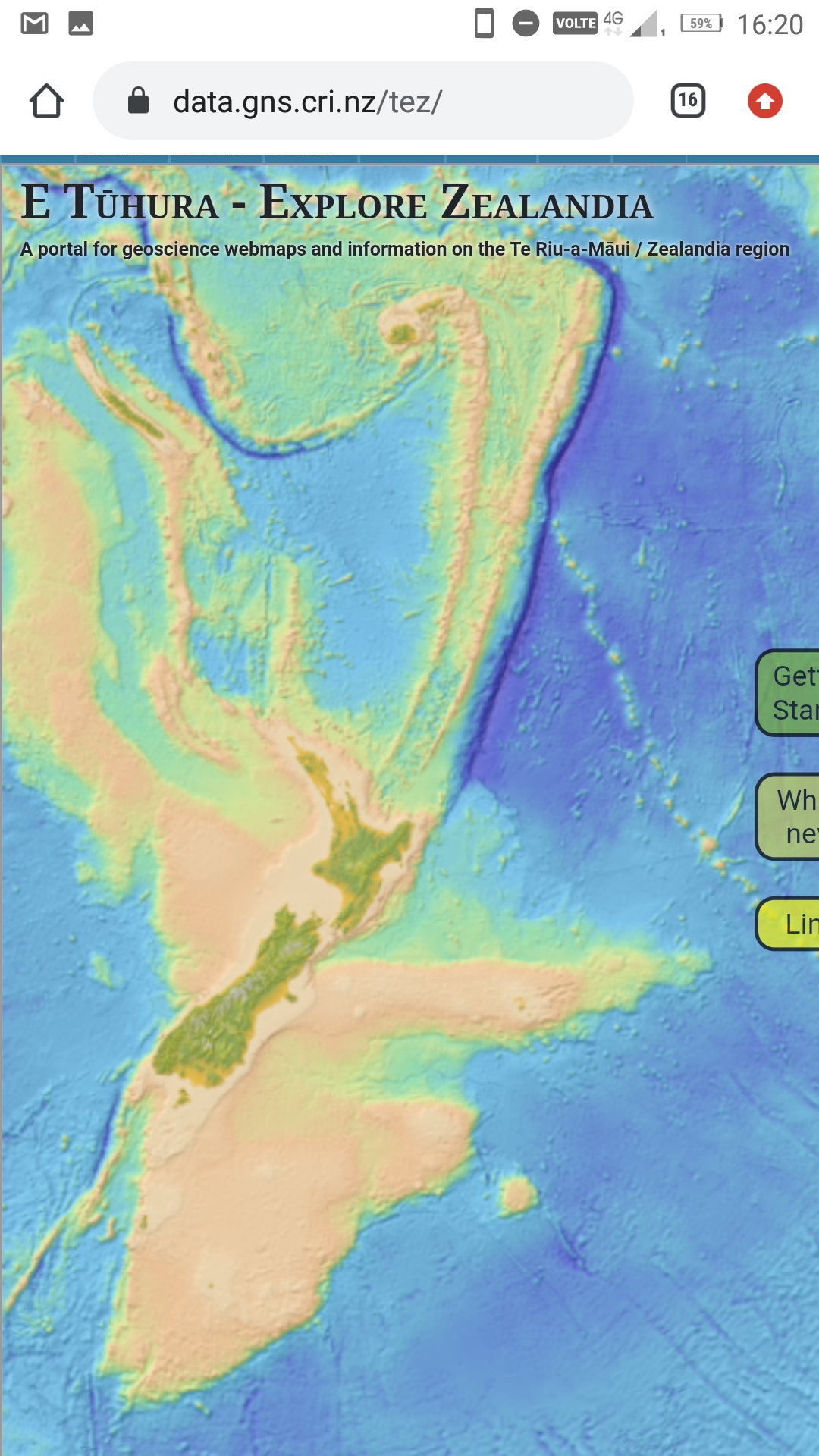
An underwater continent whose existence was discovered 25 years ago named as Zealandia by a geophysist in the year 1995. It ranges about nearly 2 million square miles. It is located at 3500 feet under south Pacific Ocean. The land had been submerged years ago and scientists found it in the year 2017 and it took them nearly 3 years to figure it’s breadth.

Scientists from GNS science in Newzealand officially announced the range and size if the continent accurately. They had also launched the map of our eight continent. “We’ve made these maps to provide an accurate, complete, and up-to-date picture of the geology of the New Zealand and southwest Pacific area — better than we have had before,” Nick Mortimer, who led the work, said.

Map of earth’s Eight continent

We can’t survive there because only 6% of continent lies above the sea level and rest submerged under the sea. It is predicted that this continent is 85 million years old. The person coined the term for eight continent said that “The reason I came up with this term is out of convenience,” Luyendyk said. “They’re pieces of the same thing when you look at Gondwana. So I thought, ‘Why do you keep naming this collection of pieces as different things?'”

How are continents formed?

Pangea splited into two halves namely Laurasia and Gondwana which eventually breakers into Europe,Asia, North America and Africa, Antarctica, South America and Australia respectively. These continents rearranged themselves and formed a structure that we see in our maps. In the mean time this division caused some of the land to mere itself underwater 30 million years ago. The rearrangement of the continents made one of the continent to merge in water. Untill 2017 Zealandia was considered to be a microcontinent because its range was unclear. After discovering it’s size now it has been able to fit into the features and descriptions of a continent.

If we could pull the plug on the world’s oceans, it would be quite clear that Zealandia stands out,” he told science news in 2017 adding, “If it wasn’t for the ocean level, long ago we’d have recognized Zealandia for what it was a continent.”

We may have a chance to live underwater if we scientists could research there. Government can rather spend it’s money on underwater survival rather than spending it on space and research. Research where you live before you leave. Hope someday someone will find a way to live underwater when there is no life above the ground.

How the lockdown has changed our lives

Almost no nation has been spared as the novel coronavirus has swept around the world. But responses to the coronavirus have differed greatly from country to country. Quarantines and lockdowns have become ubiquitous, but even then there is great variance in their severity. In South Africa, tens of thousands of troops have been brought in to enforce one of the world’s strictest lockdowns, while countries like South Korea and Taiwan have managed to contain their outbreaks without closing everything down.

Drastic changes to our routines have forced us to alter our social habits and re-evaluate our relationships – the effects of which could continue into our lives after lockdown, according to experts speaking to Euronews.These changes could also have a significant impact on our mental health even as stringent stay-at-home measures continue to lift across Europe.”Massive levels of stress and anxiety are a big factor,” clinical psychologist Dr Eddie Murphy told Euronews. “It will impact different populations in different ways, but individual stresses have been ramping up.”

The Ireland-based psychologist noted that each nation would be looking at its own protections for mental health amid the pandemic, but stressed that psychological first aid would be necessary.He said: “This would be a one-off immediate approach, and would be around for the general public to use if they are distressed.”According to Dr Murphy, the interventions being crafted are built around three specific stages: the first being broad-based for stress and anxiety, a second for generalised anxiety and “disrupted grief”, and a peak level for those who could be experiencing post-traumatic stress disorder (PTSD).He said the interventions would be in place for everyone, but would be on a particular alert for children, those with disabilities, and the vulnerable.

It’s ‘time to re-prioritise’ what matters in relationships

The effect of lockdowns across Europe aren’t always negative. For many, they will have also proven to be a good opportunity to re-evaluate personal relationships.For cohabiting couples, social psychologist and relationship scientist Veronica Lamarche said partners could use the lockdown to work to “re-prioritise what they want to be getting out of these relationships.””Think of lockdown as a clean slate. Things that weren’t working well before, we can focus on and re-invest.”She then noted that some couples would be feeling a strain due to unusual circumstances “bringing to light issues” when spending a lot of time together.”Some countries will say there has been a sudden increase in divorce rate, which is partly natural because you’re forced to evaluate and re-prioritise what matters,” she said.But for others, she added: “Some are really valuing and appreciating the time they’re able to spend with their partners.”Before lockdown, external [factors] may have been taking away from the relationship.

The ‘value’ of face-to-face interaction

More widely than this, an extended lack of physical face-to-face communication could prompt people to realise just “how valuable” social interactions can be, according to behavioural psychologist Benjamin Voyer.He told Euronews: “Humans are very social by nature. The things we find to replace these [interactions] do have merit, but people are discovering how tiring virtual communication can be.

“With face-to-face communication, we can sense and communicate in a much more subtle way.”But with online interaction, we need to compensate for the lack of cues that we usually use to signal we are engaged, happy, etc.”This makes it more tiring.”

A cultural shift?

Voyer said lockdowns could also lead to a shift in values of Europe’s traditional cultural mindset – from one where “everyone is expected to take care of themselves” to another where “the default is to take care of others because you expect others to take care of you.””People are likely to develop these as they are forced to take the perspective of others and understand their difficulties – see parents realising that teaching children is much more challenging than it may look like.”

Examples of this level of empathy can be widely seen amid the pandemic, such as the #StayHomeSaveLives campaign in the UK that encourages people to consider protecting the lives of others.The personal merits of face-to-face interactions are also clear among those kept apart by lockdowns in public posts detailing things people have missed the most.

Will habits and detrimental psychological effects fade?

Any long term changes in social habits are more likely to be personal rather than societal, Voyer said, adding that this could vary depending on our experiences of the lockdowns.He added: “Some may have discovered working from home and may want to stick to it after the lockdown.”For others, it is about establishing a routine of video calls with friends – or getting everything delivered.”

“Virtual partying” is a term that has gained currency over the past two months as a world in quarantine looked around for new ways to socialise, along with other words or phrases that have become commonplace, like “social distancing” and “Zoom bombing”. And, as we take uncertain steps into a not-so-brave new world after lockdown, another term will perhaps get even more commonplace. The “new normal”.Though initially used to describe business conditions in the western world following the financial meltdown of 2007-2008, the term has resurged now globally following the Covid-19 pandemic. The “new normal” is already here, and the changes go way beyond the mask you have to wear.

 THERE’S NO PLACE LIKE HOME

The lockdown may have made us retreat into a bubble, but it is a digitised bubble—from virtual parties to conference calls, webinars to online learning courses. The trend is here to stay, at least to some extent. While the benefits for employees include saving time from commuting and better work-life balance, employers have actually experienced more productivity, accountability and transparency from employees. There are practical reasons, too. Social distancing norms mean many offices will not be able to function with full strength, at least until a vaccine for Covid-19 is found. WFH, coupled with hot-desking (allocating desks to workers when they are required or on rotation) and technology means you need lesser office spaces.

TOUCH ME NOT

In the post-Covid-19 world, “no contact” might become the standard. Sanitary- and gadget-makers are working hard to bring out products that work on sensors, and tech companies like Apple and Samsung are trying to bring out phones that could work as virtual debit cards. Recently, the Reserve Bank of India wrote to payment networks like Visa, Mastercard and the National Payments Corporation of India to allow tap-and-go functionality on card payments at all shops, soon, instead of swiping. “A contactless revolution in communication, collaboration and commerce is imminent.”

KEEP DISTANCE

The new rules of social engagement will include a big dose of distancing. IITs have already earmarked a new matrix for classrooms as well as staggered schedules. The directorate general of civil aviation has proposed a seating arrangement where a certain number of seats in flights are left vacant. From Restaurants Association of India talking about fewer tables and contactless menu to multiplexes talking about new seating arrangements, everyone is preparing themselves for a new reality.

HEAL THE WORLD

The lockdown period spawned many memes, some funny and some poignant, on human impact on the world. “Ideally, I would like this black swan event to help us lead lives that are less materialistic and leave less carbon footprints.” “Of course, the way our society has been leading this consumption-fuelled life has just been unsustainable. This is nature’s revenge; we have to change. In many ways, I am actually so respectful of this new normal.”But will it last? “While a few people may make lifestyle changes, I believe [soon enough], we will largely be sucked back into the same enticing lifestyle as before,” sighs Kumar. It will be curious to see whether the “new normal” is just a bump along the way or a path-changing reality.

Once the storm is over, you won’t remember how you made it through, how you managed to survive. You won’t even be sure whether the storm is really over. But one thing is certain. When you come out of the storm, you won’t be the same person who walked in.”

Haruki Murakami, Kafka on the Shore

Gyms are going to open from July- Good or Bad decision

A gym after two months lockdown open for cleaning

Due to Covid 19 , in our country, the gyms are closed since March 2020. But now may be they will be going to reopen from next month. Many bodybuilders already showed their anger on social media platforms. Many online movements also run down in this period.


Dumbles really needed to be sanitize properly

But the question arises with masks the heavy breathing how can be achieved. And how the social distancing can be possible. With wearing masks, the inhalation process also too much disturbed. This can create a problem related to respiratory system. All these questions are major issues. And it’s very needed to do the exercises with proper precautions regarding Covid 19.

Although it is very necessary to be fit but through gyming it can be dangerous in this pandemic situation of Covid-19. Instead of going to gym, people should make home gym and also do yoga for fitness.

Love marriage vs Arrange marriage

Their are different kinds of people in this world and everyone has different mindset, different opinions and views over things. Some people prefer love marriages while some prefer arrange marriages. Everyone thinks about the pros and cons of these two and chooses one for them accordingly. Everything is planned by a person for their future.
But the life donot goes on according to our plan, it always shows twists and turns on the very moment we feels everything is going on according to our plan.

Marriages don’t goes according to your plan. Those who wants to do love mariage often ends up doing arrange marriage and vice versa. It’s all about the entry of right person at right time in your life. Even if you don’t want to love a person, but falls for them that was not in your plan but it occurred. Many times you wanted to do love marriage it’s your family who tells you marry as soon as but you don’t have any partner at that time and ends up doing arrange marriage that was also not your plan.

Everyone has their own views on the advantages of type of marriage they prefer and disadvantages of the other one. But in actual both types of marriages has proven to be very successful in history, in present and will be in future.

In love marriage, we knew that person already, we knows that weather we are compatible for eachother or not, weather we can live a happy life together forever and sometimes it is found to be difficult between couples to manage things because adjustments are needed as it’s not the same after the marriage as it was before while in arrange marriage, we don’t that person clearly but we gets some time to know that person before marriage, and after marriage we slowly comes to know more about our partner, however a littel bit of more adjustments are needed in a less amount of time to make eachother happy.

Hence, the most crucial thing in a relationship is adjustments which can only be possible when we love the person and our main priority becomes to make them happy and comfortable and this priority makes it easier to do adjustments in the starting and one’s we get used to of our partner then no more adjustment things comes to our mind, automatically everything happens which is needed for a happy life.

Hence, in a relationship love is needed the most to live a happy and successful marriage life.

Motivational Factors that Will Encourage Student to Study Well

Climbing a mountain does not happen at once. More than 40% of high school students are chronically disengaged from their educational institutions as reported by The National Research Council.

Most probably, these children don’t realize the importance of learning, especially education . Taking under consideration it’s impossible to continue the tutorial trip without passing the initial stage, school, many modern kids fail to succeed at the first stages. It is difficult to revive later.

Visualize Yourself Taking Action
Numerous researches discovered that visualization features a strong, positive impact on the training process. Even in sports, it makes a difference to the performance of athletes. Students can be compared to those athletes as well, so it might be a good idea to visualize things for them too.

Interactive content will do:

In-class PPT presentations
Photographs and images
Videos and documentaries
Games
After-class practice
A teacher should dedicate longer to attending theatres, museums, and cinemas to let the scholars imagine particular scenarios. Vivid life examples will help to know the topic better.

As for the scholar , it’s necessary to pretend you’re already taking certain actions (e.g., writing the last page of a search paper, collecting study materials, getting enrolled in the dream college, etc.) This technique assists in accomplishing things on your list.

Remember: Even Smallest Actions Add up
Many times in our life, we can get bogged down being sick and tired of things happening around us.

Working on 10,000-word research or composition could be one among the explanations for facing stress. No teacher assigns such large assignments on the submission eve. It means every student features a few weeks or maybe months to organize the paper. Thus, if you come up with 5-10 sentences per day, you’ll manage to end the project before the deadline. Postponing it to the last minute will not help.

Right, every action adds up to accomplishing a big , long-term goal.

The best thing a student can do trying to make a strong dissertation is handling 500 words a day . If you finish earlier, it is still better than being late. Late papers result in F in 90% cases.

Writing 500 words a day will cause you to complete the project in only 20 days, and it’s but one month! Even if you propose to go away weekends aside, which will do. Remember: worry disappears in the face of action.

Keep Telling Yourself It Will Not Last Forever
Knowing that at some point the “nightmare” will end, and you’ll obtain far more freedom may be a perfect motivation. Who knows: perhaps, at some point you’ll become a manager in some cool firm, which can cause you to tell people what to try to to , and not the other way around .

Focusing and Keeping Things in Mind
Start re-reading the study materials 3 times from today. An old and really wise teacher shared this hint with us a while ago. We managed to find out some historical episodes by memory and even improved the knowledge of some languages.

You should not go into every detail – the photographic memory will help you to scan the letters and store them somewhere deep inside your head. And yes – ask questions whenever you revise the fabric and find out things that sound weird to you.

Break down the Readings Classes like World’s History or English Literature demand students to read long swathes of content. It would be easier to review by dividing the whole material into chunks of one page (approximately 500 words). Put down at least 5 questions related to the discussed topic and ask your tutor or experts to answer.

A better idea to organize the things would be involving the flash cards in the educational process. The sooner you get the answers, the sooner you will master the topic.

Cooperate in Teams
Get together with your peers to speed up the learning process. Brainstorm in groups to gather sources and find replies to the essential questions. It will also help to improve communication skills, analysis, and critical thinking.

It is impossible to write down huge volumes during one evening. Besides, the teachers shouldn’t overwhelm students with multiple homework assignments, so it’s okay to urge professional help if your teacher breaks the rule.

Class 12 boy handles bodies of coronavirus patients

Introduction

The spread of Corona Virus has resulted in World-wide lockdown and India too has implemented lock down in all its states for last few months. This led to closing of the major industries like automobiles, infrastructure, tourism, manufacturing etc. which are biggest stakeholders of organized and unorganized sectors in India. Most of the people working in these sectors are daily age workers who do not have fixed income or benefits but solely relies on everyday wages. The closure of all these sectors has led to one of the biggest crisis which we will face in future. Here’s an article on class 12 boy handling bodies of coronavirus patients to earn living.

About

In a hunger for job to ease living, 12 class boy haunted a dangerous job of handling bodies of corona patients. A class 12 student, wants  to study medicine, to supply for his siblings’ school fees and his mother’s treatment he is doing this job. Chand Mohammad’s mother suffers from a thyroid disorder and needs her medicines urgently, but the family doesn’t have enough means for the treatment. They are barely making their ends for living . As his elder brother lost his job at a merchandise store in Krishna Nagar market during the lockdown. Chand Mohammad is from Seelampur in Northeast Delhi. He and his family has been surviving on ration provided by neighbors. And whatever his brother could earn doing odd jobs. 

Where Chand joined for work?

 A week ago, Chand joined a corporation as a sweeper at the Lok Nayak Jai Prakash Narayan Hospital in New Delhi. The job requires him to handle bodies of corona patients. The shift is from 12 noon to eight pm. He took this work after he got exhausted from all options to seek out work. Though this is a dangerous job, as he is at a better risk of getting engaged with the infection, but he want the work and earn. His family, including three sisters, two brothers and fogeys, is struggling for living. Right now, they had food and medicines for my mother. On many days, they cooked food only once. There’s an opportunity that they may fight the virus, but they cannot run away from hunger. Chand’s three sisters are still in school. He, himself is in 12 standard and have to pay the varsity fee. They need money to study. He hopes that his first salary will set things right to a particular extent. He read namaz before he exits his home for work. He even have faith within the almighty. God will look after  him and will surely show him the way. 

How he is handling bodies of coronavirus patients?

 Chand, who wants to study medicine, says But what bothers the youngster is that employees like him who are into high-risk jobs don’t get any insurance from the private companies employing them. “The most dangerous job within the world immediately handling bodies of corona patients  pays around Rs 17,000 per month. Every day, Chand handles around two to three bodies along side another sweeper. They are required to place the bodies inside the ambulance, take it to the crematorium and put it down on a stretcher once they reach the crematorium.They also have to remove all wearing the private protection equipment, which is extremely heavy. It limits movement and suffocates an individual. During this heat, one can finish up bathing in their own sweat. 

An incident he shared with media

 On Tuesday evening, Chand handled a body on his own. There was no helper with him, So, it took him a while. He gathered his breath at the top when he heard, a doctor saying the body had been lying within the mortuary for a month which nobody claimed it. Once he tried taking the body down from the ambulance, the duvet came off and a few liquid spilled on his thighs. As he is desperate to get some money, Chand has approached people giving money on low interest rates and he took his Aadhaar card and voter card, hoping to urge some money on low interest rates. His family is worried about his safety. Perhaps they also know that this is the only way for them to survive at the present. His parents inquire about his work daily. They pray for his safety. His mother cries tons daily, but he make her understand. Chand takes a shower as soon as he reaches home and keeps a distance from his family members. He is taking all precautions.For now, he would like some help in order that the family remains afloat. But we may never know what is in our destiny! 

Conclusion

 As this pandemic has made many people to suffer a lot. They are unable to have one time meal. Many don’t have money, they have migrated.We should help poor and needy as much as we can. This boy Chand Mohammad has to opt this job in which he is handling bodies of coronavirus patients. Just because he don’t have enough money he is doing this dangerous job.

The cat families…Part 1

Felis catus also called house cat or domestic cat, domesticated member of the family Felidae, order Carnivora, and the smallest member of that family. Like all felids, domestic cats are characterized by supple low-slung bodies, finely molded heads, long tails that aid in balance, and specialized teeth and claws that adapt them admirably to a life of active hunting. Cats possess other features of their wild relatives in being basically carnivorous, remarkably agile and powerful, and finely coordinated in movement.

there are more than, 45 types of cat family members are present around the globe, which include the king lion, tiger, leopard, and many more. Here is the information regarding it.

1.Abyssinian:
undefined
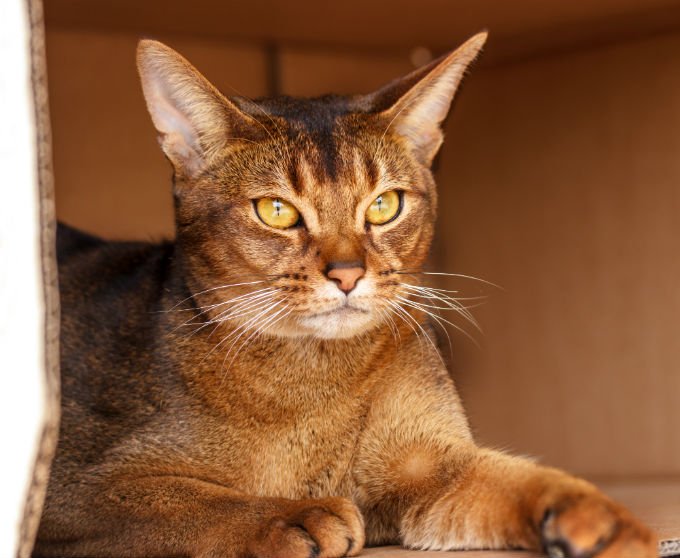
Abyssinian, breed of domestic cat, probably of Egyptian origin, has been considered to approximate the sacred cat of ancient Egypt more closely than any other living cat. The Abyssinian is a lithe cat with relatively slender legs and a long, tapering tail. The short, finely textured coat is ruddy reddish-brown, with individual hairs of the back, sides, chest, and tail distinctively ticked, or tipped, with bands of black or brown. The nose is red, the eyes are hazel, green, or gold, and the tail tip and backs of the hindlegs are black. The Abyssinian is noted for being affectionate and quiet, though generally shy with strangers.

2.African wildcat:
undefined
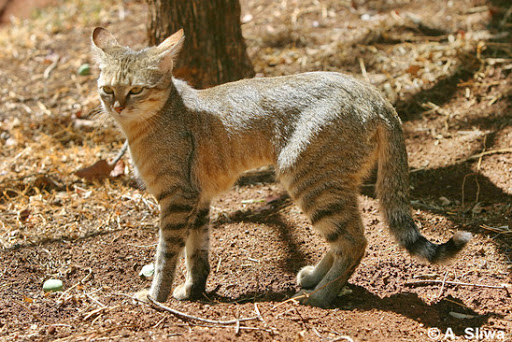
The African wildcat, also called Egyptian wildcat, small, tabby like a cat (family Felidae) found in open and forested regions of Africa and Asia. Likely the first cat to be domesticated, the African wildcat is somewhat larger and stockier than the modern house cat, with which it interbreeds readily. Its coat, paler in the female, is light or orange-brown with narrow dark stripes. The length of the animal is about 70 cm (28 inches), excluding the 40-cm tail; shoulder height averages 23 cm (9 inches), and the cat weighs about 3.5 kg (7.7 pounds). The African wildcat is a solitary nocturnal hunter that preys mainly on birds and small mammals. Mating generally occurs early in the year, and a litter of two to five kittens is born about 56 days later.

3.black panther:
undefined
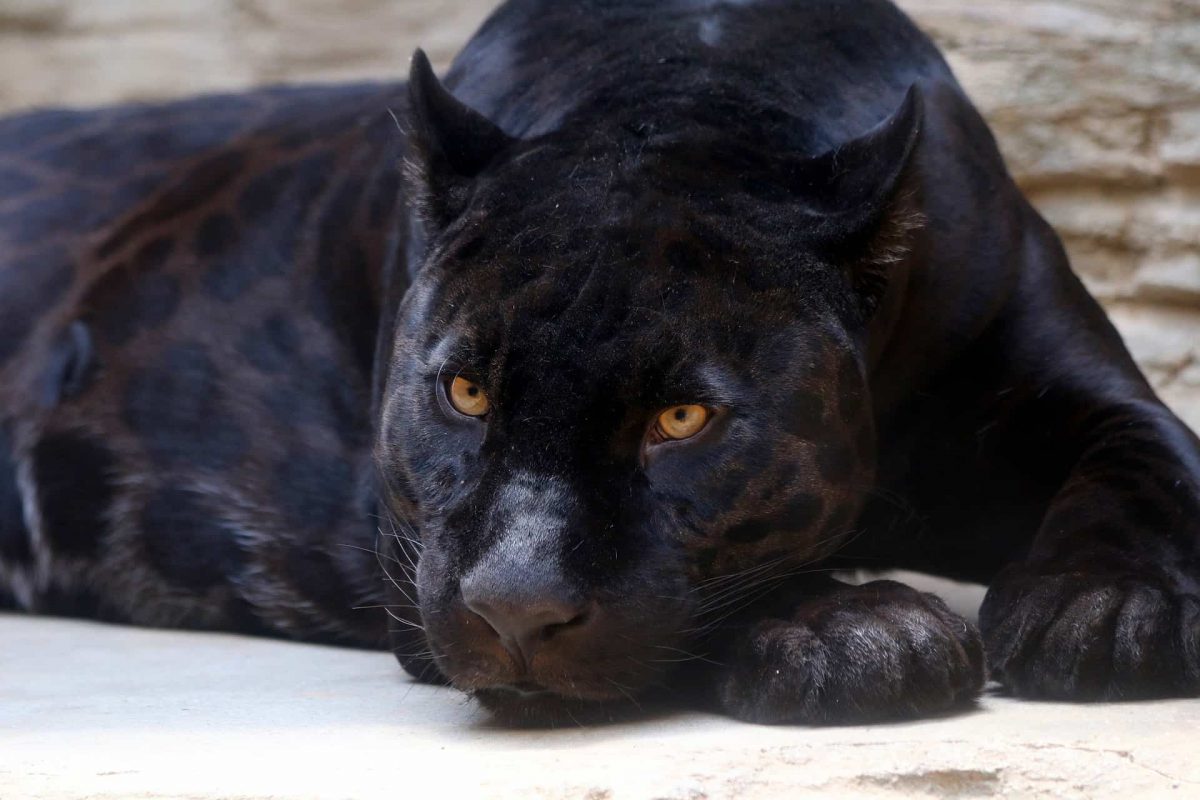
Black panther, colloquial term used to refer to large felines classified in the genus Panthera that are characterized by a coat of black fur or large concentrations of black spots set against a dark background. The term black panther is most frequently applied to black-coated leopard of Africa and Asia and jaguars of Central and South America; black-furred variants of these species are also called black leopards and black jaguars, respectively. Besides, the term is sometimes used to describe dark-colored bobcats, lynx, jaguarundis, tigers, and pumas, even though reports of black-colored representatives of some species, such as the puma, have not been confirmed.

4.bobcat:
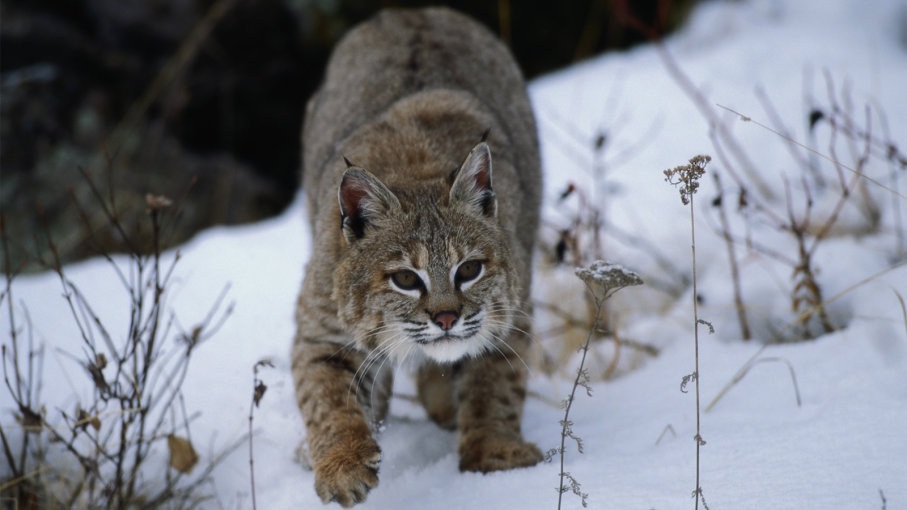
undefined
Bobcat, also called bay lynx or wildcat, bobtailed North American cat, found from southern Canada to southern Mexico. The bobcat is a close relative of the somewhat larger Canada lynx.

5.calico cat:

undefined
Burmese, breed of domestic cat, presumably of Asian origin. The Burmese are a compactly built cat with a small, rounded head and wide-set, round, yellow, or golden eyes. The short, finely textured, and glossy coat darkens from a milk-chocolate color in the kitten to a rich sable brown in the adult. The underside is paler than the coat; the ears, face, legs, and tail may be darker. The tail is tapered and may be either straight or kinked near the tip.

6.caracal:
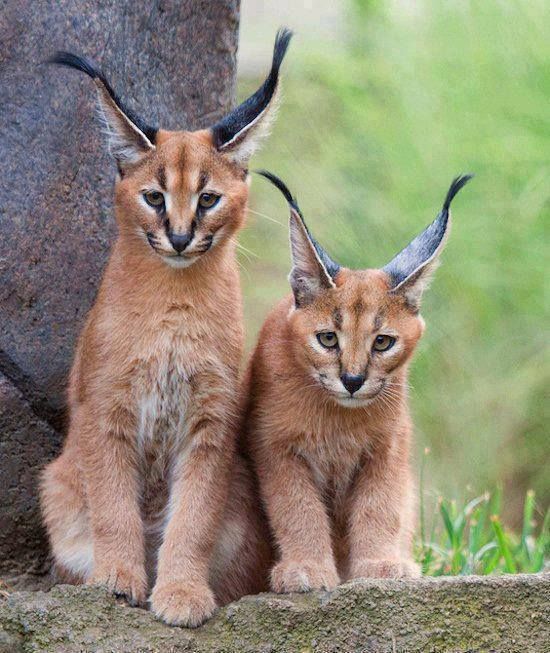
undefined
Calico cat, In North America, a blotched or spotted domestic cat, usually predominantly white with red and black patches (a pattern also called tortoiseshell-and-white). Because the genetic determination of some coat colors in cats is linked to the sex chromosome, calicoes are almost always female.

7.cat:
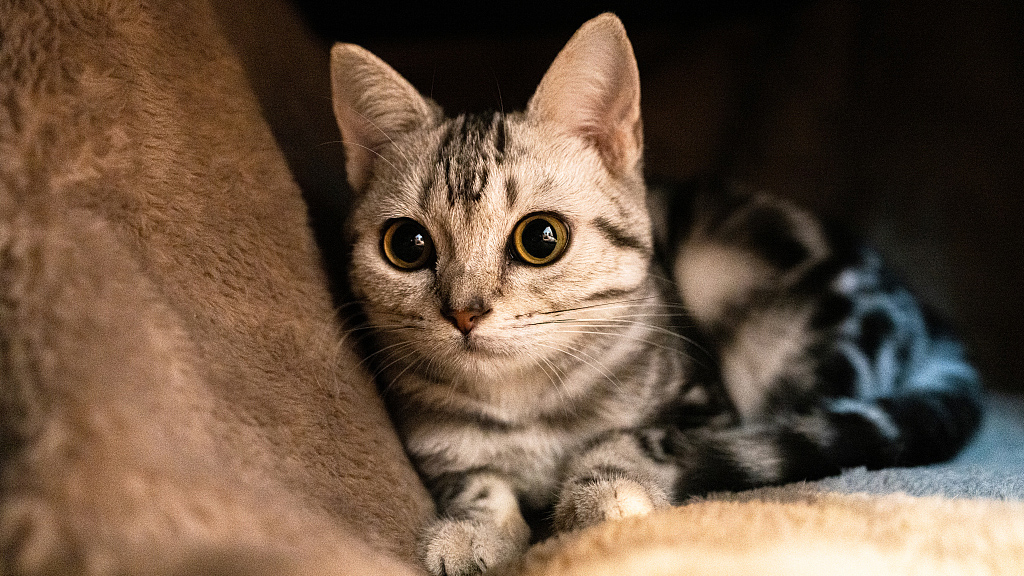
undefined
Cat also called house cat or domestic cat, domesticated member of the family Felidae, order Carnivora, and the smallest member of that family. Like all felids, domestic cats are characterized by supple low-slung bodies, finely molded heads, long tails that aid in balance, and specialized teeth and claws that adapt them admirably to a life of active hunting. Cats possess other features of their wild relatives in being basically carnivorous, remarkably agile and powerful, and finely coordinated in movement.

8.cheetah:
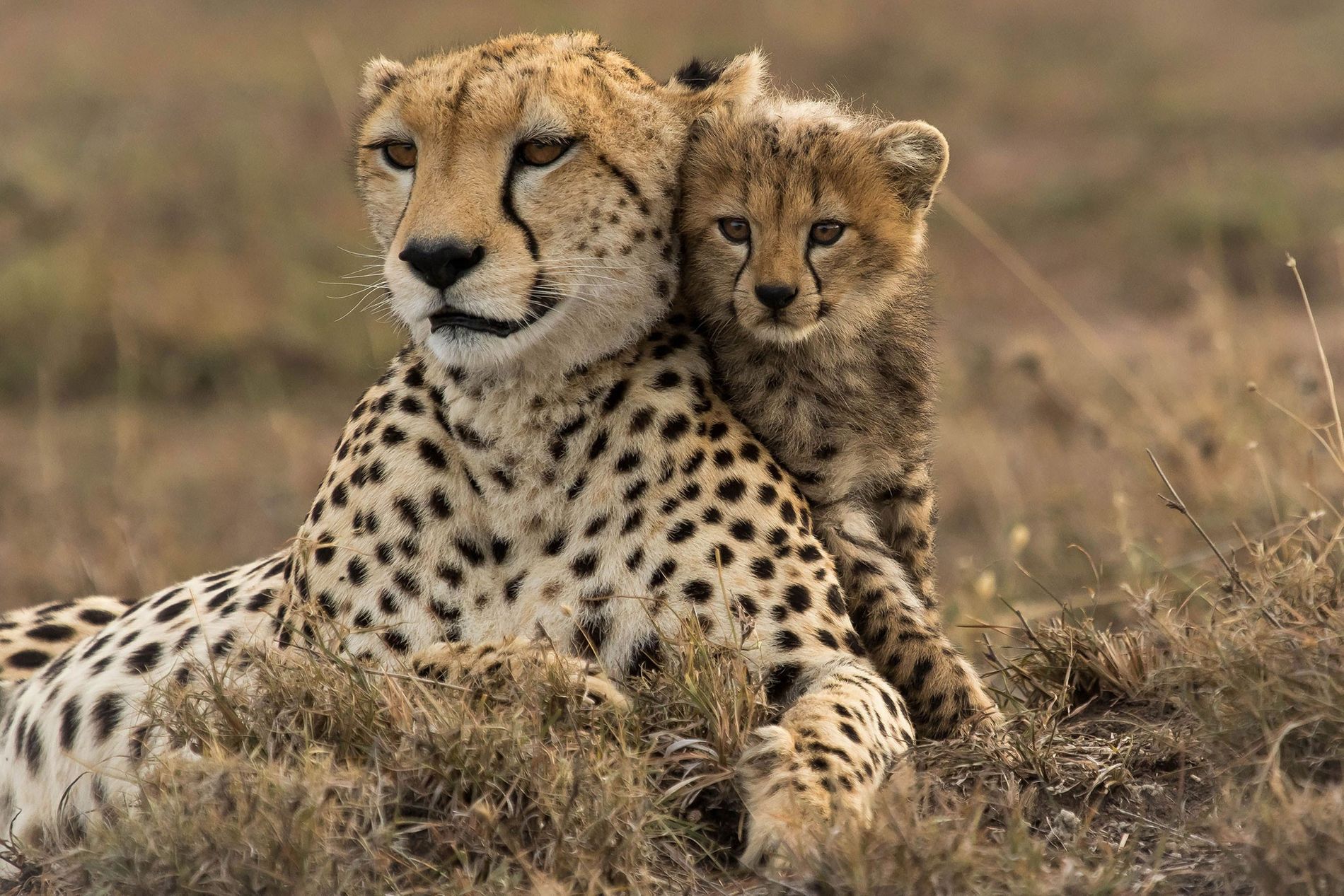
undefined
Cheetah, one of the world’s most-recognizable cats, known especially for its speed. Cheetahs’ sprints have been measured at a maximum of 114 km (71 miles) per hour, and they routinely reach velocities of 80–100 km per hour while pursuing prey. Nearly all the cheetahs remaining in the wildlife in Africa.

9.clouded leopard:
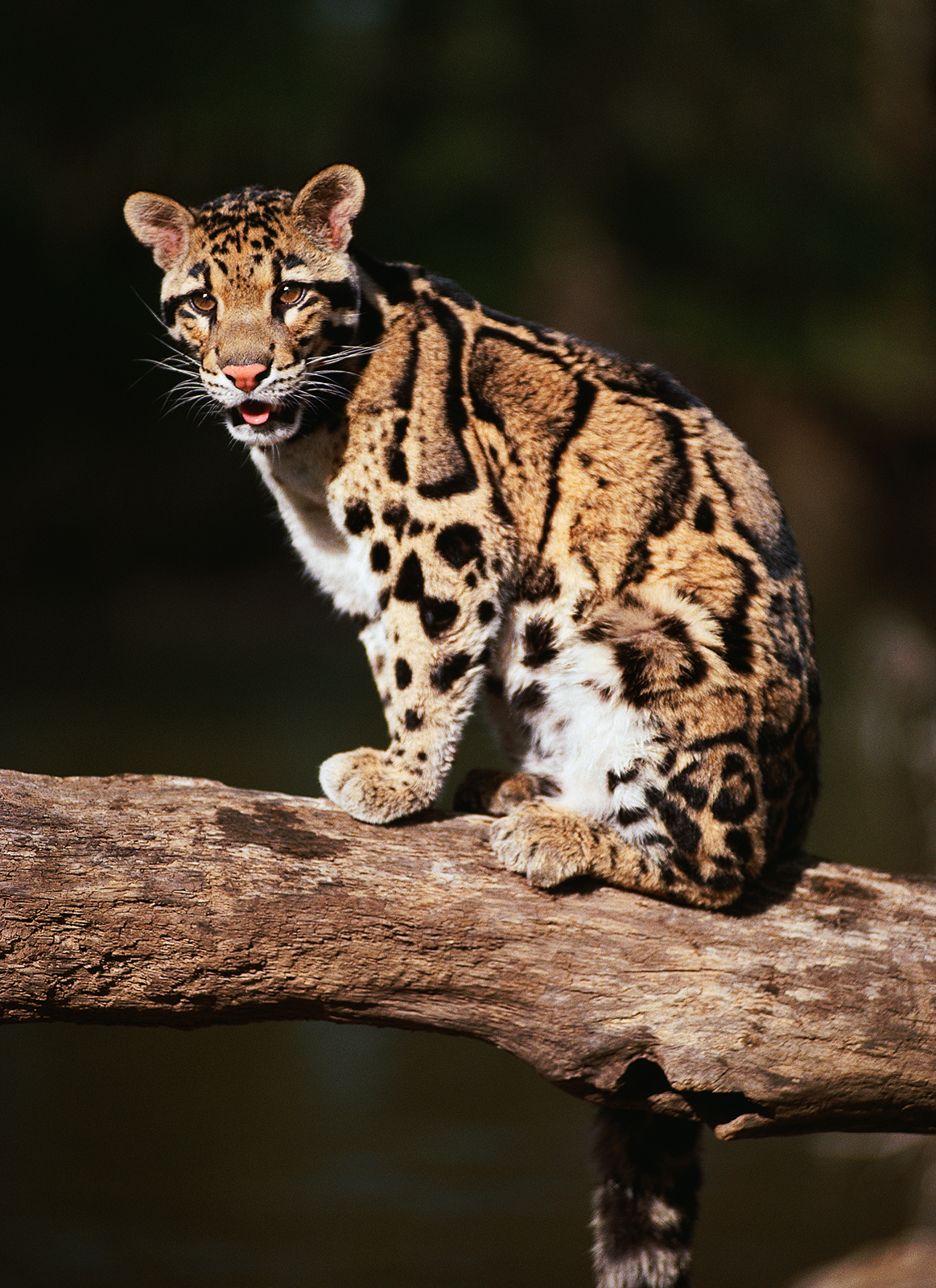
undefined
Clouded leopard, also called clouded tiger, strikingly marked cat, very similar in coloring and coat pattern to the smaller, unrelated marbled cat . There are two species of clouded leopard, which are genetically distinct from one another. Neofelis nebulosa, found on the mainland of southeastern Asia, particularly in forests and other wooded regions, and N. diardi, found on the islands of Sumatra and Borneo, are thought to have diverged about 1.4 million years ago. The population of clouded leopards declined sharply in the latter half of the 20th century as a result of hunting and deforestation. They are reported to be nocturnal and to live in trees; they prey on birds and small mammals, such as pigs and monkeys.

10.domestic shorthair:
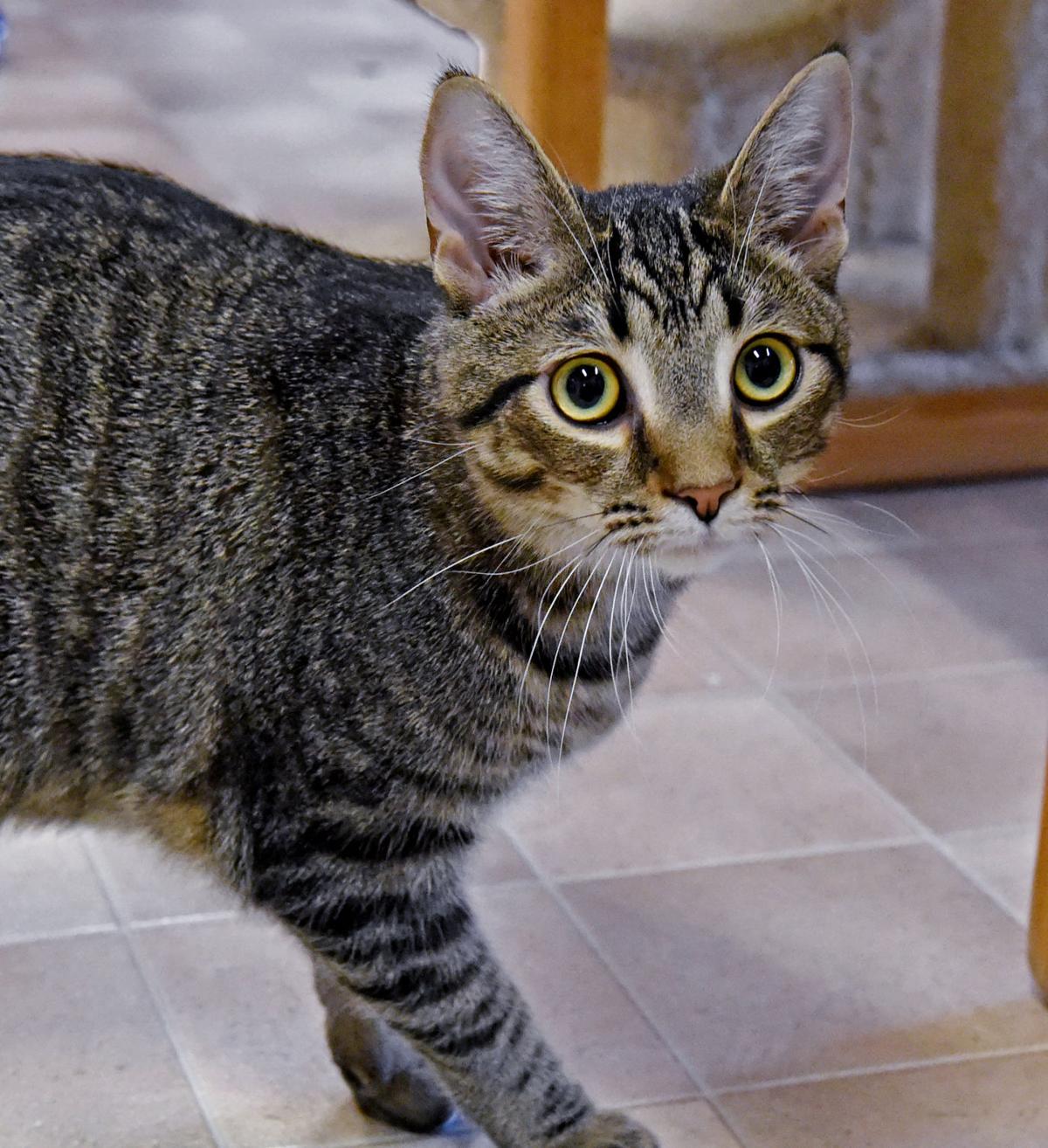
undefined
Domestic shorthair, also called British Shorthair, breed of a domestic cat often referred to as a common, or alley, cat; a good show animal, however, is purebred and pedigreed and has been carefully bred to conform to a set standard of appearance.

11.feline:

undefined
Feline any of 37 cat species that among others include the cheetah, puma, jaguar, leopard, lion, lynx, tiger, and a domestic cat. Cats are native to almost every region on Earth, except Australia and Antarctica. They are carnivorous mammals that live in a wide variety of habitats, but they are typically woodland animals.

12.fishing cat:
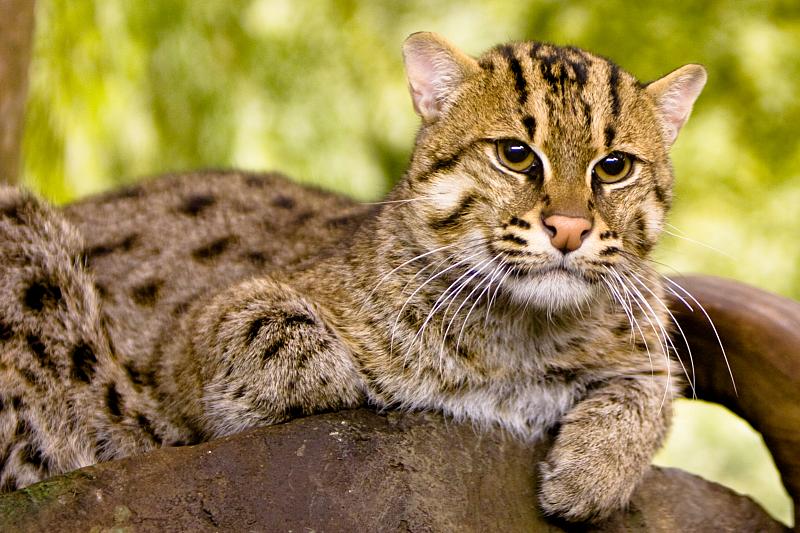
undefined
Fishing cat a tropical cat of the family Felidae, found in India and Southeast Asia. The coat of the fishing cat is pale gray to deep brownish-gray and marked with dark spots and streaks. The adult animal stands about 40 cm (16 inches) at the shoulder, weighs 8–11 kg (18–24 pounds), and is from 60 to 85 cm long, excluding the black-ringed tail, which accounts for an additional 25–30 cm. The fishing cat lives near water and in jungles, reed beds, and marshes. It is reported to fish by scooping its prey out of the water.

13.flat-headed cat:
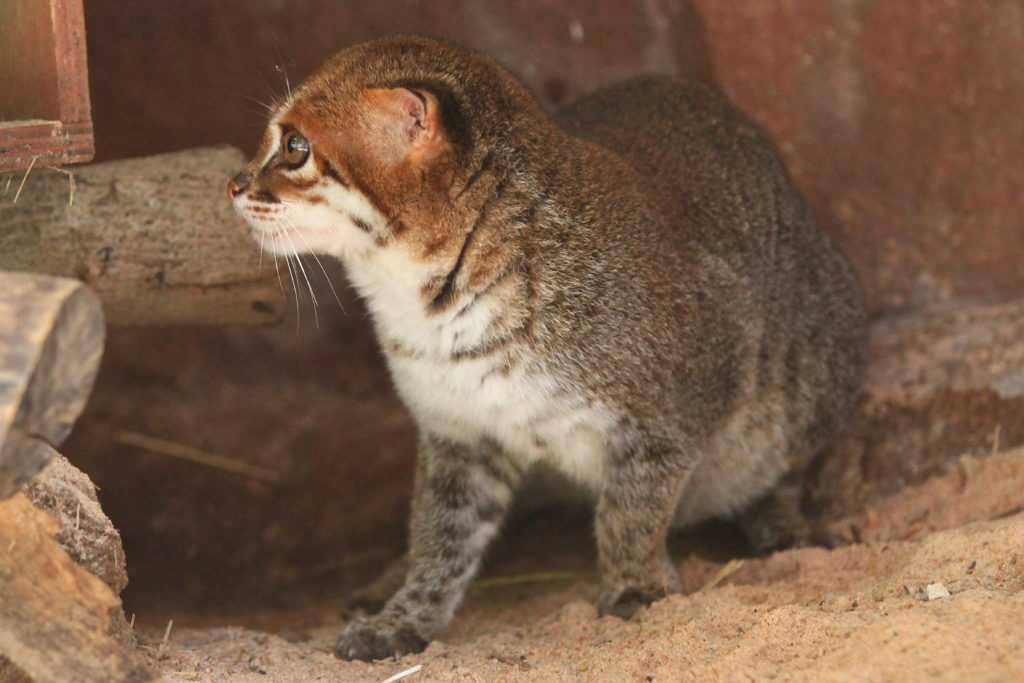
undefined
Flat-headed cat extremely rare Asian cat found in the Malay Peninsula, Sumatra, and Borneo. One of the smallest members of the cat family, Felidae, the adult is from 40 to 60 centimeters (16 to 24 inches) long without the 15–20-cm tail and weighs from 1.5 to 2.5 kilograms (3.3 to 5.5 pounds). Its coat is reddish above and white with red spots below; there are white markings around the eyes. It is the only felid known to include any substantial amount of vegetation in its diet, with a preference for fruit and, when available, sweet potatoes and similar foods. Little else is known about this cat, which is reported to be nocturnal and to hunt fish and frogs along rivers.

14.Florida panther:
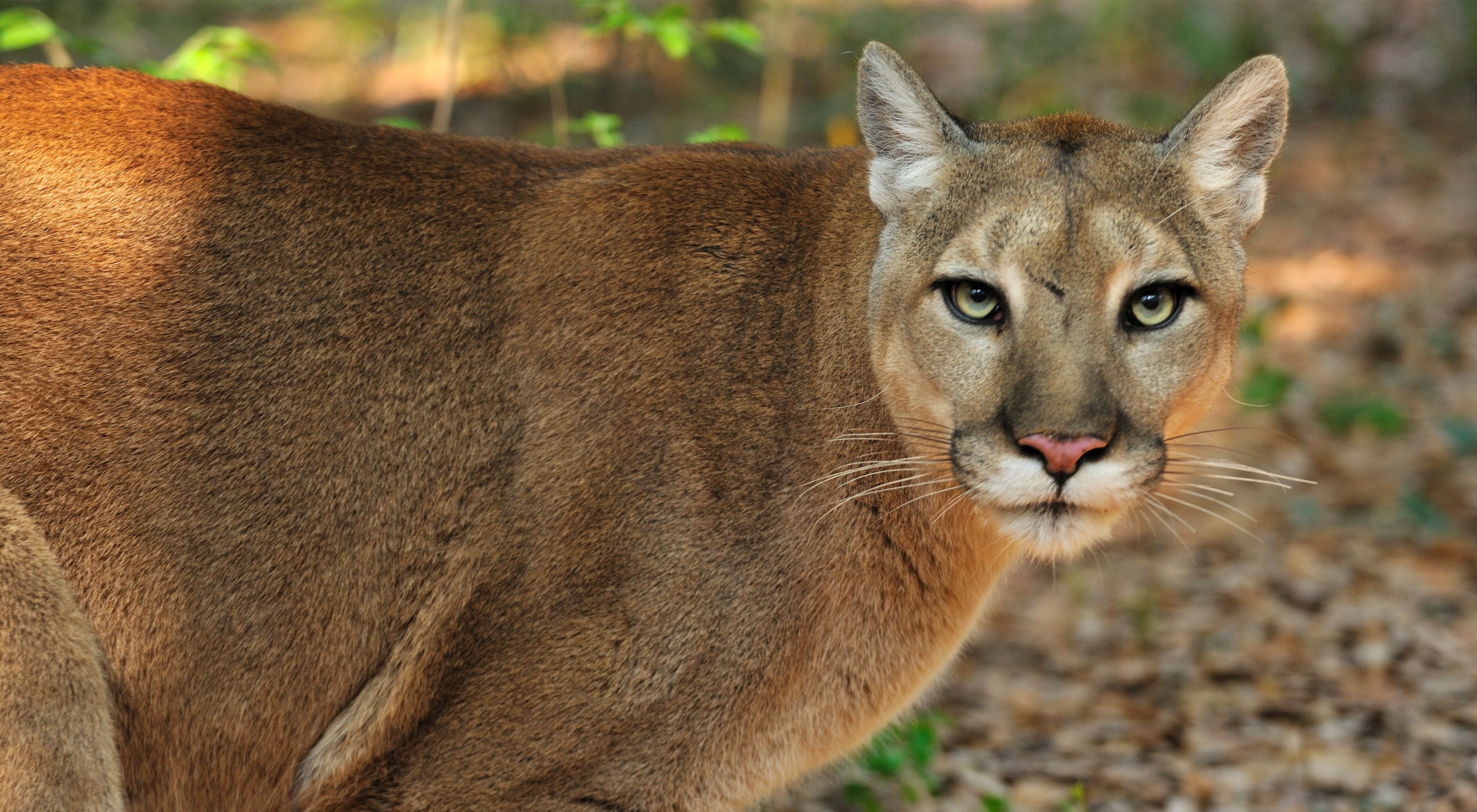
undefined
Florida panther, member of a population of large New World cats belonging to the species Puma concolor, family Felidae, confined to a small, isolated, and inbred group in southern Florida. This population is the only breeding group of pumas in the eastern United States. The Florida panther was traditionally classified as a distinct subspecies of puma and was reclassified as a population of the P. concolor cougar subspecies in 2017 after genetic analysis. The Florida panther was one of the first animals listed under the Endangered Species Act when the law first passed in 1973, and it is recognized as the state animal of Florida.

15.Geoffroy’s cat:
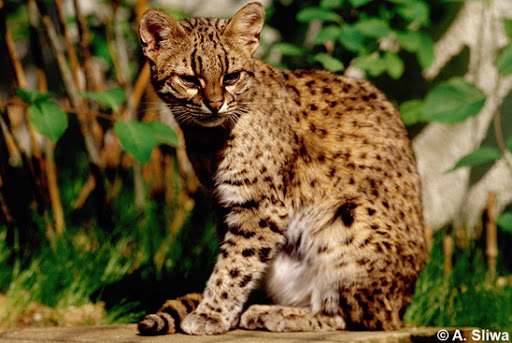
undefined
Geoffroy’s cat South American cat of the family Felidae, found in mountainous regions, especially in Argentina. It is gray or brown with black markings and grows to a length of about 90 cm (36 inches), including a tail of about 40 cm (16 inches). Geoffroy’s cat climbs well and preys on small mammals and birds. It breeds once a year; litters consist of two or three kittens.

17.Himalayan:
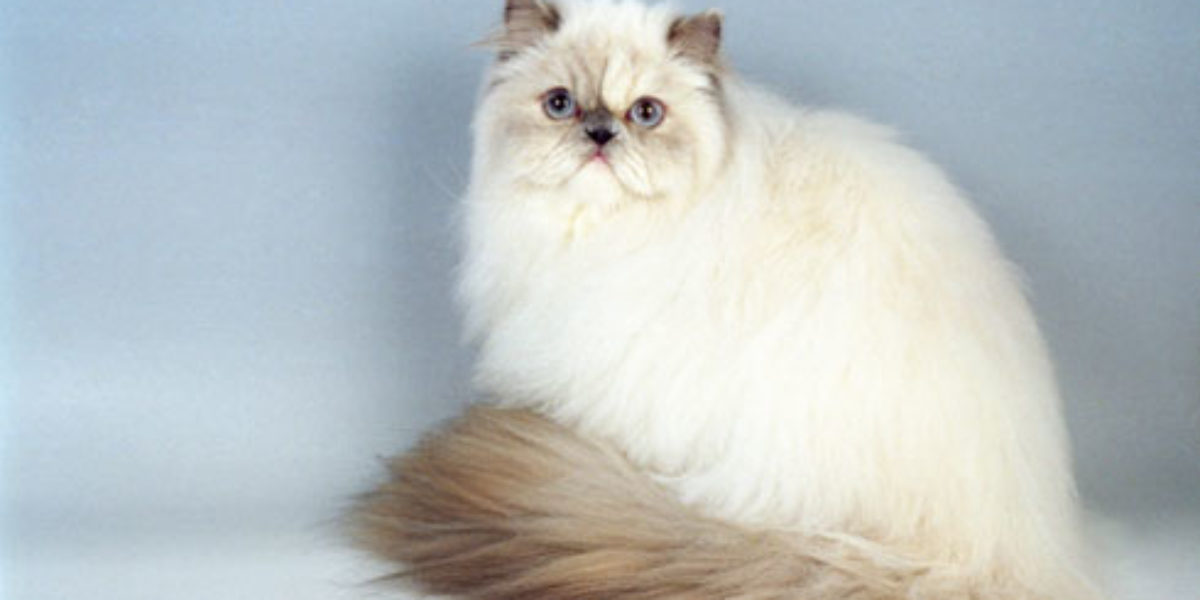
undefined
Himalayan, also called colorpoint, or colorpoint, breed of domestic cat with the coloring of the Siamese and the build and coat of the longhair, or Persian. The Himalayan is produced by matings between Siamese and longhairs followed by selected breeding of the offspring to bring out the proper coloring, coat, and build. A good Himalayan is cobby and short-legged with long, soft fur, a broad, rounded head, and round blue eyes. Born cream-colored, it later develops the darker points (ears, face, legs, and tail) of the Siamese. The points, as in the Siamese, maybe deep brown (seal point), lighter brown, blue-gray , pinkish-gray , or reddish-orange .

18.jaguar:
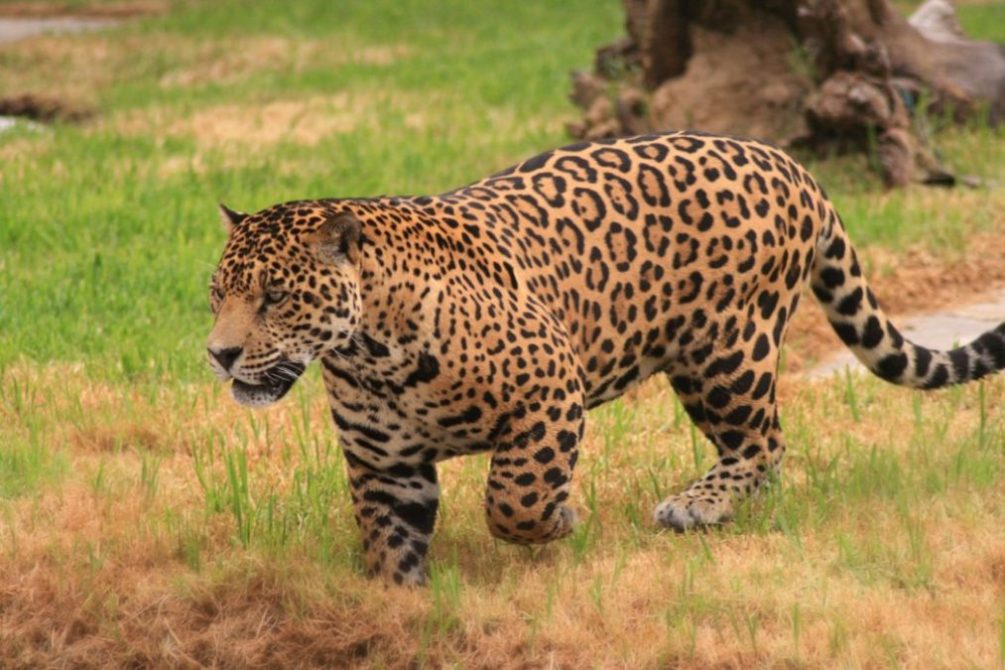
undefined
Jaguar also called el Tigre or Tigre americano, the largest New World member of the cat family, once found from the U.S.-Mexican border southward to Patagonia, Argentina. Its preferred habitats are usually swamps and wooded regions, but jaguars also live in scrublands and deserts. The jaguar is virtually extinct in the northern part of its original range and survives in reduced numbers only in remote areas of Central and South America; the largest known population exists in the Amazon rainforest.

19.jaguarundi:
undefined
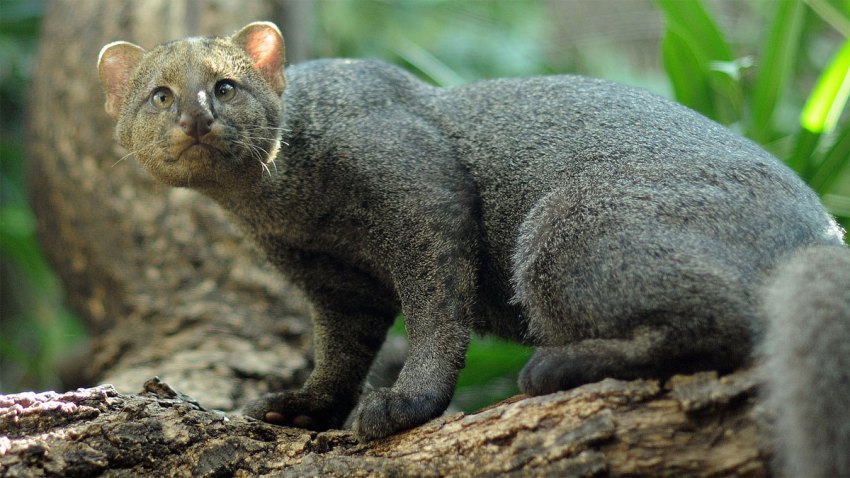
Jaguarundi, also spelled Jaguarondi small, unspotted New World cat (family Felidae), also known as the otter-cat because of its otterlike appearance and swimming ability. The jaguarundi is native to forested and brushy regions, especially those near water, from South America to the southwestern United States; it is, however, very rare north of Mexico.

20.leopard:
undefined
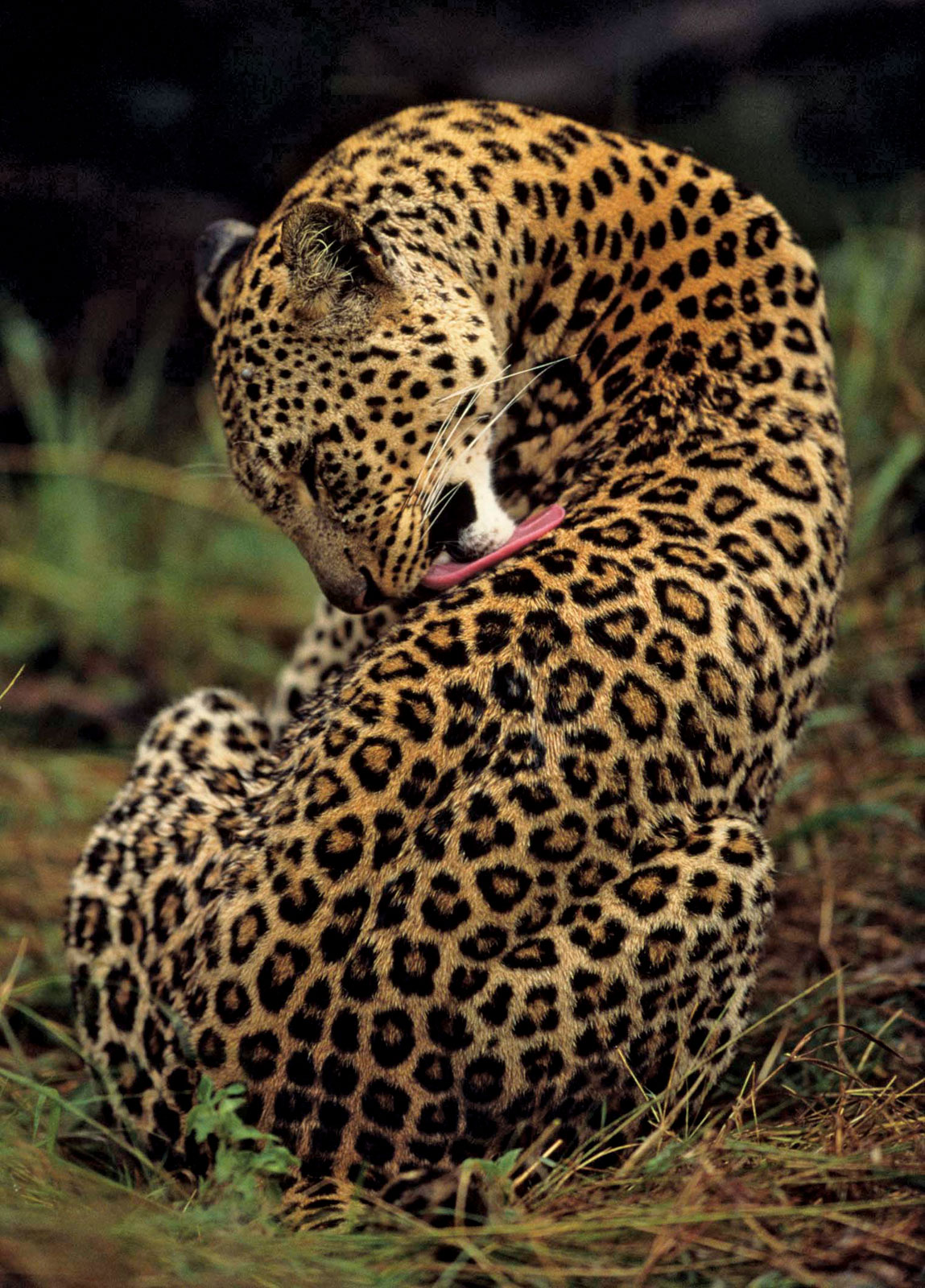
Leopard also called a panther, large cat closely related to the lion, tiger, and jaguar. The name leopard was originally given to the cat now called cheetah—the so-called hunting leopard—which was once thought to be a cross between the lion and the pard. The term pard was eventually replaced by the name leopard.

21.leopard cat:
undefined
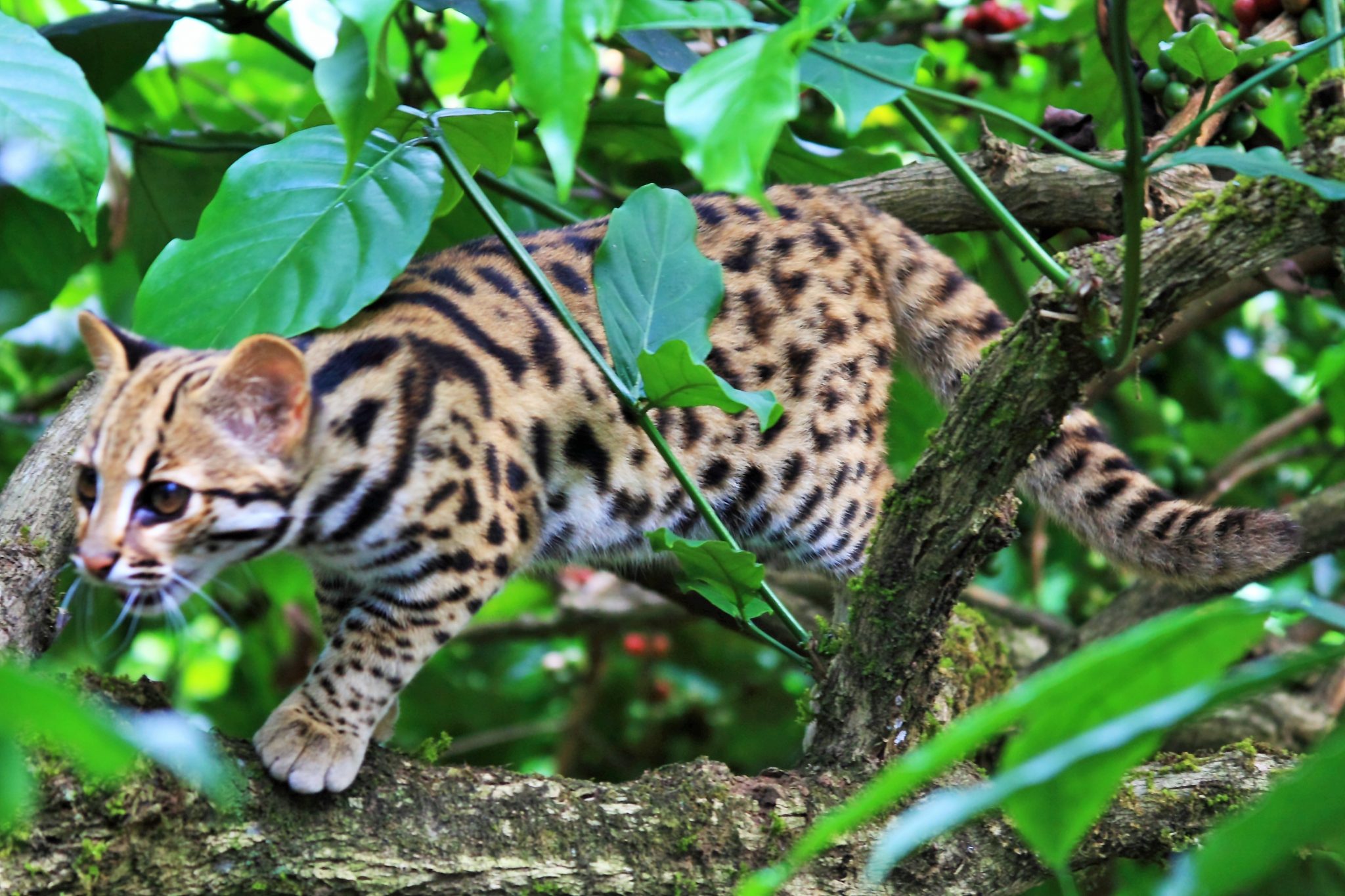
Leopard cat forest-dwelling cat, of the family Felidae, found across India, Southeast Asia, and nearby islands. The leopard cat is noted for its leopard-like coloring. The species is generally divided into one mainland subspecies, P. bengalensis bengalensis, and several island subspecies—including P. bengalensis borneoensis in Borneo, P. bengalensis Heaney on Palawan, P. bengalensis rabori on the Philippine islands of Cebu, Negros, and Panay, P. bengalensis javenensis on Bali and Java, and P. bengalensis sumatranus on Sumatra and Tebingtinggi.

22.liger:
undefined
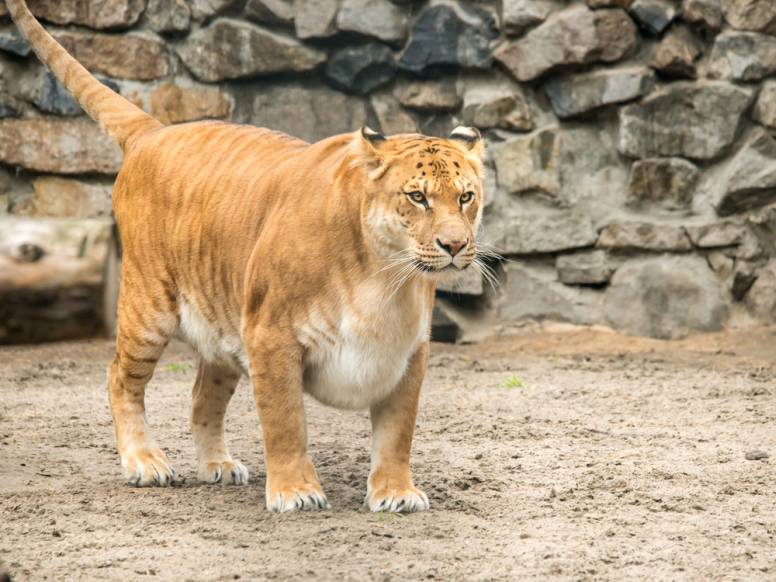
Liger, offspring of a male lion and a female tiger. The liger is a zoo-bred hybrid, as is the tigon, which is the result of mating a male tiger with a female lion. The liger and the tigon possess features of both parents, in variable proportions, but are generally larger than either. It is thought that most, if not all, male ligers and tigons are sterile. The females, however, on occasion, may be able to produce young. The terms liger and tigon are portmanteaus of the words lion and tiger.

23.lion:
undefined
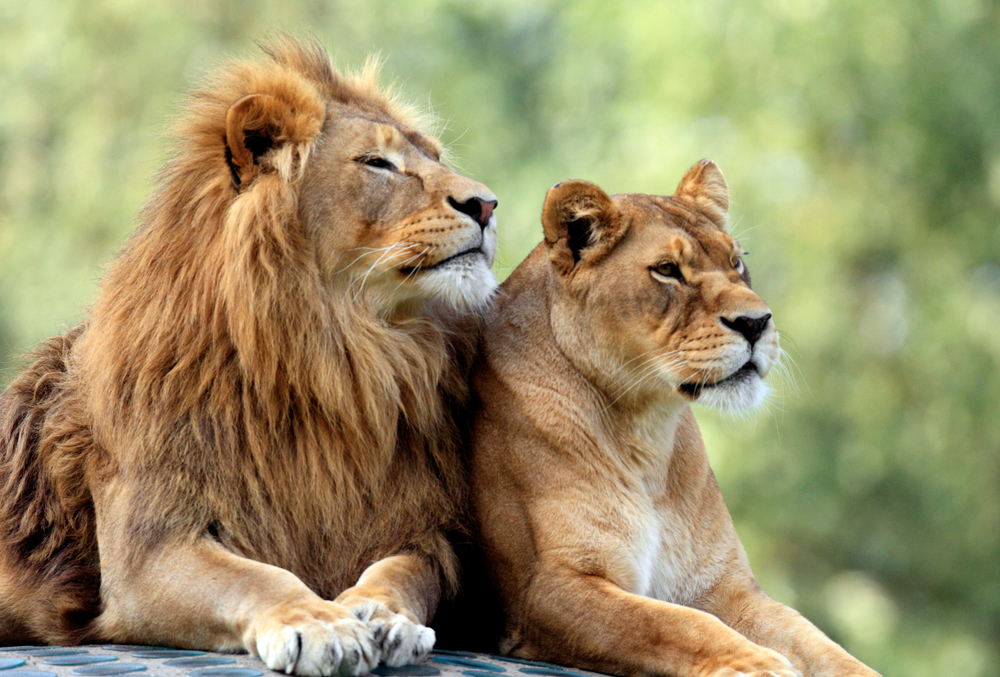
Lion is large, powerfully built cat that is second in size only to the tiger. The proverbial “king of beasts,” the lion has been one of the best-known wild animals since the earliest times. Lions are most active at night and live in a variety of habitats but prefer grassland, savanna, dense scrub, and open woodland. Historically, they ranged across much of Europe, Asia, and Africa, but now they are found mainly in parts of Africa south of the Sahara. An isolated population of about 650 Asiatic lions constitutes a slightly smaller race that lives under strict protection in India’s Gir National Park and Wildlife Sanctuary.

24.longhair:

undefined
Longhair, also called Persian, breed of domestic cat noted for its long, soft, flowing coat. Long-haired cats were originally known as Persians or Angoras. These names were later discarded in favor of the name longhair, although the cats are still commonly called Persians in the United States. The longhair, a medium-sized or large cat with a cobby , short-legged body, has a broad, round head, a snub nose, and a short, heavily haired tail. The large, round eyes may be blue, orange, golden, green, or copper-colored, depending on the color of the cat. The soft, finely textured coat forms a heavy ruff about the neck.

25.lynx:
undefined
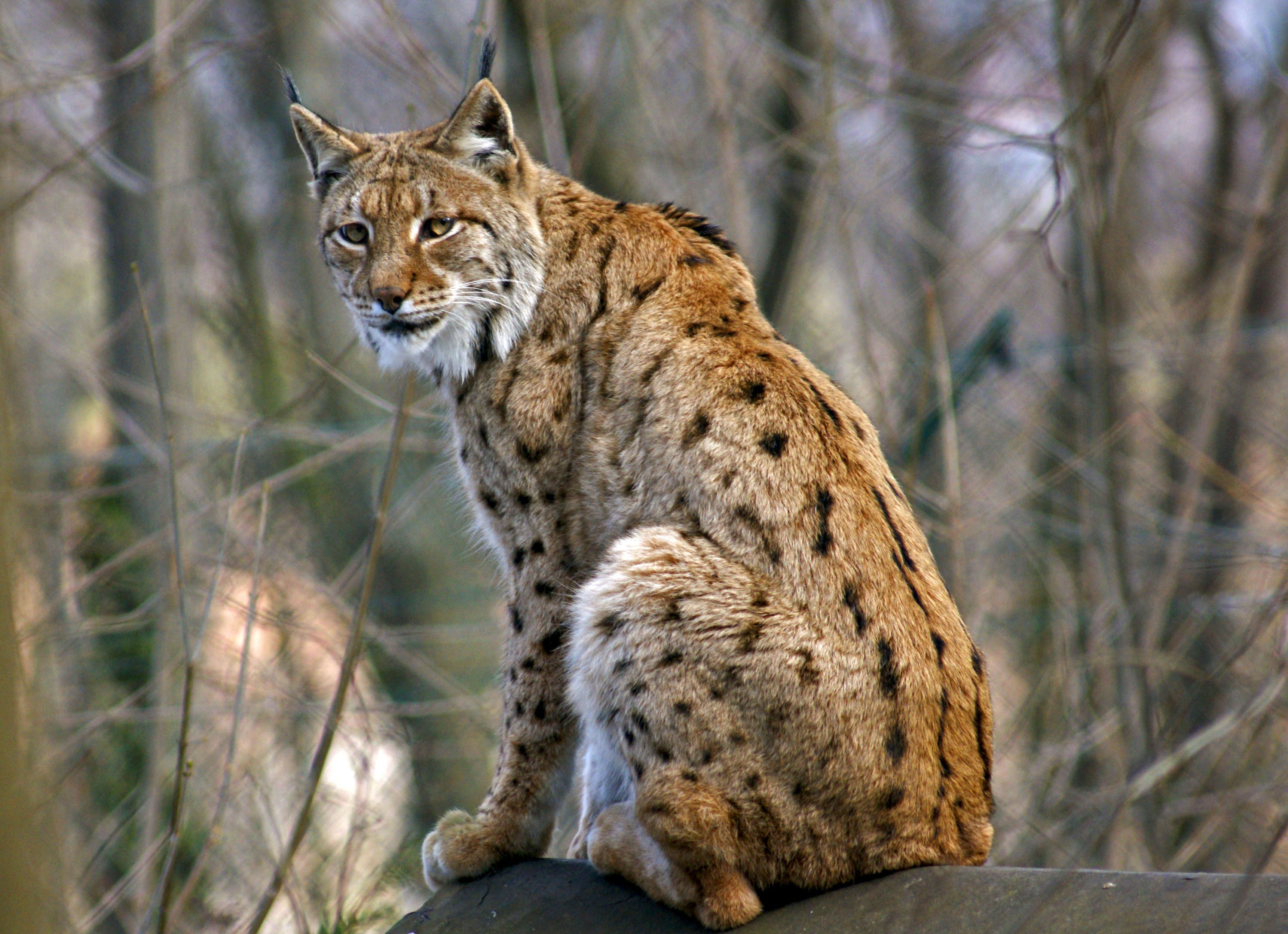
Lynx, (genus Lynx), any of four species of short-tailed cats found in the forests of Europe, Asia, and North America. The Canada lynx and the bobcat live in North America. The Eurasian lynx and the Iberian lynx are their European counterparts. The Iberian lynx is the most endangered feline; as of 2013, possibly fewer than 300 individuals remained in the mountainous scrubland of southern Spain.


How do Teenagers perceive Religion???

When you think of teens today, “religious” might not be the first word that comes to mind. A common perception might be that teens are too shallow to embrace something as complex and introspective as spirituality. But why is this? The teen years are a time for self discovery on a deeper level. Shouldn’t religion be a part of the discussion?

We have known for years that parents are key influences on teens religious lives. Despite the tendency of parents to say they are helpless in this area, three out of four religious teens consider their own beliefs somewhat or very similar to those of their parents (they are more similar to their mothers’ beliefs than to their fathers’). In choosing friends, teens tend to surround themselves with people who reinforce the shaping influence (religious or nonreligious) of their parents. Here are two important messages: First, peers may be important to teens, but parents are still primary when it comes to religion. Second, “teenagers are not a people apart, an alien race about whom adults can only shake their heads and look forward to their growing up.”

Religious traditions understand themselves as presenting a truth revealed by a holy and almighty God who calls human beings from a self-centered focus to a life of serving God and neighbor. Adherents are understood to be reared or inducted into a historically rooted matrix of identity, practices and ethics that define selfhood, loyalties and commitments. Main central points regarding religion:-

1. A God exists who created and orders the world and watches over human life on earth.

2. God wants people to be good, nice and fair to each other, as taught in the Bible and by most world religions.

3. The central goal of life is to be happy and to feel good about oneself.

4. God does not need to be particularly involved in one’s life except when God is needed to resolve a problem.

5. Good people go to heaven when they die.

Teens made few references to traditional religious concepts such as justice, grace or resurrection. “When teenagers talked in their interviews about grace, they were usually talking about the television show Will and Grace, not about God’s grace.” This shows that teenagers are not that much into religion, it is there age of exploration.

The connections between religion and family life are receiving renewed attention from scholars. Recent work has examined the role religious practices and beliefs play in parenting behavior, marriage, intergenerational ties, and demographic behavior. Scholars are finally turning their attention to the role of religion in the lives of adolescents and young adults. Religious practices and beliefs also have been shown to powerfully shape adolescent sexual values and practices. Finally, some recent work has begun to address the role of religion in the post-teenage years, when youth are laying the foundations for their subsequent adult lives by making decisions about romantic relationships, cohabitation, and marriage.

Although religious practices differ by culture, political boundary, local community, and individual, some form of religion is influential, even central, in the lives of many people across the globe. Religion is an important context for development because it provides a means of socialization in areas such as moral behavior and offers emotional support to individuals from the cradle to the grave. Given cognitive advances during adolescence including increased abilities to think abstractly and understand symbolism, it is important to study the impact of religion during this stage. 

Part of being a teen is exploring different aspects of identity for the first time. Religion is one aspect of that, and while it might not be as important to teens now as it was a few decades ago, it definitely still plays a role. Though teens hold many different beliefs on the subject of religion, many agreed that simply experiencing the world around them and respecting others are the most important values.

Refrences:

  1. http://www.huffpost.com
  2. http://www.religion-online.org

FORMAL ORGANIZATION

A formal organization is a planned structure which represents the officially established pattern of relationships among individuals, groups, sections, units, departments and divisions to accomplish the goals of the enterprise. A formal organization provides a broad framework and delineates certain prescribed functions and the relationships between them, a formal organization may be defined as a system of consciously coordinated activity of two or more persons towards a given objective. A formal organization may also be defined as:

  1. A pattern of formal relationships and duties, the organization charts, job description and position guides.
  2. Formal rules, policies, work procedures and similar devices adopted by management to guide employee behaviour in certain ways within the structure of formal relationships.

   As Louis A. Allen said, “The formal organization is a system of well-defined jobs, each bearing a definite measure of authority, responsibility and accountability, the whole consciously designed to enable people of the enterprise to work more effectively together in accomplishing their objectives”.  A formal organization facilitates the determination of objectives and policies. Communication, the delegation of authority, and coordination take place according to a prescribed pattern and in fact, formal structure restricts and circumstances the area of operation of individuals working within an organization.

FEATURES OF FORMAL ORGANIZATION

The main characteristics of a formal organization are:

  1. It is based on the division of Labour.
  2. This organization is formed by voluntary thinking.
  3. It is represented by organizational charts and manuals.
  4. In this organization, the rights, duties and liabilities of different persons are clarified on different levels of management.
  5. In a formal organization, unity of command is followed.
  6. It is prepared only for the accomplishment of od predetermined goals.
  7. Here the relationships among members are fully impersonal.
  8. Here delegation of authority flows from top to bottom.

 ADVANTAGES OF FORMAL ORGANIZATION

The main advantages of Formal Organization include:

  1. The best use of resources.
  2. Feeling of cooperation in a formal organization.
  3. No duplication of work.
  4. End of biased opinions from everyone related to any work.
  5. Proper standardisation of work becomes easy to implement.
  6. Helpful in achieving objectives.
  7. Well defined authority and responsibility and accountability avoid any chance of friction and enmity.
  8. Merits of specialisation can be achieved due to the principle of division of labour.
  9. The efficiency of employees can easily be measured due to the predetermination of the rights and duties of each individual.
  10. This type of organization restricts conflicts among executives.

LIMITATIONS OF FORMAL ORGANIZATION

The main limitations of Formal organization include:

  1. Rules are considered more important than the person.
  2. This organization ends the spirit of initiative.
  3. Excessive and undue use of authority takes place in this type of organization.
  4. In this type of organization procedures, programmes, rules etc., are followed strictly and that is why frequent changes are not possible.
  5. A formal organization is impersonal; that is why human feelings have no place here.
  6. There is a lack of coordination among the activities of different persons in different departments.
  7. No consideration is given to the social and human elements.
  8. This organization takes into consideration only the formal communication and creates obstacles in the application of informal communication.

Timing & Learning

The result of anything depends on how we judge timing of the task. Even in every sports team hits the opponent based on fine tuning of timing and yes on efforts. In recent case of Patanjali’s Corona Kit, in my opinion they missed timing by hurrying for being the first. They could wait before announcement. We don’t doubt on their efforts, we are feeling proud at least they have tried, but sorry for their missed timing.

Continuing conflict, instability in Libya is matter of international concern: MEA

India has said the continuing conflict and instability in Libya is a matter of international concern. In response to media query on recent developments in Libya, External Affairs Ministry spokesperson Anurag Srivastava said New Delhi supports efforts towards immediate cessation of all hostilities in Libya.
 
He said, India acknowledges the recent international efforts in this direction, including the Berlin International Conference held on 19th January and the Cairo Declaration of 6th June. He said, country hopes that these initiatives will promote the peaceful resolution of the conflict through an intra-Libyan dialogue taking into account the legitimate aspirations of the Libyan people, while preserving Libya’s sovereignty, unity and territorial integrity. 

Continuing conflict, instability in Libya is matter of international concern: MEA

India has said the continuing conflict and instability in Libya is a matter of international concern. In response to media query on recent developments in Libya, External Affairs Ministry spokesperson Anurag Srivastava said New Delhi supports efforts towards immediate cessation of all hostilities in Libya.
 
He said, India acknowledges the recent international efforts in this direction, including the Berlin International Conference held on 19th January and the Cairo Declaration of 6th June. He said, country hopes that these initiatives will promote the peaceful resolution of the conflict through an intra-Libyan dialogue taking into account the legitimate aspirations of the Libyan people, while preserving Libya’s sovereignty, unity and territorial integrity. 

MSDE Ministry, IBM unveil Free Digital Learning Platform to reach job seekers

Ministry of Skill Development and Entrepreneurship (MSDE) in partnership with IBM has unveiled Free Digital Learning Platform ‘Skills Build Reignite’ to reach more job seekers and provide new resources to business owners in India. Directorate General of Training, DGT, under the aegis of MSDE has also announced a 10-week duration Skills Build Innovation Camp for students, providing hands on project experience, enhanced learning and increased employability.
 
Union Minister of Skill Development and Entrepreneurship Dr. Mahendra Nath Pandey has congratulated DGT and IBM India for their collaborative efforts. He said, it marks a significant milestone in supporting Centre’s efforts in accelerating Indian economy’s revival from the adverse effects of COVID-19 with the launch of SkillsBuild Reignite and Innovation Camp. He further said, in line with Prime Minister Narendra Modi’s Skill India Mission, the Ministry has been working relentlessly to strengthen the skilling ecosystem and leverage the rise in demand for new-age skills by expanding industry cross-collaboration and creating learning pathways through digital learning platforms.
 
He said, IBM‘s expertise in providing multifaceted digital skill training in the area of Cloud Computing and Artificial Intelligence will strengthen the efforts in the recovery of local workforces, communities and economies by supporting job seekers, entrepreneurs and small businesses. IBM has committed to provide multifaceted digital skill training in the area of Cloud Computing and Artificial Intelligence to students and trainers in National Skill Training Institutes (NSTIs) and ITIs.
 
Even in this pandemic period, DGT is lining up with the industry partners for enabling blended, e-learning with a combination of multimedia and similar digital resources for the students, trainees, trainers and the administrators, by providing anytime, anywhere online digital content through its BharatSkills learning platform.