
No Blank Cheque For Custodial Torture Or Custodial Death

Let me begin by first and foremost penning that the most unfortunate death of a father Jayaraj and son Benicks allegedly due to severe custodial torture in a police station near Thoothukudi at Kovilpatti sub jail in Tuticorin in Tamil Nadu has raised serious questions on the conduct of the police and has shocked the entire nation! They were arrested for a seemingly trivial reason of violating lockdown norms in Sattankulam town in Tamil Nadu. It must be mentioned here that at the Kovilpatti sub jail when a medical check-up was done on the father and son, it came to light that there were serious injuries.

                               What is most shameful and most hurting to note is that when the check up of the son and the father revealed serious injuries and the duo were in an extremely bad condition, they were sent to jail instead of hospital! How can this be justified under any circumstances? As a corollary what followed next ostensibly was that their condition further deteriorated and it was then that they were sent very late to Kovilpatti general hospital where son Bennicks died on June 22 and his father Jayaraj died on June 23! There can be no blank cheque ever for custodial torture and custodial deaths

                                     To be sure, it is most heartening to see that in the backdrop of the most horrifying custodial torture and death of a father and son as mentioned above, a writ petition has been filed as PIL just recently in the Supreme Court titled People’s Charioteer Organization & Another Vs Union Of  India & Others seeking elaborate guidelines from the top court to ensure prevention of custodial torture. This petition has been filed by People’s Charioteer Organization (PCO) through its Secretary, Legal Cell, Mr Devesh Saxena, Advocate who lamented that, “We failed to eliminate the colonial attitude of our police”. This is mainly because they are rarely ever held accountable and rarely punished most strictly! This petition has been drawn by another advocate – Shashwat Anand.

                                  To start with, it has been very rightly pointed out at the very outset in this petition that, “The murderous police assault, unending beatings and brutal torture which caused the death of two innocent traders, a father and a son, Jayaraj, aged 62 years and Bennix, aged 32 years, at Sathankulam Police Station, near Thoothukudi in Tamil Nadu, has brought the issue of custodial deaths to the limelight and it is an acute demonstration of a broken criminal justice system and failure to effectively uphold legal protection against police abuse. Accusations have been made against the police officers involved in two F.I.Rs filed on 24.06.2020, and thereafter news coverage regarding the incident gained traction. Due to huge outcry, 4 policemen, two sub inspectors and two constables working at the Sathankulam Police Station were suspended, and the Inspector In-charge was transferred.” 

                                  Furthermore, it has been also rightly pointed out that, “This incident, inter alia, has traumatized all those who respect the rule of law and personal liberty in the country and it underlines afresh the urgent need for institutional correctives within the policing system in this country and the acute need for India to enact a strong law to prohibit and prosecute cases of torture and custodial deaths, in fulfillment of its legal obligations, both national and international, to guarantee protection to right to life.”

                            It is quite baffling to see that till now there is no strong law that strongly prohibits custodial torture and custodial deaths and prescribes strongest punishment for those men in uniform who dare to indulge in custodial torture and custodial deaths under any circumstances! But certainly this does not mean that no law can ever be made now also just because in the past no attempt has been made in this direction! All that is needed is strong will to act in this direction and nothing else!

                                            Bluntly put: Let me now ask few troubling questions which keep tormenting my mind. Why should custodial torture and custodial death not be prohibited, prosecuted and punished most severely? Why is there no zero tolerance for custodial torture and custodial deaths? Why instead do we see that there is zero conviction rate for custodial deaths and considerable delay in proceedings as we see in the annual report of 2017-18 of NHRC which received 148 intimations of death in police custody and 1636 intimations concerning deaths in judicial custody? Why should men in uniform not be held strictly accountable and strictly punished?

                                     Also, it must be asked: When no law can ever under any circumstances sanction custodial torture then why are police given a blank cheque for custodial torture? Why are they not promptly arrested, held accountable and punished most severely so that no one can ever take law for granted? Why a criminal act perpetrated by a men in uniform not be sent behind bars and why those in uniform perpetrating custodial deaths be not sent to the gallows? Why men in uniform forget that uniform does not give them the unfettered right to indulge in mercilessly beating someone, then further torturing them and then not allowing them to be sent to hospital in time which ultimately ensures that they die while in custody?  

                                 It would be instructive for the police themselves to read some landmark judgments delivered by Supreme Court pertaining to this key issue. To start with, while explaining about the reason behind the poor rate of conviction, it is pointed out in State of M.P. v. Shyamsunder Trivedi 1995 4 SCC 262 that, “…rarely in cases of police torture or custodial death, direct ocular evidence of the complicity of the police personnel would be available. Generally speaking, it would be police officials alone who can only explain the circumstance in which a person in their custody had died. Bound as they are by the ties of brotherhood, it is not unknown that police personnel prefer to remain silent and more often than not pervert the truth to save their colleagues.”

                                     Going ahead, why can’t the detailed guidelines that were laid down by the Supreme Court in Joginder Singh v. State of U.P. (1994) 4 SCC 260 and also in D.K. Basu v. State of West Bengal (1997) 1 SCC 416 be implemented in totality? We cannot be oblivious to what Justice AS Anand had famously stated in DK Basu’s case that, “Custodial torture is a naked violation of human dignity and degradation which destroys, to a large extent, the individual personality. It is a calculated assault on human dignity and whenever human dignity is wounded, civilization takes a step backward – flag of humanity must on each such occasion fly half-mast.”

                             Interestingly enough, it is quite laudable that it is further very rightly and very commendably stated in this very DK Basu’s case that, “Custodial death is one of the worst crimes in a civilized society governed by Rule of Law. Does a citizen shed off his fundamental right to life, the moment a policeman arrests him? Can the right to life of a citizen be put in abeyance on his arrest? The answer, indeed, has to be an emphatic “No”.”

                                        It is quite unfortunate to see that till 2005 when amendments were carried out there were no provisions to deal with death, disappearance and rape in police custody. What is more unfortunate is that even after Section 176(1A) of the Code of Criminal Procedure which was inserted after the amendment of 2005, we see that the compliance  with this mandatory provision which stipulates that “in such cases, the Judicial Magistrate or the Metropolitan Magistrate, within whose local jurisdiction the offence has been committed shall hold an inquiry in addition to the inquiry or investigation held by the police”, is rare and a long standing issue which is yet to be addressed, as a result of which this provision has become redundant in nature. All these loopholes must be plugged right now!      

                                        Also, it is a no-brainer that the landmark directions issued by the Supreme Court on police reforms in Prakash Singh v. Union of India 2006 8 SCC 1 must be implemented in totality. The governments should implement the police reforms by separating the investigating wing from the law and order branch. It also directed to establish a complaints authority to look into the human rights violations including custodial deaths and abuse of authority by the police.

                                     Furthermore, in Prakash Kadam v. Ramprasad Vishwanath Gupta 2011 6 SCC 189, the Hon’ble Supreme Court has observed that, “Policemen are persons who are supposed to uphold the law. In our opinion, if crimes are committed by ordinary people, ordinary punishment should be given, but if the offence is committed by policemen, much harsher punishment should be given to them because they do an act totally contrary to their duties.”

                                           What’s more, the Apex Court then laments in Re Inhuman Conditions in 1382 Prisons v. State of Assam AIR 2016 SC 993 that, “There are several such cases – documented and undocumented – all over the country but in spite of repeated decisions delivered by this Court and perhaps every High Court there seems to be no let-up in custodial deaths. This is not a sad but a tragic state of affairs indicating the apparent disdain of the State to the life and liberty of individuals, particularly those in custody. The time to remedy the situation is long past, and yet, there seems to be no will and therefore no solution in sight.”

                                           Why can’t police be freed from political interference and political control? Why can’t police recruitment be made more strict and why can’t their service conditions be made further more strict? Why can’t the Supreme Court directives on police reforms in Prakash Singh case of 2006 be strictly implemented?

                                  Why can’t police be made to follow the instructions given in the landmark DK Basu’s case while arresting a person? Like, for instance: All officials must carry name tags and full identification, arrest memo must be prepared, containing all details regarding time and place of arrest, attested by one family member or respectable member of the locality. The location of arrest must be intimated to one family or next friend, details notified to the nearest legal aid organization and arrestee must be made known of each DK Basu right, all such compliances must be recorded in the police register, he must get periodical medical examination, inspection memo must be signed by arrestee also and all such information must be centralized in a central police control room.  Why can’t the archaic and colonial “The Police Act, 1861” be amended to meet the present circumstances? Why can’t the landmark recommendations of the Law Commission of India in its 152nd and 273rd report be implemented?

                                        No doubt, the 152nd report submitted in 1994 had rightly recommended insertion of a new provision – Section 154A in Cr PC to enable any person to approach a judicial authority on the failure of police to register FIR! Similarly, the 273rd report of Law Commission of India on implementation of UN Convention against Torture and other Cruel, Inhuman and Degrading Treatment or punishment through legislation strongly recommended that those policemen who indulge in torture can be punished with imprisonment which may extend to life. Here I personally feel that custodial killing must be punished with death as they cannot be justified under any circumstances! Or at least, death penalty also must be included for custodial killings apart from life term so that a strong and stern message goes out that custodial killings won’t be tolerated by a civilized society like India any longer!

                                   On a more serious note: Why can’t the police training be overhauled completely so that they are taught to be more humane, more responsive and more compassionate while dealing with people and human rights? Why can’t the landmark recommendations of the Malimath Committee on Reforms in Criminal Justice System be implemented? Why can’t the governments both at the Centre and in the States show more drive and determination to push through the necessary reforms as recommended by so many Committees and even Law Commission of India which have been just gathering dust till now?

                                               In conclusion, only a strong political will is needed to do the same! There is nothing that cannot be done provided there is adequate political will! Custodial torture undermines the rule of law and erodes the people’s faith in the system.

                                        In addition, it many times makes a common man pick up guns to avenge with what he/she feels has been done wrongly! To restore people’s faith many remedial steps have to be taken! They cannot be left in abeyance any longer now! The earlier the police reforms are carried into effect, the better it shall be for not just people but also for the police themselves!

Sanjeev Sirohi, Advocate,

s/o Col BPS Sirohi,

A 82, Defence Enclave,

Sardhana Road, Kankerkhera,

Meerut – 250001, Uttar Pradesh.
Disability Laws in India


Concept of Disability:
Disabilities is an umbrella term, covering impairments, activity limitations, and participation restrictions. An impairment is a problem in body function or structure; an activity limitation is a difficulty encountered by an individual in executing a task or action; while a participation restriction is a problem experienced by an individual in involvement in life situations. Disability is thus not just a health problem. It is a complex phenomenon, reflecting the interaction between features of a person’s body and features of the society in which he or she lives.

Disability is a contested concept, with different meanings for different communities. It may be used to refer to physical or mental attributes that some institutions, particularly medicine, view as needing to be fixed. It may refer to limitations imposed on people by the constraints of an albeit society. Or the term may serve to refer to the identity of people with disabilities. It can be said that it is an impairment that may be cognitive, developmental, intellectual, mental, physical, sensory, or some combination of these. It substantially affects a person’s life activities and may be present from birth or occur during a person’s lifetime.

Legal Rights of The Disabled In India:

The Constitution of India applies uniformly to every legal citizen of India, whether they are healthy or disabled in any way (physically or mentally). The Constitution of India secures to the citizens including the disabled, a right of justice, liberty of thought, expression, belief, faith and worship, equality of status and of opportunity and for the promotion of fraternity. The right to Education is available to all citizens including the disabled. The Constitution directs the State to provide free and compulsory education for all children until they attain the age of 14 years. The health laws of India have many provisions for the disabled. Some of the acts which make provision for the health of the citizens including the disabled may be seen in the Mental Act, 1987. Various laws relating to the marriage enacted by the Government for different communities apply equally to the disabled. There are certain circumstances that will disable a person from undertaking a marriage.

They are:

·       When the either party is a lunatic;

·       When the parties are unable to give a valid consent because of the unsound mind;

·       When the parties are within the degree of prohibited relationship.

Under the Succession Act, 1956 which applies to Hindus it has been specifically provided that physical disability or physical deformity would not remove a person from inheriting ancestral property. The rights of the disabled have not been spelt out so well in the labour legislations but provisions which cater to the disabled in their relationship with the employer are contained in delegated legislations such as rules, regulations and standing orders.

Constitutional aspects:-
The Constitution of India has guaranteed full protection to the rights of disabled people. The Preamble of the Constitution contains the concept of social justice and equality of status and opportunity to all the people of India. Article 14 & 16 of the Constitution which guarantee equality of opportunity to all citizen of India. Article 38 of the Constitution which subsides within Directive Principles of State Policy, requires the State to promote the welfare of the people by securing a social order in which social, economic and political justice can inform to all institutions of national life and the State is required to make efforts to eliminate inequalities in status, facilities and opportunities amongst individuals.

Various Statutory legislations In India:

1) Persons with disabilities (PWD) (equal opportunities, protection of rights and full participation) Act, 1995: The Persons with Disabilities (Equal Opportunities, Protection of Rights and Full Participation) Act, 1995 had come into enforcement on February 7, 1996. It is an important step which ensures equal opportunities for the people with disabilities and their full participation in the nation building. The Act provides for both the preventive and promotional aspects of rehabilitation like education, employment and vocational training, reservation, research and manpower development, creation of barrier- free environment, rehabilitation of persons with disability, unemployment allowance for the disabled, special insurance scheme for the disabled employees and establishment of homes for persons with severe disability etc.


2) The Mental Health Act, 1987: The Mental Health Act,1987 was enacted to regulate admissions to psychiatric hospitals and  psychiatric nursing homes of mentally ill-persons who do not have sufficient understanding to seek treatment on a voluntary basis and to protect the rights of such persons while being detained, to protect society from the presence of mentally ill persons who have become or might become a danger or nuisance to others among other provisions.

3) The Rehabilitation Council of India Act, 1992:
It was passed to regulate the man power development programmes in the field of education of persons with special needs. The main objectives are to regulate the training policies and programmes in the field of rehabilitation of people with disabilities, to standardize training courses for rehabilitation professionals and also for ensuring the establishment of rehabilitation centres.

4) The Workmen’s Compensation Act, 1923:
If any injury or accident is caused to the workman in the course of work or employment then his employer has to pay compensation. As per Section 4 of the above Act, where permanent total disablement results from the injury, an amount equal to 60% of the monthly wages of the injured workman multiplied by the relevant factor or amount of twenty thousand rupees whichever is more.

5) Employee’s State Insurance Act, 1948:
Periodical payment shall be made to an insured person suffering from disablement as a result of an employment injury sustained as an employee under this Act and certified to be eligible for such payments by an authority specified in this behalf by the regulations. In India, the disabled citizens have the same rights as other citizens to a descent standard of living and economic security, right to work, education, employment and also right to access and communication.

Decided cases in India:
In Javed Abidi v. Union of India – The Supreme Court bearing in mind the discomfort and harassment suffering by a person of locomotors disability would face while travelling by train particularly to far off places, issued direction to the Indian Airlines to grant persons suffering from locomotors disability to the extent of 80%.

In Chandan Kumar Banik v. State of West Bengal – The Supreme Court has given the order to provide respite to mentally challenged inmates of a hospital in Hooghly district who were being kept chained by the hospital authority to control their unruly and violent behavior.

In National Federation of Blind v. Union Public Service commission – The Supreme Court held that, the UPSC may be directed to allow blind person for appearing the examinations for Indian Administrative and allied services.

In Govt. of NCT of Delhi v. Bharat Lal Meena – The Delhi High Court held that people with disabilities can be appointed as physical education teachers provided they have passed the qualifying examination and undergone the requisite training.

Conclusion:

Disability refers to the disadvantage or restriction of activity caused by the way society is organized which takes little or no account of people who have physical, sensory or mental impairments. As a result such people are excluded and prevented from participating effectively on equal terms in mainstream society. Disability is an unfortunate part of human life which can effect not only the natural way of living but also despair component strength and power.

Self love

Self love is a popular term used these days in many normal conversations .Infact some of the self love directives like “You have to love yourself more” ,”Why don’t you love yourself?”, “If only you love yourself ,this wouldn’t have happened to you”, “You can’t love other person until you love yourself first” are either suggested to us or we give to others to more living fulfillment.As most people of this world still ignore self-love. That’s why they still go out in need of others to fulfill themselves and feel like being love. And because of that, most people wind up with unhealthy relationships that destroy their lives. Just because they lack self-love or simply can’t understand the meaning of self-love they believe their lives are incomplete without someone

So now lets talk about what exactly self love or loving yourself means?

Self-love involves getting a strong regard for one’s own well-being and happiness. This implies taking care of one’s own needs and not compromising oneself to please anyone.Its not something you can obtain from beauty makeover or a new set of clothes or having pizza or coming in new relationship, you cant grow self love through these type of activities.

Self love is not only a condition of feeling pleasant but a state of self-esteem. 

Self-love is complex, it evolves by actions that matures us. Self-love allows us to recognize our shortcomings positively and encourage us to improve through them.This would make us more caring, more self-centered about our intent and ideals in life, and in our actions achieve true satisfaction. Self-love is so essential to our lives. This affects us and makes us create meaningful decisions for ourselves.

So now lets learn about how to practice self love:

1So the very first thing you have to do is start every day by saying something really positive like how beautiful you look today, your proud moment, etc., anything that makes you smile.

2.Always preserve your wellbeing proper by consuming and drinking nutritious food that nourishes the body.

3.Fall in love with your skin and you wont notice any weaknesses .You can’t escape your way into accepting yourself

4Stop overthinking, and don’t trust everything you see, as the inner critic in us will would also like to keep us tiny and secure. That would also deter us from enjoying fully our lives. 

5Surround yourself with people who tell you how good and caring you are. 

6.End all unhealthy relationships, particularly someone that makes you feel less than good, doesn’t deserve a part of your life.

7. Learn to enjoy your victories, no matter how big or tiny, and be confident of what you’ve done. 

8.Try focusing on something new from your comfort zone. It’s a very great feeling, particularly after you’ve done something you didn’t expect from what you were good at.

9.Its okay to have unique and different choice because thats what makes you special.

10.Make sometime to calm your mind by doing meditation.

11.Trying doing things that excites you but scares you at the same time and follow your passion.

12.Find something to be grateful for everyday.This will be very helpful especially when you are going through tough days in your life, this grateful thoughts will make you feel better.

13.Its okay to say no.Saying no doesn’t make you bad infant makes you wise.

14.Forgive yourself. You can’t fix anything about the past, however you can control the future. That’s because it’s time to let go and trust about transformation. 

15.Be realistic. There’s no happier person in this universe every single day. Well, why? Since we are all people and all of us have feelings (good or bad) and it’s okay.

16. Find your perfect spot, where you feel good, peaceful, relaxed, relaxed. Think about it, how it tastes, how it sounds, how it appears..

17.Get in touch with your inner dialogue.If its anything that treats you less than amazing encouraging and supportive then its time to change.Treat yourself the same you treat your best friend ,sister or any loved ones.

18. So have fun, go out there and do stuff that spark your passion. Love them, love being you, appreciate your amazing existence.

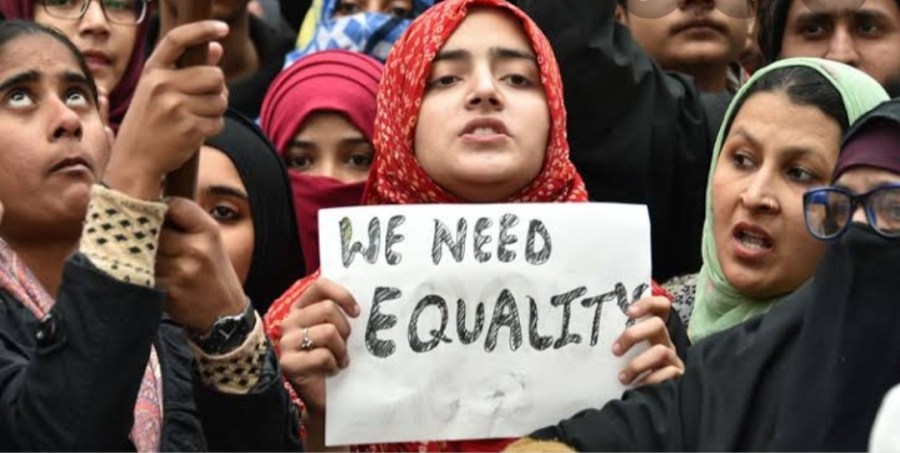
Citizenship law could do ‘irreversible damage’ to India’s secular fabric

The newly amended law provides for granting of Indian citizenship to Hindus, Sikhs, Jains, Buddhists, Parsis and Christians from Pakistan, Bangladesh and Afghanistan who came to India on or before December 31, 2014.

The law will not be extended to Rohingya Muslims persecuted in Myanmar; Shia and Ahmadiyya Muslims in Pakistan; Hazaras, Tajiks and Uzbeks in Afghanistan; Tamils in Sri Lanka; and atheists in Bangladesh.

The CAA, combined with the proposed nationwide NRC, risks disenfranchising Muslims across the country as it provides a pathway to citizenship for non-Muslims but has no remedies for Muslims caught up in NRC processes .This new citizenship law violates the fundamental right under Article 14 of the Indian constitution that guarantees equal protection of laws, even to the aliens, in the territory of India.

BJP, the ruling party in India, has a stated goal of Hindutva

The ideological body of the BJP is Rashtriya Swayamsevak Sangh, or RSS, which derives a lot of its inspiration from Nazi Germany. The RSS believes in Hindu supremacy. It believes that, after the partition of India, if Pakistan was created for Muslims, then Muslims should be treated as second-class citizens and the concept of secularism should be removed from the Indian Constitution. So, ever since this government has come to power, it has been taking decisions to appease the Hindu majority. Everybody’s been calling the Citizenship Amendment bill a distraction from the economic failures. It is not. It is basically a project of Modi’s fascism. The “Hindu Rashtra” (Hindu Nation) is basically a country which will be for Hindus where Hindus will have the first take to all the resources in the country.If the government of the day is indeed concerned about the persecuted minorities in neighboring countries, why is it that only Muslims have been singled out to not be given citizenship? Myanmar is also a neighboring country, where we have persecuted Rohingya community, and the Indian government has called Rohingyas a security threat to the to the idea of India.

If the government of the day is indeed concerned about the persecuted minorities in neighboring countries, why is it that only Muslims have been singled out to not be given citizenship? Myanmar is also a neighboring country, where we have persecuted Rohingya community, and the Indian government has called Rohingyas a security threat to the to the idea of India.

It feels like a nightmare to be a Muslim in India because every day since Mr. Modi assumed power in 2014 is an attack on the Muslim identity in this country. 

Conclusion

There has been 80% rise in hate crimes against Muslims between 2014 and 2020, when Muslims were lynched on suspicion of eating beef, Muslims were lynched on suspicion of marrying a Hindu girl. So, every day there is an attack on their religious identity. So it’s become difficult to live as a Muslim, as a self-respecting Muslim, in the Indian democracy ever since Narendra Modi has come to power. Even the educational institutions, Jamia and AMU were not debarred from their dirty politics. Police entered illegally in University premises and brutally tortured and beaten up the students with stun grenades and expired tear gas shells on 15th December 2019.

India has for long been known as a vibrant land that set flawless examples in the cherished values of pluralism and unity in diversity, but a controversial Citizenship Amendment Act (CAA) ,introduced by the Narendra Modi government reeks of a narrow agenda aimed at marginalising the country’s 200 million Muslims.