As of late India has gone into a phase of segment profit which will keeps going up to 2055 we have the 35 years to support our monetary improvement to make further move to the development era with the 66% of the number of inhabitants in India is between 16 to 65 age bunch this is the compose time to talk about business issues.
Right off the bat unemployment is the focused issue in India on the grounds that as indicated by NSSO study 2017-18 in work rate in India is 6.1%which is 45 years high in the country. PLFS review likewise shows that Rural urban disparities,gender imbalances in unemployment.Comparing to the informed uneducated are increasingly utilized in the country.The two principle central purposes of joblessness issues in the nation are initially business aberrations dependent on training and second is the joblessness dependent on sexual orientation disparity.
To handle with the principal issue as we as a whole of us realize we need to change the current instruction framework from tutoring to higher studies.Although govt is making various strides like Atal advancement mission,Atal fiddling labs and for university training NSDC aptitude advancement plan’s these measures are on the whole going in constructive way.By expanding the eagerness towards development we need to begin brooding focuses at region shrewd in the nation to energize thoughts of the students.These hatching focuses running presentelh in first rate institutes.We must improve mindfulness about govt plan’s especially in country zones like PMKVY.for school dropouts and school drop outs we ought to give some expertise preparing and confirm them.We likewise need to improve financial plan on credits for independent work of the people. MUDRA conspire doing great in this way. MSME sector additionally critical to make business enormously in Rural urban regions.
Second is the Gender imbalance the likely populace of about half are not in the standard of monetary advancement of the country.To remember that part of individuals for the standard business Govt is taking numerous estimates which will do the trick somewhat however we need to improve the more in the coming years.First we need to expand the labor proportion by taking rigid measures on infanticide. second young ladies dropouts from school instruction must be reduced. In this govt started plan resembles better bachao better padhao sukanya samruddhi yojana are doing well.For the utilized ladies Maternity advantage leave act 1971.In the provincial territories ladies are for the most part in masked business. To handle this issue we need to guarantee bookings for females for all most in all areas from parliament to private associations.
Another serious issue In this nation about employment. This is entire diverse issue from joblessness .Most of the affected here are the informed people.I f we don’t focus on this issue care completely it will make social,economical,political suggestions on the nation.
By and by in India university instruction in India is likewise unsatisfactory aside from some institutions.The aptitudes which the vast majority of the understudies learned in the school’s aren’t adequate to work in the ventures and companies.This will deny youngsters of taught sector fathom this issue we team up the businesses and organizations with colleges.They to be prepared by these enterprises in the schools itself.By gilding consents to schools to change their prospectus as per the need of the industry.From the most year of graduation it self understudies must be locked in with industry and friends activities.Apart from building and medication we need to expand the understudies into arts,management,science sector. There by businesses additionally enhance.
As of now India’s migraine is be the under employment.If the informed individuals land the correct position this will build up the organisation in this manner nation and accordingly work for the jobless individuals of this nation
“Justice delayed is justice denied” is a legal maxim. It implies that if legitimate review or fair help to a harmed party is accessible, however isn’t approaching in an opportune manner, it is successfully equivalent to having no cure by any stretch of the imagination.
This rule is the reason for the privilege to a fast preliminary and comparative rights which are intended to facilitate the lawful framework, on account of the injustice for the harmed party who continued the injury having little trust in opportune and compelling cure and goal. The expression has become a revitalizing weep for lawful reformers who view courts, councils, judges, mediators, authoritative law judges, commissions or governments as acting too gradually in settling lawful issues — either in light of the fact that the case is excessively unpredictable, the current framework is excessively mind boggling or overburdened, or on the grounds that the issue or gathering being referred to needs political kindness. Singular cases might be affected by legal aversion to settle on a choice. Resolutions and court rules have attempted to control the propensity; and judges might be dependent upon oversight and even order for tireless disappointments to convenient choose matters, or precisely report their excess.
Justice is one of civilisation’s primary objectives. It is subsequently basic for the legal executive to play out its obligation appropriately for any general public to proceed with its quest for harmony, amicability and progress. Shockingly, the Indian legal executive, notwithstanding its numerous victories, experiences extreme auxiliary issues that keep it from working appropriately. The legal executive’s travails, explicitly those identifying with deferrals and overabundance are very much reported and needn’t bother with reiteration. In any case, it is just over the most recent couple of years that these basic issues have been exceptional seen observationally because of the accessibility of better information. It is presently conceivable to survey, in a genuinely point by point way, the legal executive on boundaries, for example, spending plans, HR, remaining burden, assorted variety, foundation, and patterns throughout the years. We can likewise precisely analyse the pendency and excess issue at region and taluka level as well as at court complex levels.
From a bigger viewpoint, legal deferrals likewise lead to vulnerability with respect to laws and their application — the continuous case in the Supreme Court in regards to the use of the Right to Fair Compensation and Transparency in Land Acquisition, Rehabilitation, and Resettlement Act, 2013 and the assurance of remuneration thereunder has basically ended land securing case in the nation. Cases identified with land securing in the subordinate courts stay pending for a long time by and large and are a class of cases that set aside the most effort to be settled in court. A basic change required is the need to choose a full-time legal organization framework. Globally, legal organization is viewed as being subordinate to crafted by judges and is done by committed and concentrated faculty to help judges effectively play out their legal obligations. The foundation of a committed and prepared unit to offer help to the legal executive through case the board, help with planning, dealing with managerial errands, and guaranteeing support of court framework will go far in empowering the legal executive to concentrate on the organization of justice.
Generic Indian model that works for all sorts of business activities is organizational and orientation-based consumer class branding in between the lines of generic marketing. The cost benefit optimizers are known to be Indians apparently , which we need in abundance. Fixed automation budgets and stalls for the best business deals to be enclosed from small , one-stop shops in the grey market providing software and hardware factors together. These type of working segmentations work for hospital service consumers , subscribed factors , chemicals and every other rational category you can line up to.
The fine line between premium yet popular enough discount products and typically cost-benefit optimizers there’s multiple usage options comprising of household goods. These types of generic ownerships hold a very high degree of sensibilities done in the hard work. The very ideology of household things brings up few unnoticed and faded away parts of issues to optimize status signaling , comfort as well when it comes to running costs. Marketing types of generic modeling can be segmented by this construct , based on their fenced knowledge about investment and raising capital through means of generic models. Finally , entitling to the basic generic model , a multi-pronged strategic decisions always route to productivity and can be devised for the Indian marketing purposes.
As the process of unlocking is going hand-in-hand with mini lockdowns in several states, along with the rising number COVID-19 cases, reports said the Centre might allow theatres to reopen next, but educational institutions, swimming pools and gyms, metros will remain closed. Malls have already opened. Multiplexes might be given permission towards the end of August to allow people between the age group of 15 to 50 with spaced out seating arrangements, maintaining social distance.
According to reports, the Centre has plans to allow gymnasiums only on the condition that the onus of safety will be on the authorities and the public using it will be responsible.
According to the latest UGC guideline, the universities will have to complete their final year examinations by September. While some exams will be held online, some exams might be held offline for which the Centre will extend its permission. But there are no plans to resume regular classes in schools in August.
Biomedical Waste Management & Handling Rules, 1998 (“1998 Rules”) in India govern the handling, disposal and management of bio-medical waste (“BM Waste”)in India have been notified by the Central Government in the exercise of the powers conferred by Section 6,8 & 25 of the Environmental Protection Act, 1986. These rules provide for the framework of the management and Handling of disposal and scientific management of BM Waste
In wake of the COVID-19 pandemic, the Centre Pollution Control Board (“CPCB”) recently issued guidelines dated March 27, 2020 for handling, treatment and safe disposal of BM Waste generated during treatment, diagnosis and quarantine of patients confirmed or suspected to have COVID-19 (“Guidelines”).
The Guidelines have been necessitated due to the super infectious nature of the Novel corona virus and provide for a mechanism for the segregation, packaging, transportation, storage and disposal of BM Waste in order to avoid further spread of the virus through BM Waste.
So what do you mean by the BM Waste and what are the categories of BM Waste that the hospitals generate?
The Bio-Medical Waste Management Rules 2016[1] (“2016 Rules”) define the BM Waste as any waste, which is generated during the diagnosis, treatment or immunisation of human beings or animals or research activities pertaining thereto or in the production or testing of biological or in health camps, including the categories mentioned in Schedule I the 2016 Rules.
The 2016 Rules apply to all persons who generate, collect, receive, store, transport, treat, dispose, or handle bio medical waste in any form. The next imminent question that comes to our minds is what are the categories of BM Waste that the hospitals generate?
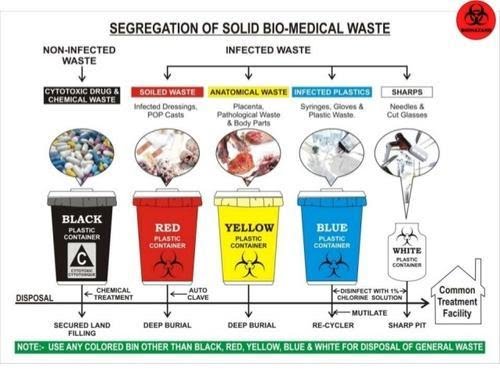
BM Waste generated from a hospital could be human anatomical waste, animal waste- microbiology & biotechnology, waste sharps, discarded medicines and cytotoxic drugs, solid & liquid waste.
Now that we know what’s the meaning and various categories of BM Waste, the most pertinent question arises that how is it supposed to be treated and disposed of by the hospitals in India during the ongoing COVID-19 pandemic?
While the hospitals in their usual course deal with the segregation, management and storage of BM Waste, the situation in times of COVID-19 is extraordinary the reason being the highly contagious nature of the virus and also it’s transmission cycle and multiplicity rate.
As the hospitals are being flooded with the suspected and confirmed cases, the Ministry of Health and family welfare (“MoHFW”) and the CPCB have issued various guidelines for the handling and management of waste generated from the COVID-19 facilities.
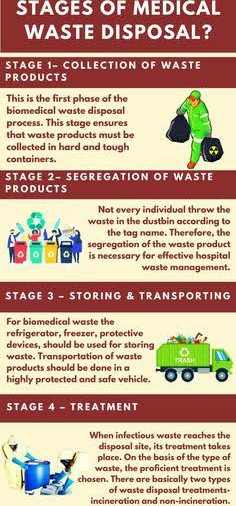
Under the 2016 Rules, while the hospitals are required to ensure that there is a secured location within its premises for a spill/pilferage free storage of segregated BM Waste in labelled/coloured bags or containers, the duty to transport the stored BM Waste from the hospital premises onwards to the common BM Waste treatment and disposal facility is of an ‘operator’ as defined in the Rules.
Specifically, in wake of COVID-19, the CPCB has issued Revision 1 to the Guidelines dated March 25, 2020 for Handling, Treatment and Disposal of Waste Generated during Treatment/Diagnosis/ Quarantine of COVID-19 Patients (“CPCB Guidelines”).
[2] The said CPCB Guidelines inter-alia, state that hospitals are required to depute separate BM Waste sanitation workers to COVID-19 isolation wards and maintain records of all waste generated in such isolation wards and ensure that the BWM generated is collected and separately stored in separate leakproof color-coded double layered bags or bins /containers labelled as “COVID-19 waste” as per the 1998 Rules and the Guidelines.
In fact the Bombay High Court in a recent pending public interest litigation has, while issuing notices to local municipal corporations and the State Pollution Control Board, also directed the Maharashtra government to clarify whether it was ensuring that all COVID-19 related biomedical waste generated in the state was being disposed of in a safe manner[3].
Now that we have a thorough understanding of how the BM Waste is supposed to be treated and disposed of the most important and the widely discussed about topic is that what are the measures that a hospital is required to take for the safety of its employees doctors, nurses and other support staff who are known as the (“healthcare personnel”) from the dangerous diseases like COVID-19?
In order to answer this pertinent question which is often there in the limelight, one must keep in mind that the Healthcare personnel who are the Frontline workers have a high risk of contracting the COVID-19.
While the hospitals are taking precautions and measures to control any spread of infection within the premises, it is particularly difficult given the highly super-infectious nature and hyper-speed feature of the virus. Due to this feature it spreads widely and it becomes a bit difficult to contain it in an over-crowded environment but it’s not impossible to achieve that as we all have been deterrent enough to contain it’s spread but still there is always scope for improvement.
The first steps towards controlling the spread of a virus is personal protective equipment also known as PPE which should preferably be a two-layered fluid-resistant apron and basic items like N-95 masks, face shield, full cover gowns and sanitisers but the same are rendered ineffective against the COVID-19 if the quality of these equipments is not up to the standard as required.
Greater emphasis is also to be laid upon the proper training and awareness of healthcare personnel towards proper use and disposal of the equipment. The spread of the COVID-19 virus is also particularly fast due to the heavy load of asymptomatic patients coming into the hospital and hence a greater need for the formulation of national COVID-19 protocol.
The MoHFW has vide its revised guidelines for clinical management of COVID-19 dated March 31, 2020[4] (“Clinical Management Guidelines”) impressed upon strict compliance of Infection prevention control (IPC) protocol for Hospitals and a consequent effect of the same is prevention and management of COVID-19 in the hospital staff.
This protocol inter-alia, standard precautions such as hand hygiene, use of PPE to avoid direct contact with patients’ blood, body fluids, secretions (including respiratory secretions) and non-intact skin, prevention of needle-stick or sharps injury, safe waste management, cleaning and disinfection of equipment and cleaning of the environment around a COVID-19 patient.
The 2016 Rules also provide as follows that in order to and for ensuring the safety of the healthcare workers and others involved in the segregation and pre-treatment of BM Waste, the hospital is required to train to all its healthcare workers, immunise them for protection against diseases which likely to be transmitted by handling of BM Waste, in the manner as prescribed in the National Immunisation Policy[5].
Also, hospitals are required to ensure occupational safety of all its health care workers and others involved in handling of BM Waste by providing appropriate and adequate PPE and also they must conduct health check ups at the time of induction and at least once in a year maintain the records for the same.
Now due to the pandemic if one is an employee ie the Healthcare personnel of the hospital one must understand the Legal aspect and angle also and the most important aspect of all is that what is the Legal obligations of the hospital, if and when an employee of the hospital tests positive for COVID-19.
Let’s answer this as it’s the most crucial and critical aspect. The present COVID-19 pandemic is an unprecedented event and is unlike any other infectious disease known to mankind and the medical world which is yet to fully decipher its modus operandi of infecting humans.
In a hypothetical situation wherein a hospital employee contracts COVID-19, it will be imperative for the employee in such a situation to establish that his possible exposure to COVID-19 was in the Hospital itself not in the community after considering that the employee is spending time outside as well apart from the hospital premises.
While in an ideal case, if it is proved that a hospital staff has contracted it ,i.e., it shall amount to ‘a hospital acquired infection’, then the hospital would be ordinarily liable. However, in the case of COVID-19 since it is seemingly impossible to trace down the exact source of the infection, in absence of such evidence and in light of utmost safety measures and precautions taken by the hospitals as per the guidelines, fastening of any liability on the hospital would be peculiarly difficult.
The defence available to the hospital may be culpability and negligence of the employee and proving that the hospital itself took all possible measures to avoid any mass spread of the infection.
The next relevant point to be analysed and answered is that when a Non COVID-19 patient contracts the virus during his term of being admitted in the hospital what are the Legal obligations of the hospital when this happens?
The National Consumer Dispute Redressal Commission in the matter of Apollo Emergency Hospital vs Dr. Bommakanti Sai Krishna & Anr.[6] observed that “As already observed, the infection occurred during the stay of the Complainant at the hospital. On the other hand, there is nothing to show that the source of infection lay outside the hospital. Thus, there is preponderance of possibilities of the infection having been acquired in the hospital itself. We therefore, do not accept the contention that it was necessary for the Complainant to produce expert evidence to prove negligence on the part of the concerned doctors in the hospital.”
The afore-stated judgement implies a presumption of liability on the hospital that in cases where the probability of acquiring the infection is much higher inside the hospital than from other sources. However, the same may not apply in COVID cases in light of the peculiar difficulty of tracing the source of acquiring the COVID-19 infection. Therefore, the presumption rendered by the aforesaid judgement will not be ipso facto applicable to cases of COVID patients.
As we have discussed the various pertinent relevant questions another one is that what are the legal obligations of the hospital, if and when a patient is misdiagnosed positive or negative for COVID-19 by the hospital due to a fault in the COVID-19 rapid testing kit (“testing kits”)?
The liability of a hospital in cases of misdiagnosis depends on the methodology of procuring of testing kits. A hospital may procure testing kit either from third party manufacturer or may manufacture them internally i.e. by itself or its subsidiary.
In cases where the misdiagnosis is on account of faulty testing kit procured externally, the hospital cannot be held directly liable as the liability may be shifted upon the manufacturer.
In cases where the misdiagnosis is on account of faulty testing kit is due to testing kits produced internally the hospital may be liable subject to it being proved that the misdiagnosed patient was indeed positive. However, factors such as the success rate of any testing kit not being 100% may have an interplay in determining the liability.
We have to be aware of what are the Legal liability of a hospital in a situation where the hospital discharges a mild/very mild/pre-symptomatic COVID patient to ramp up the capacity for serious COVID-19 patients.
A hospital will not be held liable for a systematic discharge of a mild/very mild/pre-symptomatic/moderate COVID-19 patient as the same is directed by the Central Government. On May 8, 2020, the MoHFW released its revised policy for the discharge of COVID-19 patients.[7] This revised policy provides that hospitals can discharge mild/very mild/pre-symptomatic in accordance with the protocols given therein.
In the earlier advisory[8], COVID-19 patients could be discharged only after chest radiograph clearance, viral clearance in respiratory samples, and if two of the patient’s specimens were negative within a period of 24 hours. The discharged patient would then have to home quarantine themselves in accordance with the revised policy.
So what is the protocol to be followed by a Hospital while disposing of the dead bodies of the COVID-19 patients?
The corpses are a source of infection for healthcare personnel/ other patients and cannot be disposed of by usual methods of disposal and therefore, the MHFW issued guidelines dated March 15, 2020 on dead body management in COVID-19.[9] The guidelines provide inter-alia, the protocol to be followed at the time of removal from the isolation room or area, put in bio-hazard bag and disinfection. Further, all surfaces of the isolation area (floors, bed, railings, side tables, IV stand etc.) should be wiped with 1% Sodium Hypochlorite solution and then it should allow a contact time of 30 minutes, and allow it to air dry as well.
While treating patients infected with the COVID-19 virus, what is the protocol for the treatment?
The All India Institute of Medical Sciences (AIIMS) has issued clinical protocol dated April 21, 2020 for treatment of Covid-19 patients and states such as Madhya Pradesh and Delhi have directed Hospitals and health centres dedicated to treating COVID-19 patients to follow the said clinical protocol.[10]
Treatment must be affordable for all. One must know whether or not there is a standardisation of costs of treatment of a COVID-19 for private hospitals?
Government hospitals are reaching their intake capacities and for that reason COVID-19 patients have been resorting to treatment in private hospitals. While some private hospitals are charging exorbitant amounts as costs of treatment, the same is worrying not just for the patients but also to the insurers.[11]
In a first, the State government of Maharashtra has capped treatment costs in private hospitals for people without medical insurance and for other patients, the capped prices will come into effect once they exhaust their medical insurance cover.[12]
The Hon’ble Gujarat High Court has vide its order dated May 22, 2020 directed the state government to issue a notification making it mandatory for all multi-speciality hospitals private/ corporate hospitals in Ahmedabad and on its outskirts to reserve 50% of their beds (or such other capacity as maybe specified by the state government) for COVID-19 patients.
In view of the same, the Government of Gujarat may come up with similar caps on costs as Maharashtra.[13] The Hon’ble Gujarat High Court also observed that the certain private hospitals authorised by the government to treat COVID-19 patients in Ahmedabad are charging exorbitant fees which is unaffordable for a massive section of the society and directed the state government to ensure that private hospitals do not charge exorbitant fees. [14]
Also in light of the same The Hon’ble Bombay High Court recently directed a charitable hospital to make court deposit of monies in a case pertaining to levy of exorbitant charges for treatment of COVID-19 patients belonging to poor strata of the society despite reserving 20% of its beds for poor and the needy.[15]
Corporate engagement with society, also termed corporate social responsibility (CSR), has become a commonly used term in contemporary society and refers to one process by which an organization expresses and develops its ‘corporate culture’ and social consciousness.
CSR has been receiving lots of attention from various backgrounds of researchers worldwide, it has attracted a great deal of attention over the past decade and according to some researchers, has gathered great momentum over the past number of years and is now regarded to be at its most prevalent. Therefore business leaders, government officials, and academics are focusing more and more attention on the concept of “corporate social responsibility”.
Almost all corporate websites/ policies/reports talk about their endeavors for CSR, which has become a way of ensuring that the organization is fulfilling all the obligations towards society and thus is eligible for the license to operate. It assures that the organization can grow on sustainable basis. There are also societal pressures with respect to social issues such as human rights and the environment on the corporations and CSR is widely regarded as the response of corporations to this pressure and according to Bénabou & Tirole (2009), responding to such pressure, business leaders, governments and academics are now also emphasizing the notion of CSR.
In CSR, the central issue is the appropriate role of business that overlaps, almost completely, with its reference area and now business organizations have waked up to the need for being committed towards CSR because the role of businesses in society is no longer focused on creating wealth alone but is also focused on acting responsibly towards stakeholders.
Everyone agrees that firms should obey the law. But beyond full compliance with environmental regulations do firms have additional moral or social responsibilities to voluntarily commit resources to environmental protection. To be specific, why companies do CSR? For this, it is answered that CSR is situations where the firm goes beyond compliance and engages in “actions that appear to further some social good, beyond the interests of the firm and that which is required by law” and it is also due to various reasons such as to attract new investors, part of branding strategy, an obligation from the government and the lists go on. However, CSR does not mean just taking part in charitable activities and events; it means holding the responsibility to develop the society by envisioning future plans for socio-economic justice and be conscious about their responsibility for the welfare of society around them. Therefore, according to Zu & Song (2008), a large number of companies appear increasingly engaged in a serious effort to define and integrate CSR into all aspects of their businesses.
Corporate executives have also encountered demands from multiple stakeholder groups to devote resources to CSR. This may be partially due to the pressure generated by a union of ethics-oriented campaigners including NGOs, anti-capitalism activists, labor unions, and news media; and partially due to the demand for doing so by their customers, employees, suppliers, communities, governments, and even stockholders. Ismail (2011) stated that CSR is supported by the case whereby the government alone is definitely cannot afford to have a sole responsibility in improving the lives of their people as it exceeds their capabilities. If the government is unable to fulfill the increasing demand of their people thus this is where the corporations should support the government. However, those who opposed this statement saw the situation as unfair to the business corporations, such as Friedman’s (1970) famous statement that ‘the only responsibility of a business is to maximize shareholders’ wealth’. But according to Krishnan & Balachandran, companies are beginning to realize the fact that in order to gain strategic initiative and to ensure continued existence, business practices may have to be molded from the normal practice of solely focusing on profits to factor in public goodwill and responsible business etiquettes.
An examination of some of the factors, which have led to the development of the concept of CSR, would be ideal starting ground for the conceptual development of suitable corporate business practices for emerging markets. Krishnan & Balachandran also expressed that in the last twenty years, there has been a sea change in the nature of the triangular relationship between companies, the state and the society.
No longer can firms continue to act as independent entities regardless of the interest of the general public. The evolution of the relationship between companies and society has been one of slow transformation from a philanthropic coexistence to one where the mutual interest of all the stakeholders is gaining paramount importance. Bénabou & Tirole (2009) asserted that CSR is somewhat of a “catch-all” phrase for an array of different concepts.
India has been under lockdown phase 4 until May 31st with some relaxations. Prime Minister Mr. Modi announced a relief package of 20 lakh Crores INR for various sectors to propel economic growth on May 17. Some relaxations which were provided to Red, Orange and Green zone areas during the Lockdown 3.0 like opening of some of the individual shops of non-essential items were extended to Medium and small scale industrial sector, farm and trading sector. Malls, Cinemas, restaurants and places with probable high foot fall remained closed. India now is ranked third in the world in terms of coronavirus cases, after the US and Brazil.
The COVID-19 pandemic pushed economies into a Great pushback, which helped contain the virus and save lives, but also triggered the worst recession since the Great Depression. Over 75 per cent of countries are now reopening at the same time as the pandemic is intensifying in many emerging market and developing economies. Few countries have started to recover. However, in the absence of a medical assistance, the strength of the recovery is highly uncertain and the impact on sectors and countries are uneven.
The entire country remained under lockdown till May 31, 2020 followed by Unlock phase-1 from June 1 and June 14. Up to May 31, was the Lockdown 4. Earlier the Lockdown 3 was up to May 17, Lockdown 2 was upto May 3 and before that the Lockdown 1 was from March 22 to April 16, 2020. Prime Minister Mr. Modi announced measures with some relaxations. According to experts, this is being done to ensure that the Food Safety of India is protected as Rabi harvesting season is on anvil. PM Modi said detailed guidelines have kept in mind the needs of the informal sector and farmers. India now joins countries such as France, USA which are moving with the idea of unlock phases after extended lockdowns.
The Harsh Effects on World Economies
A high degree of uncertainty surrounds this forecast, with both upside and downside risks to the outlook. On the upside, better news on vaccines and treatments, and additional policy support can lead to a quicker resumption of economic activity. On the downside, further waves of infections can reverse increased mobility and spending, and rapidly tighten financial conditions, triggering debt distress. Geopolitical and trade tensions could damage fragile global relationships at a time when trade is projected to collapse by around 12 per cent.
This pandemic like no other will have a recovery like no other. First, the unprecedented global sweep of this crisis hampers recovery prospects for export-dependent economies and jeopardises the prospects for income convergence between developing and advanced economies. We are projecting a synchronised deep downturn in 2020 for both advanced economies (-8 per cent) and emerging market and developing economies (-3 per cent; -5 per cent if excluding China), and over 95 percent of countries are projected to have negative per ca-pita income growth in 2020. The cumulative hit to GDP growth over 2020–21 for emerging market and developing economies, excluding China, is expected to exceed that in advanced economies. Sooner or later this crisis will vanish and it has to because change is the undisputed law of nature. The only thing waiting for us after this epidemic is a shattering or rather say, a collapsing economy for many nations. We are fighting this pandemic together hence same should be our spirit in handling the ruptured economy. With confirmed case count for India crossing a million and more than 26000 deaths, all we can do is to get more strongly committed to all guidelines and suggested precautions by governments and health agencies worldwide.
Getting angry on someone is the most easiest thing because it almost happens all the time. Can we control anger? Can we stop before we get it? Anger is a sudden reaction of the pressure inside that occurred due to disagreement of your opinion. Anger has a great impact because we speak without control. Words that come out of our mouth were actually came from our heart. Usually people hide the true opinions and try to fake friendships. But due to this sudden process the opinion of us over others comes out in a sudden manner.
Things done can never be undone so think before you do. Thinking about done doesn’t erase done. Neither can we change the past not set the future. So think about present because it’s the only thing that’s in our control. May be I can modify the sentence as present is also not in our hands atleast we have a feel that it’s in our control. The feel of real is not real but we are atmost in real. It gives us confidence and hope of our chances to change our present. Going with the flow is a old phrase which makes our lives flow like a wave in a sea. Have focus because its something that stops us from making something. Our conscience reacts only when it’s emergency, so depending on it is not trustworthy.
Have a clarity over your doing. Anger can’t be stopped from getting started. But we can decrease the intensity. We don’t know the initial point of the anger when it’s about to start. But we can remember it only after the incident. So try to stop the origin isn’t in our hands because it happens all of sudden and we don’t have control over it. So try to save ourselves from becoming worse is the only option left with us. We get to know about ourself at the time of anger. We need to control ourselves by shifting our thought to some other thoughts.
Manage your anger by thinking of something else and let your brian think in different direction. Have a shift over your thoughts and manage your anger. Don’t try to stop anger because you can’t stop it. Try to control the intense when you have conscience over your doing. It decreases the intense of your anger and thereby letting you mange your anger.
The guidelines given by the University Grants Commission (UGC) have become challenge in the Supreme Court. Today 31 students from various universities in 13 states and one union territory moved the top court. Amongst them, one is a COVID-19 patient. The UGC’s decision of postponing final-year exams till the 30th September 2020 becuase of the Corona pandemic is one of the main points of problem. Using the social media, students across the country have been demanding for the revised guidelines.
The petition has talked about the cancellation of final-year examinations for universities across the country. Results should be declared on the basis of past performance and internal assessment of a student, it says. The petitioners have also demanded that the mark sheets should be awarded and the degrees to successful students by July 31, 2020. The 31 petitioners have also demanded adoption of CBSE mechanism and providing of another chance to those dissatisfied with their marks.
Earlier on Saturday, Maharashtra Cabinet Minister and Yuva Sena President Aaditya Thackeray filed a writ petition in the court seeking relief for lakhs of students throughout the country. “Today Yuva Sena has filed a written petition in the Supreme Court with prayers to save lives of crores students, teachers, non-teaching staff and their family members by asking the UGC not to be stubborn about enforcing examinations when India has crossed the 10 lakh cases mark,” Thackeray mentioned. He further said that the academic excellence couldn’t be judged by one examination. “For academic excellence, we must calculate the aggregate marks of the past semesters. Beyond which, if students still feel the need to appear for an examination, they voluntarily may do so post COVID. The petition is for each and every student across the country, being forced to appear for an examinaton in an absolutely bizarre judgement of the situation by UGC and non-flexibility when it comes to human safety,” he said.
It is very important for an organisation without this department they can’t start their work because all work from planning , staffing , organising , controlling and directing functions are done through this department. What is to be done ,when is to be done and who perform the work is done by this department in the organisation. This is very essential of growth in organisation.
Human resource management is the practice of recruiting, hiring, deploying and managing an organisation’s employee. A company or organization’s HR department is usually responsible for creating, putting into effect and overseeing policies governing workers and the relationship of the organization with its employees.
HRM is really employee management with an emphasis on those employees as assets of the business. In this context, employees are sometimes referred to as human capital. As with other business assets, the goal is to make effective use of employees, reducing risk and maximizing return on investment (ROI).
As a practice, businesses and organizations depend on three key resources: physical resources, such as materials and equipment; financial resources, including cash, credit, and debt; and people. There can be no doubt that people play a vital role in an organization or business as a resource.The human resource function of every defines their success as an organization. An organisation’s HR function plays a major role in the growth of its bottom line and the success of its business strategy.
why do we call it Human Resource Management ?
Human – referred to the skilled workforce in an organisation
Resource- refers to limited availability or scares
Management- refers how to optimize and make best use of such limited or scare resources so as to meet organisational goals and objectives.
Nature of HRM: It is the process of bringing people and organisation together so that the each of goals are met. It is focus on results rather than rules. It tries to help employees develop their potential fully. It encourages employees to give their best to the organisation. It helps an organisation meet its goals in future by providing for competent and well- motivated employees. It tries to build and maintain cordial relations between people work at various levels in the organisation.
objectives of HRM: To procure right type person for right job at right time. To ensure effective utilisation of human resources. To ensure development of human resources. To maintain high morale in organisation. To provide them right kind of training to increase their productivity.
HRM refers to the management of all decisions within an organization that are related to people.
To understand HRM, the functions of HRM must be taken into consideration. The functions of HRM are managerial, operative and advisory.
Managerial functions of HRM:
▪︎ Planning
▪︎ Organising
▪︎ Directing
▪︎Controlling
Operative functions of HRM:
▪︎ Recruitment and Selection
▪︎Job analysis and Design
▪︎Performance Management
▪︎Learning and Development
▪︎Compensation Management
▪︎Employee Welfare
▪︎Policies
▪︎Personal records
▪︎Labour relations
Advisory Functions:
▪︎ Top management advisory : One of the critical HRM functions is to advise the top management in formulating policies and procedures. The advisory function of HRM also advise the top management on appraisal of manpower. This function also involves advice regarding maintaining high-quality human relations and improving employee morale.
▪︎Departmental Head Advice : Under thi HRM function, HRM advices the head of various departments of policies related to job design , job description, recruitment, selection and appraisal.
DO YOU KNOW IT ?
The U.S. office of Personnel Management is the world’s largest HR department . OPM provides Human Resource service for the federal governments workforce of nearly 2.8 million workers. It’s staff carry out the tasks to recruit, interview and promote employees oversea merit pay, benefits and retirement programs ; and ensure that all employees and applicants are treated fairly and according to the law.
The following reasons highlight the importance of HRM.
Recognizing and valuing individuals: HRM acknowledges every employee’s worth within the organization, suggesting that the organization recognize and value individual contributions. The empathy monitor study by the Businessolver states that 93% of employees say they’re more likely to stay at an organization with an empathetic employer. Also, the happywork study by Ultimate Software says that 75% of employees would stay longer at an organization that listens to and addresses their concerns.
People bring ideas: HRM manages people, and people bring new new skills and ideas into the organization and fuel the growth of business.
Upskilling is long term interest : HRM recognizes the need for continuous learning; talents and skills must be continually refined in the long-term interests of the organization.
Employee satisfaction: People have a right to be satisfied by their work, and organizations have a responsibility, and a profit motivation, to try to match their skill DecisionWise via Human Resource Today 64% of workers globally feel their job gives them a sense of meaning and purpose.
Beyond technical training: HRM has a much broader scope than technical training—employees need to know more than the requirements of a specific task in order to make their maximum contribution.
These are major role of HRM department in an organisation’s growth. If their employees are happy they become more productive and effectively perform their work towards organisation which help in organisation’s growth and achieve their objectives.
Every now and then there will be a war, a war between right and wrong, a war between yes and no, a war between male and female. Chhapaak is an example of such a war. It’s a 2020 film directed by Meghna Gulzar, casted light on the harsh reality of the society, where you can see the difference between the life of a man and a woman, in the movie a man of 30, named Basheer Khan, tried to destroy the life of a 19 years old girl, named Maalti (role played by Deepika Padukone) by splashing acid on her face, just because Maalti refused his romantic overtures. There was a dialogue in the movie, “Acid attack unhi ladkiyon par hua jo ya toh padna chahtin thin ya phir badna chahtin thin,” it shows the male dominance in the society. Chhapaak is all about the pain and darkness faced by Maalti and her efforts to fight against all the odds of life. She fought a case against Basheer Khan & at the same time she also filed a PIL to ban the use of acid so that in further future no one else would have to face what she has faced. After a long and exhausting battle of 7 years she finally won her case. Although, Indian government has not banned the use of acid but it’s selling has been regulated.
Though chhapaak is now an outdated movie as it was released in the month of January and it’s been 5 months to its release. But this movie gave me goosebumps when I saw it, I’m posting this old piece of my work because it was one of those movies which sniffed me into tears and forced my mind to think about the harsh truths of life. To those who haven’t watched it yet, this film review can help you to understand the concept behind making this movie. After watching it a thought came to my mind and that was “Jo cheez dil par asar kar deti hai aksar wahi likhna par majboor bhi kar deti hai.
Sharing my piece of work which was published in the daily newspaper, ” The Message ” of JECRC University.
Everything is possible, if you’re determined to achieve it at any cost (not by bad means, by genuine means only) if you can change your habits, you can change your life.
Never give up, its very natural if you have big dreams then you can fail many times in the process of reaching it, but visualise that day when you’ll get it. It will help you to stay focused and will improve your patience level.
Patience is one of the most important skill in the journey of life, I was a very impatient person in my past life. Although I am not that much patient, but I am trying my best to be the one.
In this particular post I wanna share my journey. I want to share what I have learned in the month of May and June.
It’s all started with a wish of launching my own PODCAST.
I started searching how can I launch my podcast, but I wasn’t getting a correct information, and I had no clue about how to get started, but I didn’t give up, since our childhood we have listened never give up, but sometimes we lose hope and give up very easily, instead of trying another methods, quitting seems more easy. But as they say “what comes easy won’t lasts long, what lasts long won’t come easy”. Although I had faith in all these saying, but to be honest at one point I also wanted to give up, it was my first attempt, I was googling the term podcast and how can I start one. Initially the results I got were not that satisfying, as my heartily wish was to launch my podcast on the world’s leading podcasting platform “APPLE PODCASTS” and “SPOTIFY”. But it seemed nearly impossible to do that, but I decided not to give up, and after doing some little changes in my life, a kind of miracle happened.
Within 3 days I posted my podcast on Spotify, and in less than a week my PODCAST was uploaded on Apple podcasts and from here my life was changed. I realised that not giving up is very necessary, at one point you’ll definitely be succeed in your work, whether it’s as easy as twitting something or as tough as editing a film.
These are some of the things I have learned and experienced very recently, I learned about the power of habits ( not the book), these habits are as follows:-
1. Don’t care about the world around around you, focus on yourself only.
2. Limit your social media usage don’t watch it too much, it roasts your brain, watch and learn some valuable content.
3. Eat clean, and what it means, eat clean means eat natural food and try to avoid processed and packed food items.
4. Do meditation regularly, also practice some yoga and do workout daily.
5. Read good stuff.
6. Drink plenty of water. Try to drink 3 glasses of water right after waking up. (Of your suitable temperature.)
7. Embrace the happiness as you’re alive and if you will noticed every single thing, only then you’ll realise how blessed you’re. In simple words be grateful have some gratitude, gratitude is not for every now and then, it’s for every single day.
8. Love yourself, love your family, love your God, love your surroundings, love this entire “UNIVERSE”.
9. Never give up, (“It doesn’t matter how slowly you go unless you don’t stop.” – Confucius. )
10. Don’t get tensed by your failures, failures are the proves, that you’ve tried something. After every failure you learn a way from which it can’t be done, failures are the best teachers of our lives. Every failure teaches us something. What we should remember is never giving up and learn from them, they make us more wise. “Failure is not opposite of success, it’s a part of success.”
11. DGAF about others, don’t let anybody destroy your peace of mind, there should be only one voice inside you and that voice should be your own voice. Detach yourself from those who are not good for you, the ones who want to make you feel inferior and also the ones who always talk about crap, it’s your life, it’s completely your decision how you want to live it.
12. Get connected to the ones who are way more successful than you, learn valuable things from them. You will learn a lot. It’s good if somebody can make you learn something, so be around such people. If you can’t find them follow them on social media through their posts you can learn a lot. 13. No one is your competitor, you’re your only competition, what’s only matter is: Are you better than yesterday, are you a better version of yourself? That should be your everyday goal. Life is about progressing each day, it’s about learning something every single day, life is not about worrying are you better than him or her, it’s just about improving yourself.
14. Don’t think too much, just execute it. Give your best shot. The rest fall into place.
15. When you start out with something, perfection should not be your goal, execution should be your goal, in the pursuit of perfection you will never be able to execute it. There will always be something that will not be that perfect as you want it to be, but your main focus should be your content and execution not the perfection. Overtime you should also focus upon doing it better than before, so it will definitely help you to improve, and the important thing is that you’ll learn a lot along the way.
16. Always be positive, be optimistic, always think about the positive thoughts, practice some affirmations and visualize them.
17. Value yourself, your work and your dreams and always work hard to fulfil your every single dream. Take that leap of faith and just do it.
18. Have patience ” patience is the key ” as you can’t achieve it in a night, keep working towards it, no matter how fast or slow you’re going, keep going, never give up, it’s your dream and you’re living for it, you can’t give up on it. Just think what the meaning of your will left if you will surrender to your circumstances and stop trying. You have to learn to walk against the TAILWINDS of your circumstances. You can’t postpone it until everything will get better because nothing gets better unless you forget everything and get to work.
19. Learning is a very good thing, and I think it’s the most important thing, it’s as important as eating, drinking water and breathing, it’s a basic need of every single human. You can learn from anyone anytime if you have that learning will.
A tip :- We learn better by listening than reading, so along with reading, focus upon listening as well.
The main problem arises, when you’re determined enough and even you started doing things but later you lose interest or may be you start to face lack of motivation, and you think that you aren’t feeling good but it’s all a state of mind, if you’re determined enough, you’ll conquer your mind, and you’ll conquer your circumstances as well, tell your mind that you don’t care about anything and anybody, you don’t care about how you’re feeling you just care about your dreams and your schedule, stick to it, as you want to achieve your goals, you are going to play the long game not the short one.
Remember, if you will not take control of your mind then it will take control of your life.
India is a country where stereotypes exist in every other street. From ages and ages of society, there has been an ongoing tradition and culture of blindly persuing the stereotypes formed by the formers without even considering the causes and basis for the same.
‘Transgender’, commonly pronounced shamelessly as ‘chakka’, ‘hijda’ and what not in the Indian society are a target for always being stereotyped.
Transgender refers to people who have a gender identity or gender expression that differs from their sex assigned at birth.
The only difference between a male/ female and a transgender is that the latter doesn’t resemble the gender expression assigned to him at birth. THAT’S IT. Anybody having some medical or biological issue doesn’t mean that they do not belong to the society nor they are to be treated as a taboo. All of it is fine. There is nothing to be disgusting about the term ‘trans’.
It is really heartbreaking to see the pathetic lifestyle and living condition these people have to be in. Not being able to openly move like a normal person, not being able to have somebody to talk to like others, neither somebody to be called as a friend because ofcourse our society is already so busy finding flaws and put ‘them’ at fault when their fault in all of this(being how they are) is absolutely NOTHING. Rather than understanding the normality and coincidence behind this happening, they compel such people to be isolated and to be resided somewhere away from their city so that their children or any younger generation do not get influenced by those trans.
The existence of humanity is what matters, regardless of the gender label on it.
People need to understand that there exists a HUMAN BEING behind every anthropoid stereotype we have created. For it be anyone from the LGBT community, THEY ALL DESERVE RESPECT. There is a lot that a person can learn from them. The way they struggled to have their life, the way they dare to feel alive and foremost, the way they are proud to be themselves.
In the world where we hide our identities inside out, with make up on outside and a mask on inside, these beautiful people are far better than who don’t even own whoever they are.
They accept and they proudly flaunt it, without letting the world break them. Transgender are needed to be treated as equal as any normal person is being treated. They deserve to have society with them who supports and cherish them.
They are a piece of art with million of worlds hidden in them. Where, there exist the beauty of a sparkling smile which just awaits to find a way out. Somebody who longs for us to welcome them to their real home, the world. They are us. There is nothing that can differentiate them from a human because they are human too. They should live the life like every other person do. They should be respected, they should be loved. They should be cherished for who the are and how strong, powerful and beautiful they are. They are a creation of God so profound that the mankind can’t miss the chance to be with.
They are the people of God just like us
Who ought to be loved
More and more every other day,
To be welcomed with our open arms
to bless the society of mankind
With unusual generosity, kindness and love they carry along.
Let us all come together to break this stereotype and see everybody with a vision of humanity. Let’s welcome them in our world and accept them and spread smiles.
Astrology is the study of the movements of the planets, sun, moon, and stars in the belief that these movements can have an influence on people’s lives. Astrology originated in Babylon far back in antiquity, with the Babylonians developing their own form of horoscopes around 2,400 years ago. Then around 2,100 years ago, astrology spread to the eastern Mediterranean, becoming popular in Egypt, which at the time was under the control of a dynasty of Greek kings.
Astrology is a very vast science. It is practiced in almost all the religions of world and each religion have different principles and methods for predicting future and revealing destiny. Many cultures have attached importance to astronomical events, and the Indians, Chinese, and Maya developed elaborate systems for predicting terrestrial events from celestial observations. In the West, astrology most often consists of a system of horoscopes purporting to explain aspects of a person’s personality and predict future events in their life based on the positions of the sun, moon, and other celestial objects at the time of their birth. The majority of professional astrologers rely on such systems.
They made the calendar, predicted the tides, estimated the harvest season, followed the stars in the sea, and so forth. It helped, so it became the science of the day.
Things moved in the sky, but they always came back. Always. And they came in patterns. Just like how humans are born and dead. The cycle – the cycle of life. Maybe, just maybe, the celestial alignment breathes the very same cycle of life? A few thought so anyways.
With a gripping delusion, they projected everything up high, to the sky; the joy, the suffering, the pain, the flood, the death, the birth, the entire human existence. And right there in the night, under the gazing stars and the moon, astrology was born. An ancient pattern matching scheme – a manual one. And, astrology thrived.
They started manually collecting the celestial alignment at birth data of all the kings, queens, royals, servants, saints, widows and witches. And, then they manually labelled it, and looked for patterns. They checked if all royals had some celestial alignment in common, and the same went for the poor and the misfortunate. Criss-cross. Cross-criss. Thus began the humongous scheme of pattern matching.Through years and years of data collection, pattern matching and model learning, they tuned their model and churned out the model that best fits their data.A chart was stuck to you upon birth. A lifeline that tells your destiny, your personality, your likes and your dislikes. The one that indicates everything; your everything, even your sex life.To be honest, it’s an ingenious idea, and great efforts too. Mind the time, this is thousands of years ago, when they didn’t even have a WiFi.
As years roll on, the scientific community rejects astrology as it has no explanatory power for describing the universe, and considers it a pseudoscience. Scientific testing of astrology has been conducted, and no evidence has been found to support any of the premises or purported effects outlined in astrological traditions. There is no proposed mechanism of action by which the positions and motions of stars and planets could affect people and events on Earth that does not contradict well understood, basic aspects of biology and physics. Those who continue to have faith in astrology have been characterised as doing so. In spite of the fact that there is no verified scientific basis for their beliefs, and indeed that there is strong evidence to the contrary.
Confirmation bias is a form of cognitive bias, a psychological factor that contributes to belief in astrology. Astrology believers tend to selectively remember predictions that turn out to be true, and do not remember those that turn out false. Another, separate, form of confirmation bias also plays a role, where believers often fail to distinguish between messages that demonstrate special ability and those that do not. Thus there are two distinct forms of confirmation bias that are under study with respect to astrological believe.
Across several centuries of testing, the predictions of astrology have never been more accurate than that expected by chance alone. One approach used in testing astrology quantitatively is through blind experiment.
Each day we hear of more people being found receiving COVID-19 in our region, in the United States and around the world.
The virus that causes COVID-19 can be spread from person to person through airborne droplets when an infected person coughs or sneezes. When you are close, these droplets can enter your body through your nose, mouth or lungs.
Recent research suggests that COVID-19 may be distributed by people with no symptoms, according to the U.S. Centers for Disease Control and Prevention. This is why it is so important to take the necessary steps to stop the spread of the virus.
How to limit COVID-19 broadcasts by social classification: .Stay home .Avoid public spaces and social gathering .Stay at least 6 meters away from others if you have to go out .Wear a homemade fabric or fabric in public .Do not go or gather .Avoid traveling too much .Consider using supplies for groceries, medicine, and other household items
Reducing the distribution of COVID-19 has reached a practical level for hospitals and health care providers, Gov. Tom Tom Wolf recently extended an order to stay home to all the people of Pennsylvaniya on April 30th.
A stay-at-home order asks Pennsylvaniya to refrain from trivial travel. Essential migrations include commuting to and from important work, choosing items for stores and medicines and looking after family and pets in other homes, according to the Pennsylvania Department of Health.
Social Awareness in Health Awareness in Doylestown We are committed to ensuring the safety of our patients, staff and visitors. In the meantime, Doylestown Health has taken a few steps to protect the public by reducing the limit.
.All categories of people and events have been canceled and some are now available through live webinars. Many educational resources can be found in our Health News & Blog. .Visitors are limited and a few who are allowed to visit a patient are required to wear a mask and stay in the sick room until they are discharged from the hospital. .Access to the hospital is limited to three areas, including the Emergency Department, the Main Lobby, and the Gorsky Atrium (Heart Center). .Everyone who enters the hospital is tested for temperature (using a non-touching thermometer) in addition to questions about health and mobility. .Employees are required to wear a mask at all times. .All patients are given a cloth mask and asked to use a mask when a health care worker enters the room. .Some medical staff at Doylestown Hospital doctors and nurses now provide telecommunications services.




 Eduindex
You must be logged in to post a comment.