Life is a journey from beginner to a pro. It drives us from a million ways through which we live, learn, seek, embrace and grow. The growth of a human being into a person is what involves the entire journey of a lifetime. For every second a person lives, he grows in a million uncounted, un-felt ways. The greatest mechanism for the transformation of a human being to a person is education. Education is the power that can change the world.
Education is an integral part of human development and there exist an essential need for the same. But as always said, Growth is always multidimensional. Education teachers of person theoretically. There is a need of social recognisation and realisation in people which we call the Civic sense. The sense of responsibility and concern towards being a good human is what constitutes to an important branch of growth. Teaching makes people intelligent but civic sense makes people gentleman. Also, What point is it to have an education system which lacks the basic education?
people lack in having civic sense as they were never taught about the importance regarding the same. In rushing after our ambitions, we often forget that we need to be responsible and sensible about our living too. There are many strategies and steps which could be followed in order to improve the current situation of our generation as lack of civic sense does not only pulls human away from being a complete person but also exploits the environment. Instances like dumping garbage in the middle of high speeding road, leaving over the packages marks how can professional and uncivilized this generation is.
There should be a systemised remedy provided for the same. As qualities like these are developed in the early stages, the schools should have a subject about Moral Education or Values to Uphold to highlight the importance of being a good human being and how to pursue it.
Only if we start it from the initials, we will make it to the finals too. It is high time for the generation to step out and see the ways to turn their imperfection into areas of improvement. Besides, awareness programs should be held, laws should be made for betterment of the same. When the people will come together, the environment, ethics and morals will never have to be compromised.
Education drives human to a person but civic sense a person to the person.
Fats are mostly just a chain of carbons, usually about 12-16 carbons long. Normally each carbon had a single bond to the carbon before and after it and to two hydrogens (four bonds total).
Saturated fats have this design on every single carbon. It’s called saturated, because it is saturated with the maximum possible hydrogens attached to it.
Unsaturated fats are missing some of the hydrogens and have a second bond between the carbons missing those hydrogens. Since double bonds don’t allow the bound atoms to rotate these fats can either line up with the rest of the chain or it creates a permanent Kink in the chain. The kinked ones are called cis and the straight are called trans. Trans only happen in large quantities when we manipulate them, and not much in nature. It’s specifically partially hydrogenated oils that result in trans fats in any notable quantity, as fully hydrogenated oils results in saturated fats only.
As far as how they effect human health, they generally behave in a similar way as saturated fats, except for the extent. This is because they are straight like saturated fats and enzymes that work with saturated fats also latch onto trans fats, but can’t get past the double bond resulting in them taking much longer to break down.
There are list all, the things trans fats do in the body, but in general terms they are negatively effect blood pressure, raise LDL cholesterol (the bad kind), and seems to increase the risk for heart disease and diabetes.
It must also be noted that amount is an important factor as a tiny amount, such as what you encounter from natural foods, doesn’t have too much of an effect. It’s only the higher levels of trans fats of partially hydrogenated oils that seems to be too much for the body to take care of.
According to experts, trans fats should be avoided completely. The World Health Organization even advocated a ban on trans fats in food, as they would pose an enormous health hazard. The following products contain many trans fats:
Baked goods such as croissants
Cookies
Chips, flips, popcorn
Fast food
Ready meals like French fries and pizza
The list of ingredients of finished products provides information: The descriptions ” vegetable fat, partially hardened” or “unsaturated fatty acids, contains hardened fats ” stand for trans fats. In order to avoid this, you should also take care when shopping to avoid declared vegetable fat as hardened, partially hardened or hydrogenated. When frying and deep frying, you should use clarified butter, extra virgin olive oil, peanut oil or refined oils from corn, sunflowers, peanuts, soybeans and rapeseed.
Now the question, government should ban the use the ban the use of the Trans-Fats in food items.
This is not only the government, but I think it is us, who should the first corrective step in this matter. We must ourselves understand the bad of Transfats on our health try to improve the awareness of common man on the subject to avoid Transfats contain food.
Above is the Trans-Fats Free logo provides a boost to the ‘ Eat Right India’ movement of FSSAI.
The Eat Right India Movement is inspired by the vision of PM Narendra Modi for a ‘NEW INDIA’ by 2022 which is healthier with proper Nutrition and social security. Considering that the food plays an important role in insuring good health, FSSAI pledged to eliminate the Trans Fats from food supplements through its ‘Eat Right India’ movement.
So now the question of banning Transfats will be a difficult step intially, but our government is definitely working on the subject, by bringing awareness in general that this type of fats are silent killer and should not be used. Lots has to be done before banning Transfats.
Below are some ways to avoid eating foods that contain trans fats:
Eat more whole foods like fruits, vegetables, whole grains, beans, lean meats, fish, nuts, and lean poultry. Shop the perimeter of the grocery store and avoid inner aisles where you’re more likely to find processed foods that may contain trans fats.
Cut back on consumption of processed foods. Eat these foods less often and in smaller portions.
Not all processed foods contain trans fats. When you do eat processed foods, avoid processed foods known to contain trans fats such as chips, cookies, donuts, icing, cakes, biscuits, microwave popcorn, crackers, fried fast foods and frozen pizzas.
Read food labels and avoid foods with partially hydrogenated oil listed as an ingredient.
Avoid stick margarine and vegetable shortening. Swap this for olive oil, grape seed oil, canola oil, soybean oil, corn oil, or sunflower oil when baking or preparing meals at home.
Whether dining in or out, avoid fried foods. Choose foods that are baked, steamed, broiled, or grilled.
The glory of India has evolved through jewels of wisdom and royale but on the other hand it has been through a lot of bleak ways which spread their way now too even after ages of the start.
The ways being talked about are the ways through which poverty, with every passing tenure widens its arms and stretches farther on all the left out communities of India. Technically, poverty refers to the lack of monetary facilities which obstruct a citizen to satisfy his needs or wants. If given a detailed look,it will be realised that this evil poverty not only lies in terms of money but has a great extension when it comes to opportunities development performance and preferences especially for the left out communities of India.
Not only the inferior community experience poverty but they witness poverty at even worse when it compelled them to scrounge their glitter of life.
They are poor for not being able to withstand the glorified people. They are even poorer for not being able to witness the politics and policies and false promises made to each one of them from endless of mediators come true.
Poverty in India not only describes itself as lack of money but teaches a lot too. The people of slums are not bothered at all for not having a royal living but all the pray is to ‘not have’ empty stomach. When a rich kid is witnessed excluding his tattered shoes from wearing, these tender kids find the world of happiness from the same. The poor kids are not at all in complex with them being in a state of loan desolation but they count on it as a bouquet of wonders which they encounter with every ride they take to accomplish their tasks.
Poverty vanishes the abilities, worth and consideration of people and entancled in it.
No matter how much we try to deny this fact but Poverty is eating the growth of our country. It is because of this, that a country still needs ages to grow completely, inside out.
The Government of India should take decisions and actions to safeguard and protect the future talents and shining stars of the country. All of us have to initiate spreading empathy, colours and equality instead of flourishing poverty.
We can define poverty as the condition where the basic needs of a family, like food, shelter, clothing, and education are not fulfilled. It can lead to other problems like poor literacy, unemployment, malnutrition, etc. A poor person is not able to get education due to lack of money and therefore remains unemployed. An unemployed person is not able to buy enough & nutritious food for his family and their health decline. A weak person lacks the energy required for the job. A jobless person remains poor only. Thus we can say that poverty is the root cause of other problems.
Absolute poverty is used to measure poverty in developing countries like India. If per day income of a family is below this level, then it is poor or below the poverty line. If per day income of a family is above this level, then it is non-poor or above the poverty line. In India, the new poverty line is Rs 32 in rural areas and Rs 47 in urban areas. If per day income of a family is below this level, then it is poor or below the poverty line. If per day income of a family is above this level, then it is non-poor or above the poverty line. In India, the new poverty line is Rs 32 in rural areas and Rs 47 in urban areas.
According to the Noble prize winner South African leader, Nelson Mandela – “Poverty is not natural, it is man made”. There are various causes of poverty but the most important is population. Rising population is putting the burden on the resources & budget of countries. Governments are finding difficult to provide food, shelter & employment to the rising population.
The other causes are- lack of education, war, natural disaster, lack of employment, lack of infrastructure, political instability, etc. For instance- lack of employment opportunities makes a person jobless & he is not able to earn enough to fulfill the basic necessities of his family & becomes poor. Lack of education compels a person for less paying jobs & it makes him poorer. Lack of infrastructure means there are no industries, banks, etc. in a country resulting in lack of employment opportunities. Natural disasters like flood, earthquake also contribute to poverty.
Effects of Poverty
Poverty affects the life of a poor family. A poor person is not able to take proper food & nutrition &his capacity to work reduces. Reduced capacity to work further reduces his income, making him poorer. Children from poor family never get proper schooling & proper nutrition. They have to work to support their family & this destroys their childhood. Some of them may also involve in crimes like theft, murder, robbery, etc. A poor person remains uneducated & is forced to live under unhygienic conditions in slums. There are no proper sanitation & drinking water facility in slums & he falls ill often & his health deteriorates. A poor person generally dies an early death. So, all social evils are related to poverty.
Government Schemes to Remove Poverty
The government of India also took several measures to eradicate poverty from India. Some of them are – creating employment opportunities, controlling population, etc. In India, about 60% of the population is still dependent on agriculture for its livelihood. Government has taken certain measures to promote agriculture in India. The government constructed certain dams & canals in our country to provide easy availability of water for irrigation. Government has also taken steps for the cheap availability of seeds & farming equipment to promote agriculture. Government is also promoting farming of cash crops like cotton, instead of food crops. In cities, the government is promoting industrialization to create more jobs. Government has also opened ‘Ration shops’. Other measures include providing free & compulsory education for children up to 14 years of age, scholarship to deserving students from a poor background, providing subsidized houses to poor people, etc.
Poverty is a social evil, we can also contribute to control it. For example- we can simply donate old clothes to poor people, we can also sponsor the education of a poor child or we can utilize our free time by teaching poor students. Remember before wasting food, somebody is still sleeping hungry.
Indian inventions and discoveries have been instrumental in shaping the face of the current modern world. I have picked 12 such interesting findings out of a whole bunch that will make you go, “I didn’t know that”.
Shampoo
The word ‘Shampoo’ is derived from chāmpo (चाँपो). It was initially used as a head massage oil for the Nawabs of Bengal during the Mughal Empire around 1762. It evolved into shampoo over the years. Yes, you have India to thank for shampoo.
Buttons
Buttons were first used in Mohenjo-daro for ornamental purpose rather than for fastening. They were first used in the Indus Valley Civilization by 2000 BCE.
The Chess Game
Chess developed out of Chaturanga, which is an ancient strategy board game developed during the Gupta Empire in India around the 6th century AD. Now you know why Vishwanathan Anand is such a pro. It is simply in our roots.
Ruler / Scale
Rulers were first used by the Indus Valley Civilization prior to 1500 BCE. Made of ivory, the rulers found during excavation, reveal the amazing accuracy of decimal subdivisions on it.
Radio / Wire-less Communication
We all know that Marconi received a Nobel Prize in Physics in 1909 for contribution to the development of wireless telegraphy. But the first public demonstration of radio waves for communication was made by Sir Jagdish Chandra Bose in 1895, two years prior to Marconi’s similar demonstration in England.
Sir Bose was posthumously credited (more than a century later) for his achievement. The fact remains that this discovery truly shaped the face of modern wireless communication.
Ink
Many ancient cultures and civilizations independently discovered and prepared ink for writing purposes. The source of carbon pigment used in Indian Ink (called musi) used in ancient India, was India. Since 4th century BC, the practice of writing with ink with a sharp pointed needle was common in South India.
Flush in Toilets
Flush toilets were first used in the Indus Valley Civilization. These existed in most homes and were connected to a sophisticated sewage mechanism. The civilization was prominent in hydraulic engineering.
Diamond Mining
Worldwide, India was the only source of diamonds until the discovery of mines in Brazil in the 18th century. Almost 5000 years ago, diamonds were first recognized and mined in central India.
Cotton – so basically we clothed the World!
The ancient Greeks used to wear animal skins and were not even aware of cotton. But Indians were sort of cool and started cultivating cotton during the 5th – 4th millennium BCE in the Indus Valley Civilization. The word spread to the Mediterranean and beyond and soon everyone was ordering one from Flipkart. Well, pretty much.
Steel and Metal Works
Ancient Indians were pioneers in metallurgy. High quality steel was produced, almost two thousand years before it was understood by the West. One of the most remarkable feat in metallurgy: creating a seamless celestial globe, was invented in Kashmir. It was earlier considered impossible to create a metal globe without seams.
So thanks to India, Iron Man can wear his suit now.
Plastic Surgery & Cataract Surgery
Yes, you heard it right. Indians were pioneers in Plastic Surgery and Cataract surgery, too. It was carried out in India as early as 2000 BCE by Rishi Sushruta also known as the father of surgery.
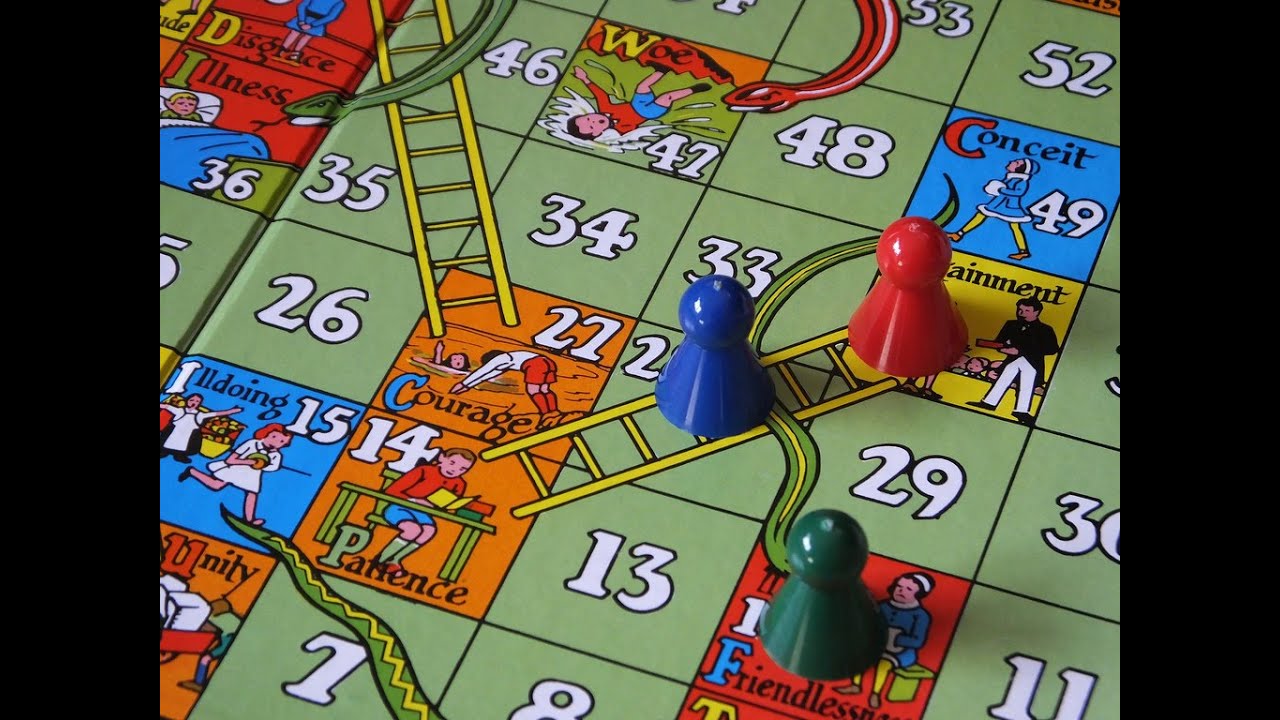
Snakes & Ladders
The game, Snakes & Ladders, was invented in India as a game of morals. Later it spread to England and eventually introduced in the USA by game pioneer Milton Bradley in 1943.
Being one of the oldest civilizations in the world, complete with a rich history and culture as well as a strong and long scientific and technological tradition, it comes as no surprise that many significant inventions have come out of INDIA.
Summon is a legal document which is issued by the court that notifies or commands a person to whom it is served to show his/ her presence in the court in order to answer the questions raised upon/to that person.
A summons case signifies a case concerning to an offence not punishable with death, imprisonment for life or imprisonment for a term exceeding two years. The trial procedure prescribed for summons cases is mainly contained in sections 251 to 259 of Criminal Procedure Code, 1973. These cases are tried with much less formality than warrant cases, and the manner of their trial is less elaborate.
STEPS IN THE TRIAL PROCEDURE
Chapter XX of CRPC deals with Trial of summons cases by Magistrates.
Section 251: explaining the substance of the accusation to the accused.
“When in a summons case a accused appears or is brought before the magistrate, the particulars of the offence of which he is accused shall be stated to him, and he shall be asked whether he pleads guilty or has any defence to make, but it shall not be necessary to frame a formal charge.”[1]
The section only dispenses with a formal charge in a summons case but is does not dispense with the statement of particulars of the offence for which accused is to be dealt with. The purpose of questioning the accused under this section is to appraise him of the charge against him. The accused should have clear statement made to him:
That he is about to be put on trial
The offence or facts constituting the offence with the commission of which he is accused.
The record must show the facts which were stated or explained to the accused by the magistrate.
Section 252: conviction on plea of guilty.
“If the accused pleads guilty, the Magistrate shall record the plea as nearly as possible in the words used by the accused and may, in his discretion, convict him thereon.”[2]
When guilty is pleaded by the accused, it is imperative that the magistrate shall record the plea of guilty as nearly as possible in words used by accused. The requirement of section 252 is not merely empty formality but is a matter of substance intended to secure proper administration of justice, because the right to appeal of the accused depends upon circumstance whether he pleaded guilty or not. It is because of the reason that the legislature requires the exact words used by accused in hid plea of guilty should be as nearly as possible be recorded in his own words or language in order to avert any inaccuracy, error or misapprehension. If there are number of accused persons, the plea of ach accused shall be recorded separately in their own words after the accusation was read over to each one of them.
Section 253: conviction on plea of guilty in nonappearance of accused in petty cases.
It has been provided by section 206 that in the case of certain petty offences, an accused who is willing to plead guilty need not appear in the court either in person or through his pleader provided, he satisfies the conditions of that section. The object is to avoid unnecessary trouble to offenders who have committed petty offences and are willing to pay the penalty. Section 253 prescribes the procedure where a person to whom a summons has been issued under sec. 206 has transmitted to magistrate his plea to guilty without appearing before the magistrate. Where the accused wishes to plead guilty without attending the court, the accused is expected to pay Rs.1000/- by post or via a messenger (pleader) to the Magistrate.
Section 254:Process if the accused not convicted on plea
Section 254 specifies for both defence and prosecution case if the accused is not convicted on appeal under section 252 and 253.
Prosecution Case
The magistrate listens to the accused and collects all the evidence. In the hearing, the prosecution will be given opportunity to try its case by putting relevant facts which represent the case and by revealing the evidence which he relied upon to justify the case. The magistrate upon this application of the prosecution, present summon to any witness to attend and to produce some document or object. The judge must write the report of the facts according to section 274. Similar as other trials in summon cases even the magistrate must comply with section 279 i.e., presentation of evidence to the accused and 280 i.e., documentation of the conduct of the witnesses.
Hearing of Defence Case
Following the prosecution of the evidence referred to in section 254 and the defence examination referred to in section 313, the court shall proceed to the defence hearing referred to in section 254(1). In the hearing of the court, the defendant is asked to say about the evidence of the prosecution. In any case, failure to hear the accused constitutes a major error in the criminal process and cannot be cured pursuant to Article 465. Evidence provided by the accused is reported in the manner set out in section 274, 279, 280 for prosecution. Upon the facts provided by the defendant, his claims under section 314 shall be allowed to be presented.
Section 255: Acquittal or conviction
Subsequently, after the evidence is recorded under 254, the magistrate shall absolve the accused if he finds the accused not guilty. If the accused is guilty, the Magistrate shall proceed otherwise in accordance with Section 360 or Section 325, sentence him in accordance with the law.
A Magistrate may convict the accused of any offence (amenable to the trial in a summons case) which from the facts admitted or proved the accused appears to have committed.[3]
Section 256: Non-appearance or the death of the complainant
Pursuant to section 256, on the date set for the trial of the accused, the complainant will be allowed by the court to acquit the accused unless the court has cause to adjourn the case for another day. Section 256(1) shall also apply in the event of the demise of the complainant. In the event that the representative of the deceased complainant does not appear within 15 days, the defendant may be absolved by the Supreme Court.
CONCLUSION
Chapter XX of Criminal Procedure Code is outlined for the trial of summons cases satisfied all the requirements of fair trial. “Fair Trial is the heart of criminal jurisprudence and the denial of fair trial is the denial of human right” as held in Rattiram v. State of Madhya Pradesh.[4] The trial of the summon cases is less formal and less strict than other trial procedure just for the quick remedy and resolution of the case .
While Covid-19 continues to wreak havoc across the globe, a recent study suggests that the virus can infect the ear as well. The study, which was published in the scientific journal JAMA, was based on the autopsy carried out on three patients who died from Covid-19. The findings revealed the virus’ presence inside the middle ear and in the mastoid area of the head. The mastoid is a hollow bone behind the ear. The research was carried out with the team removing the mastoids from the deceased patients’ bodies and taking specimens from their middle ears. Mastoid specimens from two patients tested positive for SARS-CoV-2 . ‘Two of the 3 patients tested positive for SARS-CoV-2 virus in the mastoid or middle ear, with viral isolation from 2 of 6 mastoids and 3 of 6 middle ears.
Results for case 1 were positive for the right middle ear only. Case 2 had negative results for all samples,’ the study stated.
‘This study confirms the presence of SARS-CoV-2 virus in the middle ear and mastoid, with significant implications for otolaryngology procedures,’ it added.
The team calls for taking proper precautions to stop the spread of infection in patients visiting hospitals or during surgical procedures.
‘Droplet precautions (including eye protection and proper N95 level mask) are warranted for outpatient procedures involving the middle ear due to proximity to these potentially infectious spaces. Given the high asymptomatic rate of Covid-19 cases, caution is warranted for all elective ear surgery, and negative status by testing is indicated,’ the study stated.
Environmental Impact Assessment (EIA) is the process of assessing the likely environmental impacts of a proposal and identifying options to minimise environmental damage. The main purpose of EIA is to inform decision makers of the likely impacts of a proposal before a decision is made. EIA provides an opportunity to identify key issues and stakeholders early in the life of a proposal so that potentially adverse impacts can be addressed before final approval decisions are made.
EIA is not a way of allowing an environmental ‘veto’ on development proposals. Environmental considerations may be set aside in favor of other considerations including economic and other benefits of going ahead.
EIA is a structured approach for obtaining and evaluating environmental information prior to its use in decision-making in the development process. This information consists basically of predictions of how the environment is expected to change if certain alternative actions are implemented and advice on how best to manage environmental changes if one alternative is selected and implemented. Until relatively recently, with a few notable exceptions, EIA focused on proposed physical developments such as highways, power stations, water resource projects and large-scale industrial facilities. Slowly, but increasingly, its scope of application is expanding to include policies, plans and other actions which also form part of the development process.
Decision-makers are provided, by EIA, with information on the anticipated consequences of their choices. EIA is, therefore, a management tool with technical input, not a technical aid with ‘add on’ management aspects. This distinction is crucial to an understanding of the objectives of EIA and how it can best be implemented.
EIA has been in existence since 1970 (when it was introduced into the United States of America following the National Environmental Policy Act coming into effect) and has spread rapidly since then to all parts of the world. EIA is still relatively ‘young’ and the number of countries which use it, as a legal/administrative requirement, is still increasing. At the same time, EIA practice (and the techniques used) is evolving as experience has been gained on its utility in a wide range of development and geographic contexts.
The use of EIA has been formalized by the introduction of national laws and regulations and, in some cases, policies which establish systems of institutionalised procedures to ensure that all proposed physical development, expected to be environmentally damaging, is assessed prior to authorization and possible implementation.
Environmental Impact Statements are one part of a whole planning process that aims to protect the environment whilst economic development is occurring.
Few precaution, which needs to be taken while preparation of report of EIA are:
presentation should not be too complex or technical
Provide sufficient information about the project
Information base should be strong
Don’t forget to Omit the information
Include only relevant information
Presentation should be clear as per the targeted audience
Identification of adequate risk and its impacts
Identification of adequate indirect and far reaching impacts
Time constraints has to be kept in mind.
The fundamental components of an EIA would necessarily involve the following stages:
1.Screening to determine which projects or developments require a full or partial impact assessment study;
2.Scoping to identify which potential impacts are relevant to assess (based on legislative requirements, international conventions, expert knowledge and public involvement), to identify alternative solutions that avoid, mitigate or compensate adverse impacts on biodiversity (including the option of not proceeding with the development, finding alternative designs or sites which avoid the impacts, incorporating safeguards in the design of the project, or providing compensation for adverse impacts), and finally to derive terms of reference for the impact assessment;
3.Assessment and evaluation of impacts and development of alternatives, to predict and identify the likely environmental impacts of a proposed project or development, including the detailed elaboration of alternatives;
4.Reporting the Environmental Impact Statement (EIS) or EIA report, including an environmental management plan (EMP), and a non-technical summary for the general audience.
5.Review of the Environmental Impact Statement (EIS), based on the terms of reference (scoping) and public (including authority) participation.
6.Decision-making on whether to approve the project or not, and under what conditions; and
7.Monitoring, compliance, enforcement and environmental auditing. Monitor whether the predicted impacts and proposed mitigation measures occur as defined in the EMP. Verify the compliance of proponent with the EMP, to ensure that unpredicted impacts or failed mitigation measures are identified and addressed in a timely fashion.
Benefits:
EIA allows the likely significant environmental effects of a project tobe identified and to be avoided, remedied or minimised at an early stage.Nevertheless, the general public is often concerned about the possibility of unknown or unforeseen environmental effects of particular development. Where a planning application is accompanied by an ES the Planning Service will advertise the availability of the ES and take any representations about the likely environmental effects into consideration in making its decision. By making the information on the likely significant effects available, EIA can help allay fears created by a lack of information. Once EC (environmental clearance)is granted, for industries they may apply for CTE (Consent to establish) and CTO (Consent to Operate).
India begins the process of codification of its labour laws, a long-awaited and much-needed reform. India’s new Code on Wages, 2019 (“Code on Wages”) has been approved by both the Houses of the Parliament [4] and it is now awaiting Presidential assent in order to become law.[5]
This is the first in the series of four labour codes that have been proposed by the government and is expected to pave way for the other labour codes including the code on employee health and safety and social security.[5]
Once the effective date of the Code on Wages is notified, it shall subsume and repeal the following important labour laws:[5]
1) The Payment of Wages Act, 1936 (POWA)
2) The Minimum Wages Act, 1948 (MWA)
3) The Payment of Bonus Act, 1965 (POBA)
4) The Equal Remuneration Act, 1976 (ERA)
The Code on Wages shall regulate wage and bonus payments in all employments and aims at providing equal remuneration to employees performing work of a similar nature in every industry, trade, business, or manufacture. [5]
COVERAGE AND APPLICABILITY
The Code on Wages will apply to employees in the organized and un-organized sectors. While the Central Government will continue making wage-related decisions for employments such as railways, mines, oil fields, central public sector undertaking etc., the State Governments shall make such decisions for all other employments including for private sector establishments.[5]
Unlike the POWA which applied to only those employees who drew monthly wages of up to INR 24,000 (approx. US$ 340) and the MWA which applied only to scheduled employments, the provisions of the Code on Wages relating to payment of wages shall extend to all employees irrespective of their wage ceiling and type of employment.[5]
WHEN THE CODE ON WAGES, 2019 WAS ENACTED AND PASSED?
The Code on Wages, 2019 the enactment of which empowers the Centre to set a minimum statutory wage, expected to benefit over 500 million workers across the country, was re-introduced in Lok Sabha by the Minister of Labour, Mr. Santosh Gangwar, on July 23, 2019, and subsequently passed on July 30, 2019. [3]
After due deliberations on the suggestions received, the Committee furnished its report on December 18, 2018, incorporated with its various recommendations. [3]
Thereafter, it was passed by Rajya Sabha on August 2, 2019 and is currently awaiting the Presidential assent following which, it will become an Act of Parliament.[3]
“OBJECTIVE” OF THE CODE ON WAGES, 2019
The Code seeks to regulate and streamline wage and bonus payments in all the employment sectors where any industry, trade, business, or manufacture is carried out.
The central government will make wage related decisions for employment sectors, inter alia, railways, mines, oil fields, etc. and the state governments are to make similar decisions for all the other employment sectors.[3]
BACKGROUND
Presently, the provisions of both the Minimum Wages Act, 1948 and the Payment of Wages Act, 1936 are applicable only on workers falling below a particular wage ceiling, working in the Scheduled employment sectors. [3]
Many unorganized sector workers like agricultural workers, painters, persons working in restaurants and roadside food stalls, gatekeepers, etc., who previously did not fall under the cloak of the minimum wages, will get legislative protection of minimum wages after the Code becomes an Act.[3]
The Code is likely to be an improved and a more efficient version of the 2017 Bill as it incorporates many of the recommendations provided by the Parliamentary Standing Committee in their December 2018 report.[3]
The need for codifying and implementing a uniform labour legislation arose owing to the fact that currently, there are close to 12 different definitions for wages, which is one of the primary reasons for labour litigations in the country, and for inefficiency in the implementation of these legislations.[3]
NEW DEFINITION FOR WAGES UNDER THE CODE ON WAGES, 2019
The Code introduces a simplified definition for wages, which includes salary, allowance, or any other component expressed in monetary terms, but does not include, inter alia, bonus payable to employees or any travelling allowance.[3]
This new definition is expected to reduce litigation and enable easier and cheaper means of compliance for an employer. Establishments will further be benefitted as the number of registers, returns, forms, etc. can not only be filed and maintained electronically, but it is believed that by taking recourse to the applicable rules, all the statutory compliances can be comprised under a single template.[3]
ARTICLE 43 AND THE DEFINITION OF “LABOUR”
Article 43 of the Constitution of India states that, “The State shall endeavour to secure, by suitable legislation or economic organization or in any other way, to all workers, agricultural, industrial or otherwise, work, a living wage, conditions of work ensuring a decent standard of life and full enjoyment of leisure and social and cultural opportunities”. [3]
Under the Constitution of India, ‘Labour’ falls under the Concurrent List under the Seventh Schedule, where both the central and the state governments are competent to enact legislations.[3]
WHO SHALL SET THE STANDARD FOR MINIMUM WAGES BASED ON THEIR EMPLOYMENT UNDER THE CODE ON WAGES, 2019?
Presently, the state governments are empowered to set the standard for minimum wages, based on employment, in their respective states. With the introduction of the Code, the central government, to the exclusion of the state governments, will be empowered to fix a floor wage, keeping in mind the living standards of the workers. [3]
Moreover, different floor wages may be fixed for different geographical areas. The central government may consult the Central Advisory Board and the state governments to decide and set a favorable floor wage.
Thereafter, the minimum wages set by the central and the state governments, in their respective states, have to mandatorily be higher than the floor wage fixed. In case the existing minimum wage fixed by the central or the state governments is higher than the floor wage fixed, they cannot be reduced.[3]
NEW CONCEPT INTRODUCED: THE FLOOR WAGE
The concept of a floor wage was brought about to ensure a uniform standard of living across the country. Presently, differences observed in the minimum wages set out across states and regions are primarily attributed to the fact that the central and state governments set, revise and enforce minimum wages for the employments covered by them.[3]
The advent of a floor wage may aid in reducing these differences and provide a basic standard of living for all employees across the country, as the floor wage fixed by the Centre will no longer be based on employment, but on geography and skills.[3]
PROCESS OF FIXING MINIMUM WAGES
The process of fixing minimum wages has also been revisited while framing the Code. Under the Code, the employers are prohibited from paying wages less than the minimum wage fixed.[3]
This minimum wage will be fixed based on either the time consumed or the number of pieces produced i.e., the level of difficulty of the task undertaken or the skill of the workers involved, and will be notified by the central or state governments from time to time.[3]
This minimum wage rate fixed by the governments will be reviewed and revised periodically, at an interval of not more than 5 years in a stretch.[3]
OVERTIME WAGES
With reference to overtime wages, the Code provides for the central and state governments to fix the number of hours which would constitute a normal working day, and employees working in excess of a normal working day shall be entitled to overtime wages, which would be no less than twice the normal rate of wages payable to the respective employee. [3]
MODE OF PAYMENT
Payment of wages is to be made in coins, currency notes, by cheque, by crediting to the bank account, or through electronic mode, and the employer is responsible for fixing the wage period as daily, weekly, fortnightly, or monthly.[3]
SALARY TO BE GIVEN IN A TIME BOUND MANNER
The Code also ensures that the employee’s be given their salary on a timely basis by stating that employees in receipt of monthly payment will receive the same by the 7th day of the next month. Further, those employees working on a weekly basis will receive their salary on the last day of the week, and daily wagers, on the same day.[3]
HARMONY BETWEEN THE EMPLOYER AND EMPLOYEE RELATIONSHIP SHALL BE MAINTAINED BUT IN AN ENHANCED WAY
The Code, in order to maintain harmony in the employer-employee relationship, has subjected an employee’s wages for deductions, inter alia, on the grounds of fines, absence from duty, accommodation given by the employer, recovery of advances given to the employee, etc.
Further, keeping in mind the beneficial nature of the labour legislations, the Code caps the maximum deductions to up to 50 percent of an employee’s total wages.[3]
Under the Code, every employee whose wage does not exceed a specified monthly amount, as notified by the central and state governments, will be entitled to receive an annual bonus, aggregating to at least 8.33 percent of his/her wages or INR 100, whichever is higher.[3]
In addition to receiving bonus, the employer is mandated to distribute a portion of the gross profits amongst the employees, in proportion to the annual wages of the respective employee. An employee can receive a maximum bonus of up to 20 percent of his/her annual wages.[3]
GENDER DISCRIMINATION: A BY-GONE ERA IN THE NEW CODE
The Code also places strong emphasis on prohibition of gender discrimination in matters concerning wages and recruitment of employees for the same work or work of similar nature. [3]
“Work of similar nature” is defined as ‘work for which the skill, effort, experience, and responsibility required are the same, when performed under similar working conditions’. [3]
The definition further extends to state that if there are any differences in skill sets with respect to gender, they are not of practical importance in relation to the terms and conditions of the employment.[3]
ADVISORY BOARD UNDER THE NEW CODE ON WAGES,2019
Under the Code, the central and state governments are required to constitute advisory boards, who would advise the respective governments on various aspects including, but not limited to, fixing minimum wages, increasing gender-neutral employment opportunities, etc. [3]
The Central Advisory Board will consist of employers, employees (in equal number of employers), independent persons, and 5 representatives of state governments; and the State Advisory Board will consist of employers, employees (in equal number of employers), and independent persons; all the while keeping in mind that one-third of the total members in both the boards will be women.[3]
PENALTIES FOR OFFENCES
As minimum wages is regarded to be an integral aspect in the life of an employee, stricter compliance of the provisions is envisioned under the Code.
The Code now lays down penalties for offences committed by an employer, be it by way of paying less than the due wages, or for contravening any of the provisions under the Code. [3]
The extent of penalties differ according to the nature of the offence, with a maximum penalty set at imprisonment of up to 3 months and fine of up to INR 100,000. [3]
Further, with a view of providing appropriate and adequate relief to the claims of the employees, the limitation period for filing claims for minimum wages, bonus, and equal remuneration has been raised to 3 years.[3]
It is a widely accepted notion that India has a serious wages problem. Today, regular workers in urban sectors earn an average of INR 449 per day, 49 percent more than their peers in rural sectors, who take home an average of INR 300. Casual workers in rural sectors earn the least, at INR 138.[1]
Keeping in mind the glaring inequalities, a mandated minimum wage is a welcome step to streamline the employment sectors and reduce disparities.[3]
According to the Periodic Labour Force Survey 2017-18[2], 45 percent of the regular workers (people who are employed in a relatively stable, formal sector) are paid less than the minimum wage. [3]
MINIMUM FLOOR WAGE: A MUST UNDER THE NEW CODE
The Code mandates payment of a minimum floor wage for all workers, which will be universal across the country, and across all sectors. This would allow for wages to rise in the informal sector and would also serve as a stepping stone in addressing the gender based disparities. [3]
At present, women earn roughly 45 percent less than men in the same occupation. A universal floor wage would reduce the rural-urban gaps. Although there is little doubt that the implementation of the Code would uplift the employment sector, we still have a far way to go in ensuring that these provisions are enforced in accordance with the true intent of the legislature.[3]
COMPARISON OF THE PAYMENT OF BONUS ACT, 1965 AND THE CODE ON WAGES, 2019:
While the Equal Remuneration Act extends protective provisions in favor of women, the Wage Code has taken a gender-neutral approach by prohibiting discrimination on the ground of gender in matters relating to wages. [3]
1) Payment of Bonus: The Payment of Bonus Act applies only to employees earning less than INR 21,000. [3]
The Main Point of difference :
While Section 26(1) of the Wage Code stipulates that employees earning below the salary threshold to be notified by the state government, will be eligible for payment of bonus, Section 26(2) of the Wage Code provides that where the wages of the employee exceeds the notified salary threshold, the bonus payable to such employee shall be calculated as if his wage were such amount, so determined by the appropriate government or the minimum wage fixed by the appropriate government, whichever is higher. [3]
It may be noted that the state governments may, by way of a notification, exempt employees of any establishment from the application of the chapter relating to the payment of bonus, having regard to the overall benefits under any other profit-sharing scheme available in such establishments. [3]
2) Fixation of minimum wages and floor wages: For fixing minimum wages, the appropriate government shall primarily take into account the skill of workers and the arduousness of work. [3]
By foregoing ‘type of employment’ as one of the factors for fixation of minimum wages, over 2000 minimum wage rates existing as of today are expected to reduce to 300. [3]
Further, the Wage Code introduces the concept of floor wages, whereby the central government will fix floor wages taking into account the minimum living standards of a worker for different geographical areas. The minimum rates of wages fixed by the state governments will have to be not less than the floor wages fixed by the central government. [3]
3) Inspection: The Wage Code provides for randomized web-based inspections, and information relating to the inspection may be called for electronically. It is expected that this will reduce the potential for corruption and harassment that a physical inspection entails. [3]
4) Streamlining of procedural compliances: With the consolidation of the Payment of Wages Act, Payment of Bonus Act, Minimum Wages Act and the Equal Remuneration Act into the Wage Code, multiple filings, and maintaining multiple records and registers under each of the four legislations is reduced.[3]
5) Penalties: Non-payment of amounts due to an employee under the Wage Code is punishable with a monetary fine, which may range up to INR 50,000.[3]
Other contraventions are punishable with monetary fines, which may range up to INR 20,000 depending on the type of contravention. [3]
REPEAT OFFENSES CRIMINALIZED UNDER THE NEW CODE
The Wage Code criminalizes only repeat offenses, that is, when a similar offense is committed within five years from the date of commission of the first or subsequent offense, after conviction, in which case imprisonment and a higher penalty may be imposed. [3]
Before initiation of prosecution for the offenses under the Wage Code, the employers are to be given an opportunity, by way of a written direction to be issued by the Inspector-cum-Facilitator, to comply with the provisions of the Wage Code within a specified time period (provided it is not a repeat offense) and if the employer complies with such direction, no prosecution proceedings shall be initiated against the employer. [3]
This would come as a relief to employers as they are given an opportunity to cure any inadvertent non-compliances before initiation of prosecution.
The Wage Code also provides for compounding of offenses for which imprisonment is not prescribed as a penalty. [3]
6) Claims: The existing labor legislations prescribe six months to 1 year as a period of limitation for filing claims, and some are silent on the period of limitation. [3]
Under the Wage Code, employees may file claims at any time within a period of 3 years from the date on which the claim arises. The Wage Code also expressly provides for filing of a single application on behalf or in respect of any number of employees employed in an establishment, subject to any prescribed rules. [3]
The authorities to be appointed under the Wage Code for determination of claims are empowered to order payment of compensation in addition to the claim determined, which may be up to ten times of the claim determined.[3]
RELEVANT CASE LAWS OF EACH OF THE 4 ACTS MENTIONED ABOVE ARE AS FOLLOWS:
(A) Payment of Wages Act, 1936:- What are the rules that an employer should follow before deducting wages for damage or loss?[6]
An employer can deduct wages for damage or loss through Section 7(2)(c), which is authorised under the Act. According to Section 10 the employer shall not deduct the wages exceeding the amount of damage or loss of goods occurred due to neglect or default of the employee.[6]
Also, it is to be ensured that the employee had the custody of the goods which were so damaged. The employer is bound to give an opportunity to the employee for showing cause before deducting any wages.[6]
In M/S Rampur Engineering Co. Ltd. v. City Magistrate (AIR 1966 All 544) it was observed by Allahabad High Court that the deduction for loss of electric bulbs and tools that were given to the employees for their own personal use is a valid deduction. [6]
(B) Equal Remuneration Act, 1976:- A landmark case in the light of equal pay for equal work was the Judgment given by the Hon’ble Supreme Court in the case of Randhir Singh v. Union of India. [7]
Here, the Court adopted a sociological ideology and deviated from strict interpretation to liberal interpretation for the employees. [7]
The court, in this case, relied on ‘‘socialist’ as envisage in the Preamble to the Constitution in deciding the case, and it was held that the principle of equal pay for equal work was deducible from article 14 and 16 of the Constitution of India, may be properly applied to the cases of unequal scale of pay based on classification, though those drawing a different scale of pay do identical work under the same employer.” [7]
Here, the court observed that “equal pay for equal work” is deductible from Articles 14 &16, understood in the light of the Preamble and Art. 39(d). [7]
(C) Minimum Wages Act, 1948:-
Sanctity of the Act
It is a clear decision of the Supreme Court in their three rulings held that non-payment of minimum wages leads to “forced labour” which is prohibited under Article 23 of The Indian Constitution. ‘Forced labour’ can arise in many ways like hunger and poverty, want and destruction.[8]
In the case of Sanjit Roy Vs. State of Rajasthan, the Supreme Court has decided that ‘The Exemption Act in so far as it excluded the applicability of the Minimum Wages Act, 1948 to the workmen employed in famine relief work is “clearly violative” of Article 23.
Thus, even public works ostensibly initiated by the Government for the sole purpose of providing employment are subject to the Minimum Wage Act.[8]
(D) Payment Of Bonus Act, 1965:-
Case Law: Shashikant Janardan Pimpalpure Vs Development Corpn. Of Vidarbha
On 20 February, 1995 the Respondent No. 1 (Corporation) filed a reply to the application and contested the claim of the petitioner.
The respondent set up the defense that the petitioner was not an employee of the respondent Corporation, but was appointed in Carpet Weaving Center only and is on the rolls of that establishment only.[9]
According to the respondent Corporation, Carpet Weaving Center was totally separate and distinct from the Corporation and had no resemblance to the terms of employment of the employees of the respondent Corporation.[9]
The Corporation set up the plea that since the Carpet Weaving Center was a training center and an educational institution and has no profit motive, bonus was not payable under the Payment of Bonus Act.[9]
The Corporation also set up the defence that the said Training Center has not completed five years of service and on that ground under Section 16 of the Payment of Bonus Act, the employee is not entitled to the payment of bonus.[9]
The first and foremost question which requires consideration is, whether an application under- Section 33-C(2) of the Act of 1947 is maintainable seeking payment of minimum bonus under the Payment of Bonus Act. Admittedly, the petitioners are only seeking minimum payment of bonus under the Payment of Bonus Act.[9]
It is also admitted that before filing of the application under Section 33-C(2) of the Act of 1947, there was no order for payment of bonus to the present petitioner under the Payment of Bonus Act.[9]
Scope of Section 33-C(2) of the Act of 1947 is now well settled and does not require any debate. The right to the benefit which is sought to be computed under Section 33-C(2) must be an existing one and that is to say, already adjudicated upon or provided for and must arise in the course of and in relation to the relationship between the industrial workmen and his employer.[9]
CONCLUSION
The Wage Code is being hailed as a historic step towards labor reforms and ease of doing business in India without diluting any basic rights of employees. The Wage Code aims for enforcement of labor laws with transparency and accountability, and it is expected to reduce the cost of compliance for employers significantly. [3]
Amongst several benefits, the codification of labour laws shall remove the multiplicity of definitions and authorities, without compromising on the basic concepts of employee welfare and benefits. [5]
In a way, it would make it easier for employers to understand and thereby comply, and for the labour authorities to enforce the laws. Including the unorganised sector under the ambit of the Code on Wages and implementing a national level floor wage for minimum wages could end up becoming path breaking for a labour-intensive country like India. [5]
Encouraging digitization through introduction of web based inspection scheme, calling of information electronically for inspection, composition of offences etc. may also become a model for other ministries when it comes to enforcement. The ease of compliance is also expected to promote setting up of more enterprises catalyzing the creation of more employment opportunities. [5]
Thanks to the Code on Wages and other continuing efforts of the government, please expect a higher ranking for India in the next World Bank survey on Ease of Doing Business! [5]
WEBSITES REFERRED AND FOOTNOTES:
1) Tish Sanghera (2018), “Daily Wages in India Doubled in 18 Years, But Wage Inequalities Grow”, IndiaSpend.
2) Annual Report, PLFS 2017-18 (2019), Periodic Labour Force Survey (PLFS), National Statistical Office, Ministry of Statistics and Programme Implementation, Government of India.
Firecrackers are merely constituents of gunpowder comprising of various elements which gives rise to prolong combustion. In India, it means a lot more than that. It has aesthetic purposes since it has been believed that ‘Agnichurna’ was used in ancient times to fight enemies during wars. Be it marriages, birth or festivals, firecrackers are a form of awakening light by defeating the darkness. One such prevalent case has been of Diwali, where the entire country lights up together and celebrates the mythological victory of good over evil.
Firecrackers believably have grown during the end of Mughal dynasty and start of British East India Company and are burst like any other ritual in the country. Apart from acting as a ritual, there are also scientific reasons why the bursting has become so prevalent. Diwali comes after the monsoon season, at a time when the population of insects increases rapidly and encroaches various human habitats, be it cities or villages. That is also why most houses paint homes. Crackers then act like city wide fogging which cleans these insects, making a healthy and safe home for its residents throughout the year. This act of bursting crackers has been set on the hearts of people igniting homes and binding people all over the country. Firecrackers in a way, signals the entire country that everyone is celebrating a festival together. The bursting of crackers has been serving a ritual since decades across India. The religious sentiments that are aligned with the act are huge.
Focusing on the origin of Diwali, it is not only a specific event but the entire country actually has its varied forms of celebrating it. Like Ma Kali is worshipped in Bengal, Lord Ganesha is also worshipped in many homes, Jains specifically devote their day to Lord Mahavira. Lighting diyas and bursting crackers has been going on since time immemorial and along with it is lies belief of most Indians. These rituals significantly have stories to tell upon which India bases its heart. The sound of firecrackers, according to the older generation, is an example and indication of joy in people’s heart which makes the Gods aware of their state in their devotees’ lives. Hence, it clearly foreplays as an act of worship to satisfy the God as well. Most people in the country who cannot be in their homes during these times depend on the sound of crackers and lights around to feel complete.
Apart from these sentiments, there are various real-life problems attached to this. The firecracker industry gives employment to a large segment of people. Amidst the lack of employment scarcity already observed in the country, banning firecrackers can give rise to a different issue altogether. The claims of pollution due to crackers is a valid argument but pollution is also caused due to automobiles. And it is impossible to point out which act causes more harm. At this point of time, the firecracker industry is worth of 6000 crores and the economic aspect stands as the biggest reason why India cannot afford banning firecrackers. What can also not be ignored is the fact that the people who are working under such sites and have become skilled for this specific business have a family to support. Most of them found security in this industry and gave a major part of their lives to excel in it. With complete ban will come the threat to such workers who would face situations to start new amidst crisis until their death. There is also a relevance of economic aspect aligned with the fundamental rights. The extended jurisdiction of Article 21 guaranteed under the Constitution of India gives the right of livelihood to manufacturers. It is important to realise that crackers are not the only factor of pollution and respiratory problems, there are other factors involved like the wind and temperature which contributes to it. Until and unless, there is proper data on how much pollution and harm has been caused due to firecrackers, the industry cannot be strictly banned. Any violation of this would also be a violation of their right to business.
However, the way forward is certainly not dull as it sounds now. There can be terms where both of the situations can be kept under control. Some of the ideas that can be implemented as alternatives to the current scenario are as follows:
On adopting the various laws as introduced in the developing countries such as Washington, Switzerland etc, the idea is of having a regulation on the bursting of crackers. There can be only specific occasions on which the use of firecrackers shall be allowed and only up to a certain time. It would help preserve the religious sentiments as such.
Green crackers shall be developed which would not fall under these regulations. Claims on the pollution levels would not be affected by Green Crackers, they shall be environment friendly. It would help keep the industry intact along with the socio-economic affects.
The industry shall not favour child labour but at the end of the day, child labour happens in the need of money. So, there shall be job securities given to the skilled labourers who have given at least five years to the same industry.
In order to support the sale and good flow in the industry, there shall be one day sponsored by the Government when there shall be a firecracker show in an inner area. The show shall be open to all but at own’s risk.
The license of selling firecrackers shall be issued by the Government.
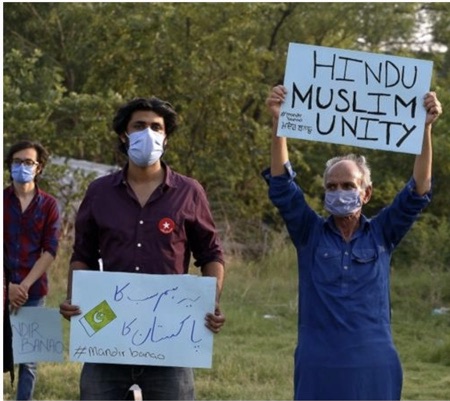
You must have seen a video which got viral few days back where a boy was seen damaging the walls of a temple that is currently being built in Islamabad(Pakistan). Another example like this was where a five year old boy was seen warning the Pakistani Prime Minister Imran Khan that if he will allow the the temples to be built, he will “kill all the Hindus”. Imagine a five year child speaking in his childish voice and warning such higher authority which may seem funny, but on the other hand this is a very important matter for the society that some people of Pakistan are filling up their children’s mind with filth and not showing them the right way where they should treat everyone as equal irrespective of caste, colour, gender plus nationality. I do agree with some of the things that the conflict between India and Pakistan is never ending but at least we can try to change the minds of the youth who will take the country forward.
Let me begin with the actual story where the Pakistani Government has decided to release funds for the Hindu temple to be built in Islamabad. This decision was made for the Minority class- the Hindu’s in Pakistan who also have the right to worship God in the temples. This plan was committed in the year 2017 by Nawaz Sharif’s government but it got delayed due to some issues. This is not the first time where the government has taken such step, before this the government took many initiatives for Hindu pilgrimage like they renovated Katas Raj Temple– a buddhist temple for the Hindus to worship. The Government has also helped the Sikh community with building gurudwaras for them like The Peshawar Gurudwara and the Nankana Sahib in Sailkot which was renovated for the sikhs.
aljazeera.com
Well, all of these things are small stepping stones by the Government for the minority so that they can also live like normal people without the barriers of religion. But on the other hand some projects have been backlashed by the Muslims of Pakistan where in a recent example the Pakistani government was planning to celebrate the legacy of Maharaja Ranjit Singh with statue, but it ended up causing a controversy on social media and in less than two months the statue was vandalised by the people. How will the country progress like this where the people are still not agreeing to some basic terms of accepting their fellow citizens as equal, building a temple or a gurudwara will never harm the other religion in fact all of these initiatives will bring the conflicts to an end. I am not saying that we Indians are the best and we don’t do such things, we are still facing major conflicts between Hindu and Muslim and there is no other solution to bring an end to this but there are Gurudwaras, Temples, Mosque and Church which are built together on the same lane and people respect that.
But why are these issues still arising, why can’t the soldiers just guard the country peacefully? The major reason for this is ‘Education‘ where the children are taught some facts which are against Hindus and Muslims, the facts which are putting them apart instead of living in tranquility and in harmony. The youth is being taught the wrong subjects with wrong facts and the society is also playing a major role in this, where they term minority people with funny names, where they are always referred to as a ‘minority class‘ instead of terming them as equal citizens.
All these examples and statements are not to hurt anyone be it from any religion or country. Building a temple or a gurudwara or even a mosque will never help the people to understand and have respect for the other religious sentiments, but education is and will be the only factor to bring everyone together and to treat everyone as equal, not becoming religion bias.
“My religion is ver simple, my religion is Kindness.” -Dalai Lama
Generally we get confused between ‘kidnapping’ and ‘abduction’. We assume that if kidnapping means stealing of kids than abduction would be stealing of adult. But it’s not true. Though kidnapping literal meaning is child stealing but abduction is not an age specific offence. For detail understanding of these two offence, I have turned the pages of Indian Penal Code (IPC), 1860. And in this article, I have tried to compile it in easy and simple words. Please have a look.
Kidnapping: In Indian Penal Code, 1860 two types of Kidnapping is mentioned, (a) Kidnapping from India and (b) Kidnapping from lawful guardianship.
Kidnapping from India, (section 360 of IPC): whoever takes a person beyond the limits of India without the consent of such person or any person legally authorized to give consent on his behalf then he shall be liable for the offence of kidnapping from India.
The point should be noticed here that, the victim’s age does not matter. Which means that not only a minor but a major person can also be kidnapped. But if the major and sane person gives his consent for such taking than the offence of Kidnapping will not be committed.
Kidnapping from lawful guardianship, (Section 361 of IPC): Whoever takes or entices any minor under sixteen years of age if a male, or under eighteen years of age if a female, or any person of unsound mind, out of the keeping of the lawful guardian of such minor or person of unsound mind, without the consent of such guardian, is said to kidnap such minor or person from lawful guardianship’. The unsoundness of mind must be permanent and not temporary insanity produced due to intoxication.
As mentioned in this section consent of the child is completely immaterial. The consent of the guardian alone should be taken into consideration. That too, the consent of guardian have to be free and must not have been obtained by fraud or misrepresentation.
Simplified terms:
Taking: the word ‘takes’ means to cause to go, to escort or to get into possession with or without the use of force.
Enticing: the word ‘entice’ means alluring or attracting. It means a person attempts to do a thing after some persuasion which he or she would not have done otherwise.
Keeping of Lawful guardian: here guardianship not only includes parents but also persons to whom the custody of the child has been lawfully entrusted. That could be teachers, relatives, servants or anyone. And the term ‘keeping of lawful guardian’ denotes the protection or care of the guardian. (A direct physical custody of the guardian is not needed but the whereabouts or movement should be known to the guardian.)
Abduction (section 362 of IPC): Whoever by force compels, or by any deceitful means induces, any person to go from any place, is said to abduct that person.
Abduction is an auxiliary act which becomes offence only when coupled with intention. The offence shall be complete if the accused takes away the person by tricking him or by deceitful means, or by using force and an actual use of force and not a mere threat to use force. As it is not an age-specific offence, which means any person of any age, can be abducted. In this offence the intention and consent is very important.
If intention is that abducted person may be murdered, Section 364, applies;
If intention is wrongfully confine person, Section 365 applies;
If abducted person is a woman and intention is that she may be forced to marry against her will or have illicit sexual intercourse then Section 366 applies;
If intention is to cause grievous hurt then Section 367 applies;If the abducted person is a child under age of ten years and intention is take dishonestly any movable’ property from its person then Section 369 applies.
Punishment for kidnapping (section 363 IPC): Whoever kidnaps any person from India or from lawful guardianship, shall be punished with imprisonment of either description for a term which may extend to seven years, and shall also be liable to fine.
Abducting or Kidnapping to Murder: As per Section 364 of Indian Penal Code, if a person is kidnapped or abducted by a person with the intention or knowledge that the person is going to be murdered or is going to be put in danger of being murder, such person is punishable with imprisonment for life or rigorous imprisonment for a term up to 10 years and a fine.
Kidnapping for Ransom: Section 364A of IPC provides for punishment to the whoever threatens to hurt or cause death to that person who he has kidnapped or abducted or detained after kidnapping or abducting. The punishment is death or imprisonment for life, and fine.
As things stand today the employment opportunities may shrink for those who are rolling stones but vastly expand for those who are who keep pace with the turns and twists of technology in day to day Human quest ,aspirations and achievements. This technology transform legal practices, even the way the law professor teach , Each lawyers to use a Laptop or some other computer to work effectively. Students must be taught the following technologies in law school.
Legal Research has now moved from Hard copy to digital systems such as west law, lexisnexis, cloud -based systems of Google scholar and wikipedia. More statutes are now available online . There are many changes in disclosing documents and filing documents in court . Keeping pace with the changing world , courts in western countries have adopted modern technology . The most important document that took place in England over the least decade was modernization of Judiciary.
Some technologies that should be taught to law students in the law school are-
E-discovery -responsive information is digital on phone, websites, Facebook , E mail and voice mail messages. They should be aware of E-discovery tools and how to make efficient use of them. Powerpoint presentations/ presentation skill need to be learnt . Attorneys are told to deliver a much better presentation to their listener.
Marketing / web design / social media-unbundled legal services in which potential clients increasingly choose online self help options, more than half of the law firms donot have website. Other spend thousand on web development.
Case management lawyers – lawyers utilize various tools to help manage client and case information .all aspects like indexibg, sharing contacts and calendars , billing clients.
Hardware / software/Mobile- lawyers, especially those in solo environments have numerous choice of technology.
Transformation changed the way law professors teach , many are changed averse and use the methods that their own professors employed a generation before. Alose technology is unreliable. Noone likes to have technology fail when calss is under their control thus element of uncertainity and stress in comfort zone .
Students are encouraged to take class notes on a laptop , or tablet , using Ms Word ,Ever note or Google docs because its synthesizing those notes later in the term.
Understanding technology , one important skill like fact invest, negotation, communication lawyer must be acquainted with. For law , more clients, strong work product, more effective use of time, better job prospects, smoother transition into practice . Clients can talk to attorneys in way while traveing.
Peru, officially the Republic of Peru, is a country located in South America. The country is in news because of COVID19 as up to 25 July 2020, total coronavirus cases were 375,961 and unfortunately 17,843 persons passed away because of COVID19. I was in Peru in May 2013 for academic activities, invited by them.
Peru has a total land area of 1,379,999 square kilometers and a total water area of 5,000 square kilometers with total population of 3.2 crores (2018). . Lima is the capital of Peru. In 2017, 79.3 percent of total population lived in urban areas and 20.7 percent were in rural areas.
I observed the people of Peru want a healthy trade relation with India. I could meet few Peruvian friends in Peru who visited India opined that by developing trade relation both would be benefitted. The tourist places like Jauja city, Mantaro Valley, the Andean highlands, Junion region of Tarma city etc., can be compared with our places like Shillong, Shimla or even Tirupati. In Tirupati many people offer their hair and similarly in Acobamba of Peru where Church (Catholic) is located near a foot hill many people of Christian faith in the stones of the hills pour whisky or rum or other alcoholic drinks to fulfill their desire or if desire is fulfilled. In addition near the Church people lit candles. I enjoyed as all religions lead to Almighty/God and I prayed my own way.
Both India and Peru are having huge scope to develop trade relations. While going by air from Lima to Jauja town, an engineer sat beside me and was happy to know I am Indian and he was in the opinion that trade between India and Peru may be invigorated. Our technology, engineering goods, transport items including railways, IT, agriculture extension service, etc., may be exported to Peru. On the other hand, products like organic cotton (super quality), and agricultural goods like native variety potato, maize of soft variety, artichoke, asparagus , avocado etc., may be imported from them and subsequently may be grown in India as these are having huge international market. Regarding organic cotton case of Oro Blanco may be referred which is a joint venture between the Dutch ecumenical development agency Solidaridad and farmers in Peru. Oro Blanco supports 71organic cotton farmers in Cañete and Chincha Valleys on about 275 hectares of organic land. The farmers grew other organic crops on their land as well as cotton, which were fetching good price. Oro Blanco supplied organic cotton to socially responsible local manufacturers that export organic garments to fashion brands and thus market was assured. It is pertinent to mention that each farmer owned around 4 hectares of agricultural land in the Cañete and Chincha Valleys and produced on an average of 55 quintals per hectare of seed cotton. So such type of crop may be promoted in India if feasible. Both India and Peru should try to develop economic relation and exchange knowledge, ideas, skill vis-à-vis goods. The farmers of both the countries are endowed with enormous knowledge and skill which may be shared for development of both the nations.
The Agriculture Minister of Peru took lot of interest while I informed about our Kisan Credit Card, Kisan Call Center, etc. of India.
Lastly it may be mentioned that in 1968 the Peruvian military led a bloodless cup of power headed by General Juan Velasco Alvarado. One of the main objectives was the implementation of an agrarian reform which inter alia, included redistribution of land to peasants/former workers so that they can lead quality life not like slaves.
I suggest not only with Peru but with all other countries of South America wherever feasible trade relation may be developed by India.
BJP Veteran Lal Krishna Advani, ex-deputy Prime Minister on Friday recorded his statement in the Babri Masjid case in CBI’s special court.
He attended via video conferencing from Delhi. CBI’s advocate interrogated Advani for around 4 hours thereby asking him 1000 questions required by the CBI.
During the session Advani said false accusations regarding the Babri demolition have been claimed and he is innocent. On 6th December 1992, in the disputed Babri demolition case, L.K. Advani was the 29th accused out of the 32 people.


















 Eduindex
You must be logged in to post a comment.