Emotional Intelligence

Emotional intelligence or emotional quotient is the ability of an individual to recognize and manage their emotions as well as the emotions of others around them, in a private or a in a group. It is a modern concept and was developed by Daniel Goleman. Managing emotions in a positive manner can help relieve stress, communicate effectively, build strong relationships, achieve success at school or colleges, and to fulfill our goals. A person who is emotionally stable finds it easier to communicate with new people, make better decisions, and to connect better with others.  It is a part of our personality that we can develop and learn at any age with the help of various techniques.

Components of Emotional Intelligence are:

  1.  Self Awareness – it is a skill where a person is aware of his/her emotions and the affect their emotions have on them. The person is also aware about what causes their emotions to occur and what effect emotions have on them.  A person should always have an accurate self assessment of their emotions as it can help develop the feeling of being confident in them.
  2. Self Regulation – it is a skill where a person is able to manage their emotions and their impulsive behavior. It also means that a person is able to channel their emotions in a healthy way. It also requires a person to be adaptable to the changes in their surrounding rather than having impulsive feelings about the change. A person should always make an action based on what is appropriate and what is not appropriate.
  3. Self Motivation – it is a skill where a person is motivated to achieve their personal goals that they have set for themselves, or improve their personality. A person is committed to their goals and it always ready to act whenever the opportunity is present. A person who is self motivated always makes an initiative towards things and always has an optimistic approach towards things.
  4. Social awareness – it is a skill where a person has empathy towards other’s emotions and situations. They have the ability to understand others better as well as help them to develop their emotions. It is fairly difficult skill to achieve as it requires understanding both the verbal as well as non verbal communication of the other person. it also requires a person to be politically and socially aware about their surroundings.
  5. Social Skills – it is a skill where a person has the ability to have an influence over others, has better communication skills, and has a better ability to manage the conflicts that arise. They are good leaders as they are better at handling the situations as well as have good communication skills.

These components are the skills that a Emotionally stable person has achieved over time. They have a better understanding of their emotions as well as the emotions of the others and know how to regulate them in a positive manner. They are aware about the reasons that cause their emotions to become impulsive and know how to channel them in a positive manner.  

Why is Emotional Intelligence Important?

It is important to have an understanding of our emotions as it can lead to better management of those emotions. Having a good IQ is not enough to achieve success, or to fulfill your goals, having a good EQ is equally important as it helps us to manage ourselves in situations where we can have immense stress or our emotions becoming overwhelming.
Emotional intelligence has an effect on –
  • Our performance at school/college/work as it helps individuals to overcome the complex situations in the social life.
  • Our health as if we are not able to manage the stress or our emotions, it can lead to some physical health problems like heart attacks, weak immune systems, etc.
  • Our mental health as uncontrolled stress can often lead to serious mental illnesses like depression and anxiety which can hamper the daily life of a person.
  • Our relationship as a person who is emotionally stable is able to understand the other person better and is able to resolve the conflict in a better way.


The HR Industry in India

Human resources is the set of the people who make up the workforce of an organization, business sector, industry, or economy. A narrower concept is human capital, the knowledge which the individuals embody. Similar terms include manpower, labour, personnel, associates or simply people.

A human-resources department (HR department) of an organization performs human resource management, overseeing various aspects of employment, such as compliance with labor law and employment standards, administration of employee benefits, organizing of employees files with the required documents for future reference, and some aspects of recruitment and employee off boarding.

HR Industry (Human resource) industry in India has become a common need for almost every business that is looking forward for a good growth at the same time improved organization managements. Right from hiring the right candidate for the company till providing the best of the curriculum activates for the employees to grow, there are so many things that an HR actually does.

As per the research conducted, according to social, economic and cultural landscape, it is in unprecedented change due to which the need for a right solution that can lead to growth and professionalization has become quite common. This is the reason why HR industry in India has gained lot of scope.

It is considered as one of the most precious resource for any organization. Right from recruiting the right person on the board of a company till ensuring that the management works in an organized manner to achieve success of the organization, HR looks into every concern related to the company.

The solution that is offered by the team of HR is worth to take and certainly leads to the growth. There is a dedicated team of experts in HR who are engaged to offer the clients with workforce solutions and thus also acts as a middleman between the client and the employee.  

To staff the industry in a proper way has become a necessary for the dynamic business environment. The HR industry thus, ensure that entire gamut of employment solutions are given to the client to satisfy him in all the best possible ways.  

Looking forward to the increasing demand of HR industry, the following services are performed by the team which includes :

• Recruitment process outsourcing • Corporate training • Pay-roll processing • Organizing the clients meeting • Representing the team • Looking forward to increase ether venue of the Company  

History

Human resource management used to be referred to as “personnel administration.” In the 1920s, personnel administration focused mostly on the aspects of hiring, evaluating, and compensating employees. However, they did not focus on any employment relationships in an organizational performance level or on the systematic relationships in any parties. This led to a lacked unifying paradigm in the field during this period.

According to an HR Magazine article, the first personnel management department started at the National Cash Register Co. in 1900. The owner, John Henry Patterson, organized a personnel department to deal with grievances, discharges and safety, and information for supervisors on new laws and practices after several strikes and employee lockouts. This action was followed by other companies; for example, Ford had high turnover ratios of 380 percent in 1913, but just one year later, the line workers of the company had doubled their daily salaries from $2.50 to $5, even though $2.50 was a fair wage at that time. This example clearly shows the importance of effective management which leads to a greater outcome of employee satisfaction as well as encouraging employees to work together in order to achieve better business objectives.

During the 1970s, American business began experiencing challenges due to the substantial increase in competitive pressures. Companies experienced globalization, deregulation, and rapid technological change which caused the major companies to enhance their strategic planning – a process of predicting future changes in a particular environment and focus on ways to promote organizational effectiveness. This resulted in developing more jobs and opportunities for people to show their skills which were directed to effective applying employees toward the fulfillment of individual, group, and organizational goals. Many years later the major/minor of human resource management was created at universities and colleges also known as business administration. It consists of all the activities that companies used to ensure more effective utilization of employees.

Now, human resources focus on the people side of management.There are two real definitions of HRM (Human Resource Management); one is that it is the process of managing people in organizations in a structured and thorough manner. This means that it covers the hiring, firing, pay and perks, and performance management. This first definition is the modern and traditional version more like what a personnel manager would have done back in the 1920s. The second definition is that HRM circles the ideas of management of people in organizations from a macro management perspective like customers and competitors in a marketplace. This involves the focus on making the “employment relationship” fulfilling for both management and employees.

Some research showed that employees can perform at a much higher rate of productivity when their supervisors and managers paid more attention to them. The Father of Human relations, Elton Mayo, was the first person to reinforce the importance of employee communications, cooperation, and involvement. His studies concluded that sometimes the human factors are more important than physical factors, such as quality of lighting and physical workplace conditions. As a result, individuals often place value more in how they feel. For example, a rewarding system in Human resource management, applied effectively, can further encourage employees to achieve their best performance.

The HR industry also known as staffing industry is highly noticed in different streams like Information Technology, Finance, Management, Sales, and Engineering. As per the research made, it has been also noted down that now a days, the need for such services has increased in aviation and retail industry as well.     

The growth in the economy that is shown by India is highly said to be due to the HR industry that has come into existence. There are so many factors due to which Indian HR industry is driven that includes the client industry growth, entry of multinational companies, large conglomerates in new business domains and many more.   As per the report, it has been noticed down that the Indian HR industry with regards to permanent and temporary recruitment segments has shown tremendous improvement. It has been providing with the best of the opportunities in the market.

The HR industry is fast gaining ground. They are no longer a small and slow department but crucial members in the major business decision making processes in various companies. Read on to know how and why the Human Resources industry has changed, the prospects in this field and what skills are necessary to be employed in HR now.

So far, this industry in India as grown at a compounded annual growth rate of 21% which is certainly a good thing to notice. HR industry in India is certainly at its peak to get to more success and allow the client to grow.

China’s Wuhan Institute signs covert deal with Pak military for bio-warfare capabilities against India

China’s Wuhan Institute signs covert deal with Pak military for bio-warfare capabilities against India

China and Pakistan, the all-weather friends, have entered a three-year deal to expand potential bio-warfare capabilities against India, including several research projects related to the deadly agent anthrax. The deal has been inked between Wuhan Institute of Virology and Pakistan military’s Defense Science and Technology Organisation (DESTO) to collaborate research in “emerging infectious diseases” and advance studies on the biological control of transmitted diseases.

It is pertinent to mention that China has been criticized for handling of coronavirus pandemic with speculations that the disease could have emerged from the Wuhan Institute of Virology.

What we know about the covert deal

Collaboration for Emerging Infectious Diseases and Studies on Biological Control of Vector Transmitting Diseases.


China is testing biological agents outside its borders (in Pakistan) in an apparent bid to minimize the risk of drawing condemnation from the international community.


DESTO has been engaged in various dual-use research projects related to anthrax under a covert biological weapons program. The covert China-Pakistan project has conducted ‘successful soil sampling tests’ to isolate Bacillus Thuringiensis (BT), which has a striking similarity to Bacillus Anthracis – or anthrax.


The Wuhan lab was providing extensive training on the manipulation of pathogens and bio-informatics to Pakistani scientists ‘to help Pakistan develop its own virus collection database’.


The secret project was detached from the supervision of civilian universities or government health departments in Pakistan and was structured so as to allow ‘unspecified’ future operations.


China’s keen interest in the project is driven chiefly by its agenda to engage Pakistan against India and to conduct potentially dangerous experiments on foreign soil, without subjecting its own land and people to risk.


The plan was part of a move by Beijing to designate Pakistan a destination for hazardous biochemical research while evading use of its own territory for such activities, which stand the risk of drawing criticism and condemnation from the international community.


The China-Pakistan biological project had already undertaken experiments on the Crimean-Congo Hemorrhagic Fever Virus (CCHFV). CCHFV is a rapid-onset fever virus that causes death in about 25% of cases and is similar to the Ebola virus.CCHFV is categorized as a ‘class-4’ microorganism – the highest possible risk category.


Pakistan is allegedly carrying out tests on CCHFV in laboratories that are not equipped to handle Bio-Safety Level-4 diseases.
There were concerns the Kunming facility, which is controlled by the Chinese Academy of Medical Sciences, was also handling class-4 diseases without proper protections.

Indian Postal Service

The Department of Posts (DOP),trading as India Post, is a government-operated postal system in India, which is a subsidiary of the Ministry of Communications. Generally called “the Post Office” in India, it is the most widely distributed postal system in the world. Founded in 1854 by Lord Dalhousie who laid the foundation for the modern Indian postal service. Dalhousie introduced uniform postage rates (universal service) and helped to pass the India Post Office Act 1854 which significantly improved upon 1837 Post Office act which had introduced regular post offices in India. It created the position Director General of Post for the whole country.

It is involved in delivering mail (post), remitting money by money orders, accepting deposits under Small Savings Schemes, providing life insurance coverage under Postal Life Insurance (PLI) and Rural Postal Life Insurance (RPLI) and providing retail services like bill collection, sale of forms, etc. The DoP also acts as an agent for Government of India in discharging other services for citizens such as old age pension payments and Mahatma Gandhi National Rural Employment Guarantee Scheme (MGNREGS) wage disbursement. With 155,015 post offices, India Post has the most widely distributed postal network in the world.

The country has been divided into 23 postal circles, each circle headed by a Chief Postmaster General. Each circle is divided into regions, headed by a Postmaster General and comprising field units known as Divisions. These divisions are further divided into subdivisions. In addition to the 23 circles, there is a base circle to provide postal services to the Armed Forces of India headed by a director-general. One of the highest post offices in the world is in Hikkim, Himachal Pradesh operated by India Post at a height of 14,567 ft (4,440 m).

Many a times we use essential services of an organization without knowing details of source. MBA Aspirants are expected to have curiosity to know even the known but unknown organization like Indian Postal service.   

The Indian Postal Service, known as India Post, was founded in 1774 and today, it has over 100,000 post offices all over the country. In fact, India has the largest postal network in the world, with close to 90% of the post offices located in rural areas. The Indian Postal Service comes under the Department of Posts, which is a part of the Ministry of Communications and Information Technology.

India Post offers both retail and financial services to over one billion people in India. Apart from providing bill mail, direct mail and retail mail services, India Post also provides the e-Payment service through which organizations can collect their bills and other payments from customers across the country.   

India Post has changed the way people look at post offices – in the past, a post office was simply a place for people to post letters; however, today, India Post has partnerships with other organizations such as the Indian Railways and HDFC Bank to provide other services too. Now, people can book train tickets at selected post offices through the India Post Passenger Reservation System and purchase foreign currency and travelers cheques with the India Post Forex Service. Gone are the days when organizations would only provide a service or two. To stay ahead of the competition and to provide better service to the public, both government organizations and private companies are diversifying their services, and India Post is no stranger to this business model.   

Some of the popular financial services offered by India Post are the Post Office Savings Schemes and the Postal Life Insurance. In fact, the Post Office savings bank is the oldest and the largest banking system in the country, providing services to both rural and urban dwellers.   

Financial services at India Post are offered as an agency service for the Ministry of Finance and they have helped millions of people nationwide. India Post keeps up with the trends in the industry and has come up with remittance schemes to help people living in India to transfer money to their family and friends abroad and vice-versa.   

The business of Indian Postal Service is growing by leaps and bounds, which is why the organization is keen on establishing the “Post Bank of India”, an independent entity with complete focus on financial products and services. With the advent of technology, many people, especially those in urban areas, have started sending electronic mails, which not only saves time but also money. This is one of the reasons why majority of the post offices are located in rural parts of India. However, this does not mean that the demand for postal services in India is decreasing.   

In fact, with the diversification of services, the Indian Postal Service has managed to increase its customer base and enhance its revenue significantly. Today, the Indian Postal Service employs over 450,000 people and generates revenue of over Rs 70,000 million on an annual basis. With greater investments in IT infrastructure and diversification of its product portfolio, the Indian Postal Service will be able to cross the Rs 100,000 million mark in a few years.

Democracy

India is a democratic country. But do we all know what democracy actually is?What it is all about?

Democracy is the most significant topic in political science as well as political philosophy, and a generally accepted view. Democracy, or rule by the people, is an unrestricted form of government in which all the inhabitants of a nation determine public policy, the laws, and the actions of their state together. Democracy requires that all citizens have an equal opportunity to express their opinion. Practically, democracy is the extent to which a given system approximates this ideal, and a given political system is referred to as a democracy if it allows a certain approximation to ideal democracy. Although no country has ever granted all its citizens the right to vote, most countries today hold regular elections based on egalitarian principles, at least in theory.


Features of Democracy:

  1. Citizen Rule
    A democratic government grants adult citizens the right to elect their representatives. It also establishes clear guidelines for election cycles and term limits so that key positions are contested at regular intervals. Through this process of voting, citizens are regularly given the ability to hire or fire their representatives.
  2. Majority Rule and Minority Rights
    The principle of majority rule is an important part of the democratic system. The majority rules in the election process, but individual rights are protected by the maintenance of decentralized, local government bodies. In a democracy, all levels of government should be accessible to, and representative of, the people.
  3. Individual Rights
    Democracies value the protection of individual rights. The word freedom is used synonymously with democracy to describe individual liberties afforded in this type of government. In the U.S., the Bill of Rights serves as a summary of individual liberties. Freedom of speech and religion, protection from unlawful search and seizure and the right to bear arms are examples of individual liberties, afforded in a democracy. Equal treatment, under the law, is assured for everyone in a democratic society.
  4. Free and Fair Elections
    The key to the exercise of democracy is the election process. Free and fair elections are held at regular intervals for the election of representatives at all levels of government. In a free, democratic election, all adult citizens are given the right to cast votes which, in theory, ensures that the will of the people will be expressed.
  5. Citizen Participation
    Citizens of a democracy not only have the right to vote, but also the responsibility to participate. Informed participation is key in a democracy. When the people elect their representatives, they are ensuring the preservation of the democratic process Engaged citizenship is essential in a healthy democracy.
  6. Cooperation and Compromise
    Democracies also value cooperation and compromise to protect individual rights. To adequately safeguard diversity, and accurately represent all communities, a democracy must protect the right to be different. Anti-discrimination is at the heart of a true democracy. The freedom to assemble and voice opinion drives government accountability to ensure that underrepresented people have the same rights as the majority.
    Types of Democracy

Direct Democracy
A direct democracy is when citizens get to vote for a policy directly, without any intermediate representatives or houses of parliament. If the government has to pass a certain law or policy, it goes to the people. They vote on the issue and decide the fate of their own countries. The people can even bring up issues themselves, as long as they have a substantial consensus on the issue. Even taxes cannot be raised without the public support!
When the population is small, educated and mostly homogeneous (at least politically), a direct democracy doesn’t seem like a bad idea. Switzerland, for example, has had a long history of a successful direct democracy.

Representative Democracy


Representative democracy is type of democracy founded on the norm of elected people representing a group of people, as opposed to direct democracy. In modern democratic states, representatives are voted for by, and are ultimately accountable to the electorate. Different methods of selecting representatives are described in the article on electoral systems, but often a number of representatives are elected by, and responsible to, a particular subset of the total electorate: this is called his or her constituency. The representatives form an independent ruling body charged with the responsibility of acting in the people’s interest, with enough authority to exercise swift and resolute initiative in the face of changing circumstances.
Representative Democracy is typically associated with Liberal Democracy which describes the political system which originated in the USA and Western Europe and has subsequently been adopted in numerous Third World countries and may gradually be well established in the former USSR and its former satellites in Eastern Europe. Liberal Democratic regimes may be classified as either Presidential or Parliamentary systems and there are also important variations within these broad categories.

Participatory Democracy


The exact opposite of an authoritarian democracy is the participatory form of democracy. There are different types of participatory democracy, but all of them yearn to create opportunities for all members of a population to make meaningful contributions to the decision-making process. It empowers the dis-empowered by breaking up the state into small networks and prefers to empower community-based grassroots politics. It values deliberation and discussion, rather than merely voting.
Today, no country actively practices this form of democracy. Although the theories behind it are sound, the real-life application of this approach is fraught with complications. However, many social movements, like the international Occupy movement, the Bolivarian movement in Venezuela and the Narmada Bachao Andolan in India organize themselves around a participatory model of democracy.

Social Democracy


Social Democracy arose as a reaction to neoliberal policies in international economics. Under neoliberalism, profit-making entities like multinational corporations can easily infiltrate other political states. They maintain a level of sovereignty and mobility that no government can counter. The power of the political state seems flimsy in comparison.
Social Democracy aims at empowering the state over the mere whims of the neoliberal market. The state can increase its expenditure by providing free alternatives to overpriced private ventures. It may focus on providing free education or free healthcare, so that people don’t have to depend on profit-making corporations.

Differences between Democracy and Dictatorship:

  1. In a democracy the leaders of the party control most of their votes, but they still have to answer to their political party and the voters. In a dictatorship there is just one leader who has total control over the party and the country. Often propaganda, as well as genuine support, may paint them as the people’s hero.
  2. In a democracy political parties represent different points of view and compete for the votes of the electorate. In a democracy political power is secured by winning a fair election. In a dictatorship the government strictly control all the aspects of the state.
  3. In a democracy newspapers are free to print the truth and can criticise the government when mistakes are made or if there is disagreement. A dictatorship completely disregards the rights of individual citizens. The government and state will try to control all citizens through laws, police, spying and force. The government and state is the most important thing to a dictatorship.
  4. In a democracy there is usually less control over the films and books people can enjoy. In a dictatorship there is only one party, all opposition is destroyed and banned. Totalitarian states don’t allow opposition or elections.
  5. In a democracy the government has less control over people’s choice and belief. People are free to join clubs, political parties and other groups. The government in a dictatorship controls every element of people’s lives, including radio, cinema and newspapers.

DGCA extends fare capping, restricted operations of domestic passenger flights till November 24

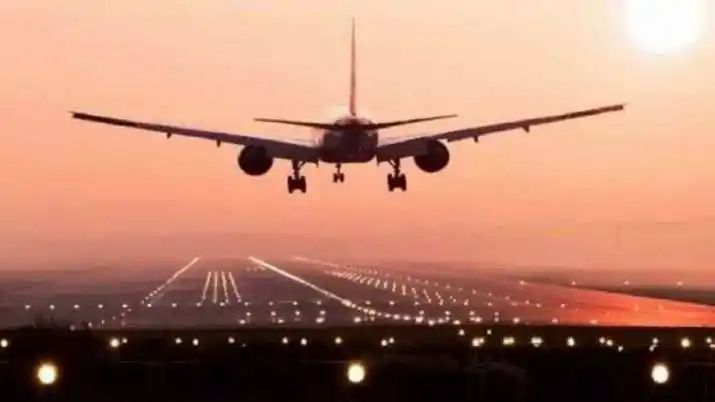
New Delhi: Aviation regulator DGCA on Friday (July 24) said that the fare cap on domestic flights will continue until November 24, 2020, or until further orders. The decision comes after Aviation Minister Hardeep Singh Puri during a press briefing had said that the price cap on domestic routes will be applicable well beyond August 24.
In the wake of the coronavirus outbreak, the aviation ministry implemented a cap on domestic airfare in May.
On May 21, the aviation regulator DGCA issued the government-decided fare limits for these bands — domestic flights with less than 40-minute duration to have lower and upper limits of Rs 2,000 and Rs 6,000, for 40-60 minutes Rs 2,500 and Rs 7,500, for 60-90 minutes Rs 3,000 and Rs 9,000, for 90-120 minutes Rs 3,500 and Rs 10,000, for 120-150 minutes Rs 4,500 and Rs 13,000, and for 150-180 minutes Rs 5,500 and Rs 15,700.
In addition, DGCA has also extended domestic flight restrictions until November 24, 2020.
It is worth mentioning that the government had decided to enhance domestic flying to 45 per cent in June from the initial 33 per cent level which had been in place since domestic flying restarted on May 25.
All domestic, as well as international flights, were suspended due to the nationwide lockdown which was imposed due to the outbreak of Coronavirus in the country.

Earlier, the aviation secretary Pradeep Singh Kharola had said that the base minimum airfare of domestic flights ranges from Rs 2,000 to Rs 6,500, and the maximum range from Rs 6,000 to Rs 18,600. Airlines have to make available 40 per cent of total seats in an aircraft at less than the mid-point price between the highest and lowest fares.

Civil aviation minister Hardeep Singh Puri earlier said the move will mean that the lowest fare between Delhi and Mumbai, the busiest route in the country, will be capped at Rs 3,500 and Rs 10,000 at the higher end.

Kolkata airport suspends passenger flight operations from July 25 to July 29

Kolkata airport suspends passenger flight operations from July 25 to July 29

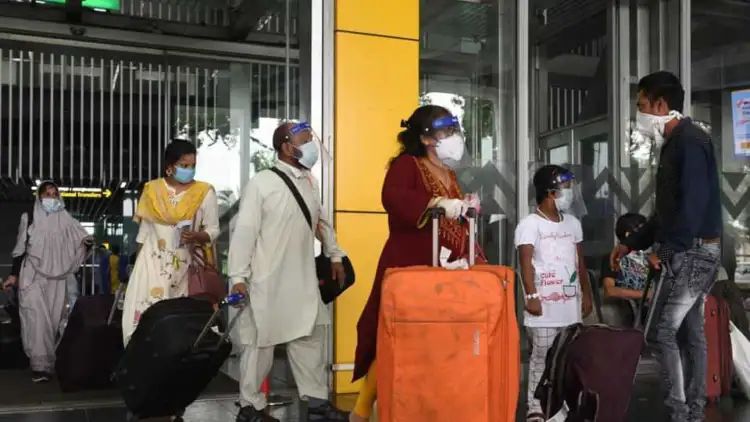
Passenger flight operations to and from Kolkata Airport have been suspended from July 25 to July 29 after the West Bengal government requested for the suspension of services, news agency ANI reported quoting West Bengal Airport sources. The West Bengal government has decided to impose a biweekly complete lockdown in the state to break the chain of COVID-19 transmission.

When asked if the rule would be extended to all those days when the total shutdown is enforced, the official said that was a possibility, but an announcement in this regard will be made by the state government.

“Most probably, it will be extended to all lockdown days. But the state government will make an announcement. As of now, these two dates have been confirmed. No flights to operate on July 25 and 29,” the official added.

Last week, the ban on passenger flights to Kolkata from Delhi, Mumbai, Chennai, Pune, Nagpur and Ahmedabad was extended till July 31.

The Entire Earth Is Vibrating Less Due to COVID-19 Lockdowns, Study Reveals

In a study conducted in 117 countries, researchers have found that the world is experiencing the most dramatic reduction in the seismic noise (the hum of vibrations in the planet’s crust) in recorded history due to global Covid-19 lockdowns.

Measured by instruments called seismometers, seismic noise is caused by vibrations within the Earth, which travel like waves and the waves can be triggered by earthquakes, volcanoes, and bombs – but also by daily human activity like travel and industry.

This quiet period, likely caused by the total global effect of social distancing measures, closure of services and industry, and drops in tourism and travel, the study published in the journal Science, reported.

The new research, led by the Royal Observatory of Belgium and five other institutions around the world including Imperial College London (ICL), showed that the dampening of ‘seismic noise’ caused by humans was more pronounced in more densely populated areas.

“Our study uniquely highlights just how much human activities impact the solid Earth, and could let us see more clearly than ever what differentiates human and natural noise,” said study co-author Stephen Hicks from ICL in the UK.

For the findings, the research team looked at seismic data from a global network of 268 seismic stations in 117 countries and found significant noise reductions compared to before any lockdown at 185 of those stations.

Researchers tracked the ‘wave’ of quietening between March and May as worldwide lockdown measures took hold.

The largest drops in vibrations were seen in the most densely populated areas, like Singapore and New York City, but drops were also seen in remote areas like Germany’s the Black Forest and Rundu in Namibia.

Citizen-owned seismometers, which tend to measure more localised noise, noted large drops around universities and schools around Cornwall, UK and Boston, US – a drop in noise 20 per cent larger than seen during school holidays.

The findings showed that countries like Barbados, where lockdown coincided with the tourist season, saw a 50 per cent decrease in noise.

“The changes have also given us the opportunity to listen in to the Earth’s natural vibrations without the distortions of human input,” the study authors wrote.

Earlier in April, a study published in the journal Nature, reported at least a 30 per cent reduction in that amount of ambient human noise since lockdown began in Belgium.

Restriction on domestic flights to remain in effect till November 24

The civil aviation ministry on Thursday extended the restrictions on domestic flights till November 24 in the view of the coronavirus pandemic. A notification by the ministry issued in the evening also said that the domestic airfare cap, too, will remain in place till November 24 or until further orders.

Domestic flights were suspended on March 25 as the government announced a nationwide lockdown to contain the spread of the disease. Union aviation minister Hardeep Puri had earlier this month said that he hoped that the number of domestic flights will reach 55 – 60 percent of the pre-coronavirus levels by Diwali this year.

He had also noted a continuous improvement in the domestic air traffic while stating that it had more than doubled by early July from the 30,000 fliers, who boarded flights on May 25, when phased reopening of the sector began after two months of suspension.

 No flight operations at Kolkata airport on July 25, 29

In an effort to boost the domestic sector, the ministry had last month cleared an increase in capacity of flight operations to 45% from 33% allowed previously. The Centre had capped domestic flights to a third of their approved summer schedule in an order passed on May 21.

The government has maintained that it aims to further open up domestic routes in a calibrated fashion.

According to ministry data, a total of 1,613 domestic flights operated on July 22 carrying 1,23,475 passengers.

For Coronavirus Live Updates

The domestic aviation industry is facing financial losses as they are operating at limited capacity with fares capped for different sectors. The poor load factor has also impacted the industry’s capacity to exploit their allowed quota of flights.

Country’s prominent private carrier IndiGo has decided to lay off 10% of its employees and a global aviation consultancy, CAPA, has predicted that a couple of Indian airlines may go out of business due to the current financial pressure.

Asia’s largest Solar Power Plant in Madhya Pradesh

By Udbhav Bhargava

Madhya Pradesh chief minister Shivraj Singh Chouhan had laid the foundation stone in December 2017. The solar plant will generate 750 MW electricity and was established with an investment of Rs 4,500 crore.

WHO DEVELOPED THE PROJECT?

The solar park was founded by Rewa Ultra Mega Solar Ltd (RUMSL), a joint venture between the Indian Solar Energy Corporation and MP Urja Vikas Nigam, with a 50 per cent stake on both sides. This project consists of three 250 MW solar electricity generating units each located on a 500-hectare plot of land located within a Solar Park (in the total area of 1500-hectare). This project would reduce carbon emissions equal to about 15,00,000 tons of CO2 each year.

Rs 138 crore has been granted by central financial assistance to RUMSL for the establishment of the Park. This is the first project in India to receive support from the Clean Technology Fund (CTF). This is the country’s first solar plant to crack the “grid parity barrier”. The Rewa project achieved the first-year tariff of Rs 2.97 per unit with a tariff escalation of Rs 0.05 per unit over 15 years compared with solar project tariffs of around Rs 4.50 per unit in early 2017.

WHO WILL UTILISE THE ELECTRICITY GENERATED FROM THE PROJECT?

 It will be the first clean energy project outside the state to bring to institutional clients. Delhi Metro will harvest 24 of the project’s capacity. The remaining 76 percent is being supplied to Madhya Pradesh ‘s state distribution firms. The project also won a Creativity and Excellence Award from World Bank Group Chief. It was included in the Prime Minister’s ‘A Book of Innovation: New Beginnings’.

WHY THE PROJECT IS IMPORTANT?

Prime Minister Narendra Modi has set the national target of achieving 100 GW of solar power generation potential by 2022 when India completes 75 years of its independence from British rule.

SOLAR PARK INITIATIVE The solar park is a focused area for the construction of projects for solar power generation and provides developers with an environment that is well defined, with adequate facilities and access to services and where project risk can be reduced. Solar Park is also helping developers by raising the amount of approvals required. It was planned to set up at least 25 solar parks, each with a capacity of 500 MW and above; Thereby targeting around 20,000 MW of solar power installed capacity.

Khudol Initiative

By Udbhav Bhargava

The UN Secretary-General ‘s Youth Envoy has listed Manipur’s Khudol among the top 10 global initiatives for an inclusive fight against the COVID-19 pandemic. Envoy of the United Nations Secretary-General on Youth The Envoy of the Secretary-General on Youth serves as a global advocate for addressing the needs and rights of young people and for getting the UN closer to them.

The Khudol Initiative

An Imphal-based NGO “Ya All” launched “Khudol” initiative The campaign guarantees the food, safety and hygiene needs of the LGBTQI+ population, people living with HIV, day-to-day wage earners, children and adolescents. This is a crowd-funded campaign that has organized a network of 100 volunteers to meet about 2,000 families and individuals’ basic needs. Khudol has been able to supply more than 1000 health kits, 1500 condoms and 6500 sanitary pads for about 2000 families and individuals.

Other activities of ‘Ya_all’

It was also the NGO that produced India’s first transgender football team. The NGO has gained recognition for the organisation of mental health workshops as well as the establishment of Meitram, a first co-working and networking space owned and run by Indian queer people Manipur and LGBTQ during COVID19

Manipur was one of the few states that accommodated the transgender community in the midst of the ongoing lockdown of COVID-19 and ensured that they were not placed into men’s quarantine centres.

The concept of inclusive safe space was developed by Ya all, who partnered with Imphal West District Administration to provide separate rooms and toilets for transgender people apart from a ramp for the differentiated in Imphal quarantine center.

Lockdown and Transgender Community in India  

The status quo of transgenders as a community is in a very precarious position. Source of livelihood disrupted   Rent, food (most have no ration cards) Access to medicines has been impaired – 1. Anti Retroviral Treatment (ART) for HIV/AIDS and 2. Hormone Replacement Therapy (HRT) required for gender transitioning