
SEX SLAVE, BUYING AND SELLING

Sexual slavery and sexual exploitation is attaching the right of ownership over one or more people with the intent of coercing or otherwise forcing them to engage in sexual activities. This include forced labor, reducing a person to a servile status (including forced marriage) and sex trafficking persons, such as the sexual trafficking of persons.

The crime also includes forced marriages, domestic servitude or other forced labour that ultimately involves forced sexual activity. In contrast to the crime of rape, which is a completed offence, sexual slavery constitutes a continuing offence. … Forms of sexual slavery can, for example, be practices such as the detention of women in “rape camps” or “comfort stations”, forced temporary “marriages” to soldiers and other practices involving the treatment of women as chattel, and as such, violations of the peremptory norm prohibiting slavery.

Commercial sexual exploitation of adults:

Commercial sexual exploitation of adults (often referred to as “sex trafficking” is a type of human trafficking involving the recruitment, transportation, transfer, harbouring or receipt of people, by coercive or abusive means for the purpose of sexual exploitation. Commercial sexual exploitation is not the only form of human trafficking and estimates vary as to the percentage of human trafficking which is for the purpose of transporting someone into sexual slavery.

Commercial sexual exploitation of children:

Commercial sexual exploitation of children (CSEC) includes child prostitution (or child sex trafficking), child sex tourism, child pornography, or other forms of transactional sex with children. The Youth Advocate Program International (YAPI) describes CSEC as a form of coercion and violence against children and a contemporary form of slavery.

Types of Sex Slavery:

  1. Child prostitution- Child prostitution, or child sex trafficking, is a form of sexual slavery. It is the commercial sexual exploitation of children, in which a child performs the services of prostitution, usually for the financial benefit of an adult. In some parts of the world, child prostitution is tolerated or ignored by the authorities. Reflecting an attitude which prevails in many developing countries, a judge from Honduras said, on condition of anonymity: “If the victim [the child prostitute] is older than 12, if he or she refuses to file a complaint and if the parents clearly profit from their child’s commerce, we tend to look the other way”.
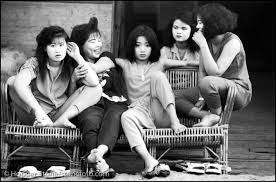
2.Child sex tourism- Child sex tourism is a form child sex trafficking, and is mainly centred on buying and selling children into sexual slavery. It is when an adult travels to a foreign country for the purpose of engaging in commercially facilitated child sexual abuse. Child sex tourism results in both mental and physical consequences for the exploited children, who may include “disease (including HIV/AIDS), drug addiction, pregnancy, malnutrition, social ostracism, and possibly death”, accord to the State Department of the United States. Thailand, Cambodia, India, Brazil and Mexico have been identified as leading hotspots of child sexual exploitation.

3.Cybersex trafficking- Victims of cybersex trafficking, primarily women and children, are sex slaves who are trafficked and then forced to perform in live streaming] shows involving coerced sex acts or rape on webcam. They are usually made to watch the paying consumers on shared screens and follow their orders. It occurs in ‘cybersex dens,’ which are rooms equipped with webcams.

4. Forced marriage- A forced marriage is a marriage where one or both participants are married, without their freely given consent. Forced marriage is a form of sexual slavery. Causes for forced marriages include customs such as bride price and dowry; poverty; the importance given to female premarital virginity; “family honour”; the fact that marriage is considered in certain communities a social arrangement between the extended families of the bride and groom; limited education and economic options; perceived protection of cultural or religious traditions; assisting immigration.
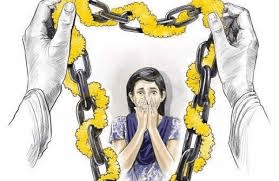
Health Implications:

Victims of sex trafficking are likely exposed to adverse conditions that can negatively affect their physical, mental, and emotional health. Physicians, nurses, midwives, and other healthcare providers can play critical roles in helping to identify victims of sex trafficking as a first step in providing both assistance and advocacy for affected women and girls. As a provider, one can play an essential role in providing interventions to improve physical and psychological health among victims and advocating on behalf of victims to help improve their social circumstances.

  1. Physical- Sex trafficking victims are particularly susceptible to sexually transmitted infections such as gonorrhoea, syphilis, urinary tract infections, and pubic lice. Human immunodeficiency virus/ AIDS infection is known to be prevalent. They may experience pelvic pain, vaginal/anal tearing, rectal trauma, and/or urinary difficulties as a result of commercial sex work. Sex trafficking victims are often physically abused and tortured. Providers should screen women and girls for physical injuries such as broken bones, bruises, burns, scars, and broken teeth/ dental problems.
  2. Psychological-Victims of sex trafficking may face moderate to severe psychological trauma from daily mental, emotional, and psychological abuse and torture. Post-traumatic stress disorder, acute anxiety, and depression are all common psychological issues among sex industry workers.
  3. Social- Although there are insufficient data that report the social effects of sex trafficking, anecdotal evidence suggests that victims have a greater prevalence of illiteracy, homelessness, poverty, and societal isolation. Trafficked women engaging in sex work tend to have fewer resources, limited options, and increased vulnerability to violence and abuse than women who are not trafficked.

conclusion:

Victims of sex trafficking acquire adverse physical and psychological health conditions and social disadvantages. Thus, sex trafficking is a critical health issue with broader social implications that requires both medical and legal attention. Healthcare professionals can work to improve the screening, identification, and assistance of victims of sex trafficking in a clinical setting and help these women and girls access legal and social services.

 Sex trafficking involves some form of forced or coerced sexual exploitation that is not limited to prostitution, and has become a significant and growing problem in both the United States and the larger global community. The costs to society include the degradation of human and women’s rights, poor public health, disrupted communities, and diminished social development.

EUTHANASIA: DEATH WITH DIGNITY

ABSTRACT:

Death is not the opposite of life but a part of it – Haruki Murakani Euthanasia is the highly effective form of pain management which allows assisting people who are suffering from a painful and incurable disease or incapacitating physical disorder or allowing them to die. The concept of Euthanasia, Mercy killing comes from the very belief that losing some faculties are worse than losing one’s life. However, through with the religious belief against premature death and also a moral dilemma in respective to legalising Euthanasia across the globe, but it was considered the best way to go rather see a person degenerating to his fate which is worse than death. Hence, countries across the globe had legalized Euthanasia with strict rules and stringent legal sanctions.

INTRODUCTION:

The term Euthanasia has been derived from two Greek words ‘eu’ and ‘thanotos’, which means, “Good death.” The phrase Euthanasia was coined by Sir Francis Bacon. Euthanasia is requesting for the premature ending of life in the plight of suffering terminal illness who undergoes unbearable pain.

TYPES OF EUTHANASIA:

The dimension of Euthanasia encompasses from Voluntary Euthanasia: Euthanasia is performed with the patient’s consent. Further, the voluntary euthanasia is of two kinds Active Euthanasia: A person takes action to cause a patient’s death that is where a person intentionally intervenes to end someone’s life with the use of lethal substances or forces. Passive Euthanasia: Death is brought about by withholding or withdrawing treatment to let the person die.

Non-Voluntary Euthanasia:

The person is unable to give their consent as the patient is in a state of coma or are severely brain-damaged and so another person takes the decision on patient’s behalf, often because the ill person might have expressed the wish to end their lives previously in certain circumstances.

Involuntary Euthanasia:

This kind of Euthanasia is administered without asking consent or against the patient’s will. Involuntary Euthanasia is also termed as murder if conducted against the will of the patient.

Assisted Suicide:

Patient is provided help in dying Physician-Assisted Suicide: Doctor assists a patient in shortening their dying process.

The doctrine of Double Effect:

Doctor gives drugs to relieve symptoms even though this may shorten patient’s life.

Indirect Euthanasia:

The treatment provides side effects that would speed up the patient’s death. DNR order: Doctor is not required to resuscitate a patient if their heart stops. A living will: Person decides in advance to refuse life support system in case of a terminal illness.

DNR order:

Doctor is not required to resuscitate a patient if their heart stops.

A living will:

Person decides in advance to refuse life support system in case of a terminal illness.

LEGALITY OF EUTHANASIA ACROSS THE GLOBE

The subject of euthanasia has spun the world regarding legalising euthanasia. However, only a handful of countries has to grant citizens the right to die in cases of a terminal illness. The debate of legalising euthanasia cuts across complex and dynamic aspects such as legal, ethical, human rights, health, religious, economic, spiritual, social, and cultural aspects of civilised society. In April 2002, it was the Netherlands the first country to legalise euthanasia and assisted suicide. Belgium stood second in the same year and legalised Euthanasia with strict rules that doctor can assist patients to end their lives when they freely express their wish to die if they suffer intractable and unbearable pain and sometimes in a vegetative state.

EUTHANASIA: INDIAN SCENARIO

The issue of Euthanasia rose to prominence in India after Aruna Shanbaug’s case and several other noteworthy cases filing pleas demanding euthanasia but the case of Aruna Shanbaug’s was most alarming as she remained in a persistent vegetative state for 42years since 1973 when she was sexually assaulted. However, in 1996 the Supreme Court in its landmark judgement in the case of Gyan Kaur Vs State of Punjab[1] held that both euthanasia and assisted suicide is not lawful in India and confusingly stated.

“The right to life under article 21 of the constitution does not include the right to die. The court held that article 21 is a provision guaranteeing protection of life and personal liberty, and by no stretch of imagination can extinction of life be read into it. The right to live with dignity does include the right to die with dignity.” However, the court could not come up with any practical rules and passed the buck to lawmakers to come up with laws regulating euthanasia, and that’s how in 2006 the 196th report of law commission of India had brought out The Medical Treatment of Terminally ill patients (Protection of Patients and Medical practitioners) Bill 2006, but no law was made on euthanasia.

CONCLUSION:

Euthanasia is a form of a merciful killing or peaceful death which has raised significant controversies as for and against it. Nevertheless, despite some potential benefits of this process the analysis of Euthanasia reveals that the society as a whole should exercise some responsibility for such an activity as it is even morally challenging. Hence, it must be used only as a last resort to preserve harmony within the society, when faced with a complex medical, social and legal dilemma. There is also an urgent need to invest in our health care system as ‘Right to health’ is bestowed under ‘Right to life’ of our constitution.


[1] 1996 AIR 946

Crisis on jobs in the Corona period.

By P.Bhoomika

Millions of people around the world have lost their jobs amid during the current covid-19.

The condition of industries in the country is suffering due to the Corona virus epidemic.Almost all of India’s business activities are at a standstill.

Because of this there has been a crisis on the jobs of millions of peoples.At the same time ,there are a fear of cuts in staff and non-appraisal staff.

According to a recent survey, currently one in every 5 Indian’s has a fear of losing their jobs.

20% fear of losing jobs in indian.

According to survey conducted by Interenet-Based Market Research and data analytics firm youGov, Corona virus can have a Profound impact on economy.

Due to the current situation, there is fear of losing jobs in most people.20% of Indians are afraid of losing the jobs.

The urban unemployment rate has increased to 30.9% overall the unemployment rate has rinse by 23.4% more than before.

According to survey, most of the companies are expected to lose more than 10% of their earings during the current quarter and the previous quarter and this could cause their profit to fall by more than 5% in both quarters.

This means that 19.5crore full-time jobs could end in the quarter alone due to the Corona virus.

Silver Linings of 2020

When we’re all swearing this year to be one of the worst years of the century, and for some, let’s say the worst year of their lives. But as we say, “Every cloud has it’s silver lining” and to some degree, it’s also real. We should think of nature as a result of this lockdown of Mother Nature ‘s healing to a great degree. Many major metropolitan cities used to be heavily polluted for a variety of reasons (certainly all the reasons are linked to homo sapiens only).

According to System of Air Quality Weather Forecasting and Research (SAFAR), there was a 76% decline in the NO2 level concentration, while PM 2.5 was down by 54% as opposed to the same period in 2019.During the lockdown, SAFAR monitored pollution levels in six cities—Mumbai, Delhi, Ahmedabad, Chennai, Pune and Kolkata. The study found that Delhi’s PM 2.5 (particulate matter lesser than 2.5 microns) reduced by 39%, Kolkata’s and Ahmedabad’s by 30%, Pune by 25% and Chennai by 11%.

The Times of India

Until now it all may sound very obvious to many of you let me put some content that may sound interesting.

Wonder chicken discovered

The earliest fossil of the modern bird has recently been found, dating back 66 million years — before the age of the dinosaurs. This creature, named “the wonder chicken” by scientists, looks like a chicken from the front and a duck from the back. The discovery brings a great deal of detail to the body of scientific knowledge, telling scientists a lot about the early evolution of the modern bird and opening a discussion about its origin.

Second person in the world to be cured of HIV

A few weeks ago, the second person in the world was cured of HIV. Thanks to stem cell therapy, London, U.K. Resident Adam Castillejo is free from disease. While this treatment is high-risk and still not readily available to patients, Castillejo’s cure gives us hope that a possible gene therapy cure will be within our scope.

There are a few sites now free of COVID-19

While all of us are still terrified by the pandemic, a few areas free of coronavirus offer a silver lining for the future.Lakshadweep having zero cases is a big accomplishment as they depend on Kerala for most of their medical needs.

Apart from New Zealand, Tanzania, Fiji, Vatican City, Montenegro, Seychelles, St. Kitts & Nevis, Timor-Leste, and Papua New Guinea have treated the most recent citizens diagnosed in their countries of coronavirus.

The first in-vitro cheetah cubs to be born

At the end of February, the Columbus Zoo in Ohio announced the birth of the first cheetah cubs to be born from in vitro fertilization. Two cubs, male and female, were born to cheetah Izzy, a three-year-old mother. This feat is a milestone for both biology and zoology and comes as an indication that humans can help those at risk.Species must thrive.

Australia is no longer in the flames
The last thing to rule in the early months of 2020 before the coronavirus pandemic has eventually come to a stop. Australia is no longer on fire; the flames have been lit in New South Wales, the only state to remain on fire since early March. Its trees are now recovering, and new plant life has recently emerged from the fire-ridden landscape. While this is certainly not the end of the battle against the climate crisis, the horrors in Australia have now come to a halt.

Animal Crossing on the Nintendo Switch

Animal Crossing: New Horizons came out on the Nintendo Switch on March 20th, on a less important but still pleasant note. Now, fans of the popular Mario title will enjoy it on the newest Nintendo console. This game has become a worldwide phenomenon, as many see it as a great opportunity to fill their hours with self-isolation. This game is commonly regarded to be extremely relaxing — the idea is basically to go to an island and make a bunch of animal friends to perform simple tasks in return for prizes.

But apart from these commonly known facts and figures, perhaps this year has not proved that bad for students as well. I now may seem to most of us to be a complete blether and jabber, but let me tell you some bizarre things that none of us may have noticed.

Most of us realize what we are capable of doing apart from what we all used to do in our normal lives. We ‘re beginning to recover or develop new or outdated abilities. We began to talk of things that we would never have considered before. Others may start studying, some start cooking, drawing, coding, reading, and more.

I, myself, have learned a lot of things that I just don’t think I ‘d remember if I didn’t have the quarantine time period. There are a lot of skills that you can learn in this period of time, here in this blog I’m just mentioning their name and not the whole story (I ‘d definitely try to write my next blog on this one).

  • Start a blog
  • Learn how to code
  • Digital Marketing
  • Closing a deal
  • Copy writing skills
  • Simulations

This list is endless, and it’s just a few of them that I’m learning as a student. So believe me they ‘re all worth knowing, and you’re going to love studying not all of them, but at least some of them you have to know.

So if we get trapped in our homes and we can’t celebrate holidays or have fun with our friends and loved ones. Guys, let me make it clear that many of us are stuck with the ones who love us the most, clearly our parents and our family. Perhaps, all of us are so stressed that we generally don’t have time for our family, so mostly because of our crazy lives, we don’t even think about it. But after so many years, all of us have our childhood days back and believe me that they won’t come back once this pandemic has passed, so enjoy those moments with them.

And as for those dear ones you haven’t met for months and it seems like ages. The quote describes this well.

“As contraries are known by contraries, so is the delights of presence best known by the torments of absence.”

Alcibiades

There can be no distance from them who we want to be with and who wants to be with you. Without a doubt, this year has taken away a lot of things from us, but it can still give us a lot to enjoy. It tells us a lot, and let’s take that as a year to learn to try to understand the things we’ve never taken care of.

Ordnance factories in India

Ordnance Factory Board (OFB) consisting of the Indian Ordnance Factories, it is an important department under the Ministry of Defence, Government of India. It is engaged in research, development, production, testing, marketing and logistics of a comprehensive product range in the areas of air, land and sea systems. OFB comprises forty-one ordnance factories, nine training institutes, three regional marketing centres and four regional controllerates of safety, which are spread all across the country. Every year, 18 March is celebrated as the Ordnance Factory Day in India.

OFB is the world’s largest government-operated production organisation, and the oldest organisation run by the Government of India. It has a total workforce of about 80,000. It is often called the “Fourth Arm of Defence”, and the “Force Behind the Armed Forces” of India. OFB is the 37th largest defence equipment manufacturer in the world, 2nd largest in Asia, and the largest in India. According to a report by SIPRI, India is the largest producer in the category of ’emerging producers’ in 2017, with four companies ranked in the Top 100. Their combined arms sales of $7.5 billion in 2017 were 6.1 percent higher than in 2016. The two largest Indian arms producers, Indian Ordnance Factories and Hindustan Aeronautics are the highest ranking (37th and 38th respectively) companies in 2017 among countries in the emerging producers’ category. The report also says that the arm sales of OFB have increased by 8.5% in the year of 2017–18. OFB’s arms sales are 96% of its total sales in the year of 2017. Its total sales were at $2 billion (₹13687.22 crores) in the year 2017–’18.

Ordnance factories in India fall under the umbrella of Indian Ordnance Factories, which is a part of the Department of Defence Production, Ministry of Defence. The Indian Ordnance Factories organisation is a conglomerate of 41 factories, nine training centres, four regional controllerates of safety and three regional marketing centres. Safety is a key issue in the running and maintenance of ordnance factories, which is why regional controllerates of safety have been established all over India. The primary objective of these 41 ordnance factories is to equip the Indian armed forces with state of the art defence equipment.   

The Indian Ordnance Factories organisation is the largest government operated production organisation in the world and the oldest industrial setup managed by the Indian government. Ordnance factories in India are divided into five categories – Ammunition and Explosives (A&E), Weapons, Vehicles, and Equipment (WV&E), Materials and Components (M&C), Armoured Vehicles (AV), and Ordnance Equipment Group of Factories (OEF) – depending on the products they manufacture and technologies they employ. For the safety of the citizens of India, these ordnance factories are located in remote areas, away from the hustle and bustle of city life. And the area occupied by each factory can range from a few hundred acres to a few thousand acres.   

Since factories are far from cities, the government has ensured that the towns in which these factories are located are self-sufficient. These towns have residential estates, post offices, banks, schools, grocery stores, recreational facilities, and hospitals, to name a few amenities. Ordnance factories are spread across India, with a majority of the factories in Maharashtra. There are ten factories in Maharashtra, eight in Uttar Pradesh, six in Madhya Pradesh, six in Tamil Nadu, four in West Bengal, two in Uttaranchal, and several others in Chandigarh, Andhra Pradesh, and Orissa.    Each ordnance factory is headed by a general manager, whose position is equivalent to that of the additional secretary of the government of India.   

The prime customers of ordnance factories in India are the Indian Army, Indian Navy, Indian Air Force, and the Indian Coast Guard. But apart from the armed forces, ordnance factories also supply weapons and bullet proof vehicles to police forces, Parliamentary Forces of India and the Special Forces of India. In the civil sector, some of the customers of ordnance factories are the Indian Railways, the Indian Space Research Organisation, and the Department of Telecommunications. Ordnance factories in India export their products – clothing, explosives, arms, and chemicals – to over 30 countries worldwide.   

Some of the countries to which these products are exported are Thailand, Malaysia, Singapore, Germany, Switzerland, Saudi Arabia, and USA, to name a few. The Indian Ordnance Factories organisation is among the top 100 arms manufacturers in the world and it has been ranked 48th in the world by the Stockholm International Peace Research Institute, which focuses on research in conflicts, arms control, and disarmament. The recent sales of the ordnance factories in India (for 2011-2012) amounted to Rs 144 billion, with arms sales comprising 80% of the revenue.   

The Leather Industry

The Leather Industry holds a very prominent place in the Indian economy and is one of the oldest manufacturing industries in India. It provides employment to about 2.5 million people in the country and has an annual turnover of approximately USD 5,000,000.

India is one of the best destinations in the world for investing in the leather industry because it is abundant with raw materials in the form of huge population of cattle. India accounts for 21% of the world’s cattle and buffalo and 11% of the world’s goat and sheep population.

Apart from the easy availability of raw materials, investors are able to enjoy easy and abundant supply of skilled manpower, world-class technology, competent and favourable environmental standards, and the devoted support of allied industries.

Leather is a durable and flexible material created via the tanning of putrescible animal rawhide and skin, primarily cattle hide.

Several leading international leather goods manufacturing brand names, such as Hugo Boss, Tommy Hilfiger, Versace, Guess, and DKNY, have invested in India and are engaged in sourcing leather goods from India.

Leather Industry in India is a mixture of both the organized and the unorganized sectors. About 75% of the leather output in India is generated by the small, cottage and artisan sectors (unorganized). Leather making dates back to pre-historic age.  However, the modern method of leather production was introduced to India by the English and the French in 1857.

Traditionally, the leather industry in India produces hides and skins. However, there are also the secondary leather industries such as leather shoes, leather garments and other leather goods such as ladies’ bags, gloves, travel cases, wallets, belts and desktops. 

Over the years the leather industry in India has undergone drastic change from being a mere exporter of raw materials in the early 60’s and 70’s to now becoming an exporter of finished, value-added leather products.

The main reason behind the transformation is the several policy initiatives taken by the government of India. Indian leather industry has attained a prominent place in the Indian export and has become the top 7 industries that earn foreign exchange for the country. After the liberalization of Indian economy in 1991, the leather industry has flourished consistently in several ways and has contributed heavily to the Indian exchequer.

The government of India in its Foreign Trade Policy for 2000–2009 has identified the leather industry as a focus sector in view of its immense potential for export growth and triggering employment generation prospects.

Investment opportunities in the leather industry lie in different segments related to the industry, which include tanning and finishing of leather products, manufacturing of leather garments, manufacturing of leather footwear and footwear parts, and manufacturing of leather goods, such as harness and saddlery amongst a host of other opportunities.

However, the footwear industry in particular holds greater potential for investments in India. India produces approximately 700 million pairs of leather footwear every year and accounts for an 18% share of the total Indian leather export. After footwear manufacturing, leather goods or products, such as wallets, travel wares, belts, and handbags offer great returns on investment.

The structure of the leather industry is spread in different segments, namely, tanning & finishing, footwear & footwear components, leather garments, leather goods including saddlery & harness, etc.

Indian Leather Goods Industry : Items produced by this sector include, in addition to bags, handbags, hand gloves and industrial gloves, wallets, ruck sacks, folios, brief cases, travelware, belts, sports goods, upholstery and saddlery goods. With products ranging from designer collections to personal leather accessories, this sector has a share of 20.53 per cent in the leather industry, while maintaining an average growth rate of 11 per cent recorded in the last five years.

Indian Saddlery Industry : India is one of the largest producers of saddlery and harness goods in the world. The saddlery industry was established in the 19th century primarily to cater to the needs of military and police. From then on initiatives were taken to develop, the industry and today there are over 150 units in the organised sector, out of which approximately 105 are 100% export oriented units. Kanpur, in the state of Uttar Pradesh, is a major production centre for saddlery goods in India accounting for more than 95% of the total exports of saddlery items from India. The major importers of Indian saddlery are Germany, USA, UK, France, Scandinavia, Netherlands, Japan, Australia and New Zealand.

Indian Leather Garments Industry : The Leather Garment Industry occupies a place of prominence in the Indian leather sector.  The product classification of leather garments comprise of jackets, long coats, waist coats, shirts, pant/short, children garments, motorbike jackets, aprons and industrial leather garments. The major export destination of leather garments from India is Germany.

Tanning is the process of converting putrescible skin into non-putrescible leather, usually with tannin, an acidic chemical compound that prevents decomposition and often imparts colour. With tanning and finishing capacity for processing 1192 million pieces of hides and skins per annum spread over different parts of the country, most of which is organised along modern lives, the capability of India to sustain a much larger industry with its raw material resource is evident.

In order to augment the domestic raw material availability, the Government of India has allowed duty free import of hides and skins from anywhere in the world. It is an attraction for any foreign manufacturer who intends to shift his production base from a high cost location to low cost base.

There are over 2,000 tanneries in India. Many of them are scattered in small scale and cottage sector all over India especially West Bengal, Tamil Nadu, Maharashtra and Uttar Pradesh. It is anticipated that the leather industry in India will generate an estimated USD 7 billion by 2011.  It is no wonder that India is one of the top exporters of leather along with France and the UK. 

The major production centres for leather and leather products are located at Chennai, Ambur, Ranipet, Vaniyambadi, Trichi, Delhi, Dindigul in Tamil Nadu, Kolkata in West Bengal, Kanpur in Uttar Pradesh, Jalandhar in Punjab, Bangalore in Karnataka and Hyderabad in Andhra Pradesh.

There exists a large raw material base in the Indian leather industry. This is on account of population of 194 million cattle, 70 million buffaloes and 95 million goats. According to the latest census, India ranks first among the major livestock holding countries in the world. In respect of 48 million sheeps, it claims the sixth position. These four species provide the basic raw material for the leather industry. The annual availability of 166 million pieces of hides and skins is the main strength of the industry.
 
India is the world’s second largest producer of footwear ; its production estimated over 700 million pairs per annum. At about USD 300 million per year, footwear accounts for 18 percent share of total exports of leather exports.

Various types of shoes produced and exported from India include dress shoes, casuals, moccasins, sports shoes, horacchis, sandals, ballerinas, and booties. Most of the modern footwear manufacturers in India are already supplying to well establish brands in Europe and USA.

Generally there are three types of leather which is sold in three forms : Full-grain leather, Corrected-grain leather and Suede.

There are a number of processes whereby the skin of an animal can be formed into a supple, strong material commonly called Leather like Vegetable-tanned leather, Chrome-tanned leather, Aldehyde-tanned leather, Synthetic-tanned leather, Alum-tanned leather and Raw.

Today the share of the value added finished products in the total exports from leather sector are 80% as against 20% in 1970s. The top ten Indian leather exporters are : Tata International Ltd., Florind Shoes Ltd., Punihani International, Farida Shoes Ltd., Mirza Tanners Ltd., T. Abdul Wahid & Company, Hindustan Lever Ltd., Super House Leather Ltd., RSL Industries Ltd., Presidency Kid Leather Ltd and Indian Leather Footwear Industry.

Even though most of the leather and leather products from the industry in India are exported, the leather shoe manufacturers or exporters in India for instance, will import soles, insoles, shoe lasts, counters, toe puffs, polishers and stiffeners. The value of such imported items can make up to 10% to 20% of the total value of the leather goods. 

India being one of the top exporters of leather is facing few challenges in the Leather Industry :

  • Historically, the slaughter of cattle in India is banned in respect of the government legislation due to the animal’s sacred status.  Leather producers wait for the cattle to die from natural causes such as old age, starvation or diseases.  Unfortunately, cattle with diseases cannot produce high quality leather.
  • Cattle died from natural causes must be quickly processed to prevent decay and hide deterioration. This makes it challenging for leather producers because the dead cattle must be processed wherever the carcass is found instead of doing it within a leather production facility.
  • For vegetable dyed leather, the supply of chrome salts used in leather production is limited in supply to the leather producers. When producers tried to switch to a chemical dye, PCP (Pentachlorophenol), it was eventually banned in India due to the chemical being a carcinogen.
  • Apart from this effluent management, non-tariff barriers, quality specifications and cost of compliance to various standards hinder the export growth of the Indian leather industry.

However, going by the future forecast of the Indian leather industry gives ample scope to the sector to progress. With its rich resource base of raw hides, skins and human capital the industry has the capability to increase its share in global leather trade. The global leather industry is in the process of shifting its manufacturing base from developed to developing nations. This provides an opportunity for increased flow of foreign direct investment (FDI) into India.

In such a scenario, factors like abundance of leather, increasing awareness for quality, manufacturing know-how and designing capabilities all work in favour of India. 

Over 1 million stranded Indians have benefited from Vande Bharat Mission: Hardeep Singh Puri

Civil Aviation Minister Hardeep Singh Puri said that more than one million stranded Indians have now benefited from Vande Bharat Mission.

In a tweet, Mr Puri said, more than 9 lakh Indians have returned to India through various means and more than 1 lakh 16 thousand have flown out to various countries since 6th May of this year. He said, yesterday three thousand 124 Indians have returned from various countries. Mr. Puri expressed hope that Phase 5 of the mission will provide benefit to more citizens.

COVID-19 recovery rate improves to 65.43 pct in country

A record 51 thousand 255 recoveries from Covid-19 have been registered today in the country. This is the highest number of recoveries in a single day since the COVID-19 outbreak in the country. With this, the recovery rate has improved to 65.43 per cent. The case fatality rate of coronavirus has further declined to 2.13 per cent.

The Health and Family Welfare Ministry today said, a total of 11 lakh 45 thousand 629 people have recovered in the country so far. In the last 24 hours, 54 thousand 735 new cases of Covid-19 have been reported, taking the total number of cases to 17 lakh 50 thousand 723. Presently, the total number of active corona cases in the country is five lakh 67 thousand 730. In a single day, 853 deaths have also  been reported taking the nationwide toll to 37 thousand 364.

Meanwhile, the Indian Council of Medical Research said that a total of four lakh 63 thousand 172 tests were conducted by various laboratories within 24 hours. So far, one crore 98 lakh 21 thousand 831 tests have been conducted in the country. At present, one thousand 344 laboratories across India are conducting Covid-19 tests that includes 913 government laboratories and 431 private laboratory chains.

EU calls for united efforts from its member countries against China

European Union has called for a more united approach from its 27 member countries against an authoritarian China. In an interview to German media, EU’s High Representative for foreign and security policy, Josep Borrell said, China has become more aggressive in its neighbourhood, especially in the South China Sea or on the border with India. He said, Chinese leaders did not hesitate to leave aside international commitments with the imposition of the Hong Kong National Security Law.

Borrell also called for a more coordinated approach among the EU, US and other democratic powers like India. He said, EU and US should be at the heart of this effort, but we should also be working closely with Japan, India, South Korea, Australia, New Zealand, Canada and others.

Pondering steps to deal with China, Borell said, we can consider measures such as extending visas for Hong Kong citizens, restricting student exchanges with China, banning exports of tear gas.

Coronavirus pandemic likely to be lengthy, warns WHO

The World Health Organization has warned that the coronavirus pandemic is likely to be lengthy. The statement comes after an emergency committee of WHO met to evaluate the crisis six months after sounding the international alarm.

The committee also warned of the risk of response fatigue given the socio-economic pressures on countries. The panel gathered for the fourth time over the coronavirus crisis, half a year on from its January 30 declaration of a public health emergency of international concern – the WHO’s highest level of alarm.

The committee highlighted the importance of sustained community, national, regional, and global response efforts.

The committee urged the WHO to provide nuanced and pragmatic guidance on COVID-19 reactions to reduce the risk of response fatigue in the context of socio-economic pressures.

The committee also urged the agency to accelerate research into the remaining critical unknowns of the virus.

Odisha govt allows private labs to conduct COVID-19 tests

In a bid to augment the testing facilities, the Odisha government has allowed private hospitals, nursing homes and laboratories to conduct COVID-19 tests through Rapid Antigen and RT-PCR methods. The government issued a separate set of guidelines for conducting sample tests both under Rapid Antigen and RT-PCR.

The private health establishments have to abide by the ICMR norms.

The sample test results should first be informed to the state authorities before being released to the person whose test was conducted, the notification said.

For Rapid Antigen tests, the private bodies can charge a maximum of 450 rupees, while the price for RT-PCR tests is fixed at 2,200 rupees per test. The nursing homes, hospitals and laboratories should be mandatorily registered under the Odisha Clinical Establishment (control & regulation) Act, 1990.

The manpower to be deployed for the purpose must be trained properly in consultation with the chief district medical and public health officers.

Odisha govt allows private labs to conduct COVID-19 tests

In a bid to augment the testing facilities, the Odisha government has allowed private hospitals, nursing homes and laboratories to conduct COVID-19 tests through Rapid Antigen and RT-PCR methods. The government issued a separate set of guidelines for conducting sample tests both under Rapid Antigen and RT-PCR.

The private health establishments have to abide by the ICMR norms.

The sample test results should first be informed to the state authorities before being released to the person whose test was conducted, the notification said.

For Rapid Antigen tests, the private bodies can charge a maximum of 450 rupees, while the price for RT-PCR tests is fixed at 2,200 rupees per test. The nursing homes, hospitals and laboratories should be mandatorily registered under the Odisha Clinical Establishment (control & regulation) Act, 1990.

The manpower to be deployed for the purpose must be trained properly in consultation with the chief district medical and public health officers.

Death toll in spurious liquor tragedy rises to 86 in Punjab; ED begins probe

The death toll in Punjab’s spurious liquor tragedy has risen to 86. Tarn Taran alone accounted for 63 deaths, followed by 12 in Amritsar and 11 in Gurdaspur’s Batala. Chief Minister Amarinder Singh suspended seven excise officials and six policemen. Among the suspended officials are two deputy superintendents of police and four station house officers. State government also announced a compensation of 2 lakh rupees for each of the families of the deceased.

The Enforcement Directorate (ED) has begun investigations into the Majha tragedy. ED has started collecting information about the financial transactions by those named or booked in the case. The recoveries and assets of the key accused need to be thoroughly probed. 

New Education Policy will transform job seekers into job creators: PM Modi

Prime Minister Narendra Modi has said that New Education Policy (NEP) will transform job seekers into job creators. Addressing Smart India Hackathon 2020, he said the NEP is not just a policy but a compilation of aspirations of all the Indians.

The Prime Minister gave a mantra to students and said, never stop three things in life – learning, questioning and solving. The Prime Minister said that the time has come for increased focus on learning, research and innovation in the field of education. He said, the 21st century is the era of knowledge and this is exactly what New Education Policy does.

The Prime Minister said we are focussing on the quality of education in the country. Elaborating on the Centre’s attempts to transform the content and method of imparting education in the country, Mr Modi said, the New Education Policy emphasizes on inter-disciplinary study, which will ensure that the focus is on what the student wants to learn instead of being compelled to learn.

Mr Modi also said that India is shifting from the burden of school bags to the boon of learning. He said, Languages of India will develop more due to the changes brought about in the education policy. This will not only increase India’s knowledge but will also increase the unity among its people, the Prime Minister told the students participating in the Smart India Hackathon 2020. This year, around 10,000 students are participating in the hackathon.

The grand finale of Smart India Hackathon 2020 (Software) is being held from August 1 to 3. He also interacted with students and enquired about their projects ranging from women’s hygiene products to crime detection technologies to water harvesting. This year, over 4.5 lakh entries were received for the competition.

The Golden city :Jaisalmer

Jaisalmer nicknamed “The Golden city”, is a city in the Indian state of Rajasthan, located 575 kilometres (357 mi) west of the state capital Jaipur. The town stands on a ridge of yellowish sandstone and is crowned by the pad Jaisalmer Fort. This fort contains a royal palace and several ornate Jain temples. Many of the houses and temples of both the fort and of the town below are built of finely sculptured sandstone. The town lies in the heart of the Thar Desert (the Great Indian Desert) and has a population, including the residents of the fort, of about 78,000. It is the administrative headquarters of Jaisalmer District. Jaisalmer was once the capital of Jaisalmer State.
Jaisalmer is named after Rawal Jaisal, a Bhati ruler who founded the city in 1156 AD. Jaisalmer means the Hill Fort of Jaisal. Jaisalmer is sometimes called the “Golden City of India” because the yellow sandstone used throughout the architecture of both the fort and the town below, imbues both with a certain golden-yellow light.

Loaction:
It is the largest district of Rajasthan and 3rd largest Town by territorial region in the country, hugged on the west & south-west by the Pakistani border. The length of the international border attached to Jaisalmer District is 464 km (288 mi). It is located 790 kilometres away from the national capital Delhi.
Places to visit
Jaisalmer fort:
Built in 1156 by the Bhati Rajput ruler Jaisal, Jaisalmer Fort, situated on Meru Hill and named as Trikoot Garh has been the scene of many battles. Its massive sandstone walls are a tawny lion colour during the day, turning to a magical honey-gold as the sun sets. The famous Indian film director Satyajit Ray wrote a detective novel and later turned it into a film − Sonar Kella (The Golden Fortress) which was based on this fort. About a quarter of city’s population still live inside the fort. The main attractions inside the fort are: Raj Mahal (Royal palace), Jain temples and the Laxminath temple.

Gadsisar Lake:
Excavated in 1367 by Rawal Gadsi Singh, it is a scenic rainwater lake surrounded by the small temples and shrines of Amar Sagar. Earlier, this lake was used to be the main water source of Jaisalmer. Due to an
increased water demand for agriculture, the lake is increasingly threatened to dry out.

Festival:
Desert Festival of Jaisalmer is the most awaited and famous cultural and colourful event of Rajasthan. Camel races, Turban-tying and Mr. Desert competitions are organised. It is held in the month of February every year. The festival showcases Rajasthani folk songs and dance and it is very attractive to foreign tourists. Gair and Fire dancers which are the major attraction of the Jaisalmer desert festival celebrations. This is the best time to visit Jaisalmer to witness performing arts like Kalbelia dances and folk songs and music.

Desert:
The Thar Desert, also known as the Great Indian Desert, is a large arid region in the northwestern part of the Indian subcontinent that covers an area of 200,000 km² and forms a natural boundary between India and Pakistan. It is the world’s 17th largest desert, and the world’s 9th largest subtropical desert.