
Indian Folk Art

India is home to around 2500 tribes and it has always been portrayed as a land of cultural and traditional diversity. Every corner of the country has a distinctive cultural identity which is represented through different art forms. These art forms can be collectively put under the topic of Indian Folk Art. Each region has a different style and pattern of art which is practised by the rural folks living there. These art forms are colourful and simple and reflect the rich cultural heritage of India. The country is home to around 2500 tribes and ethnic groups. So each region has a unique and interesting form of folk art.

Previously these were done using natural dyes and mostly used for decorating walls and houses. These art forms have undergone many changes through all these years including change of medium, colours and pattern. Here are 10 such art forms which give us a peek into the cultural heritage of different regions of the country.

MADHUBANI
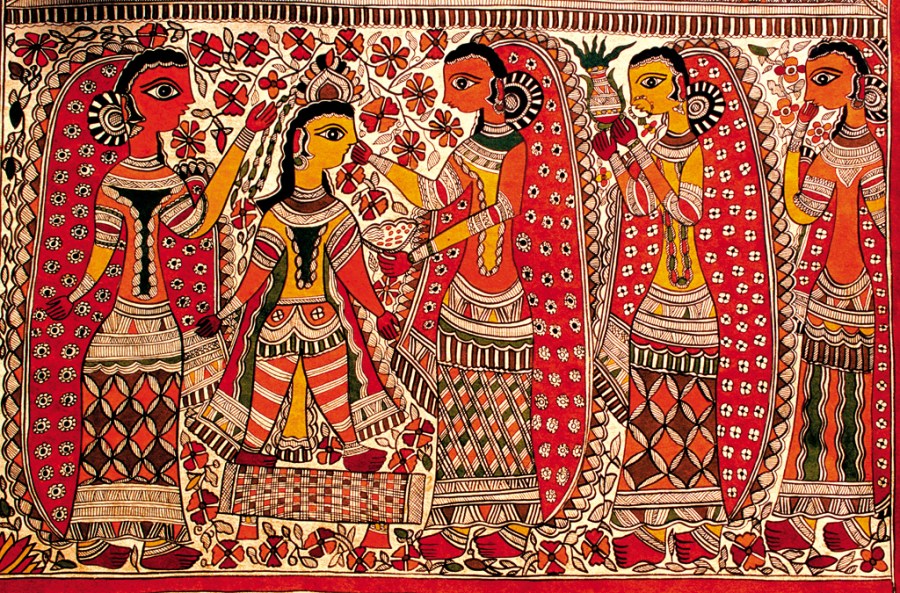
Madhubani, also known as Mithila art, was developed by women of Mithila in Northern Bihar. It is characterised by line drawings, colourful patterns and motives. These were practised for hundreds of years but were discovered in 1934 by a British colonial officer during an inspection after an earthquake.

PATACHITRA

The word ‘patachitra’ derives from the Sanskrit words patta, meaning canvas and chitra, meaning picture.  It is one of the oldest art forms of Odisha. It is done on canvas and portrays simple mythological themes through rich colours and motives. Some of the themes include Thia Badhia – depicting the temple of Jagannath, and Panchamukhi – depicting Lord Ganesh as a five-headed deity.

WARLI

Warli is the name of cultivator tribes belonging to Northern Maharashtra and Gujarat. Though discovered in early seventies, the roots of the art form can be traced back to as early as 10th century A.D. Mostly featuring geometrical shapes, they portray daily life, hunting, fishing and festival scenes. They show a common human figure through a circle and two triangles which move in circles resembling the circle of life.

RAJASTHANI MINIATURE PAINTING

The art form was introduced in the country by Mughals who brought in Persian artists for creating the art. The Mughal emperor Akbar built an atelier for them to promote the artwork. They trained Indian artists who produced it in a new style inspired by the royal lives of Mughals. Eventually the paintings made by these Indian artists came to be known as Rajput or Rajasthani miniature. They are characterized by strong lines and bold colours made from minerals, precious stones, even pure gold and silver.

TANJORE ART
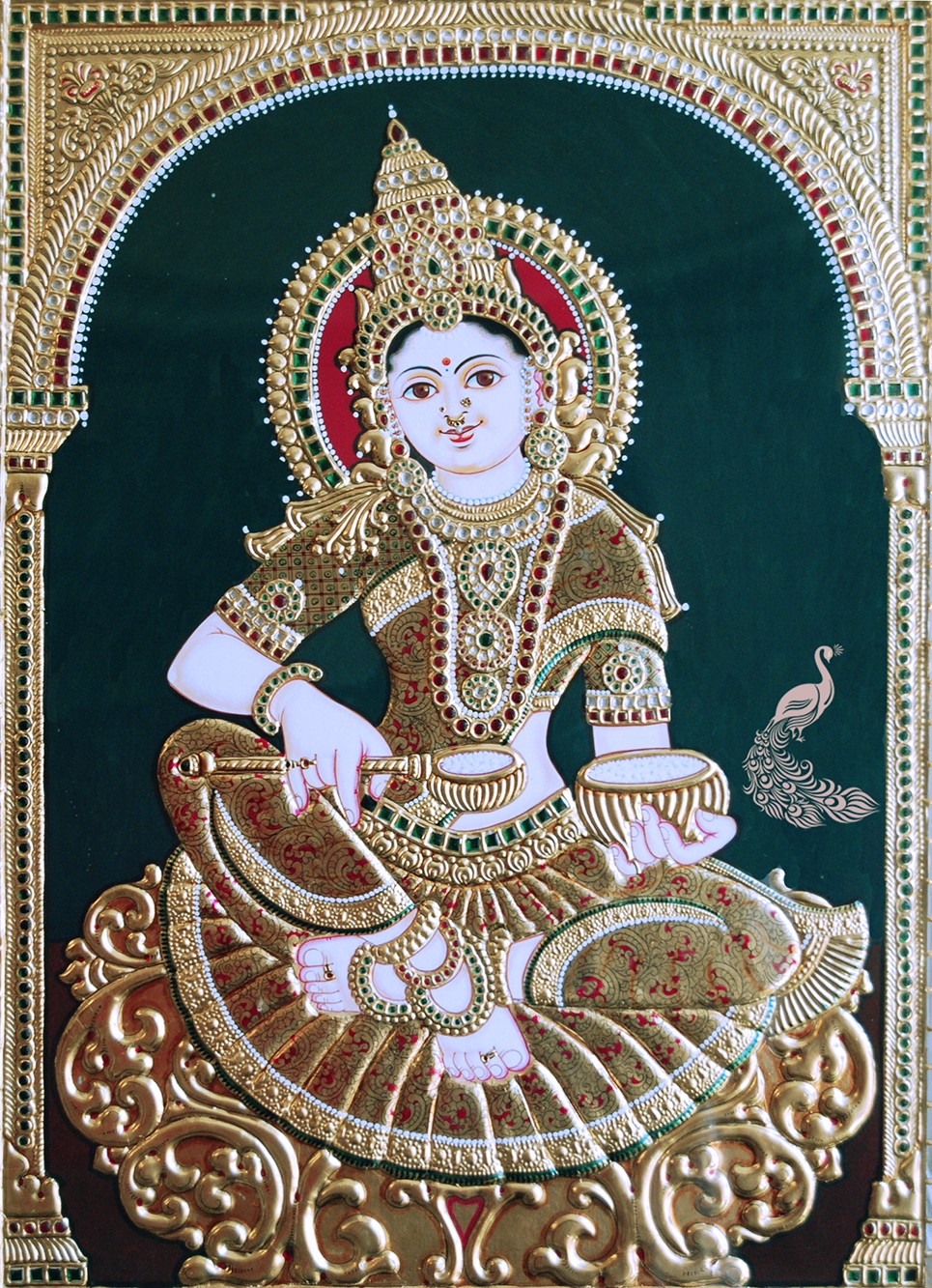
Originating in Tanjavore, about 300kms from Chennai, this art form evolved under the rulers of the Chola empire. Characterized by brilliant colour schemes, decorative jewellery with stones and remarkable gold leaf work, these paintings mostly consist themes of gods and goddesses.

KALAMEZUTHU

Similar to Rangoli and Kolam, this art form originated in Kerala. It mostly consists of the representation of deities like Kali and Lord Ayyappa on temple floors. Natural pigments and powders in five colours are used by the makers and the art is done by bare fingers without the use of any tools. The five colour shades are made from natural pigments like – rice powder for white, burnt husk for black, turmeric for yellow, a mixture of lime and turmeric for red and the leaves of certain trees for green.  Lighted oil lamps brighten the colours in the figures which usually feature anger or other emotions.
Risk management and worker protection

A large part of working in human resources (HR) is managing employee risk. It is HR’s job to keep employees safe and make sure the company isn’t liable for any employee injuries. Unfortunately, we live in an imperfect world so it is impossible to completely remove all risk, but HR’s goal is to minimize risk as much as possible and act swiftly when accidents do happen.

While managing risk is a lot of preventative work, you also need communication skills to explain accidents to employees/superiors when they arise. When you think of worker safety many people believe that this is only representative of jobs that require manual labor. However, every type of office has to consider their employees’ safety.

All different types of work environments require HR to manage risk and make sure that employees are protected.

The first step in identifying risk management is to identify the hazard. Some common hazards include wet floors, falls from heights, or dangerous equipment. Once your risks are identified, you must evaluate and decide how to prevent the risk from becoming an accident. In order to evaluate which risks are to be prioritized you should rank the risks on a scale of 1-5 based on the likelihood of an accident happening, and severity of the accident.

Making the workplace safer is an essential part of keeping employees happy and productive. If employees feel unsafe, they are less likely to be productive. HR bears this responsibility, and it should not be taken lightly. When HR departments ignore workplace risks, it is very evident and has a direct effect on everyone involved. When HR departments focus on maintaining a safe work environment, they tend to be much more respected by their coworkers and respected by their superiors. Overall, if you follow the formula for solving risk’s, your employees will feel much better coming into work every day.

Risk management: Involves responsibilities to consider physical, human and financial factors to protect organisational and individual interests.

Health: General state of physical, mental and emotional well-being.

Safety: condition in which the physical well-being of people is protected.

Security: Protection of employees and organisational facilities.

Ergonomics: Study and design of the work environment to address the physical demands placed on individuals.

Cumulative Trauma Disorders : Muscle and skeletal injuries that occur when workers repetitively use the same muscle to perform the tasks.

Substance abuse : Use of illicit substance or misuse of controlled substances, alcohol , or other drugs.

Health promotion: Supportive approach of facilitating and encouraging health actions and lifestyle among employees.

Wellness programs: Program designed to maintain or improve employee health before problems arise.

Employee Assistance Program: Program that provides counselling and help to employees having emotional, physical or other personal problems.

Security Audit: Comprehensive review of organisational security.

These are some ways which maintain risk management and worker protection in the organisation. And these are helpful to maintain and managing the risk management and worker protection at the workplace by HR.

Importance of risk management and worker protection

Through the risk management and the workers protection in the companies have delivered an opportunity to prepare for a global event by adjusting their strategies and prepare a contingency plan (Business Continuity Management). Every day they can manage internal risk, which have a greater impact. Similarly, companies operating risk, which is the day to day operations, seems to be more important than financial risk.

PREAMBLE – ‘IDENTITY CARD OF THE CONSTITUTION’

We have adopted the concept of preamble by American constitution. Preamble resemble as the preface or introduction to the constitution. NA Palkhivala; an eminent jurist called it as identity card of constitution.

the constitution derives its authority from people of India. Preamble declares Indian state as sovereign, socialist, secular democratic and republican.

Objective of constitution specifies justice, liberty, equality, and fraternity.

Date of adoption of constitution is November 26, 1949.

IMPORTANT TERMS:

1) SOVEREIGN- State is free to conduct its own affairs both externally as well as internally.

2) SOCIALIST– We believe in democratic socialism i.e. concept of mixed economy is persistent.

3) SECULAR– India embodies a positive concept of secularism so all religions have same status and support from the state accordingly articles 25 to 28 have been included as the fundamental rights of constitution.

4) DEMOCRATIC– India provides for a representative parliamentary democracy under which executive is responsible for legislature for all its actions.

5) REPUBLIC- It represents that India has an elected head called the President. It also means that people are vested with power of political sovereignty and there is absence of any privileged class.

6) JUSTICE– This concept is borrowed from Russian Revolution, providing people with social (equal treatment without discrimination on any bases) economic (elimination of glaring inequalities in wealth) and political (equal access to political offices and voice in government) justice.

7) LIBERTY– Absence of restraints on the activities of individuals, at same time providing opportunities for development of individual personalities.

8) EQUALITY– Absence of any privileges to any section of society and provision of adequate opportunities for all.

9) FRATERNITY- Sense of brotherhood involving dignity of individuals and unity and integrity of nation.

SIGNIFICANCE OF PREAMBLE:

It embodies basic philosophy and fundamental values. It is defined as ‘ horoscope of our sovereign democratic republic’ by KM Munshi.

Preamble is an important part of constitution which impacts the life of each individual.

“Law and order are the medicine of the body politic and when the body politic gets sick, medicine must be administered”.- B.R. Ambedkar

Why Indian Railways Is Best!?

        Did you know why Indian Railways are awesome than we think? Actually our railways are so amazing. Here are some points that proves why it is best.

  • The full track length of Indian Railways can encircle the equator one and a half times. If you add up all the distance covered by every single train in just one day you can go to the moon 3.5 times.

  • Indian Railways employs more than 1.9 Million employees. That’s more than Indian Armed Forces. Even in a global scale, Indian Railway is 8th largest employer in the world Just behind Walmart and McDonald’s.

  • There are too many people over here and to serve them there are too many railway lines. The slowest train of India is Nilagiri Passenger moves at the speed of 10km/hr. While the fastest is Vande Bharat Express moves at the speed of 130 km/hr. On one hand we have budget trains like Jan Shatabdhi, which are so affordable no other train in the world can beat that. And on the other we have uber luxury Maharaja Express. The most expensive tickets cost 24000 USD!!!

  • Indian Railway is the lifeline of our transport system. It spends Rs. 111/- for every Rs. 100/- earned currently. That means it is operating at 11% loss.

  • People credit the British for starting the Railways in India. What they don’t know Is that the British also plundered the railways. The British needed steel for World War and the first place they looked were the railway tracks. Railway tracks all over the countries was not enough. Factories destructed to make raw materials for Britains requirements having our railways without repair and in disarrays.

Konkan Railways: It is most ambitious project undertaken by Indian Railways. Even the British had thought of constructing this but this was so challenging that they dropped the idea.


              For an organization which is more than 150 yrs old that’s really good way of keeping up with modern times.

              But what makes me really sad is this! Tejas Express launched in 24/05/2017 with world class LED screen for each seat, Headphones and entertainment devices….. And in one day people stole headphones, tore seats, broke the windows and so on. Please don’t do that. Indian Railways is for Us and it is Ours.

             It is a wonder that it still operates and innovated! I feel happy when I see how they are beautifying stations. I feel happy that Indian Railways will not use single use plastic from 2nd October 2019. I feel happy how they are managed to keep Indian Railways rocking all these years..

All about Journalism

What is journalism?

India is 7th largest country in the world and the second largest country according to the population. It’s obvious, something happens every day in such a big country which obviously affects people living in the country.
From all the events, some may affect a large amount of people and some may not. But it is important to share every information to the people living inside the country about what’s happening in the country and even the world where they are living. Journalism does that for them.

It is the profession to gather, access, write and share information about any news to the people via newspapers, radio, television or even internet. The one who works in this profession is called journalist.

INFORMATION AND NEWS:

You must have thought how these words are different from each other. We can define them in this way:

NEWS – News is account which is about what has happened in the world and is shown as a news in newspaper, as a news programmme on T.V or RADIO.

INFORMATION – Information describes facts and detail about a certain subject.

We can say, “Every news is an information but every information is not news”.

TYPES OF JOURNALISM:

There are many types of journalism one can practice. Few of them are Print journalism, Photojournalism, Advocacy journalism, Broadcast journalism, Investigative journalism, Tabloid journalism, Yellow journalism etc.

THE FIRST NEWSPAPER:

Journalism has a huge history. It was after 1440 when Johannes Guttenberg invented the printing press which started Printing Press revolution.

The art of printing first entered India through Goa. In 1965, when English was to cease being a principal language of the country, English newspapers numbered more than newspapers in any other language. Later, Hickey brought out the Bengal Gazette on January 29, 1780. This was the time after which many newspapers and magazines started to get printed, even in regional languages.

Later on, journalism started to get practiced on radio and television too. Many programs were broadcast on All India Radio and news bulletins were introduced digitally via televisions. Although, radio was introduced for entertainment purpose but then it was also used as a mass media to circulate news.

As technology is getting advanced, the whole is using internet for almost every purpose, journalism has also spread its legs in the world of internet. News articles are shared via websites and mobile applications throughout the world.

CAREER IN JOURNALISM:

Journalism is not commonly opted by the students after 10+2. But if you have a creative mind and if you are willing to step out of your comfort zone and do something adventures then you can surely go for it.
Journalism will never exhaust as long as there are incidents happening around us which needs to be reported, i.e it will never die. The digitalization might be hurting the traditional way of journalism, but something better is coming it’s way. You should be the one willing to step out of you.

Warrior Cells To Fight COVID-19!!!

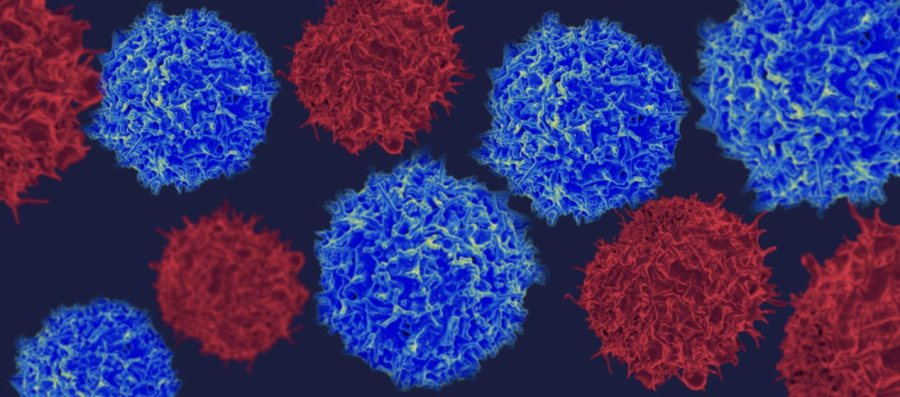
Retrieved from genengnews.com

Yesterday I was talking about T cells and how they are being lauded for their fighting nature. Today I thought to throw some more light on T cells. The cells are emerging as warriors and have the capacity to destroy and win over virus infected cells.              

T cells are a type of white blood cell which acts like soldiers, searching out infected cells and killing them, hence they play a crucial role in the human’s immune system. It acts as an elemental part of adaptive immunity; adaptive immunity is a system that alters the response of the immune system to particular pathogens.

The T cells which are immature are known as T-stem cells and move towards the neck area where the thymus gland lies to attain maturity and gain activity in our immune system. During maturation processes many of the T cells are destroyed by our body system as they acquire the behavior of activating against it.

These cells are also termed as T lymphocytes where T stands for thymus; thymus is the place where these cells attain maturity. Recent studies suggest that body defence system has not only one soldier to rely on and T cells are perfect reminder of this. T cells produce a stable immunogenic response that’s why it’s immunity is really necessary for our system.

T cells may be able to kill virus infected cells as they can remember old diseases like SARS-COV-2 (which came into existence in 2003) and other common cold diseases. They also have the ability to raise those cells which have been abandoned in past fights as fresh ones. There have been many studies where people show T cell response to the disease which they defeated 17 years back. 

But for right now things are uncertain as the research into T cell’s fight against COVID-19 is at young stages and nothing concrete can be evaluated from them. We have to wait a bit more for really good news that will lead to perfect vaccination of the pandemic leading our lives back to our old normal as how much perfect this new normal is, we will take time to adapt it.

Bulimia:An Eating Disorder

In today’s instagram world,People especially adolescents are getting image and body conscious.They look at the perfect bodies of celebrities and aspire to be like them.In this aspiration,they are psychologically and physically wounded.Most of such people experience eating disorders where in they undergo extreme changes in their eating and exercise habits.Ultimately they damage themselves.

So,in today’s blog lets look at one of the eating disorders called Bulimia Nervosa,it’s causes and it’s impacts.Let’s get started.

Bulimia nervosa is an eating disorder characterized by episodes of binge eating—consuming a lot of food quickly—followed by compensatory behavior, most commonly vomiting or “purging.” People who are bulimic often feel a lack of control over their eating. A bulimic can consume as many as 3,400 calories in little more than an hour and as many as 20,000 calories in eight hours.

People with bulimia often know they have a problem and are afraid of their inability to stop eating. Bingeing is then followed by purging — namely, self-induced vomiting or the abuse of diuretics or laxatives. Bingeing and purging are often performed in secret, with feelings of shame alternating with relief.

The bingeing and purging cycle is usually repeated several times a week. As with anorexia, people with bulimia often have coexisting psychological illnesses, such as depression, anxiety, and substance abuse problems. Many physical dysfunctions result from the purging, including electrolyte imbalances, gastrointestinal troubles, and dental problems.

An estimated one to four percent of females have bulimia nervosa during their lifetime. The prevalence in males is unknown, but bulimia nervosa is far less common in males than females. Most cases begin in the late teens and early 20s, but can go undetected until the 30s or 40s.

SYMPTOMS

Bulimia signs and symptoms may include:

  • Being preoccupied with your body shape and weight
  • Living in fear of gaining weight
  • Repeated episodes of eating abnormally large amounts of food in one sitting
  • Feeling a loss of control during bingeing — like you can’t stop eating or can’t control what you eat
  • Forcing yourself to vomit or exercising too much to keep from gaining weight after bingeing
  • Using laxatives, diuretics or enemas after eating when they’re not needed
  • Fasting, restricting calories or avoiding certain foods between binges
  • Using dietary supplements or herbal products excessively for weight loss

CAUSES

Exact causes are not completely known and are believed to complex.Hence there is no single known cause of bulimia, but there are some factors that may play a part,such as:

  • Culture:As in strict body expectations:Slim and trim girls wanted for marriage in India.
  • Families:Constant pressure and criticism from parents on looks of children
  • Life changes or stressful events: can trigger bulimia.
  • Personality traits: Those with bulimia may have low self-esteem and feel hopeless.
  • Biology.:Genes, hormones, and other biological factors may contribute to development of bulimia.

Impact

Bulimia has a great impact on the individual and can lead to following complications:

  • Negative self-esteem and problems with relationships and social functioning
  • Dehydration leading to kidney failure
  • Heart problems
  • Severe tooth decay and gum disease
  • Absent or irregular periods in females
  • Digestive problems
  • Anxiety, depression, personality disorders or bipolar disorder
  • Misuse of alcohol or drugs
  • Self-injury and suicidal thoughts.

Management

If left untreated,bulimia can create major complications in life as mentioned above.Hence if you see your loved ones experiencing symptoms of bulimia,support them and console them.If the symptoms are unbearable,immediately consult a doctor and psychologist who will be able to help the patient successfully.

Please spread empathy and kindness.Acceptance and kindness can prevent bulimia in such insecure people.Every difficulty can be defeated with empathy,patience and willingness to improve and come out.

If you all found the article useful,do give it a like.

Thankyou!

Stay Kind!

How National Education Policy is going to have a impact on private coaching institute.

In India,there is a pattern of coaching institutes that is run all over the country.Every parent wants their child should get an ample of knowledge and get good scores in his/her exams.In India,coaching institutes are always at peak because parents see that child does not study at home so put him in coaching institute and be tension free that’s the culture in India from many years.At times is that student who is going to coaching institute become prone to studies or is same as before.

Now,as we are moving ahead in the New Normal and with New Education Policy in hand everything is going to change and hopefully it will bring a great impact on the education system in India in these coming years.

The NEP 2020 wants school children to be away from private tuition and coaching classes in the coming years.It says that,regular formative assessment should be done rather than the summative assessment that has encouraged today’s coaching institute.The policy has made clear that it will make CBSE exams less difficult and continuously keep a check of core capacities/competencies.NEP 2020 is such that if any student does practices on daily basis without much effort he/she can compete well in examination and score good marks.

If implemented successfully all the plans that are mentioned in the New Education Policy it will shadow education sector?the answer is not clear yet.In India around 55% students have private tutor outside school as per Global Education Census Report 2018.OH MY GOD!!this is huge numbers means of total population of students from that more than 50% goes to tuition or coaching classes.So what in this should be considered that school teachings are not proper or they are not upto the core of it?The coaching industry in India earns around Rs 24000 crore in revenue a year.

In school teachers don’t have time to solve all my doubts,so I started going for tuition.My tutor are able to clear all my doubts when i am solving them,the learning is more interactive.”

Rayana Bhattacharya Singh,17 year old.

Private coaching in India:Nearly 20% of students attending pre-primary and above were taking private coaching.21% males and 19% females.At secondary level private coaching was maximum 31% male students and 29% female students.For students pursuing general education,12% as spent on private coaching as against 2% for students pursuing technical/professional education.

Its not just students from well household but students from vulnerable backgrounds too that flock to private tutor.They study in budget private schools and government schools where teachers are not having proper infrastructure and technology for providing proper education.In this case,its a matter of time that we all have to wait and watch how it will create a impact to the society.

PERSONALITY THEORIES

According to the American Psychological Association,Personality refers to an individual differences in characteristic patterns of thinking, feeling and behaving. The study of personality focuses on two broad areas: One is understanding individual differences in particular personality characteristics, such as sociability or irritability. The other is understanding how the various parts of a person come together as a whole.

So this blog will introduce the readers to some important theories used to describe personality.Let’s get started!

1) FREUD PSYCHOANALYTICAL PERSPECTIVE:

 According to Sigmund Freud Father of Psychoanalysis, an adult personality generally has three determinants: Id, Ego and Super Ego.The outcome of the combination of all the three determinants shapes an adult personality. Freud believed than an individual’s personality has three parts and thus is often called as tripartite personality.

  • Id:Irrational demands and urge.
  • Ego:Helps in fulfillment of Id after taking into consideration the reality.
  • Superego:Moral constraints of the individual.

Defense mechanisms play an important role in pushing unrealistic thoughts out of awareness. Stressful thoughts which are threatening to an individual’s survival should be pushed into unconscious mind to reduce anxiety through them.

2)ERIK ERIKSON:PSYCHOSOCIAL DEVELOPMENT THEORY:-

Erikson believes there are 8 stages in a person’s life and to enter into the next stage,a virtue has to be learnt from the previous stage and this leads to personality development.He focuses on different identity crisis in a person’s lifespan.As in

STAGE 1:Trust v/s Mistrust;Virtue:Hope

STAGE 2:Autonomy v/s Doubt;Virtue:Will

STAGE 3:Initiative v/s Guilt;Virtue:Sense of Purpose.

STAGE 4:Industriousness v/s Inferiorty;Virtue:Competence

STAGE 5:Identity cohesion v/s Role confusion;Virtue:Fidelity

STAGE 6:Intimacy v/s Isolation;Virtue:Love

STAGE 7:Generativity v/s Stagnation;Virtue:Care

STAGE 8:Ego Integrity v/s Despair;Virtue:Wisdom

3)CARL JUNG:INTOVERSION V/S EXTRAVERSION

Carl Jung established a theory, which saw universal types in human personality. The types categorized by Carl Jung are present in all of us. But, certain types are predominant over the normal mode of organizing our experience.Carl Jung also developed a theory of personality. His theory is one of the type theories of personality, as it involved typology of introversion and extraversion.There are 4 functions :Sensing,intuiting,thinking and feeling.

4)JULIAN ROTTER-LOCUS OF CONTROL

“Locus of Control.” For many people, their only exposure to the ideas of Julian B. Rotter is his concept of generalized expectancies for control of reinforcement, more commonly known as locus of control. Locus of control refers to people’s very general, cross-situational beliefs about what determines whether or not they get reinforced in life. People can be classified along a continuum from very internal to very external.
People with a strong internal locus of control believe that the responsibility for whether or not they get reinforced ultimately lies with themselves. Internals believe that success or failure is due to their own efforts. In contrast, externals believe that the reinforcers in life are controlled by luck, chance, or powerful others. Therefore, they see little impact of their own efforts on the amount of reinforcement they receive.

Thus we come to the end of the blog.This blog is aimed at introducing the readers to the world of personality analysis.However one must remember that human beings are complex and not one theory explains all the human behavior.The readers are requested to read more articles about the same and fill themselves with knowledge.

Give a like,if you all felt this article was informative and interesting.

Thankyou!

CAPTCHA- everything you need to know about this technology

Introduction
CAPTCHA stands for Completely Automated Public Turing test to tell
Computers and Humans Apart. Its now an astonishing term in the field of
security from the last few years. In present developing world where everything
is based and related to internet the security and privacy becomes a major
threat, all the deemed and established multinational companies like Google,
Microsoft, Yahoo etcetera have moved toward the CAPCHA to ensure
security and privacy to their customers.
In order to understand CAPCHA one needs to understand the term TURING,
It was coined by Alan Turing’s in 1950 in an article Computing Machinery
and Intelligence discussed conditions for considering a machine to be
intelligent
– “Can machines think?” “Can machines behave intelligently?”
– The Turing test (The Imitation Game): Operational definition of
intelligence.
This test consist of 3 room one of each room have an interrogator, machine
and the person.
Through the help of teleprinter the interrogator tries to communicate with the
Other two.
The interrogator tries to identify that which one is person which one is the
machine
If the machine is able to make believe to interrogator that he is the human
And If the machine succeeds in making interrogator believe, then it could be
Concluded that machine are intelligent enough to make fool of humans.
This is the thought behind building the capcha but it is not exactly same as the
TURING test, in capcha puzzles and blurry images are used in order to understand
the person who is using the device (computer, laptop, mobile) is a human or
computer. The puzzles and the images used could only be understood by a human not
by today’s machines.
Basically it is a computer program based on Artificial Intelligence that defend
various websites from web-bots, automated created attacks by other machines by
generating puzzles like tests that computer cannot pass but human can pass
Nowadays, it is exigent to take security related issue seriously because there are
many spammers ready to exploit privacy of others specifically who creates scripts
and programs that electronically submit various forms. However, technologies like
captcha are developed to deal with these kind of problems.


Types of CAPCHA
CAPACHAS are mainly classified into two categories visual and audio based
captchas

1 VISUAL based captchas– As the name suggest the meaning that these
captchas are visible to eyes. These type of captchas are very common as these
are easy to use these are broadly classified into 2 parts


A. TEXT based captchas – This type of captchas are very usual type of
captchas can be seen on almost every website as these are very easy to use, in
text based captcha, text is given in a distorted way which can be easily
understood by human but it will be a difficult job for the machines.
Various example of text based are

GIMPY it is an text based captcha stands for general image manipulation
program, it uses the technique of optical recognition the images are in
distorted manner such as the shape of the words are irregular which could be
easily understood by a human but will be difficult for a machine

BAFFLE text – the text is been picked randomly from various character or
alphabets to make a text that could be pronounceable

B.IMAGE based capchas– As the name suggests these kind of captchas consist of
images, the user are required to choose the result from various images provided to it
this type of captchas could also be seen in various websites. Various examples of
these captchas are
PIX- This is an IMAGE based captchas it select the pictures from the databases the
pictures could be of anything from daily life such as traffic signal, zebra crossing,
bridges etc, the user need to determine the object in the image there could be a
number of images one after the another it is just like the puzzle.

BONGO- This is another type of image captcha that consist of two types of images
that is left image and right images. Both the images differs from each other
sometimes there is one or two common type of image in both sides. It is a type of
pattern recognition problem where the user decide to which set the image belongs to.
Usually these type of captchas are not in used as these do not provide good security.

  • AUDIO based captchas- This captchas is basically for the people who are visually
    challenged or do not have proper vision. This captcha consist of audio such as words,
    number or it could be mixture of both provided with some kind of noises the user
    task is to hear to the audio and provide the details related to the audio.
  • VIDEO based captchas– This type of captchas consist of videos , the video taken
    from the database consists of various words the user task is to play the video and
    observe the details provided in the video in order to fill the details which is been
    asked in the captcha.

Applications of CAPCHA
There are a large number of application of captcha in today’s world in terms of
security as it is in demand technology several are mention below:-

  • Restrain the comments in the blogs- with the help of captchas users need not
    to worry about the comment spam as with the help of captchas the unnecessary
    sign in for comments can be prevented.
  • Security- This is the biggest advantage of captchas as they prevent the
    unnecessary spammer to threat the privacy of the user.
  • Assure registration on websites and the E-mails – There are large number of
    spammers who spam with free emails but with invent of captchas only the
    humans can register with free emails and also with the various websites that
    provide the services. As captchas hide the mechanisms of emails from the
    scrapers.
  • Provides restriction during the online polls- In online polls one person is
    required with one vote but during the online polls hackers or spammers can
    hack the system in order to win the poll but with captchas this problem is
    resolved.
    Conclusion
    Internet is a boon to human kind as it provides a lot of information on hand
    and saves a lot of time but as the machines are getting automatic and advanced
    day by day the privacy becomes an issues.
    CAPTCHA is based on artificial intelligence which is an emerging and
    advanced field and no technology is that build up that it could fool CAPTCHA
    in present scenario. So CAPTCHA is currently the best technology for
    providing the security, as every technology has its merits and demerits so does
    captchas have but in the long run these demerits could be resolved.
    There are a lot of application of captchas which make it difficult for the
    spammers to spam and create a threat to the security.
    As today many big companies have moved towards the CAPTCHA for their
    security and privacy. In coming future there would be more modification
    related to security.

ART AND CULTURE

AJANTA AND ELLORA CAVE ARCHITECTURE

Cave architecture had originated in prehistory or the stone age period leading to the development of paintings and sculptures.

Ajanta caves had their origin since the Satvahana dynasty during the pre-Mauryan period. It is located in the Aurangabad district of Maharashtra state. It comprises of 29 caves and has a C shaped structure. It is the only example of the first century BCE and fifth century CE.

It has four chaitya caves and the rest are vihara caves ( chaitya – used for prayers and vihara – residential halls).

FEATURES:  Mural paintings drawn on walls as well as ceilings  of the cave

Figures are dedicated to Buddhism teachings and worship.

Sculptures are found in abundance.

Famous paintings: dying princess, flying Apsara (taken from Jataka stories), Padmapani, and Vajrapani. A technique used to paint is the Fresco style of texture images with limited natural colors, drawn on wet surfaces. Expand during Vakataka kings.

Famous sculptures: Mahaparinibbana of Buddha, cave number 26

Naga king and his consort, cave number 19

Vidarbha sculptural tradition, cave number 2.

Ellora caves are also located in Aurangabad district, 100 km away from Ajanta. It comprises 34 caves build during the Rashtrakuta period, early medieval times.

Cave no. 1-12 are Buddhist caves, 13-29 are Hindu caves and 30-34 are Jain caves. It shows the religious tolerance of kings.

FAMOUS CAVES

Cave number 10 is a Buddhist chaitya called the Vishwakarma or carpenter’s cave. Buddha is seated in Vyakhyana mudra and a Bodhi tree is carved in his back.

Cave 14 is themed as Raavan ki Khai.

Cave 15 is called the Dashavatar temple.

Cave 16 is a Kailash temple dedicated to Lord SHIVA, formed by Krishna king. It is called as finest Ellora architecture.

Cave 21 is famous for Rameshwar temple and 29 for Dhumar Lena.

Famous Jain caves are INDRA SABHA and JAGANNATH SABHA cave 32 and 33 respectively.

Cave no. 4 is called rang mahal, meaning the palace of colors, paintings to walls are still visible.

Ajanta and Ellora caves are regarded as UNESCO world heritage sites.

The caves will bring you closer to our culture in understanding the past.

“If art is to nourish the roots of our culture, society must set the artist free to follow his vision wherever it takes him.” –John F. Kennedy, former American President

Tesco and it’s strategic changes during the ‘ Dave Lewis era’

Tesco is a multinational retailer company which was established in 1919 by Jack Cohen with its headquarters in the United Kingdom, being one of its ‘Big Four’ retailers. Tesco is known for implementing strategies that are effective in developing competitive advantages to acquire customer satisfaction. Tesco faced a major downfall in the year 2014 when it’s market share fell from 28.6% to 28.4% due to the growth of discounters and online retailers.
In the year 2014, Tesco’s chief Philip Clarke quit his job due to profit warning with r-£10m package after failing to halt slumping sales. After which Dave Lewis who led Unilever’s personal care business became the chief executive of Tesco in 2014. Tesco which was in dire need for a change expected Lewis whom they described as “responsible for a number of business turnarounds” to make their company’s strategies effective.
Tesco’s strategy analysis:

Lewis followed what Leahy, the former CEO of Tesco promoted profoundly, which was to put the customer first. This is very much evident in the 2015 strategic report of Tesco which quotes ” The champion of customers”. Lewis believed that small actions sum up to big differences with “every little helps”.

Lewis set top three priorities to get Tesco back on track. Firstly they set a goal to regain their customers focusing on four things – service, range, availability and price.There are three reasons companies should work on regaining it’s customers. Firstly because customers seek their services and have helped them have a stand in the market and not just any name on a cold call list. Secondly because they know the company better and treating them well decreases the marketing cost. Thirdly , with the improvement In technology and customer databases, it is easier to collect information on customer behaviour to the company’s services to build better successful offers and identify the profitable defectors. Tesco with the aim of regaining their customers invested in 4,652 new colleagues to improve services for them, reviewed their ranges across categories, increased the availability of products and made their prices stable, low and affordable by which they were able to attain the response of their consumers.
Secondly the company sort to protect and strengthen its financial stand as since they had a debt with with total leverage of £22bn .A difficult financial position of a company can be threatening to the existence of a company for which few measures have to be taken to recover from the crisis and obtain a state of balance for which the financial position has to evaluated which involves restructuring or making a change in its of its financial strategies. In order to revive from its crisis Tesco strengthened it’s capital spending by reducing their capital expenditure to £1bn, replaced their pension schemes and reviewed their profit portfolio by completing an asset swap with 21 British superstores to gain ownership and to increase the promotion of the stores they own.
Thirdly, Tesco strived to rebuild and improve their trust and transparency for which they set up a new management system to create long term, mutually beneficial partnerships with their consumers and suppliers in order to focus on cost prices. Suppliers help turn the ship around during tough times and companies need the help of their suppliers to have a turnaround in business for which they need to treat their suppliers fairly since the happiness of the supplier is vital to the success of the buyer. Tesco also created a new code of business conduct and to shift their focus on a more ethical and speak up culture .A study by Label Insight found that 94 percent of consumers were likely to be loyal to a brand if it is transparent and about 73 percent said that they would even pay more for a completely transparent product.
In the following year after Tesco had worked on regaining their customers the year seemed to be a transformational year for Tesco with their business on a road to recovery said Alan Stewart, the chief financial officer of Tesco. Tesco went on to adopt strategies for which it advanced it’s turnaround priorities. Tesco chose to regain their competitiveness in the market for which it improved the shopping experience by making easier shopping trips, better availability of goods and stable prices for the consumers which led them to regain their competitiveness with positive volume growths up-to 3.3% and transactions up-to 2.8% in the fourth quarter.

Stabilizing and driving Tesco forward:
Tesco encountered progress in its three priorities which Lewis put forth initially when he became the CEO. To ensure a stable long term horizon, Tesco enhanced six strategic drivers to enhance their competitiveness in the market.

Tesco’s six strategic drivers :

A differentiated brand:
2017-“Food love stories brought to you by Tesco” campaign
2018-Swaps with products that are lower in saturated fat, salt and sugar
2019-One hundred years of great value campaign
Reduce operating costs by £1.5bn:
2017-Generated £455m of cost savings, of which £226m contributes to the £1.5bn target.
2018-Delivered £541m of savings; logistics and distribution, with £104m of savings; and goods not for resale, making savings of £174m.
2019-Delivered in-year cost savings of £532m, with £1.4bn of savings.
Generate £9bn cash from operations:
2017-Generated £495m of retail operating cash
2018-Generated £2,773m of retail operating cash
2019-Generated £2.5bn of retail operating cash.
Maximise the mix to achieve a 3.5% – 4.0% margin
2017-driving growth in areas which deliver sustainable profits – in order to achieve a 3.5% – 4.0% Group operating margin
2018-Group operating margin for this year was 2.9%.
2019-Group operating margin was 3.79%.
Maximise value from property :
2017-Optimisation of freehold and leasehold mix.
2018-£1.4bn of value from property proceeds. 52% increase in freehold property in UK and ROI
2019-£285m of value from our property portfolio across the Group.
Innovation :
2017-Payquik digital wallet
2018-Tesco now app
2019-New brand – Jack, Thailand convenience proposition.
From the above data it is evident that the strategic plans used by Lewis has been effective for Tesco leading to its current strategic position.

Tesco’s business strategy is proven to be fit as it justifiably fits into three of these four categories – consistency, consonance, advantage and feasiblity.
Consistency :
Consistency must be followed between the organizational objectives a d the values of the company. It is impossible to have a successful strategy without consistency among the departments within the company. A business will be consistent only of the internal and external goals are aligned. Under Lewis’ strategical supervision Tesco was stabilizing and driving forward with a consistent business environment. This is evident from the strategical reports of Tesco from the year 2015-2019.
Consonance:
According to Rumelt “The strategy must represent an adaptive response to the external environment and to the critical changes occurring within it”. Lewis also was keen on creating value for his stakeholders (consumers, colleagues, suppliers and shareholders) . With the increase in the value for their stakeholders, Tesco created a 93% customer liking products which were exclusively at Tesco’s, 80% of the employees who were motivated by their purpose, an annual quantum sales of over £1bn and Diluted EPS of 15.4p . Lewis therefore established a compatibility between opinions and actions which led to the success of his strategies.
Competitive Advantage:
The strategy must provide for the creation and/or maintenance of a competitive advantage in the selected area of activity. Creation and maintenance of competitive advantage was created by the strategies created by Tesco. For maintaining this advantage Tesco created six key performance measures which included growing sales, delivering profit, improving operating cash flow, satisfaction of customers, providing power to colleagues and building trusted partnerships. With this simplification in the main performance indicators Tesco achieved the ‘advantage’ with 11.3% group sales, 33.5% operating profit, 9.8% retail operating cash flow and 77.5% of group supplier satisfaction.

Supply chain management :
Dave Lewis followed the supply chain management to make Tesco stable. A shift was made from a push to a pull in the supply chain with customers gaining more power in the marketing channel. Information systems gained more power and eliminated unnecessary inventory and he focused equally on both core and non core activities and increased its outsourcing. An effective supply chain management supply chain management with flexible organisations helps respond to customers faster ensuring profitability which is what Tesco under Lewis followed.


When Lewis became the CEO “There was no credible chairman or non-executives and colleagues were about to be prosecuted” said Clive Black. Now “The retailer’s departing boss did not solve all its problems. But the stable operation he leaves behind was in turmoil in 2014”.
In the year 2014 when Lewis joined Tesco as its CEO, an article by the guardian was written titled “We know Dave Lewis can sell soaps. Can he really run Tesco? “. The answer to that is a definite yes since he stabilised the company from its series of profit warnings and 33% share price drop to the success that Tesco is facing today and has definitely been this ‘Drastic Dave’ who back in Unilever was known for his ruthless approach to job cuts and excellent marketing strategies. He has followed this legacy even in Tesco.


Open Letter To Real Heroes.

    
        Dear Doctors, while everyone trying to save themself first, you are out there and saving lives. Aren’t you scared!? I mean you have families too, you have to take public transport as well and you have to interact with people most of are really sick! And that’s why I take a moment to say Thank You…. Thank you for doing such a good hobby identifying cases at early stage. People must be scared! People must be paranoid! Because they haven’t seen such crisis in their entire life! And even you haven’t seen either. And yet you are out there day and night facing the crisis. And that’s what makes you our Heroes..!

        Dear Cleaners, Thank you for keeping our hospital extra sanitized. You keep our broads clean, you keep our buses, our trains, our bridges with spit stains. Your work kills 99% germs and yet your work is 99% invisible and that’s what makes you our Heroes..!

        Dear Air India, Thank You for going to Wuhan not only once but twice to bring back 600+ Indians. Thank You because nobody in the crew denied this duty. They took the necessary precautions and brought back our people.
        Dear Airforce, Thank You for bringing back 76 Indians and 36 Foreigners from Wuhan. Thank you for liter saving lives of 38 Indians from Iran and even more countries like Maldieves, Saudi Arabia and Italy. You have proved that you value every single life and that’s what makes you our Heroes..!
       Dear Airports Thank You for starting the thermal screening since January. When everybody busy forwarding jokes thank you for taking it seriously. India is one of the major countries which took our this early measures to more that 2.5 lakh+ people getting screened at the airport every single day. I can’t even imagine how difficult it must be to maintain all those records of all those different people to make sure that they are not sick. And it’s very very difficult job and you are doing it. And that’s what makes you our Heroes..!
        Dear Police, the whole world is facing a crisis but you are out there doing your job and mantaining law and order. You will wear masks and go out there knowing all those risks trying to keep us safe! This applies to all the defence forces as well. And that’s what makes you our Heroes..!
        And lastly Dear Indians, all those who don’t have the liberty to work from home. The people who deliver newspaper, the people who sit in the markets, the people who delivers medicine, bankers, motormen, bus drivers, ambulance drivers. Everyone who literally serve the country. I want to Thank You from the bottom of my heart because of you India is still moving and when we get out of this crisis then it will be because of ONE REASON! It will be because of you.
        There are so many people keeping us safe, please don’t over burden them with your carelessness. We can’t really pay them back for what they are doing now but least we can do is follow the values. Avoid traveling if it is not emergency. That’s a way of acknowledging their efforts and that’s a way of saying Thank You. It’s important to say this right now because we take these people for granted but at the time of crisis we actually understand that we are because they are! These people are our real heroes and because they guys go to work its made huge difference….
                               ThankYou

Management of Currency Printing in India

For a common person, money simply means currency and coins. This is so because in India, the payment system, which includes credit cards and electronic cash, still revolves mainly around currency and coins, especially for retail transactions.

Currency Basics

Coins –

Coins in India are presently being issued in denominations of one rupee, two rupees, five rupees and ten rupees. Coins in the denomination of 1 Paise, 2 Paise, 3 Paise, 5 Paise, 10 Paise, 20 Paise and 25 Paise have been withdrawn from circulation with effect from June 30, 2011 and are, therefore, no more legal tender.

Currency –

Banknotes in India are currently being issued in the denomination of Rs 10, Rs 20, Rs 50, Rs 100, Rs 200, Rs 500 and Rs 2000. These notes are called banknotes as they are issued by the Reserve Bank of India (Reserve Bank). The printing of notes in the denominations of Rs 2 and Rs 5 has been discontinued as these denominations have been coinised.  Government of India wide their Notification no. 2652 dated November 8, 2016 have withdrawn the Legal Tender status of Rs 500 and Rs 1,000 denominations of banknotes of the Mahatma Gandhi Series issued by the Reserve Bank of India till November 8, 2016. Currency paper is composed of cotton and cotton rag.

The highest denomination note ever printed by the Reserve Bank of India was the ₹ 10000 note in 1938 and again in 1954. These notes were demonetized in 1946 and again in 1978.

What is the role of the Reserve Bank of India in currency management ?

The Reserve Bank derives its role in currency management from the Reserve Bank of India Act, 1934. The Reserve Bank manages currency in India. The Government, on the advice of the Reserve Bank, decides on various denominations of banknotes to be issued. The Reserve Bank also co-ordinates with the Government in the designing of banknotes, including the security features. The Reserve Bank estimates the quantity of banknotes that are likely to be needed denomination-wise and accordingly, places indent with the various printing presses. The aim of the Reserve Bank is to provide good quality notes to members of public. Towards this aim, the banknotes received back from circulation are examined and those fit for circulation are reissued and the others (soiled and mutilated) are destroyed so as to maintain the quality of banknotes in circulation.

Generally, the central bank of a country manages the currency of economy. In India RBI manages it with the advice of Government of India. The Reserve Bank derived its role in currency management on the basis of the Reserve Bank of India Act, 1934. Currency management essentially relates to issue of notes and coins and retrieval of unfit notes from circulation. This work is performed through 18 issue offices of the Reserve Bank and a wide network of 4195 currency chests, 488 repositories and 3562 small coin depots managed by banks and Government treasuries.  

RBI has authorized selected branches of banks called Currency chests, to facilitate the distribution of notes and rupee coins. The currency chest branches are expected to distribute notes and rupee coins to other bank branches in their area of operation. Department of Currency Management (DCM) receives notes from four currency note printing presses. Two of the currency note printing presses are owned by the Government of India and two are owned by the Reserve Bank, through its wholly owned subsidiary, the Bharatiya Reserve Bank Note Mudran Ltd. (BRBNML).   

The government owned presses are at Nasik and Dewas. The other two presses are at Mysore and Salboni. Coins are minted in four mints owned by the Government of India. The mints are located at Mumbai, Hyderabad, Calcutta and Noida. As per the minimum storage method RBI can issue any amount of currency which is more than at least 200 crore gold and foreign currency. In this at-least 115 crore will be in the form of gold. The Reserve Bank decides the volume and value of banknotes to be printed each year. The quantum of banknotes that needs to be printed, broadly depends on the requirement for meeting the demand for banknotes due to inflation, GDP growth, replacement of soiled banknotes and reserve stock requirements by using statistical models/techniques.   

Notes and coins of all the denominations are issued by RBI except for the Rupee one coin because the Government of India derives authority to issue Rupee coins from the Coinage Act. As such the rupee coins issued by Government constitute the liabilities of the Government. The Government of India decides the quantity of coins to be minted on the basis of indents received from the Reserve Bank. RBI can print as much money as they want after considering the above mentioned facts. In fact, countries do resort to printing money, or what is known as Quantitative Easing, a term that became popular just after the recession. But, that measure is only for extreme situations, and is also considered dangerous because printing money causes inflation in an economy, too much printing of money will cause hyperinflation also.   

Printing money reduces the value of your currency. Inflation reduces the value of domestic securities making international investors leave the economy. Thus central bank cannot print any amount of money and distribute among poor to make them rich. If the overall supply of goods and services is not commensurate to the money supply increased, price of products will rise by the amount of extra currency printed. If that money is used for financing imports, the domestic currency will depreciate in the foreign exchange market. During slowdown, banks do resort to infusing fresh currency, but such techniques in normal will adversely affect the economy. Since currency in today’s world is not backed by the gold, its effect will be more drastic on the economy. Thus, there is no such thing as a free meal and printing money doesn’t have any effect on increasing real output / real income.