

Indian packaging industry accounts for 4% of the global packaging industry, making it the sixth largest
in the world. The increasing demand for packaged food products, coupled with the convenience
offered by plastic packaging material have helped in the growth of plastic packaging as well as flexible
packaging solutions.
According to Packaging Industry Association of India (PIAI), the flexible packaging industry in India is
growing by a CAGR of nearly 25%, Food & beverage industry is the largest consumer of flexible
packaging products, accounting for nearly 70% of the total consumption.
The demand from pharmaceutical industry for flexible packaging products has been growing by a
strong rate and is expected to continue in the coming years.
Bottle grade PET chips are used in manufacturing PET bottle, which finds application in food &
beverage industry for packaging purposes. The demand for pet bottles has experienced remarkable
growth as their consumption and application have dramatically gone up in various consumer goods
segment for food and non-food application.
Competitive Scenario in Indian flexible packaging industry is fragmented with large number of small and medium sized players and few large players. These large players are characterized by conversion capacities above 5000 tons
per annum, equipped with modern facilities, as well as offer printing solutions to films ranging from
co-extruded to sophisticated multi-layer laminates. India PET chip manufacturing industry comprise of few large players like Reliance Industries, Filatex India Limited, JBF Industries, and Dhunseri Petroleum. These large players account for a significant majority of the total production in India, with Reliance Industries being the clear leader. The
dominance of Reliance Industries could be attributed to the ease of availability of raw materials (which
is produced internally, as Reliance Industries has strong backward integration capabilities).
Rapid growth in demand for packaged food products coupled with increasing shift to flexible packaging from other traditional packaging have helped in increasing the demand for flexible packaging products.Considering the growth potential inherent in Indian packaged food industry, the future demand for flexible packaging products from food & beverage sector looks strong.The demand from pharmaceutical industry for flexible packaging products has been growing by a strong rate and is expected to continue in the coming years.The demand for pet bottles has experienced remarkable growth as their consumption and application have dramatically gone up in various consumer goods segment for food and non-food application. This growth in PET bottle usage has directly resulted in higher demand for bottle grade PET chips manufactured in the country.
Day: August 15, 2020
Edge Computing
Edge computing is a networking concept that seeks to get computation as close to the database as possible to reduce latency and bandwidth utilization. Simply put, edge computing involves running fewer cloud operations and transferring those operations to local sites, such as on a user’s phone, an IoT system, or an edge server. Bringing computation to the edge of the network minimizes the amount of long-distance communication between a client and a server that must occur.
Imagine a safe house with dozens of high-definition IoT video cameras. Those are ‘dumb’ cameras that essentially emit a raw video signal and send it continuously to a cloud server. On the cloud platform, a motion-detection program takes the video output from all the cameras to guarantee that only clips of action are transferred to the file archive. It ensures there is a persistent and substantial burden on the building’s Internet connectivity, as a large amount of video content being transmitted absorbs considerable bandwidth. Besides, there is a very heavy load on the cloud storage which will concurrently process the video footage from all the cameras.
Consider now that the processing for the motion sensor is pushed to the edge of the network. What if each camera used its internal computer to run the application for motion detection, and then submitted footage as needed to the cloud server? That will result in a substantial decrease in the usage of bandwidth, as most of the video footage would never have to move to the cloud server. The cloud service will now only be responsible for maintaining the relevant video, ensuring the system could connect with a greater range of cameras without overloading. And it feels like edge computing.The cost reduction alone will be a catalyst for several businesses to implement an edge-computing architecture. Companies who adopted the cloud for many of their applications may have noticed that bandwidth costs were higher than anticipated.
However, the main advantage of edge computing is potentially the potential to process and store data more efficiently, making for more effective real-time applications that are vital to businesses. A smartphone scanning a person’s face for facial recognition will need to run the facial recognition algorithm via a cloud-based database before edge computing which will take a lot of time to process.
For an edge computing model, considering the capacity of smartphones, the algorithm may be operated locally on an edge server or gateway, or even on the smartphone itself. Applications like virtual and augmented reality smart cities and even construction-automation systems need fast processing.Worldwide, 5 G broadband systems are introduced by networks that offer the advantages of broad speed and reduced latency for devices, enabling businesses to switch from a garden hose to a firehose for their network bandwidth. Instead of merely providing quicker speeds and advising companies to start storing data in the cloud, several providers are focusing on cutting-edge computing approaches in their 5 G implementations to provide quicker real-time processing, especially for mobile devices, connected cars, and self-driving cars.
It’s obvious that while the original aim for edge computing was to minimize IoT system latency costs over long distances, the proliferation of real-time apps needing local processing and storage resources would push the technology forward in the coming years.
So I am concluding this article here. Hope you guys enjoyed this!
Next Few Months Very Critical to revive the Economy of India.
As we all know what has happened in last 5 months due to lockdown.Every sector in the country was on lockdown leaving the FMCG sector for essentials products.Every other part whether the railways,airways,roadways was at complete halt through which there was no movement any kind in the country.International dealings also came to halt.
In coming months as everything is unlocking phase wise,it is important to maintain every sector their market size,market growth and new possibilities into different markets.There is also need of an great expertise in reviving the economy in a phase manner for the government.Due to having cash crisis for the MSME,and many other sectors government announced Rs 20 Lakh crore stimulus for the growth of the country due to this economic crisis.
Due to this fiscal deficit of the country is going to widen significantly.In June there was green shots visible as the economy started to revive and there was increment in the economy so it looked a good sign.As we also know that the global economic contraction is on cards.It is not only India but different countries as well who are announcing the stimulus packages to come out of such economic crisis.But it is not easy for every country to announce such large stimulus packages on their own they are taking hefty debts to avail the package to their citizens.
If we talk about India’s debt it is at the level of historic height,and interest rates are at historic lows,credit-driven growth is likely to be modest at best.In this case to grow independently Prime Minister Of India Narendra Modiji announced the vision to become “Atmanirbhar” it means not to depend on anyone make your own products.Due to this saying such as “Vocal For Local” are used by many people nowadays.It is clearly seen that slowly and steadily people will start using more “Made In India or Make In India” products so that economy will get a great boost to it.
So not only for India but for every country it is a crucial time for the next three to four months so that they can make their think-tank team and work on how the country can be recovered from such crisis.We hope for the best.
Surrogacy in India
Commercial surrogacy was legalised in India in 2002. India has around 3,000 surrogacy clinics. This increased medical tourism to India. According to a 2012 report by Confederation of Indian Industries the income by surrogacy is $2 billion per year. But since there are no strict regulations regarding surrogacy in India which gave rise to a lot of problems. Some of them being exploitation of surrogate mothers, abandonment of surrogate child and Embryo rackets.
Thus, the Law Commission of India highlighted need for a law to regulate surrogacy and in its 208th report it proposed to stop commercial surrogacy completely. This is because due to lack of legal framework and interference of middlemen some of the surrogate mothers did not have any knowledge of the contract or agreement of surrogacy or were paid less than what was promised.
So after the recommendation of Law Commission of India notification was put out by the Government of India in 2015 where surrogacy was banned for foreigners. In 2016 the surrogacy regulation bill was passed in Lok Sabha. But the bill lapsed in 2019 when the parliament disolved. After this the Surrogacy Regulation Bill 2019 was brought by Ministry of Health and Family Welfare. This bill was brought in April 2019 in the Lok Sabha and was passed in August 2019. The bell is still pending in the Rajya Sabha because it was sent to a committee for further discussions.
This bill states that Surrogacy Boards will be created in both Central and state levels. Commercial surrogacy is not allowed, it allows only ethical altruistic surrogacy. Only Indian couples with minimum 5 years of marriage are eligible to go for surrogacy. For this they need a certificate which will be a proof of them be medically infertile. They will also have to give undertaking in which they will have to state that they will not abandon the child out of surrogacy in any condition. Sec selection will be illegal. As for the surrogate mother she should be a close relative of the couple. She should be between the age of 25 to 35 having a child of a own and should also not have been a surrogate mother before. She will also get an insurance coverage which will be valid till some time after delivery. The Surrogacy clinics have to be compulsorily registered.
A Long Way To Go
Happy Independence Day to all of us as today, it has been 74 years since we have achieved freedom. From then onwards we have come a long way. We were able to get this freedom as the fight was fought by male and female freedom fighters. They fought with our tormentors by fighting and bearing their responsibilities without even a furrow on their face. Today, women have gone a way ahead in society and achieved many impossible achievements. From being soldier to scientist, from being chef to aeronaut, from being teacher to politician, they are ruling and grabbing success in all the areas of this country and making the countrymen proud day by day with their hard work and achievements.
But still there are many facets of society where women are considered as the weakling, of inferior stature who don’t have the right to speak or achieve whatever they want. When we talk about giving more freedom to women or getting equal pay then some men will come out and say Why more freedom? They have been given reservations, maternity holidays and what not. So, why more freedom?
I would like to ask them a question: when you come from the office or workplace, you become so tired that you just want to relax but when your wife, mother or sister comes from the office, you want her to work in the kitchen. When you are just working in the office, she is managing the whole house, her office, her periods and if she is a mother then child as well. But you will say that it is just a meagre work which is of no value. But when she is unwell and you have to work then that work becomes a herculean task and you feel yourself as some superhuman who is managing all things alone and you will brag about it in front of everybody that how humanae you are that you share responsibilities with your other half.
It’s not that I am generalizing that all men are the same but, in my lifetime, I have seen only some men whom I can count on my fingertips who actually share responsibilities. This is just a glimpse in life of a woman from the working sector. Now I will talk about girls and women who are residing in villages. The story is entirely different there. The girl goes to school with lots of dreams but gets married as soon as she finishes school or she has just entered college. When that girl becomes a wife, she bears responsibility for the whole house along with its inhabitants. But at least there was a hope that they were able to go to school or college.
But the arrival of this pandemic COVID-19 and lockdown has made their situation become more pathetic. During the lockdown period, they were locked in the house with their tormentors and they abused women in whatever they wanted. There was an article in ‘The Hindu’ that ‘For the first time in 10 years, domestic violence complaint calls by women surged, such a pattern has not been for 10 years.’ The situation grew out of hand because when locked with their perpetrators they can’t go out and ask for help. So many of the women opted to still take a bold step by calling on helpline numbers, by hiding in their rooms, fearing that someone might hear them and they will become subject to abuse again.
Whereas women were seeing such worse conditions, the girls in several areas saw totally different and devastating situations. There are many areas in India where parents who are not much well off, to ease up their burden are marrying off small girls who have not even turned 18. Their parents either because they belong to a weak economic class, or as the administrative surveillance was not up to mark because of COVID-19, or as they would not have to shell a lot of money because of people’s limits, they opted for marrying their girl off who has not even crossed the tender age. One of the major roles which has played in early marriage of these girls is also that schools are closed because of lock down and schools used to play a huge role in the lives of these young girls. From sanitation to keeping check on their health, from keeping track of their studies to investigation of their absence, they kept all the data because of which parents also used to adhere to the fact that they can’t marry their daughter or son at an early age or they will become subject to punishment by law. Now as there is no such check they are doing according to their wish.
This is my innermost desire that a day should come when we are builders of this society; when we are not given a place, whereas we know it’s our place; when male members of family don’t help but share responsibility; when we are taken as a weakling but as the strongest creation of Nature, who we actually are.
6 Amazing Indian Model Villages
These Indian villages are more liveable and happier than any other Indian cities, villages and towns. They are model villages of India resulting from individual initiatives and NPO initiatives often using the Indian government schemes.
Piplantri
Piplantri village of Rajasthan is a hope for Indian development and prosperity as many families still mourn the birth of a female in the community. Whenever a girl is born in the village, her family and all villagers come together to celebrate this occasion by planting 111 trees. Both are raised with equal respect. To provide financial security, a sum of Rs. 21,000 is contributed by the villagers and Rs. 10,000 is given by the family for every girl and kept as a fixed deposit which can be liquidated once she turns 20. In return, the parents are asked to sign a legal affidavit, which makes it mandatory for them to educate her, and prohibits them to make her marry before the age of 18. This move also tries to demolish the notion of girls being a burden on their parents. To save the plants from termite, villagers plant aloe vera around them. More than 3 million trees and aloe vera plants have been planted till now which is generating livelihood for many families. The trees planted include Neem, Sheesham, Mango, and Amla. This unique initiative was started by former village sarpanch Shyam Sundar Paliwal as ‘The Kiran Nidhi Yojana’ after he lost his daughter named Kiran in 2006. On Raksha Bandhan, girls tie Rakhi to tress. The villagers claim that this tradition has brought immense harmony in the village, and not a single police case has been registered in the last 7-8 years. Several villages nearby have started to adopt similar practice. The village today has eco-friendly gas stoves, toilets, solar lights, anganwaadi, healthcare centres, air-conditioned panchayat hall and modern schools.
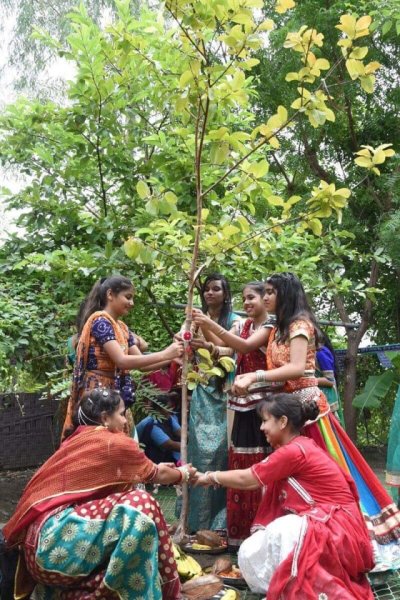
picture source: speakzeasy.wordpress.com
Punsari village
Punsari village of Gujarat is regarded as India’s smartest village. It is rurban village. The word ‘rurban’ (rural+urban) refers to an area which has the economic characteristics and lifestyles of an urban area while retaining its essential rural area features. The village has clean and proper roads, schools and education system, 24-hour electricity supply in every household, school bus and public transport system, proper water supply and RO treated drinking water with minimum charges. The classrooms are air-conditioned. There is a good communication system between the panchayat office and the whole village to keep people well-informed and be available for help anytime they need. A public address system which covers the entire population with the help of about 140 loudspeakers installed all over the village. The village has good healthcare services and employment opportunities. It is a model village of India where there is WIFI, all chowk monitoring by CCTV cameras, solar street lights, with literacy rate of 100%. There is a bio metric system for Gram Panchayat Employees. The transformation of this village is achieved by the efforts of the village sarpanch (headman) Himanshu Patel through effective planning and utilization of central and state government funds. Mr Patel leads an 11-member committee which runs the village affairs including five are female members. Mr Patel says the village council has spent 140m rupees ($2.28m; £1.43m) on development schemes between 2006 and 2012. The state chief minister at that time was Narendra Modi, current Prime minister of India who envisioned to stop migration out of the village. It has been a partial success , as 15-20 families have returned to the village from the cities like Mumbai in recent years.
Mendha Lekha village
To enter this Maharashtrian village, we have to walk through a bamboo entrance, which points to the rich growth of bamboo in this village. The villagers living here are mostly the Gond tribe of Madhya Pradesh. There is a notice board at the entrance which says “At the centre, there is Delhi government. At the state, there is Mumbai government, but here we are our own government.” This shows the pride the 450 people take in the way they have used an unexpected opportunity that came their way to reap a fortune. Mendha Lekha became the first village in India to secure community forest rights (CFR). The village is famous for the bio-diversity of its deciduous forest and the struggle of its tribal community towards self-rule. Nearly 80% of the village area is forested and under the legally-recognised control of the villagers represented by the village general assembly (gram sabha). This whole land can be inherited and used but cannot be not sold. Mendha Lekha has proved that legal security of their rights to control, use, manage and protect their own resources and lives, through processes of self-powering, can make people end poverty, maintain food and water supply, and protect local biodiversity. And all this takes place much more effectively than capitalism and development programs created by central government.
Dharnai village
This village in Bihar has never seen electricity until 2014. The village is now fully solar powered. With the help of Greenpeace, the village installed a solar-powered micro-grid, which provides 24×7 electricity to more than 450 households and 50 commercial establishments. The entire project cost them 3 crores. Earlier, were forced to struggle with kerosene lamps and expensive diesel generators. This changed the lives of the villagers in many socio-economic and personal aspects. It created opportunities for female residents to access the public and personal spaces and move after sunset. Children can now study after sunset. People no longer needed to finish cooking before the sunset.
Mawlynnong
This north-eastern village of India is considered as Asia’s cleanest village. Located in Meghalaya, the village has many beautiful and interesting places which include a strange sight of a big rock balancing on another rock. The main occupation of the villagers is agriculture and also offer community based eco-tourism opportunities. A dustbin made from bamboo plant is found throughout the village. All the waste from the dustbins is collected and stored in a pit, which is later used as manure. The villagers plant trees to ensure that the virgin forest is kept intact and also replenished and are currently working towards plastic ban. The village has a literacy rate of 90%.
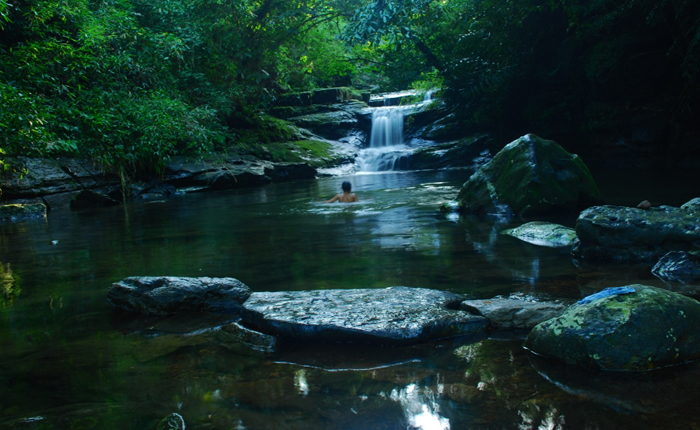
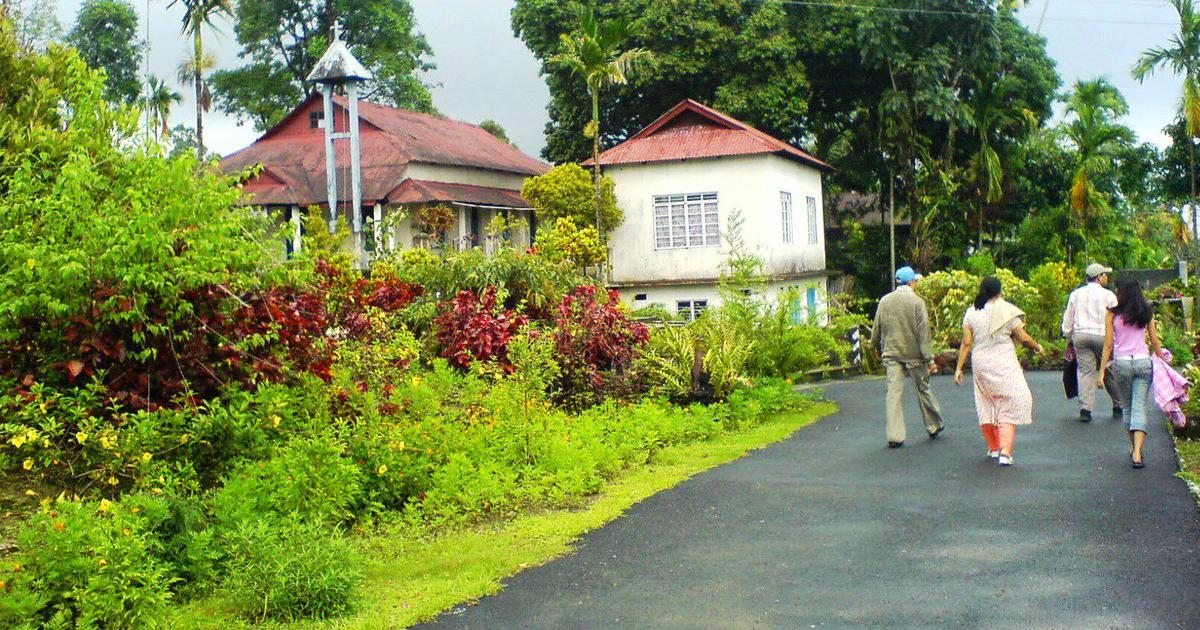
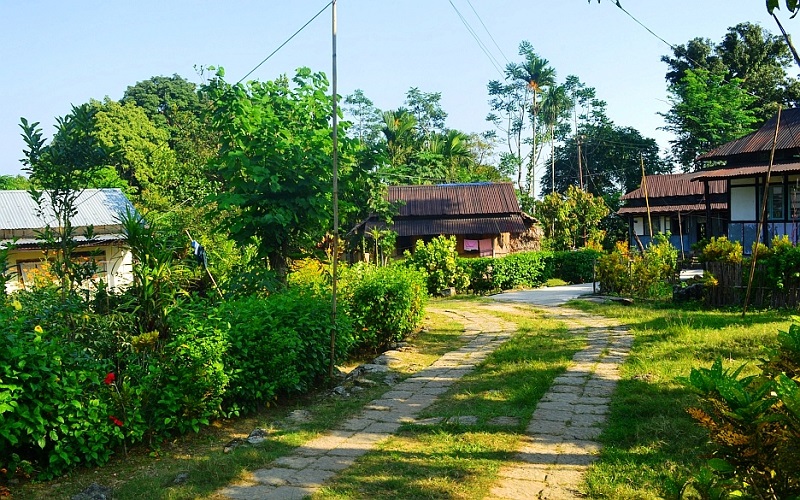
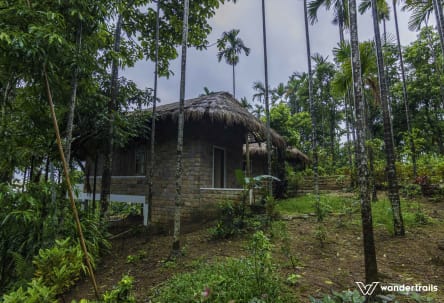
picture source: http://www.northeasttourism.gov.in
Kedia village
This Bihari village is an ecological village which practices organic farming and have prospered since then. Apart from that, the village has proper water conservation systems and cleanliness is maintained throughout the village. No one in the village is suffering from any kind of serious illness. Every house in the village has electricity supply and uses biogas to save electricity and fuel. All the farmers of Kedia village, followed the ‘Living Soils’ approach under ‘Food for life’ campaign’ run by Greenpeace. This approach is targeted to restore the ruined agricultural practices, by reducing chemical dependency and improve soil health through nourishment of the soil with biomass-based organic practices and materials. By applying scientific methods, existing knowledge and experiences the farmers successfully restored the soil of their village by coordination and collaboration with government for machinery. The villagers till date use only groundwater and lake water for irrigation. The unique toilets of the village households have no underground tanks so that the human waste can be used as a natural manure later on. The results have brought prosperity and happiness to the villagers by ending the dependence on commercial chemical-based materials and enjoying healthier yields with a up to 80% reduce in cost of inputs. The village organizes and celebrates a festival of organic farming called ‘Jashn-e-jaivik’. Greenpeace mentioned that they were able to make organic farming easier and successful in this village “With the help of many governmental schemes like ‘Swachh Bharat Mission’ and ‘Jaivik Krishi Yojana’ besides MNGREGA. Inspired by this, other villages around Kedia have also started adopting similar methods.
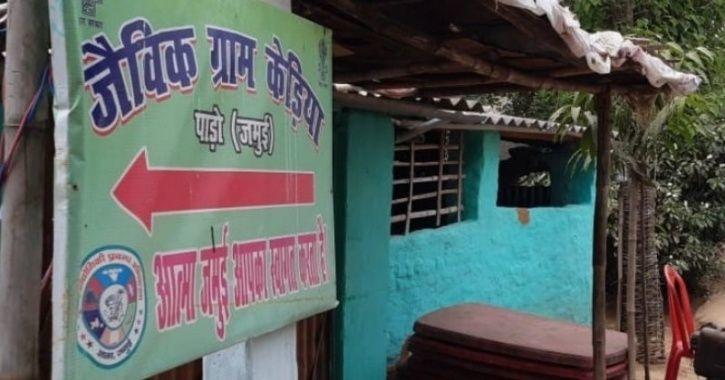
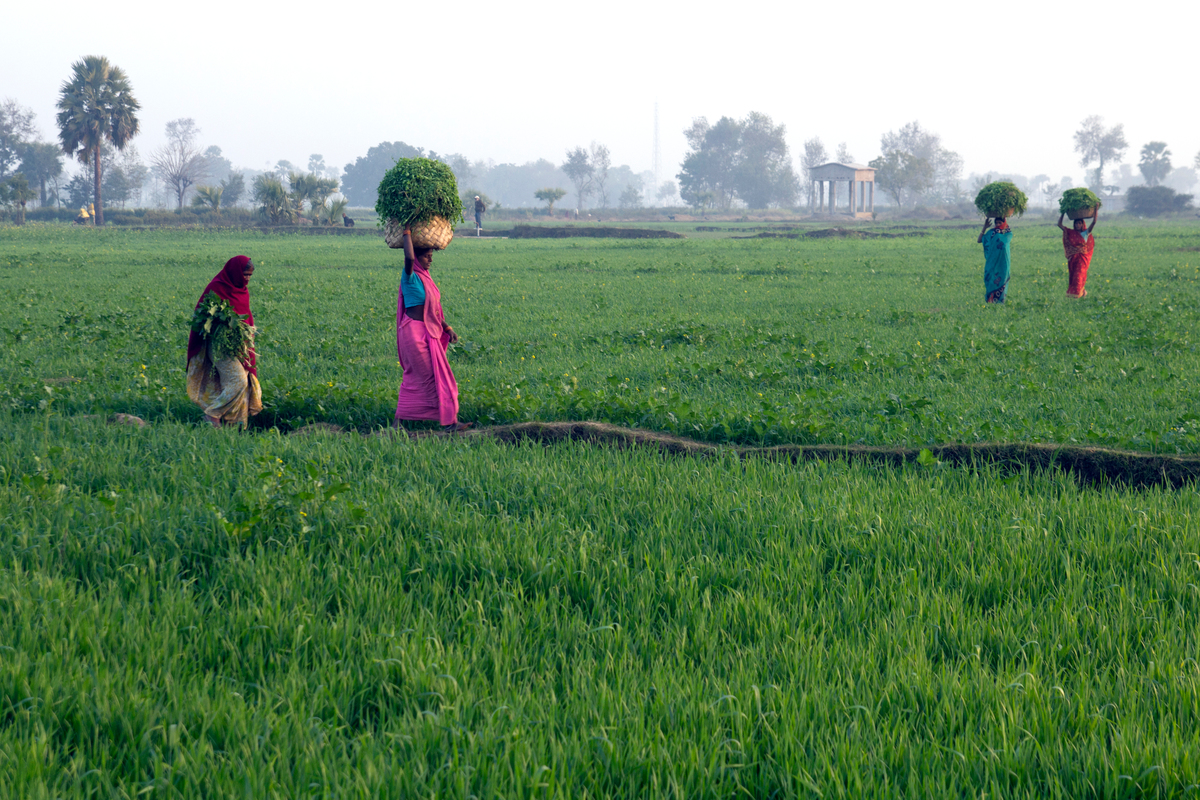
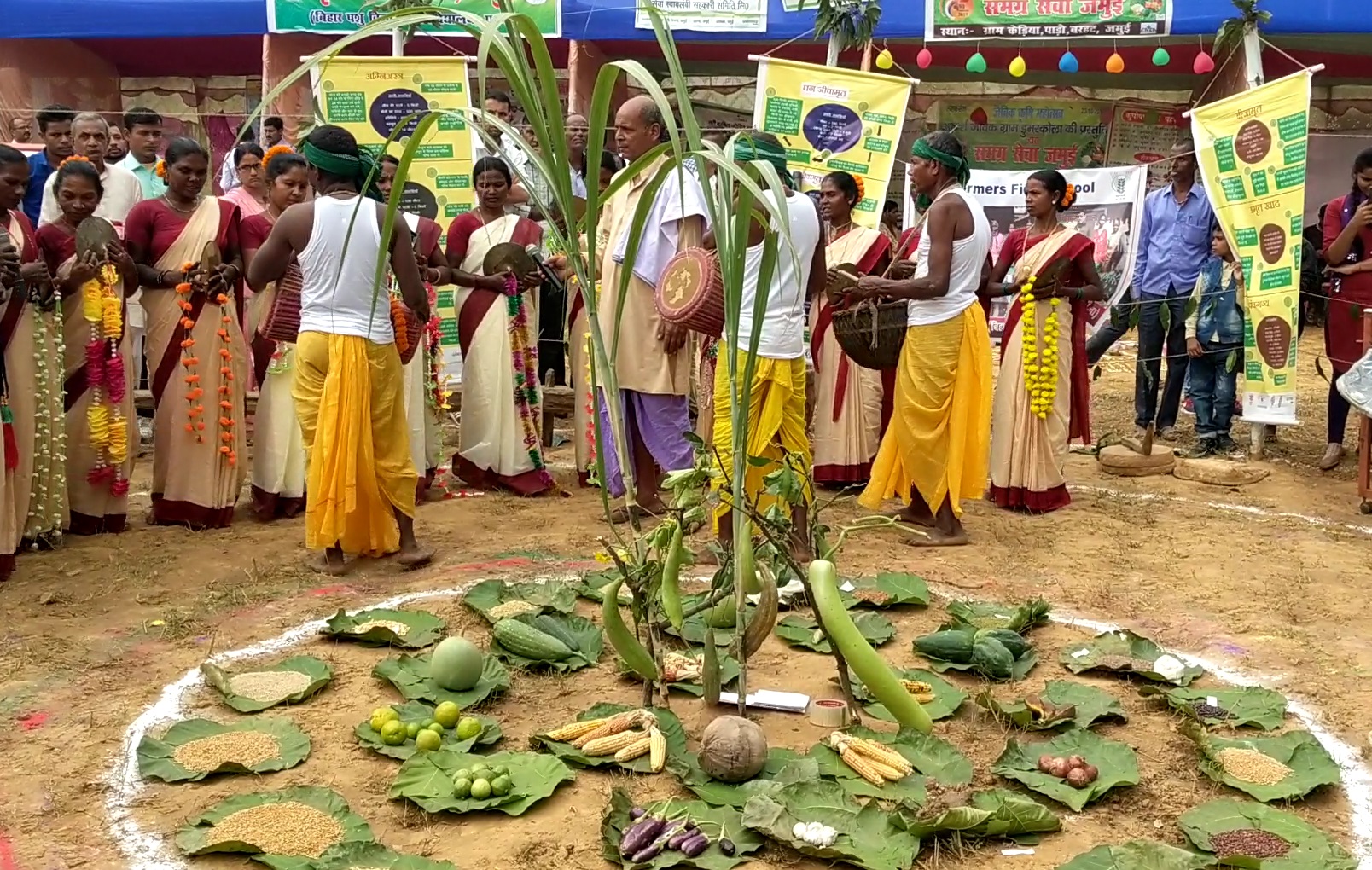
Picture sources: 1. India times, 2. Gaon connection and 3. Greenpeace.
The Author
Regional Arts And Moral Education.
India, undoubtedly is a land of cultures, diversity and uniqueness. As Swami Vivekananda stated, “It teaches not only tolerance, but also acceptance. Various languages, cultures, practices have flourished throughout the nation with all their multiplicity. It has therefore retained it’s originality, in spite of the advent of modernity. In other words, some of these arts have become successful in coping with the dynsmism of the society by undergoing some changes in it along with retaining it’s original essence. Every such community inherits it’s own way of life and culture. However, all such diversities are blended together by epics like Ramayana, Mahabharata and other Puranic stories. It has become the common hold which brings all the diversities yo lead a harmonious life.
We can take a example of South Canara. It is not an exception to this. Yakshagana, Harikatha, Bhutakola, Kambala and so on represent the uniqueness of our culture. While Kambala and Bhutakola glorify our local ethnicity, Yakshagana and Harikatha through the recitation of mythological stories uphold common life and simultaneously educate the younger generation to lead a humble and meaningful life.
Value education is must to the younger generation, both for peaceful existence and national progress. Hence it would be a good idea to educate them in this direction by exposing them to such arts which not only provide entertainment but also develop a deeper insight and introspection, distinction between good and evil, along with the imparting human values among them. This in turn, reduces cruelty, inefficiency, increases love for truth, justice and universal welfare.
I have seen number of Yakshagana episodes in my childhood. I have always associated myself with the divine and just personalities, both in their joys and sorrows acknowingly. I have shed tears for their downfall and pains and have also rejoiced in their joys and victories. Therefore, we have been brought up in such a way that we are not only cleansed to injustice but also made to respond to another’s agony.
In this way, people through their involvement with these kinds of regional arts, get cleansed from all evils and have been imparted virtues without bothering much about the trivialities of life. While an innocent mind is fascinated by its miraculous nature, the matured mind is fashioned by its historicity. However, as they delve into it more and more, they discover something which makes the world more tangible and intangible. By and large, there is necessary for the exposure of children to the regional arts which not only cultivates passion for literature, but also open their thoughts to the harsh realities of life and show the path towards solving problems.
BUDDHA MUDRAS
Mudras are the gestures or poses performed since early times. It helps to stimulate different parts of the body involved with breathing and to affect the flow of prana bindu, boddhicitta, amrita or consciousness in the body.
- Dharmachakra mudra: Dharmachakra in Sanskrit means the ‘Wheel of Dharma’. This mudra symbolizes one of the most important moments in the life of Buddha, the occasion when he preached to his companions the first sermon after his Enlightenment in the Deer Park at Sarnath. It thus denotes the setting into motion of the Wheel of the teaching of the Dharma. In this mudra the thumb and index finger of both hands touch at their tips to form a circle. This circle represents the Wheel of Dharma. The three remaining fingers of the two hands remain extended symbolizing the middle finger represents the ‘hearers’ of the teachings, the ring finger represents the ‘solitary realizers’, the Little finger represents the Mahayana or ‘Great Vehicle’.
2. Varada mudra: This mudra symbolizes charity, compassion and boon-granting. It is the mudra of the accomplishment of the wish to devote oneself to human salvation. It is nearly always made with the left hand, and can be made
with the arm hanging naturally at the side of the body, the palm of the open hand facing forward, and the fingers extended. The five extended fingers in this mudra symbolize the following five perfections: Generosity, Morality, Patience, Effort,and Meditative concentration.
3. Dhyan Mudra: It is also known as Samadhi or Yoga Mudra. It is performed with the help of two hands, which are placed on the lap and place the right hand on the left hand with stretched fingers (thumbs facing upwards and other fingers of both the hand resting on each other.)
4. Abhaya Mudra: It is a gesture of fearlessness or blessing that represents the protection, peace, benevolence, and dispelling of fear. It is performed with the help of right hand by raising to shoulder height with bent arm, and the face of palm will be facing outward with fingers upright whereas the left hand hanging down while standing. This gesture is characteristic of Buddha Shakyamuni and Dhyani Buddha Amoghasiddhi.
5. Bhumisparasa: Earth Touching Mudra,is the most famous mudra. In this mudra the right hand is poised with the fingertips downward and “touching the earth”, with the palm facing inward. The left hand is in the meditation (dhyana) mudra. When the Buddha became enlightened, he touched the earth with this mudra during his meditation. The earth was touched and witnessed the awakening.
MUGHAL ARCHITECTURE PART II
The next ruler to be in power after Babur was his son Humayun ( 1530-1540). He does not lay much effect on architecture as he had to stay in conflicts with Rajputs, afghans, for a long time. He tries to build Dinpanah city in Delhi, started to build but remains incomplete due to fighting with Sher Shah Suri where he got defeated.
Sher Shah Suri comes in power on 1540-1555. Qila-e-Quhunah, a mosque in Delhi s built by him. Rohtlas fort in Pakistan is a popular UNESCO world heritage site constructed during his period. Sher Shah Suri Masjid in Patna is a famous afghan style monument built with no Minars. Sadak-e-Azam is popularly known as the Grand Trunk road is completed by him. A unique feature about the roads are the rest houses called, SARAIS were built between the roads for leisure activities.
Akbar took a keen interest in the development of art and architecture during his reign using red sandstone and marble. He introduced the use of Tudor architecture (four-centered style). Some prominent construction works undertaken by him were: Agra Fort, Fatehpur Sikri, Humayun’s tomb, Hiran Minar, etc.
Agra Fort – built by Akbar, required 2000 stone- cutters, 2000 cement and lime makers, and 8000 laborers. The Agra gate contains Jaimal and Patta paintings to mark their bravery in war. Multiple buildings inside it- Diwani-i-am, Diwani-i-khass, Moti Masjid, Harem.
Fatehpur Sikri- 1) Buland Darwaza: built by Akbar to commemorate hid victory in the Deccan of Gujarat region.
2) Panch Mahal- famous due to the presence of the char bagh painting of Babur, five stories and have Persian influence with the impact of Buddhist architecture.
3) Ibadat khana- Scholars of different religions were used to come and discuss various issues here.
4) Salim Cistils Tomb- made from white marble, known for its jali work.
5) Hiran Minar- made in the memory of an elephant.
During the Jahangir period, architecture took a set back. He focussed more on paintings and other forms of art. He built Akbar’s and his tomb. Some famous creations- Shalimar Bagh in Kashmir, Moti Masjid in Lahore, Tomb of Itmad-ud-daulah. The development of gold coins was also done.
Shah Jahan’s reign witnessed a huge amount of construction activities, especially in Delhi and Agra. Ceremonial halls of the public and the private audience were carefully planned. These halls were called Chihil Sutun. Major construction were- Taj Mahal, Red Fort, Jama Masjid, complete shalimar bagh, city of Shahjahanabad, and Peacock Throne.
The development of architecture declines during Aurangzeb’s period as he shows no interest in monuments and forts. Biwi-ka-Maqbara was the only monument built by his son in the memory of his mother, in Aurangabad, Maharashtra.
Data Protection
Behind the United States India is the second largest populated with English as its primary language and it has one of the fastest growing demographics of personal computer and Internet usage.Data is basically an information that is presented in raw and inorganised pieces which is stored by a computer in the form of text documents, files, software programs, etc.This information is collected for its analysis or reference. With social, economic, legal, corporate and governmental activities the flow of data is expanding in great speed.India is experiencing a major paradigm shift to using a multitude of technologies due to tremendous technological growth And therefore in today’s economy, need for protection of such online data is of paramount importance which must be protected.Data protection is a process of protecting and safeguarding such vital information from either misappropriation, misuse, corruption or loss or from unauthorized access which can be concerned with an individual, enterprise or even a government.Along with such fields mentioned above protection of data must also be applied to personal data.Personal data generally refers to the information or data which relate to a person who can be identified from that information or data whether it is collected by any Government or any private organization or an agency.Such privacy laws, policies and procedures aim to minimise intrusion into one’s privacy caused by the collection, storage and dissemination of personal data. The significance of data protection is increasing with the amount of data created and processed.The general population is still primarily unaware of consequences related to identification theft.Subsequently, Data Protection Strategies are also assuring and ensuring us that the lost data can be recovered and restored, if any misfortune or misappropriation happens with the impugned data.
NEED FOR DATA PROTECTION LAW IN INDIA:
1.As we all know that right to privacy is now our fundamental right so for our protection we should have data protection law.
2.By bringing these laws we all will be aware and can check on all unauthorised leaks, hacking, cyber crimes, and frauds.
A very good example is case of Aadhar card leaks by Gujarat based websites who were found disclosing their adhere numbers as well as in Jharkhand where 1.6 million people’s aadhar card details were leaked.
3.It will help us in our growth and improvement of business process and will secure our digital payments.
4.It will also help us to restrict use of data by data colonising companies such as Facebook, Whatsapp
Example: In case of Cambridge Analytical Scandal ,they allegedly involved collection of personally identifiable information of up to 87 million Facebook users attempt to influence voter opinion.
STEPS TO PROTECT DATA:
Data Collection:
The first step for data protection is to start with data collection itself.There must be strict data collection policy by the top authority.Data should be collected by the agencies authorised by the government.All the information collected should be of lawful purpose only.
Data Security and Storage:
All data captured should be kept upto date and accurate.It should applied appropriate technical and organizational measures.
Data Process:
Processing of data must be fair and lawful.Data shall be processed only when the consent of user is involved or if user or any one of its party is in contract.Data should be processed only for given purposes like if its for judicial proceedings, legitimate use for national interest or vital interest of subject.
Data Access:
The data access must follow NEED TO KNOW basis.There must be proper control that information should not go beyond the Indian territory.If it does then proper measures should be taken to ensure that information is protected outside India.
Indian Laws For Data protection:
In our constitution we does not patently have a law for data protection. However courts have implied this data protection law into existing fundamental rights that is under article 21 however its interpretation was fond insufficient to provide adequate protection for our data.
In the year 2000, our legislatures made efforts to embrace privacy issues relating to computer system under Information Technology Act(IT), 2000 which deals with the issues relating to payment of compensation (Civil) and punishment (Criminal) in case of wrongful disclosure and misuse of personal data and violation of contractual terms in respect of personal data.
UNDER IT ACT 2000
SECTION 43:
This section provides protection against unsanctioned access of the computer system and unsanctioned downloading, extraction and copying of data by imposing heavy penalty upto 1 crore.In which clause “c” imposes penalty unsanctioned usage of computer viruses and clause “g” imposes penalty for for assisting these unsanctioned access.
SECTION 65:
This section is for someone who intentionally destroys or causes another to do as such shall also be charged with a penalty of imprisonment or fine up to 2 lakh rupees.
SECTION 66:
This section is for protection against hacking person hacking our data or giving us knowledge about our data to be hacked in future by giving information residing in a computer resource shall be penalised by imprisonment of three years or fine up to two lakh rupees or both on the hacker.
SECTION 70:
This section provides protection against our protected system like computer system or network however in breach of this section will be liable for punishment of imprisonment which may extend to ten years and shall also be liable to fine.
SECTION 72:
This section provides protection against contravention of confidentiality and privacy of the data which means if any person tries to disclose any facts or proofs which are kept secured shall be punished with imprisonment which may extend to two years or with fine which may extend to one lakh rupees or both.
In the year 2006, the Rajya Sabha our legislature has also introduced a bill known as ‘The Personal Data Protection Bill’ on December 8th 2006 so as to provide protection to the personal information of the person which didn’t showed any further respond.
PERSONAL DATA PROTECTION BILL (PDPB) ,2019:
After so many data protection bills this new bill came up with great dim of light.This bill was introduced by the Minister of Electronics and Information Technology, Mr. Ravi Shankar Prasad, on December 11, 2019.This bill was most importantly made for the protection of personal data of individuals and side by side establishment of a Data Protection authority for the same.Before coming upto this bill in July 2017 the Government of India formed a committee of experts to study the issues related to data protection in the country.All the experts worked on this issue almost for a year and found that most of the population in our country gives personal details to these service providers which give them their free services and these details are usually stored on servers outside India’s boundaries, which worried the Government of India and in July 2018 they submitted a draft of this bill and requested feedback from the public, Ministers, stakeholders, and other industry experts.However on December 11,2019 they submitted a revised draft of the bill in the lower house of the parliament that is in Lok Sabha and also has been sent to joint parliamentary committee (JPC) for further thinking before taken up for passing.
There was widespread hope of passing this bill by 2019 which has now been postponed to become a law or act in 2020.
About the bill:
This bill was the first attempt to domestically govern mechanisms for personal data protection and also to set up Data Protection Authority in our country.
This bill also permits personal data processing without the consent like government providing benefits to the individual, for legal proceedings, and in medical emergencies.
This bill regulates three kinds of data :
- Personal data (personal details like name, number, etc)
- Sensitive Personal data (healthcare details shared with doctors,banking details)
- Critical Personal data (not yet defined)
The most important advantage of this bill is that personal information can’t be collected, processed, and shared without their consent and only necessary data can be collected and used.The Bill also permits customers to move their data from one provider to another and allows users to know the number of companies with whom the data is shared.
Private organisations are also forced to limit their customers details.
According to this bill a very serious and tough penalties will be imposed on any organization sharing customers’ data without their consent will entail a fine of INR 15 crores or 4 percent of its global turnover.Similarly data breach or delays will lead to a fine of INR 5 crores or 2 percent of global turnover.
Personal Data Protection Bill, gave rise after European Union’s General Data Protection Regulation (GDPR) which aims at protection of an individual’s personal data globally and preventing it from misuse and misappropriation.
Example :Recently, Microsoft India launched free online courses to allow the relevant section of public who are concerned with such issues to understand the data compliance and other best practices concerning their privacy and security which help safeguard customer data.
NASSCOM along with Data Security Council of India (DSCI) has been advocating in India.
Conclusion:
Indian legal system still have to provide a proper data security and privacy protection laws to safeguard people in our country as well as to attract international clients. Data security is not only a legal requirement but a factor to compete globally.For our country’s future growth a secured information technology and other strong data protection laws are must.Our country must be aware that not only processed information regarding legal system but also sensitive information of individuals need to be protected.Failure to recognize these issues can negatively impact our country’s reputation.In addition like all other countries such as United States and United Kingdom laws, Canada, Japan, and the European Union are increasingly becoming stricter on data privacy and protection and defining what measurements must be taken to protect data.So to attract International countries aw well we all too should look upon these matters effectively by appointing privacy commissioner, establishing self regulating organisation etc.
V. President M. Venkaiah Naidu greets people on Independence Day
Vice President M. Venkaiah Naidu has greeted the people on the occasion of Independence Day. He conveyed his greetings and good wishes to the people of the country.
Mr Naidu paid tributes and remembered the brave freedom fighters who made countless sacrifices to build an independent nation. Mr Naidu said, the most meaningful tribute which can be paid to the patriots is to build an India they aspired for.
He urged every citizen to renew commitment towards building a united, strong, prosperous, inclusive and peaceful nation where a billion plus dream can find expression and fulfillment. The Vice President wished for amity, harmony and prosperity in the country on the eve of the 74th Independence Day.
If enemy country attacks India, it will be given a befitting reply: Defence Minister Rajnath Singh
Defence Minister Rajnath Singh has said that the government is doing everything to keep the morale of armed forces high and meet the operational requirement. He said, the country’s forces are at the forefront in the defence of the nation.
Mr Singh said, history is a witness to the fact that India has never attacked anywhere and anytime to capture the land of another country. He said, India believes in winning hearts and not land. He said, but it does not mean that we will allow our self-respect to come down and whatever we do in the realm of national security, we always do it for self-defence and not for attacking others. The Defence Minister said, if any enemy country attacks on India, then it will be given a befitting reply.
Mr Singh said, Indian Air Force was lacking modern combat aircraft for a long time and as soon as the Prime Minister Narendra Modi led government took over, it started procurement of 36 Rafale fighter aircraft from France through agreement. Mr Singh said, five Rafale aircraft have already arrived at Ambala air base two weeks ago and the remaining aircrafts will also arrive soon.
The Defence Minister said, DRDO in collaboration with the Home Ministry, Health Ministry of Health and Family Welfare, Armed Forces and other industry groups built the Sardar Vallabhbhai Patel Covid Hospital in New Delhi in a record time of 12 days.
He said, Prime Minister Narendra Modi has always supported the idea of permanent commission for women and also announced this during his Independence Day speech in 2018. He said, Defence Ministry has issued formal government approval letter on 23rd July to provide permanent commission to women officers in the Indian Army and thus paving the way for empowering women officers to discharge big roles in the organization.
The Defence Minister also paid tributes to Indian Soldiers who sacrificed their lives in Galwan valley in Ladakh and assured their family members that the whole country is standing with them. On the occasion of Independence Day, Mr Singh also extended his greetings to the armed forces personnel.
926 Police personnel awarded Medals for their conspicuous gallant action on Independence Day
A total of 926 Police personnel have been awarded Medals on the occasion of Independence Day. Police Medals for Gallantry have been awarded to 215 police personnel for their conspicuous gallant action.
President’s Police Medals for Distinguished Service has been awarded to 80 police personnel and Police Medal for Meritorious Service to 631 police personnel.
Among the majority of the 215 Gallantry Awards, 123 personnel are being awarded for their gallant action in Jammu and Kashmir, 29 personnel for their gallant action in Left Wing extremism affected areas and 8 personnel for their gallant action in North-East Region.
Among the personnel receiving Gallantry Awards, 55 are from CRPF, 81 are from J & K police, 23 are from Uttar Pradesh, 16 from Delhi Police, 14 from Maharashtra and 12 are from Jharkhand and the remaining from the other States and UTs and Central Armed Police Forces.
President approves 84 gallantry awards for defence personnel
President Ram Nath Kovind has approved 84 gallantry awards for defence personnel, including nine Shaurya Chakra. The Kirti Chakra has been posthumously awarded to Abdul Rashid Kalas, Head Constable, Jammu and Kashmir Police.
Those from the Army who have been awarded the Shaurya Chakra for counter-terrorist operations in Jammu and Kashmir are Lt.Col. Krishan Singh Rawat from the elite Special Forces, Major Anil Urs and Havildar Alok Kumar Dubey. Wing Commander Vishak Nair from the Indian Air Force was also awarded the Shaurya Chakra.
The Shaurya Chakra is awarded for ‘gallantry otherwise than in the face of the enemy’. It is the third highest gallantry award in peacetime.
The President also approved Sena Medal (gallantry) to 60 Army personnel, Nao Sena Medal (gallantry) to four from the Navy and five Vayu Sena Medal (gallantry) for the Air Force. The Bar to Sena Medal has been approved for five Army personnel.
The President has also approved 19 Mention-in-Despatches to the Army personnel for their significant contributions in different military operations, which include eight posthumous for ‘Operation Meghdoot’ and ‘Operation Rakshak’.
Operation ‘Meghdoot’ was launched in 1984 to secure control of the heights predominating the Siachen Glacier.
‘Operation Rakshak’ is also an ongoing counter-insurgency operation in Jammu and Kashmir.
Prime Minsiter says India is dealing effectively with both terrorism and expansionism
Prime Minister said India is dealing effectively with both terrorism and expansionism. He said those who challenged India’s sovereignty, be it at LOC or LAC, have been given a befitting reply in their own language. He asserted that India became a challenge to forces of expansionism with its freedom struggle. The Prime Minister said that respect for India’s sovereignty is supreme and the world has seen in Ladakh what country’s brave soldiers can do to uphold this resolution.
The Prime Minister said one-fourth of the world’s population lives in South Asia and several possibilities can be created with cooperation and participation. He said all leaders of the countries of the region have an important responsibility towards the development and progress of this population.
He said ASEAN countries, which are also India’s maritime neighbors, also hold very special importance. He said that as much as India’s efforts are for peace and harmony, India is committed to its security and strengthening the army. He said India is working towards self-sufficiency in defence production.
 Eduindex
You must be logged in to post a comment.