UNLOCK 4

India on Saturday issued fresh guidelines of lock down in ‘Unlock 4’, allowing opening up of more activities in areas outside the containment zones, marking gradual opening of the country and economy amid coronavirus disease (Covid-19) outbreak. Many features of this unlock down had changed or improved than previous ones. New guidelines had make many shut down industry to give a new start. According to MHA the new guidelines are based on feedback received from states and UTs and extensive consultations held with related central ministries and departments.

Here is the list of institutions which are free to have a start-

  • Metro trains will be allowed to resume services in a graded manner from September 7.
  • Open air theaters will be allowed to open from September 21.
  • Social, academic, sports, entertainment, political, cultural and religious functions and gatherings will be allowed with a maximum of 100 people from September 21. Face masks and social distancing are however mandatory in all such gatherings.
  • No restrictions on inter-state and intra-state movement of people and goods. No separate permission or e-permits will be required.
  • Schools and educational institutions will remain shut till September 30 and online classes will continue. However students of classes 9 to 12 may be permitted to visit their schools, outside containment zones only, to take teachers’ guidance. This will require a written consent of their parents.
  • 50 per cent of teaching and non-teaching staff can be called to schools at a time for online teaching.
  • Skill or entrepreneurship training will be allowed in institutes registered with the government.
  • Research scholars and post-graduate students of technical and professional programmers who need laboratory practicals will be permitted by the government.
  • Movie theaters, swimming pools, entertainment parks will remain shut.
  • International air travel of passengers will remain banned, except for those allowed by the centre.
  • Only essential services will be allowed in containment zones. Lock down will continue in the containment zones till September 30.

This is a huge step taken by centre to create an environment of safety and spirit to fight this virus. The wait for vaccine is still not known but one thing which we all can do is to follow these guidelines to keep our self and others safe.

Corona Virus And Civil Societies

The impact and spread of COVID-19 is unimaginable and one even can’t describe it in words. This public health emergency will likely result in a global economic crisis – which will hit the poorest and marginalized communities the most .These twin crises expose the widening inequality around the world and threaten to exacerbate the gap between rich and poor, sending us back decades in our progress we have achieved yet.

To be precise, in short term, the widespread closure of schools – now affecting minimum 90% of world’s children population – cuts children off from the vital services and protection that schools provide. It’s another impact on children from the poorest families will be most likely to have their health, nutrition and wellbeing impacted, their learning stopped, and their safety at risk because their school has closed. For many, especially first-generation learners, homeschooling may not be an option. For poor families, especially girls in them, school closures mean that they may never step foot in a classroom again – increased risks of domestic violence, sexual abuse, child marriage.

In the long term, Oxfam {international confederation of 20 charitable organization working on alleviation of global poverty} estimates that half a billion more people may be pushed into poverty as economies lose jobs, small businesses shut down and safety nets are lost in the wake of the pandemic. The lack of food, increased homelessness, and heightened insecurity will permanently let bright futures of millions of children suffer around the world. And the economic shock is likely to reduce education spending further, putting pressure on households to meet the growing financing gaps. Compounding these hardships, growing public fear, misinformation, spreading rumors may further lead to fuel discrimination, stigma, violence, injustice among society.

But, an excellent saying, reads,

“Helping one person might not change the whole world but it could change the world for that person”

The pressure to mitigate these impacts relies heavily on the ability of government to maintain its role and give voice to communities most likely to be left behind in the public emergency response. Yet the crisis will also hamper civil society’s ability to respond. Closing civic space, constraints in movement in many countries make the environment for advocacy and accountability an extremely difficult one to work in. The pandemic may result in a civil society collapse in many countries.

While this may be one of the most difficult environments for civil society, it is also a critical moment where its work has never been more important. There is an immediate role for civil society in monitoring the impact of school closures on the poorest, especially girls, and to advocate for effective responses to the pandemic.

Governments looking forward for new plans and need to know how decisions made are impacting citizens. Civil society can facilitate engagement with affected communities, a critical part of ensuring contextually relevant responses.

As COVID 19 puts even more pressure on the universality and quality of education systems – and on the capacity of governments to track and respond to those impacts – civil society can play an important role in ensuring that crisis response is targeted to the most vulnerable and sustained through the recovery phase.

To play this role, however, it is vital that civil society be supported to advocate for measures to protect and prioritize the most vulnerable – including using their influence to inform government priorities in the emergency and recovery phases of the pandemic response. Budget monitoring, grassroots social mobilization, and tracking the quality and reach of service delivery will all be important elements of civic engagement to rebuild education during and after the crisis

The future of country its economy, literacy rate, job security, unemployment, poverty all are dependent on how efficiently these society works. And, moreover depends on account of citizens how we control ourselves, how we behave ourselves, how we make our contribution worthy for future of ourselves? We can make this win happen “TOGETHER BY STAYING APART”

                    “WE CAN, WE SHALL OVERCOME”   

ANDAMAN &NICOBAR ADMINISTRATION ALERT TO THE SAFETY OF PVTGs AGAINST COVID PANDEMIC

The Andaman & Nicobar Administration has informed that it is alert to the safety of its tribes especially Particularly Vulnerable Tribal Groups (PVTGs). In a report submitted to Ministry of Tribal Affairs, the Andaman and Nicobar Islands Administration has informed that a number of steps have been taken proactively for the safety and protection of the tribes from mid March, 2020 onwards even before any case of COVID-19 was reported in the islands. There are six notified scheduled tribes in A&N islands. Except Nicobarese, rest of the 05 tribe viz., Great Andamanese, Jarawa, Sentinelese Onge and Shompen are recognized as PVTGs.

The Union Minister for Tribal Affairs Shri Arjun Munda in a Tweet has said that the Andaman & Nicobar Administration is alert to safety of its tribe, especially the Vulnerable Tribal Groups (PVTGs) through Integrated Tribal Development Authority and the Ministry of Tribal Affairs is in constant touch with the officials of A&N Administration in this regard.

MHA issues new Guidelines

The Ministry of Home Affairs (MHA) has issued new guidelines today for opening up of more activities in areas outside the Containment Zones. In Unlock 4, which will come into effect from September 1, 2020, the process of phased re-opening of activities has been extended further. The new guidelines, issued today, are based on feedback received from States and UTs, and extensive consultations held with related Central Ministries and Departments. 

Salient features of the new guidelines

  • Metro rail will be allowed to operate with effect from 7th September 2020 in a graded manner, by the Ministry of Housing and Urban Affairs (MOHUA)/ Ministry of Railways (MOR), in consultation with MHA. In this regard, Standard Operating Procedure (SOP) will be issued by MOHUA.
  • Social/ academic/ sports/ entertainment/ cultural/ religious/ political functions and other congregations will be permitted with a ceiling of 100 persons, with effect from 21st September 2020. However, such limited gatherings can be held with mandatory wearing of face masks, social distancing, provision for thermal scanning and hand wash or sanitizer.
  • Open air theatres will be permitted to open with effect from 21st September 2020.
  • After extensive consultation with States and UTs, it has been decided that Schools, colleges, educational and coaching institutions will continue to remain closed for students and regular class activity up to 30th September 2020. Online/distance learning shall continue to be permitted and shall be encouraged. However, following will be permitted, in areas outside the Containment Zones only, with effect from 21st September 2020 for which, SOP will be issued by the Ministry of Health & Family Welfare (MoHFW):
    1. States/ UTs may permit upto 50% of teaching and non-teaching staff to be called to the schools at a time for online teaching/ tele- counselling and related work.
    2. Students of classes 9 to 12 may be permitted to visit their schools, in areas outside the Containment Zones only, on voluntary basis, for taking guidance from their teachers. This will be subject to written consent of their parents/ guardians.
    3. Skill or Entrepreneurship training will be permitted in National Skill Training Institutes, Industrial Training Institutes (ITIs), Short term training centres registered with National Skill Development Corporation or State Skill Development Missions or other Ministries of Government of India or State Governments.

National Institute for Entrepreneurship and Small Business Development (NIESBUD), Indian Institute of Entrepreneurship (IIE) and their training providers will also be permitted.

  • Higher Education Institutions only for research scholars (Ph.D.) and post-graduate students of technical and professional programmes requiring laboratory/ experimental works. These will be permitted by the Department of Higher Education (DHE) in consultation with MHA, based on the assessment of the situation, and keeping in view incidence of COVID-19 in the States/ UTs.
  • All activities, except the following, shall be permitted outside containment zones: 
  1. Cinema halls, swimming pools, entertainment parks, theatres (excluding open air theatre) and similar places.
  2. International air travel of passengers, except as permitted by MHA.
  • Lockdown shall continue to be implemented strictly in the Containment Zones till 30th September, 2020.
  • Containment Zones shall be demarcated by the District authorities at micro level after taking into consideration the guidelines of MoHFW with the objective of effectively breaking the chain of transmission. Strict containment measures will be enforced in these containment zones and only essential activities will be allowed.
  • Within the containment zones, strict perimeter control shall be maintained and only essential activities allowed. 
  • These Containment Zones will be notified on the websites of the respective District Collectors and by the States/ UTs and information will also be shared with MOHFW.

States not to impose any local lockdown outside Containment Zones

State/ UT Governments shall not impose any local lockdown (State/ District/ sub-division/City/ village level), outside the containment zones, without prior consultation with the Central Government.

No restriction on Inter-State and intra-State movement

  • There shall be no restriction on inter-State and intra-State movement of persons and goods. No separate permission/ approval/ e-permit will be required for such movements.

National Directives for COVID-19 management

  • National Directives for COVID-19 management shall continue to be followed throughout the country, with a view to ensure social distancing.  Shops will need to maintain adequate physical distancing among customers. MHA will monitor the effective implementation of National Directives.

Protection for vulnerable persons

  • Vulnerable persons, i.e., persons above 65 years of age, persons with co-morbidities, pregnant women, and children below the age of 10 years, are advised to stay at home, except for meeting essential requirements and for health purposes.

Use of Aarogya Setu

  • The use of Aarogya Setu mobile application will continue to be encouraged.

PM inaugurates College and Administration Buildings of Rani Lakshmi Bai Central Agricultural University, Jhansi through video conferencing

The Prime Minister, Shri Narendra Modi, today inaugurated the College and Administration Buildings of Rani Lakshmi Bai Central Agricultural University, Jhansi, UP through video conferencing. He interacted with the students of the University.

PM congratulated everyone and expressed hope that students after graduating from this university will actively contribute in empowering the country’s agriculture sector. He hoped that new facilities provided due to the new building would encourage and motivate students to work harder.

Invoking Rani Lakshmi Bai’s Quote that “I will not give my Jhansi”, the Prime Minister urged the people of Jhansi and Bundelkhand to make Atmanirbhar Bharat Abhiyan a success.

The Prime Minister noted that Agriculture has a major role to contribute in Atmanirbhar Bharat Abhiyan. He said self reliance in Agriculture targets at making Farmers both- producer as well as entrepreneur. PM said in line with this spirit, several historic agricultural reforms were taken. Just like other industries, now Farmers can also sell their produce anywhere in the country, wherever they fetch better prices. He said a special dedicated fund of Rs 1 Lakh crore has been set up for providing better facilities and promoting industries in a cluster based approach.

Saying that steady efforts are continuing to connect farming with modern technology, the Prime Minister noted that Research Institutions and Agricultural Universities have a vital role to play. He said now there are three Central Agricultural Universities in the country, compared to just one Central University 6 years ago. Besides this, three more National Institutions viz. IARI Jharkhand, IARI Assam and Mahatma Gandhi Institute for Integrated Farming in Motihari, Bihar are also being established. He remarked that these institutes will not only give new opportunities to the students, but will also help in increasing their capacity, in providing technology benefits to the local farmers.

Speaking about use of modern technology in meeting agriculture related challenges, the Prime Minister gave an example of recent locust attack. He said the Government worked on war footing to control the spread of the attacks and to reduce the damage. He mentioned that dozens of control rooms were set up in several cities, arrangements were made to alert farmers in advance, drones to spray, dozens of modern spray machines used to kill locusts were procured and provided to farmers.

The PM said that in the last six years, the Government has endeavoured to establish a link between research and farming, and to provide scientific advice to the farmers, at the ground levels in the villages. He sought the cooperation of the universities in developing the ecosystem to streamline the flow of knowledge and expertise from campus to agriculture fields.

Stressing on the need to take knowledge related to agriculture and its practical application to school level, the Prime Minister said efforts are to introduce the Agriculture subject at Middle school level in villages. It will have two benefits- One, it will develop agriculture related understanding in the students and secondly, it will enable the students to give information about agriculture, its modern farming techniques and marketing, to their family members. This will promote Agro-entrepreneurship in the country, he added.

For Full Text of PM’s address at inauguration of the College and Administration Buildings of Rani Lakshmi Bai Central Agricultural University in Jhansi via video conferencing

Click https://www.pib.gov.in/PressReleasePage.aspx?PRID=1649484#.X0pe3jAecEg.gmail

Earlier in his welcome address, Union Minister of Agriculture & Farmers’ Welfare Shri Narendra Singh Tomar said that along with the the mantra of Sabka Saath Sabka Vikas, the efforts to correct the imbalances in the country under the leadership of Prime Minister Shri Narendra Modi since 2014 have now started showing results. Work on the Rani Laxmibai Central Agricultural University started in the year 2014 and now it has three affiliated colleges and students from 22 states are studying here. When it becomes fully operational, the whole country will benefit. Shri Tomar said that there is unlimited potential for organic farming in Bundelkhand area for which Central Government and UP Government are working together.

Speaking about the priority being given to expansion of agricultural education, Shri Tomar said that agricultural colleges are being opened all over the country including in the North East. Indian Agricultural Research Institutes have been opened in Jharkhand and Assam and have started functioning. Central Agricultural University, Imphal has been expanded by affiliating 6 new colleges with it. Giving importance to agriculture in bringing about development and security of livelihood in the North East, farming activities there are being strengthened by agricultural education and research. Scholarships for Ph.D. students have been increased to Rs. 31000 per month.

The Union Agriculture Minister said that to achieve the target of doubling farmers’ incomes by 2022, the Central Government is working in close coordination with the states.  Despite the lockdown due to Covid pandemic, there has been a bumper harvest, and kharif sowing has been done in 13 lakh ha more area as compared to last year. Under PM-KISAN scheme, about Rs 92000 crore have been deposited in the bank accounts of more than 10 crore farmers. For bringing about reforms in agriculture, several measures such as formation of 10000 FPOs, issuing Kisan Credit Cards to about 2.5 crore farmers, provision of Rs 1 lakh crore Agri Infrastructure Fund and bringing in new ordinances, have been taken under the leadership of the Hon’ble Prime Minister.

Chief Minister of Uttar Pradesh Shri Yogi Adityanath expressed gratitude for establishment of Central Agricultural University in the backward Bundelkhand region. He appreciated the efforts being taken under the Hon’ble Prime Minister for doubling farmers’ incomes, connecting farmers to technology, providing them basic infrastructure and good quality seeds.

Union Ministers of State for Agriculture Shri Parshottam Rupala and Shri Kailash Choudhary, Jhansi MP Shri Anurag Sharma, DG ICAR Dr Trilochan Mohapatra and other eminent persons and scientists were present during the function.


India withdraws from multilateral military exercise in Russia next month

India has announced that it is withdrawing from multilateral Military Exercise Kavkaz 2020 to be held in Russia next month. Defence Ministry said, Russia and India are close and privileged strategic partners and at Russia’s invitation India has been participating in many international events.
 
However, in view of Pandemic and consequent difficulties in exercise, including arrangements of logistics, India has decided not to send a contingent this year to Kavkaz-2020. The Ministry said, the decision has been conveyed to the Russian side.
 
India had earlier planned to send around 150 Indian Army troops, 45 Indian Air Force personnel and a number of Navy officers to the multilateral military exercise to be held in the Astrakhan region in southern Russia from 15th to 26th September.

Odisha government lifts lockdown in seven cities where JEE and NEET exams to be held

Odisha government has said there will be no lockdown in the entire state for 12 days till September 14 in two phases to ensure smooth conduct of JEE and NEET exams. State government said that there will be no lockdown or shutdown in force from August 30 to September 7 in the first phase and from September 12 to 14 in the next phase.
 
The move is aimed at facilitating free movement of candidates and their guardians, examination personnel andstaff/re presentatives of the service providers for the smooth conduct of the exams. However, COVID-19 protocols will have to be strictly followed, it said.
 
The JEE is scheduled to be held between September 1 and 6, and the NEET on September 13.
 
Chief Secretary AK Tripathy has announced that the state government will provide free transport and accommodation to students appearing in the examinations, but they will have to register beforehand to avail this facility. He said 37,000 candidates are likely to sit for the examinations at 26 centres spread across seven towns, including Bhubaneswar and Cuttack.

Health Minister says India has one of the lowest COVID fatality rates in world

Health Minister Dr Harsh Vardhan has said that India has one of the lowest global COVID fatality rates. Chairing the 20th Meeting of the high-level Group of Ministers (GoM) on COVID-19 in New Delhi, he said, the country’s case fatality rate is at its lowest 1.81 per cent.

Dr Harsh Vardhan said, the recovery rate of COVID cases in the country has reached to 76.47 per cent. He said, only 0.29 per cent of cases are on ventilators, 1.93 per cent on ICU and only 2.88 per cent of cases are on oxygen.

The Minister informed the GoM that more than 338 lakhs of N-95 masks, nearly 135 lakh of PPEs and about 27 thousand ventilators have been provided by the centre to the States and Union Territories.

Health Minister instructed officials to develop Standard Operating Procedures for the Members of Parliament and the Legislative Assembly Sessions comprising COVID protocols and preventive measures. The GOM also expressed concern about the forthcoming festival seasons and advised everyone to adopt safe and COVID appropriate behaviour.

The Chairperson of the Empowered Group-I on Medical Emergency Management Plan Dr. Vinod K Paul apprised the GoM of the process of COVID vaccine development in India and around the world. He stated that 29 candidates, including two Indian ones, are in Clinical Trials.

Out of which six are in Phase-3. In India, Bharat Biotech’s vaccine candidate based on inactivated virus procured by ICMR is in Phase-2 trial along with Zydus Cadila’s candidate which is based on viral DNA. The Oxford vaccine candidate developed by Serum Institute of India is already in Phase-3 trial in Maharashtra and some other states. Dr. Paul also informed the GoM of the progress made by the National Expert Group on Vaccine Administration for COVID-19.

During the meeting, External Affairs Minister Dr S. Jaishankar, Civil Aviation Minister Hardeep Singh Puri, Shipping Minister Mansukh Lal Mandaviya, Minister of State for Health Ashwini Kumar Choubey and Minister of State for Home Nityanand Rai were also present on the meeting.

Govt releases unlock 4 guidelines; Metro services to resume from September 7; School,Colleges to remain closed till Sep 30

The Home Ministry has issued new guidelines for opening up of more activities in areas outside the Containment Zones. In Unlock-4, which will come into effect from 1st of September, the process of phased re-opening of activities has been extended further.
 
Metro rail will be allowed to operate with effect from 7th September in a graded manner, by the Ministry of Housing and Urban Affairs, Ministry of Railways in consultation with Home Ministry. Standard Operating Procedure (SOP) in this regard will be issued by Ministry of Housing and Urban Affairs.
 
Social, academic, sports, entertainment, cultural, religious, political functions and other congregations will be permitted with a ceiling of 100 persons, from 21st of September. However, such limited gatherings can be held with mandatory wearing of face masks, social distancing, provision for thermal scanning and hand wash or sanitizer.  Open air theatres will be permitted to open with effect from 21st of September.
 
The Home Ministry said, after extensive consultation with States and Union Territories, it has been decided that schools, colleges, educational and coaching institutions will continue to remain closed for students and regular class activity up to 30th September. Online or distance learning shall continue to be permitted and shall be encouraged.
 
Lockdown will continue to be implemented strictly in the Containment Zones till 30th of September. All activities shall be permitted outside Containment Zones, except cinema halls, swimming pools, entertainment parks, theatres excluding open air theatre and similar places and international air travel of passengers, except as permitted by Home Ministry.
 
There will be no restriction on inter-state and intra-state movement of persons and goods. No separate permission or approval or e-permit will be required for such movements.
 
Home Ministry advised states not to impose any local lockdown outside Containment Zones.
 
National Directives for COVID-19 management shall continue to be followed throughout the country, with a view to ensure social distancing. Shops will need to maintain adequate physical distancing among customers. Home Ministry will monitor the effective implementation of National Directives.
 
Vulnerable persons, persons above 65 years of age, persons with co-morbidities, pregnant women and children below the age of 10 years, are advised to stay at home, except for meeting essential requirements and for health purposes.
 
The Ministry said that states and Union Territory governments may permit up to 50 per cent of teaching and non-teaching staff to be called to the schools at a time for online teaching or tele-counselling and related work.
 
Students of classes 9 to 12 may be permitted to visit their schools in areas outside the containment zones only on a voluntary basis for taking guidance from their teachers.
 
This will be subject to the written consent of their parents or guardians, according to the guidelines.
 
The Home Ministry said that states and Union Territory governments may permit up to 50 per cent of teaching and non-teaching staff to be called to the schools at a time for online teaching or tele-counselling and related work.
 
Students of classes 9 to 12 may be permitted to visit their schools in areas outside the containment zones only on a voluntary basis for taking guidance from their teachers.
 
This will be subject to the written consent of their parents or guardians.
 
Home Ministry said, the new guidelines, are based on feedback received from States and UTs, and extensive consultations held with related Central Ministries and Departments.

PM Narendra Modi to share his thoughts in ‘Mann Ki Baat’ programme on All India Radio at 11 AM today

Prime Minister Narendra Modi will share his thoughts with the people in the country and abroad in the ‘Mann Ki Baat’ programme on All India Radio at 11 AM today. It will be the 68th episode of the monthly radio programme.
 
It will be broadcast on the entire network of AIR and Doordarshan and also on AIR News website https://eduindexnews.com/ and newsonair Mobile App. It will also be streamed live on the YouTube channels of AIR, DD News, PMO and Information and Broadcasting Ministry.
 
AIR will broadcast the programme in regional languages immediately after the Hindi broadcast. The regional language versions will be repeated at eight in the evening.

About machine learning

Nowadays AI and machine learning are the words you can find almost everywhere people are talking about it choosing it as a specialization.If you are one of those people who don’t know about then this blog will help you to now about it.

Humans use machines to make there work more efficient and faster but machines needs human intervention for working they cannot do all the work by themselves.So what if we start teaching machines to learn by themselves with the help of experience this is what machine learning do.

Its kinda interesting right! but how does it work and whats the connection between ml and AI ?. So let’s understand it Artificial Intelligence is a whole lot in itself, Humanoid robots are the final substance AI mostly tends to achieve and ML is the subset of AI. Ml is a total subject in itself so think how machine learns ? simple the same way we humans do with experience but in machine/computer this experience comes from data.The more data you give to your model the more it tends to learn.It starts working without human intervention.

I am sure you must be thinking that how come it will learn where to provide this data?.So there are algorithms on which your model will work.The type of data we select and make these algorithm work on the data to get the desired output. You must be thinking it is quite tough yes it is but it just require right amount of practice and effort to learn about this subject. There are lot of example of machine learning such as recommendation system when you search anything on amazon ,flip cart according to your searches it start recommending you several things, you start seeing ads on different platform this happens because of machine learning,it collects each and every data process it and start recommending you.Another example is weather forecasting the machine process the latest data and on the basis of some attributes it predict the possibilities.

I have tried to explain what actually is machine learning in the most simplest manner avoiding any technical terms i hope you like it.

How to increase your Vocab

Vocabulary is the most demand knowledge/skill that one should have but its not easy there are 1000 of words in English language.It is difficult to remember the meaning of words and when it comes to exams like cat,AM cat,co cubes ,jobs/placement everybody wants you to have good vocabulary,but the question is how to get that rich vocabulary.There are few things you can do in order to achieve that.

Focus on the root word there are a lot of word which can help you to figure out the meaning of another words.For eg- arium/ary refers to a place so words like aquarium -we all know the meaning of aqua that is water and arium means place so we can guess that it means a place where fish lives, library- place where books are kept. Another example could be Eu- good and the word euphoria means sense of goodness.so sometimes focus on the root words there meaning is somewhat similar.

Focus on suffixes and prefix there are a lot of prefixes and suffixes whose meaning you know and when they are added in particular words there meaning changes slightly not completely but slightly.For eg mis- bad/wrong here have a look mistake- error, misfit-not a suitable person

Try to read books and note down the word if you don’t know the meaning of the word, and if you don’t have time for reading books try randomly selecting the words from google revise them daily and slowly try to use them while writing and speaking hence improving your vocabulary.

Learning and revising is the key if you find a new word but don’t know it’s meaning try to find out the meaning of that particular word and try remembering it and using it in your very own way.English is an interesting language you just need to understand it, work on the mention above points you will find yourself improving.

Gifts ideas for men

Everybody loves gifts, and it becomes tricky when it comes on selecting one. Men loves gift and if you are planning to give something to your loved ones then this blog can be a great help to you.First thing to keep in mind that men mostly loves gift that can be useful to them.Try picking something that they can use on daily basis.

1 Perfumes – perfumes can be the best choice to give to your loved one, they will definitely love it. Whenever they will use perfume it will remind them about you.

2 wallet- This is most important and useful thing a men can have,all their important stuff belongs to their wallet.If you see your men is using same wallet from long time try gifting a new one.

3 Watch- This gift will make them absolutely happy,men loves watches i am pretty sure every men had a dream of owning a watch collection just like Dr Strange, try to gift them watch of their favorite brand if they do not prefer any particular brand then choose what will be the best for them according to their taste.

4 Sneakers- well i have seen many of boys/men who likes sneakers.Its like they just want more and more of the new and trendy collection gift them sneakers they will love it.

5 Beard Grooming kit- We all know how men are obsessed with their beard try gifting them a full beard grooming kit.There are lot of them available online at affordable prizes.

These are some ideas that i prefer,well the most important thing for men is your effort if you don’t want to gift them anything then try spending some time together plan a date and spend time with them.

Unlock 4 : New Covid Rules

The Government of India had announced a lockdown over the last few months due to the Coronavirus pandemic. A lockdown was imposed on the whole country from the month of April. The lockdowns were imposed as a preventive measure for the pandemic. Since rates of infection have still not gone down, these measures are being continued.. Recently there has been a change in the guidelines and a new system of “Unlock” is being introduced in the country. Today, a new set of guidelines were announced regarding the unlock. The Ministry of Home Affairs has issued a new guideline about the opening up of more institutions and activities. Metro train services and open air theatres are to be allowed in areas other than Containment Zones. A new set of lockdowns is being extended in the country and the rules will apply to zones where there are active cases and places labelled as containment zones. Other zones will have less strict Unlock rules. These guidelines will be extended in the country till 30 September.

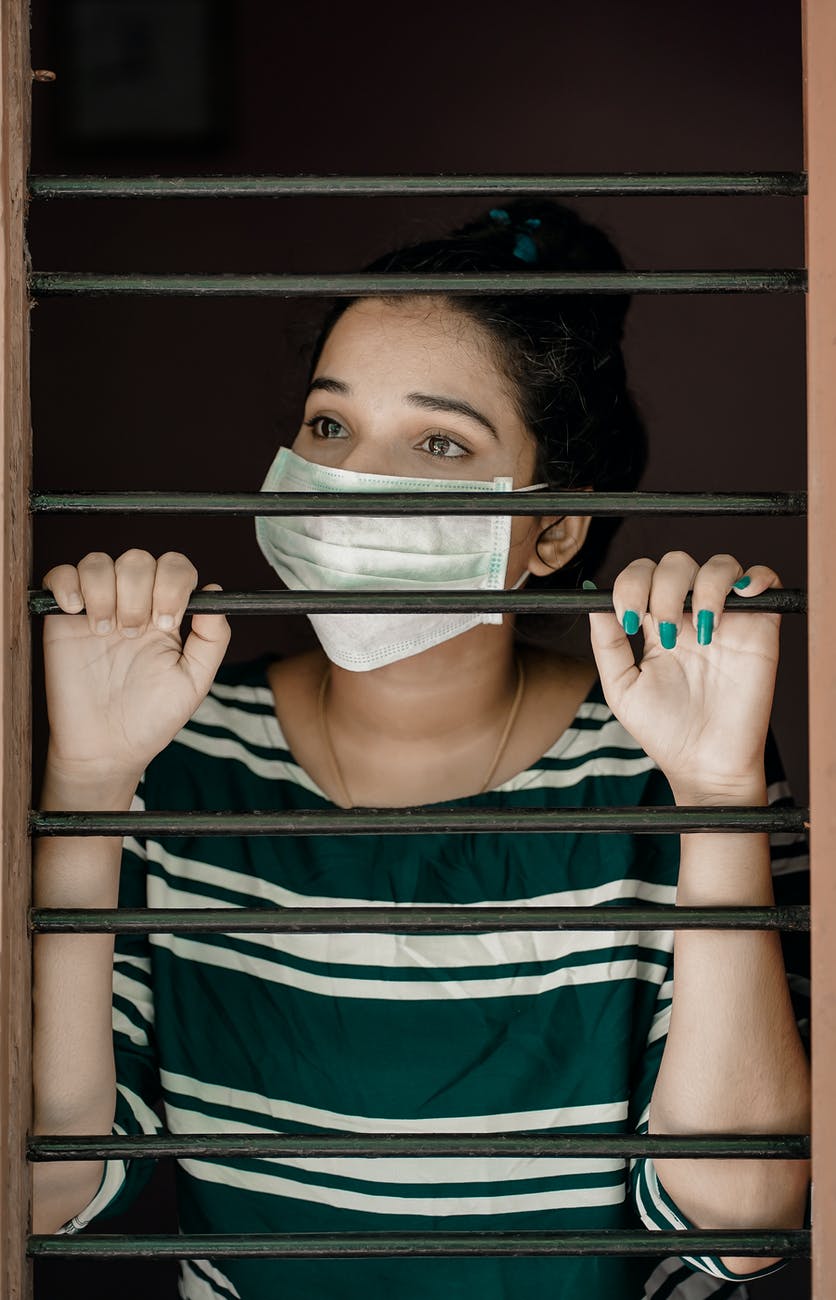
Photo by Nandhu Kumar on Pexels.com

The Centre has said,”The new guidelines, issued today, are based on feedback received from States and UTs, and extensive consultations held with related Central Ministries and Departments.” After issuing the guidelines, the Home ministry also announced opening up of more activities, like the resumption of Metro train services and open air theatres. Closed theatres have not been permitted to be kept open. Until further notice they will be closed. The re-opening of activities rule will only be applicable in areas outside the Containment Zones, said the Ministry. The Centre has allowed the states and Union Territories to permit up to 50 per cent of its teaching and non-teaching staff to be allowed to go to the schools for online teaching and other official and related work. States will also be allowed to permit students of classes 9 to 12 to visit their schools, but only in areas which are not included under the containment zones, said the government order. The Centre, however, has allowed reopening of higher education institutions. But this is only for research scholars and post-graduate students of technical and professional programmes which require necessary laboratory or experimental works in labs or other institutions. The previous Unlock3 guidelines which were issued on July 29 had allowed the opening up of yoga institutes and gymnasiums. It had also removed restrictions on movement of individuals during night curfew.

School, colleges and other educational institutions will continue to remain closed for students, said the Centre on Saturday as it issued the guidelines for the month-long fourth phase of easing down the restrictions for the pandemic – “Unlock4” – which begins from September 1. The Home Ministry, issuing the guidelines, announced opening up of more activities, like restarting of Metro train services and open air theatres. The re-opening of activities will only be allowed in areas outside the Containment Zones, according to the Ministry guidelines.

The Unlock3 guidelines issued on July 29 had allowed opening of yoga institutes and gymnasiums and removed restrictions on movement of individuals during night curfew. In its latest order, the States have also been asked not to impose any local lockdown restrictions in places outside Containment Zones. According to the government data, India’s COVID-19 numbers rose to 34,63,972 with a single-day spike of 76,472 new infections, while the death count climbed to 62,550 in 24 hours.

Dreadful Climate Change Scenario of India

The first climate change assessment report of India

A research conducted by the Ministry of Earth Sciences a week ago concludes a very dreadful image of climate change and its effect on the nation in the coming decades. It is the first climate change evaluation report developed for India by specialists in the nation’s research institutions.

The research is led by the experts of climate at India Meteorological Department (IMD) and Indian Institute of Tropical Meteorology (IITM). Reports of the UN’s IPCC and different organizations have seen climate change in India as a major aspect of a worldwide phenomenon, and concentrated in some biologically significant areas like the Himalayas.

The report ‘Assessment of Climate Change over the Indian Region’ investigates of all the climate change phenomena in the past few years and is exceptionally exhaustive. Its study and conclusions need an immediate thought and action process. It concludes:

  • The normal temperature in India, before this current century is over, will rise by approximately 4.4 degrees Celsius comparative with the 1976-2005 normal. The normal ascent during the 1901-2018 period was 0.7 degrees Celsius.
  • The ocean surface temperature in the Indian Ocean during the 1951-2015 period was one degree Celsius, which was more than the worldwide normal.
  • There will be an abatement in rainstorm precipitation and a rise in temperatures which will raise ocean levels and cause more serious dry spells and tornadoes.
  • The progressions will prompt a decrease in horticultural yield and freshwater assets and harm the infrastructure.

There are many other dangerous climate change effects which need a serious plan and action step taken by the government and the citizens together to fight the adversities to life and property.