

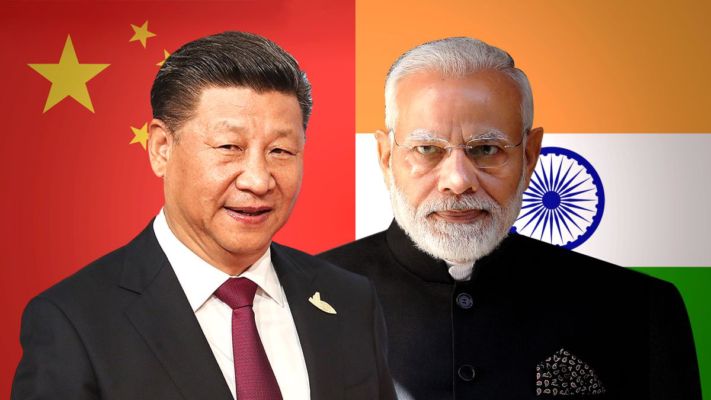
India vs China, Economic Differences Yet India Liveable

The President of China (Left) and The Prime Minister of India (Right)

China and India are the two fastest growing Asian economies. Respective governments have left no stones unturned to project the two nations as ideal investment destination on global platform, inviting industrialists with the lure of a business-friendly atmosphere. The two countries have always been at loggerheads for political reasons, making their bilateral relationship really rocky. The leaders at the helm of power of these two neighbours are known for their reformative approach and the similarities between Indian Prime Minister Narendra Modi and Chinese President XI Jinping are conspicuous. Both of them are known to rub shoulders with ten-figure friends to draw investments. While China has wowed the world with its bullet trains, India is pacing ahead in its space mission, launching valuable communication satellites.

Here’s a list of four fronts in which India is ahead of China in terms of growth:

India Being one of the Greatest Economy Balancer

An important metric where India beats China is financial market development. India ranks 38, while China ranks 56. Though the two nations introduced separate sets of reforms at different points of time, China started moving towards the pro-market economy in 1978 and India did the same in 1991. But India is 15 years ahead of China with regard to reforms in economic and financial markets. Experts are of the opinion that India has performed better than China in the financial sector. Indian bond market is known as one of the most liquid in Asia, which is well regulated by the RBI and is fully electronic. India is known as one of the best countries in the world in the way the financial sector is managed. As far as equity markets are concerned, reporting standards in India maintain global standards.

Tight Competition Among India and China in Space Technology

Though China is doing really good in space missions, India is not much behind with its successive launching of communication satellites. Recently, India has sent its heaviest communication satellite with its own GSLV MK III. India reportedly aims to win a bigger share of the $300-billion global space industry. It has successfully launched record 104 satellites, earning praise even from its northern neighbour. China started its space missions in the late 1950s while India entered the space in 1962 and is racing fast.

India being a Top Pharmaceutical Manufacturer and Exporter

India regards pharmaceutical production and exports as one of its biggest strengths. It has consistently beaten China in exports of pharmaceutical products to Latin America in the past five years. In 2016, India exported products worth $651 million to Latin America, as compared to China’s $404 million-worth exports, stated the IBEF report. Fortunately, India has never suffered regulation bottlenecks in the sector, ensuring the ease of doing business for Indian manufacturers and vendors.

What makes our country’s growth in this sector more interesting is the fact that it imports the bulk of its raw materials from China. This sector is not really the focus area of Beijing. A study by Assocham forecasted in june 2016 that India’s pharma exports could reach $20 billion by 2020. It has already crossed this mark and in fact the impact of covid-19 in 2020 has led to major medicinal demands from India than any time before. Demands of hydroxychloroquine from India have surged to a point where many countries like US, Australia, UK & other European countries are all lined up for getting these and many other medical drugs.
Judge yourself

Don’t give advice because people never listen. Did you listen to someone? If yes you are lying. If you listen to someone then you will never advice someone. If you don’t listen to someone then you will always prefer to advice the advice you got.

My suggestion is you never listen to other suggestions because it remains as a suggestion. But you have to listen to my suggestion of you don’t want to listen others suggestion. People cannot accept the fact of denying their capacity. Accept your worth if you wanna improve your skills.

Atleast be honest with yourself because it’s you with whom you have to spent rest of your life. Accept yourself and try to keep on improving. If you wanna improve them listen to yourself. You are the only judge who can make right choice. Listen to your advice and make yourself out of it. Never betray yourself and try to fix the things that you wanna fix. Make yourself by listening to yourself.

Privatisation of Indian Railways

Indian railways has the 4th largest railway network in the world. And the maintenance of such a big network is solely on the Railways. To lessen this burden, empowered group of secretaries headed by NITI  Aayog CEO Amitabh Kant have planned the privatisation of the railways. Railways currently recovers only 57% of its cost through passenger tickets. Some of its income is through freight. At the same time it has many expenses such as salaries of the employees, maintaining trains etc. Under privatisation, there will be an investment of around 30,000 crore and many expenditures will be borne by private players.

It is to be noted that now our Railways have the same corridor for both freight and passenger trains, which is expected to get separated when the privatisation happens. If such a thing happens it is expected that the problem of punctuality of trains will improve and the passengers will get better service. The government has identified 109 busy routes which will get 151 private trains, but this is only 5% of the total trains that run in India. This means that 95% of the control remains with Railways.

The privatisation will be done in 12 clusters, namely Patna, Jaipur, Bengaluru, Secunderabad, Howrah, Prayagraj, Chandigarh, Chennai and two clusters each in Delhi and Mumbai. The private firms will be placing bids on those particular clusters which they want to take up. The first round of bidding has ended and the second one will end by this financial year and the first set of 12 trains is estimated to be on tracks by the year 2022-23. Thereafter 45 trains in 2023-24, 50 in 2025-26 and 44 in 2026-27, which in total will be 151 private trains. Any private company, Indian or foreign are allowed to place their bids. But there are some conditions as well. The company should have a minimum net worth of ₹1,165 crore in its last financial year. This amount is different according to different clusters and can go up to ₹1,600 crore. The companies have to follow government rules and regulations. The trains should have a maximum speed of 160 km per hour and also minimum of 16 coaches. Of course the company which will give the Railways the maximum revenue who will win the bid but there is also a performance indicator which is punctuality which has the highest number of points to ascertain the performance. The Railways on its part will provide land to this private companies to work on. This is the same land which Railways have.

It is obvious that the tickets of these trains will be higher than we have now. Some people fear that this may cause segregation among the middle class or poor people and the upper class since these trains may not be affordable to all. But our Railway Minister Mr. Piyush Goyal has clarified that Railway will have sufficient control and also the recruitments will happen under the Railway Ministry only. The privatisation is happening to just a fraction of total capacity of the Railways. According to him it is more like a Public-Private Partnership. He assured that Indian Railways will not be fully privatised.

Don’t be a tool of a tool :

Influencer Marketing is a magic bullet, it’s going to solve all your problems, it works every time, but it increases your odds. And in marketing, that’s all you can ask for. And if you can break even or turn a profit two times more than you fail, guess what?That is a remarkable record. The value of Influencer Marketing , Lots of other data is out there in the marketing statistics. As a society were the passive tool for a business to kick start at its worse and become better we’re also going to help you develop a business case for Influencer Marketing in your organization because , Because ultimately, you’re going to need some funding. One of the things that unfortunately is happening in most businesses today is there are little experiments going on with Influencer Marketing, and they’re all underfunded. And so, one of the things that goes beyond strategy and tactics is to say how do you explain this to top management in such a way that they’re going to give you a budget to actually implement it. There are other ways to spend your money and they are much more likely to be effective, and we’re going to explore that. But we want you to know what, let’s just say the suckers, are falling for, what the rubes, the naive people, who think, “Oh, if I just give enough money to the right influencer, magic happens.” That’s a total story , no magic is gonna happen until unless you make yourself up for being a tool for a tool , as a rational human beings we’ve all got bigger stuff to do than just being someone who just keeps up with anything.

When the right influence hits the top most elite button that’s when actual productivity starts to show up in the phases of marketing influences and strategies. It’s not a big deal to cut yourself off from something that makes you feel like anything less than a tool , being helpful is way more different from being a tool for a tool. Actual and authentic magic happens when you put your actual self out there and step out of your comfort zone.

Innuendo: The other kind of Defamation

Innuendo is used to describe defamation from libel or slander. It is derived from a Latin term “innuere”, “to nod toward”. In lawsuit for defamation, usually to show that the party suing was the person about whom the defamatory statement was made. Example: ‘the former Mayor is a crook,” and Joe Alexander is the only living ex-Mayor, thus by innuendo Alexander is the target of the statement.

Defamation is the injury to the reputation of a person. If a person harms the reputation of another he does so at his own risk. As in the case of interference with the property, a man’s reputation is his property, and if possible, more valuable, than other property.

Any intentional false, defamatory statement or communication, written or spoken that decrease the respect, regard or confidence of a person will be called defaming him. Essential of defamation include, the statement being published, the statement should not be truth and it must refer to the plaintiff.

The intention to defame is not necessary  as held in the Scottish  case of Morrison v. Ritchie and Co.[1] ,where damages were recovered against the proprietors of a newspaper who in all innocence had announced in the paper that a lad, who had in fact been married only a month, had given Innuendo is a concept that is related to tort law and is a personal injury law. The word is derived from ‘innuere’, which is a Latin word and means to ‘nod forward’. In legal terms, Innuendo is used to describe defamation from either libel or slander. It usually shows that the plaintiff had bad comments made about him and those comments were in fact defamatory.

The innuendo is usually just used in actions for slander, when a defamation made by words or gestures. Innuendo typically refers to a condition where a person explains a factual situation which on the first note might not sound defamatory but, yet after interpreting can cause or has caused damage to the person.

Thus, when Innuendo is on the table to be proved, it must always show the entire scenario from start to the end of the declaration. This serves to be very important to prove that the intent can be mistaken, or when it cannot be directly obtained from the forms of slander or libel.

There are two major types of innuendo. True Innuendo and False Innuendo. False innuendo is a defamatory statement made that has an implied meaning. So, only individuals who have the necessary contextual knowledge can understand that the comment made is defamatory.

Secondly, legal or true innuendo. While this is not defamatory on its face, a true innuendo statement can be defamatory when combined with certain outside circumstances. This contextual information may cause a statement to be considered defamatory in a certain way while not another.

A statement may be prima facie defamatory when their natural, obvious and primary sense is defamatory. Sometimes, the words may prima facie be innocent but because of some latent or secondary meaning, it may be considered to be defamatory.

Where the words alleged to be defamatory do not appear to be such on their face, the plaintiff must make out the circumstances which made them actionable, and he must set forth in his pleading the defamatory sense he attributes to them. Such an explanatory statement is called an innuendo.

When the natural and ordinary meaning is not defamatory but the plaintiff wants to bring an action for defamation, the burden of proof lies on him to prove the innuendo.

In the absence of an innuendo, no evidence can be admitted to prove a special meaning and the suit will be dismissed.

An innuendo is necessary where the imputation is made in an oblique way, or by way of question, exclamation, or conjecture, or irony.

An innuendo, properly so called, which provides a separate cause of action, must be supported by extrinsic facts or matter and cannot be founded on mere interpretation.


[1] 1902 SLR 39

Phoney healthy influences :

The gist of the problem is simple. Most of the content that most of the marketers are creating on most of their social media platforms is, pardon me, corporate propaganda. It’s not something that you would share with a friend.The alternative is not to try to get people who have learned to write one way over their entire marketing career and they create brochureware. And put it on a social platform and expect magic to happen, it doesn’t. Boring content is still boring content. But boring doesn’t mean to make up hideous content and end up causing mental illness to the viewers out there , there’s toxic consequences of each ugly marketing strategy that’s taken up by all these people who are desperate enough to make it up to their organization. Here the joke is on us , it’s literally on the people who believe that everything’s that put on to a certain platform is true which actually is not. But there is a different group of people out there who are creating engaging content, amazing content. Content that people are commenting on. Content that people are sharing. Content that people are liking like mad. And who are these people? For lack of a better term, we’ll call them influencers. We as society are blinded up by all the appealing phony things that have been put out on the cyber platforms which isn’t something of authentic content and we are forgetting how pathetic the interaction is with people in the social platform. There were very few shares. There were very few likes. There were incredibly few comments. I don’t know how much you’re paying your staff to create this content. But if nobody’s interacting with it, if it isn’t engaging anyone, why are you doing it? What’s the big deal? Of course when some activity of that such is engaged through many means with the society it makes a big deal and people need to route for healthy influences.

Tentative business issues

Indecisiveness in any area of business organizations are a common thing , in a society like today times we need to actualize certain factors that effect the underrated things in business. Yes or no decisions are very common in business problems. In prescriptive analytics, yes or no decisions are modeled with binary variables.Each publisher breaks down the subscriber base into a number of groups based on demographics and location. The company has set a budget for the advertising campaign and wants to maximize the number of subscribers exposed to its ads. The company wants to determine which publishers to select and how many groups to purchase from each publisher but there comes the actual issue , business is a chain which isn’t guaranteed of transparency and assured loyalty. Clearly, the selection of a publisher requires a yes or no decision. That is, a publisher is either selected or not. Once a publisher is selected, a second decision must be made regarding the number of subscriber groups to purchase. The model for this problem must take into consideration that no subscriber groups can be purchased from a publisher that has not been selected. It also must consider that when two publishers are competitors, the company wants to select amongst one of them. Finally, the model should take into account that there is a fixed cost for engaging a publisher. These analyzing contributions to the business benefit the subordinates and defining chances of minimizing the indecisiveness which causes to the loss of business.

Subordinates or the superiors who are utmost torn between a yes or no often end up having serious doubts about the overall subjecting of several other aspects effecting the business’s There are many more in areas such as network design in supply chain management, portfolio selection in finance, and power generation in energy. Energy contributing into the organization must be cut into rational and fair parts of the business , it keep the game on.

Money heist 5

The famous Netflix series “Money heist” is setting for fifth season,Money heist stars Alvaro morte,Ursula corbero,alba Forbes,are gearing for the final season

Money heist all four seasons are streaming in Netflix,the four seasons contains 31 episodes

The season started from 2 May 2017 in Netflix

Energy drinks, good or bad ?

Energy drinks are widely promoted as products that increase energy and enhance mental alertness and physical performance. Next to multivitamins, energy drinks are the most popular dietary supplement consumed by American teens and young adults. Men between the ages of 18 and 34 years consume the most energy drinks, and almost one-third of teens between 12 and 17 years drink them regularly. Energy drinks are supposed to do just what the name implies — give you an extra burst of energy. As it turns out, most of that “energy” comes from two main ingredients: sugar and caffeine. A typical energy drink can contain up to 80 milligrams of caffeine (about the same amount as a cup of coffee). By comparison, a 2006 study found that the average 12-ounce soda contains 18 to 48 mg of caffeine.

Other than caffeine levels, how do energy drinks differ from sodas and sports drinks? Soft drinks are mainly water, sugar and flavouring. They don’t do anything for your body; they’re just supposed to taste good. Sports drinks are designed to replenish fluids lost during activity. They typically contain water, electrolytes and sugar. Energy drinks have added caffeine and other ingredients that their manufacturers say increase stamina and “boost” performance. They’re designed for students, athletes and anyone else who wants an extra energy kick.

Energy drinks became popular in Asia long before they reached the United States. In 1962, Japanese pharmaceutical company, Taisho, released its Lipovitan D drink. It was designed to help employees work hard well into the night. Lipovitan D contains taurine, the same ingredient found in many of today’s energy drinks.

The very first “energy” drink to reach the United States wasn’t an energy drink at all — it was more of a hyped-up soft drink called Jolt Cola. The “jolt” in the cola was a lot of added sugar and caffeine. Introduced in the 1980s, Jolt Cola quickly became a staple of college campuses.

There are two kinds of energy drink products. One is sold in containers similar in size to those of ordinary soft drinks, such as a 16-oz. bottle. The other kind, called “energy shots,” is sold in small containers holding 2 to 2½ oz. of concentrated liquid. Caffeine is a major ingredient in both types of energy drink products—at levels of 70 to 240 mg in a 16-oz. drink and 113 to 200 mg in an energy shot. (For comparison, a 12-oz. can of cola contains about 35 mg of caffeine, and an 8-oz. cup of coffee contains about 100 mg.) Energy drinks also may contain other ingredients such as guarana (another source of caffeine sometimes called Brazilian cocoa), sugars, taurine, ginseng, B vitamins, glucuronolactone, Yohimbe, carnitine, and bitter orange.

Consuming energy drinks raises important safety concerns.

  • Between 2007 and 2011, the number of energy drink-related visits to emergency departments doubled. In 2011, 1 in 10 of these visits resulted in hospitalization.
  • About 25 per cent of college students consume alcohol with energy drinks, and they binge-drink significantly more often than students who don’t mix them.
  • The CDC reports that drinkers aged 15 to 23 who mix alcohol with energy drinks are four times more likely to binge drink at a high intensity (i.e., consume six or more drinks per binge episode) than drinkers who do not mix alcohol with energy drinks.
  • Drinkers who mix alcohol with energy drinks are more likely than drinkers who do not mix alcohol with energy drinks to report unwanted or unprotected sex, driving drunk or riding with a driver who was intoxicated, or sustaining alcohol-related injuries.
  • In 2011, 42 per cent of all energy drink-related emergency department visits involved combining these beverages with alcohol or drugs (such as marijuana or over-the-counter or prescription medicines).

A growing body of scientific evidence shows that energy drinks can have serious health effects, particularly in children, teenagers, and young adults. In several studies, energy drinks have been found to improve physical endurance, but there’s less evidence of any effect on muscle strength or power. Energy drinks may enhance alertness and improve reaction time, but they may also reduce the steadiness of the hands. The amounts of caffeine in energy drinks vary widely, and the actual caffeine content may not be identified easily. Some energy drinks are marketed as beverages and others as dietary supplements. There’s no requirement to declare the amount of caffeine on the label of either type of product.

COVID-19 ROLE OF MEDIA

The spread of the COVID-19 has proved deadly, and this is a challenging time for the union as well as state governments as they work to address this health emergency. However, shows that in times of crisis, democratic governments may take a dangerous autocratic turn. In such a situation, journalism has a great role to play in a democracy, as it has been ideally visualized as a platform for objective information and critical-rational discourse. Thus, the health of journalism in a country can be examined in the times of a crisis. 

Corporate control over most media bodies also means that they become an instrument of the ideological apparatus of the state. There are many concerns associated with the COVID-19 crisis: ill-equipped public health systems, policies to combat the pandemic, and the lack of planning and support to the vulnerable sections. These issues demand serious examination, but the mainstream media, barring some courageous exceptions, seems to be forgetting its democratic role.

This image has an empty alt attribute; its file name is image.png

Manipulation of Discourse

Just before the announcement of the nationwide lockdown till 14th April 2020, Prime Minister Narendra Modi reportedly called upon print and electronic media owners and editors of the country and asked them to support government efforts to combat the pandemic and also advised them to present “positive news” related to COVID-19 (Sagar 2020).

Plainly put, these were the owners and editors who control most of the Indian media at the national and regional levels who were advised to abide by the official narrative and present information as provided to them by the government about COVID-19.

Why would media houses follow government diktat rather than investigating the real state of affairs, unless they have associated business interests? Journalism is considered to be an ethical communicative practice in a democracy, but corporate ownership subverts the autonomy of journalism and the freedom of the press. Unfortunately, this conflict of interest has become a common feature of Indian journalism.

However, even though a majority of Indian media is under corporate control, there are many counter-voices both within and outside this grouping. Thus, the Indian mediascape has become a battleground of ideologies. Many of these alternate counter-voices have raised genuine issues of social concern during the pandemic outbreak.

The prevalence of international media on the internet and small media organizations in the country has played an important role in disseminating factual and more nuanced information, but unfortunately, these platforms do not have the vast access that big corporate media platforms are privy to. 

This image has an empty alt attribute; its file name is image-1.png

Media shoes its Islamophobic side

Media’s ugliest moment, however, was its coverage of the news surrounding Delhi’s Tablighi Jamaat Markaz (meeting). Many participants had left after the markaz, but many were stranded in the mosque due to the lockdown and were later found infected. However, the media outrage that followed was clearly an extension of the already prejudiced and polarised coverage, as the Tablighi Jamaat was blamed for violating lockdown rules and for “corona jihad,” “Islamic insurrection,” and “corona terrorism.” This is clearly an example of fake news propagated by the mainstream media to further the predominant agenda (BBC 2020; News Laundry 2020). Muslims were also attacked in various parts of the country. 

People of other religious groups also gathered at religious places in large numbers even after the lockdown, but they were not criticised in a similar manner. However, when some journalists did raise questions, they were threatened with legal action (Scroll 2020).

The need of Greater Accountability

Since most of the people are at home during the lockdown, it is natural to see a growth in media consumption. People are using various media platforms for COVID-19-related information,   but what is provided is far from factual and does not further a critical rational discourse.

Some television news channels see a Chinese conspiracy in the spread of COVID-19. In such a “positive” atmosphere, the news related to labourers’ mass exodus and the markaz was mostly presented due to its sensational value.The pandemic is also threatening an already-deteriorating economy, which also demands a thorough investigation beyond the official narratives. The media, however, has worries related to its own economic situation. Print media, especially, is dealing with a resource crunch, dwindling advertisements, and worries of reduction in circulation and readership.

With concerns of job security, inadequate resource support, and abuses faced by the police, many journalists are putting their health at stake to cover the COVID-19 situation. This scenario does little to add to the morale of honest and responsible journalists. Some media houses have already begun cutting wages; an extension in the lockdown can create a new crisis in Indian journalism. 

The role of larger media as observed during the pandemic, however, is not an overnight shift. It has been visible for some time now.  The media has seen phenomenal growth during the last three decades, and India has become one of the biggest media markets in the world.

YouTubers and YouTube Web Series

Amidst the pandemic, I found it hard to be productive. Being thankful for my privilege, I spent times exploring YouTube.

Here’s a list of Youtubers and YouTube Brands I love:

  • Mostly Sane
  • Bake with Shivesh
  • The Detail Geek
  • Cooking Shooking
  • Jordindian
  • Filter Copy
  • Gabriel Iglesias
  • The Ellen Show
  • East India Company
  • Safiya Nygaard
  • The Try Guys
  • Jess and Gabriel
  • Ladylike
  • Shitty Ideas Trending
  • KKandbabyJ
  • Cupcake Jemma
  • Collins Key  
  • Sejal Kumar
  • OKbaby
  • Keren Swan
  • Jimmy Kimmel Live
  • Chloe Rose Art
  • Jess Conte
  • 8 Passengers
  • Cody and Lexy
  • Rebal D
  • Gabriel Conte
  • OK Tested
  • Dice Media
  • Penn Masala

WEBSERIES:

  • Operation MBBS – “Operation MBBS chronicles the lives of three first year students – Huma, Sakshi and Nishant in one of the best MBBS colleges in the country. Follow their journey as they navigate through friendships, hardships and medical student life.”
  • Wrong Number – “Story revolving around a hilarious confusion where Karan, a 2nd year engineering student, receives a message from Khushi, a medical student, on his (not so) new number. The catch here is that Karan’s new number previously belonged to Rajat, who was Khushi’s ex-boyfriend. Rajat broke contact with Khushi after a fight they had around the time when school ended and never contacted her again. But Khushi never gave up her efforts of contacting him. So now, when this number switch happens, Khushi is under the illusion that she is talking to Rajat whereas it’s Karan on the other side.”
  • College Romance – “Three best friends look for love, laughs and some lifelong memories while attending college together.”
  • Girlsplaining – “How can two girls, a batchmate and a senior, teach and train a guy who is clueless about relationships and sex?”
  • Girl in the City – “This show is about a young girl who comes to Mumbai to live her dreams and aim at her aspirations. It is about her journey in the big city.”
  • Adulting – “Adulting is a coming of age story about two young women trying to handle the responsibilities of being independent adults in the fast-paced, urban bustle of Mumbai.”
  • Kota Factory – “Dedicated to Shrimati SL Loney ji, Shri Irodov ji and Maanniya HC Verma ji, ‘Kota Factory’ is TVF’s latest original. India’s first ‘Black and White’ show highlights the problems present day IIT-JEE aspirants face in their day-to-day lives.”
  • Engineering Girls – “Three engineering students deal with dorm drama, date around, and do whatever it takes to make their dreams come true.”
  • What the Folks – “’What The Folks’ is a journey of how modern families are breaking stereotypes, overcoming generation gaps, and growing to love one another, despite having starkly different world views.”
  • Soulmates – “The story revolves around the two ex-schoolmates who bump into each other while on the trip to Shillong. Priyanshu, an aspiring music composer who is in Shillong chasing the girl of a rock band accidentally meets his schoolmate Anshul Chauhan who is on a solo bike trip across northeast. Two meet unexpectedly and fall in love, or maybe they don’t, but both of them have been giving some really adorable vibes.”
  • The Reunion – “Aarya, Dev, Deva and Gaurav go back to school after 10 years only to realise its important to look back to move forward. Friendships, relationships and some memories are at stake. Amidst the Bourbon High Batch of 2008, they find answers to what was left behind.”

Fundamental rights and the Environment


The Golden Triangle of the Indian Constitution – Article 14, Article 19 and Article 21 – has been invoked time and again for environmental protection. The High Courts and Supreme Court of India have read the right to a wholesome environment as a part of the right to life guaranteed in Article 21 of the Constitution of India.

In the Dehradun Quarrying Case, though the orders did not articulate the fundamental right to a clean and healthy environment, the petition was treated as a writ under Article 32, which implied that the court was seeing this right in the light of a fundamental right. The Supreme Court explained the basis of this jurisdiction in the later case of Subhash Kumar v State of Bihar where the court held that the right to life is a fundamental right under Article 21 of the Constitution and it includes right of enjoyment of pollution free water, air for full enjoyment of life. and that .if anything endangers or impairs the quality of life, in derogation of laws, a citizen has a right to have a recourse to Article 32 of the Constitution for removing the pollution of water or air which may be detrimental to the quality of life.. This concept has been furthered by the Supreme Court and various High Courts decisions worded differently by concretising the idea of right to a clean and healthy environment as a part of fundamental rights.


The other integral part of right to life is right to livelihood as enumerated in the Olga Tellis Case, which is again a judicial enlargement of the right to life envisaged under Article 21 of the Indian Constitution. In Olga Tellis the Court looking at the limitation of the Indian State said that to deprive a person of his right to livelihood would mean depriving him of his life. The State may not by affirmative action be compellable to provide adequate means of livelihood or work to the citizens but any person who is deprived of his right to livelihood by law can challenge the deprivation as offending the right to life conferred by Article 21. Many environmentalists think that the right to livelihood could be asserted to prevent environmentally disruptive projects that threaten to uproot tribal people and villagers for depriving their right to livelihood. The recent agitation by the farmers of Singur and Nandigram in West Bengal and Narmada Bachao Andolans (NBA) campaign against the Sardar Sarovar Dam can be understood in this perspective. However, industries see a strict environmental regime at loggerheads with the right to livelihood and clean/healthy environment of the citizens. The argument forwarded by the industry interests can be rebutted on the grounds that right to clean environment and right to livelihood are complementary rather than contradictory. If all industries follow the environmental standards, then the price of products will include all the external costs which would have to be borne by the consumers. Nevertheless, even this alternative can be questioned in a third world country like India where most people are unable to afford costlier products.


Article 14 can be invoked to challenge government sanctions for projects with high environmental impact, where permissions are arbitrarily granted without adequate consideration, for example, of their environmental impacts. Article 19(1) (g) provides that all citizens shall have the right to practice any profession, or to carry on any occupation, trade or business but with reasonable restrictions which may be placed in the interest of the general public as provided within section 19 sub clause (6), which might include total prohibition. Accordingly, in cases involving polluting industrial units, the courts face the task of balancing the environmental imperative with the right to carry on any occupation/trade or business.

Electric vehicles’; the future

An electric car is just a car propelled by one or more electric motors using energy stored in rechargeable batteries, instead of burning petrol or diesel internally and exhausting fumes. There are broadly three kinds of electric cars at present:

1.   Solar-powered electric cars and vehicles

2.   Hybrid electric cars powered by a mix of internal combustion and batteries 

3.   Electric cars with on-board battery packs also known as battery electric vehicle (BEV) 

More often than not, electric cars in the context of mobility and environmental conservation refer to battery electric vehicles, but may also refer to plug-in hybrid electric vehicles (PHEV)

In the Indian context, automobile manufacturers have announced electric four-wheelers such as Hyundai Kona Electric, Mahindra e-Verito, Mahindra e2o, Porsche Taycan, Tata Tigor EV 2019, MG ZS. But many more will be needed if India is to take meaningful steps towards becoming an EV-first nation. 

With enthusiasm rising around the chances of Elon Musk’s Tesla launching in India in 2020, many local and global auto manufacturers have started testing the waters in the Indian market for electric cars.

Some questions arise that need to be discussed these

* How do you see the evolution globally of electric vehicles in the coming years?

* Are there pockets or regions where EVs will take off sooner?

* What will happen to ICE platforms?

* What does that mean for global automakers in different regions such as Asia, Europe and US?

* What can be done to push the take rate of EVs?

What Are The Advantages Of Electric Cars Over Fuel Cars?

At a fundamental level, electric cars offer a dramatically lower operating cost compared to conventional internal combustion engines. On average, electric vehicles are 75-80% cheaper from fuel and maintenance perspective, which is an important consideration for many consumers who have high usage. This reality holds across form factors because it’s materially cheaper to charge a battery compared to refuelling a conventional liquid fuel tank.

Moreover, EVs have 75-80% fewer moving components and this ultimately translate to a much lower maintenance bill. Over and above the robust operating cost angle, EVs also possess an inherent advantage when it comes to performance and driveability.

What Are The Challenges In Consumer Adoption Of Electric Cars?

Breaking away the old norms and establishing new consumer behaviour is always a challenge. It is common to find users anxious about the speed and range of EVs. Thus, a lot of sensitisation and education is needed, to bust several myths and promote EVs within the Indian market, Zoomcar’s Moran told Inc42.

Apart from this, there are several challenges in the adoption of electric vehicle cars in India shortly. These include:

1.   Charging infrastructure

2.   Battery performance

3.   Supply-demand gap

4.   Creating the closed-loop

Lack of battery cell manufacturing

There is a complete absence of primary battery cell manufacturing in India which poses the risk of increasing our trade deficit. At the moment, most manufacturers rely on batteries imported from Japan, China, Korea and Europe. Hence, the Indian market needs encouragement for indigenous technologies that are suited for India from both strategic and economic standpoint, such as aluminium fuel cells.

How Can The Government Promote Electric Cars Further?

The Indian government is gunning for its goal of making 30% of Indian vehicles electric by 2030. The steps taken in 2019 to promote electric vehicles in the country include:

1.   Special policy measures such as slashing GST on EVs to 5% versus 28% for combustion engines

2.   INR 1.5 lakh tax exemption on loans to buy electric vehicles

3.   INR 10K Cr allocated to FAME II to push electric mobility through standardisation

4.   Union cabinet has proposed customs duty exemption on certain EV parts including electric drive assembly, on-board charger, e-compressor and a charging gun to cut down costs

5.   To localise the value chain, cabinet outplayed a five-year phased manufacturing programme (PMP) until 2024

6.   Nearly a dozen states either issued or proposed electric vehicle policies till date, with Delhi being the latest one.

“We will soon be pushing for setting up of bigger factories for battery manufacturing. We are open to listening to new ideas and pushing them, so I encourage all founders to push the envelope,” Amitabh Kant, CEO, Niti Aayog, said recently.

Further, the industry leaders Inc42 spoke to highlighted more measures that are needed:

1.   More incentives, tax cuts or rebates for every stakeholder in the mix, including the manufacturers and consumers

2.   Facilitating access to capital both for R&D as well as manufacturing

3.   Promotion of indigenous technology and capacity

4.   Creating infrastructure supporting shared mobility

5.   Offering a permit distribution for shared micro-mobility services as against a tendering system to open up the market

6.   Promoting mobility-as-a-service using EVs

7.   Phasing out ICE vehicles. For OEMs, 60% of new vehicles sold after April 1, 2025 should be zero-emission vehicles. This could be applied in a gradual way leading to 60% by 2025.

8.   Access to vehicular loans for EVs to the end-user at interest rates at par with normal vehicles even for new brands.

Article 370 and removal of Kashmir’s special status: Devil lies in ways which Article 367(4) will now apply to Jammu and Kashmir

The Union Government passed a Presidential Order under Article 370 (1) of the Indian Constitution, to supersede the 1954 Presidential Order, which, along with several other Presidential Orders, specifies which provisions of India’s Constitution apply to Jammu and Kashmir. This Presidential Order is unique in that it lays out most of the details on the special status accorded to Jammu and Kashmir under the Indian Constitution.

As described earlier, Article 367(4) as applied to Jammu and Kashmir will in turn make Article 370(3) apply to Jammu and Kashmir (by modifying the reference to the “Constituent Assembly of the State” to mean “Legislative Assembly of the State” as described above). Thus, if the Presidential Order cannot cause Article 370 to apply in a modified form to Jammu and Kashmir directly, the Order cannot achieve the same outcome indirectly, through the funnel of Article 367(4).

But if the Indian Constitution says that Article 370 can be applied to Jammu and Kashmir, then why does Article 370(1)(d) prohibit applying a modified version of Article 370 to Kashmir?

Article 370 of the Indian Constitution provides all those elements of the Indian Constitution which will apply to Jammu and Kashmir, namely:

  • the powers of the Indian Parliament that shall extend to the territory of Jammu and Kashmir;
  • Article 1 and Article 370 of the Indian Constitution will apply to Jammu and Kashmir;
  • provisions other than Article 1 and Article 370 can be made to apply to Jammu and Kashmir in a modified form by a Presidential order provided either concurrence or consultation of the Jammu and Kashmir Government is taken, depending on what is being modified.

Clause (3) of this Article 370 clarifies that all of the above requirements can be overridden by the President in a “public notification” declaring that Article 370 of the Indian Constitution shall have no force or have partial force in the Indian Constitution, so long as the Constituent Assembly of the State of Jammu and Kashmir also consents.

The force of Article 370’s text lies along two vectors:

– One vector of Article 370 is in clause (1), which can cause provisions in the Indian Constitution other than Article 1 and 370 to apply to Jammu and Kashmir (in Article 370(1) and (2)) and;
– Another vector of Article 370 is in clause (3), which applies within the Indian Constitution, and also applies to Jammu and Kashmir in an unmodified form, to sustain the special status of Jammu and Kashmir as delineated in the rest of Article 370

By the Presidential Order, modified Article 367(4) as applied to Jammu and Kashmir causes Article 370(3) to be applied to the State of Jammu and Kashmir by replacing “the Constituent Assembly” with the Jammu and Kashmir “Legislative Assembly”. However, Article 370(3) applies to India too, in the Indian Constitution. So even if this Presidential Order modified Article 370(3) as applied to Jammu and Kashmir, the Indian Constitution’s Article 370(3) continues to require the Jammu and Kashmir Constituent Assembly’s concurrence. This Presidential order cannot modify the text of the Indian Constitution, even if it modifies the text of the Indian Constitution as it applies to Jammu and Kashmir. Therefore, for any action under Article 370(3) to be valid for India, we would still need the Constituent Assembly of Jammu and Kashmir to consent.

In short, for the purposes of the Indian Constitution, any modification of Article 370(3) as applied to Kashmir, even if it were valid, would not touch Article 370(3) as it applies in India.

But the Constituent Assembly no longer exists in Jammu and Kashmir, so is there anything India can do now?

Many hold the view that Article 370 may not be abrogated at all, legally. This idea merits some exploration.

The constitutionally legitimate way to abrogate Article 370 will be for the President to issue a public notification abrogating Article 370, under Article 370(3) of the Indian Constitution as applied to India. In fact, the Rajya Sabha has attempted to recommend that the President pass such a notification in its “Statutory Resolution”. Such a notification would only have been valid, in India, if the Constituent Assembly of Jammu and Kashmir had consented to the abrogation — which needless to say, no longer is in existence.

One conceptual way of thinking about this issue is that Article 370 embodied the terms of a treaty between the State of Jammu and Kashmir (under the Maharaja) and the Dominion of India which laid out the terms on which Jammu and Kashmir would join the dominion. The embodied form of the treaty in Article 370 of the Indian Constitution, represents the coming together of two sovereign territorial units. Therefore, it is important to remember that the Indian Dominion was not bestowing a concession on Jammu and Kashmir, as commentary sometimes propagates. In this background, the Constituent Assembly of Jammu and Kashmir would have been the representative of the sovereignty of Jammu and Kashmir, on questions of whether Article 370 would stop having force in the Indian Constitution.

Therefore, one can argue theoretically that Jammu and Kashmir is free to decide that it will be represented by any legislative body instead of the Constituent Assembly, on the question of ending Article 370’s operation — which is a question of ending the treaty between Jammu and Kashmir and the Union of India. There is no situation in which India can decide for Jammu and Kashmir that a State Assembly can stand in for the Constituent Assembly. This is because, as shown earlier, Article 370(3) continues to apply to India regardless of how the Presidential Order modifies it for Jammu and Kashmir.

In short, only if both Jammu and Kashmir and India were in consensus could Article 370 have been abrogated, and that too by proceeding under Article 370(3) and not Article 370(1) of the Indian Constitution. So long as Jammu and Kashmir wants to retain special status in regard to the Indian State, Article 370 is effectively incapable of revocation or abrogation. The Supreme Court has thus also heldthat Article 370 is permanent, effectively.

Is there any way in which President’s Order can be considered constitutionally legitimate?

Even if we can somehow ignore that the President’s Order attempts to extend Article 370(3) of the Indian Constitution to Jammu and Kashmir — which Article 370(1)(d) does not allow the President to do — there is no way to save this Order. This is because a Presidential Order under Article 370(1)(d) requires the “concurrence of the Government” of Jammu and Kashmir, if it aims to extend the Indian Constitution to Jammu and Kashmir on matters not covered by the Instrument of Accession. This is specially provided in the second proviso to Article 370(1).

We know that Jammu and Kashmir has been under President’s rule for over a year now. This implies that Jammu and Kashmir is not governed by its own elected representatives, but is being run by an officer of the President of India — presently Governor Satya Pal Mallik. Therefore, it remains unclear as to how the Indian Government can argue that it has obtained the “concurrence” of the Government of Jammu and Kashmir.

The role of governor in India

The Governor of a State shall be appointed by the President by warrant under his hand and seal (Article 155). A person to be eligible for appointment as Governor should be citizen of India and has completed age of 35 years (Article157).The Governors of the states of India have similar powers and functions at the state level as that of the President of India at Union level. Governors exist in the states while lieutenant governors or administrator exist in union territories including National Capital Territory of Delhi. The governor acts as the nominal head whereas the real power lies with the Chief ministers of the states and his/her councils of ministers. Although in union Territories real power lies in lieutenant governor or administrator, except in NCT of Delhi, Puducherry and Jammu and Kashmir where he/she shares power with a council of ministers headed by a chief minister.

In India, a lieutenant governor is in charge of a union territory. However, the rank is present only in the union territories of Andaman and Nicobar IslandsLadakhJammu and KashmirDelhi and Puducherry (the other territories have an administrator appointed, who is usually an IAS officer or a retired judge of a court). However, the governor of Punjab acts as the administrator of Chandigarh. Although lieutenant governors do not hold the same rank as a governor of a state in the list of precedence.

QualificationsEdit

Article 157 and Article 158 of the Constitution of India specify eligibility requirements for the post of governor. They are as follows:

A governor must:

The governors and lieutenant governors are appointed by the president for a term of five years.