Technology holds the key to scale up the use of solar energy- PM’s message at First World Solar Technology Summit

Prime Minister Shri Narendra Modi in a message at the inaugural session of First World Solar Technology Summit read out by Shri R.K. Singh, the President, International Solar Alliance (ISA) Assembly and Minister of State (I/C) for Power and New & Renewable Energy, said, today, that technology holds the key to scale up the use of solar energy. Technological achievements have already brought about a significant reduction in the price of solar power. A further reduction in the cost will provide a major boost to the use and expansion of renewable energy. He expressed confidence that the summit will help in help in developing new technologies and ensure that they become available to all.

World Solar Technology Summit (WSTS) organised by ISA and FICCI today aims to bring together key stakeholders – leading academic scientists, technology developers, researchers and innovators to present and discuss the recent highlights of solar technologies, cost-wise; technology-wise, technology transfers, challenges and concerns in the field. The main objective of WSTS is to showcase to member countries the state of the art and next-generation solar technologies worldwide and to give an opportunity to decision-makers and stakeholders to meet, and discuss their own priorities and strategic agenda towards a larger integration.

Prime Minister re-iterated that Five years ago, world leaders had taken a pledge to restrict the rise in global temperature through a gradual reduction in the dependence on fossil fuels. Underlining India’s commitment lowering carbon footprints, he stressed that India has lowest per-capita carbon emissions in the world but we have still pressed ahead with deployment of renewable energy at a frenetic pace.”

Speaking on fast growth of Renewables in India, he further informed that India has enhanced its installed renewable capacity by 2.5 times and increased our solar installed capacity by more than 13 times. “Globally India now ranks 4th in terms of Renewable power,” Shri Modi said.

Prime Minister also informed that we have scaled our non-fossil fuel-based power generations to 134GW, which is about 35 % of our total power generation. We are confident of increasing it to 220 GW by 2022. “We want to take renewable energy to every village of our country. Our government has implemented a scheme named KUSUM that aims to replace the use of diesel in our farm sector with solar energy. Under this scheme, we have targeted the solarisation of 2.8 million irrigation pumps. Such schemes will not only benefit the environment, but also increase the income of our farmers.” he said.

Referring to India’s support to ISA member countries the Prime Minister said ”India is providing capacity building support to ISA member countries through its ITEC training programme. We have also set up a Project Preparation Facility to develop bankable Solar Energy projects in ISA member countries with the help of EXIM Bank of India.” He said that in 2018, our Government had announced about US $1.4 Billion worth of lines of credit (LOCs) for covering 27 solar projects across 15 countries. These projects are in various stages of implementation.

The Prime Minister also said, “The ISA is a part of “One Word One Sun One Grid” project, I firmly believe that this project can bring transformational benefits for the entire humanity.

Ministers from several of ISA’s member countries will be joined by high-Level dignitaries, National Focal Points and senior government functionaries; Representatives of  diplomatic missions, ISA Partners, business and industry leaders, solar project developers, solar manufacturers, R&D institutions, academia and think tanks, civil society, international organizations and donors, representatives of non-governmental and community-based organizations, academics, research and training institutes, international media, multilateral and bilateral agencies.

Nobel Laureate, Dr M Stanley Whittingham, winner of the Nobel Prize in Chemistry (jointly with John B Goodenough & Akira Yoshino) in 2019 for the revolutionizing discovery of the lithium ion batteries and Mr Bernard Piccard, Founder and Chairman of Solar Impulse Foundation, Switzerland also joined the summit virtually.

India’s Minister for Petroleum and Natural Gas, Mr Dharmendra Pradhan also addressed the inaugural.Shri Pradhan announced that five Public Sector Undertakings (PSUs) under Petroleum & Natural Gas Ministry will be joining International Solar Alliance (ISA)’s Coalition for Sustainable Climate Action (ISA-CSCA) as Corporate Partners. He said that Oil and Natural Gas Corporation Limited (ONGC), Indian Oil Corporation Limited (IOCL), Bharat Petroleum Corporation Limited (BPCL), Hindustan Petroleum Corporation Limited (HPCL) and GAIL (India) Limited will be contributing to ISA’s Corpus Fund.

Lauding the role of the ISA for making rapid strides since its launch at the UN Climate Change Conference in Paris on 30 November 2015 by Hon’ble Prime Minister Narendra Modi and the then French President, Shri Pradhan said that as the latest inter-governmental international organization with its headquarters in India, ISA is not only a testament to India’s unwavering faith in multilateralism but also a commitment to a better, sustainable and greener future. He said that the Alliance reflects the vision and the firm belief that the beneficence of the Sun could be used to bring together the peoples of this planet for a shared solution to our energy needs.

The International Solar Alliance (ISA) is a treaty-based international intergovernmental organization. ISA was jointly launched by India and France in the presence of Secretary General of the UN during CoP21. The Paris Declaration establishes ISA as an alliance dedicated to the promotion of solar energy among its Member Countries. The major objectives of the organization include deployment of 1000 GW of solar capacity and mobilization of US$ 1000 billion of investment in solar energy sector by 2030. As an action-oriented organization, ISA intends to bring together member countries to aggregate demand and realise economies of scale, resulting in reduction of costs of solar applications, facilitating deployment of existing solar technologies at scale, and promoting collaborative solar R&D and capacity. As on June 26 2020, the ISA Framework Agreement has been signed by 86 countries, with 68 having also deposited instruments of ratification. The ISA is headquartered at Gurugram in Haryana, India. Mr. UpendraTripathy is the Director General.


Mesa Community College

success
is our number one priority

Pursuing an education can change a student’s life in ways they could never imagine. In addition to obtaining a certificate or degree, our MCC students gain the knowledge and skills needed to enter the workforce or transfer to a college or university. Our faculty instruct students in a way that allows them to learn how to learn, engage in critical thinking, and teach content students need to succeed. By coming to MCC students are investing in their future, and we are dedicated to helping them on their journey.


achievements
throughout the years

Since MCC\’s establishment we have focused on continually innovating and enhancing our instruction and services. Whether it’s revising our student service processes, developing and offering accredited online degrees and certificates, or renovating buildings with the latest technology, our first goal is student success. To facilitate this success our objective is to continue improving so we can better assist students in reaching their goals. Click below to see some of the highlights of our achievements over the years.


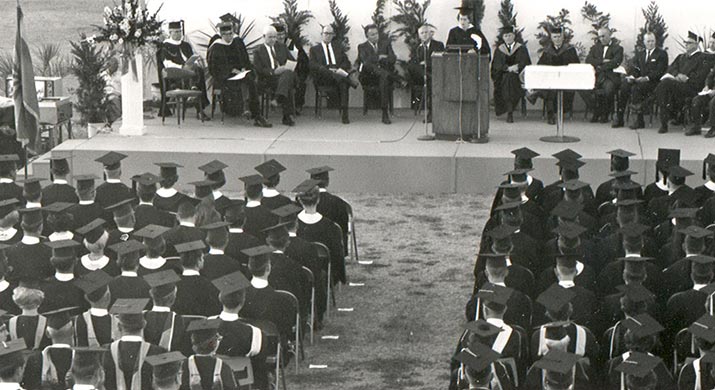
1965

The MCCCD Governing Board changed the college’s name from Mesa Extension to Mesa Community College.

1966

The Southern and Dobson campus opened.

1967

MCC received institutional accreditation.

1974

The athletic mascot changed from Hokam to the Thunderbird.

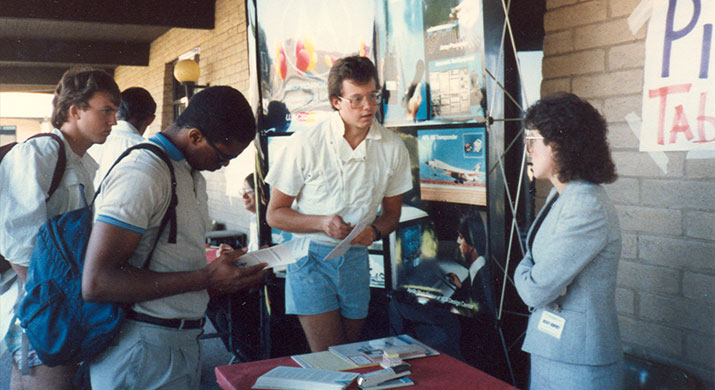
1986

The first Career Fair was held, helping to connect students with employment options.

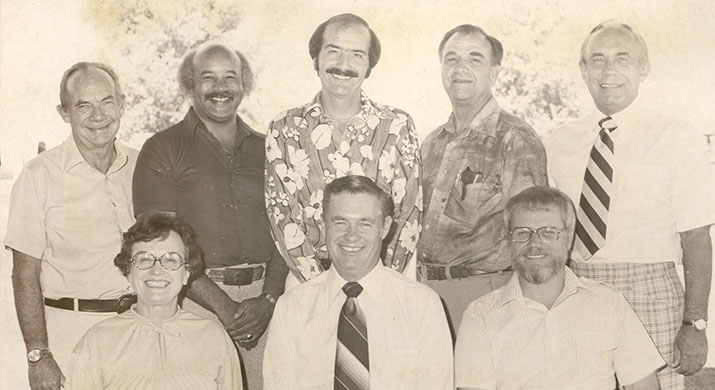
1987

Jinnett B. Kirk, the first Dean of Students, was awarded the Don Carlos Humanitarian Award.

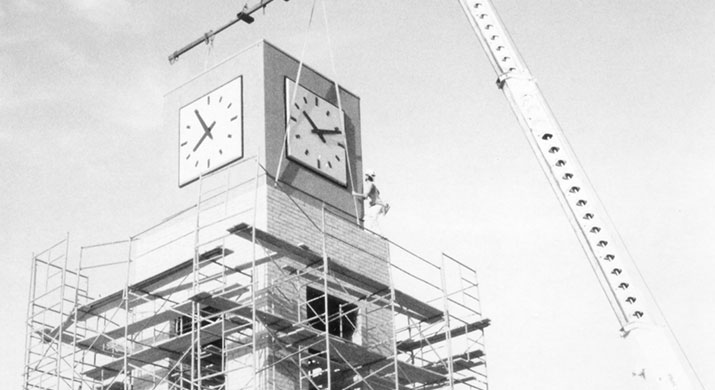
1990

The construction on the Alumni Clock Tower was finished.

1997

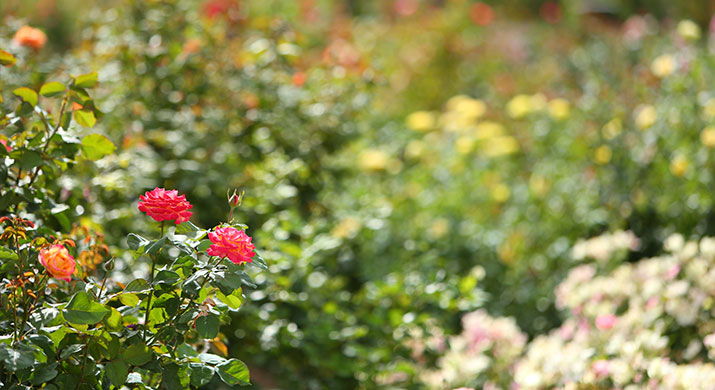
The Rose Garden was finished and remains the largest public rose garden in the Southwest to this day.

2001

The Red Mountain campus opened for enrollment.

2004

President George W. Bush visited MCC to discuss a proposal for a federal grant for training programs.

2007

The Council for Higher Education Accreditation (CHEA) awarded MCC the CHEA Award for Institutional Progress in Student Learning Outcomes.

2014

The Performing Arts Center and improved Kirk Student Center opened.

1965


2014

administration
leading the way to success in our local and global community

MCC is the largest of the ten colleges in the Maricopa County Community College District (MCCCD). While each college has a unique and recognizable role within its own community, the ten colleges also have a shared foundation in the vision and mission of the District.
Learn More

progress
on construction of our new buildings

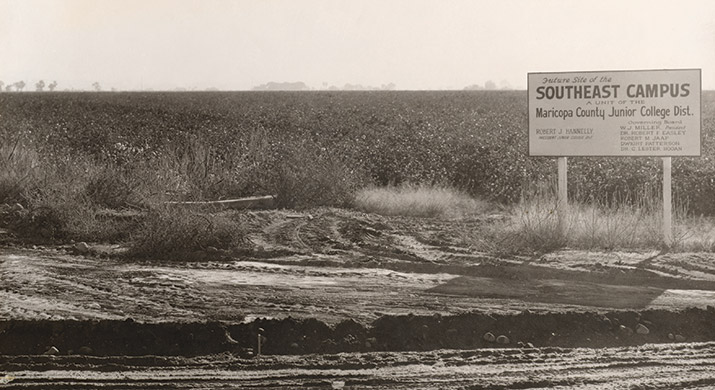
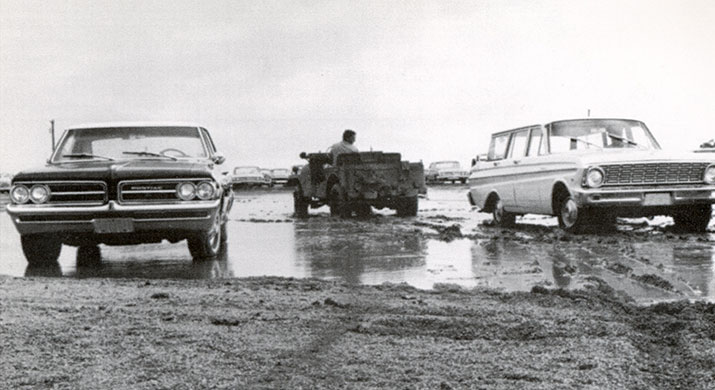
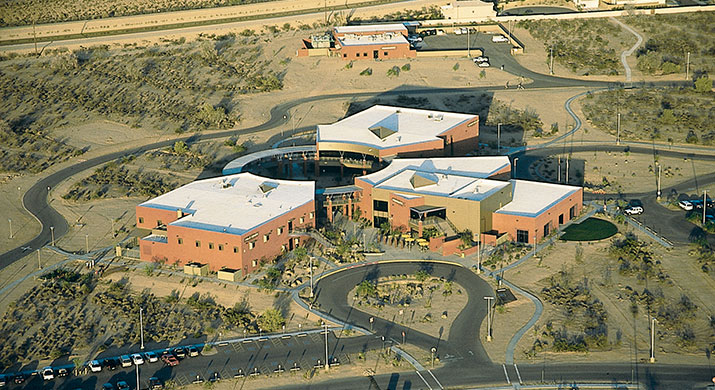
It has been over 50 years since MCC first opened with three buildings and two houses on ¾ of an acre surrounded by the expanse of undeveloped Mesa. Today MCC has two campuses and multiple locations and we continue to strive to improve, making our campuses more inviting, updating technology, and providing top-notch facilities. Click one of the tabs below to view some of our most recent improvements to our campuses.

Performing Arts Center
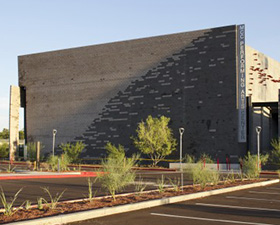
Art Gallery
Enrollment Center
Kirk Student Center

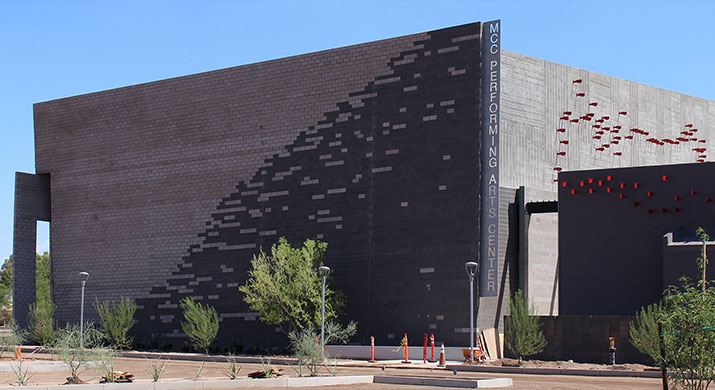
MCC Performing Arts Center

The Performing Arts Center is a multi-purpose facility designed to accommodate the wide range of performances of MCC’s talented music, dance, and theatre programs. Re-imagined to fit the needs of MCC, the large theatre holds 462 seats, performance classrooms, music practice rooms, faculty offices, and the scene shop.
Learn More

resources
to enhance communication and organizational success

Institutional Advancement

The Office of Institutional Advancement – or IA, as we call ourselves – promotes educational opportunities at MCC, enhances the image of the college, and connects us to our communities through communication. In other words, we’re the official voice and face of MCC.
Quick Links

Get the Word Out
Forms, Logos, & Maps
Brand Standards
Experts List
Staff & Contacts

Institutional Effectiveness

The Office of Institutional Effectiveness enhances student success by analyzing gathered institutional research and using it to benefit the college and its students. Such research allows us to make well-informed decisions to ensure MCC continues to improve upon and provide efficient, quality education.
Quick Links

Fast Facts
College Planning
College Statistics
Resources
Student Assessment

Maricopa Community Colleges

 Maricopa Community Colleges’ nationally recognized programs help more than 200,000 students each year achieve their goals. Our 10 accredited colleges offer a diverse range of programs at convenient locations across the Valley, but our goal is the same – your success.

History Of Mass Communication In India


https://in.pinterest.com/

   TV, radio, newspapers, magazines, movies, websites & portals are some of the widely known forms of communication that the Indian media uses. Indian media is one of the oldest in the world. The history stretches from writing manuscripts & cave paintings that can be spotted in Ajanta & Elora caves to weekly newspapers that took months to reach the rural areas to surfing on the internet to find information, it was a long way. 

   Even when one looks back in the reign of Akbar’s era, where messages sent through messengers. They used to strike their drum amid the market to grab the attention of the people & then make their announcements. This was a mode of public communication. On the other hand, to meet the needs of the local people, such kingdoms used to have darbars to tackle the problems faced by the public. Similarly to send messages from one kingdom to the other, one used to send their messenger with a scroll to inform them. 

   Rolling back to recent times, when the technology was still lacking in the country, people used to communicate long-distance through letters & telegrams. And much later by landline phones. The primitive form of cellular phones was introduced much later in the scene after the optimum development of technology in India. And now is the era of sending messages just a tap away. The world is touching new heights with time, as technology & media go hand-in-hand. 

https://www.pexels.com/

   The Indian media has gone active since the late 18th century & since then there has been no turning back. Many of the media are controlled largely by profit-making corporations, which reap revenue by advertisements, subscriptions &, etc. 

   The print media started in India as early as 1780 while radio broadcasting began in 1927. Radio broadcasting was initiated in 1927 but became state responsibility only in 1930. In 1937 it was given the name All India Radio and since 1957 it has been called Akashvani. The Ministry of Information & Broadcasting owns it & is responsible for maintaining the audio-visual apparatus, including the television channel Doordarshan. Although later an autonomous body was established in the name of Prasar Bharti to take care of the public service broadcasting. 

    Now are the days of DTH & Android TV. While one can easily connect their cell phones to the TV or even laptop. Gone are the days when pigeons were used to sending letters. Also, fax machines are no longer in use. Rather have been replaced by printers & all. 

    So this is how everything changed down the lane. And even though times have changed with the advancements of all the modes. All this has lead to a drastic improvement in the face of the country. Directly or indirectly affecting the job sector & easing out the process altogether. Contented that the country is forging out towards a much brighter future. 

Why Pune tops in COVID-19 cases across the Country

Total no. of cases in Pune crosses tally of 2 lakh mark with total of 2,04,037 with active cases of 61,363 and recovered cases with 1,34,527. Pune is now top of the list in whole India. Pune has surpassed Delhi in recent days. As India as country is still not able to deal with the Corona Virus, in fact it is somehow struggling badly which has put India in leading no. is terms of cases in top with 1 other countries. These countries are trying everything to control the spread and reduce it somehow. India has surpassed Brazil with 67,007 new cases last day.

India is too giving many advices and steps to increase the effective check-ups and trials to get more hold on cases and minimize it by making every little effort. Now check-ups are happening at more faster rates. Daily tests conducted is reaching 4-5 lakhs in numbers.

Doctors have now called for more tests across the state’s rural areas and non-metropolitan zones to reduce patient load on hospitals in the major cities. There have been several instances of critical patients from rural areas being rushed to hospitals in the major cities after initial delays in treatment.

Every week, at least a dozen patients — with serious Covid-19 — are being moved from the rural areas to units such as Sassoon General Hospital, Yashwantrao Chavan Memorial Hospital or the Aundh Chest Hospital. And specialists said it’s these cases, which have already entered the critical stages of COVID-19 infection, that are some of the most difficult to treat
For example, in June, it was estimated that 20% of all admissions at most hospitals in Pune city were from outside Pune district. In past few days, frequency of corona positives has increased gradually as cases has started to come from rural areas. Earlier most of the cases were coming out of urban areas as there were not much contact with deeper village areas. However as effective ways for corona are reaching there so it is spreading,

In August, Pune’s first Sero survey found that over 50 per cent of residents from five high-incidence areas in the city have been exposed to the COVID-19 infection. Pune is also the only district in the country which has crossed the 50,000 mark in terms of active cases. The district now has 54,760 active cases with 1,23,292 declared recovered.


The senior Pawar’s intervention, in fact, seems to have been triggered by the death of a television journalist last week after he reportedly could not find an ICU on time. Pune authorities are blamed for failing to create adequate health facilities, with instances of coronavirus patients dying because of non-availability of ICU.

The survey, which is done to detect the presence of specific antibodies and assess the prevalence of a disease in the population, was conducted by taking samples of 1,664 respondents. The main reason behind this surge in Coronavirus cases is the increase in the number of COVID19 testing. Pune is having the greatest number of coronavirus testing in Maharashtra. The number is twice that of Mumbai. Pune authorities have ordered one lakh antigen test kits in July and have ordered another one lakh recently.