Indoor Pollution: The Silent Killer

Home sweet home. The place where we return everyday. Our safe haven. But is it as safe as we believe to be? Especially for our health. The present scientific and environmental scenario say otherwise.

Indoor pollution is the pollution caused by the presence of various particulate, chemical and biological pollutants, which can cause even serious harm to the human body. Infact, it has been ranked amongst the top five public health risk factors. There are some problems in the study of this type of pollution, due to the individuality and uniqueness of each residential ecosystem. The specific levels of various pollutants vary, based on various external and internal factors. Hence, it becomes difficult to explain the impact of indoor pollution in an uniform manner, for an individual pollutant component or even as a whole. 

The standard of measurement of this condition is indoor air quality (IAQ). In industrial countries, approximately, 1/3 rd of all the buildings tend to have IAQ problems at some point of time. Across the world, 30% of IAQ related complaints are against new or remodelled buildings. Health problems due to poor IAQ range from mild (cold and flu like symptoms) to severe (allergies, asthma, cancer, developmental disorders, or in some cases, death) symptoms.

Indoor pollutant sources includes humid spaces like in kitchen, showers etc., which are ideal thriving spot for various biological pollutants (eg. mold). Also, fuel consuming appliances, aerosol sprays (like deodorants, room freshners etc.), pesticides and so on are a n identified source of particulate as well as chemical pollutants within the residence

Some chemical pollutants have been identified and their harmful exposure levels have also been evaluated. Other pollutant types have been more difficult to evaluate about the acceptable exposure level. Some of the common pollutants are:-

  • Carbon Monoxide: Carbon monoxide (CO) is an odorless gas that is adverse for human health even at low levels. High concentrations of CO are potentially fatal and can even cause death. CO poisoning symptoms include headache, dizziness, nausea, chest pain and vomiting. It’s presence as an indoor pollutant is primarily due to fuel consumption and improper ventilation.
  • Nitrogen dioxide: Nitrogen dioxide (NO2) also happens to be a colourless, odorless gas with visible adverse effects on health even at lower levels. It primarily causes  irritation to the mucous membranes of the eyes, nose and throat. HIgh exposures lead to  respiratory irritation, shortness of breath and might also contribute to lung diseases like emphysema. It is also a product of fuel burning. Improper placing and/or maintenance of chimneys can lead to driving the pollutants back into the house. 
  • Lead: Lead (Pb) as pollutant is evaluated to be widely present in plumbing materials, gasoline and paints. LEad particulates can be both inhaled and ingested. Accumulation of lead in the body, more specifically into the soft tissue and bones can eventually affect the whole living system. Low level exposures,in children, may lead to impairment in physical and mental development, like lower IQ, shortened attention span etc. Additionally, they can also cause problems in the nervous system, kidney and blood cells. HIgh level exposure risks involve convulsions, coma or even, death.
  • Radon: Radon (Rn), a radioactive gas, is a common element present in the abiotic components of the system. They enter the house via cracks and  drains, get trapped in the living space and with time, keeps accumulating. Since it is odorless, it gets hard to detect. Exposure via inhalation leads to problems like lung cancer.
  • Formaldehyde: Formaldehyde (CH2O) is a well recognized carcinogen, but still finds us in daily household items, like fabrics, paints and furniture. The urea- formaldehyde resins are the most polluting type. Formaldehyde may be inhaled or even may get adsorbed by the skin. Even at extremely low levels, symptoms like allergies, asthma, throat and nose irritation, nausea and headache have been observed.

The most worrisome part is that these items are indispensable parts of daily life. Atleast, till other alternatives are discovered. This leaves us with a question, are all these amenities and necessities for a comfortable living worth all the adverse effects they come with? 

BIHAR SCHOOLS TO OPEN PARTIALLY FROM 28TH SEPTEMBER FOR HIGHER CLASSES

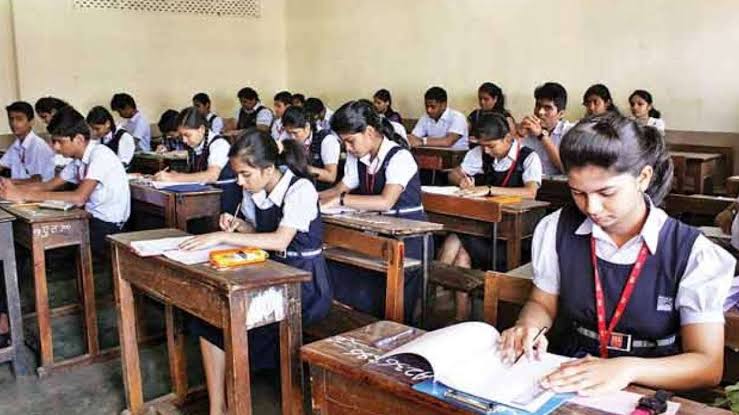
Schools in Bihar will partially reopen from September 28, for students of Class 9 to Class 12 belonging to non-containment zones. An order issued by the state education department on Tuesday said that Classes 9-12 students will be allowed to visit schools for seeking academic guidance, following health advisories and SOPs issued by the Central Government.

However, hostels and coaching institutes in the state will continue to remain closed. Classes 9-12 students visiting schools will be subject to written consent from parents, the order said.

Bihar School Reopening Guidelines & SOPs

  1. No students or teachers from containment zones to be permitted to attend the school
  2. Proper sanitization protocol, as laid out by the Health Ministry, has to be followed before the schools reopen and thereafter.
  3. Only 50 per cent teaching and non teaching staff allowed to schools on any given day
  4. Only one third of students allowed to attend classes
  5. School management would be required to prepare a schedule for the classes such that students are allowed to attend the classes for two days in a week
  6. Wearing for face mask is mandatory for students whilst in schools – in classrooms as well as on the campus
  7. Instructions to manage social distancing properly to be provided to students and strictly maintained
  8. Students will have to carry their own hand sanitisers and wash their hands at regular intervals

Bhagat Singh & killing of saunders

Bhagat Singh was an Indian socialist activist who at 23 years of age made him a hero of the Indian independence movement by two acts of dramatic violence against British citizens in India and his executions.

The Simon Commission was set up by the British government in 1928 to report on the situation in India. The Commission was boycotted by many Indian political parties because there were no Indians in it and there were protests throughout the world. Lala Lajpat Rai led a demonstration in protest against it when the Commission visited Lahore on 30 October 1928. Attempts by the police to disperse the crowd have contributed to violence. Police Superintendent James A. Scott ordered police charges against the demonstrators and targeted Rai personally, who was wounded. On 17 November 1928, Rai died of a heart attack. Doctors suspected that the injuries he had suffered may have hastened his death. The British Government denied any involvement in Rai ‘s death when the matter was discussed in the parliament of the United Kingdom.

Bhagat was a prominent HRA member and was possibly primarily responsible for his change of name in 1928 to HSRA. The HSRA promised Rai ‘s death to avenge her. Singh conspired to destroy Scott in cooperation with revolutionaries such as Shivaram Rajguru, Sukhdev Thapar and Chandrashekhar Azad. In a mistaken identity, however, on 17 December 1928 the plotters shot John P. Saunders, an assistant police superintendent, leaving the Lahore Police Headquarters.

The current reaction to the killing differs significantly from the adulteration which occurred later on. In addition to the HSRA, the Naujawan Bharat Sabha, who coordinated the Lahore demonstration, noticed that attendance at subsequent public meetings was dropping drastically. Politicians, activists and publications, including The People, founded by Rai in 1925, stressed the preference for violence to not cooperate. Mahatma Gandhi, the Congress leader, denounced the killing as a retrograde step but later Jawaharlal Nehru wrote:

         It was not his act of terrorism that made Bhagat Singh famous but because he seemed to comfort Lala Lajpat Rai for the moment, and the nation through it. In just a few months, each village and town of the Punjab and to a lesser extent in the rest of northern India, he became a symbol, the act was forgotten, the symbol remained and resounded with its name. Countless songs about him grew and the popularity that the man got was awesome.

The group escaped from the district police station through the D.A.V. college entrance after the killing of Saunders. Chanan Singh, the chasing head of the Constable, was wounded fatally by covering fire from Chandrashekhar Azad. They then raced away to safe houses by bicycle. A large search operation was conducted by police and all entries and exits from and to the city were blocked; all young men who left Lahore were tracked by the CID. For the next two days, the fugitives concealed. On 19 December 1928, Sukhdev appealed to Bhagwati Charan Vohra to support Durgawati Devi, often referred to as Durga Bhabhi, wife of a HSRA member. Early the next morning, they decided to take the train from Lahore to Bathinda on the way to Howrah.

The following day Singh and Rajguru left the house early, both with loaded revolvers. In Western clothes, Singh and Devi went as a young couple carrying Devi’s sleeping boy, while Rajguru wore their luggage as their servant. Singh managed to disguise its identity during ticket transactions at the station and the three boarded the train to Cawnpore. There they boarded the Lucknow train, as passengers in the direct train from Lahore normally were checked by the Howrah Railway Station CID. Rajguru left for Benares at Lucknow while Singh, Devi and the child went to Howrah and all of these people came back to Lahore a couple of days later, except Singh.

VISIT TO SAGUNA BAUG

Nature is essential to our lives – from the food on our plates to the clothes we wear, from medicines to mental health benefits. Pressures of daily life mean we’re increasingly detached from nature even though nature in many forms is there for us. One such place which made me realize the importance of nature is Saguna Baug which I visited on 23rd December 2019 for our Travel and Tourism Management trip. We reached there by 9:30 in the morning. The journey to there was fun filled with friends. Light refreshment were provided. All students and teacher were served with yummy breakfast cuisines . After that we started our bright sunny morning with knowing the importance of Honey Bees. Bees are known for their elaborate hives. They also build homes for millions of insects. Bees are renowned for their role in providing high quality food like honey, royal jelly and other products used in health care and other sectors (beeswax) etc. A third of the world’s food production depends on Bees. Bees are a sign of well-functioning ecosystem.

After that we were taken for a guided tour. The place is covered with paddy fields, coconut trees, cinnamon, nutmeg, bottle brush, lemon etc. Enjoying the beauty of water lilies and lotus we came to know about rare facts of lotus seed. Lotus seeds are benefiting the spleen, kidney, and heart it also helps stop diarrhea associated with qi deficiency. The seed also has calming properties that alleviate restlessness, palpitations, and insomnia

We enjoyed different activities. For me kayaking was the most thrilling activity among others as my friend and I had a fun time. Then we went for camel carriage ride and it was gratifying experience and the exhilarating Bullock cart ride was entertaining with all my friends shouting and telling the cart driver to stop. We even went for paddle – wheel boating. We even came to know what Mallakhamba is a traditional sport, originating from the Indian subcontinent, in which a gymnast performs aerial yoga postures and wrestling grips in concert with a vertical stationary or hanging wooden pole, cane, or rope. The word Mallakhamb also refers to the pole used in the sport.

They even gave us information about the practice of fish farming. A sustainable approach to fisheries and aquaculture will help to protect our natural resources. Aquaculture, in particular, has tremendous potential to enhance food security. Small-scale aquaculture is especially important for meeting the world’s growing demand for fish. They even told us that Emu farming. The Emu is an Australian flightless bird and its farming is now very well established in states of Maharashtra, Tamil Nadu, Gujarat and Andhra Pradesh. Presently emu farming is also being supported by various government organizations all over India which are providing farmers with offers. It was an unforgettable and fun experience getting to know about the importance of Nature and animal farming. Saguna Baug trip was indeed a very valuable experience for all which gave not only knowledge but memories too.

THE PARTING

Michael Drayton, was an English poet, the first to write odes in English in the style of Horace. The Parting by Michael Drayton is a sonnet. It is a poem about the breakup of the relationship between the poet and his companion. This sonnet has a very strict form and the poet has been cautious in composing his poetry, to assure that it fits the design constraints. The sonnet is very short, it consists of only 14 lines. Oftentimes, he has to synopsize in a single line of the poem, something he would ordinarily have penned a. The line, “Shake hands forever, cancel all our vows” summarizes quite a precise sense of the dispute signifying enduringly, with no chance of reconciliation. There is a change from the aggression of the first half of the poem, there remains a slight hint in the second half, as the author threatens his lover, telling her that if she leaves him, then she will be a murderess, who has killed not only their endearment but love itself. The language is harsh and cold, and after the Volta, in the third and fourth quatrains, the language is softer and more personal. Again, this is a function of the form of the sonnet; there must be a drastic change of ideas after line eight. For example, there is the brutally aggressive “you get no more of me” in the second line, and the much gentler “Now at the last gasp of love’s latest breath”. The poet uses the Volta not just to change the language but also to the entire message. Instead of pushing her apart from him as he did in the first eight lines, he is now emphasizing her of how consequential the end of the relationship will be. He goes from demanding to practically pleading. The orders in the first two quatrains such as “be it not seen” are replaced with conditionals, such as “if thou would’ st”; it seems almost as though he is pleading with her. Also, worth noting is how he goes from using the aggressive “you” to the gentler “thou” after the Volta.

In a sonnet, the rhythm is always iambic pentameter, which means that there must always be ten syllables per line, with each second syllable being stressed and the author breaks this pattern. Besides, to the constraints of the number of lines, because of which the poem is compressed, simplifying the poem’s purpose, and enhances it. For example, in the first line, “SINCE there’s no help, come let us kiss and part— ” there should be no stress on the third syllable, but the author has written the poem so that there is, stressing the “no” and giving weight to the preciseness of the first two quatrains. The author again breaks the rhythm in the last two lines that are ” —Now if thou would’st, when all have given him over, From death to life thou might’st him yet recover.”  using eleven syllables instead of ten. This is not a blunder or an accident, it has been done for one of two purposes; to add importance to these lines because it appears out of place due to their length, or because the poet thought that he clearly could not sum up his feelings in the eleven syllables that the conventional sonnet allows him. When looking at the rhythm, we should look not only at the line length but also at the rhyme scheme. In the first two quatrains, the rhyme words are very harsh, distancing the author from the poem. For example, there are the very harsh consonant sounds of “part” and “heart”, However, in the third quatrain, there are much softer sounds, such as “breath”, “death”, “lies” and “eyes”. The harsh ‘r’s and ‘t’s are replaced by softer ‘th’s and ‘s’s. This pattern is mirrored throughout the poem; in the first two quatrains. 

The structure of the sonnet has considerably added to the essence of the poem. In perfecting the poem to suit the constraints, the poet has illuminated the message and intensified the sense of what he is trying to say. Besides, where the poet for some purpose breaks the rules of the poem which adds more meaning to the poem, highlighting specific elements and making other parts exceptional.

Developing a Drug-Free Lifestyle

Hello readers I am the intern of HARYALI NGO and want to share my thoughts through this article ,so please read this, may be it would be helpful to you😊.

If you are trying to maintain abstinence from alcohol or drugs over a long period of time, it is important to develop a drug-free lifestyle in all aspects of your life—at home, at work and during your leisure hours.

How to Build an Alcohol Free Social Life After Rehab

If you sought treatment from a professional rehab program for your alcohol or drug problem, one of the most important objectives of your continuing or follow-up care is to help you learn to replace your previous destructive behaviors with more healthy and productive alternatives.

Supportive Friends and Family

One of the first steps in developing a drug-free lifestyle is to avoid those people who were directly involved in your former drinking or drug-using lifestyle—those who helped you get drugs, use drugs or were your drinking buddies. 

Developing a Structured Schedule

Another important aspect of developing a drug-free lifestyle is to develop a structured daily schedule that you can consistently follow. Structure and organization in your life can be your best friends in recovery, while a chaotic and disorganized lifestyle can be your enemy.

Developing Larger, Expanded Goals

While maintaining your sobriety remains a high priority in your life, in order to develop a long-term drug-free lifestyle, it is helpful to identify larger goals for your future. Now that you have achieved more than 90 days of abstinence, you will probably begin to develop larger, long-term goals such as going back to school, changing career paths or saving toward financial goals.

Developing Spirituality

Spirituality can be an important factor in any successful recovery program. It involves connecting to a power that extends beyond the concerns of daily living. Your counselor will encourage you to become involved in efforts “greater than yourself” such as doing service work for your support group, becoming more involved in your religious organization, doing community service or volunteering for charity work.

THANK YOU

Tariq Anwar honored by All India Qaumi Tanzeem

Tariq Anwar was honoured by a welcome reception thrown by the All India Qaumi Tanzeem.


He has been elevated to the All India Congress Committee (AICC) as a general secretary and was also Included in the top most policy making part – Congress working committee (CWC) for which the ceremony was conducted.


It was organised under the guidance of Abdul Sami Salmani, director of AIQT, Delhi. On this occasion. The Delhi director and the South Delhi Director Syed Kamruddin, Both said that Tariq is a known face in the Congress party, experienced politician and the party will be benefited after this elevation. The both thanked the Congress President Sonia Gandhi and Rahul Gandhi and added that the Tanzeem will work towards strengthening the party.


Syed Kamruddin said, “Static unwed has a clear past and we will all play an important role in making the Congress stronger. We will follow the rules of Tariq ji because His previous tenure cannot be forgotten as he always worked for the betterment of the society as a whole, without discriminating. The Congress took the right step at the right time.”


Abdul Sami Salmani said, “In the past, Tarik Anwar has been honoured with this position, He has great achievements in that tenure and will have that in future too.”


Maulana Allauddin, MD. Imtiaz, MD. Yusuf Chowdhury, Shankat Ali, Subrat Ali, Foorkhan Salmani were also present in this reception.

Fake Job Rackets Are Increasing Due To Shrinking Jobs

Fake job offers being reported is on a constant rise. With no practical workplaces, and employees interacting with customers face-to-face without supervision, on-demand economy runs with a risk of reputational risks of hiring fraud, unethical candidates with possible criminal background, fake identity or mal-intentions.

Al Zahra Hospital Dubai - Beware of Fake Job Offers: There has been an  increasing number of 'fake job' reports where fraudsters have reached out  to unsuspecting job applicants and made fake

Job seekers need to be more aware and cautious. The world is connected now and a lot of information is available online with forums, news and company details. One simple check is that no genuine recruiter would ask you to pay for hiring you. If there’s any discussion of paying in advance, it’s most likely a fraud. Second, research about the company online – its office locations, its hiring & interview process, its empanelled recruiting partners etc. Most companies have their process mentioned on their website. In case of any doubt, a candidate can get in touch with the company through contacts mentioned on the website.

Ashiztooambitious: Fake Job Alert & Beware of these fake job offers

Big companies are used by fake job racketeers to allure their prey because there’s a sense of aspiration attached with working for such companies. Plus sectors like IT, ITES hire in large volumes and various information becomes accessible to manipulate. While it’s a huge hit to careers and morale of job seekers along with financial loss, it is likely damaging the reputation of these companies. Many companies have become wary of these trends but many are still to take strict actions. Companies can be transparent about their job openings, hiring process, recruitment calendar, empanelled partners etc. They must look out for fake websites and social media handles in their names. Today, technology can resolve many authentication concerns like digitally secure offer letters.

Many job scams like many other crimes go unreported due to lack of proper channels and tedious law & judiciary process. But this is changing as we see more than 3700 incidents being reported till Oct this year in comparison to 1800 same time last year. 

It’s important to report and highlight these scams to make people realize the extent of this problem. News about these frauds, candidates’ stories and experiences could be learning for many seekers. Law enforcement is another area to ensure trials and strict punishments for fraudsters. At a macro level, where the education system needs major improvements, such stories can build awareness and sensitize job seekers to be more careful, savvy and diligent while seeking jobs.

Anniversaries (as of 2019)

150th birth anniversary

•Mahatma Gandhi, the father of our nation is an inspiring person, who shaped world history. Gandhiji stands out among the great men of the world as a symbol of non violent resistance to political and social repression. Mohandas Karamchand Gandhi was born on October 2nd, 1869 in Gujarat. He became the leader of a movement that attracted millions in the struggle for freedom. He was strong advocate of non-violence. India got freedom on August 15th, 1947. Gandhiji was assassinated on January 30th, 1948.

100th birth anniversary

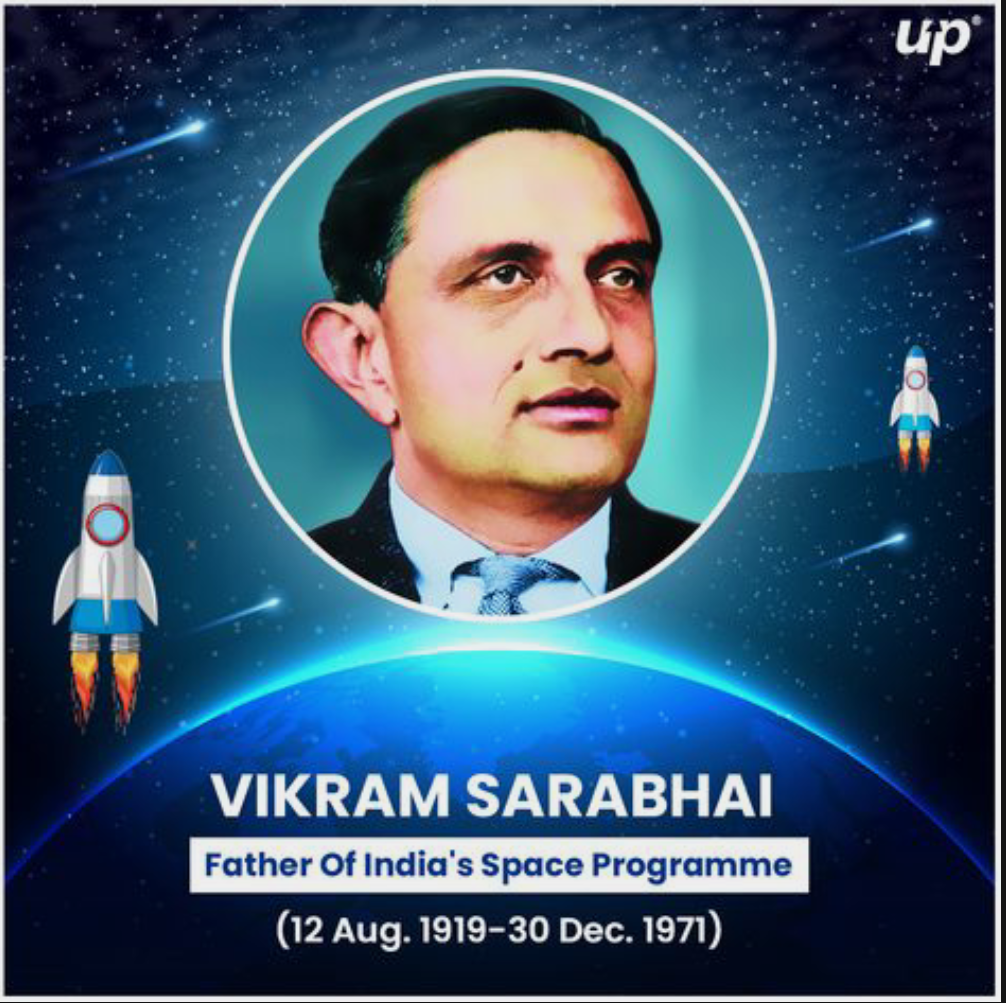
• The year 2019 marks the 100th birth anniversary of Dr. Vikram Sarabhai, the father of the Indian space programme. He was born on 12th August, 1919. Dr. Sarabhai has put India on the international map in the field of space research. In 1962, he became chairman of the Indian National committee for space research. The establishment of the Indian space research organisation, also known as ISRO, was one of his greatest achievements. Dr. Sarabhai died on 30th December 1971.

500th death anniversary

• Leonardo da Vinci was perhaps the most widely talented person ever to have lived. He was a consummate painter and sculptor, a great inventor, military engineer, scientist, botanist and mathematician! He lived during the Renaissance in Italy and while working in Milan as an artist, he began writing texts for his students and apprentices. His notebooks covered more than 1000 pages of observations and illustrations. They remained unpublished for more than a century and were printed only after his death. He was born on April 15th 1452 and died on May 2nd 1519.

150th anniversary

• The period table gives us information about element symbols and atomic weights. It brings order to information about the chemical elements and helps chemists to understand why elements react as they do. The milestone in the development of the periodic table was set by the Russian chemist Dmitri Mendeleev in 1869, who is acknowledged as the ‘father’ of periodic table though the title is also claimed by the German scientist Lothar Meyer. Today, the periodic table organizes the elements by order of increasing atomic number.

150th year of publication

• 2019 marks the 150th year of one of the greatest novels ever written – Leo Tolstoy’s ‘War and Peace’. This classic work from Russia was first published in the book form in 1869. Tolstoy took almost 7 years to finish this epic work and a Russian magazine named ‘Messenger’ serialised some portions of it during 1865-67. But the full novel came out as a book only in 1869. The story woven around Napoleon’s invasion of Russia covers a period of over 15 years. The unique literary style and the historical context make ‘War and Peace’ a monumental work.

125th year of publication

• Is there anyone who isn’t familiar with the famous character ‘Mowgli’? Hopefully none. The main character of the evergreen ‘Jungle Book’, a collection of stories written by Rudyard Kipling is a huge part of our childhood. ‘The Jungle Book’ was first published in 1894.

100th anniversary

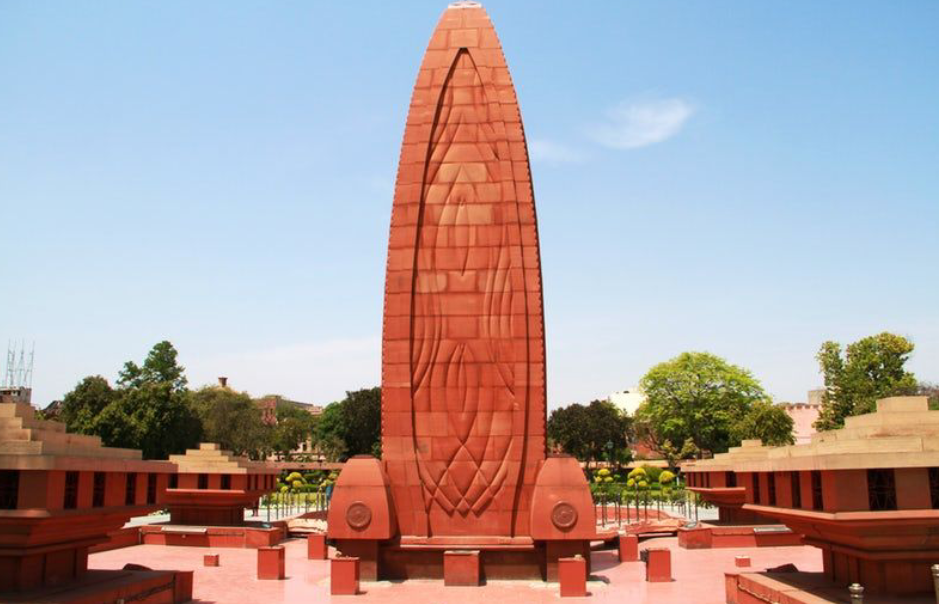
• The Jallianwala Bagh massacre was a turning point in our freedom movement. The British troops under the command of Colonel Reginald Dyer, opened fire on unarmed Indians on 13th April 1919. This event took place in the heart of Amritsar. Hundreds were killed and thousands injured. This was followed by widespread protests across a grieving country. Many Indians became convienced that the British had to be paid back in their own coin that violence has to be met with violence. The 100th anniversary of that cruel incident fell last year.

300th year of publication

• Daniel Defoe’s ‘Robinson Crusoe’ has fascinated readers around the world for the last 300 years. Daniel Defoe was an English writer, famous for his novel Robinson Crusoe that was published in 1791. One reason for it’s popularity is that it us packed with excitement and adventure, with sailing ships, stormy seas and guns. Without doubt, Defoe’s ‘Robinson Crusoe’ established a realistic style of fiction and set the tone for modern novels.

Thank you for reading. Have a nice day!🌼

Quicksand

You might have come across this term manner times,maybe even witnessed it. Movies love to portray at least one scene of quicksand. You might’ve even seen the ‘forwarded’ messages where one is literally bouncing on the ground. How does this happen. More specifically,why does it happen? 

  • What is quicksand?

Okay,let’s not dig directly into the concept. First….. Let’s get to know about what exactly is this quicksand. So,have you ever seen people playing and diving in oobleck? What is this ‘oobleck’? Basically,oobleck is cornstarch or cornflour +water. When you mix water with this oobleck, it does something completely ofbeat.If you’ve not seen this ‘oobleck’ then just grab on some cornflour and water and mix them. But…what does this imply and how the heck is it related with quicksand??!?

Okay! No more suspense! Let me ask you something. Do you believe this statement that everything in this world is made of some..or the other ‘matter’. First of all,why should I believe in these statements just because my textbooks say so. Well, actually it’s completely on us whether to believe these statements or not. By believing these factors, these statements,these assumptions,we can categorise,classify and discover many more things. And the species of humans are achingly curious. They do not limit anywhere and continue to explore,invent and discover. So,by the statement that ‘everything is made of some ‘matter’ or some basic ‘elements’ is our own postulates which actually help us to live in a better way. So ya,to understand a few concepts,you have to accept these postulates even if they are wrong. (Just like I have to get an yearly paid membership to binge-watch various shows,even if that means pulling up and all nighter. Sad? I know..)

 In our textbooks this diagram is very common,

Matter→ Molecules→Atoms→ Electrons,Protons,Neutrons

So,this statement is pretty contradictory about an atom being invincible because then your next statement is that an atom is made up of three things and we will not delve into that part,at least not for now.

So ya,oobleck also has some particles in them. Alright,till the all cool. But this is when it’s dry and something very enthalpy. And what is that….??

Okay,so you might have believed until now that,’Physics and chemistry applies for non-living beings and biology is the only branch where living things’   Hate to make this complicated for you but,All The Three Branches Of The Above Science Apply To Everything Which Belongs. Which is why they are branches of science. What is Science? Anything which is studied deeply is called a science of that particular object.

Oobleck,when dry has some particles in it,and when you play with dry corn flour,it has small particles which distribute themselves when you play with it. But upon adding water,this distribution kind of changes. Now it becomes a sheer thickening liquid. What do mean by sheer thickening liquids? Basically,it reacts to pressure in a different way than normal liquids do. That is,upon applying pressure,it acts like a solid and upon releasing the pressure,it acts like a liquid. Which basically gives it one more synonym: a Non Newtonian liquid. ‘Liquid’ would arise yet another contradiction and therefore the term  ‘mixture’ is more preferable.

Now that you know oobleck,just know that quicksand has almost the exact properties that of oobleck. Quicksand is nothing but water mixed into the sand. Only that this ‘mixture’ is present in large quantities and  occures naturally without any human interference . By this, I mean that none of the human interference end up being the result of  the formation of quicksand. The only difference oobleck and quicksand is that sand is much more 

‘granular’ than oobleck and this makes it a bit different from oobleck.

Source:Pinterest

  • What makes quicksand harmful?

Well well, here’s the thing which is mind boggling, isn’t it? Quicksand, initially acts like a vacuum.Why?How? Well because of its sheer thickening property, anything and everything which stands still on its surface,the objects tends to get sucked inside the quicksand. The formation of quicksand can also be observed in forest in the cases of ‘granular soil’ mixed with water. As per experiments,as sand is more granular and has more minute particles in them,the quicksand free near the forests are usually more dangerous. Ultimately,if you just run on a quicksand it would  not engulf you,unless you stand still or dump in right into the quicksand,the quicksand will not gulp you. Just remember the property of the sheer thickening mixtures,and be a bit more watchful and..You’re good to go!

  • But what if you did manage to get yourself into quicksand?

First of all,that would not be pleasant. But if you did,then your only chance is to make space or a greater surface area. Usually, quicksand pits are not all that deep,and normally can come up to an average adult’s  waist. But do not be faxed by this,there were cases when two people who unknowingly stepped on quicksand died of choking because the pit was too deep. First of all,DO NOT PANIC. Every situation can be handled smoothly if you stop ripping those hair off your head. One can bend behind to create a surface area or keep on wiggling your feet. DO NOT try to fight quicksand by shaking your whole body. The less mass on you,the better. As a precaution,be careful and gentle while shaking your feet because any carelessness can result in severe damage. Many types of ‘survival instincts’ can be found with illustrations by experts on sites. At least I haven’t gotten the pleasure to see a quicksand pit. So,even if I do tell you a lot,I still can’t describe more. Because  I can just give you a theory. The practical use is all upon you!!

Fact: Quicksand is twice as dense as us!!

Affirmative Action in India : Across these years

Introduction of the Affirmative Action in India

The first backward classes had appeared in India in 1870’s in Madras Presidency. It was under the British they the ‘shudras’ and ‘untouchables’ grouped together as the backward classes. This lead to an increase in the number from 39 to 131 in 1920. In 1925 the depressed classes were separated from the untouchables. After independence Nehru gave them a new name the “other backward classes”, classes other than the untouchables and tribes. The constituent Assembly of that time initiated article 340 which stipulated the president to appoint a commission in charge of identifying the socially and educationally backward classes and suggest measure to improve the condition of OBC’s.

Under Article 340 the first backward commission which is known as the ‘Kaka Kalelkar Commission was appointed in 1953. It submitted it report in 1955. And they included 4 major criteria for classifying the OBC’s

  •  A degraded status
  • Lack of education
  • Under representation in the civil service
  • Under representation in the secondary and tertiary sector

But this report was rejected by the chairman saying that it went against the objective of creating a classless society. The quota system which was introduced by the British in the British India and Princely state based on caste was questioned after independence. The socialist party which was found by Ram Manohar Lohia passed a resolution in favor of reserving 60% of civil services jobs in the OBC. He is an ardent advocate of affirmative action. He called it as positive discrimination. Chaudhary Charan Singh also played a crucial role in mobilizing OBS’s in Uttar Pradesh and formed a party called as the Bharatiya Lok Dal. It had its support among the middle caste peasants and jats.

1967 elections marked the successful win of the backward classes over the congress in 8 states. Even though it won it couldn’t stay in power for a long time since the party was a coalition.

Article 341 and 342 of the constitution had listed a number of castes and tribes who were to get the affirmative policies and they are listed as the Scheduled Caste and Scheduled Tribes. As a result of this a positive discrimination such as reserving seats for these classes were done at the national and state level in university positions and public service commission. In 1979, a commission under the chairmanship of B.P.Mandal – popularly known as the Mandal Commission – was established by the ruling Janata Party under the Prime Ministership of Morarji Desai with the objective of identifying the Other Backward Classes. In 1980, it published its findings, placing a total of 3428 ‘communities’ in the OBC category, comprising 54.4 percent of the country’s population.

 The Mandal Commission recommended that there should be employment quotas in public sector organizations (including nationalized banks and private sector undertakings which received financial assistance from the government in one form or the other) and reserved places in higher educational institutions of 27 percent for OBC in addition to the 25.5 percent job quotas and seats in higher educational institutions that were already in place for SC and ST . The figure of 27 percent was arrived at as the Supreme Court limited total reservations to under 50 percent.

As a matter of fact the need for Affirmative action for the SC/ST was always accepted since the post-independence period by the congress because these people were not a threat to the dominance but this couldn’t be said in the same for OBC since they were in large numbers across the country. The constituent Assembly did not enter into debate over this. Instead it added the Article 340.

The importance of implementing affirmative action laid in its after effects. If this was successfully implemented then the lower castes and classes would be brought into the limelight and would also get the same opportunities as the rich and higher classes do. They will be having equal opportunities in the government sectors. These people who had historically faced discrimination would now be having equal opportunities. This can lead to improved lifestyles for the lower caste people. When more representation is given in the electoral sector, their voices will also be heard. This can serve justice to their unheard voices of the past years. Now with their leader in power they could also come forward.

Government under the then Prime Minister Morarji Desai. The Commission was chaired by an MP, B P Mandal. The chief mandate of the Mandal Commission was to identify the socially or educationally backward classes of Indiaand to consider reservations as a means to address caste inequality and discrimination. The Commission submitted its report to the President on 31st December 1980.

After India achieved independence, affirmative action started for the “Depressed Classes” or the Scheduled Castes and Tribes providing benefits to the most backward and socially ostracised of India’s communities. However, there were no benefits or even a list of the country’s other backward classes, which although not as politically and socially backward as the ST/SCs, but were still marginalised in society, and behind forward castes in fields of education, employment and economic development. To address this problem, the country’s first Backward Classes Commission was set up headed by Kaka Kalelkar in 1953. This was also called the Kalelkar Commission. In 1955, the commission submitted its report which stated that there were 2399 backward groups in India out of which 837 were ‘most backward’ and the major evidence of backwardness cited was caste. However, the Union Government, in its pursuit of ultimately creating a casteless society, rejected its recommendations.

Affirmative Action Policies

Various policies have been taken under Affirmative Action. Some of the important ones are as follows

  • In 1935 itself under the Government of India Act, various castes were listed deserving special treatment. And extensions in the list were made in 1990’s to the OBC’s
  • Reservations in the State and Central legislatures, in the government jobs across all the sectors and in educational institutions too.
  • Caste Disabilities Removal Act of 1850
  • Article 17 of the Indian Constitution
  • Prevention of Atrocities(against SC/ST communities)  Act of 1989.
  • 93rd amendment act provided for reservation

Success of Affirmative Policies

Over time there has been a considerable increase in the share of SCs and STs in government employment and educational institutions. Reservations in the legislature have also provided a space for SCs and STs in the executive and in the decision-making process. The formal reservation policy in the government sector, and the general developmental and empowerment measures in the private sector, have also contributed to an improvement in the human development of SCs and STs. However, during the course of the implementation of India’s reservation policy some problems have become apparent. First, the success of the policy has been uneven across sectors and departments. Second, the policy is limited to the government sector, while more than 90 percent of SC and ST workers are employed in the private sector. Finally, despite the improvement in human development among SCs and STs, disparities in attainment with non-SCs and non-STs persist even to this day. This indicates that addressing social exclusion is often a far more difficult challenge than anti-poverty policy.Reservation is accompanied by other provisions designed to increase the ability of SCs and STs to compete for government jobs. These include the relaxation of minimum age for entry into the service, relaxation in the minimum standard of suitability (subject to a required minimum qualification), the provision of pre-examination training, separate interviews for SCs and STs, and representation of people with SC or ST backgrounds on selection committees.

The Central Government has developed an administrative mechanism for regulating, monitoring and implementing the reservation policy. The main institutions involved are the Department of Personal and Training, the National Commission for SCs and STs, the Committee of Parliament on Welfare of SCs and STs, the Ministry of Social Justice and Empowerment, and the Ministry of Tribal Affairs. The DOPT regulates and monitors the reservation policy in government services. Its main function is to enforce the rules and monitor the fulfilment of the quotas. It is supported by administrative units within each Ministry and/or government supported organisation. The National Commission for SCs and STs has responsibility for investigating specific complaints received from SC or ST employees regarding appointment and promotion matters. The Commission has the power of a Civil Court, and can call employers for enquiry. It also prepares an annual report which has been discussed in the national Parliament in every year since 1950. The Ministry of Social Justice and Empowerment and the Ministry of Tribal Affairs are responsible for the all-round development of SCs and STs, and carry out various schemes related to education and economic development. The Committee of Parliament on Welfare of SCs and STs, which is comprised of the SC and ST members of parliament, is entrusted with examining progress regarding the legislative representation of SCs and STs, and also makes recommendations for effective implementation of policies and programmes.

 The number of SC and ST employees has also increased significantly in public sector undertakings, nationalised banks, and public insurance companies. There are, however, variations between different type of jobs, and quotas are much closer to being met in lower categories of jobs. Reservations in political representation are accompanied by a time limit. They were initially provided for a ten-year period, with a provision for extension every ten years (the present extension is up to 2010). By contrast, in the areas of government services and education it is left to the government to use reservations up to the point where it is considered that discrimination against SCs and STs is no longer a major problem. There is a minority view which expresses concern about the extension of reservation policies without a time limit. Nevertheless, the majority view is in favor of extension as long as discrimination and social exclusion of SCs and STs persists, and there is general support in government for

Over time there has been a considerable increase in the share of SCs and STs in government employment and educational institutions. Reservations in the legislature have also provided a space for SCs and STs in the executive and the decision-making process. The formal reservation policy in the government sector and the informal affirmative action policy in the private sector have also contributed to an improvement in the human development of SCs and STs. However, the rate of improvement has been rather slow, and disparities in human development attainment between SCs and STs on the one hand, and non-SCs and non-STs on the other, continue even today. During the course of the implementation of India’s reservation policy, some problems have become apparent. First, its success has been uneven across sectors and departments. Generally speaking, participation of SCs and STs is close to their population shares in lower categories of jobs, but much lower than their shares in high-grade positions. Due to indirect resistance, the extension and spread of reservation policy to several government sectors has also been slow. Another issue is the demand by SCs and STs to extend formal affirmative action policy to private sector employment and private educational institutions. This is currently under active consideration by the government. reservation policies without explicit time limits.

At the end of the end it is not just in the hands of the government to help them but also they should take initiatives an come into the limelight. Many backward classes people have published books detailing their experiences and so on. More or less people are treated equally but even so sometimes we can hear news of people being discriminated and so on. India has a long way to go in this matter


Implicit and explicit type conversion in C

Some of the primitive sata types in C are int, float, double, char etc. We know that int is a small data type and double is a large data type. We say this by comparing the range of the data types. The data type, it’s storage and range is given in following table.

Data typeStorageRange
char1 byte-128 to 127 or 0 to 255
unsigned char 1 byte0 to 255
signed char 1 byte-128 to 127
int2 or 4 bytes-32,768 to 32,767 or -2,147,483,648 to 2,147,483,647
unsigned int 2 or 4 bytes 0 to 65,535 or 0 to 4,294,967,295
short2 bytes-32,768 to 32,767
unsigned short2 bytes0 to 65,535
long 8 bytes-9223372036854775808 to 9223372036854775807
unsigned long8 bytes0 to 18446744073709551615

Implicit Type Conversion

C permits mixing of constants and variables of different types in an expression. C automatically converts any intermediate values to a proper type so that the expressions can be evaluated without losing any significant. This automatic type Conversion is known as Implicit Type Conversion.

During evaluation, it binds to very strict rule of type conversion. If the operands are of different types then the lower type automatically gets converted into higher type before the operation proceeds. The result is of higher type.

Consider the following expression in C,

int x = 10;
char y = 'a'; 
x = x + y;
printf(“%d”, x) ;

Output: 107

Below is the sequence of rules that are applied while evaluating the expressions.

All short and char are automatically converted to int. Then,

  1. If one of the operands is long double, then the other will be converted i to long double and the result will be in Long double.
  2. Else, If ine of the operands is double, then the other will be converted into double and the result will be in double.
  3. Else, if one of the operands is float, then the other will be converted into float and the result will be in float.
  4. Else, if one of the operands is unsigned long int, then the other will be converted into unsigned long int and the result will be in unsigned long int.
  5. Else, if one of the operands is long int and the other is unsigned int, then 1. If unsigned int can be converted into long int, then unsigned int operand will be converted and the result will be in long int. 2. Else, both Operands will be converted into unsigned long int and the result will be unsigned long int.
  6. Else, if one of the operands is long int, the other will be converted into long int and the result will be in long int.
  7. Else, if one of the operands is unsigned int, the other will be converted into unsigned int and the result will be in unsigned int.

This automatic type conversion of lower data types into higher is called Implicit Type conversion. In implicit Type conversion there is no data loss occurs.

Explicit type conversion

The final result of an expression is converted to the type of the variable on the left of the assignment sign before assigning the value to it. However the following changes may occur during the final assignment.

  1. Float to int causes truncation of fractional part.
  2. Double to float causes rounding of digits.
  3. Long int to int causes dropping off the excess higher order bits.

So here in the above example, the right side expression of the assignment operator is evaluated and will be of type double. But this double value has to be assigned to the variable x, which is of type int, which is lower data type compared to double. The process to convert higher data types to lower types is called explicit type conversion. I explicit type conversion some data loss occurs as said in above there points.

so, to convert higher data types to lower, the syntax is:

lower_data_type_variable = (lower_data_type)higher_data_type_variable;

Example,

int y;
double d=11.22;
y = (int)d; //this gives double value in int by truncating fractional part.
printf(“%d”, y) ;

output: 11

How to get the right solutions in life by The lessons and learning of others

Article by – Shishir Tripathi

Intern at Hariyali Foundation
In collaboration with
Educational News

Article by – Shishir Tripathi

Intern at Hariyali Foundation
In collaboration with
Educational News

In life an individual faces different types of problems every day. Each time a person falls, stands up, walks and again falls. The same cycle repeats everyday and hence every time with almost everyone. Sometimes, there are the life experiences which help the person to stop doing those things which cause trouble to him in future. Whereas, sometimes when caught in strange situations, a person needs help from outside.

There are friends, mentors and especially parents to help and guide in such tough walks of life. Even sometimes, when people are hesitant they start searching solutions to problems from the World Wide Web i.e., Internet. People start searching solutions form influencers available on different platforms like YouTube, Facebook, etc.

The person who has faced problems in life is the one who’ll be able to understand and feel that how it feels when there is no way to go out of that situation. People need a support just even from a pebble, for coming out that dark ocean of problems. A hand of affection, love and also good advice is just sufficient to help a person stand up and start walking again. But things don’t go as simple as they are said and written. There are problems at ground level which are needed to be talked about.

Parents, family, friends, mentors and everyone want the person to come out of the situation and become happier and normal like previously. Man being a social animal, needs love and attention. Attention for his problems, attention for his difficulties. Hence, everyone tries to give the best possible solution to person.

Everyone tries to give advices and solutions to the person from their own life experiences, the situations they’ve encountered, the type of people they’ve met, the type of life they’ve lived and the habits and the lifestyle they’ve followed themselves. People always try to uplift their loved ones from the dark ocean of confusion and sadness.

But it is generally heard from people that they are not able to solve problems in life even after the suggestions and advices from their loved ones. Now the problem arises that why this happens?

This basically happens with everyone. For instance a medicine used for curing a particular disease cannot be used for curing some other disease. The other disease will not get cured, but some other complications will occur to the patient. Similarly, life experiences and solutions from one person’s life cannot be the clear cut solution in some other person’s life. The reason being that each person is different, their thinking is different, lifestyle is different and entirely all the aspects of their lives are different.

Now question arises that how to solve such problems and get back to a normal life. The solution too is again very, very simple. Calmly, just listen to the advice the people, the loved ones of yours are giving to you. Now as you know that you live a different life with totally different thinking then try finding out similar ways to solve the problems by taking into consideration, the solutions by others. Now what happens if you find a solution by some other person better? Just don’t blindly follow people and try to deeply ponder upon the after effects and the probability of the accuracy of the solutions.

Whenever in life, you face some problem; just don’t at all remain quit. Try to discuss it with your parents or friends or your wife or even your children too (if they are well grown and turned into adults). Try finding different approaches to the problems in life and after all the analysis just follow one way, one solution and one remedy. If it works then thank God and person who gave the advice and even if it doesn’t works have faith on yourself and hope in your heart. Try different solutions in life and whichever suits you, follow it and start walking again with your head raised high, smile on your face and hope in your heart.


Therefore, in such way you’ll be able to cross each sea of difficulties gracefully.

Issues related to Food Security: Few points from FAO’s recent publication

Food is most important for all human beings and that is why a baby immediately after his/her birth cries and mother gives her milk. After passing of time, we require different types of food including veg and non-veg as desired by the person, inter alia of which are carbohydrate, protein, vitamins, minerals etc.  In the world an organisation that has been doing research on eliminating hunger and improving nutrition is popularly known as FAO i.e.  Food and Agriculture Organization (FAO), oldest permanent specialized agency of the United Nations, established in October 1945 with “the objective of eradicating hunger and scaling up of nutrition and standards of living by increasing agricultural productivity”. Recently, FAO has published a Report under the banner of “THE STATE OF FOOD SECURITY AND NUTRITION IN THE WORLD, 2020”. A few points based on the Report are presented here for the benefit of readers and for further academic research by the young researchers. In this context, I wish to mention that I visited FAO, Rome about 10 years ago as resource person and observed they have been doing praiseworthy work.

  1. Let me first present the data and information about the Asia as I am from Asia.  Asia is the home to more than half of the total undernourished people in the world – an estimated 381 million people in 2019. Yet, the prevalence of undernourishment (PoU) in the population for the region is 8.3 percent, below the world average (8.9 percent), and less than half of that of Africa. Another highlighting point is that in Asia the number of hungry people in recent years, has scaled down by 8 million since 2015.
  2. In Africa situation is not rosy. The prevalence of undernourishment (PoU) in Africa was 19.1 percent of the population in 2019, or more than 250 million undernourished people indicating increased percentage which was 17.6 percent in 2014. This prevalence is more than twice the world average (8.9 percent) and is the highest among all regions.

I was in some countries in Africa and observed there are some issues in many countries; one is lack of good governance.

  • Another shuddering point is that as per the publication while in Asia there would be 330 million hungry people in 2030 indicating its share of the world’s hunger would shrink substantially. On the other hand, Africa would overtake Asia to become the region with the highest number of undernourished people (433 million), accounting for 51.5 percent of the total.
  • In Latin America and the Caribbean region, the prevalence of undernourishment (PoU) was 7.4 percent in 2019, below the world prevalence of 8.9 percent indicating 48 million undernourished people. But it is noteworthy to mention that there was a rise in hunger in the past few years, with the number of undernourished people increased by 9 million between 2015 and 2019 in the region.
  • According to the Report 9.7 percent of the world population (746 million people) was exposed to severe levels of food insecurity in 2019. In all regions of the world except Northern America and Europe, the prevalence of severe food insecurity has gone up from 2014 to 2019.
  • While 746 million people facing severe food insecurity are of utmost concern, an additional 16 percent of the world population, or more than 1.25 billion people, have experienced food insecurity at moderate levels. People who are moderately food insecure do not have regular access to nutritious and sufficient food, even if not necessarily suffering from hunger.

  According to WHO, a healthy diet protects against malnutrition in all its forms, as well as non-communicable diseases (NCDs) such as diabetes, heart disease, stroke and cancer. Before conclusion, it is suggested that FAO and other organisations should see that people across the world should get minimum food and for this more research is sine qua non to increase production and productivity of food grains and production of tobacco like crop may be discarded or should be less. Also it is suggested that control of population growth is the need of the hour by adhering 2-Child norm across the world. Also it may be mentioned here that the 1943 Bengal famine, which is estimated to have caused over three million deaths, resulted not from a drought as is widely thought but from the British Government’s policy should not occur in the present world in any form anywhere.

Dr Shankar Chatterjee, Hyderabad

Beauty standards.

Throughout human history, the world has witnessed several unusual and downright bizarre traditions when it comes to upholding standards of beauty. Through the ages, standards of beauty, and the means to achieve them, have tested our limits for gross and gag-inducing phantom pains.

From the long list of strange beauty practices, here is our rundown of the most bizarre rituals from across the world. Beauty truly lies in the eyes of the beholder, or the tribe or community that conditions you to buy in to a painful oppressive notion of beauty. Here’s proof.

1. Receding Hairline.
In 14th century England, the forehead was considered the most beautiful part of a woman’s face, and women went to great lengths to expose their forehead. From plucking their eyebrows to gradually pulling out and reducing their hairline, women tried it all to get the perfect oval face.

2. Men’s calves over abs.
Women’s legs are highly admired these days, but back in the Middle Ages and well through the 18th century, men’s calves were what it was all about. Men wore stockings like women in order to show off their well-shaped calves, and some even wore padding inside their stockings to improve their unsatisfactory gams. King Henry VIII, for example, was renowned for his excellent calves.

3.Beauty Patches were in.
In the 18th century, the previous standard of bare-faced women disappeared, and women began wearing heavy makeup. They also started wearing beauty patches, small pieces of fabric that were adhered to the face. They came in many shapes, such as stars, circles, and squares, and their placement on the face had specific meaning. For example, one by the mouth implied flirtatiousness, and one on the right cheek meant that the woman was married.

4. Dimple horror in the 1930’s.
In 1936, Isabelle Gilbert invented a machine that allegedly created dimples. Marketed to women, the machine had two knobs that pressed into the wearer’s cheeks.
The device was painful, and it didn’t even work. Plus, the American Medical Association said it could potentially cause cancer. Luckily, this trend didn’t last long

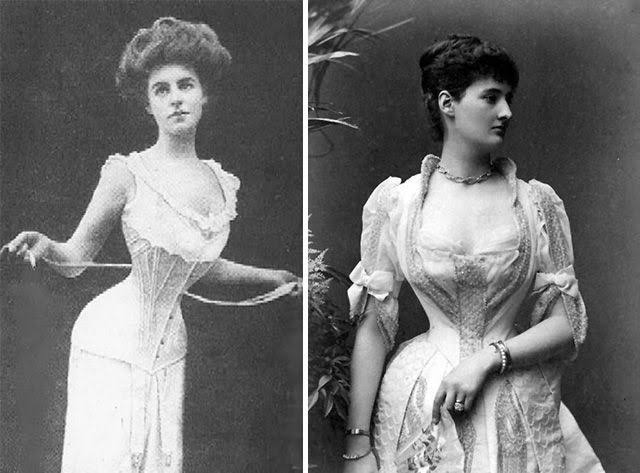
5. Thin waist madness.
Although the hourglass figure has always held a special appeal across Western cultures, the Victorians took their obsession to a whole new level in their use of corsets. These waist-cinching devices, while successful in achieving a “wasp waist,” had some major health repercussions. Besides causing fainting spells, which the era’s ladies unsurprisingly became famous for, the restriction on women’s lungs likely worsened potentially deadly ailments like pneumonia and tuberculosis.

6. Unibrow.
The Greeks embraced a truly low maintenance beauty look: the unibrow. Yes, that’s right—no need for tweezers back in the ancient days. This singular stretch of hair was so desirable—it denoted intelligence—that separated brows were even joined using kohl or dark pastes.

7. Obsession with Fair skin tone.
In India, fair complexion is considered the ultimate beauty standard. Although the natural skin of Indian women is of beautiful brown colour, still they are compelled by society to use products to make their skin colour ‘lighter’ and hence ‘beautiful truly’.

Korean women, also consider fair, very fair skin to be the ultimate beauty standard. In the country, darker skin is considered a sign of low social status and lesser wealth. They willingly hide their naturally beautiful porcelain skin under an artificial sham of blinding fairness.