Reasons for Illiteracy in India.

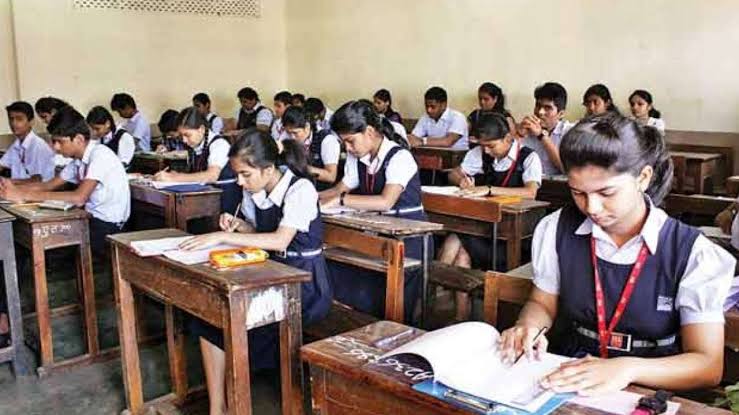
Illiteracy is one of the biggest problems in India. Gone are the days when the basic needs were referred to ROTI,KAPDA AND MAKAAN. There is an addition to it. Now it stands for ROTI,KAPDA,MAKAAN,EDUCATION AND HEALTH.  Lack of qualified education and basic knowledge has resulted in a lack of economic growth. Education is very important for an individual’s mental as well as physical growth. For a country to have a productive Human capital it is important that they are well educated and literate. It is because of the lack of education that poverty exists. The crimes increase because people do not have a living and also a sense of rational thinking. Moreover if we compare the illiteracy rate of women is much higher than men because there are still people who do not believe to educate their girls. The infrastructure for education is also not well developed. The quality of education of a public education varies too much from a private school. And it is the reason that private schools are costlier and not all can afford to go there.

There are several reasons for illiteracy in India. Some of these are :

Less educated parents – There are times when the parents are not so educated and they also lack the knowledge as to why education has such an important role .Therefore leading to less education of their children too.

Lack of Infrastructure – The educational infrastructure is still not developed as the way it should have post so many years of Independence. Due to which there are still people who can not access education. It is the duty of the government to reach out to the most vulnerable sections of the society.

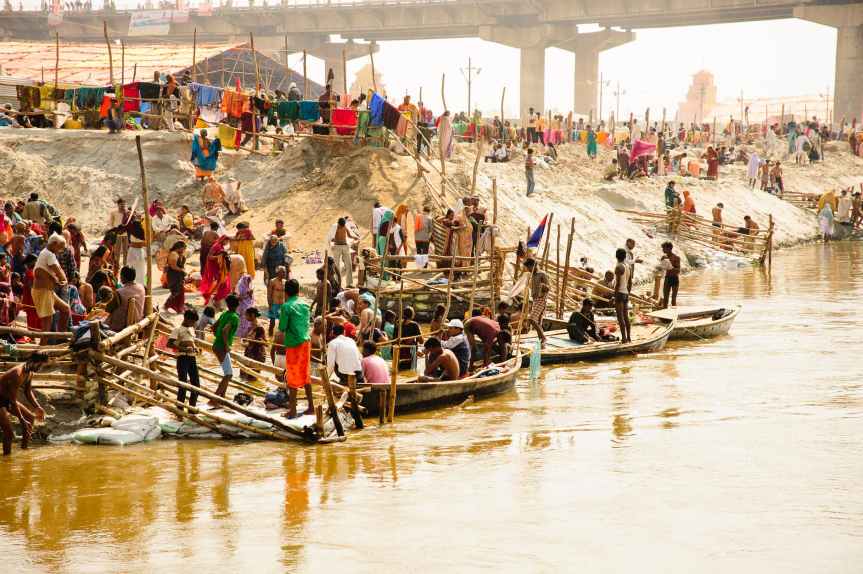
Poverty- This is the root cause of Illiteracy .There are still people who do not have access to proper food, shelter and clothing . They can not afford to even send their children to school and are forced to put them to work may be in the farming activities or any other form of work they are in.

Population – The rapid increase in population also plays a role in the increasing rate of Illiteracy. The resources are scarce and the users are in great numbers . The poor people think that if they have more number of children and send their children to work they will earn more living and so instead of education they force them to work.

Corruption – The red tapism and corruption have led to this condition. The funds provided for deducation are often misleaded and and are used for filling the pockets of the officials.

Brain Drain- The educated people in India often take a decision to settle abroad or find a job there because they do not get their favorable job in India. They feel their talent is under utilized and thus they move abroad leading to brain drain in the country.

Backward thinking – The gender biasness still exist in the society . They believe that the education of girls is not so important and so they only send their boys to school further leading to imbalance of education ratio between girls and boys.

Finally for a country to grow and prosper it is really important that it’s citizens are educated enough to contribute to the society. The launching of policies alone will not work what is important is it implementation and effectiveness. There is a lack of awareness among people. It is high time that education reaches to the remote areas as well as the big cities equally and adequately. It is that even after so many years of independence India is still lacking behind in providing education to its countrymen.

Mental Health and Competitive Exams

India’s youth is pushed into participating in a rat race for entry into engineering and medical colleges, which is a whirlpool of broken dreams and identities. Students are groomed to prepare for entrance exams like NEET and JEE, from very young ages. Parents spend lakhs on coaching institutions that enrol children as young as ten years old. The journey to top medical and engineer colleges is filled with cutthroat competition and sleepless nights devoid of age-appropriate activities and socialisation. Many, despite preparing for years, fail to crack these entrance exams, and they often succumb to mental illnesses and stress-related ailments. This statement can be corroborated by a recent study by the National Health and Neuroscience, which found that one in every five teens suffer from some kind of mental illness. 

At any given point in time, millions of students fight with their peers to emerge on top, an exercise that proves to be futile for all but a few. Society expects excellence from all, leaving no room for average lifestyles and humble aspirations. Performances that are no worse than what would be expected from an average student inspire shame and admonishment from demanding parents and mentors. Students are expected to sacrifice their social life and coming-of-age experiences and devote their youth to the pursuit of ranks. Failure is simply unacceptable both to parents and to students who find themselves robbed of their childhood and their dreams. The result is that students are conditioned to be more afraid of failure than death itself. 

Entrance exams are winner-takes-all games where a handful of students monopolise the best institutions in our country. The stakes are high for students and thus, their stress levels skyrocket. Anxiety and depression are common among students, who are told to ignore them and soldier on. Society views health through a reductionist lens, only acknowledging physical diseases. Quality of life and mental health are equally ignored by parents and teachers who push students to touch the sky regardless of their inherent intersects and abilities. Deaths by suicide among students are spiking even as we, as a society, fail to re-evaluate the systemic failure of our education system. Why is it that we fail to free our children from the shackles of our own unfulfilled dreams and unrealistic expectations?

It is important for students to forge meaningful relationships with their peers and their family. A strong social support system is needed for a child to bounce back from psychological distress caused by competitive exams. Students should be allowed to choose their own vocation instead of conforming to the medicine-engineering binary that has been imposed on them. Failure should be treated not only as normal but as a welcome experience that teaches valuable lessons to students. Even the students who succeed in entrance exams are not free from the toll the preparation takes on their mental health. Students in esteemed institutions fail to cope with the stress that comes with living in a high-stress environment, and may even choose to end their lives to escape the never-ending spiral into progressively building expectations.

Bhagat Singh & assembly incident

Bhagat Singh was an Indian socialist activist who at 23 years of age made him a hero of the Indian independence movement by two acts of dramatic violence against British citizens in India and his executions.

For some time, Singh had been using the power of drama as a way to encourage the rebellion against the British, purchasing a magic lantern to display slides that enlivened his talks about revolutionaries such as Ram Prasad Bismil who had died as a result of the Kakori conspiracy. In 1929, he suggested a dramatic act to the HSRA intended to obtain significant attention for their aims. His intention was to blow a bomb inside the Central Legislative Assembly, inspired by Auguste Vaillant, a French anarchist who bombed the Chamber of Deputies of Paris. The nominal aim was to denounce the Public Safety Bill and the Trade Differential Act, which were defeated by the Assembly but passed by the Viceroy with its special power; it was actually the intention of the perpetrators for prosecution and release to use court appearances.

The leaders of the HSRA initially opposed Bhagat ‘s participation in the bombing because they knew that his previous participation in the shooting of the Saunders meant he would be executed in the end. But ultimately they agreed he was their most fitting choice. Together with Batukeshwar Dutt, Singh hurled two bombs from his gallery during his meeting in the Assembly Chamber on 8 April 1929. The explosives were not intended to kill but some members of the Viceroy Executive Council were wounded, including George Ernest Schuster. The bombs filled the House with smoke, so that Singh and Dutt could well have eschewed uncertainty if they had wanted to. The slogan “Inquilab Zindabad!” instead remained screaming and hurled flyers. Both men had been arrested and later transferred to a number of prisons in Delhi.

“Public condemnation of this terrorist activity was unambiguous,” according to Neeti Nair, associate Professor of History. Again, Gandhi issued strong words of condemnation for his actions. The imprisoned Bhagat was, however, claimed to have been exhilarated and was referred to as “drama” during the ensuing litigation. Finally, Singh and Dutt replied in writing the Bomb Statement of the Assembly to the criticism:   Over and beyond terms, we keep human life sacred. Neither are we perpetrators of the nauseous outrage nor are we ‘lunatics’ as the Lahore tribune and some others would have it believed that force is morally unjustifiable if it is actively applied, but it does have a moral justification if used to promote a valid cause.

After a preliminary hearing in May the trial started in the first week of June. On 12 June, the two men were sentenced to life imprisonment for: “causing unlawful, malicious explosions that might endanger their lives.” Dutt was defended by Asaf Ali, though Singh stood up. The credibility of the evidence given during the trial was challenged. The electronic gun Singh was carrying when he was arrested was an significant difference. Some witnesses said that he had shot two or three times while the police sergeant who arrested him testified that the weapon was pointing downwards when he picked it up. Accruity witnesses had been coached, their findings wrong, and Singh had handed over the pistol himself according to an article in the India Law Journal. A life sentence was awarded to Singh.

The HSRA set up the Lahore and Saharanpur bombing factories in 1929. The Lahore bombing plant was discovered by the police on 15 April 1929 and other HSRA members, such as Sukhdev, Kishori Lal, and Jai Gopal, were arrested. Shortly afterwards, the Saharanpur factory was also raided and some conspirators were informed. The police could link the three streams from the killings, the assembling bombing, and the bombing industry with the new information available. The killers of Saunders accused Singh, Sukhdev, Rajguru, and 21 others.

Khawa Ijen: The Electric Blue Beauty

Nature has its own way to astonish us. Sometimes, in the forms of blooms, sometimes in the form of volcanoes. Now, when we hear volcane, the first picture that comes to our mind must be of red, hot and viscous lava, flowing down the edges of the volcano. But that image is going to change soon, hopefully. And the credit goes to the Ijen, a volcano complex in Indonesia.

The Blue Beauty

Indonesia, apart from being the country with the largest number of volcanoes, also houses a natural uniquiety, Kawah Ijen volcano. Part of the Ijen volcano complex, situated in East Java, Indonesia, this volcano is famous for two things: a mass of electric blue liquid flowing down the sides of the volcano and the lake situated in its crater. Also known as the Kawah Ijen Crater lake, this lake has the status of being the largest highly acidic crater lake. The acidity of the water can be as high as 0.5  at the edges and 0.13  in the middle, in terms of pH. Due to the high levels of acidity, the water of this lake maintains a turquoise shade. This lake also happens to be the origin source of the river Banyupahit, which obviously, also has a high concentration of acidic compounds and metals. 

The reason behind the high acidity of the lake is that the water is saturated with hydrochloric acid. The source of this hydrochloric acid is the hydrogen chloride gas emitted by the volcano. The hydrogen chloride gas, when reacts with the water, gives rise to hydrochloric acid, with pH upt almost 0. The acidity sometimes imparts a slightly strong green colour to the water sometimes.

The reason for this electric blue wonder, though, is just pure, simple chemistry. Between sulphur and oxygen. Sulphuric gas, originating under high pressure and temperature (600°C) conditions, emerge through cracks and vents in the volcano structure. Coming in contact with the atmosphere (360°C), specifically oxygen, triggers the sulphur to combust, in the process, shooting flames at a height upto 5 metres (16 feet). 

When the gases condense into liquid sulfur, while burning, this liquid flows down the volcano slopes, along with the sulfur rich lava, giving the ultimate spectacle of blue flames. Infact, this phenomenon is also known as the Api Biru (Blue Fire) amongst the locals.

Needless to say, there is a vast expanse of sulfur in this volcanic structure. And as a part of the industrial development, this treasure mine of a resource has also been tapped. Naturally, the burning gases, on gradual condensation, deposit sulphur around the lakes. To speed up the production of sulphur, a mining company has devised their own system to aid the condensation. They have installed ceramic pipes on an active vent near the edge of the lake, which condenses and liquefies the sulfur gases passing through them. To assist this process, miners often spray cold water over the pipes. This liquid sulfur is diverted through the vent slopes to get deposited onto the sulfur mats, where they solidify. 

The miners cut these sulfur into manageable pieces and take them down the mountains on their back. They are known to carry loads of around 80 to 100 kilograms once everyday, or twice, if they work through the night. Apart from that, they also collect sulphur stalactites, which sometimes form from the dripping sulphur drops, to sell to the tourists. And for the elemental chunks of sulphur, they get about 680 Indonesian rupiah (about 6 USD cents) per kilo. 

The Darker Side 

The working conditions are far from ideal. Not only have they been exposed to highly toxic volcanic ashes and gases, more so due to the lack of protection, but also are at risk due to the dangerous trek they need to do to reach the carter. Many miners suffer from chronic and severe health problems due to the inhalation of the toxic sulfuric air, over a long period of time. Several media houses and individuals have made documentaries and pieces regarding the plight of these local sulfur miners.

Speaking of the tourists, this incredible phenomenon got its due attention when National Geography mentioned about this place. Since then, Ijen has witnessed a surge of tourists, whose most preferred activity is a night time, two hour hike to enjoy the electric blue flames in the fullest glory. But certainly not without precautionary measures!

Website Reference:

https://www.nationalgeographic.com/news/2014/1/140130-kawah-ijen-blue-flame-volcanoes-sulfur-indonesia-pictures/

https://en.wikipedia.org/wiki/Ijen

https://interestingengineering.com/blue-lava-largest-sulfuric-acid-lake-ijen-volcano

Image Credit: Reddit

The Faerie Queene

Fairy Queen is a famous epic of Edmund Spenser published in 1590 during the sixteenth century. The poet craftily impersonates The Renaissance and Reformation elements. The poet also presents different types of allegory. Faerie Land” is signified to hold a figurative significance in the real world. Each character in Spenser’s epic can be referenced somehow back to the church, political climate, or disputes and spirituality of his era. Though she never appears in the poem, the poem Faerie Queene represents Queen Elizabeth and her castle is the ultimate goal or destination of many of the poem’s characters. The poem is written in what began to be identified as the Spenserian stanza: eight lines of 10 syllables followed by one 12-syllable line, rhyming ababbcbcc. One of the most prominent symbolic episodes in The Faerie Queene is Redcrosse’s fight with the Error. Redcrosse represents the knight of Holiness in the story and this protagonist gets his name from the blood-red cross emblazoned on his shield. Error, the Red Cross Knight’s first adversary, a monster that lives in the wandering woods is portrayed as a frightful creature with the features of a woman and the hind part of a serpent resembles to be a biblical reference back to the tale of Adam and Eve. Eve, having erred by having an apple from the tree of knowledge of good and evil, was coaxed to do so by Satan in the appearance of a serpent. 

Error hates the light and the stanza “Ay wont in desert darkness to remaine” makes it evident. Redcrosse makes the light enter the cave because it ricochets off his armor but he is also metamorphically the light. Error has no interest in the light he has to offer and only wants to remain evil or lack of faith. The clash among the Knight and the beast proved to be the most intense one. At one point in the course of his clash, the Knight discovered himself in the choking grasp of the monster’s huge tail. At this point, Lady Una shouted to the Knight to prove his courage. She urged him to have faith in himself and Jesus Christ and to battle valiantly. Motivated by the lady’s words, the Knight attacked with strengthened power and bravery. He was able to rescue himself from the hold of the monster’s tail. He then clasped the monster’s throat with such restraint that she threw out a lot of filth from her mouth. Black poison and big lumps of flesh and raw meat came out from her gut. The beast had many young ones that had all sought safety inside her mouth when the Knight had entered the cave and these little offsprings had now emerged from the monster’s mouth. Finally, the Knight succeeded in splitting off the monster’s head and killing her. Her offspring then began to drink the blood which was oozing from her with it, and their bellies burst open which resulted in their death. This was the prime venture of the Red Cross Knight and Lady Una felicitated him on his achievement. 

Behind these simple facts, there are spiritual and ethical interpretations that combine and merge in each other. The Redcross Knight stands for Holiness. Lady Una stands for Truth and her parents symbolize Humanity. The foul Dragon is a symbol of the Devil or Satan. The purpose of holiness is to champion the belief of motivation of honesty and retrieve the virtue of the human race, held in bondage by the powerful force of darkness. To conclude we can say that Spenser has impersonated The Redcrosse Knight’s clash with the Monster Error with exceptional talent. He describes the blunders and risks that plagued humanity in the world and explains how they may be overcome in the course of life and endures the popularity and universality of Spenser’s The Faerie Queene.

TODAY’S SOCIAL MEDIA

Social media or the internet plays a vital role in our daily lives. Now with these online classes and work from home has proved it’ But there are always advantages and disadvantages.

Social media is a necessity:

Social media is more than a “trend.” It is a means of living. It gets various jobs executed at a time. It constitutes a precise and professional association and establishes you at the front of the profession you want to grow in. it is not a mere extravagance that can be afforded only by affluent people, it has become an essential requirement of life. Because of social media, businesses increase faster and the advertisements of labels and concepts are made for free. Artists and stars have more than one platform to choose from in order to stay connected with their fan base.

Social media builds connection in spite of geographic remoteness:

The Internet epoch has built long-distance interaction dramatically quicker, simpler, and more affordable than ever before. This, it has been claimed, has reduced the consequence of geographic contiguity in social communications, modifying our world from a “global village” into a “borderless society”. The potential lies in the palms of the user, because the person can, within a single click, publish their thoughts and beliefs with anyone in the world at any time through social media. Don’t apprehend the network: the internet is transforming the method we interact for the better.

Social media is informative:

Social media benefits one to access the world of information in one click. One obtains access to plenty of data, be it science, technology, or as simple as booking tickets for a movie. E-commerce has allowed us to deliver everything anywhere easily. Hence, social media is the digital version of people. It benefits us to join, participate, and discover. 

Social media helps in the improvement of entrepreneurs and brands:

The convenience of using social media in marketing is raising brand awareness. Social media can helps a business to grow its brand recognition by improving intercommunications with a business brand. Brand awareness means the total percentage of target people who know the company exists and what the company offers of products or services. When the brand awareness is developed, the probability of purchasing is improved. Thus, attempts should be made to make the brand a part of the mindfulness of consumers.

Social media causes addiction:

Social media is as bad as alcohol and drugs for millennials. The word “addiction” brings to mind alcohol and drugs. Yet, over the past 20 years, a different type of obsession has developed: addiction to social media. It has the potential to provoke long-term destruction to our emotions, habits, and relationships. 

Social media decreases face to face conversation:

Social media has caused people to lose the skill to communicate efficiently. Social media has led us to have fewer interactions with the people that they connect with. The majority of people have access to social media at any time they want via their smartphones, so this only worsens as larger people begin to obtain smartphones. Since it has become more common, social media has made people have a trend to want to communicate with people online rather than in person because it has made the means easier.

Social media spreads a lot of trick messages and rumors:

Rumors and fabrications have been there since the start of time but on social media, it just gets more dangerous because it reaches across millions of people. Rumors begin as one small action and before we understand it has become another huge issue. Rumors have done a lot of harm and always continue to create anxiety and suffering amongst people. Beware, don’t be an associate to promoting rumors.

The Importance Of being Career Oriented.

The importance of Career in today’s era is one of the most important thing a person should have in his life. A life without a set objective is almost worthless because then you become unproductive and contribute nothing to the society as well as to your own soul. Everybody should have career objective because that leads a growth of an individual. It enhances their skills and personality and help them to become a better person.

Just like charity begins at home, the education that one must be career oriented starts from the home of a child or the upbringing and background they come from . The another major role is of the schools they have studied from . A school plays a major part in the development of a student . It is there you learn how to talk ,express and stand firmly on your point of views. The stage fear can be adressed if you have a school that notices it and helps you cope with it. There are parents who at their times could not study in maybe an English medium school but they promise themselves that their child would get the best education and they are ready to work hard for it as much as required. But why , why do these parents know the importance of good education ? Because when they look back at life they have regrets and they don’t want that when their child grows up and looks back at life he has to regret anything, rather they want that all he can see is achievements.

In our India parents are already over enthusiastic when a child is born – They are already ready with their set of goals for their children. He will be an Engineer or She will be a Doctor is what they already declare. But, however , these things are gradually changing by time . Now there are a a lot of parents who support their children in which ever field they want to go to and that is what is IMPORTANT . When a child has supporting parents his life becomes easy. Careers can be in any field .Many aspire to becomes Coreographers, Singers, An Entrepreneur, An Engineer, A doctor, Musician ,A Doctorate etc. Today careers can be in any form. There are youtubers and Fashion bloggers that are earning lakhs of money just because they have the dedication as well as skills towards their interests.

A male should be career oriented because he is also expected to play certain roles in the society. As a son he is expected to earn for the family when his father retires. As a husband he needs to provide his wife a good lifestyle. As a father he needs to be a role model for his child. And as an individual he needs to has to fulfill his social needs. He needs to fulfill his self esteem needs as well his self actualization needs, He needs to feel accomplished.

The importance of being career oriented is major in a Women’s life. Especially in this world today . NO WOMAN SHOULD BE DEPENDENT ON ANYBODY. It is very important that a woman is Independent because it is not like earlier as it was that women will marry men and thus their life is secured. And it should not even be like that . This myth has to be changed . Why does a Woman need a Man for her financial security when she can be financially secured herself. And all the parents out there should educate their girls equally as they educate their boys. There are many parents who support their girls to study hard and achieve their goals and these girls are really lucky to have this oppurtunity because this society still has back school parents who believe girls have to marry one day so why spend? There are a lot of cases today where the husband and wives are separated due to xyz reason . What after that ? If a woman is not educated or has a job or is independent how will she survive in this society who will not let her live peacefully and is always ready to taunt a woman ?Even if the husband and wife lives together, if a woman is expected to contribute in all the ways with her husband she should also be expected to contribute financially. That reduces the burden on one person and brings peace in the family.

Therefore, to complete the purpose of life one should be career oriented. Nothing is impossible. Let’s replace the word CAN I TO I CAN. Your career growth depends on your Hardwork, sacrifice and repetition.you know everything is there is nothing special in that- Kishan Peddulwar

IDEALISM VS REALISM. ?…who wins?

We all face this question everyday in some or the either way. Many times we get stuck and are not able to decide which one to choose. Whether to give more importance to ethics and morals and follow idealism or to give more importance to practicality, pros and cons and personal benefits and follow realism. Many you will say that we should consider the importance of morals and ethics. We should consider the almighty and his supremacy and many of you will also say that in today’s era one should emphasis on one’s personal benefits and practicality. I alone cannot change the world. Nothing will happen if I follow morals every person is only seeking his or her own benefits.

The most important thing which effects our decision making is our mindset and priorities. In oral and in speeches we may give long lectures on idealism but when it comes to personal interest, all morals and principles are kept aside. The most common example is use of Air conditioners. You have seen many people giving speeches on depletion of ozone layer and CFCs but they themselves have ACs in every room. We all promote the use of public transport instead of personal transport but many of us work hard and take loans at high interests to buy a car and show off in society. We have to change this mentality and our hypocrite nature. Until and unless we don’t unite nothing productive is going to happen.

At the end i will conclude that if your realism is not violating any ethics and morals and you did not have intensions of making any false act then your realism is acceptable and if your idealism is not affecting to you severely then your idealism is also accepted because feeding others without having food for yourself is an act of complete foolishness.

Culture and tradition of odisha

Odisha (formerly Orissa) is one of the 29 states of India, located in the eastern coast. It is surrounded by the states of West Bengal to the north-east, Jharkhand to the north, Chhattisgarh to the west and north-west, Andhra Pradesh and Telangana to the south and south-west. Odia (formerly known as Oriya) is the official and most widely spoken language, spoken by 33.2 million according to the 2001 Census.The modern state of Odisha was established on 1 April 1936, as a province in British India, and consisted predominantly of Odia-speaking regions.April 1 is celebrated as Odisha Day.

Odisha has a chequered history of successive rules of different dynasties and assimilation and synthesization of the best of Buddhist, Jain, and Hindu cultures and also Mahima Cult. Odisha in the past has been known as Odra, Utkala, Kalinga, Tosala, or Tosali and Kosala. The name “odisha” derived its name from tribal community inhabited the place in ancient times called “odra” who worshipped the sun god.

The mention of Odisha (Orissa) dates back to 260 BC, the reign of Emperor Ashoka. While spreading the boundaries of his kingdom, the emperor reached the gates of the then Kalinga and invoked its king to fight or flee. In the absence of her father, the princess of the state took reins and fought bravely with the emperor. The war was a true massacre and the bloodshed that took place moved the emperor so much that his killing instinct was capsized. A warrior was thence transformed into a great apostle of Buddhism. Buddhism followed by Jainism held sway until after the reassertion of Hinduism in the state in 7th century AD.The Orissan culture and architecture flourished immensely under the rein of Keshari and Ganga Kings at Odisha (Orissa). A number of masterpieces of that golden era still stand today as mute evidence to a glorious past.

Odisha has a unique culture and Odias call it Jagannath Sanskruti as most of them revolve around Lord Jagannath.The old customs and traditions bind the Odias together in a cultural cocoon where each and every festival is celebrated with equal enthusiasm and gaiety. It is like a bridge between the northern and southern halves of the country. Odia (formerly known as Oriya) is the most spoken language of Odisha.

Jagannatha Temple in Puri, known for its annual  or Car Festival is a unique cultural attraction while the Sun Temple at Konark is also famous for its architectural splendor.

Odisha’s wedding ceremony is a simple affair free from any complexities and lavishness and is considered as a blissful affair with simple rituals followed.The marriage has three major rituals Nirbandha (fixing the marriage), Bahaghara (the main wedding ritual), and Chaturthi (consummation). A wedding in Odisha is not considered complete until Chaturthi. One of the unique things about the Oriya wedding is that the mother of the bridegroom does not attend the wedding ceremony.

The official language of Orissa is Odia (Oriya), which is spoken by the majority of the population and is one of the oldest languages of India. Other languages spoken are Hindi, Urdu, Bengali, and Telugu.

Women in Odisha wear the Oriya Saree, which is often draped with a 5-yard cotton ikat cloth. Traditionally, the women of Odisha dress in sarees of blue, red, and magenta and other deep colors, with ikat patterning.

Odisha is recognized for its handlooms, especially the Odisha sarees. In Odisha, there are many different motifs and designs woven in cotton and silk to create the distinctive sarees of Odisha like Bomkai, Sambalpuri which are also famous in the international markets.

Orissa is a land of temples. The concentration of the largest number of temples all over the state has made it a centre of unique attraction for the scholars and tourists.The Orissan Temple Architecture holds an appeal that is magnetic and almost stupefying in its extravagance and mobility. Exquisitely carved base-reliefs with their numerous halls and the heavily sculptured towers are landmarks of this magnificent architecture. The splendid ruins of Konark, the highly sanctified environs of Jagannath and Lingaraj temples are the symbols of Orissa’s cultural heritage that remain an eye-opener even today.

The artistic skill of the Oriya artists is quite unsurpassable in the world. The murals, cloth and palm leaf paintings of Orissa are as old as its magnificent architecture and sculpture. The Chitrakars or artists were patronised by feudal landlords and kings, leaving them free to scale new heights in creativity in all fields of visual arts.The three main categories of Oriya painting, the Bhitichitra or the murals, the Patachitra or the cloth painting and the Pothichitra or the palm leaf engraving have remained more or less the same in style, down the ages.

The musical accompaniment of Odissi dance is essentially the same as the music of Odissa itself. There are a number of musical instruments used to accompany the Odissi dance. One of the most important is the pakhawaj, also known as the madal. This is the same pakhawaj that is used elsewhere in the north except for a few small changes. One difference is that the right head is a bit smaller than the usual north Indian pakhawaj. This necessitates a technique which in many ways is more like that of the tabla, or mridangam. Other instruments which are commonly used are the bansuri (bamboo flute), the manjira (metal cymbals), the sitar and the tanpura.A land of rich and diverse artistic achievements, Odisha’s art and culture are the products of a long historical process in which the spiritual, philosophical and the humane dimensions have merged to yield the finest effects of cultured civilised life.

Rock art in Odisha dates back to the prehistoric period according to the earliest reports found at Viramkhol in Jharsuguda district. With the reign of Ashoka the great, Buddhist sculptural art gradually changed the degree of Odisha’s artistic flair. Even today, the caves of Ratnagiri, Lalitgiri and Udaygiri have not faltered to showcase the wonderful legacy of sculptural brilliance that some of our finest carvers left behind.

With clean, fine-grained sand and water as its raw materials, this is an indigenous form of art that found its origin recently if a comparison is drawn to the other forms of art. It is practised on the beaches of Puri with subjects ranging from Hindu deities to international occasions. With the help of tourism, this art-form has developed exponentially and found worldwide recognition.

Locally known as ‘Tarakasi’, this art form is about 500 years old. It hails from Cuttack, a.k.a the Silver City of Odisha (now you know why). The process consists of drawing silver through a series of consecutively smaller holes to produce fine strands of wire. Usually, Tarakasi jewellery is used to embellish Durga idols during Durga Puja in Cuttack and by Odissi dancers.

Odisha has a rich heritage of music, which is a delight for all music lovers. Among all Odissi music is a piece of classical music which is very popular internationally. It has all elements such as Tala and Raga. Jayadeva was the first poet to compose musical lyrics.

Odisha music is categorized into 5 types

Tribal music

Folk music

Light music

Light-Classical music

Classical music

Odia filmography’s first production was a talkie. The first Odia talkie Sita Bibaha was made by Mohan Sundar Deb Goswami in 1936. The pace of Odia film production in the initial years was very slow. After Sita Bibaha, only two films were produced until 1951.

Odia Film Industry, especially in the 1960s and 1970s, were highly indebted to Bengali films. Several Bengali directors help their Odia counterparts to help make films. Eminent director Mrinal Sen even directed an Odia film ‘Matira Manisha’ which won National Award for best actor Prashanta Nanda.

Odisha has culinary tradition spanning centuries if not millennia. The kitchen of the famous Jagannath temple in Puri is reputed to be the largest in the world, with a thousand chefs, working around 752 wood-burning clay hearths called chulas, to feed over 10,000 people each day.Rasagolla, one of the most popular desserts in India, is an extension of the cuisine of Odisha and West Bengal. It had been enjoyed in Odisha for centuries and neighbouring Bengal, like the well-known rice pudding, kheeri (kheer), that is relished all over India.In fact, some well-known recipes, usually credited to Bengal, are of Odishan origin. This is because during the Bengal renaissance, Brahmin cooks from Odisha, especially from Puri, were routinely employed in richer Bengali households. They were famed for their culinary skills and commonly referred to as Ude Thakurs (Odia Brahmin-cooks). As a result, many Odia delicacies got incorporated into the Bengali kitchen.Chena Poda is another famous sweet delicacy in Odisha with the origin from Nayagarh District, Odisha.Pakhala, a dish made of rice, water, and yoghurt, that is fermented overnight, is very popular in summer, particularly in the rural areas. Odias are very fond of sweets and no Odia repast is considered complete without some dessert at the end. A typical meal in Odisha consists of a main course and dessert. Typically breads are served as the main course for breakfast, whereas rice is eaten with lentils (dals) during lunch and dinner. The main course also includes one or more curries, vegetables and pickles. Given the fondness for sweet foods, the dessert course may include generous portions of more than a single item. Odia desserts are made from a variety of ingredients, with milk, chhenna (a form of ricotta cheese), coconut, rice, and wheat flour being the most common.

The first great poet of Odisha is the famous Sarala Das who wrote the Mahabharata, not an exact translation from the Sanskrit original, but a full-blown independent work. Sarala Mahabharat has 152,000 verses compared to 100,000 in the Sanskrit version. Among many of his poems and epics, he is best remembered for his Sarala MahabharataChandi Purana and the Vilanka Ramayana are also two of his famous creations. Arjuna Das, a contemporary to Sarala Das, wrote Rama-Bibha, a significant long poem in Odia.

Towards the 16th century, five poets emerged, though there are hundreds year gap in between them. But they are known as Panchashakhas as they believed in the same school of thought, Utkaliya Vaishnavism. The poets are: Balarama Dasa, Jagannatha Dasa, Achyutananada Dasa, Ananta Dasa and Jasobanta Das. The Panchasakhas are very much Vaishnavas by thought. In 1509, Chaitanya, an Odia devotee of Vishnu whose grandfather Madhukar Mishra had emigrated to Bengal, came to Odisha with his Vaishnava message of love. Before him Jayadeva, one of the foremost composers in Sanskrit, had prepared the ground by heralding the cult of Vaishnavism through his Gita Govinda. Chaitanya’s path of devotion was known as Raganuga Bhakti Marga, but the Panchasakhas differed from Chaitanyas and believed in Gyana Mishra Bhakti Marga, which has similarities with the Buddhist philosophy of Charya Literature stated above. At the end of age of Panchasakha, the prominent poets are Dinakrushna Das, Upendra Bhanja and Abhimanyu Samanta Simhar. Verbal jugglery, obscenity and eroticism as the characteristics of Shringara Kavyas, became the trend of this period to which Upendra Bhanja took a leading role. His creations were Baidehisha Bilasa, Koti Brahmanda Sundari, Lavanyabati were proved landmark in Odia literature. Upendra Bhanja was conferred with the title Kabi Samrat of Odia literature for the aesthetic poetic sense and verbal jugglery proficiency. Dinakrushna Das’s Rasokallola and Abhimanyu Samanta Simhara’s Bidagdha Chintamani are prominent kavyas of this time.

There are many more things about our odisha.I am proud to be an odia.

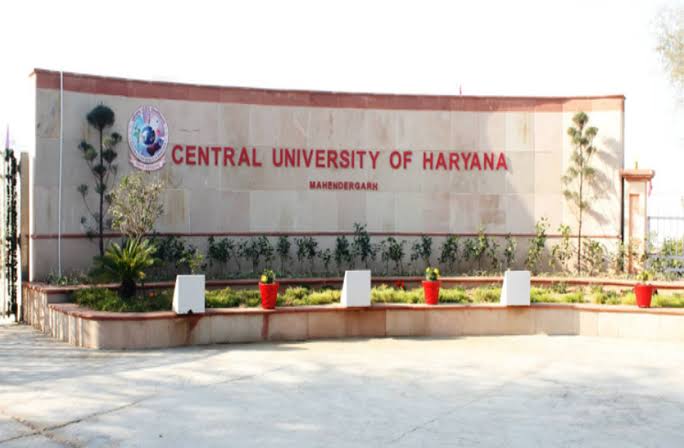
HARYANA: COLLEGES TO REOPEN ON 26TH SEP FOR TRIAL RUN

The Haryana government has allowed reopening of universities and colleges amid COVID-19 outbreak to enable the students to seek guidance from their teachers, with a trial run to start from September 26.

In a communication, dated September 22, to all universities and colleges in the state, the higher education department has directed them to complete all safety protocols related to COVID-19 and communicate the same by Friday.

The letter from the Director-General of the department refers to the Ministry of Home Affairs (MHA) guidelines wherein students from classes 9 to 12 are allowed to visit schools from September 21 on voluntary basis for taking guidance from their teachers with their parents’ consent.

“Keeping this in view, the universities and colleges may also be allowed to open for students seeking guidance from teachers in a staggered manner,” the letter read.

All protocols recommended by the government, including for sanitisation and social distancing, shall be followed by the institutions, as per the letter.

After remaining shut for the past six months due to the COVID-19 outbreak, the Haryana government had recently allowed students of classes 9 to 12 to visit their schools in areas outside COVID containment zones, on voluntary basis for academic guidance.

The decision was taken in compliance with the Unlock-4 guidelines issued by the Union Ministry of Home Affairs.

In view of the coronavirus-induced lockdown, educational institutes across the country have switched to online mode to impart academic lessons.

According to the schedule prepared by the Haryana higher education department, Bachelor of Arts (BA) first-year students may visit the colleges and universities between 9 am to 12 noon on Mondays and Tuesdays.

“BCom and BSc first-year students will visit the institutes between 12.30 pm to 3.30 pm on Mondays and Tuesdays.

BA second-year students will visit on Wednesdays and Thursdays between 9 am and 12 pm, while BCom and BSc second-year students may go between 12.30 pm to 3.30 pm on Wednesdays and Thursdays.

“BA third-year and Post Graduation (PG) first year students may visit the colleges between 9 am to 12 noon on Fridays and Saturdays; while BCom and BSc final-year students and PG second-year students can go between 12.30 pm to 3.30 pm on Fridays and Saturdays,” the letter added.

Feminist Movement across the times

The feminist movement (also known as the women’s movement, or simply
feminism) refers to a series of political campaigns for reforms on issues such as
reproductive rights, domestic violence, maternity leave, equal pay, women’s
suffrage, sexual harassment, and sexual violence, all of which fall under the label
of feminism and the feminist movement. The movement’s priorities vary among
nations and communities, and range from opposition to female genital mutilation
in one country, to opposition to the glass ceiling in another.

Feminism in parts of the Western world has gone through three waves. First-wave
feminism was oriented around the station of middle- or upper-class white women
and involved suffrage and political equality. Second-wave feminism attempted to
further combat social and cultural inequalities. Although the first wave of
feminism involved mainly middle class white women, the second wave brought in
women of colour and women from other developing nations that were seeking
solidarity. Third-wave feminism is continuing to address the financial, social and
cultural inequalities and includes renewed campaigning for greater influence of

women in politics and media. In reaction to political activism, feminists have also
had to maintain focus on women’s reproductive rights, such as the right to
abortion. Fourth-wave feminism examines the interlocking systems of power that
contribute to the stratification of traditionally marginalized groups.

Feminism in the United States, Canada and a number of countries in western
Europe has been divided into three waves by feminist scholars: first, second and
third-wave feminism. Recent (early 2010s) research suggests there may be a fourth
wave characterized, in part, by new media platforms.

The women’s movement became more popular in May 1968 when women began
to read again, more widely, the book The Second Sex, written in 1949 by a
defender of women’s rights, Simone de Beauvoir. De Beauvoir’s writing explained
why it was difficult for talented women to become successful. The obstacles de
Beauvoir enumerates include women’s inability to make as much money as men
do in the same profession, women’s domestic responsibilities, society’s lack of
support towards talented women, and women’s fear that success will lead to an
annoyed husband or prevent them from even finding a husband at all. De Beauvoir
also argues that women lack ambition because of how they are raised, noting that
girls are told to follow the duties of their mothers, whereas boys are told to exceed
the accomplishments of their fathers. Along with other influences, Simone de
Beauvoir’s work helped the feminist movement to erupt, causing the formation of
Le Mouvement de Libération des Femmes (The Women’s Liberation Movement).
Contributors to The Women’s Liberation Movement include Simone de Beauvoir,
Christiane Rochefort, Christine Delphy and Anne Tristan. Through this movement,
women gained equal rights such as a right to an education, a right to work, and a
right to vote. One of the most important issues that The Women’s Liberation
movement faced was the banning of abortion and contraception, which the group
saw as a violation of women’s rights. Thus, they made a declaration known as Le
Manifeste de 343 which held signatures from 343 women admitting to having had
an illegal abortion. The declaration was published in two French newspapers, Le
Nouvel Observateur and Le Monde, on 5 April 1971. The group gained support
upon the publication. Women received the right to abort with the passing of the
Veil Law in 1975.

The Women’s movement effected change in Western society, including women’s
suffrage, the right to initiate divorce proceedings and “no fault” divorce, the right
of women to make individual decisions regarding pregnancy (including access to
contraceptives and abortion), and the right to own property. It has also led to broad
employment for women at more equitable wages, and access to university
education.

In 1918 Crystal Eastman wrote an article published in the Birth Control Review,
she contended that birth control is a fundamental right for women and must be
available as an alternative if they are to participate fully in the modern world. “In
short, if feminism, conscious and bold and intelligent, leads the demand, it will be
supported by the secret eagerness of all women to control the size of their families,
and a suffrage state should make short work of repealing these old laws that stand
in the way of birth control.” She stated “I don’t believe there is one woman within
the confines of this state who does not believe in birth control!”

The United Nations Human Development Report 2004 estimated that when both
paid employment and unpaid household tasks are accounted for, on average
women work more than men. In rural areas of selected developing countries
women performed an average of 20% more work than men, or 120% of men’s total
work, an additional 102 minutes per day. In the OECD countries surveyed, on
average women performed 5% more work than men, or 105% of men’s total
work—an additional 20 minutes per day. However, men did up to 19 minutes more
work per day than women in five out of the eighteen OECD countries surveyed:
Canada, Denmark, Hungary, Israel, and The Netherlands. According to UN
Women, “Women perform 66 percent of the world’s work, produce 50 percent of
the food, but earn 10 percent of the income and own 1 percent of the property.”

The feminist movement’s agenda includes acting as a counter to the putatively
patriarchal strands in the dominant culture. While differing during the progression
of waves, it is a movement that has sought to challenge the political structure,
power holders, and cultural beliefs or practices.

Although antecedents to feminism may be found far back before the 18 th century,
the seeds of the modern feminist movement were planted during the late part of
that century. Christine de Pizan, a late medieval writer, was possibly the earliest
feminist in the western tradition. She is believed to be the first woman to make a
living out of writing. Feminist thought began to take a more substantial shape
during the Enlightenment with such thinkers as Lady Mary Wortley Montagu and
the Marquis de Condorcet championing women’s education. The first scientific
society for women was founded in Middelburg, a city in the south of the Dutch
republic, in 1785. Journals for women that focused on issues like science became
popular during this period as well.

The women who made the first efforts towards women’s suffrage came from more
stable and privileged backgrounds, and were able to dedicate time and energy into
making change. Initial developments for women, therefore, mainly benefited white
women in the middle and upper classes.

The Creation Of Women

We often hear a lot of things about the creation of women. But what exactly is the truth?

The truth is….We don’t know. According to the Hindu theology,due to the period of Kaliyuga,many misconceptions and misunderstandings have arised amongst the people. What is Kaliyuga? Well,Kaliyuga has its own history and its own theory and prediction. But…let’s not delve into the concept of Yugas just yet. 

Various theologies have various descriptions about the creation of women. Hindu theology was chosen because  we always like to write about the things which we know. And if we don’t,then we learn and explore. One should never mislead the people’s beliefs. And which is why one should do utmost research about the concept before writing it down. The creation of  Woman,described in  Matsya Purana is as follows:

Lord Brahma is said to be the father of the creator of this universe.  After he created the first man (Manu),he started the creation of the first woman. It is said that even the Gods were sometimes mistaken in the terms of understanding women. So, when Lord Brahma was in the middle of creating the generation of women,a devduta came to Brahma. He asked the lord who created the whole universe in just a minute,why did the creation of a women  took him 6 days!? Brahma said that  this  creation was going to be his best creation until now. Because she,upon completion would be extremely cherishing towards her family. She would be determined and calm in every situation no matter any calamity that arised. Devduta then went to examine the lord’s creation. And then he came to order and exclaimed ,how weak she was! Brahma said that there is a difference between the property of being delicate and weak. Women have the property of being delicate. That does not mean that she does not have the strength to stand for herself. Maybe she is delicate externally,but look inside,she is strong as diamond and will not break. This is women. After this, Devduta  asked , why exactly was she filled with moisture when he touched her? Brahma explained that the moisture was actually the tears that were shed by her. Women,when upset sheds her grief in the form of tears. After her tears were shed,she again returned to be the same,determined and strong as ever. Not only women,but anyone,when someone cries does not mean that they are coward or not strong enough. When one cries,we should not patronise them,but help them during their hardships and if they need some alone time,we should be sensible enough to give it to them that time. After which,Devduta asked that whether she would

have the ability to think wisely. Brahma said that she would be the face of intelligence,who would leave her legacy to her children and would be the educator of the family.

People often criticise one another for not being good at one or the other things. This makes one feel extremely insecure about themself. The thing is,when we talk or converse with anyone,one should think about the consequences and the influence of his talk on the other person. As said by the wise ones,’Words are sharper and cause more harm then most of the weapons’. While talking,we often tend to say many misguiding things which we may not be aware of. We are mere humans,and will make mistakes through our lives,but does that mean to continue those mistakes just thinking that we are merely humans? Life is a teacher when you don’t learn from it,it repeats your own mistakes. We come across many such quotations in our lives. The importance which is actually remembered? Hardly some of them. But does that mean to stop trying at all . And this question remains unanswered. Because this is a space which we have to fill. The question is…Will we?

Thus was the creation of women,and the birth of the first Kshatriyas. We learn many things from our theologies,but the day when we start to apply them in our lives,we change. This does not mean to continue the inhuman practices. Traditions and cultures are bound to be changed with time,because the time has changed,and so will the rituals.

Note: If the above article offends you in any way,kindly tell the reason for it. There is absolutely no  intent to mislead the people in the above article .

Fit India Dialogue 2020

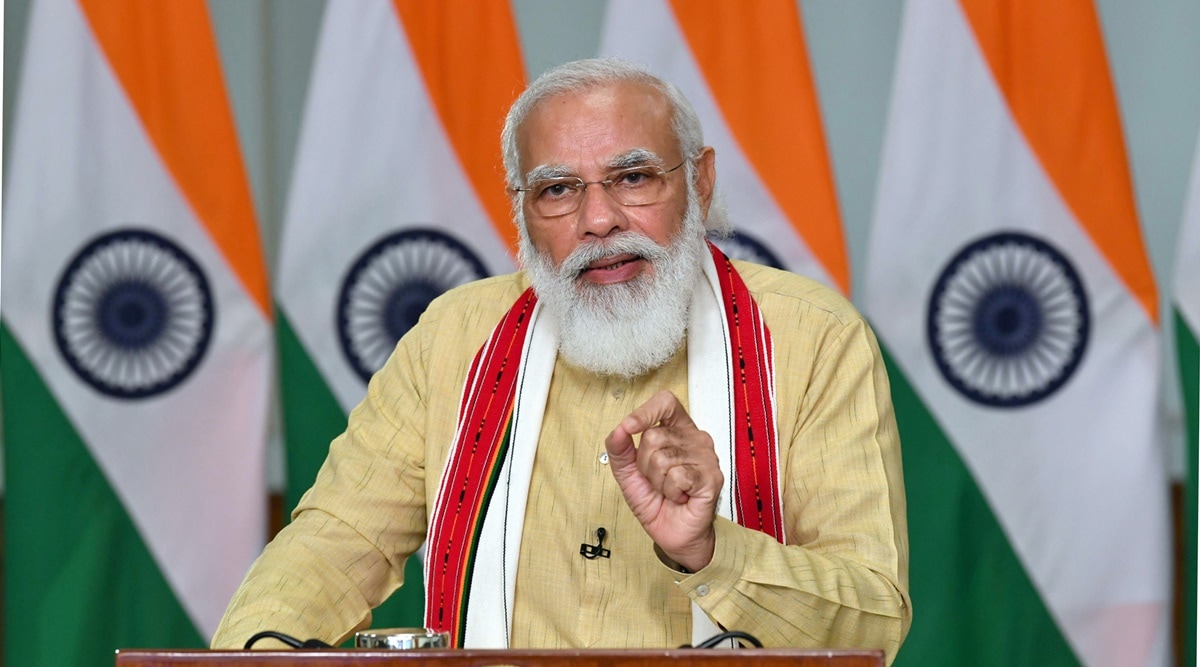
Celebrating the first anniversary of the Fit India movement, Prime Minister Narendra Modi interacted with several fitness influencers, celebrities and citizens in a nationwide, online “Fit India Dialogue”.

Fitness ki dose, aadha ghanta roz,” PM Modi introduced a new slogan to encourage citizens to exercise for at least half-an-hour in a day.

Among the participants were Virat Kohli, Milind Soman, both known to be passionate about fitness, footballer Afshan Ashiq, paralympic javelin gold medallist Devendra Jhajharia, and celebrity nutritionist Rujuta Diwekar, among others.

narendra modi

The online interaction will see participants sharing anecdotes and tips of their own fitness journey while drawing out guidance from PM Modi on his thoughts about fitness and good health. In times of Covid-19, fitness has become an even more important aspect of life. This dialogue will see a timely and fruitful conversation on nutrition, wellness and various other aspects on fitness.

While talking about the importance of fitness and a healthy diet, he recounted how his mother always makes it a point to ask him if he is eating haldi (turmeric) or not. Turmeric has antioxidant properties; here are its other health benefits. While speaking to Diwekar, the Prime Minister also talked about his recipe for making parathas with drumsticks, which he said he still eats once or twice a week.

PM Modi also asked Kohli about the Yo-Yo test, which measures the endurance levels of athletes, to which the cricketer said how it is an important benchmark. He pointed out that India’s Yo-Yo test scores were on the lower side as compared to global standards. He then went on to talk about how his grandmother inspires him to eat healthy, home-cooked food.

Sara Ali Khan reaches Mumbai from Goa with mother Amrita Singh and brother Ibrahim

Sara Ali Khan

The investigation surrounding Sushant Singh Rajput’s demise is getting murkier by the day. What started as a case of checking if his death was a suicide or murder, has now branched out to various charges like money laundering and drug consumption.

Video: Sara Ali Khan returns to Mumbai | Filmfare.com

The recent involvement of the NCB in the investigation has resulted in Bollywood actors like Deepika Padukone, Sara Ali Khan, Rakul Preet Singh and designer Simone Khambatta receiving summons. Sara Ali Khan arrived at the Mumbai airport today with her family. It was pure chaos at the airport. The actress was surrounded by the media as she fought her way to her car. Take a look at the video below.

While Sara Ali Khan and Shraddha Kapoor have been asked to appear before the NCB on September 26, Padukone has been summoned on September 25.

Khan and the three other actors have been named in NCB’s ongoing investigation into the drug angle in Rajput’s death. Earlier this month, NCB arrested actor Rhea Chakraborty and her brother Showik in the same case. According to the NCB, Chakraborty and her brother financed and arranged drugs for Rajput. The NCB has so far arrested over 10 people in the case.

An Anthropological Critique of Development: The Growth of Ignorance

Development is almost a mainstream word is today’s day and age and because of that, there are also negative connotations attached to it. In this book, such aspects of development have been discussed at length and it is edited by Mark Hobart. The subject of western development models has come under intense scrutiny and criticisms in recent times. In fact, western anthropologists have questioned the application of scientific knowledge in processes of development. They argue that despite investing large sums of money, in reality the experience of countries in Africa, Asia and Latin America has been just the opposite. Problems of underdevelopment continue to plague the countries of these regions. Over the last few decades or so, a new paradigm of development has emerged. According to this, local knowledge and very often a ‘bottoms-up’ approach to problem solving are increasingly being advocated and implemented. At the outset, the editor of this collection of essays, Mark Hobart, says that the essays and participants’ voices question the claims of western science to providing solutions to underdevelopment and in understanding the importance of local knowledge and its application.

The 12 contributors to this compendium challenge the Utopian view of western knowledge as the only and successful way in achieving economic and social development. Using ethnographic case studies from Europe, Africa, Asia and Latin America, the contributors examine the ways in which local and indigenous knowledges are often more effective than western knowledge and systems in finding solutions to problems. The essays offer a practical approach of using theory and practice for development that economists, sociologists, and political scientists, among others, will find useful.

The book cogently describes the importance of development in the world today. Development means different things to several people. It is considered ‘important’ for developing nations to receive developmental aid. It is big business for banks and industries. Multilateral agencies help super powers by handing out the promise of loans to developing nations. For many advanced nations, through their development agencies, aid is an important arm of their economic diplomacy. Yet others are able to leverage their aid-giving capabilities to creating markets for their multinational corporations and help further their powerful vested interests in the process. The whole process of development is so one-sided and top-down that it has become the idiom of economics, technology and management. As noted earlier, what is ignored are the knowledges of the peoples being developed.

The essays clearly reveal that local and indigenous knowledge can form the basis of sustainable management and development. Use of technology and western scientific knowledge have to be employed prudently and judiciously. The essays show that local knowledge and a common-sense approach go a long way in problem solving. Local wisdom, sometimes going back in time and history, can still find a place in the modern world. In our own country, Gandhian ideals and thoughts, such as in rural development, self-sufficiency, at the local level and indigenous practices will help our rural areas prosper. These and a healthy mix of wisdom imbibed from our forefathers should help take India forward.