AYUSH Ministry supports a novel e-marathon as part of the “Ayush for Immunity” Campaign

The Ministry of AYUSH has joined hands with Rajagiri College of Social Sciences and Rajagiri Business School, Kochi to organise a novel e-marathon, as a part of the Ministry’s three-month campaign called “Ayush for Immunity”, focussing on desirable health-promotive and disease preventive steps. Combining technology, physical run, charity and wellness programs, this e-event is expected to add positivity and good health to the lives of the participants.

This e-marathon is being conducted for the cause of supporting the education of COVID affected children and to enhance the well-being of the participants during the current pandemic crisis. The theme of the e-marathon is “Recharge Mental Health: During and beyond the Covid-19 Pandemic”.

The Rajagiri e-marathon is designed to promote physical and mental well-being of the people of all age-groups, across geographies. The participants of e-marathon can take part in the event in timings of their choice and at safer places. They also have a long duration of 10 days at their disposal to complete the running challenges. A wellness app will integrate the individual running reading of the participants to a central server (computer) so that all participants will be connected via the centralised software application.

Participants are required to register their name through emarathon.rajagiri.eduwebsite and they will be directed through e-mails on how to go forward. Though the participants need not buy any fitness app for this event, they will need to carry a smartphone or to wear a fitness band while participating in the race.

The event will be open from 28th September 2020 to 10th October 2020 (15 days). The conclusion of the event will coincide with the “Vihara” focus of the “Ayush for Immunity” campaign, which will be spread over the month of October, 2020.

This event aims to enhance the social nearness of people while observing physical distance.  The event incorporates an entire wellness campaign with yoga, meditation, webinars and entertainment.

The organisers have announced that the entire registration fees will be donated to 50 children in Mumbai, who lost their parents to Covid-19. Childline India Foundation will facilitate this charity to procure learning devices. Around 8000 participants from India and abroad are expected to join this novel event.
India urges Nations to put Nature at the heart of recovery plan post COVID19

Minister for Environment, Forest and Climate Change, Shri Prakash Javadekar urged nations to join hands at the start of the “UN Decade of Action and Delivery for Sustainable Development” to put nature at the heart of our recovery plan and realize the vision of “living in harmony with nature”. Shri Javadekar represented India at the virtual Ministerial Roundtable Dialogue on Biodiversity Beyond 2020: Building a Shared Future for All Life on Earth.

The ministerial was hosted by China, one week ahead of the upcoming United Nation Summit on Biodiversity, to exchange views on biodiversity conservation and sustainable development.   Around 15 ministerial representatives from countries with adequate regional representation, as well as the heads from relevant international organizations participatedin the event.

Addressing on the occasion, Shri Prakash Javadekar stated that COVID-19 pandemic has emphasized the fact that un-regulated exploitation of natural resources coupled with un-sustainable food habits and consumption patterns lead to destruction of systems that support human life.

Foundation day of Deen Dayal Upadhyaya Grameen Kaushalya Yojana (DDU-GKY) being celebrated tomorrow on the occasion of Antyodaya Diwas – “Kaushal Se Kal Badlenge ”

25th September, 2014 was declared the ‘Antyodaya Diwas’ in honour of Pandit Deen Dayal Upadhyaya’s 98th Birth Anniversary. It was the same day when the Ministry of Rural Development (MoRD) revamped it’s existing skill development program called Aajeevika Skills as Deen Dayal Upadhyaya Grameen Kaushalya Yojana (DDU-GKY) which emphasized on greater access, coverage and quality. In doing so, MoRD has used its knowledge gained over 15 years in implementing skill training programs. DDU-GKY is now a demand driven placement-linked skilling initiative which seeks to enable rural poor youth to benefit from national and international employment opportunities.

The spirit of Antyodaya Mission lies in ‘reaching out to the last person’. Ministry of Rural Development is also working towards this motto through reaching to all eligible rural youths of India. Over the period of time, DDU GKY has proven to be an effective rural development initiative for rural youths by providing both market linked skilling and sustainable wage employment opportunities.

Therefore working towards this motto and to commemorate Antyodaya Diwas 2020, MoRD is celebrating this day for Deen Dayal Upadhyaya Grameen Kaushalya Yojana (DDU-GKY) with their skilled and enthusiastic beneficiaries and other stakeholders spread across the country. During this pandemic time, MoRD is virtually celebrating this auspicious day with all States/UTs, Project Implementing Agencies, Employers and rural youths from all over the country.

Union Minister of Rural Development & Panchayati Raj and Agriculture & Farmers Welfare Shri Narendra Singh Tomar and Minister of State of Rural Development, Sadhvi Niranjan Jyoti will grace the occasion along with the senior officers of the State governments, State Mission Directors of SRLM and Skill Missions. All are requested to join this celebration of the wonderful journey of DDU GKY.

Webinar with Israel on Defence Industry Global Outreach for Collaborative Partnership: Webinar and Expo held on 24 Sep 2020

A webinar between India and Israel was held on 24/09/2020. The Theme of webinar was “Indian Defence Industry Global Outreach for Collaborative Partnership: Webinar and Expo”.  It was organized under the aegis of Department of Defence Production, Ministry of Defence through SIDM.

This webinar is the first in the series of webinars which will be organized with friendly foreign countries in order to boost defence exports and achieve defence export target of $5 billion in the next five years.

Defence Secretaries and other senior MoD officials from both the countries participated in the webinar and spoke about enhancing the defence cooperation between both the nations.

Creation of Sub Working Group (SWG) on Defence Industrial Cooperation between India and Israel was announced in the webinar. The main objective of the SWG will be Transfer of Technology, Co-development & Co-production, Artificial Intelligence, Innovation and Joint Export to friendly foreign countries.

A MoU was also signed between Kalyani Group and Rafael Advanced Defence Systems during the webinar.

A Knowledge paper by SIDM-KPMG was released by Dr Ajay Kumar, Defence Secretary on the occasion.

The webinar was attended by more than 300 delegates and 90 virtual exhibition stalls have been set up for the Expo.

670 new electric buses and 241 charging stations sanctioned under FAME scheme

The Department of Heavy Industries (DHI) under Ministry of Heavy Industries and Public Enterprises, is administering the Faster Adoption and Manufacturing of (Hybrid &) Electric Vehicles in India (FAME India) Scheme since April, 2015 to promote adoption of electric/ hybrid vehicles (xEVs) in India . In the First Phase of the Scheme upto 31st March 2019, about 2,80,987 hybrid and electric vehicles were supported by way of demand incentive, amounting to about Rs 359 crore.  Further, DHI sanctioned 425 electric and hybrid buses to various cities in the country with total cost of about Rs. 280 Crores.  The Department of Heavy Industry had also sanctioned 520 Charging Stations for Rs. 43 Crore (approx.) in cities like Bangalore, Chandigarh, Jaipur and NCR of Delhi under Phase-I of FAME-India Scheme.  At present, Phase-II of FAME India Scheme is being implemented for a period of 3 years w.e.f. 01st April, 2019 with a total budgetary support of Rs. 10,000 crore. This phase focuses on supporting electrification of public & shared transportation and aims to support, through subsidies, approximately 7000 e-Buses, 5 lakh e-3 Wheelers, 55000 e-4 Wheeler Passenger Cars and 10 lakh e-2 Wheelers.  In addition, creation of charging infrastructure is also supported to address the anxiety among users of electric vehicles.

TARIQ ANWAR AT KPCC HEADQUARTERS


All India Congress committees newly appointed General Secretary, Tariq Anwar, in-charge of Kerela and lakshwadeep, addressed the media at the Kerela Pradesh Congress committee headquarters and raised his voice against the bills passed by the NDA government.


He said, “Large number of farmers and agricultural workers are protesting against these bills and they are being suppressed by the government.”


He also added that in Rajya Sabha, the opposition wanted division on this particular bill but the deputy chairman rejected it and then the bill was passed without voting .


The Congress leadership has now decided to launch a series of nationwide protest for the agitating farmers against these anti farmers bills, which will start from 26th of September.


The series of the events will include as follows:


• 26th September – ‘Speak for farmers’, An online protest will be conducted. Where all the party members will be requested to join through social media platforms.


• 28th September – A March will be organised where the party members will submit a memorandum to the governor, addressing the President of India on the agricultural bills.


• 2nd October – On The birth anniversary of Mahatma Gandhi And Lal Bahadur Shastri, the Congress will observe, the ‘majdoor bachao diwas’.


• 10th October – ‘Kisan Sammelan’, Will be organised at state level.


• 2nd-31st October – Signature campaign will be organised where the party members will take signature from 2crore farmers, agricultural workers and mandi workers.


• 14th November – the Memorandum with 2crore signatures will be submitted to the Honourable President.


In th end Tariq Anwar said, “This time we will compel the central government that they should not play with the future of the farmers.”

Paradox…

A logically self contradicting statement is a paradox. Also known as antinomy. You can say it is a sentence that runs contrary to one’s expectations. Actually it’s just a smart mess. It does have valid reasoning but leads to a self contradictory or a logically unacceptable conclusion. It might seem absurd but is kind of the ultimate truth. That’s what makes it all the more interesting.

Let’s see some of the many interesting paradoxes that exist and try to understand them.

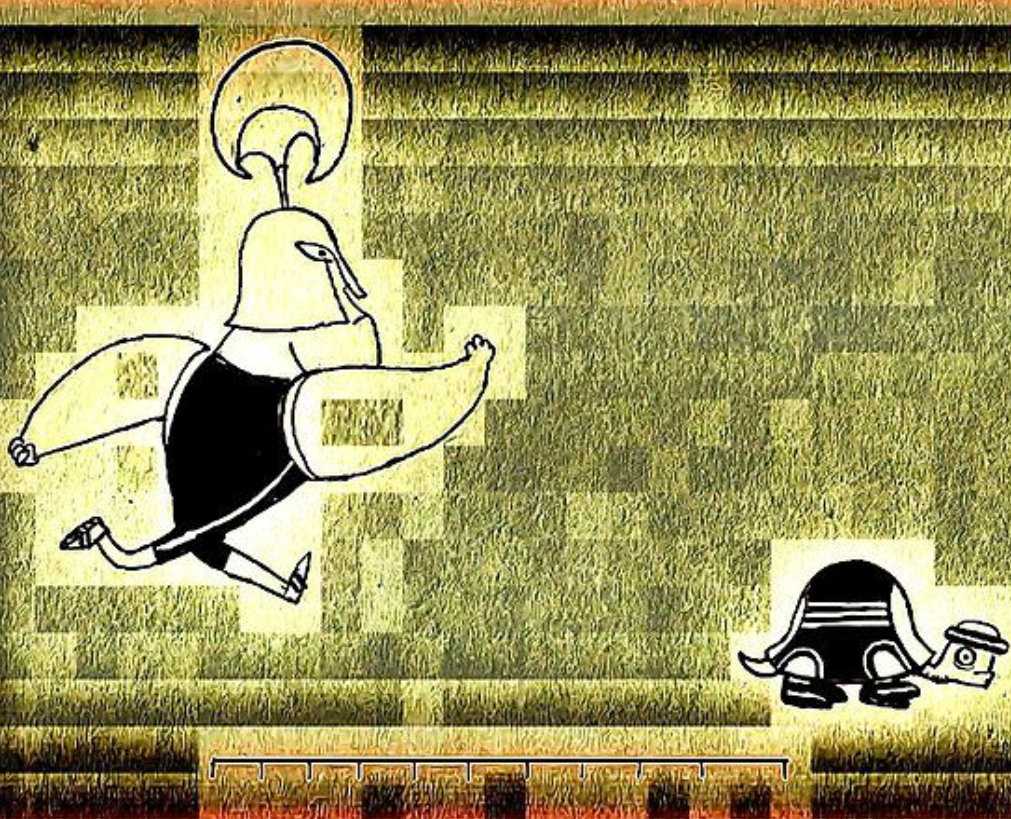
•Achilles and the tortoise 🐢🏃

One of the “greatest” there is. It was put forward by the Greek philosopher Zeno of Elea in the 5th century BC. It so happens that the great hero Achilles challenges a tortoise to a footrace. Being the hero that he is, he allows the tortoise a headstart of 500m. No doubt, when the race starts, Achilles is at a must faster speed than the tortoise such that by the time he has reached the 500m mark, the tortoise has only walked 50m further than him. When he has reached 555m mark, the tortoise has walked another 0.5m, then 0.25m, then 0.125 m and so on. It is a chain of such infinite small distances with the tortoise always moving forwards while Achilles always has to catch up. Now, logically, Achilles can never overtake the tortoise. Except, of course, intuitively he can overtake.

Don’t think of it in terms of distances and races but rather as an example of how finite value can always be divided an infinite number of times, no matter how small its divisions might become!

•Birthday paradox 🎉🎂

This is personal favourite. It is maths based by the way. Probability to be specific. You have already heard of this probably. It goes like this that in a group of 23 randomly selected people there is a 50% chance two of their birthdays match. Interesting? Wait. In a group of 367 random people there is a 100% possibility atleast two of their birthdays match. Sounds like such a small number. It counts as a paradox because we can’t handle such numbers.

•Crocodile paradox 🐊

A crocodile snatches a young boy from the riverbank. Pretty common situation right? Anyways, his mother pleads with the crocodile to return the boy. The crocodile being in a fun mood, wants the mother to guess if he will return the boy or not. Takes one guess to get the boy out safely. It looks simple – the mother guesses he will return the boy, if she is right she gets the boy, if she is wrong, the crocodile gets the boy. If she answers that the crocodile will not return him, however, we end up with a paradox!

If she is right and the crocodile never intended to return her child, then the crocodile has to return him but in doing so breaks his word and contradicts the mother’s answer. And if she is indeed wrong and the crocodile did intended to return the boy, the crocodile must then keep him even though he intended not to, thereby also breaking his word. It’s a brain twisting dilemma.

•Paradox of fiction 🎟️📕

Are you fixated with the harry potter characters? You ofcourse have a crush on the Marvel or DC comic characters. Oh or did you cry when Augustus died?

So here is the paradox. Point 1 People have emotional responses to characters, objects, events etc. which are fictitious. Point 2 In order to be emotionally moved, we must believe that these characters or events by no way exists in real. Point 3 No person who takes characters to be fictional at the same time believes that they are real. All three of these points one at a time can be true. If any two points are considered to be true then the third must be false or else produce a contradiction. There exist various proposed solutions to this paradox such as pretend theory or thought theory or illusion theory.

•The card paradox 🃏

This one is a little bit similar to the crocodile paradox. A little. So I say we have a card with us. On one side, the front side, “the sentence on the other side of this card is TRUE” written on it. You flip and “the sentence on the other side of this card is FALSE”. You take one as true and it leads to a paradox!

Thank you for reading. Have a nice day!🌼

YouTube Play Buttons Explained

YouTube, gives awards irrespective of the category of the video, for the youtubers who hit the subscribers count set by youtube. These awards are officially called YouTube play buttons. Let us see the types of YouTube play buttons given by YouTube.

There are 5 types of YouTube play buttons. These play buttons vary with the subscribers count.The YouTube who hit subscribers count need to apply in YouTube forum. Then, YouTube sends them a code along with a link. Youtuber need to paste that code in the given link. The same process happens for every play button. YouTube never charges fee for applying for play buttons. YouTube play button will sent to you py post with no charge. Let us see the margin of the subscribers count and play button awardee by hitting that margin.

Silver Play Button

Silver play button is awarded to the youtubers who hit 100k subscribers.

Gold play button

Gold play button is awarded to the youtubers Diamondwho hit 1 Million subscribers. It is made of gold-plated brass

Diamond play button

Diamond play button is awarded to the youtubers who hit 10 Million subscribers. It is made of silver-plated metal inset with a large piece of colorless crystal in the shape of a play button triangle. There are 653 channels that have reached this level as of June 2020.

Custom play button

Custom play button is awarded to the youtubers who hit 50 Million subscribers. Most of them call this award as Ruby Play Button but, it’s official name is Custom play button. PewDiePie, who was the first youtuber to receive Custom play button had nicknamed it as Ruby play button. But, it is officially called Custom Play Button. The name is custom play button because when a youtuber hits 50M subscribers then the play button will be customised exactly as the logo of that channel. There are 13 channels that are qualified for this award till now. Those are: PewDiePie, T-series and there are 11 more channels which qualified for this award but not been publicly confirmed yet.

Custom play button given for PewDiePie is

Red Diamond play button

It is awarded for those youtubers who hit 100M Subscribers. It features a play button triangle with a large dark red crystal. The only two channels that received this award are PewDiePie (August 25, 2019) and T-series (May 29, 2019).

Benifit Levels

These levels do not include physical and announcement awards but offer alternative benefits instead:

1.Graphite, for channels that hit or cross 100 subscribers. It allows a creator to have a custom username and URL such as youtube.com/channel/Example instead of a random string of letters.


2.Opal, for channels that hit or cross 1,000 subscribers. It is also one of three requirements to apply to the YouTube Partner Program for monetization, the other two being a minimum of 4,000 total viewer watch hours in the past 12 months and a review of the channel’s content to determine eligibility. Channels with monetization can also enable Super Chat, while gaming channels can also enable channel membership.


3.Bronze, for channels that hit or cross 10,000 subscribers. If a channel is monetized, this level adds a Teespring monetization option.

Subscribe us at https://www.youtube.com/track2training

Also visit us at https://www.youtube.com/pen2print

Sơn Đoòng, the largest cave in the world

It was 1991. A Vietnamese logger named Ho Khanh was hiking through the jungle near his home in Phong Nha, in central Vietnam. Drawn by the sound of rushing water, he came to an opening in a cliff. A strong wind blew clouds out of the cave—an intimidating site, and enough to keep Ho Khanh from searching deeper—so he turned around and went about his business. That was the unceremonious discovery of Sơn Đoòng, the largest cave in the world. “It’s five miles long, 650 feet high, and 500 feet wide,” writes Ken Jennings for Traveler. “It could hold an entire city block of Manhattan, including 40-story skyscrapers.”At the time discovered Son Doong cave, Ho Khanh didn’t know about the cave value. Not long after his trip, he quit finding agarwood and went back to farming.

15 years later, the whereabouts of this cave was still in the dark. Untill 2006, when an expedition of the British Royal Association went to search for new caves in Phong Nha – Ke Bang, Khanh told his story about the cave to them. That was when the journey looking for the old cave started.

Son Doong Cave is known as the world’s largest natural cave, housing many limestone grottoes, stalactites and stalagmites. Set within Phong Nha-Ke Bang National Park (about 500km south of Hanoi), the cave is a must visit for adventurous travellers looking to explore one of Vietnam’s natural gems during their holiday.With sections reaching up to 200m tall and 150m wide and a total measured volume of 38.5 million cubic metres, Son Doong could store about 68 Boeing 777 aircraft. Even this figure may be larger because according to scientists, the most modern facilities of today has not fully explore the real length of this cave.

And somehow, it managed to remain a secret for centuries. But by 2005, the surrounding area had become something of a destination for spelunkers, and Ho Khanh realized he might have been on to something. It took three years of searching, of tracing his steps, before he was able to find the opening again, but when he did in 2009 with a British caving expedition, they became the first people to tackle Sơn Đoòng. Only a thousand or so people have done it since—including us. This is our five-day trek into the center of the earth.

 Not only famous for the enormous size Son Doong is also known by a variety of biological landscape. In the Son Doong cave, explorers discovered a primitive forests with rich vegetation, there has never been human traces. Experts have called the forest even in this cave is the “Garden of Eden” in honor of the sheer beauty of this aesthetic.To reach Hang Son Doong, it’s a six-km-long hike through the rainforest, which includes passing through a small village that’s home to the Ban Doong ethnic group.According to geologists, Son Doong cave was formed by around 2-5 million years ago, when the river runs along the limestone buried along a fault line. The water current causes erosion and creates a giant tunnel as today.The size of Son Doong cave is very large with a length of at least 5 kilometers, which is equivalent to the capacity of about 68 Boeing 777 airplanes.Featuring one of the Son Doong cave, which is the system of stalactite and “pearl” giant cave. Over millions of years under the influence of external forces, Son Doong owns the column stalagmite as high as 70m. In addition, it is also found these “pearls” caves (wrap a jade jewel-like seeds of the sea, the component mainly calcite) to the world’s most in Son Doong. Typically, the member “pearls” of this type only about 1cm in diameter but in the Son Doong, they as big as baseball

  Even this figure may be larger because according to scientists, the most modern facilities of today have not fully explore the real length of this cave.With her beauty, Son Doong has attracted a lot of tourists to 98% are foreigners. Among them, there are three generations of the family have ever conquer this cave, or even the super model as Jasmina Mala (Czechs) and Prince Ahmed Hamdan (Abu Dhabi coming).


Not only famous for the enormous size Son Doong is also known by a variety of biological landscape. In the Son Doong cave, explorers discovered a primitive forests with rich vegetation, there has never been human traces. Experts have called the forest even in this cave is the “Garden of Eden” in honor of the sheer beauty of this aesthetic.Son Doong cave is famous for not only its giant size but also a variety of biological landscape .In the Son Doong cave, explorers discover a primitive forests with abundant vegetation, there has never been human traces. Experts have even called the forest in this cave as “The  Garden of heaven” to honor this breathtaking beauty.

Bollywood list-A Actors getting summoned in Drug probe case by NCB

In a massive development, accused drug peddler Karamjeet Singh has allegedly given a list of 150 names to the Narcotics Control Bureau (NCB) of those involved in the Bollywood drug cartel. This list comes along with big names from the industry being summoned in the probe, including Deepika Padukone, Sara Ali Khan, Rakul Preet Singh, Shraddha Kapoor, Simone Khambatta, as well as TV stars like Abigail Pande and others, and producers such as Dharma Productions’ Executive Producer Kshitij Ravi Prasad.

The Narcotics Control Bureau has registered two FIRs as part of its probe that followed the death by suicide of actor Sushant Singh Rajput. The first case (FIR 15/20) was on the basis of purported chats of actor Rhea Chakraborty that were retrieved by the Enforcement Directorate (ED) that is probing a money laundering case against her. The ED provided these chats to NCB as they claimed that some of the chats were about marijuana.

Two days after this case, the NCB registered another FIR (16/20) suo moto with the express target of “uprooting the drug citadel in Bollywood” and have arrested 19 persons in the case, including Rhea and her brother Showik. So far no arrests have been made in the first FIR registered against Rhea.

As per the latest reports, Kshitij Ravi Prasad has been asked to join the probe by 11 am on Friday. His summons will take place on the same day as Deepika Padukone is to be questioned by the agency. The NCB which has managed to track down multiple drug peddlers across Mumbai and Goa has begun to compile a list of ‘A-listers’ who are involved in the alleged drug cartel in the film industry. 

NCB officials said they have summoned Deepika and her manager Karishma Prakash, another Kwan employee, based on some WhatsApp chats of Jaya Saha. Apart from them, even producer Madhu Mantena, also a Kwan director, was summoned on the basis of Saha’s questioning. Since Saha is named as an accused in the first FIR all of them have been called in connection with this case. Rakul Preet Singh too has been summoned in connection with this context.

Amidst all of this drug conspiracy, KWAN Talent Management Agency’s name has been floating around, more so after certain chats between talent managers and celebs revealed a drug connection. KWAN manages the work of top Bollywood actors such as Deepika, Shraddha, Tiger Shroff, Jacqueline Fernandes amongst various others. 

There are two versions here. While NCB sources said their names had come up during the interrogation of Rhea Chakraborty between September 6–9, before she was placed under arrest, her lawyer Satish Maneshinde has said Chakraborty has not mentioned any names during her interrogation. Sara and Shraddha have been summoned in FIR 16/20 in which Rhea Chakraborty, her brother Showik and 17 others have been arrested.

Following are chats accesed by times now which are circulating in the social media.

As per the chats, N says to J, “You promised me, get me some nice MD (apparently referring to MDMA) in Bombay and we will party together.”

To which, J responds, “How you are making me into a peddler. However, your wish is my command.”

In another WhatsApp exchanges, J says, “Hello, I’m sending the CBD oil with Jinal today.” Replying to J, S says, “Thank you.”

The Bollywood A-listers whose names appeared in these chats are under NCB scanner and are likely to be summoned by the anti-drugs agency in the near future.

The ones with N and S initials are allegedly top female actors.

In another chat that dates back to 2017, D asks K, “…Maal you have.” To which, K says, “ I have but at home. I am at Bandra…”

K further says, “I can ask Amit if you want”. D replies, “Yes!! Please.”

“Amit has, he is carrying it,” K says, to which D replies, “hash na. No weed.”

According to sources within NCB, the person with D initial is Deepika Padukone.

Dean Jones, former Australia cricketer passes away due to severe cardiac arrest

Jones was in Mumbai as part of the commentary team at Star Sports for IPL 2020 when he passed away on Thursday, 24 September. Former Australia cricketer Dean Jones died of a heart attack on Thursday in Mumbai. He was 59. Dean Jones was in India to fulfil his commitments for the host broadcasters of the Indian Premier League. He suffered a massive heart attack at a hotel in Mumbai after 12 PM on Thursday.

“Our thoughts and prayers are with his family and friends,” Star Sports India, the host broadcasters for IPL 2020, confirmed the news of Jones’s passing in a statement.

It is with great sadness that we share the news of the passing away of Mr. Dean Mervyn Jones AM. He died of a sudden cardiac arrest. We express our deep condolences to his family and stand ready to support them in this difficult time. We are in touch with the Australian High Commission to make the necessary arrangements.

Dean Jones played 52 Tests and 164 ODIs for Australia during an international career which spanned 8 years between 1984 and 1992. He scored 3631 runs in red-ball cricket at an average of 46.55 with 11 hundred and 14 half-centuries.

In one-day internationals he amassed 6068 runs at 44.61 with 7 hundred and 46 fifties.

His most memorable Test innings came in 1986, when in the heat and humidity of Chennai, he battled exhaustion and illness to make a heroic 210 in what would be only the second tied Test ever.

That was just his third Test, coming two years after his debut against West Indies in 1984. With plenty to prove, he came out at No.3, and stayed in the middle for 330 minutes, despite being sick on the field and finding himself in hospital at the end of the knock.

Jones went on to make 10 more hundreds, with a career-best 216 against West Indies in Adelaide in 1989. But it was in ODIs that he really made his name, gaining a reputation as an attacking batsman and a fast runner between the wickets – and, by his own admission, also the first player to wear sunglasses on the field. He attained a high of 918 ranking points on the ICC Men’s ODI Rankings for Batting in March 1991, putting him fifth on the all-time list.

“Winning the 1987 World Cup in front of about 100,000 in Kolkata will remain the biggest moment of my career,” he had said.

Dean Jones was one of the great ambassadors of the game associating himself with Cricket development across South Asia. He was passionate about discovering new talent and nurturing young Cricketers. He was a champion commentator whose presence and presentation of the game always brought joy to millions of fans. He will be sorely missed by everyone at Star and his millions of fans across the globe.

His compatriot and fellow commentator for the ongoing season of the Indian Premier League, Brett Lee, was with him, and they had breakfast together earlier. When he suffered the cardiac arrest in the lobby of the hotel, Lee tried to resuscitate Jones by giving him CPR, but was unable to save him.

We all will miss his extra ordinary commentary that used to create a aw in all the cricket fraterninties.

Dheeran Chinnamalai-Tamil Freedom fighter

Dheeran Chinnamalai was an Indian revolutionary and chief of Kongu Nadu who revolted against the supremacy of British rule in India. He was a Palayakkarar in Tamil Nadu who fought against the British East India Company in the 18th century B. C.

He was born on 17th April 1756 in Melapalayam near Erode in Tamil Nadu. His birth name was Theerthagiri Sarkkarai Mandraadiyaar. He belonged to the famous Palaiya Kottai Pattakarar family. His parents are Rathnaswamy and Periyaatha. He had four brothers, Kudandiswamy, Thambi, Kilothar and Kuttiswamy and one sister Parvatham.

He got good training of Silambu and archery. He headed a huge army that fought in the Second Polygar War in 1801 to 1802. In late 1700s he Kongu Nadu was controlled by Mysore King Hyder Ali. When the diwan of Hyder Ali came to collect taxes from the farmers, he with his brothers seized the entire tax collected and distributed them back to the farmers. This incident took place between Sivan Malai and Chennimalai. He refused to accept the supremacy of Hyder Ali.

After the death of Hyder Ali on 12th July 1782, his son Tipu Sultan became the king of Mysore. He helped Tipu Sultan to gain victory in the battles at Chitheswaram, Mazahavalli and Srirangapatna by providing a big army of soldiers. More than 1000 Kongu Tamils joined the regiment of Tipu. After the death of Tipu he settled at Odanilai and fought with British at Cauvery, Odanilai and Arachalur.

As Dheeran Chinnamalai was running his own kingdom and did not respect the rules and regulations of the British East India Company they were annoyed. So they sent Colonel Makistan and his men to arrest him. Chinnamalai fought against him and won the battle. Again Captain Harris was sent to capture him. By his intelligence Chinnamalai was able to win this time also.

Velappan in the British army acted as an informer to Dheeran Chinnamalai. Later he was shot dead. After that the British arrested him and his brothers and kept them in the prison at Sankagiri. When they were asked to accept the rule of British they refused and so they were hanged by rope at the top of the Sankagiri fort on 31st July 1805

Puliu thevar-Fighter legacy continued

Puli Thevar was a poligar (or palayakarar) who ruled Nerkattumseval situated in the Sankarankoil taluk of Tamil Nadu. Puli Thevar who belongs to the warrior Maravar community was one of the earliest freedom fighters. He is one of the first Indian kings to have fought and defeated the British in India.Puli Thevar was born on September 1, 1715 in Puli Nadu, a part of Pandya Nadu to Chitraputra Thevan and Sivagnanam Nachiyar. Venni Kaladi was the general of Puli Thevar’s army

He is one of the earliest opponents of the British rule in South India. He was involved in a vendetta with the Nawab of Arcot who was supported by the British. Thevar’s prominent exploits were his confrontations with Marudhanayagam, who later rebelled against the British in the late 1750s and early 1760s.

Nelkatumseval was the headquarters of Puli Thevar, the first chieftain in India to resist the British.The author of the Thirunelveli District Gazetteer, H.R. Pate, observes as follows:

Nelkatumseval is chiefly memorable as having been in the eighteenth Century stronghold of the redoubtable Puli Thevar, who figured for many years as the leader of the Marava Confederacy against the troops of the Nawab and the Company. He had a shrewd insight into the political situation of the time and was a veritable thorn against the side of the Nawab’s agents.

Pulithevar remains one of the illustrious figures in the chequered history of palayakarars. The vivacity of his character gave him an ascendancy over the western palayakarars, while his determined resistance to the Nawab’s overlordship made him a potential enemy of the Wallajahs. He was the principal architect of the coalition of the palayakkars organised against the Nawab. The Nawab acknowledged his victory by presenting him with a gold plate and sword.

Pulithevar is regarded as the first ruler in Indian history, who sowed the seed, by his gallant resistance, to expel foreigners from his native land. His services to the nation are honoured; the government of Tamil Nadu has erected a memorial for him in Nelkatumseval where there are the remnants of his palace.

What happened after is nothing less that divine intervention. Puli Thevar started singing hymns in praise of Mahadeva and all of sudden the sound of the cracking of handcuffs were heard by the soldiers camping outside the temple. Disturbed by the sounds the soldiers rushed inside the temple to see what happened, only to see broken handcuffs and chains with Puli Thevar nowhere in sight and never to be seen again by any mortal. Some say he was taken by the Lord himself to his abode……

Not being a man who would give up or prostrate in front of the British their Muslim lackeys, Puli Thevar was thoroughly maligned by the British historians as a man who never kept his word and was deceitful to the core. While these events occurred in late 1760, the truth of the events was never fully told by the Marxist historians of secular India. Therefore I shall try and tell the tale of the heroic exploits of this man who very few Hindus outside of Southern India have ever heard about

Reasons for Illiteracy in India.

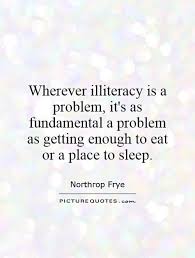
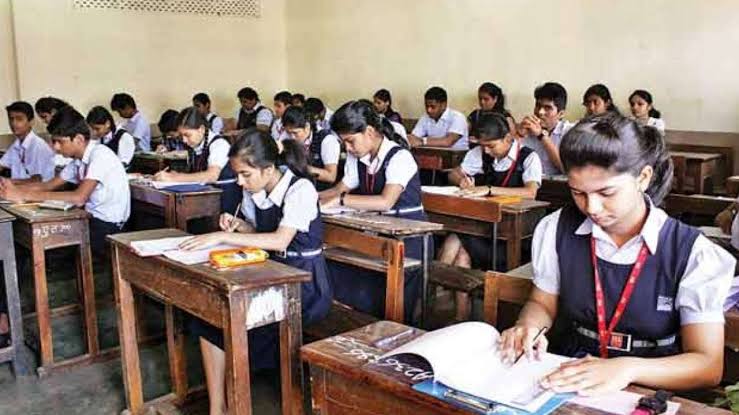
Illiteracy is one of the biggest problems in India. Gone are the days when the basic needs were referred to ROTI,KAPDA AND MAKAAN. There is an addition to it. Now it stands for ROTI,KAPDA,MAKAAN,EDUCATION AND HEALTH.  Lack of qualified education and basic knowledge has resulted in a lack of economic growth. Education is very important for an individual’s mental as well as physical growth. For a country to have a productive Human capital it is important that they are well educated and literate. It is because of the lack of education that poverty exists. The crimes increase because people do not have a living and also a sense of rational thinking. Moreover if we compare the illiteracy rate of women is much higher than men because there are still people who do not believe to educate their girls. The infrastructure for education is also not well developed. The quality of education of a public education varies too much from a private school. And it is the reason that private schools are costlier and not all can afford to go there.

There are several reasons for illiteracy in India. Some of these are :

Less educated parents – There are times when the parents are not so educated and they also lack the knowledge as to why education has such an important role .Therefore leading to less education of their children too.

Lack of Infrastructure – The educational infrastructure is still not developed as the way it should have post so many years of Independence. Due to which there are still people who can not access education. It is the duty of the government to reach out to the most vulnerable sections of the society.

Poverty- This is the root cause of Illiteracy .There are still people who do not have access to proper food, shelter and clothing . They can not afford to even send their children to school and are forced to put them to work may be in the farming activities or any other form of work they are in.

Population – The rapid increase in population also plays a role in the increasing rate of Illiteracy. The resources are scarce and the users are in great numbers . The poor people think that if they have more number of children and send their children to work they will earn more living and so instead of education they force them to work.

Corruption – The red tapism and corruption have led to this condition. The funds provided for deducation are often misleaded and and are used for filling the pockets of the officials.

Brain Drain- The educated people in India often take a decision to settle abroad or find a job there because they do not get their favorable job in India. They feel their talent is under utilized and thus they move abroad leading to brain drain in the country.

Backward thinking – The gender biasness still exist in the society . They believe that the education of girls is not so important and so they only send their boys to school further leading to imbalance of education ratio between girls and boys.

Finally for a country to grow and prosper it is really important that it’s citizens are educated enough to contribute to the society. The launching of policies alone will not work what is important is it implementation and effectiveness. There is a lack of awareness among people. It is high time that education reaches to the remote areas as well as the big cities equally and adequately. It is that even after so many years of independence India is still lacking behind in providing education to its countrymen.

Mental Health and Competitive Exams

India’s youth is pushed into participating in a rat race for entry into engineering and medical colleges, which is a whirlpool of broken dreams and identities. Students are groomed to prepare for entrance exams like NEET and JEE, from very young ages. Parents spend lakhs on coaching institutions that enrol children as young as ten years old. The journey to top medical and engineer colleges is filled with cutthroat competition and sleepless nights devoid of age-appropriate activities and socialisation. Many, despite preparing for years, fail to crack these entrance exams, and they often succumb to mental illnesses and stress-related ailments. This statement can be corroborated by a recent study by the National Health and Neuroscience, which found that one in every five teens suffer from some kind of mental illness. 

At any given point in time, millions of students fight with their peers to emerge on top, an exercise that proves to be futile for all but a few. Society expects excellence from all, leaving no room for average lifestyles and humble aspirations. Performances that are no worse than what would be expected from an average student inspire shame and admonishment from demanding parents and mentors. Students are expected to sacrifice their social life and coming-of-age experiences and devote their youth to the pursuit of ranks. Failure is simply unacceptable both to parents and to students who find themselves robbed of their childhood and their dreams. The result is that students are conditioned to be more afraid of failure than death itself. 

Entrance exams are winner-takes-all games where a handful of students monopolise the best institutions in our country. The stakes are high for students and thus, their stress levels skyrocket. Anxiety and depression are common among students, who are told to ignore them and soldier on. Society views health through a reductionist lens, only acknowledging physical diseases. Quality of life and mental health are equally ignored by parents and teachers who push students to touch the sky regardless of their inherent intersects and abilities. Deaths by suicide among students are spiking even as we, as a society, fail to re-evaluate the systemic failure of our education system. Why is it that we fail to free our children from the shackles of our own unfulfilled dreams and unrealistic expectations?

It is important for students to forge meaningful relationships with their peers and their family. A strong social support system is needed for a child to bounce back from psychological distress caused by competitive exams. Students should be allowed to choose their own vocation instead of conforming to the medicine-engineering binary that has been imposed on them. Failure should be treated not only as normal but as a welcome experience that teaches valuable lessons to students. Even the students who succeed in entrance exams are not free from the toll the preparation takes on their mental health. Students in esteemed institutions fail to cope with the stress that comes with living in a high-stress environment, and may even choose to end their lives to escape the never-ending spiral into progressively building expectations.