Everything is ONLINE!…


In the world of the pandemic, office work is a myth. Interviews turned into phone calls, business deals turned into virtual meets, committee meeting turned into zoom virtual get-togethers.
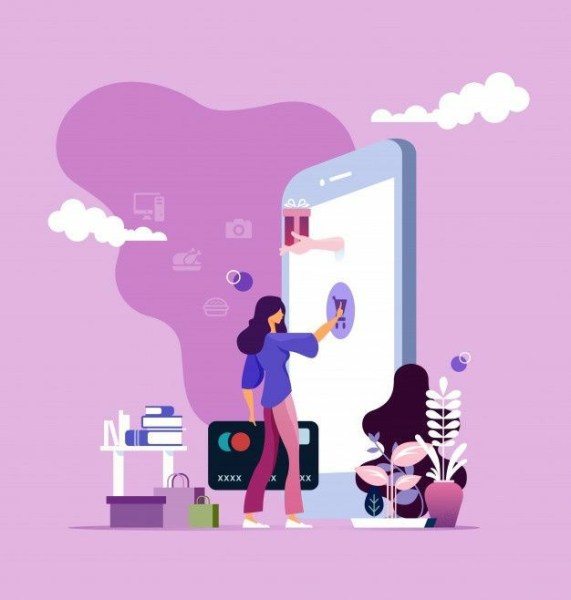
Many people even lost their jobs just because they couldn’t handle computer and operate the company’s online portal, that’s when everybody felt the need that why ” online” is important. “Online” doesn’t always mean sitting in front of the laptop for 8-9 hours doing repetitive work. We can go online simply with our phones. From games to groceries, from e-commerce shopping to marketing and selling your product, the virtual world plays a magnificent role.
You must’ve heard stories from your parents and grandparents that they had to walk several km just to go to school and come back walking the same. They must’ve even told you about how they used to rush hours before the office timings just to catch the bus and be there on time. But now things took a drastic change. Now even nursery kids learn with online classes. Teachers assign them tasks and they submit it with a soft copy. Now talking about online jobs, here you don’t need to rush for catching the bus, you don’t even need to walk several miles, but just need to do simple things. Dress up well, make yourself presentable and open your laptop and go on, that’s it. This is how things got simpler with online jobs. Here, you don’t always need to be physically present at a place called “office”. No matter wherever you are, at home, at a wedding, on a trip or somewhere else, still you can get your job done. Just sit for a while, complete the assigned tasks and you’re free.
Now many employees who got WFH to keep on blaming the network connection just to avoid their work. But I feel these excuses won’t work for many days. With the continuous upgradations happening in the network industry, everyone will be having a proper network connection at whichever remote place they are in.
Yesterday, I saw an advertisement looking for a manager. I was like, how, how this will work? The manager needs to be on the field for the proper functioning of the team but then I realised these electronic devices will get the job done. Now the whole administrative work can be done sitting at home. The administrator can keep a check on the work employees doing. Even if he finds some mistakes or some laziness towards work, he can straight out call the employee. He can rectify him on a phone call or a zoom meeting.
There is a thing we hear at times. Most of the corporate issues/problems can be solved simply on a call. You don’t need to be there at some place. Now-a-days, doctors are also on the ground of virtual world. During the period of this pandemic, many doctors turned themselves into a virtual instructor. They just have a virtual meeting with their patients, ask them symptoms and history and then prescribe tablets or ask for a proper hospital checkup.
Now many of you must be feeling like online jobs are related to only certain field of work i.e. IT industry. But the fact is with the increase in need of design and automation, mechanical field is moving towards the online world. Design engineers and machine programmers now work online and get their job done. Even after the end of this pandemic, people will still have the fear to go out to buy something or to eat. That’s why online market will drive the world in the upcoming days. So to fulfil the needs of the service, online market will rise and so does online jobs.

Vice President calls for well-strategized, collective action on multiple fronts to ensure well-being of young children

The Vice President, Shri M Venkaiah Naidu today called for a well-strategized collective action on multiple fronts to ensure well-being of young children for India to take full advantage of demographic dividend.

Child development should be the foundation of our development architecture, the Vice President said while releasing ‘The State of Young Child in India’ report, a comprehensive account of the challenges related to early child development in India.

The report has been prepared by Mobile Creches a policy advocacy organisation which works with the underprivileged children across India. Appreciating the report, Shri Naidu said that such reports help in policy formulation by developing greater understanding of the shortcomings and urgent needs of the children. He also appreciated the publisher Taylor & Francis Group for making the digital copy of report freely available for everyone.

Underlining the importance of ensuring healthy, happy, caring and playful early years for children for their holistic development, he observed that adequate nutrition and positive caring environment at home play an important role in a child’s development. The years from birth until the age of five were critical, he pointed out.

Shri Naidu said that for healthy development, children should grow up in an environment where their emotional, social, educational and other needs are fully met. Educated and healthy people with a good foundation in the early years contribute to the financial and social wealth of their societies.

Pointing out that poor nutrition hampers physical as well as intellectual development of children, Shri Naidu said it would make them vulnerable to illness and affect their performance in school. “We need to understand the crucial importance of this aspect of national development and take effective steps to ensure all children have a healthy start to their lives”, he added.

Quoting from the report, the Vice President said that of the 159 million children aged below 6 years in India, 21 per cent are undernourished, 36 per cent are underweight and 38 per cent do not receive full immunization. “These figures underline the crucial importance to invest in early childhood for realizing the full potential in later years”, he stressed.

Referring to several comprehensive policies and flagship programmes like the ICDS and India’s conscious efforts to meet the international commitments like the UN Convention on Rights of the Child (UNCRC), he said the challenges were still huge and need to be addressed.

Shri Naidu said it was important for all stakeholders, including the government, policy makers and civil society organizations to intensify their efforts in ensuring the well-being of the young child through better policies and effective programmatic interventions.

Maintaining that the children are our future, the Vice President said “we should take care of them”. He emphasised the need for uplift of the last man in true spirit of Antyodaya as espoused by Mahatma Gandhi and Pandit Deendayal Upadhyay.

Ms. Amrita Jain, Chairperson of Mobile Creches, Ms Devika Singh, Co founder of Mobile Creches, Ms Sumitra Mishra, Executive Director, Shri Sanjay Kaul, IAS (Retd), Member, Dr Shashank Sinha, Publishing Director of Taylor and Francis Group, Dr Anuradha Rajivan, IAS (Retd), Lead technical advisor, Shri N Ram, former Editor-in-Chief of The Hindu were among the dignitaries who participated in the virtual release of the report.

Following is the full text of the speech-

“I am extremely pleased to release the ‘State of the Young Child in India’ report. It is a comprehensive account of the challenges related to early child development in India and it also makes a set of recommendations on how to address them.

I must compliment everyone associated with bringing out this informative book, which will be useful to all the stakeholders from policy-makers to academics. All of us realize the importance of ensuring healthy, happy, caring and playful early years for children. All of us care for their well-being and holistic development.

It is well-known that the years from birth until the age of five are critical. Adequate nutrition and positive caring environment at home play an important role in a child’s development.  For healthy development, children should grow up in an environment where their emotional, social, educational and other needs are fully met.

 A good foundation in the early years makes a difference through adulthood and even gives the next generation a better start. Educated and healthy people participate in, and contribute to, the financial and social wealth of their societies.

As you all are aware, poor nutrition hampers physical as well as intellectual development of children. It makes them vulnerable to illness and affects their performance in school.

It is estimated that early childhood stunting affects nearly one-in-four children younger than five globally due to lack of nutrition.  As mentioned earlier, under-nutrition and poor sanitation – can lead to developmental delays and a lack of progress in school. For a country, poor early childhood development could mean economic loss. We need to understand the crucial importance of this aspect of national development and take effective steps to ensure all children have a healthy start to their lives.

It has been mentioned in the just released report that of the 159 million children aged below 6 years in India, 21 per cent are undernourished, 36 per cent are underweight and 38 per cent do not receive full immunization. These figures underline the crucial importance to invest in early childhood for realizing the full potential in later years.

The report also pointed to the insurmountable evidence of the huge returns on investment in Early Childhood Development (ECD) at the individual, household and country levels. “Proper nutrition, stimulation and care during the first 1,000 days of life (from conception to the second birthday) has a profound impact on the child’s ability to grow, learn and rise out of poverty, and in the process shape society’s long term stability and prosperity”, it was stated.

Based on ranking and values on the Young Child Outcome Index (YCOI), the report named Kerala, Goa, Tripura and Tamil Nadu to be among the top performers, while eight states– Assam, Meghalaya, Rajasthan, Chhattisgarh, Madhya Pradesh, Jharkhand, Uttar Pradesh and Bihar– with scores below the national average lagged behind.

The report has rightly pointed to the criticality of a holistic approach to development, including public awareness and parental education, improved living conditions with access to clean drinking water, proper sanitation and reliable primary healthcare service to make a difference to health and nutritional standards among children.

India has made considerable progress over the years in child welfare.

While the Government of India has introduced several comprehensive policies and flagship programmes like the ICDS and the national nutrition mission ( Poshan Abhiyaan) for Early Childhood Development in the country, the need of the hour is to implement them effectively through proper coordination among various ministries.

The Rashtriya Bal Swasthya Karyakram (RBSK) is an important initiative for early identification and intervention for children from birth to 18 years to cover 4 ‘D’s — Defects at birth, Deficiencies, Diseases and Development delays including disability

Similarly, Beti Bachao Beti Padhao (BBBP) is equally important to ensure protection, education and empowerment of the girl child.

The recently unveiled National Educational Policy rightly states that “the overarching goal will be to ensure universal access to high-quality early childhood care and education across the country in a phased manner.”

As you all are aware, India has been making conscious efforts to meet the international commitments like the UN Convention on Rights of the Child (UNCRC) and the Convention on the elimination of all forms of discrimination against women (CEDAW), and more importantly the sustainable development goals (SDG).

But the challenges are still huge and we need to address them.

It is important for all stakeholders, including the government, policy makers and civil society organizations to intensify their efforts in ensuring the well-being of the young child through better policies and effective programmatic interventions.

In other words, there should be well-strategized collective action on multiple fronts. Ensuring the well-being of the young child assumes greater importance if India has to take full advantage of its demographic dividend.

We must continue to focus our attention on early childhood care and education.

Child development should be the foundation of our development architecture.

Dear sisters and brothers, we are all reorienting our lives and adapting to a new normal in the wake of COVID-19 pandemic, which has disrupted our routine. The adverse impact of the pandemic on poor and marginalized families and their children has been quite severe. This is the time for all of us to come to the help of the needy, display collective resilience and overcome the hardship caused by the pandemic. The lessons learnt in this pandemic should stand us in good stead to effectively tackle any future health emergency, especially in regard to the well-being of children and other vulnerable groups.

Before concluding, I once again compliment Mobile Creches (MC) and other organizations involved in bringing out this insightful report.


Introduction of the National Education Policy 2020 a landmark decision toward rectifying all education anomalies: Dr.Jitendra Singh

Union Minister of State (Independent Charge), Development of North Eastern Region (DoNER), MoS PMO, Personnel, Public Grievances, Pensions, Atomic Energy and Space, Dr Jitendra Singh said that introduction of the National Education Policy 2020 was a landmark step by the Modi Government in clearing several  anomalies prevailing in the education system of the country. 

Addressing a webinar on “National Education Policy-2020:Health Education Perspective” organised by Shri Vishwakarma Skill University(SVSU), Haryana in association with Indira Gandhi National Open university (Ignou) here today, MoS Dr. Jitendra Singh said that it was the strong political will of Modi Government to take out of the box decision of introducing the National Education Policy-2020 which focuses more on skill and vocational education. The Minister said that the National Education Policy-2020 is an aptitude based rather than score based policy.  He said that this Policy will rectify all the previous anomalies prevailing the system.

INDIAN ARMY

The Chief of the Army Staff, General MM Naravane concluded a two day visit to Leh today. The COAS arrived at Leh on 03 September 2020 and proceeded to forward areas to undertake a firsthand assessment of the situation along the LAC. The COAS interacted with soldiers and local commanders deployed in difficult High Altitude forward areas. He appreciated their high morale and standards of professionalism exhibited by the units in safeguarding own territorial integrity. The COAS urged all ranks to remain vigilant and maintain a high order of operational readiness.

Later, at Leh, Lt Gen YK Joshi, General Officer Commanding-in-Chief, Northern Command and Lt General Harinder Singh, GOC, Fire and Fury Corps briefed him on the state of operational preparedness and on the logistics arrangements for sustenance of forces in winters. The COAS expressed satisfaction on the efforts being made to ensure operational effectiveness and capability enhancement of the forces.

Centre exhorts the States to proactively curb the Chain of Transmission and bring Mortality below 1%

Union Health Secretary Shri Rajesh Bhushan held a review meeting through video conference (VC) with the Health Secretaries of 15 districts across 5Statesof Andhra Pradesh, Punjab, Karnataka, Tamil Nadu and Uttar Pradesh today. These 15 districts comprise Chittoor, Prakasam, Mysuru, Bengaluru Urban, Ballari, Koppal, Dakshina Kannada, Davangere, Ludhiana, Patiala, Chennai, Coimbatore, Salem, Lucknow and Kanpur Nagar. They have been exhibiting higher active caseload, fatality rates and a surge in the COVID cases for the past four weeks. In addition to the State Health Secretaries, District Collectors, Municipal Commissioners and other district functionaries also participated in the digital review meeting.

The Union Secretary shared the overall status and performance of the districts on the key parameters of testing, positivity, case fatality etc., focusing on the need of continuing containment measures, increasing testing, effective clinical management of patients.State Health Secretariesprovided an in-depth analysis on the current status of COVID-19 in these 15 districts coveringaspects of containment measures, contact tracing, surveillance activities, facility-wise case fatality rates, trends in terms of weekly new cases and deaths, etc. and shared their detailed roadmaps and action plans for the next one month.

Granularities in terms of split of RT-PCR and Rapid Antigen tests conducted in the district, re-testing percentage of symptomatic negatives from Antigen tests, testing lab utilization, home isolation status, hospitalization status and bed occupancies of oxygen-supported beds, ICU beds and ventilator etc., were also shared with the Center.

The States were advised to take steps on the following specific areas:

  1. Limiting and eventually breaking the spread of the infection by implementing stringent containment measures and following social distancing measures, strict peri-meter control, and active house-to-house case search.
  2. Early identification by ramping up testing across the districts, optional utilization of RT-PCR testing capacity and use of Rapid Antigen Tests as a screening test in hotspots and densely populated areas.
  3. Effectivemonitoring of home isolation cases and early hospitalization in case of disease progression.
  4. Seamless hospitalization and early admission for patients requiring medical support, especially in cases of co-morbid and elderly population.
  5. Following effective infection control measures in hospitals to safeguard healthcare workers from contracting the infection.
  6. District Collectors and other functionaries to prepare and update district specific plans to continue their efforts to manage the pandemic with the same rigor.

Union Minister Dr.Jitendra Singh addresses the one-day workshop on Good Governance Practices in a Pandemic for 117 District Collectors of Aspirational Districts

Dr.Jitendra Singh, Minister of State for Personnel, PG and Pensions delivered the valedictory address at the NCGG-NITI one-day Workshop on Good Governance Practices in Aspirational Districts in a Pandemic through a webinar today. In his address,Dr.Jitendra Singh said that District Collectors in Aspirational Districts have out-performed many non-aspirational districts in fighting the COVID-19 Pandemic and that the performance of Aspirational Districts represents an opportunity to prove the resilience of the Indian Nation. One of the reasons for this high quality performance was that IAS officers who had served as Assistant Secretaries in Government of India had gained from their mentorship in Union Government. Dr.Jitendra Singh said that the “show must go on with due precautions” despite the pandemic, as can be seen in the conduct of several entrance examinations – the JEE/ NEET/ CSE all of which have been notified. Only because of the collective people’s effort India was able to fight the pandemic better than other countries. He urged the District Collectors of Aspirations Districts to consistently focus on achieving continuous growth in developmental indicators.

CCI approves the acquisition of Metso Oyj’s (“Metso”) minerals business by Outotec Oyj (“Outotec”)

The Competition Commission of India (CCI) approves the acquisition of Metso Oyj’s (“Metso”) minerals business by Outotec Oyj (“Outotec”) under Section 31(1) of the Competition Act, 2002, [Combination Registration No. C-2020/03/735].

The CCI has published the order approving the acquisition of Metso’s minerals business (“Metso Minerals”) by Outotec. All such assets, rights, debts, and liabilities of Metso that relate to, or primarily serve, its minerals business (comprising the mining, aggregates, minerals consumables, minerals services, pumps, and recycling businesses) will be acquired by Outotec. The approval is subject to modifications that are aimed at eliminating the likely anti-competitive effects of the proposed combination.

The above order was a result of an detailed inquiry undertaken pursuant to the notice given by Metso and Outotec under sub-section (2) of Section 6 of the Competition Act, 2002 (Act) on 12th  March, 2020. The Commission found that the Proposed Combination is an integration of two strong and close competitors in the market for Iron Ore Palletisation (IOP) Equipment Island in India and appears to:

  • limit the number of suppliers available to customer in this market in India;
  • reduce the intensity of innovation in the technology for pelletizing technology and equipment;
  • perpetuate the substantial market position of the Parties in the market; and reduce or eliminate the competitive pressure that would prevail in the absence of Proposed Combination;
  • reduce the extent of countervailing bargaining power that the customers enjoy on account of the competition exerted by independent presence of Metso and Outotec;
  • increase the cost of the entrants and rivals to compete and increase their presence in the market given that there is no likeliness of a timely and sufficient entry that could act as a competitive constraint to the combined entity; result in creation of a strong integrated player

Thus, the CCI was of the view that the proposed combination would reduce competition and confer the combined entity, the ability to increase price etc.

In order to address the competition concerns arising as a result of the proposed combination, the Parties proposed voluntary remedies / modifications (VRP). The Commission noted that VRP given by Parties eliminates the overlap between the Parties in the IOP segment in India and would effectively transfer Metso Minerals’s Indian Straight Grate (SG) IOP capital equipment business to a suitable buyer, thereby preserving the competition.

The modification essentially involves transferring a right to fully use and exploit the SG IOP capital equipment drawings, including the related registered IP by way of an exclusive and irrevocable license, subject to a lump sum upfront payment and no ongoing royalties. VRP will allow the emergence of a new competitor, thus resolving any concerns whatsoever in relation to this segment.

Canister bag that solidifies infectious secretions like COVID 19can save health workers from exposure during handling

Infectious secretions from contagious diseases such as COVID 19, tuberculosis (TB), and influenza poses high risk for healthcare workers. Their exposure to the high-risk hazard while handling the waste can soon be controlled with a canister bag that solidifies the secretions rapidly, making disposal safer.

For the safe management of infected respiratory secretions, the researchers at Sree Chitra Tirunal Institute for Medical Sciences and Technology (SCTIMST), an autonomous institute under the Department of Science and Technology, Govt of India, have come up with a method for safe handling and disposal of respiratory secretions in hospitals for ICU patients or those with copious respiratory secretions treated in the wards. They have developed canister bags lined with super-absorbent material containing an effective disinfectant, named “AcryloSorb”.

When the patient is admitted to the hospital, secretions are sucked into bottles or canisters using vacuum line and discarded through the waste fluid disposal system after subjecting to decontamination process. There is a high risk of contamination during the handling, and the disposal needs well-equipped sluice rooms with disinfection facilities. The safety threat and manpower issues will be manifold in less equipped hospitals or temporary isolation wards set up during pandemics.

The canister bags can absorb 500 ml of secretions and solidify it immediately. In addition to that, the whole system will be decontaminated within no time because of the presence of disinfectant. The liner structure has a patented design which allows the progressive absorbent availability upwards. Solidification and immediate disinfection that occurs inside these bags eliminate risk of secondary infections by avoiding spilling and aerosol formation, and thereby protect healthcare workers and promote safe workplace management.Canister bags are enclosed in a customizable sealer bag which can pack it as spill-proof decontaminated biomedical waste disposable through incineration. The product has been tested as per the international standards.

The SCTIMST team that realized this technology consists of biomaterial scientists and clinicians – Dr. Manju, S., Dr. ManojKomath, Dr. Asha Kishore, Dr. Ajay Prasad Hrishi. The know-how of the AcryloSorb suction canister liner (CL Series) bags has been transferred to Romsons Scientific and Surgical Pvt. Ltd for manufacture and immediate marketing. The approximate cost will be Rs. 100/- for each canister liner bag.

Romsons Scientific & Surgical Pvt. Ltd, located at Uttar Pradesh, is a global player in medical devices with more than 200 products in market. The company has proven expertise of half a century in the area of disposable medical and surgical devices and is a prominent brand in the medical device community. The company has its distribution channel across 65 countries. Quality is a prime motto of Romsons, evidenced by the ISO and CE certifications for many of their products.

The field trials of the in-house designed suction canister liner bags are being conducted in SCTIMST.

Portable Sterilization unit using new hybrid sterilization technology can decontaminate PPEs rapidly

Scientists have developed a portable sterilisation unit using a new technology called the hybrid sterilization system that can decontaminate personal protective equipment (PPE) necessary for combating COVID 19, easily and rapidly, allowing them to be used multiple times.

It can be used by health professionals and other COVID warriors for whom PPEs are essential and can prevent generation of hazardous solid waste from PPEs.

IIT Tirupati (IITT) and IISER Tirupati have jointly developed the Portable Optical Cavity

Sterilization Unit (POSCU) to provide efficient and rapid decontamination of personal protective equipment (PPE) and other household items. A working point-of-use sterilization unit has been developed with the support of Science and Engineering Research Board (SERB), a statutory body under the Department of Science and Technology (DST).

UV radiation is a proven method for sterilization. However, the lower penetration depth of UV-C and faster divergence from the source can result in nonuniform treatment. The team consisting of Dr. Reetesh Kumar Gangwar (Asst. Prof., Physics), Dr. Arijit Sharma (Asst. Prof.,  Physics), and Dr. Shihabudheen M. Maliyekkal (Asst. Prof., Civil & Environmental Engineering) from IITT have developed this hybrid sterilization system consisting of a UV radiation cavity, cold plasma, and H2O2 spray.

Unlike the traditional UV systems, this unit follows the optical cavity concept to optimize the use of photon flux in the treatment area. The system confines the UV radiation and enhances photon-flux and sterilization efficacy. The coherent operation of UV-C, cold plasma, and H2O2 spray further strengthens the sterilization efficiency due to more hydroxyl radical production.

CSIR-CMERI develops Affordable Solar Powered Battery based Sprayers to tackle Water Crisis in Agriculture

Water is a precious resource and water scarcity is looming large over the entire Nation. Agriculture, which consumes around 70% of Water, for irrigation purpose, is the most vulnerable sector of the Economy owing to this crisis. To address this issue there has been discussion on implementing solar pump in almost every farmland.

Apart from solar pumps, CSIR-CMERI isworking on methods to reduce water consumption required for irrigation. Initially, Drip irrigation was considered but later it was realised that Drip irrigation is not affordable for marginal to small farmers, who are the major stake holders in Indian Agrarian scenario. Those farmers use manual sprayers costing a few thousand rupees.

As per the available knowledge, pesticides play very big role in increasing crop productivity, but large amount of pesticide sprays is wasted due to lack of appropriate machinery, and soil, water and air become polluted. Due to such harmful effects of pesticides, there is an increasing pressure to reduce their use and make their spraying more efficient. To make efficient sprayer, there is need to understand science of surface tension, viscosity, wettability, air drag, dynamic pressure, particle size, etc. CSIR-CMERI developed two variants of battery operated spray systems one for “marginal famers” and other for “small farmers”. Back Pack Sprayer, having capacity of 5 litres, is made for “marginal farmers”, while the Compact Trolley Sprayer having capacity of 10 litres, is made for “small farmers”. These sprayers are equipped with two separate tanks, flow control and pressure regulator to handle different water requirements of the crops, target/site specific irrigation, maintaining appropriate dilution of pesticide/fungicide to control the pest (on foliage, under the leaves, at root zone etc.), creating water based micro-roughness of leaf surface, maintaining soil moisture levels in a narrow range, and weed control. The systems functions on Solar-Powered batteries, thus enabling its usage even in energy and power deprived agricultural regions of the Nation, thus reducing dependence on price volatile fossil fuels. The sprayers are simple to develop, easy to learn and implement, therefore will help to overcome water crisis faced by Indian farmers.

The flow control feature of the Sprayers helps achieve multiple levels of Water/Pesticide flow thereby enhancing the flexibility and dynamicity of the coverage area as well as the intensity of the application. The Dual-Chamber design of the Sprayers helps achieve a degree of resource versatility as it allows the system to carry two variants of liquids at any particular instant. As per experiments conducted at CSIR-CMERI, the engaged farmers have informed that it helps save 75% of Water and 25% time-consumption while using the CSIR-CMERI developed sprayers. This design element might also help reduce the time consumption for Spray based Agricultural applications, as the farmer need not empty the contents of a single vessel completely before using a different content.

Prof. (Dr.) Harish Hirani, Director, CSIR-CMERI, elaborated, “These couple of variants can bring about a revolution in the sphere of Precision Agriculture by reducing usage of Water in Agriculture. This revolutionary technology will help in creating agricultural avenues even in arid and semi-arid regions, as the Water scarcity will no longer be feared by the farming community. The CSIR-CMERI developed sprayers provide a cost-effective socio-economic solution for both marginalised and small-scale farmers. The affordable pricing profile helps to provide opportunities to cottage and micro-industries in furthering the outreach factor of the technology widely.”

CSIR-CMERI has already developed solar tree of capacity 1 Kwp, 3 kwp, 5 kwp, 6 kwp, 7.5 kwp and 11.5 kwp,(which is now the Largest Solar Tree in the world).

NIGHT ROUTINE

We all have been taught to know some basics of a morning schedule and do prepare one for us. Do you ever had a thought of having a night routine? Basically, there are very few people how ever had a night routine. As nights are that part of a day where all of us very little amount of energy left in us to follow any kind of schedule. And basically people want to relax and have a free time. For many people nights are the time when they get some time with family,but for many others this is the time when people get some privacy and can do whatever they like without any bounds and limits. But when you would have a deep thought on the topic you will come to know that night routines are more significant than the morning routines. As much sorted the night would lead to a more productive day. When someone knows what to be done the next day ,automatically the next day becomes more productive. So it’s better to plan the whole day beforehand and have a productive and perfect day rather to be dejected in the morning. Sometimes it’s well possible that the plan made by you don’t works the way it should but then also you would know what are the mistakes done by you that lead to such failures to the plan.

A night routine unknowingly would lead to relax you more than you had ever thought . Because the calmness of the night can be enjoyed much more when tried something new to feel it. So what basically are the night routines? What is that great secret to have a perfectly planned day? Can everyone of us owe the power to make and follow such cruel and evil sounding routines? What is the major step that is to be taken to create such routines?

Basically the answers to all the above question is a little time and a pen paper or any digital platform where you could plan things. Firstly in the night time the body has its major shutdown so for that it had to plan and start this routine from late evening time. Its know that having dinner by 8 pm (IST) is a healthy and body friendly habit. But there a few how follow this habit. Truly this habit is one of those habits which is not to be missed at any cost. This habit would lead to a good stomach health or more specifically a good gut health. A good gut health leads to a healthy individual and a healthy individual leads to a productive mind. This habit could be considered as the first step for night schedule. All of us have a different circadian rhythm cycle and our body works according to that only. Many researches have found that may people have a habit of being night owl and staying awake late night till am sometimes or evening more time . Some people sleep in the early morning when they should actually get up and start their new day. With the modernisation we are changing but there remains things which are good if not changed otherwise our body and its functioning is hampered enormously with our knowing. So it’s better to go to bed by 12am (maximum) and get up by 6 or 7 in the morning. Although it’s said that the best time to go to bed is by 9-9:30 pm and get up by 4-4:30am. As It’s good to inhale the morning breeze because it enhances the memory power.

Now moving on to the next step it could be having a no screen time 1 hour before going to the bed. Because the white light from the screen hampers the melatonin(sleep inducing hormone) and delays our sleep time. Before an hour of going to the bed it’s good to some work which don’t include you to face the screen. So it’s the ideal time to plan the next day and even write down what you did that day or what are those shortcomings which if not done would have made your day even better or write about what are the experiences and lessons you gained that day. After that you could also have a me time by doing a little self care activities like hair care,skin care etc. Just before the bedtime you could do some of the things you feel could relax you. It may be book reading, sketching,colouring,quote writing etc. It could be anything but it should surely relax and soothe your soul deeply. So this leads you to the final step of you night routine. And that is the moon milk if you have any kind of allergy with dairy product or you are a vegan then you can use plant based milk in place of animal product. But surely this moon milk helps your body to rejuvenate and produce a sense of calmness. Do check the recipe of moon milk and give it a try as this induces sleeps,helps to heal the inner injuries,decrease stress and there are tons of benefits of moon milk which if written would lead to another big article.

So with all these basic night time practices one could achieve a great bedtime as well as it would lead to a productive and perfect day. So surely try it out.

ENJOY and surely don’t forget to put an alarm to wake up at perfect time the next morning!!!!!!

Reasons to keep negative people at bay


Do you want to be a successful person in life? Do you want to stay motivated and keep working hard to reach your goals? I am pretty sure you do. In fact, everybody does. Well, if you are really looking forward to fill your life with joy and happiness, and to achieve success, then the one thing which you should do right away is to cut ties with negative people. Below are some of the reasons that might help you realise who your real well- wishers are and why you should remove toxic people from your life.
1) Alters your outlook towards life-
If you surround yourself with people that constantly shakes your confidence and makes you feel miserable about the life goals you have set to achieve, making you believe that you won’t be able to achieve those, then your attitude towards life gets changed. It becomes negative and you start seeing the world through the perspective of your toxic friends, without even realizing it. Such humans does no good to you but what they would do is discourage you time and again and would attempt to drag you down with them to the darkish side.
2) Alters your belief sytem- The problem with negative people is that if you hang around with them often, and listen to them for long enough, they would begin impacting your thinking, and you would quickly recognize that as an alternative of wondering positively you are questioning negatively. Before you even come in terms to it, it would begin impacting the way you assume or see the world and as a result it would alter your belief system when it shouldn’t.
3)Hinders your growth- if you are continually around negative people, it would hinder your overall growth as a person in life. As, already said negative people would often give you negative feedback, and so over the time you would start believing them, which would ultimately affect your growth, as you will by no means try taking the risk to do what you really want to or would never have the courage to chase your dreams.
4) You deserve to stay happy- When in doubt we often seek help from our friends and take treasured advice, people having good intentions for you would always encourage you to dream big and to believe in your ability to achieve it. Negative people on the other hand would advice you exactly the opposite. They would make you believe that you can’t achieve your dreams or your dreams are too big to be achieved, ultimately crushing your self-confidence, and self-worth. You will forever be in self-doubt. So it’s better to break ties with such people and fill your life with joy and happiness, because you deserve to stay happy.
   Now, it’s completely up to you to decide upon the kind of people you really want to keep in your life. You can keep those who pull you down and make you feel miserable or you can simply choose to leave such people behind and keep only those who lifts your spirit during difficult times, the choice is yours.Choose your friends wisely because what matters in the end is quality friends over quantity!

Welcoming September 2020

As the restrictions are being lifted in order to aid the degrading economy it needs to be kept in mind that the cases in India are achieving new heights.

Here are some disturbing facts before you think that this month was going to be easy on you.

1) Bill Gates is supremely confident that a new wave of cases will be seen in October – November. This might take a nasty turn as the increased rates could be blamed on protestors and these relaxations

2) China and India are prepared for a war. Both the nations have gathered their arms and ammunitions along with planning their strategies that might come in use anytime soon.

3) The increase in the incidence of earthquakes in the himalayan fault line (5.1 in Manipur recently) indicates there could be big one soon.

4) The economy is moving towards recession and will not recover any soon. This is one of the reasons of the gradual unlock happening.

5) There are possibilities of cyclones in both Eastern and Western front in the cyclone season October.

6) Food shortages most probably will happen sooner than later considering the unusual weather that has led to increase pest attacks. Those migrants who returned home due to covid outbreak thinking to take up farming have lost everything and are burdened with loans.

7) The hospital, tourism, transport industries suffer the most due to lack of mobility of people under such conditions.

8) Small businesses are being whiped out and corporate houses purchasing various businesses.

9) Crime rates are bound to increase along with suicide rates due to unemployment. 45% increase in suicide rates has already been noted.

10) Both center and state are faced with huge shortage of funds with centre refusing to pay GST compensation to states. This might lead to increased taxes.

The list goes on and on. Good days seem like a distant dream.

Assassination of John F Kennedy

If not us, Who?……If not now, When?

John F Kennedy,USA

John Fitzgerald Kennedy (May 29, 1917 – November 22, 1963), often referred to by his initials JFK and Jack, was an American politician who served as the 35th president of the United States from January 1961 until his assassination in November 1963. Kennedy served at the height of the Cold War, and the majority of his work as president concerned relations with the Soviet Union and Cuba. A Democrat, Kennedy represented Massachusetts in the U.S. House of Representatives and Senate prior to becoming president.

John Fitzgerald Kennedy was born outside Boston in Brookline, Massachusetts, on May 29, 1917, at 83 Beals Street, to Joseph P. Kennedy Sr., a businessman and politician, and Rose Kennedy (née Fitzgerald), a philanthropist and socialite. His paternal grandfather, P. J. Kennedy, served as a Massachusetts state legislator. Kennedy’s maternal grandfather and namesake, John F. “Honey Fitz” Fitzgerald, served as a U.S. Congressman and was elected to two terms as Mayor of Boston. All four of his grandparents were children of Irish immigrants. Kennedy had an elder brother, Joseph Jr., and seven younger siblings: Rosemary, Kathleen (“Kick”), Eunice, Patricia, Robert (“Bobby”), Jean, and Edward (“Ted”).

He has won many prestigious awards.In addition to the various campaign medals received for his war service, Kennedy was awarded the Navy and Marine Corps Medal for his conduct during and after the loss of PT-109, as well as the Purple Heart for being wounded.

Just before the assassination,Kennedy chose to travel to Texas to smooth over frictions in the Democratic Party between liberals Ralph Yarborough and Don Yarborough (no relation) and conservative Texas governor John Connally.Kennedy later decided to embark on the trip with three basic goals in mind:

1.) to help raise more Democratic Party presidential campaign fund contributions;

 2.) begin his quest for reelection in November 1964 ;

3.) to help mend political fences among several leading Texas Democratic party members who appeared to be fighting politically amongst themselves since the Kennedy-Johnson ticket had barely won Texas in 1960 (and had even lost in Dallas).

 The trip was publicly announced in September 1963, the exact motorcade route was finalized on November 18 and publicly announced a few days before November 22.Kennedy’s open-top 1961 Lincoln Continental four-door convertible limousine entered Dealey Plaza at 12:30 p.m. CST. Nellie Connally, the First Lady of Texas, turned to Kennedy, who was sitting behind her, and commented, “Mr. President, you can’t say Dallas doesn’t love you”. Kennedy’s reply – “No, you certainly can’t” – were his last words..From Houston Street, the limousine made the planned left turn onto Elm to provide access to the Stemmons Freeway exit.As it turned, it passed by the Texas School Book Depository, and as it continued down Elm Street shots were fired. About 80% of the witnesses recalled hearing three shots.

A small number of witnesses recognized the first gunshot (shortly after Kennedy began waving) for what it was, but there was little reaction from most in the crowd or riding in the motorcade. Many later said they imagined what they heard to be a firecracker, or a vehicle backfiring. Although some close witnesses recalled seeing the limousine slow down, nearly stop, or completely stop.

The assassination had an effect on many people, not only in the United States but around the world. Many vividly remember where they were when they first learned the news that Kennedy was assassinated, as with the Japanese attack on Pearl Harbor on December 7, 1941.

Ultimately, the death of President Kennedy, and the ensuing confusion surrounding the facts of his assassination, are of political and historical importance insofar as they marked a turning point and decline in the faith of the American people in the political establishment.

Tea Tree Oil: a magical formula

When it comes to beauty products, essential oils are a hype these days. From skin care products to medicine, essential oils have proved their far-ranging properties. They have been used for centuries not just to heal ailments but also to stimulate and alter emotions.
Essential oils are derived from plants, and capture the plant’s flavor, or “essence.”

Michelle Gagnon, founder of Bio Alchemy Olfactive and MKG Bio Alchemy and a bio alchemist by profession says: “Essential oils affect our physical, emotional, and spiritual
wellbeing, and take effect via topical application and inhalation. Long term use of essential oils — in small quantities — can have a great impact on our overall health and
state of wellbeing.”

And here, we are going to have an insight into the miraculous properties of essential oil,
tea tree oil.

Tea tree oil also called Melaleuca oil, is extracted from the leaves Melaleuca Alternifolia
plant, and commonly known as tea tree. This tree is native to the northern coast of South Wales, Australia, and was brought to popularity by the Australian aborigines. For the world, it might be a newly discovered magical formula, but Australians have been using it as a resource for countless years. It possesses the anti-bacterial, antiseptic and anti-inflammatory properties which help in many daily problems including acne and fungal infections.


Having a bottle of tea tree oil means you have a powerhouse of soothing. Tea tree oil can elevate the body’s natural healing process. And it’s not just the people using it, but also the experts talking about the tea tree oil benefits for hair and skin.


Dr. Sunil Kumar Prabhu, Senior Consultant, Dermatology and Aesthetic Physician, Aster RV Hospital, explains, “Tea tree oil has been traditionally used and can be
beneficial to manage dandruff because of its antimicrobial and anti-inflammatory properties. It is used quite often found in personal care products because it can purify and cleanse the skin, and unclog the pores”.

Tea tree oil can be your go-to product for all kinds of skin problems like acne and blemishes, but it benefits hair fullness as well. Even a small amount of diluted tee tree oil when applied to your hair shaft can promote hair fullness. It unclogs hair follicles, nourishes the roots, and helps the hair reach its full potential.
But, flowing locks might not be your only concern, dandruff can be embarrassing too.


Before we talk about treating dandruff with tea tree oil, let’s see what dandruff is: it is just an accumulation of dry and scaly skin on your scalp. According to a study published in the Journal of American Academy of Dermatology, using a shampoo containing only 5 percent of tea tree oil appears to be effective for the improvement in dandruff. It also
helps in controlling itchiness and greasiness on the scalp.


When asked about the tea tree oil benefits for hair, Dr. Jenelle Kim, a Chinese medicine expert and founder of JBK Wellness Labs in San Diego says, “It is a strong, natural ingredient that is great for sensitive skin and scalp. The scalp is very sensitive and is vulnerable to skin imbalances, itchiness, and dandruff—which are usually caused by minor fungal infections.”

Tea tree oil deserves a spot in your beauty routine. With its luscious benefits, it can revolutionize everything about your skin and hair.