
Spike In Winter Pollution And Dipping Temperature

According to recent analysis of a Delhi-based non-profit, Centre for Science and Environment(CSE), the North Indian cities see spike in winter pollution than the average of South Indian cities. Centre for Science and Environment(CSE) extensively analysed real-time and data from 99 cities to shed light on the winter air of 2019 and 2020.
According to the report, the most polluted cities this winter were located in Delhi-NCR, Uttar Pradesh, with Ghaziabad and Bulandshahar topping the list. The cities with the worst pollution rise includes Lucknow, Gurugram, Jaipur, Vishakapatnam, Agra, Navi Mumbai and Jodhpur, while Kolkata is the only megacity in this group. The cities that have met the national 24- hour standard (60 μg/m3) during the winter season are Santa, Mysuru, Vijayapura and Chikkamagaluru.
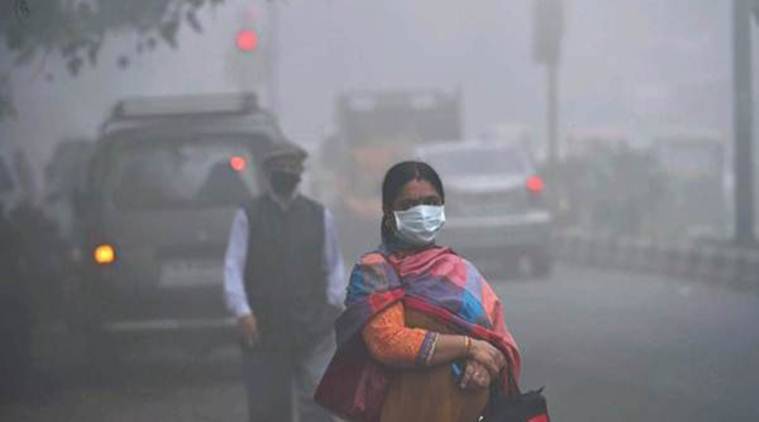

Out of 99 cities, only 19 showed substantial improvement in PM 2.5 levels, one of these was Chennai. In fact, Mysuru in Karnataka and Santa and Maiha in Madhya Pradesh are the cleanest cities in the country. However, Delhi experienced an increase in the seasonal average but a decline in the seasonal peak. It is important to note that, apart from the megacities, it is the smaller and the emerging cities that are becoming pollution hotspots.
The report said that the levels of PM 2.5 worsened in 43 out of 99 cities. PM 2.5 refers to fine Particulate Matter (smaller than 2.5 micrometers in diameter) that floats in the air, exposure to it is harmful to health, than any other pollutant. The particles are so minute that they cannot be seen through naked eyes. PM 2.5 and PM 10 are harmful as they can enter our lungs easily and cause severe respiratory problems.
Anumita Rouchowdhury, CSE’S Executive Director in charge of research and advocacy, said, “The northern Indo-Gangetic Plain is the most affected, as other regions also experience a rise, but with lesser intensity. However, the average level of PM2.5 during summer and monsoon in 2020 was considerably lower than the previous year due to lockdown, but the winter PM2.5 concentration has risen compared with 2019 in many cities.”
But the question is, why does air quality deteriorate during winter?
During winter, the level of PM2.5 is high. Polluting activities such as burning of biomass to warm up homes, burning stubble at the end of the harvest season, increase in the number of brick kilns are the major reason for high level of PM2.5 in winter. In addition to these, during winter the air near the atmosphere gets denser and cooler in contrast to normal condition in which warmer air mass is over lane by cooler air mass. The cool air trapped by warm air creates a kind of atmospheric lid known as inversion. Other factors such as vehicular and industrial emission led to rise in winter pollution.

The experts call for reforms and action in sectors such as industrial, power plants and waste management to control the rise in winter pollution and bend the annual pollution curve. Other measures to mitigate air pollution are-
1) Creating public awareness about the ill-effects of air pollution.
2) Making stringent vehicle emissions’ norms.
3) Improvement in traffic management.
4) Reducing road dust by changing road infrastructure.
5) Proper implementation of government initiatives to combat pollution.

Birthday Tribute to Great Saint: Pronam to Sant Ravidas Ji

   In India from the ancient period onwards time to time, many great saints were born. One of them is Sant/Saint Ravidas, also called Raidas, (flourished 15th or 16th century), a spiritual poet and a great saint. Sant Ravidas ji was one of the most prominent saints of Indian Bhakti movement. It is believed that Guru Ravidas ji was born on the Magh Purnima day on Sunday in the year 1433 in Kashi present Varanasi in a so called ‘untouchable leather-working caste’, but his knowledge, wisdom, spiritual development and humanitarian activities were at the zenith which cannot be compared with  many upper castes. Undoubtedly, Sant  was endowed with pure and holy soul as he had proved by caste one cannot be great.

       Many researchers believe Sant Ravidas ji met Guru Nanak Dev Ji, the founder of Sikhism and 41 of Guru Ravidasji’s poems were included in the Adi Granth. 

Sant Ravidas ji was a prominent figure in the bhakti movement and a renowned poet of the Nirgun bhakti tradition that valued the worship of a formless God.  In this context, two foreign researchers who have carried out extensive study on Sant Ravidas ji’s activities may be mentioned. One is Dr. Winand Callewaert and another one is Dr. Peter Friedlander as both have published many books and articles on Sant. They have translated his songs also. One is presenting here. It may be mentioned that Prof Dr. Winand Callewaert was a scholar in Sanskrit (studied in India) and taught this subject in foreign countries. He has published many books and articles in English, Dutch and Hindi. Another scholar Dr. Peter Friedlander lived in India from 1977-1982 and learned Hindi in Varanasi. He then studied at SOAS London University and completed his Ph.D. on the life and works of Saint Ravidas in 1991. The following  is a popular verse from Saint Ravidas, translated by Dr Winand Callewaert and Dr. Peter Friedlander,

“Raidas says, what shall I sing?

 Singing, singing I am defeated.

How long shall I consider and proclaim:

 absorb the self into the Self?

This experience is such,

 that it defies all description.

I have met the Lord,

 Who can cause me harm?

Hari in everything, everything in Hari –

 For him who knows Hari and the sense of self,

no other testimony is needed:

 the knower is absorbed”.

(Hari here refers to God who takes away all the sorrows of his devotees).

 Guru Ravidas Ji was against the Varna (caste) system and in his poetry, questioned caste hegemony, valued labour of all sorts, as well as a life of simplicity and morality. He initiated dialogs with upper caste Hindus about caste, social justice, love and forms of worship. He spread the message that “God created man and not man created God”, means everyone is created by God and has equal rights on this earth. This theory in the present days no one can deny as all human beings have equal rights. It is believed that because of his wisdom, in-depth spiritual knowledge and discourse many persons of all castes including the King and Queen of Chittoor presently in Rajasthan were his followers.

   In  Sant Ravidas Ji’s name  a temple has been constructed in his hometown, where Guruji is worshipped every day. His songs are recited every morning and evening in the temple. His birthday is celebrated every year on Magh Purnima day i.e. at the full moon day of Magh month of Indian calendar. 

    Although, Guru Ravidas Ji has passed away long ago but he will be in the heart of millions for his spiritual, devotional and humanitarian activities as his massive contribution to Bhakti movement enlightened us. I extend my respectful Pronam to the Great Soul, Saint and Guru on his 644th birth anniversary. 

The following websites have been consulted while writing the article:

  1. https://en.wikipedia.org/wiki/Ravidas
  2. https://www.yogapedia.com/definition/8501/nirguna-bhakti
  3. https://www.manifestias.com/2019/11/05/saint-ravidas
  4. https://www.britannica.com/biography/Ravidas

Dr. Shankar Chatterjee, Hyderabad

Glassophobia 🎤🤐😰

Glassophobia & shyness are two different things. But people often misunderstood themselves as shy.If you also think that you are just shy of speaking in public, then you need to rethink if it’s just shyness or something worser than this, a phobia of public speaking.

Shyness when crosses the limits then turns to the glassophobia.Sometimes the past negative experiences cause or intensify the fear. It all starts with the thoughts like what will people think about me ? what if I will stumble over my words ? what if I will forget what to say ? what if people start laughing at me ? With time these thoughts intensify and may cause physical and mental problems. Sometimes it may cause the person to suffer from inferiority complex.

Glossophobia is the medical term for the fear of public speaking. It isn’t a dangerous disease but yes it can lead to stress in the extreme cases. It may be due to lack of preparation , & in this case it doesn’t cause that much harm. It’s cause may be one of the most common psychiatric disorders, . Social anxiety disorder.

Anxiety due to lack of preparation or due to amaturity is common to many.In fact, some experts estimate that as much as 77% of the population has some level of anxiety regarding public speaking.Of course many people are able to manage the fear.

But about 10 percent are genuinely terrified and are physically debilitated by even the thought of public speaking. True glossophobics will go to great lengths to avoid speaking in a group situation.If you are the one who faces problems in work,school or in social life due to this anxiety, then it’s possible that you suffer from a phobia of speaking out.

Even the thought of presentations, group activites & answering a question can cause the anxiety.Such people start thinking of excuses to avoid the events where they are going to be the centre of attention.

Physical symptoms of glassophobia may include – Sweating , Increased heart rate , Raise in blood pressure ,Dry mouth , Difficult breathing , Nausea or vomiting in extreme cases, Headache, Muscle tension, Dizziness, Dilation of pupils, need to urinate, vocalised pauses , Shaking or quivering voice , weakened voice tone , Trembling , Panic attack , Feeling lack of energy.

Of course it’s difficult to overcome the fear , but it’s not impossible. Psychotherapy, medication,exposure therapy and herbal remedies , different ones can be applied , depending on the severity of fear. Many people are able to overcome their glossophobia with cognitive behavioural therapy(CBT). There are other ways one can try at home. Like practicing in front of mirror , talking with close ones & then asking them to analyze you , focusing on your way of speaking. According to me , Meditation is the best way to overcome any fear.

Remember , everything you want is on the other side of fear. Choose fight instead of flight.

Happy Public Speaking…🙂

Ways to be optimistic and positive every day

 Years of research and studies have shown that positive and optimistic thinking helps us be happier, healthier and more productive in any field of work. It is the key to living a satisfactory life and ensuring the well-being of the people around us as well. However, it’s very difficult to practice positivity and optimism every day, so here are some tips.


1. Guide your energy. Positive energy invites positive deeds and events, and vice-versa. According to quantum physics, our thoughts have a frequency and a corresponding unique vibration that attracts similar frequencies into our lives. So negative thinking attracts negative energy; positive thinking attracts positive energy. This also applies to group thinking or collective consciousness. When a collection of people together guides their mental energy for a positive outcome, the likelihood of their success is usually lot higher and than otherwise. Their collective energy attracts positivity or negativity.


2. Develop resilience. Positive people develop a mental capacity that allows them to adapt with ease during adversity. They develop a set of powerful mental traits. Resiliency begins with adaptability, acceptance, and gratitude. Success and happiness does not always come from blasting through rocks and impediments, rather from having the faith, courage and ‘letting it happen’ attitude to cope with harsh realities of life.


3. Connect with yourself. The better we understand the nature of the world, the better we can move in the world. The better we understand the nature of ourselves, the better we can move within ourselves. Life is a process of ongoing transformation spurred by the interlinked qualities of curiosity, purpose, and courage. When you know yourself, you can act with a confidence that is your own.


4. Be kind to yourself. It is particularly difficult to stay positive in the face of adversity and failure. For many, even though it may be easy to show compassion to others, it may be hard to accept, embrace, and be compassionate toward ourselves. Some of us blame others for all our miseries and some blame ourselves. Often it’s easy to blame oneself, feel sorry, and/or put oneself down. It is only through being able to let go, have compassion for oneself, and self-encouragement that we can pursue a path of positivity.


Only gradually changing your ways to implement these can improve the quality of your life and help change your outlook towards it for the better, which will eventually result in material gains in the form of happiness and productivity.