

India has inched closer to touch the significant milestone of administering 3 crore COVID-19 Vaccine doses. With over 15 lakh 19 thousand doses administered yesterday, the cumulative vaccination figure has surpassed the mark of 2 crore 97 lakh doses. India is one of the fastest countries in the world to achieve these figures in a short span of time.
The nation commenced the largest vaccination drive in the world on 16th January this year with vaccination of healthcare workers. Vaccination of front line workers began from 2nd February whereas the most recent phase began from 1st of this month encompassing vaccination of everyone aged above 60 years and above 45 years with specified co-morbidities. Health Ministry has informed that in just 13 days of the current phase over 78 lakh senior citizens above 60 years and nearly 13 lakh 86 thousand people above 45 years with co-morbidities have been administered the first shot of the COVID-19 Vaccine.
The Health Ministry has informed that the COVID-19 recovery rate in the country today stands at 96.75 per cent. It said, in the last 24 hours, 16 thousand 637 people were discharged after recovery. Till now, over 1 crore 9 lakh 89 thousand people have recovered from the COVID-19 infection. In the last 24 hours, 25 thousand 320 new cases were reported. The number of active cases in the country stands at nearly 2 lakh 10 thousand comprising around 1.85 per cent of the total reported cases.
The Health Ministry has informed that 158 deaths were reported in the last 24 hours due to COVID-19 taking the cumulative toll to 1 lakh 58 thousand 604. Indian Council of Medical Research, ICMR has informed that over 8 lakh 64 thousand samples were tested for COVID-19 in the country yesterday. With this the cumulative testing figure has crossed the mark of 22 crore 67 lakh. As of today, two thousand 412 laboratories are engaged in the work of testing COVID samples across the country which includes one thousand 225 government and one thousand 187 private labs.
Month: March 2021
NIA arrests Assistant Police Inspector, Sachin Waze for his role in explosives laden vehicle found near Mukesh Ambani’s house
National Investigation Agency (NIA) has arrested Assistant Police Inspector Sachin Waze at midnight. Before arrest, he was quizzed for around 12 hrs at NIA office in Mumbai. NIA said, Waze has been arrested for his role and involvement in placing explosives laden vehicle near the house of industrialist Mukesh Ambani on 25th February. Charges under various sections of IPC including 286, 465 and 473 are levied against him.
NIA took over the case last Monday, after the Home Ministry’s order. Earlier, Waje had filed anticipatory bail plea in Thane sessions court. After hearing arguments from Waze’s lawyer yesterday, the court refused to grant interim protection and posted the plea for hearing on March 19. Initially Mumbai Police’s Crime Branch was investigating this case and Sachin Waze was the investigating officer.
The body of Mansukh Hiren, the alleged owner of the explosive laden car was found on 5th March in Thane Creek. His wife claimed that he was being pressurised for taking responsibility of car. She also claimed that during November 2020 to February 2021 Waze was using that car. Waze has denied the charges.
Opposition leader Devendra Fadnavis raised the issue in Maharashtra Assembly and later the case was shifted to Maharashtra Anti-Terrorism Squad. Few days ago, Waze was transferred out from the Crime Branch.
Today is the last day to register for Pariksha Pe Charcha, PM’s interactive Programme for stress-free preparation of exam
Today is the last day of registration for Prime Minister’s interactive academic programme Pariksha Pe Charcha. Pariksha Pe Charcha is part of the larger movement – ‘Exam Warriors’ – led by Prime Minister Narendra Modi, to create a stress-free atmosphere for youngsters. Students can register for it through the official site of My Gov on innovateindia.mygov.in. This year’s Pariksha Pe Charcha is the 4th edition and will be held virtually.
This time, the Prime Minister’s massively popular interaction will not only have students but also parents and teachers. To get a chance to participate, students, teachers or parents can participate in Pariksha Pe Charcha competition hosted on MyGov Innovate platform. The competition is open for school students of classes 9 to 12. Each winner will get a specially designed Certificate of Appreciation.
A small group of students from among the winners will get the opportunity to directly interact with the Prime Minister and ask him questions. Each of these special winners will also get a digital souvenir of their autographed photograph along with the Prime Minister.
PM Modi holds talks with his Sri Lankan counterpart Gotabaya Rajapaksa; reviews topical developments, ongoing cooperation
Prime Minister Narendra Modi had a telephonic conversation with Sri Lankan President Gotabaya Rajapaksa yesterday. They reviewed topical developments and the ongoing cooperation between India and Sri Lanka in bilateral and multilateral forums.
They agreed to maintain regular contact between relevant officials, including in the context of the continuing COVID-19 challenges. Mr. Modi reiterated the importance of Sri Lanka to India’s Neighbourhood First policy.
Poverty in the pandemic
Global extreme poverty is expected to rise for the first time in 20 years because of the disruption caused by COVID-19, exacerbating the impact of conflict and climate change, which were already slowing down poverty reduction, according to the World Bank. The pandemic may push another 88 million to 115 million into extreme poverty or having to live on less than $1.50 per day, resulting in a total of 150 million such individuals, the Bank said in its biennial Poverty and Shared Prosperity Report.
Some 9.1% to 9.4% of the world will be affected by extreme poverty in 2020, the Bank said, compared to 7.9% in the counterfactual scenario where the pandemic had not raged across the world. Many of the newly poor individuals will be from countries that already have high poverty rates while many in middle income countries (MICs) will slip below the poverty line, as per the report. Some 82% of the total will be in MICs.
Sub-Saharan Africa, with 27-40 million new poor, and South Asia, with 49-57 million new poor, will be badly hit as per the Bank’s projections. According to it, in order to reverse this serious setback to development progress and poverty reduction, countries will need to prepare for a different economy post-COVID, by allowing capital, labour, skills, and innovation to move into new businesses and sectors.
As the Indian government decided not to release the 2017-18 All India Household Consumer Expenditure Survey data from the 75th Round, there is an “important gap in understanding poverty in South Asia”, the report said. Consequently, the Bank has estimated India’s poverty numbers for 2017 based on “strong assumptions”, resulting in “considerable uncertainties”. In fact, a number of results in the report are incomplete, or uncertain because of the lack of data from India which, as per the report, accounted for 139 million of the 689 million people living in poverty in 2017.
Consequently, there’s also a clear need for a range of social safety-net policies. These already exist in many developing countries, but their coverage and funding needs to be expanded substantially. Such policies include cash transfer programmes, universal one-off cash payments, in-kind food/vouchers, school feeding schemes and public works programmes.
In middle-income developing countries, these are funded by the national government, whereas in low-income countries, these are often co-funded by donors. Any set of policies should also incorporate “pay to stay home” or “pay to get tested” schemes.
Looking further ahead, the poverty impacts beyond 2020 are closely related to if or when an effective vaccine is developed. Even if we take the best-case scenario and a vaccine is discovered later this year, it’s uncertain how long it would take to reach the entire global population. It could take years.
There is no guarantee developing countries would get access to the vaccine at a reasonable cost, or if everyone in developing countries would get the vaccine for free. We could end up living in a new COVID-19 apartheid, with the vaccinated and non-vaccinated residing in separate areas and working in different labour markets. This is a startling but very real possibility that no one is talking about much yet.
While this might sound far off, there are already some countries — such as Chile — issuing “immunity passports”. Such passports might determine what work people can do by determining where they can go. This could leave the poorest without access to earning opportunities or only with lower-income opportunities if their movement is restricted. The crisis is increasingly looking like a long crisis. If so, it will have repercussions on global poverty for years to come.
Women and workplace- how far have we come?

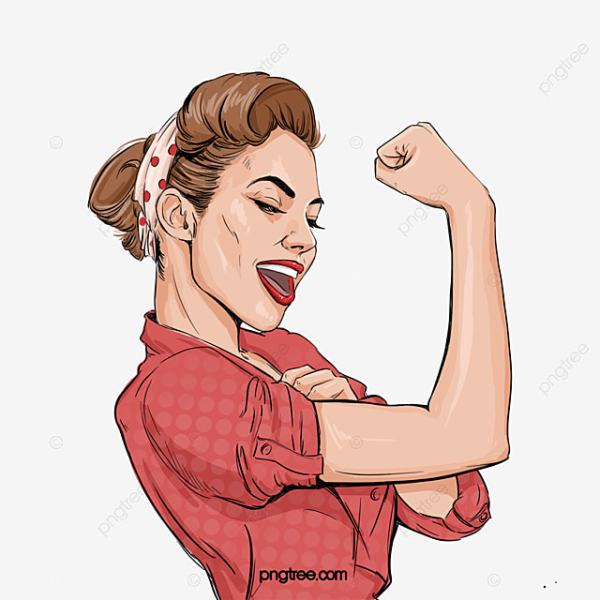
Women working from home are facing many challenges. Working women in India are fighting a hard fight for work and salary. They are underestimated a lot in their capabilities. Along with having a full-time job they are burdened with most of the domestic responsibilities. This was revealed in the LinkedIn Opportunity Index, 2021 survey report. According to the report, 22 percent of women in Asia-Pacific countries are not given the expected importance compared to men.
By the 18th century women were able to engage only in occupations related to the textile industry, where they had to work in low wages and in dreadful conditions. The situation changed when all the healthy men enlisted in the army in the First World War. Then women were included in transportation, hospitals and even arms factories.
By the end of the First World War came, women were pressurized to give up their jobs automatically, so that the soldiers who returned from war again can take that job. In her book Feminine Mystique, the American writer Betty Freedom wrote that after the Second World War, women were tried to convince them that their lives were only in the boundary wall
NITI Aayog’s agenda for 2017-20 stated that women are paid less wages and get less productive employment and they get less paid than non-paid jobs. The devaluation of women in the market is because their experience, education and skills are underestimated. Over the decades, there has been an attempt to establish the myth that women themselves do not want employment, but this is not true.
In the year 2018, a study said that India’s eight crore adolescent girls have a lot of expectations about their careers, but their expectations will be fulfilled, it is difficult to say. What is more is that during the calamities and pandemics, all efforts are made to connect women with the labor force and this goal can be achieved if we all work together.
Women are capable of doing all kinds of jobs just like men if not more. This has been proved by women over and over again that they can succeed in all fields if given the opportunity. Women don’t want to oppress anyone but to grow together and make the world better. They are making some great contributions in various fields such as science, literature, medicine and defence.
In India, on Women’s Day a big step was taken in the direction of gender equality. The Navy deployed four women officers on its warships after 24 years, the Navy spokesman said that two women officers have been deployed on INS Vikramaditya and two other INS Shakti. One of the women officers on board the tanker vessel INS Shakti is a doctor.
England beat India in 1st T-20 match; leads five match series 1-0
In Cricket, England beat India by eight wickets in the first T-20 match at the Narendra Modi stadium in Ahmedabad last night. Put into bat first, India scored 124 runs for the loss of seven wickets in the stipulated 20 overs with the help of Shreyas Aiyyar’s 67 runs off 48 balls. Rishabh Pant and Hardik Pandya were the other two notable contributors to the Indian team, scoring 21 and 19 runs respectively.
For England, Pacer Jofra Archer registered three wickets while Adil Rashid, Mark Wood, Chris Jordan and Ben Stokes took a wicket each. In reply, England chased down the target of 125 in 15.3 overs riding on Jason Roy’s 49, Jos Buttler’s 28 and Jonny Bairstow’s 26 not out. For India, Washington Sundar and Yuzvendra Chahal took a wicket each. England now leads five match series 1-0. The second T-20 will be played tomorrow at the same venue.
I&B Minister Prakash Javadekar to virtually inaugurate Amrit Mahotsav exhibitions at six places today
Union Minister for Information and Broadcasting Shri Prakash Javadekar will inaugurate today exhibitions at six places virtually. The six places are Bangalore, Pune, Bhubaneswar, Patna, Moirang District in Manipur and Samba District in Jammu and Kashmir. In addition,Shri Prakash Javadekar will also inaugurate an exhibition at the National Media Center in New Delhi today.
The exhibitions are being organised in pursuance of the vision of the Prime Minister and to contribute to the festive fervor to the Azadi ka Amrut Mahotsav as part of India’s 75th Independence Day celebrations. Azadi ka Amrut Mahotsav commenced yesterday, 75 weeks prior to Independence Day 2022, and would continue till Independence Day 2023.
Earlier, the Prime Minister had said that the festival of 75 years of independence would be a festival, in which the spirit of freedom struggle, tribute to the martyrs and their pledge to create India would be experienced. The festival will also showcase the country’s achievements in the 75 years to the world and also give a framework for resolution to us for the next 25 years.
National Eligibility cum Entrance Test to be conducted on 1st August this year
National Eligibility cum Entrance Test (NEET) will be conducted on the 1st of August this year. NEET-UG 2021 will be conducted in 11 languages. National Testing Agency yesterday informed that the detailed information related to the test will be provided shortly. The Agency advised the candidates to keep visiting the website nta.ac.in and ntaneet.nic.in for further details.
Cumulative number of COVID vaccine doses administered in country crosses two Crore 80 lakh
Union Health Ministry has said that the cumulative number of COVID vaccine doses administered in the country crossed two Crore 80 lakh till last evening. They include 72 lakh 84 thousand 406 Healthcare workers who have taken the first dose and 41 lakh 76 thousand 446 Healthcare workers who received the second dose of vaccines. Besides, over 72 lakh 15 thousand Frontline workers got the 1st dose and over 9 lakh 28 thousand took the second dose.
The Ministry also said, 71 lakh 69 thousand 695 beneficiaries above 60 years age and as many as 12 lakh 30 thousand 704 beneficiaries aged 45 and above with specific co-morbidities got the 1st dose of vaccine. Total 18 lakh 40 thousand 897 vaccine doses were given till 8 pm yesterday, the fifty sixth day of nationwide COVID19 vaccination.
President Kovind to be on 3-day visit to Purvanchal in Uttar Pradesh from today
President Ram Nath Kovind will be on a three-day visit to Purvanchal in Uttar Pradesh. During his visit, he will participate in many programmes in Sonbhadra and Mirzapur districts. Elaborate security arrangements have been made in and around the programme venues.
AIR Varanasi correspondent reports that after reaching the legendary town Kashi this afternoon, President Ramnath Kovind will pay obeisance and perform Pujan at the Baba Vishwanath Temple . In the evening, he will witness the world famous Ganga Aarti at Dashashwamegh Ghat on the banks of the river Maa Ganges. Tomorrow, The president will attend the Banavasi Samagam program at Chhapki of Sonbhadra district and dedicate the newly constructed building of Seva Kunj Ashram there.
The President is also scheduled to visit the Mirzapur district tomorrow afternoon and pay obeisance to Maa Vindhyavasini Devi. On Monday, the third day of his visit the President will attend the inaugural session of the program on ‘Ganga, Environment and Indian Culture’ organized by the Media House Jagran Forum.
Quad countries are united by democratic values & commitment to a free, open and inclusive Indo-Pacific: PM Modi
Quad countries have expressed commitment to promoting a free, open rules-based order, rooted in international law to advance security and prosperity in the Indo-Pacific and beyond. The Quad Leaders in a Joint Statement issued after the first ever Quad Summit yesterday, said they support the rule of law, freedom of navigation and overflight, peaceful resolution of disputes, democratic values, and territorial integrity. They reaffirmed strong support for ASEAN’s unity and centrality as well as the ASEAN Outlook on the Indo-Pacific.
The Joint Statement said the Quad seeks to uphold peace and prosperity and strengthen democratic resilience, based on universal values. The Quad leaders reaffirmed commitment to quadrilateral cooperation between Australia, India, Japan, and the United States. They stated that they are united in a shared vision for the free and open Indo-Pacific. The Quad leaders said they strive for a region that is free, open, inclusive, healthy, anchored by democratic values, and unconstrained by coercion.
They pledged to strengthen cooperation on the defining challenges of the time. They also pledged to respond to the economic and health impacts of COVID-19, combat climate change, and address shared challenges, including in cyber space, critical technologies, counterterrorism, and quality infrastructure investment. The Quad leaders stated that they will join forces to expand safe, affordable, and effective vaccine production and equitable access. They agreed to collaborate to strengthen equitable vaccine access for the Indo-Pacific, with close coordination with multilateral organizations including the World Health Organization and COVAX.
They called for transparent and results-oriented reform at the World Health Organization. They said they are united in recognizing that climate change is a global priority and will work to strengthen the climate actions of all nations, including to keep a Paris-aligned temperature limit within reach.
The leaders said they will continue to prioritize the role of international law in the maritime domain, particularly as reflected in the United Nations Convention on the Law of the Sea (UNCLOS) and facilitate collaboration. This includes maritime security, to meet challenges to the rules-based maritime order in the East and South China Seas.
They also reaffirmed commitment to the complete denuclearization of North Korea in accordance with United Nations Security Council resolutions, and also confirmed the necessity of immediate resolution of the issue of Japanese abductees. As long-standing supporters of Myanmar and its people, the Quad nations emphasized the urgent need to restore democracy and the priority of strengthening democratic resilience.
PM Narendra Modi assures full support to world of Ayurveda; says, WHO announced setting up of Global Centre for Traditional Medicine in India
Prime Minister Narendra Modi has assured full support to the world of Ayurveda. He was addressing the Global Ayurveda Festival last evening. Mr. Modi said people are realising the benefits of Ayurveda and its role in boosting immunity. He said the current situation presents a right time for Ayurveda and traditional medicine to become even more popular globally.
Mr. Modi added that the WHO has also announced the setting up of the Global Centre for Traditional Medicine in India and students from various countries are coming to India to study Ayurveda and traditional medicines. He said this is the ideal time to think about worldwide wellness. The Prime Minister said the National Ayush Mission has been started to promote Ayush medical system through cost-effective services.
Mr. Modi added Ayurveda takes care of many aspects and it could rightly be described as holistic human science. He also said from plants to plate and from matters of physical strength to mental wellbeing the impact and influence of Ayurveda and traditional medicine is immense. The Prime Minister appreciated the efforts of all those who’re working on Ayurveda across the world saying the passion and persistence will benefit the entire humanity. He said India offers wellness tourism and at the core of it is the principle of treat illness for wellness.
Right to Life
Article 21, or the Right to Life, says that no person shall be deprived of his life or personal liberty except according to procedure established by law. This article protects the right of life and personal liberty not only from executive action but also from the legislative action. This right extends to citizens as well as non-citizens.
The Supreme Court has held that Part III of the constitution should be given widest possible interpretation and a fundamental right is not necessarily that one, which is specified in an article. Even if it is not specified in an article, but if it is integral part of a named fundamental right or partakes the same basic nature and character as that of a fundamental right.
The interpretation of the Article 21 by the Supreme Court has opened a new chapter of human rights jurisprudence. In several cases, the court has held the following as implied fundamental rights, though not all of them have been specifically mentioned. These all are called Implied Fundamental Rights.
- Right to Speedy Trial
- Right to Travel Abroad
- Right to Dignity
- Right to Privacy
- Right to Clean Environment
- Right to Livelihood
- Right to marriage
- Right against torture
- Right against Bondage
- Right to legal aid
- Right to Food
In the same way, Supreme Court has also held that Freedom of speech and expression guaranteed under Article 19(1) includes the right to know, right to information and right to reply. It must be noted here that
- Right to life does not include Right to Die or Right to get killed i.e. mercy killing.
- Capital Punishment has not been held violative of Article 14, 19 and 21
- Hanging as a mode of execution is also fair and just as per supreme court.
- The Supreme Court has held that right to live also include Right to live with dignity.
Procedure established by law versus due process of law
This article in the original drafted constitution used the words “no person is to be deprived of his life or liberty without due process of law”. The drafting committee changed it to “No person shall be deprived of his life or personal liberty except according to procedure established by law” giving the reason that liberty should be qualified by the word personal, so that unnecessary interpretation may be avoided. The expression “Procedure established by law” is more definite phrase and this phrase finds the place in the Japanese Constitution of 1946. It implies that life and personal liberty of a person cannot be encroached upon arbitrarily without the proper sanction and provision of law.
Rape as violation of right to life
Right to life includes the right to live with human dignity. Women also have the right to life and liberty. Their honour and dignity cannot be outraged or violated. They also have the right to lead an honourable and peaceful life. In Bodhisattawa Gautham v. Subhira Chakroborthy, it was held that rape is a crime not only against the person, but also against the entire society. It destroys the entire psychology of a woman and pushes her into deep emotional crisis. It is crime again basic human rights and it violates right to life.
Prime Ministers of India, Australia, Japan & US President to virtually participate in First Quad Leaders’ Summit today
The First Quad Leaders’ Summit will be held virtually today. Prime Minister Narendra Modi, Prime Minister of Australia, Scott Morrison, Japanese Prime Minister Yoshihide Suga and US President Joseph R Biden will participate in the first Leaders’ Summit of the Quadrilateral Framework.
The Leaders will discuss regional and global issues of shared interest and exchange views on practical areas of cooperation towards maintaining a free, open and inclusive Indo-Pacific region.
The Summit will provide an opportunity to exchange views on contemporary challenges such as resilient supply chains, emerging and critical technologies, maritime security and climate change.
The Leaders will also discuss ongoing efforts to combat Covid-19 pandemic and explore opportunities for collaboration in ensuring safe, equitable and affordable vaccines in the Indo-Pacific region.
Ahead of the Quad Leaders’ Summit today, Australia Prime Minister Scott Morrison has said the first meeting of the leaders of “Quad” countries would discuss security challenges across the Indo-Pacific, climate change and efforts to contain the spread of COVID-19 in the region. Talking to reporters in Sydney, Prime Minister Morrison said, there have been many other meetings, but when governments come together at the highest level, this shows a whole new level of cooperation to create a new anchor for peace and stability in the Indo-Pacific.
The Australia Prime Minister said the talks will also include plans to achieve net zero emission targets into the future as countries in the region move to a new energy economy.
 Eduindex
You must be logged in to post a comment.