Legal Status of same-sex marriage in India

All same-sex relationships were criminalized until the Supreme Court verdict of 2018 that decriminalized them. This was recognized as an important step towards social equality and to help the LGBTQ community achieve justice. However, it was only the beginning, and there are still areas wherein same-sex couples struggle to find legal recognition where heterosexual couples easily do.

The most important one of these areas is marriage and all the privileges that come with it. Despite that landmark judgment, same sex couples’ relationships have no legal status—making it difficult to transfer property rights, make medical decisions for each other in case one is incapacitated or, in short, enjoy rights heterosexual married couples in India take for granted.

 Lack of legal recognition made many of the aspects of normalizing same-sex relationships increasingly difficult in bureaucracy-laden India. From refusals by banks to let them open a joint account to having a hard time establishing permanent addresses together. 

There have been petitions in the Supreme Court to legally recognize same-sex marriage so gay and lesbian couples can get what is due to them. However, the current central NDA government has opposed them in court stating that the Indian ‘family unit’ involves a man and a woman, a traditional order that cannot be violated. 

Many activists, and rightly so, have called the central government out for their homophobia, because archaic notions of what a traditional family is cannot be used to justify any social inequality, let alone homophobia. Today, we should stand in solidarity with LGBTQ activists and spread awareness about their community’s issues to contribute to achieving to social equality.

Multiple Nuclei Theory

 Multiple nuclei model of 1945 by C.D. Harris and Edward L. Ullman is based on the argument that the cities have multiple growth points or “nuclei” around which growth take place. This model was given in an article by them “The Nature of Cities”. This model is based on the structure of Chicago just like the Burgess model or Concentric zone model of 1925. It can be considered as an attempt to explain the structure of the city taking into account the complexity and growth over time. Harris and Ullman argued that a city might start with a single central business district (CBD), but over the time the activities scatter and gets modified. The scattered activities attract people from surrounding areas and act as smaller nuclei in itself. These small nuclei gain importance and grow in size and start influencing the growth of activities around them. The basic assumption of this theory is that “cities are not homocentric” but they rather have many mini centres which play a significant role in the development of a city. These mini centres originally developed independently with the specialized advantages that they offered or similar activities clustering in these areas. 

The need for this model was to provide a more realistic explanation of the cities. The influence of cars on personal travel and greater movement of goods offered opportunity in different places instead of concentrating all economic activities in one place. People started optimizing their business for maximum profit by locating at a different place and bringing down their rent with a slight increase in transportation cost. Whereas some activities like industrial areas create pollution and are thus preferred to be located away from residential areas. This model is considered to be more suitable for cities which are large and expanding.

Assumptions for Multiple Nuclei Model 

  • The land is not flat – This provides a more practical application of the multiple nuclei model and is an improvement over the Burgess model. It is difficult to find flat land for big cities, and the terrain features affects the activities, development and direction of growth of an urban area. 
  • Even distribution of resources – Resources are evenly distributed within the city, no one enjoys privileges or have exclusive access to resources. 
  • Even distribution of people in residential areas – People are distributed homogeneously and not concentrated in a particular area or pocket. This is essential as an unevenly distributed population has a direct impact on markets. 
  • Even transportation cost – Transportation cost is even in the city and not influenced by location. 
  • Profit maximization – A particular activity will locate itself where maximum profit can be earned. For this, a different combination of rent, transportation costs, labor cost, proximity to market may be tried, and the combination which yields the best result gives the final location for the activity. This location also takes into account the restrictions over the activity and the need to be separated from other non compatible activities such as locating residential areas away from industrial, locating large industries with more accessibility to reduce transportation cost and to ease the movement of goods.

                                                                 Multiple nuclei model 

Multiple nuclei theory is further divided into nine major areas. 

1) Central Business District 

2) Wholesale or light manufacturing 

3) Low income residential 

4) Medium income residential 

5) High income residential 

6) Heavy industry 

7) Outlying business district 

8) Residential suburb (Suburb – an outlying part of a city or town) 

9) Industrial suburb 

Limitations and criticism of the Multiple Nuclei Model

Multiple nuclei model was considered much better than the previous simple models which attempted to explain the structure of urban areas. However, this model also had its limitations and could not be applied to many cities and did not entirely explain the structure of urban areas. Formation of well-defined zones or “nuclei” required the considerable size of the city as the small or new towns do not have a very well defined location because of which they are usually scattered. Another drawback is the limited activities which are considered in the model along with the very rigid and specific boundaries of the activities. Some other disadvantages include: 

  • Negligence of the height of buildings. 
  • Non-existence of abrupt divisions between zones. 
  • Each zone displays a significant degree of internal heterogeneity and not homogeneity. 
  • Unawareness of inertia forces. 
  • No consideration of the influence of physical relief and government policy. 
  • The concepts may not apply to Asian cities with different cultural, economic and political backgrounds.


The Shark that glows in the deep,dark sea

Kitefin Shark

The world is full of mysterious and interesting creatures and this year is proving especially lucky for scientists to identify unique organisms. In February, a rodent named Springshare was identified, which glows pink and orange in ultraviolet rays. Living in the savannah forests of East Africa, this organism produces this color with the help of the porphyrin pigments present in its hair.

Recently, the world’s largest luminous vertebrate has been identified near New Zealand. This blue glowing creature is a kitefin shark (Biological name- Dalatias licha), which can grow to be around six feet tall. It shows the property of bioluminescence. Scientists have published an article about it in the Frontier Marine Science Journal, however they have not yet found what process it uses to shut off or turn on its luminescence.

Bioluminescence is the production and emission of light by a living organism. It is a form of chemi-luminescence i.e. using chemical substances to produce light. Bioluminescence occurs widely in marine vertebrates and invertebrates, as well as in some fungi, microorganisms including some bioluminescent bacteria, and terrestrial arthropods such as fireflies.

Scientists at the Catholic University of Belgium conducted a sea search expedition to identify kitefin sharks. According to Jerome Melfet, he was successful in taking a picture of a living shark. Their samples were also taken to research about the science behind the bioluminescence the shark shows.

According to scientists, bioluminescence is advantageous to this creature as this glow is meant to dodge big enemies. The blue glow of these sharks helps them to camouflage in the blue light coming from the sky and hide to avoid becoming the food of bigger fishes.

The hormone that helps us sleep makes the shark glow. This glow is not caused by hormones, but from their brain or nervous system. This hormone is melatonin, which helps us sleep, but gives shine to the sharks. However, it is not very clear whether these hormones have anything to do with the brightness of the shark.

Eleven Volumes of Srimad Bhagavadgita Manus to be released by Prime Minister this evening

Prime Minister Narendra Modi will release 11 Volumes of Manu with commentaries by 21 scholars on slokas of Srimad Bhagavadgita today at Lok Kalyan Marg, New Delhi. Jammu and Kashmir Lieutenant Governor Manoj Sinha and Dr. Karan Singh will also be present on the occasion.

In general the practice with Srimad Bhagavadgita is to present the text with a single commentary. For the first time, many of the key commentaries by celebrated Indian scholars are being brought together for achieving a comprehensive and comparative appreciation of Srimad Bhagavadgita. The Manu, published by Dharmarth Trust, is written with extraordinary variety and nuance of Indian calligraphy ranging from Shankar Bhashya to Bhasanuvada. Dr Karan Singh is the Chairman Trustee of Dharmarth Trust, Jammu and Kashmir.

Delhi government to present 2021-2022 Budget today

The Budget session of Delhi Assembly began yesterday with the address of Lieutenant Governor Anil Baijal. Deputy Chief Minister Manish Sisodia who also holds the Finance portfolio presented the Economic Survey of Delhi and the status report of outcome Budget in the Assembly yesterday.

Today Mr Sisodia will present the Budget in the Assembly. The Budget Session of Delhi Assembly will be held till 16th of this month.

Lok Sabha, Rajya Sabha adjourned till 2 pm after Opposition ruckus over fuel prices

Both the Houses of Parliament adjourned till 12 Noon following opposition uproar over the issue of price rise of petrol, diesel and LPG. In the Lok Sabha, when the House met for the day, members from Congress, Left, DMK, NCP, Shiv Sena and others trooped into the well raising slogans against the government. Speaker Om Birla repeatedly urged the agitating members to go back to their seats and allow the House to take up question hour. He said, question hour is very important as members raise problems in their respective areas. Amid noisy scenes, he tried to run the question hour but in vain. As the pandemonium continued, he adjourned the House till 12 Noon.

In the Rajya Sabha also, opposition parties had given the adjournment notices over the issue which was rejected by the Chair. Following this, Congress members came into the well and raised slogans against the government. Deputy Chairman Harivansh said that the members can raise this issue during discussion on listed business. Amid uproar, Mr. Harivansh tried to run the Zero Hour. As the noisy scene continued, the House was adjourned till 12 Noon.

Filing of nomination papers for first phase of Assam Assembly elections ends today

In poll bound Assam, today is the last day of filing nomination papers in the first phase.  So far 52 candidates have submitted nomination papers. Polling will be held in 47 seats in this phase on 27th of this month. Chief Minister and senior BJP leader Sarbananda Sonowal will submit his nomination today at Majuli.

Chief Minister Sarbananda Sonowal will fight from Majuli seat again. Senior party leader and Union Minister Dr. Jitendra Singh, Asom Gana Parishad President Atul Bora are to accompany him in nomination filing. Several senior  leaders are vying for the first phase in Assam. State Congress President Ripun Bora has submitted nomination at Gohpur . Asom Gana Parishad President Atul Bora and Executive President Keshab Mahanta submitted nomination papers. Jailed  leader  of Raijor Dal Akhil Gogoi also filed nomination at Gauhati  medical college and hospital. Senior BJP leader and Speaker of the state Assembly Hitendra Nath Goswami at Jorhat , senior Minister Ranjit Dutta at Behali and Naba Kumar Doley filed nomination at Dhakuakhana.  President of Assam Jatiya Parishad Lurinjyoti Gogoi and senior leader of the party Jagdish Bhuyan too  filed nomination. 

President Ram Nath Kovind will be on a three day visit to Tamil Nadu

President Ramnath Kovind will be on a three day visit to Tamilnadu. Security has been tightened at the airport and the surrounding areas on account of the visit. The President will be arriving at Chennai this evening and will stay at RajBhavan. Tomorrow he will depart to Vellore by helicopter to attend the 16th Annual Convocation at Thiruvalluvar University.Later the President will visit the Sri Mahalakshmi Golden Temple at Sripuram. On Thursday he will attend the 41st Annual Convocation at Anna University Guindy. President will leave for Delhi on the same day.

PM Modi to inaugurate ‘Maitri Setu’ connecting India and Bangladesh today

Prime Minister Narendra Modi will inaugurate Maitri Setu between India and Bangladesh today through video conferencing. Mr Modi will also inaugurate and lay the foundation stone of multiple infrastructure projects in Tripura during the event.

The bridge Maitri Setu has been built over Feni river which flows between Indian boundary in Tripura State and Bangladesh. The name Maitri Setu symbolizes growing bilateral relations and friendly ties between India and Bangladesh. The construction was taken up by the National Highways and Infrastructure Development Corporation Limited at a project cost of  133 Crore rupees. The 1.9 Kilometres long bridge joins Sabroom in India with Ramgarh in Bangladesh. It is poised to herald a new chapter for trade and people to people movement between India and Bangladesh. With this inauguration, Tripura is set to become the Gateway of North East with access to Chittagong Port of Bangladesh, which is just 80 Kilometres from Sabroom.

The Prime Minister will also lay foundation stone for setting up an Integrated Check Post at Sabroom. It will help ease the movement of goods and passengers between the two countries, provide new market opportunities for products of North East states and assist seamless movement of passengers to and from India and Bangladesh. The project is being taken up by the Land Ports Authority of India at an estimated cost of about 232 Crore rupees.

The Prime Minister will also lay the foundation stone of NH 208 connecting the Unakoti district headquarters at Kailashahar with the Khowai district headquarters. It will provide an alternative route to the NH 44. The 80 Kilometres NH 208 project has been taken up by the National Highways and Infrastructure Development Corporation Limited with a project cost of one thousand 78 Crore rupees.

The Prime Minister will also inaugurate State Highways and other district roads, developed by the State government with a financial outlay of 63.75 Crore rupees. They will provide all weather connectivity to the people of Tripura.

The Prime Minister will inaugurate 40 thousand 9 hundred 78 houses constructed under Pradhan Mantri Awas Yojana (Urban), completed with the financial outlay of 813 Crore rupees. He will also inaugurate the Integrated Command and Control Centre built under Agartala Smart City Mission.

The Prime Minister will lay the foundation stone for the development of Multi Level Car Parking and Commercial Complex at Old Motor Stand. It will be developed at a cost of about 200 crore rupees. He will also lay foundation stone for widening of the existing road from Lichubagan to the airport from two lanes to four lanes. The work is being implemented by Agartala Smart City Mission at a project cost of about 96 crore rupees.

The Ozone Hole

Ozone is a reactive gas mostly found in the so-called ozone layer in the lower stratosphere. The highest ozone concentrations are usually seen at altitudes between 20 and 40 km (at the poles between 15 and 20 km). But it is a very thin layer of about 1-10 ppm (parts per million) ozone. In both the formation and the destruction of ozone, UV radiation is absorbed. Under the influence of UV radiation, oxygen molecules are split into oxygen atoms. The adsorption of UV radiation by the ozone layer is crucial, for without it, life on land would be impossible. 

However, over-exposure to UV radiation will have a variety of damaging effects: Genetic mutation and subsequent effects on health, damage to living tissues, Cataract formation in eyes, skin cancers, suppression of the immune system, Damage to photosynthetic organisms, especially phytoplankton, damage to consumers of photosynthetic organisms, especially zooplankton. 

UV radiation can cause mutations — changes in a species’ DNA. This risk is especially high in Australia and New Zealand where the number of cases of skin cancer in humans has increased dramatically. People arc advised to wear clothes on the beach and to use sun blocks to protect their skin. In New Zealand the daily weather report in summer includes isolines to show burn times. 
It also causes cataracts in the lenses of eyes when the protein of the lens denatures and turns cloudy instead of dear, causing blindness if untreated. 

Since the 1950s, scientists have been measuring the amount of ozone in the stratosphere above Antarctica. They discovered what later would be called the ozone hole: the amount of ozone decreased significantly during the spring (September and October) and increased again in November. Apart from this annual ozone cycle, the scientists discovered that the ozone hole was growing. During the last 30 years, the minimum thickness of the ozone layer has reduced drastically and recovery has been taking longer. These results were later confirmed by NASA satellite data. Reductions in the amount of stratospheric ozone have been observed in other areas including the arctic region.
Ozone is depleted because of human-made substances called Ozone-depleting substances (ODS), like chlorofluorocarbons and methyl bromide in pesticides. While replacing CFCs in spray cans and as blowing agents for plastic foam is relatively easy, it is much more difficult to find a suitable refrigerant. The refrigerants used before the introduction of CFCs are not an option because of their dangerous properties. The most suitable CPC replacements are the so-called hydrochlorofluorocarbons (IICFCs). These substances are nearly as good as refrigerants as CFCs and are also non-toxic and inflammable. However, HCFCs also destroy ozone and they contribute to the greenhouse effect. Only their shorter lifetime in the atmosphere makes them less harmful to the ozone layer than CFCs. 

The Montreal Protocol was an international agreement at the UNEP deciding to regulate the use of CFCs, and it succeeded to a great degree as their usage has decreased since the late 80s, partly because it was the first universally ratified international agreement. More international cooperation to battle threats like the thinning of the ozone layer is the need of the hour.

Green Warriors ~ Women in woods

“Two roads diverged in a wood , and I took the one less traveled by , and that has made all the difference…”

These lines fit well on those women who choose the paths which aren’t meant for them , according to the society.

On 8th March, everyone talks about the women in space , in politics , in engineering , in mining , in medical , in Police, in writing , in this , in that. So I think I should also write about the women in most underrated service of India, The Forest Services.

Well , I searched a lot , but couldn’t get any extra information about the first Green Warrioress of India except their names and their years of joining the woods.

” In 1980,three young Women, C.S.Ramalakshmi, Veena Sekhari and Meera Agarwal, made history by entering into the Indian Forest Service. “

Later , Veena Sekhari was also appointed as the principal chief conservator of forests of Uttarakhand in 2015. She was the first woman to reach at the post of PCCF.

Presently, there are 284 women IFS officers , three of them are heads of forest force in different states.

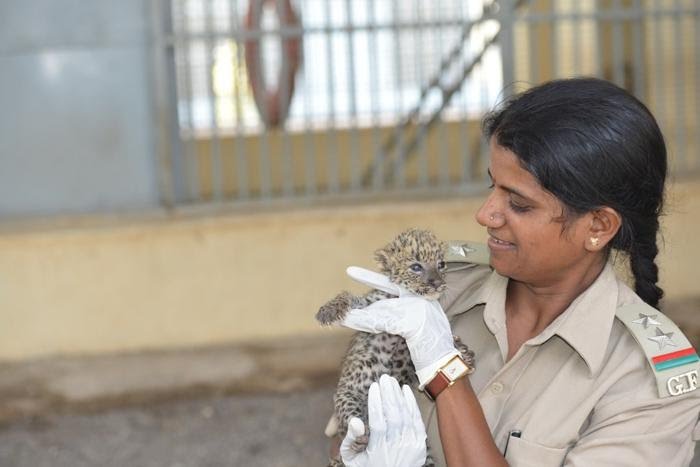
But women aren’t only limited to the post of IFS. It was only in year 2007, the Gujarat Forest Department recruited its first batch of 43 women.One of them was Rasila Wadher who was the first woman to join the the Forest Department in Gir. Since then she has managed to rescue around 1,100 animals.

Rasila Wadher, one of the lion queen of India.
~ From the forest guard to the head of Gir’s Rescue Department ~

Life in woods, isn’t that much easy , as everyone thinks. Unlike a policeman/woman in a city , a forest ranger is in a situation where there’s no one to help. They spend their nights and days in maintaining the coordination between humans and wild animals.

From the forest officers to forest guards, green warriors work not only for the welfare of forest and wildlife but also for the local tribes.And of course dangers are always there, from wild animals to bullets of poachers, from the rough terrains to the angry locals. Well , this explains that why I’m calling them Green Warriors.

And yes, the training is that much difficult & comprehensive as the job is. From the horse riding , shooting , swimming, rafting , trekking ,scuba diving to paragliding, it teaches the trainees everything from the endurance to the courage.

But these challenges are the love of our Green Warrioress ~

“We didn’t join as women guards, but as guards”, that’s what female guards say.

“Life needs purpose & empowerment needs confidence , IFS gives you both.” thinks a female IFS officer.

Women have came a long way , but still there’s a long way ahead. But as our inspiring warriors are risking their lives to save the wild & the wood, I remember these beautiful lines —-

“Woods are lovely dark & deep, but we have promises to keep.”🤝

I believe that there’s still beauty, peace & magic left in the world , & that’s in the forests. But these woods also have challenges. Ohh yeah , magic comes up with some challenges & responsibilities. If you also think of joining the green warriors club , then All The Very Best…

May the peace prevail on our Earth. May the hope abide in our Hearts. 🕊️

Happy Reading…🙂

Save Trees…💚🌱

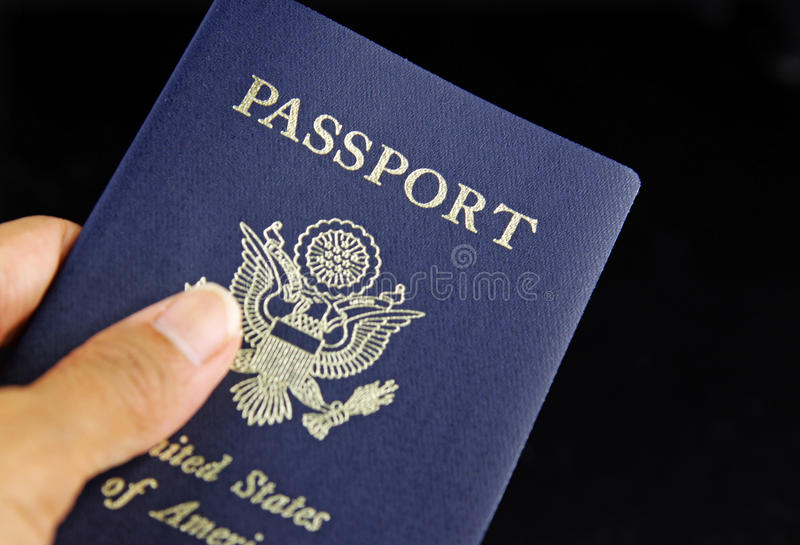
Changes in the rights given to Overseas Citizens of India (OCI), will be considered foreign nationals

India has changed the rights given to Overseas Citizens of India (O.C.I.) and placed them in the category of foreign national in various cases. Through the new notification issued under the Citizenship Act 1955, many restrictions have also been imposed on them.

The new notification will replace the three notifications issued in April 2005, January 2007 and January 2009. The government has taken this step after the defeat in recent cases related to it.
In a case the Home Ministry had revoked the O.C.I. status of an American-Indian doctor. He was preaching religion in Bihar giving treatment to the poor.
Although the practice of preaching the religion was exempted by the Delhi High Court for the doctors, as there was no law to stop the O.C.I. from doing so. Doctor was also asked to issue O.C.I. card back. 
In another case, the Karnataka High Court had asked O.C.I. students to be treated as Indian citizens during their admission in various courses.
By 2020, a total of 60 lakh people in the world have O.C.I. cards. These cards are given to such people and their matrimonial companions who are of Indian origin, people of Indian origin whose next generations became citizens of Pakistan and Bangladesh. 
O.C.I. card holders get an opportunity to live and work in India indefinitely. Like Indian citizens, many rights are also available.
Although they do not get Indian citizenship, neither can they vote and nor can get government post. The government can withdraw the OCI card whenever it wants.
Now O.C.I. will have to get special permission from research work to missionary or tablighi events in the country. The Ministry of Home Affairs will also have to take permission for journalism and its related activities and to go to various prohibited, restricted and protected areas. An important impact of the notification will be on O.C.I. journalists serving foreign institutions. They have to get permission from the Ministry of Home Affairs to work in India.
The O.C.I. category of people who are empowered in FEMA have also been considered as foreign nationals for activities under FEMA in the economic, financial and education sectors in the country. In this law enacted in 2003, till now they had rights like NRI.

Government Makes New Rule On Dual Airbags Mandatory From April 1

The Ministry of Road Transport and Highways has issued a notification to make a mandatory provision of airbags for the person seated on the front seat of a vehicle. The Union Ministry of Road Transport and Highways said, “This has been mandated as an important safety feature and is also based on suggestions of the Supreme Court Committee on Road safety.” The ministry has made it mandatory for new models to have dual front airbags from April 1 2021, while for the existing vehicles the compliance date is August 31 2021.

An airbag is a vehicle protective device, designed to inflate during the collision of a vehicle. It prevents a passenger’s head and chest from striking the interior of the vehicle. According to the World Bank report, India accounts for 10% of all road accidents in the world. The frontal airbag will increase the safety level of the passenger by reducing the impact of a road crash.

Moreover, government is also considering to make other safety features such as Electronic Stability Control and Autonomous Emergency Braking in vehicles from 2022-23 onward.

Nepal Prime Minister KP Sharma Oli takes India made vaccine Covishield

Nepal’s Prime Minister KP Sharma Oli received his first dose of India-made Covid-19 vaccine – Covishield yesterday. Prime Minister Oli got vaccinated at the Maharajgunj-based Tribhuvan University Teaching Hospital in Kathmandu. After receiving the vaccine, PM Oli urged the eligible group to take the vaccine without any fear in order to defeat Covid-19. The vaccine was also administered on PM Oli’s wife Radhika Shakya. 69-year Oli has a history of comorbidities and underwent a kidney transplant in 2020.
 
The second phase of the inoculation drive officially began in Nepal yesterday. In the second phase, people over 65 years all across the country will get inoculated against the coronavirus. Nepal earlier this year received one million doses of Covishield vaccine from India in grant assistance and procured another two million, out of which one million is awaited.
 
Covishield, made by Serum Institute of India (SII), is the only vaccine being administered in Nepal. India, under the Vaccine Maitri initiative, has been providing coronavirus vaccines to its neighbouring countries.

PM Modi salutes indomitable spirit of women on International Women’s Day

Prime Minister Narendra Modi has saluted the indomitable spirit of women on the International Women’s Day. In his message, Mr Modi says India takes pride in the many accomplishments of the women of the nation.

He said it is his government’s honour to be getting the opportunity to work towards furthering women empowerment across a wide range of sectors.