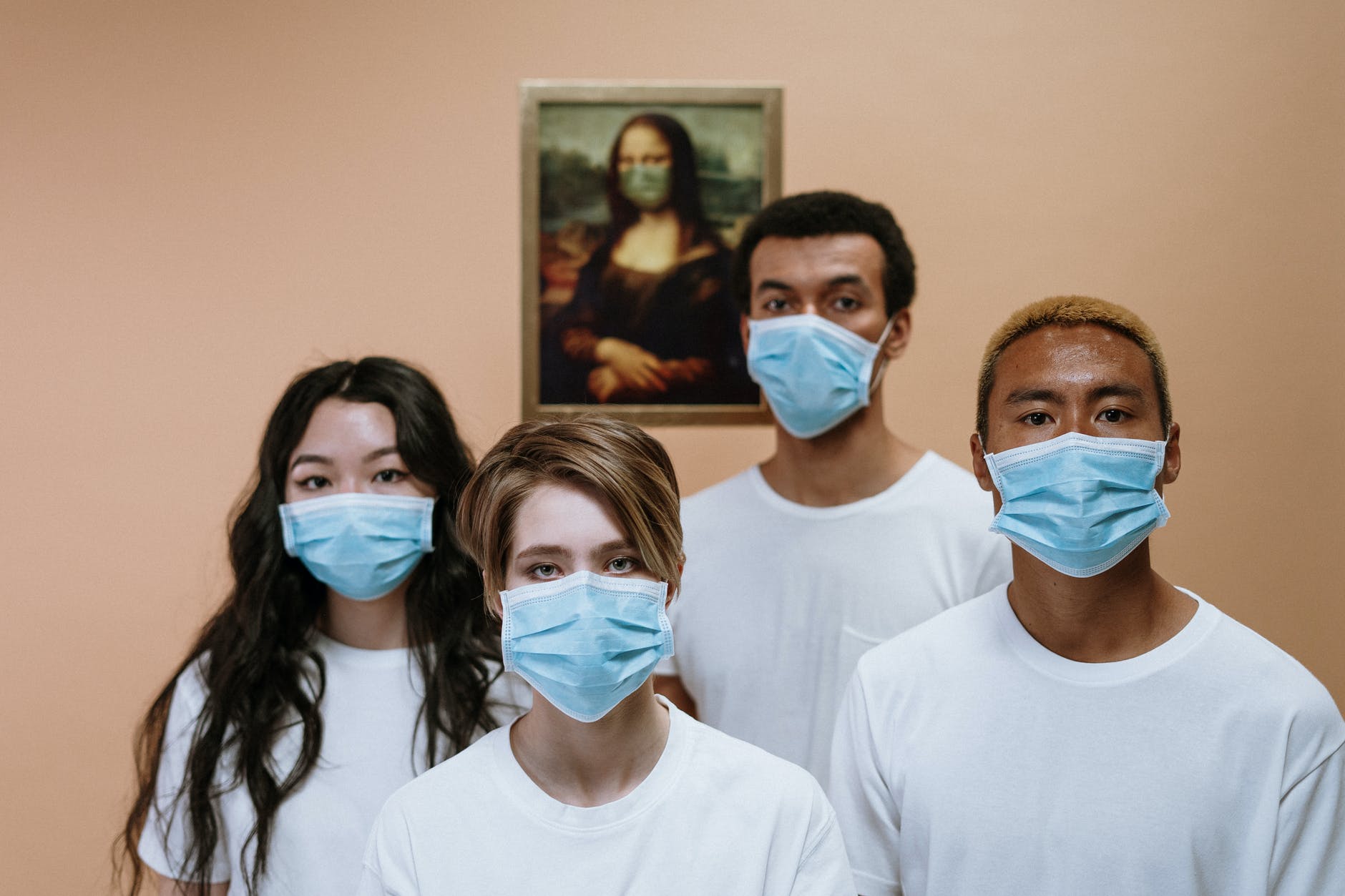
Over 14 crore 78 lakh doses of Corona vaccine administered in the country

The world largest Covid-19 vaccination drive is progressing smoothly in the country. The Health and Family Welfare Ministry has informed on Wednesday that over 25 lakh 56 thousand doses of Covid-19 vaccines were administered to the beneficiaries in the last 24 hours.

The Ministry said, over 14 crore 78 lakh people have already been inoculated with Covid-19 vaccines in the country so far. From the 1st of May, which is also the third phase of the largest vaccination drive, everyone above the age of 18 years will be eligible to take COVID vaccines.

The registration for the 3rd phase will begin from 4 PM this evening on the COWIN portal, Aarogya Setu App and UMANG App.

Railways makes 4,000 Covid Care coaches with almost 64,000 beds ready for use by States

Railways has made nearly four thousand Covid Care coaches with almost 64 thousand beds ready for use by States. Railway Ministry said, at present 169 coaches have been handed over to various states for Covid care. It has deployed Covid Care Coaches in Uttar Pradesh, Madhya Pradesh, Maharashtra and Delhi to assist the states in view of rising corona cases in the country.
 
In Delhi, Railways has catered to the full demand of State Governments’ for 75 Covid Care coaches with a capacity of one thousand 200 beds. The Ministry said, 50 coaches are positioned at Shakurbasti and 25 Coaches at Anand Vihar stations. In Uttar Pradesh, ten coaches each are placed at Faizabad, Bhadohi, Varanasi, Bareli and Nazibabad totalling to a capacity of 800 beds.
 
The Ministry said, new demand for Covid coaches has come from Nagpur District. In this direction, a Memorandum of Understanding has been signed between Divisional Railway Manager, Nagpur and Commissioner, Nagpur Municipal Corporation. The Railways are also mobilising isolation Coaches at Ajni ICD area in Maharashtra as per the State demand.

Centre provides more than 15 crore vaccines to States free of cost

Centre has provided more than 15 crore vaccines so far to States and Union Territories free of cost. Union Health Ministry said, more than one crore doses of Vaccine are still available with the States and UTs to be administered.

India had launched the world’s largest Vaccination Drive on 16th January this year. The Ministry said, more than 80 lakh doses will be received in addition by the States and UTs in the next three days.

Health Ministry said, recently some media reports quoting some government officials from Maharashtra have pointed out that the vaccines in the State are finished and adversely impacting the vaccination drive in the state.

The Ministry clarified that the total COVID vaccine doses received by Maharashtra as on yesterday are more than one crore 58 lakh. Of this, the total consumption including wastage was more than one crore 49 lakh.

It said, balance of more than nine lakh 23 thousand doses is still available with the state for administration of vaccine doses to the eligible population groups. Furthermore, three lakh doses of COVID vaccine are in the pipeline for delivery in the next three days.

PM Modi asks officials to ensure rapid upgradation of health infrastructure in country

Prime Minister Narendra Modi has directed officials to ensure rapid upgradation of health infrastructure in the country. Mr. Modi chaired a meeting yesterday with top officials to review the Covid-19 related situation in the country. He got an overview on the situation in the country relating to oxygen availability, medicines and health infrastructure.
 
The Empowered Group working on boosting Oxygen Supply briefed the Prime Minister on the efforts being made to ramp up availability and supply of oxygen in the country. They informed the Prime Minister about increasing allocation of Oxygen to states. It was discussed that the production of liquid medical oxygen in the country has increased from five thousand 700 tonnes per day in August last year to the present eight thousand 922 tonnes, as on 25th of April. The domestic production of liquid medical oxygen is expected to cross nine thousand 250 tonnes per day by the end of this month.
 
Prime Minister instructed the officials to work closely with state governments to start the PSA Oxygen plants at the earliest. Officers also apprised Mr. Modi that they are encouraging states to also set up PSA Oxygen plants. He was also briefed about the functioning of the Oxygen Express Railways Service as well as the domestic sorties and international sorties undertaken by Indian Air Force to transport oxygen tankers.
 
The Empowered Group working on Medical Infrastructure and Covid management briefed the Prime Minister on efforts being undertaken to ramp up availability of beds and ICUs. They informed the efforts being break the chain of transmission. Prime Minister stressed on the need to ensure that specific guidelines and strategies evolved regarding Covid management needs to be properly implemented by the relevant agencies in the States.
 
The Empowered Group working on communication informed on the efforts being undertaken to improve awareness among people on Covid-related behaviour. Cabinet Secretary, Home Secretary, Secretary Information and Broadcasting, Secretary Pharmaceuticals, Member NITI Aayog, DG ICMR, Secretary Biotechnology and other senior officers were present in the meeting. 

Registration for Covid vaccination to all above 18 years of age begins today

The registration process for COVID vaccination to all above 18 years is starting today. They will be vaccinated in the third phase of COVID Vaccination drive starting from 1st of next month. All those eligible can register on Co-Win portal – cowin.gov.in.

In this phase, the vaccination will continue as before in Central Government vaccination centres free of cost to the eligible people including Health Care Workers, Front Line Workers and all above 45 years of age.

During this phase, vaccine manufacturers will supply 50 per cent of their monthly released doses to the Central government and they will be free to supply the remaining 50 per cent doses to States as well as in the open market..

No walk-in facility will be available for vaccination in this phase. All above 18 years will need to mandatorily register online on the Co-Win platform. The registration will be done with the help of mobile number. People will have to fill up their details and upload one photo ID proof.

After that they will have to schedule the appointment at a centre of their choice. On successful completion of booking, they will receive a confirmation message which will have to be shown at the vaccination centre. In this phase, Centre has also allowed states, private hospitals and industrial establishments to procure the vaccine doses directly from manufacturers.

Little Strategies to get Ahead in Life

Photo by Anna Shvets on Pexels.com

The year 2021 is almost here. The new year will be a chance to start over after a tumultuous 2020 and reach new heights. Starting the year on the right foot will set the tone for your personal growth and great achievements and getting ahead in life.

The most successful people you know didn’t get where they are by doing things like everyone else. One thing they likely have in common: Consistently doing the right things day in and out

1. Organize Your Efforts

The first step to great achievement is organizing your efforts. Every high achiever has their methods to concentrate their efforts, lay out goals, and execute plans. Poor organization, on the other hand, won’t get you nearly as far.

Getting organized in the first place is typically the most challenging part. Here are a couple of organizational methods you can try to help you get started:

Time Boxing

Organizing your time is incredibly important in your quest for success. By laying out your daily schedule, you ensure that you’re dedicating enough time to tasks and responsibilities that keep your life in order and help you reach your goals.

To implement time boxing, you need a calendar or planner. Digital options are quicker to update and adjust, but using paper will also work if that’s what you prefer. For each day, lay out the tasks and assignments you have. Dedicate a box of time for each one.

Pomodoro Technique

This time management technique puts a spin on time boxing. It focuses more on how you expend your energy while still being effective. It was developed by a man named Francesco Cirillo in the late 1980s and is still used frequently today.

The Pomodoro technique works similarly to time boxing, but the time slots are smaller. You take a task that needs to be completed, like a term paper for your college English course. Set a time for 25 minutes (this is the recommended time, but you can change it how you’d like). Once the timer goes off, take a five-minute break, and then start again. After four cycles or Pomodoros, take a longer (10 minutes) break.

2. Know When to Give Up

You can’t win them all, and you shouldn’t expect to. You can learn a lot from missing the mark, but the important skill here is knowing when to throw in the towel. You can exert a lot of time and energy that would be better spent doing something else.

An example can be found in the form of musicians. Songwriters go through dozens of song ideas trying to find the perfect tune. Not all of them will make the cut. If they focus for too long on a project that’s going nowhere, their productivity will hit a wall and they won’t be able to release any new music.

By knowing when to give up, you open yourself to new opportunities to move forward. You prevent yourself from falling into a rut that stops you from becoming a high achiever.

3. Focus on Strengths

Even the most successful people aren’t good at everything. Each individual has their own strengths and weaknesses to take into account. Maximizing your strengths while overcoming your weaknesses is a balancing act required for high achievers.[1]

Too many people get hung up on their weaknesses that they fail to capitalize on their strengths. Stick with what you’re good at and allow those skills and talents to lift you and help you get ahead.

4. Ask for Help

You don’t have to do it all alone. You can still be labeled a high achiever even when you ask for help from others. This isn’t a sign of weakness. Asking for help is simply you recognizing that you can do more and go further with the help of others than you could on your own.

You can ask for help in a variety of ways from a myriad of people. You can network with business professionals who can give you career advice or ask your family and friends to support you with a new business.[2] Getting ahead by yourself is unnecessarily difficult when there are people who can help you.

5. Learn the Importance of Hard Work

You can’t reach world fame simply by having a great idea or possessing incredible raw talent. Behind every genius, top-charting musician, and professional athlete is a person who spends hours each day perfecting their craft and putting in the work to succeed.

Unfortunately, you won’t wake up one day as a high achiever. Behind every success story, you’ll find countless hours of blood, sweat, and tears that led high achievers to where they stand today. To reach their level, you must be willing to put in that same effort.

6. Take Care of Your Body

Another key to getting ahead in life is taking care of your body. You might look at high achievers and notice their net worth, brilliant minds, or trophy cases. What you might not notice immediately is that most, if not all of them, also take the time to care for their bodies.

As important as it is to pursue education, master skills, and attempt new things, none of that will matter as much if your body is falling apart. Proper diet, exercise, and sleep are all crucial for a well-maintained body.

These were some of the strategies to get head in life. Pretty basic but effective.

I hope these tips help you to get ahead in life.

Thank you.

International trade as an engine for development: Points from “Financing for Sustainable Development Report 2021”, United Nations

Because of COVID-19 all the countries have been badly suffering in many ways. One is of areas is International Trade.  In this regard, based on the “Financing for Sustainable Development Report 2021” which is a joint product of the members of the Inter-agency Task Force on Financing for Development , United Nations, the points have been presented so that academicians, researchers and others can get an idea how international trade can serve as an engine for development. I am straight away presenting the facts and figures from the Report.  Key messages and recommendations are presented below:

A)    Important Messages:

1)      The COVID-19 crisis temporarily put the brakes on the contribution of trade to the Sustainable Development Goals, such as poverty alleviation, food security, and decent jobs. The unprecedented fall in tourism, for instance, drastically reduced external earnings of many developing countries, in particular Small Island developing States (SIDS) and least developed countries (LDCs). The impact of the drop in tourism is particularly severe on those with precarious jobs such as women, youth and migrant workers. With regard to LDCs, it is unlikely that the Sustainable Development Goal (SDG) target 17.11 was met (i.e., doubling their share in world exports by 2020).

2)      Reigniting global trade is indispensable for achieving an inclusive and sustainable recovery from the COVID-19 crisis. Global trade was a major transmitter of demand andsupply shocks across the globe. But the crisis also highlightedthe fundamental importance of trade in making essentialgoods and services available to people in need.

3)      Life-saving vaccines and medical supplies still bypass many countries. Only a tiny fraction of vaccines and othermedical supplies to fight the pandemic have reached LDCsand other low-income countries. COVID-19 vaccine productioncan be extended by localizing more production in developingcountries. The international community should continue efforts to keep markets open to ensure equitable flows of essential goods and services in times of crisis.

4)      The multilateral trading system helped maintain transparency on trade measures during the COVID-19 crisis. The multilateral trading system could not preventthe initial proliferation of temporary protectionist measuressuch as export restrictions on essential medical supplies.However, the system supported a steady shift from the use oftrade-restrictive measures in the early stage of the pandemicto the use of trade-facilitating measures, such as temporaryelimination of import tariffs on essential supplies, in the latterhalf of 2020. 

 5)      Still, the COVID-19 crisis prompts us to review the multilateral trading system, regional trade and investment agreements, and trade policy through the lens of an inclusive and sustainable recovery. The existing multilateraland regional trade agreements can be transformed to help countries pursue trade-led economic recovery in a manner that leaves no one behind. Reforms are urgently needed to make the multilateral trading system responsive to sustainable development priorities. This calls for addressing, inter alia, the functioning of the dispute settlement system and reaching agreements on key issues under negotiation, such as fisheries subsidies.  Multilateral and regional trade agreements and international investment agreements can be continually modernized with a view to enhancing their contribution to sustainable development including public health, climate change, circular economy, decent jobs, and gender empowerment, particularly in times of crisis.

6)      Making trade more inclusive also requires addressing trade finance gaps that disproportionately affect small businesses and countriesnot fully integrated into global supply chains or the international financialsystem.  Increasing coordination between multilateral development banks and the private sector can help fill trade financing needs, particularly those of small businesses in developing countries.

7)      The digital divide within and across countries persists. Rapid progress of digital technologies and e-commerce has become an effective tool for economic recovery. But the digital divide prevents equitable sharing of benefits from the digital economy and e-commerce. In addition, digital trade platforms have raised concerns about anti-competitive practices by dominant market players, as well as vulnerabilities of consumers to unfair and fraudulent business practices. Governments and development partners should increase investment in infrastructure and technology and knowledge transfer to eliminate the digital divide.

B) Developments in international trade: Trends in world trade:

          1) The COVID-19 pandemic brought great disruption to international trade in  

              2020. World trade in 2020 contracted by about 9 per cent from the previous year,   

              with trade in goods declining by 6 per cent and trade inservices declining by 16.5

              per cent. Following a significant fall in the firsthalf of 2020, trade rebounded

             strongly in the third quarter, thanks largelyto recovery in trade in goods. Trade in

             services continues to lag substantiallybelow average. 

2) Developing regions except East Asia have faced large and prolonged trade shocks under the COVID-19 pandemic. All regionsexperienced declines in both exports and imports during the first threequarters, with deep declines in the second quarter followed by sharp butincomplete recoveries in the third quarter. West Asia/North Africa and South Asia have experienced export declines of over 40 per centcompared to the previous year in the second quarter. Trade among developingcountries (South-South trade) also declined, but at a less pronouncedmagnitude. Impact on LDCs, both in terms of exports and imports, appearsto be less pronounced than on other developing countries.

3) The COVID-19 crisis has highlighted the vulnerability of the landlocked developing countries due to their dependence on their transit neighbours. The introduction of cross-border restrictions aimedat combating the spread of COVID-19 by neighbouring transit countriesaffected the smooth flow of imported essential goods and services toLLDCs, including medical and pharmaceutical products and food. This highlightsthe importance for LLDCs and their transit neighbours to enhancecross-border collaboration by ensuring coordinated interventions betweennational border agencies during COVID-19.

4) The energy sectors, such as oil, gas, coal and other petroleum products, experienced the largest trade fall. These sectors experienceda drop of more than 35 per cent for January to September comparedto the previous year. Steep declines in trade were also observed in the automotive sector, the apparel sector, and the metals and ores sectors.

5) Trade in essential medical supplies bounced back in the second quarter of 2020, but supplies were mostly absorbed by wealthier countries. In May 2020, exports of essential medical supplies from China,the United States of America and the European Union, representing abouttwo thirds of world exports of these products, increased by over 70 percent from the previous year to reach $46 billion per month. However,only a tiny fraction of such medical supplies have reached low-income countries. Between April and August 2020, each citizen of ahigh-income country received, on average, an additional $10 per month inmedical supplies. The number was about $1 per person in middle-incomecountries, and was a mere $0.10 in low-income countries.

6) The massive fall in international trade in goods negatively affected the price of commodities. The decline of the UNCTAD CommodityPrice Index in 2020 in the second quarter of 2020 was comparableto the declines experienced in 2015 and 2016. When fuelsare excluded, year-on-year changes are much more muted.

7) The crisis may have accelerated the recon­guration      global value chains in favour of shorter and more flexible supply chains. Companies are expected to increasingly favour resilience over efficiency (characterized by small inventories and just-in-time delivery) and thus diversify their suppliers and shorten their supply chains. This may affect the export interest of developing countries over time.

8) The unprecedented fall in tourism drastically reduced external earnings of SIDS and LDCs. Tourism has been a major component of servicesexports of many developing countries. International tourist arrivalswere down by 700 million, or 70 per cent, in the first eight months of 2020compared to the same period in 2019. This translates into a staggering estimated loss of $1.1 trillion in export revenues from international tourism in 2020.5 SIDS, where tourism accounts for up to 80 per cent of total export revenues, were particularly affected. Loss in tourism has a knock-on effecton other economic sectors that supply the goods and services travellersseek while on vacation, such as food, beverages and entertainment. It isestimated that for every $1 million lost in international tourism revenue,a country’s national income could decline by $2 million to $3 million.According to this estimate, employment of unskilled workers in theworst-affected countries, such as Thailand and Jamaica, could be reducedby about 25 per cent if two thirds of inbound tourism expenditure is eliminated.

Before conclusion, António Guterres, Secretary-general of the United Nations, may be quoted here “Investment alone, however, is not enough. To address the systemic nature of global risks including climate change and pandemics, we must reform our institutional and policy architecture, strengthen multilateralism, and create new platforms and networks for global cooperation.

 The United Nations has a critical role in supporting the mobilization of resources for sustainable development, set out in my 2018 strategy for financing the 2030 Agenda. We will continue to use our convening power to urge collective action to provide resources at scale to developing economies.

 This report sets out further recommendations and analysis, drawing on policy options developed in 2020 through the high-level events on Financing for Development in the era of COVID-19 and beyond. It will inform discussions within the United Nations and with our partners in 2021. I urge all governments and other stakeholders to meet the expectations of those we serve with unity, solidarity and coordinated multilateral action”.

Dr Shankar Chatterjee, Hyderabad,

Dt 25-04-2021

Boost your immunity to deal with the Second Corona Wave

Photo by cottonbro on Pexels.com

The second wave of coronavirus has wreaked havoc in our lives, once again. The number of cases are increasing tremendously with each passing day, which makes taking care of our immunity of utmost importance. Staying at home, not stepping out until urgent and keeping our immunity up and tight is our best bet to save ourselves from the deadly coronavirus.

Maintain a healthy diet

As with most things in your body, a healthy diet is key to a strong immune system. This means making sure you eat plenty of vegetables, fruits, legumes, whole grains, lean protein and healthy fats.

In addition to providing your immune system the energy it needs, a healthy diet can help ensure you’re getting sufficient amounts of the micronutrients that play a role in maintaining your immune system, including:

  • Vitamin B6, found in chicken, salmon, tuna, bananas, green vegetables and potatoes (with the skin)
  • Vitamin C, found in citrus fruit, including oranges and strawberries, as well as tomatoes, broccoli and spinach
  • Vitamin E, found in almonds, sunflower and safflower oil, sunflower seeds, peanut butter and spinach

Since experts believe that your body absorbs vitamins more efficiently from dietary sources, rather than supplements, the best way to support your immune system is to eat a well-balanced diet.

Exercise regularly

Physical activity isn’t just for building muscles and helping yourself de-stress — it’s also an important part of being healthy and supporting a healthy immune system.

One way exercise may improve immune function is by boosting your overall circulation, making it easier for immune cells and other infection-fighting molecules to travel more easily throughout your body.

In fact, studies have shown that engaging in as little as 30 minutes of moderate-to-vigorous exercise every day helps stimulate your immune system. This means it’s important to focus on staying active and getting regular exercise.

Hydrate, hydrate, hydrate

Water plays many important roles in your body, including supporting your immune system. A fluid in your circulatory system called lymph, which carries important infection-fighting immune cells around your body, is largely made up of water. Being dehydrated slows down the movement of lymph, sometimes leading to an impaired immune system.

Even if you’re not exercising or sweating, you’re constantly losing water through your breath, as well as through your urine and bowel movements. To help support your immune system, be sure you’re replacing the water you lose with water you can use — which starts with knowing how much water you really need.

Get plenty of sleep

Sleep certainly doesn’t feel like an active process, but there are plenty of important activities happening in your body when you’re not awake — even if you don’t realize it. For instance, important infection-fighting molecules are created while you sleep.

Studies have shown that people who don’t get enough quality sleep are more prone to getting sick after exposure to viruses, such as those that cause the common cold. To give your immune system the best chance to fight off infection and illness, it’s important to know how much sleep you should be getting every night, as well as the steps to take if your sleep is suffering.

Minimize stress

Whether it comes on quick or builds over time, it’s important to understand how stress affects your health — including the impact it has on your immune system. During a period of stress, particularly chronic stress that’s frequent and long-lasting, your body responds by initiating a stress response. This stress response, in turn, suppresses your immune system — increasing your chance of infection or illness.

Stress is different for everyone, and how we relieve it is, too. Given the effect it can have on your health, it’s important to know how to identify stress. And, whether it’s deep breathing, mediation, prayer or exercise, you should also get familiar with the activities that help you reduce stress.

I hope these tips help you to protect yourself from the second wave of corona virus.

Thank you.

Advantages of offline training

  • It is an active learning method, where students can interact with faculty, thus the concentration level is very high.
  • Course completion rate is almost 75% as compared to 7% of online.
  • The faculty can pass on the passion and enthusiasm of a subject to students.
  • Faculty can easily judge the performance of each student during the class and can work on problem areas.
  • Students who are trained offline usually tend to perform better than online training, if the course content remains the same. One of the reasons is peer’s pressure and competition.
  • Relationship building with like minded people, who are also going to be in similar profession is a bonus.
  • Limited students in each batch ensures individual attention.

Offline training has been the dominating medium for a long time and for a good reason.  

Offline learning

Offline Education means a student needs to go in a school, in a classroom, and attend a class face to face with a teacher.

The absence of network connectivity in remote areas made it difficult for learners to gain access to course content. This offline learning feature became a hit for those who don’t have an internet connection at home or while traveling. Offline learning requires you to physically travel to a training center or a school and be present at fixed hours. In an offline setting, students listen to long lectures and take notes, sometimes easily get bored and might doze off a little.

Whereas offline learning takes place in a fixed location, with a fixed schedule and requires you to travel and be on time, online learning is the opposite. If you have a training center close to your location, prefer to travel and study in another place than your hometown, then offline learning is absolutely fine. With offline learning, it’s easier to ensure students are paying attention to the training. Some students also find it easier to retain the knowledge and skills they’ve learnt through offline learning than they do with online learning.

Benefits of learning online

  1. The freedom to learn whatever you want
  2. Comfort of learning from your own home
  3. Ability to work a job while you study
  4. They offer ultimate convenience and flexibility
  5. Earn bonus points for your resumé
  6. Reduced education costs
  7. More opportunities for teacher-student interaction
  8. You can study at your own pace
  9. Expand your career horizons
  10. Gain greater access to experts in their fields
  11. Expand your professional network
  12. Greater ability to concentrate
  13. Avoid the dreaded commute
  14. Study with thousands of students around the world
  15. Reduced academic pressure
  16. Boost your brain and keep it healthy
  17. Study according to your learning style
  18. Build self-discipline and accountability
  19. Ability to pursue a hobby or interest
  20. Improve your communication skills

How can we improve online education in future?

When the COVID-19 pandemic finally reached the United States, the country immediately went into full panic mode.  Just about every industry took a major blow, with education being one of the largest areas of concern.  In only a matter of days, every school and university had shut down indefinitely, causing instant uncertainty for the future of education.  New questions rose every day about how teaching could continue without physically being in the classroom for the safety of students and teachers.  With the help of online technologies such as Zoom, GoToMeeting, and various other programs, learning was able to continue so that students will not fall too far behind due to the pandemic.  Once education was able to run smoothly via the internet, the financial and mental benefits of online learning for students started to be much more clear.

The intent of this blog post is to introduce the benefits of online education and give readers insight into some beneficial resources that can be utilized to further improve their online education experience as both a student or teacher.  Due to the global pandemic that we are currently experiencing, a number of changes have been made in the way that education is continuing.  By transitioning to an online education environment, the cost of attending universities may decrease, new technologies are being introduced to facilitate online learning, and the retention of information for students has started to increase.

Future of online education

Online teaching is here to stay. Many students prefer the online classroom since it offers flexibility in their busy schedules. Being physically present in a classroom isn’t the only learning option anymore — not with the rise of the internet and new technologies, at least. Nowadays, you have access to a quality education whenever and wherever you want, as long as you have access to a computer. online education plays an important role in helping individuals access the learner-centered and self-directed instruction.

With enhanced software, hardware, and Internet access, more options for online education will become available. Students pursuing an education that meets their needs, the future of online education will continue to grow. Online education enables the teacher and the student to set their own learning pace. It offers a wide selection of programs. Online education enables you to study or teach from anywhere in the world. This means there’s no need to commute from one place to another, or follow a rigid schedule. It allows for a customized learning experience. Unlike in-person education methods, online education tends to be more affordable.

Benefits of online education

  1. Flexibility:

Students have the freedom to juggle their careers and school because they aren’t tied down to a fixed schedule.

2. Efficiency:

Online learning offers teachers an efficient way to deliver lessons to students. Online learning has a number of tools such as videos, PDFs, podcasts, and teachers can use all these tools as part of their lesson plans. 

3. Affordability:

Another advantage of online learning is reduced financial costs. Online education is far more affordable as compared to physical learning. This is because online learning eliminates the cost points of student transportation, student meals, and most importantly, real estate. 

4.  Improved Student Attendance:

Since online classes can be taken from home or location of choice, there are fewer chances of students missing out on lessons.

5. Accessibility Of Time And Place:

Another advantage of online education is that it allows students to attend classes from any location of their choice. Additionally, online lectures can be recorded, archived, and shared for future reference. This allows students to access the learning material at a time of their comfort. Thus, online learning offers students the accessibility of time and place in education.

Resources for online learning

The resources offered to you for learning online will depend on the institution where you take your online program. Taking an online learning program, you’ll be an officially registered student at your institution and have access to the same resources as an on-campus student, like your institution’s digital library, learning management system etc. Online learning may be a completely new experience for you. 

  • EBooks;
  • Journals;
  • Videos;
  • Recorded lectures;
  • Quizzes;
  • Discussion forums
  • Live Q&A sessions; 

Here are some learning resources that help you learn anything:

  1. Coursera
  2. Udemy
  3. YouTube
  4. Alison
  5. edX