

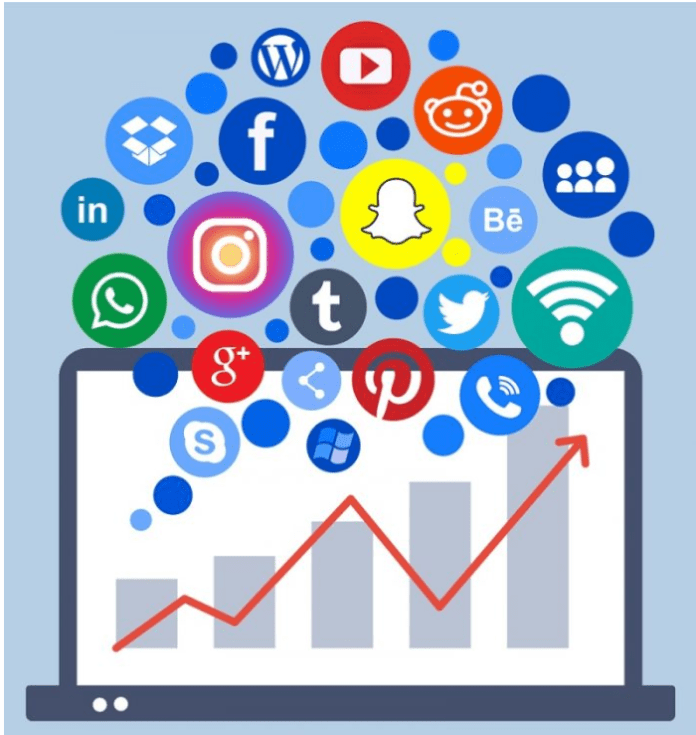
Digital marketing refers to advertising delivered through digital channels such as search engines, websites, social media, email, and mobile apps. Using these online media channels, digital marketing is the method by which companies endorse goods, services, and brands.
Nowadays, Digital Marketing is the most commonly used way of advertising and promoting goods and services and for good reason. Social Media has completely changed the A-Zs of Advertising. Digital Marketing offers it all- from insights into the customer’s engagement with the post, decrease in costs compared to traditional ways of marketing (tv, radio ads, billboards) and the ‘trend’ and ‘viral’ factor which, once taken advantage of, can help boost the sales of the company by a huge margin. Targeted emails and personalised ads to the target audience according to their taste and preferences compared to one ad designed for the general public (published in newspapers or played on tv/radio) is much more efficient and effective.
Moreover, as social media platforms gain more popularity and attracts more and more people, it guarantees more reach and views for the digital content/media, making it more efficient than traditional means.
There are three major types of digital media channels which are Owned, Paid and Earned media.
Owned media channel is controlled by the brand itself. For example, Instagram account of Netflix India. All the media shared on this channel is owned and developed by the company itself which is why it is not trusted and considered credible. There are no guarantees that it will attract consumers because communication from the company about its own products is not trustworthy.
However, some of its benefits include- It gives control over the content consumed and shared with the target audience. It is cost efficient because the company does not have to pay a third party to do the same. It is a long-term plan since its not based on time duration-based contract with any third party and it is not feedback or word of mouth that dies down with time.
Paid media channel is controlled by a third party who is paid to share content for the company. For example, Ads on Instagram, paid searches on google etc. This channel is in demand as social media platforms become business friendly day by day and this also gives control as the company approves and knows what is being shared and consumed by its target audience.
Some of its challenges are- This channel has a declining response rate as consumers are becoming more aware of such tactics and do not trust paid sources. Moreover, it has poor credibility because the third party is being paid to publish catchy and engaging content and it does not say anything about the quality of the product or service.
Earned media channel is the channel controlled by the customers. For example, Word of mouth, recommendations to friends and family, Trends and buzz etc. All media and feedback shared by customers publicly which can be positive or negative. The main benefit is that this channel is the most credible because these are the genuine feedbacks from customers who have used the product or service. If positive, it can also boost sales and increase market share by attracting new customers due to word of mouth. However, it does not give the company any control as it can be negative and damaging to the company’s reputation in that case.

 Eduindex News