POST COVID PHASE

“Courage above all is the first quality, by a warrior” – Karl Von Clause
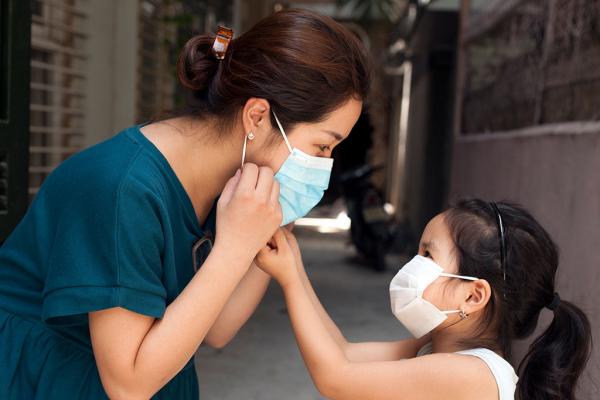
Kudos to you for going through the pain and struggles caused by the covid virus and completing the quarantine period. Yes, that’s a brilliant effort from your side. The virus would have lost its power and is of no harm anymore. But the effects caused by the virus in the past 2 weeks would persist in your body for quite a period. That may sound hard to believe, but it’s the ground reality. No worries, a warrior is prone to struggles and he might easily overcome them,

Common effects post covid:

  • Tiredness: Most people feel tired for two to three weeks post covid. They might feel that they do not have the same energy to do their works or might feel pain while walking even for a shorter distance.
  • Weight loss: If you are prone to diarrhea, vomit, and high fever for more than one day, you might surely suffer from this. You might have shed two to three kilograms of weight. Do not freak out by this. Think in an alternative way. You have reduced your wait without the efforts you would usually put on a gym.
  • Hairfall: Yeah you have heard it right. Hairfall is more common in the post covid phase. This will be happening for two weeks.
  • Shortness of breath:  will be the for a long time. In case if you have used oxygen support during the treatment, then it would take time for your lungs to breathe normally. It’s natural that if our body metabolism is affected by an external factor, it would have an edge off in it. 

Do’s and Dont’s post covid:

  • Although you might have been bored sitting in one place with mere physical activity in the past weeks, you must not actively involve in physical activities which involve huge efforts. Avoid lifting heavy weights, staying up late, and watching a digital screen for a long time.  
  • You might have done a regular exercise or a walk of over three kilometers of cycling for an hour daily. Do not expect the same energy at the initial phase. Try to start with a walk of half a kilometer and increase the distance day by day. 
  • Drink plenty of water and stay hydrated throughout the day.
  • Practice simple breathing exercises which you could find on youtube to strengthen your lungs. It is better to practice them early in the morning. Sunlight might shower you with additional benefits.

  • Plan a diet of protein-rich foods. If you feel that you are not able to eat properly due to throat pain, eat in bits. Vegetable salads, fresh juices, mushrooms, nuts, milk, eggs would help you to regain your stamina. 
  • Avoid going out frequently for a month. Even if you have a necessity, follow all the safety precautions. 
  • Reduce talking over phones for more than an hour. You will feel shortness of breath.

All the effects will gradually fade away after a month and you start to  feel better, Have a great recovering phase ahead. 
Women’s Financial Security Post COVID-19

The daunting number of jobs lost by women during the coronavirus pandemic is only the beginning of the story.Yes, it’s widely recognized that women have taken the brunt of the nation’s total job losses — they’re still down 5.3 million vs. 4.6 million for men even with the economy having rebounded somewhat off its COVID-19 lows — largely because working remotely isn’t possible in the hard-hit businesses like restaurants, hotels and retail stores where females dominate. And, yes, it’s also recognized that many moms were forced to drop out to look after their kids after schools went remote — with nearly four out of 10 currently working women still actively considering doing likewise, according to a recent survey by Fidelity Investments.But what’s not talked about as much is this: the potential long-term consequences of having had their financial security and career prospects upended by the pandemic.”Being in a position to take a career break by choice can be considered a privilege,” said Lorna Kapusta, head of women investors at Fidelity. “But we know for many in times of crisis like this one that stepping back from work is more like a necessity. Either way, it’s critically important to understand the decision’s impact on your savings today and into the future, so you can take steps to address it.”Fidelity conducted an analysis of the estimated effect even a one-year career break could have on retirement savings, and the results are staggering.Exhibit No. 1: Say you took your “break” at age 35 when you’d been earning $50,000 a year and had to subsequently accept a slightly lower salary just to get back into the workforce. Assuming a conservative 4.5 percent annual growth rate and factoring in lost retirement contributions — including a 3 percent match from your ex-employer on top of what would have been your own 9 percent contribution — your 401(k) would be $106,469 lighter ($733,325 vs. $839,594) by the time you turned 67.Exhibit No. 2: Substitute a $75,000 salary and the difference is even bigger ($159,702, or $1,099,679 vs. $1,259,381).Exhibit No. 3: And bigger still at $100,000 ($212,936, or $1,466,233 vs. $1,679,169).Plus, don’t forget there’s also the matter of lost Social Security contributions. “Your benefit is calculated based on your top 35 years of earnings,” said Kapusta. “So if you work fewer years, have a lower salary, or don’t reach the minimum eligibility, you may have a smaller check when it comes time to collect in retirement.” All of which helps explain the impetus for launching Fidelity’s weekly Q&A discussion series called “Women Talk Money.” Airing live on Zoom every Wednesday at noon ET and available later on demand, each 30-minute interactive episode uses viewer-submitted questions to address a different topic each week, ranging from job loss to health care to the hidden costs of caregiving.”It’s real talk to help answer women’s most pressing money questions right now — no jargon or judgment,” said Kapusta, noting that the program’s six-part, archived video series is also must-see viewing for those who want to learn the key factors that can significantly impact women’s financial futures.Finally, some historical perspective. When the Labor Department first started tracking such data back in 1948, only one third of women held jobs. That number had nearly doubled by the late 1990s.And today? The ratio of women working has fallen below 57 percent for the first time since 1988.

Criminal justice system

• TADA and UAPA – anti-terror special laws.
 2015-2019- 7,840 persons were arrested under UAPA but only 155 were convicted.
 TADA-67,000 people were detained but just 725 were convicted.

• Kartar Singh case – prosecution had unjustifiably invoked provisions of TADA ‘with an oblique motive of depriving the accused persons from getting bail’.

 ‘Nothing but the sheer misuse and abuse of the Act by the police’.

No consensus

• Grossly misused – no consensus on definition of
the term ‘terrorism’.

• Neither TADA/UAPA defines -‘terror’ and ‘terrorism’.

 Section 15 (UAPA) – Any act with intent to threaten or likely to threaten the unity,
integrity, security, or sovereignty of India or with intent to strike terror or likely to strike terror in the people.
 UAPA – acts committed by using bombs, dynamite or other explosive substances or
inflammable substances or firearms or other lethal weapons or poisonous or
noxious gases … or by any other means of whatever nature to cause or likely to
cause death or injuries…

Judicial Cases .

• Yaqoob Abdul Razzak Memon case – Terrorist acts range from threats to actual
assassinations, kidnappings, airline hijacking, car bombs, explosions, mailing of dangerous materials, use of chemical, biological, nuclear
weapons etc.

• Hitendra Vishnu Thakur case – ‘use of violence when its most important result is
not merely the physical and mental damage of the victim but the prolonged psychological effect it produces … on the society as a whole’.

 Overawe the government or disturb the harmony of society or ‘terrorise’ people…’.

 Deliberate and systematic use of coercive intimidation’.

• Kartar Singh case – Mere disturbance of public
order is not a terrorist act.

• Ram Manohar Lohia case -Distinction between ‘law and order’, ‘public order’ and ‘security of state’.

 Law and order represent the largest circle within which is the next circle representing ‘public order’ and the smallest circle
represents the ‘security of state’.

 Act may affect ‘law and order’ but not ‘public order’.  Act may adversely affect ‘public order’ but not the ‘security of state.’

 Police have failed to understand these distinctions.

Way Forward

• Police will be far more cautious in charging people under special laws like
UAPA and TADA.

• No anti-terror law can really end the problem of terrorism.

• Must remove injustices in our society to combat terrorism.

• Creation of a truly just, egalitarian and non-oppressive society – far more effective in combating terrorism.

Computers in detail

Definition

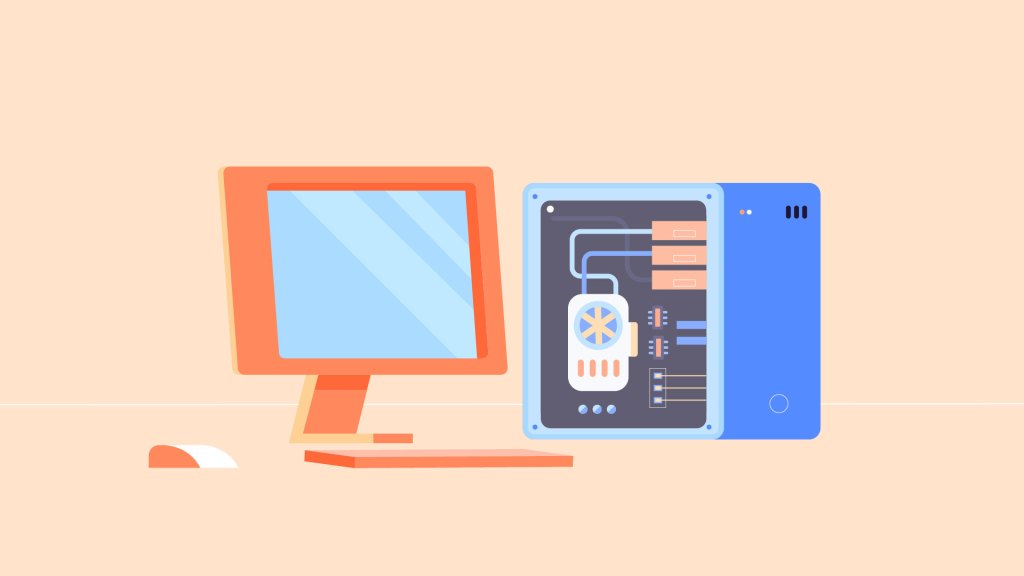
A computer is a machine that performs tasks and calculations according to a series of instructions or program operations (circuits, etc.) and software (OS, the underlying software that controls the hardware when the user issues instructions).

Programming

You don’t need a car, its function is the same as a jukebox that keeps playing tracks. For example, they want to tell the music box to play different music every time. They want to program the music box so that it can play different music. This part of the history of computers is called “the history of programmable machines.” “This is a concise sentence in the history of machines. When I speak their language, I can order to do different things.”

The role of computers in daily life

Today’s computers are fast, small and small. Powerful. Computers can save money, time and labor; otherwise it would take months or years to complete in a few seconds with computers. Launch satellites using a simple application on our desktop. According to the requirements, the storage capacity and speed of the computer will be different. For example, NASA and other companies that use high-speed supercomputers, because speed is an important part of your business. Computers are cheaper than smart phones. The essence is in hand. At home, computers provide opportunities to access social networks, read books, or work from home.In the office, they are the most important because they are the most important form of work. Although computers can help with almost everything from shopping to work to taking notes or playing games, people rely heavily on computers for almost everything. Computers make life easier and faster than ever. Large storage rooms are of great help to today’s business. The data received from different systems is stored on the computer for later use. In addition, previous shopping, reading, work, arithmetic, calling appointments and events or activating alarms all occurred in different places. Now everything can be done with our smart phone. If the book is bulky, it would be great to bring ten books. Now; millions of books are within reach. There is no need to check calendars anymore, because they have been replaced by reminders that automatically remind us of important events and clocks that only need to be activated once. These are some basic tasks that are performed daily, and it is difficult to work without a computer. Computers are no longer a luxury, they can be used in different forms on different platforms, for example as smart phones. Computers are also very helpful in medicine and have undergone extensive development in the past decade. Addictive.All in all, we can say that computers have profoundly affected our lives, and changes are no longer associated with ease, habit, and popularity.

The above is a small example of computers, but as far as modern technology is concerned, computers have changed our way of life. Computers are not only used for arithmetic but are now active in teaching, industrial purposes, automated processes, data management, analysis, personal and group entertainment, Music synthesis, professional photo and video editing, hardcore games, research goals, creating new software and applications to make life easier, shopping, banking, marketing, and even participating in the artificial creation of intelligent creatures with deep learning concepts and machine learning.