The Henna Artist is Alka Joshi‘s debut novel that was published in early 2020. It instantly became a NY best seller, a Reese Witherspoon book club pick and currently being developed into a TV series. Furthermore, it was longlisted for the Center for Fiction First Novel Prize.
Why may The Henna Artist be worth your time?
The Henna Artist is a captivating, engrossing and beautifully written historical fiction set in India in the 1950s.
The story follows Lakshmi, a strong-willed and decisive young woman who ran away from her marriage and family to the pink city Jaipur to become the talk of the town henna artist, herbalist and confidante for the elite circle of Jaipur ladies. Lakshmi’s talent, together with her determination and focus, rewarded her with the security, freedom and independence she strived for. A major life event takes place in Lakshmi’s personal life that forces on her new circumstances requiring tough decisions. Later on, we realize that this turning point was actually the catalyst for Lakshmi to reevaluate her priorities, free herself from the limitation of attachments and become closer to her true self and her real purpose.
Shedding light on social issues
This is a story abouy struggle, freedom, women’s choices, prostitution, abortion, ethical codes, early marriage, teenage pregnancy, perseverance, resilience, self-worth and forgiveness. It is a story about womanhood.
The Henna Artist is a compelling story with vivid rich descriptions that has the power of transporting the reader to that era written in a way that triggers all senses to truly enable the reader to picture the events and feel with the characters. The book is packed with cultural details such as henna art, natural and herbal medicine, Indian cuisine and family customs and traditions.
Closure
I truly enjoyed reading this novel and it made me think a lot more about my roots. Moreover, I am eagerly looking forward to reading the recently published sequel ‘The Secret Keeper of Jaipur’.
Comment down below your review of the book or suggestions for my next read!
Due to the pandemic, Income saving and consumption patterns have changed. Consumers are delaying high ticket size commitments like home loans, auto loans, lot of discretionary expenses like vacations etc.
The positive thing is that a lot of consumers are monitoring their credit profile and are becoming credit conscious. People are becoming more and more aware of the importance of maintaining their credit profile and keeping a check on their credit score. Nowadays, before a loan is granted, the bank or financial institutions assess the credit profile of the candidate to ensure that they are capable of paying it back and have a clean record.
As credit becomes easily available with time especially since credit cards gained popularity, many of us tend to procrastinate or delay the repayments according to our convenience but what many of us don’t know is that it impacts our credit profile and score.
Therefore, it is important to keep a track on our credit record and maintain a good credit score.
How to check your credit score?
One can check the credit score via a credit bureau such as TransUnion CIBIL, Experian, Equifax etc. TransUnion CIBIL is arguably the most popular provider of credit score in India. You can access the latest credit report by paying the prescribed fee on CIBIL website.
Credit score usually ranges from 300 and 850. A fair score is between 550 to 700 and a very good credit one ranges from 700 to 900. The higher the credit score, the higher will be your creditworthiness.
Let’s understand some credit basics.
CIBIL SCORE VS CIBIL RANK
A Cibil Score is a 3-digit numeric summary of a credit profile. Data of past 24 months of any kind of loan or credit card that has been taken by an individual in the past is compiled and using algorithms a number is generated. It lies between 300-900.The higher the score, the better.
For businesses there is Cibil Rank. It is derived from company credit report. Ranges from 10-1 and 1 is the best rank an entity can get. A lot of government schemes are dependent on cibil ranks. Quicker loan approvals and lower interest rates are provided by banks based on it as well.
Government is providing relief with schemes like Emergency Credit Line Guarantee Scheme, Atma Nirbhar Abhiyan, Moratorium Scheme by RBI etc. A lot of institutions are also directly educating consumers to encourage them to have a healthy repayment profile.
Moratorium scheme- Moratorium is the time period (earlier it was 3 months, now it is 6 months) where consumers will have an option to defer their payments for a future period. This is not a waiver it is a deferral with an interest. Hence, it is recommended to opt for it only if you truly need it as it will have an impact in the long run. Pay outstanding as soon as moratorium period ends so your credit score and report is clean.
How to stay Credit conscious?
Making timely payments to have a high credit score.
Save to Pay back
Continue to maintain the credit utilisation expense. Once lockdown opens, apply for new credit and moderation.
Monitoring the credit profile monthly to track any changes or frauds happening in your name or account using the alert facility.
Artists who create the magnificent form of artwork usually portray their inner personality in there all forms of art. They represent who they are, and how their psyche is. The creators of extraordinary art live a life of incompleteness, dullness, and hollowness within themselves.
Their creativity glorifies their inner self and how miserable their life is. All legendary wizards of art contribute incredible work despite having and living a horrible life. Whether it is Shakespeare who lost her 8yr old daughter, or whether it is Franz Kafka who had a fractured/failed relationship with his own father, or whether it is J.K. Rowling who had lived a miserable life striving between her failed career and failed family life while being a single mother, these all examples are basically the real lives of these great writers who imprinted their skills and printed their hands in the history of literature forever.
There are serval times when artists fail living in a complicated society when they are being judged and due to several cultural mishaps, which affect their lives. Likewise, The Novella “Artists of Disappearance” is one among them.
Artists of Disappearance – A Novella about unsuccessful Artists
This is a Novella, which is only one of its kind in its own way because this novel which has 3 novellas within it talks about what happens when the artists fail to satisfy their piece of art? How can an artist fail in his forte? For a writer/ or an artist the art is the reason why they survive in this uncanny world where there is a bridge between the writer and the injustices held against them, which ultimately oppose a writer to create their art! Readers will experience some kind of queries in their heads if they read these stories written by Anita Desai.
The writer had beautifully written these stories especially for the contemporary readers who are bustling their life and don’t have much time to read. But this Novella is amazing as all the 3 stories are somewhere relatable to readers of all ages.
“The Museum of Final Journey” –
This is the first novella of this book which is narrated by an unnamed Government bureaucrat who wanted to be a writer but unfortunately had to suppress his long writing career due to his father’s dream and expectation of his son to follow his footsteps and become a govt bureaucrat. As the story moves forward, we see that in the later years of the life of the narrator when he was a junior official and was posted into one of the remote areas, he describes his past experience as a flashback to the readers.
His experience was something which brought him in a state of apathy when one day an old man who was the caretaker of the “Mukherjee estates” came to the office for a favor to rescue the treasures of the states as some people were stealing it and disrespecting those precious things by exporting it to other countries. The Museum, which was now an abandoned museum for the residents living there, still had authentic elements present in it.
As the narrator quotes that: “While others dreamt dreams and lived lives of imagination and adventure, my role was only to take care of the mess left by them.” When the official comes in counter with the museum, he realizes the art and his life, his life is rusty and mundane like the dust-covered on the treasure’s museum, even if he tries to save the estate the art will be auctioned by other greedy people. When the artist dies, the art is never protected rather it becomes a means for greedy people to fulfill their needs.
The narrator finds himself and the Museum similar and ended his story by having this grief that he should have followed his dream, yet he was a failed writer whose life was hollowed and gloomy.
“Translator, Translated”–
Another story of a journey of a Failed writer, who is the protagonist of the story, named “Prema”, whose life was miserable and uncertain. She lived a mundane life as an English professor in a girl’s school where her own students mocked her and criticized her due to her appearance and her age. She didn’t have any goal and she always compared and envied her life with others, especially with one of her school acquaintances “Tara” who was now an editor head in a feminist publishing company.
When these 2 characters collide in one of the school programs, Tara allowed her to do a translating job. Initially, Prema’s journey as a translator was like a “Carousel”, but things fall apart when she tried to translate an Oriya book written by Suvarna Devi into English which later on ended her writer career ultimately.
Translating is a form of art that depends on how the translator deals with the language and brings the best piece of all. It becomes a sentimental concern if the translated work is not satisfied by the readers. This is what happened in the end, as her translated book didn’t receive much appreciation and in the end, Prema lost her dream to become an eminent writer and went back to her mundane life of being an English professor.
Her failure proves to us that, as the art fairs, the artists die! As the artist in Prema was dead when the art didn’t flourish. Her ability to write was dead when she drained by her own skills and failed with her own existence as an artist.
“The Artist of Disappearance” –
This is the title story of the novella with a protagonist named “Ravi” who had an unfortunate life who had been adopted at a very young age by a very wealthy couple. Even living in a mansion which was located at the foothills of the Himalayas, he never loved his life as his life was not peaceful like the other kids of his age. He had neglected parents who used to beat him up and used to leave him and traveled to Europe without having any concern for their son.
He was always caged in the house and what he always wanted is “Freedom”. This is what every artist wants to be free from the clutches of society, to think freely and exploring themselves.
In a fire accident when he lost his parents, he became to be with himself away from the social life and created much great artwork in his own house. His artwork was so much amazing that people who were filming near the village wanted to expose his work but he denied it and wanted to live an isolated life with his art.
The last story of Ravi proves that an artist is always attached to his work and never wants to leave it. Whether they fail or flourish, art is the reason which keeps them alive.
Though unnamed official, Prema and Ravi failed, their failures in there art form kept them alive from this undeserving world where they are not accepted for their art and yet these artists choose a life living in uncertainty with a certainty of hope hidden in their hearts and that surely one day they will reach their destination.
Honestly, I am always tempted to define this novel as “The love story of Pride and Prejudice.”, but I’m afraid this does not do justice to it’s universality. Read further to know why.
The book was written by Jane Austen (1775-1817) and published in 1813. Austen is majorly known for her commentary upon the landed gentry towards the end of 18th century England in her novels. The prominent themes of her novel revolve around women and their dependence on marriage in pursuit of better life. The opening line “It is a truth universally acknowledged, that a single man in possession of a good fortune must be in want of a wife.”, establishes marriage motif of the novel. The story revolves around the character development of Elizabeth Bennet- the second daughter of Bennet family. We learn the repercussions of hasty judgements through Elizabeth in the mean course of novel.
The setting and language give proper English feel. The obligation of girls in general to marry in a wealthy family as described in the novel, regardless of love gives the taste of realism. Realism however comes with the twist of romance. Mr. Darcy and Mr. Bingely who are wealthy and socially respectable figures, fall in love with girls from lower gentry and a series of events takes place. Although the novel was majorly predictable, it was a sort of catchy. Writing style can be one of the main reasons for the same. One must note Jane Austen is the first female writer to write in the genre of comedy; in addition to the wit, the writing becomes all the more interesting.
The words pride and prejudice however must not be made limited as the metaphors for the main characters Mr. Darcy and Miss Elizabeth because every character in the novel possess these traits to some degree.
My personal favorite is Mr. Bennet, the head of Bennet family, a middle aged landed gentleman. He was different from the rest of the family members; quiet, witty, sarcastic and broad minded. His taking Elizabeth’s side for not marrying someone she did not approve of made him stand out from rest of the people. He liked Elizabeth the most because of her different temperament.
“Mr. Bennet was so odd a mixture of quick parts, sarcastic humour, reserve, and caprice, that the experience of three-and-twenty years had been insufficient to make his wife understand his character.”
The whole novel is centered around family, prestige, vanity, society and wealth. Being more inclined towards the modern and post-modern novels these themes feel mundane but surprisingly this book proved to be relaxing; like watching K-drama!
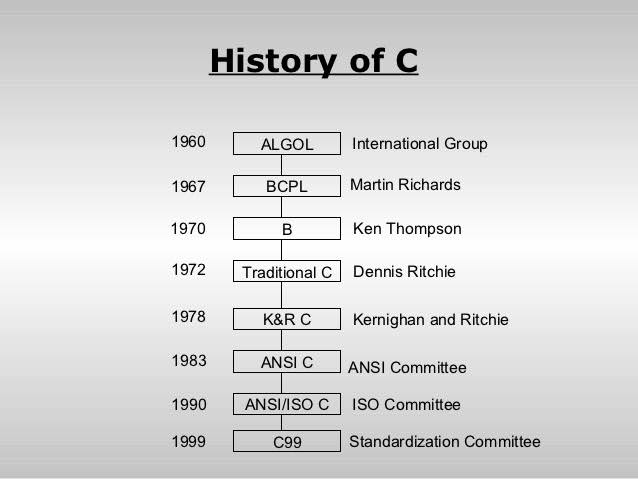
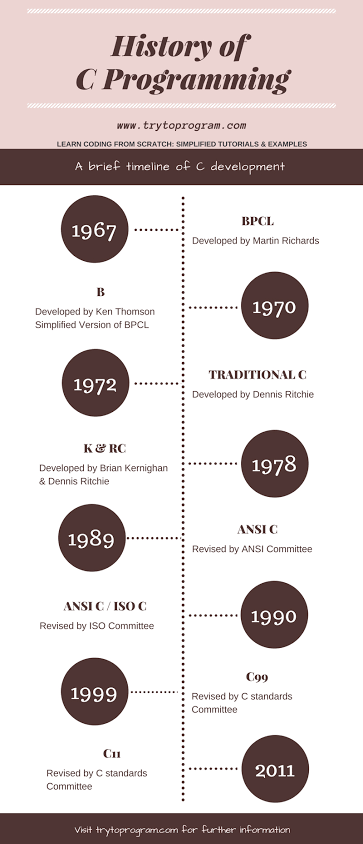
There are many programming languages in use today, one of which is C. There are many offshoots of the C programming language, including Objective-C, C++, and C#. None of these are the same language. THE BEGINNING: The C programming language came out of Bell Labs in the early 1970s. According to the Bell Labs paper The Development of the C Language by Dennis Ritchie, “The C programming language was devised in the early 1970s as a system implementation language for the nascent Unix operating system. Derived from the typeless language BCPL, it evolved a type structure; created on a tiny machine as a tool to improve a meager programming environment.” Originally, Ken Thompson, a Bell Labs employee, desired to make a programming language for the new Unix platform. Thompson modified the BCPL system language and created B. However, not many utilities were ever written in B due to its slow nature and inability to take advantage of PDP-11 features in the operating system. This led to Ritchie improving on B, and thus creating C.
The development of C was to become the basis for Unix. According to the Bell Labs paper, “By early 1973, the essentials of modern C were complete. The language and compiler were strong enough to permit us to rewrite the Unix kernel for the PDP-11 in C during the summer of the year.” This now meant that C was becoming a strong language that could, and would be, implemented across many systems. By the middle of the 1970s, the C-based Unix was used in many projects within the Bell System as well as “a small group of research-oriented industrial, academic, and government organizations outside [Bell Labs]”. In 1978, Brian Kernighan and Dennis Ritchie published The C Programming Language, which would serve as the language reference until a formal standard was adopted. Five years later, the American National Standard Institute (ANSI) formed the committee, X3J11, to establish the formal standard of C. The C standard was ratified as ANSI X3.159-1989 “Programming Language C”. This was the first formal standard of C. Currently, we are on the fourth standard of C, known as C18 as it was published in June of 2018
Over time, C began to be used in personal computers for developing software applications and other purposes. The first change (even if only a little) came when the American National Standards Institute (ANSI) formed a committee in 1983 to standardize C. After a review of the language, they modified it a little so that it was also compatible with other programs that preceded C. So the new ANSI standard came into being in 1989, and is known as ANSI C or C89. The International Organization for Standardization (ISO) has also contributed to the standardization of C. Over time, C has evolved as it has added some significant features like memory management, functions, classes and libraries to its rich feature set. C is being used in some of the biggest and most prominent projects and products in the world. C has also influenced the development of numerous languages such as AMPL, AWK, csh, C++, C–, C#, Objective-C, Bit C, D, Go, Java, JavaScript, Julia, Limbo, LPC, Perl, PHP, Pike, Processing, Python, Rust, Seed7, Vala and Verilog. USES TODAY : According to Toptal, UNIX operating systems are written in C and most of Linux is also in C. Also databases such as Oracle Database, MySQL, MS SQL Server, and PostgresSQL are at least partially written in C. C is the basis of many system kernels. Other programming languages, like Python and Perl, use compilers or interpreters that are written in C. C has changed over the years and is still a common language to use in lower level programs, like kernels. But it is also used for many applications ranging from device drivers to other programming languages’ compilers or interpreters. The language also made way for C++, Objective-C, C#, and many more C-based languages that each have their own speciality.
There are many planetary systems like ours in the universe, with planets orbiting a host star. Our planetary system is named the “solar” system because our Sun is named Sol, after the Latin word for Sun, “solis,” and anything related to the Sun we call “solar.”
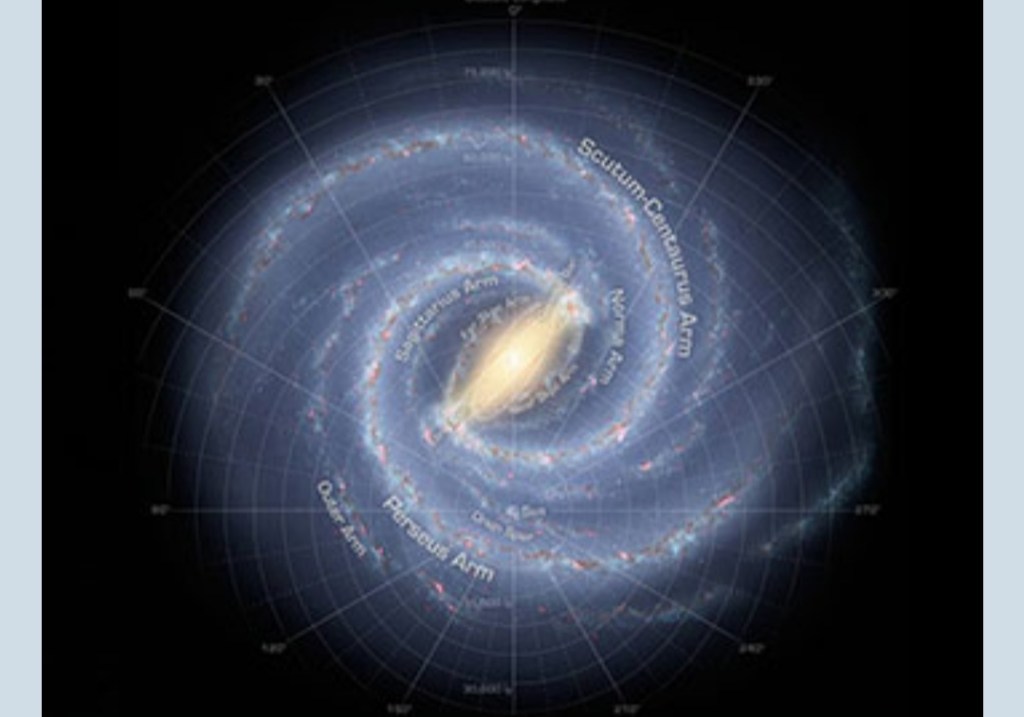
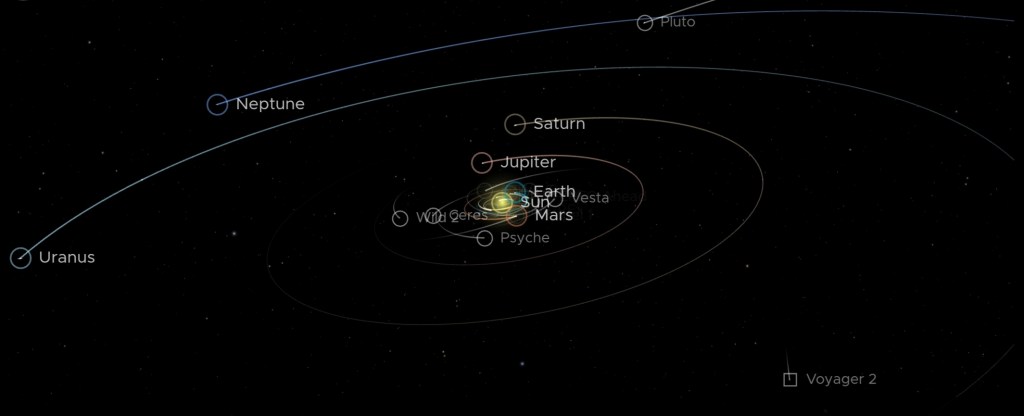
Our planetary system is located in an outer spiral arm of the Milky Way galaxy.Our solar system consists of our star, the Sun, and everything bound to it by gravity — the planets Mercury, Venus, Earth, Mars, Jupiter, Saturn, Uranus and Neptune, dwarf planets such as Pluto, dozens of moons and millions of asteroids, comets and meteoroids. Beyond our own solar system, we have discovered thousands of planetary systems orbiting other stars in the Milky Way.
10 Need-to-Know Things About the Solar System
1>ONE OF BILLIONS
Our solar system is made up of a star, eight planets and countless smaller bodies such as dwarf planets, asteroids and comets.
2>MEET ME IN THE ORION ARM
Our solar system orbits the center of the Milky Way Galaxy at about 515,000 mph (828,000 kph). We’re in one of the galaxy’s four spiral arms.
3>A LONG WAY ROUND
It takes our solar system about 230 million years to complete one orbit around the galactic center.
4>SPIRALING THROUGH SPACE
There are three general kinds of galaxies: elliptical, spiral and irregular. The Milky Way is a spiral galaxy.
5>GOOD ATMOSPHERE(S)
Our solar system is a region of space. It has no atmosphere. But it contains many worlds—including Earth—with many kinds of atmospheres.
6>MANY MOONS
The planets of our solar system—and even some asteroids—hold more than 150 moons in their orbits.
7>RING WORLDS
The four giant planets—and at least one asteroid—have rings. None are as spectacular as Saturn’s gorgeous rings.
8>LEAVING THE CRADLE
More than 300 robotic spacecraft have explored destinations beyond Earth orbit, including 24 astronauts who orbited the moon.
9>LIFE AS WE KNOW IT
Our solar system is the only one known to support life. So far, we only know of life on Earth, but we’re looking for more everywhere we can.
10>FAR-RANGING ROBOTS
NASA’s Voyager 1 is the only spacecraft so far to leave our solar system. Four other spacecraft will eventually hit interstellar space.
Spacecraft are Headed into Interstellar Space:-
Five spacecraft have achieved enough velocity to eventually travel beyond the boundaries of our solar system. Two of them reached the unexplored space between the stars after several decades in space.
Voyager 1 went interstellar in 2012 and voyager 2 joined it in 2018. Both spacecraft are still in communication with Earth. Both spacecraft launched in 1977.
NASA’s new horizons spacecraft—currently exploring the an icy region beyond Neptune called the Kuiper Belt—eventually will leave our solar system.
Pioneer 10 and pioner 11 also will ultimately travel silently among the stars. The spacecraft used up their power supplies decades ago.
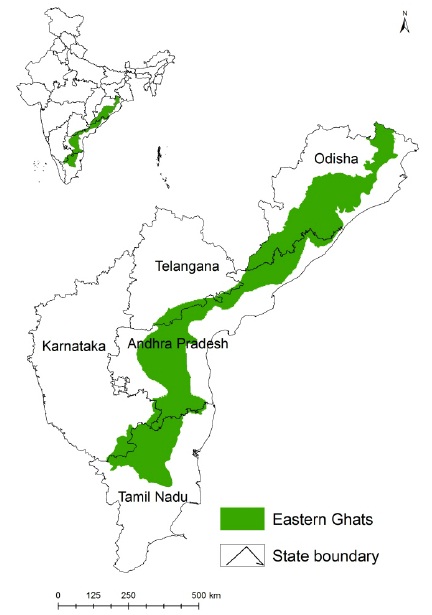
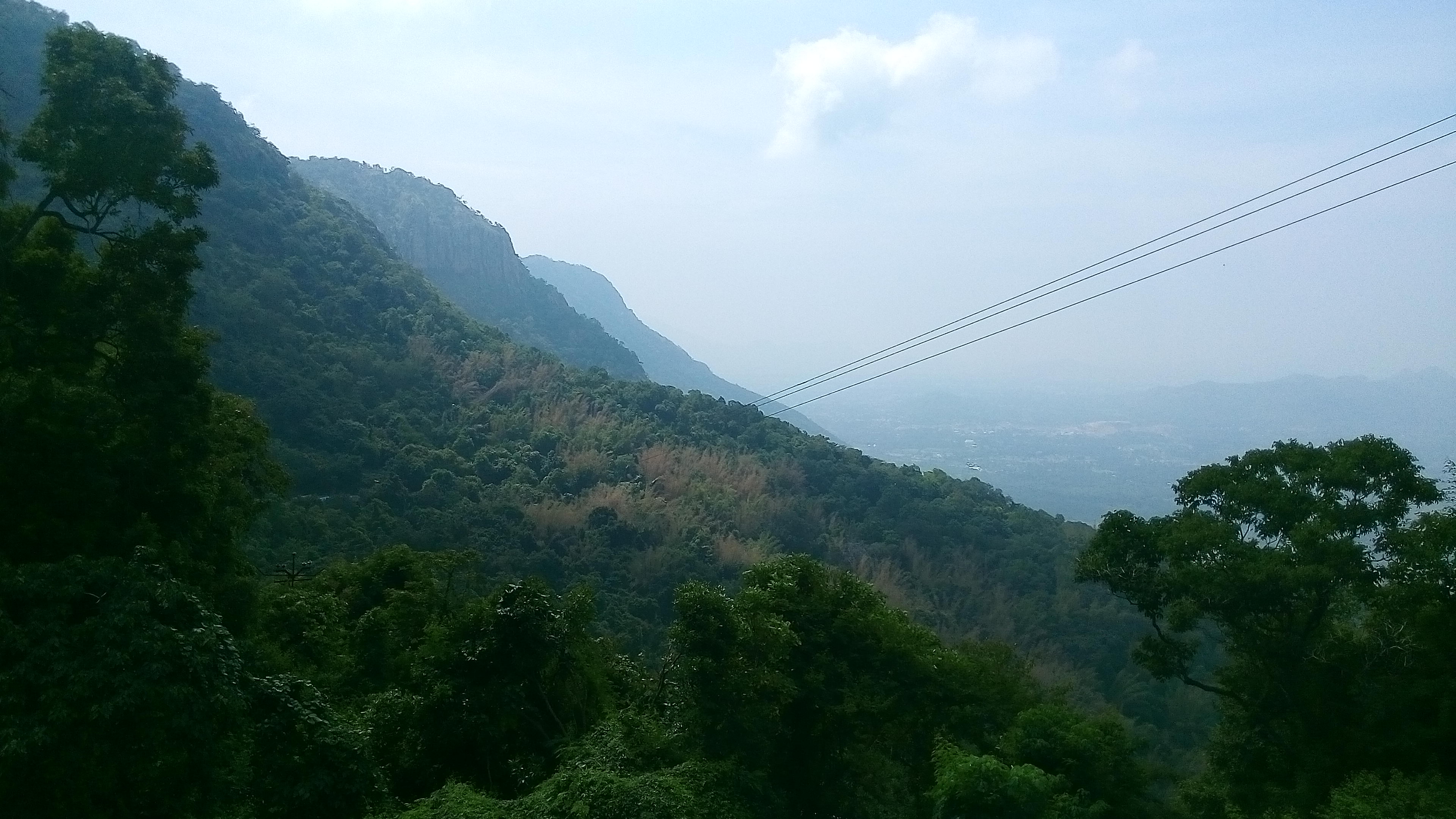
Unlike Western Ghats,Eastern Ghats is a discontinuous and irregular one.It is dissected at many places by the rivers,which drain into the Bay of Bengal.Its height ranges from 1,100 to 1,600 m.These hills separate the Kalrayan,Kollimalai and Pachamalai are the major hills of the Eastern Ghats of Tamil Nadu and are located in Northern districts of the state.
Javadhu Hills
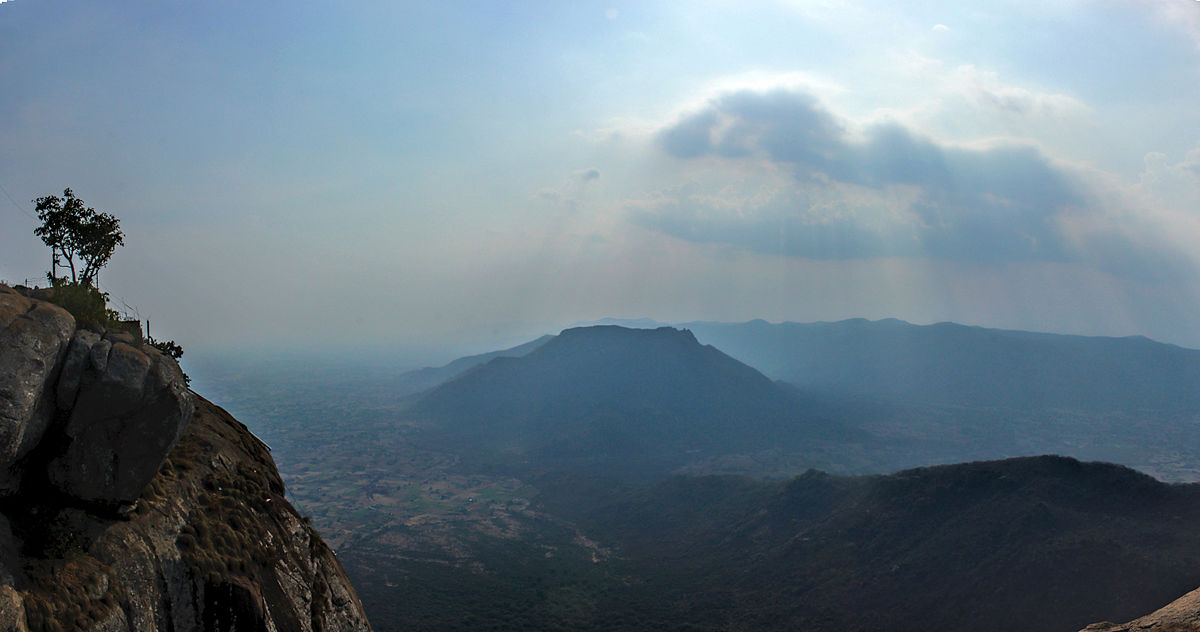
Javadhu Hills are an extension of the Eastern Ghats spread across parts of Vellore and Tirunelveli districts and seprates these two districts.Many peaks with the height of 1,100-1,150metres are located in this range.Melapattu is its highest peak.The Vainu Bappu Observatory(VBO) Kavalur,which began operationa in 1967,is located on theses hills.Many parts of this range are covered with bluish grey granites.It is noted for its fruit bearing trees,medicinal herbs and Sandalwoods.Due to illegal logging, Sandalwood trees are disappeared now.
Kalvarayan Hills
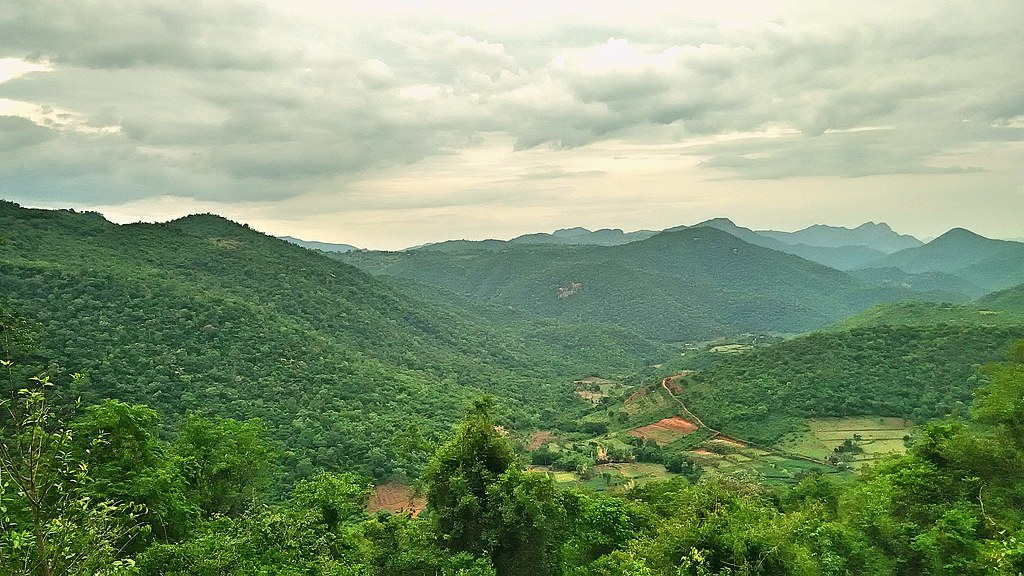
The name ‘Kalvarayan’ comes from the word ‘Karalar’,the ancient name of the present tribes .It is another major range of hills in the Eastern Ghats of Tamil Nadu.This range ,along with the Pachamalai,Aralvaimalai,Javadhu and Servarayan hills,Seprates the river basins of cauvery and palar.The height of this hill range from 600 to 1,220 metres.These hills have two sections.The northern section is referred as the chinna Kalvarayan and the southern one the Periya Kalvarayan. The average height of Chinna Kalvarayan is 825 metres and the Periya Kalvarayan is 1,220 metres.
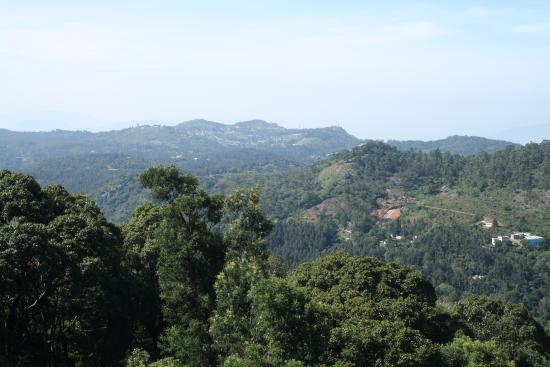
It is a mountain range located nera the Salem city the height ranging from 1,200 to 1,620 metres. The name of the range comes from a local deity , Servarayan.The highest peak in the Southern part of the Eastern Ghats is located in this range. The peak is Solaikaradu and its height is 1,620 metres.The hill Station Yercaud,which is known as poor man’s Ooty,is located on this range.Servarayan temple is it’s highest point(1623m).
Kolli Hills
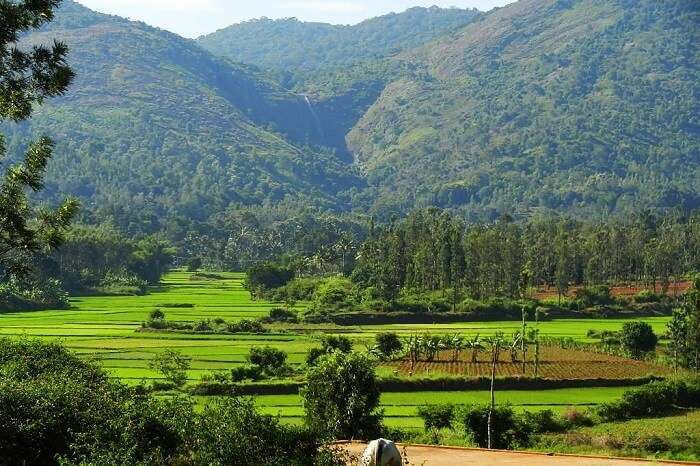
It is a small mountain range located in Namakkal district.It covers an area of about 2,800 sq.km.It rises up to 1300 metres.This is a mountain range that runs almost parallel to the east coast of South India.Arpaleeswarar temple located on this range is an important pilgrim centre.It has the largest cover of evergreen or shola forest when compared to other parts of the Eastern Ghats.Several coffee plantations, fruits,flowers and silver-oak estates are found in this region
Pachaimalai
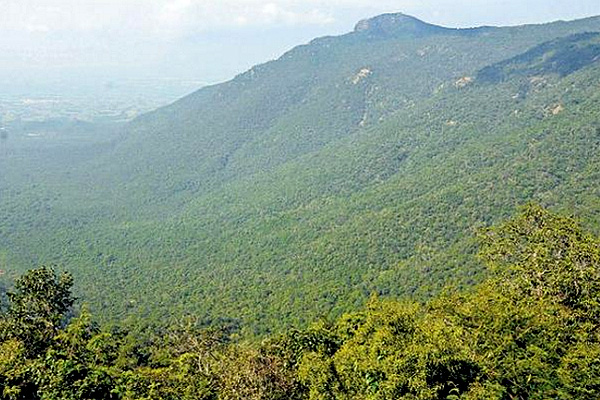
It is the lowest hill range,spreads over the districts of Perambalur, Tiruchirappalli and Salem.In Tamil Language,Pachai means green.The vegetation in this range is greener than the vegetative cover of the other hills in this region.Hence it is named as ‘pachai malai’.Jackfruit is a popular seasonal agricultural product of this hills.
My eyes are not willing to close. The clock needle seems fixed. No the time is not running. Oh my god, earth please start your ride. I want my tomorrow. Hello sleep take me. Yes… Still 8 hrs, oh come on please tomorrow come on. My heart says oh my boy I can’t leave you to take sleep,go go go a deep visit in your past.
Yes I remember, she says it happens in a day and that day is tomorrow. Fine I’ll paste my eyes and set time on alarm. Very good night to meet a welcoming tomorrow. Yes! Hurray the day has come, it’s today. Ufff, now I have to get up like a men. My god where’s my another socks, it’s ok to go without socks. Bye my house! You believe it’s today……
I have parked my bike under a orange flavoured tree and take a look on my watch. Suddenly a violin plays, my nose gets sense with a smell, awww a chill breeze, when I take my head up…. Yes she is, it’s her. My girl. Oh man what a kerala saree l, how can God sends angels down here. My mouth gets shuttered. Words affixed in my tongue. My girl starts, hello da nice to meet you. You’re looking great in this shirt. My mind voice be thanks to the man who tailored this pretty one.
My eyes never blinked off her. She sat near me and takes my hand. Hey, you’re my love and you’re my life, you’re my heart and you’re my beat in it. I want you wholeheartedly. Will you take me with you….? My heart stops suddenly and tears filled in my eyes. For the first time my mouth opens. Baby I don’t believe that gods can talk but right now I believe God can even come with us. You’re love of my life, I never promised in my life but today I’m giving you a word, I don’t know about your past but I assure you that your future will be lovely with me. There are about millions andmillions of people in the earth,thanks for choosing me. She slowly take an advantage and draw a sign on his cheeks through his lips.we both talked and laughed in a beautiful red sunset .
Sun secretly hears us baby !!!!
Tring tring!!!!! Alarm beeps. I just open my eyes and got shocked oh god that was a beautiful dream I ever gone through. Please make my day as ditto as yesterday . With full of confidence he dressed like her man and leaves his home to see her. Whatever it was, the day came and it was his ONE FINE DAY.
Pluto is one of the most mysterious and controversial celestial objects in the solar system. Pluto is a complex and mysterious world with mountains, valleys, plains, craters, and maybe glaciers. Discovered in 1930, Pluto was long considered our solar system’s ninth planet. But after the discovery of similar intriguing worlds deeper in the distant Kuiper Belt, icy Pluto was reclassified as a dwarf planet. Pluto is orbited by five known moons, the largest of which is Charon. Charon is about half the size of Pluto itself, making it the largest satellite relative to the planet it orbits in our solar system. Pluto and Charon are often referred to as a double planet. Pluto’s four other moons are named Kerberos, Styx, Nix and Hydra.
Some facts about Pluto
The name of Pluto was suggested by an 11 years old girl named Venetia Burney. When her grandfather told her the news that they have founded a new planet, then she said that Why not we can put its name Pluto under the name of the Roman Gods.
Pluto is very, very cold. It is much colder than Antarctica. It is so cold that Earth’s air would freeze into a kind of snow there. Pluto has less gravity than Earth. This means a person would weigh much less on Pluto than on Earth. It is so distant that the Sun’s light, which travels about 300,000 km per second, takes more than five hours to reach it. An observer standing on Pluto’s surface would see the Sun as an extremely bright star in the dark sky, providing Pluto on average 1/1,600 of the amount of sunlight that reaches Earth. Pluto’s surface temperature therefore is so cold that common gases such as nitrogen and carbon monoxide exist there as ices. Pluto is one third water, it is in the form of water ice which is more than 3 times as much water as in all the Earth’s oceans, the remaining two thirds are rock. Pluto’s surface is covered with ices, and has several mountain ranges, light and dark regions, and a scattering of craters.
Why Pluto is known as a dwarf planet
Pluto is a dwarf planet because it has not cleared the neighborhood around its orbit. Pluto goes around the sun, it’sround enough, it’s got moons, and behaves like a planet, but the idea is that Pluto did not form the same way as the rest of the planets. Pluto’s orbit is both eccentric and inclined more than the rest of the planets by about 17 degrees. That’s suggests something is different about this object.
Comparison with the other planets of solar system
Compared with the planets, Pluto is also anomalous in its physical characteristics. Pluto has a radius less than half that of Mercury; it is only about two-thirds the size of Earth’s Moon. Next to the outer planets—the giants Jupiter, Saturn, Uranus, and Neptune—it is strikingly tiny. When these characteristics are combined with what is known about its density and composition, Pluto appears to have more in common with the large icy moons of the outer planets than with any of the planets themselves. Its closest twin is Neptune’s moon Triton, which suggests a similar origin for these two bodies (see below Origin of Pluto and its moons).
The Indian men’s cricket team is one of the best teams in all formats among the other world class teams. People following men’s cricket are many. People know the names of every player playing for the nation. Many fans go craze on their favourite stars. There is also women’s cricket in India which was played from many years back. But people following women’s cricket are very few. The count is incomparable with that of men’s cricket. In men’s cricket, there are many idols like Kapil Dev, Sunil Gavaskar, Sachin Tendulkar, Sourav Ganguly, Rahul Dravid, MS Dhoni, Virat Kohli. But there is no big name in women’s cricket that everyone knows. The reason is apparent. There is no proper plan and infrastructure for women’s cricket across the country in domestic State level and District level. There was no inspiration for girls to take up cricket. They didn’t get to know the life of a woman cricketer. They didn’t have any idea of how would the life be after playing for the nation; what are the benefits they get; and how to get into a State level team. No growth of women’s cricket was seen till 2010s.
This situation prevailed for some years until 2011. After that a name had gone familiar with people. That name is Mithali Raj. She is also called as the lady Sachin Tendulkar of India. She has a pretty long and successful career. She made her debut in 1999 and is still playing for the country with career spanning over 2 decades. At 16, Raj scored an unbeaten 114 on ODI debut and soon established herself as the lynchpin of India’s batting. The roots of her copybook stroke play lay in her precocious talent that blossomed under the tutelage of her former coach, the late Sampath Kumar, and a regimented upbringing in an army family. With a passion for Bharatanatyam, her nifty footwork found expression on the field, becoming as much a hallmark of her batting as have been grace and an unrivalled precision at plundering runs in the cover region. She captained the Indian team for the first time at a young age of 22 years. She holds the record of having 3rd longest test careers, playing for 19 years. She is the 2nd highest run scorer in history of women’s cricket in all three formats added. She scored 10266 runs in her career totally. She has an amazing average of 44.6 in tests, 51.26 in ODI’s and 37 in T20s.
After her, many girls took up cricket as their career and started representing India. BCCI also looked up to the growth of women’s cricket. They developed the infrastructure and conducted many domestic games which boosted the talents to work hard. Also created a craze for young girls towards cricket. In the growth of Indian women’s cricket, there is a notable contribution done by Mithali Raj. She was also awarded with Padma Shri and Arjuna Award for cricket. She deserves every honour that she received. Thank you Mithali Raj.
Mankind has served this world with things no one could have ever imagined. There is a reason why some people happened to make it to our history books, and we are very thankful they did. Have you ever wondered what would have happened if Edison didn’t invent a light bulb? We couldn’t make a rough guess of when or who would have made the light bulb if it was not Edison . Science is crazy and huge when it comes to research but it is super interesting at the same time.
Here are some beings who made the best inventions!
ELECTRICITY
Electricity is the set of physical phenomena associated with the presence and motion of mater that has a property of electric charge. The presence of an electric charge, which can be either positive or negative, produces an electric field. Lightning is one of the most dramatic effects of electricity, and as we all know, it can kill us.
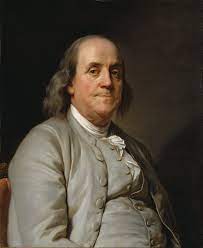
Franklin started exploring the phenomenon of electricity in 1746 when he saw some of lectures using static electricity for illustrations. Franklin was the first to label them as positive and negative respectively, and he was the first to discover the principle of conservation of charge. In 1748, he constructed a multiple plate capacitor, that he called an “electrical battery”. Franklin briefly investigated electrotheraphy . This work led to the field becoming widely known.
BENJAMIN FRANKLIN
ELECTRIC BULB
This invention changed the way we design buildings, increased the length of the average workday and jump-started new businesses. It also led to new energy breakthroughs — from power plants and electric transmission lines to home appliances and electric motors.
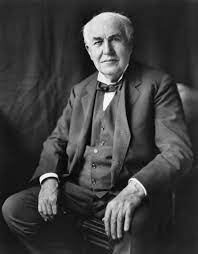
In 1835, the first constant electric light was demonstrated, and for the next 40 years, scientists around the world worked on the incandescent lamp, tinkering with the filament and the bulb’s atmosphere. Edison and his researchers focused on strengthening the filament. In 1879, Edison’s team kept on experimenting with the filament until settling on one made from bamboo that gave Edison’s bulb a life of 1200 hours, this filament became the standard for the Edison bulb for the next 10 years.
THOMAS EDISON
TELEPHONE
During 1876–1877 invention of telephone took place.
Alexander Graham Bell presented the telephone before a large audience for the first time at the World Exhibition in Philadelphia in June 1876. Bell’s patent was approved and officially registered on March 7. Three days later the famous call was made to Bell’s assistant Mr Watson, that said “come here. I want to see you.”, confirmed that the invention worked. The Bell Telephone Company began operating on July 11, 1877. In the same month, the first usable Bell telephone was sent to Europe.
ALEXANDER GRAHAM BELL
COMPUTER
Computer once meant a person who did computations, but now the term almost universally refers to automated electronic machinery.
Charles Babbage, an English mathematician and inventor invented the very first digital computer. He first made Difference engine, then came computer and lastly, Analytic engine. During the 1830s Babbage developed plans for the the forerunner of the modern computer. In that device he saw the capability of performing any arithmetical operation on the basis of instructions from punched cards, a memory unit in which to store numbers, sequential control, and most of the other basic elements of the present-day computer.
CHARLES BABBAGE
RADIO
The first edition of radio was patented in 1896 by Guglielmo Marconi. Marconi was a pioneer of wireless telegraphy. He began experimenting with his inventions at the age of 20 after becoming aware of the work of Hertz in electromagnetic waves, also known as radio waves.
In July 1986 Marconi made the first demonstration of his invention, the radio transmitter and receiver. In December 1901, Marconi successfully transmitted the first wireless telegraphy signals across the Atlantic Ocean.
Deep Learning may be a subfield of machine learning involved with algorithms impressed by the structure and performance of the brain known as artificial neural networks.
If you’re simply beginning get in the sphere of deep learning otherwise you had some expertise with neural networks your time past, you’ll be confused. i do know i used to be confused at first so were several of my colleagues and friends United Nations agency learned and used neural networks within the Nineties and early 2000s.
The leaders and consultants within the field have concepts of what deep learning is and these specific and nuanced views shed a great deal of sunshine on what deep learning is all regarding.
In this post, you may discover precisely what deep learning is by hearing from a spread of consultants and leaders within the field.
Deep Learning is giant Neural Networks Andrew nanogram from Coursera and Chief person at Baidu analysis formally based Google Brain that eventually resulted within the productization of deep learning technologies across an oversized range of Google services.
He has spoken and written a great deal regarding what deep learning may be and is a smart place to begin.
In early talks on deep learning, St. Andrew delineated deep learning within the context of ancient artificial neural networks. within the 2013 speak titled “Deep Learning, Self-Taught Learning and unattended Feature Learning” he delineated the concept of deep learning as:
Using brain simulations, hope to:
– build learning algorithms far better and easier to use.
– build revolutionary advances in machine learning and AI.
I believe this can be our greatest shot at progress towards real AI
Deep Learning is class-conscious Feature Learning In addition to quantifiability, another usually cited advantage of deep learning models is their ability to perform automatic feature extraction from data, additionally known as feature learning.
Yoshua Bengio is another leader in deep learning though began with a robust interest within the automatic feature learning that enormous neural networks square measure capable of achieving.
He describes deep learning in terms of the algorithms ability to get and learn smart representations victimization feature learning. In his 2012 paper titled “Deep Learning of Representations for unattended and Transfer Learning” he commented:
Deep learning algorithms obtain to take advantage of the unknown structure within the input distribution so as to get smart representations, usually at multiple levels, with higher-level learned options outlined in terms of lower-level options
Why decision it “Deep Learning“? Why Not simply “Artificial Neural Networks“? Geoffrey Hinton may be a pioneer within the field of artificial neural networks and co-published the primary paper on the backpropagation algorithmic program for coaching multilayer perceptron networks.
He could have started the introduction of the phrasing “deep” to explain the event of huge artificial neural networks.
He co-authored a paper in 2006 titled “A quick Learning algorithmic program for Deep Belief Nets” during which they describe associate degree approach to coaching “deep” (as during a several bedded network) of restricted Boltzmann machines.
Seasons are defined as the rotational phases of Earth’s orbit around the sun.Various cultures define the nature of seasons based on regional variations.Temparature and humidity are used as primary factors to mark the seasonal changes.In temperate and polar regions,the seasons are marked by changes in the intensity of sunlight that reaches the surface of the earth.Ecologists often use a Six season model for temperate climate regions.Many tropical regions have two seasons the rain or monsoon season and the dry season.seasons often hold special significance for agrarian societies ,whose lives revolve around planting and harvest times.In india,from ancient times to the present day ,six seasons or “Ritu”based on the south Asian religious or cultural calenders are recognised and identified for agricultural and trade purposes.
There are mainly six seasons as per ancient Hindu calender( The Lunisolar Hindu).The twelve months in a year are divided into six seasons of two-month duration each.These include Spring(Vasant Ritu), Summer(Grishma Ritu),Monsoon(varsha Ritu),Autumn(Sharad Ritu),Pre-winter(Hemant Ritu),Winter(Shishir Ritu).As per the Meteorological department maintains all the records of these seasons their temparature and its impacts.
1.SPRING SEASON ( VASANT RITU):
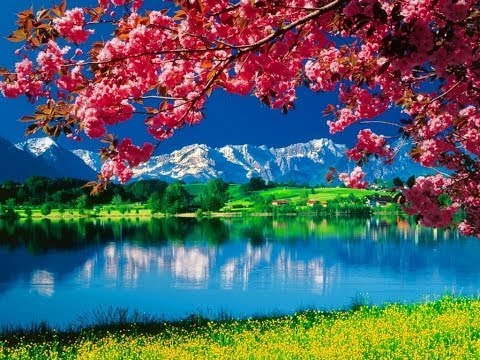
The Spring Season in india is a season of two month duration which are March and April.In the Hindu calender,this season occurs in the months of Chaitra and Baisakh.It is a pleasant and beautiful season with an average temparature of 32 Degree Centigrade.It starts after Winter and lasts till summer starts.The day becomes longer and nights become shorter in this season.The trees shed their leaves,new leaves start appearing.Birds start Chirping,singing and butterflies start hovering over the flowers.Besides this,many famous Hindu festivals are celebrated in this season such as Holi,Gudi padwa,Baisakhi,Hanuman jayanti and more.Spring affects not only flora but also animal world.The Whole fauna appears with a new skeleton.Man is unable to recognize the fragnance of soil even then the spring spreads its shadow beautifully.
2.SUMMER SEASON(GRISHMA RITU):
It is alos a two Month duration season that includes the months of May and June.As Per the Hindu Calender this season mainly occurs in jyeshta and Aashaadha.In this season,the weather is very hot in most of the parts of india.This season starts with the end of April and last till the end of june.The average temperature remains around 38 Degree centigrade.The days are the longest in this season while the nights have the shortest duration.Due to the rising run and high temperature the water level of ponds and rivers goes down and including people,animals,birds etc,feels uncomfortable and tends to stay inside their shelters.Although this season may be annoying it is good for the crops as they ripen only in the summer season .This season also provides variety of seasonal fruits such as watermelon,juices,lassi,ice-cream,lemonwater and more.The major indian festivals celebrated in the Summer season are Guru Purnima and Rath Yatra.This Season occurs as when the sun moves from the equator towards the Tropic of Cancer,its temperature starts to rise.People enjoy walking and hiking in Summer.
3.MONSOON SEASON (VARSHA RITU):
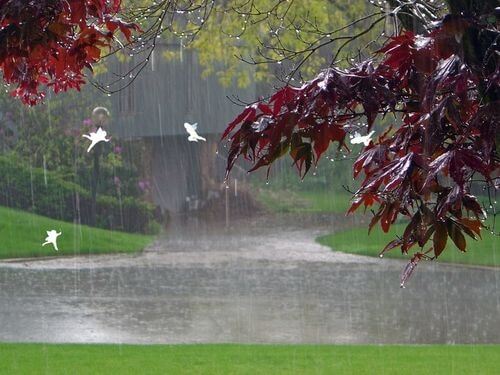
This season includes the months of July and August.As per the Hindu Calender this season comes in the month of Shravana and Bhadrapada,they indicate Rainfall occurs in most of india in this season.
As compared to the summer season, the days are short and nights are long in this season and the average temperature remains around 34 Degree Centigrade. It is sometimes called ‘Green season’ by the officials of the tourism sector.
The earth is carpeted with greenery, birds sing melodiously and level of water rises in the rivers, ponds and canals in this season. The sky is filled with black clouds before it rains and rainbow can be seen in the sky after the rain stops. The important Hindu festivals that are celebrated in this season are Onam, Krishna Janmashtami, and Raksha Bandhan.
As soon as the arrival of rain,it effects on all nature starts to be widely visible.Trees and plants are covered with new leaves,farmers take ploughs and go out to the fields.Atmosphere becomes very pleasant as soon as the rain comes,there is alot of water in the river,drains and ponds.
4.AUTUMN SEASON(SHARAD RITU):
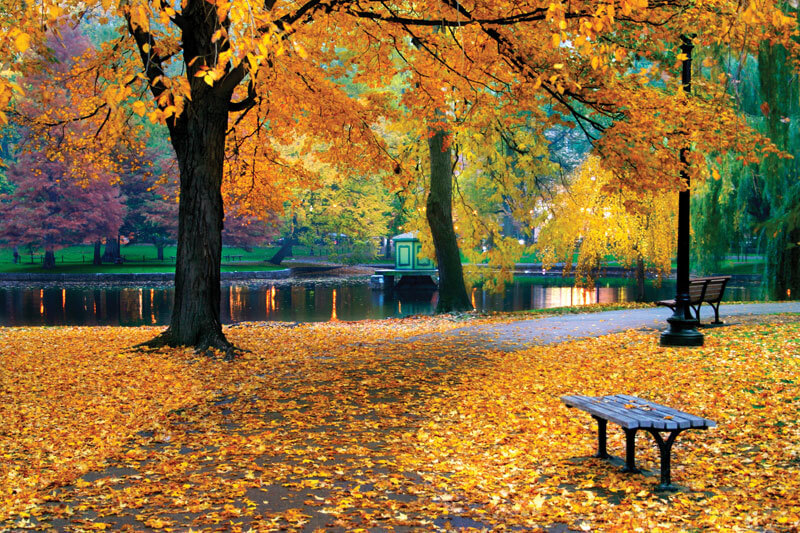
The season of autumn comes in the months of september and October. As per the Hindu calendar, this season comes in Ashwin and karik months. The hot and humid weather starts disappearing and leaves start falling off the trees in this season, so it is also known as the fall season. The sky becomes clearer as compared to the monsoon season and clear moon can be seen in the sky along with countless starts that look like pearls scattered in the sky. The water of the rivers and ponds settle down and becomes clean and there is no mud in the villages. The insects and mites gradually start disappearing with the arrival of autumn.
It Starts after the Monsoon or Rainy season and lasts till the start of the pre-winter season. The average temperature in this season remains around 33 Degree centigrade. The length of the day and night is almost equal in this autumn. Equinoxes also occur in this season. It is an event in which the Earth’s axis is titled in a way that it is neither inclined towards nor away from the Sun.
The major Hindu Festivals that are celebrated in this season are Navaratri in which Hindu devotees worship the nine different forms of Goddess Shakti, Sharad Purnima which is celebrated as the harvest festival, and Vijayadashami (Dussera) to celebrate the victory of Ram over Ravana.
5.PRE-WINTER SEASON (HEMANT RITU):
This season comes in the months of November and december. As per the Hindu calendar, these season occurs in the Agrahayana and pausha months. It starts with the end of October and lasts till the start of winter season or January. So, it precedes the winter season.It starts with the end of october and lasts till the start of winter season or January.so,it precedes the winter season.
This season is moderately cold with an average temperature of around 27 Degree Centigrade. It is the transition from autumn to winter and is the most pleasant and enjoyable time of the year. The days become shorter than the nights and the nights are foggy, colder. Rainfall is occasional in this season.
The trees in the Mountains and hills start shedding their ripe leaves to reduce evaporation of trees and prevent the loss of water. However, soon the trees are loaded with new leaves and flowers. So, it gives the message of leaving the old temptation and go for newness or innovation. Winter sports of national and international level are organized in this season.
The Flowers that bloom in this season are Hibiscus, Rose, Bougainvillea, Jasmine, and more. The important Hindu festivals which are celebrated in this season include Diwali and Bhai Dooj. Besides , there are also a few things that are not liked in this season. Such as diseases like cough, asthma, cold start appearing and infecting the people. Due to low rainfall, some crops may get spoiled and crops and vegetables may rot due to fog and frost.
6.WINTER SEASON (SHISHIR RITU):
The winter season in India comes in the months of january and February. As per the Hindu calendar, this season occurs in the months of Magha and phalguna This season lies between pre winter and spring season. This season is characterized by dryness, cold winds, occasional rainfall and snowfall.The season lie between pre -winter and spring season,This season is characterized by dryness,cold winds ,ocassional rainfall and snowfall.
It is the Coldest season of the year with an average temperature of around 20 Degree centigrade and the weather is affected by air pressure. An area of high pressure develops in the northern region of the Himalayas that causes the flow of wind from this region towards the Indian subcontinent. In some regions temperature falls below 0 degree centigrade and snowfall is also very common in most of the hill stations of India in this season.
The Kharif crops ripen in this season. A large variety of fruits, flowers and green vegetables are available in abundance in this season. Besides this, winter season in India starts with the winter solstice. It is a geographical event in which the sun is at the highest summit in the sky. The major Hindu festivals celebrated in winter season include Pongal, Shivratri, Lohri, and Pongal.
This wind reaches as the dry continental wind system.At this time,the temperature in the plains of northern india reaches 18 Degree Centigrade,but due to the wind moving in the south direction,the temperature increases due to the sea level and Tropical condition.
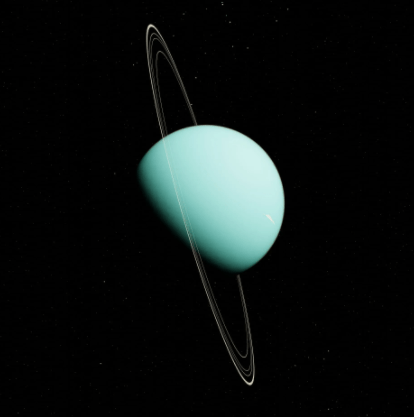
Uranus is the seventh planet from the Sun. Its name is a reference to the Greek god of the sky, Uranus, who, according to Greek mythology, was the great-grandfather of Ares (Mars), grandfather of Zeus (Jupiter) and father of Cronus (Saturn). It has the third-largest planetary radius and fourth-largest planetary mass in the Solar System. Uranus is similar in composition to Neptune, and both have bulk chemical compositions which differ from that of the larger gas giants Jupiter and Saturn. For this reason, scientists often classify Uranus and Neptune as “ice giants” to distinguish them from the other giant planets.
Some facts about Uranus
Diameter- 51,118 km
Orbital period- 84yrs
Length of a Day- 17hrs
Axis tilt- 97.7 degrees
Distance from the Sun- 19.2 AU
Moons- 27
Special features
Uranus was discovered by William Herschel in 1781. Like the other giant planets, Uranus has a ring system, a magnetosphere, and numerous moons. The Uranian system has a unique configuration because its axis of rotation is tilted sideways, nearly into the plane of its solar orbit. Its north and south poles, therefore, lie where most other planets have their equators. In 1986, images from Voyager 2 showed Uranus as an almost featureless planet in visible light, without the cloud bands or storms associated with the other giant planets. Voyager 2 remains the only spacecraft to visit the planet. Observations from Earth have shown seasonal change and increased weather activity as Uranus approached its equinox in 2007. Wind speeds can reach 250 metres per second (900 km/h; 560 mph).
Natural satellites and Rings
Uranus has 27 known natural satellites. The names of these satellites are chosen from characters in the works of Shakespeare and Alexander Pope. The five main satellites are Miranda, Ariel, Umbriel, Titania, and Oberon. The Uranian satellite system is the least massive among those of the giant planets. The largest of Uranus’s satellites, Titania, has a radius of only 788.9 km (490.2 mi), or less than half that of the Moon, but slightly more than Rhea, the second-largest satellite of Saturn, making Titania the eighth-largest moon in the Solar System. Uranus’s satellites have relatively low albedos; ranging from 0.20 for Umbriel to 0.35 for Ariel (in green light). They are ice–rock conglomerates composed of roughly 50% ice and 50% rock.
The Uranian rings are composed of extremely dark particles, which vary in size from micrometres to a fraction of a metre. Thirteen distinct rings are presently known, the brightest being the ε ring. All except two rings of Uranus are extremely narrow – they are usually a few kilometres wide. The rings are probably quite young; the dynamics considerations indicate that they did not form with Uranus. The matter in the rings may once have been part of a moon (or moons) that was shattered by high-speed impacts. From numerous pieces of debris that formed as a result of those impacts, only a few particles survived, in stable zones corresponding to the locations of the present rings.
Structure and Atmosphere
Uranus’s atmosphere is similar to Jupiter’s and Saturn’s in its primary composition of hydrogen and helium, but it contains more “ices” such as water, ammonia, and methane, along with traces of other hydrocarbons. It has the coldest planetary atmosphere in the Solar System, with a minimum temperature of 49 K (−224 °C; −371 °F), and has a complex, layered cloud structure with water thought to make up the lowest clouds and methane the uppermost layer of clouds.
The standard model of Uranus’s structure is that it consists of three layers: a rocky (silicate/iron–nickel) core in the centre, an icy mantle in the middle and an outer gaseous hydrogen/helium envelope. The core is relatively small, with a mass of only 0.55 Earth masses and a radius less than 20% of Uranus’; the mantle comprises its bulk, with around 13.4 Earth masses, and the upper atmosphere is relatively insubstantial, weighing about 0.5 Earth masses and extending for the last 20% of Uranus’s radius. Uranus’s core density is around 9 g/cm3, with a pressure in the centre of 8 million bars (800 GPa) and a temperature of about 5000 K.The ice mantle is not in fact composed of ice in the conventional sense, but of a hot and dense fluid consisting of water, ammonia and other volatiles. This fluid, which has a high electrical conductivity, is sometimes called a water–ammonia ocean.
Exploration
In 1986, NASA’s Voyager 2 interplanetary probe encountered Uranus. This flyby remains the only investigation of Uranus carried out from a short distance and no other visits are planned. Launched in 1977, Voyager 2 made its closest approach to Uranus on 24 January 1986, coming within 81,500 km (50,600 mi) of the cloud tops, before continuing its journey to Neptune. The spacecraft studied the structure and chemical composition of Uranus’s atmosphere, including its unique weather, caused by its axial tilt of 97.77°.The possibility of sending the Cassini spacecraft from Saturn to Uranus was evaluated during a mission extension planning phase in 2009, but was ultimately rejected in favour of destroying it in the Saturnian atmosphere.It would have taken about twenty years to get to the Uranian system after departing Saturn.
Music, admitted to the soul , becomes a sort of spirit , and never dies
Meetali
WHAT IS MUSIC ?
MUSIC IS LIKE A UNIVERSAL LANGUAGE OF LIFE. Every human being enjoys it. It is very powerful thing . Music helps to distress ,heal and motivate . Music is a pleasant sound which is a combination of melodies and harmony and which soothes you.. Music is one of the most calming and soothing things. Music is something that we all enjoy in the course of our lives.Music may also refer to the art of composing such pleasant sounds with the help of the various musical instruments. A person who knows music is a Musician. Music is not only what is composed of men but also which exists in nature. We grow up to the sound of our mothers singing us lullabies so that we’d go to sleep.Music is not only created by people, but it is also all around us in nature. In the mornings, when the crickets and the birds chirp, it is music. The loud sound of the waves in the ocean swishing, the whistle in the wind, and the sound of trees and leaves rustling are all their own forms of music.Our mothers, fathers and grandparents sing us lullabies so that we can sleep peacefully.
THE IMPORTANCE OF MUSIC IN OUR LIFE ?
Music is very important to many people. Mostly, people are fond of music because music acts as a communicating, relaxing, expressing tool to people. Art and music are basic human function.We have the burning desire to create .People may choose their favorites kind of music..People have always found music significant in their lives, whether for enjoyment in listening, the emotional response, performing, or creating.
7 REASONS WHY MUSIC IS IMPORTANT IS OUR LIFE……..
1. The Universal Language
2. Ambiance
3. Music Unites
4. Focus
5. Emotions
6. Imagination
7. It’s just a pleasure
ADVANTAGES OF MUSIC ?
It’s heart healthy.
It elevates mood. …
It reduces stress. …
It relieves symptoms of depression. …
It stimulates memories. …
It manages pain. …
It eases pain. …
It helps people eat less
DISADVANTAGES OF MUSIC ?
Hearing loss.
Music can be distracting.
Music can trigger bad memories.
It’s very difficult to make money in the music industry.
Some people just can’t stand music.
Noise pollution.
Making Bad decisions.
CONCLUSION……
Music may cause you to feel joyful, sad, angry, hyped up, relaxed etc. and sometimes you can feel more than one emotion during a song. As research shows, music not only affects what kind of mood we may be in, but we also seem to have a habit of choosing music based on the moods we are already feeling.Music affects you in many ways; however, it primarily affects your brain, through which the rest of your body can be affected. Music is an excellent therapeutic tool for the brain, because it activates so many parts of it.Research shows that musical training in children can improve the activity of important neural systems. In fact, if someone receives a lot of music training before they turn 15 (or go through puberty), there is a chance that they will develop perfect pitch.It has also been proven that music has a huge effect on your mood. This occurs because of the rhythm and tone that we hear when we listen to music.
























 Eduindex
You must be logged in to post a comment.