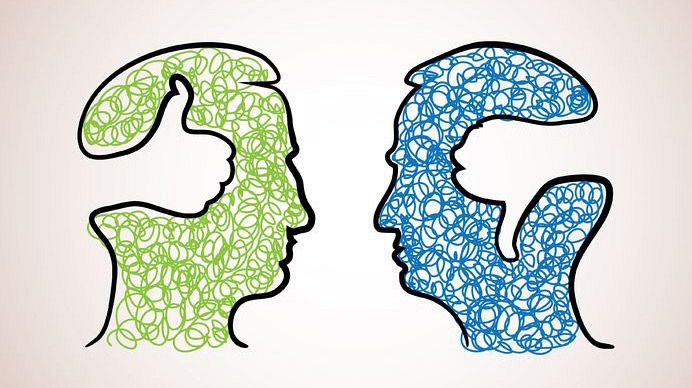
WHAT EVER YOU THINK, COMES BACK TO YOU. THE UNIVERSE IS JUST LIKE A MOUNTAIN, WHEREIN YOU SHOUT , THE VOICES ECOES AND COMES BACK TO YOU. IT IS SAID EVERY POSITIVE THOUGHT IS TEN- THOUSAND TIMES STRONGER THAN A NEGATIVE THOUGHT. WHY IS IT SO, YOU MIGHT WONDER ? IT IS THE UNIVERSE, WHO LISTENS TO WHAT EVER YOU ARE SAYING. WHEN YOU MAKE A THOUGHT, THE UNIVERSE CONSPIRES TO MAKE IT HAPPEN. FOR INSTANCE; IF YOU ARE WITH YOUR MOM AND APPRECIATE HER FOR WHAT SHE HAS MADE, SHE WILL GIVE YOU ANOTHER PORTION TO EAT. SIMILARLY, IF YOU THANK UNIVERSE AND PAY GRATITUDE TO IT, IT WILL SURELY DO GOOD TO YOU.
A HUMAN MIND GETS LOADS OF THOUGHTS THROUGHOUT THE DAY, WE CANNOT STOP OURSELVES FROM THINKING. BUT, WE CAN SHIFT OUR THINKING TOWARDS POSITIVITY. A HUMAN MIND CAN DO WONDERS. NOTHING IS UNACHIEVABLE. IF YOU HAVE SOMETHING IN MIND, YOU CAN BRING IT TO REALITY. WHY CANT WE? SUCCESS DOES NOT STOP ITSELF FROM COMING TO YOU, IT IS YOU WHO THINK THAT WE CANT SUCCEED. WHAT EVER YOU THINK IS ACHIEVABLE.
THANK THE UNIVERSE FOR WHAT YOU HAVE GOT. THANK IT FOR WHAT IT WILL GIVE YOU. STAY THANKFUL AND PAY GRATITUDE, THE UNIVERSE SHALL ALWAYS BE THERE TO HELP YOU.
Twilight is the first book of a series that brought the vampire-romance genre back from the undead in 2005.
Main characters are Isabella Swan, Edward Cullen and Jacob Black.
Edward is a vampire. Bella is a human. The lion shouldn’t be with the lamb, as we have famously read, but despite being a forbidden love, the relationship of Edward and Bella in Twilight illustrates that love isn’t governed by any rules. It is boundless, and cannot be restricted by what other people may think is wrong or right. Edward goes against his natural instincts to be close to Bella, and while their relationship is fraught with complications, the book goes to painstaking lengths to show that Bella’s world is changed for the better when she becomes involved with Edward. He cannot offer her a normal future or a normal relationship but he can make her happy despite the challenges that face them.
“I’ve never given much thought to how I would die. But dying in the place of someone I love seemed like a good way to go”. Bella in twilight
The novel starts with Bella who recently shifted to Forks, United States of America. She met Edward Cullen in her new high school, Forks high school. Edward, the vampire is possessive, angers easily, and stalks Bella, his human love interest. He even sneaks into her house to watch her sleep before they start dating. During a trip with her classmates, Bella encounters a family friend, Jacob Black, who informs her that the Cullens are supposedly vampires according to his tribe’s legend.
This Book is about how Bella Identify Cullens true identity… And fell for Edward. How Cullen family fought to James, vampire for saving Bella.
Bella is bitten by James but Edward sucks the venom out of her and she survives, continuing as a human
On one date Edward says to Bella, “You are my life now.”
By the end of Twilight, Bella is bitten by James but Edward sucks the venom out of her and she survives, continuing as a human. Bella professes that she’s sick of being the weak one who always needs to be saved, and would like the relationship to be more equal, she also wants to be a Vampire but Edward still has power over her because of what he is.
And I learnt a lot from this book – As Edward teaches us to “Let the person make their own decisions.
Carlisle Cullen, Edward’s father teaches us to “Stick to your beliefs, even if the world is against them and Respect the world’s beliefs, even if you are against them. …
The Twilight Saga is a series of five vampire-themed romance fantasy films from Summit Entertainment based on the four novels published by author Stephenie Meyer. The films star Kristen Stewart, Robert Pattinson, and Taylor Lautner
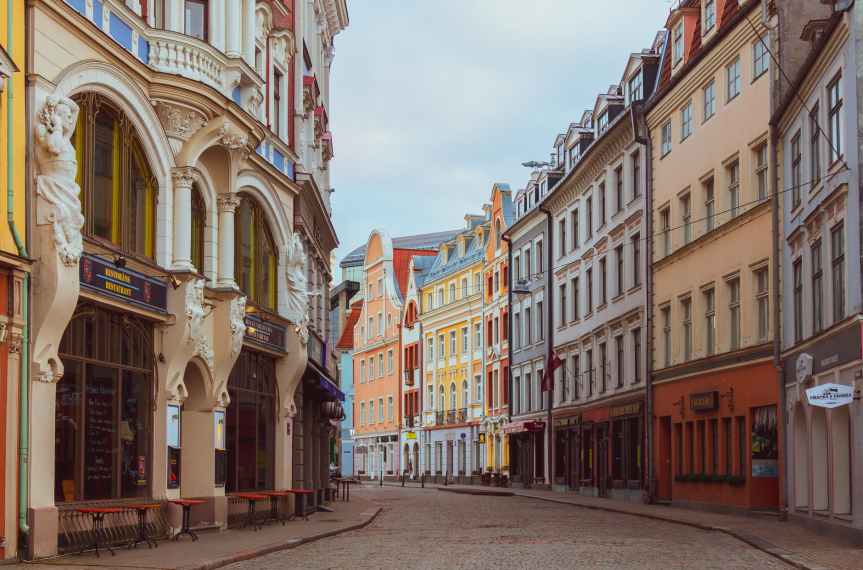
Baltics, also known as the Baltic States is comprised of three countries including Latvia, Lithuania, and Estonia. The three countries are situated on the eastern shores of the Baltic Sea. In 1991 the regional governments of Lithuania, Latvia, and Estonia declared independence from the Union of Soviet Socialists Republics (USSR). Three countries have a collective population of just over 6 million. The three have been one of the better examples which have been progressing well after the breakup of the USSR. Many other former Soviet republics have been suffering the disarray of corruption and political instability.
In 2002 Baltic countries applied for membership in the European Union (EU) and by May 2004 all the three countries joined the EU. They also gained membership in NATO by March 2004.
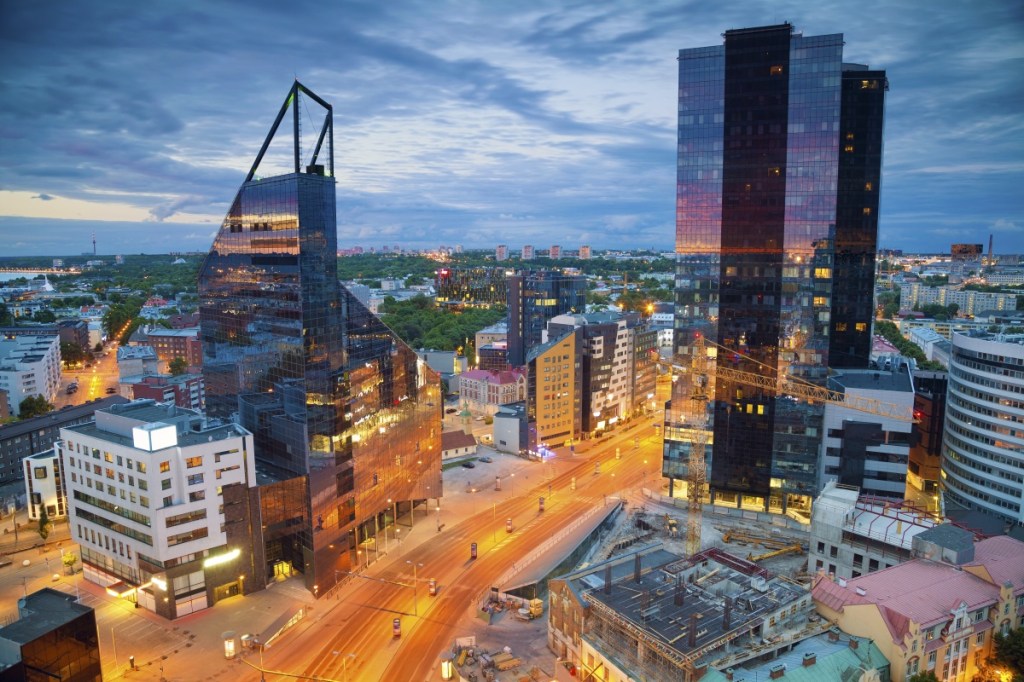
Downtown Tallinn
Baltic independence in 1991
It’s truly astounding how the three countries have developed since 1991. None of them were independent since 1940. The three countries had large Russian minorities and many Soviet soldiers were still stationed there. There were no major national institutions and banking infrastructure with a crumbling economy. There was a growing homegrown national moment against the ruling government since the 1980s. The homegrown fronts won the republican parliamentary election against the ruling party in early 1990 and were allowed to govern but with limited power. The Russian president at that time, Boris Yeltsin had not contested their newly declared independence in 1991. The Baltic also witnessed no violence when the three governments had declared their independence.
The three nations also had almost no natural resources, unlike USSR which was resource-rich. They were still in a very vulnerable situation with a small population and no military of their own. Even though the countries were linguistically distinct with different languages, but people in all three countries had a united drive to strive for a better future. The three had implemented reforms with a shared vision. The governments of the three shared many policies, ideas, and experiences. The Baltic States also valued their new independence with a lot of enthusiasm and didn’t take it for granted. The other ex- USSR countries often had to ask for assistance from Russian Federation and also formed new alliances with the Russian government. Baltic countries on the other hand tried to stay away from joining the post-Soviet Commonwealth of Independent States. In the subsequent years, all the three countries adopted radical economic policies and Estonia was the first mover and Latvia and Lithuania would follow suit. In 1994 Estonia introduced a flat income tax at just 24 percent and the other two also implemented the policies. Currently, Lithuania has a tax rate of just 15 percent which is one of the lowest. With early and fast deregulation and privatization, the Baltic countries were able to capture a large amount of foreign direct investment. Estonia also radically transformed its public sector with various digitalization implementations and less reliance on paperwork. Latvian and Lithuania’s transformation in this area was not as drastic but after some time both of them followed Estonia’s footsteps. Transparency International ranks Estonia No. 17, Lithuania 37, and Latvia 42 out of 175 countries on its Corruption Perception Index for 2020. This is a commendable ranking considering they all the three are a relatively new entrant to the EU and many other EU countries have lower ranks than the three.
Success attributions
The success can also be attributed to the generous support that the three countries received from the international community and funds granted by the EU, World Bank, and the IMF. In 2008 Baltic suffered from the global economic crisis. The three soon adopted the Euro as their currency to avoid any future liquidity freeze issues that they experienced at that time. The economies al the Baltic rebounded quickly and due to good monetary measures, the three have a very low public debt. Baltic governments have also made swift progress in the Education sector and the three have attained commendable rankings in the Program for International Student Assessment (PISA) of the Organization for Economic Cooperation and Development (OECD). Estonia has done a very commendable task in this area with top 10 rankings in many assessments. But the Baltics also face many challenges with population loss due to low birth rate and emigration. Proximity and hostility with Russia still is a challenge that the tiny nations have to endure.
More than 60 percent of population India lives in rural areas.
women lack access to menstrual hygiene products and menstrual cycle becomes a burden and bane for them
For the privileged, periods are normal, something which occurs every month. we are educated and understand as to why it occurs.
we might have to deal with pain and discomfort But for those who live in rural areas this prevents them to do their daily activities. Myths and taboos which are embedded with periods, makes lives of these women even worse.
According to a report less than 40 percent of women get access to sanitary products.
The cost of sanitary products are expensive for the people of rural areas, who hardly get to earn money to have some food , Some fill in their stomach’s using hand to mouth process.
A lot of women in rural areas use cloth during their periods, this can cause infection and fungal diseases. Due to Menstruation, a lot of young adults in villages are forced leave the schools and are looked upon with a feeling of disgust.
Monthly campaigns should be put to make people understand the importance of menstrual hygiene. free sanitary products should be distributed every month. The villagers can be taught to how to make sanitary products, it will also add up to their incomes.
steps like these would definitely remove the stain of fungal/ bacterial infection due to menstruation.
India is a country, where women make up half the population. more than 60 percent of population India lives in rural areas. women lack access to sanitary napkins and menstrual cycle becomes a burden and bane for them. women are god’ s precious creation. For us, the privileged, periods are normal, something which occurs every month. we might have to deal with pain and discomfort But for those who live in rural areas this prevents them to do their daily activities. Myths and taboos which are embedded with periods, makes lives of these women even worse. According to a report only around 35 percent of women in India use sanitary napkins. The cost of sanitary napkins are expensive for the people of rural areas, who hardly get to earn money to have some food. Some follow hand to mouth process. Sanitary napkins are not a luxury, they are a necessity and every women deserves to have access to them. A lot of women in rural areas use cloth during their periods, this can cause infection and fungal diseases. Due to Menstruation, a lot of young adults in villages are forced leave the schools. Free sanitary napkins and some encouragement might help the child to not to discontinue their studies and their daily activities. Menstruation is a topic, people resist talking about, they feel its shameful. It is disheartening to see people thinking of it to be dirty. The Government of India, is indeed, working towards the progress of our country but some steps like these would definitely work towards achieving the India, we all wish for.
With the advancements and introduction of new and efficient techniques of inventory control and valuation, it is essential for every business to keep up and adopt these methods to improve their profitability and efficiency.
What is Inventory control and valuation?
Inventory control is the process of maintaining sufficient stock of raw material and ensuring the continuous process for uninterrupted production schedule. The main objective is to avoid overstocking or understocking. It is essential to do so because:
Overstocking leads to higher costs of holding the inventory
Understocking acts as a hindrance to the production process and interrupts the flow
It reduces wastage and cost by allowing the enterprise to purchase raw material economically by purchasing the exact number of units needed for production at the time.
There are two commonly used inventory control techniques- Just in time Approach (JIT) and Economic order quantity (EOQ).
Just In Time (JIT) Approach: This approach focuses on increasing efficiency and minimizing inventory. This is done by aligning the raw material orders directly with the production schedules on an as-needed basis. It ensures minimal wastage of material and reduces storage cost as well. However, it relies on steady production, high-quality workmanship and most importantly, reliable suppliers. It can be used for items that are not essential for daily production and are not needed in huge quantities. For example, machine spare parts.
Economic Order Quantity: This method focuses on determining the number of units to be purchased at one time which ultimately reduces the ordering and carrying cost of the company. Ideally, it is used when demand for a particular input is constant throughout the year. This method is ideal for placing orders for raw material that is needed in huge quantities and is a common ingredient or material required in the production of various goods.
Inventory Valuation is the process of determining the monetary value of the inventory with the company. The value is ascertained on the basis of the cost incurred to acquire to inventory and get it ready for sale.
It is essential that the value of the inventory is accurate as it-
is used to determine Cost of Goods Sold (COGS) and Gross Profit for the year.
helps in ascertaining the financial position of the company
allows companies to maintain accurate records and gives a realistic picture
There are several methods of Inventory Valuation-
First In First Out
Last In Last Out
Weighted Average Method
First In First Out: This method is based on the premise that the first inventory purchased is the first to be sold. It is one of the most common methods of inventory valuation used by businesses as it is simple and easy to understand. Unfortunately, the FIFO model fails to present an accurate depiction of the costs when there is a rapid hike in prices.
Last in First Out: Under this inventory valuation method, the assumption is that the newer inventory is sold first while the older inventory remains in stock. This method is hardly used by businesses since the older inventories are rarely sold and gradually lose their value. This results in significant loss to the business.
Weighted Average Method: Under the weighted average cost method, the weighted average is used to determine the amount that goes into the cost of goods sold and inventory. It is the most efficient method and gives a realistic picture of the inventory value.
It is essential to weigh the pros and cons of the inventory valuation and control methods mentioned above and choose the ones that would give the most realistic and accurate picture of the company’s inventory according to the nature of the business operations.
In a world where everything is happening at supersonic speed whether it be the Internet, online payments, hyperloop coming to India, or smartphones with new features every day adding more storage and speed. Adding to this, Fast traveling is also very necessary; the air mode of transport is already very rapid and on-road nothing is better than having an electric car with high tech features. Some people believe that sports are threatened with extinction by tightening restrictions on carbon dioxide emissions due to their high speed and unacceptable fuel-guzzling all over. As we already know, we will run out of fossil fuels by 2050 it’s been a matter of concern. To overcome the problem of technology even have a solution for this. Electric vehicles.
The electric sports car has always been a hot topic because it’s something that is both supersonic, environment friendly which is now one of the most important concern in today’s world and it’s cheaper than having an electrically chargeable car which takes up fuel which prices have risen sharply in the last few years because of which people prefer it more. Electric supercar produces carbon dioxide emission and also it makes less noise so it doesn’t contribute to noise pollution either. Having a car that is powered by electricity is better because we can produce electricity more fastly and easily by dams, windmills, etc than fossil fuels which take about hundreds of years.
With technology progressing every day by day. Many e-car companies have decided to launch new models of electric cars in 2021.
So, what’s New For 20201. The most financially favorable awaited cars in this list are –
Tesla Model Y :
Price – 52 Lakhs INR
Launched On-Road – Estimated 2022
Tesla is very famous, It is an upcoming electric cum supercar, partially driven by Artificial Intelligence and machine-oriented that will be launched in the year 2022 by space X company and the best part is that it’s versatile enough to carry up to 7 passengers and comes to a utility of ‘A Place For Everything ‘.
The Model Y can attain speed up to 155mph, further focusing on safety the features are fairly biased towards safety motives and promise AWD dual-motor, Adding into its cutting edge technology features.
As tesla is famous for altering its product throughout the year of manufacturing a few changes on the motor front have already been done to make it suitable and sustainable for the longer go stretching its driving range.
Mahindra XUV300 Electric:
Price – 18 lakhs INR
Launched on road – end 2021
The brand name itself comes with a trust in Indian buyers . Now the well renowned car brand is shifting its major focus towards developing electric cars. Newly launched Mahindra XUV300 Electric becomes a great example.
Designed for future , full of fancy lights and attractive body , the car already seems to have two variants one lower another higher one offering range of almost 350km and 400kms on the single charge. It is a spacious electric SUV look alike which is worth buying for the price.
The XUV300 Electric is built on the MESMA 350 (Mahindra Electric Scalable and Modular Architecture 350). The in-house developed 350-volt powertrain supports a wide range of electric motors ranging from 60 kW to 280 kW output, dual motor setups and batteries up to 80 kWh capacities.
Tata Altroz EV:
Price – 14 lakh INR
Launched on-road – Mid 2021
Voted in top electric cars this car by prestigious TATA is a hatchback available in Automatic transmission & Electric Range option .
This Ev delivers range of upto 300km in a single charge with a sleak design complimented by its alloy wheels giving an edge to the sporty blue lights whereas ,The interior will have new larger pop-out style touchscreen infotainment system, new seat upholstery etc. But customers will have to sacrifice with the sunroof feature.
The vehicle is currently out on sale for bookings where company promised the car to be equipped with a Lithium-Ion battery with IP-67 certification and 8-years warranty. With a wireless charger and over 2 hours of charging time car is ready to go .
All the above mentioned electric cars have the best output of efficiency and economic intake of electricity. In today’s world where we find so many options to look around and choose the right fit for us in accountability of cost , apprence, brand, charging time,
the above mentioned cars have everything you can ask for more than one can desire. In the closing statement we would like to say as the world is getting more tecocrat about everything, looking upto electric cars is our best invention for current times.
So next time you are looking for a car to purchase make sure you keep in mind that everything a fuel powered car can provide, a electric car would definitely preceed thinking in a way that is also good for our mother Earth and now they can be pocket friendly too .
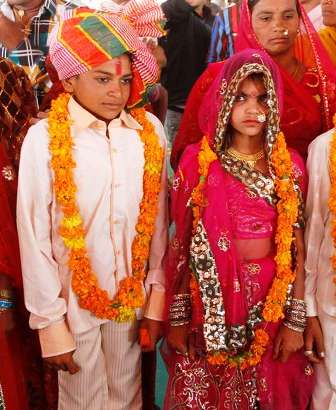
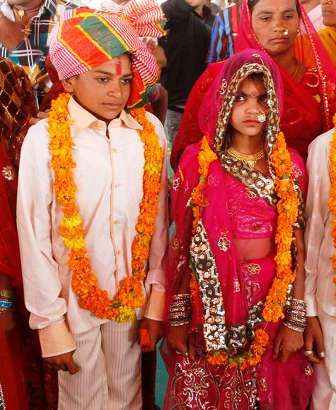
CHILD MARRIAGES ; IT IS A VERY SYNONYMOUS TERM TO A LOT OF US. OUR GRANDPARENTS, THEIR PARENTS AND PARENT OF A LOT OF US, WERE FORCED TO GET MARRIED AT A VERY EARLY AGE.
GIRL CHILD IS CONSIDERED TO BE A BURDEN, AS THE PARENTS OF THE GROOM ASK FOR HEAVY DOWRY, IN WHICH THE PARENTS OF THE GIRL CHILD , AT TIMES ARE FORCED TO SELL THEIR HOME AND LAND.
WEDDING OF A YOUNG DAUGHTER, IS CONSIDERED TO AS ” REMOVING THE BURDEN OF THE FATHER”.
WHEN CHILDREN ARE BORN THEIR MARRIAGES GET FIXED, BY THE CONSENT OF THEIR PARENTS. AS SOON AS THE CHILDREN GROW A LITTER OLDER. THEY ARE TOLD TO GET MARRIED.
YOUNG GIRLS ARE ASKED TO DO HOUSEHOLD CHORES, LEAVE THEIR STUDIES AND BEHAVE LIKE A ” SANSKAARI BAHU” [ AN OBEDIENT AND REPECTFUL DAUGHTER-IN LAW].
BOYS ARE OVER-BURDENED WITH RESPONSIBILITIES AND GET DEPRIVED OF A BEAUTIFUL CHILDHOOD.
CHILDREN ARE MADE TO LOSE THEIR CHILDHOOD AND INNOCENCE AND LIVE A LIFE WHEREIN THEY ARE MADE TO WORK UNDER PRESSURE AND DEPRIVATION OF LOVE AND AFFECTION.
INDIAN LAWS HAD PUT A BAN ON CHILD MARRIAGE AND THE STATISTICS OF CHILD MARRIAGE HAVE SIGNIFICANTLY GOT DOWN.
BUT IN A LOT OF VILLAGES THIS IS STILL PRACTICED.
CHILDHOOD IS FOR ENJOYMENT AND LEARNINGS. WHY BURDEN THEM WITH RESPONSIBILTY?
To study language in an analytical and systematic way , linguists have categorised the subject matter of linguistics under the following heads : sound, grammar and meaning.
1.SOUND LEVEL
Sounds can always be studied from two different angles. Phonetic and phonological .Phonetics studies language at the level of sounds .The study focuses on how sounds are articulated by human speech mechanism and received by the auditory mechanism ,and how sounds can be distinguished and characterized by the manner in which they are produced. In other words phonetics is the study of the way human beings make ,transmit and receive speech sounds. It studies all possible sounds that human speech organs can make . It describes sounds without restricting its attention to any particular language.
Phonology studies the combination of sounds into organized units of speech ,the formation of syllables and larger units. It describes the sound system of a particular language and the combination and distribution of sounds ,which occur in that language . Classification is made on the basis of the phoneme, which is the minimal distinctive , sound segment eg,/m ,p, l/. The selection and organization of sounds in a particular language constitute the phonology of that language. Phonology studies only those contrasts in sound , which make differences of meaning with in a language.
2.GRAMMATICAL LEVEL
Morphology and syntax are concerned with the grammar of language. Morphology studies the patterns of word formation by the combination of sounds into minimal , distinctive units of meaning called morphemes. A morpheme cannot be broken up because if it is broken up , it will not make sense. For example, the morpheme bat is made up of three sounds :/b/, /ae/,/t/.This combination makes up the single morpheme bat and if broken up it will no longer carry the meaning of bat. Words can be made up of a single morpheme such as bat or combinations of morphemes such as bats. Bats is made up of two morphemes bat and s. Morphology deals with the rules of combination of morphemes to form words. It studies the changes that take place in the structure of words .For instance , the morpheme take changes to took and taken; these changes signify changes in tense forms .
Syntax is the study of how words are arranged into higher units like phrases and sentences in “principled ways “.It deals with the rules and principles governing the arrangement of words into such higher linguistic units. Hence syntax is the grammar of sentences.
3.MEANING -LEVEL
Semantics deals with the level of meaning in language . It tries to give an account of the meaning of both words and sentences. It also deals with how language is organized in order to be meaningful.
Chennai, the capital city and heartthrob of Tamil Nadu observed ZERO DAY on 19th June, 2019 when there was no water left in all the four reservoir tanks built in the city. Chennai is a city located on southeast coast of India serving as a gateway to the magnificent South India with the Bay of Bengal surrounding it on one side, the city is intersected by three rivers. How come that the city which has “abundant of water bodies” becomes dry. Read this blog to know how the water crisis in Chennai is a result of man’s selfish actions and is a warning giving a hint of what the nature holds for us in future if we degrade it.
Causes of water scarcity in Chennai
Chennai is situated on the south east coast of India and receives majority of its rain during winters because being situated on the south east coast, it lies on the leeward side of the Western Ghats preventing the south west monsoon winds which originates in the Arabian sea on the west coast of India to shed its rain there during summers when generally rest of the country experiences monsoon. Thus it gets majority of its rain from retreating southwest monsoon winds and northeast winds during the months of December and January. The rest of the months the city has to rely on occasional rains and mainly on the reserved water which is scarce in Chennai.
Owing to Urbanisation and construction on the bodies which once were the catchment and flood relief basins, the space required to hold the rains is now blocked. The very suitable example being the very famous IT corridor of Chennai which is built on 230 square kilometers of marshland , has reduced the area of the places to hold the precipitation which occurs during its monsoon. Moreover with the rise in the number of Industries , the water bodies in Chennai are highly polluted. Though the industrialization resulted in Chennai being called “The Deteroit of India” due to the vast automobile sector established there housing the scions such as the Tata motors, the neglection of the authorities in maintaining the precious water bodies resulted to Chennai experiencing the ZERO DAY.
Chennai receives rain on an average of 54 days per year with a minimum average of 140 centimeters of rainfall which is enough for the survival if the water is properly harvested but it is the inability to collect and reserve the rain water which led to the MAN MADE water crisis. Between 1893 and 2017 the area covered by the water bodies is reduced from 12.6 square kilometers to 3.2 square kilometers. As reported by The Diplomat, NITI Aayog predicted in June that 21 Indian cities would run out of groundwater in 2020. A report by the London-based risk analytics firm Verisk Maplecroft named Chennai as facing an “extreme risk” of water stress, saying its present crisis “could be the new normal for tens of millions of people” in India’s urban centers.
Since there is no enough reserved water for the heat days which comes in June and the water remaining in the water bodies is either too saline or too polluted to be fit for use, Chennai has to rely on the tanks which carry water from hundreds of kilometers far away to satisfy its water needs. As suggested by the various reports , there is 85 percent decline in Chennai’s groundwater levels.
Actions taken by the Government to prevent
Chief Minister of Tamil Nadu Edappadi Palaniswami , after that dreadful day in June 2019, announced a public program including maximum participation of women covering everything from rainwater harvesting to water saving and recycling to the protection of water bodies and a massive study on how to clean the polluted rivers. Until the research and the plan is completed , the government decided the construction of desalination plants in the city which though costly will help in a great way to solve Chennai’s water problems until the natural water bodies are restored, by desalining the sea water making it fit for domestic and industrial use. The plan is however still in the initial process as there are many protests regarding how it will cause environmental damages and intense loss to the local fisheries.
The past always comes to the rescue. Supported by the Asian Infrastructure Investment Bank and the Dutch Government , the Greater Chennai Corporation has started an initiative called “the city of 1000 tanks” which aims at restoring the tanks near the temples and making it the reservoirs for storing the rain water just like in the past and building new tanks too surrounded by green slopes to help catch the rainwater and increase the groundwater level.
The state of Tamil Nadu of which Chennai is the capital has predicted in its climate action plan that the annual temperature of the city will raise by 3.1 degree celsius by 2100 from its original level of what it was in 1983 and 2000s with the annual rainfall falling by 9%.Further , the little rainfall which the city experience in June and September which was enough to refill the reservoirs and maintain the growth of crops will decrease while the winter rainfall will increase causing more floods and droughts.
The condition which Chennai is facing can be taken as a threat issued by nature to not degrade it else the consequences can be severe. The day is not too far when the rest of the world may also experience what Chennai is , if the present practice continues and that day will lead to our downfall.
“No work is insignificant. All labor that uplifts humanity has dignity.”Martin Luther King, Jr.
EVERY WORK MUST BE GIVEN HONOUR
The word ‘dignity’ means the ‘quality of being worthy of honour or respect So the expression ‘dignity of labour’ means honour or respect’ received through or for hard work. That is why it is said that ‘work is worship’. Every type of work need labour, physical or intellectual. But the word labour’ is generally used in the sense of physical labour which is as important as intellectual labour. The production of cereals, construction of buildings and the other constructive work require physical labour. Man cannot do without hard labour. So, he should do all types of work.
WRONG NOTION ABOUT MANUAL LABOUR
But the attitude of the educated and the gentlemen towards manual labour is wrong. They are of the opinion that manual work is fit for the illiterate men only. But they are mistaken. All intellectual work involves some sort of physical labour. Even a student has to labour hard to pass the examination. All artists, scientists and writers whose work is intellectual have to spend hours with patience. The manual work too needs the exercise of intellect. A carpenter, an ironsmith, a goldsmith, a barber, etc. whose work is physical have to exercise intellect to improve the quality of their work.
MANUAL LABOUR: THE ROOT OF ALL PROGRESS
And it is the manual labour which is at the root of all progress. It is rightly said that true labour never goes in vain. Labour has its own importance. Nothing can be achieved in the world without labour. The prosperity of a country depends on its agricultural products. So, there is no humiliation in the cultivation of land. The people of the West do their work themselves. They look upon labour as something honourable and sacred. Such is the importance of labour that its dignity is recognised by all. It is the source of health and happiness.
If you are a ‘victim’ to Hallyu wave, you must be well aware of the pride Koreans (by Korea, I obviously mean South Korea!) take in glorifying their culture in big screen; which should be a lesson for other nations. However the living conditions portrayed in the web series are not all real. But Parasite is. Parasite is rather an extremely deep insight into the lives of lower strata of society.
Parasite is a 2019 South Korean film in the genre- Black comedy. It was directed by Bong Joon Ho. The wealth disparity, social inequality of late capitalism in South Korea has been shown in the movie. The Kim family, residents of a semi-basement do odd jobs to earn their livelihood. Kim Ki-woo, the son of the Kim family is hired as Da-hye’s (daughter of Park family) English tutor. This sets a series of comic events where the whole family plots to get recruited in the house. Kim Ki-jung (Jessica), the daughter of the Kim family who is hired as Da-song’s art therapist. The father Kim Ki-taek is hired as Park Dong Ik’s chauffer and the mother, Chung-sook takes over as the Parks’ housekeeper after the Kims exploit the peach allergy of the long-time housekeeper, Moon-gwang, to convince Mrs Park that she has tuberculosis.
After the Park family leaves for camping trip, Kims are shown enjoying in the living room when Moon-gwang abruptly appears at the door, telling Chung-sook she has left something in the basement. There was a bunker in the basement which was unknown to the Park family and Moon-gwang’s husband had been hiding there; from loan sharks. Things take different turn from this part of story. The sudden arrival of Park family from trip creates commotion and fight between both the parties. Moon-gwang and her husband Geun-sae are tied in the bunker itself and Kims escape somehow, unnoticed by the owners. There is a flood in their street and the family goes to gymnasium to spend the night. The next day Parks decide on throwing birthday party. Meanwhile we discover Moon gwang is dead in the basement because of concussion by the previous night’s fight. Enraged by the wife’s death, Geun-sae escapes and attacks Kim ki-woo. Then goes out at the party spot and stabs Kim Ki-jung. Chung-sook stabs Geun-sae in return. The son of Park family suffers seizure witnessing the events and Mr. Park asks the chauffer Kim Ki-taek to tkae him to hospital. However after seeing how he felt disgusted of Geun-sae, Ki-taek stabs Mr. park and flees.
Weeks later after Kim ki-woo recovers from injuries and discovers his sister is dead and father is missing. He spies on the bunglow which a german family has bought now, in hope to find a clue for his father. Meanwhile the father was at the basement all these time and gives out message every night using Morse code in hope of his son finding him. Ki-woo finally sees this and decodes. The film ends with the son writing a letter to his father that he will earn money and buy that house someday and his father will then be free.
The title of the film comes from the scientific meaning of parasite. However ‘Parasite’ is not only meant for the poor ones but also the rich. They do not know the basic house chores and suck out of the poor for this. How interesting is the cinematography; the partition of rich and poor are shown with literal partitions using subtle division in lines, lighting and angles. Both the families of Kim and Moon-gwang were divided by the dire need of money but united by struggle; Geun-sae hurts all members of Kim taek but when Mr. Park disgusts over Geun-sae’s smell, Kim Taek fumes in anger and stabs Park. The wealth stone gifted by Ki-woo’s friend stands as a symbol of wealth; when he keeps it properly, the family continues to work smoothly as soon as he disregards the stone, they shatter and ultimately Ki-woo is wounded by the same stone on head. This warns that wealth can be the cause of success and fall down. This is evident of the capitalism prevailing in the country. In the end when Ki-woo resolves to earn money, it is out of question this will not come true because of major disparity in rich and poor.
These are some of the major observations. There is a lot more to be discussed. This is a highly recommended movie.
The advent of social media and online pop culture has brought about a radical change in the Indian comedy circles as well. The past decade saw the rise of stand up comedians from India with several comedy laugh clubs opening across the country and stand up acts going viral on social media. From YouTube trends to twitter, Indian stand up comedians have been dominating the online conversations, pop culture and content for quite some time now.
1. Anubhav Singh Bassi:
A qualified lawyer, Anubhav Singh Bassi was once a UPSC aspirant and also tried his luck in a food business before ending up as a stand up comedian. His acts ‘Hostel‘, ‘Waxing‘ and ‘Cheating‘ have become a sensation on YouTube with Millions of views.
2. Abhishek Upmanyu:
A chemical engineer by qualification, Abhishek Upmanyu worked as a research analyst before joining ‘On Air with AIB’ as a writer and then went on make waves with his hilarious stand up acts like Friends, Crime, & The Cosmos, Delhi, Mumbai & Rich People and Breakup, Respecting Elders, & Discrimination.
3. Abish Mathew:
Abish Mathew started his career as an RJ in Red FM, Delhi before switching to stand up comedy. His show Son Of Abish is quite popular on YouTube where he has hosted a number of guests including several YouTube stars and Bollywood stars.
4. Aditi Mittal:
One of the fore most female stand up comedians in India, Aditi Mittal has appeared in several comedy shows across the globe. She was invited by BBC in the prestigious 100 Women Conference in London in 2013. She also appeared in the American documentary Stand-Up Planet. Her jokes vary from various culture issues and women problems in India. Some of her most popular acts online are The Story of Madhumakkhi.
5. Appurv Gupta:
An engineer by qualification, Appurv Gupta has been a regular performing in several college fests and corporate events. His comedy is a humorous take of a middle class Indian family and culture where he appears as Gupta Ji. Some of his best acts include GuptaJi Ki Aeroplane Wali Journey and Apple, Micromax & Patli Pin wala charger.
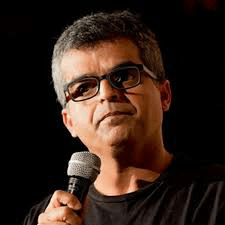
6. Atul Khatri:
An engineer and MBA by qualification, Atul Khatri worked as a CEO in his family run computer business before taking up stand up comedy as an alternative career option. He has performed in several comedy clubs and was also a part of the comedy group East India Company. He also appeared on several OTT shows and a number of TV commercials for popular brands, Some of his most popular stand up comedy acts include Atul Khatri on the Justin Bieber Concertand When your child turns 18.
7. Biswa Kalyan Rath:
Hailing from the Eastern state of Odisha, Biswa Kalyan Rath is one of the most popular stand up comedians of India. He caught everyone’s eye with his Pretentious Movie Reviews with fellow comedian Kanan Gill. He soon became a popular face in Indian stand up comedy circles with appearances in comedy clubs across the country and several OTT shares. Some of his must-watch acts include Biswa Kalyan Rath – Extroverts and Chaos and Uber and Me.
8. Kanan Gill:
Kanan Gill came into prominence with Pretentious Movie Reviews where he appeared with Biswa Kalyan Rath. He has since then appeared in the top comedy clubs of the country and OTT platforms like Amazon video and Netflix. His must-watch acts include Prem Aggan Review and Siblings.
9. Kenny Sebastin:
Kenny Sebastin has appeared in several international shows as well as on several OTT platforms including Amazon Prime Video and Netflix. His stand up acts you should watch are Middle class restaurant problems & Indian Parents, OCD and Electricity at Home.
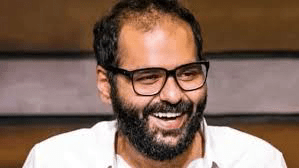
10. Kunal Kamra:
A man who is always in news and controversies these days, Kunal Kamra worked as a production assistant in an ad agency for several years before starting his gig as a comedian. He has since then appeared in several ad films and OTT shows. His comedy often targets the politicians and government with some of his famous acts being Patriotism & the Government and Revisiting Demonetisation.
His show Shut Up Ya Kunal! is also quite popular on YouTube where he has invited a number of eminent guests including Arvind Kejriwal, Javed Akhtar, Ravish Kumar and Asaduddin Owaisi.
• Progressive talks – disengagement of troops near Pangong Tso Lake and Kailash ranges.
• China – Tactical manoeuvres in border regions across Ladakh. New militia units comprising local Tibetan youth – deployed in Eastern Ladakh – high altitude warfare and surveillance.
• Peaceful relationship – peaceful functioning of the world.
• No proper answer – why China chose to attack Indian positions in Ladakh.
Global Concerns .
• Nations expressing concern about threat posed by China to the existing world order.
• G-7 and NATO – Criticized China for its military ambitions.
• China – undeterred in its ambitions. Aggressive actions in the South and East China Seas. Subjugating the Uighur Muslim minority. Risks – Democracy and laissez faire economic system of Hong Kong. Continues – Tactical manoeuvring on Indian borders.
• Reasons for China’s attack on India India’s prominent role – Quad grouping. India’s significant role in Indo-Pacific region. China’s internal turmoil.
Past Lessons from Mao Tse Tung/Mao Zedong .
• Ill-conceived policies and programmes – Huge issues.
• Worst famines – Great Leap Forward Movement. Chinese communists – Tried to organize vast population into large-scale rural communes. Develop labor-intensive methods of industrialization
Emphasize manpower rather than machines and capital expenditure. Gradual accumulation of capital and purchase of heavy machinery.
• Internal problems in Communist party of China. Many members were critical of Mao’s autocratic attitude and ill-conceived policies.
• Attacked India as a diversion and to strengthen his position inside the party.
Xi Jinping – Mao clone
• Sheer dominance over the CPC.
• Trying to consolidate power and achieve pre- eminence – enjoyed by Mao Zedong.
• Pushing China to become a super power by overtaking the U.S.
• Chinese military – making it world’s most powerful military.
• Issues: Aspirations of Xi Jinping are stalling and CPC members questioning his policies and moves. Chinese economy showing signs of slow down.
Other countries are tilting towards India – diplomatic flexibility and ideological sophistication. CPC – leaders and members wanted ‘peaceful coexistence’ with India. Finding it difficult to push through ‘new socialist ideology with Chinese characteristics’.
• Diversion tactic – attacked India and escalated tensions last year.
Conclusion
• India should expect, and prepare for more similar situations.
Cost Accounting focuses on company’s total cost of production by assessing the variable and fixed costs at each step of production and selling. It is critical aspect of accounting as cost directly affects the revenue of the company and also helps in determining the pricing strategy of the product/service.
Unlike financial accounting which provides information to external users (Public, Government, Banks etc), Cost accounting provides vital information to the internal users (mainly management) for decision making.
Two main types of costs are Variable and Fixed costs. Fixed cost refers to the part of cost which does not vary or depend on the level of production. For example, Rent of office or factory. It has to be paid even when the facility is not being utilised or there is no production or sales. However, Variable cost varies according to the level of production. For example, labour wages or cost of raw material.
To understand costing better, let’s understand different elements it comprises of-
Cost of material consumed is the sum of all the cost spent to procure a raw material, store it till it gets consumed. All such costs are added with the actual cost of raw material purchased to arrive at the cost of materials consumed.
Employees Benefit expenses- The benefit provided to employees are summarised into four categories:
benefits in the short-term (benefits payable to employees shortly after they provide the service, e.g. a salary)
benefits in the long-term(such benefits may become payable long after the employees provide the service e.g. a long-service award)
benefits ofpost-employment (i.e. after they have retired from employment e.g. a pension)
termination benefits (those that would be payable if the employees were to be terminated before normal retirement age (e.g. a retrenchment package)
Purchases of stock in trade, refers to all the purchases of finished goods that the company buys towards conducting its business.
Other Expenses are not directly related to the business but are ancillary in nature. It is of utmost importance and have to be accurately differentiated from the expenses, as per the prescribed guidelines and based on the nature of the business.
Amortisation and Depreciation expenses- Amortization is a method of spreading the cost of an intangible asset over a specific period of time, which is usually the course of its useful life. The goal in amortizing an asset is to match the expense of acquiring it with the revenue it generates. Depreciation is a method of spreading the cost of a tangible asset over a specified period of time, typically the asset’s useful life. The purpose of depreciation is to match the expense of obtaining an asset to the income it helps a company earn.
In order to reduce costs substantially which ultimately increases the revenue of the company, elements of the total costs need to be analysed and reduced, if possible. It helps in examining the costs step by step, stage of production wise which is an essential process to determine the price per unit and also determining the relationship between each cost and how it affects the Cost of goods sold and the net profit. These elements are grouped together on the basis of their similar nature and hence, it becomes easier to reduce cost element by element.


![THE LAW of ATTRACTION [LOA]](https://eduindex.org/wp-content/uploads/2021/06/pexels-photo-7671617.jpeg?w=863&h=0&crop=1)






















 Eduindex
You must be logged in to post a comment.