

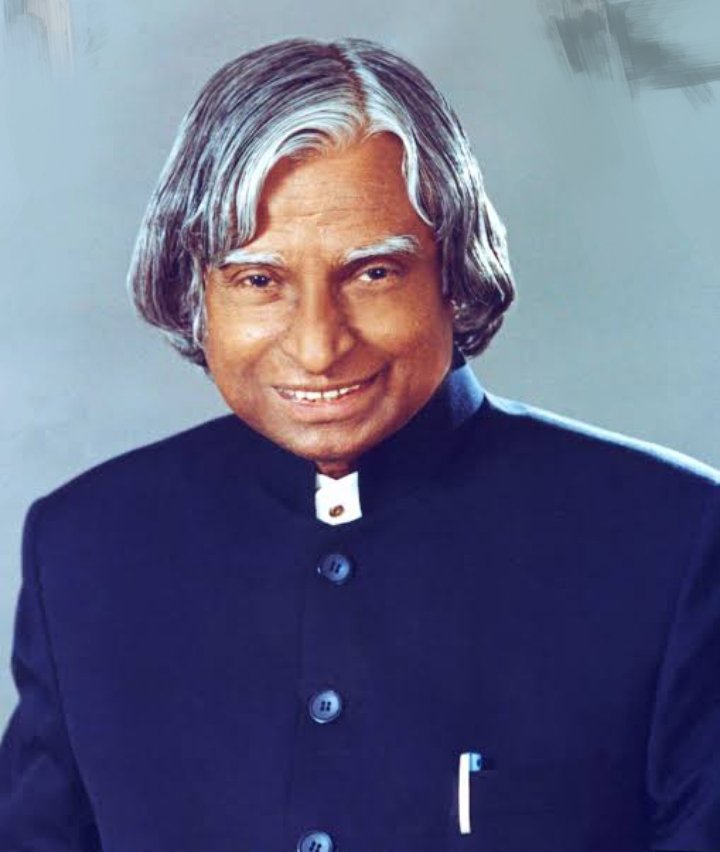
Avul Pakir Jainulabdeen Abdul Kalam was born into a Muslim family on October 15, 1931, on the island of Dhanushkodi off the southeastern coast of India. He developed an early fascination with flight by watching birds, which developed into an interest in aeronautics after he saw a newspaper article about a British fighter plane.
Despite his modest beginnings – his dad built and rented boats – Kalam was a bright student who showed promise in science and mathematics. He attended St. Joseph’s College and went on to earn a degree in aeronautical engineering from the Madras Institute of Technology.

His hopes of becoming a fighter pilot were dashed when he narrowly missed out on a spot with the Indian Air Force. Kalam instead joined the Defense Research and Development Organization (DRDO) as a senior scientific assistant in 1958. After moving to the newly formed Indian Space Research Organization (ISRO) in 1969, he was named project director of the SLV-III, the first satellite launch vehicle designed and produced on Indian soil.
From 1992 to 1997 Kalam was scientific adviser to the defense minister, and he later served as principal scientific adviser (1999–2001) to the government with the rank of cabinet minister. His prominent role in the country’s 1998 nuclear weapons tests solidified India as a nuclear power and established Kalam as a national hero, although the tests caused great concern in the international community.
In 2002, India’s ruling National Democratic Alliance helped Kalam win an election against Lakshmi Sahgal and become India’s 11th president, a largely ceremonial post. Known as the People’s President, Kalam set a goal of conducting 500,000 one-on-one meetings with young people over the course of his five-year term. His immense popularity led to him being nominated by MTV for a Youth Icon of the Year award in 2003 and 2006.
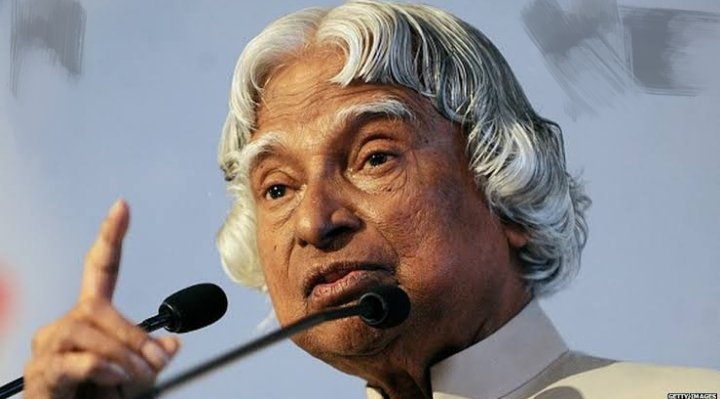
After leaving office in 2007, Kalam became a visiting professor at several universities. He formed the “What Can I Give Movement” in 2011 with the goal of creating a compassionate society, and in 2012, his efforts to improve healthcare led to the release of a tablet for medical personnel to use in remote areas.
Kalam wrote several books, including an autobiography, Wings of Fire (1999). Among his numerous awards were two of the country’s highest honours, the Padma Vibhushan (1990) and the Bharat Ratna (1997).
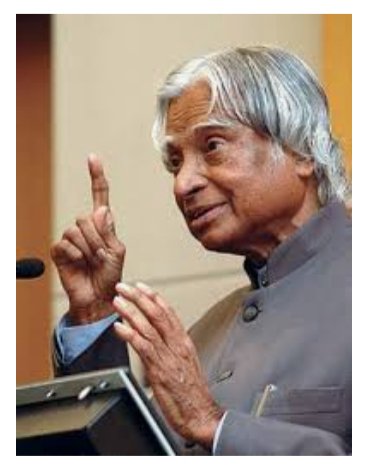
Upon returning to civilian life, Kalam remained committed to using science and technology to transform India into a developed country and served as a lecturer at several universities. On July 27, 2015, he collapsed while delivering a lecture at the Indian Institute of Management Shillong and was pronounced dead from cardiac arrest soon afterward.
Kalam was laid to rest on July 30 with full state honors in his native Tamil Nadu. In honor of the scientist and former president, the southeast Indian state government of Tamil Nadu created a “Dr. A.P.J. Abdul Kalam Award,” which recognizes exceptional individuals who promote the sciences, students and humanities. The government has also established Kalam’s birthday (October 15) as “Youth Renaissance Day.” Discussion about building a large-scale memorial at his burial site is underway.

 Eduindex
You must be logged in to post a comment.