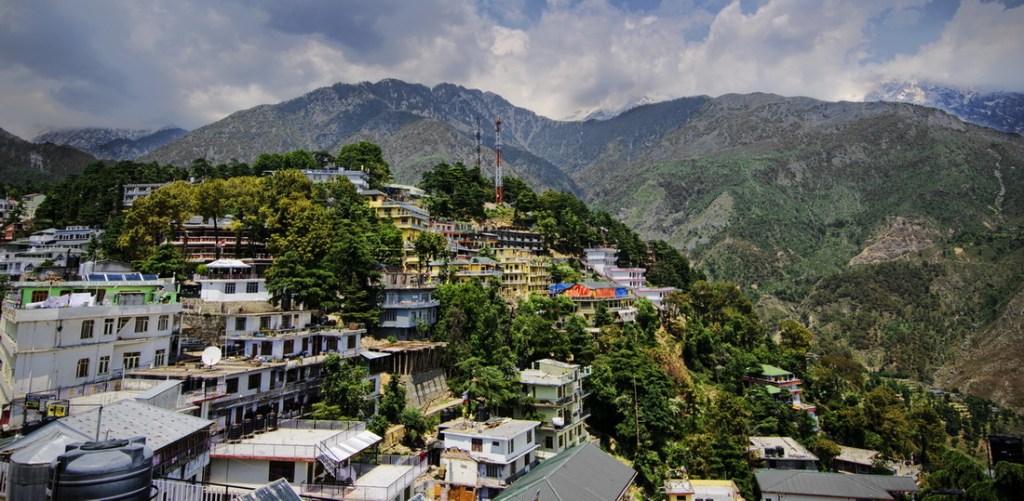
McLeod Ganj was named after Sir Donald McLeod, Lieutenant Governor of Punjab. McLeod Ganj is also known as Little Lhasa. It is also known as Nature’s Lover Paradise. The best season for tourists to visit McLeod Ganj is September to June. The average elevation of McLeod Ganj is 2,082 meters.
Dharamshala, Palampur, Kangra, Sidhbari, Tatwani, and Machhrial are also significant towns around McLeod Ganj.
Some places you must visit if you are visiting McLeod Ganj are –
Namgyal Monastery or Dalai Lama’s Temple
Namgyal Monastery or Dalai Lama’s Temple. Also known as Namgyal-Tantric College. It is the personal monastery of the 14th Dalai Lama. This is the largest Tibetan temple outside Tibet. This monastery was founded in the 16th century by the second Dalai Lama. It was established so that Namgyal monks could assist Dalai Lama in public religious affairs. Tibet martyr’s names are also written there.
Visiting time: 5:00 a.m. to 8:30 p.m.
Tsuglagkhang
Tsuglagkhang is a place where Dalai Lama resides (Photang). There is a Tibet museum inside the Tsuglagkhang. It has got a big meditation hall. There is a place called Namgyal Gompa which is reserved for Tibetan monks for their religious debate.
St. John in the Wilderness
This church is an Anglican church dedicated to John the baptism. It lies inside a dense jungle between McLeodganj and Forsythganj. The Belgian stained-glass windows donated by Lady Elgin, Lord Elgin’s wife, are the major attraction. The structure is so powerful that it even survived the 1905 Kangra earthquake.
Dal Lake
This is a small lake near village Tota Rani in Kangra district. The lake is surrounded by deodar trees. Many people go boating in the river.
Tibetan Institute of Performing Arts
This was founded by Tenzin Gyatso, the 14th Dalai Lama. It is the first institute set up by Dalai Lama.
Library of Tibetan Works and Archives
This library was founded by Tenzin Gyatso on 11 June 1970. It’s one of the world’s most important libraries of Tibetan literature. The second floor contains a museum.
Norbulingka Institute
It was founded by Kelsang and Kim Yeshi at Sidhpur. It is dedicated to the preservation of the Tibetan culture in its library and artistic forms.
Bhagsu Nath
This temple is one of the oldest ancient temples located near McLeod Ganj. The temple is surrounded by major tourists.
Bhagsu Falls
This is a very beautiful waterfall. It has 20 minutes of walking distance from the temple. It has a height of 30 feet. It’s a lovely location for a picnic.
McLlo Restaurant
This the oldest restaurant in McLeod Ganj and is famous for opening till late for tourists. On the top floor, you can go with your friends and can have a beer while listening to some cool music.
If you are visiting McLeod Ganj, you should visit these amazing places. The monasteries are so peaceful and beautiful. The market is also really nice for shopping.
The world is undergoing profound changes unseen in a century because of the global pandemic. Ever since the outbreak of coronavirus, situations have changed drastically. The world has switched from outdoor normalcy to indoors, just as the tortoise draws its limbs within the shell in case of a potential threat. Everything is now being done online, be it meetings, conferences, classes, seminars, events, and whatnot! Virtual is a new reality.
With increased engagement in social media platforms, there has been an increase in the number of misinformation and false rumors being spread, particularly about the coronavirus. The only way to curb this is to know the facts about the virus. Moreover, Knowing the facts is also important because this will ensure that you do not fall prey to any such misinformation and also avoid being a potential spreader of the same. So, In this article, we will be dissecting some of the most common myths related to Covid-19 that are currently being circulated on social media and beyond.
Let us begin with a piece of brief information about Covid-19 and its origin.
The WHO states that COVID-19 is a disease that is caused by a new virus called coronavirus or SARS-CoV-2. The first reported instance of this new virus was on 31 December 2019, following a cluster of cases of ‘viral pneumonia in Wuhan, People’s Republic of China. The World Health Organization (WHO) changed its classification of the situation from a public health emergency of international concern to a pandemic on March 11, 2020. Till date, the virus has cost more than four million of life globally and is increasing every minute.
Some of the most common myths related to Covid-19 are as follows :
The Virus Cannot Sustain In The Cold Weather
There is no such evidence or scientific reason for us to believe that coronavirus cannot survive in cold weather. Moreover, the normal human body maintains its temperature around 36.5°C to 37°C, regardless of external factors such as temperature or weather. The most effective way to protect yourself against the new coronavirus is by frequently cleaning your hands with an alcohol-based sanitizer or washing them with soap and water.
The Hot Climate Will Kill The Virus
This claim is baseless as several countries which are known for their hot and humid climate have reported COVID-19 cases and that too in bunches. COVID-19 can spread in any climate. It can be transmitted in all types of areas irrespective of the surrounding or tropical conditions. Be it a region of extremely hot weather or even humid conditions, the virus still has the potential to spread. The only way of prevention is by adopting protective measures such as frequently washing your hands. This will eliminate the possibility of the virus spreading in your locality.
Spraying Alcohol All Over Your Body Can Kill Coronavirus
This is yet another common misinterpretation of information. The novel coronavirus primarily infects any person by entering through the nose or mouth. Spraying, alcohol, or disinfectant such as hand sanitizers will neither kill the viruses that have already entered your body nor cure the disease. It is only that frequent washing of hands with these alcohol-based sanitizers, hand rubs, or soaps can prevent the germs from entering your nose, eyes, or mouth through infected hands. In fact, spraying such substances can be even harmful to one’s health.
Alcohol Consumption Cures COVID-19 Infection
The WHO clearly mentioned that although alcohol can disinfect the skin but it does not show any such effect inside the body. There isn’t any such established evidence which can claim that drinking alcohol can cure COVID-19.
Moreover excessive or regular consumption of alcohol has the potential to increase the risk of health problems. Drinking alcohol is dangerous and can weaken your immune system thus reducing the ability to cope with infectious diseases. Ingestion of alcohol and because alcohol is associated with several other diseases, it may make people more vulnerable to COVID-19.
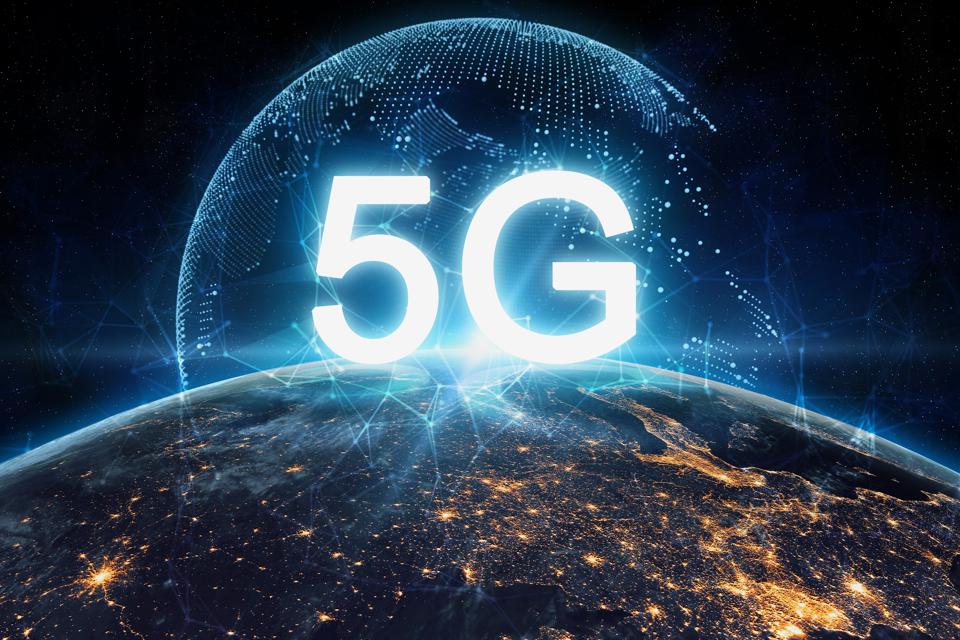
5G Helps In Spreading Coronavirus
Among all the myths this seems to be the most stupid one to believe at. With the technological advancements, some regions are rolling out 5G mobile technology which has raised a dispute among a few communities. Some people tend to believe that the 5G technology helps viruses to spread and communicate. However, experts completely condemn this theory as it is entirely baseless.
The World Health Organisation (WHO) states that the claim that viruses such as the novel coronavirus can travel on mobile networks or radio waves is entirely false. Moreover, It has been found that the virus is spreading across countries that do not have the 5G technology or have very little 5G coverage such as Iran.
Being Able To Hold Your Breath For 20 Seconds Means You Don’t Have Coronavirus
There’s no way for you to tell whether or not you have the virus, at least without going through official medical testing. A post circulating around social media suggests that anyone who can hold a deep breath for more than 20 seconds without chest pain or tightness likely did not have coronavirus.
But the truth is that it’s possible to be infected and not show any symptoms at all. A person who looks and feels healthy, and can hold their breath without a problem could have the virus. The most common symptoms of COVID-19 are dry cough, tiredness, and fever. The best and only way to confirm if you have the virus-producing COVID-19 disease is with a laboratory test. You cannot confirm it with this kind of breathing exercise, which can even be dangerous and may lead you into trouble.
Everyone With COVID-19 Dies
Again this is another false claim. COVID-19 is fatal for a small percentage of people who develop the illness. The WHO has reported that around 80% of people with COVID-19 experience a relative form of the illness and do not need special treatment in a hospital. Some of the commonly reported mild symptoms include a sore throat, cough, tiredness, fever, and sometimes shortness of breath. Most treated persons have recovered and have eliminated COVID-19 from their bodies.
Also, many people with the underlying infection experience very little or no symptoms at all. Hence, It will be completely inappropriate to conclude that everyone with this disease dies or is seriously affected.
However, you must seek medical attention as soon as you realize you have COVID-19 symptoms. Immediately call your local health facility and seek medical care at your earliest, if necessary.
The periods from A.D..(CE) 700 to 1200 and from A.D.(CE) 1200 to 1700 are classified as Early Medieval and Later Medieval periods, respectively,in Indian history.Numerous and varied sources are fortunately available to the historians engaging in the study of Medieval India.Added to the information that can be gleaned from inscriptions, monuments and coins are the accounts left by Arab,Persian and Turkish chronicles.These accounts are rich in detail and have given first-hand information on the life of kings, though they provide very little information on the life of the common people.The opinions of the countries and chronicles are often one-sided, written in a hyperbolic language, exaggerating the king’s achievements.Let us now explore the various sources available for the study of the history of Medieval India.
Sources
Sources are the supporting materials, documents or records in the form of evidence that help to reconstruct the past.
We examine the details of political, economic and social-cultural developments with the aid of sources.
Primary sources:
Inscriptions, monuments and coins, and the information available in them.
Secondary sources:
Literary works, Chronicles, travelogues, biographies and autobiographies.
Inscriptions
Rock inscription
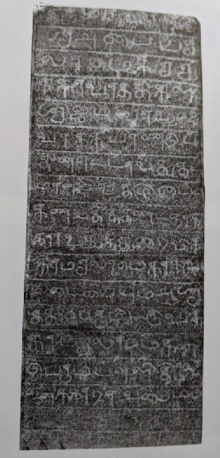
Several copper-plate grants issued during the later Chola period (10th 13th century)record gifts to individual priests or teachers who were Hindu, Buddhist,or Jaina,or to persons of eminence.Both the giver and the receiver are very elaborately described.By Contract, most stone inscriptions differ in their content.In stone inscriptions,the beneficence of a donor is recorded.The major focus is upon the giver.Tiruvalangadu plates of Rajendra Chola are notable examples.Uttiramerur inscriptions in Kanchipuram district provide details of the way in which the village administration was conducted.various types of lands gifted by the Chola kings are known from the inscriptions and copper plates.They are:
Temples, palaces,mosques,tombs,forts,minars and mirnarates are called by the collective name monuments.
Dilwara Temple Mt.Adu
The Sultans if Dekhi introduced a new type of architecture.The monuments they built had arches,domes and mirnarates as the main features.The inscriptions in these monuments contain rich information, which can be used to construct history.The Medieval Khajuraho monuments (Madhya Pradesh)and temples in Konark (Odisha)and Dilwara(Mt.Adu, Rajasthan)constitute valuable sources to understand the religion-centered cultural evolution in northern India.Temples in Thanjavur (Brihadeshwara),Gangaikonda Cholapuram and Darasuram symbolise the magnificent structure the Later Cholas built in Tamil Nadu.Vitala and Virupaksha temples at Hampi similarly speak of the contribution of Vijayanagara rulers(15th century)
Hampi-vijayanagar
Quwwat-ul Islam Masjid ,Moth-ki-Masjid,Jama Masjid,Fatehpur Sikri Dargah(all in and around Delhi)and Charminar (Hyderabad)are the important mosques belonging to the Medieval times.
Charminar
The forts of historical importance are Agra Fort,Chittar Fort, Gwalior Fort and Delhi Red fort as well as the forts of Daulatabad (Aurangabad)and Firoz Shah Kolta(Delhi).Palaces in Jaipur, Jaisalmer and Jodhpur signify the greatness of the Rajput dynasty that wielded enormous power from these places.Qutb Minar and Alai-Darwaza,the tombs of Iltutmish,Balban and all the Mughal rulers are the other prominent of information.Cities in ruin such as Firozabad and South India remain rich repositories of the history of Medieval India.
Coins
The portrait and legend on the coins convey the names of kings with thier titles, events,places,dates, dynasties and Royal emblems.The composition of metals in the coins gives us information on the economic condition of the empire.Mention of king’s achievements like military conquests,territotmrial expansion,trade link and religious faith can also be found in the coins.Muhammad Ghori had stamped the figure of Goddess Lakshmi on his gold coins and had his name inscribed on it.This coin tells us that this early Turkish invader was in all likelihood liberal in religious outlook.Copper jitals are available for the study of the period of the Delhi Sultans,
Lakshmi coin of Ghoricoins of Khalji
Silver Tanka introduced by Iltutmish,Ala-ud-din Khalji’s gold coins, Muhammad-bin-Tughluq’s token currency are indicative of coinage as well as the economic prosperity or otherwise of the country of the time.
Religious Literature
Devotional movement in South India and later in North resulted in the development of bhakti or devotional literature.The Chola period was known as the period of devotional literature and works such as Kamna Ramayanam,Sekkizhar’s Periyapuranam,Nalayira Divyaprabhandham,composed by 12 Azhwars and complied by Nathamuni,Devaram composed by Appear,sambandar and Sundarar and complied by Nambiyandar Nambi,Manikkavasakar’s Thiruvasagam,all were scripted during the Chola times.Jayadeva’s Gita Govindam(12th century)was a follow-up of the Bhakti Movement in South India.Kabir Das, a 15th century mystic poet,also had an influence on the Bhakti Movement in India.
Secular Literature
Madura viniyam and Amuktamalyatha were poems composed by Gangadevi and Krishnadevaraya respectively that help us gain insight into the events and individuals associated with the Vijanagara Empire.Chand Bardai’s Prithiviraj Raso portays the Rajput king’s valour.For pre-Islamic periods the only exception was Kalhana’s Rajtarangini (11th century).
Travellers and Travelogues
Marco Polo,a ventain traveller , visited when the Pandya kingdom was becoming the leading Tamil power in the 13th century.Marco Polo was twice in Kayal,which was a port city (presently in Thoothukudi district of Tamilnadu).It was full of ships from Arabia and China.Marco Polo tells us that he himself came by a ship from China.According to Marco Polo, thousands of horeses were imported into southern India by Sea from Arabia and Persia.Al-Beruni (11th century) accompanied Mahmud of Ghazni in one of his campaigns,and stayed in India for 10years.The most accurate account of Mahmud’s Somnath expedition is that of Alberuni.As learned man and a scholar,he travelled all over India trying to understand India and her people.He learnt sanskrit and studied the lhilo of India.In his book Tahquiq-i-Hind,Alberuni discussed the Indian conditions, systems of. knowledge ,social norms and religion. Ibn Battuta(14th century),an Arab-born Morocco scholar, travelled from Morocco right across North Africa to Egypt and then to central Asia and India.His travelogue (Rihla [The Travels]) contains rich details about the people and the countries he visited.According to him,Egypt was rich then, because of the whole of the Indian trade with the west passed through it.Ibn Battuta tells us of caste in India and the practice of sati.we learn from him that Indian merchants were carrying on a brisk tamrade in foreign ports and Indian ships in the seas.He diescribes the city of Delhi a vast and magnificent city.Those were the days when Sultan Muhmmad bin Tughluq transferred his capital from Delhi to Devagiri in South,converting this city into a desert. In the south,Vijanagar had many foreign visitors who left behind their detailed accounts of the state.An Italian named from Heart(the court of Great Khan in Central Asia) in 1443.Domingo Paes,a Portuguese traveller, visited the city in 1522.All of them recorded their observations, which are very useful for us today to know the glory of the Vijanagar Empire
How do we know they are neurotic? Please, this is a very serious question. Neurotic – what does that mean? A little odd, unclear, confused, slightly off-balance? Unfortunately, most of us are slightly off-balance. No? You aren’t quite sure! Aren’t you off-balance if you are a Christian, a Hindu, a Buddhist or a communist? Aren’t you neurotic when you enclose yourself with your problems, build a wall around yourself because you think you are better than somebody else? Aren’t you off-balance when your life is full of resistance – me and you, we and they, and all the other divisions? Aren’t you neurotic in the office when you want to be better than another?
So, how does one become neurotic? Does society make you neurotic? That is the simplest explanation – my father or mother, my neighbour, the government, the army, everybody makes me neurotic. Are they all responsible for my being off-balance? And when I go to the analyst for help, poor chap, he’s also neurotic like me. Please, don’t laugh; this is exactly what is happening in the world. So why do I become neurotic? Everything in the world, as it exists now, the society, the family, the parents, the children, have no love. Do you think there would be wars if we had love? Do you think there would be governments that consider it is perfectly all right for you to be killed? Such a society would not exist if your mother and father really loved you, cared for you, looked after you and taught you how to be kind, how to live and how to love. These are the outer pressures and demands that bring about this neurotic society. There are also the inner compulsions and urges within ourselves, our innate violence inherited from the past, that help to make up this neurosis, this imbalance.
So this is the fact: most of us are slightly off-balance, or more, but it is no use blaming anybody. The fact is that one is not balanced psychologically, mentally or sexually – in every way, we are off-balance. The important thing is to become aware of it, to know that one is not balanced, not how to become balanced. A neurotic mind cannot become balanced, but if it has not gone to the extremes of neurosis, if it has still retained some balance, it can watch itself. One can then become aware of what one does, what one says, what one thinks, how one moves, how one sits, how one eats – watching all the time but not correcting. If you watch in such a manner, without any choice, then out of that deep watching will come a balanced, sane, human being. Then you will no longer be neurotic. A balanced mind is a mind that is wise, not made up of judgments and opinions.
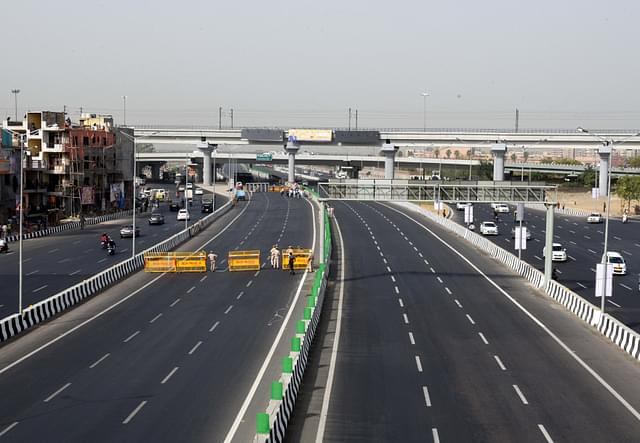
India is all ready to have its 2nd longest express way called the Ganga express way. The expressway will be constructed in the state of Uttar Pradesh. The construction will be undertaken by Uttar Pradesh Expressway Industrial Development Authority (UPEIDA) and will start the construction process in September this year. Meanwhile, the authorities will be releasing tenders for the same and the land acquisition for the project is almost complete. The proposed length of expressway is 594 km. it is expected to be a 6-lane highway which can extend up to 8 lanes, the expressway will cost around 36000 crores. The expressway is a massive project and will not only save time but, connect eastern and western Uttar Pradesh. It will consist of many major bridges, flyovers, overbridge and the starting will be from Meerut district and will end at Prayagraj. The districts that will be connected are- Meerut, Hapur, Bulandshehar, Prayag Raj, Rai Bareli in total 500+ villages will be connected. An exclusive feature of Ganga expressway is an airstrip that will be constructed on the highway, this can help in emergency landing of fighter planes. Additionally, the expressway will have a service road and maximum speed limit will be allowed, it aims to improve the connectivity of major districts and connect remote villages in the state. The total time taken to travel will be cut down extensively ultimately benefiting the common man. Road connectivity is an important element of development be it any country, roads can facilitate easy communication, trade, travel and most importantly enables introduction of new services
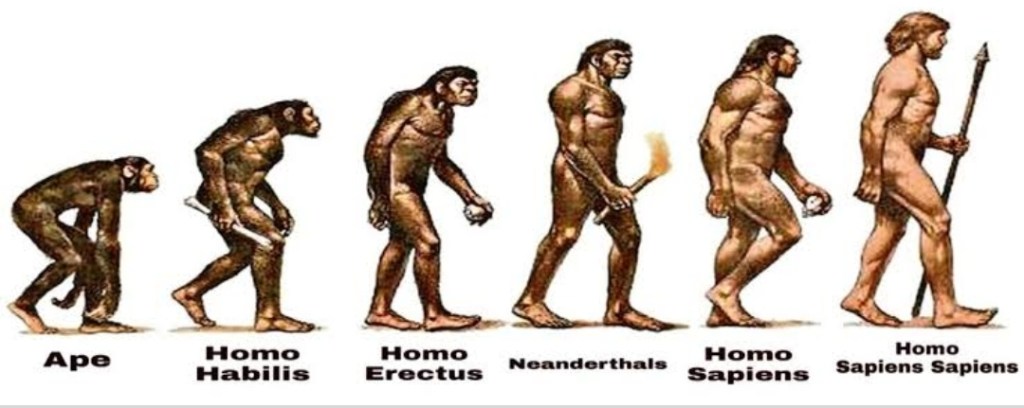
About 15mya, primates called Dryopithecus and Ramapithecus were existing. They were hairy and walked like gorillas and chimpanzees.
Ramapithecus was more man-like while Dryopithecus was more ape-like. Few fossils of man-like bones have been discovered in Ethiopia and Tanzania.
These revealed hominid features leading to the belief that about 3-4mya, man-like primates walked in eastern Africa. They were probably not taller than 4 feet but walked up right.
Two mya, Australopithecus probably lived in East African grasslands. Evidence shows they hunter with stone weapons but essentially ate fruit.
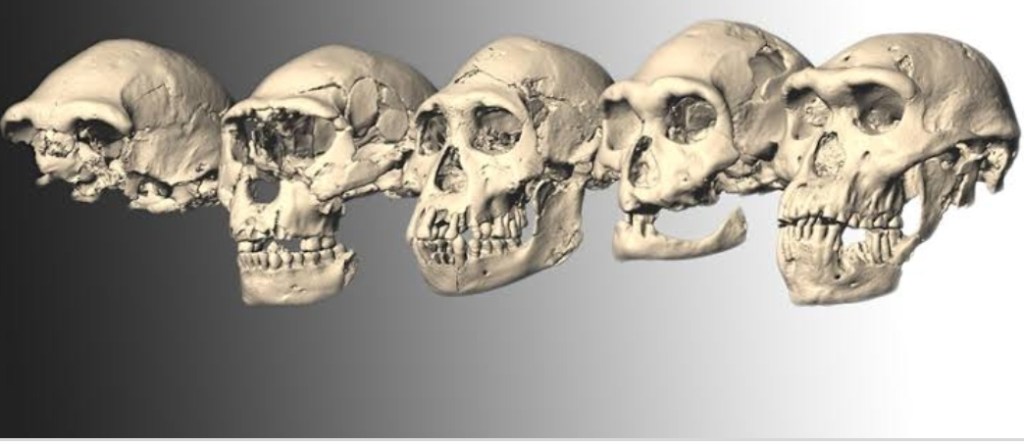
Some of the bones among the bones discovered were different. This creature was called the first human-like being the hominid and was called Homo habilis.
The brain capacities were between 650-800cc. They probably did not eat meat. Fossils discovered in Java in 1891 revealed the next stage, i.e., Homo erectus about 1.5mya.
” Homo erectus had a large brain around 900cc. Homo erectus probably ate meat. The Neanderthal man with a brain size of 1400cc lived in near East and Central Asia between 1,00,000-40,000 years back. They used hides to protect their body and buried their dead.”
Homo sapiens arose in Africa and moved across continents and developed into distinct races. During ice age between 75,000-10,000 years ago modern Homo sapiens arose.
Pre-historic cave art developed about 18,000 years ago. Agriculture came around 10,000 years back and human settlements started. The rest of what happened is part of human history of growth and decline of civilisations.
There is a paradigm shift witnessed in the education sector in India for last two months. Schools and teachers have been forced to adapt to e-learning leaving the traditional way of teaching. The adaption of technology was reluctant for many teachers and schools.
That new technology added a competitive edge to the e-learning sector. The ed-tech firms strike gold in the pandemic as both private and government schools ensure education through e-platforms. In India, online tutorials including Coursera, Collpoll and many more are gaining immense popularity during this crisis.
Lockdown changed the perspective of schools. With schools closed for months, e-learning came to the forefront, across the world. Even in developed countries, students have been the primary movers of this initiative. Teachers followed the new trend, hoping to return to the classrooms soon.
However, such expectations are unlikely to materialise any time soon. When schools re-open, they have to operate with reduced classroom strength, to ensure social distancing. It means the scope for classroom education will remain curtailed and e-learning has to fill the gap in the education sector. With blended learning as potential solutions for schools, e-learning will continue to dominate the sector for a longer period.
Love bade me welcome. Yet my soul drew back
                              Guilty of dust and sin.
But quick-eyed Love, observing me grow slack
                             From my first entrance in,
Drew nearer to me, sweetly questioning,
                             If I lacked any thing.

A guest, I answered, worthy to be here:
                             Love said, You shall be he.
I the unkind, ungrateful? Ah my dear,
                             I cannot look on thee.
Love took my hand, and smiling did reply,
                             Who made the eyes but I?

Truth Lord, but I have marred them: let my shame
                             Go where it doth deserve.
And know you not, says Love, who bore the blame?
                             My dear, then I will serve.
You must sit down, says Love, and taste my meat:
                             So I did sit and eat.
-George Herbert
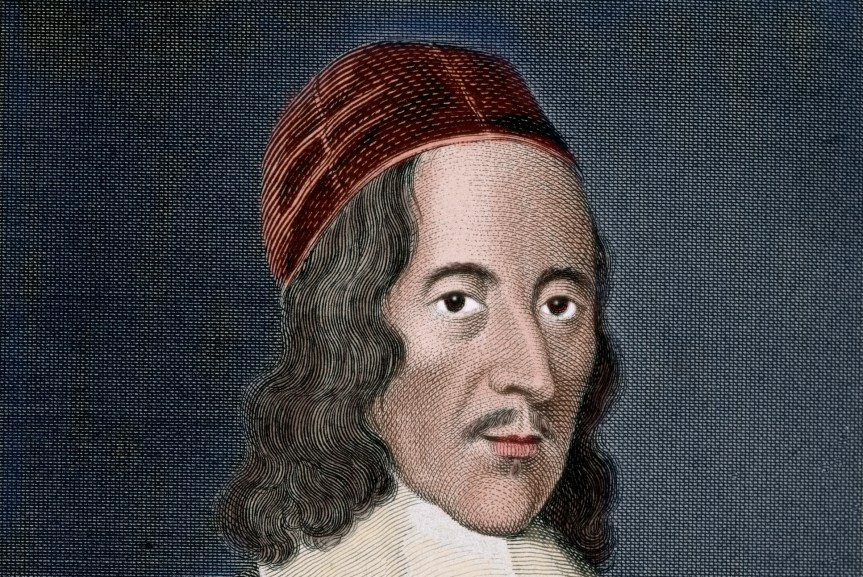
George Herbert was a metaphysical poet who was prominent during the Elizabethan era. He was also a theologian, priest and an orator. Herbert is renowned for his spiritually inclined poems that touches upon metaphysical and philosophical topics. Most of his spiritual poems recounted his wavering, yet strong relationship with God and the internal conflicts that ensues when he thinks of a material life beyond the constraints of a religious life. His poems are allegorical, auto-biographical and an intimate reflection of his own struggles as a devotee of God.
Herbert’s Love (III) is a part of ‘The Church’, a central part of his work ‘The Temple’. In his ‘Love’ series, he explores various types of relationships and connections. Love (I) entails the relation between mortal and immortal love. Love (II) explores the connection between divine love and human lust. Love (III) is an exploration of sacred love by personifying love in a dialogue between a worshipper and God. Herbert’s connection with his god is exemplified through his lexical simplicity. Here, Herbert’s God is kind and gentle, like an inviting lover whose love compensates for human weaknesses. His worries and doubts of his love for God despite his immense faith is a common theme that runs through this poem as well.
He explicates that Divine Love is unconditional. God, for Herbert, is all forgiving and considers the distance between himself and is devotee more sinful than the internal conflicts that a devotee has. He reinforces the Christian ideology that human resistance to love can be overcome by the love and sacrifice of Christ. His allusion of God as a host has been mentioned several times throughout the bible. And similarly, the part of the speaker resisting the God’s invitation is also a recurring notion that has been shown through prophets like Moses, Isiah, and Jeremiah. But nevertheless, the God is portrayed as a kind and gentle being which represents the idea of Christ. He embraces all his devotees and forgives them no matter how sinful they are. This is referred to as ‘The mystery of God’s love’ in Christian mysticism.
Herbert’s language is very simple and it reflects the conversational tone that has been represented between the God and the Man in the Bible. His style reflects the tender ways in which the psalmists addressed the god, or how the lovers talk to each other in ‘songs of Solomon.’ This is very unlike the vengeful version of God found in other poems of Herbert like ‘Discipline’. Although the concepts in his poems seem borrowed, they are fresh and delivers the simplest poem written on the Christian tradition of ‘Holy Communion’. Thus Love (III) can be thus considered to be a quintessential Herbert Poem.
11 July is observed as world population day every year. It’s main focus is on the various problems arising due to surging population. Growing population is a major concern for developing countries and india is also having the same concerns. With population around 1.39 billion approximately India is inching towards overtaking china as most populous country.
China had adopted one child policy to control it’s growing population but due to demographical reasons it ended this policy in 2015. Aging population was the reason presented,but decline in fertility rate was another reason. China’s communist government is very strict in implementing it’s policies and citizens also abide by the rules.
India’s five year plans gave emphasis to population control. Ministry of health and family welfare covers the population control policy. Main strategy is to persuade people to accept the small family norm by way of various advertisment and educational efforts.
A scene from web series ‘panchayat’ depicting slogan
In 2019, ‘Population Control Bill’ was introduced into Rajya sabha and was signed by 125 MP’s. This bill was about imposing penalties for couples not adhering to the two-child policy.
A Postage stamp issued by the Indian government
Later, in 2020 ‘Constitution Amendment Bill’ was introduced into Lok sabha. It’s main objective was to amend the Article 47A of the Constitution of India. This amendment was to introduce a two-child policy per couple and provide incentives like tax, educational benefits etc.
Two-child policy in Indian states
States of Assam and Uttar Pradesh have initiated to bring in two-child policies, this will limit government benefits to people with only two children. people with more than two children are barred from contesting elections in Gujarat, Rajasthan,Maharashtra, Uttarakhand, Odisha, Telangana and Andhra Pradesh.
Few more States are eyeing to bring these type of policies in upcoming future for betterment of the citizens. Government and few NGO’s are working towards educating people about these policies. Task ahead is tough,but not impossible.
Don’t Tell My Mother was a television program hosted by Diego Bunuel and shown on the television channel Nat Geo but currently available on subscription channel Nat Geo Adventure which is primarily a documentary/travel show.
About the Host
Diego Bunuel is a French-American Foreign Correspondent for French tevevision. He has covered countries like Iraq, Afghanistan and the Democratic Republic of the Congo. Every time he left for one of his journeys, he would tell his production crew in the Paris office, “Don’t tell my mother I am in Colombia, it makes her really nervous.” Where the show got it’s iconic name. After a few years of traveling again and again, Buñuel realized that the international news coverage, which he was part of, only focused on the worst headlines possible.
Thus, Buñuel embarked on a rather unusual effort at the time, to talk about countries that make headlines, but instead of focusing on the same, basic or even the negative stories, he took a look at a more subtle and positive vision of these countries, full of culture, people, interests that rise high above the usual daily news reports.
Locations
The show has traveled all around the globe. In season 1, which started from 2007, the show takes place in countries like Colombia, Afghanistan, Congo, Pakistan, North Korea and the Balkans, where he busts some of the stereotypes plaguing these countries.
In the following seasons which has four in total, the locations include mainly cities like Johannesburg, Delhi, Manila, Tokyo, Lagos, Beirut and countries like Somalia, Kazakhstan, Russia and Thailand. The last episode aired on 20th October 2013, taking place in Ukraine.
Dou you like sports? Sports are the act as a very much key role in our daily life. If you play the sports in daily it can improves our mental stability and physical stability.
Cricket
Cricket is the most famous game in the world compared to the others game.
History Of cricket
The history of cricket to 1725 traces the sports development from its perceived origine to the stage where it become a major sport in England and had been introduced to the other countries. The Earliest definite reference to cricket course in 1598 and makes clear that the sport was being placed c. 1550, but it true origin is mystery.
Concept and rules of cricket
Concept
Cricket is played with two teams of 11 players each. Each team takes turns batting and playing the field, as in baseball. In cricket, the batter is a batsman and the pitcher is a bowler. The bowler tries to knock down the bail of the wicket. A batsman tries to prevent the bowler from hitting the wicket by hitting the ball. Two batsmen are on the pitch at the same time.
Scoring
The batters can run after the ball is hit. A run is scored each time they change places on the pitch. The team with the highest number of runs (typically in the hundreds) wins the match.
6 runs: A ball hit out of the field on a fly.
4 runs: A ball hit out of the field on a bounce.
Outs
Bowled out: Bowler knocks over (breaks) the wicket with a bowl.
Caught out: Fielder catches a batted ball on the fly
Run out: Fielder catches ground ball and throws it at the wicket, knocking it down before the batsman gets there.
Leg before wicket: Batsman’s body interferes with a bowled ball that would hit the wicket
Rules
Cricket is played between two teams each made up of eleven players. (Sometime in junior competitions you will find 8 player teams).
Games comprise of at least one innings where each team will take turns in batting and fielding/bowling.
The fielding team will have a bowler bowl the ball to the batsman who tries to hit the ball with their bat.
The fielding team tries to get the batsmen out by…
Hitting the wickets with the ball when bowling
Catching a batsman’s shot on the full
Hitting the batsman’s leg in front of the wicket (LBW)
Or hitting the wickets before the batsmen can run to the other end of the pitch
The batmen try to score as many runs as possible before getting out by…
Hitting the ball and running between the wickets and making it to the other end before the fielders can hit the wickets with the ball. Each time you run one full length of the pitch it equals 1 run.
Hitting the ball to the boundary along the ground is 4 runs.
Hitting the ball over the boundary on the full equals 6 runs.
The fielding team must get 10 batsmen out before they can change over and start batting.
The aim of the game is to score as many runs as possible before the fielding team takes 10 wickets. The team with the most runs wins.
Important of cricket
As well as physical health benefits, cricket can also bring other benefits and opportunities such as: Team skills. Social skills such as cooperation, communication and learning how to cope with winning and losing. Social interaction – it’s a great way to meet new people and make new friends.
“When people throw stones at you, you turn them into milestones.”– Sachin Tendulkar
The God of cricket speaks to you. He asks you to turn the negative vibes directed at you, into the incense of calm and spirit of achievement. Sachin’s struggle is widely acknowledged. He is a legend and nobody can deny.
Toxic masculinity is a cultural concept of manliness that glorifies stoicism, strength, virility, and dominance, and that is socially maladaptive or harmful to mental health. Men and women both suffer due to toxic masculinity as the concept itself can be traumatizing. This term is usually used in the media and academic, talking about the harmful and traumatizing expectations that are generally associated with cultural and gender norms.
Toxic masculinity exists when men think that they have to live by self-reliance and suppress all of their emotional waves from the world and must be active, aggressive, tough, daring, and dominant. The concept has been criticized by few conservatives as “an excessive condemnation of traditional masculinity”, but a lot of feminists are in support of this concept as they say that it is violating the role of choice. This concept of toxic masculinity does not condemn men or male attributes, but rather emphasizes the harmful effects of conformity to certain traditional masculine ideal behaviors such as dominance, self-reliance, and competition.
According to social learning theory, teaching boys to suppress vulnerable emotions, as in the saying “big boys don’t cry”, is a significant part of gender socialization in Western society. Especially with the men in prison, they are supposed to be tough, angry and aggressive all the time but it they show their soft side they are named ‘feminine‘, to which men usually resemble it to ‘weakness’. Those men happened to get bullied to harsh extends that they end up taking their own lives. This has been very common in the western prison life.
The gender norms such as emphasizing toughness, dominance, self-reliance, and the restriction of emotion are usually adopted by male from their infancy by parents, other male relatives, and members of the community. According to a psychologist Ronald F Levant, traditionally prescribed masculine behaviors can produce harmful effects including violence (including sexual assault and domestic violence), promiscuity, risky and/or socially irresponsible behaviors including substance-use disorders, and dysfunction in relationships. The effect tends to be stronger in men who also emphasize “toxic” masculine norms, such as self-reliance, seeking power over women, and sexual promiscuity.
Vedanta Philosophy is one of the Indian Orthodox Schools of Philosophy that is primarily based on Upanishads, Bhagavadgita and Brahmasutras (Prasthanatraya). The Vedanta system, with the course of time has branched off into 3 categories: Advaita, Visistadvaita and Dvaita. The Visistadvaita which is mainly taught to have been originated from Ramanuja, is in reality much older than him. Ramanuja has taken the ancient teachings of the Prasthanatraya and has given it a definite shape like others. However, since Ramanujan was the best exponent due to his excellent work, Visistadvaita rightly gets its second name from him; Ramanuja Darsana. After the death of Ramanujan, his followers were divided into Vaḍagalais and Teṅgalais which literally translates to followers of the northern schools and followers of the southern schools respectively.
Visistadvaita is essentially a philosophy of religion. In it, reason and faith combine together to become ‘reasoned faith’. Epistemology: Visistadvaita accepts mainly 3 sources of knowledge, Pratyaksha, Anumana and Testimony of scriptures (Agama or Sabda). The three main principles of Visistadvaita are as followed:
1. Dharmabhūtajñāna – refers to the consciousness of the individual as its attribute. It is through this consciousness that one comes to know the nature of the external world, self and Brahman. This consciousness is all-pervading, however since it is bounded by Karma, it fails to recognize this.
2. Logical rule of aprthak-siddha-visesana – states that a quality resides in its qualified substance and is inseparable from it. They are separate but inseparable. E.g., Rationality is inseparable from man but rationality is not man.
3. Grammatical rule of sāmānādhikaraṇya – It means the application of two terms to a single entity through connotation of its 2 modes. (implicitly)
Visistadvaita accepts the satkaryavada (effect pre-existing in the cause) theory of Samkhya Philosophy. Visistadvaita believes that the world is a transformation of the Brahman and thus is real and not illusory. (Advaita)
Ontology:
Visistadvaita accepts three entities: Brahman, Jiva and Prakriti as the ultimate realities. They are aka ‘tattvatraya’. However, only Brahman is an independent reality and the other two are dependent realities. Therefore Visist (specific) Advaita (non-dualism) is a philosophy that accepts only one Reality, but with attributes or modes.
1. Brahman (Ishavara) Brahman of Visistadvaita is the absolute of philosophy as well as the God of religion. Truth, knowledge, infinity and bliss are its attributes. He is the whole and Jiva and Prakriti are its parts. (saguna brahman?) He is also free from imperfections and any defects. According to Visitadvaita, Brahman enjoys the play of creation. It creates the universe from its cit and acit portions and remains unaffected by it. Since Brahman creates in accordance to the past deeds (Karma) hence he is impartial and good-hearted.
2. Jiva (Cit) The Jivas are countless but they are identical in form and nature. Each Jiva is separate from its constituent attributes such as buddhi, body, mind etc. Jiva is a part of Brahman and is controlled by it. Jiva is the knower of knowledge, doer of actions, and experiencer of their results. The jivas are further divided into 3 groupss.
(i) Bound – the jiva that has not attained moksha and is still bound to Prakriti.
(ii) liberated – the jiva which was previously bound but attained moksha
(iii) eternally free- the Jivas that are always free from samsara and any attachments.
3. Prakriti The Prakriti id insentient (devoid of feeling and consciousness) and through it is the material universe formed. Prakriti is ever-changing hence it can never be the substratum for knowledge. Just as skin, flesh, seed, colour, taste and smell can all exist in the same mango simultaneously, so also cit (jiva) and acit (prakriti) can exist in Brahman.
Means of Liberation:
The means of liberation, is five-fold: karma(deeds), jñāna(knowledge), bhakti (devotion), prapatti (self-surrender), and ācāryābhimāna (strong faith in guru and his affectionate attachment to disciple. Prapatii is self-surrender and is for those who can’t follow the path of Karma, Jnana or bhakti. Its main characteristics are: to conceive what is in conformity with the will of God; to reject what is disagreeable to him; to seek him alone as the protector; and to surrender one’s self to him in all meekness.
State of Liberation:
The liberated soul has a direct vision of Brahman and is absorbed in the eternal bliss of union with him. To him, the pluralistic world remains however his pluralistic views abolishes. The distinction between him and Brahman still remains and the personality still remains. But the liberated soul forever enjoys the state of bliss by serving Brahman.
Ritesh agarwal was the founder and ceo oyo rooms. And he is from odisha. He got the idea when he was 17 yrs old. He is dropout from college. And started business. At first he was hesitant and later he took tough choices and implemented. And it is started on May in year 2013.now it is leading chains of hotels, homes and spaces
Ritesh Agarwal has been travelled across the country before launching OYO and during such travels he discovered the problem with budget hotels. Thus at the mere age of 17, he first launched it as oravle travels in 2011, which he modelled after Airbnb. However, it later branched out to become OYO rooms in 2013. He had discovered that the problem with budget hotels was bigger than just availability, so, to counter other issues, he launched OYO.
Oyo means on your own
In 2014; the company raised Rs. 4 Cr from Lightspeed Venture Partners (LSVP) and DSG Consumer Partners, at a pre-money valuation (valuation of a company prior to investment or financing) of Rs 14 Cr.
What motivated Ritesh even more was that, by now the company was clocking gross bookings of more than Rs.1 Cr. per month.
The awards he got received are ,
Awarded the TiE-Lumis Entrepreneurial Excellence Award (2014)
The first resident Asian to win ’20 Under 20’ Thiel Fellowship (2013)
Named one of the Top 50 Entrepreneurs by TATA First Dot Awards (2013)
Finalist of Global Student Entrepreneurship Awards-India
Named one of the ‘8 Hottest Teenage Start Up Founders in the World’ by Business Insider (2013)
Always listen to experts. They’ll tell you what can’t be done, and why. Then do it.
Robert A. Heinlein
The mind-blowing challenge in my life I consider is to up the board exams that is literally tough rather than anything. That to facing up math exam was the worst part in my path I have ever faced and can’t forget those moments still now. I am an average student in my class being very humble and not considered by anyone for anything. I managed to score a mid-range of percent in all subjects. But I was not able to cope up with the topics of math and calculations as I hate the concepts to the core. I always interact or listen to those classes in a strange or in a something irrelevant to me. My tutors are soul-hearted but I can’t find the reason behind the lack of interest in math alone. I tried many reference guides and treatments to overcome this lack of interest but I was not able to do so. I feel terribly sorry for myself looking at my situation. I failed to show my improvement until the whole year and finally landed up as a failure. I am speechless to say the sacrifice undergone my parents in the struggle to make me a better learner whatever comments they hear from my faculties. “As anger is the key to make someone do impossible things” the same incident happened in my life which made me to back answer the people those who underestimated me. “Things change in life as people get to know or gain experience out of insults”. To boost my temper my parents guessed an idea to make me fierce by giving worse comments and also ill-treated me. I was a big selfish as I could not understand the pain that my family has faced because of me. It is also obvious I’m an outraged person as it is a hereditary feature in our family. So by doing those kind of act I went to the worst level of my temper as it was a key for me during my hectic times to focus more on the subject to gain my respect back. They gave me an additional support by appointing a home tutor so to make sure I complete my concepts thoroughly. So with the struggle of two months day and night practicing accordingly by scheduling myself with a friendly mentor to support me with concepts with simple learning and teaching I was able to score a good mark of 85% in that subject alone within a period of two months full of support from my side family and with hard work to gain back my respect from others and to prove them I’m worthy of it. This circumstance gave me an experience to show interest in things which you hate more and try working on it until you succeed in it fruitfully. This is how I overcame my disgusting past in life that gave me motivation to not give up so easily.
If you expect life to be easy, challenges will seem difficult. If you accept that challenges may occur, life will be easier. - Rob Liano
Never lose hope at your hard times as it molds you to sharpen your level of understanding your life and shaping your future. ” The more your are tested by life the fast you grow in and achieve great heights”. Make yourself yourself to cope up and tackle situations to find better solutions and enrich out of it that will teach you morals and lessons to follow in the future. I conclude you by informing if I can realize my situation why can’t you ??. Try to change and understand if that change can improve your character. Let us confess to be flexible and face challenges to know the meaning of life.


















 Eduindex
You must be logged in to post a comment.