DIVORCE CASE

WHAT IS DIVORCE ?
Divorce simply means the end of a marriage relationship between two person. It sounds simply , but it’s not easy for a husband and wife to decide to end a marriage. They spend a long time together and try to solve their problems , but they not successed and then they have to take the decision of divorce . Divorce is harder for everyone.
WHAT IS UNIFORM CIVIL CODE?
The Uniform Civil Code (UCC) calls for the formulation of one law for India, which would be applicable to all religious communities in matters such as marriage, divorce, inheritance, adoption. The code comes under Article 44 of the Constitution. The aim of such uniformity is meant to be ensuring equality and justice for women in particular, who are often denied their rights in marriage, divorce


CASE OF UNIFORM CIVIL CODE…..
Pratibha M. Singh files a divorce case dated July 7. in Delhi high court to take divorce from her husband. On Wednesday, Justice Pratibha M Singh said that caste and religion-related barriers were gradually disappearing from the society. We are grown up now then why women have to face problems in marriage and divorce barriers related to religion . The High Court made the observations while hearing a petition related to the applicability of the Hindu Marriage Act to a couple belonging to the Meena community in Rajasthan. The husband had filed for divorce under Section 13(1) of the Act, but a family court quashed his petition on the grounds that the law did not apply to the Meena community, which is a notified Scheduled Tribe in Rajasthan, according to Live Law. The man challenged this order in the Delhi High Court.“The youth of India belonging to various communities, tribes, castes or religions who solemnise their marriages ought not to be forced to struggle with issues arising due to conflicts in various personal laws, especially in relation to marriage and divorce,” Singh said.Singh said that the Hindu Marriage Act applies to everyone practising the religion, whether they were “Virashaiva, Lingayat or a follower of the Brahmo”, according to Live Law. She added, “If members of a tribe voluntarily choose to follow Hindu customs, traditions and rites they cannot be kept out of the purview of the provisions of the HMA [Hindu Marriage Act], 1955. When this provision was being discussed during the Constituent Assembly debates, it faced resistance from several members. A few members demanded addition of exceptions to this provision, saying that any community “shall not be obliged to give up its own personal law in case it has such a law”. The members spoke about the right to freedom of religion, and also claimed that “such regimentation will bring discontent and harmony will be affected”. While referring to several decisions of the Supreme court on the need for UCC, including the historical Shah Bano case of 1985, the court said: “The hope expressed in Article 44 of the Constitution that the State shall secure for its citizens Uniform Civil Code ought not to remain a mere hope.”The court was dealing as to whether the marriage between the parties who belonged to the Meena community were excluded from the ambit of the Hindu Marriage Act, 1955 (HMA)
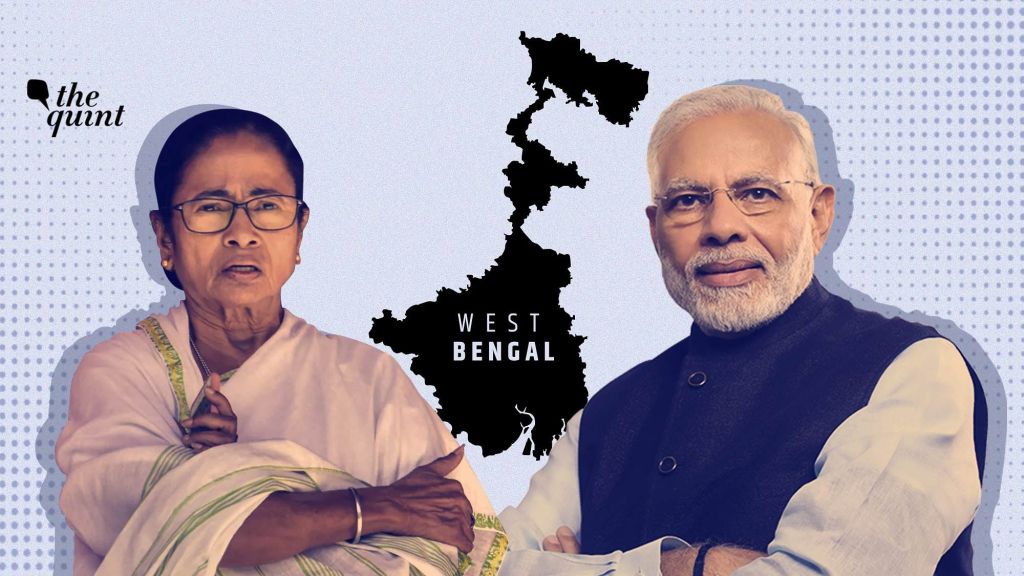

How did Mamata Banerjee win, despite BJP having spewed in immense power and effort in West Bengal elections?

 It seems that PM Narendra Modi had already started preparing for the Bengal elections long ago as he visited Kolkata on the occasion of Netaji Subhash Chandra Bose’s 125th anniversary in January. While he also dressed in a certain way where critics say that he impersonated Rabindranath Tagore. Despite there being elections in 4 states and 1 union territory, BJP seemed to have poured its maximum energy into the Bengal elections.

Some of BJP’s tactics:

Home Minister Amit Shas’s lunch: Mr. Amit Shah had lunch at one of his Adivasi party workers. It was seemed to be a move for tribal votes’ appeasement. He also had lunch at a farmer’s house and this one assumed significance in the wake of the ongoing farmers’ protest in Delhi. This was largely covered by media houses.

Anti-Incumbency centric campaign: The saffron party allured Bengalis for a change, while the PM quoted “Asol Parivartan” (real change). Bengal was ruled by the left (communist) parties for 34 years, succeeded by TMC for 10 years. In the 2016 assembly election, BPJ had won only 3 seats, so Bengalis and never tasted BJP’s governance, and hence creating excitement for a change (Parivartan) was BJP’s prime motive. Leader J P Nadda seemed to have been assigned with this task.

  Modi brand and the 8 phase election: BJP demanded an unprecedented 8 phase election and the election commission of Indian, surprisingly, too agreed to it. Conducting elections in 8 phases gives more time for campaigning and Mr. Modi himself seemed to have vigorously campaigned in each phase. The Modi brand was effectively used. Also, BJP did not announce its CM candidate’s name. Suvendu Adhikari’s name was anticipated. But if the CM candidate’s name would have been announced, at the face value, it would have been Suvendu v/s Mamata but BPJ wanted to keep it Modi v/s Mamata, as Modi is a bigger brand.

Prime Minister’s visit to Bangladesh: The Prime Minister went to Bangladesh at the invitation of PM Sheikh Hasina. There, he visited the Matua Mahasangha temple. This place is the hometown of Matua Mahasangha. Many Matuas have migrates to India in 1947 and also in 1971 and have settled in a large population in Bengal. 

The defection of TMC leaders: Many leaders, including TMC minister Suvendhu Adhikari, had abandoned their party and joined BJP. BJP exhorted that there is a split and desertion of leaders in TMC and portrayed that Mamata’s days are over. Also, their slogans “Do Mai, didi gai” (Didi will go on 2 May) as the election results were to be announced on 2 May. They ran large social media campaigns with top trends- #EbaarBJP (this time it is BJP), #Ebaar200paar (this time we will cross 200 seats). Last time it was TMC that had crossed 200 (out of 294 seats).

Visit of Union Ministers and other Leaders. Many leaders like Smriti Irani, Piyush Goyal, Narendra Singh Tomar, UP CM Yogi Adityanath had joined the campaign. They talked on issues related to Hinduism. Besides, they had emphasized and reminded that Mamata had banned Durga pooja in Bengal. This was no surprise as the saffron party uses Hindutva as its principal agenda in every election. 

Also, Mithun Chakraborty joined had joined the campaign as the celebrity face for BJP.

Despite pouring all their resources, energy, and time into Bengal, why did BJP end up winning only 77 out of 292 seats?  Mamata too gave befitting replies to each of BJP’s tactics.

Daughter of Bengal v/s the Outsiders: While BJP was stressing on anti-incumbency, to ouster Mamata and bring change; Mamata publicized herself as Bengal’s daughter and that Bengalis have to fight out the outsiders. Mamata fielded many popular Bengali singers and actors who took to the street to highlight that how the Baahaaris (outsiders) are destroying Bengal’s culture and communal inclusiveness. CM Mamata had earlier funded many female-centric schemes like Sabooj Sathi- bicycles for girls and education loans. 

Muslim appeasement: While the saffron party goes ahead with its Hindutva narrative, Mamata turns up to be ultra-secular. During her tenure as the CM, she had introduced schemes like scholarships for Muslim students from classes 1 to 10, reservations for Muslim OBCs, etc. The Muslim population has a significant 28-30% vote share in the state. This time, she seemed to have an emerging threat from AIMIM’s Owaisi and also the head of one of the biggest shrines walking into the Indian Secular Front party. Despite this, almost all the Muslim-dominated constituencies had voted in favor of TMC.

SC/ST vote share. Amit Shah’s lunch tactic did not seem to have worked well as, in more than 50% SC/ST dominated constituencies, TMC candidates had won.

Broken leg- The Masterstroke: Mamata Banerjee had reported that while she visited Nandigram for the campaign, she was attacked and suffered a serious leg injury. However, out of hundreds of cameras focused on her, not one captured the alleged incident, making BJP immediately respond that she was bluffing. Mamata also responded to this by posting a picture of her lying on a hospital bed. Later she campaigned on a wheelchair with her leg wrapped with bandages. Evidently, she gained a lot of sympathy because of this.

Some of her party workers were disappointed with her nephew Abhishek Banerjee and political analyst Prashant Kishor controlling the entire campaign. Prashant Kishore had earlier helped Mr. Modi with his election strategy in the 2014 Lok Sabha election and is popularly known as an election magician. This time, he helped TMC and announced that he would quit politics if BJP crosses 100 seats. 

While BJP was very confident and chanted ‘Ebaar 200 paar’, little did we know that they were actually talking about TMC! On 2nd May, as the results were announced, TMC had won the mandate with startling 213 seats out of 292. On one hand, BJP with PM, HM, CM Yogi, Mithun, and many other union leaders, Mamata seemed to have fought vigilantly and has shown everyone that the Modi brand can be defeated and is now being considered as the face of UPA in 2024 Lok Sabha elections by many.

Extinct animals-mass extinction

Extinctions have been a natural part of the planet’s evolutionary history. 99% of the four billion species that have evolved on Earth are now gone. Most species have gone extinct.

Extinction may be defined as the termination of a lineage without issue or abrupt disappearance of specific groups of organisms without leaving descendents.Extinctions are of two types namely extinctions and pseudo extinction.In true extinctions a particular lineage totally disappears without any progeny or evolutionary descendents.

Pseudo extinction may also be called as phyletic extinction or phyletic transformation.In this type a group may disappear leaving descendents with evolutionary modifications.In horse evolution while the earliest ancestor Eohippus became extinct its descendent survived to produce the modern ‘Equus’.Extinctions can happen for the taxonomic groups such as a family or genus.Thus the extinction of dinosaurs as a group is a case of true extinction.Similar extinctions happened to tribolites.

The process of extinction is not always predetermined.It happens due to abrupt changes in environmental conditions or other biological factors.Through the use of computer models evolutionist can now examine the probability of extinction for large as well as small groups of organisms.From the fossil record it becomes that extinctions have occurred at regular intervals of time.

Pattern of extinction

Fossil record reveals a few patterns for extinction.Major groups of herbivorous vertebrates are more susceptible than the carnivorous vertebrates for extinction.Larger organisms easily became extinct.

Causes of extinction

Even though extinctions are regular events in the history of earth they are caused due to specific reasons

⭐A mass extinction may be due to drastic changes in the environmental conditions.

⭐Any adaptive advance in one species decreases the fitness of all other species.

⭐Over specialisation to a specific situation may cause extinction

⭐The spread of an epidemic disease without any control can cause extinction.

⭐An increase in the population strength of herbivorous animals can cause rapid food shortage and cause extinction for several inter related groups.

⭐A sudden cosmic radiation can cause the death of large organisms.

⭐A dust storm formed due to falling of a meteorite is commonly mentioned as a cause for the disappearance of dinosaurs.

RURAL DEVELOPMENT IN INDIA-A WAY FORWARD

Rural advancement is the way toward working on the personal satisfaction and monetary prosperity of individuals living in country regions. As per the 2011 Census, 68.84% of the populace lives in towns. The backwardness of the country area would be a significant obstacle to the general advancement of the economy. India is predominately a horticultural nation and cultivation is their primary occupation. As indicated by the 2011 Agricultural Census of India, an expected 61.5% ward on horticulture. Specialized improvements in the field of agribusiness have expanded the hole between the rich and poor, as the good ranchers embraced current homestead innovation to a more noteworthy degree than the little ranchers. The all India Rural Credit Review Committee in its report cautioned “If the products of improvement keep on being denied to the enormous segments of the provincial local area, while thriving gathers to a few, the strains social and financial may not just agitate the cycle of efficient and tranquil change in the rustic economy yet even baffle the public bears to set up horticultural creation.” Report of the All India Rural Credit Committee, New Delhi, 2003 has properly called attention to that a simply agrarian nation stays in reverse even concerning farming. The majority of the workforce in India relies upon farming, not because it is gainful but since there are no elective business openings. This is a significant reason for the backwardness of Indian horticulture. A piece of the workforce currently occupied with horticulture should be moved to non-farming occupations. Until the 1970s, country improvement was inseparable from the horticultural turn of events and subsequently centred around expanding farming creation. Today, Inclusive country advancement is a more explicit idea than the idea of rustic improvement of prior, in more extensive terms, comprehensive provincial advancement is tied in with working on the personal satisfaction of every single country individual. All the more explicitly, comprehensive country advancement covers three unique however interrelated measurements: Economic measurement, Social measurement and Political measurement. Financial measurement incorporates giving both limits and freedoms to poor people and low-pay families specifically, advantage from the monetary development. Social measurement upholds social advancement of poor and low-pay families, advances sexual orientation balance and ladies’ strengthening and gives social security nets to weak gatherings. Political measurement works on the chances for poor people and low pay individuals in country regions to viably and similarly partake in the political cycles at the town level.

Some common english words important for GRE

Alacrity The GRE has a predilection for words that don’t really sound like what they mean. Alacrity is no exception. Many think the word has a negative connotation. Alacrity, however, means an eager willingness to do something. So imagine the first day at a job that you’ve worked really hard to get. How are you going to complete the tasks assigned to you? With alacrity, of course. An interesting correlation: the more alacritous (adjective form) you are when you’re learning GRE vocabulary, the better you will do.

Prosaic Prosaic conjures up a beautiful mosaic for some. For others, the pro- is clearly positive. So if somebody or something is prosaic, it must surely be good. Once again the GRE confounds expectations. Prosaic means dull and lacking imagination. It can be used to describe plans, life, language, or just about anything inanimate that has become dull (it is not used to describe people).

A good mnemonic: prose is the opposite of poetry. And where poetry, ideally, bursts force with imagination, prose (think of text-book writing), lacks imagination. Hence, prose-aic.

Veracity:- Veracity sounds a lot like voracity. Whereas many know voracity means full of hunger (the adjective form voracious is more common), few know veracity. Unfortunately, many confuse the two on the test. Veracity means truthful. The adjective form, veracious, sounds a lot like voracious. So be careful. Paucity Paucity is a lack of something. In honor of paucity, this entry will have a paucity of words.

Maintain The second definition of this word – and one the new GRE favors – is to assert. One can maintain their innocence. A scientist can maintain that a recent finding support her theory. The latter context is the one you’ll encounter on the GRE. Contrite Word roots are often misleading. This word does not mean with triteness (con- meaning with). To be contrite is to feel remorse.

Laconic Another word that sounds different from what it means. A person is described as laconic when he/she says very few words. I’m usually reminded of John Wayne, the quintessential cowboy, who, with a gravely intonation, muttered few words. As this allusion betrays may age more than anything else, think of Christian Bale in Batman.

Pugnacious Much like a pug dog, which aggressively yaps at things near it, a person who is pugnacious likes to aggressively argue about everything. Verbally combative is another good way to describe pugnacious. Disparate If two things are fundamentally different, they are disparate. For instance, verbal skills and math skills are disparate, and as such are usually tested separately, the GRE being no exception.

https://www.google.com/url?sa=t&source=web&rct=j&url=https://translate.google.co.in/&ved=2ahUKEwjRsZym0N3xAhUYILcAHXjXASwQFjABegQIDhAC&usg=AOvVaw3PxxM8sVv2-Z8mgIzSGywh

http://magoosh.com/gre/2012/grevocabularyebook

Viruses and its Classification

A computer virus is a piece of software that can “infect” other programs by modifying them; The modification includes injecting the original program with routine to make copies of the virus program, which can then go on to infect other programs. A virus can be prepended or postpended to an executable program, or it can be embedded in some other fashion. The key to its operation is that the infected program, when invoked, will first execute the virus code and then execute the original code of the program.

Viruses classified along two orthogonal axes: the type of target the virus tries to infect and the method the virus uses to conceal itself from detection by users and antivirus software.

A virus classification by target includes the following categories:

  1. Boot sector infector:
     Infects a master boot record or boot record and spreads when a system is booted from the disk containing the virus.
  2. File infector:
     Infects files that the operating system or shell consider to be executable.
  3. Macro virus:
     Infects files with macro code that is interpreted by an application.

A virus classification by concealment strategy includes the following categories:

  1. Encrypted virus:
     A portion of the virus creates a random encryption key and encrypts the remainder of the virus. The key is stored with the virus. When an infected program is invoked, the virus uses the stored random key to decrypt the virus.
     When the virus replicates, a different random key is selected..
  2. Stealth virus:
     A form of virus explicitly designed to hide itself from detection by antivirus software. Thus, the entire virus, not just a payload is hidden.
  3. Polymorphic virus:
     A virus that mutates with every infection, making detection by the “signature” of the virus impossible.
  4. Metamorphic virus:
     As with a polymorphic virus, a metamorphic virus mutates with every infection.

Virus countermeasures

  • The ideal solution to the threat of viruses is prevention: Do not allow a virus to get into the system in the first place, or block the ability of a virus to modify any files containing executable code or macros.
  • This goal is, in general, impossible to achieve, although prevention
    can reduce the number of successful viral attacks.
  • The next best approach is to be able to do the following :
  • Detection : Once the infection has occurred, determine that it has occurred and locate the virus.
  • Identification : Once detection has been achieved, identify the specific virus that has infected a program.
  • Removal : Once the specific virus has been identified, remove all traces of the virus from the infected program and restore it to its original state. Remove the virus from all infected systems so that the virus cannot spread further.

Women Empowerment

The concept of women empowerment has become a very significant topic of discussion in development and economies. Women empowerment is empowering women to take their own decisions for personal as well as social development. Empowering women is to make them independent in all aspects and to set them free from all social and family limitations.
Gender equality is, first and foremost, a human right. It implies a society in which women and men enjoy the same opportunities, outcomes, rights and obligations in all spheres of life. Equality between men and women exists when both of them are able to share equal distribution of power and influence; have equal opportunities financially through work and through setting up businesses; enjoy equal access to education and opportunity to fulfill personal ambitions. Yet there is discrimination against women and girls – including gender based violence, economic discrimination, sexual coercion, reproductive health inequalities, and harmful traditional practices. Women usually have less access than men to training and employment, medical care, property ownership, etc. They are less likely than men to be politically active and more likely to be victims of domestic violence. The ability of women to control their own fertility is absolutely fundamental. And when these reproductive rights – including the right to decide the number, timing and spacing of her children are free of discrimination, coercion and violence, she would have the freedom to participate more fully and equally in the society because when she would be healthy, she would be more productive. The roles of men and women are not biologically determined – they are socially determined and changeable.
India is a country where all the women are been honoured as goddesses since ancient times. However, when it approaches to providing them with correspondent rights the same people abandon its major importance and swallow that the main purpose of women is to take care of the family and kids firstly. Whereas, there have been various organizations and institutions advocating for women, supporting various projects that provides women basic education and health care requirements. Apart from these there are many welfare schemes for women – Beti Bachao Beti Padhao, Ujwalla, ICDS, Kishori Shakti Yojana, etc. implemented by the Indian government. According to me every women should be given equal opportunities to education and employment without any gender bias. Now, we know that women empowerment is a minute key to economic growth and social transformation. And there’s an African proverb,
“If you educate a man, you educate an individual but if you educate a women, you educate a nation”

Life is a sport. Make it count

Sport is commonly defined as an athletic activity that involves a degree of competition, such as netball or baseball. Some games and many kinds of racing are called sports. A professional at a sport is called an athlete. Many people play sports with their friends. They need coaches to teach or train teams or individuals how to do better.

• Sports can be played indoors and outdoors and by individuals or teams.

Sports is needed for health and can help reduce diseases such as heart attacks, many types of Cancer,depression and anxiety,and dementia. Different types of sports help our body in different ways. For children, sports play an extremely important part in their lives by providing all round development of the child,physically,mentally and emotionally. sport have a massive positive effect on both the mind and body.

Benefits of sports

Sports bring discipline in life. It certainly teaches the values of dedication and patience. Sports also teach people how to handle failure. Furthermore, the importance of following a time schedule is also present in sports.

Sport is certainly an excellent tool to build self confidence. Playing sports increases confidence to properly. A sport certainly improves the skills of communicating with others. Furthermore, the person experiences confidence in sitting,standing, and walking properly. Hence, sports enriches the social life of an individual.

A sport is an aspect of human life that is of paramount importance. It certainly increases the quality of human life. Sports must be made mandatory in schools. This is because it is as important as education. Everyone must perform at least one sport activity on a regular basis.

Green Lives Matter

We always get a positive vibe when we see plants around us. Growing plants on the balcony is a dream for many of us. We all love growing plants in our house, balcony, office, etc but very few of us know how to take care of it. It is very essential to give them proper time and care. Like humans even they need proper nutrition to go. Sunlight, water, soil, proper temperature are essential for them to live. Lack of nutrition may result in withering, yellowing of the leaves, stunted growth, etc.
To avoid these conditions in our plants one must provide them nutrition.

Things to keep in mind while growing a plant in your surrounding.

 • Research about the plant
Before growing a plant, one should study the plant and its needs. The need for sunlight, water, etc may differ from plant to plant. Provide them everything accordingly.

 •  Proper size of the pot
The size of the pot matters a lot in the growth of plants. Plants need an area to grow. Make sure the roots are not crowded and have proper space to spread and grow.

 • Perfect amount of sunlight
Sunlight is very essential for them to grow but all plants don’t need a lot of sunlight. The need for sunlight differs from plant to plant. For example, a snake plant can grow with very little sunlight whereas, a marigold plant needs a lot of sunlight.


• Providing water from time to time
The right amount of water should be provided to plants. Don’t water them a little or don’t water them too much. Study the need for water according to the plant you’re growing.

These are some most basic things to keep in mind before you grow any plant. Plants have life to and it is our responsibility to keep them healthy because we need them more than they need us.

Violence in Games : How Desirable ?

The UEFA Euro 2020 Final was a football match that took place on 11 July 2021 at the Wembley Stadium in London. Originally scheduled for 12 July 2020, the tournament had been postponed due to the COVID-19 pandemic. The match was contested by Italy and England. Italy won the final 3–2 on penalties, following a 1–1 draw after extra time. Italy won the European Championship since their first win in 1968. While the world was rejoicing Italy’s feat, it didn’t go well with England fans who were furious at their favourite team’s loss. Violence gripped the streets of London as England fans attacked Italian fans.

Sports are one of the things that people across the world take pleasure in and bond over. Sports can be wonderful, beautiful thing. However, they can also be incredibly toxic. Sports fans can generally be seen as loud and annoying and obnoxious about their team. This is a fair observation, and it’s perfectly fine and usually harmless to be outspoken about your support for your team. However, when your team wins or loses and you start to riot and overturn cars in the street, then it becomes a problem. It’s one thing to be decked out in your team’s colours, cheering on the players. It’s another thing however, to shout and celebrate in the street when your team is victorious. But property damage is crossing the line into the reckless kind of behaviour that needs to stop.

Pre-match, the Wembley stadium had to be briefly locked down after hordes of ticketless fans had breached sections of the stadium and stormed the concourse. Fences were torn down and thrown aside, with multiple eyewitnesses suggesting thousands had pushed in. This breach prompted violence and videos surfaced, capturing an adult punching a kid in the head inside the stadium, while a group of men kicked an Asian male while he was on the floor.

People need to take a step back and realize there are more important things in the world. People get into this weird state of mind where they put on the fan goggles and all rational thought goes out the window. Online platforms make it even worse. People can be downright nasty to other people for the sake of “the sport.” People will curse out others and send them hate and threats just because their opinions are different, they support another team, or they don’t like their team. Post the final, the England team football players Bukayo Saka, Jadon Sancho and Marcus Rashford were subjected to racial abuse online after missing penalties which contributed to England’s Euro 2020 final defeat to Italy. The three football players took the last three penalties – two of which were saved – during England’s 3–2 loss on penalties, and were all immediately targeted with racist language and emojis on their social accounts.

Sport in its purest form is a great display of athleticism that can be fun and rewarding to watch, but hinging your entire existence upon it and using it as an excuse to be a gross, terrible person is something that needs to be gone from sports and sports culture. Afterall at the end of the day, it’s just a game.

Sphygmomanometer

A sphygmomanometer is an instrument used to measure blood pressure.The word is derived from the Greek sphygmus which means pulse plus the scientific term manometer.

Arterial blood pressure is the force of pressure,which the blood is exerting on the walls of the blood vessels in which it flows.The blood pressure in the artery varies during the cardiac cycle.The cardiac cycle is defined as the cycle of events that take place during one systole and diastole of the heart.Systole refers to contraction and diastole the relaxation.During ventricular systole,when the left ventricle is forcing blood into the aorta the pressure rises to a peak which is referred to as systolic pressure.During diastole the pressure falls and the lowest value reached is referred to as diastolic pressure.

The blood pressure depends partly on the force and volume of blood pumped by the heart and partly on the contraction of the muscles in the walls of the arterioles.Blood pressure changes during physical exercise,during anxiety and emotion and in sleep etc., However a prolonged or constant elevation of blood pressure,a condition known as hypertension can increase a person’s risk for heart attack,stroke,heart and kidney failure and other health problems.It is always suitable to measure blood pressure when a person is in relaxed and in resting condition.

The normal blood pressure value is 120/80mm Hg,in which ‘120’denotes the systolic pressure and 80 the diastolic pressure.

There are two types of sphygmomanometer :Monometric type and Digital type

Uses

⭐ Sphygmomanometer helps to estimate the state of blood circulation and the working of heart.

⭐ Sphygmomanometer helps to diagnose pathological conditions such as hypertension and hypothesis.

UP Government Drafts Population Control Bill

OVERVIEW :-

As everyone knows that the rapid increasing human population in many countries is now possessing a great threat to the nature and climate. The rapid increasing population is putting a lot of pressure on land. The resources of our planet are depleting at a very rapid pace. Large population requires more food and shelter. To provide them these basic needs, deforestation is taking place at an enormous rate and forests land is converted into farm lands and new settlements for humans. The wildlife is also hampered by deforestation and everyday there is news related to humans and animals conflict. This is because animals are not able to find proper food for themselves due to deforestation.

Rapid increasing population also leads to unemployment among the youths. People lacks even basic needs of proper drinking water, food and shelter. Government schemes fail to reach to everyone due to huge population.

District-wise Population distribution in UP (per sq. km) as per 2011 Census.

One such state is Uttar Pradesh in India. As per the data available, UP has a population of more than 20 crores and an average population density of 828 persons per km2 . This population is only less than the top 4 most populous countries. After seeing this rapid increase in population, UP Government has now come up with a population control bill. Let’s discuss the major points of this bill :-

  • Anyone is legally eligible for contesting local bodies elections, receiving any kind of government subsidy and applying for getting new government jobs and promotion in government jobs only when they follow the two-child policy.
  • Government employees following two-child policy will be given two additional increment in their job tenure by the state government. Maternity leave (if their is a case) of 12 months will full salary and other incentives will be provided. Additionally, 3% increase in the employer’s contribution fund under National Pension Scheme (NPS) will be given by the UP government.
  • The Ration Card will be limited to only 4 persons per family. If two-child policy is not followed then all the benefits including subsidised grains from ration shops, subsidy on electricity bill, subsidy on gas cylinders or any other subsidy provided by UP government will be stopped immediately.
  • Students in secondary schools will be compulsorily taught a subject related to population control and its benefits.
  • Maternity centres will be developed at all primary heath centres to drop both the mother as well as infant mortality rate. These centres will work in collaboration with NGOs to make people aware about the benefits of two-child policy and the measures like using condoms and other family planning methods to be taken to control birth rate.

6. State Population Fund will be set up to effectively implement all the major aspects of this population control bill.

7. The major objective of this bill is described in the bill itself as it reads, ” In Uttar Pradesh, there are the limited ecological and economic resources at hand. It is necessary and urgent that the provision of basic necessities of human life including affordable food, safe drinking water, decent housing, access to quality education, economic/livelihood opportunities, power/electricity for domestic consumption, and a secure living is accessible to all citizens.”

8. The major goal of the UP government is to provide all the basic medical facilities and best quality reproductive health services at an affordable rate for even the last person in the queue from the most remote villages and backward areas.

9. The UP Government has open a portal seeking more innovative ideas or any acceptable chances that may be considered to further empower this bill. The last date for giving suggestions on this bill is 19th July, 2021.

Links :-

https://www.imo.org/en/MediaCentre/PressBriefings/Pages/41-SDGS.aspx

https://commons.m.wikimedia.org/wiki/File:Uttar_Pradesh_population_density_2011.svg

http://upslc.upsdc.gov.in/

CASE ANALYSIS-K.M. Nanavati v. the State of Maharashtra

INTRODUCTION

The judgment in the K. M. Nanavati case was passed on 24th November 1961 but it has managed to stay fresh in the minds of people even today. The facts and circumstances of this case received unprecedented media coverage and inspired a lot of books, serials, and movies over the years[i].

The accused/appellant Nanavati was a naval officer who was put on trial under section 302 of IPC for the alleged murder of his wife’s paramour[ii]. This case is considered to be one of the important landmark judgments not just because of the popularity it gained amongst the masses but because of the important legal points, it raised such as plea of general exception, the burden of proof, grave and sudden provocation test, and power of the high court in deciding the competence of reference made by Sessions Judge.

The K. M. Nanavati case is also widely recognized as being responsible for the end of jury trials.

Facts

  • Accused/appellant K. M. Nanavati was second in command of the Indian naval ship “Mysore”. He was married to a woman named Sylvia and had three children with her. Due to the nature of his service, Nanavati and his family had lived in many different places before shifting to Bombay. It was in Bombay that they were first introduced to the deceased Prem Ahuja through common friends.
  • Nanavati had to go away from Bombay regularly as part of his service, leaving his wife and children behind. In his absence, a friendship developed between Sylvia and Ahuja which later took the form of an illicit relationship.        
  • When Nanavati returned from his ship after April 18, 1959, he, on multiple occasions, tried to be affectionate to his wife to which she was not being responsive. On April 27, 1959, once more his advance was met by her unresponsiveness. But this time Nanavati asked his wife if she had been faithful to him. She merely shook her head to indicate that she was not. He guessed that her paramour was Ahuja and decided to settle this matter with him.
  • First, Nanavati drove his children and wife to the cinema and promised to pick them up later. He then drove to his ship from where he obtained a revolver and six rounds on a false pretext. He put these inside a brown envelope and from there drove to Ahuja’s office. On not finding him there, Nanavati drove to his flat.
  • On reaching Ahuja’s flat, he confirmed his presence from a servant. After receiving the confirmation, he went to Ahuja’s bedroom while also carrying the brown envelope which had the revolver.
  • Nanavati closed the bedroom door behind him and asked Ahuja about his intentions concerning his wife and children. When he didn’t receive the honourable and desired answer, he is alleged to have shot Ahuja which resulted in his death. From there Nanavati rushed to the nearest police station to confess about his crime.Nanavati was declared not guilty by a jury verdict of 8:1.
  • However, the Sessions Judge disagreed with this decision of the jury and believed that no reasonable body of men could reach that verdict based on the evidence produced. The matter was referred to a Division Bench who held the accused/appellant guilty.

Hence, this appeal was made to the Hon’ble Supreme Court of India by special leave.

Judgement

The Honourable Supreme Court explained that in case the judge does not agree with the verdict of the jurors, he can under subsection (1) of section 307 of CrPC refer the case to the High Court. The two conditions necessary for the same are: (1) the judge shall disagree with the verdict of the jurors, and (2) he shall believe that the verdict of the jury was such that no reasonable men could have reached. The order of referral would be competent if and only if these two conditions are met otherwise it would be termed as incompetent and thus rejected by the High Court.

When the order of reference is found to be competent, the High Court is bound to discharge its duties as specified under subsection (3) of section 307 of CrPC. Under this subsection, the High Court shall consider the entire evidence, give due weight to the opinions of the judge as well as the jury and thereafter acquit or convict the accused. The opposite construction as argued by the learned counsel of the defendant would defeat the purpose of this section.

Madan op’s justice

Pubg has been a popular game all over the world due to many privacy problems and side effects it has on the youth of the nation India has officially banned it but some of the you tubers were streaming this game for long period of time and this article is about one of the most popular you tuber and one of the highest revenue channel in India

Madan op is now a sensation because of his arrest about him his original name is madan manikkam from vellore who was staying in Chennai with his wife and 8 moths baby . He was also called as Mr . conqueror he is the Asia’s number one player known for his competitive game play and his funny commentary . He has a lots of fan following even though he didn’t reveal his face at any point of time and for his funny slang and hi motivational speeches

The reason behind his arrest is because of his abusive words during his stream but is that the real reason ?

There has been many haters for him from the beginning of his journey when everyone was struggling to get followers and subscribers he had nearly a 10 lakhs subscribers but the problem started when he started a another you tube channel named Toxic madan which is also an 18 + channel.

He has been accused for using abusive a minor girl during his game but one is seeing this in a correct way if a minor girl goes into a 18 + channel 1st she should be punished before madan and another great accusation that he has been getting money by cheating people.

So how does he get rich in three years the reason is he has been streaming for 20 hours a day and the revenue from the live and people’s donation on there own interest in the means of super chat which is totally under you tube terms and condition.

He may not be a good person but he has done many donations and many things to the poor people and people who asked him for his help . so lets hope that he has been severed justice….

Hubble Space Telescope

Definition: Hubble Space Telescope (HST) is a space telescope named after renowned astronomer Edwin Hubble. It was launched in 1990 and is one of the great observatories of NASA.

Hubble was created with a need to capture high-resolution images of universe. It is capable of taking high-resolution images with negligible background light. History: Though the HST launched in 1990, the idea of making this telescope struck scientists way back in 1923. It was funded in 1970 and supposed to be launched in 1980 but due to the budget problem it got launched in 1990. After the launch of the telescope, the first fewer images it returned were not that sharper as desired and the best image quality was lower than expected. It happened because primary mirror was incorrectly grounded in terms of shape.

Initially, considering the cost of telescope and the output, it was called a ‘white elephant’. After that the error was identified and some optical corrections were done by using sophisticated image processing techniques. Maintenance and Support: HST has the ground support for maintenance and several operations which are conducted by The Space Telescope Science Institute (STScI). STScI is responsible for the delivery of data captured by HST to astronomers. Technology: It uses optical science to capture images. HST is a very big space telescope. It is capable of collecting plenty of light thereby letting us to see fainter objects too.

The telescope only takes pictures in shades of black and white.

The dazzling snaps of nebulae, supernovae and galaxies captured by Hubble are usually only released after having undergone a postproduction process to add color. Hubble’s onboard digital cameras only take photos as gray-scale pixels, so astronomers make multiple exposures of the same object using different filters—typically red, blue and green—to capture various wavelengths of light. These are then overlaid to create a single color composite. Since Hubble can see in the ultraviolet and infrared ranges, scientists also occasionally insert additional color into the images to bring out details that would otherwise remain invisible to the human eye.

Some Facts:

The telescope was several decades in the making.

The launch was delayed by the Challenger disaster.

A faulty mirror nearly derailed Hubble’s mission before it started.

It’s responsible for the deepest images of the universe ever recorded.

Hubble technology helped lead to better methods for detecting breast cancer.

Its observations have settled many longstanding debates in cosmology.