Air pollution grips Macedonian Capital Skopje:

Methodology: 

● Description of the problem. 

● Cause of the problem. 

● Analysis of the problem. 

● Control of the problem. 

➡ Introduction to the problem: 

According to a World Health Organisation (WHO) study, published in early 2017, Skopje, which is located at the bottom of a valley, was among ten cities in Europe with the highest concentration of fine particles. Skopje, like the four other Balkans cities listed among the 10, has an industry based on coal or lignite, used also for heating. Skopje, Sofia, Prishtina, and Sarajevo are on the list of Europe’s most polluted cities. 

According to the local media, 38% of all deaths in Tetovo and 22% at the state level are the direct result of air pollution. Yet, the problem is neglected for most of the year. Only when winter comes and thick smog suffocates the city and its inhabitants, it is revived by the media and the political opposition. Hence, VMRO-DPMNE is now blaming the ruling SDSM for the bad air quality, as if it had not ruled the country for 10 years until 2017. 
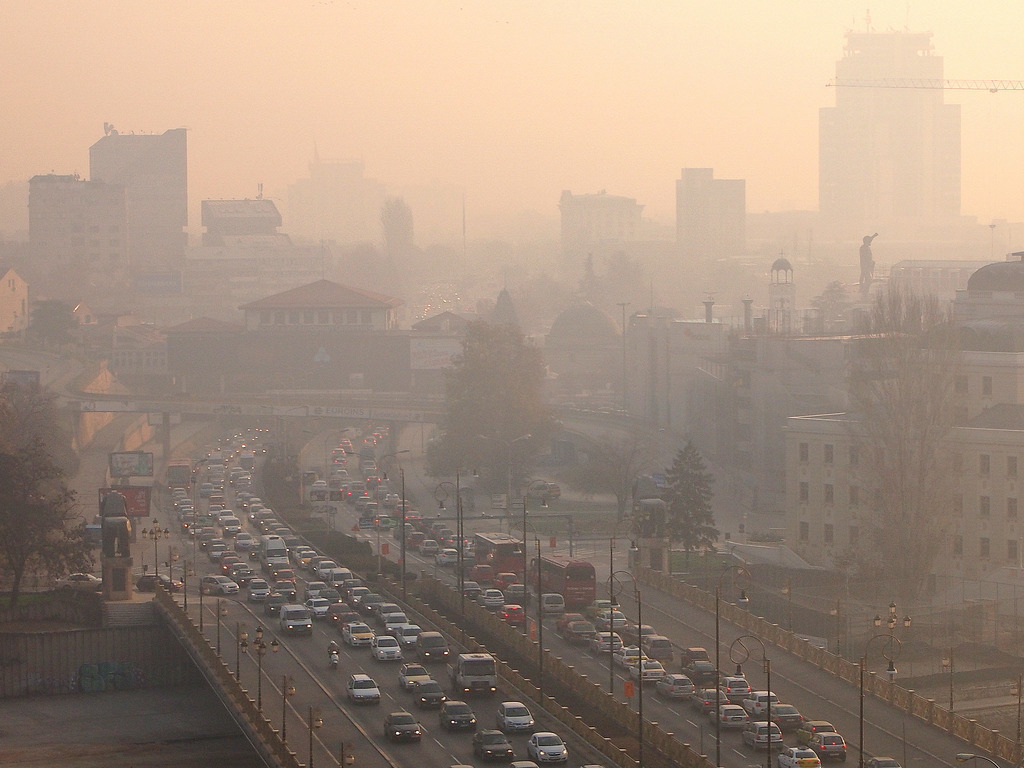
Pollution grip on the Macedonian’s capital Due to the high air pollution the whole city is not visible from the sky. By just seeing this picture we can understand what is the actual condition of the air pollution in Macedonian.

➡ Cause of the problem: 

As a consequence, in less than five years, the number of registered vehicles increased from 350,000 to 475,000 – most running on diesel, therefore with higher emission of PM particles compared to gasoline. 

Another factor is the savage urbanization of the cities. Instead of green parks, new buildings are springing up like mushrooms after rain. Apart from the main city park, there is not a single green space in Skopje that has not shrunk in the past 10-15 years. Illegal logging is endemic around cities and in the neighboring mountain areas, further deteriorating the ecosystem. Rather than addressing the problem, politicians have exploited it for electoral purposes. 

During the VMRO-DPMNE era in 2006–2017, the SDSM constantly attacked the government’s reckless ecological policies, promising a more eco-friendly approach. Excess usage of vehicles in that particular area has adversely affected the climate change in Skopje and has increased air pollution at the same time. 

➡ Analysis of the problem:

The poor air quality in the Republic of Macedonia is predominantly due to the tiny combustion particles called PM10 (10 micrometers or less in diameter) and PM2.5 (2.5 micrometers or less in diameter). 

These can easily penetrate deep into the body, causing not only breathing problems, but also other dangerous health issues. According to the World Health Organization (WHO), 2,574 people die prematurely every year as a direct result of air pollution. Skopje’s annual mean for 2016 was 40 µg/m3 (40 micrograms per cubic meter), which is 4 times higher than the annual WHO guideline (10 µg/m3), and 60 percent greater than the official Macedonian target[2] and European guideline[3] (25 µg/m3). 
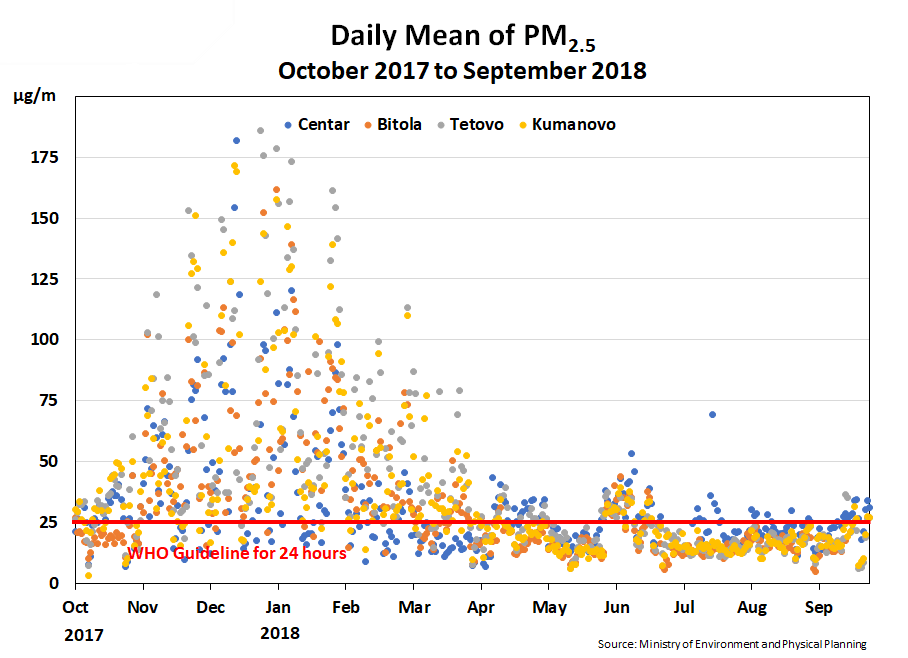
Graph 1 below shows the daily PM2.5 observations over the last year for Skopje (Centar), Bitola, Tetovo, and Kumanovo. All four cities regularly exceed the WHO daily guideline (25 µg/m3) with winter being the worst period. 

➡ Control of the problem: 

Quality and a healthy living environment are one of the basic preconditions for a quality life of all citizens in the Republic of Macedonia and a commitment of the Government of the Republic of Macedonia. Clean air is one of the main components, which, unfortunately, historically seen in the Republic of Macedonia, has seen high values in recent decades. 

Some ways to prevent the effect of air pollution in Macedonian Capital Skopje are: 

● The plantation of trees can reduce the increase of harmful chemical gases in the air. 

● Less use of vehicles. 

● More use of renewable energy in place of oils and fuels. 

● Use of solar panels.

Top Korean Variety shows that you definitely have to watch

Korean Variety shows are on top when it comes to light fun and hilarious entertainment. On the top of that it allows you to learn more about your favorite celebrities up close. If you are looking for recommendations for your next binge watching or for new variety shows to add to your watch list here are best variety shows you definitely have to watch.

Running man

The variety show is a popular and crowd favorite show for its super fun missions. The popularity of this show is not just limited to South Korea only but  is loved by the people all around the world

The show has shifted to a more natural reality variety show concept focused on games. In an episode the permanent cast members are given three to four missions to complete as they compete with each other with the celebrity guests in extremely amusing challenges.

 The show has completed 10 seasons and more than 500 episodes and still manages to entertain its viewers.

Man on a mission

The show is also known as knowing brothers and ask us anything.  The show continues to soar high viewership ratings throughout the years. The show is based on a high school concept where the cast members act like the students in classroom while guests come as newly transferred students. The show follows the daily activities of a classroom and the interaction between cast members and guests as the students in a classroom.

2 Days and 1 night

The show follows its cast members as they take trips to various places in South Korea, including many offshore islands. During the show members also complete different missions to earn reward and to avoid  punishments.

The show has included many different personalities and has earned a good rating by the viewers, and continues to entertain its audience.

All the butlers

The show is also known as Master in the House, which represents reputative figures of various fields who spent 2 days and 1 night together and get to know about each other in the hopes of gaining knowledge and wisdom. The show includes guests from different fields including athletes, Idols and influential public individuals.

 I LIVE ALONE

Have you ever wondered what celebrities do at home and when they are not in front of the camera. This show is a must watch. The show follows the life of single South Korean celebrities and provides a vies of their everyday lives. The show has gained popularity due to the relatable lifestyle of celebrities which is shown without significant filtering.

Which of these Korean Variety shows are your favorite, tell us in comments.

The doctrine of Separation of Powers:

Introduction: – 

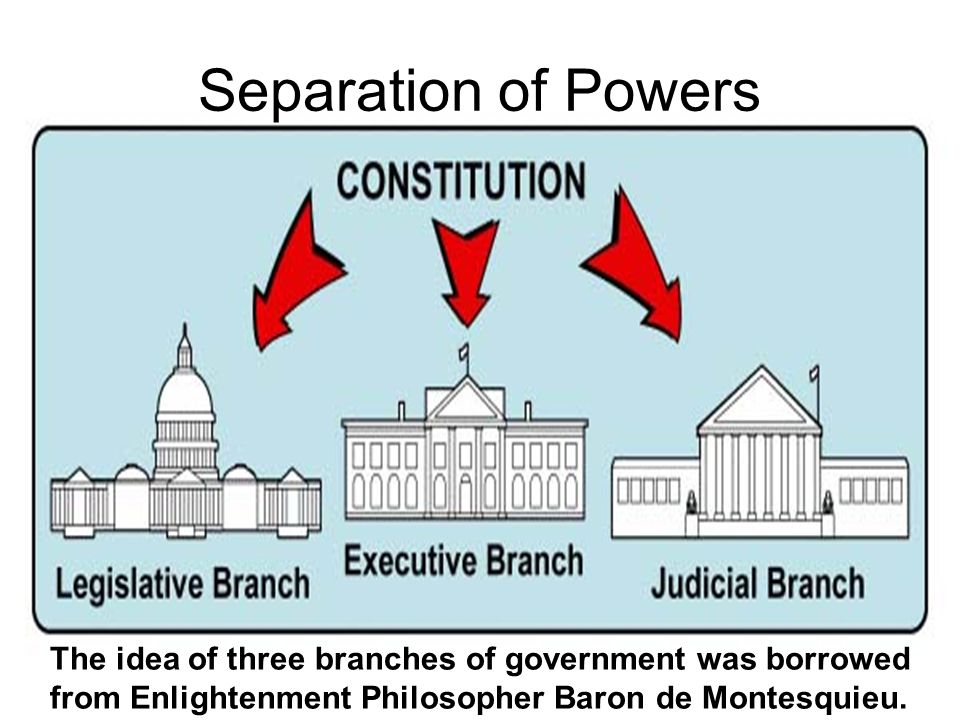
The concept of separation of powers is that the basic element for the governance of a democratic country. This principle endorses fairness, impartiality, and uprightness within the working of a government. Although it’s not followed within the strict sense yet, most of the democratic countries have adopted its diluted version in their respective constitution. 

Meaning: – The term “trias politica” or ‘separation of powers’ was first coined by Montesquieu in 18th century French social and political philosopher. Under his model, the political authority of the state is split into Legislature, Executive, and Judiciary powers. 

Generally, all the powers of the govt. will be categories into these three classes: 

(1) Enactment of law created

(2) Interpretation of the enacted laws 

(3) Enforcement of the enacted laws Separation of power, therefore, refers to the division of presidency responsibilities into distinct branches to limit anybody branch from exercising the core function of another. 

Historical origin and Evolution: – 

The doctrine of separation of powers is of ancient origin. The separation of powers concept was 1st originated in Greek and has become widespread within the Roman Republic as a part of the initial constitution of the Roman Republic. The history of the origin of the doctrine traceable to Aristotle in the 16th and 17th centuries, French philosopher John Bodin and British politician Locke respectively had expounded on the doctrine of separation of powers. 

But it was Montesquieu ( a French jurist) who initially conveyed scientific evidence of separation of powers in his book “Espirit des Lois ” (The spirit of laws). Montesquieu’s view: – Montesquieu said that – ‘The accumulation of all power’s legislature, executive, and judicial within the same hand’s weather of 1, a few, or many and whether hereditary, self-appointed or elective, may justly be pronounced the very definition of tyranny. 

Aristotle(384-322BC) in his book “The politics” stated that “These are three elements in each Constitution in respect of which each serious lawgiver must explore for what’s advantageous to it; of those are well arranged, the constitution is beyond to be arranged and also the differences in constitutions are sure to correspond to the difference between each of those elements. 

The three are first the deliberative (which discuss everything of common importance), second the officials; and third the judicial element.

Objectives of separation of powers: – 

(1) It aims to eliminate arbitrariness, totalitarianism, and tyranny and promote an accountable and democratic variety of government. 

(2) It prevents the misuse of powers within the various organs of the govt.. 

(3) It keeps a check on all the branches of the govt by making them in control of themselves. 

(4) This principle allows all the branches to specialize themselves in their respective field to boost and improve the efficiency of the govt. 

Elements of Separation of powers: – 

(1) Legislative: – Legislative means involving or regarding the method of creating laws. the first function of the legislature is to form laws for the governance of the state. it’s the authority of amending the present rules and regulations furthermore. Generally, in India, the parliament holds the facility of creating rules and laws. 

(2) Executive: – The executive is that the part of the govt. exercising authority and holding responsibilities of the governance of the state. the chief executes and enforces laws made by the legislature. The president and therefore the Bureaucrats from the manager branch of the presidency. 

(3) Judiciary: – The judiciary is that the branch of authority during a state which is anxious with the law and also the system or is that the system of courts that interprets defends and applies the law within the name of the state and safeguards the rights of the individuals. It can even be thought of because of the mechanism for the resolution of disputes within the state or internationally. 

Reproduction and Modification in plants

We know already that flowering plants have root,stem and leaves.They are called vegetative organs.Flowers,fruits and seeds in a plant are called reproductive organs.In earlier classes we have seen that new plants can be grown from seeds.In this lesson,we are going to know how a flower changes itself into a fruit,and the modifications of root,stem and leaves of a plant.

Reproduction

We can see from this activity that watermelon plant is produced from that seeds.potato plant is not from seed,but from the steam Tuber (Vegetative part).seed is not only the source for new generation,even vegetative part of a plant can be used to produce a new plant.The process by which plants and animals produce young ones and increase their number is known as ‘reproduction’. Drumstick tree can be grown from both seeds and stem cuttings.When plants are reproduced from the seeds we call that process as sexual reproduction.All other ways of reproduction without seed are called as asexual reproduction.

Sexual reproduction

Seed is produced from a flower by the process of pollination and fertilization.This is known as sexual reproduction.To understand how seeds are formed in a flower, first we need to understand parts of a flower.

Parts of a flower

Let us compare few buds and opened flowers of Hibiscus and Datura.Observe bud and opened flower of Hibiscus and Datura.we can tabulate the characteristics of Hibiscus and Datura flowers as below.

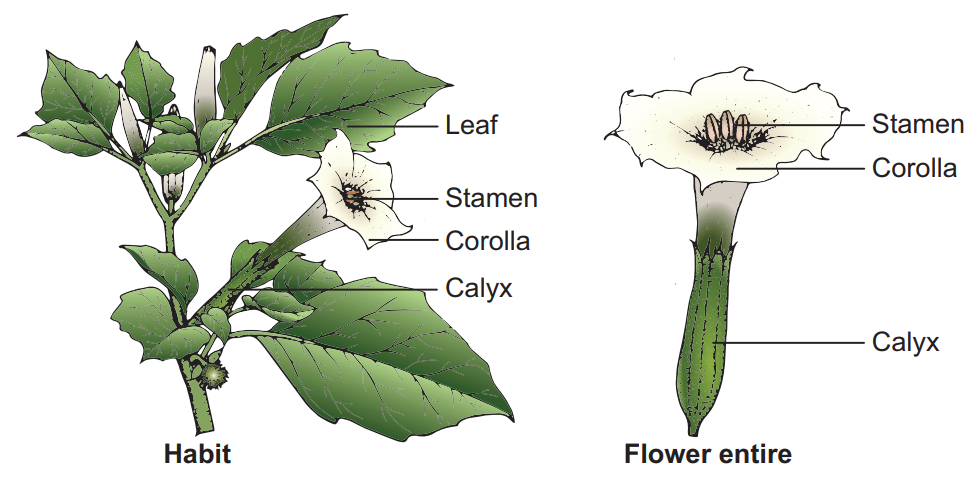
In a bud ,we can see a green colour,leaf like structure which cover the whole bud or flower.Each of these green leaf like structure present as an outermost layer is called as sepal.This outer most ring of sepals is known as Calyx.Petals are the largest part of flowers.They are often attractive, brightly coloured, sometimes sweet scented and attract the insects.The ring of petals together is called corolla.

Inside corolla,in Hibiscus,we can observe a long tube on which many stamens are arranged.But,in Datura we can see only five stalked structures,stamens.This ring or whorl of a flower is called androecium.Each stamens consists of two parts-a stalk called filament and a lobe called anther.If you touch these lobes in a mature flower,we can get a powdery substance called pollen grains

Inside androecium whorl,we can find a female reproductive part of the flower, called gynoecium.You will find this part with a swollen bottom part.

This is a ovary.Seeds are produced in this part.On top of the ovary there is a slender tube like structure called style.The top most striky tip of the style is stigma.Pollen grains are received by the stigma.This is the fourth whorl of a flower.

Types of flowers

Flowers can be divided into two types.They are explained below.

Complete Flower

If all the four whorls-calyx,corolla,stamens and pistil are present,then it is called as complete flower.complete flowers are bisexual flowers.

Incomplete Flower

If any of these four whorls is missing,then it is called as incomplete flower.Incomplete flowers are unisexual flowers.There are two types of Unisexual flowers,male flowers and female flower.The flower with androecium and without gynoecium is called as male flower and the one with gynoecium and without androecium is known as female flowers.

Pollination

We know that flowers of pumpkin are unisexual-that is some flowers are male while many are female flowers.We can easily identify the male and female flower of pumpkin,even before the buds bloom.To understand how a flower develops into fruit,let us perform an experiment on pumpkin plant.The process by which pollen grains reach stigma is called as pollination.The flower that receives pollen grains is called pollinated flower while the one that did not receive pollen grains is called as unpollinated flower.In the above experiment we transferred the pollen grains from male flower to the female flower. This is called as an artificial pollination.However ,in nature there are many ways in which pollen grains reach the stigma of the flower and it is called as natural pollination.
In some plants like grasses, pollen grains are light.Staments shed pollen grains,and are carried by wind to other flower.Insects ,birds are also agents of pollination.Bees, butterflies and variety of birds hover around flowers. They help to carry pollen from one flower to another.Pollen grains stick to their legs,wings or abdomen when they move from one flower to another.This is called as cross pollination.when you shake,pollen grains fall.Thus,when wind shakes the flower or when a butterfly agitates the flower,pollen grains could fall into the sigma of the same flower.Some plants that have both the male and female parts within a single flower (bisexual) pollinate by this means.This is called as self pollination

Beans(Fabaceae) and tomatoes (Solanaceae) commonly self-pollinate.Even though,for example,tomato self pollinate,they need the help of the insects to create vibrations within the flowers that will effectively loosen the pollen.Paddy is mostly self pollinating using just gentle wind as the pollinating agent.The agents that are helping in pollination are called as pollinators.In many plants,pollens have to come from some other flowers.This is obvious in case of plants which have distinct male and female flowers like pumpkin.In some flowers the gynoecium matures first before the androecium shed pollens.Such as apples,plums, strawberries, pumpkins use insects for cross-pollination.

Fertilization

During pollination,pollen grains reach stigma.What happens to them after this? substance produced on the stigma causes the pollen grain to germinate.During the germination a tube develops from the pollen grain which carries male gametes and ultimately reaches female inside the ovary through the style.Male gamete fuses with the female gamete to form zygote .This process is known as fertilization.Where is this female gamete located? Inside the ovary,small rounded structures,ovules are present.In these ovules, female gamete is present.To know more about this,we should cut ovary of a flower in longitudinal and transverse ways.cut a ovary of a flower both vertically and horizontally.Observe the ovules.compare the ovary and ovules from few different flowers.Are there one or more ovules? Can you see any connection between the number of ovules in the ovary number of seeds in each fruit?

Collect some fruits like tomato,brinjal, lady’s finger(vegetable),mango,peas and custard apple and observe.You can see some green part above brinjal and lady’s finger.what are they?
Compare mango, custard apple and peas.All these are single fruits but custard apple has many small parts in it,each with a seed .Mango has a single seed and pea has many seeds.what do you understand from the above observations?
♦ A green part above fruit of brinjal and lady’s finger are sepals of a flower.In some plants,after fertilization,sepal will not fall from fruit and remain or persist with fruit.
♦️ Custard apple is made up of many fruits, aggregated together.Each fruit part is thin, membranous with some granule like, which is edible.
♦️ In mango the outer skin and middle pulpy are edible and sweet .The inner most part is with single seed.
♦️ In pea the fruit is not fleshy,but forms a convering pouch for many seeds.

In all the above fruits, Ovary,a lower most swollen part of pistil develops into a fleshy fruit.Ovules present inside the ovary gets transformed into a seed.

Divisions and geography of the Deccan Plateau:

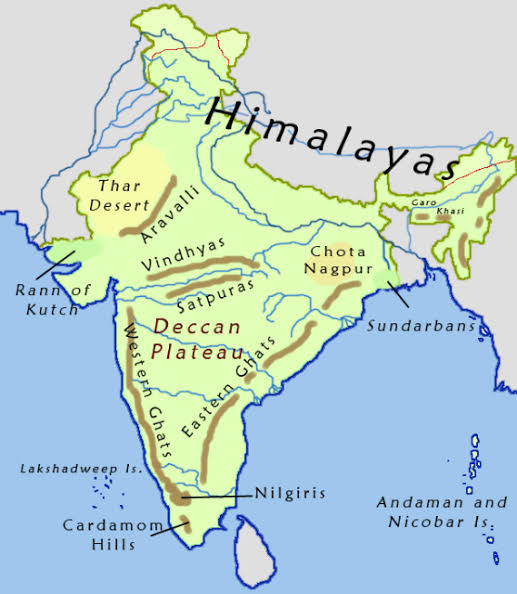
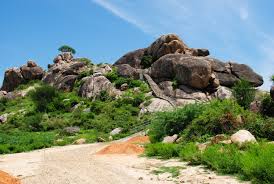
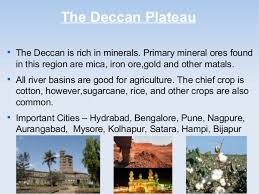
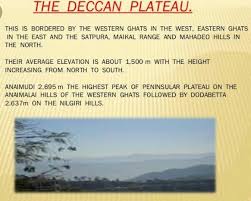
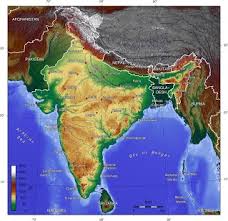
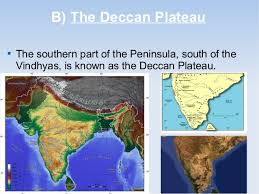
This physiographic division is the largest part of the plateau region India. The shape of this plateau is roughly triangular.
⭐ One of the sides of this triangle is marked by the line joining Kanyakumari with Rajmahal Hills and this line passes through the Eastern Ghats.


⭐The second arm is marked by the Satpura Range, Mahadeo Hills, Maikal Range and the Rajmahal Hills.
⭐The third arm is marked by the Western Ghats.
⭐The area of this plateau is about 7 lakh square km and the height ranges from 500 to 1000 m above sea level.


⭐The Western Ghats forms the Western edge of the Panisular Plateau. It runs parallel to the Arabian Sea coast.
⭐The northern part of this range is called as Sahyadris. The height of the Sahyadris increases from North to South.
⭐Anaimudi is a sort of tri-junction of the Anaimalai Range, the Cardamom Hills and the Palani Hills.


⭐Kodaikanal is a beautiful hill resort situated on the Palani Hills.
⭐ Eastern Ghats run from Southwest to Northeast from the eastern edge of this Plateau.
⭐The range is also called as Poorvadri.


⭐The Eastern Ghats join the Western Ghats at the Nilgiri hills, bordering Karnataka and Tamil Nadu.
⭐The Eastern Ghats are not continuous like the Western Ghats.
⭐The rivers of Mahanadi, Godavari, Krishna, Pennar and Kaveri have dissected this range at many places.

Should Plastic be Banned?

A truly wonderful and magical material, plastic was invented in the year 1907 by Leo Hendrick Bakeman in New York, United States of America. This wondrous material was made from phenol and formaldehyde in a cheap and easy method. Ever since this revolutionary invention, the world as we knew it changed. Plastic replaced many materials in industries. Plastic is so widely used around the world because of its following properties:

  • Plastic is a hard material
  • Plastics are a highly dense material
  • Its tensile strength is high
  • It is resistant to heat and high temperatures
  • It is a non-conductor of electricity and heat
  • It is light in weight
  • The production of plastic is cheap and simple

All these properties make plastic the most popular material for factories as well as consumers. With the invention of plastic bags, things started to take nosedive in terms of the per capita plastic produced in the world. Everything was hunky-dory until people started to realise that plastic can’t be degraded by natural causes. Its a non-degradable material and will stay in the environment for more than 500 years to come. It is estimated that more than 6 billion metric tons of plastic waste are lying on our earth with no place to go.

Enzymes and bacterias cannot degrade plastic because plastic is not made up of naturally occurring materials. It is a purely man-made material. Most of the plastic is dumped in open lands and far away in oceans. While this seemed like a logical idea until people released that they were polluting the environment, air, water and land. The hazardous chemical in the plastics started to be seen in fishes and crops we eat which ultimately meant that plastic waste that we assumed was gone, was slowly making its way back to our bodies through our food chain. It is said that human beings have already started consuming plastics in small portions and a plastic worth the weight of a debit card in consumed every year by a person.

While plastics can’t be banned completely, because it has made our lives better. Plastic is used in advanced medical equipment to save lives. They are used in the pharma industry, the travel industry and clothing industry and the truth is, human beings cannot live without plastic. But we can surely reduce the consumption of plastic. Banning plastics completely is not a sensible idea.

Why plastic bags should be banned?

There are various alternatives to plastic bags. Jute bags, paper bags and gunny bags are some of them. Plastics bags are not so much necessary that man cannot live without it. And certain kind of plastic bags can not be recycled as well. But they surely can be reused. The habit of reusing the same plastic bags comes into effect only when the manufacture of new plastic bags are banned.

More than 20 million metric tonnes of plastic waste is dumped in the ocean and open lands. More than 50% of these are plastic bags. They are creating enormous pressure on our environment and causing irreversible pollution. It will take a herculean task to get rid of all the plastic that is produced in the world as of now. If it is not banned, then it will be impossible to get rid of it ever and the existence of the human race will be in question.

There are areas in several parts of our ocean which is covered with plastic as big as the size of India. The aquatic life is consuming these plastics and we are consuming them which disturbs the whole food cycle in our ecosystem. Banning plastic bags will at least, if not totally eliminate plastic from our earth, reduce this disturbance to our environment.

Women empowerment and child development:

Empowerment means giving power to someone to try and do something in a very country like India where the slogan originated – 

that means – Where Women are honored, divinity blossoms there, and where ever women are dishonored, all action, regardless of how noble it’s going to be, remains unfruitful. in an exceedingly country like India, the necessity for women’s empowerment may be a concern of thinking that why to try and do a nation with such great thoughts needs for the encouragement of ladies during this developing era. 

Schemes launched by the govt. of India: 

The government of India has launched many schemes for the empowerment of ladies. 

Beti Bachao, Beti Pdhao (22nd January 2015) – 

To provide education to ladies and their welfare. to stop the violation within the interest of ladies. To celebrate the birth of a lady child. 

One-Stop Centre Scheme (1st April 2015) – 

To provide support and assistance to women laid low with violence at private or at any public place, no matter caste, class, religion, region, sexual orientation, or legal status. 

UJJAWALA (December 2007) – 

For Prevention of trafficking, Rehabilitation, and Re-integration of Victims of Trafficking and Commercial Sexual Exploitation. 

Women Helpline Scheme (1st April 2015) – 

To provide 24-hour emergency and non-emergency responses to women tormented by violence including sexual offenses and harassment both within the public and personal sphere, including e family, community, workplace, etc. 

Support to Training and Employment Programme for girls (STEP) (1986-87) – 

To provide skills that give employability to women, to produce competencies and skills that enable women to become self-employed/ entrepreneurs. 

Women Empowerment and Livelihood Programme (Mid-Gangetic Plains – ‘Priyadarshini’) – 

It focuses on Women empowerment and Livelihood in Mid-Gangetic Plains. It also empowers them to deal with their political, legal, health problems.

Development of girls and youngsters in Rural Areas (DWCRA) –

To improve the socio-economic status of poor women within rural areas. By the formulation of groups of ladies for income-generating activities on a self-sustaining basis.

Many schemes have started. And still, the govt is putting its efforts into the empowerment of ladies. But somewhere, we all are lacking in our responsibilities. Still, women are afraid to travel out. 

Rapes in India:

According to the NCRB report 6,000 rape cases were reported in Rajasthan, followed by 3,065 cases in the state in 2019. 

The rape vulnerability of a lady or woman has increased up to 44 percent within the last ten years, the National Crime Records Bureau (NCRB) data shows. in line with the NCRB data, during the amount 2010-2019, a complete of three,13,289 cases were reported across India. Due to such records peoples are afraid to send their daughters, wife, mothers out. 

We all are working for the empowerment of ladies. But some people in society still follow their conservative thinking. And also, they’re taught to measure as they need the sole aim to serve their in-laws. whether or not they’re willing to try and do something, they’re blind to such forms of silly thinking. In many places of India, girls are engaged to their future husbands at a young age by their families and shortly are married to them in no time. From their childhood itself, they’re taught to measure within their limits and to not cross their boundaries. there’s nothing wrong with working with the person. Both men and ladies are equal. 

Education is that the only thing that will change the thinking of our society. We must encourage every woman to come back forward and to measure as they require to measure. Not as others want her to measure. If women are concerned, they have to be taught about their rights in society and that they must be taught to return come in this world and showcase their skills before others. there’s nothing that a lady cannot do. Some women changed the thinking of the entire world and proved to women that ladies can do the items a person does and even more efficiently.

Parliamentary Privileges

Introduction

India is called the world’s largest democratic country. The power to make law exists with the Indian Parliament. The members of lower house of Parliament are elected from the direct election while the members of upper house are elected from the Legislative Assembly of States and Union territories by means of single transferable vote through proportional representation. The concept of parliamentary privilege in the Constitution of India has been taken from British Constitution. Parliamentary privileges are special rights, immunities, exceptions enjoyed by the members of the two houses of Parliament and their committees. The main motive of these privileges is to uphold the supremacy of the offence of the office of the Parliament and its members.

Who Enjoys Parliamentary Privileges

These rights are mainly for the members of both houses of Parliament. Apart from this, these rights are also given to those individuals who speak and participate in any committee of the Parliament, which includes the Attorney General of India and the Union Ministers. President, even if he is a part of Parliament, does not have parliamentary privileges.

Breach of Parliamentary Privileges

If any person or officer violates the individual or collective privileges of a Member of Parliament, such as, disrespect, abuse, attack, etc., such acts are comsidered as breach of Parliamentary Privileges which is punishable by the house.

Thus, the above facts make it clear that Parliamentary Privileges in India have been enforced so that the respect of the Parliament and its members can be ensured.

But it is observed that after winning the elections, these representatives do not respect the public while on the other hand they expect that the public should give them due respect. Apart from this, you may have noticed that the Parliamentarians are often seen misbehaving with the officials and the general public. This is called the misuse of parliamentary privileges.

Therefore, it is the need of the hour that if the government wants to maintain the dignity of the democracy then it should make appropriate changes in the parliamentary privileges because nobody can be superior to the general public.

Conclusion

The privileges are conferred on the members for smooth functioning of the Parliament. But, these rights should always be in conformity with the fundamental rights because they are our representatives and work for our welfare. If the privileges are not in accordance with the fundamental rights then the essence of democracy for the protection of the rights of the citizen will be lost. It is the duty of the Parliament not to violate any other rights which are guaranteed by constitution. The members should also use their privileges wisely and not misuse them. They should always keep in mind that the powers do not make them corrupt. The Parliament cannot adopt every privilege that is present in the house of commons but should adopt only those privileges that accordingly suits our Indian democracy.

The Future of jobs is based on skills not on college degrees.

Many big companies (like Apple and Google) claims we’re no more hiring on degree basis we’re hiring on skill basis. And that’s gonna impact on many people lives. And we already be seen there.

During the crisis, a lot of employees has lost their jobs and seeking out for a new job. Now, what does that indicate us?

In future, the changement of hiring process is different and a lot of more companies are already started to changing their hiring systems.

Photo by Anthony Shkraba on Pexels.com

The whole economy is shifting from traditionally to digitally and most of us we adapted it and use in our daily lifes. Because of this digital world, where anyone and everyone can access information around the world. Our methods of working is completely different from traditionally to digitally.

The working time of people is reduced and many business owners have automate their business with the help of A.I. (Artificial Intelligence). According to CEO of freelancers of Upwork, says 75% of people who are doing freelancing work are making handsome amt. of money by just having a skills. others are still struggling with their piece of paper.

You can learn any type of skills by accessing FREE information from Internet, watching from Youtube videos, take a course from any big entrepreneur, so we developed more and make a change in yourself to make this world better.

To be sure, i’m not saying that college is waste of time and money for everyone. Of course it is, but having a so much resources available around everywhere where we can access in a bit of seconds, it will be more better option than a college degree.

But one thing can: The fastest-growing segment of the workforce — freelancers — have realized more than most that education doesn’t stop. It’s a lifelong process. Diploma or not, it’s a mindset worth embracing.

CORONAVIRUS AND ITS IMPACT ON EDUCATION

The COVID-19 was first identified in Wuhan, China in December 2019. The global outbreak of COVID-19 is still ongoing.

The current coronavirus pandemic is having a perplexing impact, not only on people’s health, but also on how they learn and work. The pandemic has introduced uncertainty into major aspects of society, including the education sector. Thousands of schools, colleges and other educational institutions are closed nationwide. This situation challenged the education system across the globe and forced institutions to shift to an online mode of teaching.

Photo by Ann Nekr on Pexels.com

Challenges of Online education

Schools and colleges have been impacted significantly by the rapid spread of the COVID-19 outbreak. Closures have pushed countries towards a modernized, digital style of teaching. However, this solution comes with its own unique set of challenges. Among the most important challenges created by the coronavirus is how to adapt to a system of online education.

There are various technological devices available for online education but sometimes they create a lot of problems. These difficulties and problems associated with modern technology range from downloading errors, installation issues , login problems, poor connectivity, etc. Sometimes student also finds online teaching to be boring. Students want face to face interaction which is not possible with online mode of learning

Universities across the globe have adjusted their courses in response to the spread of the coronavirus. Moving all the educational programs online may prove very challenging. While some universities or schools may already have strong online systems, smaller universities may struggle with the technology. Some students also don’t have reliable internet access or technology and they struggle to participate in online learning. This gap is seen across countries and between income brackets within countries.

Photo by Ann Nekr on Pexels.com

Advantages of Online Learning

  • More flexible than offline classes.
  • Saves time by avoiding transportation.

Disadvantages of Online Learning

  • Loss of interest
  • Small children have low concentration power, and they don’t want to sit for a longer time in front of the blue screen.
  • The availability of internet to students living in rural areas.
  • Speed and cost of internet.
  • Spending long time in online learning makes the students lose their motivation to participate.
  • Lots of poor students do not have access to laptops, computers, tablets, cell phones, etc.
  • Less interactive.

Conclusion

The COVID-19 pandemic lockdown has affected the academic performance of most of the students with varying degrees. Online education helps the students with an opportunity for self-study. However many subjects need practical classes; therefore, it is not easy to understand all the subjects online. The learning process cannot reach its full potential until students practice what they learn. This may impact their career in the future.

The Bishnois of Rajasthan

Formation of the Bishnoi sect— India’s original environmentalists

Bishnoism originated in the 1485AD by Saint Guru Jambheshwar in theThar Desert of Rajasthan, India. Long before the world came to know about the environmental crises, Bishnois have been cognizant of man’s relationship with nature and the importance to maintain its delicate balance. It is remarkable that these issues were considered, half a century ago by Bishnoi visionaries. No other secthas given this level of importance to environment value, protection and care.


Not many of us know that the concept of Tree Huggers and Tree-Hugging, have roots within the Bishnoi community. The famous ‘Chipko Movement’ was inspired by a true story of a brave lady called Amrita Devi Bishnoi who refused to let the kingsmen cut the trees and sacrificed her life to save the trees.

Sundarlal Bahuguna

This sacrifice not only inspired the “Chipco Andoloan” by Sunder Lal Bahuguna but also the Indian government. The “Amrita Devi Bishnoi Smrithi Paryavaran Award” for contributing to environment conservation is given to those who have significantly contributed for environment conservation.  

The Bishnois are one of the first organized communities that have collectively sought for eco-conservation, wildlife protection, and green living. The ideals and tenets of the bishnois and bishnoism mentioned in the 29 religious tenets are very crucial and relevant to our ever evolving world.

The social concern, in medieval Rajasthan, manifested itself in various forms. To unite the people for a common cause, Guru Jambheswar Ji advised 29 principles to become a Bishnoi. The word ‘Bishnoi’ stands for ‘bish’ which means 20 and ‘noi’ which means 9; derived from these 29 principles out of which 6 principles are dedicated to environmental protection and compassion for all living beings.

 Of the 6 tenets that focus on protecting nature, the two most profound ones are:

Jeev Daya Palani – Be compassionate to all living beings.

Runkh Lila Nahi Ghave – Do not cut green trees.

Though these rules date back centuries, they still hold the morals and the beliefs for which the bishnois stand and are more than relevant to the environmental problems faced in today’s world.

Conservation as a practical necessity

In the arid and semi-arid regions of western Rajasthan, Bishnoism as a sect has over the ages has not only proposed, but also internalised their practices in an effort to usher in new practices of conservation ethics in Rajasthan. A majority of the Bishnoi rules suggested maintenance of harmony with the environment, like the prohibition on cutting green trees and animal slaughter. One plausible explanation is that the economy was primarily sustained by animal rearing. Hence, any slaughter, even during droughts, would have affected their means of livelihood.

Similarly, the cutting of green trees was prohibited, as it would scale back the availability of green fodder for the cattle, especially in the dry region where natural vegetation was very thin and sparse. Jambhoji’s teachings, which were in line with the interests of the folk, became immensely popular primarily in the arid regions of Bikaner and Jodhpur. The number of his followers increased manifold in these regions. His principles became so influential that the rulers of these states were forced to respect his teachings and sermons. The Bishnois have since long proposed for placing restrictions and punishments for cutting trees.

Rajasthan’s landscape demands dependence on agricultural and cattle-rearing practices. The conservation of natural vegetation of the region helped sustain superior breeds of cattle for export to other regions, exports such as sheep for wool, and camels for transport proved beneficial. Trade and commerce were also an important component of these economies as is evident in the nature of taxation where non-agricultural production was also taxed extensively (Kumar 2005).

Protection of wildlife and animals

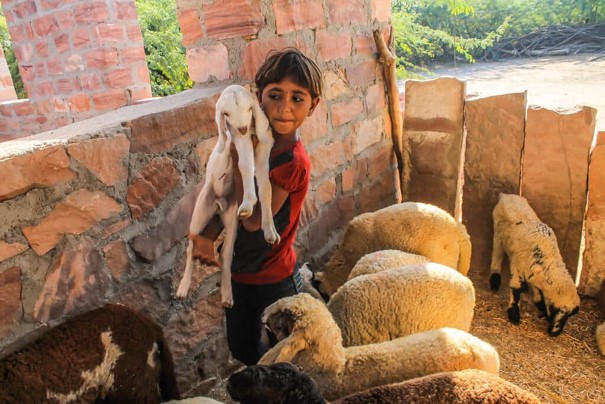
The Bishnois consider the blackbucks as pavitra, or sacred. They follow what is perhaps the only environment-friendly religion in the world and recognise the rights of all kinds of birds, animals and trees and believe in living with peace and harmony with them. Reports show that in 2016, over 1,700 people who were involved in wildlife crimes in Rajasthan were arrested owing to the tireless efforts of the bishnoi community.

Some of their commandments mention to “provide shelters for abandoned animals to avoid them from being slaughtered in abattoirs,” making clear the Bishnoi’s reverence of all life on the planet.

The Khejarli massacre

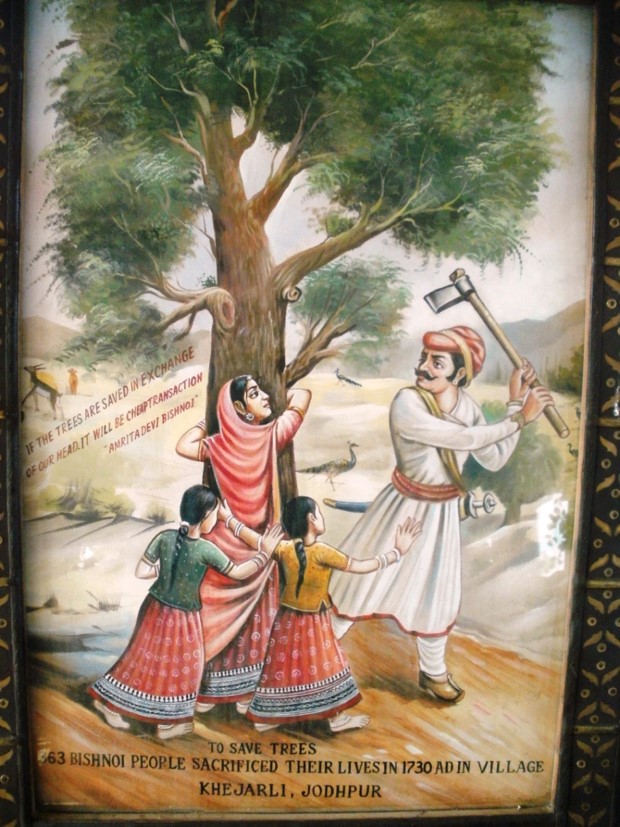
Khejarli or Khejadli is a village situated in Jodhpur district of Rajasthan, just 26 km southeast of the main city of Jodhpur. The name of the town is derived from khejri trees, which were in abundance in the village. In the year 1730 AD (Vardhan 2014), the king of Jodhpur sent-out his army to cut trees in order to build his palace. When his army started to cut down and log a Bishnoi forest, the bishnois organised a non-violent protest, offering their bodies as shields for the trees. The soldiers had warned that anyone intending to stand in their way would share the fate of Amrita (or Imarta/Imarti as she is often also referred to by the locals) and her three daughters who had taken the bold step of hugging trees following their mother’s action, and had been killed by the soldiers. Men, women and children from 83 different villages stepped forward, embraced the trees and sacrificed themselves one after the other.

The army’s axes had already slain 363 people, when the king, Maharaja Abhay Singh, hearing the whole incident and their perseverance and courage, halted the logging and declared the Khejarli region a preserve, issued a royal decree engraved on a tambra patra (a letter engraved on a copper plate), prohibiting the felling of trees and hunting in the Bishnoi areas. The Bishnois as well as non-Bishnois consider the tambra-patra declaration as a victory of the communities efforts at conservation.

Till date, the Bishnoi community commemorates and celebrates this collective sacrifice as a symbolic victory in Khejarli by maintaining the place as a heritage site. An annual fair is organised at the village near Jodhpur, which also maintains a functional temple. In 1988, the Government of India commemorated the massacre formally, by naming the Khejarli village as the first National Environmental Memorial (Clarke 1991). A cenotaph now stands at the site as a memorial to the Bishnoi lives lost at the massacre site, which is collectively maintained through community funding as well as by private donations.

Incidentally, Imarta Devi, the first woman who died in defence of the khejri trees during the 1730 Khejarli massacre, uttered her last words as follows: Sar sāntey rūkh rahe to bhī sasto jān (even if one were to get their head severed to save a tree, still it is a cheap bargain).

The Fight is Not over Yet- Farmer’s Protest

“Let us not forget that the cultivation of the Earth is the most important labor of man. When tillage begins, other arts will follow. The farmer’s, therefore are the founders of the civilization.”

Daniel Webster

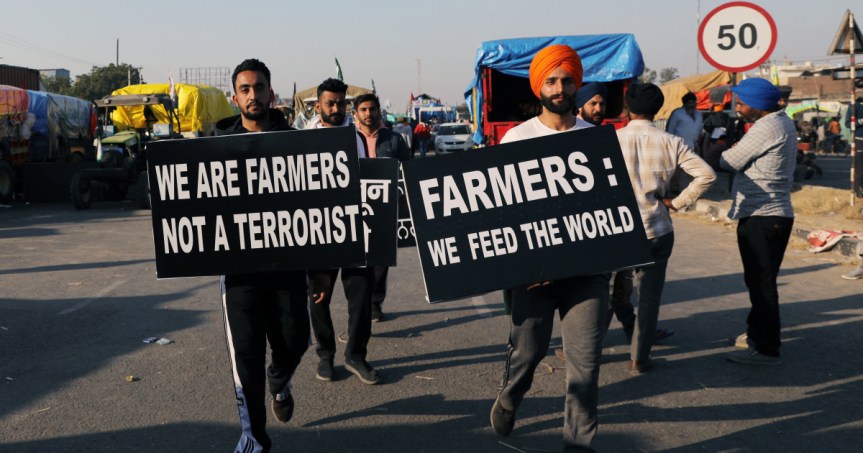
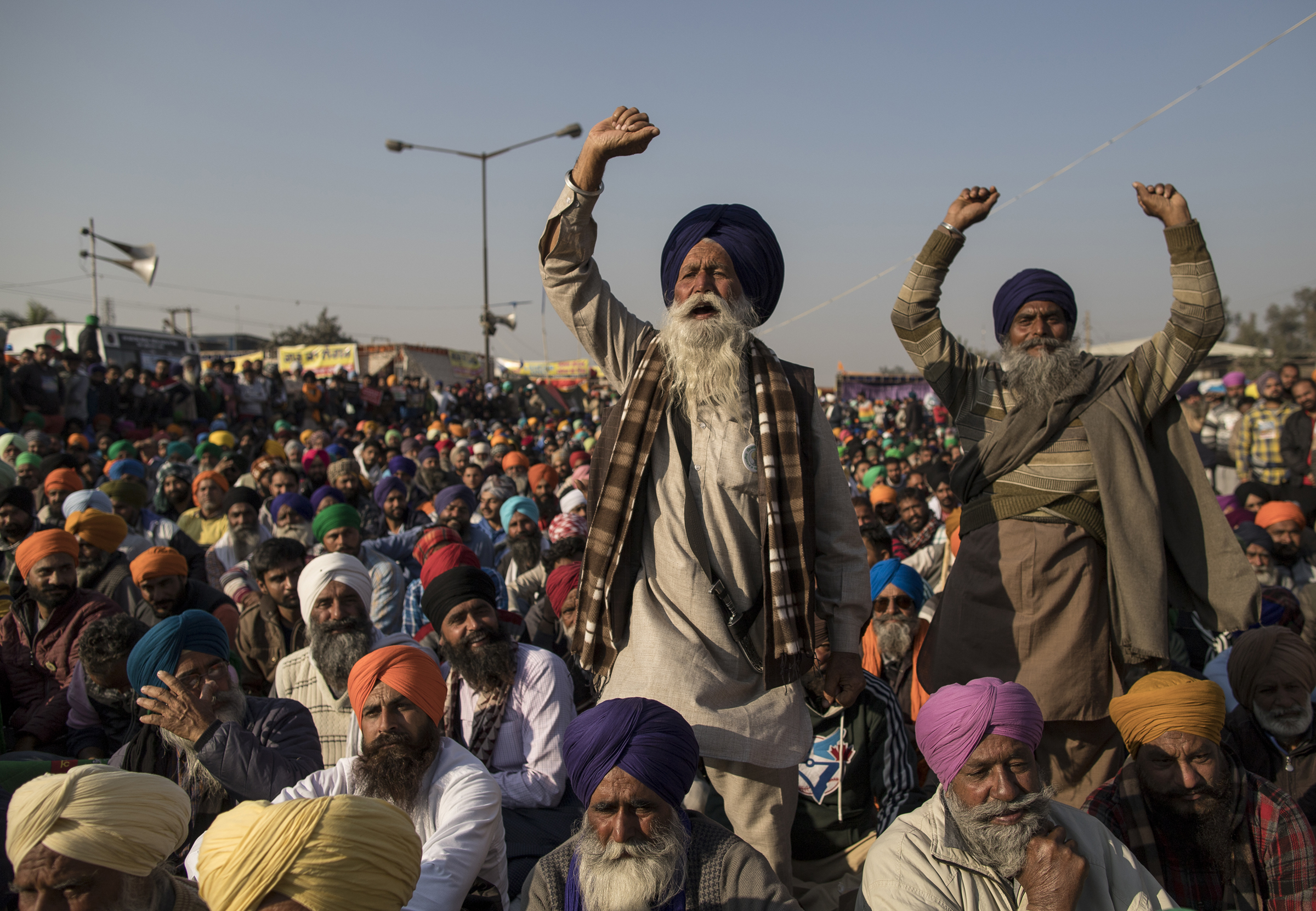
On August 9, 2020, Farmers from Punjab and Haryana laid siege to the national capital region. They are raising their voices against the recently passed farm bills. It has been five months since they have left their houses and have suffered hardships from the changed weather to farmer’s giving up and dying. But no beneficial approach has been taken for them, the fight continues to go on.

After 1947, the zamindari system was abolished in the nation. The farmlands were divided into smaller parts and the tiller became the owner of those parts but still they did not acquire bargaining power for their own crops which led to traders taking advantage of this drawback. Traders used to give credit then used to buy crops during the harvest season at lower prices. The farmer used to stay poor because he never got the good price for his crop production. To decide what the right price should be in the year 1960, when the country was going through the “Green Revolution”, APMC’S (Agriculture Produce Marketing Committees) were introduced which began to regulate the farm produce. Except the committee no one was allowed to buy produce from farmers. They will give traders a license and space to buy. In this system farmer is supposed to get different rates at which he wants to sell his production.

The Farmers' Protests Are a Turning Point for India | Time

But, till today unfortunately the farmers don’t decide the price the traders do. Even today the farmer is a price taker and not a price maker. No matter who makes the laws or tries to raise their opinions and concerns the atrocities have to be faced by the farmer’s.  As a result, they are dealing through several problems like lack of mechanization, soil erosion, agriculture marketing and so on. In India 76% of the farmer’s want to give up farming. The market needs to have a good buyer to pay a fair price. 

Amidst protest from the opposition and farmers organization, the monsoon session of the Lok Sabha passed three agricultural bills which were: – 

  1. Farmer’s Produce Trade and Commerce (promotion and facilitation) Bill, 2020 – to create a system where farmers and traders have the freedom to sell and purchase outside APMC’s, to promote barrier free inter state farmer produce, reduce facilitative framework for electronic trading.  If this is implemented the states will lose its revenue there are also chances that it may end the MSP based procurement system.
  • The Farmer (Empowerment and Protection) Agreement of Price Assurance and Farm Services Bill, 2020 – enable farmers too access modern technology, reduce cost marketing which will boost farmers income, effective dispute resolution. If this is implemented sponsors may not like to deal with small and marginal farmers, farmers who are into contract farming will get weak in terms of negotiating.
  • The Essential Commodities (Amendment) Bill, 2020- removing commodities like some important food items. Essential commodities, bring investment for farm infrastructure, help both farmers and consumers by bringing price stability. If this is implemented big companies will stock commodities, which means they will dictate whatever price they say.

Before helping the farmers, we should understand what problems they are facing. Firstly, we should strengthen the dispute redressal problem. There should be an intermediary body between the traders and the farmers. So, that they understand their rights and know what contract they are signing. They can get a guarantee for their crops and expand their growth if they have someone to help them. Secondly, they should have a bargaining power on what they have produced. This should be their basic right. Lastly if the government provides the farmers with people who can help them it will create massive trust on the government. 

The success or failure of the bill depends on the implementation. It will be unfair if the farmers think that this bill is their biggest enemy which is supposed to be helping them in ways which will change the entire agricultural system of the country. If the government genuinely wants to take up an initiative to help the famers and to end the protest, they should hear the perspective of the farmers because at the end of the day it is their livelihood which is being talked about. An industry that feeds you is worth fighting for.

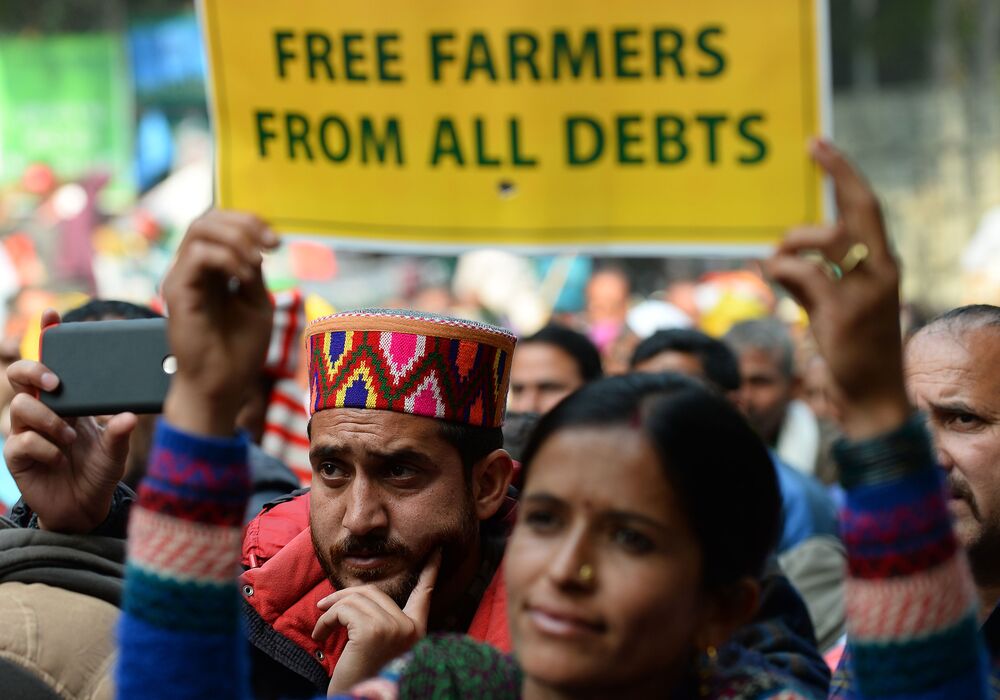
Farmers' Protest Underscores Modi's Challenges Before Elections - Bloomberg

Niger armed attack

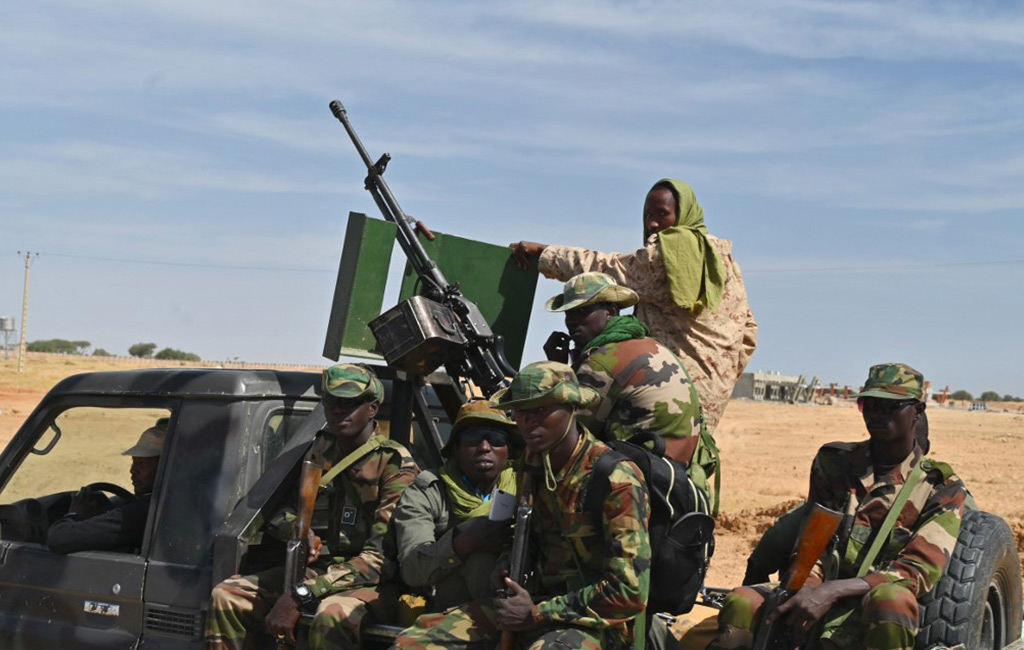
Five civilians, four soldiers and 40 armed attackers were killed Sunday in a clash in Niger’s restive southwest region near the border with Mali, the government said.

Around 100 heavily armed “terrorists” riding motorcycles attacked the Tchoma Bangou village, striking around 3 pm Sunday, Niger’s Ministry of Defence said in a statement read on public television that did not identify who it suspected was behind the latest deadly incident.

The “prompt and vigorous reaction” by the Defense and Security Forces (FDS), “made it possible to repel the attack and inflict heavy losses on the enemy”, the ministry said, adding that its soldiers had seized motorcycles and a cache of weapons, including AK47s and machine guns, from the assailants.

Tchoma Bangou is located in the Tillaberi region, bordering Mali and Burkina Faso, an area known as “the three borders” that has been regularly targeted by jihadist groups.

Tillaberi has been under a state of emergency since 2017. The authorities have banned motorbike traffic night and day for a year and ordered the closure of certain markets suspected of supplying “terrorists”.

One of the poorest countries in the world, Niger has for years battled jihadist insurgencies on its southwestern flank with Mali, as well as Boko Haram on its southeastern border with Nigeria. The repeated attacks have claimed hundreds of lives and forced thousands to flee their homes.

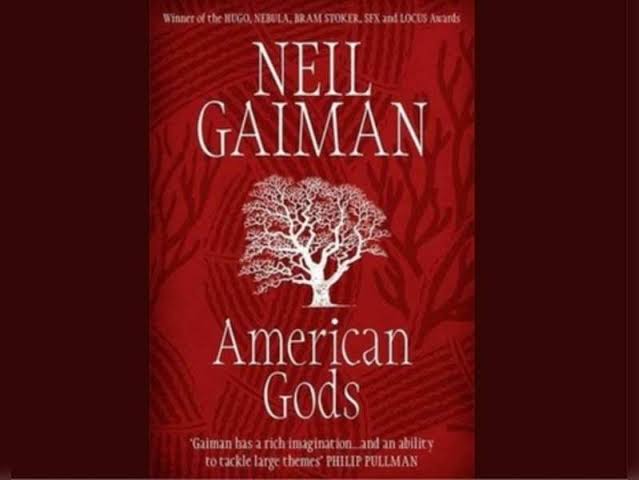
“American God” by “Neil Gaiman”

“American God’s” by “Neil Gaiman” the way the book has to been written the storyline is absolutely stunning. The protagonist of the book is shadow and just a few days before his release from the present his wife Laura dies in a mysterious car accident and it completely shatters him because he was
going out of prison and meeting his wife and resuming their life together and be happy again because he had already wasted so many years of his life in the present because of a bank robbery that he committed in the past.


She was really helpful and he was really happy to see his wife Laura now while on its way back Shadow comes across come Mr. Wednesday in the airplane and Mr. Wednesdays character you don’t know
anything about in his very enigmatic and he comes across his person who has really interesting stories to tell you this character is absolutely stunning and Shadow is like really not a place where he wants to get into
any kind of conversation with anyone and Mr. Wednesday on the other hand want to talk business with him with absolutely Shadow of any way things happen that actually makes Shadow interested in whatever Mr. Wednesday has to offer and Mr. Wednesday want Shadow to become his
Bodyguard to anyway lot of things happen and find leave Shadow protect.


The post of becoming the shadow protect the post of becoming the Bodyguard of Mr. Wednesday and then they go on this journey to America. Mr. Wednesday enigmatic and he introduces himself as one of the Gods and one of the forward Gods now we know
America is a place where people from the entire world migrate and stay there so they kind of like take their relation to that place and store your going to find different God from different cultures traditions and right in
there may be a few tries to Africa and they got there also introduced in the book to similarly God from our country Indian culture is also introduced in the book and you will find book and you will find that when you read the book and it’s fascinating when you find anything from culture in a book that is written by a foreign writer and needs a man has thus mastery at actually putting everything together and assembling all these things in a way that everything Falls into place and think to feel like believable and the best part about American Gods is that it is extremely real you are in the reality was seeing these.

It perfect and an amazing rate is not let you completely shifting towards his genera
of mythology or anything as such you are in the reality you are reading this characters who are blood in flash and would not like Trichy Gods were not like Gods in a way that they tell you stories and lessons learned that the way these calls are flawed they have their battles to fight and that is the most amazing part of that these gods are not Gods in that way these goals are skill Masters and they preach skills and that and their skills make them the God Mr. Wednesday and Shadow travel across America and explore all these goals and their stories and it is interesting because everything just feels So vivid and illustrative that you are going to visualize Everything And Everything feels So
the believable relationship that Shadow shared with his wife and that was pure love, I mean everything that happened in the book and shadows love for his wife Laura was and parallel it was unprecedented there was nothing that could affect his love for her and I think that was super cute you know this book is all about God Supernatural stuff away Ne man actualize love in such a real manner that melted my heart because it’s very rare when you see that kind of love which is unconditional which doesn’t have any grudges against each other and I think that is amazing and let’s just not even get to Mr. Wednesday’s the character was that character I was in the strict entire time I didn’t have any idea what was happening like who the hell was that person and even
started to be honest so basically, when you’re reading the book you become shadow and all these are the characters are like these mysterious people you don’t understand what is happening but you are there what you are there are you trying to understand and by the end of the book you are like
that was quite a bit of Revelation so I will just be ready to read everything in
this book and will be to by the end of it and obviously will get the answers of all the questions and that the best thing I love about Neil Gaiman’s American Gods and read books for that a trailers and that have a mystery the quotient in them but you know what by the end of the book a lot of things
are not explain in those books and that pisses me off a lot because I am sorry you actually built up so much mystery and you build up so much of trade and then you do not give all the answers to all those questions that will lead role was to the point where we are trying to get find to get around but did Neil Gaiman spoke you will get the answers of every small thing that you never told you if there is a mystery.

That has been built in the initial part of the book you will get the answer to that
part in the end or by the end of the book you will get the answers of everything that the evidence and 2 weirdest most part that Neil Gaiman’s American Gods is that the first Publication like the first time that when the
book was published cause I don’t know how many pages but after that he published a not the addition in which he wrote some of it in approximately12,000 more words like he added that win book I will hold us that lower
does the time in authorized book effects ahead in the head I don’t care but
he actually went ahead Rote 12000 in words and added to the book published it again and like I just wanted to make it more that he wanted to give better answer and its two amazing because he is so freaking
dedicated to his stories it’s not like is doing it for money or he’s doing it for recommendations it’s very clear that he writes for inviting is absolutely free of any conditions it does not fit any specific ID like to write whatever he was right and that is the best part about him and I will love you for that was my weird review for the American Gods and I think it’s hard to be weird because the book in good fashion.

THEOPHRASTUS – THE FATHER OF BOTANTY


The ancient Greek Theophrastus (371–286 B.C.E.) is known as the father, or founder, of botany. He wrote two large books, On the History of Plants and On the Causes of Plants. … He also developed a theory of plant growth and wrote about how plants were structured. He identified and described 550 different

While Theophrastus studied very diverse issues, he is best known for his work with plants. He has often been referred to as the first scientific botanist, and two of his practical, yet influential, books on the subject have survived into modern times.

Theophrastus was one of the few Peripatetics who fully embraced Aristotle’s philosophy in all areas of metaphysicsphysics, physiology, zoologybotanyethics, politics, and history of culture. His general tendency was to strengthen the systematic unity of those subjects and to reduce the transcendental or Platonic elements of Aristotelianism as a whole. Of his few surviving works, the most important are Peri phytōn historia (“Inquiry into Plants”) and Peri phytōn aitiōn (“Growth of Plants”), comprising nine and six books, respectively. Of dubious origin are the smaller treatises attributed to him on fire, winds, signs of weather, scents, sensations, and other subjects. His notable Charaktēres (many English translations) consists of 30 brief and vigorous character sketches delineating moral types derived from studies that Aristotle had made for ethical and rhetorical purposes; this work later formed the basis for the masterpiece of Jean de La BruyèreLes Caractères . . . (1699). In his ethical teachings, famous because of the assaults of the Stoic philosophers, Theophrastus reiterated Aristotle’s notion of a plurality of virtues with their relative vices and acknowledged a certain importance to external goods.

Among Theophrastus’ other works is the Physikōn doxai (“Opinions of Natural Philosophers”). As reconstructed by Herman Diels in Doxographi Graeci (1879), it provides a foundation for the history of ancient philosophy

Theophrastus and his reasearches

newsletter icon
  • Metaphysics (or On First Principles).
    • Enquiry into Plants: Books 1-5.
    • Enquiry into Plants: Books 6-9; Treatise on Odours; Concerning Weather Signs.
    •  De Causis Plantarum. There are 3 volumes of this book .
    • On Sweat, On Dizziness and On Fatigue. 

Theophrastus introduced his Physics with the proof that all natural existence, being corporeal and composite, requires principles,and first and foremost motion as the basis of all change.

Denying the substance of space, he seems to have regarded it, in opposition to Aristotle, as the mere arrangement and position (taxis and thesis) of bodies.Time he called an accident of motion, without, it seems, viewing it, with Aristotle, as the numerical determinant of motion. He attacked the doctrine of the four classical elements and challenged whether fire could be called a primary element when it appears to be compound, requiring, as it does, another material for its own nutriment.

Surely, then, if the life in animals does not need explanation or is to be explained only in this way, may it not be the case that in the heavens too, and in the heavenly bodies, movement does not need explanation or is to be explained in a special way? Theophrastus, Metaphysics, 10a.16-29