‘Colorless Tzukuru Tazaki and His Years of Pilgrimage’ By Haruki Murakami

“One heart is not connected to another through harmony alone. They are, instead, linked deeply through their wounds. Pain linked to pain, fragility to fragility. There is no silence without a cry of grief, no forgiveness without bloodshed, no acceptance without a passage through acute loss. That is what lies at the root of true harmony.”

-Haruki Murakami, Colorless Tzukuru Tazaki and His Years of Pilgrimage

Haruki Murakami is a Japanese writer whose novels and short stories have been translated and admired all over the world. Murakami’s works are a true testament to the genre of Magic Realism wherein seemingly unnatural things and incidents happens in the natural world. His stories revolve around inner conflicts, the dilemmas of human existence and a spectrum of psychological topics that makes us question the working of the world. His most notable works include Norwegian Wood, Sputnik Sweetheart, Kafka on the Shore etc. Through this unique method of narration, Murakami explores the warped realities of the human world.

His Novel Colorless Tzukuru Tazaki and His Years of Pilgrimage was written and published in the year 2013. It sold over a million copies in just a month and is a bestseller. It is a realist bildungsroman that follows the life of a railroad engineer in Tokyo named Tsukuru Tazaki. Bildungsroman novels include the development of the protagonist’s mind and character in the passage from childhood through varied experiences- and often through spiritual crisis- into maturity; this process usually involves recognition of one’s identity and role in the world. During his school days, he becomes best friends with four people; two boys named Akamatsu (Red) and Oumi (Blue) and two girls called Shirane (White) and Kurono (Black). Tsukuru had always felt left out from his gang of friends for all of their names included a colour while he always remained colourless. Despite that, he considered them his good friends. But one day, he finds to his utter surprise that all his friends have suddenly cut ties with him without any explanations. Highly depressed and shocked, Tsukuru is traumatised by this turn of events.

“As we go through life we gradually discover who we are, but the more we discover, the more we lose ourselves.”

-Haruki Murakami, Colorless Tzukuru Tazaki and His Years of Pilgrimage

 Later on in college, Tsukuru moves to another city and slowly recovers himself from the brink of suicide. He befriends a boy named Haida who narrates a peculiar story of a travelling man and his encounter with a particular kind of music. But before the start of the next semester, Haida leaves him as well. Now resigned to the conclusion that he was born to be lonely, Tsukuru is left with a fear of building close relationships.

Years later, Tsukuru nurtures his interests in trains and ends up being a railroad engineer. His girlfriend Sara advices him to embrace the past than run away from them, for she gives an ultimatum that unless he decides to confront his past, their relationship would never work out. Determined, he takes on a journey to find his lost friends and mend their relationships to work towards a healed future. Like all other Murakami books, this one retains a special place for music as well. In this novel, Lizst’s classical piano solo ‘Years of Pilgrimage’ serves as a recurring symbol that adds charm to the magic realist plotline.

'Colorless Tzukuru Tazaki and His Years of Pilgrimage' By Haruki Murakami

“One heart is not connected to another through harmony alone. They are, instead, linked deeply through their wounds. Pain linked to pain, fragility to fragility. There is no silence without a cry of grief, no forgiveness without bloodshed, no acceptance without a passage through acute loss. That is what lies at the root of true harmony.”

-Haruki Murakami, Colorless Tzukuru Tazaki and His Years of Pilgrimage

Haruki Murakami is a Japanese writer whose novels and short stories have been translated and admired all over the world. Murakami’s works are a true testament to the genre of Magic Realism wherein seemingly unnatural things and incidents happens in the natural world. His stories revolve around inner conflicts, the dilemmas of human existence and a spectrum of psychological topics that makes us question the working of the world. His most notable works include Norwegian Wood, Sputnik Sweetheart, Kafka on the Shore etc. Through this unique method of narration, Murakami explores the warped realities of the human world.

His Novel Colorless Tzukuru Tazaki and His Years of Pilgrimage was written and published in the year 2013. It sold over a million copies in just a month and is a bestseller. It is a realist bildungsroman that follows the life of a railroad engineer in Tokyo named Tsukuru Tazaki. Bildungsroman novels include the development of the protagonist’s mind and character in the passage from childhood through varied experiences- and often through spiritual crisis- into maturity; this process usually involves recognition of one’s identity and role in the world. During his school days, he becomes best friends with four people; two boys named Akamatsu (Red) and Oumi (Blue) and two girls called Shirane (White) and Kurono (Black). Tsukuru had always felt left out from his gang of friends for all of their names included a colour while he always remained colourless. Despite that, he considered them his good friends. But one day, he finds to his utter surprise that all his friends have suddenly cut ties with him without any explanations. Highly depressed and shocked, Tsukuru is traumatised by this turn of events.

“As we go through life we gradually discover who we are, but the more we discover, the more we lose ourselves.”

-Haruki Murakami, Colorless Tzukuru Tazaki and His Years of Pilgrimage

 Later on in college, Tsukuru moves to another city and slowly recovers himself from the brink of suicide. He befriends a boy named Haida who narrates a peculiar story of a travelling man and his encounter with a particular kind of music. But before the start of the next semester, Haida leaves him as well. Now resigned to the conclusion that he was born to be lonely, Tsukuru is left with a fear of building close relationships.

Years later, Tsukuru nurtures his interests in trains and ends up being a railroad engineer. His girlfriend Sara advices him to embrace the past than run away from them, for she gives an ultimatum that unless he decides to confront his past, their relationship would never work out. Determined, he takes on a journey to find his lost friends and mend their relationships to work towards a healed future. Like all other Murakami books, this one retains a special place for music as well. In this novel, Lizst’s classical piano solo ‘Years of Pilgrimage’ serves as a recurring symbol that adds charm to the magic realist plotline.

Improving ‘syllabus’ at school

India is a country where people from different religions, customs, regions, etc. reside without any restriction. But it is often seen that people fight for their religion or castes either to establish supremacy over others’ or to protect theirs’. Isn’t it ironical to hear same people singing “Bharat Mata Ki Jai” during political rallies or on national days!

People celebrating the Gandhi Jayanti don’t even hesitate to spread violence when it comes to their so called self-respect. Is this what the slogan of “unity in diversity” strives ?

The loophole stands in the education system. The youth today is walking on the path enlightened by the corrupt and selfish people of the society. We are not empowered enough to take action since everyone is either scared or lack adequate resources. The world is revolving fast. It is peak time for action which should start by providing correct and necessary information and knowledge to the students.

It should be taught at school level to respect each person you meet, to be kind to every section of society, to learn from failures rather than taking revenge or hurting oneself. The secondary level begins from sixth standard in school which should be the time Life lessons should be started for the students where they would learn what the world offers to the people and how they can tackle their problems.

Personal mentorship should be provided to guide each one through the circumstances they may be facing. Only textbook knowledge cannot make a person successful. Education should be learning based. Some schools follow it by arranging sessions for their students but this is majorly the case of private schools. Now that the govt. is improving the facilities in public schools, such programmes should be arranged which will guide the students in their problems.

Health and sanitation is a must to be taught from beginning, not only through books but the students should be taught such basic things during interactions. Syllabus should not be the focus point of the teachers at schools. Shaping the students in a way that they become responsible citizens and more importantly good human being, should be a matter of concern for the teachers. Being formal and not interacting with students on a regular basis happens to be the reason why today, nobody cares for anybody. People don’t even talk without any self motive.

Teachers always stress on procuring good marks which brings competition to life at early stage. The time has come when the world needs to pace down and bring out moments of life. It seems like machines are working when people work hard to earn more comfort. They should bring out moments for themselves to improve as a human not as a worker.

The Education system is designed in a way that personality development gets compromised in front of theoretical knowledge, hindering the youth to step up for themselves. A good system supports well being of the society as a whole without discriminating on the basis of caste, religion, gender, etc.

Improving 'syllabus' at school

India is a country where people from different religions, customs, regions, etc. reside without any restriction. But it is often seen that people fight for their religion or castes either to establish supremacy over others’ or to protect theirs’. Isn’t it ironical to hear same people singing “Bharat Mata Ki Jai” during political rallies or on national days!

People celebrating the Gandhi Jayanti don’t even hesitate to spread violence when it comes to their so called self-respect. Is this what the slogan of “unity in diversity” strives ?

The loophole stands in the education system. The youth today is walking on the path enlightened by the corrupt and selfish people of the society. We are not empowered enough to take action since everyone is either scared or lack adequate resources. The world is revolving fast. It is peak time for action which should start by providing correct and necessary information and knowledge to the students.

It should be taught at school level to respect each person you meet, to be kind to every section of society, to learn from failures rather than taking revenge or hurting oneself. The secondary level begins from sixth standard in school which should be the time Life lessons should be started for the students where they would learn what the world offers to the people and how they can tackle their problems.

Personal mentorship should be provided to guide each one through the circumstances they may be facing. Only textbook knowledge cannot make a person successful. Education should be learning based. Some schools follow it by arranging sessions for their students but this is majorly the case of private schools. Now that the govt. is improving the facilities in public schools, such programmes should be arranged which will guide the students in their problems.

Health and sanitation is a must to be taught from beginning, not only through books but the students should be taught such basic things during interactions. Syllabus should not be the focus point of the teachers at schools. Shaping the students in a way that they become responsible citizens and more importantly good human being, should be a matter of concern for the teachers. Being formal and not interacting with students on a regular basis happens to be the reason why today, nobody cares for anybody. People don’t even talk without any self motive.

Teachers always stress on procuring good marks which brings competition to life at early stage. The time has come when the world needs to pace down and bring out moments of life. It seems like machines are working when people work hard to earn more comfort. They should bring out moments for themselves to improve as a human not as a worker.

The Education system is designed in a way that personality development gets compromised in front of theoretical knowledge, hindering the youth to step up for themselves. A good system supports well being of the society as a whole without discriminating on the basis of caste, religion, gender, etc.

Why do North Koreans hate South Korea and America (USA)?

Korea was a part of the Japanese empire between 1910 to 1945. The dynastic kingdom- Joseon Korea had signed the Japan-Korean Treaty in 1876 and formed a coalition with the Meiji government of Japan. Through the treaty, Japan had indirect control of Korea as it also gave protection to it, followed by the annexation of Korea by Japan in 1910. This annexation was arbitrary and without the consent of the Korean emperor. 

  As with any other colonization in the world, it too was a brutal one. People were exploited by the Japanese army. Industrialization was accelerated in Korea to benefit Japan. Soon they also attacked Korean history and culture. The environment too was exploited. Soon, the need for a freedom movement became palpable. Many rallies took place throughout the nation after the death of the Korean emperor as there was widespread suspicion that he was poisoned. The Japanese violently responded to these protests and subsequently suppressed the movement. An estimated 2 million people participated in the country-wide protests and about 7000 people were killed by the Japanese forces during the 1 year. According to the Korean reports, almost 50,000 people were arrested and 16000 wounded.

March 1 movement

  Following the dropping of atomic bombs on Hiroshima and Nagasaki, Japan surrendered to the Allied forces on 15 August 1945, ending 35 years of Japanese occupation. American forces under General John R. Hodge arrived at the southern part of the Korean Peninsula on 8 September 1945, while the Soviet Army and some Korean Communists had stationed themselves in the northern part of the Korean Peninsula. U.S. Colonel Dean Rusk proposed to Chischakov, the Soviet military administrator of northern Korea, that Korea should be split at the 38th parallel. This proposal was made at an emergency meeting to determine post-war spheres of influence, which led to the division of Korea. After the surrender of Japan on 15 August 1945, the United States and the Soviet Union divided Korea along the 38th parallel into two zones of occupation. The Soviets (Russia and allies) administered the northern zone and the Americans administered the southern zone. Post World War 2, the Cold war began. It was an ideological war between Communism of Russia & allies and The Capitalism of the USA. 

The US bombings.

  The Soviet Army crossed the borders and attacked South Korea in June 1950. The UN denounced this as arbitrary and an invasion. Soon the UN sent their forces to help the South Korean army and counter the attack. Twenty-one countries of the United Nations eventually contributed to the UN force, with the United States providing around 90% of the military personnel. Russia, too, sent in more forces to help the North Korean attack. The South, backed by UN and US forces, was successful in defending and driving the invading forces out. Post this, they invaded the north. China too joined the war and backed its ideological ally- Russia and helped the North. The Chinese army invaded the South but was pushed back to positions around the 38th parallel from where it all started. The North had to face immense American bombing. Many civilians died. The backbone of the northern army was broken. This war which started in June 1950 ended in July 1953. Approximately 3 million people died in the Korean War, the majority of whom were civilians, making it perhaps the deadliest conflict of the Cold War era. Compounding this devastation for Korean civilians, virtually all of the major cities on the entire Korean Peninsula were destroyed as a result of the war. The May 1953 bombing of major North Korean dams threatened several million more North Koreans with starvation, although large-scale famine was averted with emergency aid provided by North Korea’s allies. North Korea was the country most devastated by the war, which resulted in the death of an estimated 12%–15% of the North Korean population (appox. 10 million), “a figure close to or surpassing the proportion of Soviet citizens killed in World War 2”, according to Charles K. Armstrong. Post-war, South Korea took comparatively less time to recover. As America was an ally, South Korea grew on the principles of Capitalism and Democracy while, North Korea, having the Soviet Union as an ally, moved ahead with Communism, and no sooner it turned into a dictatorship. People’s life there is miserable. No freedom of speech, expression. No press freedom. South Korea, on the other hand, is very democratic and is one of the fastest-growing economies. But South Korea is constantly at threat of war with the North. With the dictator of North Korea having now initiated many nuclear tests, even the US is under a threat of attack. North Korea was devastated to a great extent by the south and the US. The hatred of the North Koreans and the dictator himself towards these two is very evident.

Why do North Koreans hate South Korea and America (USA)?

Korea was a part of the Japanese empire between 1910 to 1945. The dynastic kingdom- Joseon Korea had signed the Japan-Korean Treaty in 1876 and formed a coalition with the Meiji government of Japan. Through the treaty, Japan had indirect control of Korea as it also gave protection to it, followed by the annexation of Korea by Japan in 1910. This annexation was arbitrary and without the consent of the Korean emperor. 

  As with any other colonization in the world, it too was a brutal one. People were exploited by the Japanese army. Industrialization was accelerated in Korea to benefit Japan. Soon they also attacked Korean history and culture. The environment too was exploited. Soon, the need for a freedom movement became palpable. Many rallies took place throughout the nation after the death of the Korean emperor as there was widespread suspicion that he was poisoned. The Japanese violently responded to these protests and subsequently suppressed the movement. An estimated 2 million people participated in the country-wide protests and about 7000 people were killed by the Japanese forces during the 1 year. According to the Korean reports, almost 50,000 people were arrested and 16000 wounded.

March 1 movement

  Following the dropping of atomic bombs on Hiroshima and Nagasaki, Japan surrendered to the Allied forces on 15 August 1945, ending 35 years of Japanese occupation. American forces under General John R. Hodge arrived at the southern part of the Korean Peninsula on 8 September 1945, while the Soviet Army and some Korean Communists had stationed themselves in the northern part of the Korean Peninsula. U.S. Colonel Dean Rusk proposed to Chischakov, the Soviet military administrator of northern Korea, that Korea should be split at the 38th parallel. This proposal was made at an emergency meeting to determine post-war spheres of influence, which led to the division of Korea. After the surrender of Japan on 15 August 1945, the United States and the Soviet Union divided Korea along the 38th parallel into two zones of occupation. The Soviets (Russia and allies) administered the northern zone and the Americans administered the southern zone. Post World War 2, the Cold war began. It was an ideological war between Communism of Russia & allies and The Capitalism of the USA. 

The US bombings.

  The Soviet Army crossed the borders and attacked South Korea in June 1950. The UN denounced this as arbitrary and an invasion. Soon the UN sent their forces to help the South Korean army and counter the attack. Twenty-one countries of the United Nations eventually contributed to the UN force, with the United States providing around 90% of the military personnel. Russia, too, sent in more forces to help the North Korean attack. The South, backed by UN and US forces, was successful in defending and driving the invading forces out. Post this, they invaded the north. China too joined the war and backed its ideological ally- Russia and helped the North. The Chinese army invaded the South but was pushed back to positions around the 38th parallel from where it all started. The North had to face immense American bombing. Many civilians died. The backbone of the northern army was broken. This war which started in June 1950 ended in July 1953. Approximately 3 million people died in the Korean War, the majority of whom were civilians, making it perhaps the deadliest conflict of the Cold War era. Compounding this devastation for Korean civilians, virtually all of the major cities on the entire Korean Peninsula were destroyed as a result of the war. The May 1953 bombing of major North Korean dams threatened several million more North Koreans with starvation, although large-scale famine was averted with emergency aid provided by North Korea’s allies. North Korea was the country most devastated by the war, which resulted in the death of an estimated 12%–15% of the North Korean population (appox. 10 million), “a figure close to or surpassing the proportion of Soviet citizens killed in World War 2”, according to Charles K. Armstrong. Post-war, South Korea took comparatively less time to recover. As America was an ally, South Korea grew on the principles of Capitalism and Democracy while, North Korea, having the Soviet Union as an ally, moved ahead with Communism, and no sooner it turned into a dictatorship. People’s life there is miserable. No freedom of speech, expression. No press freedom. South Korea, on the other hand, is very democratic and is one of the fastest-growing economies. But South Korea is constantly at threat of war with the North. With the dictator of North Korea having now initiated many nuclear tests, even the US is under a threat of attack. North Korea was devastated to a great extent by the south and the US. The hatred of the North Koreans and the dictator himself towards these two is very evident.

Sleep-the need

One of the important part of your daily routine, which helps to do all other tasks of the day perfectly is a good sleep. Or we can say quality sleep. Every animals without any discrimination need sleep. It is as essential as food and water. Without sleep it becomes harder to concentrate on the tasks. It is basically essential to keep human being sane. Sleep is also important to functioning of brain. It also influences the communication of nerve cells. Many unwanted things your brain built during the day are removed while you are sleeping. Lack of sleep increases the chances of getting affected by different disorders.

how much a person sleep?

Need for sleep and pattern of sleep differ with age. A newborn sleeps almost 16-18 hours, while a grownup may sleep only for 8 hours. Even sleep pattern differs between individuals of same age group. But an average time is decided by surveys and studies. This not a prescription, but a result of a study. Average school student may need 9 hours sleep. Adults sleep for 7-8 hours. Older people normally sleep less. Children sleep very deep and their sleep will not get disturbed easily. But older people tend to get disturbed and awakened easily.

mechanism of sleep

Two things maintain your sleep mechanism. You may have heard of circadian rhythm. This directs different functions of the body like metabolism, body temperature, alertness, hormone release etc. This rhythm also controls sleep. This rhythm decides when you should be awake and when you should sleep. This rhythm makes you sleepy at night and makes you alert during the day time. This circadian rhythm gets synchronized with your surrounding environment. This may include your habits or weather around you like temperature or intensity of light. But they will work in the absence of these little information.

The other thing is the homeostasis. This keeps a track of your need of sleep. This works as a reminder telling your body to sleep at a certain time. This is the thing that maintains hoe intense your sleep is going to be. If you are deprived of sleep, this makes you sleep longer when you get to sleep.

There are many factors that influence your sleep mechanism. The medications if you are on any, your medical condition, The place where you sleep and your food habits. Exposure to light makes it difficult to sleep because some special cells in the eyes process the light and instructs the brain whether it is daytime or night. The Jet lag people face after a long flight is because of the disturbances in the circadian rhythm. people face problems when there is imbalance between the body clock and the actual clock.

some tips to sleep well
  • Try maximum to be in sync with the natural clock.
  • Try to sleep and getup everyday at same time.
  • Take care about your food habit and eat healthy.
  • Try to make your room completely dark while sleeping but be in bright light in the day time when you are fully awake.
  • Stay away from mobile or television at least 1 hour prior to your sleep.
  • Include exercise in your daily routine.
  • Avoid caffeine or nicotine as the sleep time is approaching near to you.
  • Be as much stress-less as you can.
  • Keep your room quiet.

a good sleep is everyone’s need and don’t allow your busy life to take a toll on your sleep. Sleep well and be healthy and be productive.

Sleep-the need

One of the important part of your daily routine, which helps to do all other tasks of the day perfectly is a good sleep. Or we can say quality sleep. Every animals without any discrimination need sleep. It is as essential as food and water. Without sleep it becomes harder to concentrate on the tasks. It is basically essential to keep human being sane. Sleep is also important to functioning of brain. It also influences the communication of nerve cells. Many unwanted things your brain built during the day are removed while you are sleeping. Lack of sleep increases the chances of getting affected by different disorders.

how much a person sleep?

Need for sleep and pattern of sleep differ with age. A newborn sleeps almost 16-18 hours, while a grownup may sleep only for 8 hours. Even sleep pattern differs between individuals of same age group. But an average time is decided by surveys and studies. This not a prescription, but a result of a study. Average school student may need 9 hours sleep. Adults sleep for 7-8 hours. Older people normally sleep less. Children sleep very deep and their sleep will not get disturbed easily. But older people tend to get disturbed and awakened easily.

mechanism of sleep

Two things maintain your sleep mechanism. You may have heard of circadian rhythm. This directs different functions of the body like metabolism, body temperature, alertness, hormone release etc. This rhythm also controls sleep. This rhythm decides when you should be awake and when you should sleep. This rhythm makes you sleepy at night and makes you alert during the day time. This circadian rhythm gets synchronized with your surrounding environment. This may include your habits or weather around you like temperature or intensity of light. But they will work in the absence of these little information.

The other thing is the homeostasis. This keeps a track of your need of sleep. This works as a reminder telling your body to sleep at a certain time. This is the thing that maintains hoe intense your sleep is going to be. If you are deprived of sleep, this makes you sleep longer when you get to sleep.

There are many factors that influence your sleep mechanism. The medications if you are on any, your medical condition, The place where you sleep and your food habits. Exposure to light makes it difficult to sleep because some special cells in the eyes process the light and instructs the brain whether it is daytime or night. The Jet lag people face after a long flight is because of the disturbances in the circadian rhythm. people face problems when there is imbalance between the body clock and the actual clock.

some tips to sleep well
  • Try maximum to be in sync with the natural clock.
  • Try to sleep and getup everyday at same time.
  • Take care about your food habit and eat healthy.
  • Try to make your room completely dark while sleeping but be in bright light in the day time when you are fully awake.
  • Stay away from mobile or television at least 1 hour prior to your sleep.
  • Include exercise in your daily routine.
  • Avoid caffeine or nicotine as the sleep time is approaching near to you.
  • Be as much stress-less as you can.
  • Keep your room quiet.

a good sleep is everyone’s need and don’t allow your busy life to take a toll on your sleep. Sleep well and be healthy and be productive.

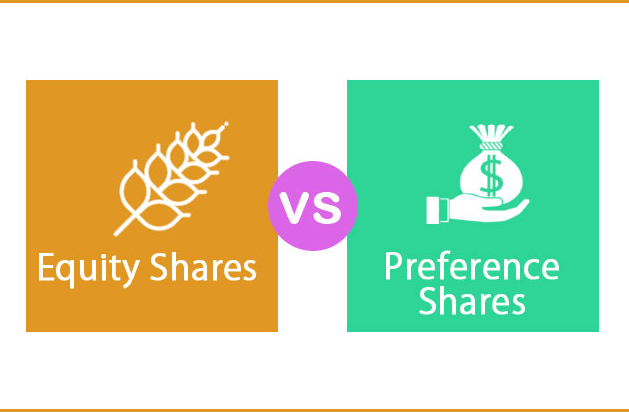
Equity vs Preference shares

We keep hearing the term ‘shares’ or ‘stock’ nowadays as it is a common topic of discussion. However, it is essential to know the different types of shares available in the market to be aware of our options as investors and also to determine which type suits the objectives of the investor better.

According to section 86 of the companies act, a company can issue only two types of shares:
(a) Preference shares
(b) Equity shares

PREFERENCE SHARES

As the name suggests, a preference share gives a preferential right to its shareholder, to get a fixed rate of dividend over other types of shares. This implies that preference shareholders are entitled to receive their dividends BEFORE any dividend is paid to equity shareholders from the profits.

Preference shareholders are also entitled to return of share capital before equity shareholders when the company is winding up. This implies, that after the company has paid off its debts to outsiders, the surplus and remaining assets are used to return the share capital to preference shareholders before equity shareholders. The remaining assets and surplus, if any, is distributed among the equity shareholders.

However, Preference shareholders don’t get to enjoy voting rights. They are only allowed to vote on

a) Any resolution affecting their rights

b) All resolutions when dividend has not been paid to them for the time period mentioned in the Act.

Types of Preference shares

Different kinds of shares have different rights associated with them.

  • Cumulative Preference Shares– Dividends not declared and paid in the current year (due to loss or inadequate profit), is accumulated and can be paid out of profits of subsequent years before dividend is paid to equity shareholders. Preference shares are always cumulative, unless the contrary is expressly stated in the Articles of Association.
  • Non-Cumulative Preference Shares- In the case of non-cumulative preference shares if dividend is not paid in any particular year, it lapses. It does not accumulate. Hence, it is not paid in the subsequent years.
  • Participating Preference Shares- In addition to the fixed rate of dividend, these shares carry a further right to participate with the equity shareholders in the surplus profits which remain after paying a certain rate of dividend to equity shareholders. Thus, they get two kinds of dividend, one fixed rate and the other changing every year depending on the level of excess profits. Similarly, such preference shares have a right to participate in the surplus assets of the company on its winding up after paying in full the preference and equity share capital.
  • Non-Participating Preference Shares– These shares are entitled to only a fixed rate of dividend. They do not participate either in the surplus or in the surplus assets on winding up after paying in full the preference and equity share capital. Preference shares are presumed to be non-participating unless specifically stated otherwise in the articles.
  • Convertible Preference Shares– These shares can be converted into equity shares within a specified time period.
  • Non-Convertible Preference Shares- These shares cannot be converted into equity shares. Preference shares are presumed to be non-convertible unless specifically stated otherwise in the articles.
  • Redeemable Preference Shares- Capital raised by means of these shares can be returned after a specified period or at any time at its options after giving notice as per terms of issue. These shares can be redeemed either out of profits or out of the proceeds of a fresh issue of shares.
  • Irredeemable Preference Shares- Any preference share that cannot be redeemed during the lifetime of the company is known as irredeemable preference Shares. Such shares are not offered anymore.

EQUITY SHARES

Equity shareholders are entitled to get dividend only after the fixed rate of dividend is paid to preference shareholders. Similarly, at the time of winding up of the company, only after returning preference share capital in full, and if there is any surplus, it will be paid to equity shareholders.

The rate of dividend is not fixed as it varies from year to year and depends on the profit earned every year. Higher the profits, higher the dividends of equity shareholders. However, in case of loss or inadequate profits, equity shareholders often do not get dividends for that year. Moreover, even in case of profits, the company can choose to retain the surplus in the business instead of paying dividends to equity shareholders. Hence, dividends for equity shareholders are not assured.

However, equity shareholders are considered as the owners of the company and hence, get voting rights on all resolutions.

To conclude, equity shares are quite risky since dividends and return of capital when the company is winding up is not assured. However, if the company is reputed and does well, equity shareholders dividends are usually more than fixed dividends of preference shareholders. Moreover, equity shareholders enjoy voting rights and are more involved in the management of the company as they are the owners.

On the other hand, for investors looking for fixed rate of return (dividends) and assured return of capital invested, preference shares should be a good investment.

Beauty Standards

Beauty is now being an issue for young girls. Growing up, we all remember Barbie. I love Barbie movies. They teach us about kindness, courage, friendship, values, etc. But, they also make young girls who play with Barbie dolls want to be like them. Barbie is the first beauty standard we were exposed to.

We then came to our early teens and were exposed to Victoria’s Secret models and the fashion industry. Early teen is also the place where we go through puberty. We all know puberty is not a pretty place. Trust me, nobody looks good when they are going through puberty.

Now, being exposed to the world of beauty and going through puberty puts us in a tough spot. We start hating ourselves. We know that most people do not look like models. We also know that models have a strict diet plan, they undergo surgeries, and there is constant use of Photoshop to make them look flawless. Our subconscious brain is aware of these facts. We still can’t help comparing ourselves to the pretty models.

We start looking down upon ourselves. We constantly try to become like models. A lot of girls become anorexic to be as thin as the models. A lot of girls also take supplements to reduce fat. A lot of them start saving up for cosmetic surgeries from a very young age. Most of the girls do these surgeries to feel more confident. I do not blame them. But I do blame our society for making them feel like they needed to change.

Our beauty standards are also being white-washed. We are now following western beauty standards. When we think of beauty, we imagine a tall, thin white girl. Even in African and Asian countries, this is what the beauty standard is. This makes people from those countries spend millions of dollars bleaching their skin even when it leads to skin cancer.

Our media makes millions of dollars selling products with the faces of white-washed beauty. These days when we see an advertisement, we look at the models more than the product. Are they selling the product or the beauty standard? 

Now our role in the world of beauty standards is to stop thinking it matters. Unless you want to become a model. People who have zero connection to the beauty industry have to stop worrying about their looks. It is not our work to look like that. So, we all need to end our obsession with beauty. If we are not being paid for being pretty, we do not have to obsess over it.

Next, we all need to stop thinking that every single woman has to be pretty. I know even men go through it. But, the American Society of Plastic surgeons reveals that women have accounted for 92% of cosmetic surgeries and men accounted for 8% of them. About 98% of the women feel immense pressure from external sources to look a certain way.

I really want to change that. So can we all start complimenting each other on qualities other than appearance? Instead of only telling a girl, you are pretty, beautiful, etc. Can we please tell them that they are talented, kind, intelligent, and caring?

I love getting compliments on my work rather than being complimented on my physical appearance. It is not in our control how we look like.    

Can we all start complimenting each other on who we are rather than what we look like?

Equity vs Preference shares

We keep hearing the term ‘shares’ or ‘stock’ nowadays as it is a common topic of discussion. However, it is essential to know the different types of shares available in the market to be aware of our options as investors and also to determine which type suits the objectives of the investor better.

According to section 86 of the companies act, a company can issue only two types of shares:
(a) Preference shares
(b) Equity shares

PREFERENCE SHARES

As the name suggests, a preference share gives a preferential right to its shareholder, to get a fixed rate of dividend over other types of shares. This implies that preference shareholders are entitled to receive their dividends BEFORE any dividend is paid to equity shareholders from the profits.

Preference shareholders are also entitled to return of share capital before equity shareholders when the company is winding up. This implies, that after the company has paid off its debts to outsiders, the surplus and remaining assets are used to return the share capital to preference shareholders before equity shareholders. The remaining assets and surplus, if any, is distributed among the equity shareholders.

However, Preference shareholders don’t get to enjoy voting rights. They are only allowed to vote on

a) Any resolution affecting their rights

b) All resolutions when dividend has not been paid to them for the time period mentioned in the Act.

Types of Preference shares

Different kinds of shares have different rights associated with them.

  • Cumulative Preference Shares– Dividends not declared and paid in the current year (due to loss or inadequate profit), is accumulated and can be paid out of profits of subsequent years before dividend is paid to equity shareholders. Preference shares are always cumulative, unless the contrary is expressly stated in the Articles of Association.
  • Non-Cumulative Preference Shares- In the case of non-cumulative preference shares if dividend is not paid in any particular year, it lapses. It does not accumulate. Hence, it is not paid in the subsequent years.
  • Participating Preference Shares- In addition to the fixed rate of dividend, these shares carry a further right to participate with the equity shareholders in the surplus profits which remain after paying a certain rate of dividend to equity shareholders. Thus, they get two kinds of dividend, one fixed rate and the other changing every year depending on the level of excess profits. Similarly, such preference shares have a right to participate in the surplus assets of the company on its winding up after paying in full the preference and equity share capital.
  • Non-Participating Preference Shares– These shares are entitled to only a fixed rate of dividend. They do not participate either in the surplus or in the surplus assets on winding up after paying in full the preference and equity share capital. Preference shares are presumed to be non-participating unless specifically stated otherwise in the articles.
  • Convertible Preference Shares– These shares can be converted into equity shares within a specified time period.
  • Non-Convertible Preference Shares- These shares cannot be converted into equity shares. Preference shares are presumed to be non-convertible unless specifically stated otherwise in the articles.
  • Redeemable Preference Shares- Capital raised by means of these shares can be returned after a specified period or at any time at its options after giving notice as per terms of issue. These shares can be redeemed either out of profits or out of the proceeds of a fresh issue of shares.
  • Irredeemable Preference Shares- Any preference share that cannot be redeemed during the lifetime of the company is known as irredeemable preference Shares. Such shares are not offered anymore.

EQUITY SHARES

Equity shareholders are entitled to get dividend only after the fixed rate of dividend is paid to preference shareholders. Similarly, at the time of winding up of the company, only after returning preference share capital in full, and if there is any surplus, it will be paid to equity shareholders.

The rate of dividend is not fixed as it varies from year to year and depends on the profit earned every year. Higher the profits, higher the dividends of equity shareholders. However, in case of loss or inadequate profits, equity shareholders often do not get dividends for that year. Moreover, even in case of profits, the company can choose to retain the surplus in the business instead of paying dividends to equity shareholders. Hence, dividends for equity shareholders are not assured.

However, equity shareholders are considered as the owners of the company and hence, get voting rights on all resolutions.

To conclude, equity shares are quite risky since dividends and return of capital when the company is winding up is not assured. However, if the company is reputed and does well, equity shareholders dividends are usually more than fixed dividends of preference shareholders. Moreover, equity shareholders enjoy voting rights and are more involved in the management of the company as they are the owners.

On the other hand, for investors looking for fixed rate of return (dividends) and assured return of capital invested, preference shares should be a good investment.

Beauty Standards

Beauty is now being an issue for young girls. Growing up, we all remember Barbie. I love Barbie movies. They teach us about kindness, courage, friendship, values, etc. But, they also make young girls who play with Barbie dolls want to be like them. Barbie is the first beauty standard we were exposed to.

We then came to our early teens and were exposed to Victoria’s Secret models and the fashion industry. Early teen is also the place where we go through puberty. We all know puberty is not a pretty place. Trust me, nobody looks good when they are going through puberty.

Now, being exposed to the world of beauty and going through puberty puts us in a tough spot. We start hating ourselves. We know that most people do not look like models. We also know that models have a strict diet plan, they undergo surgeries, and there is constant use of Photoshop to make them look flawless. Our subconscious brain is aware of these facts. We still can’t help comparing ourselves to the pretty models.

We start looking down upon ourselves. We constantly try to become like models. A lot of girls become anorexic to be as thin as the models. A lot of girls also take supplements to reduce fat. A lot of them start saving up for cosmetic surgeries from a very young age. Most of the girls do these surgeries to feel more confident. I do not blame them. But I do blame our society for making them feel like they needed to change.

Our beauty standards are also being white-washed. We are now following western beauty standards. When we think of beauty, we imagine a tall, thin white girl. Even in African and Asian countries, this is what the beauty standard is. This makes people from those countries spend millions of dollars bleaching their skin even when it leads to skin cancer.

Our media makes millions of dollars selling products with the faces of white-washed beauty. These days when we see an advertisement, we look at the models more than the product. Are they selling the product or the beauty standard? 

Now our role in the world of beauty standards is to stop thinking it matters. Unless you want to become a model. People who have zero connection to the beauty industry have to stop worrying about their looks. It is not our work to look like that. So, we all need to end our obsession with beauty. If we are not being paid for being pretty, we do not have to obsess over it.

Next, we all need to stop thinking that every single woman has to be pretty. I know even men go through it. But, the American Society of Plastic surgeons reveals that women have accounted for 92% of cosmetic surgeries and men accounted for 8% of them. About 98% of the women feel immense pressure from external sources to look a certain way.

I really want to change that. So can we all start complimenting each other on qualities other than appearance? Instead of only telling a girl, you are pretty, beautiful, etc. Can we please tell them that they are talented, kind, intelligent, and caring?

I love getting compliments on my work rather than being complimented on my physical appearance. It is not in our control how we look like.    

Can we all start complimenting each other on who we are rather than what we look like?

Why An Internship Is Important For Your Future Career ?

An Internship provides and Exposure

An Internship enables you to gain first-hand exposure of working in the real world.It also allows you to develop skills,knowledge, and other practices.An intern isn’t thrown into the wolves but rather given proper training, assignments,etc.

The opportunity to learn more about yourself

To know yourself is to know your goals and how to achieve them.At this point, the intern’s is given a chance to decide whether they wish to continue with their current career path or try something else.

Get connected and develop your professional network

Networking is an exchange of information between people, with the ultimate goal of establishing relationships to advance your professional career.

Prevent CV from going to Trash

Internships are the perfect way to enhance your resume through relevant experiences.During your internship you can acquire new skills and abilities which can improve yourself as a young professional, and furthermore enhance your resume.

Transition into a full time position

With an internship, you’re given the opportunity to showcase your talents,commitment and value to a prospective employer.Furthermore,employers are more inclined to hire you once they have invested time and money to train you.

Why An Internship Is Important For Your Future Career ?

An Internship provides and Exposure

An Internship enables you to gain first-hand exposure of working in the real world.It also allows you to develop skills,knowledge, and other practices.An intern isn’t thrown into the wolves but rather given proper training, assignments,etc.

The opportunity to learn more about yourself

To know yourself is to know your goals and how to achieve them.At this point, the intern’s is given a chance to decide whether they wish to continue with their current career path or try something else.

Get connected and develop your professional network

Networking is an exchange of information between people, with the ultimate goal of establishing relationships to advance your professional career.

Prevent CV from going to Trash

Internships are the perfect way to enhance your resume through relevant experiences.During your internship you can acquire new skills and abilities which can improve yourself as a young professional, and furthermore enhance your resume.

Transition into a full time position

With an internship, you’re given the opportunity to showcase your talents,commitment and value to a prospective employer.Furthermore,employers are more inclined to hire you once they have invested time and money to train you.

Software Engineering – A Layered Approach

What is layered approach of Software Engineering ?

Software engineering deals with process, methods, and their implementation tools and finally the quality of the product.This is known as the layered approach of software engineering

  1. Quality Focus

 Software engineering is a layered technology. Referring to Figure 1.1, any engineering approach must
rest on an organizational commitment to quality.
 Total quality management, Six Sigma and similar principles help a continuous software process
improvement, and this ultimately leads to the development of increasingly more mature approaches to
software engineering.
 The bedrock that supports software engineering is a quality focus.

2. Process Layer

 The foundation for software engineering is the process layer.
 Software engineering process is the glue that holds the technology layers together and enables balanced
and timely development of computer software.
 Process defines a framework for a set of key process areas that must be established for effective
delivery of software engineering technology.
 Process defines the context in which technical methods can be applied, work products are produced,
milestones are established, quality is ensured etc.

3. Method Layer

 Software engineering methods provide the technical how-to’s for building software.
 Methods encompass a broad array of tasks that include communication, requirements analysis, design,program construction, testing, and support.

4. Tools Layer

 Software engineering tools provide automated or semi-automated support for the process and the
methods.
 Tools are combines so that information created by one tool can be used by another, a system that is
developed for the support of software development, is called as computer-aided software engineering(CASE). CASE combines software, hardware, and a software engineering database.