Why is healthcare in the U.S. so expensive ?

These days, all it takes is one surprise medical bill to send a patient into bankruptcy. The United States’ health care system operates differently from many others in the world with high costs for the individual as a distinguishing characteristic. In fact, the higher prices mean the U.S. spends more on health care than other “developed countries,”. According to a February 2020 survey, almost one in three Americans worries about affording health care. So, what exactly makes health care in the U.S. so expensive?

The most important reason is that U.S. health care is based on a “for-profit insurance system,” one of the only ones in the world, according to Carmen Balber, executive director of Consumer Watchdog, who’s advocated for reform in the health-insurance market. In the U.S, most health insurance is administered by private companies and individuals must pay for it themselves, even if their employer subsidizes some of it. The underlying motive to make money has a ripple effect that increases prices.

Similarly, Dr. Georges Benjamin, executive director of the American Public Health Association, pointed to a lack of universal health care, where everyone is guaranteed access without undergoing financial hardship, as a primary reason for high costs.”Part of our system is that everybody is … paying for somebody else’s underpayment, whether they like it or not,” he said. “Everybody is trying to figure out who else can pay for it instead of them.”

Pay per service

U.S. health care exists in a system where patients are charged based on the services they receive. In many parts of the healthcare ecosystem, people are paid for volume, and so that fuels an orientation toward, ‘Might as well get an extra scan.’ It’s in the economic interest of the hospital, the physician, the health care system when they’re being paid fee-for service, and the justification is that more is better.

As a result, there’s lower use of primary care, because the fee-for-service model “encourages overutilization.” Instead of taking people in a room, examining them, taking the history and spending the time talking to patients, doctors are quick to jump to getting a CAT scan or a diagnostic test when a history and physical exam would tell the answer. The fee-for-service creates an incentive to provide more procedures, instead of helping patients get healthier so that the nation as a whole needs fewer procedures.

Lack of government regulation

The companies that provide and charge for health care, like hospital systems and drug makers, have more power to keep costs high when they’re negotiating with multiple potential payers, like various private insurance companies. But when they must negotiate with a single payer, like the federal government, there’s more pressure to meet the demand in order to sell their services.

For example, a study found that private insurance companies paid almost two and a half times what Medicare would’ve paid for the same medical service at the same facility.

To make matters costlier, the U.S. government doesn’t regulate what most companies in the health care space can charge for their services, whether it’s insurance, drugs or care itself.

Consolidation of insurance and hospital systems

While the U.S. healthcare system itself may be fragmented, in many parts of the country, there’s only one or two companies providing health insurance or medical care. This means that, again, there’s little to no incentive for them to lower costs since patients don’t have much of a choice.

What’s more, health care providers are paid, on average, much more in the U.S. than in other countries. “Despite the enormous cost that we have in America for health care, we don’t get the same value of our health care dollar as other nations do,” Benjamin added. “If you get sick, this is the place to be, no doubt about that, but … we don’t have a system with everybody in and nobody out.”
Why is healthcare in the U.S. so expensive ?

These days, all it takes is one surprise medical bill to send a patient into bankruptcy. The United States’ health care system operates differently from many others in the world with high costs for the individual as a distinguishing characteristic. In fact, the higher prices mean the U.S. spends more on health care than other “developed countries,”. According to a February 2020 survey, almost one in three Americans worries about affording health care. So, what exactly makes health care in the U.S. so expensive?

The most important reason is that U.S. health care is based on a “for-profit insurance system,” one of the only ones in the world, according to Carmen Balber, executive director of Consumer Watchdog, who’s advocated for reform in the health-insurance market. In the U.S, most health insurance is administered by private companies and individuals must pay for it themselves, even if their employer subsidizes some of it. The underlying motive to make money has a ripple effect that increases prices.

Similarly, Dr. Georges Benjamin, executive director of the American Public Health Association, pointed to a lack of universal health care, where everyone is guaranteed access without undergoing financial hardship, as a primary reason for high costs.”Part of our system is that everybody is … paying for somebody else’s underpayment, whether they like it or not,” he said. “Everybody is trying to figure out who else can pay for it instead of them.”

Pay per service

U.S. health care exists in a system where patients are charged based on the services they receive. In many parts of the healthcare ecosystem, people are paid for volume, and so that fuels an orientation toward, ‘Might as well get an extra scan.’ It’s in the economic interest of the hospital, the physician, the health care system when they’re being paid fee-for service, and the justification is that more is better.

As a result, there’s lower use of primary care, because the fee-for-service model “encourages overutilization.” Instead of taking people in a room, examining them, taking the history and spending the time talking to patients, doctors are quick to jump to getting a CAT scan or a diagnostic test when a history and physical exam would tell the answer. The fee-for-service creates an incentive to provide more procedures, instead of helping patients get healthier so that the nation as a whole needs fewer procedures.

Lack of government regulation

The companies that provide and charge for health care, like hospital systems and drug makers, have more power to keep costs high when they’re negotiating with multiple potential payers, like various private insurance companies. But when they must negotiate with a single payer, like the federal government, there’s more pressure to meet the demand in order to sell their services.

For example, a study found that private insurance companies paid almost two and a half times what Medicare would’ve paid for the same medical service at the same facility.

To make matters costlier, the U.S. government doesn’t regulate what most companies in the health care space can charge for their services, whether it’s insurance, drugs or care itself.

Consolidation of insurance and hospital systems

While the U.S. healthcare system itself may be fragmented, in many parts of the country, there’s only one or two companies providing health insurance or medical care. This means that, again, there’s little to no incentive for them to lower costs since patients don’t have much of a choice.

What’s more, health care providers are paid, on average, much more in the U.S. than in other countries. “Despite the enormous cost that we have in America for health care, we don’t get the same value of our health care dollar as other nations do,” Benjamin added. “If you get sick, this is the place to be, no doubt about that, but … we don’t have a system with everybody in and nobody out.”
TINY PORTIONS OF FOOD AND FANCY RESTUARANTS

It all started in France when that people decided o serve tiny portions of food for a very simple reason that is to make enough place for some dessert and a fancy coffee. When you eat a lot of food at once you tend to forgot the taste or get used to it that it doesn’t leave a mark i your memory. But the less amount of food that you eat you happen to remember the taste for a lot longer and appreciate it.

Most fancy restaurants have 3-6 course meals that makes it easy for you to try them all out . It would be a waste if you ordered a 6 course meal that consists of a large amount of food and not have enough space in your tummy to finish it off. People often happen to appreciate things that are rare and limited edition, therefore eating a tiny amount of luxurious food is somewhat pleasure seeking to the people.

The chefs don’t just make food, they make pieces of art. It is impossible to make food look art when it is served in a large amount as it might end up looking like ‘a meal that is made by emptying the fridge’. It also is very pleasing to the people when they eat something very elegant with shiny cutlery and pretty clothes, rather than eating something messy and huge with pretty clothes.

Fancy restaurants are all about dim lighting, pretty aura, and delicate fragrances. These aspects make the atmosphere look more comfortable and keeps you from leaving the place early. Whereas the scenario with tiny and cheap restaurants are that they are more prone to attract people’s gaze and are brightly lit, that makes the people cautious of what they eat, how they eat, and with who they eat.

Fun fact is that the fancy restaurants can make a new dish with the left over food and you wouldn’t know. They can actually save a large amount of food from being thrown away, that the fast food makers fail to do so.

Article by : Haniah Mirza

TINY PORTIONS OF FOOD AND FANCY RESTUARANTS

It all started in France when that people decided o serve tiny portions of food for a very simple reason that is to make enough place for some dessert and a fancy coffee. When you eat a lot of food at once you tend to forgot the taste or get used to it that it doesn’t leave a mark i your memory. But the less amount of food that you eat you happen to remember the taste for a lot longer and appreciate it.

Most fancy restaurants have 3-6 course meals that makes it easy for you to try them all out . It would be a waste if you ordered a 6 course meal that consists of a large amount of food and not have enough space in your tummy to finish it off. People often happen to appreciate things that are rare and limited edition, therefore eating a tiny amount of luxurious food is somewhat pleasure seeking to the people.

The chefs don’t just make food, they make pieces of art. It is impossible to make food look art when it is served in a large amount as it might end up looking like ‘a meal that is made by emptying the fridge’. It also is very pleasing to the people when they eat something very elegant with shiny cutlery and pretty clothes, rather than eating something messy and huge with pretty clothes.

Fancy restaurants are all about dim lighting, pretty aura, and delicate fragrances. These aspects make the atmosphere look more comfortable and keeps you from leaving the place early. Whereas the scenario with tiny and cheap restaurants are that they are more prone to attract people’s gaze and are brightly lit, that makes the people cautious of what they eat, how they eat, and with who they eat.

Fun fact is that the fancy restaurants can make a new dish with the left over food and you wouldn’t know. They can actually save a large amount of food from being thrown away, that the fast food makers fail to do so.

Article by : Haniah Mirza

Why the rise in divorce ?

Between 1970 and 2008, Cheng-Tong Lir Wang and Evan Schofer, two sociologists from the University of California discovered that the global divorce rate rose from 2.6 divorces for every 1,000 married people to 5.5 – the rate had more than doubled. Meanwhile, in 2017 India’s divorce rate — stood at 1%, according to a report from the Organisation for Economic Co-operation and Development. While the absolute number of divorces has gone up from 1 in 1,000 to 13 in 1,000 over the last decade or so, India still remains at the top of the list of countries with the lowest divorce rates. But why a sudden increase in divorce rates for a country where marriage holds the highest status and divorce is still a taboo?

Divorces are riddled with stigma in India with divorced women being looked down upon in society. One of the main reasons for the rise in divorce rates is women finally taking a stand against the injustice done to them for generations. Today, three billion women and girls live in a country where rape within marriage is not explicitly criminalized. But injustice and violations take other forms as well. In one out of five countries girls do not have the same inheritance rights as boys, while in others (a total of 19 countries) women are required by law to obey their husbands. Around one third of married women in developing countries report having little or no say over their own healthcare. A divorce gives them the opportunity to be more in control of their lives and not rely on anyone else.

Cheating and affairs are also major contributors to divorce in India. This issue has grown with the growth of a more digitalised world, with apps providing the ability to contact people at a ‘tap’ of a screen. Many Indian women in marriages are even aware of their husbands having affairs and ‘turn a blind-eye’ due to their age or years in the marriage. But it does not mean the dynamics of the marriage are happy anymore. Having an affair is the one thing that is destructive to a marriage, once found out. It destroys trust, love and care but for many, the marriage will carry on due to family and society pressures.

Indian marriages are influenced, supported and inspired by family. But also, sadly, marriages are destroyed by family too. Especially, extended family. The most common marital issue is that of the in-laws and the daughter-in-law. Breakdown of Indian marriages where the daughter-in-law is not good enough for the in-laws is one of the biggest reasons for divorce in India. From issues like ‘not enough dowry’ to ‘not being part of the family’ to ‘stealing the son from the family’ are all typical examples of the cause.

Divorce has led to the death of marriages which gives it a reputation of it being a negative word. But women are challenging that perception now and pushing for a change. Through stand-up comedies, spoken word poetry, Instagram accounts and support groups, they are fighting the stigma around divorce, one act, one verse, one post at a time. The end of a marriage could mean the beginning of a happy life and not necessarily the end of life itself.

Why the rise in divorce ?

Between 1970 and 2008, Cheng-Tong Lir Wang and Evan Schofer, two sociologists from the University of California discovered that the global divorce rate rose from 2.6 divorces for every 1,000 married people to 5.5 – the rate had more than doubled. Meanwhile, in 2017 India’s divorce rate — stood at 1%, according to a report from the Organisation for Economic Co-operation and Development. While the absolute number of divorces has gone up from 1 in 1,000 to 13 in 1,000 over the last decade or so, India still remains at the top of the list of countries with the lowest divorce rates. But why a sudden increase in divorce rates for a country where marriage holds the highest status and divorce is still a taboo?

Divorces are riddled with stigma in India with divorced women being looked down upon in society. One of the main reasons for the rise in divorce rates is women finally taking a stand against the injustice done to them for generations. Today, three billion women and girls live in a country where rape within marriage is not explicitly criminalized. But injustice and violations take other forms as well. In one out of five countries girls do not have the same inheritance rights as boys, while in others (a total of 19 countries) women are required by law to obey their husbands. Around one third of married women in developing countries report having little or no say over their own healthcare. A divorce gives them the opportunity to be more in control of their lives and not rely on anyone else.

Cheating and affairs are also major contributors to divorce in India. This issue has grown with the growth of a more digitalised world, with apps providing the ability to contact people at a ‘tap’ of a screen. Many Indian women in marriages are even aware of their husbands having affairs and ‘turn a blind-eye’ due to their age or years in the marriage. But it does not mean the dynamics of the marriage are happy anymore. Having an affair is the one thing that is destructive to a marriage, once found out. It destroys trust, love and care but for many, the marriage will carry on due to family and society pressures.

Indian marriages are influenced, supported and inspired by family. But also, sadly, marriages are destroyed by family too. Especially, extended family. The most common marital issue is that of the in-laws and the daughter-in-law. Breakdown of Indian marriages where the daughter-in-law is not good enough for the in-laws is one of the biggest reasons for divorce in India. From issues like ‘not enough dowry’ to ‘not being part of the family’ to ‘stealing the son from the family’ are all typical examples of the cause.

Divorce has led to the death of marriages which gives it a reputation of it being a negative word. But women are challenging that perception now and pushing for a change. Through stand-up comedies, spoken word poetry, Instagram accounts and support groups, they are fighting the stigma around divorce, one act, one verse, one post at a time. The end of a marriage could mean the beginning of a happy life and not necessarily the end of life itself.

Goods and Services Tax

Everyone may have heard about GST up to this point. GST is for Goods & Services Tax, which is a national tax levied on the manufacture, sale, and consumption of goods and services that makes no distinction between goods and services for taxation. It will largely replace all indirect taxes levied by the Indian central and state governments on goods and services. In India, The Atal Bihari Vajpayee government proposed the introduction of GST in 2000. The Goods and Service Tax Act was passed by Parliament on March 29, 2017, and into effect on July 1, 2017. To put it another way, the Products and Service Tax (GST) is a tax that is levied on the provision of goods and services.

For the purpose of tax collection, it was split into five tax slabs: 0%, 5%, 12%, 18%, and 28 percent. Individual state governments tax petroleum goods, alcoholic beverages, electricity, and real estate separately. Rough precious and semi-precious stones are taxed at a special rate of 0.25 percent, while gold is taxed at 3%. Furthermore, a 22 percent cess or other charges on top of the 28 percent applies to few things, such as aerated drinks, expensive cars, and tobacco products, are subject to GST. Pre-GST, most commodities had a statutory tax rate of around 26.5 percent; post-GST, most goods are likely to have a tax rate of around 18 percent. 

OBJECTIVES OF GST:

One of the main goals of the Products and Service Tax (GST) is to avoid double taxation or the effects of taxes on the cost of production and delivery of goods and services. The elimination of cascading effects, i.e. tax on tax till ultimate consumers, will considerably improve the competitiveness of original goods and services in the market, resulting in a positive influence on the country’s GDP growth. It is not only desirable but also necessary, to implement a GST to replace the existing numerous tax structures of the federal and state governments. It would be conceivable to offer full credit for input taxes collected if multiple taxes were integrated into a GST system. GST, or Goods and Services Tax, is a destination-based consumption tax based on the VAT idea.

 GST Rate of other countries:-

Australia 10%

France 19.6% 

Canada 5%

Germany 19%

Japan 5%

Singapore 7%

New Zealand 15%

Types of GST :

1. CGST (Central Goods and Service Tax)

The Central Goods and Services Tax (CGST) is a federal tax on goods and services. It applies to vendors who do business within the state. The collected taxes will be shared with the central authority. 

2. SGST (State Goods and Service Tax) 

A state’s Goods and Services Tax (SGST) is a tax on goods and services. It applies to vendors who do business in the state. The collected taxes will be distributed to the appropriate state authority.

3. IGST (Integrated Goods and Service Tax)

The Integrated Goods and Services Tax (IGST) is a type of tax that applies to both goods and services. It is relevant to suppliers who do interstate and import operations. The collected taxes will be split between the federal and state governments.


4. UTGST (Union Territory Goods and Services Tax)

 The UTGST is levied on supplies made in the Union Territories of the Andaman and Nicobar Islands,

Chandigarh, Dadra and Nagar Haveli, Daman and Diu, and Lakshadweep.

GST Advantages

  1. GST is an easy-to-understand tax that also reduces the number of indirect taxes.
  2. There will be no hidden taxes and the cost of conducting business would be cheaper because GST will not be a burden to registered shops.
  3. People will benefit because prices will drop, which will boost businesses since consumption will rise.
  4. Separate taxes for goods and services, as is the current taxation system, necessitate the split of transaction values into the value of products and services for taxation, resulting in increased complexities, administrative, and compliance expenses.
  5. When all of the taxes are integrated into the GST system, the tax burden can be divided evenly between manufacturing and services.
  6. GST will be levied only at the ultimate point of consumption, following the VAT principle, and not at numerous stages along the way (from manufacturing to retail outlets). This will aid in the removal of economic distortions and the creation of a common national market.
  7. GST will also aid in the creation of a transparent and anti-corruption tax administration. Currently, a tax is assessed when a finished product leaves a factory, which is paid by the manufacturer, and it is levied again when the product is sold at a retail outlet.
  8. GST is supported by the GSTN, a fully integrated tax infrastructure that handles all aspects of the tax.

Disadvantages

According to some economists, GST in India might have a detrimental impact on the real estate sector. It would raise the cost of new homes by up to 8% and diminish demand by roughly 12%.

According to some experts, CGST (Central GST) and SGST (State GST) are simply new names for the Central Excise/Service Tax, VAT, and CST. As a result, the number of tax levels does not decrease significantly.

Currently, only 4% of retail products are subject to tax. Garments and clothing may become more expensive after the GST is implemented.

It would have an impact on the aviation sector. Currently, service taxes on airfares range from 6% to 9%. With GST, the rate will rise to over 15%, nearly doubling the tax rate.

The entire ecosystem would experience teething problems and learn as a result of the adoption and migration to the new GST system.

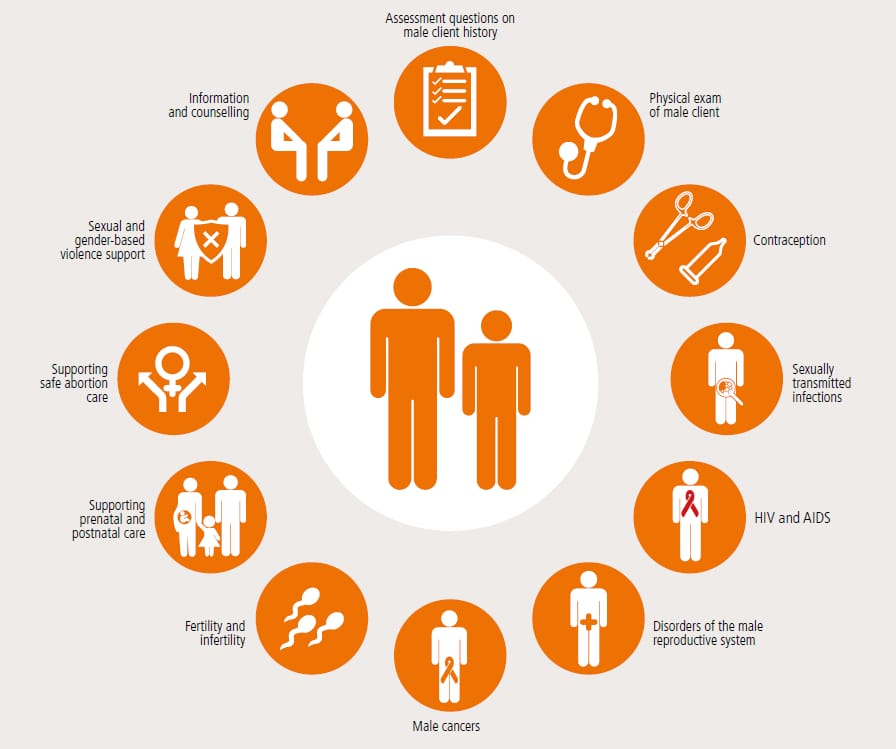
Reproductive Health

Total well being in all aspects of the reproduction such as physically mentally and emotionally is called Reproductive health.

All the reproductive organs should be healthy with normal function.

Major problems associated with reproductive health

Overpopulation

  • Overpopulation causes a scarcity of every basic need.
  • It affect the well-being of reproductive health also.
  • To overcome the problem of overpopulation India started family planning program in 1951.
  • Later it was changed to reproductive and Child Health Care program in 1997.
  • A rapid decline in death rate, maternal mortality rate and infant mortality rate leads to overpopulation.

Small family, happy family

Steps to control population explosion

  • People should be educated about the advantages of smaller family.
  • Raising the marriageable age of male and female is an effective way to control the population.
  • Couples should be motivated to family planning by adopting birth control measures.

Step under reproductive and Child Health Care program

  • Increase in awareness about disease related to reproductive system example – sexual transmitted disease (STDs).
  • Increase in awareness through the audio visual media.
  • Increase in awareness about different contraceptive methods.
  • Increase awareness about sex education.

Female foeticide

  • Female foeticide can affect reproductive and sexual health of a Woman.
  • Due to the use of amniocentesis cases of female foeticide increases.
  • Amniocentesis is the technique in which amniotic fluid is studied for any type of enzyme disorder, chromosomal disorder or other bio-chemical disorder.
  • Amniocentesis method is misused to know the sex of an Unborn baby.

Sex education

  • Due to lack of education, people are not concerned about safe and hygienic sexual practice.
  • Introduction of the education in school and colleges its another step to provide right information to the youth.
  • Sex education can save the young youth people from myths and misconceptions about sex related issues.
  • Should provide knowledge about birth control methods and care of mother and child.

Our health is in our own hand…

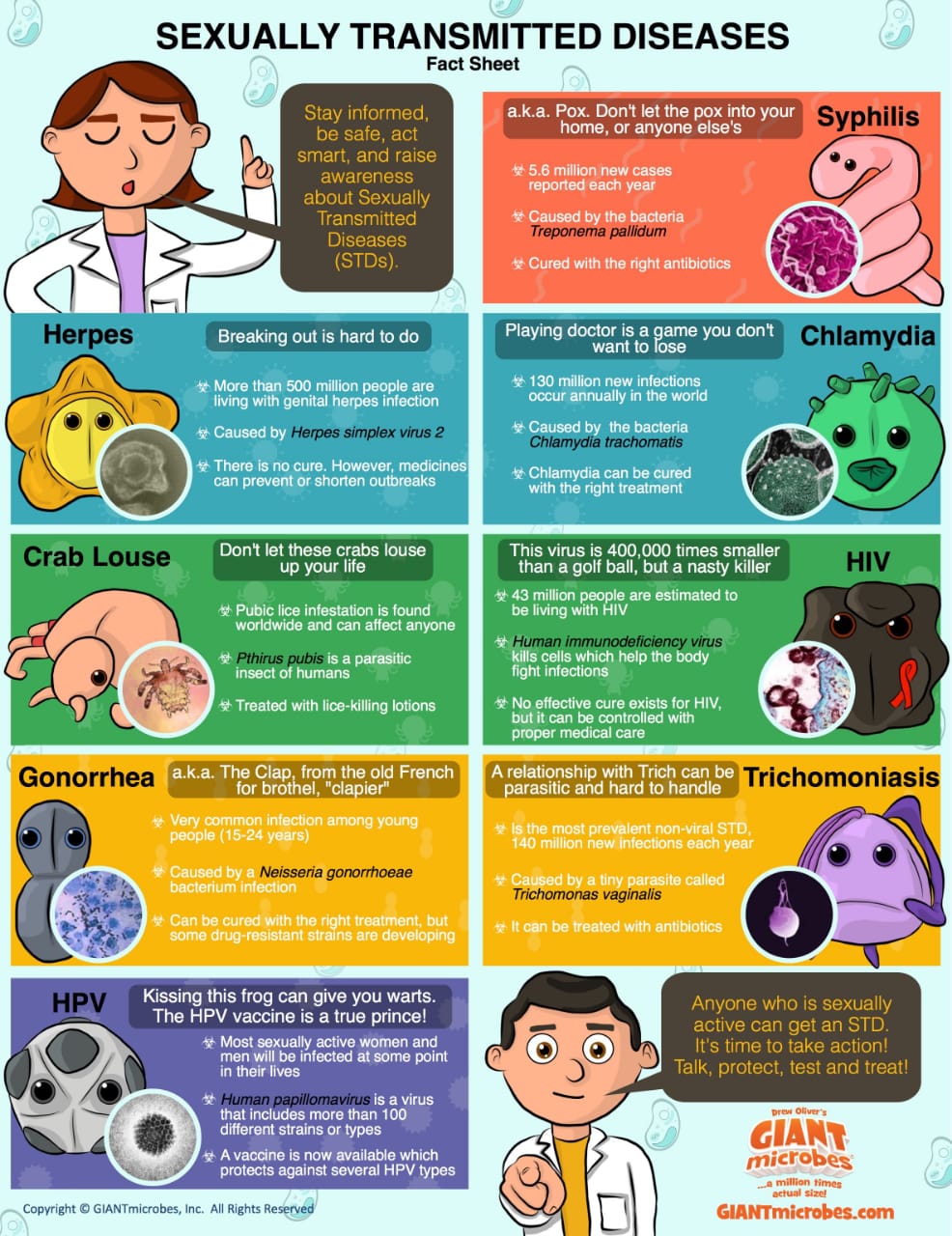
Sexually transmitted disease

Chlamydiasis

  • Caused by Gram Negative bacteria Chlamydia trachomatis.
  • Causes urethritis which result in painful urination and pus discharge.
  • In male, it causes infertility by causing oligospermia.
  • It increases the chance of ectopic pregnancy.
  • Treatment
    • Treated by antibiotics.

Gonorrhea

  • Causes by negative bacteria Neisseria Gonorrhea.
  • Causes inflammation of reproductive tract, urinary tract infection, and urethritis.
  • Treatment
    • Newly born child is given 1% AGNO3 dose to prevent eye. infection

Genital herpes

  • Causes by herpes simplex virus
  • Causes painful blisters
    • In male – glans penis and foreskin
    • In female – external genitalia
  • There is no proper treatment
  • Treatment is only to extend life.

Genital warts

  • Caused by human papiloma virus.
  • Causes Cancer of different organs such as-
    • cervical cancer
    • penile cancer
    • vaginal cancer
    • vulvar cancer
    • anal cancer
  • Treatment
    • Alpha interferon
    • cryotherapy
    • electrocautery

It is very important to provide information to the couple or who are in marriageable age group about birth control methods, care of pregnant women, important of breastfeeding, equality to the gender and equal opportunity to the male and female child, reproductive tract infections etc.

The education of reproductive health should be provided to all

Reproductive Health

Total well being in all aspects of the reproduction such as physically mentally and emotionally is called Reproductive health.

All the reproductive organs should be healthy with normal function.

Major problems associated with reproductive health

Overpopulation

  • Overpopulation causes a scarcity of every basic need.
  • It affect the well-being of reproductive health also.
  • To overcome the problem of overpopulation India started family planning program in 1951.
  • Later it was changed to reproductive and Child Health Care program in 1997.
  • A rapid decline in death rate, maternal mortality rate and infant mortality rate leads to overpopulation.

Small family, happy family

Steps to control population explosion

  • People should be educated about the advantages of smaller family.
  • Raising the marriageable age of male and female is an effective way to control the population.
  • Couples should be motivated to family planning by adopting birth control measures.

Step under reproductive and Child Health Care program

  • Increase in awareness about disease related to reproductive system example – sexual transmitted disease (STDs).
  • Increase in awareness through the audio visual media.
  • Increase in awareness about different contraceptive methods.
  • Increase awareness about sex education.

Female foeticide

  • Female foeticide can affect reproductive and sexual health of a Woman.
  • Due to the use of amniocentesis cases of female foeticide increases.
  • Amniocentesis is the technique in which amniotic fluid is studied for any type of enzyme disorder, chromosomal disorder or other bio-chemical disorder.
  • Amniocentesis method is misused to know the sex of an Unborn baby.

Sex education

  • Due to lack of education, people are not concerned about safe and hygienic sexual practice.
  • Introduction of the education in school and colleges its another step to provide right information to the youth.
  • Sex education can save the young youth people from myths and misconceptions about sex related issues.
  • Should provide knowledge about birth control methods and care of mother and child.

Our health is in our own hand…

Sexually transmitted disease

Chlamydiasis

  • Caused by Gram Negative bacteria Chlamydia trachomatis.
  • Causes urethritis which result in painful urination and pus discharge.
  • In male, it causes infertility by causing oligospermia.
  • It increases the chance of ectopic pregnancy.
  • Treatment
    • Treated by antibiotics.

Gonorrhea

  • Causes by negative bacteria Neisseria Gonorrhea.
  • Causes inflammation of reproductive tract, urinary tract infection, and urethritis.
  • Treatment
    • Newly born child is given 1% AGNO3 dose to prevent eye. infection

Genital herpes

  • Causes by herpes simplex virus
  • Causes painful blisters
    • In male – glans penis and foreskin
    • In female – external genitalia
  • There is no proper treatment
  • Treatment is only to extend life.

Genital warts

  • Caused by human papiloma virus.
  • Causes Cancer of different organs such as-
    • cervical cancer
    • penile cancer
    • vaginal cancer
    • vulvar cancer
    • anal cancer
  • Treatment
    • Alpha interferon
    • cryotherapy
    • electrocautery

It is very important to provide information to the couple or who are in marriageable age group about birth control methods, care of pregnant women, important of breastfeeding, equality to the gender and equal opportunity to the male and female child, reproductive tract infections etc.

The education of reproductive health should be provided to all

First Olympic Gold Medal for Bermuda

Olympics is a leading international sports event held every four years. With more than 200 participant nations.
Each year hundreds of athletes from all over the world gather at the host country and rival each other for first place in different events.
This year Bermuda,  a British island territory in North Atlantic which first participated in the games in the year 1936.
Witnessed a major development as Flora Duffy wins first-ever gold for the country in triathlon.
Who is Flora Duffy?
Duffy, a 33-year-old female athlete who was diagnosed with anemia in 2013. But still, she managed to bounce back. She is also a two-time former world triathlon series champion.
What is Triathlon?
Triathlon is a grueling race made up of a one-mile open water swim, 25 miles of biking, and a run of 4.6 miles.
The 33-year-old finished with a time of 1hour55:36 minutes. Her opponent, Georgia Taylor-Brown ended in second place took a minute more than her.
Third place was secured by the Katie Zaferes of the United States.

The Man you admire most- M.K. Gandhi

The man I admire most is M. K. Gandhi. His full name is Mohandas Karamchand Gandhi. He was attributed ‘Mahatma’ for his glorious life. He was born at Porebandar in Gujarat (India) on 2 October, 1869. His father, Karamchand Uttamchand Gandhi (1822–1885), served as the diwan of Porbandar state. Gandhi’s mother name was Putlibai. In May 1883, the 13-year-old Mohandas was married to 14-year-old Kasturbai Makhanji Kapadia (her first name was usually shortened to “Kasturba”), in an arranged marriage, according to the custom of the region at that time. His wedding was a joint event, where his brother and cousin were also married. Recalling the day of their marriage, he once said, “As we didn’t know much about marriage, for us it meant only wearing new clothes, eating sweets and playing with relatives.” As was prevailing tradition, the adolescent bride was to spend much time at her parents’ house, and away from her husband.

In an interview Gandhi said about his lustful feelings he felt for his young bride” even at school I used to think of her, and the thought of nightfall and our subsequent meeting was ever haunting me. He later recalled feeling jealous and possessive of her, such as when she would visit a temple with her girlfriends, and being sexually lustful in his feelings for her.”

In 1921, Gandhi adopted the use of an Indian dhoti and a shawl (in the winter) and only (dhoti in the summer) woven with yarn hand-spun on a traditional Indian spinning wheel (charkha) as a sign of identification with India’s rural poor.

After completing education in India he went to England in order to study Law. He obtained the degree in Law and returned to India and began to practise in Mumbai High court at first and then in South Africa. While he was there, he started a new era of non-violence movement to reduce the oppression of the Europeans against the natives of South Africa. The movement became famous as Satyagraha and when he came to India again he used this method against the British rule. It was strengthened in Non-cooperation Movement in 1921 and Quit India Movement in 1942. He became the leader of the people giving his clarion call-“Do or die’. After a long struggle under his leadership India won her independence on 15 August in 1947.

Gandhi did many experiment like experiment with food, non-violence, and the freedom fight but the experiment which has made him a villain in everyone’s eye was “The experiment of Gandhi’s Brahmacharya” which was criticised by various senior leaders like- Jawaharlal Nehru, Sardar Vallabhbhai Patel had called it a “terrible blunder”, and had asked him to stop it.

Gandhi tried to test and prove to himself his brahmacharya. The experiments began some time after the death of his wife in February 1944. At the start of his experiment, he had women sleep in the same room but in different beds. He later slept with women in the same bed but clothed, and finally, he slept naked with women. In April 1945, Gandhi referenced being naked with several “women or girls” in a letter to Birla as part of the experiments.

According to Gandhi he asked his grandniece Manu when she was 18 years old if she wanted to help him with his experiments to test their “purity”, for which she readily accepted. Gandhi slept naked in the same bed with Manu with the bedroom doors open all night. Manu stated that the experiment had no “ill effect” on her. Gandhi also shared his bed with 18-year-old Abha, wife of his grandnephew Kanu. Gandhi would sleep with both Manu and Abha at the same time. None of the women who participated in the brahmachari experiments of Gandhi indicated that they had sex or that Gandhi behaved in any sexual way. Those who went public said they felt as though they were sleeping with their aging mother.

He was shot dead on 30 January, 1948 by a derailed young man named Nathuram Godse. But his life and message are still the source of inspiration not only in the national field, but also in the international field.

TIPS TO BE MORE LIKE-ABLE

Everyone had struggled with confidence before and it’s completely normal. If you are wanting to come out of your comfort zone and do better in making friends or make a good first impression, then these tips are fair enough to help you today.

1) ASK QUESTIONS

People tend to lean towards the one who need help. If you are a person who asks a lot of questions then it is a way you are attracting a lot of people. It could also be a great way to start a conversation, but never over-ask because people might interpret you as a little annoying.

2) SHOW YOUR FLAWS

Never shy away from showing your flaws as it makes you more relatable and people often would feel comfortable around you. You will soon gain the trust of many people and get along well with people who have similar flaws.

3) SPREAD POSITIVITY

People often tend to find the happiest ones more attractive as they make sure to make everyone laugh and feel happy. If you have a positive aura then make sure you spread all those smiles and share those jokes that can create an atmosphere that is much lighter. Beware of faking emotions, it can lead to you loosing people as well.

4) CARE TRUTHFULLY

If you happen to help the ones who are in desperate need then you leave a good impression not only on that person but also on the ones who are silently watching you help. People feel gratitude towards the ones who tend to be more kind and caring. Make it genuine, and people will seek for you when they are in urgent need. Never expect anything in return!

5) A POSITIVE BODYLANGUAGE

A positive body language can decide your likability. If you always carry a smile on your face and are friendly then you will be able to gain more people’s attention. Remember to never fake your actions and build a bad impression on people. Words spread faster and can bring you bad luck.

Most importantly make sure you are taking care of yourself as it is the most important aspect in life.

Help yourself first, then help others.

Aricle By : Haniah Mirza

TIPS TO BE MORE LIKE-ABLE

Everyone had struggled with confidence before and it’s completely normal. If you are wanting to come out of your comfort zone and do better in making friends or make a good first impression, then these tips are fair enough to help you today.

1) ASK QUESTIONS

People tend to lean towards the one who need help. If you are a person who asks a lot of questions then it is a way you are attracting a lot of people. It could also be a great way to start a conversation, but never over-ask because people might interpret you as a little annoying.

2) SHOW YOUR FLAWS

Never shy away from showing your flaws as it makes you more relatable and people often would feel comfortable around you. You will soon gain the trust of many people and get along well with people who have similar flaws.

3) SPREAD POSITIVITY

People often tend to find the happiest ones more attractive as they make sure to make everyone laugh and feel happy. If you have a positive aura then make sure you spread all those smiles and share those jokes that can create an atmosphere that is much lighter. Beware of faking emotions, it can lead to you loosing people as well.

4) CARE TRUTHFULLY

If you happen to help the ones who are in desperate need then you leave a good impression not only on that person but also on the ones who are silently watching you help. People feel gratitude towards the ones who tend to be more kind and caring. Make it genuine, and people will seek for you when they are in urgent need. Never expect anything in return!

5) A POSITIVE BODYLANGUAGE

A positive body language can decide your likability. If you always carry a smile on your face and are friendly then you will be able to gain more people’s attention. Remember to never fake your actions and build a bad impression on people. Words spread faster and can bring you bad luck.

Most importantly make sure you are taking care of yourself as it is the most important aspect in life.

Help yourself first, then help others.

Aricle By : Haniah Mirza

People who single handedly brought a CHANGE in the society

What we learn from our society we follow that and pass on the same to the generation which follows. In India, if anyone wants to make a change in the normal dynamical functioning of a society, they are generally demotivated by the statement that “What will happen by a SINGLE PERSON’s efforts”. This is what we have heard since ages and this is what is being passed on to us from the older generations. As people prefer security in every sense, whether it be life security, job or financial security. Because to make changes requires guts to stand alone and continue doing what one believes in.

Also, we inspire each other in the way we may have never thought of. How many of you after watching a sport inspired movies have at least once tried that sport? Inspiration lies in every corner of the world i.e. if you really open your eyes to see it.

This blog will tell you about some INDIANS who single handedly managed to bring a drastic change in the society.

  1. JADAV PAYENG– Popularly known as the “FOREST MAN OF INDIA”, a title which was conferred to him by the vice Chancellor of the Jawaharlal Nehru University in 2012, Jadav is a man responsible for creating the  forest that stands at 550 hectares today on the island of Majuli near Jorhat.

It all started when a teenager Jadav living in the state of Assam near the Brahmaputra river region noticed the decreasing number of reptiles and snakes from the forests near his house due to excessive cutting of the trees. The elders of his village told him that if a house is not made for the animals they will all die. He thought about how he will feel when instead of snakes, the number of human started to decrease. He knew he had to do something, so he went to the forest department with his problem which was actually everyone’s but it was conveniently ignored. The forest department then taunted him to start planting trees himself and that is what he did. He started planting saplings on a small deserted island near the Brahmaputra river for nearly three decades and now this full grown forests spread over many hectares of land.

People travel from across the globe to see his forest that is visited by 120 species of birds, including migratory ones; and elephants, rhinos, and tigers that visit from Kaziranga National Park. Also, a herd of 50 to 150 elephants remains in the forest for nearly three months a year. Locals call it ‘Mulai forest’; Mulai is Jadav’s nickname.

While rest of his friends have a stable , comfortable life in the cities, Jadav refused to leave the forests which was his home and live with his wife and 3 children in a hut in the village. He says that his awards are his wealth.

2.SUDHANSHU BISWAS- A revolutionary freedom fighter who was one of those many unsung heroes who were the support to the ones at front on the battlefront, is the founder of 18 schools which educates poor and orphan children with the aim of giving them a brighter life. After India gained Independence , Biswas wen toff to Himalayas to understand true purpose of life and when he came back , there was a new mission he decided to embark upon. Biswas established two Ashrams in South 24 Parganas. Later, in 1973, he set up Sri Ramakrishna Sevashram near Baruipur. By 1996, he had built 18 free schools for the poor and downtrodden in the most underdeveloped areas of Sundarbans. He also has a old age home for people from nearby villages .

It is truthfully said that a REVOLUTIONARY NEVER DIES. Now in his 90s, Biswas still continues to run the schools and even teaches mathematics to the students. Biswas has proved that Age is just a number, it is the will power that matters.

3. RITU BIYANI – After having suffered and recovered from Breast cancer herself, she made it a point to educate the women living in the tribal , urban and rural areas to educate them about Breast cancer and help them find adequate treatment for the same. In India, women generally tends to ignore their health problems as they do not wish to disturb the dynamics of her family by bringing forth her health issue. The reason being that In Indian households women carry the ultimate responsibility of the family from feeding to taking care of everyone. In the process of fulfilling their responsibilities , they often tend to care about themselves and this carelessness then leads to dangerous consequences.

Many women doesn’t know or fail to notice the early signs of breast cancer and even if they do , they fail to get proper help for the same. Ritu Biyani holds a LIMCA BOOK OF RECORDS recognition in being the only woman to travel across the four points of the country to spread awareness about the same. If she might also have “minded with her own business” after getting recovered, then the many whose lives have been saved because of her efforts may have died.

Her BREAST CANCER AWARENESS CAMPAIGN continues to help those who have been living under darkness and scaredness of this disease taking them away soon.

4.GANGADHARA TILAK KATNAM-Once on a rainy day in Hyderabad, the car driven by Mr. Tilak suddenly fell, into a pothole and he ended up accidentally spoiling the uniform of kids standing nearby. He felt so ashamed for the same but again it was not his fault. Gangadhar like many other Indians could have left the matter at this but no he decided to find a solution by himself as such things which are the responsibility of the authorities are blatantly ignored by them. Now, a retired railway officer at 67, instead of enjoying his retirement he set off every morning in his car filled with gunny sacks containing tar to repair the roads himself. He picks these left over sacks from the roadsides and when the quantity fell short of the required amount , he even uses money from his own pocket.

It is his dream to see a pothole -less Hyderabad. He has until now  fill over 1,125 potholes so far. For two and half years, he filled potholes single-handedly and with his own money. Now many citizens and software engineers are joining in Gangadhara’s Shramadaan (voluntary contribution of labor). From June 2012, the GHMC (Greater Hyderabad Municipal Corporation) started supplying BT MiX material to Gangadhara.

People who single handedly brought a CHANGE in the society

What we learn from our society we follow that and pass on the same to the generation which follows. In India, if anyone wants to make a change in the normal dynamical functioning of a society, they are generally demotivated by the statement that “What will happen by a SINGLE PERSON’s efforts”. This is what we have heard since ages and this is what is being passed on to us from the older generations. As people prefer security in every sense, whether it be life security, job or financial security. Because to make changes requires guts to stand alone and continue doing what one believes in.

Also, we inspire each other in the way we may have never thought of. How many of you after watching a sport inspired movies have at least once tried that sport? Inspiration lies in every corner of the world i.e. if you really open your eyes to see it.

This blog will tell you about some INDIANS who single handedly managed to bring a drastic change in the society.

  1. JADAV PAYENG– Popularly known as the “FOREST MAN OF INDIA”, a title which was conferred to him by the vice Chancellor of the Jawaharlal Nehru University in 2012, Jadav is a man responsible for creating the  forest that stands at 550 hectares today on the island of Majuli near Jorhat.

It all started when a teenager Jadav living in the state of Assam near the Brahmaputra river region noticed the decreasing number of reptiles and snakes from the forests near his house due to excessive cutting of the trees. The elders of his village told him that if a house is not made for the animals they will all die. He thought about how he will feel when instead of snakes, the number of human started to decrease. He knew he had to do something, so he went to the forest department with his problem which was actually everyone’s but it was conveniently ignored. The forest department then taunted him to start planting trees himself and that is what he did. He started planting saplings on a small deserted island near the Brahmaputra river for nearly three decades and now this full grown forests spread over many hectares of land.

People travel from across the globe to see his forest that is visited by 120 species of birds, including migratory ones; and elephants, rhinos, and tigers that visit from Kaziranga National Park. Also, a herd of 50 to 150 elephants remains in the forest for nearly three months a year. Locals call it ‘Mulai forest’; Mulai is Jadav’s nickname.

While rest of his friends have a stable , comfortable life in the cities, Jadav refused to leave the forests which was his home and live with his wife and 3 children in a hut in the village. He says that his awards are his wealth.

2.SUDHANSHU BISWAS- A revolutionary freedom fighter who was one of those many unsung heroes who were the support to the ones at front on the battlefront, is the founder of 18 schools which educates poor and orphan children with the aim of giving them a brighter life. After India gained Independence , Biswas wen toff to Himalayas to understand true purpose of life and when he came back , there was a new mission he decided to embark upon. Biswas established two Ashrams in South 24 Parganas. Later, in 1973, he set up Sri Ramakrishna Sevashram near Baruipur. By 1996, he had built 18 free schools for the poor and downtrodden in the most underdeveloped areas of Sundarbans. He also has a old age home for people from nearby villages .

It is truthfully said that a REVOLUTIONARY NEVER DIES. Now in his 90s, Biswas still continues to run the schools and even teaches mathematics to the students. Biswas has proved that Age is just a number, it is the will power that matters.

3. RITU BIYANI – After having suffered and recovered from Breast cancer herself, she made it a point to educate the women living in the tribal , urban and rural areas to educate them about Breast cancer and help them find adequate treatment for the same. In India, women generally tends to ignore their health problems as they do not wish to disturb the dynamics of her family by bringing forth her health issue. The reason being that In Indian households women carry the ultimate responsibility of the family from feeding to taking care of everyone. In the process of fulfilling their responsibilities , they often tend to care about themselves and this carelessness then leads to dangerous consequences.

Many women doesn’t know or fail to notice the early signs of breast cancer and even if they do , they fail to get proper help for the same. Ritu Biyani holds a LIMCA BOOK OF RECORDS recognition in being the only woman to travel across the four points of the country to spread awareness about the same. If she might also have “minded with her own business” after getting recovered, then the many whose lives have been saved because of her efforts may have died.

Her BREAST CANCER AWARENESS CAMPAIGN continues to help those who have been living under darkness and scaredness of this disease taking them away soon.

4.GANGADHARA TILAK KATNAM-Once on a rainy day in Hyderabad, the car driven by Mr. Tilak suddenly fell, into a pothole and he ended up accidentally spoiling the uniform of kids standing nearby. He felt so ashamed for the same but again it was not his fault. Gangadhar like many other Indians could have left the matter at this but no he decided to find a solution by himself as such things which are the responsibility of the authorities are blatantly ignored by them. Now, a retired railway officer at 67, instead of enjoying his retirement he set off every morning in his car filled with gunny sacks containing tar to repair the roads himself. He picks these left over sacks from the roadsides and when the quantity fell short of the required amount , he even uses money from his own pocket.

It is his dream to see a pothole -less Hyderabad. He has until now  fill over 1,125 potholes so far. For two and half years, he filled potholes single-handedly and with his own money. Now many citizens and software engineers are joining in Gangadhara’s Shramadaan (voluntary contribution of labor). From June 2012, the GHMC (Greater Hyderabad Municipal Corporation) started supplying BT MiX material to Gangadhara.