Social Media

A tool that has become extremely popular among all generations because of its user-friendly interface is social media. The most dominant user crowds of social media are the youth, which is both impressive and a daunting issue at the same time.

Photo by Tracy Le Blanc on Pexels.com

Our connections have widened thanks to social media, and almost the entire world is available at our fingertips. But amid all the fleeting but intriguing trends on social media that impact us, we must be careful not to lose our uniqueness.

The massive reach quality of social media is a powerful quality that makes me wonder about times when it is not be used for positive purposes. And it is no news that industries have also realized the power of social media on our lives and have started using it in their favor.

To sum up, social media has both good and bad aspects, which is a debatable topic, just like our opinions. It also gives rise to several online arguments and debates on social media.So use social media in limited way .

Social media is a tool that is becoming quite popular these days because of its user-friendly features. Social media platforms like Facebook, Instagram, Twitter and more are giving people a chance to connect with each other across distances. In other words, the whole world is at our fingertips all thanks to social media. The youth is especially one of the most dominant users of social media. All this makes you wonder that something so powerful and with such a massive reach cannot be all good. Like how there are always two sides to a coin, the same goes for social media. Subsequently, different people have different opinions on this debatable topic. So, in this essay on Social Media, we will see the advantages and disadvantages of social media.

Advantages of Social Media

When we look at the positive aspect of social media, we find numerous advantages. The most important being a great device for education. All the information one requires is just a click away. Students can educate themselves on various topics using social media.

Moreover, live lectures are now possible because of social media. You can attend a lecture happening in America while sitting in India.

Furthermore, as more and more people are distancing themselves from newspapers, they are depending on social media for news. You are always updated on the latest happenings of the world through it. A person becomes more socially aware of the issues of the world.

In addition, it strengthens bonds with your loved ones. Distance is not a barrier anymore because of social media. For instance, you can easily communicate with your friends and relatives overseas.

Most importantly, it also provides a great platform for young budding artists to showcase their talent for free. You can get great opportunities for employment through social media too.

Another advantage definitely benefits companies who wish to promote their brands. Social media has become a hub for advertising and offers you great opportunities for connecting with the customer.

Disadvantages of Social Media

Despite having such unique advantages, social media is considered to be one of the most harmful elements of society. If the use of social media is not monitored, it can lead to grave consequences.

It is harmful because it invades your privacy like never before. The oversharing happening on social media makes children a target for predators and hackers. It also leads to cyberbullying which affects any person significantly.

Thus, the sharing on social media especially by children must be monitored at all times. Next up is the addition of social media which is quite common amongst the youth.

This addiction hampers with the academic performance of a student as they waste their time on social media instead of studying. Social media also creates communal rifts. Fake news is spread with the use of it, which poisons the mind of peace-loving citizens.

In short, surely social media has both advantages and disadvantages. But, it all depends on the user at the end. The youth must particularly create a balance between their academic performances, physical activities, and social media. Excess use of anything is harmful and the same thing applies to social media. Therefore, we must strive to live a satisfying life with the right balance.

The Best Ways to Handle Teen Anger, According to Psychologists

Here’s what to do when the eye-rolls and outbursts start (because there are going to be eye-rolls and outbursts).

You probably expected to get some attitude once your kid hit the teen years. However, the constant eye-rolling, lip-smacking, and “You make me sick!” outbursts may be harder to handle than you imagined. It’s like your teen can skyrocket from calm to furious within the blink of an eye. If you’re being honest with yourself, the perpetual outrage concerns you, and likely pisses you off, too. But before you lose your cool, take a breather. How you deal with your teen’s anger can either bring the two of you closer — or push you further apart.

First off: What’s the difference between angst and anger?

The term “teen angst” gets thrown around so much that you probably assume your kid’s anger issues are all a part of that. However, angst and anger are different. “In general, angst entails anxiety, dread, or apprehension regarding the future,” says Bernard Golden, Ph.D., a psychologist and author of Healthy Anger: How to Help Children and Teens Make Sense of and Manage Anger in Everyday Life. Anger, on the other hand, is about what happened or what your teen believes should or should have happened, he says. So, for example, if your teen feels apprehensive about taking the SAT practice test, she may be moody or pessimistic. That’s teenage angst. But if she already took the test and bombed it, she may be angry at herself and express it by snapping at people or ripping up her test results. Dr. Golden says increased anxiety can make teens more vulnerable to anger. Therefore, it’s possible that angst and anger can occur together, or that your teen’s anger may be a result of angst.

Why are teens so full of angst, anyway?

The adolescent years are filled with anxiety, frustration, fear, and other things that fall under the umbrella of teenage angst. Many teens don’t know how to process those feelings, so it can all come bubbling out as anger.

life is all about sacrifices

Sacrifice means a gesture of giving up something that you love and possess for the sake of others’ happiness or God’s happiness. Sacrifice might be made for some human life or just as a belief or a ritual.

Some people are always ready to do whatever it will take to see others prosper in their lives. Some are also willing to sacrifice their lives for others because of the affection and love they have for one another and humanity. When you are choosing to sacrifice for someone, then it is not by any obligation, but that is something, which is done purely from the depth of your heart. Making sacrifice is not that easy as many people presume it to be.

There are sometimes various serious consequences which follow a sacrifice, and some people might have to live with the consequences of their sacrifice for their entire life. Moreover, if you are choosing to do sacrifice, then it should not be for any public popularity gains but because your inner self-wants to do it. If you are doing it for public popularity then later you would regret, and your real intentions will be known to all. Your image will be hampered, and people will dislike your guts. So whenever you are doing sacrifice, then you must be sure that you are ready and prepared. You should sacrifice by your heart.

Sacrifice is not made when someone is expecting thanks in return or forcing you to do something. It is a feeling of instinct. They are made because some people decide to make a difference in someone’s life. Our soldiers and freedom fighters have made huge sacrifices in their lives, and so we are enjoying our freedom today. But many times we misuse our freedom and harm others, which is wrong. So try to help whenever you can do and then proceed in your way happily. Doing sacrifice gives a good feeling and happiness and the person for whom you do sacrifice will always show gratitude towards you even if you are not present in this world. Remember a good deed never goes in vain

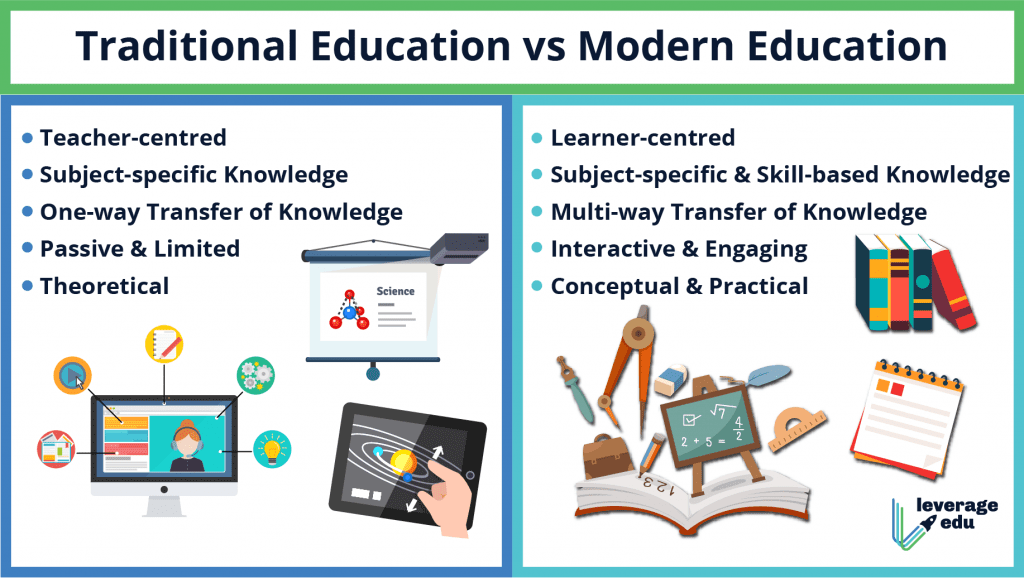
Indian Education System

In ancient times, India had the Gurukula system of education in which anyone who wished to study went to a teacher’s (Guru) house and requested to be taught. If accepted as a student by the guru, he would then stay at the guru’s place and help in all activities at home. This not only created a strong tie between the teacher and the student but also taught the student everything about running a house. The guru taught everything the child wanted to learn, from Sanskrit to the holy scriptures and from Mathematics to Metaphysics. The student stayed as long as she wished or until the guru felt that he had taught everything he could teach. All learning was closely linked to nature and life, and not confined to memorizing some information.

The modern school system was brought to India, including the English language, originally by Lord Thomas Babington Macaulay in the 1830s. The curriculum was confined to “modern” subjects such as science and mathematics, and subjects like metaphysics and philosophy were considered unnecessary. Teaching was confined to classrooms and the link with nature was broken, as also the close relationship between the teacher and the student.
The Uttar Pradesh (a state in India) Board of High School and Intermediate Education was the first Board set up in India in the year 1921 with jurisdiction over Rajputana, Central India and Gwalior. In 1929, the Board of High School and Intermediate Education, Rajputana, was established. Later, boards were established in some of the states. But eventually, in 1952, the constitution of the board was amended and it was renamed Central Board of Secondary Education (CBSE). All schools in Delhi and some other regions came under the Board. It was the function of the Board to decide on things like curriculum, textbooks and examination system for all schools affiliated to it.

The Central Advisory Board of Education (CABE), set up in 1935, continues to play a lead role in the evolution and monitoring of educational policies and programmes.

There is a national organization that plays a key role in developing policies and programmes, called the National Council for Educational Research and Training (NCERT) that prepares a National Curriculum Framework. Each state has its counterpart called the State Council for Educational Research and Training (SCERT). These are the bodies that essentially propose educational strategies, curricula, pedagogical schemes and evaluation methodologies to the states’ departments of education. The SCERTs generally follow guidelines established by the NCERT. But the states have considerable freedom in implementing the education system.

The school system in India has four levels: lower primary (age 6 to 10), upper primary (11 and 12), high (13 to 15) and higher secondary (17 and 18). The lower primary school is divided into five “standards”, upper primary school into two, high school into three and higher secondary into two. Students have to learn a common curriculum largely (except for regional changes in mother tongue) till the end of high school. There is some amount of specialization possible at the higher secondary level. Students throughout the country have to learn three languages (namely, English, Hindi and their mother tongue) except in regions where Hindi is the mother tongue and in some streams as discussed below.

There are mainly three streams in school education in India. Two of these are coordinated at the national level, of which one is under the Central Board of Secondary Education (CBSE) and was originally meant for children of central government employees who are periodically transferred and may have to move to any place in the country. A number of “central schools” (named Kendriya Vidyalayas) have been established for the purpose in all main urban areas in the country, and they follow a common schedule so that a student going from one school to another on a particular day will hardly see any difference in what is being taught. One subject (Social Studies, consisting of History, Geography and Civics) is always taught in Hindi, and other subjects in English, in these schools. Kendriya Vidyalayas admit other children also if seats are available. All of them follow textbooks written and published by the NCERT. In addition to these government-run schools, a number of private schools in the country follow the CBSE syllabus though they may use different text books and follow different teaching schedules. They have a certain amount of freedom in what they teach in lower classes. The CBSE also has 141 affiliated schools in 21 other countries mainly catering to the needs of the Indian population there.

KERALA

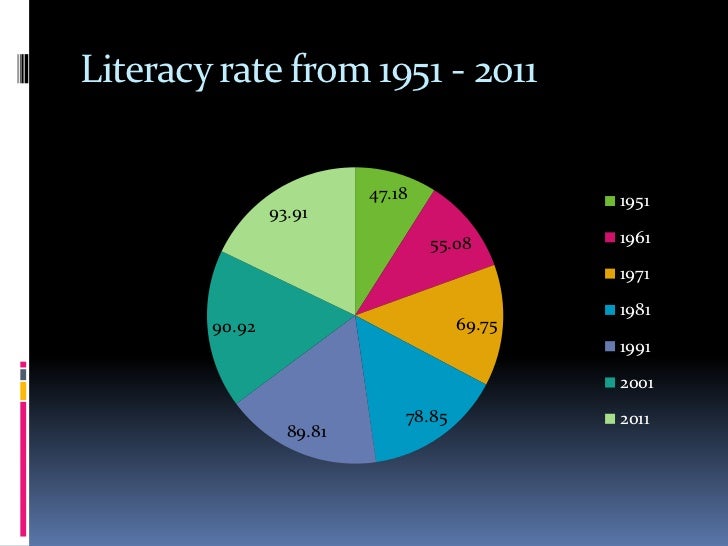
The state of Kerala, a small state in the South Western coast of India, has been different from the rest of the country in many ways for the last few decades. It has, for instance, the highest literacy rate among all states, and was declared the first fully literate state about a decade back. Life expectancy, both male and female, is very high, close to that of the developed world. Other parameters such as fertility rate, infant and child mortality are among the best in the country, if not the best. The total fertility rate has been below the replacement rate of 2.1 for the last two decades. Probably as a side-effect of economic and social development, suicide rates and alcoholism are also very high. Government policies also have been very different from the rest of the country, leading to the development model followed in Kerala, with high expenditure in education and welfare, coming to be known as the “Kerala Model“ among economists.

The initiative taken by Kerala is now influencing other states and even the policies of the Government of India. States like Karnataka and Gujarat are now planning to introduce Free Software in their schools, and some other states like Maharashtra are examining the option. The new education policy of the Government of India speaks about constructivism, IT enabled education, Free Software and sharing educational resources. Once a few of the larger states successfully migrate to Free Software, it is hoped that the entire country would follow suit in a relatively short time. When that happens, India could have the largest user base of GNU/Linux and Free Software in general.

Literacy Rate in Kerala

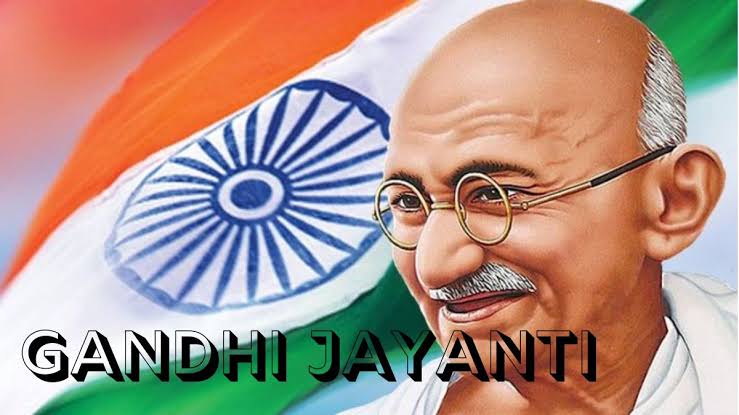
Gandhi jayanti

Gandhi jayanti is celebrated on 2nd October.The day signifies gandhiji birth anniversary. Gandhi ji was a freedom fighter. We celebrate this day in the memory of his sacrifices done for the country. He led various movements to drive out the British from India. Satyagrah was one of the famous movements. Quit India movements and the Swadeshi movement are other two famous and important movements that got us freedom in 1947.

On this day, many students perform plays sending people a message of non-violence. Many students sing patriotic songs on the day, to mark his birth anniversary. Many students paint on the theme of Gandhiji and his teachings. The day is soaked in patriotic fervor and we remember his wise teachings- “not to see bad, not to hear bad and not to speak badly”. On this day, many movies are broadcasted on television and radio channels centering around his life. Soonly we will Update Paragraph on Gandhi Jayanti in Hindi, Malayalam.

Gandhi Jayanti is a major national festival whose celebration occurs on 2nd October in India. Most noteworthy, this festival celebrates the birth anniversary of Mohandas Karamchand Gandhi. Furthermore, Gandhi Jayanti is one of the three national holidays of India. 2nd October has been declared as the International Day of Non-Violence by the United Nations. The festival is certainly a momentous occasion in India.

Significance of Gandhi Jayanti

Mahatma Gandhi was born in India under British rule. He was certainly the most prominent individual in the Indian Independence struggle. Mahatma Gandhi has the honour of the title of “father of the nation”. This was due to his persistent paramount efforts for India’s independence.
Gandhi had a family of the merchant class. This confident man went to South Africa at 24 years of age. He went there to pursue law. His return from South Africa came in 1915. Then he became a member of the Indian National Congress. Due to his relentless hard work, he soon became the president of Congress.

Mahatma Gandhi’s efforts were not restricted to Indian independence only. The man also fought various kinds of social evils. These social evils were untouchability, casteism, female subjugation, etc. Furthermore, he also made significant efforts to help the poor and needy.

Mahatma Gandhi had a great dislike for the British rule in India. However, he was not in favour of the path of violence. Gandhi strictly was a believer in the philosophy of Ahimsa (non-violence). Consequently, the man opposed British rule in a peaceful manner. Furthermore, Gandhi’s peaceful protests and movements were highly effective. His methods and plans were very efficient. Due to his incredible effectiveness, Gandhiji became an inspiration for other World leaders. Once again, Gandhi was bestowed with another title of Mahatma. The meaning of the word Mahatma is a great soul. His birthday was made into a day of magnificent remembrance and celebration.

Commemoration of Mahatma Gandhi

First of all, Gandhi Jayanti is nothing but a grand commemoration of Mahatma Gandhi. Gandhi Jayanti is certainly one of the national holidays of India. This patriotic occasion’s celebration is held in every State and Union territory.

Prayer services and tributes take place on the occasion of Gandhi Jayanti. These prayer services and tributes take place all over the country. Furthermore, various prayer meetings and commemorative ceremonies also occur on Gandhi Jayanti. These events take place in schools, colleges, government, and private institutions. Most noteworthy, people from all walks of life take part in such events.

Competitions of painting, essay, etc. take place everywhere. Furthermore, there is a distribution of awards for such competitions. Students in many schools and colleges also watch documentaries and performances on Mahatma Gandhi’s life. Consequently, there is a promotion of a non-violent way of life among the youth. There are also singing events of Gandhiji’s favourite Bhajan( Hindu devotional song). Another observance is the decoration of Gandhi statues with flowers and garlands. Finally, some individuals avoid eating meat or drinking alcohol on Gandhi Jayanti.

Gandhi Jayanti honors the great personality of Mahatma Gandhi. It’s an opportunity to reflect and cherish the life of this great personality. Furthermore, everyone must try to live like him on this day. Gandhi Jayanti is certainly a very patriotic day in India.

The God of Small Things

Suzanna Arundhati Roy’s first novel ‘The God of Small Things’, published in the year 1997 has won the Man Booker Prize for fiction in 1997. It is also the best-selling fiction by a non expatriate Indian author. The novel is said to have certain autobiographical elements with the author. The book speaks about the politics in Kerala, the relationships, family and social obligations. The year in which the incidents happened, 1969, becomes the social and political development in the story. The story is told in the background of Ayemanam, a place in Kottayam district of Kerala with an explicit detail of a Syrian Christian Ipe family. Every of the incidents in the novel is beautifully scripted through non sequential narrative, that it is a mixture of past and present sequences.

‘The God of Small Things’ says the story of a Syrian Christian family whose life is led by the love laws, that is ‘who should be loved, how much. And how much’. It shows the innocent childhood life of fraternal twins, Rahel and Esthappen, from whose view point the story is told. The book starts with the funeral of Sophie mol, the cousin, who returned from England to Ayemanam. All the incidents that happened after the return of Sophie mol becomes the story. The novel explicitly speaks about the innocence in childhood days by showing the candid emotions of the twins and how a divorcee mother, Ammu, suffered under certain love laws kept by her family. Beneath all the drama in the family, the book opens about the untouchability existed, the history and the local politics quoting, ‘communist pacha which flourished like communism’.  The book is quite interesting as it stood close to the tradition and culture of Kerala. Probably this will be the greatest work to have an international reputation for using the normal Malayalam words and rhymes. Also, she kind of revolted against the untouchability and the unfair political system existed during 1960’s by openly revealing all those in her novel. Every matter that mattered the people were beautifully constructed and told but still there are criticisms which says that she has drawn much of the demerits of State. However, all her justifications can be justified since her words and story attracted people from all over the world and even some says Kerala is Arundhati Roy’s country!

The novel starts with the famous opening line “May in Ayemanam is a hot brooding month”, and that makes The Booker Prize Citation true “The book keeps all the promises that it makes”. It was an eye opener to every of the social and cultural life of Kerala which actually made every reader to think how much the present society has evolved and developed. The book has kept a goal of unleashing every of the illogical culture and traditions of Kerala, that no book could ever do as it is the only one. There are a lot of images and themes used in the novel apart from the family laws which left no scope of pointing out any flaws. Also, it gives us an opportunity to analyse the incidents and expressions she had written in the raw form. The book ‘The God of Small Things’ has personally inspired me that it makes me think about writing a novel. Like every other Indian, British and American reviews told, the story is ‘a masterpiece, utterly exceptional.’

CONTINGENT CONTRACT

VALIDITY OF CONTRACT : CONTINGENT CONTRACT
INTRODUCTION
A Contract is enforceable by law in keeping with the section 2(h) of the Indian Contract Act, 1872. For each contract, there is a free consent of
the parties that are competent to each other for a lawful consideration and object as given under section 10 the said Act. However, the consent of
the parties for performing the contract shall be free from coercion, undue influence, etc. As provisions made under the Indian Contract Act, 1872
is predicted on Sir Pollock’s definition that states any contract and the ability to perform a contract is considered to be valid when it is
enforceable by court of law. Therefore, for the creation of any Contract, there should be a lawful consent, wherever the considerations are paid
or secure that shall be implemented beneath law.

Contracts can be classified into two groups on the basis of conditions:

Absolute Contracts: These are the contracts where there’s condition and can be performed in all circumstances.

Contingent Contracts: These are the contracts where there’s a condition and also known as the “Conditional Contracts”.

The word Contingent normally suggests that ‘Subject to Change’. It’s a form of conditional contract during which performance becomes due
solely upon the happening or non happening of some event which is of sure nature. Therefore, uncertainty is the symbol of the longer term. Once
the contract is obligated and condition is satisfied among the parties then they have to perform their obligations. If the situations obligatory

within the contract aren’t satisfied then the contingent contract becomes void and it needn’t to be performed. So, a Contingent Contract is to be
performed under some circumstances solely. Therefore, Section 31 to 36 of the said Act deals with the Contingent Contracts. [1]
According to Section 31 of the Indian Contract Act, 1872 it defines Contingent Contract as the contract to try to do or not to do something, if
some events collateral to such contract will or doesn’t  happen. That means the performance of a contract depends upon some unsure event. If
the events happen, the contract will be performed and if the events don’t happen it’ll not be performed. For example: There is a contract between
A and B for which A has to pay B Rs. 20,000 if B’s house burnt in any circumstances. Here, it is commonly regarded as a contingent contract
because the performance of such contract depends on contingency that is unsure. The simplest way to determine whether the contract is
contingent or not, is uncertainty. If contingency is for certain it’s not a contingent contract however if the consistency is uncertain then, it’s a
contingent contract. Therefore, all contracts of insurance (except life insurance) guarantee and indemnity are contingent contracts. There are few
essential parts of a Contingent contract.

ESSENTIALS OF CONTIGENT CONTRACT

  1. Performance of the Contract
    The performance of the contract must be conditional i.e. condition for which the contract has been entered into must be a future event, and it
    should be uncertain.
  2. Contingency Relate to Collateral Matters
    highlights that the contingency has contemplated by the contract must be collateral to the contract. It means that a contract already arisen or a
    subsisting contract is there, but its performance cannot be demanded unless the contemplated event happens or does not happen.
  3. Will of the Party

The particular event so considered as for contingency must depend on the act of the party but it does not depend on the will of the party.A
contract for sale of goods enjoin the condition that the goods would be inspected before despatch was held to be a firm contract. The import of
materials agreeable to such a contract was valid.

  1. Uncertain Event

If the event is sure to happen, then the contract is due to be This is not a contingent contract. The event should be uncertain.

RULES REGARDING PERFORMANCE OF A CONTINGENT CONTRACT

 The following are the rules regarding performance of a contingent contract:

1. Contingent contract upon the happening of a future uncertain event :

When the happening of such event has possible it becomes enforced and if the happening of such event becomes impossible it becomes void.
EX: ‘A’ contracts to pay ‘B’ a sum of money when ‘B’ marries ‘C’.’C’ dies without being married to ‘B’. The contract becomes void.

2. Contingent contract upon the non happening of a future uncertain event : 

When the happening of such event becomes impossible it becomes enforced and when such event has possible it becomes void.
EX: “A” agrees to sell his car to “B” if “C” dies. The contract cannot be enforced as long as “C” is alive

3. Contingent contract upon happening of an event within a specified time :
 
When such event has happened within the specified time it can be enforced and if the happening of such event becomes impossible within the
specified time it becomes void.
EX: ‘A’ agrees to pay ‘B’ a sum of money if ‘B’ marries ‘C’,’C’ marries ‘D’. The marriage of ‘B’ to ‘C’ must be considered impossible now,
although it is possible that ‘D’ may die and that ‘C’ may afterwards marry ‘B’.

4. Contingent contract upon non happening of an event within a specified time :

 When the happening of such event becomes impossible within the specified time it can be enforced and if the happening of such event has
happened within the specified time it becomes void.
EX: ’A’ promises to pay ‘B’ a sum of money if a certain ship returns within a year. The contract may be enforced if the ship returns within a
year, and becomes void if the ship is burnt within the year.

5. Contingent contract upon impossible events : 
Such an agreement cannot be enforced since it is void. Whether the impossibility of the event was known to the parties or not is immaterial.
EX: ‘A’ agrees to pay ‘B’ Rs 1000/- if ‘B’ will marry A’s daughter, ‘X’. ‘X’ was dead at the time of the agreement. The agreement is void.

6. Contingent contract upon future conduct of a living person:
 When such person acts in the manner as desired in the contract it can be enforced and if such person does not acts in the manner as desired in
the contract it becomes void.

TYPES OF CONTINGENT CONTRACTS

Contracts contingent upon the occurrence of an uncertain event :
These contracts become valid only if the uncertain event mentioned in the contract occurs. For instance, let’s say A and B enter into a contract
wherein A promises to sell his goods in transit to B provided the goods safely reach the harbor. Since, the sale of goods by A is dependent upon
a condition (that the goods reach the harbor), this is a contingent contract. If the ship does not make it to the harbor, the contract becomes void.
Contracts contingent upon the non-occurrence of an uncertain event :
Sometimes, a contingent contract may depend upon the nonoccurrence of an uncertain event. For example, if A promises to sell his goods in
transit to B if the ship carrying the goods does not come back, then the contract becomes valid if the ship sinks in the sea; if it safely reaches the
harbor, the contract becomes void.
Contracts contingent upon the occurrence of an uncertain event within a specified timeframe :
In these contracts, the event must occur within the period specified in the contract. For example, A promises to sell the goods in transit to B, if
the ship carrying the goods safely arrives the harbor within eight days. If the ship comes on the ninth day or anytime thereafter, the contract
becomes void.
Contracts contingent upon the nonoccurrence of an uncertain event within a specified timeframe :
For example, let’s say, A contracts to sell the goods in transit to B if the ship carrying the goods does not reach the harbor within eight days.
Then, the contract becomes void if the ship arrives on the sixth day or anytime before eight days. On the other hand, if the ship does not come
until eight days, the contract becomes valid; it does not matter whether or not it comes or does not come after the eighth day has passed.
Contracts contingent upon an impossible event :

If the performance of a contract is dependent upon an impossible event, such a contract is ab initio void, i.e., void right from the beginning. For
example, A promises to pay B $7,000 if B marries C, who died five years back. Now, since C is already dead, it’s not possible for B to marry
her. So, the contract becomes null and void.

ANOTHER THREAT

                  ANOTHER THREAT
BY : NEHA SHAHAB
POLLUTION IS NOW A BIGGEST THREAT TO INDIA BEACHES THAN THE RISING SEA.

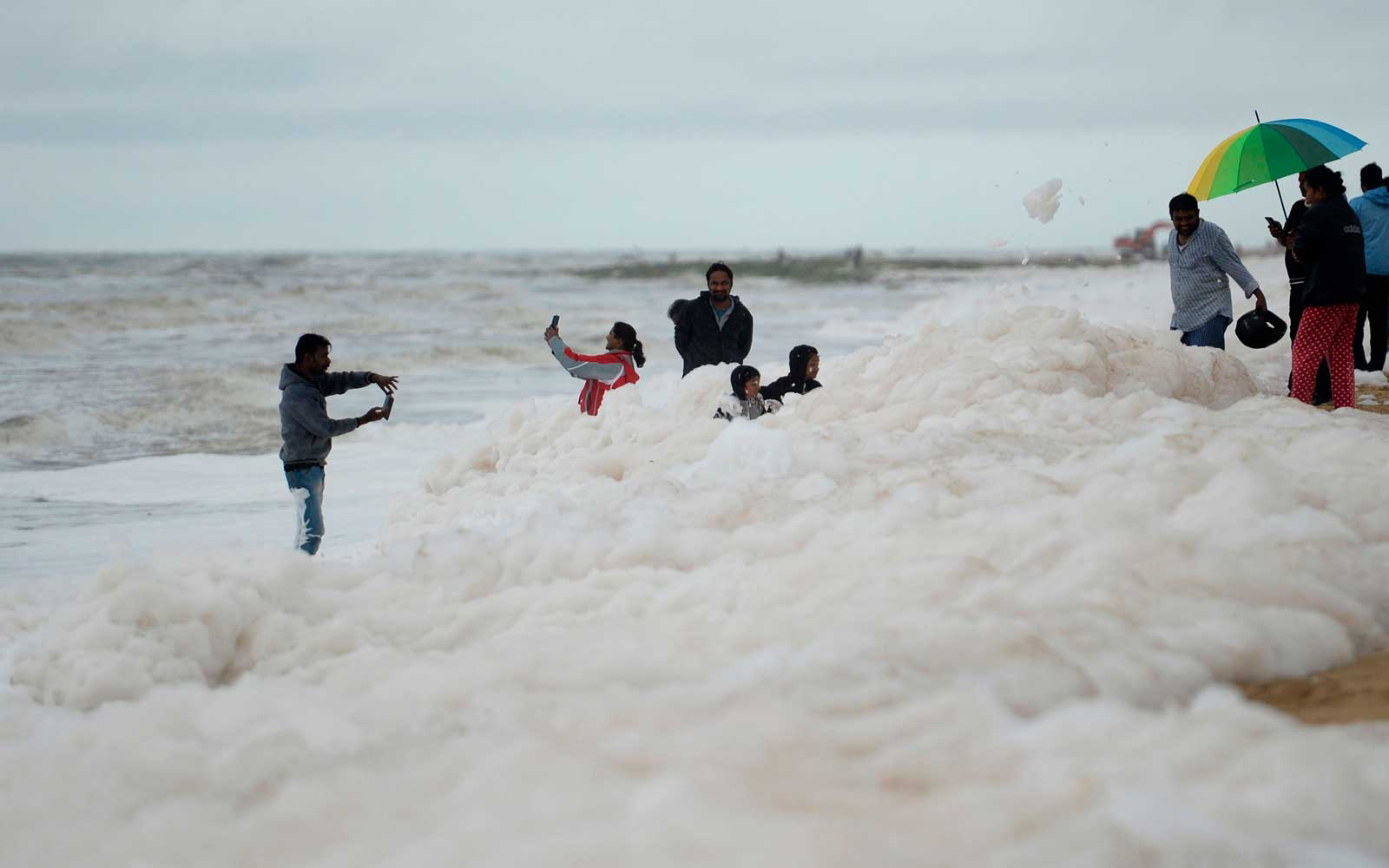
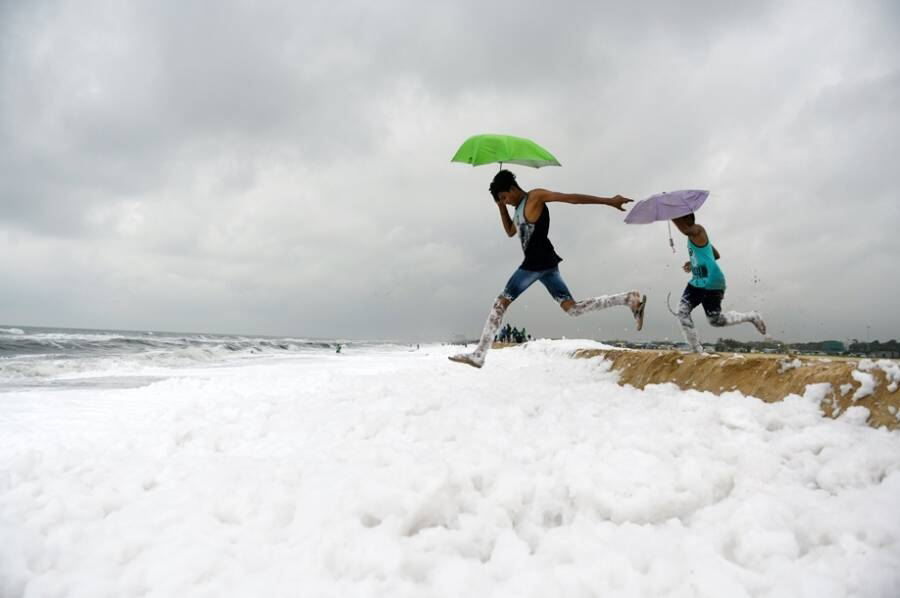
INDIA’S LONGEST URBAN BEACH LOCATED IN CHENNAI ARE BLANKETED WITH TOXIC WHITE FOAM PUFF AS A RESULT OF POLLUTION.

AS A GOVERNMENT,  DOCTORS AND OFFICIALS GAVE WARNING THAT TOXIC WHITE FOAM CAN CAUSE SKIN DAMAGE AND RESPIRATORY PROBLEMS BUT FAMILIES ARE PLAYING IN THE BUBBLES AND SOME ARE EVEN USING THE STRANGE OCCURRENCE AS A BACKDROP IN SELFIES.

THIS IS DUE TO BY THE HEAVY RAINFALL , IT IS LIKELY A POLLUTANT COMPRISED OF LAUNDARY DETERGENT AND OTHER WASTE. THIS IS NOT THE FIRST TIME THAT THE FOAM HAS APPEARED ON CHENNAI COASTLINE. 

THE FROTHING HAS PREVIOUSLY KILLED TONES OF FISH IN THE LOCAL BASIN.

IN 2017 , A SIMILAR FOAM BUBBLED OVER THE RIVERBANK OG BANGALORE ACCORDING TO THE REPORTS, OFFICIALS FENCED OFF THE AREA WHERE THE FOAM WAS GROWING AS IT WAS FILLLED A CARCINOGEN THAT COULD CREATE SKIN AND RESPIRATORY PROBLEMS.


YOU CAN BUY WEALTH BUT NOT HEALTH..

As we all are aware that, “Health is Wealth”. It is important to take care of our health, because if you lost it then, no one is going to give you your perfect health even if you pay lakhs of rupees. God gives good health to every human, but it is in our hands whether to keep it good or make it worse. Health is not only being physically fit but being mentally healthy. To be physically fit, we need to eat healthy and exercise, and to be mentally health, avoid negative thoughts.

SOME WAYS TO BE PHYSICALLY HEALTY AND FIT:

1.Eat healthy, whatever you eat, eat with love and satisfaction, don’t hate your food.

2.Take foods like fruits, vegetables and, homemade meat dishes instead of Fast foods.

3.Eat fully, make your tummy happy, if you eat half and if you stay half empty, it leads to health issues.

4.Prefer homemade foods, because the homemade is filled with love and tastes good.

5.Eat whatever you like, but have a limit, because anything more is poison though.

6.Excercise daily, drink more water, maintain your physic. 

7.Avoid bad habits like Smoking, drinking, taking drugs etc.

SOME WAYS TO BE MENTALLY HEALTHY:

1.Firstly, to be mentally healthy, you need to avoid negative thoughts.

2.You should accept all the situations of life, may be happy or sorrow times.

3.Receive everything with love, even if it hurts you, try to accept it, then your mind feels free.

4.Spend time with your family and beloved ones, instead of always running after earning money.

5.Think positive, Be positive, Do positive, Receive positive and Stay positive.

6.Do not overthink about anything, don’t stress your mind 

I want to tell some important things before I end this article. 

  • It’s better to buy healthy foods like fruits, veggies etc. instead of buying medicines.
  • It’s better to drink fresh water instead of drinking soft drinks and hard drinks as well.
  • It’s better to have homemade food instead of having harmful food(fast foods).
  • It’s better to think about something useful and worthy instead of overthinking about something unnecessary.
  • It’s better to share your sorrow, instead of feeling depressed.
Finally, stay fit and healthy both physically and mentally..

Movement in plants

The movement in plants is mostly seen as bending, turning, twisting or as elongation of plant parts.Plants are fixed in a place with their roots in the ground.They lack the power of locomotion,but they can move individual parts or organs when subjected to external stimuli like light,water, chemical substances and touch.

These plants movements made in response to external stimuli fall into two main categories namely Tropic movements and Nastic movements.

Tropic movement

These are directional movements and are in response to stimulus,which comes mostly from one direction.The growth may be towards the stimulus or at the specific angle to the stimulus.Movement in which the direction of stimulus determines the direction of response is called tropism.

Depending on the types of the stimulus the tropic movement is classified as follows:

If the growth or movement of a plant part is towards the stimulus,it is called positive tropism.If the growth or movement of a plant part is away from the stimulus,it is called negative tropism.

⭐ Phototropism

The movement of a plant part in response to light is called Phototropism.If the plant part moves towards the sunlight,it is called positive phototropism.If the plant part moves away from the sunlight, it is called negative phototropism.The stem always grows towards light and the root always grows away from sunlight.

⭐ Geotropism

The movement of plant part in response to gravity is called Geotropism.If the plant part moves in the direction of gravity,it is called positive geotropism.If the plant part moves against the pull of gravity,it is called negative geotropism.Roots of a plant always grow downwards in the direction of gravity and the stem always grows upwards against gravity.

⭐Chemotropism

The movement of a plant part in response to a chemical stimulus is called Chemotropism.If the plant part moves towards the chemical,it is called positive chemotropism.On the other hand if the plant part moves away from the chemical,then it is called negative chemotropism.

⭐Hydrotropism

The movement of a plant part in response to water is called Hydrotropism.If the plant part moves towards water,it is called positive hydrotropism.On the other hand if the part moves away from water it is called negative hydrotropism.The roots of a plant always go towards water and they are positively hydrotropic.

⭐Thigmotropism

Climbing plants have weak stems.They cannot stand erect.They use thin thread like climbing organs called tendrils.Tendrils are sensitive to touch or contact of other objects,then the side of the tendril in contact with the object grows slower than its other side.This causes the tendril to bend towards the object by growing towards it,wind around the object and cling to it.The winding movement of the tendril of a climbing plant is an example for Thigmotropism.

Nastic movement

The movement of a plant part in response to an external stimulus in which the direction of response is not determined by the direction of stimulus is called Nastic movement.

Some of the Nastic movements are as follows:

⭐Thigmonasty

The non directional movement of a plant part in response to the touch of an object is called Thigmonasty.The best example for thigmonasty is mimosa pudica.If we touch the leaves of the sensitive plant,then its leaves fold up and droop immediately.

⭐Photonasty

The non directional movement of a plant in response to light is called Photonasty.The opening of leaves and flowers during the day and their closure at night is an example.A dandelion flower opens up in the morning in bright light but closes in the evening when the light fades and it gets dark.

⭐Thermonasty

The non directional movement of a plant in response to temperature is called Thermonasty.In crocus, the flowers open at high temperature and close at low temperature.

Teachers Day

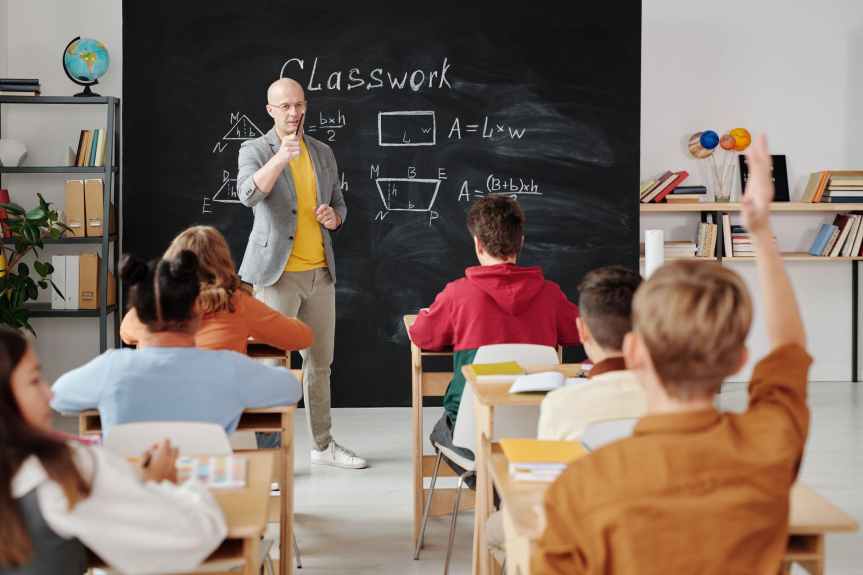
We celebrate teachers day in memory of Sarvepalli Radhakrishnan .we as a whole have learned a lot from our teachers. Their lessons direct us at each phase of our life. They value the most in our lives, and this is the motivation behind why we observe Teacher’s Day devoting them. It is a day to praise the most encouraging bond between the teachers and the students.

Each student should value and regard their teachers. Their challenging work and sacrifices for our mental development are unimaginable. A teacher, some of the time, plays a more critical job than our parents. They shape up our future and build up our mind to differentiate between good and evil.

Photo by August de Richelieu on Pexels.com

A teacher additionally does the country building work by making the future of every individual living in a nation. Teachers show us, yet they likewise improve our character, ability level and certainty. They think for each person, that is the reason we should consider and respect them on Teacher’s Day every year.we must follow their lessons to become successful.

A Teacher is someone who acts as a guide and inspiration to people – both young and old. He/she is charged with the responsibility of creating awareness as well as opening the mind of people by instilling values, morals, and ethics. Teachers efforts are recognized during the teacher’s day. They shape minds, and we annually celebrate their contribution to the development of society in the form of Teachers’ day across the world. However, We celebrate The International Teachers Day on October 5th annually.

Teachers’ Day in IndiaTeachers are respected and honored for their important contribution in shaping individuals. 5th of September is annually celebrated as Teachers’ day in India. This is actually the birthday of the former President of India, Dr. Sarvepalli Radhakrishnan.

The contributions and efforts made by teachers never go unnoticed. This led to the inauguration of the Teacher’s day which seeks to celebrate the efforts made by the teachers. In India, we celebrate the teacher’s day on the birthday of Dr. Sarvepalli Radhakrishnan who was known as a man of many great qualities and attributes.

Teachers play many roles in overall development such as:

  • They guide children and students to leadership skills
  • They instill discipline into young people molding them into future
  • Also, they provide their students with spiritual and emotional guidance.

Teachers also come across numerous challenges in their day to day activities such as the unappreciative culture by the community as well as dealing with disciplinary issues of their students.

What can we do on Teachers’ Day?

A thank-you can go a long way. In our busy lives, we have come to forget expressing gratitude. Many studies have come up explaining the benefits that gratitude can have on the one who expresses it and on the one who receives it. We can take this opportunity as a day to thank our teachers and express our love and care for them.

  • We can suggest and provide assistance by making use of the skills that we have learned over these years.
  • Also, we can give them a visit on this day and share with them our experiences. This will for sure make them happy and proud of their efforts.
  • We can present a small token of appreciation, something that they could keep as a memory like a pen or a planner or something that would be useful for them.
  • We should also seek their blessings and let them know that we are always there for them when they need us.
  • Students can collectively gift them books and other materials and organize a get-together especially if the class has graduated.

Time spent with them and gratitude expressed would be a great gesture to make teachers happy and proud. It is very important to recognize their contribution to molding our personality.

Conclusion

Teachers play an important role in the development of any country. This is why it is vital to set aside a day when the teachers are given the recognition they deserve. We celebrate Teachers’ day to honor the contribution of Teachers in our lives. Duties undertaken by teachers in the upbringing of children is immense and thus being recognized with teachers’ day is a step towards recognizing the profession and the role they play in society.

Life of Michelle Obama

Michelle LaVaughn Robinson Obama is an American attorney and author who served as the First Lady of the United States from 2009 to 2017. She was the first African-American woman to serve in this position. She is married to the 44th President of the United States, Barack Obama.

Michelle LaVaughn Robinson was born on January 17, 1964, in Chicago, Illinois, to Fraser Robinson III (1935–1991), a city water plant employee and Democratic precinct captain, and Marian Shields Robinson , a secretary at Spiegel’s catalog store. Her mother was a full-time homemaker until Michelle entered high school

The Robinson and Shields families trace their roots to pre-Civil War African Americans in the American South. On her father’s side, she is descended from the Gullah people of South Carolina’s Low Country region. Her paternal great-great grandfather, Jim Robinson, was born into slavery in 1850 on Friendfield Plantation, near Georgetown, South Carolina. He became a freedman at age 15 after the war. Some of Obama’s paternal family still reside in the Georgetown area. Her grandfather Fraser Robinson, Jr. built his own house in South Carolina. He and his wife LaVaughn (née Johnson) returned to the Low Country from Chicago after retirement.

Robinson was inspired to follow her brother to Princeton University, which she entered in 1981. She majored in sociology and minored in African-American studies, graduating cum laude with a Bachelor of Arts in 1985 after completing a 99-page senior thesis titled “Princeton Educated Blacks and the Black Community” under the supervision of Walter Wallace.

Robinson met Barack Obama when they were among the few African Americans at their law firm, Sidley Austin LLP (she has sometimes said only two, although others have noted that there were others in different departments). She was assigned to mentor him while he was a summer associate. Their relationship started with a business lunch and then a community organization meeting where he first impressed her.

Before meeting Obama, Michelle had told her mother she intended to focus solely on her career. The couple’s first date was to Spike Lee’s movie Do the Right Thing (1989). Barack Obama has said the couple had an “opposites attract” scenario in their initial interest in each other, since Michelle had stability from her two-parent home while he was “adventurous”.

During an interview in 1996, Michelle Obama acknowledged there was a “strong possibility” her husband would begin a political career, but said she was “wary” of the process. She knew it meant their lives would be subject to scrutiny and she was intensely private.

Although she campaigned on her husband’s behalf since early in his political career by handshaking and fund-raising, she did not relish the activity at first. When she campaigned during her husband’s 2000 run for United States House of Representatives, her boss at the University of Chicago asked if there was any single thing about campaigning that she enjoyed; after some thought, she replied that visiting so many living rooms had given her some new decorating ideas. Obama opposed her husband’s run for the congressional seat, and, after his defeat, she preferred he tend to the financial needs of the family in what she deemed a more practical way.

Don’t ever make decisions based on fear. Make decisions based on hope and possibility. Make decisions based on what should happen, not what shouldn’t

RIGHTS OF PAWNEE AND PAWNOR

RIGHTS OF PAWNEE AND PAWNOR

As per section 172 of the Indian Contract Act, 1872, a Pledge is a contract where a person deposits an article or good with a lender of money as security for the repayment of a loan or performance of a promise. Pledge is also known as a pawn. The depositor or the bailor is the Pawnor and the bailee or the depositee is the Pawnee. The Pawnee is under the duty to take reasonable care of the goods pledged with him. Let us learn about the Rights of Pawnee and Pawnor.

Key features of Pledge are:

  • The property under pledge shall be delivered to the Pawnee.
  • Such delivery shall be in the pursuance of the contract.
  • This delivery shall be for the purpose of security.
  • Also, delivery of articles shall be upon a condition to return.

 RIGHTS OF PAWNEE

Pawnee has the following rights:

  • Pawnee has a right to retain the goods pledged until payment of debt, interest and any other expense incurred for maintenance of such goods. For example, X pledges his gold jewelry for some loan from a bank. In such a case bank has all the rights to retain the gold jewelry not only for adjustment of loan amount but also for payment of interest accrued on such loan amount.
  • Pawnee has a right to file a suit for recovery of debt while retaining the goods pledged as security.
  • He has a right to sue for the sale of goods pledged and the payment of money due to him.
  • Pawnee has a right to seek reimbursement of extraordinary expenses incurred. However, he cannot retain goods with him in such a case.
  • Pawnee has a right to sell the goods after giving reasonable notice and time to pawnor. Pawnee can sue pawnor for deficiency, if any, after the sale of such goods. Also, if there is any surplus on sale of goods pawnee must return it to pawnor.

RIGHTS OF PAWNOR

   In case pawnee makes any unauthorized sale of goods pledged without giving proper notice and time to pawnor than pawnor has following rights:

  • Right to file a suit for redemption of goods by making payment of debt.
  • Right to claim for damages and loss on the ground of conversion.

LIEN

A lien is a legal right to claim a security interest in a property provided by the owner of the property to the creditor. It is generally used as a guarantee for some sort of legal obligation such as loan repayment.

In other words, a lien ensures that a creditor obtains the right to the property if a borrower fails to meet his legal and/or financial obligations. The grantor (the owner of the property) is called the lienee while the party that receives the lien is referred to as the lienor or lien holder.

TYPES OF LIENS

CONSENSUAL

Consensual liens are created by contractual obligations between the concerned parties. The most common examples are loans obtained to purchase real estate or personal property (chattel). They can be mortgages or auto loans.

 NON- CONSENSUAL

Non-consensual liens arise from statutory or common law. The most notable example is a tax lien, which is imposed by law against the property of a taxpayer. If a taxpayer fails to pay the taxes owed to the government, the tax agency can seize his or her real or personal property for the amount of the lien.

EXAMPLE OF LIEN

John wants to purchase a new house. In order to afford the purchase, he borrows $300,000 from ABC Bank. The bank wants to guarantee the repayment of the loan, and it requires John to provide the house as the collateral for the loan.

The bank files the documents with the government agency required to register the lien. Upon the completion of the process, the bank becomes the holder of the collateral provided by John (in this case, John’s house).

If John is unable to meet his financial obligations according to the mortgage agreement with ABC Bank, the bank will take possession of the property and will be able to sell it to satisfy the loan obligation.

DIY HOMEMADE NATURAL SKIN CARE TIPS

When ever I had a plan of buying some skin care products i am denied to do so by my mom. She always told me that its the kitchen that has the solution for all the skin problems. I trusted her, and i am glad i still do. We often are fascinated by all the chemical based products that many people on the internet use. Not going to deny that they all are helpful enough to make your skin better, but the magic that these natural ingredients exhibit is pleasing enough for us to stick to them tesilab.

These are some ingredients that gives your skin the care it needs.

HONEY

Honey is very beneficial for all types of skin. It moisturizes dry skin and balances oily skin. Honey can be used alone with no additives or it can be added with other ingredients like curd, turmeric, rose water, coffee etc. It has a lot of other important benefits like it cleans pores, exfoliates skin, treats acne, and fades scars. It is a must in your skin care routine.

ROSEWATER

Rose water has been used as a beauty product for thousands of years. It can improve your complexion and reduce skin redness. The antibacterial properties may help reduce acne. The anti-inflammatory properties can reduce skin redness and puffiness. One way of use would be to mix 2 teaspoons of rose water with half a teaspoon of lime juice. Using it every alternate day will help you to cleanse and freshen your skin naturally.

PAPAYA

Papaya consists of an enzyme called papain which promotes healing of the skin and will also enhance the secretion of collagen when used topically for the skin. Papaya is a natural remedy to heal scars, burns and skin diseases for ages. Just rub a small piece of papaya on your face as let the ski absorb it all and late rinse it off for a radiant skin.

EGGS WHITES

Egg whites contain vitamins and minerals that can benefit the skin’s overall appearance. For aging skin, egg whites can help tighten and firm. If you have large pores or acne-prone skin, egg whites help close pores and get rid of build up. Blending egg whites with yogurt will give the perfect combo that helps you get rid of clogged skin pores.

YOGURT

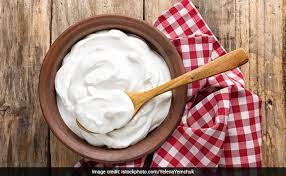
Yogurt also contains calcium, which supports skin cell generation, promoting healing of dry skin. The zinc in yogurt provides anti-inflammatory effects and protects the skin from sun damage. The lactic acid in yogurt also helps remove dry and dead skin cells, giving your skin a smooth appearance.

Arycle by : Haniah Mirza

Impact of online classes on children’s mental health

There’s a good side to online classes and a bad side too. Schools that are able to provide engaging online classes along with co-scholastic activities and regular peer-to-peer interaction have seen better mental health among students. For others, it has become monotonous, which has led to a rise in anxiety and hyperactivity among children. Especially children between the age of 6-15. It has been more of a boon for children which has led to problems such as anxiety for children.

Dr Kannan Gireesh, psychiatrist, psychotherapist and founder, Live Life Education says, “What they are lacking is peer-to-peer learning. Social learning is not happening as they do not have friends to talk to and build new friendships. Building friendships is very important especially in the lower age groups, which gives them security and self-esteem that gives them a sense of belonging.”

“Many children have become bored with online classes. In certain schools, online classes are very monotonous. Hence, what these students are doing is switching off the camera and are doing other activities. It’s like a time pass for them. Not only mental health, but they are also facing some health problems like eye strain, headaches and fatigue from seeing the screen for such a long time. Besides, sports education and extracurricular classes have also stopped. As most of the parents are working and the child is all alone in the house, there is no way the children can interact with anyone,” he adds.

UK-based internationally recognised parenting expert, broadcaster, speaker and author of Parenting Made Easy — How to Raise Happy Children (2012) Sue Atkins explained, “With the sudden halt to in-person learning, many students have missed their friends, yearned to be out of the house, developed erratic sleep habits and drove their (often working) parents crazy. On top of that, many were dealing with the trauma of a sick or dying family member, economic hardship and major changes to the life they once had.

As the pandemic drags on, it’s clear that not all kids are alright. According to a survey by Gallup, nearly 3 in 10 parents said their child is experiencing emotional or mental anxiety because of social distancing and school closures.”

“Schools should think about using the virtual learning environment to create a new relationship between teachers and children, not just one where kids can get help with maths, but where children are talking to teachers about what’s going on & the focus is on their well-being & mental health. 

Parents can support their children by actively listening, creating new routines that create a feeling of predictability in an uncertain world and nurturing self-esteem and self-care by playing, talking and eating with them. Collaboration between schools, families, community leaders and health officials will be even more critical to support children’s needs in and out of school as the world grapples with controlling the virus,” Atkins adds.

“As educational practitioners, we are committed to the wholesome development of the child and as we know, learning is not only about book knowledge, but also the physical, emotional, social and mental wellbeing of the child,” says Prema Muralidhar, principal of Ajman-based Woodlem Park School.

She adds, “As such, to help mitigate the effects of being endlessly homebound, at WPS we integrated more holistic approaches and more activity-based learning during our virtual sessions to help break the monotony and to keep the students engaged. Our students were introduced to breakout rooms that consist of smaller groups of students and provide the opportunity for them to interact briefly or to brainstorm with their peers during classes.

Incorporating regular PE and Karate sessions have helped to break the sedentary lifestyle and to encourage exercise. Our wellness programme is equally conducted for half an hour, twice a week where students practice breathing exercises, talk about anything of interest outside the normal curriculum, and share their thoughts and talents. The STTT (student-teacher talking time) also presents a brief interlude at the beginning of the day when the teacher can have a chat with the students to find out how they are generally doing.