Top 5 Major types of Farming.

Types of agriculture in India:

Agriculture is one of the most important fields in India as well as everywhere on earth. Without agriculture, we can’t imagine the world. So, it is compulsory to know the importance of various types of agriculture in India.

1. Primitive Subsistence farming

Primitive Subsistence Farming: This type of farming is practiced on small patches of land. Primitive tools and family/community labour are used in this type of farming. The farming mainly depends on monsoon and natural fertility of soil.

2.Dry farming

Dry farming or Dry Land Farming refers to an improved system of cultivation whereby maximum amount of water is conserved by soil and water management. It involves efficient system of soil and crop management in the regions of low land and uneven distributed rainfall.

3.Wet farming

Wet Farming is practiced in the areas of alluvial soils where annual average rainfall is more than 200cm. Here, more than one crop is grown in a year because enough amount of moisture in the soil is available. Rice and jute are the main crops of these types of farming.

4.Shifting agriculture

Shifting agriculture is a system of cultivation in which a plot of land is cleared and cultivated for a short period of time, then abandoned and allowed to revert to producing its normal vegetation while the cultivator moves on to another plot.

5.Mixed and Multiple Agriculture

Mixed cropping is the practice of cultivating more than one crop, that is growing of two or more crops simultaneously in the same field

M karunanidhi: A man who shaped Tamil nadu politics for over 50 years

Muthuvel Karunanidhi was an Indian politician who served as the chief minister of Tamil Nadu on five separate occasions. He was born on 3 June 1924. He served as the president of the Dravida Munnetra Kazhagam (DMK), a major Dravidian political party in the state of Tamil Nadu. Karunanidhi led the party since its founder, C. N. Annadurai, passed away in 1969. The DMK chief also worked as a playwright and screenwriter for Tamil cinema. He was known as ‘Kalaignar’ (meaning ‘artist’) by his supporters. He breathed his last on 7 August 2018, just a few days after he completed 50 years as DMK’s president.

Political Career of M. Karunanidhi

Karunanidhi got inspired to enter into the realm of politics at a mere age of 14 and this was believed to be after hearing a speech of Justice Party’s Alagiriswami. His political career commenced with his involvement in Anti-Hindi agitations. He also formed an organisation in his locality for the local youth and circulated ‘Manavar Nesan,’ a handwritten newspaper, among its members.

Subsequently, he founded ‘Tamil Nadu Tamil Manavar Mandram,’ a student organisation. It was the first student wing of the Dravidian Movement. Karunanidhi got engaged in social work along with other organisation members. He started a newspaper which grew into ‘Murasoli’, the DMK party’s official newspaper today.

Karunanidhi’s journey in Tamil Nadu politics started with his involvement in the Kallakudi agitation in 1953. The original name of this town was Kallakudi but it was later changed to Dalmiapuram in order to name it after a cement baron who had constructed a cement plant there. The DMK was eagerly protesting to switch the name back to the previous one. During the protest, Karunanidhi was arrested and two people died.

Karunanidhi was first elected to the Tamil Nadu legislative assembly in 1957 from Kulithalai seat of Tiruchirapalli district. In 1961, he became the DMK treasurer and the following year, he assumed the position of deputy leader of opposition in the state assembly.

When the DMK came to power in 1967, he became the minister for public works. After the death of C.N. Annadurai in 1969, Karunanidhi became the Chief Minister of Tamil Nadu. He has held a number of positions in both government and party during his political career in Tamil Nadu.

Karunanidhi suffered many poll defeats against his main opponent M.G. Ramachandran’s ADMK until the death of the latter in 1987. Karunanidhi became the Chief Minister of Tamil Nadu in 1996. After completing a full term, his party suffered lost to J. Jayalalithaa’s AIADMK in 2001 elections.

He was, however, back in power 5 years later after his coalition party won from J. Jayalalithaa in the 2006 polls. After completing a full term in office, Karunanidhi suffered defeat from Jayalalitha’s AIADMK in the Assembly elections of 2011. He also represented Tiruvarur constituency in Tamil Nadu legislative assembly. He has been elected to the Tamil Nadu Legislative Assembly 12 times and once to the erstwhile Tamil Nadu Legislative Council.
Last Updated on 17 August, 2018

M karunanidhi: A man who shaped Tamil nadu politics for over 50 years

Muthuvel Karunanidhi was an Indian politician who served as the chief minister of Tamil Nadu on five separate occasions. He was born on 3 June 1924. He served as the president of the Dravida Munnetra Kazhagam (DMK), a major Dravidian political party in the state of Tamil Nadu. Karunanidhi led the party since its founder, C. N. Annadurai, passed away in 1969. The DMK chief also worked as a playwright and screenwriter for Tamil cinema. He was known as ‘Kalaignar’ (meaning ‘artist’) by his supporters. He breathed his last on 7 August 2018, just a few days after he completed 50 years as DMK’s president.

Political Career of M. Karunanidhi

Karunanidhi got inspired to enter into the realm of politics at a mere age of 14 and this was believed to be after hearing a speech of Justice Party’s Alagiriswami. His political career commenced with his involvement in Anti-Hindi agitations. He also formed an organisation in his locality for the local youth and circulated ‘Manavar Nesan,’ a handwritten newspaper, among its members.

Subsequently, he founded ‘Tamil Nadu Tamil Manavar Mandram,’ a student organisation. It was the first student wing of the Dravidian Movement. Karunanidhi got engaged in social work along with other organisation members. He started a newspaper which grew into ‘Murasoli’, the DMK party’s official newspaper today.

Karunanidhi’s journey in Tamil Nadu politics started with his involvement in the Kallakudi agitation in 1953. The original name of this town was Kallakudi but it was later changed to Dalmiapuram in order to name it after a cement baron who had constructed a cement plant there. The DMK was eagerly protesting to switch the name back to the previous one. During the protest, Karunanidhi was arrested and two people died.

Karunanidhi was first elected to the Tamil Nadu legislative assembly in 1957 from Kulithalai seat of Tiruchirapalli district. In 1961, he became the DMK treasurer and the following year, he assumed the position of deputy leader of opposition in the state assembly.

When the DMK came to power in 1967, he became the minister for public works. After the death of C.N. Annadurai in 1969, Karunanidhi became the Chief Minister of Tamil Nadu. He has held a number of positions in both government and party during his political career in Tamil Nadu.

Karunanidhi suffered many poll defeats against his main opponent M.G. Ramachandran’s ADMK until the death of the latter in 1987. Karunanidhi became the Chief Minister of Tamil Nadu in 1996. After completing a full term, his party suffered lost to J. Jayalalithaa’s AIADMK in 2001 elections.

He was, however, back in power 5 years later after his coalition party won from J. Jayalalithaa in the 2006 polls. After completing a full term in office, Karunanidhi suffered defeat from Jayalalitha’s AIADMK in the Assembly elections of 2011. He also represented Tiruvarur constituency in Tamil Nadu legislative assembly. He has been elected to the Tamil Nadu Legislative Assembly 12 times and once to the erstwhile Tamil Nadu Legislative Council.
Last Updated on 17 August, 2018

Iron Lady of Tamil nadu

The two iconic politicians of the last era were M Karunanidhi and J Jayalalithaa. The late Chief Minister Jayalalithaa was born in Melukote, Mandya district of Mysore on February 24. Her wisdom and knowledge had exponentially risen through her practise and experience right from her education.

Jayalalithaa’s Educational Background:

  • In Bangalore, she attended Bishop Cotton Girls’ School
  • She later shifted to Chennai and studied in Church Park Presentation Convent, then known as Sacred Heart Matriculation School.
  • She excelled in academics and was offered government scholarship to study further
  • She secured a gold medal in her 10th standard
  • She was offered a seat in Stella Maris College, but declined it.

Jayalalithaa’s Career Graph

Acting Career

  • Jayalalithaa’s interest in extra curricular activities was supported by her mother Sandhya, who was an actress.
  • She learnt classical music, western classical piano, and various forms of classical dance, including Bharatanatyam, Mohiniattam, Manipuri and Kathak.
  • She played many stage plays and was appreciated my the then veteran artists like Shivaji Ganesan and Y G Parthasarathy.
  • During one of the film shootings of Jayalalithaa’s mother Sandhya, Kannada film-maker B. R. Panthulu requested Sandhya to star Jayalalithaa against Kalyankumar in movie Chinnada Gombe. After much thought, she accepted the offer and made her daughter act.
  • In 1965, she was cast as the lead role in the movie ‘Vennira Aadai’
  • She made her debut in Telugu film Manushulu Mamathalu
  • In 1968, she acted in a Hindi film called Izzat.
  • Between 1965 and 1973, she acted in various films with the then Superstar Actor M G Ramachandran
  • In 1971, she won Tamil Nadu State Film Award for Best Actress after a series of hit movies in Tamil

Political Career

  • M G R, who was the Chief Minister of Tamilnadu in 1977 was instrumental in enrolling Jayalalithaa in the party. She joined AIADMK in 1982.
  • In 1983, she became the Propaganda Secretary of AIADMK
  • From 1984 to 1989, she was a Rajya Sabha member
  • In 1987, MGR deceased due to stroke. AIADMK split into two factions, one under MGR’s wife Janaki and another under Jayalalithaa. Janaki was crowned as the CM, however, she could not handle the duties and President rule took place.
  • The party later re-united under Jayalalithaa’s leadership and she became the leader of opposition in 1989.
  • In 1991, for the first time she became Chief Minister of Tamilnadu.
  • She was five times elected as the CM.
  • On 4 December, she passed away due to a cardiac arrest.

Youngest Skateboarder at Olympics.

Skateboarding is one of the four newly added sports in Tokyo Olympic 2020, other three being Surfing, Karate and Sport Climbing. This new sport is dominated by the host ie Japan. Gold medal in skateboarding both in men’s and women’s category is won by Japan.

Japan’s 13-year-old Momiji Nishiya became one of the youngest gold medalist in the history of Olympics. She is only months older than current female record holder Majone Gestring who won gold in diving at the age of 13 years and 267 days, at Berlin Olympics 1936. Nishiya is also now the youngest gold medalist of Japan , it was previously held by Kyoko Iwaski , who at the age of 14 won gold for swimming at Barcelona Olympic 1992.

This 13 year old Champion also participated at Summer X Games in the women’s street event where she scored 90.00 and achieved a silver . She also secured a silver at 2021 street Skateboarding World Championship with a score of 14.17. She is truly a rising star of Japan and has more to come.

Horigame Yuto is equally impressive as Nishiya. He rocked the Olympics by securing gold at skateboarding in its debut. His all tricks scored 9.5 in the final round and made him the winner.

Youngest Skateboarder at Olympics.

Skateboarding is one of the four newly added sports in Tokyo Olympic 2020, other three being Surfing, Karate and Sport Climbing. This new sport is dominated by the host ie Japan. Gold medal in skateboarding both in men’s and women’s category is won by Japan.

Japan’s 13-year-old Momiji Nishiya became one of the youngest gold medalist in the history of Olympics. She is only months older than current female record holder Majone Gestring who won gold in diving at the age of 13 years and 267 days, at Berlin Olympics 1936. Nishiya is also now the youngest gold medalist of Japan , it was previously held by Kyoko Iwaski , who at the age of 14 won gold for swimming at Barcelona Olympic 1992.

This 13 year old Champion also participated at Summer X Games in the women’s street event where she scored 90.00 and achieved a silver . She also secured a silver at 2021 street Skateboarding World Championship with a score of 14.17. She is truly a rising star of Japan and has more to come.

Horigame Yuto is equally impressive as Nishiya. He rocked the Olympics by securing gold at skateboarding in its debut. His all tricks scored 9.5 in the final round and made him the winner.

How does blogging gain you money?

Is it not interesting when you get income by pursuing your passion? Bloggers are people who write blogs and put forth their opinions or pen their thoughts which are incorporated into websites. While blogging was initially an opportunity to outbring an individuals writing skills like a diary or journal, it has grown more over the years from which you can even acquire income. These days blogging has taken in its form in a video material called video blog or video log condensed to vlog. Blogging has grown by 12% since 2015 and presently there are roughly over 1.9 billion web pages. Bloggers come up with a wide range of contents like food blogging, travel blogs, fashion blogs, fitness blogs, DIY blogs, finance blogs, business blogs, parenting, news blogs, gaming, and many such things that fascinates our interest. People visit such blogging pages when they are looking out for ideas and information about a particular area of field where there is a lack of grip and that’s where the blogging becomes a popular tool, bloggers bring the outside world more closer to us, of things which we may not be aware of and want to acquire knowledge about. This is how the bloggers bring traffic to their page and gain profit.

A blogger can earn anything between $100 and $10000 per month. On an average a typical blogger earns around $300-$400 per month. If the blogger is more experienced they can earn up to $30000 + also. There are various income streams and lets have a look at some of them.

  • One of the most common ways to make money is affiliate marketing. It is just promoting other’s products on your blog and when someone makes a purchase of that product, you get paid for it, like a paid promotion not necessary that bloggers have to come up with their products/services.
  • When you a have a large amount of followers on your page people offer advertisements and pay the website owners based on how many people have seen their ads. Cost per click ads are usually banners that bloggers place in their content/sidebar. Each time a reader clicks on the ad, they are paid for that click. Click per impression are ads that pay the bloggers a fixed amount of money based on the views.
  • Bloggers also make ventures by introducing their own products through the websites and gain money by selling them online.
  • Paid reviews are also one of the common modes of gaining income. This is making a review about the product that the bloggers use and get paid for making such reviews in their videos, the bloggers need to be mindful about the products reviewing on the blog.
  • Launching online courses is a very consistent way to make income. It is a form of selling what you know which just needs an investment in time and work. The topics that can be covered in the online courses is very vast including language, educational courses, parenting, make up artistry, technology, marketing, finance etc.
  • There are also social media applications which can provide you income just on the views you bring to your blogs or vlogs.

So there are numerous streams to make money through blogging. The most prominent factor to dwell as a successful blogger is the consistent work and the quality of content. You should have a well built connection and never be reluctant or cease building great connections, acquire adequate knowledge about the websites and the topic. It may take time to become successful in the field, all you need is endurance, real focus, SEO knowledge, flexibility, strong work ethics and be passionate and the victory is never afar.

‘Netaji’

Subhash Chandra Bose is fondly remembered as one of the greatest freedom fighters of India, and popularly known by the name of ‘Netaji’ (Respected Leader). He was strongly influenced by Swami Vivekananda’s teachings, and also believed that the Bhagavad Gita was a great source of inspiration for the struggle against the British. Bose was an Indian nationalist, and a prominent figure of the Indian independence movement. The leader spearheaded the revolutionary Indian National Army during World War II. He always pitched for complete and unconditional independence of India from the British Rule.
S. C. Bose was a twice-elected President of the Indian National Congress (INC), founder and President of the All India Forward Bloc, and founder and Head of State of the Provisional Government of Free India, which he led alongside the Indian National Army from 1943 until his demise in 1945. Spoken as a part of a motivational speech for the Indian National Army at a rally of Indians in Burma in July 1944, Bose’s most famous slogan was “Give me blood, and I shall give you freedom!”

Early Life of S. C. Bose

Subhash Chandra Bose, popularly known by the name of ‘Netaji’ (Respected Leader), was born to Prabhavati Devi and Janakinath Bose on January 23 in 1897 in Odisha. He took admission into the Protestant European School which was run by the Baptist Mission. He did B A in Philosophy from the Presidency College in Calcutta, and was later expelled for assaulting Professor for the latter’s anti-India remarks. After the incident, Bose was considered as one of the rebel-Indians. During his college days, he gradually developed nationalistic temperament, and became socially and politically aware. He found Britishers’ insults to Indians in public places as offensive. In December 1921, Bose was arrested and imprisoned for organising a boycott of the celebrations to mark the Prince of Wales’s visit to India. Bose left for England in 1919 to appear for Indian Civil Service Examination. 

Political Life of Subhash Chandra Bose

After a few years, Bose returned to India as he resigned from his civil service job in April 1921, and later joined the Indian National Congress to fight for the independence of India. Subhash Chandra Bose started the newspaper known as ‘Swaraj’, and took charge of publicity for the Bengal Provincial Congress Committee. In 1923, Bose was elected as the President of All India Youth Congress and as the Secretary of Bengal State Congress. He was also editor of the newspaper called ‘Forward’, founded by his mentor Chittaranjan Das, and he served as the CEO of the Calcutta Municipal Corporation. By December 1927, Bose was appointed as the General Secretary of the INC. In November 1934, he wrote the first part of his book ‘The Indian Struggle’, which was about nationalism and India’s independence movement during 1920–1934, but the British government banned the book. By 1938, he agreed to accept nomination as the Congress President, and presided over the Haripur session. However, due to his strong differences with Mahatma Gandhi and Jawaharlal Nehru, he resigned in 1939. 

Subhash Chandra Bose’s Role in India’s Independence

S C Bose was always in favour of armed revolution in order to expel the Britishers from India. During the time when the Second World War took place, Bose revived the Indian National Army (INA) with the help of the Imperial Japanese Army, and also founded an Indian Radio Station called ‘Azad Hind Radio’. A few years later, he travelled to Japan, where more soldiers and civilians joined the INA. Even when faced with military reverses, Bose was able to maintain support for the Azad Hind movement. In Europe, S C Bose sought help from Adolf Hitler and Benito Mussolini for the liberation of India. Bose had struck an alliance with Japan and Germany as he felt that his presence in the East would help India in the freedom struggle against the British. 

Subhash Chandra Bose’s famous quotes

S C Bose’s most famous slogans/quotes are “Give me blood and I will give you freedom”, Dilli Chalo (“On to Delhi)!” This was the call he used to give to the INA army to encourage them. “Jai Hind”, or, “Glory to India!” was another slogan used by him, and later adopted by the Government of India and the Indian Armed Forces. Another slogan coined by him was “Ittefaq, Etemad, Qurbani” (Urdu for “Unity, Agreement, Sacrifice”). INA also used the slogan “Inquilab Zindabad”, which was coined by Maulana Hasrat Mohani. In July 1944, in a speech broadcast by the Azad Hind Radio from Singapore, Bose addressed Mahatma Gandhi as the “Father of the Nation”. 

Death of Subhash Chandra Bose

Subhash Chandra Bose is believed to have died in a plane crash in Taiwan in 1945, but his body was never found. There have been several theories regarding his disappearance. The government had set up a number of committees to investigate the case and come out with the truth.

FRICTION: A NECESSARY EVIL

We often come across advertisements of tyres where bikes stop immediately when the brakes are applied without any time lag. Also, most of us must have seen children playing with cycle tyres, rolling them across the floor with a stick. And remember when our parents used to pull the bag of luggage across the floor when looking for a taxi when we were all set for a vacation?

But how do phenomena like these and many others work? How are we able to walk and run? How is a bus able to move smoothly on the road?

The phenomenon at work here is friction. An important characteristic of friction is that it always opposes the applied force. When we apply force on an object in the left direction, the friction acts in the opposite, i.e. the right direction and that is the reason why pushing or pulling heavy boxes across the floor comes out as a strenuous task.

What factor affects friction?- Just as no human is perfect, similarly no object is devoid of irregularities. A glass slab that may look completely new, smooth, and shiny too contains a large number of irregularities on its surface. It is these irregularities that cause friction to come into play. Irregularities on the two surfaces lock into each other and when we have to move any object, we have to apply a force large enough to break the interlocking of the surfaces. The force required to overcome friction at the instant an object starts moving from rest is a measure of static friction. On the other hand, the force required to keep the object moving at the same speed is a measure of sliding friction.

Friction: A necessary Evil – It might seem that friction is not important and it only creates hurdles such as in moving objects. But that is not the case. Friction indeed plays an important role in carrying day-to-day activities.

Given below are few pointers that prove that friction might be evil, but is a necessity.

  1. Stopping moving objects– If there were no friction, an object that once started moving or was once set into motion, would never stop. The concept of ‘irregularities’ helps stop a moving object.
  2. Vehicles to be driven– It is due to friction that we can move forward and backward our vehicles.
  3. It would not have been possible to hammer a nail or tie a knot if there were no friction.

Demerits of friction –  Friction alongside playing the role of friend also has some demerits. It is responsible for the wearing out of materials whether they are screws, ball bearings, or soles of shoes. Friction also produces heat which can be both useful as well as dangerous.

Is it in our control to increase or decrease friction? Sure it is.

This can be done by using treaded tyres in vehicles for a better grip. The use of lubricants also makes surfaces smooth to some extent (not wholly though) and form a thin layer thereby preventing the two rough surfaces to come in contact. 

Friction is both, a friend and foe and it is inevitable.

How does blogging gain you money?

Is it not interesting when you get income by pursuing your passion? Bloggers are people who write blogs and put forth their opinions or pen their thoughts which are incorporated into websites. While blogging was initially an opportunity to outbring an individuals writing skills like a diary or journal, it has grown more over the years from which you can even acquire income. These days blogging has taken in its form in a video material called video blog or video log condensed to vlog. Blogging has grown by 12% since 2015 and presently there are roughly over 1.9 billion web pages. Bloggers come up with a wide range of contents like food blogging, travel blogs, fashion blogs, fitness blogs, DIY blogs, finance blogs, business blogs, parenting, news blogs, gaming, and many such things that fascinates our interest. People visit such blogging pages when they are looking out for ideas and information about a particular area of field where there is a lack of grip and that’s where the blogging becomes a popular tool, bloggers bring the outside world more closer to us, of things which we may not be aware of and want to acquire knowledge about. This is how the bloggers bring traffic to their page and gain profit.

A blogger can earn anything between $100 and $10000 per month. On an average a typical blogger earns around $300-$400 per month. If the blogger is more experienced they can earn up to $30000 + also. There are various income streams and lets have a look at some of them.

  • One of the most common ways to make money is affiliate marketing. It is just promoting other’s products on your blog and when someone makes a purchase of that product, you get paid for it, like a paid promotion not necessary that bloggers have to come up with their products/services.
  • When you a have a large amount of followers on your page people offer advertisements and pay the website owners based on how many people have seen their ads. Cost per click ads are usually banners that bloggers place in their content/sidebar. Each time a reader clicks on the ad, they are paid for that click. Click per impression are ads that pay the bloggers a fixed amount of money based on the views.
  • Bloggers also make ventures by introducing their own products through the websites and gain money by selling them online.
  • Paid reviews are also one of the common modes of gaining income. This is making a review about the product that the bloggers use and get paid for making such reviews in their videos, the bloggers need to be mindful about the products reviewing on the blog.
  • Launching online courses is a very consistent way to make income. It is a form of selling what you know which just needs an investment in time and work. The topics that can be covered in the online courses is very vast including language, educational courses, parenting, make up artistry, technology, marketing, finance etc.
  • There are also social media applications which can provide you income just on the views you bring to your blogs or vlogs.

So there are numerous streams to make money through blogging. The most prominent factor to dwell as a successful blogger is the consistent work and the quality of content. You should have a well built connection and never be reluctant or cease building great connections, acquire adequate knowledge about the websites and the topic. It may take time to become successful in the field, all you need is endurance, real focus, SEO knowledge, flexibility, strong work ethics and be passionate and the victory is never afar.

'Netaji'

Subhash Chandra Bose is fondly remembered as one of the greatest freedom fighters of India, and popularly known by the name of ‘Netaji’ (Respected Leader). He was strongly influenced by Swami Vivekananda’s teachings, and also believed that the Bhagavad Gita was a great source of inspiration for the struggle against the British. Bose was an Indian nationalist, and a prominent figure of the Indian independence movement. The leader spearheaded the revolutionary Indian National Army during World War II. He always pitched for complete and unconditional independence of India from the British Rule.
S. C. Bose was a twice-elected President of the Indian National Congress (INC), founder and President of the All India Forward Bloc, and founder and Head of State of the Provisional Government of Free India, which he led alongside the Indian National Army from 1943 until his demise in 1945. Spoken as a part of a motivational speech for the Indian National Army at a rally of Indians in Burma in July 1944, Bose’s most famous slogan was “Give me blood, and I shall give you freedom!”

Early Life of S. C. Bose

Subhash Chandra Bose, popularly known by the name of ‘Netaji’ (Respected Leader), was born to Prabhavati Devi and Janakinath Bose on January 23 in 1897 in Odisha. He took admission into the Protestant European School which was run by the Baptist Mission. He did B A in Philosophy from the Presidency College in Calcutta, and was later expelled for assaulting Professor for the latter’s anti-India remarks. After the incident, Bose was considered as one of the rebel-Indians. During his college days, he gradually developed nationalistic temperament, and became socially and politically aware. He found Britishers’ insults to Indians in public places as offensive. In December 1921, Bose was arrested and imprisoned for organising a boycott of the celebrations to mark the Prince of Wales’s visit to India. Bose left for England in 1919 to appear for Indian Civil Service Examination. 

Political Life of Subhash Chandra Bose

After a few years, Bose returned to India as he resigned from his civil service job in April 1921, and later joined the Indian National Congress to fight for the independence of India. Subhash Chandra Bose started the newspaper known as ‘Swaraj’, and took charge of publicity for the Bengal Provincial Congress Committee. In 1923, Bose was elected as the President of All India Youth Congress and as the Secretary of Bengal State Congress. He was also editor of the newspaper called ‘Forward’, founded by his mentor Chittaranjan Das, and he served as the CEO of the Calcutta Municipal Corporation. By December 1927, Bose was appointed as the General Secretary of the INC. In November 1934, he wrote the first part of his book ‘The Indian Struggle’, which was about nationalism and India’s independence movement during 1920–1934, but the British government banned the book. By 1938, he agreed to accept nomination as the Congress President, and presided over the Haripur session. However, due to his strong differences with Mahatma Gandhi and Jawaharlal Nehru, he resigned in 1939. 

Subhash Chandra Bose’s Role in India’s Independence

S C Bose was always in favour of armed revolution in order to expel the Britishers from India. During the time when the Second World War took place, Bose revived the Indian National Army (INA) with the help of the Imperial Japanese Army, and also founded an Indian Radio Station called ‘Azad Hind Radio’. A few years later, he travelled to Japan, where more soldiers and civilians joined the INA. Even when faced with military reverses, Bose was able to maintain support for the Azad Hind movement. In Europe, S C Bose sought help from Adolf Hitler and Benito Mussolini for the liberation of India. Bose had struck an alliance with Japan and Germany as he felt that his presence in the East would help India in the freedom struggle against the British. 

Subhash Chandra Bose’s famous quotes

S C Bose’s most famous slogans/quotes are “Give me blood and I will give you freedom”, Dilli Chalo (“On to Delhi)!” This was the call he used to give to the INA army to encourage them. “Jai Hind”, or, “Glory to India!” was another slogan used by him, and later adopted by the Government of India and the Indian Armed Forces. Another slogan coined by him was “Ittefaq, Etemad, Qurbani” (Urdu for “Unity, Agreement, Sacrifice”). INA also used the slogan “Inquilab Zindabad”, which was coined by Maulana Hasrat Mohani. In July 1944, in a speech broadcast by the Azad Hind Radio from Singapore, Bose addressed Mahatma Gandhi as the “Father of the Nation”. 

Death of Subhash Chandra Bose

Subhash Chandra Bose is believed to have died in a plane crash in Taiwan in 1945, but his body was never found. There have been several theories regarding his disappearance. The government had set up a number of committees to investigate the case and come out with the truth.

FRICTION: A NECESSARY EVIL

We often come across advertisements of tyres where bikes stop immediately when the brakes are applied without any time lag. Also, most of us must have seen children playing with cycle tyres, rolling them across the floor with a stick. And remember when our parents used to pull the bag of luggage across the floor when looking for a taxi when we were all set for a vacation?

But how do phenomena like these and many others work? How are we able to walk and run? How is a bus able to move smoothly on the road?

The phenomenon at work here is friction. An important characteristic of friction is that it always opposes the applied force. When we apply force on an object in the left direction, the friction acts in the opposite, i.e. the right direction and that is the reason why pushing or pulling heavy boxes across the floor comes out as a strenuous task.

What factor affects friction?- Just as no human is perfect, similarly no object is devoid of irregularities. A glass slab that may look completely new, smooth, and shiny too contains a large number of irregularities on its surface. It is these irregularities that cause friction to come into play. Irregularities on the two surfaces lock into each other and when we have to move any object, we have to apply a force large enough to break the interlocking of the surfaces. The force required to overcome friction at the instant an object starts moving from rest is a measure of static friction. On the other hand, the force required to keep the object moving at the same speed is a measure of sliding friction.

Friction: A necessary Evil – It might seem that friction is not important and it only creates hurdles such as in moving objects. But that is not the case. Friction indeed plays an important role in carrying day-to-day activities.

Given below are few pointers that prove that friction might be evil, but is a necessity.

  1. Stopping moving objects– If there were no friction, an object that once started moving or was once set into motion, would never stop. The concept of ‘irregularities’ helps stop a moving object.
  2. Vehicles to be driven– It is due to friction that we can move forward and backward our vehicles.
  3. It would not have been possible to hammer a nail or tie a knot if there were no friction.

Demerits of friction –  Friction alongside playing the role of friend also has some demerits. It is responsible for the wearing out of materials whether they are screws, ball bearings, or soles of shoes. Friction also produces heat which can be both useful as well as dangerous.

Is it in our control to increase or decrease friction? Sure it is.

This can be done by using treaded tyres in vehicles for a better grip. The use of lubricants also makes surfaces smooth to some extent (not wholly though) and form a thin layer thereby preventing the two rough surfaces to come in contact. 

Friction is both, a friend and foe and it is inevitable.

THE HANDMAID’S TALE

The Handmaid’s Tale is a dystopian novel by Canadian author Margaret Atwood, published in 1985. It is set in a near-future New England, in a strongly patriarchal, totalitarian theonomic state, known as Republic of Gilead, that has overthrown the United States government.The central character and narrator is a woman named Offred, one of the group known as “handmaids”, who are forcibly assigned to produce children for the “commanders” – the ruling class of men.The novel explores themes of subjugated women in a patriarchal society and the various means by which they resist and attempt to gain individuality and independence. The novel’s title echoes the component parts of Geoffrey Chaucer’s The Canterbury Tales, which is a series of connected stories (such as “The Merchant’s Tale” and “The Parson’s Tale”)

Plot

After a staged attack that killed the President of the United States and most of Congress, a radical political group called the “Sons of Jacob” uses theonomic ideology to launch a revolution.[7] The United States Constitution is suspended, newspapers are censored, and what was formerly the United States of America is changed into a military dictatorship known as the Republic of Gilead. The new regime moves quickly to consolidate its power, overtaking all other religious groups, including traditional Christian denominations. In addition, the regime reorganizes society using a peculiar interpretation of some Old Testament ideas, and a new militarized, hierarchical model of social and religious fanaticism among its newly created social classes. Above all, the biggest change is the severe limitation of people’s rights, especially those of women, who are not allowed to read, write, own property, or handle money. Most significantly, women are deprived of control over their own reproductive functions.

The story is told in first-person narration by a woman named Offred. In this era of environmental pollution and radiation, she is one of the few remaining fertile women. Therefore, she is forcibly assigned to produce children for the “Commanders,” the ruling class of men, and is known as a “Handmaid” based on the biblical story of Rachel and her handmaid Bilhah. Apart from Handmaids, other women are also classed socially and follow a strict dress code, ranked highest to lowest: the Commanders’ Wives in blue; the Handmaids in red with white veils around their faces; the Aunts (who train and indoctrinate the Handmaids) in brown; the Marthas (cooks and maids) in green; Econowives (the wives of lower-ranking men who handle everything in the domestic sphere) in blue, red and green stripes; young, unmarried girls in white; and widows in black.

Offred details her life starting with her third assignment as a Handmaid to a Commander. Interspersed with her narratives of her present-day experiences are flashbacks of her life before and during the beginning of the revolution, including her failed attempt to escape to Canada with her husband and child, her indoctrination into life as a Handmaid by the Aunts, and the escape of her friend Moira from the indoctrination facility. At her new home, she is treated poorly by the Commander’s wife, a former Christian media personality named Serena Joy who supported women’s domesticity and subordinate role well before Gilead was established. To Offred’s surprise, the Commander requests to see her outside of the “Ceremony,” a reproductive ritual obligatory for handmaids and intended to result in conception in the presence of his wife. The two begin an illegal relationship where they play Scrabble and Offred is allowed to ask favours of him, whether in terms of information or material items. Finally, he gives her lingerie and takes her to a covert, government-run brothel called Jezebel’s. Offred unexpectedly encounters Moira there, with her will broken, and she learns that those who are found breaking the law are sent to the Colonies to clean up toxic waste or are allowed to work at Jezebel’s as punishment.

In the days between her visits to the Commander, Offred also learns from her shopping partner, a woman called Ofglen, of the Mayday resistance, an underground network working to overthrow the Republic of Gilead. Not knowing of Offred’s criminal acts with her husband, Serena begins to suspect that the Commander is infertile, and arranges for Offred to begin a covert sexual relationship with Nick, the Commander’s personal servant. After their initial sexual encounter, Offred and Nick begin to meet on their own initiative as well, with Offred discovering that she enjoys these intimate moments despite memories of her husband, and shares potentially dangerous information about her past with him. However, shortly after, Ofglen disappears (reported as a suicide), and Serena finds evidence of the relationship between Offred and the Commander, which causes Offred to contemplate suicide.

Offred tells Nick that she thinks she is pregnant. Shortly afterward, men arrive at the house wearing the uniform of the secret police, the Eyes of God, known informally as “the Eyes”, to take her away. As she is led to a waiting van, Nick tells her to trust him and go with the men. It is unclear whether the men are actually Eyes or members of the Mayday resistance. Offred is still unsure if Nick is a member of Mayday or an Eye posing as one, and does not know if leaving will result in her escape or her capture. Ultimately, she enters the van with her future uncertain.

The novel concludes with a metafictional epilogue, described as a partial transcript of an international historical association conference taking place in the year 2195. The keynote speaker explains that Offred’s account of the events of the novel was recorded onto cassette tapes later found and transcribed by historians studying what is then called “the Gilead Period”.


THE HANDMAID'S TALE

The Handmaid’s Tale is a dystopian novel by Canadian author Margaret Atwood, published in 1985. It is set in a near-future New England, in a strongly patriarchal, totalitarian theonomic state, known as Republic of Gilead, that has overthrown the United States government.The central character and narrator is a woman named Offred, one of the group known as “handmaids”, who are forcibly assigned to produce children for the “commanders” – the ruling class of men.The novel explores themes of subjugated women in a patriarchal society and the various means by which they resist and attempt to gain individuality and independence. The novel’s title echoes the component parts of Geoffrey Chaucer’s The Canterbury Tales, which is a series of connected stories (such as “The Merchant’s Tale” and “The Parson’s Tale”)

Plot

After a staged attack that killed the President of the United States and most of Congress, a radical political group called the “Sons of Jacob” uses theonomic ideology to launch a revolution.[7] The United States Constitution is suspended, newspapers are censored, and what was formerly the United States of America is changed into a military dictatorship known as the Republic of Gilead. The new regime moves quickly to consolidate its power, overtaking all other religious groups, including traditional Christian denominations. In addition, the regime reorganizes society using a peculiar interpretation of some Old Testament ideas, and a new militarized, hierarchical model of social and religious fanaticism among its newly created social classes. Above all, the biggest change is the severe limitation of people’s rights, especially those of women, who are not allowed to read, write, own property, or handle money. Most significantly, women are deprived of control over their own reproductive functions.

The story is told in first-person narration by a woman named Offred. In this era of environmental pollution and radiation, she is one of the few remaining fertile women. Therefore, she is forcibly assigned to produce children for the “Commanders,” the ruling class of men, and is known as a “Handmaid” based on the biblical story of Rachel and her handmaid Bilhah. Apart from Handmaids, other women are also classed socially and follow a strict dress code, ranked highest to lowest: the Commanders’ Wives in blue; the Handmaids in red with white veils around their faces; the Aunts (who train and indoctrinate the Handmaids) in brown; the Marthas (cooks and maids) in green; Econowives (the wives of lower-ranking men who handle everything in the domestic sphere) in blue, red and green stripes; young, unmarried girls in white; and widows in black.

Offred details her life starting with her third assignment as a Handmaid to a Commander. Interspersed with her narratives of her present-day experiences are flashbacks of her life before and during the beginning of the revolution, including her failed attempt to escape to Canada with her husband and child, her indoctrination into life as a Handmaid by the Aunts, and the escape of her friend Moira from the indoctrination facility. At her new home, she is treated poorly by the Commander’s wife, a former Christian media personality named Serena Joy who supported women’s domesticity and subordinate role well before Gilead was established. To Offred’s surprise, the Commander requests to see her outside of the “Ceremony,” a reproductive ritual obligatory for handmaids and intended to result in conception in the presence of his wife. The two begin an illegal relationship where they play Scrabble and Offred is allowed to ask favours of him, whether in terms of information or material items. Finally, he gives her lingerie and takes her to a covert, government-run brothel called Jezebel’s. Offred unexpectedly encounters Moira there, with her will broken, and she learns that those who are found breaking the law are sent to the Colonies to clean up toxic waste or are allowed to work at Jezebel’s as punishment.

In the days between her visits to the Commander, Offred also learns from her shopping partner, a woman called Ofglen, of the Mayday resistance, an underground network working to overthrow the Republic of Gilead. Not knowing of Offred’s criminal acts with her husband, Serena begins to suspect that the Commander is infertile, and arranges for Offred to begin a covert sexual relationship with Nick, the Commander’s personal servant. After their initial sexual encounter, Offred and Nick begin to meet on their own initiative as well, with Offred discovering that she enjoys these intimate moments despite memories of her husband, and shares potentially dangerous information about her past with him. However, shortly after, Ofglen disappears (reported as a suicide), and Serena finds evidence of the relationship between Offred and the Commander, which causes Offred to contemplate suicide.

Offred tells Nick that she thinks she is pregnant. Shortly afterward, men arrive at the house wearing the uniform of the secret police, the Eyes of God, known informally as “the Eyes”, to take her away. As she is led to a waiting van, Nick tells her to trust him and go with the men. It is unclear whether the men are actually Eyes or members of the Mayday resistance. Offred is still unsure if Nick is a member of Mayday or an Eye posing as one, and does not know if leaving will result in her escape or her capture. Ultimately, she enters the van with her future uncertain.

The novel concludes with a metafictional epilogue, described as a partial transcript of an international historical association conference taking place in the year 2195. The keynote speaker explains that Offred’s account of the events of the novel was recorded onto cassette tapes later found and transcribed by historians studying what is then called “the Gilead Period”.

Bhimrao Ramji Ambedkar

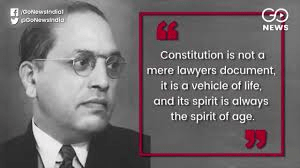
Bhimrao Ramji Ambedkar, (born April 14, 1891, Mhow, India—died December 6, 1956, New Delhi), leader of the Dalits (Scheduled Castes; formerly called untouchables) and law minister of the government of India (1947–51).

Born of a Dalit Mahar family of western India, he was as a boy humiliated by his high-caste schoolfellows. His father was an officer in the Indian army. Awarded a scholarship by the Gaekwar (ruler) of Baroda (now Vadodara), he studied at universities in the United States, Britain, and Germany. He entered the Baroda Public Service at the Gaekwar’s request, but, again ill-treated by his high-caste colleagues, he turned to legal practice and to teaching. He soon established his leadership among Dalits, founded several journals on their behalf, and succeeded in obtaining special representation for them in the legislative councils of the government. Contesting Mahatma Gandhi’s claim to speak for Dalits (or Harijans, as Gandhi called them), he wrote What Congress and Gandhi Have Done to the Untouchables (1945).

In 1947 Ambedkar became the law minister of the government of India. He took a leading part in the framing of the Indian constitution, outlawing discrimination against untouchables, and skillfully helped to steer it through the assembly. He resigned in 1951, disappointed at his lack of influence in the government. In October 1956, in despair because of the perpetuation of untouchability in Hindu doctrine, he renounced Hinduism and became a Buddhist, together with about 200,000 fellow Dalits, at a ceremony in Nagpur. Ambedkar’s book The Buddha and His Dhamma appeared posthumously in 1957, and it was republished as The Buddha and His Dhamma: A Critical Edition in 2011, edited, introduced, and annotated by Aakash Singh Rathore and Ajay Verma.