Secrets revealed by famous billionaires being successful in this or that way is what we all want to achieve from Mark Zuckerberg to Elon Musk following their simple success principles is guaranteed to change your life.
Find your goal and formulate it correctly
Steve Jobs did not want to release a phone his goal is a phone that could function as a computer but was easy to use your goal should be specific. For Example, you like to bake cakes and you would like to do it more often and give some profit out of it I want to bake cakes for money is an incorrect way to formulate your goal the right goal would be to open a bakery where my cakes will be sold if you dream of a world tour it will be wrong to set a goal I want to travel the world it’s a wish not a goal the right formulation would be I want to earn twenty thousand dollars for my travels.
Make a plan and follow it
Hypothetically if we explain the situation then it should be, How are you going to travel around the world what kind of Transportation are you going to use what will be your route when are you going to start planning short term and long term goals to help to identify weaknesses and major tasks that need to be focused on perhaps after drawing up the plan you will understand that your goal is not to earn twenty thousand dollars for a trip on a liner but to find like-minded people for hitchhiking around the world Elon Musk wants to colonize Mars having drawn up the plan he concluded that the main obstacle was the high cost of flying to the Red Planet now Elon is busy developing more economical space transport.
Don’t hold yourself back
You’ve probably heard about such a thing as emotional intelligence it is the ability not to suppress but to manage your emotions and display them where it’s appropriate also suppressed emotions are worse than physical well-being therefore do not be shy to show you true feelings and emotions at least for visiting doctors less often look at Oprah Winfrey for example that strong powerful woman always speaks up and shows how she truly feels about something that matters to her.
Love what you do
Truly loving what you do and believing in its importance if you are not obsessed with your own business or the goal you are aiming at the path to success will be long and most likely endless if you’re not in love with your job it’s difficult to change your attitude towards it if you cannot quit trying to consider your current position as a tool to achieve your goal. For example, Once Mark Zuckerberg shared his favourite story that in 1962 John Kennedy visited the NASA Space Center in one of the offices he noticed the cleaner who was so engrossed in sweeping the floor that he did not even notice him, “Hi I’m John Kennedy what are you doing here” Kennedy addressed him then the janitor answered, “I’m working so that humanity could go to the moon Mr. president”.
Do what feels right to you
There will always be people giving you advice and offering you once-in-a-lifetime opportunities they might be indeed doing it trying to help you however taking the decision only out of fear that the opportunity will be lost is wrong let your personal beliefs and inspiration move you not fear only do what feels right to you and when it feels right to you follow Warren Buffett’s advice “you don’t have to swing at everything you can wait for your pitch”.
Spent money consciously
If you are obsessed with your goal then the refusal of a dress or any other impulse purchase will be an easy task for you. For Example, If you need to buy another dress go ahead but before you do it consider how much closer this dress will bring you to your goal Steve Jobs used to say spending a dollar wisely is more difficult than earning it that’s very wise weren’t you going to travel around the world maybe it’s better to buy sneakers in which it will be more comfortable to hitchhike or to take a foreign language course without which it will be difficult to organize a budget trip
Use your time wisely
Time is a valuable resource and one should also approach it in a conscious way just like spending money Mark Zuckerberg is positive that you can’t succeed if you spend your energy on stupid and frivolous things so he is trying to cleanse his life from things that don’t have any sense choosing clothes is one of those things according to him no surprise we see him in the same great t-shirt every day we all have more significant time consumers than choosing clothes, For Example, the inability to say no to gossip social media the wish to do several tasks simultaneously and then stop halfway all these things consume the time that would be better invested in yourself just like other resources.
Set priorities
It is impossible to be successful in everything. For Example, Elon Musk believes in solar systems but understands that he doesn’t have enough strength for everything that’s why he dedicated himself to Tesla and SpaceX and the Solar City project is managed by other specialists the habit of prioritizing is useful not only in work but also in other aspects of life if you decided to spend an evening with your family do not get distracted by work and friends the desire to succeed in everything will not only lead to failure but will also consume your energy.
Say no to Stereotypes
Many of you have heard these things from other people that, “woman’s place is in the kitchen”, “real men don’t cry”, “we need children to have someone taking care of us when we are old” how often do you hear those stereotypes distort our perception of reality and also prevent us from having a good life achieving our goals and being happy it was the desire to be different from others that helped many billionaires become what they are today. Steve Jobs knew what he was talking about your time is limited that’s why you shouldn’t lose it by living other people’s lives do not fall into the trap of dogma do not let the noise of other people’s opinions beat your inner voice.
Live not only for yourself
For modern billionaires philanthropy is a spiritual priority many of them spend money to support the needy to develop art education and medicine Bill Gates and Warren Buffett started them The Giving Pledge campaign the idea of which is donating 50% of their income to charity there are more than 150 participants in this campaign including Mark Zuckerberg, George Lucas, Victor Pinchuk, and Vladimir Putin in giving someone your time attention and energy means investing in them prioritizing correctly is important children in orphanages or animals and shelters need your time.
The principles described above won’t make your billionaire overnight but success doesn’t always mean money it’s also about doing what you love and feeling happy.
Rebirth of talibanTaliban , terrorist organisation which was supposed to be dead suddenly emerged and took over an entire country.
How did they do this.for years taliban did not take any action because of which everyone thought that taliban has been wiped out.but this was not true . they were preparing themselves for a sudden attack.
Resources of taliban :-Taliban’s sudden surge across much of Afghanistan,may have stunned the world but it has been driven in part by extensive fundraising that has given this group access to millions of dollars.Intelligence agencies say its impossible to gauge the exact money taliban has been able to raise, it’s estimated to be around 300 million to 1.5 billion dollars a year.Their major source of income are opium production,drug trafficking, extortion, kidnapping etc.According to UN many non governmental foundations also donates huge amount to taliban.
How did taliban conquered Afghanistan :-
As foreign troops began their final withdrawal from the country in may,washington and kabul thought that afghan millitary will put up a strong fightagainst the Taliban.
Afghan millitary having multi billion dollars of arsenal was undefeated on paper.In reality they were plagued by corruption,poor leadership,lack of proper training.According to reports from The Times of India US government inspectors had long warned that the force was unstable.Faced with smaller but more determined opposition many soldiers even units deserted or surrendered leaving the insurgents to capture city after city.The seeds of collapse were soen last year when washington signed a deal with insurgents to withdraw its troop completely.
For Taliban it was their victory after more than two decades of war,but for many afghans this was betrayal and abandonment.With afghan forces unable to hold off the taliban advances,many of Afghanistan’s famed and notorious leaders rallied their millitia and promised a black eye to Taliban if they attack the cities.Cities fell without a fight.political leaders left the country.some warlords were captured some ran away.From individual soldiers and low level ministers to officials the insurgent pressed for deals with the taliban.Final march to kabul was not bloodshed ,it was government officials and terrorist capturing the city sitting in a couch.Earlier few reports estimated that ut would take around 90 days to capture kabul but once they entered it took less than two weeks.And thus a country was captured by a supposedly dead organisation which resulted in nothing else but destruction of lives of citizen as around 3 lakh people left the country on the ither hand thousand were killed.
Many adults function best with around 8 hours of sleep and this varies depending on many variablessuch as your environment, health, age, etc., youth today may be averaging only 6–6.9 hours of sleep as a result of all-nighters, cramming, parties, TV, the internet, and a general overload of activity. In fact, 8 hours of sleep may seem unreasonable for many college students; residence hall life is remarkably noisy, distractions are plentiful, and you may have a job or have a family to care for in addition to school.
■Sleep Deprivation: Symptoms and Consequence
Sleep is an important process which helps you remember what you learn and prepares you for your next challenge. If you are experiencing any of the following for a period of a few weeks, commonly known as insomnia, you may want to consider asking for help.
▪difficulty falling asleep
▪wake up frequently during the night
▪fall asleep at inappropriate times even after a night of adequate sleep
▪sleeping too much (more than 9 hours)have sudden attacks of uncontrollable sleep or muscle weakness
▪have nightmares or night terrors (the experience of awakening in a terrified state without recollection of a dream) that interrupt your sleep
▪sleep-walking
■Sleep Loss and depression
Depression is already two times more common in the general population, affecting the youth very badly and it is believed that lack of sleep contributes to this high rate. What people often fail to realize is that sleep problems that persist for more than two weeks can actually be a risk factor for developing depression. Moreover people who suffer from depression also have difficulty sleeping, and if sleep problems persist after depression has subsided, the risk of relapse increases.
■How to Improve Your Sleep? While 8 hours of sleep may seem unreasonable, you should not underestimate the power of good quality sleep. If you are having trouble sleeping, here are some suggestions to help:
▪Develop sleep rituals or sleep-promoting bedtime routines. Do the same things in the same order before going to bed to cue your body to slow down and relax. Stop studying and don’t get into any stimulating discussions or activities a half hour or hour before bed. Just before going to bed, do something to relax yourself: read a book for leisure (not a text book or a journal article for class), play your guitar, listen to quiet music, write in a journal.
▪Exercise and/or keep physically active during the day. Strenuous exercise (brisk walking, swimming, jogging, squash, etc.) in late afternoon can promote more restful sleep. This is especially important the day after a bad night’s sleep. While regular physical activity is good, exercising just before bedtime may actually make it harder to go to sleep.
▪Create a “to do” list throughout the day and keep a pad and pencil near your bed. If your thoughts are racing as you are trying to sleep and if you think of something you want or need to remember, jot it down. Then let the thought(s) go. There will be no need to lie awake worrying about remembering it.
▪Cut down on alcohol. Alcohol might help you fall asleep, but it often results in shallow and disturbed sleep, abnormal dream periods, and frequent early morning awakening.
▪Avoid large meals three hours before bed. Limit yourself to light snacks when studying late at night.Avoid routine use of sleeping pills or other sleep aids, which reduce sleep quality.
▪Take a short nap (30 minutes or less), as early in the day as possible, if you are tired. While short daytime naps can be refreshing, longer naps can upset your internal clock.
▪Reduce your intake of caffeine and nicotine 4–6 hours before going to sleep. If coffee shops are a common late night study place, try decaffeinated coffee or tea if you crave something warm. Drink decaffeinated pop instead of regular pop. Stimulants interfere with your ability to fall asleep and progress into deep sleep.
■When to Seek Help? If restless or sleepless nights continue for a period of several weeks, think about discussing with a therapist or with your medical doctor. Sometimes you may have conflicts that you are unaware of which may be preventing you from sleeping peacefully. Treating insomnia often entails treating the condition causing the insomnia (e.g., stress, depression) and relearning healthy sleep habits, and Take a short nap (30 minutes or less), as early in the day as possible, if you are tired. While short daytime naps can be refreshing, longer naps can upset your internal clock. Reduce your intake of caffeine and nicotine 4–6 hours before going to sleep. If coffee shops are a common late night study place, try decaffeinated coffee or tea if you crave something warm. Drink decaffeinated pop instead of regular pop. Stimulants interfere with your ability to fall asleep and progress into deep sleep.
When to Seek Help?
If restless or sleepless nights continue for a period of several weeks, think about talking with a therapist or talking with your medical doctor. Sometimes you may have conflicts that you are unaware of which may be preventing you from sleeping peacefully. Treating insomnia often entails treating the condition causing the insomnia (e.g., stress, depression or anxiety) and relearning healthy sleep habits, and a therapist can help you with this. Sleeplessness may also be a result of a more severe medical problem (or may lead to increased health problems) and you may need to see a physician.
The word unemployment itself describes that the problem of giving job to those who are willing to work. It is mainly an economic problem. A problem that has been in tradition without a particular solution. The major rise in unemployment is because of the population crisis. This year we can say that the pandemic also played an important role and increased this problem at the highest level. The people who were employed and were at professional posts lost their jobs because of the pandemic situation for which they weren’t prepared.
Now coming to the second part that is the population crisis. We need proper family planning schemes so that the jobs could be created. Because it’s impossible to create the employment opportunities for all if we will not plan accordingly and prepare a structure for this problem. The trouble is not only this. In every field we have multiple candidates with qualified degrees for the same single post. People are going to the same sector as their parents had gone into that and think that they will get the better chance.
Mental makeup is also necessary for both boys and girls. We ate service minded since our childhood’s so that we are afraid of taking risk but it is not a good option to completely being dependent on the government for creating job opportunities. It’s the problem of both educated and uneducated people and we can find a solution together only. Even agriculture sector suffers disguised unemployment which can be job oriented if we think and focus on it.
When the person is unemployed it may be lead to many undesired results that may be competition, frustation, depression, drug addiction, and even suicides. Running a race without a goal is worthless. One must think twice before taking his steps about his studies and career. Every individual is not the same and has different way of thoughts and capabilities. We need to get to know about them so that we could be confident in our field and make necessary decisions.
At last I could conclude my article on a positive note that the one step should be taken by government and one step by ourselves because it’s our choice, our future and our life. Expectations are a part of life but don’t try to make it a habit. If the steps are taken from both the side then only the solution can be derived not only for ourselves but for our future generations too.
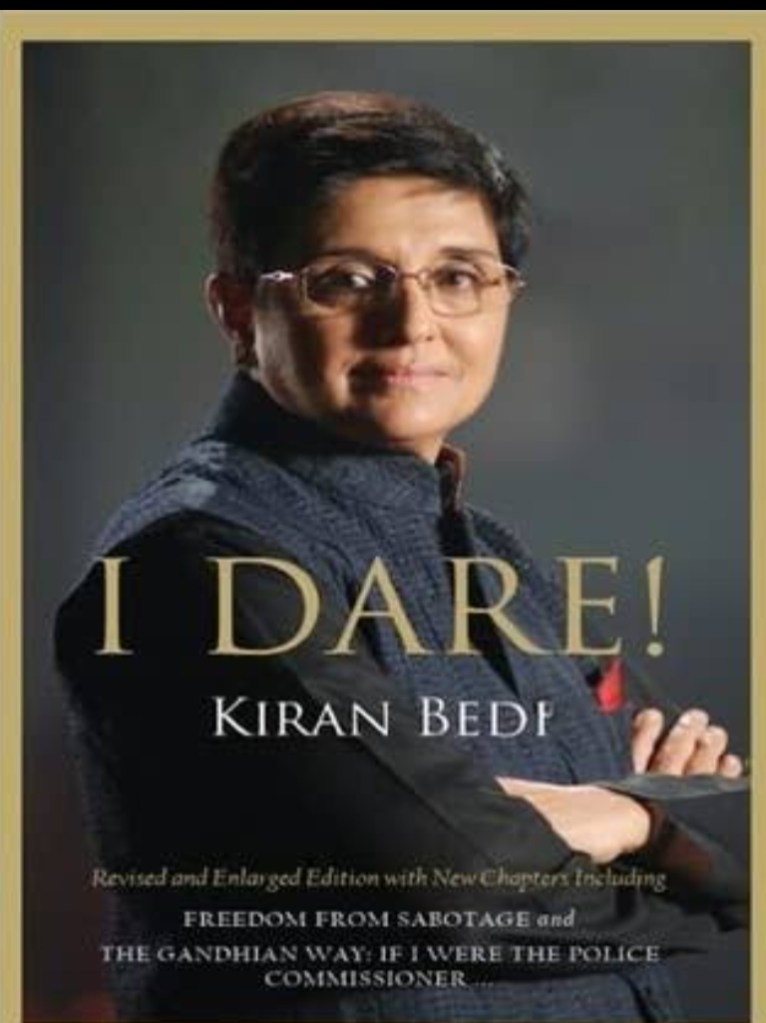
This book was first published In 1995, has been translated into six languages. It was voted as the ‘Biography Of The Decade’ by India Today. The book incorporates her ‘Personal And Spiritual Journey’ on which she embarked, not only for the prisoners, or the Trainees in The Delhi Police but also for herself. The book is an insight of who Kiran is and ‘What Is It That Makes Her What She Is’.
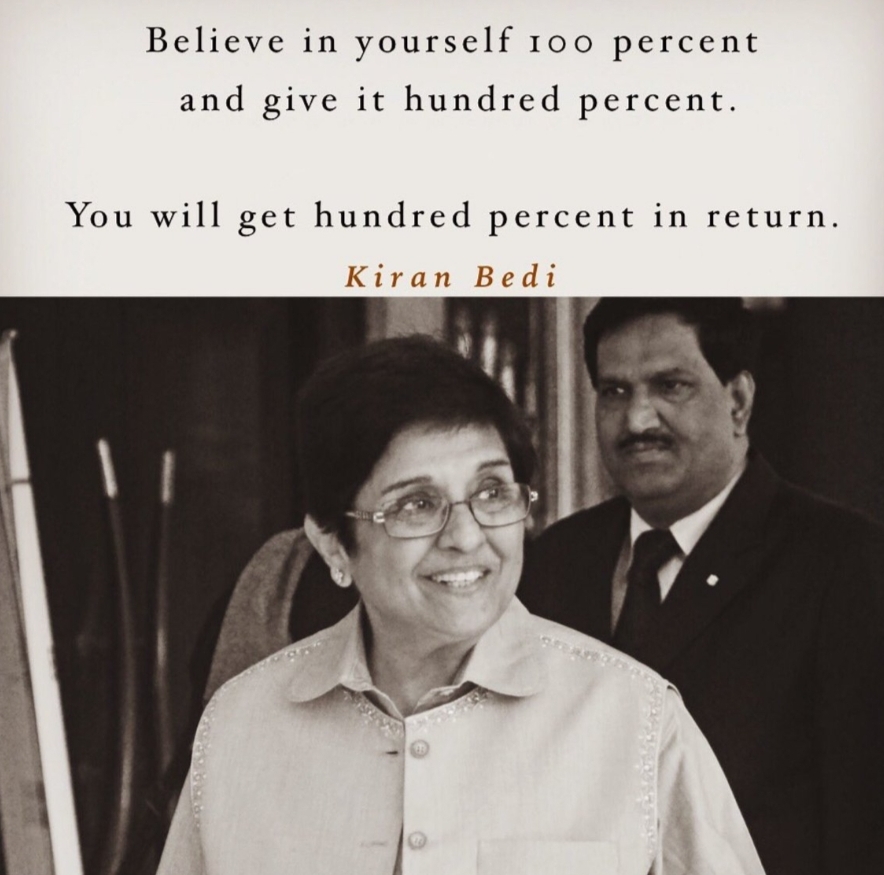
Biography of Kiran Bedi. She became internationally recognized after recieving the Ramon Magsaysay Award in Government Service, also considered the Asian Nobel Prize. Her work as the first woman in the Indian Police Service, and as the Inspector General of Tihar Prisons Delhi, got international attention. Her work in the field of crime prevention, forging partnerships in policing and prison transformation was absolutely innovative in the field of restorative justice.
You all may know who is she. Her biography will make you know her. The ups and downs, the highs and lows of her life. She is an inspiration to most of us.
The author has penned the events of Kiran Bedi’s life in detail. He has done a wonderful job by giving us the biography of such a wonderful personality.
This book teaches us to take a stand for the right, for ourself. It teaches us self empowerment. It makes us realize that one person can make a huge difference. You will learn about leadership. This book is a written-witness of a revolution.
I would recommend it to all those who dare to believe in themselves. If you are not that person, after reading this book you may be one of that kind.
Like I say : Reading books is magic, it makes you live hundreds of lives in a single one. Or atleast that’s what I believe. Hopefully this book will have an impact and magic you are/ were waiting for. I’ll take a leave.
Trophy hunting is hunting of wild game that is characterized by the selective harvest of mature male animals. Sad to say that this ancient practice is still being carried out in the name of ‘providing incentive’ and ‘developing economies’.
Animal rights have been openly violated by some nations by allowing trophy hunting and are in great danger in countries considering to resort to such barbaric means to earn money.
Animal rights are not legal rights but moral rights which are often ignored in the name of utilitarianism. Animals are treated as property and, thus, enjoy little to know legal rights. As the saying goes, “Until the lion learns how to write every story will glorify the hunter”. Well, the hunters indeed are trying to glorify their scheme of easy money earned through their immoral and savage actions against innocent lives.As the government of countries allowing trophy hunting, such as Africa, US and some countries in North America, reasons that trophy hunting raise funds for the conservation of wildlife, when there is “no incentive” for conservation, might I say that this can be considered an irony, a hilarious one too.
The truth is that these governments think that investing a portion of their GDP on conservation of environment, moreover on conservation of wildlife, is nothing more than waste of money. Those arguing that this practice also serve as population control of the wild animals, which would otherwise exceed the carrying capacity of an area, must I remind them that it was our fault, fault of the human race, behind significant decrease in forest areas and green cover and now to cover up our mess we are going on mass killing of innocent animals.
It might sound extreme but, Sire, this would be called murder with corporate motives had the entity been human. The claims stating, directly or indirectly, that trophy hunting is the best method to make money out of wildlife and the local community benefits from this income have been false. Reports suggest that around 3% After revenue collected from trophy hunting reaches the communities that are affected by it.
As for money through wildlife conservation, wildlife tours and safaris and increasing fascination for trips to reconnect with nature can fairly boost economy. Not only it gives incentive to save wildlife but also a chance for connected sectors, such as tours and travels, aviation, hospitality, local handicraft etc., to grow and prosper.Considering ourselves to be the superior species though, why must we ponder upon the wellbeing of wildlife and concern ourselves with moral issue of innocent animals being killed in the name of big game, isn’t it?
Animals like lions, tigers, wild boar and others are the ones on the kill list of rich people in the name of ‘social service by killing dangerous animals’. Basically the idea is ‘killing the ones on the top of the food chain’. It’s unfortunate that human race never learns from its past mistake. I would like to tell the story of Sahara desert which apparently wasn’t a desert but a King, in his own noble perspective, killed all carnivores in order to protect the herbivores from ‘savage beings’. With no one to check the plant-eaters, they grazed the whole forest down to a desert. There is a reason nature came up with the food chain and the so-called ‘savage beasts’. Need of the time is sustainable development and protection of environment, not what is being done in the name of economy and GDPs, so that there remains an economy to be taken care of not just.If it’s really about utilitarian view then we should start killing all the people above the age of 65 or 70 who are dependent. It will give far more greater benefits than loses.
We can achieve control on population, decrease in number of dependent population, more disposable income more resources and increase in unit area per person, not to forget increase in availability hospital beds, decrease in waste generation and better waste management and economic development in sector dealing with cremations, funeral services etc. And at what cost?
Only the emotional unrest which will eventually fade with the realisation of the inevitable ad the burden of caring the economy. Sound barbaric, extreme, baseless. What about the greater good now?
Just because human beings, in their own false sense of superiority, fail to remember doesn’t mean that animals are not an entity and do not deserve right to live.To conclude, I would say animal rights are in dire need to be upheld legally and should be ore widespread otherwise the money-minded, greedy beings would wipe out the wildlife. It is not just important but necessary to ban trophy hunting not only to save wildlife and nature but to save our environment, our ecosystem within which the ‘economies’ exist. To assume environment to be unrelated to the issues of economy and politics and proceeding ahead like that is like breaking the roof of one’s own house to build oneself a fire. Not only is it illogical but also will not sustain economies in the long run. Also, I would like to add that giraffes don’t hurt people, they are plant eating and peaceful animals. So, Ms Sabrina Corgatelli should be ashamed of killing innocent, harmless animals and should have her facts straight next time or come up with better excuses.
Epicurean paradox, also known as Riddle of Epicurious or Epicurious trilemma, is a version of problem of evil, i.e. the problem of existence of evil with the existence of an all-knowing, all-loving, all-powerful God. In this paradox, questions that does God knows about all evil or not, can prevent evil or not and whether he is willing to prevent evil or not is contemplated upon on for two possible outcomes, yes or no, and each time the reasoning circles back to God not being all-knowing, all-loving and all-powerful. This paradox, however, doesn’t argues against existence of God’s but rather against the divine-providences. Epicurus believed in the existence of deities, like everyone during the early Hellenistic period in Greece.
Epicurus was born in 341 BC and was an ancient Greek philosopher who founded the school philosophy, Epicureanism. He was an empiricist and was against Platonism of his days. He was inspired by Cynics and led a simple like and discussed a wide range of philosophical subjects with his followers. He believed that both body and soul died at death and hence death must not be feared.
The epicurean paradox follows a series of hypothesis and antithesis to arrive to the paradoxical conclusion. As per my understanding of Socrates, he might agree with the process of acquiring knowledge through series of question. But, Socrates believed that God is perfect and immortal and tries to make the soul as perfect as Him. But this trilemma breaks the proposition of God being perfect. Though it does not deny existence of God, it does makes out that God does not interfere with the working of human world. Epicurus did not even believed in realms and believed in only what senses can perceive. Socrates indirectly states that God does affect human realm and that there is more to world and oneself than what senses can perceive. Also, the existence of this paradox is an irony to the existence of one absolute knowledge that Socrates claimed.
As for Plato, Epicureanism was against Platonism and their thoughts differ a great degree. Plato also believed God to be real and all-powerful, all-loving ad all-knowing. He believed that ideal is real and beyond visible. His theories are also challenged through the paradox. Epicurus believed only what the senses can administer. He believed in the existence of God as He was the reason behind the infinite universe and nature but not in the way Plato did.
Aristotle and Epicurus were similar in a lot of ways. Both were empiricist and involved themselves with politics. But where Aristotle, too, believed Epicurus believed that the concept of God is different than what Aristotle believed, that God’s exist unaware of us and does not try to administer the world.
To conclude, I would like to say that Socrates, Plato and Aristotle, all three of them talked a lot about and believed in existence of absolute knowledge and Good, which is often considered synonymous to God, and importance of following virtue and doing Good. They believed in existence of all-knowing, all-loving and all-powerful Gods who is concerned with the working and miseries of the world, that God is perfect. Though Epicurus believed God to be ethical ideals he did away with the concept of God involving themselves with humanity and through his Problem of Evil wants to prove that only. Also, Epicurus was somewhat influenced by ideas of Socrates because of he was influenced by Cynics and Aristippus, both of which were born out of Socrates teachings. We can see how the branches of the same tree goes in different directions because of different perspective of seeing the same concept, even with reason and logic supporting them.
Doesn’t matter how miser people are normally but when it comes to summer, they manage it well to spend money on their vacations to Hill Stations. The coolness and serenity a person may get from Hill stations is like no other. The leave from the busy life and entry to the beautiful and mesmerising world of mountains blows the mind off to joy and freshness. Nobody can say a No to a trip to hill stations. They are fun in itself. Even a thought of them can ignite the excitement to travel and enjoy in between mountains which get covered with snow during the winters.
There are a lot of fun activities to engage in with family and friends like Bon Fire, Trekking, Paragliding and much more. The taste of hot meals in the cold, chilling weather of hills is another level! The spicy food gets its real sense at such places. It feels like a life in the clouds when you visit a hill station. The fog is present at all times but you may confuse smoke with it at times since there are many vendors of Corn at the tourist roads, preparing it hot and spicy for people to tackle cold or honestly; enjoy the cold! Due to the slopes of the mountains, it gets difficult to climb up the roads especially when you are looking for a hotel during peak time. The hotels are reached after climbing steepslopes/stairs. Of course nobody needs a ceiling fan in the house at hills. Also, there are not much houses seen since they attract tourists for vacations but are not suitable enough for residential purposes. There are many risks as well, related to a drive to the hills including landslides and cloud bursts. Life is very difficult and only people belonging to the place can tolerate the cold throughout the year. Spending long time there you would eventually miss the heat of summers and might feel homesick.
Boating facilities are also available at some places. There is something unique about every hill station and that makes them worth going each summer. It ain’t too luxurious to stay neither expensive markets. In fact, you can find cheap products here, that majorly include their speciality items. The hills are famous for the greenery and for sure there are juicy fruits that would tickle your tongue and attract you to buy them in bulk. The markets are famous and filled with tourists. People prefer summers to be the best time to plan a trip to hills, escaping the heat and pollution of the cities and calming their mind in between the nature and its beauty.
One can also see the farms and witness the farming and agriculture. Hill stations are homes for a lot of fruits. Apples, Mangoes, Cherry, Strawberry etc are some of the fruits which come from famous hill stations like Kashmir, Mussoorie and Dalhousie. You can go and spend sometime in greenery and eating fresh fruits.
Camping is very popular these days. People like to go to the mountains and spend their time under the stars in the woods rather than staying in luxurious hotels. It saves money as well as gives an unforgettable experience. Trekking, camping, paragliding are some of the very popular activities. People engage in these activities and have fun. If you are looking for an unforgettable experience in low budget, a peaceful environment and natural surroundings, nothing beats the calmness of mountains. Uttarakhand offers a lot of fun mountainous places to visit. One can find a lot of choices to choose from in the state of Uttarakhand.
Threats, are everywhere, with everything as the rule of balancing out is having good means there must be a side too which can have different consequences from the former so, what threat we are covering today and how it can lead to many unknown things to appear out of nowhere.
Glacier, yes we have always heard it around us that it is melting and the threats I mean we had this subject from primary section of schooling till graduation so yeah we know all the bad things that can happen if glacier keeps on melting, but what we never thought what would happen if it just won’t increase the sea level but can also cruise unknown danger to the whole of the mankind?
Talking about that kind of danger and knowing something more on this topic, this article is here today.
A Wake-Up Call
Can there be a comeback appearance of long-lost species or diseases? As the permafrost for centuries or even more, the glaciers also have frozen up many nutrients or elements that once was out there free when we had different era or different habitats on our very blue home.
The waking of these diseases and species can be much more serious than thinking of it as just a hypothetical question and scenario.
We humans have always lived with millions and billions of bacteria and viruses around us the difference is most of them are not quite awake to infect us yet as every molecule or protein needs some specific condition or temperature to start evolving with the current environment. So there we are still safe even around them.
But, what if the temperature which is keeping them at bay or mostly inactive starts giving us major variation which can mean a wake-up call for many viruses and many unknown dormant things out there.
There are many examples to show that this may be more than a mind’s curiosity.
In 2005 and 2014 many scientists revived viruses of the permafrost soils and even checked them out for their survival for many many centuries.
In 2016, frozen virus anthrax was found in a remote corner of Siberian Land which infected several countable humans to consider the threat of Unknown.
Anti-virusesresistance
Many Scientists found out through intense research that viruses and these pathogens can develop antibiotic resistance through which they can live millions of years and they are rapidly adapting to the changes that the surface microbes took years to develop.
The viruses even if get destroyed in that particular period can revive if their DNA is still somehow able to get the host to feed and get the required condition to live on.
Conclusion
Even though the risk of these coming to life for at least 50 years is less than likely to happen but we can never be so sure that it’s not gonna happen. Knowing your battle beforehand and being ready for it with an extra dose of anti-biotics can help us to fight back good.
Roads : lifeline of rural developmentRoadways are not only a key for rural development,but play a major role in poverty reduction by generating increased agricultural income and productive employment.
When globalisation was changing the world it could not reach many places as they were inaccessible due to lack of proper road connectivity hence many village did not develop.
To solve this issue government launched pradhan mantri gram sadak yojna also known as PMGSY in the year 2000 to connect rural areas with urban by network of all weather roadways.Objectives of construction of roads :-
1.To connect unconnected habitations in rural areas with major urban areas and markets for better buisness and employment
2. To make places having resources accessible so that suitable industries could set up in order to develop the area.
3.to establish a core network that is essential to provide basic access to essential social and economic services to all eligible unconnected habitations.Steps taken by government :-
1. Government has launched PMGSY whose primary focus is to connect remote areas with urban areas.
2. Government creates a core network of roads from each place so that basic needs like school,hospital, market are accessible
3. Government launches tender after suitable time for maintenance of roads.
4. Government ensures quality of roads is high otherwise necessary actions are taken again the contractor.
5. Government prioritizes different places where roads should be constructed with their needs
6. Border areas are also connnected with mainstreams by roads especially constructed for them.Importance of roads :-
1. Roadways helps in the growth of market hence helps in rural development.
2. They connect places with schools so that children can be educated .
3. Areas with proper roads attracts different industrialists which help in development of area.
4. Roads help in attracting tourist which helps the locality by generating ample opportunities.Rural connectivity is not an end in itself it is a means. The connectivity will improve education,health,rural incomes.roadways connects rural areas to major political hubs which helps local government to ensure development in their locality
One of the biggest challenges faced by rural India is Poverty.We are not talking about the places like Punjab where the agriculture and people live with colours.
The issue is about the backward places and actual rural places in India. Even states like Odisha and Jharkhand who are very rich in resources are considered the poorest states in India. Poverty is an interdependent aspect of the society. The most it is dependant on is the literacy rate. Other backward areas , Naxalite areas are still very far away from attaining the correct information and education. These people are not even aware of the relaxations and schemes of the government for their welfare. The most that is holding back people in these rural areas is adaptation.
They are nit very familiar with the concept of change with time. They bind themselves inside their old practices when there is much more to learn and excel in. The stereotypes and old practices cause them to loose assets for them.For example the girls are not educated and are not used as assets who can earn in future. They are considered as a burden and hence are thought only for the marriage purposes.The main reason for poverty in the rural society is because rural people do have the resources but they are bot aware as of how to use their resources.
Some provisions given by the government for poverty alleviation are:
Wages programmes like:
Jawahar Rozgar Yojhna/ Gram Samridhi YojhnaThe NREP and RLEGP were merged in April 1989 under the Jawahar Rozgar Yojhna. The JRY was meant to generate meaningful employment opportunity for the unemployed and underemployed in rural areas through the creation of economic infrastructure. A major proportion of JRY funds was spent on roads and buildings. Over 47 per cent of the employment generated benefited SC/STs. The share of landless labourers among the beneficiaries was 36 per cent. The village community found the assets created under the programme useful:
Employment Assurance Scheme:
The Employment Assurance Scheme (EAS) was launched on 2 October 1993 covering 1,778 drought-prone, desert, tribal and hill area blocks. It was later extended to all the blocks in 1997-98. The EAS was designed to provide employment in the form of manual work in the lean agricultural season. The works taken up under the lean agricultural season.
Self Employment programmes like:·
The coverage of beneficiaries in the Ninth plan was considerably lower than the coverage under SGSY. The formation of self-help groups by itself contributes to the empowerment and economic well-being of the poor by improving their collective bargaining position. The group formation also emphasises social capital and enables the poor to Interact with other social groups from a position of strength. Group formation would continue to be the Focus under the SGSY.
NGOs have an inherent advantage in· · Reaching the poor due to their proximity, the trust. They generate by working in the area, their. Commitment, flexibility in approach, responsiveness.And cost effectiveness. They have played a dynamic role as social animators and organisers in rural areas. Many NGOs have not only been instrumental in the formation of self-help groups but· Have also nurtured them over the years. Such NGOs have a strong presence in many states. However, voluntary and non-governmental action is weak in some of the poorer states. These are also the states where the spirit of cooperation and collaboration may be lacking because of poverty Itself.
Training of social animators would have to be promoted in such states. Departments of social sciences, social work, agriculture and rural development in universities and colleges could be engaged as facilitators in the process of group formation so that every rural habitation has at least one self-help group by the end of 2004.Many more reforms are suggested by the government for different aspects which affect the lifestyle and habitat of the people.
Dressing appropriately for a job interview, a networking event, or the first day in a new position is important for making a good impression and coming off as professional as possible. Dressing professionally often refers to a more formal workplace dress code and is most often seen and required in more traditional organizations. When it comes to job interviews, professional dress is the standard no matter what the company’s overall dress code may be.
Here I’ll tell you what it means to dress professionally, why it’s important to dress professionally, tips for choosing the best outfits for this type of dress, and the difference between business professional attire and business casual attire.
What does it mean to dress professionally?
Dressing professionally often refers to a type of dress code that’s more formal than business casual or casual attire. This type of dress code is most often seen in traditional office settings like those in finance, accounting, and government organizations. This type of attire is also often expected at formal networking events, job fairs, and job interviews unless otherwise noted by the company.
There are several reasons why you should dress professionally, including that it:
Helps you make a good first impression on the job interviewer or networking professionals.
Can increase your self-confidence by allowing you to come off as professional and confident.
Promotes respect from others.
Can improve your motivation and productivity in the workplace by encouraging you to get more things done.
Gives you a competitive edge over other candidates. Many hiring managers believe that how someone dresses directly affects their job and promotion potential.
Business professional attire vs. business casual attire
There are a few key differences between business professional attire and business casual attire. These differences include:
Business casual attire is most often seen in more relaxed work environments, such as tech companies and modern organizations, while business professional attire is a staple in most traditional organizations.
Business casual attire allows for more freedom of expression and gives employees the opportunity to show off their unique flare, while business professional attire does not.
Business casual attire is typically less expensive than business professional attire.
Business casual attire is typically more comfortable compared to business professional clothing.
Business casual attire often allows for more colourful clothing, while business professional attire typically requires neutral or solid colours and prints.
Tips for dressing professionally
Here are a few tips to keep in mind when choosing a business professional outfit:
Always opt for longer rather than shorter dresses and skirts.
Cover any visible tattoos if possible.
Do not wear body or facial piercings.
Choose jewellery and accessories that work with your outfit rather than those that are distracting.
Always wear clothing that is pressed and clean.
Choose clothes that are well-fitted and avoid wearing too-tight or too-loose attire.
Wear shoes that are polished and clean.
Wear your hair in a conservative style and a natural hair colour.
Avoid wearing clothes that are transparent or revealing.
Wear tops that come to at least your biceps if you’re unsure if sleeveless blouses are allowed.
Avoid wearing strong perform or don’t wear any perfume.
Opt for neutral colours whenever possible.
Keep nails manicured, neat, and colour them in a neutral nail polish if at all.
Wear natural or light makeup.
Choose quality over quantity when it comes to accessories.
Always consider what message your outfit is sending before wearing it.
Wear clothes that you feel confident in to avoid distraction or feeling uncomfortable while at work or in an interview.
Dressing appropriately for a job interview, a networking event, or the first day in a new position is important for making a good impression and coming off as professional as possible. Dressing professionally often refers to a more formal workplace dress code and is most often seen and required in more traditional organizations. When it comes to job interviews, professional dress is the standard no matter what the company’s overall dress code may be.
Here I’ll tell you what it means to dress professionally, why it’s important to dress professionally, tips for choosing the best outfits for this type of dress, and the difference between business professional attire and business casual attire.
What does it mean to dress professionally?
Dressing professionally often refers to a type of dress code that’s more formal than business casual or casual attire. This type of dress code is most often seen in traditional office settings like those in finance, accounting, and government organizations. This type of attire is also often expected at formal networking events, job fairs, and job interviews unless otherwise noted by the company.
There are several reasons why you should dress professionally, including that it:
Helps you make a good first impression on the job interviewer or networking professionals.
Can increase your self-confidence by allowing you to come off as professional and confident.
Promotes respect from others.
Can improve your motivation and productivity in the workplace by encouraging you to get more things done.
Gives you a competitive edge over other candidates. Many hiring managers believe that how someone dresses directly affects their job and promotion potential.
Business professional attire vs. business casual attire
There are a few key differences between business professional attire and business casual attire. These differences include:
Business casual attire is most often seen in more relaxed work environments, such as tech companies and modern organizations, while business professional attire is a staple in most traditional organizations.
Business casual attire allows for more freedom of expression and gives employees the opportunity to show off their unique flare, while business professional attire does not.
Business casual attire is typically less expensive than business professional attire.
Business casual attire is typically more comfortable compared to business professional clothing.
Business casual attire often allows for more colourful clothing, while business professional attire typically requires neutral or solid colours and prints.
Tips for dressing professionally
Here are a few tips to keep in mind when choosing a business professional outfit:
Always opt for longer rather than shorter dresses and skirts.
Cover any visible tattoos if possible.
Do not wear body or facial piercings.
Choose jewellery and accessories that work with your outfit rather than those that are distracting.
Always wear clothing that is pressed and clean.
Choose clothes that are well-fitted and avoid wearing too-tight or too-loose attire.
Wear shoes that are polished and clean.
Wear your hair in a conservative style and a natural hair colour.
Avoid wearing clothes that are transparent or revealing.
Wear tops that come to at least your biceps if you’re unsure if sleeveless blouses are allowed.
Avoid wearing strong perform or don’t wear any perfume.
Opt for neutral colours whenever possible.
Keep nails manicured, neat, and colour them in a neutral nail polish if at all.
Wear natural or light makeup.
Choose quality over quantity when it comes to accessories.
Always consider what message your outfit is sending before wearing it.
Wear clothes that you feel confident in to avoid distraction or feeling uncomfortable while at work or in an interview.
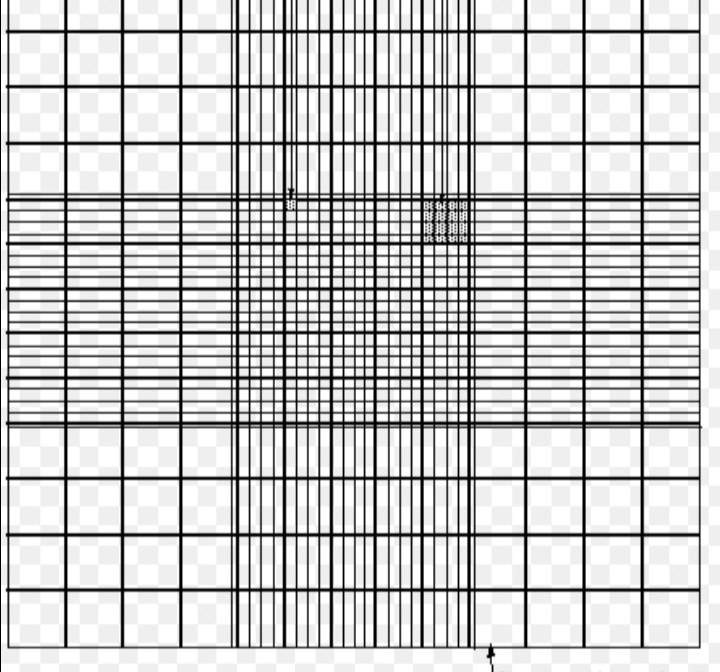
The counting of blood cells after proper dilution is known as haemocytometer. Using haemocytometer method,red cells, platelets and eosinophils are often counted. Now-a-days it is also used for counting cells of bacteria, yeast, or algae.
Haemocytometer – instrument’s description
A haemocytometer consists of a counting chamber, a coverglass for the counting chamber and diluting pipettes. Many types of counting chambers are available. Improved Neubauer and Fauchs Rosenthal are the two most commonly used counting chambers in laboratories.
Counting chamber
RBCs and WBCs in blood cannot be counted as such. The blood has to be dilute in specific isotonic solutions. RBC, diluting fluid is called Hayem’s solution. For WBC counting Turk’s solution or Toisson solution can be used.
RBC pippette
The total number of cells is expressed per mm^3 . The isotonic diluting fluid keeps up the cells intact. In WBC counting, the solution will lyse the red blood cells and the remaining nucleated WBCs are counted. Venous blood is used in blood cells counting.
Counting chamber
Normal Range of RBCs in human
Men : 4.5-5.9 million/mm^3
Women: 4.1-5.1 million/mm^3
At birth: 4.0-5.6 million/mm^3
Normal Range of WBCs in human
Adults: 4,500-11,000/mm^3
Neonates: 10,000-25,000/mm^3
Clinical significance
☆ Decrease in the number of circulating erythrocytes indicates anaemia.
☆ An increased number of erythrocytes indicates the possibility of polycythemia.
☆ An increase in WBC count for a transient period indicates bacterial infection.
☆ Progressive increase in abnormal WBC count indicates the possibility of leukemia.
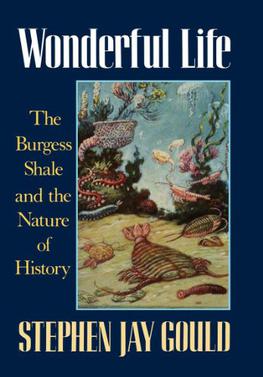
Dr. Stephen Jay Gould, a Professor of Geology at Harvard University, a Curator of invertebrate paleontology in the Museum of Comparative Zoology, a public figure and spokesperson, and an author of many popular science books, has in a Wonderful Life created a window through which the reader views one of the most important events in natural history: the explosion in the variety of marine animals that took place during the Cambrian Period more than half-a-billion years ago. What could be more thrilling than to witness one of the great steps in the long history story of life that has begun with a microbe and ended with the Homo sapiens?
A favorite theme of Dr. Gould is to overturn commonly accepted notions that have arisen through human prejudices often due to self-centered preconceptions. It is almost as though Gould regards humans as apes with merely enlarged brains and big egos1 who would still believe to this very day that the Earth was the center of the universe had not humanity been enlightened by Galileo, Newton and Copernicus. This is one reason why Gould selected as a subject of a book the Burgess Shale of eastern British Columbia in Canada. Charles Doolittle Walcott, who discovered the remains of tens of thousands of mostly soft-bodied invertebrates in the Burgess Shale in 1909, managed to misinterpret what one day would become one of the greatest discoveries in paleontology. Walcott incorrectly classified these marine animals as ancient versions of modern fauna despite the extraordinary character of some of them such as Opabinia, which had five eyes, and Hallucigenia, whose name describes its bizarre and dream-like appearance (it had seven pairs of toothpick-like spines, a tubular tail, a bulb-like head, seven tentacles along its back and six pods at the base of its tail!). Walcott considered this creature to be a worm. How could the director of the Smithsonian Institution make such an incredible mistake? According to Gould, Walcott was trying to force the Burgess Shale fauna into the classification scheme prevailing at the time. Here was one of the great field paleontologists trying, like an infant child, to squeeze round pegs into square holes.
For more than 60 years, scientists would believe Walcott’s interpretation of the Burgess Shale fauna. However, in 1971, Harry Whittington published a monograph on Marrella in which he expressed doubts that Marrella was a trilobite2 as previously thought. Marrella looked roughly like a fly with wings replaced by a shield consisting of four, pointed prongs sweeping over its back. Eventually, Marrella would be classified as an arthropod unique to the Cambrian Period. Simon Conway Morris and Derek Briggs, who began as graduate students of Whittington, would join him to form a trio of researchers who would radically change Walcott’s view of the Burgess Shale fauna. Through thorough examination of the specimens, the three would in due time arrive at the conclusion that many Burgess Shale specimens were unique arthropods or belonged to new phyla, implying that the Cambrian Period was one of the richest for animal diversity. Thus, this period in geological history marked the appearance of new “wonderful life.” Other paleontologists eventually joined the quest to understand Cambrian marine creatures in what would become a revolution in evolutionary thought — a saga of scientists struggling to discover the truth.3
It is perhaps ironic that Gould, who points out the pitfalls that personal prejudice and ego can play in drawing false conclusions in science, should employ a rather pompous writing style where, in places, his arrogance pervades every other paragraph and where in the Preface of the book he refers to himself as “yours truly.” Nevertheless, Gould is one of the few research scientists who has achieved a heightened mastery of the English sentence and a vocabulary rich enough to make even the most sophisticated writers envious.
In fact, we are very “lucky” to be here on Earth.
The Cambrian Period began 570 million years ago. It marked the beginning of the Paleozoic Era (from which henceforth hardened body parts such as exoskeletons, shells and bones would leave a trail of fossil evidence that paleontologists would ponder over to construct the “tree of life”), and it marked the advent of virtually all the major groups of modern animals. Not only were all the basic extant anatomical designs introduced at this great moment in life’s history but also some designs appeared that would be unmatched in modern fauna. The Cambrian was a period during which Nature seemed to be experimenting in an enormous variety of body structures. Many of these “experiments” failed in the sense that they did not survive, but interestingly Gould suggests that somewhat random factors rather than survival-of-the-fittest properties were the reason for the subsequent decimation.
This coincides with a new viewpoint of evolution that Stephen Gould and Niles Eldredge have advocated in which contingency plays a significant role. This is the so-called punctuated equilibrium. During most periods, the environment at most slowly changes and Darwin’s survival-of-the-fittest principle prevails. But there are other times in geologic history when rapidly varying conditions or catastrophes randomly decimate Earth’s creatures. The extinction of the dinosaurs is a good example (See Chapter XVI :Nature’s Holocaust of the Book of the Cretaceous of The Bible According to Einstein). For more than 100 million years, the dinosaurs were the most “successful” land animal, but, when an asteroid struck the Yucatán Peninsula 65 million years ago, large size was a great disadvantage. Only the smallest creatures survived. When 90% of species disappear during an extinction event, it is often random factors that decide which life forms survive. Another example of contingency, Gould argues, is the Cambrian fauna. It is impossible for scientists in examining the remarkable Burgess Shale fauna to predict which ones would survive and be “successful.” Would not Opabinia, for example, with its five eyes have an evolutionary advantage over fauna with two eyes?
These ideas have led to a new view of the tree of life with a richer branching structure. Compared to the old tree, the new tree during brief periods (such as at the beginning of the Cambrian) suddenly broadens in diversification only to suffer a decimation at a later time with many “leaves” terminating in evolutionary dead ends. Only a few lineages survive. Not all scientists believe in the theory of punctuated equilibrium of Gould and Eldredge, but most give the two credit for pointing out that species quite often appear and disappear on what seems to be short geologic time scales. Although this might be an artifact due to the scanty fossil record, it is more likely that evolutionary processes occur much faster than have previously been assumed.
Gould, by his own admission, is unable to provide a convincing explanation of why the explosion in animal diversity occurred during the Cambrian Period. This is often regarded as an unsolved problem in natural history. According to Gould, several evolutionary forces could have contributed. One argument is that life was filling a new, previously uninhabited, ecological niche, thereby providing an “open field of unparalleled opportunity” into which organisms expanded at rapid rates. A second, rather weak, idea argues that genetic systems age and just happened to “mature” at around the time of the Cambrian Period. Some religiously inclined individuals claim that the lack of a good explanation for the Cambrian biological explosion implies divine intervention. This is a Creationist’s point of view applied not at the initial moment of the birth of life but to the middle of its more-than-three-billion-year long development.
The Cambrian explosion can be “explained” by several important developments in evolution that had occurred in the Precambrian. Earth’s very early atmosphere essentially contained no oxygen gas. Indeed, this was “fortunate” for O2 was poisonous for early life. The oxygen in the atmosphere has been largely biologically generated as a waste product of photosynthetic life, and, as a result, oxygen in air has been increasing during the last 3 billion years. Approximately 2 billion years ago, certain organisms uncovered how to use O2 as a more efficient means to generate energy in metabolic processes. This allowed life forms to increase in size. Eukaryotes, which are organisms with cells containing organelles specializing in various biological processes and containing, in particular, a nucleus housing genetic codes, first appeared around 1.4 billion years ago. About a billion years ago, sexual reproduction arose as a more efficient means of biological replication. The potentially rapid increase in evolutionary progress expected from sexual reproduction, however, was retarded by the longest ice age in geologic history. Had Earth been warmer, the Cambrian explosion might have happened several hundred million years earlier. With the eukaryotic cell, respiratory metabolism and sexual reproduction, life forms were able to increase their size: The first multicellular organisms — microscopic metazoa — emerged about 800 million years ago. Then, 200 million years later, the two supercontinents of Earth broke up providing more shallow water habitats for life, and, at around the same time, one of the coldest ice ages, the Varanger, ended. The confluence of all these developments and events provided the “fuel” for the Cambrian explosion. The second chapter of the book of The Cambrian of The Bible According to Einstein summarizes the situation:
Now evolution was proceeding at a rapid pace. The fire on the fuse was burning. The fuse itself was almost gone. And everything was perfect for a biological explosion, an evolutionary radiation. The geology was right; the chemistry was right; the climate was right; the atmosphere was right; the biology was right; and the recent evolutionary past was right, for sea level had risen and the continents had separated, providing new shallow-water habitats; for circulating ocean currents were full of nutrients; for the seas and air had warmed; for the atmosphere had oxygen; for eukaryotic cells had previously appeared and the sexual revolution in evolution had occurred.
And it was like unto mixing gunpowder, gasoline and fire. And in five-hundred-and-seventy-million BC — the evolutionary “big bang” went off!There was a sudden burst in evolution, the beginning of a bio-revolution. And the diversity of animals on Earth exploded.
Gould is a firm believer that Homo sapiens hold no special status in the scheme of things. It is true — here on Earth, we are the “smartest” creatures. But whether we are superior is a totally different issue. Bacteria outnumber us multiplicatively by the billions. As species, archaea have outlived us by a factor of more than 10,000. Elephants are still bigger, cockroaches more cunning, lions still stronger, rats more numerous and so on. Not only have the seventeenth century astronomers relegated us to an inconspicuous corner of the universe, but modern paleontologists such as Gould have also placed us on a tiny, barely noticeable twig of the tree of life.
In fact, we are very “lucky” (in both senses of the word: “fortunate” and “probabilistically unlikely”) to be here on Earth. We often think of Darwinian evolution as a smooth, almost predicable, process in which the poorly adapted species die out and the “superior” species survive. Such a viewpoint is not valid and neglects some of the truly random events that have shaped the history of life. The asteroid-induced extinction mentioned above is a good example. Had it not struck Earth 65 million years ago, reptiles would probably still be ruling the Earth and the small mammals that survived would not have had the opportunity to radiate. The result would have been no monkeys, no apes and no humans. There are dozens of examples for which a slight change in the history of the Earth would have eliminated one of the essential steps in the long chain that gave rise to Homo sapiens.
Gould, while taking great pleasure in overthrowing false dogma, is probably himself guilty of exaggeration, an effect possibly due to his enthusiasm for his field of research. Has he overemphasized the role of punctuated equilibrium and contingency in the evolution of life? Could the Cambrian explosion be less dramatic, a consequence of a great find of 50,000 soft-bodied specimens in a single location during a particular point in time? Could the introduction for the first time of hard-body parts led to significantly more fossils thereby creating the illusion of a great radiation of species? It is possible that, one day, we shall have more information and a clearer picture as to how the Cambrian fauna fit into the great scheme of things. Perhaps the Cambrian diversity is somewhat exaggerated and future links will be established between divergent phyla. Perhaps some “consolidation of the data” will take place. Indeed, it is now suspected that Hallucigenia is related to the modern velvet worm rather than a new phylum as Conway Morris had proposed. But even if a revision does occur, the Cambrian will remain one of the great periods of experimentation in animal design.
Wonderful Life is detailed, well written, entertaining and informative. It is fun to follow the history of the Burgess Shale story. In the book are some great descriptions and sketches of the main characters of the drama, those diminutive Cambrian marine metazoa of extraordinary design and sophistication. In a Wonderful Life, the reader learns about the thrills and pitfalls of a historically based science such as paleontology. The writing is often intricate, sometimes technical and not always so accessible to the unskilled reader. But enthusiasts of science with an interest in evolution should greatly enjoy reading this classic, best-selling book.










 Eduindex News
You must be logged in to post a comment.