“A good head and a good heart are always a formidable combination.” – Nelson Mandela


INTRODUCTION

The leader is a man who comes closest to
realizing the norms of a group that values the highest; this conformity gives
him his high rank, which attracts people and implies the right to assume
control of the group. (Homans, 1950). The underlying need-structure of the
individual is what motivates his behaviour in various leadership situations.
Leadership style thus refers to the consistency of goals or needs at different
situations. (Fiedler, 1967). One of the great leaders who had the above
qualities fulfilled in him is the former South African president, Nelson
Rolihlahla Mandela
.

Nelson Rolihlahla Mandela
was born on 18 July 1918 in the Transkei village close Umtata. Nelson Mandela
was sent to Healdtown, a Wesleyan secondary school with some reputation where
he enrolled after getting a primary education at a local mission school.

Early life and work

Nelson Mandela was the son of Chief Henry
Mandela of the Madiba clan of the Xhosa-speaking Tembu people. After his
father’s death, young Nelson was raised by Jongintaba, the regent of the Tembu.
Nelson renounced his claim to the chieftainship to become a lawyer. He attended
South African Native College (later the University of Fort Hare) and studied law
at the University of the Witwatersrand; he later passed the qualification exam
to become a lawyer. In 1944 he joined the African National Congress (ANC), a
Black-liberation group, and became a leader of its Youth League. That same year
he met and married Evelyn Ntoko Mase.
Mandela
subsequently held other ANC leadership positions, through which he helped
revitalize the organization and oppose the apartheid policies of the ruling
National Party.

In 1952 in Johannesburg, with fellow ANC
leader Oliver Tambo, Mandela established South Africa’s first Black law
practice, specializing in cases resulting from the post-1948 apartheid
legislation. Also that year, Mandela played an important role in launching a
campaign of defiance against South Africa’s pass laws, which required non-whites
to carry documents (known as passes, pass books, or reference books)
authorizing their presence in areas that the government deemed “restricted”
(i.e., generally reserved for the white population).
He
travelled throughout the country as part of the campaign, trying to build
support for nonviolent means of protest against the discriminatory laws. In
1955 he was involved in drafting the Freedom Charter, a document calling for
non-racial social democracy in South Africa.

Mandela played a major role in many political
endeavours, many anti-apartheid movements such as the Program of Action, a
policy based initiative that was founded on the principles of non-violent
“civil disobedience, boycott, strike, and non-co-operation”. In 1962, Mandela
was nominated as the leader of the armed resistance group that was formed the
same year known as the Umkhonto we Sizwe (Spear of the Nation). Mandela
explained his reasoning, he assessed the situation of South African, along with
some of his colleagues, he came to a conclusion that: as long violence was
inevitable in his country; it was considered unrealistic and wrong for African
leaders to preach on peace and non-violence when the government met their
peaceful demands by force. In 1991 eventually he was elected as the President of
the ANC. Later he was elected democratic manner as the President of the State
of South Africa in 1994.


Is INSEAD better than HARVARD


                                                                  (Photo: MBA and Beyond)

You know you want to join a business school and not just anyone but the best one. Choosing the best business school can be a daunting task considering the thousands of schools out there that are best in their own way. So now what to do? How to choose amongst the best? Making the right decision will require hard work, patience, perseverance, and a lot more. What if you get two options amongst the best business school. Will then it be easier for you to choose? These are some of the things which will come to your mind while choosing a business school.

 The topic of discussion here is: Is INSEAD a better business school than Harvard Business School. Well, this one is a tough one to decide. INSEAD and HBS, both are in the top 5 list of best business schools. Ultimately both universities are best. They are the most prestigious business schools in the world. Both are lavish in terms of campus and excellent in terms of academics. Indeed, a very difficult question to answer. Let’s understand both respectively.

 Harvard University, established in 1636, is one of the oldest institutions in the United States. Harvard Business School (HBS) is the business school of Harvard University in Boston, Massachusetts. It offers a large full-time MBA program, management-related doctoral programs, and many executive education programs. HBS offers a two-year full-time MBA program with a general management curriculum. On the other hand, INSEAD was founded in 1957. It is a renowned European business school with campuses in France, Singapore, and UAE. INSEAD offers a 10-month MBA program with more than 75 electives to choose from.

 In terms of the course content taught there will be hardly any difference. Now you might think that INSEAD gets packed in 10 to 12 months and Harvard is approximately 22 months. So how is that there is barely any course difference? So, let me just clarify this if you study at INSEAD, almost 80% of the syllabus is taught in those 10 months what is taught at Harvard in 22 months. So, picking a business school in terms of the course content there is hardly any difference. This point gives a +1 score to INSEAD.

 Now when it comes to expense, a 1-year MBA program is relatively cheaper than a 2-year MBA program. So, in terms of expense, INSEAD is a better option. INSEAD is the right door to knock when you don’t have good financial backing. Now in terms of community, Harvard dominantly consists of Americans. On the other hand, INSEAD invites applications from all over the world. So, in terms of building a community network, INSEAD is most preferred. INSEAD has multiple campuses and it also offers an exchange program bringing diversity. The entrepreneurship and alumni network are stronger in INSEAD than in Harvard. INSEAD has an alumni network more global than anyone can imagine.

 In terms of brand, Harvard itself is a brand. It has a global brand name and it is known across the industries. However, INSEAD has a brand name that is not always known to the masses especially in America. Harvard cannot be estimated as it holds a lot of Weightage not only in America but also worldwide. If you are looking for a job in the USA, then Harvard should be your destination and vice-versa.

INSEAD is a better choice for certain students who want to do MBA than Harvard. Nevertheless, that does not mean that HBS is in any way subordinate to INSEAD. Both have their pros and cons. It depends upon an individual where he/she wants to study. Saying that INSEAD is better than Harvard will do injustice to the latter.


Judicialization of Executive decisions -A Threat to Democracy

                                                                    (Photo: Science ABC)

It is true to say that, “Judicialization of executive decisions is dangerous for democracy”. Judicialization is the growing involvement of judges in assessing the executive prerogatives and performance and the reliance on courts for addressing core public policy questions and political controversies.

 Judicialization occurs in parliamentary democracies when a high degree of party competition in legislature invites challenges from judiciary because these systems produce weak coalitions. In 1950s and 60s, the political elite passed the decision-making burden to the court because they wanted an umpire. Successive governments expanded the court jurisdiction over administrative tribunals and the court seized more powers of judicial review. In the last decade, the main driver of judicial involvement in executive decisions is pressure from civil society actors. The relationship between courts and political considerations in India’s parliamentary system is less coherent.

 When the political actor is strong (single-party majority), prepared to take on courts and has a policy agenda, SC is more constrained. This occurred during Indira Gandhi’s time. If the political actor is strong, but not prepared to strike at the courts autonomy (Nehru’s time), or if there is a weak coalition (post-1988), the judiciary has more room to manoeuvre. Today, within the space given by structural conditions, higher judiciary is trying to balance constraints imposed by institutional realities with demands for judicial action from societal actors. Judiciary’s intervention has had positive as well as negative effect. On the positive side, it has knitted alliances with political parties, citizen groups, activists and the media to keep an eye on the administration. On the negative side, the danger remains of collision between judiciary and other organs of state, which is against the principles of constitution and democracy. A bigger concern is the habit developed by higher judiciary of monitoring implementation of orders.

Judiciary interference should only be when required and should not be made as a permanent thing. It contains the principles of democracy as the three wings are different and has their own jurisdictions. Thus, it can be said that judicialization of executive decision is dangerous for democracy.


One nation, One election

                                                                       (Photo: Think India)

“One nation, one election”, might sound good as well as appealing, but it will have a number of anti-democratic consequences. It’s true saying that simultaneous elections for Lok Sabha and State Assembly could save time, energy and money of our country, but on the other side it can prove to be harmful for our country as well as democracy.

Apart from logical considerations, which cannot be a serious reason for a major change to the basic structure of the Indian polity, the most seductive argument in favor of simultaneous elections is the allure of Modi’s phrase, “One nation, one election.” This matches the “one nation, one tax” rationale for the goods and services tax (GST), which, of course, came into force via its own constitutional amendment on 1 July, 2017.

While one can debate the economic costs and benefits of GST, the analogy with elections is logically flawed. Indeed, the concept of simultaneous elections fundamentally runs against the grin of our Westminster-style federal political union. “One nation, one election” would make sense if India were a unitary state. But we are a union of states, which is philosophically and politically an essentially different conception of the Indian nation-state. With this, let us discuss the disadvantages of holding simultaneous elections in India:

  • Rule by the majority is the cardinal principle of Indian democracy. The concept of simultaneous elections goes against this principle since if elections are held simultaneously then the Lok Sabha and the state legislative assemblies cannot be dissolved before completing their full period of 5 years even if the ruling party is reduced to a minority hence it will go against the federal principles.
  •  It will disown today’s reality of fragmented quality at the state level where coalitions are the order of the day. So, simultaneous elections try to bring in the presidential type of governance where the state assembly is no longer can decide their own path and have to be in existence for 5 years with a minority party in power.
  • Even if elections were to take place simultaneously, parties contesting in only one state would anyway be similarly burdened. So, it probably takes care of only national parties. And the logistic requirement of movement of the requisite security forces. This constant would remain even if simultaneous elections were held.

So, it can be said that holding simultaneous elections is certainly desirable but not feasible. The question which arises is, “Why should the states suffer from the electoral decisions taken at the centre?” It has been said that simultaneous elections would curtail government expenditure but the election commission has updated that for this it would require the procurement of 24 lakh EVMs and an equal number of VVPAT units which is double the number required to hold only parliamentary polls. So, the first objective is not met.

Therefore, notwithstanding the benefits of simultaneous elections highlighted above, the cost to the Indian democracy in terms of playing havoc with the cardinal principle of rule by the majority will be far more than any savings to be realized to the public exchequer. Rather other alternatives should be explored to reduce election-related expenses like state funding of elections, decriminalization of politics, bringing in transparency in political funding by linking Aadhaar card to the election Identity card which has still not been done, etc.


ANIMAL TESTING SHOULD BE BANNED

Utilizing animals in research and to test the wellbeing of items has been a subject of warmed discussion for quite a long time. Individuals have various affections for animals; many view animals as companions while others see animals as a method for propelling clinical procedures or promoting trial research. However people see animals, the reality says that animals are being taken advantage of by research offices and beauty care products organizations the whole way across the nation and from one side of the planet to the other. Despite the fact that people frequently advantage from effective animal research, the aggravation, the torment, and the deaths of animals are not worth the conceivable human advantages. In this way, animals ought not be utilized in research or to test the wellbeing of items.

5 Reasons Why Animal Testing Should Ban Worldwide

To start with, animals’ rights are abused when they are utilized in research. Animals and individuals are indistinguishable from various perspectives; the two of them feel, think, act, and experience torment. In this manner, animals ought to be treated with similar regard as people. However animals are abused when they are utilized in research since they are not given a decision. Animals are exposed to tests that are regularly difficult or cause extremely durable harm or passing, and they are never given the alternative of not partaking in the investigation. Animals don’t willingly sacrifice themselves for the progression of human government assistance and new innovation. Their choices are made for them since they can’t express their own inclinations and decisions.

Then, the agony and experiencing that exploratory animals are liable to does not merit any potential advantages to people. At the point when animals are utilized for item harmfulness testing or lab research, they are exposed to excruciating and as often as possible lethal analyses. Two of the most generally utilized harmfulness tests are the Draize test and the LD50 test, the two of which are scandalous for the extreme aggravation and enduring they curve upon test creatures. To play out these tests, the scientists connect the animals to tubes that siphon immense measures of the test item into their stomachs until they kick the bucket. This test is incredibly difficult to the animals since death can require days or even weeks.

Animal Testing of Beauty Products Now Banned in These Three States -  InVitro Intl

At long last, the testing of items on animals is totally pointless in light of the fact that practical options are accessible. Numerous corrective organizations have thought of thought of testing their items utilizing innovation or stunningly better they chose to make their items more regular and ecofriendly so it will not hurt anybody.

Notwithstanding, many individuals accept that animal testing is justified in light of the fact that the animals are forfeited to make items more secure for human use and utilization. The issue with this thinking is that the animals’ security, prosperity, and personal satisfaction is by and large not a thought. Animals are likewise living creatures since they can’t talk or battle for themselves doesn’t imply that we should take exploit them. Cruelty to animals should be banned and strict actions should be taken against people who do that or support this ideology.

Petition · Animal Testing should be banned · Change.org

CONCEPT OF THE RENAISSANCE

WHAT do you mean by Renaissance?

REBIRTH

  • Renaissance is a French word meaning “rebirth.” It refers to a period in European civilization that was marked by a revival of Classical learning and wisdom.
  • The word “Renaissance,” whose literal translation from French into English is “Rebirth,” appears in English writing from the 1830s. The word occurs in Jules Michelet’s 1855 work, Histoire de France.
  • The word “Renaissance” has also been extended to other historical and cultural movements, such as the Carolingian Renaissance and the Renaissance of the 12th century.

The Renaissance was a period in Europe, from the 14th to the 17th century, regarded as the cultural bridge between the Middle Ages and modern history. It started as a cultural movement in Italy, specifically in Florence, in the late medieval period and later spread to the rest of Europe, marking the beginning of the early modern age. 

Beginnings

Various theories have been proposed to account for the origins and characteristics of the Renaissance, focusing on a variety of factors, including the social and civic peculiarities of Florence at the time; its political structure; the patronage of its dominant family, the Medici; and the migration of Greek scholars and texts to Italy following the Fall of Constantinople at the hands of the Ottoman Turks.

Many argue that the ideas characterizing the Renaissance had their origin in late 13th-century Florence, in particular in the writings of Dante Alighieri (1265–1321) and Petrarch (1304–1374), as well as the paintings of Giotto di Bondone (1267–1337).

Cultural, Political, and Intellectual Influences

  • As a cultural movement, the Renaissance encompassed the innovative flowering of Latin and vernacular literature, beginning with the 14th-century resurgence of learning based on classical sources, which contemporaries credited to Petrarch; the development of linear perspective and other techniques of rendering a more natural reality in painting; and gradual but widespread educational reform.
  • In politics, the Renaissance contributed the development of the conventions of diplomacy, and in science an increased reliance on observation. Although the Renaissance saw revolutions in many intellectual pursuits, as well as social and political upheaval, it is perhaps best known for its artistic developments and the contributions of such polymaths as Leonardo da Vinci and Michelangelo, who inspired the term “Renaissance man.”

Financial Planning


Introduction to Financial Planning

Financial planning is an important part of
financial management. It is the process of determining the objectives;
policies, procedures, programmes and budgets to deal with the financial
activities of an enterprise. 

Let us understand financial planning with an example : 


ANSHUL’S FINANCIAL
PLAN

1.Savings


Monthly expenses

179500


Emergency fund for

6

Months

Emergency funds required in savings account

1077000


2.Loans


Housing Loans are least expensive


Repaying all expensive loans like personal
loans and car loans first followed by housing loans


3.Insurance


a) Life Insurance


Annual Income (assumption)

1200000

Life cover

20

times

Life Insurance needed

24000000


Life insurance should include coverage for
critical illness


b) Medical Insurance


Number of family members

4


Medical family coverage required for each
member

200000


Total medical insurance needed

800000


4. Investment plan


Invest in :


Mutual funds


Equity


Sovereign Gold Bonds


RBI floating interest rate bonds


No need to invest in real estate because house
is already available


5. Tax plan


Avail Tax benefits


Save tax under Section 80 C by investing in
Life Insurance and Public Provident Fund

150000


Section 80 TTA – Deductions from Gross Total
Income for interest on savings account

10000


Section 80 EE – Deduction on Home Loan
Interest

200000


Section 80 D- Premium paid for Medical
insurance

25000


Section 80 CCD ( 1B)- Additional Contribution
to National Pension Scheme account

50000


6. Retirement Plan


As per the retirement plan prepared, it is
estimated that I will have to build a corpus of

Rs 25.4 crores


   Insights from the above  Financial Plan


A
good financial plan as mentioned above should cover all the six heads: Savings,
Loans, Insurance, Investments, Tax Planning and Retirement Planning.


Savings
according to me a person needs to create an emergency fund in a savings account
which can be used to meet all the designated expenses even if the income for a
particular month is nil. As a thumb rule an amount equivalent to six times the
monthly expenses should be set aside as emergency funds. In my case as
calculated the monthly expenses are of Rs.179500, so an emergency fund of
approx. Rs.10.77 lacs needs to be created to cover all contingencies.


A
good Financial Plan is one where expensive loans (which bear high interest
rate) like personal loans and car loans are avoided. Home Loans are the
cheapest loans. I case of repayment the focus should be to return the expensive
loans as early as possible.


If
we talk about insurance, I have
analyzed that Life cover should be equal to 20
times the annual earnings of an individual. The medical insurance should be
available for all the family members. It is better to have a family cover. I
have opted for a Rs 200000 medical cover for each family member. A medical
family cover means that medical expenses to the extent of the family cover are
taken care of instead of the smaller medical insurances.


The
investment portfolio should be a balance of high risk high return instruments
such as equity and mutual funds, moderate risk moderate return instruments such
as Sovereign Gold Bonds and RBI floating interest bonds and low risk, low
return instruments such as Fixed Deposits and Preference Shares, depending upon
the risk taking capacity of individuals. I chose a combination of high, risk
high return instruments and moderate risk, moderate return instruments
according to my risk taking capacity.


For
tax planning, one should try to save as much tax as possible by investing in
tax saving instruments provided by the Government. This will not only help in
saving tax today but also help in the creation of future Corpus.


Finally,
in the Retirement Planning section, the monthly expenses need to be determined
for the calculation of corpus needed post retirement. Accordingly the financial
planning should be done. One should opt for retirement planning as early in
life as possible because considering the ever increasing inflation rate, the
monthly expenses will keep increasing resulting in an exorbitant increase in
the corpus required post retirement if we begin at a later date.


Conclusion


Financial Planning is best if it is simple. A good financial plan should cover all the six heads : Savings, Loans , Insurance , Investments , Tax Planning and Retirement Planning. The goal should be to maximize returns so that a corpus is created in the shortest duration of time for the retirement and a person is able to comfortably meet the expenses.


IMMUNOLOGY SERIES- PART 9- VACCINES

The previous article was all about the process of inflammation. This article is about vaccines.

The vaccines fall under the type of artificial active acquired immunity. This is artificial because we are giving the vaccine externally and this is active because the body is generating the antibodies/response and it is acquired because we are getting the immunity and it is not present by birth. You must have known what immunity is at least by now.

A vaccine is a biological preparation that provides active acquired immunity to a particular infectious disease. A vaccine typically contains an agent that resembles a disease-causing microorganism and is often made from weakened or killed forms of the microbe, its toxins, or one of its surface proteins (antigens). So these vaccines are nothing but the pathogen itself but it cannot cause any disease, instead, it triggers the immune system.

This is a quick recap of the principle of working on vaccines. The vaccine contains the pathogens as a whole or the surface antigens only. These antigens stimulate the immune system. If the immune system had a memory about this antigen, then it would immediately produce an antibody, and phagocytosis of the antigen occurs by the macrophage aided by the antibody. In this scenario, the antigen is new and there is no memory, therefore the immune system struggles and takes time to produce the antibody.

So the antigen reign over the body and this can lead to inflammation. As a result, some of the symptoms of inflammation like fever, heat, pain in the area of application, and swelling may appear. The chances of them are rare and also severity is less (last for a few hours/days) since the pathogen is attenuated.

Once the immune system produces the correct antibody, phagocytosis of the antigen occurs and hence the causative agent is eliminated from the body (primary response). So if the same or similar pathogen which has disease-causing ability enters into the body, the memory triggers the immune system to produce the correct antibody. So a heightened and rapid response is generated in order to kick away the pathogen quickly (secondary response).

There are three types of vaccines:-

Live- infection is caused without any harm – measles & polio

Dead- doesn’t last long, requires booster dose- cholera

Microbial products- involves non-infectious pathogen, capsule and toxoid- anthrax, diptheria

Hence using the vaccine as a stimulus, the body is able to generate a response that is stored and can be useful for preventing the disease caused by the pathogen.

There might be an idea to generate vaccines for all diseases so that all humans are protected. But there are some difficulties in this which are listed below:-

There are new microbes being discovered every day and no one knows which microbe can cause disease. There can be multiple microbes causing the same or similar disease. So being immune to one microbe doesn’t mean being immune to the disease

The disease-causing microbe can undergo mutation meaning that there can be changes in the genetic material and hence the antigen can change. In this case, the antibody which was stimulated by the vaccine won’t work. A suitable example is a common cold, it is impossible to produce a vaccine that covers all mutants of viruses

The pathogen has to be genetically modified so as to remove its disease-causing ability which is easy to say but difficult to implement

Also, it is important that the antigen chose for the vaccine must be close to that of the original causative agent of the disease. If the original pathogen is not so close to that of the vaccine, then it will not work

Hence all these above points explain the difficulties in producing a vaccine. Despite these many research organizations in many countries have produced vaccines especially for the pandemic and dreadful diseases like the COVID-19, hepatitis, polio, etc. in which some vaccines provide lifetime immunity to some of the diseases. We must take a minute to appreciate those who have done immense work and their contribution is stopping some of the dreadful diseases.

With this, we come to the end of the series. I hope that all the concepts explained in this were simple and clear and also would have inculcated an interest in immunology. By now, it would be clear how the immune system protects us from several microbes and diseases.

HAPPY LEARNING!!

IMMUNOLOGY SERIES- PART 8- INFLAMMATION

The previous article dealt with the types and functions of immunoglobulin. This article provides a complete explanation of the process of inflammation.

Inflammation is the process of protection which was seen as one of the six mechanisms of innate immunity.

Inflammation is one of the body’s responses to the invasion of foreign particles. This is an important process in the human body that occurs to drive away from the pathogen. Inflammation is one of the stages seen in healing. Some of the changes that can be seen in the target site are:-

  • Changes in blood flow (mostly blood loss)
  • Increase in platelets (to plug the damaged vessel)
  • Increase in immune cells
  • Supply of nutrients

The word inflammation refers to a burning sensation. Hence there are five cardinal signs in inflammation namely:-

  • Rubor (redness)
  • Tumor (swelling)
  • Calor (heat)
  • Dolor (pain)
  • Functioleasia (loss of function)

These cardinal signs as well as the changes occur due to some mediators which are basically chemicals and also due to the action of various immune cells.

Mediator nameIt’s effect
Bradykinin, histamine, serotoninIncrease permeability
ProstaglandinDecreases blood pressure
CytokinesProduce fever
Toxic metabolitesDamage tissue

This inflammation can be either acute or chronic. As seen earlier, acute stays for a shorter time but produces more vigorous pain whereas chronic stays for a longer time with less vigorous pain. If the causative agent has been driven away then healing occurs either by complete restoration or scar formation. There are chances that the acute inflammation can become chronic which can be worse. It can lead to several diseases and complications.

The pathogen in order to establish its supremacy in the human body, it has to pass through the epidermis which is the outermost layer of the human body. This is known as SALT skin-associated lymphoid tissues. Hence T and B lymphocytes are prominent in the skin. Most of the pathogens get destroyed in this stage. Let us assume that our pathogen is strong and it had passed through it. The next layer it encounters is the dermis. As we go deep inside the skin, more and more immune cells get involved. In the dermis the following immune cells are seen:-

immunity in the skin
  • Macrophage
  • NK cells
  • Mast cell – produce histamine and serotonin
  • T helper cells – it provides help to other immune cells

The next stage is the hypodermis which has a large number of macrophages and neutrophils that phagocytosis the pathogen. Hence these following processes help in defending against the pathogens.

When a particular pathogen say a virus enters the cell, the immune system will get alerted through signals and they immediately send the correct immune cell to the target site. This occurs since either the immune system gets information naturally or artificially through previous infection or vaccine. This leads to the classification of immunity in humans.

So now we will consider a new and strong pathogen that has not been recognized by the immune system and has dodged those barriers and has entered inside the skin. Now it multiplies at a rapid rate and colonizes that particular area. Hence the cells in that area start to die and they release several signals like TNF, cytokines, interleukins. This gets combined with other signals like histamine, serotonin released from immune cells. Some of these signals produce direct effects on the target site as seen in the table.

An array of these signals triggers the immune system and it, in turn, starts the inflammation process and the cardinal signs are observed. This process lasts for some time and as it occurs; the pathogens decrease in number through phagocytosis and subsequently vanishes from the body. This can be observed by a decrease in the signs. After this process, the targeted site starts to heal and the immune system learns how to defend the pathogen when it enters the next time.

Now the damage caused by the pathogen has to be repaired by the process of healing.

  1. Haemostasis
  2. Inflammation
  3. Proliferation
  4. Maturation/Remodelling

The pathogen will rupture and damage the outer layer of blood vessels known as endothelium resulting in blood loss. Hence the blood vessels start to contract to prevent further loss. Also, a plug is formed at the site of leakage by the platelets. Then the process of inflammation occurs; clearing out the dead cells and the pathogen. In the proliferative stage, new blood cells are formed by a process known as neovascularisation and the new epithelium is formed. In the last phase, the newly formed cells become stronger and flexible. Hence the combination of these steps brings the affected area back to normal.

Hence the inflammation is an essential process in the immune system and it has to occur to prevent the conspiracy of the microbes. The next article is about vaccines and their principle of working.

HAPPY READING!!!

Consumer Rights and Responsibilities

 In the highly competitive and profit-driven business world, Consumer Rights play a key role to protect them from any kind of unfair trade practices. It also protects the consumers from the unsafe or dangerous products that can harm their health and well-being. The Consumer Protection Act of 1986 aims to give consumers rights to fight any injustice. The Act has gone through some changes over the years, the latest change took place in 2019. 

The Consumer Protection act aims to provide easy compensation to those affected by any injustice, and encourages the consumers to speak up and take action against it. It covers all the goods and services by all the public, private and cooperatives, except some exempted by the government. The Act promotes settlement of consumer disputes. 

What are Consumer Rights ?

Right to safety: It provides the consumers safety against goods that are hazardous and have the potential to affect life and property. Consumers should emphasize on the quality and safety factors of the product before buying it. Quality marked products such as ISI, AGMARK, etc. should be prefered. 

Right to be Informed: It consists of the right of the consumers to be informed about the quality, purity, standard, and price of the goods properly. Before deciding to buy, the consumers must consider knowing all of this information related to the product. 

Right to Choose: This includes the rights to access the variety of goods and services at competitive prices, wherever it is possible. With the case of monopoly markets, it refers to the right to be assured of good quality at a fair price. 

Rights to Consumer Education: It includes the rights of the consumer to gain the knowledge and become an informed consumer. It is extremely important to be informed, because most of the exploitation takes place with the advantage of lack of awareness and ignorance among the consumers. 

Right to be Heard: This means that consumers have the right to raise or represent their concern and interests at various consumer forums to ensure their welfare. The consumer’s interests will be given due consideration under this right. 

Right to seek Redressal: It is one of the most important rights of a consumer to seek redressal against any unfair trade practice experienced by them. It can help them to have a fair settlement or get the required compensation. They can also take the help of the consumer organisations in the process of seeking redressal. 

In case of any trouble or injustice, the consumers can file a complaint within two years of buying the product. The details of the problem should be mentioned in the complaint along with relevant bills and receipts attached to it. The written complaint should be submitted to the consumer forum for further action. 

As a consumer, it is our duty to be aware about the rights and responsibilities before buying a product or service, in order to avoid any injustice or exploitation.


The Role of students in removing illiteracy

 By: Astha Raghav 

It is unfortunate that even after sixty years of our independence we have not been able to eradicate illiteracy from our country. In fact, illiteracy is the root cause of all the major maladies that afflict India today. If we wish to be counted among the top leading countries of the world, we have got to eradicate illiteracy. Besides, education is necessary for personal growth of any individual. It helps to promote self respect of a person. It increases participation in the democratic processes by bringing about an awareness about rights and duties as the citizen of our country. Something surely has to be done on the war footing to see more and more literates in our country.

The responsibility, however, doesn’t lie with the government alone. It is the moral duty of each and every citizen of India who is fortunate enough to be educated to offer his voluntary services to promote literacy. In fact, students in schools and college can play a vital role in the direction by taking literacy classes for at least two hours every week. They can form teams for different age groups by identifying some adults/ children in their neighbourhood and organise classes in a common hall in the locality. Even in school, teachers can organise some groups and allot the willing school students the duties to teach the illiterates after school hours.

Another way to contribute to this literacy mission is to follow the concept of ‘Each one Teach one’. Every students should take up the responsibility of teaching at least one illiterates person- possibly the domestic help or a vendor. Nothing is impossible and with earnest efforts and strong will power of the youth a lot can be achieved to bring down the rate of illiteracy and improve the quality of life for the illiterate counterparts of our country. 

Thank You!

Retirement Planning


What is Retirement
Planning?

 According to Investopedia , Retirement planning is
the process of determining 
retirement income goals, and the actions and decisions necessary to
achieve those goals. 
Retirement planning includes identifying sources of income, sizing up
expenses, implementing a savings program, and managing assets and
risk.

 One should have a fixed budget for retirement. One should start
retirement planning a early as possible and they should also track and review
their plan wisely.


How to make an effective Retirement Plan?


Let us understand the same through an example:

 (You can get retirement calculator online)

ANSHUL’S RETIREMENT
PLAN

Current Age

25

Monthly expense

179500

Retirement Age

50

No of years for
retirement

25

Life expectancy

75

% expenses after
retirement

100%

Inflation Rate

7%

Value of  monthly expenses post retirement

Rs. 9,74,224.16

No of years in
retirement

25

Return on Corpus

8%

Corpus required to
account for retirement expenses

Rs. 25,87,17,770.81


MONTHLY EXPENSE SHEET

Particulars

Amount

Groceries

5000

Fruits and vegetables

1500

Clothing

1000

Electricity

1500

Water supply

500

Medical expenses

1000

Medical insurance

2000

 Loans
and interest

100000

Maintenance expenses

5000

Other insurance

2000

Education expenses

20000

Servant Salaries

40000

Total 
monthly expenses

Rs.179500


Analysis from the preparation of Retirement Plan

In
the above plan, assuming that I will start earning at the age of 25, it can be
seen that monthly expense of Rs.179500 will translate into Rs.9.74 lacs at the
time of retirement which needs a huge corpus or saving of almost Rs. 25.87
crores given the inflation rate of 7%.It also becomes clear that financial
security is much dependent on proper and adequate financial planning. One also comes to know that the value obtainable for money will be far less at a future date.


                                                                       Conclusion 

 One can  even personally in order to maintain a similar lifestyle to their current
lifestyle, it is necessary to begin saving for retirement as early as possible.
So, when I will start retirement planning, generally 50%, 30%,20% rule is
applied where 50% of the income goes to your needs, 30% for wants and 20% for
savings.  One can  follow the same rule to make my retirement plan more
effective.

COACHING INSTITUTES EXPLOIT STUDENTS

 By: Astha Raghav 

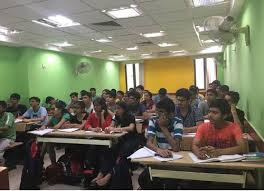
Coaching institutes have mushroomed in every nook and corner of all major cities over the past few years. These so called “temples of learning” are exploiting the young minds just for their financial grains. The misleading advertisements given by these Institutes act as  Magnets to attract the innocent, inexperienced students, who are seeking for sincere counseling and proper direction.

Coaching institutes have only one purpose while teaching their students: to get them to IITs, NITs or AIIMS, GMC, etc. Such beliefs and ideologies being inculcated in students at such a young age seriously compromise their prospects of being an effective member of the society in the future. We all are aware of how fancy coaching for engineering and medical courses are running all over the country. But I am not concerned about those foundation courses, rather for a seven-year-old child carrying 7kg heavy bag on his back and going to a coaching class.

Coaching has became an inevitable part of student life; be it second standard or 12th standard students. Earlier it was for those who found a school is not enough for clearing their doubts in studies. But now it’s religiously important to join a coaching institute.

Students pay thousands of rupees in school just to get the tag of a prestigious school and get the attendence marked. But what is the point of spending so much money that could not even clear the basics of the majority of the class?

Coaching is not only making parents’ money wash away like waves but also ruining the creative and thoughtful minds of a child. Nowadays, PM Modi is stressing very much over developing one’s skills. Perhaps that coaching for child below ninth standard is itself ruining the skillful mind of a child. They get everything cooked and served, every note and all answers. “The search of an answer is the essence of education”, which children are losing day by day.

<

p style=”border: 0px;color: #5c5c5c;line-height: 28px;margin: 0px;padding: 10px 0px;vertical-align: baseline”>The other dimension of the increasing dependency on coaching is the lack of attention of parents towards their child. Nowadays both the parents are earners of the house, which causes them to give less time to their child or you can say no time at all.
The need of the hour is to let the child search their answers on their own; let them be good learners on their own and let them be creative souls rather than making them robots whose whole day is spending in attending coaching and schools.

THANK YOU!

NGO

 NGO means non governmental organization 

Its an organization which is not included in governmental organization to help needy people to provide basic amenities and solve their basic problems

NGO play a major role in imparting education to poor guys or disabled children by providing them education, resources 

Also it helps to avoid child labour 

Farmhouse

 Farmhouse is type of house which everybody desire to have in his or her life 

Farmhouse consist  of big garden, swimming pool and all items which is needed to live luxurious life 

Life is short to live So we should try to spend it happily and live comfortable and luxurious life 

Farmhouse cost is very high which makes it difficult to buy for normal people