Gently Falls the Bakula

By SUDHA MURTHY

Hello readers.

In the small town of Hubli, Shrikant discovers that he is attracted to his plain-looking but charming neighbour Shrimati, who always does better than him in the school exams. Shrimati too falls in love with the amiable and handsome Shrikant and the two get married. Shrikant joins an IT company and starts rapidly climbing the corporate ladder. He works relentlessly and reaches the pinnacle of his industry, while Shrimati abandons her academic aspirations and becomes his uncomplaining shadow, silently fulfilling her duties as a corporate leader’s wife. But one day, while talking to an old professor, she starts examining what she has done with her life and realizes it is dismally empty…

The way characters and their lives are described is wonderful. Sudha Murthy uses simple language and makes the plot so effective. The story is relevant to Indian society. It gives you a lesson on importance of standing on our own legs, being independent.

At the beginning you may feel it a bit dull but the way it gains the plot keeps us hooked up.All the Indian girls are taught to sacrifice something for everyone either it’s her parents, brother or husband. It’s time we learn to sacrifice some time to ourselves. Learn to become independent and strong (both physically and mentally). It makes you clear about your choices between career and marriage life.

In brief it a great book for people who love to read about dreamers and lovers. It makes you realize that your dreams are very important. Never give up, they give you a purpose. This is worth every penny. Truely recommend.

As I say : Reading books is magic, it makes you live hundreds of lives in a single one. Or atleast that’s what I believe. Hopefully this book too will have an impact and magic you are/ were waiting for. For now I’ll take a leave.

And Thanks. 😇

Endless Celebration – Christmas

Christmas is a well-known Christian holiday set in December, celebrated the world over and famed for its decorations and Santa Clause. The Christmas means “Feast day of Christ”.It is a yearly celebration marking Jesus Christ’s birth; it is observed on the 25th of December as a cultural and religious celebration among a lot of people all over the world. Christmas is celebrated in all Christian countries but there are differences in the way each nation celebrates this date.

History Behind Christmas

The history of Christmas is one that dates back to a very long time; the first Christmas was celebrated in 336 A.D. in Rome. It played a very important role during the famed Arian controversy that took place in the 300s. During the early years of the middle age, epiphany overshadowed it.

Christmas was brought back to limelight around 800 A.D. when the emperor Charlemagne received the crown on Christmas day. During the 17th century, the Puritans had Christmas banned because it was associated with drunkenness and different other misbehavior.

It was made a proper holiday around 1660 but was still quite disreputable. Around the early 1900s, the Oxford movement of the Anglican Communion church started and this led to the revival of Christmas.

Preparations for Christmas

Christmas is a cultural festivity that entails a lot of preparations. It is a public holiday and so people get a Christmas break to celebrate it.

Preparations for Christmas start early for most people so that celebrations begin on the eve of Christmas. Preparations for Christmas involves a lot of activities. People usually buy decorations, food, and gifts mostly for children in the family and friends. Some families shop for matching Christmas outfits for everyone.

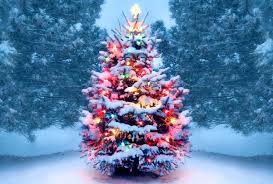
The common preparations include decorations of the place with Christmas trees, lighting. Before decorations begin, the house must be deep cleaned. The Christmas tree brings the Christmas spirit in homes.

Presents are placed under the Christmas tree in wrapped gift boxes and are not to be opened until Christmas day. The church is also decorated for the special event. Thorough cleaning of the churches is also done to usher in Christmas. Songs and skits to be performed on Christmas day.

People usually spend a lot on Christmas and so saving money for these plans should be the earliest preparation among all these. Families also plan to travel to stay together during this celebration period. Traditionally turkey is the common meal across the world in this day. Cards are also written to friends and family to wish them a happy holiday and to show love.

Christmas Day Celebration

Christmas carols are played on radios and televisions to mark the day. Most families start by going to church where performances and songs are done. Then later, they join their families to exchange gifts and celebrate with food and music. Happiness during Christmas is like no other.

Homemade traditional plum cakes, cupcakes, and muffins are the special treats on Christmas. Kids are showered with lots of presents and new dresses. They also get to meet the ‘Santa Claus’, dressed in a fluffy red and white costume, who greets them with hugs and gifts.

Conclusion:

Christmas reminds us of the importance of giving and sharing with friends and family. Through Christmas, we know that Jesus birth is the beginning of great things in the world. It is generally an opportunity to think about nature and the reason for our existence. Christmas is such a festival which people from all religions and faith celebrate worldwide despite it being a Christian festival. It is the essence of this festival which unites the people so much.

What is Christmas?It is tenderness for the past, courage for the present,hope for the future.

—AGNES M. PAHRO

PROCRASTINATION

What exactly is procrastination?

Procrastination is the action of unnecessarily and voluntarily delaying or postponing something despite knowing that there will be negative consequences for doing so.  It could be further stated as a habitual or intentional delay of starting or finishing a task despite knowing it might have negative consequences. It is a common human experience involving delay in everyday chores or even putting off salient tasks such as attending an appointment, submitting a job report or academic assignment, or broaching a stressful issue with a partner. Although typically perceived as a negative trait due to its hindering effect on one’s productivity often associated with depression, low self-esteem, guilt and inadequacy, it can also be considered a wise response to certain demands that could present risky or negative outcomes or require waiting for new information to arrive.

According to Joseph Ferrari, a professor of psychology at DePaul University in Chicago and author of “Still Procrastinating: The No Regret Guide to Getting It Done,” around 20% of U.S. adults are chronic procrastinators. No matter how well-organized and committed you are, chances are that you have found yourself frittering away hours on trivial pursuits (watching TV, updating your Facebook status, shopping online) when you should have been spending that time on work or school-related projects. Whether you’re putting off finishing a project for work, avoiding homework assignments, or ignoring household chores, procrastination can have a major impact on your job, your grades, and your life.

Photo by cottonbro on Pexels.com

How to overcome procrastination?

  • Make Written To-Do Lists

To-Do Lists are a tried-and-true way of getting your bearings and keeping yourself from getting overwhelmed. They also help you organize your thoughts and can prevent confusion. It’s ideal to make a new list at the end of each day to prepare for the next day. Keep in mind, however, this tip won’t help much if you over-plan or set actionable tasks that cannot be completed in less than half an hour. If a task takes longer than thirty minutes, break it up into smaller tasks.

  • Deal with Your Fear

Fear is one factor that contributes to procrastination. This can involve a fear of failure, a fear of making mistakes, or even a fear of success. If you are afraid of success because you secretly believe that you don’t deserve it, it is important to realize that your self-handicapping might be keeping you from achieving your goals. By addressing the fear that is keeping you from getting started, you can begin to overcome your procrastination habit.

  • Create an Ideal Environment

Distractions arise when your environment is imperfect for your work. If distractions are a real issue for you and organizing your tasks does not relieve the impulse to procrastinate, it is vital that you take a look around and find out what is blocking your productivity. Distractions can range from background noise to a stiff chair, from a cluttered desk to Facebook. Do what you need to do in order to remove or avoid these elements. Many of us are distracted by the Internet. (“I’ll watch just one more cat video.” Yeah, right.) Develop the discipline to work in a space without Internet connectivity or build idle Internet browsing into your schedule (see tip three).

  • Final Thoughts

Breaking the procrastination habit isn’t easy. After all, if it was simple there wouldn’t be an estimated 80% to 95% of students engaging in procrastination on a regular basis. The urge to put things off can be strong, especially when there are so many things around us to provide fun and entertaining distractions.

While procrastination might not be something you can avoid entirely, becoming cognizant of the reasons why you procrastinate and how to overcome those tendencies can help. By implementing these strategies, you might find that it is easier to put your nose to the grindstone and get started on those important tasks.

Cricket Match

Saturdays are a holiday in school for us. but last Saturday the entire school was present. We were to have a cricket match with the Sardar Patel boys, starting at 10 in the morning. While the home team as well as the guest team were getting ready, the stands filled up with students, teachers and even a number of enthusiastic parents.

Exactly at 10 am, Mr Bakshi, our cricket coach along with the coach of the visiting team came to the pitch. They were accompanied by the two captains. The SP captain won the toss and he chose to bat first. As our home team came on to the field and took their positions, there was loud cheering from the stands. Then entered the two batsmen with the captain of SP facing the first ball. Ranjeet, our top bowler was known for his spins.

The captain barely managed to hit the first onslaught. The first over ended as a maiden over. However all our hopes began to dampen when in the second over the first ball was hit to the boundary. It was followed by a quick succession of runs that made us cross our fingers.

Then suddenly OUT! The middle stump was flung back and the umpire raised his right hand’s index finger. By lunch time the SP team had garnered a good 260 runs. It being a 20 overs match our team was faced with a herculean task to match their score.

After lunch, amidst loud cheering, Sunil our sports captain and Prakash our schools top athlete came in as the opening batsmen. From the very first ball they showed their mettle. Runs came pouring in as both of them sent the balls flying to the boundary. Just as we were sure of winning the match Prakash hit the ball for a six, but was caught out. A loud exclamation of disappointment went up from the crowd. Then followed some of our middle order batsmen. Except for one who was run out at zero all the others managed to add on a decent amount of runs.

As the day began to come to a close the two team fought on. With only the last over remaining the home team was still short of 10 runs. Any thing could happen. Our captain Sunil was still standing and as he faced the ball, we could see the determination on his face. But the SP team were no greenhorns. They had set the field in a manner that would make it difficult for him to score a boundary. The three players at slip would prevent him from taking the singles. We watched with bated breath. All our hopes pinned on our captain. The first ball he just stopped but the second he sent flying over the stands. We still could win! The SP team closed in around the batsmen who looked around desperately for a gap. Then on the second last ball, Abhay the other batsman hit a resounding 4. Yes! the home team had scored a total of 261 runs and won the match.

As the two teams returned to the stands everyone stood up to cheer and applaud. It had been an exciting match and our team captain retained his title as the most popular student. I shall remember this match for a long time to come.

Beggars

Beggars are the people who restore to begging for alms from other people. Beggars can be seen at various places. But the main areas of their operations are the places of pilgrimage and worship. They squat on the banks of the rivers, in front of temples, churches, mosques, gurudwaras, and other places of hectic activity. They roam from street to street, from one locality to another begging for alms. Though they usually accept whatever is given to them, some beggars can get very irritating and aggressive.

Some people give alms to beggars in order to ward them off and not due to pity. Many beggars are so young and healthy that they do not deserve charity at all. The deserving cases are very few; those who are crippled, lame, deaf, dumb, blind or handicapped and cannot earn their living. Some are in such a pathetic state as to evoke pity and compassion. Such crippled beggars are well versed in the art of singing religious songs. Some beggars have a very melodious voice. Their sweet voice attracts the passers-by. Such beggars are found in trains and buses and they enthral the travellers through their religious and devotional songs.

Sometimes, one comes across a deaf and dumb beggar, carrying another blind or lame beggar on his back and begging for alms. It is also usual to see a leper Seated in a manually driven cart and carried from place to place. These beggars know human psyche and beg by touching the feelings of the people.

Most beggars thrive due to the generosity of soft hearted people. These beggars never miss religious gatherings and festivals. Some wear only a loin-cloth. Some beggars besmear themselves with ash while others have long hair and carry a pair of tongs. Some meditate under trees. But many are cheats and charlatans. These beggars deceive the innocent people and at times even rob them.

These beggars live on the earnings of others. It is a great shame that even a number of healthy persons resort to begging. They are often involved with criminal gangs and wait for an opportunity to prey upon innocent victims. Government and many non-government organisations are working towards the betterment of beggars by helping the deserving ones and punishing and employing, the lazy and cheats.

Street begging is really a bane for any society. Nowadays, people are not swayed by any religious feeling. Hence, beggars are not treated in the manner in which they hope to be treated. It is good so that future generations do not restore to begging.

Nationalism

A country is run by its people. And to maintain unity in diversity for the country, there should be a sense of belonging inculcated amongst the citizens towards their country, and nationalism does exactly that. There is no one particular definition of nationalism, but the popular discourse is that nationalism is an ideology or set of beliefs that the people of the country follow to promote the interest of the nation above anything else. Usually, nationalism and patriotism are used as synonyms.

While both the terms help in developing a sense of love towards the nation, they both are fundamentally different. Nationalism is about the interest of the country, from economic development to cultural and social status, but patriotism, on the other hand, is more towards the love and affection for the country in terms of military power and defensive capabilities. While there is no prescribed definition for both the terms, the context with which nationalism and patriotism are used is quite different.

On the other hand, aggressive nationalism, usually called as jingoism, defeats the whole purpose of nationalistic feelings. Jingoism is less about developing a sense of belonging towards the nation among its citizens, but more about war-mongering and propagating hate towards enemy countries. Aggressive nationalism does not entertain critics and dissent. It is a one-sided sentiment, which does not, and more importantly, should not have a place in a democratic and a secular country.

Nationalism is at the core of Indian values and the democratic and the secular fabric of the nation. Indian freedom fighters who fought the mighty Britsh for more than 100 years were nationalistic and patriotic in nature. Nationalism is at the heart of India and its independence movement. It was because of nationalism that India could snatch freedom from the British and finally gain independence on August 15th, 1947. But the nationalism that existed during the freedom movement is quite different from the nationalism that we are witnessing in the 21st century.

The nationalism during the early 19th century was about gaining independence from the British. Nationalism then didn’t divide Indians into any lines. It developed a true sense of patriotism amongst the people and motivated them to come out on the streets and fight against the British’s atrocities on Indian soil. But the nationalism that we witness now is different from the previous one and not is a good way. Nationalism, due to misunderstanding by certain sections of the population, has made it a synonym for hate-mongering and communism. Nationalism now is being compared with religious and ethnic sentiments of people.

Nationalism has absolutely nothing to do with culture, religion or ethnicity of the people. Unfortunately, nationalism, instead of developing a sense of belonging in the people, has developed fear in the crowds, especially for the ones with dissenting and critical voices.

Nationalism has been turned into a tool and litmus test for people’ patriotism. This form of nationalism is sowing seeds for diving the country on ethnic and religious lines. Such type of nationalism, which create hate and animosity amongst the people against the ruling dispensation can no more be called nationalism. Its pure jingoism, which is harmful to the unit of the country.

Elections are fought in many counties in the name of nationalism. Leaders like Donald Trump, Vladamir Putin and Narendra Modi are proud nationalists who have propagated nationalistic feeling amongst the people to win their support. While this is good for the nation, but it is the responsibility of these leaders to make sure that nationalism is not turned into jingoism.

The Communication Barriers!

THE SINGLE BIGGEST PROBLEM IN COMMUNICATION IS THE ILLUSION THAT IT HAS TAKEN PLACE.” -GEORGE BERNARD SHAW

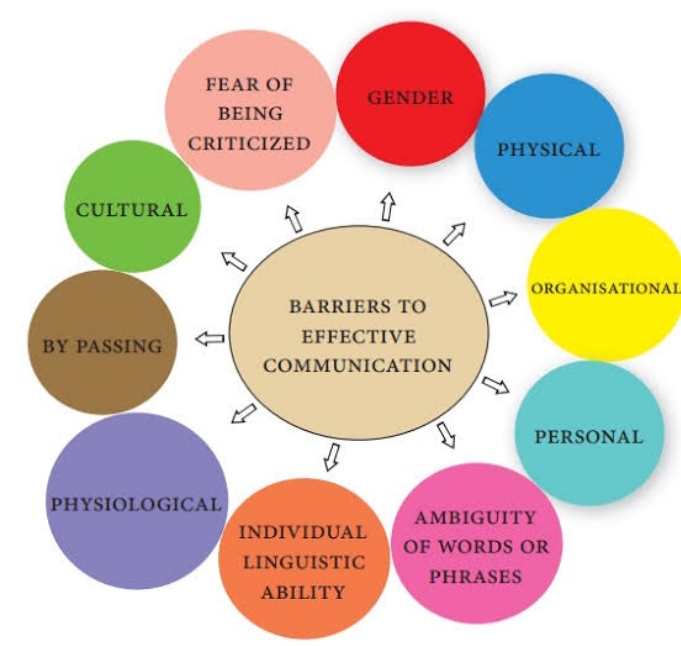
The first one is physical barriers are such things as inadequate equipment such as outdated computers, phones with poor signals,bad hearing, poor eyesight, background noise, poor lightening, poor impediments,  temperatures that are too hot or to cold, tangible items that may interfere with communication efforts.

The second is attitudes. Some times the strong emotions like anger, fear or sadness and attitudes (having to be right all the time, believing oneself to be superior or inferior to others) can taint your objectivity being extremely nervous having a personal agenda or asserting a need to win the argument can make communications less than effective such interfering emotions are also known as emotional noise.

The third one is Language. This may seem like a minor obstacle but even people who speak the same native language can have difficulty understanding each other. If they are from different generations or Different regions of the same country. Slang, professional jargon and regional colloquialisms Can hurt or frustrate communicators with even the best intentions.

The fourth is Physiological health. Ill health, poor eyesight, hearing difficulties and pain are all physiological obstacles to effective communication. The fifth barrier is problems with structure design companies or institutions can have unclear organizational structures making communications difficult. Bad information system lack of supervision and employee training are also to blame for faulty Communications.

The sixth one is cultural noise. People sometimes make assumptions about others based on their cultural background and associated stereotypes. not making eye contact is a sure way of raising doubt in listeners and losing their attention and making them fell suspicious of you not to mention invisible.

The seventh is lack of common experience. It is a great idea to use examples or stories and anecdotes to explain or enhance a point across however if others cannot relate to these examples. Because they do not have the knowledge or shared common experiences this tool will be ineffective.

The eighth is ambiguity and overuse of abstractions leaving things has said or using too many generalizations. Proverbs or sayings can lead to lack of clarity which in turn lends itself to misinterpretation.When you talk, you’re not listening, and you need to listen to the people you’re attempting to persuade.

The ninth is information overload. It takes time to process large quantities of information and too many details can overwhelm and distract the audience from the important topics.When you try too hard to persuade someone, you may seem desperate, and desperation smells like manipulation and turns people off before you can utter your next desperate word.

The tenth one is Jumping to conclusions. Making assumptions before listening to all the  facts can be problematic in the least and catastrophic at worst. If you don’t believe in your position, product, service, or whatever you’re trying to sell, they won’t believe in it either.

How to overcome these communication barriers?

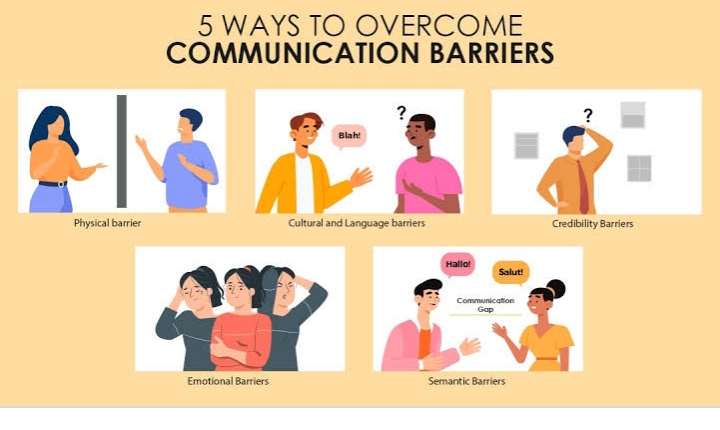
checking whether it is a good time and place to communicate with the person. Use of simple and clear words should be emphasized. Use of ambiguous words and jargons should be avoided. Noise is the main communication barrier which must be overcome on priority basis. It is essential to identify the source of noise and then eliminate that source. Listen attentively and carefully. There is a difference between “listening” and “hearing”. Active listening means hearing with proper understanding of the message that is heard. By asking questions the speaker can ensure whether his/her message is understood or not by the receiver in the same terms as intended by the speaker. Avoid giving negative feedback. The contents of the feedback might be negative, but it should be delivered constructively. The managers should properly select the medium of communication. Simple messages should be conveyed orally, like: face to face interaction or meetings.

Copying In The Examination

The students who do not study well look for short cuts like copying in examination, but not to much use. Some students use every method to cheat the invigilator and if they are caught, they shed crocodile tears. They beg before the supervisors but some aggressive students threaten the authorities of dire consequences.

Their shrewd brain can be admired in the new methods they devise. Sometimes, copying is organised on a mass scale. As soon as the students receive the question paper, they note down the questions on a piece of paper and throw it out of the window. Their friends who are outside, write down the answers and try to smuggle them back to the students. They bribe the peon and the sweeper who bring these slips for them. They also go to the bathroom and collect the material from there. When they are caught, at first, they try to beg with an apology. If this method fails, then they try to threaten the invigilator.

Some states have passed very strict laws to punish such students. This habit should stop otherwise it would bring about a total collapse of the education system. Students should well understand and keep in mind that copying serves no purpose, as said, “There is no short cut to success” and “Hard work is the only key to success.”

Utilization of Kitchen Garden

What is Kitchen Garden

Kitchen garden is the small space which is left other than your residential space, which can be utilized by growing organic vegetables or ornamental crops.

Importance of Kitchen Garden

  • 1. Usage of fallow land by growing vegetables for your own kitchen purpose.
  • 2. Growing ornamental crops for enhancing the beauty of your premises or for selling.
  • 3. Usage of fallow lands in a effective and healthy way.
  • 4. You can eat fresh healthy vegetables of your own kitchen garden.
  • 5.Maintain your own kitchen garden is a very good way to be physically healthy and active.

Vegetables that can be grown in your Kitchen Garden

TomatoBrinjalChiliPumpkin
CauliflowerOkraBitter gourdOnion
Pudina/MintCorianderRadishCarrot
CucumberBeetrootBell paperZucchini

Ornamental crops that can be grown in Your Kitchen Garden

JasmineMarigold/ GaindaHibiscus
ChrysasthemumDahliaPitunia
RoseZarbera Zinnia

INTERNATIONAL YOUTH DAY

International Youth Day was enforced by united nation in 1999 with the adoption of resolution 54/120. Every year this day is commemorated on 12th of August. The day is celebrated to spread awareness about the cultural and legal issues surrounding youth and try to resolve it. Numerous workshops, cultural gathering, concerts and meeting involving national and local government officials and different organizations takes place around the globe.


Every year UN comes up with different ideas to celebrate , this year’s the theme is ‘TRANSFORMING
FOOD SYSTEM-YOUTH INNOVATION FOR HUMAN AND PLANETORY HEALTH’ , the main objective behind this theme is to highlight the hard work and efforts put by the young people in the transformation of food system and aim to collectively save our planet.


“YOUTHS ARE THE BUILDING BLOCKS OF COMING FURTURE”.
Coming future stands on a strong foundation of the budding youth’s creative and collective power. The youth should be well refined with education and global exposure . To stand in the society and face the wordly challenges bravely and efficiently. They are the treasure to be preserved and valued.

Don’t say something you regret out of anger

There once was a little boy who had a very bad temper. His father decided to hand him a bag of nails and said that every time the boy lost his temper, he had to hammer a nail into the fence.

On the first day, the boy hammered 37 nails into that fence.

The boy gradually began to control his temper over the next few weeks, and the number of nails he was hammering into the fence slowly decreased. He discovered it was easier to control his temper than to hammer those nails into the fence.
Finally, the day came when the boy didn’t lose his temper at all. He told his father the news and the father suggested that the boy should now pull out a nail every day he kept his temper under control.

The days passed and the young boy was finally able to tell his father that all the nails were gone. The father took his son by the hand and led him to the fence.

You have done well, my son, but look at the holes in the fence. The fence will never be the same. When you say things in anger, they leave a scar just like this one. You can put a knife in a man and draw it out. It won’t matter how many times you say I’m sorry, the wound is still there.’”

Speak when you are angry and you’ll make the best speech you’ll ever regret. – Ambrose Brierce

Retirement age extension

The Prime Minister’s Economic Advisory Council has advocated raising the retirement age, citing increased life expectancy as a result of improved health infrastructure, which will allow older people to work longer than earlier generations. The Council stated in a report released on Wednesday that because India is a young country with a large working population, the retirement age should be gradually increased. According to the report provided by the Council’s chairman, Bibek Debroy, “raising retirement ages leads to employment creation for old people without compromising the demands and availability of jobs for the present workforce.”

Values

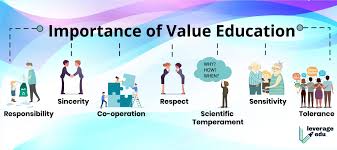
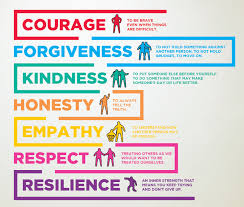
Values are the positive teachings provided to help us and tread the right path in life. Every parent wants his child to imbibe these. These can even be referred to as good qualities. A person who imbibes good values grows on to become a responsible individual and he is capable of demarcating right and wrong. Also, he is able to make wiser decisions in life.

Importance of Values

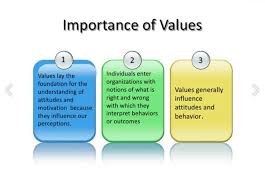
For an individual, values are most important. An individual with good values is loved by everyone around as he is compassionate about others and also he behaves ethically.

Values Help in Decision Making

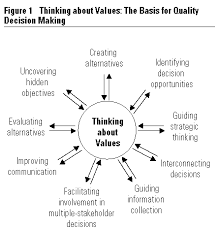
A person is able to judge what is right and what is wrong based on the values he imbibes. In life at various steps, it makes the decision-making process easier. A person with good values is always likely to make better decisions than others.

Values Can Give Direction to Our Life

In life, Values give us clear goals. They always tell us how we should behave and act in different situations and give the right direction to our life. In life, a person with good values can take better charge.

Values Can Build Character

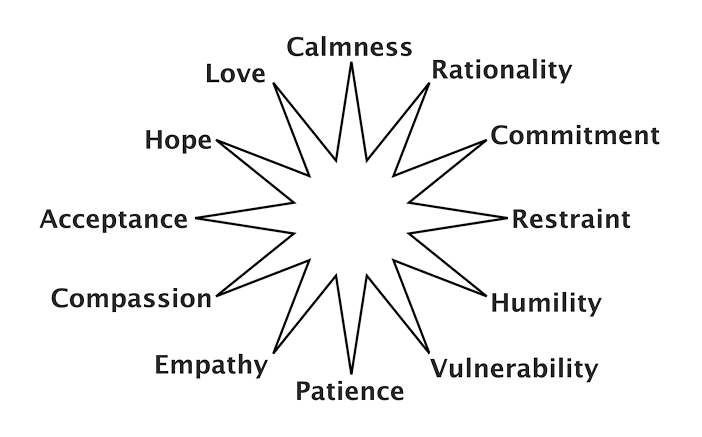
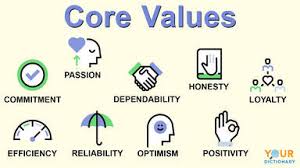
If a person wants a strong character, then he has to possesses good values such as honesty, loyalty, reliability, efficiency, consistency, compassion, determination, and courage. Values always help in building our character.

Values Can Help in Building a Society

If u want a better society then people need to bear good values. Values play an important role in society. They only need to do their hard work, with compassion, honesty, and other values. Such people will help in the growth of society and make it a much better place to live.

Characteristics of Values

Values are always based on various things. While the basic values remain the same across cultures and are intact since centuries some values may vary. Values may be specific to a society or age. In the past, it was considered that women with good moral values must stay at home and not voice their opinion on anything but however, this has changed over time. Our culture and society determine the values to a large extent. We imbibe values during our childhood years and they remain with us throughout our life.

Family always plays the most important role in rendering values to us. Decisions in life are largely based on the values we possess. Values are permanent and seldom change. A person is always known by the values he possesses. The values of a person always reflect on his attitude and overall personality.

The Decline of Values in the Modern Times

While values are of great importance and we are all aware of the same unfortunately people these days are so engrossed in making money and building a good lifestyle that they often overlook the importance of values. At the age when children must be taught good values, they are taught to fight and survive in this competitive world. Their academics and performance in other activities are given importance over their values.

Parents, as well as teachers, teach them how to take on each other and win by any means instead of inculcating good sportsman spirit in them and teaching them values such as integrity, compassion, and patience. Children always look up to their elders as their role models and it is unfortunate that elders these days have a lack of values. Therefore the children learn the same.

Conclusion

In order to help him grow into a responsible and wise human being, it is important for people to realize that values must be given topmost priority in a child’s life because children are the future of the society. There can be nothing better in a society where a majority of people have good values and they follow the ethical norms.

“VALUES ARE LIKE FINGERPRINTS. NOBODY’S ARE THE SAME, BUT YOU LEAVE THEM ALL OVER EVERYTHING YOU DO.”

— ELVIS PRESLEY

Elon Musk: The Most Successful & Debated Man Of The Tech World

Elon Musk, a sensational name in the tech world, has stepped into multiple ventures and everything seems attainable by the business magnate. Musk was born on 28th June 1971 in South Africa, and at the age of 17, he immigrated to Canada. As a transfer student to the University of Pennsylvania, he finally landed in the United States.

Musk is a well-known tech mogul who is widely recognized as the CEO of Tesla Inc., and as the Founder and CEO of SpaceX. Currently, with a net worth of more than $199.9 billion, Tesla’s CEO is one of the wealthiest persons in the world.

“Company Possessions of Elon Musk”

  • Tesla Inc: The Electric Car Manufacturing Company.
  • SpaceX: Musk’s Aerospace Manufacturing Company.
  • Neuralink: Research company trying to build devices that can be implanted into the human brain.
  • OpenAI: AI researching not-for-profit company ensuring it doesn’t destroy humanity.
  • The Boring Company: Focused to dig a network of tunnels in cities for high-speed and no-traffic driving. 

The Early Life
Elon Musk demonstrated entrepreneurship traits from an early age. His Engineer father and Dietician mother, who understood his son’s technology penchant and nurtured his interest, embraced him remarkably. He obtained his first computer at the age of 10, teaching himself how to write code. And at the age of 12, the young boy constructed a completely functional video game, named “Blastar” that was reportedly sold for $500.

In 1988, Elon Musk graduated from Pretoria Boys High School. In 1989, he moved to Canada and joined Queen’s University in Ontario to escape the compulsory military service of South Africa. After that, he attended the University of Pretoria for merely five months. Musk later pursued a Bachelor in Economics degree at the Wharton School of Business at the University of Pennsylvania. Further, he resigned after two days, to fulfil his entrepreneurial aspirations when he was admitted to the Physics Graduate Program at the University of Stanford.

Success story of The Tech Buff
In 1995, Musk joined his brother Kimbal in inaugurating Zip2, an IT company that licenced newspaper software for online city guides. The Company didn’t attract many in its first few years, but afterwards, the local and domestic newspapers finally started using Zip2 to sell their respective customers additional services. In 1999, Zip2 was bought for a whopping $340 million by Compaq’s AltaVista web search engine.

Musk then founded X.com, online financial services and email payment firm, with its business partners Peter Thiel and Max Levchin. X.com joined the American software corporation Confinity in 2000, which is best known for developing PayPal. Shortly before eBay bought PayPal at $1.5 billion in 2001, Musk was named President and CEO of PayPal. Here, Musk eventually had the funds to put the Internet business behind to channel his attention to engineering business as an equity investor with nearly 180 million dollars in shares.

Struggling and Rising Years
In 2004, Musk played an instrumental role in designing the first electric car of Tesla named “The Tesla Roadster”. Under the leadership of such a big billionaire, Tesla emerged out to become the world’s most popular and desirable car brands. Musk claims 2008 as the worst year of his life. With the financial crisis, Musk was broke, and he also had to pull out Tesla from the massive debt, and along with that, he was undergoing a divorce procedure.

In January 2018, Tesla revealed that Musk would not collect an annual payment but that it would instead raise money depending on the rising market cap that it wanted to achieve in the next ten years.

With SpaceX, Elon Musk has signed several high-profile contracts to develop rockets and perform military missions with NASA and the United States Air Force. Musk was outspoken about his hopes for a joint project with NASA to send an Astronaut to Mars by the year 2025.

Elon Musk has always pushed all varieties of space-age technologies, but it was not still a perfect ride for him. He went on from being bullied in school to becoming a small entrepreneur and finally became the leader of two innovative companies. But from there, he decided to rise and never settle down for anything less.

“When something is important enough, you do it even if the odds are not in your favour.”- Elon Musk

AQUAPONICS:

Aquaponics is a food production system that couples aquaculture (raising aquatic animals such as fishcrayfish, snails or prawns in tanks) with hydroponics (cultivating plants in water) whereby the nutrient rich aquaculture water is fed to hydroponic grown plant, involving nitrifying bacteria for converting ammonia into nitrates.

As existing hydroponic and aquaculture farming techniques form the basis for all aquaponic systems, the size, complexity, and types of foods grown in an aquaponic system can vary as much as any system found in either distinct farming discipline.

History

Further information: Historical hydroculture Woodcut from the 13th century Chinese agricultural manual Wang Zhen’s Book on Farming showing rice grown in a floating raft planter system in a pond.

Aquaponics has ancient roots, although there is some debate on its first occurrence:

  • Aztec cultivated agricultural islands known as chinampas in a system considered by some to be an early form of aquaponics for agricultural use, where plants were raised on stationary (or sometime movable) islands in lake shallows and waste materials dredged from the Chinampa canals and surrounding cities were used to manually irrigate the plants.
  • South China and the whole of Southeast Asia, where rice was cultivated and farmed in paddy fields in combination with fish, are cited as examples of early aquaponics systems, although the technology had been brought by Chinese settlers who had migrated from Yunnan around 5 AD. These polycultural farming systems existed in many Far Eastern countries and raised fish such as the oriental loach , swamp eelcommon carp  and crucian carp  as well as pond snails in the paddies.
  • The 13th century Chinese agricultural manual Wang Zhen’s Book on Farming described floating wooden rafts which were piled with mud and dirt and which were used for growing ricewild rice, and fodder. Such floating planters were employed in regions constituting the modern provinces of JiangsuZhejiang, and Fujian. These floating planters are known as either jiatian  or fengtian , which translates to “framed paddy” and “brassica paddy”, respectively. The agricultural work also references earlier Chinese texts, which indicated that floating raft rice cultivation was being used as early as the Tang Dynasty (6th century) and Northern Song Dynasty (8th century) periods of Chinese history.

Floating aquaponics systems on polycultural fish ponds have been installed in China in more recent years on a large scale. They are used to grow rice, wheat and canna lily and other crops, with some installations exceeding 2.5 acres (10,000 m2). Diagram of the University of the Virgin Islands commercial aquaponics system designed to yield 5 metric tons of Tilapia per year.

The development of modern aquaponics is often attributed to the various works of the New Alchemy Institute and the works of Dr. Mark McMurtry et al. at the North Carolina State University, who devised an “Integrated Aqua-Vegeculture System” (iAVs) based on the combination of aquaculture and sand-based grow beds.Inspired by the successes of the New Alchemy Institute and McMurtry’s iAVs, other institutes soon followed suit. Starting in 1979, Dr. James Rakocy and his colleagues at the University of the Virgin Islands researched and developed the use of deep water culture hydroponic grow beds in a large-scale aquaponics systemOther institutes focused their research on “ebb and flow” systems (also known as “flood and drain”), which were partially based on the original ideas developed at North Carolina State University, but where coarse media (such as gravel or expanded clay) replaced sand, while bell syphons allowed an ebb-and-flow irrigation cycle, such systems are also known as “Speraneo Systems” because they are based on ideas developed in the 1990s by Tom and Paula Speraneo, owners of an aquaponics farm in Missouri.

The first aquaponics research in Canada was a small system added onto existing aquaculture research at a research station in LethbridgeAlberta. Canada saw a rise in aquaponics setups throughout the ’90s, predominantly as commercial installations raising high-value crops such as trout and lettuce. A setup based on the deepwater system developed at the University of Virgin Islands was built in a greenhouse at Brooks, Alberta where Dr. Nick Savidov and colleagues researched aquaponics from a background of plant science. The team made findings on rapid root growth in aquaponics systems and on closing the solid-waste loop and found that, owing to certain advantages in the system over traditional aquaculture, the system can run well at a low pH level, which is favored by plants but not fish.

Parts of an aquaponic system

A commercial aquaponics system. An electric pump moves nutrient-rich water from the fish tank through a solids filter to remove particles the plants above cannot absorb. The water then provides nutrients for the plants and is cleansed before returning to the fish tank below.

Aquaponics consists of two main parts, with the aquaculture part for raising aquatic animals and the hydroponics part for growing plants. Aquatic effluents, resulting from uneaten feed or raising animals like fish, accumulate in water due to the closed-system recirculation of most aquaculture systems. The effluent-rich water becomes toxic to the aquatic animal in high concentrations but this contains nutrients essential for plant growth.  Although consisting primarily of these two parts, aquaponics systems are usually grouped into several components or subsystems responsible for the effective removal of solid wastes, for adding bases to neutralize acids, or for maintaining water oxygenation. Typical components include:

  • Rearing tank: the tanks for raising and feeding the fish;
  • Settling basin: a unit for catching uneaten food and detached biofilms, and for settling out fine particulates;
  • Biofilter: a place where the nitrification bacteria can grow and convert ammonia into nitrates, which are usable by the plants;
  • Hydroponics subsystem: the portion of the system where plants are grown by absorbing excess nutrients from the water;
  • Sump: the lowest point in the system where the water flows to and from which it is pumped back to the rearing tanks.

Depending on the sophistication and cost of the aquaponics system, the units for solids removal, biofiltration, and/or the hydroponics subsystem may be combined into one unit or subsystem, which prevents the water from flowing directly from the aquaculture part of the system to the hydroponics part. By utilizing gravel or sand as plant supporting medium, solids are captured and the medium has enough surface area for fixed-film nitrification. The ability to combine biofiltration and hydroponics allows for aquaponic system, in many cases, to eliminate the need for an expensive, separate biofilter.

Live components

An aquaponic system depends on different live components to work successfully. The three main live components are plants, fish (or other aquatic creatures) and bacteria. Some systems also include additional live components like worms.

Plants

Further information: RhizofiltrationA Deep Water Culture hydroponics system where plant grow directly into the effluent rich water without a soil medium. Plants can be spaced closer together because the roots do not need to expand outwards to support the weight of the plant.Plant placed into a nutrient rich water channel in a Nutrient film technique (NFT) system

Many plants are suitable for aquaponic systems, though which ones work for a specific system depends on the maturity and stocking density of the fish. These factors influence the concentration of nutrients from the fish effluent and how much of those nutrients are made available to the plant roots via bacteria. Green leaf vegetables with low to medium nutrient requirements are well adapted to aquaponic systems, including chinese cabbagelettucebasilspinachchivesherbs, and watercress. Spinach seedlings, 5 days old, by aquaponics

Other plants, such as tomatoes, cucumbers, and peppers, have higher nutrient requirements and will do well only in mature aquaponic systems with high stocking densities of fish.

Plants that are common in salads have some of the greatest success in aquaponics, including cucumbersshallotstomatoeslettucecapsicumred salad onions and snow peas.

Some profitable plants for aquaponic systems include chinese cabbagelettucebasilrosestomatoesokracantaloupe and bell peppers.

Other species of vegetables that grow well in an aquaponic system include watercressbasilcorianderparsleylemongrasssagebeanspeaskohlrabitaroradishesstrawberriesmelonsonionsturnipsparsnipssweet potatocauliflowercabbagebroccoli, and eggplant as well as the choys that are used for stir fries.

Fish (or other aquatic creatures)

Filtered water from the hydroponics system drains into a catfish tank for re-circulation.Main article: Aquaculture

Freshwater fish are the most common aquatic animal raised using aquaponics due to their ability to tolerate crowding, although freshwater crayfish and prawns are also sometimes used. There is a branch of aquaponics using saltwater fish, called saltwater aquaponics. There are many species of warm water and cold water fish that adapt well to aquaculture systems.

In practice, tilapia are the most popular fish for home and commercial projects that are intended to raise edible fish because it is a warmwater fish species that can tolerate crowding and changing water conditions. Barramundisilver percheel-tailed catfish or tandanus catfish, jade perch and Murray cod are also used. For temperate climates when there isn’t ability or desire to maintain water temperature, bluegill and catfish are suitable fish species for home systems.

Koi and goldfish may also be used, if the fish in the system need not be edible.

Other suitable fish include channel catfishrainbow troutperchcommon carpArctic charlargemouth bass and striped bass.

Bacteria

Further information: Nitrogen Cycle

Nitrification, the aerobic conversion of ammonia into nitrates, is one of the most important functions in an aquaponic system as it reduces the toxicity of the water for fish, and allows the resulting nitrate compounds to be removed by the plants for nourishment.  Ammonia is steadily released into the water through the excreta and gills of fish as a product of their metabolism, but must be filtered out of the water since higher concentrations of ammonia (commonly between 0.5 and 1 ppm)[citation needed] can impair growth, cause widespread damage to tissues, decrease resistance to disease and even kill the fish. Although plants can absorb ammonia from the water to some degree, nitrates are assimilated more easily, thereby efficiently reducing the toxicity of the water for fish.  Ammonia can be converted into safer nitrogenous compounds through combined healthy populations of 2 types of bacteria: Nitrosomonas which convert ammonia into nitrites, and Nitrobacter which then convert nitrites into nitrates. While nitrite is still harmful to fish due to its ability to create methemoglobin, which cannot bind oxygen, by attaching to hemoglobin, nitrates are able to be tolerated at high levels by fish. High surface area provides more space for the growth of nitrifying bacteria. Grow bed material choices require careful analysis of the surface area, price and maintainability considerations.

Hydroponic subsystem

Plants are grown as in hydroponics systems, with their roots immersed in the nutrient-rich effluent water. This enables them to filter out the ammonia that is toxic to the aquatic animals, or its metabolites. After the water has passed through the hydroponic subsystem, it is cleaned and oxygenated, and can return to the aquaculture vessels. This cycle is continuous. Common aquaponic applications of hydroponic systems include:

  • Deep-water raft aquaponicsstyrofoam rafts floating in a relatively deep aquaculture basin in troughs. Raft tanks can be constructed to be quite large, and enable seedlings to be transplanted at one end of the tank while fully grown plants are harvested at the other, thus ensuring optimal floor space usage.
  • Recirculating aquaponics: solid media such as gravel or clay beads, held in a container that is flooded with water from the aquaculture. This type of aquaponics is also known as closed-loop aquaponics.[citation needed]
  • Reciprocating aquaponics: solid media in a container that is alternately flooded and drained utilizing different types of siphon drains. This type of aquaponics is also known as flood-and-drain aquaponics or ebb-and-flow aquaponics.
  • Nutrient film technique channels: plants are grown in lengthy narrow channels, with a film of nutrient-filled water constantly flowing past the plant roots. Due to the small amount of water and narrow channels, helpful bacteria cannot live there and therefore a bio filter is required for this method.
  • Other systems use towers that are trickle-fed from the top, horizontal PVC pipes with holes for the pots, plastic barrels cut in half with gravel or rafts in them. Each approach has its own benefits.

Since plants at different growth stages require different amounts of minerals and nutrients, plant harvesting is staggered with seedlings growing at the same time as mature plants. This ensures stable nutrient content in the water because of continuous symbiotic cleansing of toxins from the water.

Biofilter

In an aquaponics system, the bacteria responsible for the conversion of ammonia to usable nitrates for plants form a biofilm on all solid surfaces throughout the system that are in constant contact with the water. The submerged roots of the vegetables combined have a large surface area where many bacteria can accumulate. Together with the concentrations of ammonia and nitrites in the water, the surface area determines the speed with which nitrification takes place. Care for these bacterial colonies is important as to regulate the full assimilation of ammonia and nitrite. This is why most aquaponics systems include a biofiltering unit, which helps facilitate growth of these microorganisms. Typically, after a system has stabilized ammonia levels range from 0.25 to .50 ppm; nitrite levels range from 0.0 to 0.25 ppm, and nitrate levels range from 5 to 150 ppm. During system startup, spikes may occur in the levels of ammonia (up to 6.0 ppm) and nitrite (up to 15 ppm), with nitrate levels peaking later in the startup phase. In the nitrification process ammonia is oxidized into nitrite, which releases hydrogen ions into the water. Overtime a person’s pH will slowly drop, so they can use non-sodium bases such as potassium hydroxide or calcium hydroxide to neutralize the water’s pH if insufficient quantities are naturally present in the water to provide a buffer against acidification. In addition, selected minerals or nutrients such as iron can be added in addition to the fish waste that serves as the main source of nutrients to plants.

A good way to deal with solids buildup in aquaponics is the use of worms, which liquefy the solid organic matter so that it can be utilized by the plants and/or other animals in the system. For a worm-only growing method, please see Vermiponics.

Operation

The five main inputs to the system are water, oxygen, light, feed given to the aquatic animals, and electricity to pump, filter, and oxygenate the water. Spawn or fry may be added to replace grown fish that are taken out from the system to retain a stable system. In terms of outputs, an aquaponics system may continually yield plants such as vegetables grown in hydroponics, and edible aquatic species raised in an aquaculture. Typical build ratios are .5 to 1 square foot of grow space for every 1 U.S. gal (3.8 L) of aquaculture water in the system. 1 U.S. gal (3.8 L) of water can support between .5 lb (0.23 kg) and 1 lb (0.45 kg) of fish stock depending on aeration and filtration.

Ten primary guiding principles for creating successful aquaponics systems were issued by Dr. James Rakocy, the director of the aquaponics research team at the University of the Virgin Islands, based on extensive research done as part of the Agricultural Experiment Station aquaculture program.

Feed source

As in most aquaculture based systems, stock feed often consists of fish meal derived from lower-value species. Ongoing depletion of wild fish stocks makes this practice unsustainable. Organic fish feeds may prove to be a viable alternative that relieves this concern. Other alternatives include growing duckweed with an aquaponics system that feeds the same fish grown on the system, excess worms grown from vermiculture composting, using prepared kitchen scraps, as well as growing black soldier fly larvae to feed to the fish using composting grub growers.

Aquaponic installations rely in varying degrees on man-made energy, technological solutions, and environmental control to achieve recirculation and water/ambient temperatures. However, if a system is designed with energy conservation in mind, using alternative energy and a reduced number of pumps by letting the water flow downwards as much as possible, it can be highly energy efficient. While careful design can minimize the risk, aquaponics systems can have multiple ‘single points of failure’ where problems such as an electrical failure or a pipe blockage can lead to a complete loss of fish stock.