
GLOBAL WARMING AND ENVIRONMENT

  There are many problems concerning the environment. Pollution, destruction of the rainforests, and the consumption of all of our planet’s natural resources are just a few. None of these issues quite compare to the problem of global warming. Global warming is a problem that affects not just some people, but everything and everyone. People must take action to stop global warming and must realise the severity of this problem before it is too late. The future depends on what we do now to slow the process of global warming.

             What exactly is global warming? Global warming is a problem that emerged as a major issue in the late 1980’s. Global warming can be defined simply as a rise in the average land temperature around the earth. Currently, the average temperature of the earth is roughly 57 degrees Fahrenheit. This temperature could be the result of several different factors. Some of the factors that cause the earth’s temperature to rise are natural, but humans have caused many others.
             Surrounding the issue of global warming is the greenhouse effect. The greenhouse effect plays an important role in the issue of global warming, but it is not the reason behind why global warming is occurring. The earth produces greenhouse gasses naturally, and without this gas, humans along with many other forms of life, would not be able to survive. The reason for this is that earth would be much too cold for many life forms to exist if it did not have some form of gas to heat up the environment. Without the greenhouse effect, the earth would be 40-60 degrees cooler than its current temperature. The problem though is that the earth is producing a large amount of this gas, and we are going to become much too warm. Life cannot survive in a certain amount of warmth as well, so we as the people who live here have to maintain a certain middle ground.

ENVIRONMENT

 Human Dimension Establishing an environmental ethic is of utmost concern to the human species to better comprehend our place in the world and our potentials for the future. In doing so, we must extend our thinking of rights and responsibilities. I believe we must incorporate not only a temporal component, but also a spatial understanding of the world as an organic biotic community and how consumption is a part of the natural order. Aldo Leopold believes that conservation ethics must be rooted in a determination: “A thing is right when it tends to preserve the integrity, stability, and beauty of the biotic community. It is wrong when it tends otherwise.”

             I would like to start with Leopold’s statement, and further explore how the definitions of integrity, stability and beauty can be better understood given three corollary’s: 1. All organic entities must consume to survive – it is not only a right, but a responsibility 2. There are limited resources to be consumed by organic entities on the planet 3. The human species has the ability, through rational thought, to conserve ever-depleting resources Leopold’s ethic attempts to extend what is of human, moral concern to include animals, ecosystems, and endangered species. How can this concern be expressed in today’s society? I see one problem with this argument in that there is little discussion about power and influence that is inherent in current definitions of rights. Therefore, I will introduce the notion that organic entities, those that depend on the consumption of energy for survival, must retain the right to consume resources to survive. Notions of right and wrong now have no standing – it is a fact that organic entities must consume to maintain life.

GIVING IT BACK TO THE ENVIRONMENT

  It is not simple to reduce the environmental impact of automobiles worldwide. It is hard to find a straightforward solution for making automobiles better for the environment without drastically increasing costs or cutting down on performance. the best way to deal with this problem is the Life-cycle approach. The goal of the life cycle approach at is to make vehicles that are more efficient and inexpensive. It embraces environmental performance and cost factors. The life cycle of an automobile begins with material production and concludes with retirement.

             The public is now conscious of environmental issues that have increased. However, the automobile industry as a whole must undertake this issue immediately. To paraphrase a segment of Richard Porters book “Economics at the wheel,” International automotive manufacturing is dominated by a fairly small number of large producers. The automobile industry is the leading manufacturing enterprise in the world. It is also one of the major industrial systems that use many resources. The automobile industries in Europe and the U.S. use approximately 46 million tons of material annually to produce 24 million vehicles. Today, a vehicle consists of approximately 15,000 parts. Steel, iron and plastic, and non-ferrous metal dominate automobile construction. They account for more than 80% of the material used in today’s vehicles.
             I first learned about the total life-cycle analysis of automobiles during a lecture in Chem.  My professor Don Shillady pointed me in the right direction to obtain sufficient information for this report. During Don Shilladys lecture, I learned the obtainment and processing of new resources that serve as input for automotive material cause environmental impacts and concerns as well. In addition, large amounts of energy are consumed in heating, cooling, and producing millions of tons of steel, aluminum, plastic etc.

ENVIRONMENT VS BIG BUSSINESSES

 Whether it be through intensified media attention, or due to the efforts of prominent scientists and other members of society, we have become increasingly aware of the detrimental effects that technological advances in industry and agriculture have on the global environment. However, as Carl Sagan points out in “Pulling the Plug on Mother Earth” awareness is not enough, nor is society’s response to the catastrophic implications of environmental pollution rapid enough. Slowness to implement sound strategies are in part due to the fact that the threats we face are nebulous, since they come in the form of particles of invisible gases and radioactivity, and in part because response to pollution appears to be so costly at individual, governmental and corporate levels. It appears that great material loss, as well as visual manifestation, have been the only ways to galvanize action towards altering and limiting technologies so that adverse chemicals and substances are no longer belched into the environment. For example, Sagan is right on the mark when he indicates that it took the reality that CFCs were destroying the sensitive but protective ozone layer to encourage large chemical companies to begin a gradual phase-out of these substances, even when scientists had already discovered the terrible effects of the chemical combination. Sagan says that to slowly stop usage of such obviously dangerous substances is not enough, for even with current conditions, it is estimated that the damaged ozone layer will require at least 100 years to repair itself. In the interim, we are risking danger to the food chain, global warming, and increased cases of skin cancer. Rather than risk these catastrophes, Sagan calls for the immediate phase-out of CFCs, as well as to improve energy usage, plant trees, and curb the population explosion as supplemental methods to improve the environment.

GLOBAL POLITICS OF THE ENVIRONMENT

 Lorainne Elliot begins his article by saying that an exact definition of “global environmental governance” cannot be grasped but he depicts it as “a useful shorthand to describe changes in contemporary international political practice; as a metaphor for ‘world collective life’; and as a Trojan horse for neoliberalism and green corporatism.” From his opening statement, we can already see that Elliot views global environmental governance with a suspicious eye.

             Elliot goes on to state that global environmental governance “reflects, constitutes and masks global relations of power and powerlessness. It is neither normatively neutral or benign” Elliot looks beyond the surface and digs deeper into the structure of the problem, claiming that global environmental governance normalizes neoliberal policies, as embodied by the WTO and World Bank. Further, our group believes that since the US contributes a large sum to the funding of the WB and WTO, and since most of the employees of the said institutions are trained under neoliberal principles, these institutions reflect the interests and the voice of the US. This is an embodiment of the realists’ hegemonic stability theory. Going back to the article, Elliot further argues that local voices are marginalized.
             The author states that environmental issues are gaining importance because environmental degradation is happening at an alarming rate. Because of this, there is a pressing need for global environmental governance.
             Elliot also sees the state as incapable of addressing the transnational environmental issues. Furthermore, Elliot asserts that environmental issues are eroding state sovereignty because of its transnational nature.
             Elliot argues that the key to global environmental governance is democracy. Democracy will ensure justice and equity.

Japan’s Independent Kids

“Send the beloved child on a journey” -A Japanese Proverb.

By Western standards, Japanese culture emphasizes independence from a very young age. One of Japan’s most loved and longest-running TV shows is called “My First Errand.” The program is filmed secretly when young children are given a nearby job to complete all independently. It is fascinating because all Japanese had experienced this independence, which reminds them of their time when they were given a chore to achieve alone.

The world feels that this odd culture of letting kids experience things themselves is revolutionary because if they fall or get lost, they know they are by themselves and will have to reach home by figuring it out themselves. Many kids in Tokyo Metro are commuting alone, changing trains, walking boldly on the streets without anyone’s help. This adds to their social growth. Children learn how to differentiate between good and bad things; they know a lot from their surroundings, they start managing their finances soon, which boosts their self-confidence and self-esteem.

Most children by the age of 10 in japan start commuting on their own. This is predominant because they see many children of their age doing so, making them feel confident. They learn how to plan, how to use the map and the trains by themselves. They also know how to be careful, as they cannot always use their parents to excuse everything. When they get used to doing things by themselves, they become conscious of their responsibility.
Furthermore, this is what Japanese children master at a very young age. They learn not only independence but also civic-mindedness and being a part of a community. Even parents feel less burdened. They get relieved from the daily chore of dropping and picking their kids from schools or markets.

While in the western world, children are very much dependent on their parents for almost everything. Parents tend to drop off and pick up their kids from schools which for parents get highly hectic. A school trip or a similar outing; they do not let their kids travel alone, which gets them scared and anxious. Now there are several reasons behind this. Japan has one of the lowest crime rates in the world. So, parents feel safe sending their kids alone. However, when we compare child’s safety in the US, UK, Australia, Japan is six times, twelve times and four times safer than the respective countries. (Source- Nation Master)

cigarette free environment

 Imagine sitting in a restaurant, enjoying a finely prepared steak. You suddenly lose your appetite at the thought of inhaling the toxic chemicals, which are floating your way from a cigarette the woman at the table next to you has just lit. Cigarette smoke contains over 4,000 chemicals. Exposure to environmental smoke or secondhand smoke is responsible for 51,000 non-smoker deaths in the United States each year (Banzhaf 1). In addition, cigarette smoke smell and stale taste have ruined many meals in restaurants all over the country. In order to eliminate this uncomfortable and deadly environment, the federal government should require all restaurants to become non-smoking or to create enclosed smoking areas. Furthermore, they should install air-cleaning systems, which would create a cleaner, safer and healthier environment for everyone.

             Most restaurants that contain smoking sections do not adequately separate them from the non-smoking sections, causing second-hand smoke. This not only disrupts some patron’s meals but also can be deadly. The Friendly’s restaurant near my home has a little glass wall about 3×2 feet in size that separates the non-smoking section from the smoking section. This wall does nothing to help prevent smoke from entering non-smoking areas. Many restaurants require customers to smoke at the bar. This also does little for smoke prevention, because of smoke drifts into other parts of the restaurant. The result is that customers still breath in deadly carcinogens that cigarettes produce.
             Non-smoking policies are catching on in various public places and restaurants. This policy would solve the problem of spoiled meals caused by cigarette smoke, as well as maintaining a healthy environment by eliminating cancer-causing chemicals in the air produced by cigarettes. Separate rooms, through which smoke could not penetrate, would also be an acceptable solution. 

INDUSTRIALISATION AFFECT ON THE ENVIRONMENT

 The Factories poured out soot-filled smoke out of the large, black chimneys. Industrialisation spurred many physical affects on the environment; some were positive and some negative.

             Industrialisation promoted many new inventions. The first of many machines, that manufactured goods, was the cloth-making machines. These power-driven spindles made the production of yarn cheaper and faster than the muscle driven hand spinners. Spinning machines, looms, and the steam engine brought about a major change in this era, because with all the new uses for machinery, iron and coal were put to use. Iron parts replaced wooden parts of machines because iron is much stronger than wood and didn’t wear as easily. Coal was very abundant in England’s mines so coal became very important because it introduced a thrifty way to smelt iron. Also, coal became very significant in the power for steam engines (Hunt, p.469).
             Before the use of machinery could really thrive, an improved method of transportation needed to be met. This would present a better way to transport raw materials to factories and finished products from the factories to be sold. Early eighteenth-century roads were rut-filled dirt trails. John Macadam invented Macadam roads. These roads were made out of a combination of stones and mud that was rolled securely together until smooth and hard. About 1800, canals that connected iron and coal mine to factories were built. Then in 1837, these canals began to be replaced by railroads. The first railroads were essentially steam driven wagons that ran on iron rails. About 1848, the development of national railroad system was being constructed

Globalisation Threat to the Environment

 Global change has become a popular word in scientific debates on long-range structural change in the earth’s ecology. Globalisation has in the past played a major role in the controversial environmental debates. Many problems resulted in this area of discussion, in regard to the intricate linkages between globalisation, government, trade and transport, and environmental decay.

             The current debate on the environmental effects of globalisation is particularly concerned with the question whether a worldwide liberalisation of trade may provoke environmental collapse. Three major environmental concerns related to trade are the domestic environmental effects caused by the use of imported products, the foreign environmental effects caused by the production of exported goods, and the environmental effects caused by transport movements needed for international trade.
             In a democratic society, the citizens presume the right to make laws that reflect their deepest values, yet this is no longer the case. With the emergence of the World Trade Organisation (WTO), democracy has been abandoned. It no longer matters what the democratic societies want, but what the global corporations want.
             Created in 1994, the WTO is already among the most powerful, reserved, undemocratic bodies on earth. It has been granted with vast powers, which include the right to judge whether laws of nations are impairments to trade, by WTO standards. They rule laws concerning public health, food safety, small business, labor standards, culture, human rights, and other social and economic procedures (Krugman and Obstfeld 23). If any of these laws proved to be harming to trade, the WTO can demand their nullification, or enforce very harsh sanctions.

CONTROLLED VS FREE ENVIRONMENT

 Which is better: a controlled environment or a free one? For many centuries people have fought for control like the Romans or the Germans while others have fought for freedom like Gandhi or Malcolm X. While all of these examples have been great and famous I believe that a free environment is better than a controlled one.

             Often times, in a controlled environment the ‘controllers’ begin to abuse their power. In this situation the people who are being controlled, may not like the laws or rules and rebel against the ruling powers. This rebellion then causes the controllers to fight back with usually end in a blood bath. A very good example of this was in 1919 in India. The British passed a law saying that all Indian marriages were obsolete and that all the Indian women must stay in their homes. The people organized a rebellion but because of their lack of weapons were massacred by the British. If this is what control is I see no point!
             Staying on the subject of the Massacre at Amritsar, the law said that women must stay confined to their homes. If the women must stay in their houses, how can they excel if they can’t learn from the outside world. They can’t even voice an opinion!
             In controlled environments, people are usually unable to make their own decisions or have their own opinions. The options in life are limited. Take Marie Curie for example. In Poland where she lived, women were not allowed to attend University. If Marie hadn’t moved to France to study, would she have excelled? Joseph Stalin is also a good example. He didn’t excel because he was controlled but he excelled because of his own decisions and opinions.
             What is the point of wars and conquest: to be able to control more people and land. Take the 2 world wars for example. No land was won or lost in these wars but at what cost: bloodshed. If that is the cost of control, I see no point.

THE ENDANGERED ENVIRONMENT

 The old cliche “out of sight, out of mind” is the best way to summarize most of the world’s perspective on the environment. It is most unfortunate that almost all of the people on earth cannot see first hand the rapid destruction of the homes of countless species. People do not and cannot see the holes in the ozone layer or the pollution in the water. Most people have never seen in person the trees of an entire valley cut down or the coastline blackened by spilled oil. Since the Industrial Revolution the earth’s ecosystem has experienced a rapid decline. People are using vast amounts of resources at rates that will be nearly impossible to neither maintain nor replenish. There is also the cost of using and refining these resources, which is the lower quality of air, water, and earth, the extinction of various species, and the continued drastic decrease of finite resources of that we have come to depend our whole economy on. Every year more forests are cut down, more chemicals pollute the air, and more toxins fill the waters. This trend has continued for more than a century and a half and continues even today. The degradation of the environment continues and we have endangered it.

             One of the most prized and coveted resources on earth is oil. It is often referred to as “black gold” since oil is shipped to and consumed all over the world. It is the greatest source of energy that people have. It is used as fuel for cars, trucks, airplanes, and many other vehicles as well as a major generator of electricity in many areas. Nevertheless, it is used in vast quantities and must also be shipped in vast quantities. The most economically efficient way to do this is by using what are known as “supertankers.” The old cliche “out of sight, out of mind” is the best way to summarise most of the world’s perspective on the environment. It is most unfortunate that almost all of the people on earth cannot see first hand the rapid destruction of the homes of countless species. People do not and cannot see the holes in the ozone layer or the pollution in the water. Most people have never seen in person the trees of an entire valley cut down or the coastline blackened by spilled oil. Since the Industrial Revolution the earth’s ecosystem has experienced a rapid decline. People are using vast amounts of resources at rates that will be nearly impossible to neither maintain nor replenish. There is also the cost of using and refining these resources, which is the lower quality of air, water, and earth, the extinction of various species, and the continued drastic decrease of finite resources of that we have come to depend our whole economy on. Every year more forests are cut down, more chemicals pollute the air, and more toxins fill the waters.

PROBLEMS IN OUR SOCIETY AND HOW OUR ENVIRONMENT PLAYS A ROLE

 A person would be considered deviant in society if they are violating what the significant social norm of its group (Pfohl). There are many ways deviance could be answered. There is the psychological answer, biological answer, and the sociological answer. With all of the studies that have been performed, no one group has come up with an exact reason to why people are considered deviant. The reality that the definition of deviance is considered different by everyone makes it complicated and unknown if a truly accurate answer can ever be found (Pfohl). This is why this topic is important to the study of sociology. Sociologists have more information, and therefore may be closer to finding the cause.
             The family is the link to socialization in one’s environment. In the family, divorce, conflict within family, neglect, abuse, and deviant parents are the main vindicates for the offspring’s actions (Cheung).
             Poverty is also a reason in the family for conflict because it can lead to both family breakups and delinquency. Children need close, supportive, relationships with parents. What promotes deviance in the home is the inhibition to talk to parents. The child may feel that they need to get attention elsewhere, thus acting deviantly if their parents are not there for them (Evans).
             My research paper is about these situations. Why do others succeed and why do others fail? People say that it is a good thing to be different but why than others are open to opportunities while others are faced with no opportunities? I am going to discuss about how the environment and society around us affect every aspect of our lives.
             Social environment is influenced by one’s power and wealth. This, in turn, determines success or failure in peoples’ lives. I believe it is what family we were born into that would easily let individuals to have an opportunity to attend a fancy school no matter how intelligent he is or she is.


Origins of Common English Idioms

Ever wondered where some ever-present idioms originated from in the English language? Here are some interesting origins of common English idioms and their fascinating and sometimes bizarre history:

Always a bridesmaid, never a bride

Definition: Literally, always being a bridesmaid and never a bride. More figuratively, it is a forlorn saying for women when they can’t find love.

Origin: This gem of an idiom was first recorded in a Victorian music hall tune, “Why Am I Always A Bridesmaid?”, by Fred W. Leigh. However, the phrase garnered popularity after a retrospectively hilarious ad for Listerine mouthwash in 1924. The slogan, “Often a bridesmaid, but never a bride”, accompanied a picture of a forlorn ‘Edna’, who, because of her halitosis (bad breath), was never being able to find love. The solution: buying Listerine mouthwash in bulk.

Pull someone’s leg

Definition: Joking or fooling with someone.

Origin: To pull someone’s leg had much more sinister overtones when it first came in use. It was originally a method used by thieves to entrap their pedestrians and subsequently rob them. One thief would be assigned ‘tripper up’ duty, and would use different instruments to knock the person to the ground. Luckily, these days the saying is much more friendlier, though being on the end of a joke might not always be fun.

Meeting a Deadline

Definition: To finish something by a predetermined time.

Origin: This saying apparently stems from the prison camps during the Civil War, where a line was drawn to demarcate the boundaries for the prisoners. The line became to be known as a deadline because any prisoner who attempted to cross it was shot.

Basket Case

Definition: Someone who is unhinged.

Origin: According to undetermined reports, WW1 soldiers who had lost all their limbs were carried around in baskets. The actual term, ‘basket case’, however was coined by the US military – in denial of this practice – after WW1. In 1919, a bulletin was issued by the U.S. Command on Public Information, making use of the phrase:

“The Surgeon General of the Army … denies … that there is any foundation for the stories that have been circulated … of the existence of ‘basket cases’ in our hospitals.”

Close but no Cigar

Definition: Being near success, but just missing out.

Origin: Once upon a time, fairground stalls favored gifting cigars to winners rather than overstuffed, over-sized plush toys. Needless to say, winning was nearly impossible at the rigged carnival games and thus the idiom war born. The first evidence of the saying comes from a film script for Annie Oakley in 1935, after which it was frequently used in newspaper articles.

Bust your Balls

Definition: A slang term which can refer to a form of punishment, working hard, or being harassed or teased.

Origin: Believe it or not, the term actually comes from literally busting the balls of a calf. Rather than cutting them off or chemically sterilizing them, a method was developed to literally break a calf’s testicles to turn them from a bull to a steer. Thankfully, only the figurative version is used by humans.

Bark up the Wrong tree

Definition: To make the wrong choice or pursue the wrong course.

Origin: When hunting raccoons for fur was a popular sport, hunting dogs were used to sniff them out of trees. Being a nocturnal animal, the hunting party had to work at night, and the dogs would sometimes end up choosing the wrong tree, or as the idiom goes, ‘bark up the wrong tree”. The term was first printed in a book by Davy Crockett in 1833.

“BODY SHAMING”

A “real” women aren’t defined by their  height, weight & curves,

She should get the respect which she totally deserves!

No one’s perfect, not even the person himself who’s body shaming!

Everyone has come up with distinctive features so , NOW JUST STOP BLAMING!

– SUKHMANI PANESAR

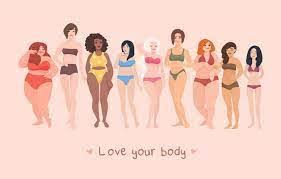
“Body shaming” this word has broken many hearts out there. Body shaming is something disguise and disheartening one can ever feel in his her life. It is something which eats your out completely, it makes the person insecure, uncomfortable, not confident in their own skin or body, less motivated and every thing that can make a person to doubt on his/her body and to hate the body.

Body shaming is an act of mocking or criticizing one’s physical appearance. The culture of body-shaming is generation old and an ongoing social practice irrespective of social status, education, creed, etc. The reach of body shaming is wide and is not restrictive to only the shape of the body, it includes looks, the colour of the skin, height shaming, one’s muscularity or absence of masculinity, the list goes on and on. These clichés still dominate India’s mindset. This is a big part of our school and college life, and it will never mellow down however we educate ourselves. It is very common in family functions, in schools, the workplace, among close friend circles, relatives, and social media. This practice diminishes the love for our own body, love towards self and we struggle to be socially acceptable. Society has set artificial standards of beauty. It hampers one’s psychology of looking at self. Body shaming is not limited to only females, but males also do go through this trauma of body shaming. But it is more stressful for females in India since our society is patriarchal. Media plays a very notorious part in spreading this disease. We all are social media addicts, the way advertisements preach about looking perfect, has the power to affect someone’s mental health. The most recent and biggest example of media playing a key role in this aspect is the replacement of the word “Fair” to “Glow” and renaming it as “glow and lovely”. All these years they have promoted the concept that fair is beautiful. Body shaming carried on frequently affects the person’s mental health badly, it can cause depression, anxiety, lack of confidence, and social isolation. A person may suffer from panic attacks or depression disorders. Body shaming can lead to eating disorders. Body shaming is the act of suggesting that someone’s body isn’t good enough, and that they should not be satisfied or comfortable with its current composition, proportions, or exposure to the gaze of others. It is rude and disrespectful behavior, and there is no body type that creates an exception that would make body shaming less rude or less disrespectful (even if that body is, in fact, unheathy). A person’s body is their own. It is none of your business. You are not their medical practitioner, and you are neither assisting nor improving the lives of anyone by boorishly sharing your opinions and “helpful” intentions. There is no person on the planet that is not keenly aware of the ways in which their body does not meet the current standard. There is not one person who needs you to point it out.

Please choose kindness. Choose empathy. See the beauty in every body, and choose to spend your time bringing people and ideas together. We each have a staggering array of our own flaws on which to focus — let us not mock others for the state of their earthly form.

“Disadvantages of Reservations”

The word ‘reservation’ can be defined as an act of reserving or keeping back or holding something. It is a kind of process to provide facilities to the people belonging to the weaker sections of the societies in the areas of education, scholarship, jobs, and government service and in other spheres in which they are not being represented properly. The reservation system is under the control of constitutional laws, statutory codes, local rules and regulations.In India, this system is also known as ‘Quota System’, meant for the people attached to the reserved category. Reservation is a form of Affirmative Action a certain percentage of seats are reserved in Parliament, State Legislative Assembly, Central and State Services, Public Sector Units and in all Public and Private Educational Institutions except in the Minority and Religious Educational Institutions for the reserved categories. The Constitution of India provides three types of reservations i.e. Political, Educational and Employment and the percentage for the reservation of these has been fixed by them.

In India, the reservation is being provided by the Government on the following basis: (1) Caste (2)Religion (3) Domicile and (4) Gender (5)Economic Condition

India is one of the few countries of the world that offers job and educational reservations to the minor and backward communities of the country, so as to uplift them. This technique has received worldwide praise and generally positive views. However, this system has its own merits and demerits to offer. Firstly, our country is a developing one, and as a result, the people often tend to narrow-minded. Age-old traditions of not letting women be educated or work, and beliefs that originated from the infamous Varna system, still prevail. Therefore, strenuous and money-consuming efforts by the government often do not befit the minor citizens.

Disadvantages of Reservation System.

  1. It divides our country on the basis of caste, religion and gender and hence threatens our national unity. People often see benefits according to their caste, religion and gender and hence for the sake of benefits people often end up having disagreements and fights with each other. Being a secular country, this kind of behaviour can break our unity and the the respect for the nation. It totally divides our country and threatens the national unity, which always have its own consequences that can tear up the unity and the prosperity of the nation.

2.For the benefits, many people make their fake certificates of being an OBC, ST or SC. Which not only disrespects the castes but also it makes the system dirty and unfaithful. This is something terrible that can be done for the sake of advantages and benefits. Making fake certificates is something very disheartening to the respective castes and a kind of disrespecting their own religion and caste. This breaks the unity among the citizens and hence become the reason of discrimination among the citizens.

3. The attempt of goverment is that all the people in our country live without any discrimination on any basis, but reservation will not let that happen. It creates the feeling of superiority and inferiority among different class of people. Since SC, ST and OBC have their own respective advantages and benefits but on the other hand the general category always suffers. General category has become now the most inferior category as compared to all the categories. Being from a general category and still getting admission is a very extreme accomplishment that an adult can praise for the rest of his/her lives.

4.Beneficiaries of reservation are largely from dominant class in backward castes.Marginalised section still remains marginalised. The real benefits and advantages usually got prevailed only by the dominant classes in the backward castes and on the other hand the lower section of people remains the same. This shows how much the discrimination is their in every part of the castes and society and how only the extreme weaker section people always suffers.