PLIGHT OF WOMEN IN AFGHANISTAN

BY DAKSHITA NAITHANI

The Afghan women, maybe more than anybody else, have dreaded the Taliban’s return. There have been many advances in women’s rights over the last 20 years, which appear to be set to erase nearly overnight.

A quick lesson from history…

The Taliban, a political and military force, is said to have started in Islamic schools in Northern Pakistan in the early 1990s. Its aim was to restore order in Afghanistan following the withdrawal of Soviet troops in 1989, as well as to impose a harsh form of Sharia law. By 1998, the organisation had seized 90% of Afghanistan’s territory.

Once in control, the organisation garnered worldwide condemnation for a slew of human-rights violations. The ban on female education above the age of ten as well as harsh limitations on day-to-day liberties, were among the stringent mores imposed on women and its influence has frequently threatened to expand beyond, to places like Pakistan, where the organisation memorably shot teenager Malala Yousafzai in 2012. Women were treated worse than at any previous period or by any other culture throughout its rule (1996–2001). They were prohibited from working, leaving the house without a male escort, seeking medical assistance from a male doctor, and being compelled to cover themselves from head to toe, including their eyes. Women who had previously worked as physicians and teachers were compelled to become beggars or even prostitutes in order to feed their families during the Taliban’s rule.

Following the 9/11 attacks, it was thought that the Taliban were harbouring Al-Qaeda soldiers, thus an US-led international operation was started against Afghanistan. As a consequence, the Taliban were deposed from power, an Afghan government was established, and soldiers occupied the country for 20 years. It destabilised several regions of the nation due to battles with US and UK forces on a regular basis, and Afghan people were continued to be assaulted. Many would agree that the political and cultural status of Afghan women had improved significantly since the Taliban’s collapse in late 2001.

The Bush administration’s acceptance of women’s rights and empowerment as rationale for its assault on the Taliban is long gone. So it was under the Barack Obama administration, when then-Secretary of State Hillary Clinton stated that the Taliban’s repudiation of al-Qaida and promise to support the Afghan constitution and safeguard women’s rights were preconditions for US discussions with them. The rejection of al-Qaida has yet to be declared openly and publicly less than 10 years later; the constitutional order and women’s rights are still subject to intra-Afghan talks and will be influenced by the changing balance of military power.

In February 2020, US-Taliban peace talks were concluded, with the US pledging a quiet departure in exchange for an end to hostilities. Afghan leaders and top military generals have warned that the government will collapse without foreign assistance. It looks like the worst has transpired only weeks before Biden’s deadline of September 11th.

The Taliban rule wreaked havoc on the institutions and the economy, which had already been ravaged by decades of conflict and the Soviet scorched-earth counterinsurgency policy.

The post-Taliban constitution of 2004 granted Afghan women a wide range of rights, and the political epoch brought social and economic progress, which greatly improved the socioeconomic situation. From a crumbling health-care system with almost no healthcare available to women during the Taliban years, the post regime built 3,135 functional facilities by 2018, giving more than 80 percent of Afghans access to a medical facility within two hours’ drive.

 Less than 10% of females were enrolled in elementary schools in 2003; by 2017, that figure had risen to 33%, while female secondary school attendance increased from 6% to 39%. As a result, 3.5 million Afghan females were enrolled in education, with 100,000 of them enrolled in academic institutions. Women’s life expectancy increased from 56 to 66 years in 2017 and maternal mortality fell from 1,100 per 100,000 live births in 2000 to 396 per 100,000 in 2015. By 2020, women made up 21% of Afghan public workers, including 16% of top management positions, and 27% of Afghan parliamentarians.

 These benefits for women have been dispersed inequitably, with women in metropolitan areas benefiting considerably more than women in rural regions. Despite formal legal empowerment, life for many rural women has not improved much since the Taliban era, notably in Pashtun regions but also among other rural minority groups. Many Afghan males are staunch conservatives. Families often let their daughters to complete a primary or secondary education before proceeding with planned marriages. The burqa is worn by the majority of Afghan women in rural regions without any pushing from the Taliban.

What is the situation for women in Afghanistan now?

Women’s rights in Afghan had arguably maintained pace with many other Western countries prior to the 1970s. Women were granted the right to vote in 1919, one year after women in the United Kingdom. In the 1950s, gender segregation was eliminated, and in the 1960s, a constitution was enacted that included women in political life. As the region became more unstable in the 1970s, these rights were steadily eroded.

Only 38% of the international humanitarian response plan for Afghanistan is financed as of August 2021. This gap might result in the loss of specialised protection services for 1.2 million children, putting them at risk of abuse, recruitment, child labour, early and forced marriages, and sex abuse. About 1.4 million females, many of whom are survivors of domestic abuse, would be left without access to safe spaces where they may receive full care.

Females, who have experienced life with rights and freedoms, are among the most exposed as a result of the Taliban’s fast progress in Afghanistan. As the Taliban capture control of Kabul, they risk losing their hard-won achievements.

Those cries for aid may be too late as the capital city falls into the clutches of Islamist rebels. There have been several stories of the Taliban going door-to-door and compiling a list of women and girls aged 12 to 45 who are then compelled to marry Taliban warriors. Women are told that they cannot leave the house without a male escort, that they cannot work or study, and that they cannot wear anything they want. Schools are also being shuttered.

There is a lot to lose for a whole generation of Afghan women who entered public life – legislators, journalists, local governors, physicians, nurses, teachers, and public administrators. While they worked alongside male colleagues and in communities that were unfamiliar with people in positions of power to help establish a truly democratic civil society, they also wanted to pave the way for future generations to follow in their footsteps.

The Taliban offers itself a broad range of possibilities by claiming that they will “protect” women’s rights under sharia but refusing to explain how women’s rights and life in Afghanistan will alter if they achieve their goals. Even if the government did not openly adopt as cruel a system for women as in the 1990s, the Taliban’s dispositions are quite likely to undermine women’s rights, impose cultural prohibitions on women, and reduce socio-economic possibilities for them.

In summary, even with this change in behaviour, the Taliban in power would almost certainly strive to curtail Afghan women’s legal rights, exacerbating their social, economic, and political circumstances. How much and in what manner, is the question.
ATMOSPHERE

What is the Atmosphere?

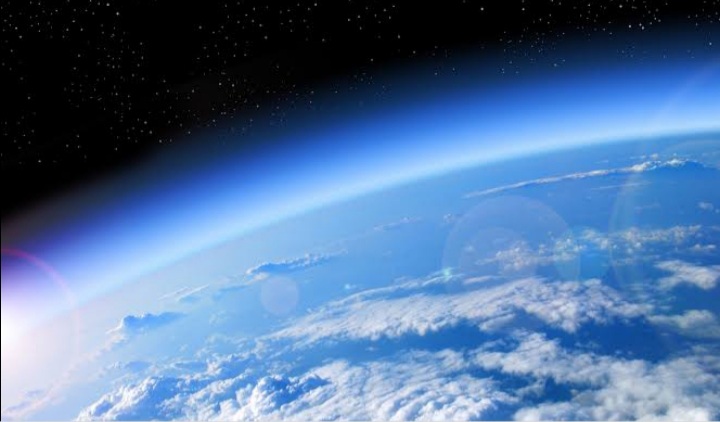
Layers of Earth's Atmosphere as seen from space

The atmosphere is a mixture of gases that surrounds the planet. On Earth, the atmosphere helps make life possible. Besides providing us with something to breathe, it shields us from most of the harmful ultraviolet (UV) radiation coming from the Sun, warms the surface of our planet by about 33° C (59° F) via the greenhouse effect, and largely prevents extreme differences between daytime and nighttime temperatures. The other planets in our solar system also have an atmosphere, but none of them have the same ratio of gases and layered structure as Earth’s atmosphere. 

Gases in Earth’s Atmosphere

Nitrogen and oxygen are by far the most common; dry air is composed of about 78% nitrogen  (N2) and about 21% oxygen  (O2). Argon, carbon dioxide (CO2), and many other gases are also present in much lower amounts; each makes up less than 1% of the atmosphere’s mixture of gases. The atmosphere also includes water vapor. The amount of water vapor present varies a lot, but on average is around 1%. There are also many small particles – solids and liquids – “floating” in the atmosphere. These particles, which scientists call “aerosols”, include dust, spores and pollen, salt from sea spray, volcanic ash, smoke, and more.

Layers of Earth’s Atmosphere

The atmosphere grows thinner (less dense and lower in pressure) as one moves upward from Earth’s surface. It gradually gives way to the vacuum of outer space. There is no precise “top” of the atmosphere. Air becomes so thin at altitudes between 100 and 120 km (62-75 miles) up that for many purposes that range of heights can be considered the boundary between the atmosphere and space. However, there are very thin but measurable traces of atmospheric gases hundreds of kilometers/miles above Earth’s surface.

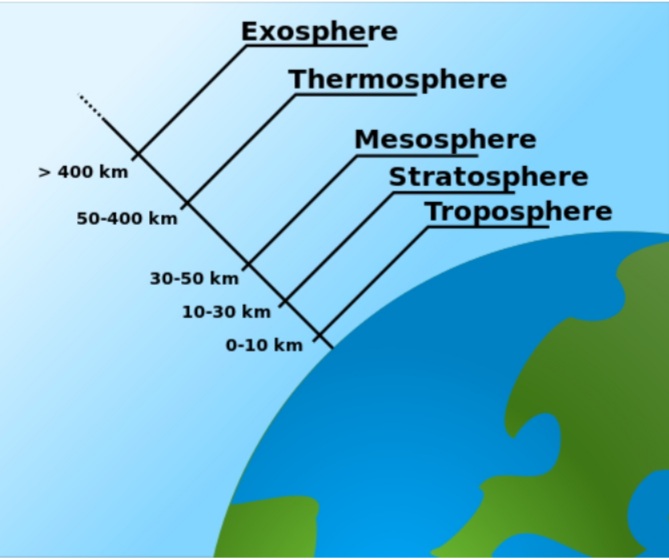
There are several different regions or layers in Earth’s atmosphere. Each has characteristic temperatures, pressures, and phenomena. We live in the troposphere, the lowest layer, where most clouds  are found and almost all weather occurs. Some jet aircraft fly in the next higher layer, the stratosphere, which contains the jet streams and the ozone layer. Temperatures reacj their lowest in the mesosphere, because the there are almost no air molecules there to absorb heat energy. The sky also changes from blue to black in the mesosphere, because there are so few molecules for light to refract off of there. And fartherst from the surface we have the thermosphere, which is the widest layer of the atmosphere and absorbs much of the harmful radiation that reaches Earth from th Sun. The exosphere represents the transition from Earth’s atmosphere to space. 

Layers of Earth's Atmosphere

Troposphere

The troposphere  is the lowest layer of our atmosphere. Starting at ground level, it extends upward to about 10 km (6.2 miles or about 33,000 feet) above sea level. We humans live in the troposphere, and nearly all weather occurs in this lowest layer. Most clouds appear here, mainly because 99% of the water vapor in the atmosphere is found in the troposphere. Air pressure drops, and temperatures get colder, as you climb higher in the troposphere.

Stratosphere

The next layer up is called the stratosphere. The stratosphere extends from the top of the troposphere to about 50 km (31 miles) above the ground. The infamous ozone layer is found within the stratosphere. Ozone molecules in this layer absorb high-energy ultraviolet (UV) light from the Sun, converting the UV energy into heat. Unlike the troposphere, the stratosphere actually gets warmer the higher you go! That trend of rising temperatures with altitude means that air in the stratosphere lacks the turbulence and updrafts of the troposphere beneath. Commercial passenger jets fly in the lower stratosphere, partly because this less-turbulent layer provides a smoother ride. The jet stream flows near the border between the troposphere and the stratosphere.

Mesosphere

Above the stratosphere is the mesosphere. It extends upward to a height of about 85 km (53 miles) above our planet. Most meteors burn up in the mesosphere. Unlike the stratosphere, temperatures once again grow colder as you rise up through the mesosphere. The coldest temperatures in Earth’s atmosphere, about -90° C (-130° F), are found near the top of this layer. The air in the mesosphere is far too thin to breathe; air pressure at the bottom of the layer is well below 1% of the pressure at sea level, and continues dropping as you go higher.

Thermosphere

The layer of very rare air above the mesosphere is called the thermosphere. High-energy X-rays and UV radiation from the Sun are absorbed in the thermosphere, raising its temperature to hundreds or at times thousands of degrees. However, the air in this layer is so thin that it would feel freezing cold to us! In many ways, the thermosphere is more like outer space than a part of the atmosphere. Many satellites actually orbit Earth within the thermosphere! Variations in the amount of energy coming from the Sun exert a powerful influence on both the height of the top of this layer and the temperature within it. Because of this, the top of the thermosphere can be found anywhere between 500 and 1,000 km (311 to 621 miles) above the ground. Temperatures in the upper thermosphere can range from about 500° C (932° F) to 2,000° C (3,632° F) or higher. The aurora, the Northern Lights and Southern Lights, occur in the thermosphere.

Exosphere

Although some experts consider the thermosphere to be the uppermost layer of our atmosphere, others consider the exosphere  to be the actual “final frontier” of Earth’s gaseous envelope. As you might imagine, the “air” in the exosphere is very, very, very thin, making this layer even more space-like than the thermosphere. In fact, the air in the exosphere is constantly – though very gradually – “leaking” out of Earth’s atmosphere into outer space. There is no clear-cut upper boundary where the exosphere finally fades away into space. Different definitions place the top of the exosphere somewhere between 100,000 km (62,000 miles) and 190,000 km (120,000 miles) above the surface of Earth. The latter value is about halfway to the Moon!

Ionosphere

The ionosphere  is not a distinct layer like the others mentioned above. Instead, the ionosphere is a series of regions in parts of the mesosphere and thermosphere where high-energy radiation from the Sun has knocked electrons loose from their parent atoms and molecules. The electrically charged atoms and molecules that are formed in this way are called ions, giving the ionosphere its name and endowing this region with some special properties.

Planetary Atmospheres

Earth is not the only world with an atmosphere. All of the planets – and even a few moons – in our solar system have atmospheres. Some have clouds, wind, rain and powerful storms. Recently scientists have also begun to get glimpses of atmospheres of planets in other solar systems.

Each of the planets in our solar system has an uniquely structured atmosphere. The atmosphere of Mercury is extremely thin and is not very different from the vacuum of space. All four giant planets in our solar system – Jupiter, Saturn, Uranus and Neptune – have very thick, deep atmospheres. The smaller, rocky planets – Earth, Venus and Mars – have much thinner atmospheres hovering above their solid surfaces. The atmospheres on moons in our solar sytem are typically quite thin. Saturn’s moon Titan is an exception – air pressure at the surface of Titan is higher than on Earth! Of the five officially recognized dwarf planets, Pluto has a thin, seasonal atmosphere containing nitrogen, methane  and carbon monoxide, and Ceres may have an extremely thin atmosphere of water vapor. But only Earth’s atmosphere has the layered structure that allows enough light energy to enter and be trapped for warmth, but also shields us from too much harmful radiation. This important balance is necessary to maintain life on Earth. 

Creation of Imagination

Photo by Teddy Tavan on Pexels.com

Imagination is our creation, we have always followed this streak of points of view that being creative is drawing characters and theories in the world of imagination where they live as long as we keep believing in them right?

In every field either its arts and relation or its commerce and markets strategy, everywhere we go we are asked to imagine the next step or the reaction or the situation or the condition which could happen and we can be prepared for everything that is going to happen and hence adding in the constant growth.

But most of the time they ask us to think out of the box and come up with different things, reactions, and situations but does it ever occurred to anyone that what kind of box we are required to think beyond and what if there is any box to even start with I mean if we are telling ourselves we have to think out of the box that does mean that we are saying there was a range and limit beyond which we couldn’t think but there isn’t any limit to even start with.

Keep thinking and you might come up with something that actually is out of every range and limits we drew even in our imagination, though imagination is our own free will and just our own.

But there are many interesting facts about the power of imagination and why creating one takes a lot more than just thinking out of the box. Horsing the mind in the limitless area of our brain and aimless thoughts and even the traumatic events though it all might seem bad and it is but it does have some of the positive impacts on the creative side of our brain.

Solitary Activity

Morning hot showers or walking alone where there is no one to disturb and just in all the standing beneath the hot shower head relaxing your mind does the number on our creative mind as well which can be confirmed by 72% of our population.

A survey showed that taking a bath in the morning confirms that people do get some insightful thoughts and ideas while they are really relaxed and calm there, bathing away the dirt as well as any blockage which could stop the horse of their thoughts.

Hunching Thrives

Hunch, whenever our intuitions tell us something most of us feels the need to ignore it or just consider it as the feeling that arrives when we are in a certain situation and that is just our reaction though most of the time it could be right but doing with the hunch has been proved the right thing to let your imagination thrive So hunch the way out of the box.

Trying New Things

Thinking out the box is common but knowing first where your box lies and what kind of restraint you have imposed could help you get a better outcome and to do so always be ready to try out the new things as whenever we learn something our brain gets one more topic or thing to continuously wander about without any restraint.

FACTS ABOUT GOOGLE

co-founders Larry Page and Sergey Brin have respective net worths of $54.4bn and $53bn according to Forbes. Parent company Alphabet, which also owns YouTube and all other former Google subsidiaries, reported revenue of $110.9bn in 2017 and net income (profit) of $12.6bn.“Google” was included in the Oxford English Dictionary from June 2006 as a verb meaning: “Search for information about (someone or something) on the Internet using the search engine Google.”

Page and Brin found each other obnoxious when they met in 1995 at Stanford University on a campus tour.Brin was a second-year student when Page started his studies at the university. Google started as a PhD project, when Page started collecting links on the Web in 1995. As the son of a computer science professor he knew that links worked like citations, giving a web page greater authority.By combining their maths and computer science expertise, the Google co-founders created the PageRank algorithm which led to search engine optimisation. SEO arrived with the Google toolbar which allowed webmasters to compare how Google saw their sites. Companies then found ways to manipulate the rankings.The first version of Google was named “Backrub” and was released on Stanford’s website in August 1996.

They renamed the search engine “Google” in 1997, which is a play on the word “googol” coined by a mathematician and meaning the number one followed by 100 zeros.Google.stanford.edu was the first version of Google the search engine and would regularly crash Stanford’s internet connection.They set up their first office in Susan Wojcicki’s garage in Menlo Park, California. She later became CEO of YouTube under Google’s ownership and Brin married Susan’s sister Anne.The first Google Doodle was a Burning Man figure, an “out-of-office” to let everyone know that Page and Brin were at the Burning Man festival in the Nevada desert in August 1998.Also in 1998 Google received its first substantial funding – $100,000 from the co-founder of Sun Microsystems.Google pitched its technology to search engines Excite, Yahoo and Altavista between 1998 and 1999 for $1m but was rejected by all three.

Google News was launched in September 2002.Google Analytics was launched in November 2005, it tracks and reports on website traffic.YouTube was bought for $1.65bn and was the largest purchase Google had made up till then. It was seen as a move to buy users rather than tech.Google bought Android in 2005 for $50m and the first Android device was launched in 2008. Some 88% of all smartphones sold to end users in 2018 were phones with the Android operating system, according to data on Statista.Motorola Mobility was bought by Google in 2011 for $12.5bn.AI company DeepMind became part of Google in 2014. It developed AlphaGo AI, the first machine to beat a professional player of the ancient Asian board game Go.Alphabet became Google’s parent company in 2015 and reports having 89,058 employees.Its headquarters are in Mountain View, California and are known as “the Googleplex”.

THE RUN MACHINE

My favorite cricketer is Virat Kohli. I like him because he is aggressive, charismatic and a true leader. With his consistent performance, he produced many memorable moments in cricket and helped India to win many matches.

He is currently the Indian team captain and is rated as one of the best batman in the world. He is also a Padmasri and Arjuna award winner. He was awarded ICC player of the year on 2012.

Virat kohli was born on 5 November, 1988 in Delhi. From childhood on wards, he was passionate about cricket and started playing cricket when he was three years old. Later he was trained at Delhi Cricket Academy.

His hard work , dedication and talent helped him to secure a place in the under 15 and later under 17 team. Virat performed consistently and later secured a place in the India under 19 team in 2006 against England. In 2008 he captained the ICC Under 19 Word cup and the same year he was selected to the Indian cricket team. His consistent performance in the team won the hearts of millions of cricketing fans across the world. He was made the vice-captain of the team in 2010 and later the captain in 2014.Virat Kohli has already scored 28 centuries in one day matches and 17 centuries in test.

He is the fastest Indian batsman to get 1000 international runs and has already won the man of the match award 22 times. He is considered as one person who has the potential to smash the legendary Sachin Tendulkars record of most runs in ODI. Undoubtedly, he is one of the finest Indian player in the history of cricket.

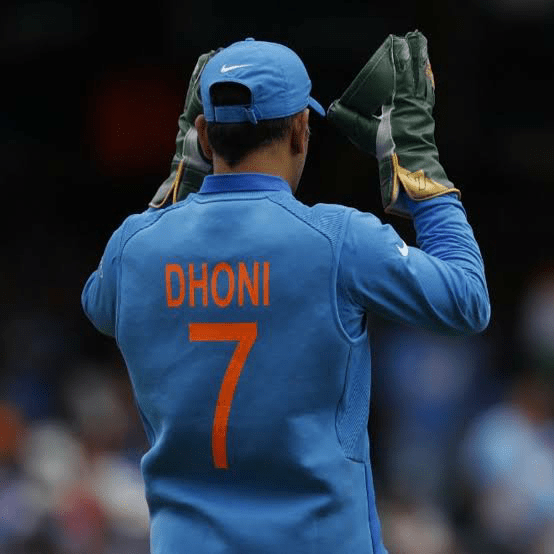
DHONI THE NO7

M S Dhoni has made India proud. He has contributed extraordinarily to make India one of the most outstanding champions of cricket. Most of the prestigious national awards were won by him.

Mahendra Singh Dhoni was born on 7th July 1981 to the mother, Devaki Devi and the father, Pan Singh. His journey from a travelling ticket examiner (TTE) to one of the best cricketers has been admiring for everyone. He has been an outstanding captain of Indian Cricket team. The year, 2004 marks his debut in ODI against Bangladesh.India, under his captaincy, won back to back cricket matches.

It is under Dhoni’s captaincy that India in more than forty years became the first team to defeat Australia in a Test series. In 2007, India won ICC World Twenty 20. Asia Cups were won in 2010 and 2016.His dedication made India win ICC Cricket World Cup in 2011 and the ICC Champions Trophy in 2013. In fact, India climbed no. 1 in the ICC Test Rankings under his captaincy. His fame and popularity are extraordinarily outstanding.

They are worth admiration. His contributions had inspired making his biopic, titled, “M.S. Dhoni: The Untold Story.” In 2007, Dhoni won Rajiv Gandhi Khel Ratna Award. India’s third and fourth highest awards, Padma Bhushan and Padma Shri were won by him for his remarkable contributions in the field of sports.

He also was conferred the honorary rank of Lieutenant Colonel by the Indian Territorial Army. He became the second Indian cricketer after Kapil Dev to receive this honour. Besides these, he also won other popular awards for his excellent journey as a cricketer.

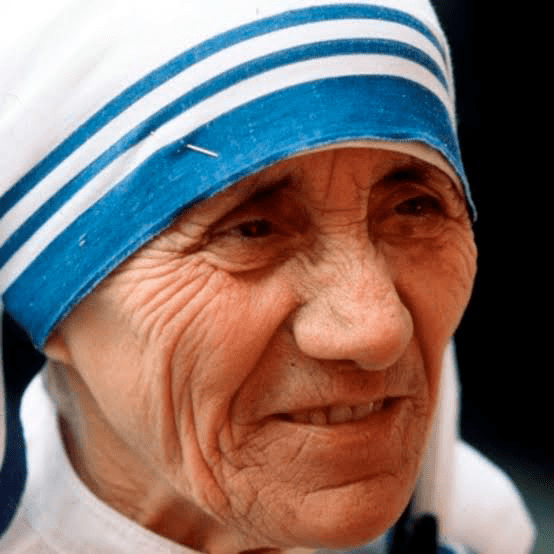
MOTHER OF HUMANITY-MOTHER TERASA

Mother Teresa has done many humanitarian acts and has served many people throughout her lifespan. She was a lady with a kind heart and great calibre and she used to help poor and unprivileged people without having any selfish interests. Mother Teresa does not belong to Indian nationality, nevertheless, she still came to India to help the people in need.

The real name of Mother Teresa was Agnes Gonxha Bojaxhiu, and she was born on 26 August 1910 at Skopje, Macedonia. Nikolle and Dranafile Bojaxhi, her parents had three children and mother Teresa was the youngest one. When she was just 8 years old, her father died in the year 1919.Mother Teresa got this name after she became a nun in the church St. Teresa. She was born in a Christian family and she had a great interest in religious activities. She also joined many religious groups that spread religious beliefs by travelling to different countries.

Mother Teresa had a great interest in preaching from an early age and at the age of 12, she was committed to becoming a religious missionary. At the age of 18, she left her home town and got associated with Loreto Sisters- who were Irish nuns in Rathfarnham, Ireland. She received her training in Dublin and Darjeeling and took her first religious vow in the year 1928.In the year 1931, she was committed to being a nun and then she founded- “Missionaries of Charity”. It was a Roman Catholic religious team of worshippers that have the prime objective to serve humanity and to help the hungry, homeless, naked, and unprivileged people.

Mother Teresa was truly dedicated to uplifting the society and helping the people. She received many awards and accolades for the same. Mother Teresa was also honoured with the ‘Nobel Peace Award’ in 1979. She also received ‘Bharat Ratna’ in the year 1980. She died on September 5, 1997, in Calcutta, West Bengal. People all around the world admire her inner beauty and charm and she is still alive in the hearts of people.

WORK FROM HOME

Office has no longer been the only work place since many people are considering working from home. Some may argue the majority of employees should change their work place from office to home. In my opinion, the benefits of working from home can surely surpass the drawbacks due to the following reasons:

Working from home is a lot more comfortable for lots of people. Employees can save a great deal of time and money since they do not have to travel so often, which means people will have more time for work and for themselves, too. Less travelling will also help reduce traffice jam and pollutants to our environment. Besides, working at home does not mean staying inside all day long, people can choose to work in their garden or backyard, wherever makes them feel convenient to work.

Moreover, employees are under less stresses since they get to decide when to work and when to take rest. These things will help giving out better perfomance to tasks.There are still some disadvantages that home-working could bring. For instance, working from personal space will reduce direct interactions among colleagues. But the problem is solved thanks to the Internet. As for now, people from around the globe can easily contact and work with others from distances.

Another drawback is that some people may get distracted from work by external factors. This requires employees to be highly awared of what they should and should not do for their paid jobs.In conclusion, working from home should be encouraged because the advantages overcome the disadvantages.

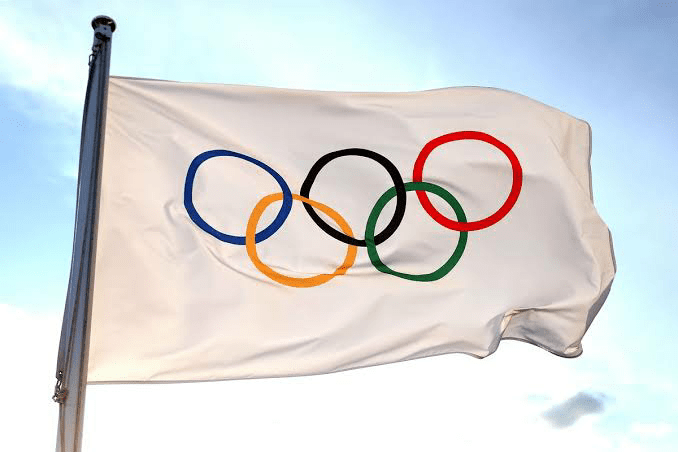
INDIA IN OLYMPICS

The modern Olympic Games are leading international sporting events featuring summer and winter sports competitions in which thousands of athletes from around the world participate in a variety of competitions. The Olympic Games are considered as the world’s foremost sports competition with more than 200 nations participating.

The Olympic Games are normally held every four years, alternating between the Summer and Winter Games every two years in the four-year period.India’s performance in OlympicsIndia’s performance in Olympics sounds very disgraceful, for we Indians and for our country.

India has the world’s second-largest population (almost 1/6th of the global population) and it is ninth largest economy. It is the biggest democracy in existence. But, why does India, despite a population of over one billion people, lack behind in the race of Olympic Glory? Every self-respecting Indian knows that India’s strike rate at the Olympics has been less than encouraging.Just 28 medals!A century since first participating in Olympics, India, a nation with a population of 1.3 billion has merely 28 medals to its name.

The United States of America (USA), on the other hand, leads the medal tally with 2,522 medals under its belt. This clearly is not the case of population of a country which can be said is directly proportional to the number of medals.Prosperity in all other areas, except OlympicsIndia has managed to put a man in space, led many scientific discoveries, forced the world to acknowledge India’s stride in the field of defense and science & technology.

Indian cricket team is considered to be one of the World’s best team, then why are we not able to bring the same dedication and integrity to sports in general and the Olympic Games in particular? In fact, being the second most populous and most democratic country in the world hinders our attempts to harvest a rich haul of medals at the Olympics.

BHODHIDHARMAN

The earliest historical mention to Bodhidharma is the Luoyang jia local area network Jemaah Islamiyah. ( The History of the Monasteries of Luoyang” ) written by Yang Xuanzhi in 547 A. D. Yang claims to hold personally visited the Yong Ning Temple and to hold met there an old Iranian Barbarian” ( alien ) named Sramana Bodhidharma. who stated that he was 150 old ages old. The Buddhist bookman Guifeng Zongni ( 780-841 ) quoted an old Buddhist Koan ( conundrum ) that asks. Why did Bodhidharma come from the West? ”

Dao Zuan’s Xu Government Accounting Office seng zhuan ( Biographies of Eminent Tang Monks” ) . written in 645. gives the earliest record of Bodhidharma’s life. The 2nd most of import life is Dao Yuan’s Jing de zhuan deng Lu ( The Records of Transmission of the Lamp” ) . compiled in 1004.Many Hagiographas have traditionally been credited to Bodhidharma himself. but current scholarly sentiment maintains that none is reliable. Mainstream Buddhist tradition holds that Bodhidharma arrived in China in 520. although there are historical indicants that he may hold arrived in 470. or even every bit early as 420.

There is no understanding as to the path he traveled or where he arrived foremost. Some say he traveled by sea. risking his life over the looming moving ridges. ” from Madras in southern India to Guangzhou and so by land to Nanjing.Other bookmans believe that he walked a well-beaten trail over the Pamir Plateau. across the desert and along the Yellow River to Luoyang. the provincial capital and centre of Chinese Buddhist civilization. In any instance. the journey from India is agreed to hold been long and unsafe. Bodhidharma is thought to hold been born in Kanchipuram. near Madras. India. the 3rd boy of a local male monarch and therefore a member of the caste of warriors and swayers. At the age of seven he supposedly began doing observations of precocious wisdom ( e. g. The head is a jewel” ) .

His instructor. Prajnatara. changed the boy’s name from Bodhitara to Bodhidharma. Following his father’s decease. Bodhidharma served Prajnatara for many old ages distributing Buddhism. Upon Prajnatara’s decease Bodhidharma left his monastery in India to follow his master’s last wish that he travel to China and spread the instruction. Bodhidharma traversing the Yanstze Rover on a reed Bodhidharma is said to hold resided a piece in the tribunal of the Emperor Wu Dai ( 465-550 ) .

but left after make up one’s minding that the emperor was non sufficiently appreciative of his instruction.He traveled to the northern portion of the state by traversing the Yangtze River ( harmonizing to one version.

LIONEL MESSI

Luis Lionel Andres Messi (“Lionel Messi”) is one of, if not, the most popular soccer player in the world. Born on June 24 1987, Messi was the youngest player ever to play for FC Barcelona. At the age of 16, Messi made his first appearance for FC Barcelona. Messi was born in Rosario, Argentina and moved to Spain at the age of 13 where he was offered the chance to train at FC Barcelona’s youth academy.

At a young age, Messi was diagnosed with hormone deficiency which restricted his growth. Shorter than most of the kids at his age, Messi showed great talent and skills which put him in front of many organizations; one of which was Barcelona.

Many organizations showed interest in him but due to his condition, little to no one wanted to pay for Messi’s medical treatment. However, Messi was given a trial with Barcelona where he impressed the coach. Barcelona offered Messi a contract which included Barcelona paying for Messi’s treatment in Spain.

To people with disability, he will be remembered for overcoming his disability and achieving his goals. To the people of Argentina and Spain, he will be remembered for making the country, and its people, proud in the international community. Messi has a physical disability which prevented him from reaching his true height.

Although he wasn’t able to win a trophy with Argentina, he was the youngest member in the Argentina team to score a goal in the World Cup. He brought great national pride to both Argentina and Spain. He has won more championship and trophies than anyone can hope for or achieve. Lionel Messi will be remembered as an underdog who worked hard and achieved his goal, but to the world he will be remembered as a great soccer.

CR7

Cristiano Ronaldo was born on 5 February 1985, known as Cristiano Ronaldo, c Luo, small Luo, born on the island of Madeira, Portugal, Portugal is a famous football player, Secretary winger, serves as the center, currently playing for Real Madrid football club,In my view, I think he is a great player, in my view, His extraordinary skill is very fancy,

He is the commanding officer on the pitch, the core of the team, the star shining legend in Real Madrid, his unique personality,Now Below I would introduce his background experience“ Cristiano Ronaldo, was born in February 5, 1985 in Madeira, Portugal, Funchal. Referred to as Cristiano Ronaldo, the Portuguese footballer, Secretary winger and serves as the center.

His technical features were placed in many other people, and he was not so powerful as he was. Running fast, fast action, rapid start-up, even his fake are fast, “fast” is the largest capital he unmatched football.

And his left foot balance technology, can break any part of the court; foot head hard, and can well suppressed the instep, in this aspect of the powerful shots and long-range doing very good; leg swing speed is very fast, swinging leg is also very strong, in the guard’s tight defense strong shot threat should is the first in the world; without the ball run fast, fast starting, let him in the stationary state to get rid of the defensive player ability strong, open ground ball speed fast.

Is a defensive back and hit the ball behind sprint’s best; heading technique is quite good; arbitrary ball has very strong capability, kick his instep deciduous let many goalkeeper at a loss. Of course, he also has a very place to strengthen.

WHO

World Health Organization EssayThe World Health organization (WHO) is the leading organization in the world that devotes itself towards the improvement of an individual’s health of nearly seven billion people. This public organization is an affiliate of the UN or the United Nations with headquarters in Geneva Switzerland. Likewise, it’s the directing and coordinating authority for health matters within the system of the United Nations.

WHO is responsible for the provision of health matters across the globe, shaping the health research agenda, and provide technical support to nations as well as to monitor and assess health trends. Based on World Health Organization this essay focuses on the analysis of the organizational job analysis process and its impact on the organization HRM (WHO, 2014).Job analysis is a significant prerequisite for the effective administration of the human resources of an organization.

This process involves gathering of information about a job. It actually specifies the tasks involved in a given job as well as the factors that affect the presentation of that job. The policy of WHO is to promote human resources development and health was established in 1976. The overwhelming majority of the healthcare organizations expenditures is for wages, salaries, training, benefits and supervision of workers.

Thus the productivity and performance of these institutions depends upon the workers and the conditions of work performance. Two of the forces considered for major reforms in personnel subsystems in a healthcare setting in this organization is accountability and humanism (Siddique, 2004). Accountability can be defined as the processes to provide evidence that the expenditures for attainment of the set goals in healthcare actually achieves those set objectives or otherwise makes available the measurements of deficits and implementation of plans for improvement. Alternatively humanism means that healthcare should be concerned about the whole being of human beings rather than a cluster of presentation of symptoms, disabilities or diseases (Moore, 1999).

Job analysis process impacts the organizations HRM positively as it highlights on the need to have an approach for reformations which goes beyond the simple characterization of the work content or workers performance based upon systems that acknowledge the interrelatedness of each subsystem and its contribution towards the overall system performance. Otherwise, Task analysis based upon the functional job analysis well suits these requirements in Human resource management (Moore, 1999).

HEALTH AND HYGIENE

For the human body, health is a positive state where every part of the mind and body is in harmony. Additionally, it is also functioning and balancing the other parts. Thus, in other words, when all parts of the body are functioning well, this physical well-being state of the human body is called health.

It is well said and proved that a healthy person is someone who has a sound body and a sound mind. Health is one of the characteristics of life that helps a person live longer. According to WHO, health is a state of complete mental, spiritual, physical, and social well being and not only the absence of disease.

If a person is in a good physical state and free from any diseases but is under constant stress, greed, tension, anger, etc, then that person is not healthy. Hygiene refers to good practices and rituals that prevent diseases and leads to good health.

Thus, it mainly includes proper sewage disposal, cleanliness, and safe drinking water supply. So, it includes all the activities that are done for preserving and improving as well as maintaining sound health.