Test your ‘MYTHS VS FACTS’ knowledge

Isn’t it amazing when your friends are talking about something that is a myth but you know the real fact about it and you can actually brag about it. Everyone thinks you are a genius but you know that it is something you read somewhere. It’s hard sometimes to think about thousands of myth and facts which we just don’t know and continue to believe what we know about it. When I was small my mother once told me that if you see your face in the mirror at night your face will get wrinkles. Yeah… like that doesn’t even make sense but she told me anyway because she was getting ready and I was In the way. And I know you too have come across some bizarre myths that I believe are made up. But there are myths that people actually believe and are common to everyone like black cats are unlucky. They are not!! I have a black cat and I love her the most.

Photo by Helena Lopes on Pexels.com

It’s modern time and people want facts if you want them to believe something. Science has progressed and has answer to almost everything but there are things which even science is unable to answer for e.g., why are women always right? And how moms are able to find anything when we ask them and we can’t. How?? Okay, I will pull my hair out and still won’t get any answer so let’s move on to our myths vs facts quiz. I will give you some common beliefs and you will have to identify it as a myth or a fact and at the end I will answer them.

READY, SET, GO…

  1. You have to drink at least 8 glasses of water a day.
  2. Bulls get angry when they see red color
  3. Only animals that blush are humans
  4. Dogs only see black and white. Poor doggos. (Simple huh?? Real questions start now.)
  5. If you swallow gum it will sit for 7 years in your stomach.
  6. Pineapple is a natural meat tenderizer.
  7. To boil water faster add salt to it.

Answers

(Myth) No you don’t have to. There are many factors involved as of how much water you should consume. Drink when you feel like drinking. Not too less not too much. 3 to 4 litres work perfectly fine. According to The U.S. National Academies of Sciences, Engineering, and Medicine, the adequate intake of fluids for men is 3.7 L and for women it is 2.7L. about 50 to 70 % of our body is made up of water and it is important for:

  • Keeping temperature normal.
  • Getting rid of body waste

(Myth) I’ve spent my life getting scared and hiding my red clothes whenever I saw bulls. Whoever made this myth hated red color. Everyone believed this because of that red cloth used by matadors in bull fights but American science guide says that bulls are red green colorblind. The actual reason for bulls’ anger was the movement of the cape. Feeling stupid? Yeah me too. We are in this together.

(Fact) Isn’t it amazing how our cheeks turn red when someone compliments us or when we are embarrassed of saying something stupid. humans are the only animals who are capable of blushing, and as Darwin states “the most peculiar and the most human of all expressions.” It’s still unknown how it happens voluntarily but in terms of science it is caused by the dilation of blood vessels in the facial skin.

(Myth) Here is a good fact dogs don’t see in black and white. Our friend is actually capable of seeing colors not many but can distinguish between them. The can see blue, yellow and some shades of grey. They may not see the true color of an object but they definitely see the color of love. Dogs are pure souls.

Photo by Andrea Piacquadio on Pexels.com

(Myth) “Oh my god! I just swallowed a gum, it will get stuck to my intestines now. (screaming in fear).” You can understand this, right? From fruit seeds to chewing gums we have avoided gulping them. But you will laugh after knowing that neither plants were going to grow from your stomach nor the gum will hijack your guts because your gut can’t digest it. If you anyhow swallow it, it will pass through you in a couple of days. Although a large amount of gum can result in intestinal blockage.

(Fact) Bromelain enzyme in pineapple is digests protein and softens the tissues in meat, hence, goes well with beef, pork and some types of fish. This is the reason why it stings our tongue, it breaks down the surface tissues thankfully our body regenerates cells and repairs the tongue. If you want to soften it you can bake it or soak it in salty water.

(Myth) Adding salt to water will increase the temperature of water fast but it’s boiling point will remain same. Even if you add a spoonful of salt the boiling point will change from 100° to hardly 100.4°.

I hope you enjoyed the quiz, if you know some more myths and facts do tell in the comments below also tell me how much you scored today.

An Electoral System That Neglects The Youth?

Since the inception of democracy in 507 B.C, the axiom that the people of a nation play a pivotal role in upholding it has stood firm through the test of time. While the question of which members of society would play this role has historically been a contentious issue in many countries, it was never a major problem in India. The Constituent Assembly ensured that universal adult franchise was provided for in the Constitution from the very beginning. While there was some opposition to universal adult franchise, based on concerns that the right to vote was being given too early, the possibility of inadequate education, knowledge, patriotism towards the country amongst the voters, a majority of members supported it. This meant that, once a citizen of India reached a certain age, they would be entitled to vote irrespective of their gender, religion, caste, education, income, or any other factor.

The provision of adult franchise has become more inclusive over time. When it was first written, article 326 of the Constitution allowed citizens who were 21 years of age or above, to vote in their local, state Legislative Assembly and national Lok Sabha elections. The age limit was reduced to 18 years of age or above after the Sixty-first Amendment Act, 1988. However, this seemingly innocuous provision contains a major problem. Article 326 gives the appropriate legislature the ability to set a date before which a citizen must turn 18 years of age, in order to be eligible to vote. 

According to the Election Commission of India (ECI), attaining the age of 18 years on or before the qualifying date of the year of revision of the electoral roll is a requirement to register in the electoral roll. According to Article 14 (b) of the Representation of the People Act, 1950, the qualifying date is “The 1st day of January”. This is a significant impediment to the participation of youth in the electoral process as it means that a citizen turning 18 years of age on or after the 2nd of January in the year of an election, is ineligible to vote in that election, even if they turn 18 years of age before any of the elections are actually held. This means that there are a very large number of 18 year olds who will get to vote in a major election only after 5 years, which is a very long time after they have technically reached the correct age to vote. 

In May 2016, D. V. Sadananda Gowda, the Minister of Law and Justice at the time stated that the government had plans to add more than one qualifying date in a year before which a citizen may be eligible to vote. Furthermore, the ECI has suggested the elimination of the qualifying date and allowing citizens to be eligible to vote as soon as they turn 18. While having only one qualifying date made sense in the past as electoral rolls were updated manually, it makes absolutely no sense now as online voter registration is an established process. Despite this, no action has been taken to remove this blatant hindrance to the participation of youth voters in a critical democratic process. 

Let’s take a look at the participation of “young voters” in recent elections. An Indian citizen aged 18-19 years and voting for the first time is considered a young voter. According to data from the ECI, approximately 15 million young voters participated in the 2019 national elections. However, this ostensibly large number is sadly only about 30% of the estimated population of young voters (48.5 million). It is also a lower number than the 23 million young voters that participated in the 2014 national elections, which contradicts the fact that the total electorate increased from about 815 million in 2014 to about 900 million in 2019. The percentage of young voters that actually voted is abysmal, especially when India has the largest youth population in the world, according to the UN (356 million). 

There could be a variety of reasons for this ignominious participation of youth in the electoral process. Without a doubt, the youth do consider voting in general as well as their vote to be important. However, many do not apply for a voter ID, either because they don’t know how to, or because they don’t prioritize it over other things important to them, such as college applications and driver licences. This problem is being addressed by the various grassroot level and large scale campaigns to increase awareness on the importance of participating in the electoral process organised by various NGOs as well as the ECI. Nowadays, political parties use special tactics to enlarge their youth voter base. Although a quixotic change in the near future, the introduction of online voting systems would significantly increase the participation of youth in the electoral process.

Another impediment to youth participation in the electoral process is the obnoxious amount of influence that money and corruption have in an election. The youth are more interested in policies that would improve their quality of life, their education and their job opportunities rather than flashy and expensive election campaigns carried out by an inaccessible pantheon. Besides this, the lack of candidates that reflect the aspirations of the youth makes them avoid the electoral process. While article 84 (b) of the Constitution states that a citizen above the age of 25 can contest in the Lok Sabha election, the youngest MP is 27 years old and there are only 4 MPs between the ages of 27 and 30. This is equivalent to about 0.75% of the 536 sitting members of the Lok Sabha, which is incongruously unrepresentative of the age demographics of India. In response to a Public Interest Litigation that called for the reduction of the age limit for contesting an election to 21 years of age, the Supreme Court of India chose to stress on experience rather than representation, by stating that citizens must have a certain amount of experience before they can contest an election. Furthermore, in 2018 the Supreme Court responded to a PIL that called for the reduction of the age limit for contesting an election to 18 years of age by stating that parliament must deliberate and make a decision. 

There seems to be some light at the end of the tunnel. For instance, in the recent Tamil Nadu legislative assembly elections, 21.86% of the total electorate were between the ages of 18 and 29, accentuating the growing importance of youth in politics. While making their voices heard by casting their vote is not the only step, it is nevertheless a crucial one in moving towards a country in which the youth are adequately represented in state and national leadership. With citizens aged below 25 comprising more than half of our total population, it is time that the youth is at the helm of decision making that has an impact on their future. It is also time for ancient laws, such as the qualifying date, to be modified, so that we can begin to change this behemoth of an electoral system that neglects the youth. 

How Caste Continues To Affect Our Education System

The caste system has always been ubiquitous. Whether it’s politics, economics, the law, religion, the media, or even education, the seemingly immutable caste system affects all spheres of our society. Schisms along caste lines are ingrained into public discourse and cause discrimination, hatred, and violence. The caste system divided society into the Brahmins (priests and scholars), the Kshatriyas (rulers and warriors), Vaishyas (merchants and traders), Shudras (artisans, labourers, and servants), and the Untouchables. While untouchability was abolished by the Constitution, it is still prevalent in Modern India. Despite valiant efforts, most notably by B.R Ambedkar, to eradicate the caste system post independence, the over 3000 years old system continues to divide Indian society. As we’ll see, the caste system has significant effects on modern-day education; it is as extensive as it is pernicious, leaving its victims helpless. 

The caste system meant that every aspect of one’s life was controlled by “the accident of birth”. Therefore, every caste had specific jobs assigned to them. This meant that children were only taught skills that helped them do jobs that their caste did, even if they could do other work. The strictures of the caste system meant that one is confined to the social status associated with one’s caste. This is discordant with the modern notion that education is the “great equaliser” and it gives everyone and anyone the “ability to rise” because of their hardwork and not their social status and uncontrollable factors such as gender, religion, caste, etc. 

While the Right to Education Act guarantees education for students aged 6 to 14, the quality of that education is usually determined by caste. Students that belong to lower castes receive poor quality and inadequate education in schools that lack basic facilities. This makes it difficult for them to cope at higher levels of education. Ostensibly fair systems such as entrance tests don’t take into account existing disparities that prevent poor lower-caste students from attending coaching classes, studying without frequent interruptions, and preparing adequately for these tests.  

Students belonging to lower castes, especially Dalits, are often ostracized from the education system as they are deemed to be unworthy of education. Their education is hampered as they are more likely to be forced into child labour than other students. They have lower attendance rates and higher dropout rates too. When in school, they face discrimination, not only from other students but also from teachers. They are forced to sit separately, eat separately, and clean classrooms and toilets. They are physically and verbally abused. 

This constant discrimination leads to psychological problems, such as low-self esteem and depression, leading to further exclusion from the education system. This countervails any attempt to make our education system equitable and inclusive. Lower caste families are disproportionately affected by poverty as their members are less likely to get a good job even after receiving an education. This fuels a vicious cycle of poverty and caste-based discrimination. 

In an attempt to alleviate caste-based discrimination through affirmative action, the concept of reservation was introduced. A certain number of seats are reserved for the marginalised castes in public education institutes. The Constitution [Article 16(4)], as well as the Constituent Assembly debates, emphasize that reservation was intended to prevent the formation of caste monopolies in the public sector. However, critiques of reservation call it excessively subservient to lower castes. They suggest that once members of a particular caste become affluent, they no longer deserve reservation. They say that students should earn their place in an educational institution based on merit. 

This meritocratic approach is unfair and flawed as it does not consider centuries of discrimination and underrepresentation that lower castes have had to suffer through. Inherent in any meritocratic system is the premise that all participants start from the same starting line and play on an even playing field. According to the meritocratic approach, everyone has an equal chance to climb the ladder of success. But it would be foolish if we didn’t ask ourselves the question – is the distance between the rungs of everyone’s ladder the same? As we have seen, caste-based discrimination occludes students of lower castes from competing on an even playing field and the distance between the rungs of their ladders of success is miles longer than those of the other students. 

Undoubtedly, the potency of caste-based discrimination has been reduced in urban India. Intermingling between castes, at school, office, public spaces, and even through marriage are common. However, in rural areas and small towns, the caste system’s pervasive nature foments unscrupulous discrimination. The fact that we still have caste-based discrimination, even after it has been outlawed, shows that it is an entrenched and institutional form of discrimination, not an anomaly that can be brushed aside. Along with reservation, we need comprehensive social and economic changes to debilitate this atavistic system. 

We have taken a few steps towards a more egalitarian society. 

Millions have benefitted from our education system and have ended the cycle of poverty and exclusion. The possibility of India ever having a Dalit Chief Justice and two Dalit Presidents would have been ludicrous pre-Independence. However, it is a far cry to say our country is free from discrimination at all levels. The values that students learn from their education determine the character and behaviour that they espouse in the future. Educational institutions cannot continue to remain passive during incidents of caste-based discrimination, so that we can work towards a more inclusive society.  

We must remember that equity is not limited to equality of opportunity. It involves enabling marginalised groups to live in conditions that allow them to access these opportunities. Completely erasing centuries of disadvantage and discrimination, while desirable, may not be possible in the immediate future. But, creating an inclusive education system is something we can start doing right now.  

Disrupt, Divide, and Develop – The Effects of Covid-19 on Education

The pervasive nature of the Covid-19 pandemic has created one of the largest disruptions of education in human history, countervailing all efforts to provide education for all children. It caused unprecedented changes and continues to change numerous aspects of education that we took for granted. In March 2020, schools around India began closing to avoid the spread of Covid-19. These sudden closures led to confusion and uncertainty amongst students, especially those who were appearing for their board exams. For other students, these abrupt closures brought about a perplexing break from school. These ostensibly temporary closures were made permanent once the nationwide lockdown was effectuated and students were separated from their schools.

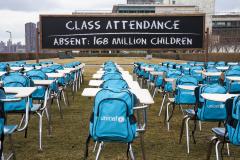
According to data by UNICEF and UNESCO, more than 1 billion children were at risk of falling behind due to school closures during the pandemic. Schools for more than 168 million children globally have been completely closed for almost an entire year. Around 214 million children globally, which is equivalent to 1 in 7 children, have missed more than three-quarters of their in-person learning. Furthermore, more than 888 million children worldwide continue to face disruptions to their education due to full and partial school closures. 

In India, the closure of 1.5 million schools in 2020 impacted 247 million children enrolled in elementary and secondary schools. In early March 2021, only eight States and Union Territories had reopened classes 1 to 12; 11 had reopened classes 6-12 and 15 had reopened classes 9-12. However, the ongoing second wave has caused the complete closure of schools yet again, as well as either the cancellation or postponement of board exams, competitive exams, and entrance exams. 

We began a new academic year like never before – from our homes. To continue the process of education, schools were compelled to adapt, adopt, and evolve. The biggest change has been the abandonment of traditional notions of schooling and the shift to online learning and teaching. Teachers have had to adapt to teaching online, a complete shift for those who’ve had many years of traditional classroom teaching experience. The fun and exciting trip to school has been diminished to clicking a link to join our classes. Interactive classes have become eerily similar to videos on our laptop or phone screen with a tincture of interaction arising when teachers ask us whether we’re present. The extreme sport of completing notes just before the teacher calls out our names has become the tedious process of scanning our notes and sending them as a pdf. Eating with our friends in the school canteen has been replaced with us eating alone during classes. Our classmates have become little rectangles on our screens. Outdoor sports have disappeared from the list of extracurriculars that we did in school. The end of school or college life is marked by video calls instead of grand graduation ceremonies. A lot has changed. 

These changes have led to some pernicious problems. The blurring of lines between school and home has led to students feeling overworked. This holds true for teachers too as they answer questions, clear doubts, and create lesson plans at all hours of the day. Students often have to study and sleep in the same rooms now. According to scientific studies, this often leads to a decrease in productivity and concentration. Students, especially younger ones, are easily distracted during online classes, despite attempts to marshal concentration and focus, as a classroom atmosphere is non-existent. Teachers are unable to pick up cues such as body language and facial expressions, making it challenging to connect with and understand their students. Problems such as eye strain and headaches are more common now due to the drastic and unavoidable increase in screen time for students. Online classes are often disrupted by copious internet problems, power cuts, background noise, and vexing software problems. All forms of practical education have been eliminated. A lack of clarity on important events such as board exam and entrance exam dates has led to the upheaval of students’ plans that were formulated before the pandemic began, fueling a rise in students’ anxiety and uncertainty.  

Covid-19 has also been a catalyst to the widening of socio-economic gaps in society on numerous fronts. While the virus cossets no one, the fact that it has disproportionately affected students belonging to less affluent households, especially those in rural India, is indubitable. Undoubtedly, access to the internet and an appropriate device are the lifelines of online education. 

A UNICEF report from August 2020 highlighted that only 24% of Indian households have access to the internet. While television and radio were purported as an alternative, there is no substitute for an actual teacher. A more recent survey conducted by Learning Spiral in February 2021 revealed that more than 50% of Indian students in rural and urban areas don’t have access to the internet. Moreover, only 47% of the households that have access to the internet own a device that can access the internet. It also revealed that, while 27% of all Indian households have access to the internet, only 28% of those are in rural India, even though rural India comprises of nearly 71% of India’s households.

Families in rural India are plagued with other impediments to online education –  insufficient or no smartphones, having to borrow smartphones (and therefore may not get them at the time needed), not having enough money to buy an appropriate internet package, and patchy connectivity even if they have internet access. The severity of these problems is incalculable and more prevalent than in urban households.   

Assuming that the problems stop here would be specious. The closure of schools has obstructed the “Mid Day Meal Scheme”. India has about 120 million children enrolled in the scheme in over 1.26 million schools across the country. However, due to the disruptions caused by Covid-19, many States and Union Territories have been forced to stop this initiative, depriving children of their basic nutritional needs. This scheme also serves as a huge incentive for children to attend school. Therefore, its removal may negatively impact both their health and their education. Furthermore, incidents of domestic abuse and child labour have drastically increased as students can no longer be protected by going to school. 

The Covid-19 pandemic has been atrocious but there has been a silver lining. The pandemic has led to an “academic revolution” that, unfortunately worsened certain differences in our society, but has also alleviated certain differences. 

Even before Covid-19, there was high growth in and adoption of education technology. Projections have shown that the overall market for online education may be valued at $350 Billion by 2025. There has been a significant surge in the usage of language apps, virtual tutoring, video conferencing tools, online learning software, etc. This is not only providing alternative paths for education but it is also future-proofing education. Through programs such as Coursera and edX, students can attend classes that they normally wouldn’t have had access to. India is considered the largest marketplace for Massive Open Online Courses (MOOCs) after the USA.

In certain aspects, online learning has made school more inclusive and obviated numerous hindrances to education. The use of videos in class greatly benefits visual learners. The use of tools such as online polling and chats have improved the class participation of those who otherwise may have hesitated to speak up. Notes, videos, and other study material that are sent to students can be reviewed anytime so the pressure on students to complete their work “before the bell” has been reduced. Furthermore, differently-abled students who found it difficult to attend school in-person can now attend classes with their friends from their homes. 

As students are attending classes from their homes, commuting to school no longer blocks their schedules. This gives them more time for extracurriculars such as internships, online courses, and online competitions. It also allows them more time to do the things they enjoy such as singing, cooking, writing, and painting. Students are also honing their online collaborative skills and improving their digital literacy, this will immensely benefit them in the future as the entire world shifts online.    

Hopefully, the move to online learning creates a new, permanent, and more effective method of educating students. While this “new normal” has had certain benefits, we must remember the value of education for all and prudentially strive to shrink the divide caused by this unavoidable transition to online learning.     

The Flaws In Our Education System

Historically, the concept of education involved the sharing of knowledge and values between people. This form of education ensured that valuable knowledge was promulgated within a society, from one society to another, and from generation to generation. It focused on the importance of culture and taught skills needed to positively contribute to society through hands-on learning and observation. Children were given the freedom to explore on their own because this supported their natural ways of learning. Moreover, it bolstered unity as the teachers were always members of the same community that they were teaching. We would not be aware of countless facets of history, such as the Egyptian civilization, the Mesopotamian civilization, and the Hunter-gatherer culture if this form of education did not exist.   

So how did it all go wrong? 

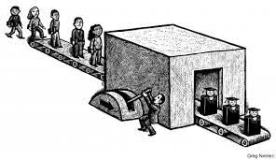
The popularisation of the standardised education system as we know it today, in which children are corralled into classes based on their age and study in institutions known as schools, can be traced back to the Industrial Revolution. Nowadays, it is suitably referred to as the “one shoe fits all approach to education” and the “factory model of education”. However, if we consider the prevailing socio-economic conditions of that time, creating a standardised education system was ineluctable and economically beneficial. 

Schools were tasked with transforming their attendees from students to efficient workers who would eventually increase the quantity and quality of the labour force. The need to encourage unique skills and individuality did not exist as students would grow up to do monotonous and regulated work. As Alvin Toffler put it “the whole idea of assembling masses of students (raw material) to be processed by teachers (workers) in a centrally located school (factory) was a stroke of industrial genius”. At the time, it was thought that the best to produce efficient workers was through the teaching of certain subjects that curricula makers deemed “crucial” using the same method and pace for all students. Students were compelled to utilize rote learning and take graded exams that decided their “intelligence” and potential in life.   

The egregious problem arises when we notice that schools continue to espouse this myopic view on education even after over a hundred years. A hundred years ago, things like the radio, jet engines, helicopters, credit cards, car seat belts, personal computers, smartphones, and the internet did not exist. In a world that undergoes major transformations constantly, how can we be satisfied with this archaic and pernicious education system in the 21st century? 

In today’s world of modernity, complexity, fastidiousness, globalization, and innovation, the flaws of our education system are more conspicuous than ever. No two students are the same. This monolithic and iniquitous system neglects the fact that students have different skill-sets, they learn at different paces, they come from different backgrounds, and wish to pursue different careers in their lives. Undoubtedly, there are numerous instances in which students benefit from and even thrive in the current education system. There are also countless children that long to go to school but don’t have the opportunities or resources to do so. However, there are too many instances in which students, despite arduous effort, struggle in and are lobotomized by this sclerotic education system. They are made to feel inadequate. They are made to believe that they are “slow” and will always flounder.    

Students acquiescently regurgitate vast amounts of information on exams with minimal innovation. These exams, more often than not, test the memorization skills of students, rather than serve as a platform on which they can showcase their understanding of a concept. Students who do well in these exams have the hubristic belief that they are “winners” because society says so and those who don’t do well are humiliated and considered “losers” by society. While it is understood that learning requires the amassing and retention of information, any information that is not understood becomes an undigested burden. The misconception that good grades are the only path to success causes unnecessary pressure on students. 

The strictures imposed by this education system curtails creativity and originally. Concurrently, it encourages conformity, rigidity, and conventionality. It assiduously ignores essential modern-day lessons, such as financial literacy, life skills, mental health, critical thinking, empathy, collaboration, and countless others. This results in students feeling disconcerted when they face the precarious reality of after-school life. It provides students with a series of conclusions, rather than a way of thinking. 

To truly change this standardised educational system, we have to abandon the ostensible idea that it is still a product of logical necessity or scientific insight. The hunter-gatherers adapted their education system to their needs. The education system was modified to cater to the needs of the industrial revolution. Likewise, our education system must change too so that students can truly be prepared for the future. This will certainly alleviate any antipathy held by students towards education and will make education and learning synonymous again. 

Localized keywords research

Localized Keyword Research

You first need to realize which search questions are assisting individuals with discovering your business.

Advancing your site will be a lot simpler task once you realize the keywords you’re positioning for. You would then be able to zero in your endeavors on other important keyword phrases. By further developing your indexed lists for other related expressions, you increment your scope to more expected clients.

What to Research?

As you approach localized keyword research, you can utilize instruments like Google’s Keyword Planner, Social engine marketing rush, and so forth, to source scan volume information for your area.

Try not to limit yourself to just your area.

Extend the pursuit to incorporate close by, particular areas.

What Is Local Search engine optimization?

Neighborhood SEO is the most common way of endeavoring to further develop rankings of a site for inquiries that have nearby aim in both Google My Business and ordinary natural outcomes.

Regularly, individuals will hear the word nearby SEO and consequently think, “Google My Business.” This is an intolerant way to deal with neighborhood SEO when significantly more ground can be acquired in limited natural outcomes.

Google My Business is basic for a general nearby hunt procedure and something you need to upgrade appropriately. In any case, it isn’t the end-all-be-in support of nearby pursuit.

How to do  Local Keyword Research?

You can invest a tad of energy doing nearby keyword explore and get some high level data rather rapidly, or you can dive deep and get pretty much all that you can consider for an undeniable system. Like I introduced toward the start, we will investigate themes, not simply individual catchphrases.

Various Lists to Find New Keywords

The last piece of my nearby keyword phrase research measure that I need to share is the manner by which I utilize the Multiply Keyword List component to get new keuywords. This is truly cool, as it permits us to take our rundown of keywords and duplicate it with our customer’s administration regions.

So we should feel free to click Get Search Volume, and there we have it. We have our watchwords with administrations regions, and we can see that individuals are joining these, and there is some fair normal month to month look through occurring with these specific keywords.

Empathy vs. Covid-19

The Covid-19 pandemic has affected everyone disproportionately and unfairly. Health care workers face the harsh realities of the virus head-on. Teachers have had to adapt their years of experience gained from conventional teaching to suit online classes. Millions face the harsh reality of poverty and hunger everyday. Millions have lost their hard-earned jobs. Businesses have been forced to shut down. Hate crimes against groups of society that are baselessly and cruelly accused of spreading the virus have drastically increased. Mental health issues have risen and fueled by isolation, anxiety, uncertainty, and fear. More than 150 million people have gone and continue to battle with this invincible enemy. More than 3 million people have lost their lives because of this virus. Families have lost their loved ones and the world has lost countless dreamers. This virus cossets no one.  

Early notions such as the pandemic would be ephemeral and infections were punitive for those who flouted the necessary precautions and rules have diminished during the ongoing second wave of the Covid-19 pandemic. In my opinion, this is due to a rise in empathy amongst the people of India. Simply put, empathy is the ability of a living being to understand and share the feelings of another living being. Colloquially, it is referred to as “putting oneself in someone else’s shoes” 

The Government of India has had no shortage of opportunities to show empathy and alleviate the suffering of Indians. The Government has neglected its duty to serve the country and as Arundhati Roy put it, has committed a crime against humanity. The government has failed on many fronts. I would like to highlight a few that showcase an egregious lack of empathy. 

Firstly, the poorly planned nationwide lockdown, which was imposed with a mere 4 hours of notice, left thousands of migrant workers helpless, stranded, and vulnerable. With no help from the government, these migrant workers bravely decided to walk back to their villages. This lockdown was stained by police brutality and hate crimes against people that just wanted to survive. The lack of condemnation and apology by the government showcases a lack of empathy. 

Secondly, in an attempt to alleviate the suffering of Indians, the government launched the risibly named PM CARES (Citizens Assistance and Relief in Emergency Situations) fund and its primary objective was “to deal with any kind of emergency or distress situation, like posed by the COVID-19 pandemic and to provide relief to the affected”. The fact that a government that has never shied away from repeatedly putting their plans such as “Make in India”, “Swachh Bharat”, “Beti Bachao Beti Padhao”, etc on the highest possible pedestal has created such an opaque and inaccessible fund shows a lack of empathy. 

Thirdly, the government’s actions before the second wave hit can be described as complacent, incompetent, and overconfident. On the 21st of February 2021, a resolution was passed in the BJP National Office Bearers meeting that “unequivocally hails its leadership for introducing India to the world as a proud and victorious nation in the fight against Covid”. Additionally, the government decided to export vaccines to other countries without ensuring adequate supply was available for Indian citizens. This not only leaves Indian citizens in danger but also betrays all the countries that depended on “the pharmacy of the world” as vaccine exports were abruptly stopped. None of this would’ve happened if the government showed empathy towards the people of India and established appropriate contingent plans.

Fourthly, while the second wave virulently spread and claimed thousands of lives, the government showed no empathy. While a strong case can be made to prohibit sitting union ministers from campaigning in elections that they are not contesting during a crisis, a complete stop to the democratic process would have been detrimental. The occurrence of huge rallies during a pandemic is untenable and all politicians are guilty of this. The myopic and unsympathetic nature of the government is accentuated by the needless comments that they have made throughout the pandemic.  

Finally, the iniquitous lack of cooperation between the centre and states to fight this pandemic showcases a pathetic lack of empathy. The failure to come up with a comprehensive and transparent plan for the distribution and supply of oxygen and vaccines has caused unimaginable suffering to the people of India. Any attempt by the government to set aside pride and partisanship, as leaders have done before when facing a crisis, and listen to good advice and imploration would be a sign of empathy. No such attempt has been made. Their lack of action and belated action have had fatal effects, but the government has not shown a sign of remorse or empathy.    

But all is not lost. There have been instances in which the government has shown empathy. Most states have decided to offer a Covid-19 vaccine for free for different age groups. The central government also has plans to allow final-year MBBS students to join Covid duty before completing the NEET exam. This will drastically reduce the strain faced by health care workers taking care of Covid patients. The government of Karnataka also announced that it would form a team of 15,000 civil defence volunteers in Bengaluru for tracking and tracing Covid-19 patients. This is a significantly more empathetic and humane approach to managing the crisis than the sadistic and vicious approach used last year that made victims of Covid-19 feel like criminals.

However, none of these actions are as consequential and empathetic as the profound empathy amongst the ordinary people of India. Early displays of empathy were seen when people started taking care of stray animals during the lockdown. Furthermore, countless rations and donations were given to the stranded migrant workers to help them cope with the dire situation they faced. From providing meals, oxygen, assistance to the elderly and handling cremations, Gurudwaras around the country have been the perfect embodiment of empathy. Conspicuously, the empathy and equanimity shown by the youth of India has truly been remarkable. With the help of social media, the relentless youth are constantly doing their part by helping those in need. 

Empathy also provides a strong basis for our everyday fight against Covid-19. Precautions like wearing a mask, staying indoors as much as possible, social distancing when outside, and getting vaccinated as soon as possible would not be flouted if people were more empathetic. For those of us who have not been directly affected by the virus yet, empathy goes a long way in helping and caring about those who have. 

Perhaps, the most optimistic and quixotic change that we can hope for during this precarious and seemingly inexorable situation is the crippling of traditional barriers that have separated us before. If we, as ordinary citizens of India, continue to disregard gender, caste, religion, wealth, age, ethnicity, language, political ideology, and other barriers when helping those affected by this pandemic, we could truly be united in this fight against the invisible enemy. Together, we shall overcome.  

Keywords Density Analysis

Keyword Density Analysis

Keyword density analysis tells you how often a search term appears in a text in relation to the total number of words it contains.

For example: if a keyword appears three times in a 100 word text the keyword density would be 3%. From the point of view of search engines, a high keyword density is a good indicator of search engine spam.

If a keyword appears too often in a website, search engines will downgrade the website and it will then appear lower down in search results.

The Keyword Density analysis Formula

How do you calculate keyword density? The formula is straightforward: Divide the number of times a keyword is used on your page by the total number of words on the page.

-Here’s an easy example: Your page has 1,000 words and your keyword is used 10 times. This gives:

10 / 1000 = .001

Multiply this by 100 to get a percentage, which in this case is 1%.

There’s also another formula sometimes used to assess keyword usage: TF-IDF, which stands for “term frequency-inverse document frequency”. The idea here is to assess the frequency of a keyword on specific pages (TF) against the number of times this word appears across multiple pages on your site (IDF). The result helps determine how relevant your keyword is for specific pages.

While TF is straightforward, it’s easy to get sidetracked by IDF. Here, the goal is to understand the rarity of your keyword across multiple documents. IDF is measured in values between 0 and 1 — the closer to 0, the more a word appears across your pages. The closer to 1, the more it appears on a single page and no others.

The Keyword Density Analysis Tool

The Keyword Density Analysis Tool counts text found in the on-page body text, as well as text used within and heading tags. As a result, you can use this free keyword density tool to see which words and phrases are already used frequently on the page and mirror those words and phrases in the most valuable metadata tags, such as , heading tags, and alt text to improve the keyword relevance.

After running the keyword density tool, you may also find that you need to tweak the content of the page to ensure the most important keywords are used with reasonable frequency–but not to the point of keyword stuffing, which can generate search engine penalties. Use this free keyword density tool to gain insight to the page content you already have. The keyword density tool can also help guide your SEO site review efforts to getting what you actually want and need on the page.

Keywords density analysis

It’s simple, you just need to insert more of SEO keywords into your content!

We recommend adding your keyword at your headline, the first 100 words of your content, and the last 100 words of your content.

Having mentioned your keyword early in the content can better help Google to better associate your content with your targeted keyword.

So having your targeted keyword in your headline and early in the content is always a good thing cause you’re making things straightforward and clear.

Having your keyword in the headline and early in your content is not only good for your SEO, but it’s also good writing habit for informational content.