About Teen Pregnancy

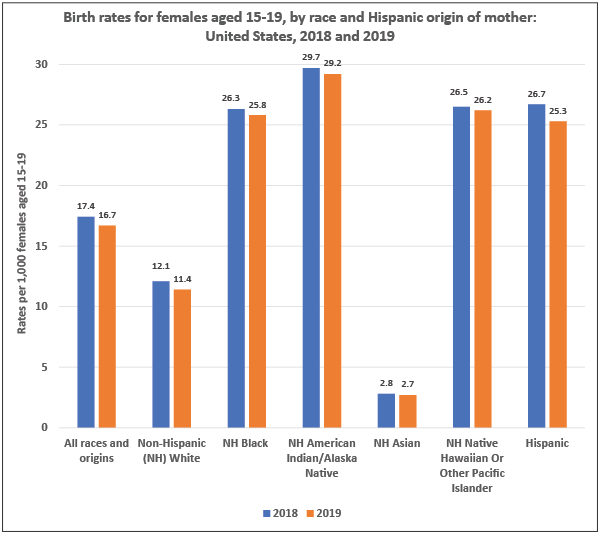
The US teen birth rate (births per 1,000 females aged 15 to 19 years) has been declining since 1991.  Teen birth rates continued to decline from 17.4 per 1,000 females in 2018 to 16.7 per 1,000 females in 2019.  This is another record low for US teens and a decrease of 4% from 2018. Birth rates fell 7% for females aged 15 to 17 years and 4% for females aged 18 to 19 years.

Although reasons for the declines are not totally clear, evidence suggests these declines are due to more teens abstaining from sexual activity, and more teens who are sexually active using birth control than in previous years.

Still, the US teen pregnancy rate is substantially higher than in other western industrialized nations, and racial/ethnic and geographic disparities in teen birth rates persist.

Disparities in Teen Birth Rates

Teen birth rates declined from 2018 to 2019 for several racial groups and for Hispanics. Among 15- to 19-year-olds, teen birth rates decreased:

  • 5.2% for Hispanic females.
  • 5.8% for non-Hispanic White females.
  • 1.9% for non-Hispanic Black females.

Rates for non-Hispanic American Indian/Alaska Natives (AI/AN), non-Hispanic Asians, and non-Hispanic Native Hawaiian, and other Pacific Islander teenagers were unchanged.

In 2019, the birth rates for Hispanic teens (25.3) and non-Hispanic Black teens (25.8) were more than two times higher than the rate for non-Hispanic White teens (11.4). The birth rate of American Indian/Alaska Native teens (29.2) was highest among all race/ethnicities.

Birth Rates for Females Aged 15 to 19 Years, by Race and Hispanic Origin of Mother: United States, 2018 and 2019

Birth Rates per 1,000 Females Aged 15 to 19 Years, by Race and Hispanic Origin of Mother: United States, 2018 and 2019.  All races and origins, 2018: 17.4; 2019: 16.7 Non-Hispanic White, 2018: 12.1; 2019: 11.4 Non-Hispanic Black, 2018: 26.3; 2019: 25.8 Non-Hispanic American Indian/Alaska Native, 2018: 29.7; 2019: 29.2 Non-Hispanic Asian, 2018: 2.8; 2019: 2.7 Non-Hispanic Native Hawaiian or Other Pacific Islander, 2018: 26.5; 2019: 26.2 Hispanic, 2018: 26.7; 2019: 25.3

Data source: Martin JA, Hamilton BE, Osterman MJK, Driscoll AK. Births: final data for 2019. Natl Vital Stat Rep. 2021;70(2):1–50.

Geographic differences in teen birth rates persist, both within and across states. Although among states with low overall teen birth rates, some counties have high teen birth rates.

Social determinants of health, such as low education and low income levels of a teen’s family, may contribute to high teen birth rates. Teens in certain settings are at higher risk of teen pregnancy and birth than other groups. For example, young women living in foster care are more than twice as likely to become pregnant than young women not in foster care.

To improve the life opportunities of adolescents facing significant health disparities and to have the greatest effect on overall US teen birth rates, CDC uses data to inform and direct interventions and resources to areas with the greatest need.

The Importance of Prevention

female  and male teen

Teen pregnancy and childbearing are associated with increased social and economic costs through immediate and long-term effects on teen parents and their children.

  • Pregnancy and birth are significant contributors to high school dropout rates among girls. Only about 50% of teen mothers receive a high school diploma by 22 years of age, whereas approximately 90% of women who do not give birth during adolescence graduate from high school.
  • The children of teenage mothers are more likely to have lower school achievement and to drop out of high school, have more health problems, be incarcerated at some time during adolescence, give birth as a teenager, and face unemployment as a young adult.
  • On a positive note, between 1991 and 2015, the teen birth rate dropped 64%, which resulted in $4.4 billion in public savings in 2015 alone.

WHAT IS SEXUAL HEALTH?

SEXUAL HEALTH IS A TYPE OF HEALTH

There are many types of health including physical health, mental health, spiritual health, cultural health, social health, financial health, environmental health, etc. Plus all these types of health can impact each other. For instance, if you are trying to prevent pregnancy and are able to access the birth control you need (physical health), this may help to create a more positive mood (emotional health), which may also positively impact your sense of sexual confidence and sexual self-esteem (sexual health).

Sexual health is as valuable as any other type of health. How important it is will be different for each person. Sometimes depending on where you are in the world and your upbringing, sexual health may not be as recognized as other types of health and there may even be shame, embarrassment, fear, and confusion with sexual health. This is very common as there, unfortunately, can be a lot of shame attached to things associated with “sex”. For example, it might feel more comfortable talking about a common cold or flu with family, friends or a doctor than it might be to talk about questions around sexual health. On the other hand, you may be very comfortable talking and learning about sexual health. Take a moment to think about how the topic of sexual health makes you feel?

No matter where you are coming from, WE ARE HERE to help bring Sexual Health into a more positive and empowering place. A place where hopefully you can learn the sexual health information you would like, see or speak to a professional in the field whether on the Sex Sense Line or at one of our many clinics throughout BC, and come away knowing that sexual health is a natural part of being human.

Options for Sexual Health champions and celebrates sexual health including an individual’s freedom of sexual expression, the diversity of human sexuality, and a positive sexual self-image for individuals throughout life. 

What influences Sexual Health?

How we define sexual health will be different for each person. The reason is that sexual health is influenced by many personal and social factors such as:

  • Our values and beliefs 
  • Upbringing
  • Culture
  • Religion
  • Indigenous Status
  • Spirituality
  • The people around us
  • Our personal experiences
  • Societal expectations
  • Legal and/or sexual rights

Think about what factors influence your sexual health? What messages have you been given about sexual health from…(if applicable)…..your family? friends? society? culture? religion? spirituality? What are some of your own values and beliefs?

How we experience our sexual health is also part of how we experience the world. For example, there are many factors that health researchers have identified that can impact our health including sexual health. These are known as the ‘social determinants of health’ and include how health is affected by income, education, employment, childhood development, food, housing, health services, gender, race, disability, Indigenous status, social marginalization, and social services.

If someone’s gender identity/identities are not recognized this can impact their sexual health and experiences of social marginalization. Another example is if someone is a newcomer to Canada and may not speak the language or have the health care card that will allow them to access the sexual health services they need.

As you can see, our sexual health is as individual and complicated as the various dynamics of our lives.

Human sexuality rarely falls into neat categories or lends itself to simple labeling, but rather is a rich and complex area of human experience.

Sexual health is personal, psychological, relational, cultural, spiritual, physical, and emotional.

So what does “sexual health” mean to you?

ANXIETY A GROWING PROBLEM

Anxiety a problem faced by millions in the world. Some know about it; others are not even aware of it. They are suffering it all alone. Some suffer with minor, others with major anxiety to the extent that they even try to take away their own life.

What is anxiety ?

So, let’s first know what anxiety is? This is really important to know what anxiety actually means, because there are many who are suffering from it, but are not even aware of it.

Anxiety in simple sense means having worry, fear in some stressful or tensed situation, which is normal. But when somebody experiences it on a daily basis in an intense and excessive manner on small-small things, is actually suffering from anxiety disorder. And this is a very severe disorder to the extent that people are not able to overcome it and end up taking their lives.

Cause

The main causes of anxiety disorder are:

  • Not Living in Present : the first and in most of the cases it is caused to youngsters because of the uncertainty and worry about their future. Their worry rises day by day, and it grows to become a disorder.
  • Expectations: the other cause is worry of not being up to the mark of their expectations or having over-expectations.
  • Results : worry about result is another cause.
  • Thinking negative : what ever they think they are always seeing it negatively.
  • Overthinking : another main cause is overthinking. They keep on thinking about one thing and their mind goes on to think of other related things with it. And ultimately they go into so much deep thinking that they themselves don’t realize.
  • Hopelessness : they become hopeless and think they are of no worth to the world.
  • Being altruistic : it simply means always thinking what others or the world would think about them, which makes them more nervous.

These we some of the causes their might be other reasons too. But now we should look at the solution, because for every problem their is a solutions as every night has a day.

Solutions

  • Start to Live in Present : the first and foremost thing is to start living in the present. Don’t worry about the future as that is not in your hand; what you have is the present just live in the present.
  • Stop Expecting: the other thing is that do not expect anything from time(future) or anyone, because you are disheartened only when you have expection. When you do not expect anything, then whatever you get you are satisfied with it.
  • Don’t worry about results : Stop worring about results as it is not in your hand, just leave it ot God, everything will be fine. You just do your work and don’t worry about the result (hindi saying : karm Kar phal ki chinta mat kar).
  • Think positively : try to be positive as being negative never helps. And just think it yourself as even if you are negative what ever the destiny has decided it will happen. Just keep one thing in your mind whatever happens happens for good (joh hota hai achhe ke liye hota hai).
  • Do Yoga : the one of the most effective way to calm your mind is doing Yoga. By doing yoga you to try to make balance between your mind and body. Try to meditate. Whenever any negative thoughts comes to your mind just stop, what ever you are doing and do simple yoga. Watch videos on internet. Try to divert your mind.
  • Don’t worry about what people think : just keep in mind that, whatever you do, you do it for yourself and not to get somebody’s remark or happiness, it’s for you. Just do whatever you like, don’t let them affect you as it’s not worth it because they have no importance in your life.
  • Stop overthinking : when every you realize that you are getting trapped in your endless thinking, just keep everything aside and immediately stop thinking, just take two deep breath and try to relax yourself. And try to remember all the above points, you will feel relaxed.
  • Take a nap : just take a nap if you are feeling stressed.

Just try it once. If then too you are not feeling well, then please do contact a psychiatrist or any friend or your parents or anyone close to you to share your feelings with them. And be positive.

6 INVENTIONS THAT CHANGED MANKIND

Google trends each year shows the most popular search engine queries and top trending topics. The top results are always based on recent discoveries, inventions and big things that ‘people are talking about. Just like those here are some of the greatest inventions in history which changed the human lifestyle. Here we will talk about why-when-who created these inventions.

WHEEL

Photo by Mike on Pexels.com

Well, there are various uses of a wheel from landing an aeroplane to driving a rover on the moon. There are also many other uses of a wheel-like using it in an analogue clock or using it as a pulley.

It is one of the components of simple machines. It is a round disc-like structure fixed at a point with an axle. Well, it is said that the wheel was even used at around 3500BC in Mesopotamia but it is a mystery who invented it, all we know is that the wheel was invented by Sumerian people in the 4th century BC and later on the discs began to be hollowed to make them lighter.

There are many inventions that were inspired by the nature itself like the idea of the table fork came from forked sticks and the idea for aeroplane emerged from the gliding birds but the wheel is the invention that can be said as pure innovation though there are hunches that the idea for the wheel came from cylindrical logs, which were often used to slide the ships into the water.

GUNPOWDER

Photo by Pixabay on Pexels.com

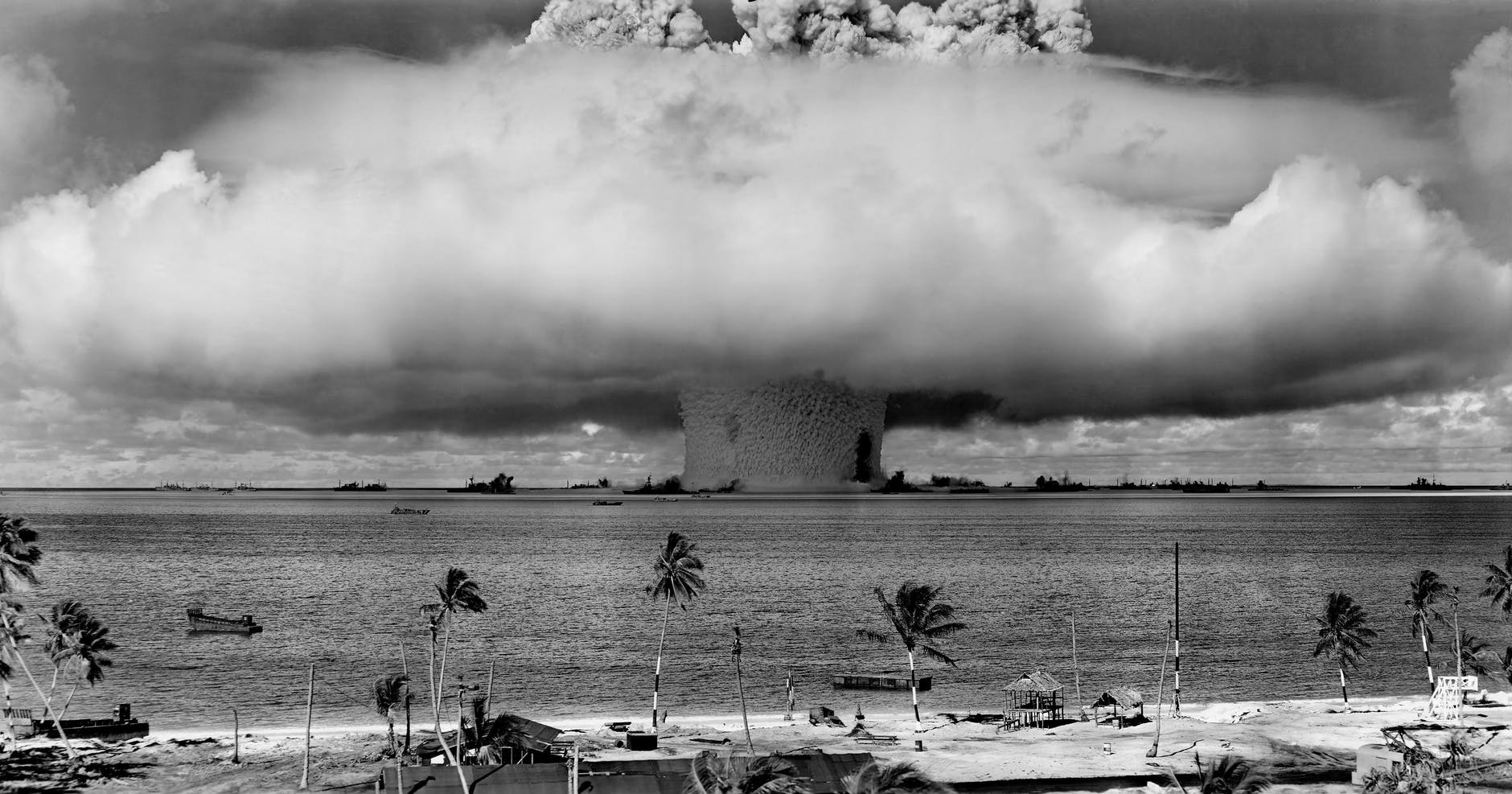
“Gunpowder” also known as black powder is the first-ever developed chemical explosive. This black powder is the mixture of sulfur (S), carbon (C), and potassium nitrate (saltpetre, KNO3) but the Sulfur and Carbon are present in the form of Charcoal.

Well the working of gunpowder is simple as the carbon present in it should draw the oxygen from the air but the Saltpetre provides the oxygen, now when the powder is ignited the Sulfur present ignites and raises the temperature tearing the nitrate molecule which releases the Oxygen and leads to combustion.

There are a variety of uses for gunpowder like using for mining, firearms, rocketry etc. Gun Powder was invented in China during the 9th century and it is even listed among the top 4 inventions of China. It is said that the Gun Powder was invented in the 9th century but the recorded chemical formula for gunpowder dates to the Song dynasty (11th century).

Gunpowder was thought to be a monopoly in China till the 13th century as Science was passed through the Silk Route to Europe and middle Islamic countries it became a deciding factor in many wars.

ARPANET

Photo by Brett Sayles on Pexels.com

Many people don’t know about ARPANET OR Advanced Research Projects Agency Network as it was the early stage of the Internet. 

The purpose of the ARPANET was to communicate and share data with other computers specially for scientific uses.

The idea for ARPANET was introduced in 1967 under the direction of the U.S. Advanced Research Projects Agency (ARPA) but the idea came to reality in 1969 when 4 university computers were interconnected.

The idea of ARPANET was based on sending data in small amounts called “packets” that could be stored and sent to different paths.

In 1974 the first ISP(Internet Service Provider) was formed named Telenet. Then in the year 1991, the World Wide Web was introduced to the world by CERN. In 1994 Netscape Communications was born and Microsoft created a Web browser for Windows 95.

ELECTRIC BATTERY

Photo by mohamed abdelghaffar on Pexels.com

A battery is a group of cells that provides electric power. The battery was first invented in the 1800s by Italian physicist Alessandro Volta. He stacked discs of copper (Cu) and zinc (Zn) separated by cloth soaked in salty water turning it into a cell.

Batteries are used in almost every electrical appliance from a Tesla to a cell phone and come in every size. When it comes to the working of batteries it is a trick way to explain because there are a variety of cells with a different types of functioning.

The only thing that is common in batteries is that when a chemical reaction takes place some extra electrons are produced which results in electric current.

ALLOY

Photo by Pixabay on Pexels.com

An alloy is a composition of 2 or more metals or non-metals. There are a variety of alloys with different properties. Some of the commonly known alloys are brass (copper and zinc), bronze (copper and tin), Gunmetal and Stainless Steel.

Bronze was the first alloy to be discovered during the prehistoric era also known as the bronze age. At that time it was used to make tools as it was harder than copper but as science developed new alloys were formed with better properties.

There are various uses of alloys like-

-Magnalium is used for aircraft parts due to its lightweight property.

-Jewellery gold is used for making the Jewellery as it is harder than pure Gold.

-Solder is used for sealing pipes and connecting electronic parts as it has a low melting point and is a good conductor of electricity.

-Stainless Steel is an alloy of Iron, Nickle, Carbon and Chromium which makes it stronger and anti corrode.

COMPUTER

Photo by Josh Sorenson on Pexels.com

A computer is a device programmed to carry out various tasks like storing, processing and displaying. Surely ARPANET would be of no use without a computer.

The concept of the computer was given in the year 1822 by a mathematician named Charles Babbage and a century after the Idea came into existence. Later he was known as the father of the computer.

In the year 1971, the idea of the floppy disk came into existence leading to share data among other computers.

In the year 1974 various personal computers were launched including 

 Scelbi & Mark-8 Altair, IBM 5100, Radio Shack’s TRS-80 — affectionately known as the “Trash 80” — and the Commodore PET as the science and technology has developed the computers have become portable and powerful.

Google trends each year shows the most popular search engine queries and top trending topics. The top results are always based on recent discoveries, inventions and big things that ‘people are talking about. Just like those here are some of the greatest inventions in history which changed the human lifestyle. Here we will talk about why-when-who created these inventions.

The Bittersweetness of Nostalgia 

Nostalgia is one strong feeling. Perhaps, one of the strongest. 

It can make you travel back in time, take you back to the bitter and sweet memories where you can almost hear your mother calling for you in the distance so that you don’t miss the school bus. You can almost feel the dejection you felt when your best friend doesn’t come to school, the fear when you forget your notebook at home. You can almost feel your mother’s arms wrapped around you, shielding you from any harm that comes your way. 

You can almost feel all these emotions but still can’t reach them. There is a wall that impedes you to truly and wholly be in those memories and that wall is reality. 

Nostalgia is always asserted with a miniscule of woe that constantly reminds you that you can never truly travel back in time. If only we could be a part of those foggy memories, we would feel complete. If only we could go back to the times when you fought with your sibling over the T.V. remote, we would be satisfied, our thirst for absolute satisfaction would be quenched.

But isn’t it this yearning, this longing that makes memories what they are, makes us value and treasure those moments as much as we do. If we could, in reality go back in time we wouldn’t value them enough, we would start to treat them the way we treat a myriad of things.

That pain, that longing is an evergoing epiphany, whispering into your ear, reminding you of the distance that exists between you and the past. That reminder makes you want to grip harder onto those memories, making you want to stay there.

That reminder also stops you from taking things for granted. That doesn’t mean that you have to be extremely conscious of every moment you experience or every step you take, it just means that you have to cherish them at the time of their occurrence. Maybe you can remind yourself of all these things when you are in a foul mood or maybe even value the people more, take care of them and appreciate them. Tell them how you feel about them because they too, will go away someday and never come back.

It is not necessary that we all would be able to appreciate and cherish anything in our lives after reading an article, in fact these realisations will occur out of the blue, at times you don’t expect. It could be a time of grief for you, or visiting your old house, a breakup or just a conversation with an old friend which can ultimately driving you down a road of deep thought, maybe even leaving you confused.

Nothing can remedy this woe, no one should even try to remedy it, let yourself feel this woe, dive into those memories, dwell into those moments but don’t let them consume you for you still have a multitude of memories to make and reminisce over in future.

SELF-CONFIDENCE IS THE MOST IMPORTANT PERSONAL TRAIT

 Confidence plays a major role in achieving a happy and successful life. It can be proved by looking at our history. Those who had the confidence to raise their voice and stand for themselves are still remembered whereas, those who had lack of confidence only suffered even if they didn’t want to. They let go of the opportunities they had and therefore led a miserable life. 

Of course life is full of uncertainities. We never know whats coming our way and often, because of this, we go into depression or isolation because we have no idea how to face such situations. We fear failure and rejection and that is one of the major reasons why we lack confidence as a self-assured person would learn from his mistakes and move on. 

Learning and moving on is what it takes to lead a successful life which wont happen if you are always living in a hole. 

Also, one of the major reasons why we lack confidence is because we are becoming more and more insecure about ourselves. We see others being so perfect and an all-rounder that we fear that the society might not accept the real us just because we are not like them. The entertainment industry is a major cause of this. We watch all the celebrities and famous personalities carry themselves brilliantly and we try to copy them. If we are not able to do so then we start being insecure about ourselves. We feel that there must be something wrong with us which ultimately leads us being shy and not facing the world. 

The society has created an image of a perfect personality in our minds and if we are not able to relate ourselves to it, we cannot present ourselves to them. We first need to accept ourselves as who we are, with all our strengths and flaws. It will automatically build a sense of confidence in us. 

A lot of children are becoming a victim of bullying and teasing only because they don’t have the confidence to face the situation. They themselves believe that they are weak. 

There are so many problems in our lives that could be solved if we have confidence. We won’t let anyone dominate us, we won’t go into depression or isolation, we will be able to take our own decisions, socialize more and also stand for ourselves without any hesitation. 

You can build confidence by accepting and believing in yourself. Learn to forgive the mistakes you have done and move ahead. If you are in a miserable situation, try to recall any of your past accomplishments and success stories. It would help you believe that you have done it before, you can do it again. Also, make a list of all your negativities and try to work on them as suppressing them would make you less insecure. You can also have a little pep talk with yourself about how you are better in your own way and try to send good-intentions and comfort to yourself. 

All these things, if done on a regular basis, will definitely bring a change in you. You would gradually see a new version of yourself. Nothing can make us happy than our own selves. Self-confidence influences us to behave in a way that makes us more likely to achieve our objectives. It would make us stronger and more powerful.

7 facial care tips for men

1. CTM IS ESSENTIAL
Like women, the CTM routine (cleansing, toning and moisturising) is just as important for men. They are exposed to pollution, car exhaust, cigarette smoke and other pollutants on a daily basis, which damage the skin. Also, men tend to have oilier and thicker skin than women. They need to use a good facial cleanser that works on all kinds of skin.

shutterstock_584453854 (1) 800

Cleansing is essential to sanitize your skin and eliminate dead skin cells. Use mild cleanser that cleanses the skin without drying it. Men are lazy to wash their face before going to the bed and that causes comedone. Cleansing is must to avoid whitehead, blackhead and acne. And for toning, you can even use a basic rose water potion.

And moisturizing helps to treat to prevents cracks, dry and dull skin. Itchy skin is painful and to heal such skin type it is important to apply thick moisturizing cream on your skin and body. Thick moisturizer doesn’t mean greasy formula, there are moisturizers that are light and keep your skin protected for long hours.

2. ALWAYS APPLY SUNSCREEN
Another thing men tend to ignore is the sunscreen. You must apply a sunscreen with minimum SPF 30. It is not the heat that causes tanning but the sun rays that spoils the colour and texture of your skin. To minimize tanning, apply it on your face as well as hands. Make sure you apply the suncreen 15 minutes before heading out, so it gets absorbed better.

3. EXFOLIATE DAILY

Exfoliation is crucial to eliminate dead skin cells from accumulating and causing bacterial infection on your skin. If you do not scrub your skin, your pores will build up dirt, causing your skin to break out more often. Acing the list of ‘beauty tips for men’ is exfoliating the skin. Removing dead cells from the skin’s surface leaves the face radiant and healthy. Once a week, one should use a gentle but granulated face scrub to help smoothen the skin and eliminate dullness. Another advantage of exfoliating the face is that it softens the hair follicles, which results in a smoother shave and minimal irritation. For normal to combination skin type, use a cream-based scrub or a gel-based scrub to eliminate dirt from your face.

4. AVOID WRINKLES

The skin around the eyes, especially, lacks in sweat and oil glands; making it highly susceptible to under-eye dehydration. This manifests as fine lines and wrinkles eventually. To prevent this, dab a little hydrating eye cream around your peepers every morning and before bedtime. Choose from the various men’s eye creams available in the market.

shutterstock_618438461 (1) 800


5. LIPS AGE FAST

You need to pay attention to your lips as well. They also tan and get chapped and can look bad. A good lip balm is a must to cure all these problems; it also makes them soft and supple. Also, did you know that lips age with time? Look closely in the mirror, and you will notice the fine lines. As the years go by, the lips start looking chapped. Men don’t have the advantage of makeup to hide this effect. They should always apply a lip balm with a high SPF during the day, and a hydrating and nourishing lip balm at night.

6. MANICURE FOR MEN

Manicure is not meant for just women. Even men should keep a close watch on their hands. The nails must be neatly trimmed and hands cleaned. Include this in your list of ‘beauty tips for men’and notice the change.

7. KEEP YOUR BEARD CLEAN

It’s perfectly fine to sport a beard, if you think that makes a style statement. But ensure that you keep it clean, so that fears about itchiness don’t come between you and your loved one while you enjoy your conversation and meal. Simply follow a few basic hygiene measures. The best thing to do is to wash your beard with a face wash or shampoo. But ensure that you don’t over shampoo your beard. It may completely remove natural oils that keep your beard healthy and moisturised. You may also apply some beard oil with fragrance after washing it.

Source : Times Of India

How are men’s soaps different from others?

If you’ve ever looked closely when pouring water into an oil-laden frying pan in your sink, you’ve noticed that water beads up on the oily surface. Likewise, if you’ve ever poured a little oil into a bowl of water, you noticed the oil beading up and refusing to mix with the water. But why is this, and what does it have to do with soap?

Dirt that clings to your skin is usually a fat- or oil-based substance. When you wash with water alone, non-oily dirt is carried off the skin while oils or lipids stay on. Since oil and water don’t mix, water passes over your skin without bonding to the grime.

Soap brings the two together. Soap is a cleansing agent formed from a mix of sodium salts derived from naturally occurring fatty acids. One end of a soap molecule is attracted to water, while the other end of the same molecule is attracted to oils and lipids. Each end has its preference, and it’s a strong preference — soap molecules turn and stand on end when placed in water, as the water-loving end burrows downward and the water-loathing end juts out of the water. When you rub soapy water over your skin, the dirt-attracting end of the soap molecule attaches to the dirt, while the other end of the molecule remains firmly rooted in the water. If the dirt shifts during the course of washing, exposing a new surface that previously had been facing the skin, the dirt-loving end of the soap molecule will attach to it, eventually surrounding the dirt entirely in a sort of protective cocoon. Dirt now becomes the protected occupant of a soapy submarine that travels freely through the water without letting the water touch the cargo. And this is how soap removes dirt from your skin.

Regularly stripping away oils and fats isn’t a good long-term strategy for maintaining a healthy, attractive appearance. That’s why soaps contain any number of moisturizers, non-detergent cleansers and exfoliating agents, in addition to whatever synthetic cleansers, preservatives and fillers that the manufacturer has added.

Men can benefit from using soap tailored specifically for their skin, and men’s skin has its own unique properties, along with individual differences. So how are men’s soaps different from others? Keep reading to find out.

Soap for the Skin You’re In

Ideally, men’s soap should account for the unique qualities of men’s skin. Compared to females, males have skin that’s thicker, sweatier and oilier. These are good traits to have when it comes to extending the shelf life of attractive-looking skin. The signs of facial aging are caused, in part, by your skin’s thinning collagen. Men have more collagen than women, helping hold wrinkles at bay for longer. However, due to their thicker skin, men can have a buildup of dead skin cells. For this reason, find a men’s soap that has a humectant such as sorbitol that facilitates desquamation (shedding of the outer layer of skin).

Men’s skin produces more sweat and oil, which helps form a protective layer that prevents damage from pollutants and toxins. However, this extra sweat and oil also means that men are more likely to have bad acne breakouts. Once this oil has been stripped away, it’s important for an added moisturizer in the soap — such as glycerin — to provide a protective covering while sealing moisture into the skin.

Washing your face with standard hand soap isn’t recommended. While perfectly good for washing hands, normal soap can be irritating to the more sensitive skin of the face. Men who use a “traditional” or basic soap are more apt to have dry, tight-feeling skin.

Men with sensitive skin may discover that many soaps contain additives that can cause irritation. An easy rule of thumb: The shorter the ingredients list, the better. There are also many companies that produce all-natural and organic soaps for men, and soaps without fragrances.

When we talk about the differences between men’s soap and women’s soap, the most obvious are in packaging and fragrance. Women’s soaps usually come in packaging that evokes thoughts of riding a swan into a fluffy cloud of clean babies, while men’s packaging usually is pretty basic, featuring a solid color and often a masculine word, such as “power” or “blast.”

Women’s fragrances are generally fruity, and they come in countless variations. You won’t see such scents as Juniper Breeze or Cotton Blossom used in soaps marketed toward men. Men’s soaps come in scents more associated with masculinity, such as sandalwood or musk, or none at all.

The Ultimate Productivity Hack is Saying No

The ultimate productivity hack is saying no.

Not doing something will always be faster than doing it. This statement reminds me of the old computer programming saying, “Remember that there is no code faster than no code.”

The same philosophy applies in other areas of life. For example, there is no meeting that goes faster than not having a meeting at all.

This is not to say you should never attend another meeting, but the truth is that we say yes to many things we don’t actually want to do. There are many meetings held that don’t need to be held. There is a lot of code written that could be deleted.

How often do people ask you to do something and you just reply, “Sure thing.” Three days later, you’re overwhelmed by how much is on your to-do list. We become frustrated by our obligations even though we were the ones who said yes to them in the first place.

It’s worth asking if things are necessary. Many of them are not, and a simple “no” will be more productive than whatever work the most efficient person can muster.

But if the benefits of saying no are so obvious, then why do we say yes so often?

Why We Say Yes

We agree to many requests not because we want to do them, but because we don’t want to be seen as rude, arrogant, or unhelpful. Often, you have to consider saying no to someone you will interact with again in the future—your co-worker, your spouse, your family and friends.

Saying no to these people can be particularly difficult because we like them and want to support them. (Not to mention, we often need their help too.) Collaborating with others is an important element of life. The thought of straining the relationship outweighs the commitment of our time and energy.

For this reason, it can be helpful to be gracious in your response. Do whatever favors you can, and be warm-hearted and direct when you have to say no.

But even after we have accounted for these social considerations, many of us still seem to do a poor job of managing the tradeoff between yes and no. We find ourselves over-committed to things that don’t meaningfully improve or support those around us, and certainly don’t improve our own lives.

Perhaps one issue is how we think about the meaning of yes and no.

The Difference Between Yes and No

The words “yes” and “no” get used in comparison to each other so often that it feels like they carry equal weight in conversation. In reality, they are not just opposite in meaning, but of entirely different magnitudes in commitment.

When you say no, you are only saying no to one option. When you say yes, you are saying no to every other option.

I like how the economist Tim Harford put it, “Every time we say yes to a request, we are also saying no to anything else we might accomplish with the time.” Once you have committed to something, you have already decided how that future block of time will be spent.

In other words, saying no saves you time in the future. Saying yes costs you time in the future. No is a form of time credit. You retain the ability to spend your future time however you want. Yes is a form of time debt. You have to pay back your commitment at some point.

No is a decision. Yes is a responsibility.

Effects of Emotional Intelligence Training on Adolescent Mental Health

Purpose

To analyze the effects that an emotional intelligence (EI) educational program based on the EI ability model had on adolescent mental health immediately and 6 months after completion of the training.

Methods

A pretest–posttest quasi-experimental design with a treatment and a control group was used; 479 Spanish adolescents (47.4% male, mean age of 13 years) were involved in the study. Adolescents were recruited through several schools in three Spanish cities. The 2-year training program involved 24 sessions lasting 1 hour each, conducted `weekly during 6 months of 2009 and 2010. Data on psychological adjustment, mental health, and negative affect were collected at baseline, at the end of the training program, and 6 months later. Data were analyzed by multivariate analysis of covariance.

Results

Students who participated in the EI educational program reported fewer clinical symptoms compared with students in the control group, and these differences persisted 6 months after the conclusion of the program.

Conclusions

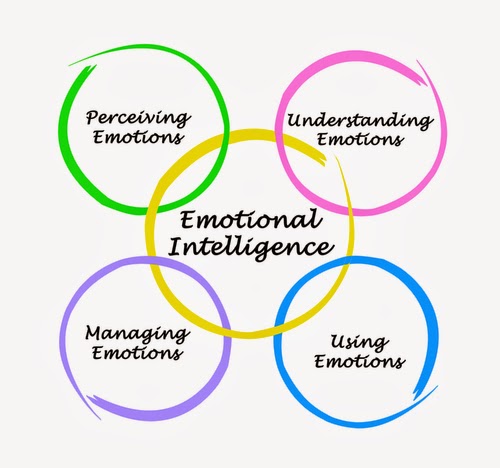
These results suggest that EI programs created to develop skills in perceiving, facilitating, understanding, and managing emotions can be effective at promoting mental health in adolescents.

TOP FIVE YOUNG TECH BILLIONAIRE IN INDIA

1)NITHIN KAMATH

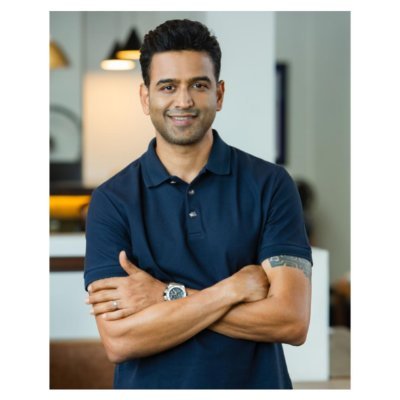
Nithin Kamath is an entrepreneur. He is CEO of Zerotha, a digital financial services. company and currently serve as the company’s director. He is a self-made billionaire. Nithin Kamath https://g.co/kgs/woAN5s was completed when he graduated from Bangalore Institute of Technology specialized in electronics and telecommunication. Nithin and his brother, Nikhil Kamath founded their own stock brokerage firm, Zerodha by end of 2010. Both the brother started the venture in 2010 with team of five people. They initially started for the day trading and grew up the company for the company for many services. According to NSE, Zerotha’s daily turnover was around 2000 crores in Indian rupees. https://www.adigitalblogger.com/research/zerodha-valuation/

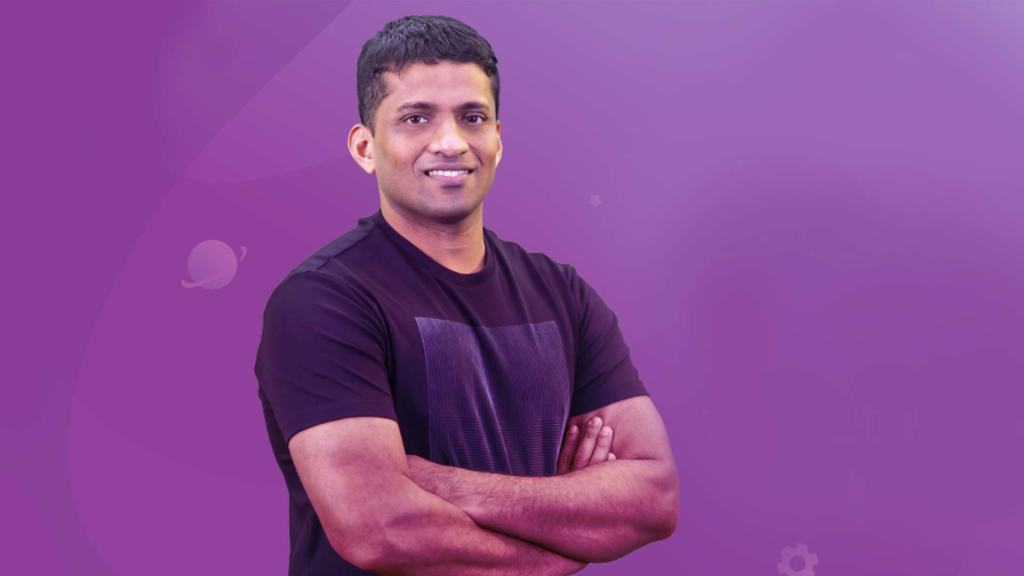
2)BYJU RAVEENDRAN

Byjus Raveedran is the founder of Byjus which help hand in tech learning. He was born on 1981 at Azhikode village in Kannur district of Kerala. He was initially a teacher and upgraded to entrepreneurship. Initially, he started teaching maths to his friends and neighbors. He was a good teacher and scored 100% in CAT without any special training center. And he started teaching through online to many students. And then in 2011, he created Byjus. Today, it is one of the top five most-valuable interested companies in the country. The present value of this computer is $3.6 billion. https://timesofindia.indiatimes.com/business/india-business/byjus-acquires-us-kids-coding-platform-for-200-million/articleshow/86281012.cms
According to Times of India, Byjus acquires US kids to teach coding through the platform for $200 million.

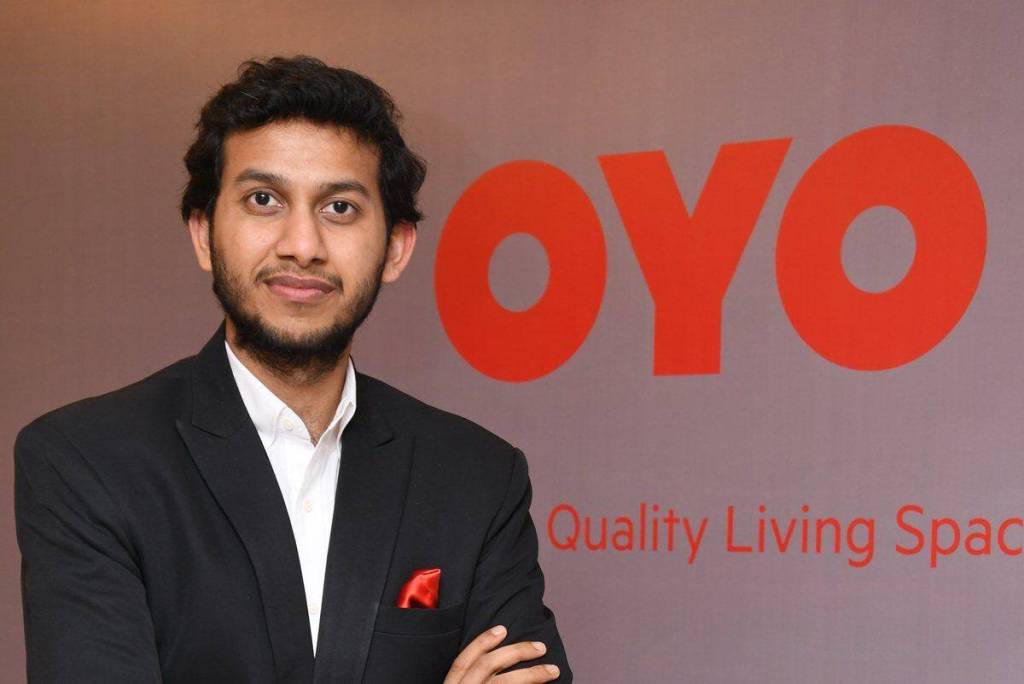
3)RITHEST AGARWAL

Ritesh Agarwal is an self made billionaire and founder and CEO of OYO rooms. He was born on 16 November 1993, at Bissam, Rayagada. He says that “Banking the right entrepreneur is an art not a science. You can get good at the art over time, but ultimately your instinct guide you”. He is known as the second youngest billionaire in 2021 in India. He was awarded by entrepreneurship awards. His net worth was estimated to be approximately $1.1 billion according to Hurun Rich list 2020.https://en.wikipedia.org/wiki/Ritesh_Agarwal

4)SACHIN BASAL AND BINNY BANSAL

In 2007, Sachin Bansal and Binny Bansal was founded flipkart. The company initially focused on online book sales with country-wide Shipping. Sachin Bansal and Binny Bansal are friends and stated flipkart in October 2007, Bengaluru. Sachin Bansal attended Indian Institute of Technology, Delhi and completed a degree in computer engineering. In 2015, Bansal was named as the 86th richest person in India by Forbes India . And also, in 2017, India Today included Bansal and his co-founder in India’s so most powerful people list. According to Indian express the valuation is $36.7 billion.https://www.business-standard.com/article/companies/flipkart-s-valuation-crosses-37-6-bn-after-raising-3-6-bn-in-funding-121071200415_1.html

5)VIJAY SHEKHAR SHARMA

Vijay Shekhar Sharma is an Indian entrepreneur and businessman. He is the founder and CEO of company, PAYTM. In 2020, he was ranked as the 62nd richest person in India, with a net worth of $2.35 billion according to Forbes. In 2018, Sharma got Berkshire Hathaway Warren Buffett to invest $300 million in the company. He has started his career in bachelor’s degree in Electronics and Communication Engineering from Delhi, Technology University. Initially, we started the website Indiasite.net, and sold it for $1 million. And then in 2010, he launched PAYTM and developed it. Now, his net worth is 240 crores USD.https://g.co/kgs/vUxDM9

The fault in our star

‘The Fault in our Stars’ by John Green

Oshil chawada

21.09.2021

           THE FAULT IN OUR STARS 

The Fault in Our Stars is a story about teens fighting cancer

Cancer is such a dreadful disease, indiscriminate in its choice of victim, choosing with aplomb regardless of age, gender, or status. There are a myriad of stories behind the tragedy and many of them remain untold.

In The Fault In Our Stars by John Green, he builds a story out of darkness and despair. He takes the tragedy of cancer and immerses us in the lives of characters that could very well be real. Many know of the heartaches in dealing with those who fight the fight, and many of those scars last a lifetime. He brings his story in the form of a teen girl, Hazel Lancaster. Stricken with cancer from a young age, she believes she has come to terms with what her life has become. Then she meets a young man, Augustus Waters, a survivor of cancer. He is drawn to her in a way that is initially uncomfortable, and as she tries to push him away in her sarcastic vein, he finds her to be exactly the type of girl he has been looking for. Throughout the story there is a beauty and humor, a ‘candle in the wind’ for each of those whose lives have been touched by such an uncaring disease. For cancer touches not just the victim but all those who love and are in anyway touched by them.

Written so beautifully your heart and emotions melt, you come to be a part of this group as well as their families, their triumphs, and their losses. The friendships as well as the depths the families go through preparing for the worst while holding out hope is like a beacon of light.

Ganesh Chaturthi

 By: Astha Raghav 

Ganesh Chathurthi, also known as Vinayaka Chaturthi, or Vinayaka Chaviti is a Hindu festival celebrating the arrival of Lord Ganesh to earth from Kailash Parvat with his mother Goddess Parvati/Gauri. The festival is marked with the installation of Lord Ganesh’s clay murtis privately in homes and publicly by Shri Bal Gangadhar Tilak popularly known as Lokmanya Tilak in Pune in the year 1893 on elaborate pandals (temporary stages). Observations include chanting of Vedic hymns and Hindu texts such as, prayers and vrata (fasting). Offerings and prasāda from the daily prayers, that are distributed from the pandal to the community, include sweets such as modaka as it is believed to be a favourite of Lord Ganesh. The festival ends on the tenth day after start, when the idol is carried in a public procession with music and group chanting, then immersed in a nearby body of water such as a river or sea, called visarjan.. In Mumbai alone, around 150,000 statues are immersed annually. Thereafter the clay idol dissolves and Ganesh is believed to return to Mount Kailash to Parvati and Shiva. The festival celebrates Lord Ganesh as the God of New Beginnings and the Remover of Obstacles as well as the god of wisdom and intelligence and is observed throughout India, especially in the states such as MaharashtraKarnatakaRajasthanMadhya PradeshAndhra PradeshTelanganaOdishaGoaWest BengalGujaratChhattisgarh and Tamil Nadu. Ganesh Chaturthi is also observed in Nepal and by the Hindu diaspora elsewhere such as in AustraliaNew ZealandCanadaSingaporeMalaysiaTrinidad and TobagoGuyanaSuriname, other parts of the CaribbeanFijiMauritiusSouth Africa,United States, and Europe. In the Gregorian calendar, Ganesh Chaturthi falls between 22 August and 20 September every year.

At public venues, along with the reading of texts and group feasting, athletic and martial arts competitions are also held.

Indian freedom fighter Lokmanya Tilak, championed it as a means to circumvent the colonial British government ban on Hindu gatherings through its anti-public assembly legislation in 1892. It is also known as Ganesh Chaturvedi.

Though not alluding to the classical form of Ganapati, the earliest mention of Ganapati is found in the Rigveda. It appears twice in the Rigveda, once in shloka 2.23.1, as well as in shloka 10.112.9. Both of these shlokas imply a role of Ganapati as “the seer among the seers, abounding beyond measure in food presiding among the elders and being the lord of an invocation”, while the shloka in mandala 10 states that without Ganapati “nothing nearby or afar is performed without thee”, according to Michael. However, it is uncertain that the Vedic term Ganapati which literally means “guardian of the multitudes”, referred specifically to later era Ganesh, nor do the Vedic texts mention Ganesh Chaturthi. appears in post-Vedic texts such as the Grhya Sutras and thereafter ancient Sanskrit texts such as the Vajasaneyi Samhita, the Yajnavalkya Smriti and the Mahabharata mention Ganapati as Ganesvaras and VinayakGanesh appears in the medieval Puranas in the form of “god of success, obstacle remover”. The Skanda PuranaNarada Purana and the Brahma Vaivarta Purana, in particular, profusely praise him. Beyond textual interpretations, archaeological and epigraphical evidence suggest Ganesh had become popular, was revered before the 8th century CE and numerous images of him are traceable to the 7th century or earlier.

Thank You!

Prime Minister Narendra Modi.


By: Astha Raghav 

Narendra Damodardas Modi born 17 September 1950) is an Indian politician serving as the 14th and current prime minister of India since 2014. He was the chief minister of Gujarat from 2001 to 2014 and is the Member of Parliament for Varanasi. Modi is a member of the Bharatiya Janata Party (BJP) and its National Democratic Alliance (NDA). He is also a member of the Rashtriya Swayamsevak Sangh (RSS), a Hindu nationalist volunteer organisation. He is the first prime minister born after India’s independence in 1947, the second non-Congress one to win two consecutive terms after Atal Bihari Vajpayee and the first from outside the Congress to win both terms with a majority in the Lok Sabha.

Born and raised in Vadnagar, a small town in northeastern Gujarat, Modi completed his secondary education there, and is said to have helped his father sell tea at the local railway station. He was introduced to the RSS at age eight. Modi left home at age 18 soon after his marriage to Jashodaben Chimanlal Modi, whom he abandoned and publicly acknowledged as his wife many decades later. Modi has asserted that he travelled around India for two years, visiting a number of religious centres. Upon his return to Gujarat in 1971, he became a full-time worker for the RSS. During the state of emergency imposed across the country in 1975, Modi went into hiding. The RSS assigned him to the BJP in 1985 and he held several positions within the party hierarchy until 2001, rising to the rank of general secretary.

Modi was appointed Chief Minister of Gujarat in 2001 due to Keshubhai Patel’s failing health and poor public image following the earthquake in Bhuj. Modi was elected to the legislative assembly soon after. His administration has been considered complicit in the 2002 Gujarat riots, or otherwise criticised for its handling of it. A Supreme Court-appointed Special Investigation Team found no evidence to initiate prosecution proceedings against Modi personally. His policies as chief minister, credited with encouraging economic growth, have received praise. His administration has been criticised for failing to significantly improve health, poverty and education indices in the state.

Modi led the BJP in the 2014 general election which gave the party a majority in the Indian lower house of parliament, the Lok Sabha, the first time for any single party since 1984. Modi’s administration has tried to raise foreign direct investment in the Indian economy and reduced spending on healthcare and social welfare programmes. Modi has attempted to improve efficiency in the bureaucracy; he has centralised power by abolishing the Planning Commission. He began a high-profile sanitation campaign, initiated a controversial demonetisation of high-denomination banknotes and weakened or abolished environmental and labour laws.

Under Modi’s tenure, India has experienced democratic backsliding. Following his party’s victory in the 2019 general election, his administration revoked the special status of Jammu and Kashmir. His administration also introduced the Citizenship Amendment Act, which resulted in widespread protests across the country. Described as engineering a political realignment towards right-wing politics, Modi remains a figure of controversy domestically and internationally over his Hindu nationalist beliefs and his alleged role during the 2002 Gujarat riots, cited as evidence of an exclusionary social agenda.

Narendra Damodardas Modi was born on 17 September 1950 to a Gujarati Hindu family of grocers in Vadnagar, Mehsana district, Bombay State (present-day Gujarat). He was the third of six children born to Damodardas Mulchand Modi (1915–1989) and Hiraben Modi (born 1920). Modi’s family belonged to the Modh-Ghanchi-Teli (oil-presser) community which is categorised as an Other Backward Class by the Indian government. He was falsely accused by Mayawati that he added his caste to the Other Backward Class (OBC) list as a political tool.

As a child, Modi is said to have helped his father sell tea at the Vadnagar railway station, and said that he later ran a tea stall with his brother near a bus terminus. Modi completed his higher secondary education in Vadnagar in 1967, where a teacher described him as an average student and a keen debater, with interest in theatre. Modi had an early gift for rhetoric in debates, and his teachers and students noted this. Modi preferred playing larger-than-life characters in theatrical productions, which has influenced his political image.

When eight years old, Modi was introduced to the Rashtriya Swayamsevak Sangh (RSS) and began attending its local shakhas (training sessions). There, Modi met Lakshmanrao Inamdar, popularly known as Vakil Saheb, who inducted him as a balswayamsevak (junior cadet) in the RSS and became his political mentor. While Modi was training with the RSS, he also met Vasant Gajendragadkar and Nathalal Jaghda, Bharatiya Jana Sangh leaders who were founding members of the BJP’s Gujarat unit in 1980.

In a custom traditional to Narendra Modi’s caste, his family arranged a betrothal to a girl, Jashodaben Chimanlal Modi, leading to their marriage when she was 17 and he was 18. Soon afterwards, he abandoned his bride, and left home, the couple going on to lead separate lives, neither marrying again, and the marriage itself remaining unmentioned in Modi’s public pronouncements for many decades. In April 2014, shortly before the national elections that swept him to power, Modi publicly affirmed that he was married and his spouse was Jashodaben; the couple has remained married, but estranged.

Modi spent the ensuing two years travelling across Northern and North-eastern India, though few details of where he went have emerged. In interviews, Modi has described visiting Hindu ashrams founded by Swami Vivekananda: the Belur Math near Kolkata, followed by the Advaita Ashrama in Almora and the Ramakrishna Mission in Rajkot. Modi remained only a short time at each, since he lacked the required college education. Vivekananda has been described as a large influence in Modi’s life.

In the early summer of 1968, Modi reached the Belur Math but was turned away, after which Modi wandered through Calcutta, West Bengal and Assam, stopping in Siliguri and Guwahati. Modi then went to the Ramakrishna Ashram in Almora, where he was again rejected, before travelling back to Gujarat via Delhi and Rajasthan in 1968–69. Sometime in late 1969 or early 1970, Modi returned to Vadnagar for a brief visit before leaving again for Ahmedabad. There, Modi lived with his uncle, working in the latter’s canteen at the Gujarat State Road Transport Corporation.

In Ahmedabad, Modi renewed his acquaintance with Inamdar, who was based at the Hedgewar Bhavan (RSS headquarters) in the city. Modi’s first known political activity as an adult was in 1971 when he joined a Jana Sangh satyagraha in Delhi led by Atal Bihari Vajpayee to enlist for the battlefield. But the Indira Gandhi led Central government disallowed open support to Mukti Bahini and Modi was put in Tihar Jail for a short period. After the Indo-Pakistani War of 1971, he stopped working for his uncle and became a full-time pracharak (campaigner) for the RSS, working under Inamdar. Shortly before the war, Modi took part in a non-violent protest against the Indian government in New Delhi, for which he was arrested; this has been cited as a reason for Inamdar electing to mentor him. Many years later Modi would co-author a biography of Inamdar, published in 2001.

In 1978 Modi received a Bachelor of Arts degree in political science from the School of Open Learning at the University of Delhi, graduating with a third class. Five years later, in 1983, he received a Master of Arts degree in political science from Gujarat University, graduating with a first class as an external distance learning student.

Thank You!