SIMPLE LIVING HIGH THINKING

Haven’t we all been a part of the mad rat race to acquire money? Humans keep running behind wealth throughout their lives and eventually when they reach old age, they realize the importance of peace in life. Not always, luxury is based on looks or garments. Real richness is reflected through a person’s values and mannerisms. Bringing positive changes in the lives of others shall be taken into consideration more than bringing materialistic changes in one’s lives. It is not money that is of utmost importance but generosity and the act of giving back to the society is important. Life resembles a steadily flowing stream of water and what we do while being a part of that flow of water will matter in the end. In our day to day living we may notice the amount of clutter that is spread on our study desks inspite of the fact that, the only commodity that we use daily might be a laptop or a book, at the dining table, many food items are often seen lying for days together which later on get disposed off, in our wardrobes, numerous clothes often remain unused. What does this tell us? We humans keep running in the blind race of materialism without even considering whether something is really needed by us or not.

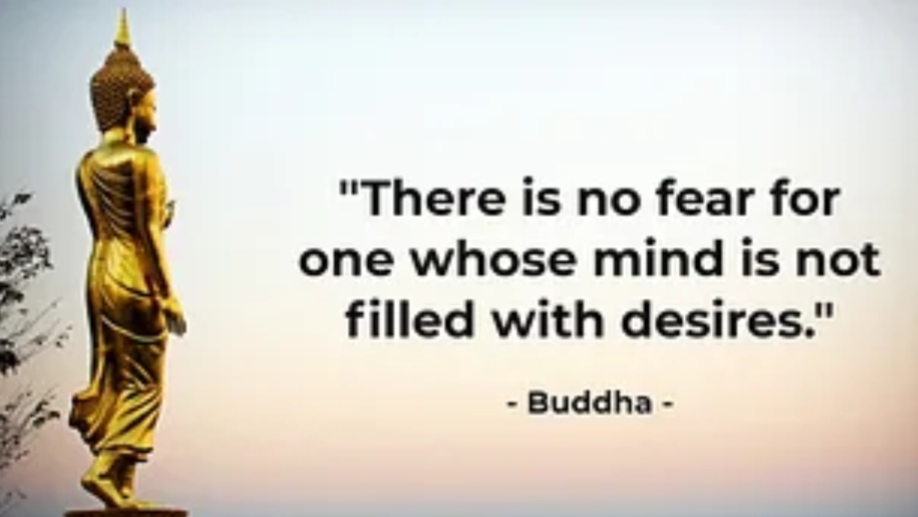
Siddhartha Gautama better known as a Gautam Buddha, renounced his life as a wealthy prince and instead left his palace to seek inner peace as an ascetic. He gave up on his comforts because at the age of 29, he realized that mere wealth cannot bring home happiness. He also came across the sufferings of people, hence wanted to find out ways on how human suffering can be ended. According to Buddha, ‘Desire’ is the root cause of suffering. In today’s times, eliminating desires is not quite possible but limiting them certainly is. The Wisdom of Frugality, states how living a simple living leads to good virtues and ultimately good virtues lead to happiness. In simple words, if a person chooses to live life without any extravaganza, he may not have to take up a stressful job. When he does not experience stress and overtime at his workplace, he gets more time for leisure, which in turn generates happiness.
A minimalist lifestyle involves living with fewer resources whether in terms of a house or possession. Minimalist livers prefer to have a simple lifestyle and yet be satisfied in life. A minimalist lifestyle is by no means a radical lifestyle but rather an optimal one. Minimalistic living involves a high thinking. For instance, rather than buying an expensive television set, a phone or an air conditioner, buying a cheaper one and spending rest of the money on buying basic necessities for the underprivileged displays the real wealth that a man possesses. Pioneers such as A.P.J Abdul Kalam, Sudha Murty, Mahatma Gandhi and many more idolizing personalities have opted to live in a simple manner and possess a benevolent, generous and humane disposition.

Are more women dying of Covid-19 in India?

New research by a group of scientists in India and US shows that although men make up the majority of infections, women face a higher risk of dying from the coronavirus than men.


The study, based on Covid-19 deaths in India until 20 May, shows early estimates that 3.3% of all women contracting the infection in India were dying compared to 2.9% of all men. (India had a caseload of more than 110,000 with 3,433 deaths and a fatality rate of 3.1% when the study was conducted.)In the 40-49 age group, 3.2% of the infected women have died, compared to 2.1% of men. Only females have died in the 5-19 age group.

Five key questions about India’s rising Covid-19 infections
I asked SV Subramanian, a professor of population health at Harvard University and one of the leader authors of the study, what this implied.


He told me that the narrative of calculating the Covid-19 fatality rate by groups has conflated two key metrics – mortality risk and mortality burden.

Mortality risk measures the probability of death in a specific group- in this case, total number of deaths of women divided by confirmed infections among women.

On the other hand, mortality burden gives you the number of deaths among women as a percentage share of the total deaths, both men and women.Prof Subramanian says for the large part, the statistics have looked at the latter – men having a greater share of total deaths (63% in India, hewing to international data) – but “inferred the former risk”.


“Our overall conclusion is that, when infected, women do not seem to have any specific survival advantage [in India],” says Prof Subramanian.

“How much of this can be attributable to biological factors and how much of this is associated with social factors is unclear. Gender can be a critical factor in Indian settings,” he says.

The ‘mystery’ of lndia’s low Covid-19 death rates
But the findings are certainly striking because they run counter to what has been observed elsewhere in the world.

For one, men are more likely to suffer from co-morbidities or underlying health conditions, like cardio-vascular disease and hypertension, says Kunihiro Matsushita, a professor of epidemiology at the Johns Hopkins Bloomberg School of Public Health.

Men also smoke more than women in many countries, and some studies have shown that men wash their hands less frequently than women.

Prof Matsushita says that studies he had participated in had shown that male patients have a higher risk of contracting severe Covid-19 infection.

Scientists also believe that women have a lower mortality risk because of sturdier immune defences. And have hormones like oestrogen which has “beneficial effects on upper and lower airways and is associated with stimulation of the immune response to upper airway infections”.

“In that regard, a higher case fatality rate in women than men in this report is certainly unique,” Prof Matsushita told me.

But he says the research data needs to be scrutinised in the context of how Covid-19 is diagnosed in India. “For example, is the opportunity to get a test same between men and women?” he wonders.There could be more to this puzzle than what meets the eye.

Women outlive men in India and there are more older women than men. Is this leading to more deaths among women, as elderly people are vulnerable to the infection?

Also, women in India are more likely to delay going to doctors, and often self-medicate at home. And a woman’s health is more likely to be ignored in a household. So are women arriving late for testing and treatment?

Homemaker caregivers are more prone to contracting the infection – during the 1918 Spanish flu more women in India – relatively undernourished, cooped up in unhygienic and ill-ventilated dwellings, and nursing the sick – died than men.


“We need to dissect the gender data to find out more about what’s going on,” says T Jacob John, a retired professor of virology at Christian Medical College, Vellore.

Researchers agree. “We will keep a close watch and keep updating the results,” Prof Subramanian says.

Written by: Ananya Kaushal

Thrillers to start your halloween week right.

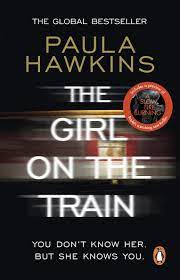
The Girl On The Train – Paula Hawkins

Rachel takes the same commuter train to work every day. It will always wait at the same signal, overlooking a stretch of back yards, she knows. She’s even begun to feel as though she knows the residents of one of the houses. She refers to them as “Jess and Jason.” Their lives are ideal, in her opinion. If only Rachel could be as content as that. Then she notices something startling. It’ll only be a minute until the train departs, but it’ll be enough. Everything has changed now. Rachel now has the opportunity to become a part of the lives she has only observed from afar. They’ll see now that she’s more than simply the train girl.

The Women in the window – A. J. Finn

Anna Fox is a recluse who stays alone in her New York City apartment, unable to leave. She spends her days drinking wine (perhaps excessively), watching old movies, reminiscing about happier times… and spying on her neighbours.The Russells, a father, a mother, and their teenage son, then move into the house across the street. The ideal family. However, when Anna sees something she shouldn’t one night while staring out her window, her world begins to unravel and its horrifying secrets are revealed.

No Exit – Taylor Adams

Darby Thorne, a college student, is stuck in a terrible blizzard in the Colorado Rockies on her way to Utah to see her ailing mother. She’s forced to wait out the storm at a lonely highway rest stop since the roads are unusable. There are vending machines, a coffee maker, and four strangers inside. Darby returns to the storm, desperate for a signal to phone home… and finds a terrifying discovery. A small child is imprisoned in an animal box in the rear of the van parked next to her automobile. What is the name of the child? Why was she kidnapped? And how will Darby be able to help her?
Darby must find a way out of a perilous scenario in which a child’s life and her own are on the line.

Survive the Night – Riley Sagar

The man behind the wheel, Josh Baxter, is a complete unknown to Charlie. They gathered at the campus transportation board, hoping to split the cost of the lengthy journey back to Ohio. Both of them have valid reasons for wanting to flee. Charlie is torn between guilt and sadness over the murder of her closest friend, who became the Campus Killer’s third victim. Josh’s motivation is to assist in the care of his ailing father. So he claims. Charlie, like the Hitchcock heroine for whom she is named, has her reservations. Josh has a suspicious air about him, from the gaps in his tale about his father to the fact that he doesn’t want Charlie to peek inside the trunk.As they drive along an empty highway in the middle of night, Charlie becomes increasingly concerned that she is sharing a car with the Campus Killer. Is Josh actually a threat? Is Charlie’s suspicion an illusion of her movie-fueled imagination, or is it anything more?What follows is a cat-and-mouse game set on moonlit highways and neon-lit parking lots, in an era when the only way to get help is to dial a pay phone number and there’s nowhere to hide. Charlie just has one chance to win: she must survive the night.

The Guest list – Lucy Foley

Guests assemble on an island off the coast of Ireland to commemorate two individuals combining their lives as one. The groom is an up-and-coming television personality. The bride is a magazine editor. The expensive gown, the isolated venue, the opulent party gifts, the boutique whiskey: it’s a wedding fit for a magazine or a star. Although mobile phone connection is patchy and the waves are rough, every aspect has been meticulously planned and will be meticulously implemented.
Resentments and petty jealousies blend with reminiscences and good wishes when the champagne is cracked and the festivities begin. Then someone is found dead. Who didn’t send their best wishes to the happy couple?

ABC of Punjab politics: Here’s a look at major political parties ahead of Assembly polls in 2022From AAP to SAD.

With former Punjab Chief Minister Amarinder Singh announcing that he is set to float his own party and declaring that he is open to an alliance with the Bharatiya Janta Party (BJP), the 2022 Assembly election in the state is likely to see new political dynamics. Meanwhile, BJP’s age-old ally Shiromani Akali Dal has found a new partner this time. Aam Aadmi Party, which managed to win just 20 seats in the past elections, is striving hard to become a major player in the state.

With these changing dynamics at play, here is a look at the major political players in Punjab.

History: Formally launched on 26 November 2012, the Aam Aadmi Party made forays into Punjab politics in 2016 after trouncing the largest national players at that time — Bharatiya Janata Party and Congress — in Delhi Assembly Elections.

In its electoral debut, the Aam Aadmi Party emerged as the second-largest party in the Delhi Legislative Assembly polls of 2013. It formed the government for 49 days with 28 of the 70 seats in the Assembly with support from the Congress party. Its main agenda was to quickly introduce the Jan Lokpal bill in the National Capital Territory of Delhi. When this didn’t come to fruition, the AAP government resigned.null

In the 2015 Delhi Assembly polls, it emerged victorious with a record margin. It won 67 of 70 seats, while the rest three went to the Bharatiya Janata Party.

Past Election Performance: In the 2014 General Elections, the party fielded 434 candidates but won a meagre four seats from Punjab. This, however, allowed AAP to become a recognised state party in Punjab, paving the way for it to contest in the 2017 Punjab Assembly polls. However, the party that was predicted to give the Congress a close contest, did not fare as well as expected and won 20 seatsnull

Alliance: In all likelihood, the AAP will be facing the polls alone. The party has not commented on the possibility of a post-poll alliance so far as well.

Election Agenda: This time around, AAP’s election strategy revolves around the three controversial farm laws by the Centre. AAP enjoys the unique position of not having any contact with this political hot potato. Congress’ previous chief minister Amarinder Singh, dubbed ‘black laws’ architect’ by his bete noire Navjot Singh Sidhu, was the one who passed very similar laws in the state Assembly. Whereas Akali Dal had initially supported the bills as an NDA ally but walked out of the government later when farmers around the country rallied behind the issue. BJP, which is anyway a small player in the state, is the one who brought the controversial laws at the Centre. AAP on the other hand did not take a position until opposing it was the safest choice left.

ABC of Punjab politics: Here’s a look at major political parties ahead of Assembly polls in 2022From AAP to SAD. here is a look at the major players in Punjab politics ahead of the next year’s Assembly elections

With former Punjab Chief Minister Amarinder Singh announcing that he is set to float his own party and declaring that he is open to an alliance with the Bharatiya Janta Party (BJP), the 2022 Assembly election in the state is likely to see new political dynamics. Meanwhile, BJP’s age-old ally Shiromani Akali Dal has found a new partner this time. Aam Aadmi Party, which managed to win just 20 seats in the past elections, is striving hard to become a major player in the state.

With these changing dynamics at play, here is a look at the major political players in Punjab.

History: Formally launched on 26 November 2012, the Aam Aadmi Party made forays into Punjab politics in 2016 after trouncing the largest national players at that time — Bharatiya Janata Party and Congress — in Delhi Assembly Elections.

In its electoral debut, the Aam Aadmi Party emerged as the second-largest party in the Delhi Legislative Assembly polls of 2013. It formed the government for 49 days with 28 of the 70 seats in the Assembly with support from the Congress party. Its main agenda was to quickly introduce the Jan Lokpal bill in the National Capital Territory of Delhi. When this didn’t come to fruition, the AAP government resigned.null

In the 2015 Delhi Assembly polls, it emerged victorious with a record margin. It won 67 of 70 seats, while the rest three went to the Bharatiya Janata Party.

Past Election Performance: In the 2014 General Elections, the party fielded 434 candidates but won a meagre four seats from Punjab. This, however, allowed AAP to become a recognised state party in Punjab, paving the way for it to contest in the 2017 Punjab Assembly polls. However, the party that was predicted to give the Congress a close contest, did not fare as well as expected and won 20 seatsnull

Alliance: In all likelihood, the AAP will be facing the polls alone. The party has not commented on the possibility of a post-poll alliance so far as well.

Election Agenda: This time around, AAP’s election strategy revolves around the three controversial farm laws by the Centre. AAP enjoys the unique position of not having any contact with this political hot potato. Congress’ previous chief minister Amarinder Singh, dubbed ‘black laws’ architect’ by his bete noire Navjot Singh Sidhu, was the one who passed very similar laws in the state Assembly. Whereas Akali Dal had initially supported the bills as an NDA ally but walked out of the government later when farmers around the country rallied behind the issue. BJP, which is anyway a small player in the state, is the one who brought the controversial laws at the Centre. AAP on the other hand did not take a position until opposing it was the safest choice left.