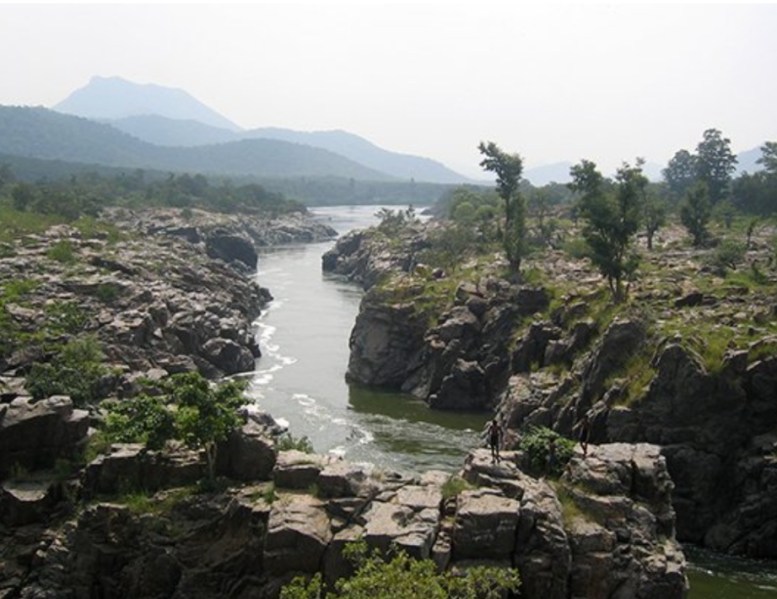
The Kaveri is an Indian river flowing through the states of Karnataka and Tamil Nadu. The Cauvery River rises in the Western Ghats and flows in eastwardly direction passing through the states of Karnataka, Tamil Nadu, Kerala and Pondicherry before it drains into Bay of Bengal.The total length of the river from source to its outfall into Bay of Bengal is about 800 km.The Cauvery basin extends over states of Tamil Nadu, Karnataka, Kerala and Union Territory of Puducherry draining an area of 81,155 Sq.km which is nearly 2.7% of the total geographical area of the country with a maximum length and width of about 560 km and 245 km.
Cauvery river is the largest river in tamil nadu occupying 765 km.The Kaveri is a sacred river to the people of South India and is worshipped as the Goddess Kaveriamma. The primary uses of the Kaveri is providing water for irrigation, water for household consumption and the generation of electricity.In February 2020, Tamil Nadu assembly passed bill to declare Cauvery Delta as Protected Agricultural Zone, includes Thanjavur, Thirvarur, Nagapattinam and five blocks in Cuddalore and Pudukottai. The bill fails to include Tiruchirappalli, Ariyalur and Karur which are geographically included in the Cauvery Delta.The cauvery river is the main source for the delta region for irrigation.It ends in the bay of Bengal.
On 22 June 2018, despite opposition from Karnataka, the Central government constituted the Cauvery Water Regulation Committee (CWRC) as per the provisions in the Kaveri Management Scheme laid down by the Supreme Court.
Acting on the Supreme Court’s direction, the Centre constituted a Cauvery Water Management Authority (CWMA) on 1 June 2018 to address the dispute over sharing of river water among Tamil Nadu, Karnataka, Kerala and Puducherry.The central government failed to adhere with the top court’s deadline of within six weeks of deliverance of judgement.
Education is one of the important thing in this world.Without education we cannot lead a good life.Education is the key to success in life.
Education plays the significant role in the human race.Educated people are responsible for the better future for Society and country.An educated person has the ability to decision making.Education teaches us writing and reading.Reading and writing is the first step in education.Education improves the person mentally to handle the difficult situation.
Education improve the humans personality.Educated person is brave, confident to face any situation.Most of the well known persons are educated.Education helps in the development and innovation of technology.
The technology,science, millitary all are improved because of the education.Without education nothing happened in this world.Education help us to acquire knowledge.knowledge can be used to make better living.Education is the weapon which cannot be break by anyone.
Education teaches us to be honest and polite.Educated peoples are always respected in the society.
Education teaches us to be civilized. Education helps us to understand the feelings.It provides the manpower like police, doctor and millitary.Education improves us mentally strong to face the hard situation in both outer and inner life.Education brings peace in the world.
Organic Visibility with Premium Guest Posting Services
Guest posting is a proven method to build authority backlinks to your website, boost brand awareness and establish a strong online presence. When you guest post on high DA/DR sites catering to a similar niche, your brand gets the “expert status” in front of your target audience who can become potential customers.
At Edutimes, we perform all the heavy lifting without breaking your bank to ensure your SEO efforts are headed in the right direction. With our qualified guest posting services, your business can get visibility in the least possible time, attract a brand new target audience and climb to the top of search engine rankings; supercharging the number of qualified leads. At Edutimes, we uncover hundreds of guest blogging opportunities for your business every single month; no matter how competitive the industry or domain.
Metals are inorganic materials with high thermal and electrical conductivity. Metals can be rolled to form plates or sheets, or they can be cast or machined to form more complex shapes. Metals can be pure elements such as iron or chrome. Metals can also be alloys, or mixtures of two or more elements. For example, stainless steel contains both iron and chrome. Laser marking is a common application for metals. Laser cutting and engraving are also possible with sufficient laser power.
For almost any metals, fiber laser machines provide readable marks quickly and efficiently. They’re ideal for engraving all types of metal surfaces. Examples include aluminum, anodized aluminum, steel, stainless steel, magnesium, lead, and zinc.
Fiber laser machines are low maintenance, use no consumables, and create high-contrast marks. You can use them to permanently mark data matrix codes, QR codes, serial numbers, barcodes, logos, and more.
Laser engraving metals with barcodes, serial numbers, and logos are very popular marking applications on both CO2 and fiber laser systems.
Thanks to their long operational life, lack of required maintenance and relatively low cost, fiber lasers are an ideal choice for industrial marking applications. These types of lasers produce a high-contrast, permanent mark that does not affect part integrity.
When marking bare metal in a CO2 laser, a special spray (or paste) is used to treat the metal prior to engraving. The heat from the CO2 laser bonds the marking agent to the bare metal, resulting in a permanent mark. Fast and affordable, CO2 lasers can also mark other types of materials – such as woods, acrylics, natural stone, and more.The laser has been serving well for many years, particularly when it comes to laser engraving and laser marking metals. Not only soft metals, such as aluminum but steel or very hard alloys can also be marked accurately, legibly and quickly using a laser. With certain metals, such as steel alloys, it is even possible to implement corrosion-resistant markings without damaging the surface structure using annealing marking. Products made of metal are marked with lasers in a wide range of industries: The applications range from the marking of industrially produced series products for traceability to the personalization of promotional items with logos or names.
Laserbeschriftung Metall is useful for working with metals and is mostly used in the manufacturing and construction industry.
Main Processing Types
Cutting
Laser light irradiates a fixed point, usually with repetition to melt the material. The laser can easily melt through thin metals, fabrics, and leather. Because there is no contact, it does not cause a reaction with the item processed. Deformation and cracking is kept to a minimum. In addition, because it is possible to specify processing areas in extreme detail, it is possible to create localized holes or cuts in places where traditional cutting tools cannot fit.
Soldering
Laser irradiation is used to heat solder paste that then joins metals. This irradiation is highly localized allowing for extremely precise soldering compared to traditional methods. This precision also reduces the head effected zone on the parts.
Solder Barrier
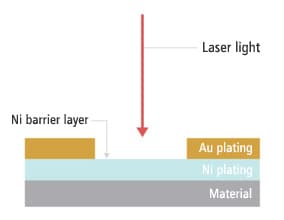
Electronics continue to get smaller and thinner. As a result, connector terminals need solder barriers (nickel barriers) to stop the soldering from expanding. Conventionally, masking was used on locations where electroplating was not necessary. However, removing the mask material took time and effort. Surface layer removal using laser light is effective in these cases.
Welding
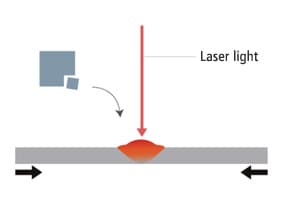
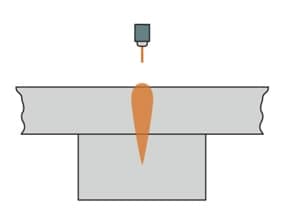
Laser welding irradiates two targets at the focal point and joins them together by melting and the soldifying the metal. It is possible to irradiate a pinpoint with high density energy and complete the process at high speeds. Material distortion due to heat is kept to a minimum. In the past, deformation occurred easily, but now even thin materials can be welded.
Suitable metals for laser marking and engraving:
Stainless Steel
Aluminum
Anodized aluminum
Hardened metals
Alloyed steels
High-speed steels
Titanium, titanium alloys
Carbides
Brass
Copper
Precious metals (e.g. silver, gold)
Coated metals
Manually Loaded Laser Marking Machines
Flex Workstation
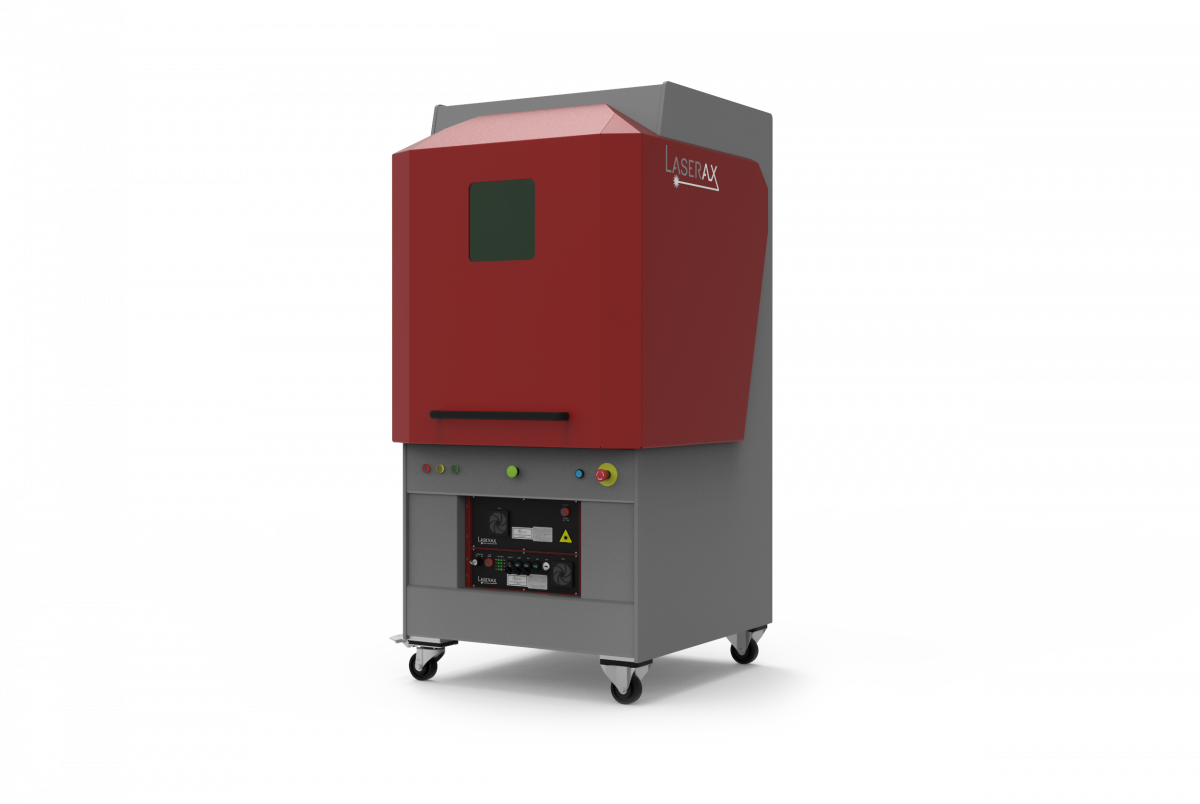
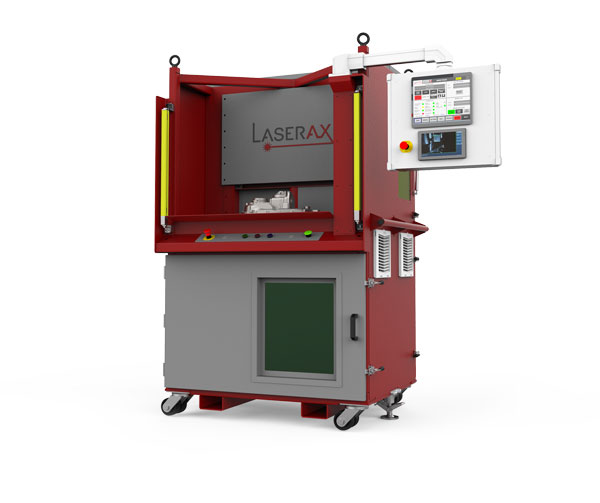
The Flex is our simplest turnkey machine since it includes the least amount of automation, but it can be automated with minimal upgrade any time. It is ideal when a fast marking time isn’t a priority, or when part loading represents a minor portion of the total marking time.
Designed to minimize the impact of part loading on your cycle time, this machine uses a rotary table to allow multiple operations at the same time. The operator can load and unload parts, trigger table rotations, and start laser marking.
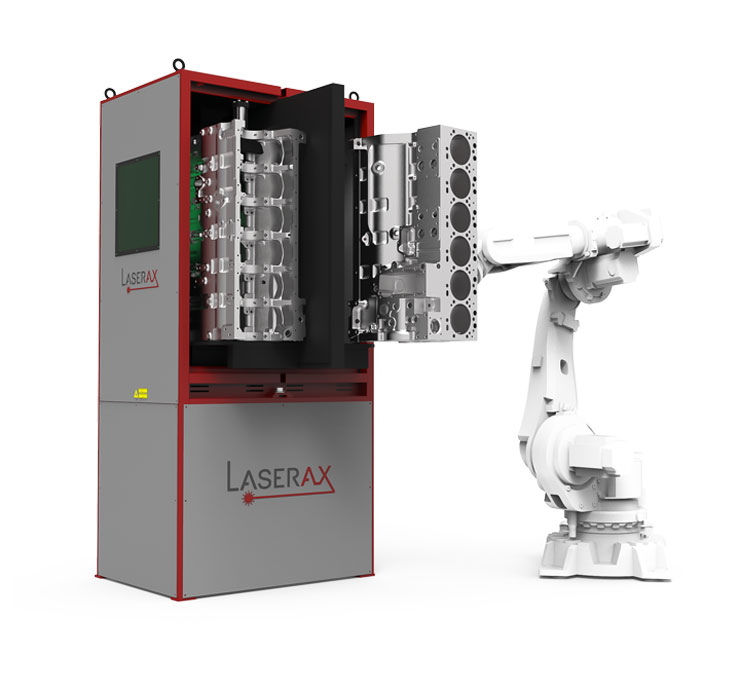
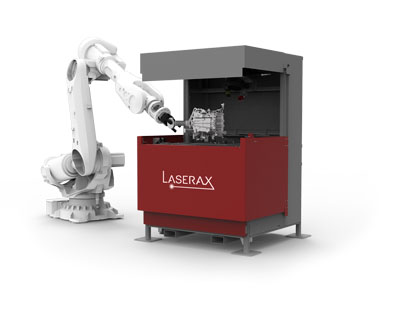
With challenging requirements, the key to prevent bottlenecks is to mark in hidden time. This machine achieves this using a rotary table. While a robot arm loads a part, another part is engraved at the same time.
Robots used for multiple operations can be leveraged by opting for an open-air design, where the robot moves parts between stations and hold them during marking. This design easily supports multiple parts and cavities.
With a flexible door machine design, markings can be positioned anywhere, and robot arms can load parts from any direction. These machines are perfect when the robot needs to perform other tasks during the marking operation.
Conveyor machines can account for all types of positioning variations that occur on conveyors. They can mark parts on the fly or while the conveyor is stopped for other processes like quality control, bundling, or weighting.
Ever wondered what will happen if all the dense forests and wildlife vanished from this world? The answer is simple. Everything will be destroyed which will be impossible to control. The heading of this article makes it very clear what this article is going to be. A meaningful quote by Anthony Douglas Williams where says, “Animals should not require our permission to live on Earth. Animals were given the right to be here long before we arrived.” This has so much value and importance because this is a very fact.
Over the years, humans have grown and are moving forward towards development, progression, industrialization, mechanization and so much more. However, during this process what we have also brought is climate change, an increase in natural disasters, deforestation, scarcity of daily requirements, and so many more problems. The things that we as living beings get from nature, people take it for undeniable grant and constantly misuse it and pollute it with toxicants whether it is air, water, or land. Imagine the time when you are taking a stroll on the beach and you let the cool seawater flow on your feet. Now, imagine the same thing with plastic, waste thrown everywhere would you be able to feel the same beauty and aura of the beautiful sea and land? Well, the answer is no. The way pollution and overconsumption by humans are in a high increase so much so that things are getting very bad not just for us but also for those living creatures who have no role to play in this devastation.
The threat of wildlife in the water
The seas, ponds, rivers, ocean everything is into pollution day by day. It has become a means of monetary value, and great economy when people are getting to see clear water and fish in it. This is the sad condition of our present times, which needs to change. Not just the water animals that we can see even animals that are deep down in the ocean are also in threatening condition by human activities. Human consumption and production are taking over nature drastically. Let us take some instances, crocodiles, and alligators, which were once common animals, are now in a threatening position because of human activities. Wondering how? Well, many companies make exotic leather out of crocodile and alligator skin. These leathers are in use for the most common accessory such as shoes. It is also commonly used for making handbags, belts, watchbands, wallets, briefcases, jackets, and furniture. Dolphins are supposedly smarter than humans are and are the most beautiful, loving, caring, amazing water mammal we can think of. We do not think twice when we are hurting this harmless mammal while making products such as coats, bags, jackets, waterproof boots and so many more products for human consumption and development. These are just some of the animals that I have put awareness out for their misuse and harm. Many more animals like fishes, sea lions, sharks, whales, corals, octopuses, crabs, squids, and pearls are constantly in use by humans for the production of not just exotic and expensive accessories and items but also for human food consumption. They are put into cultivation in various farms under extremely terrible conditions just for human consumption. I am not saying consumption of seafood is bad. However, I am only asking you to think about the need for expensive and exotic food that is manufactured every day just for the sake of high human consumption.
The threat of wildlife in the land
Words are less to speak about the extinction and pathetic condition of wildlife in the land. All animals in the land are slowly becoming extinct and endangered because of human activities. It is sad to know the kind of things people do for money. I do not even know where to start. Elephants that are considered the creators of the jungle and that hold respect and value among the animal kingdom itself are constantly killed for tusks that are in use for ornaments, and many other things. Lions the kings of the jungle are poached or are even killed just to show power among people. They are killed for their magnificent mane. Tigers, which were once on the brink of being extinct due to excessive killing and poaching, are now slowly regaining their population in the wild due to constant work of protection, awareness, funding, programs and so much more has brought about some change. It is time we start acting for the rest of the animals so that they do not go through the process again. Rhinoceros are strong well-built creatures that are in constant threat every day for their powerful horns and even their hooves. It is disheartening to see how the actions of some human beings have a grave negative consequence on other people and the ecology overall. There are many more animals I can name such as the cheetahs, leopards, jaguars, panthers, deer, snakes, and other animals that are constantly in danger for their natural gift of beauty. This is not fair for these animals because there is no fault of their yet they suffer the most
The threat of wildlife in the air
Everyone must be wondering how animal species that do not stay very close to us be in the danger. Let me give you an instance. When was the last time you saw sparrows in the city or even fireflies in the evening or colorful butterflies fluttering around early in the morning? All of this sounds like a dream or fantasy. The reason it does is that not all of the things that used to happen before happen anymore and there are several factors for it. Sparrows and common green parrots were captured and then sold as pet animals. Due to the horrible conditions, they were kept in many of these birds died. Crows that were once seen in huge numbers are in small numbers because of the increase of heat in the atmosphere and due to their black feather, they die of exhaustion and stroke. Ostriches, emus, and kiwis are birds that cannot fly are also endangered by humans and their activities. Peacocks, which are the national bird of India, are also not spared. They are killed for their beautiful feathers for human activity. These are just some of the commonly known birds that I have named. Many more birds are exotic and are rare species that have also come under the human radar that is very displeasing.
The reason I have named common wild animals that we might have seen and heard is so that people understand the importance of the problem and take some immediate action. This is necessary so that the animals that we see now do not end up just in pictures for our future generation. I am not saying that development, progress, or industrialization is wrong. However, it does become bad and questionable when other species and animals are endangered, threatened, abused, or at the close end of extinction. Many more animals that are exotic and birds need our attention. I will conclude with a thought-provoking quote that says, “This Earth is made for all beings, not just human beings.”
There are 8 very simple rules that you can follow to become truly successful.
Be Passionate
And do what you for love. If you don’t love it, then why do it? If we build careers or continue in jobs that aren’t our passion, we’re selling ourselves short. It’s like the guy that is a tech consultant that wanted to be the lead singer of a band. I’ve written about love and careers before and I think that the takeaway here is that if you do what you want to do, you will be more creative, more motivated, more tuned-in, and much more likely to be very financially and personally prosperous. Katherine Hepburn said it best.
Work Hard
Don’t ever fool yourself success comes from really hard work. And you might find that although you’re doing all of the heavy liftings, there is satisfaction in a job well done. But remember that you need to rely on others, so make sure that you surround yourself with colleagues that share your same work ethic.
Be Good
Focus always proceeds success which is not possible without a clear emphasis on what matters most. And leaders constantly need to remind themselves of this vital truth. Focus requires the pursuit of a mission and vision.
Push the Limits
Don’t constrain yourself to think inside of the box and don’t allow fear to get in your way. Today, people expect more than ordinary so you need to be extraordinary to get noticed and build strong relationships with your target market. Whether you sell a product or service, you must deliver the utmost experience.
Focus
And by that, I mean damn good. Successful people strive for greatness, not mediocrity. So push yourself (and your team) to ensure that you’ve reached your ultimate potential. And be sure to celebrate your wins, that not only breeds confidence among your team, it will keep your colleagues engaged and also will keep your clients or customers enfranchised. If you haven’t read the book From Good to Great, grab a copy.
Serve
Customer service excellence has always been and will always be one of the critical competitive advantages for any business. Meeting your customer’s needs will help you build a very strong and memorable brand. Be responsive, listen, and observe then you will create value. Learn from mistakes in service.
Create Ideas
In addition to service: ingenuity, authenticity, and forward-thinking will ultimately drive your brand. Aspiration is part of the creative process. You must always continue to innovate, especially in a competitive market space. Push the envelope when it comes to ideation.
Be Persistent
Business development and entrepreneurship should be built out of love and any great love requires passion and persistence to capture your dream. Although you will experience setbacks and failures, you will also find success and triumph.
Government has been facilitating, monitoring, assisting and channelizing efforts to increase the exports and thereby its share in GDP through a target-driven approach by engaging all stakeholders, across states and districts. Despite the pandemic, the share of India’s total exports (Good & Services) to GDP was 18.7% in 2020-21, which is already above 15 percent. Exports have performed remarkably well in the current financial year with the share of exports to GDP at 21.7 percent in the first half (April to September) of 2021-22.
The following are some of the steps taken by Department of Commerce to increase exports and thereby its share in GDP:
‘Districts as Export Hubs’(DEH) Initiative under which products and services with export potential have been identified in all districts of the country. An institutional mechanism has been set up in each District in the form of District Export Promotion Committees (DEPCs). The primary function of the DEPC is to prepare and act on District Specific Export Action Plans in collaboration with all the relevant stakeholders from the Centre, State and District levels.
A Central Sector Scheme ‘Transport and Marketing Assistance (TMA) for Specified Agriculture Products’ for providing assistance for the international component of freight, to mitigate the freight disadvantage for the export of agriculture products, and marketing of agricultural products, is under implementation.
Market Access Initiative (MAI) Scheme is an Export Promotion Scheme envisaged to act as a catalyst to promote India’s exports on a sustained basis. The scheme is formulated on focus product-focus country approach to evolve specific market and specific product through market studies/survey. Assistance would be provided to Export Promotion Organizations/Trade Promotion Organizations/National Level Institutions/ Research Institutions/Universities/Laboratories, Exporters etc., for enhancement of exports through accessing new markets or through increasing the share in the existing markets.
In addition, assistance to the exporters of agricultural products is also available under the Export Promotion Schemes of Agricultural & Processed Food Products Export Development Authority (APEDA), Marine Products Export Development Authority (MPEDA), Tobacco Board, Tea Board, Coffee Board, Rubber Board and Spices Board.
Trade Infrastructure for Export Scheme (TIES) is operational from FY 2017-18 with the objective of assisting Central and State Government agencies for creation of appropriate infrastructure for growth of exports.
The Government has introduced the Remission of Duties and Taxes on Exported Products (RoDTEP). This scheme seeks remission of Central, State and Local duties/taxes/levies at different stages at the Central, State and local level, which are incurred in the process of manufacture and distribution of exported products, but are currently not being refunded under any other duty remission scheme.
Common Digital Platform for Certificate of Origin to facilitate trade and increase FTA utilization by exporters.
EPCs, Commodity Boards and India’s mission abroad are actively promoting India’s trade, tourism, technology and investment goals.
Various initiatives/schemes have been launched by Government for promoting growth and attracting investment in India. The Make in India programme was launched on 25th September, 2014 with aim of facilitating enhanced investment, foster innovation, build best in class infrastructure, and make India a hub for manufacturing, design, and innovation. Continuous efforts are made under Investment Facilitation and Outreach for implementation of Make in India action plans to identify potential investors, support Indian Missions abroad and State Governments for organizing events, summits, road-shows and other promotional activities to attract investments in the country.
Measures have been taken to improve the country’s investment climate, as a result of which India jumped to 63rd place in World Bank’s Ease of Doing Business [EODB] ranking as per World Bank’s Doing Business Report (DBR) 2020 from a rank of 142 in 2014. Department for Promotion of Industry and Internal Trade (DPIIT), in consultation with the State Governments, has also started a comprehensive reform exercise in States and UTs in December 2014. Under Business Reforms Action Plan(BRAP), all States/UTs in the country are ranked on the basis of reforms implemented by them on designated parameters. This exercise has helped in improving business environment across States.
An Empowered Group of Secretaries has been constituted to fast track investments in the country. Similarly Project Development Cells (PDCs) have been set up across Central Government Ministries / Departments to handhold investors and spur sectoral and economic growth. Further, a GIS-enabled India Industrial Land Bank has been launched to help investors identify their preferred location for investment. National Single Widow System (NSWS) has also been soft launched in September, 2021 to facilitate clearances for investors.
Keeping in view India’s vision of becoming ‘Atmanirbhar’ and to enhance India’s manufacturing capabilities and exports, an outlay of INR 1.97 lakh crore (over US$ 26 billion) has been announced in Union Budget 2021-22 for Production Linked Incentives (PLI) schemes for 14 key sectors of manufacturing starting from fiscal year (FY) 2021-22. With the announcement of PLI Schemes, significant creation of production, employment, and economic growth is expected over the next 5 years and more.
Measures taken by the Government including on FDI Policy reforms have resulted in increased FDI inflows in the country year after year. India registered its highest ever annual FDI inflow of US$ 81.97 billion (provisional figures) in the financial year 2020-21 despite the COVID related disruptions. These trends in India’s FDI are an endorsement of its status as a preferred investment destination amongst global investors. In the last seven financial years (2014-21), India has received FDI inflow worth US$ 440.27 billion which is nearly 58 percent of the FDI reported in the last 21 years (US$ 763.83 billion). This indicates increasing inclination of global companies to set up their business in India.
Government has taken various other steps in addition to ongoing schemes to boost domestic and foreign investments in India. These include measures to reduce compliance burden for industry, National Infrastructure Pipeline, Reduction in Corporate Tax, Easing liquidity problems of NBFCs and Banks, Policy measures to boost domestic manufacturing through Public Procurement Orders, Phased Manufacturing Programme (PMP), and Schemes for Production Linked Incentives (PLI) of various Ministries, India Industrial Land Bank, Industrial Park Rating System etc. With the announcement of PLI Schemes, significant creation of production, employment, and economic growth is expected over the next 5 years and more.
Besides the above, activities are also undertaken through schemes/ programmes, by several Central Government Ministries / Departments and various State Governments from time to time.The details of these measures are not centrally maintained by Department for Promotion of Industry and Internal Trade.
The number of jobs generated in last three years in the country, as reported by startups recognized by DPIIT, is as follows:
Year
Jobs Reported by Recognized Startups (as on 08th December 2021)
2018
93527
2019
142646
2020
169724
2021
(till 08th December)
192427
Total
598324
There is no centralized compilation of information on year-wise contribution made by startups in the Gross Domestic Production of the country.
Government of India as part of Startup India initiative has implemented Fund of Funds for Startups (FFS) Scheme and Startup India Seed Fund Scheme (SISFS) across all States/UTs to promote private investment in the Startups through Alternative Investment Funds (AIFs) and incubators.
Under FFS, a corpus of Rs. 10,000 crore has been sanctioned, spread over 14th and 15th Finance Commission cycles. Small Industries Development Bank of India (SIDBI) is the nodal bank under this Scheme. The FFS Scheme does not directly provide financial assistance to startups, instead supports SEBI- registered Alternative Investment Funds (AIFs), who in turn invest money in growing Indian startups through equity and equity-linked instruments.
Under the Startup India Seed Fund Scheme (SISFS), Rs. 945 crore has been sanctioned for period of 4 years starting from 2021-22. The funds are released to Startups through approved Incubators.
Further, 49 key regulatory changes to enhance ease of doing business, raising capital and reducing compliance burden have been undertaken. This includes insurers, EPFO, non-government provident funds, superannuation, and gratuity funds to invest in AIFs, thereby enabling billions of dollars’ worth of domestic capital being made available for the Indian startup ecosystem.
Furthermore, requirement of prior turnover and experience has been relaxed to encourage startups to participate for tenders. Startups have been exempted from requirement of earnest money deposit. ‘GeM Startup Runway’ has been launched with dedicated corner for startups to sell products and services to Government. As on 3rd October, 2021, 11,386 startups had been on boarded on GeM, with 93,908 orders from public entities.
India’s merchandise exports in April-November 2021 was USD 263.78 billion which is 65.95% of export target of USD 400 billion for 2021-22, while till October 2021, merchandise exports was USD 233.90 billion.
Government has increased the present period of realization and repatriation of the amount representing the full export value of goods or software or services exported from nine months to fifteen months from the date of export, for the exports made up to or on July 31, 2020. In addition, the Government has taken the following measures to boost exports throughout the country, including Gujarat:
The mid-term review (2017) of the Foreign Trade Policy (2015-20) was carried out and corrective measures were undertaken.
Foreign Trade Policy (2015-20) extended by one year i.e. upto 31-3-2022 due to the COVID-19 pandemic situation.
Assistance provided through several schemes to promote exports, namely, Trade Infrastructure for Export Scheme (TIES) and Market Access Initiatives (MAI) Scheme.
A Central Sector Scheme –‘Transport and Marketing Assistance for Specified Agriculture Products’–for providing assistance for the international component of freight to mitigate the freight disadvantage for the export of agriculture products.
Remission of Duties and Taxes on Exported Products (RoDTEP) scheme and Rebate of State and Central Levies and Taxes (RoSCTL) Scheme have been launched with effect from 01.01.2021.
Common Digital Platform for Certificate of Origin has been launched to facilitate trade and increase Free Trade Agreement (FTA) utilization by exporters.
Promoting and diversifying services exports by pursuing specific action plans for the 12 Champion Services Sectors.
Promoting districts as export hubs by identifying products with export potential in each district, addressing bottlenecks for exporting these products and supporting local exporters/manufacturers to generate employment in the district.
Active role of Indian missions abroad towards promoting India’s trade, tourism, technology and investment goals has been enhanced.
Package announced in light of the COVID pandemic to support domestic industry through various banking and financial sector relief measures, especially for MSMEs, which constitute a major share in exports.
With Fintech adoption rate at 87% against the global average of 64%, India has emerged as one of the largest digital markets in the world. Fintech Sector has huge potential in India, supported by an enabling policy and digital infrastructure framework.
As per industry estimate, India has over 676 million smartphone users, over 1.2 billion telecom subscribers (wireless + wireline) and 825 million internet subscribers of which approximately 39% belong to the rural areas (as on March 2021).
Further, total number of transactionsrelated to digital payments, a key enabler for expansion of digital markets, has increased from 2,071 crore in FY 2017-18 to 5,554 crore in FY 2020-21. As on date, more than 5179 crore transactions have been reported in the current financial year.
Furthermore, India now hosts the 3rd largest ecosystem for startups globally; 59,593 startups have been recognized by DPIIT across 57 unique industries, of which 1,860 startups belong to the FinTech sector. As of December 2021, India has over 17 Fintech companies, which have gained ‘Unicorn Status’ with a valuation of over USD 1 billion.
As regards to investment inflow in the Fintech sector, no such data is maintained centrally.
Government has taken several measures to increase investment inflows in Fintech sector.The Pradhan Mantri Jan DhanYojana (PMJDY) has been targeted at increasing financial inclusion in India by helping in new bank account enrollment of beneficiaries for direct benefits transfer and accessibility to a host of financial services applications. This has enabled Fintech startups to build technology products to penetrate the large consumer base in India.
Aadhar, the unique biometric identification system, allows the public to access government digital services thereby improving the availability and transparency for social payments including financial assistance to those in need.
Unified Payments Interface is single platform that merges various banking services and features under one umbrella and has been built as a scalable payments platform supporting digital payments in India.
Jan DhanYojana, Aadhar and Mobile (JAM trinity) alongwith Unified Payments Interface have been instrumental in bringing in transparency, integrity and timely delivery of financial benefits and services to the public.
Key initiatives undertaken by the Government for the Fintech ecosystem in India are listed below:
Jan DhanYojana has been targeted at increasing financial inclusion in India by helping in new bank account enrollment of beneficiaries for direct benefits transfer and accessibility to a host of financial services applications. This has enabled Fintech startups to build technology products to penetrate the large consumer base in India
India Stack is a societal initiative aimed at building public digital infrastructure to promote public and private digital initiatives including accelerated adoption of technology in finance
Aadhar, the unique biometric identification system, has allowed Aadhar Enabled Payment System and Aadhar Payment Bridge System:
Aadhar Enabled Payment System allows individuals to conduct financial transactions on a Micro-ATM by furnishing their Aadhaar number and verifying it with the help of their fingerprint/iris scan
Aadhar Payment Bridge System allows ease in bulk and recurring Government benefits and subsidy payments, facilitating operations from Aadhaar-linked bank accounts, using the biometric authentication
Development and roll-out of authentication solutions including digital KYC, video-based customer identification process, and digital signature on documentshas created various safeguards and a hassle-free system for Fintech startups and customers to leverage the technology-enabled solutions in the sector
A central repository, Central KYC, has been developed for reducing the hassle of undergoing multiple KYCs for different financial institutions. This allows the KYC process of consumers to be conducted only once unless there are any changes in consumer details
KYC and customer on boarding costs have been reduced significantly enabling expansion of financial services to rural India and opening their accounts
Unified Payments Interface has been built as a scalable payments platform supporting digital payments in India
License for Payments Banks has further helped in enhancing the financial inclusion drive in the country by allowing the setting-up of payments banks and expanding the access to payments/remittance services. In a bid to promote digital payments banks in the country, RBI has announced an increase to the maximum end of day balance for payment banks to Rs. 2 lakh
National Automated Clearing House System has been successfully used for making bulk transactions
Bharat Bill Payment System has helped in enhancing consumer convenience to pay bills across utilities and other segments and has been expanded to include all categories of billers who raise recurring bills (except prepaid recharges) as eligible participants, voluntarily
RBI has also developed a Payments Infrastructure Development Fund (PIDF) scheme to subsidise deployment of payment acceptance infrastructure in tier-3 to tier-6 centres
The RBI has created a regulatory framework around Peer-to-Peer (P2P) lending by recognising P2P lenders as Non-Banking Financial Companies (NBFCs), thus providing alternative credit access to the unbanked
IRDAI has undertaken various initiatives towards boosting the insurance penetration, such as permitting insurers to conduct video-based KYC, launching standardized insurance products and allowing insurers to offer rewards for low-risk behaviour
Government institutions such as the Health ministry and the NITI Aayog are also supporting the transformation in the insurance industry through the National Digital Health Mission (NDHM), the Digital Information Security in Healthcare Act (DISHA) and the National Health Stack
A world-class Fintech hub has been developed at the International Financial Services Centre (IFSC), GIFT City in Gandhinagar, Gujarat to further strengthen the vision of making India a global Fintech hub
Government has been making continuous effort to promote strong and sustainable industrial development in the country. Some of the key measures undertaken are listed below:
Startup India initiative was launched on 16th January, 2016 to build a strong eco-system for nurturing innovation and startups in the country that will drive sustainable economic growth and generate large scale employment opportunities. As on 26th November, 2021, more than 59000 startups have been recognized by DPIIT. The recognised startups have reported over 6.2 lakhs job created. To incentivize Startups, Fund of Funds for Startups Scheme (FFS), and Startup India Seed Fund Scheme (SISFS) schemes are being implemented by the DPIIT.
Government has put in place a liberal and transparent policy for attracting Foreign Direct Investment (FDI), wherein most of the sectors are open to FDI under the automatic route. Government reviews FDI policy on an ongoing basis and changes are made in the FDI policy regime, from time to time, to ensure that India remains increasingly attractive and investor-friendly investment destination. Measures taken by the Government on FDI Policy reforms have resulted in increased FDI inflows in the country, which year after year is setting up new records. India registered its highest ever annual FDI inflow of USD 81.97 billion (provisional figures) in the financial year 2020-21. These trends in India’s FDI are an endorsement of its status as a preferred investment destination amongst global investors.
Government is working to reduce compliance burden in order to spur investment in India. Government is also working to reduce compliance burden on citizen and business and the aim of this exercise is to simplify, decriminalize & remove redundant laws. In order to monitor large database of compliances across Central Ministries/Departments and States/UTs, Government has launched the Regulatory Compliance Portal on 1st January, 2021 (https://eodbrcp.dpiit.gov.in/). Based on data uploaded on Regulatory Compliance Portal, more than 25,000 compliances have been reduced by Central Ministries/Departments and States/UTs combined.
The Reserve Bank of India has come up with Regulatory Sandbox (RS) with the objective to foster responsible innovation in financial services, promote efficiency and bringing benefit to consumers. The RS allows the regulator, the innovators, the financial service providers (as potential deployers of the technology) and the customers (as final users) to conduct field tests to collect evidence on the benefits and risks of new financial innovations, while carefully monitoring and containing their risks. The RS is an important tool which enables more dynamic, evidence-based regulatory environments which learn from, and evolve with, emerging technologies.
The RBI has also created a Reserve Bank Innovation Hub (RBIH). The aim of Innovation Hub is to promote innovation across the financial sector by leveraging on technology and creating an environment which would facilitate and foster innovation, in collaboration with financial sector institutions, technology industry and academic institutions.
Production-Linked Incentive (PLI) Scheme for 14 key sectors (including Drones and Drone Components): Government has announced PLI scheme to enhance India’s manufacturing capabilities and exports. The schemes have been specifically designed to attract investments in sectors of core competency and cutting-edge technology; ensure efficiency and bring economies of size and scale in the manufacturing sector and make Indian manufacturers globally competitive so that they can integrate with global value chains. The PLI schemes are being implemented by the concerned Ministries/ Departments. There are targeted promotion activities being taken up by concerned Ministries/ Departments for identification of potential global and domestic investors by way of organizing investor networking events, investor roundtables, seminars and one-on-one meetings with potential investors.
PM GatiShaki launched on 13th October, 2021: It is a National Master Plan for multi-modal connectivity. Gati Shakti— a digital platform — to bring 16 Ministries including Railways and Roadways together for integrated planning and coordinated implementation of infrastructure connectivity projects.
Industrial Information System (IIS) – Government has developed an India Industrial Land Bank (earlier known as Industrial Information System) which provides a GIS-enabled database of industrial areas including clusters, parks, nodes, zones, etc. across the country to help investors identify their preferred location for investment. 4507 industrial parks/estates/SEZs in 5.15 lakh hectares have been mapped on India Industrial Land Bank (IILB) along with net land area availability.
Creating world class infrastructure through developing nodes across various Industrial Corridors. Industrial Corridor Programme is being developed in 04 phases (with 32 nodes) as part of the National Master Plan for providing multimodal connectivity infrastructure for creation of greenfield industrial smart cities with plug and play infrastructure in order to make India a manufacturing hub.
Investment Promotion activities are carried out by Government to attract more investments in the country. As a part of steps being taken to improve private interest and investment, ‘Make in India’ initiative was launched on September 25, 2014, to facilitate investment, foster innovation, building best in class infrastructure, and making India a hub for manufacturing, design, and innovation. Investment outreach is being done through Ministries, State Governments and Indian Missions abroad for enhancing international cooperation for promoting Domestic and Foreign Direct Investment (FDI) in the country.
In addition to ongoing schemes of various Departments and Ministries, Government has taken various other steps to boost domestic and foreign investments in India. These include reduction in Corporate Tax Rates, easing liquidity problems of NBFCs and Banks, improving Ease of Doing Business, FDI Policy reforms, Reduction in Compliance Burden, policy measures to boost domestic manufacturing through Public Procurement Orders, Phased Manufacturing Programme (PMP), Schemes for Production Linked Incentives (PLI) of various Ministries. To facilitate investments, measures such as India Industrial Land Bank (IILB), Industrial Park Rating System (IPRS), soft launch of the National Single Window System (NSWS), National Infrastructure Pipeline (NIP), National Monetisation Pipeline (NMP), etc, have also been put in place.
India registered its highest ever annual FDI inflow of US$ 81.97 billion (provisional figures) in the financial year 2020-21 despite the COVID related disruptions. In the last seven financial years (2014-21), India has received FDI inflow worth US$ 440.27 billion which is nearly 58 percent of the FDI reported in the last 21 years (US$ 763.83 billion). These trends in India’s FDI are an endorsement of the country’s status as a preferred investment destination amongst global investors.
India is actively negotiating Regional Trade Agreements (RTAs)/Free Trade Agreements (FTAs) with the following countries/regions :
Sl.
Countries/Regions
Name of the Agreement
1
UAE
India-UAE CEPA
2
Australia
India – Australia Comprehensive Economic Cooperation Agreement (CECA)
3
Canada
India – Canada Comprehensive Economic Partnership Agreement
4
Israel
India – Israel Free Trade Agreement (FTA)
5
United Kingdom
India-UK Enhanced Trade Partnership (ETP)
6
Armenia, Belarus, Kazakhstan, Kyrgyzstan, and Russia
India-Eurasian Economic Union (EAEU) Free Trade Agreement (FTA)
7
European Union
India – EU Broad Based Trade and Investment Agreement (BTIA)
8
South Africa, Botswana, Lesotho, Swaziland and Namibia
India – SACU PTA
India has signed 11 RTAs/FTAs with various countries/regions namely, Japan, South Korea, Mauritius, countries of ASEAN region and countries of South Asian Association for Regional Cooperation. India’s merchandise exports to these countries/regions have registered a growth of 20.75% in the last five years. As regards India-Mauritius Comprehensive Economic Cooperation and Partnership Agreement (CECPA), as this has been implemented w.e.f. 01-04-2021, it is too early to calculate quantifiable benefits. The following table gives country/region wise merchandise export details:
RTA partner countries/Region wise India’s exports
Values in US$ billion
India RTA partner Countries/region
Names of RTAs
Export in FY 2016
Export in FY 2021
ASEAN
India-ASEAN FTA
India-Singapore CECA
India-Malaysia CECA
India-Thailand FTA – Early Harvest Scheme (EHS)
25.13
31.49
Japan
India-Japan CEPA
4.66
4.43
South Korea
India-South Korea CEPA
3.52
4.68
SAFTA
Agreement on SAFTA
India-Sri Lanka FTA
India-Nepal Treaty of Trade
India-Bhutan Agreement on Trade, Commerce and Transit
18.60
22.08
Mauritius
India-Mauritius Comprehensive Economic Cooperation and Partnership Agreement (CECPA)
It is too early to calculate quantifiable benefits for this RTA, as it was implemented only w.e.f. 10.04.2021.
Source: Directorate General of Commercial Intelligence and Statistics (DGCI&S)
As per the FDI data maintained by the Department for Promotion of Industry and Internal Trade (DPIIT), the cumulative investment received from the above countries/regions in the last 5 years (between October 2016 and September 2021) is to the tune of US$ 89.46 Billion. However, it is not possible to ascertain if investment from a country has taken place due to signing of an RTA or any other reason(s).
Review of RTAs/FTAs with South Korea, ASEAN and Singapore is under consideration.








 Eduindex
You must be logged in to post a comment.