Swachh Bharat Mission (Urban) 2.0 and AMRUT 2.0 to make the cities garbage free and water secure in 2021-2026

 The major focus of Swachh Bharat Mission (Urban) 2.0 [SBM (U) 2.0] and AMRUT 2.0 launched on 1st October, 2021 is to make the cities garbage free and water secure during the mission period of five years (2021-2026).

The highlights of SBM (U) 2.0 are as under:

  1. all households and premises segregate their waste into “wet waste” (from kitchen and gardens) and “dry waste” (including paper, glass, plastic, and domestic hazardous waste and sanitary waste wrapped separately);
  2. 100% door to door collection of segregated waste from each household/ premise;
  3. 100% scientific management of all fractions of waste, including safe disposal in scientific landfills;
  4. all legacy dumpsites remediated;
  5. all used water including faecal sludge, is safely contained, transported, processed and disposed so that no untreated faecal sludge and used water pollutes the ground or water bodies, in cities with less than one lakh population;
  6. phased reduction in use of single use plastic.

The highlights of AMRUT 2.0 are as under:

  1. Universal coverage of water supply from 500 cities to about 4,800 statutory towns.
  2. Focus on making the cities ‘self-reliant’ and ‘water secure’.
  3. Universal coverage of sewerage and septage management in 500 AMRUT cities.\
  4. Target to provide 2.68 crore drinking water tap connections and 2.64 crore sewer connections.
  5. Focus on financial sustainability of Urban Local Bodies (ULBs) through enhanced credit worthiness and market borrowing.
  6. ‘Pey Jal Survekshan’ will be undertaken in cities to promote healthy competition among them and function as monitoring tool and Mission accelerator.
  7. Technology sub-Mission under AMRUT 2.0 will help in identifying proven and potential global technologies in water sector.
  8. Entrepreneurship/ start-ups involved in low-cost indigenous equipments and processes will be encouraged.

All the cities of Uttar Pradesh including Firozabad arecovered under SBM (U) 2.0 and are eligible to avail all components as per operational guidelines.


Out of 4,372 ULBs, 4,371 ULBs including Firozabad of the country except one in West Bengal (city of Purulia) have been declared Open Defecation Free (ODF) under SBM (U).SBM (U) 2.0 & AMRUT 2.0 cover all the cities in the country and their aim is to make them garbage free and water secure during the Mission Period 2021-2026.


Technical Conference cum Exhibition on 24×7 Water Supply Systems

 In order to disseminate knowledge on the planning, design, implementation,Operation and Maintenance of 24x7water supply systems, a “Technical Conference cum Exhibition on 24×7 Water Supply Systems”was organized by held today in New Delhi. The event was organized by the Central Public Health and Environmental Engineering Organisation (CPHEEO), Ministry of Housing and Urban affairs. ThePrime Minister, Shri Narendra Modi launched on October 1st, 2021 AMRUT 2.0,with a vision to make all cities water secure and provide universal coverage of water supply services in all the urban areas of the country.Cities are mandated to undertake reforms such as water conservation, reducing non-revenue water to below 20%, recycle of treated used water to meet at least 20% of total city water demand & 40% for industrial water demand, PPP projects, community involvement etc.

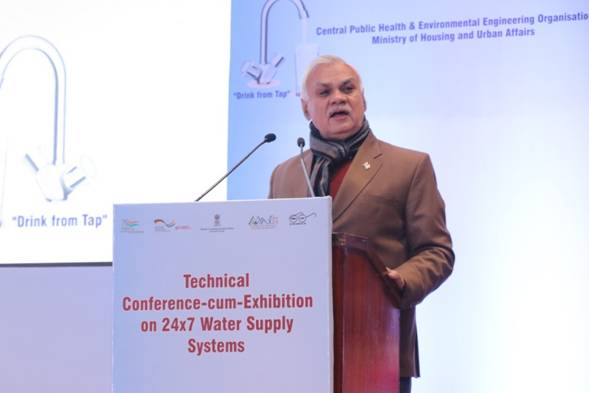
The Inaugural session was chaired by Shri Durga Shanker Mishra, Secretary, MoHUA. While addressing the session, he emphasized the need for integrated water resource management with water conservation through recycling of used water, control of NRW and rejuvenation of water bodies and also to take up 24×7 water supply projects at least in one ward/DMA in 500 AMRUT cities under AMRUT 2.0.

Shri Mishra said that 24×7 water supply projects will ensure prevention of water contamination, control of NRW, equitable water supply and bring efficiency in terms of financial sustainability by attracting PPP funding and institutional financing.

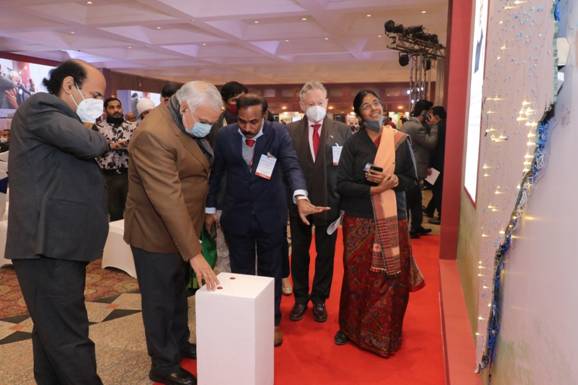
 The cities that are implementing 24×7 water supply projects showcased their best practices and technological solutions such as water meters, valves, GIS mapping, hydraulic modelling, Operational Zones (OZ), District metered Areas (DMA’s),SCADA, SMART water management solutions for monitoring & sustainability etc. in the exhibition. About 600 participants participated in the conference.


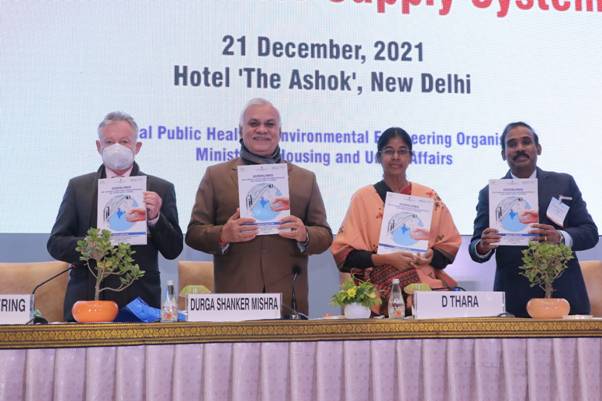
The Guidelines for Planning, Design and Implementation of 24×7 Water Supply Systems were released in the Conference. The present status of the Manual on Water Supply & Treatment which is under revision incorporating the latest technological developments was briefed. Thedraft National Urban Water Supply and Management Policy 2020-30 wasalso presented in the conference.A case-study of 24×7 Water Supply in Puri city, “Drink from Tap Mission” and case studies ofPune and Coimbatore 24×7 water supply projects and other draft Advisories were presented for better understanding among the Engineering community.

Detailed discussions & deliberations among experts, engineers, technology providers and other relevant stakeholders on 24×7 water supply systemsfor better understanding of the meritsand to bridge the existing knowledge gap were held in the conference.


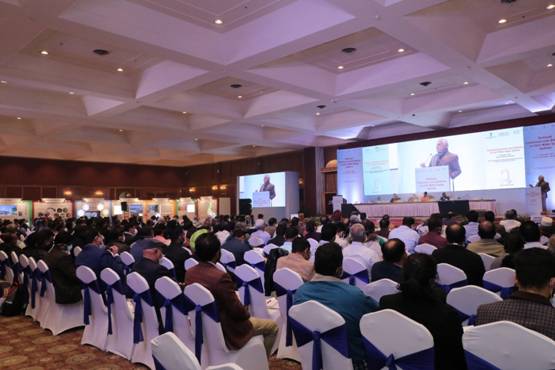
The conference was attended by Technical Heads, Chief Engineers, City Engineers& senior engineers dealing with water supply in all the 500 AMRUT cities, PHEDs/Corporations/Boards/Jal Nigams, Experts, PPP partners, manufacturing firms, consultants.

*****

Meeting of the Consultative Committee of Ministry of Housing and Urban Affairs held

 The meeting of the Consultative Committee of Ministry of Housing and Urban Affairs was held today in the Parliament House Annexe, New Delhi.  The Agenda item of the meeting was “Smart Cities Mission”. Minister of Housing and Urban Affairs, Shri HardeepPuri chaired the meeting.

Briefing about the Smart Cities Mission, Shri Puri said that the main objective of the Mission, launched on 25th June, 2021, is to promote cities that provide core infrastructure, clean and sustainable environment and give a decent quality of life to their citizens through the application of ‘Smart Solutions”.  The Mission aims to drive economic growth and improve the quality of life through comprehensive work on social, economic, physical and institutional pillars of the city.  100 cities have been selected to be developed as smart cities through a two-stage National competition.

Smart Cities Mission is a centrally sponsoredscheme under which the Central Government will provide financial support to the extent of 48000 crores over 5 years i.e. on anaverage 100 crores per city per year and an equal amount of matching basis is to be provided by the State/ULB.  Emphasis has been given on the participation of private sector through public private partnerships.  Aggregating at national level, these proposals contained more than 5000 projects worth over 2,00,000 crores.  Mission has a two-pronged strategy consisting of Pan-city and Area-Based development project. Implementation at the city level is being done by Special Purpose Vehicle(SPV) created for the purpose.  There is no template or universally accepted definition of the Smart City.  Therefore conceptualization of Smart City depends on the level of development,willingness to change and reform resources and aspirations of the city  residents. 

The overall progress of the Mission as on 12 November, 2021 shows great momentum in execution.  Over 6452 projects worth 184,998 crores have been tendered.  Of this, work orders have been issued for close to 5809 projects worth 156571 crores of which 3131 projects worth around 53,175

crore have been completed. Since the launch of the Mission, a total of . 27,234 crores have been released by the Government of India to 100 cities under the Mission. The progress of the Mission inthese cities is done on a regular basis by State level High Powered Steering Committee.

The Mission has launched several initiatives that will not only ensure integrated development across variousaspects of urban development but also help lay long-term foundationfor good quality urbanization in the country.  Some of the initiatives are:

  1. Ease of the Living Index
  2. Municipal Performance Index
  3. City GDP Framework
  4. Climate Smart Cities Assessment Framework
  5. Data Maturity  Assessment Framework
  6. ICCC Maturity Assessment Framework
  7. Data City Strategy
  8. India Urban Observatory
  9. India Urban Data Exchange
  10. Smart Cities Open Data Initiative
  11. National Urban Innovation Stack
  12. National Urban Digital Mission
  13. ICT standards
  14. India Cycles4Change (IC4C) Challenge
  15. Streets4people Challenge
  16. Nurturing Neighbourhoods Challenge
  17. Transport 4 all (T4All) Challenge
  18. EatSmart Cities  Challenge
  19. City Investments to Innovate, Integrate and Sustain (CITIIS) Challenge
  20. Climate Centre for Cities
  21. Climate Smart Cities Alliance
  22. India Smart Cities Fellowship Program
  23. The urban Learning Internship Program

The Minister also informed that smart cities have played important role in managing the crises during Covid-19. With Integrated Command and Control Centres being usedas Covid-19 War Room, they have helped in the area of information, communication, management and preparedness.

Hon’ble MPs made many valuable suggestions during the meeting.


*******

Compendium on Indigenous Innovative Building Materials and Construction Technologies

 Secretary, Ministry of Housing and Urban Affairs (MoHUA), Shri Durga Shanker Mishra chaired the 57th meeting of Central Sanctioning and Monitoring Committee (CSMC) under Pradhan Mantri Awas Yojana (Urban) held on 23rd December 2021 in New Delhi. Project proposals for 1.07 lakh houses were approved for construction from Andhra Pradesh, Madhya Pradesh, Maharashtra, Puducherry and Uttarakhand under various verticals of PMAY(U). Secretary, MoHUA, also reviewed the progress of implementation of PMAY(U) in other States.  

Presiding over the meeting, Secretary, MoHUA, discussed the issues pertaining to grounding and construction of houses in the States/UTs. He directed the State/UT officials to expedite construction of houses in their respective areas. He said that grounding should be the first responsibility of the States/UTs, followed by focus on 100% completion of grounded houses. States/UTs should also declare saturation of demand city by city.

A group of people sitting at a tableDescription automatically generated with low confidence


Secretary, MoHUA also urged the LHP States to promote LHP technologies for their further replication in Indian context. He also directed the State officials to encourage students, professionals and other stakeholders to enrol as Technograhis so that more people could learn the use of these technologies. He requested all States/UTs to visit the LHP sites and study about it. Engineers, urban planners should be trained through the Technograhi module.

Total number of sanctioned houses under the Mission is now 1.14 crore; of which around 91 lakh have been grounded for construction and more than 53 lakh have been completed and delivered to the beneficiaries. The total investment under the Mission is ₹ 7.52 lakh crore, with Central Assistance of ₹ 1.85 lakh crore. So far, Central Assistance amounting to ₹ 1.14 lakh crore has already been released.

At the CSMC meeting, approval for construction of Demonstration Housing Projects (DHPs) at Dimapur in Nagaland and Kot Bhalwal in Jammu was also accorded. Both the projects will be built using new/alternate technologies under Technology Sub-Mission component of PMAY(U). DHPs are model housing projects that showcase field level application of the technology and are also used as a platform to impart on-site orientation, training to practitioners and students in the housing sector. So far, six DHPs have been completed and four are being constructed in different parts of the country.

The upcoming DHP in Dimapur will be used as working women’s hostel while the one in Kot Bhawal will serve as a sports hostel on rental basis with other infrastructure facilities and provisions.

The CSMC also approved a proposal for incubation support under ASHA-India for low cost Bamboo Housing Project submitted by IIT Kharagpur.

On this occasion, a Compendium on Indigenous Innovative Building Materials and Construction Technologies was also released by Secretary, MoHUA. It provides details about 84 technologies showcased during Indian Housing Technology Mela (IHTM) in Lucknow from 5th to 7th October 2021.  It will serve as useful resource for dissemination of technologies for field level application, replication across the country. The compendium will help policymakers, public/private construction agencies, other stakeholders to select and adopt materials, technologies in future housing projects.

A picture containing ceiling, indoor, wallDescription automatically generated


While releasing the Compendium, Secretary, MoHUA, asked the States/UTs to share it widely with construction agencies, engineers, architects for utilising these technologies for construction for the benefit of the housing sector.

Secretary, MoHUA, also reviewed the progress of Light House Projects (LHPs) in Chennai (Tamil Nadu), Indore (Madhya Pradesh), Rajkot (Gujarat), Ranchi (Jharkhand), Agartala (Tripura) and Lucknow (Uttar Pradesh). He directed the officials to complete the construction work within the stipulated time period.

Roadmap to make Urban India ‘Garbage Free’

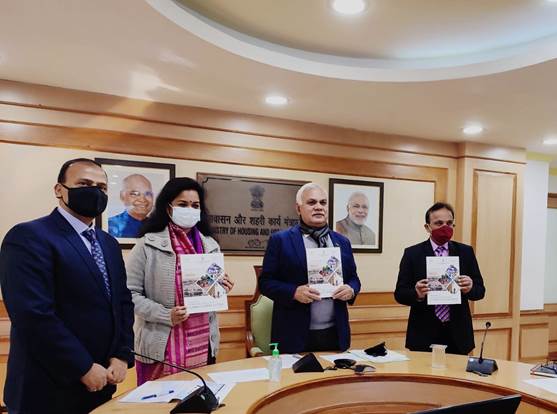
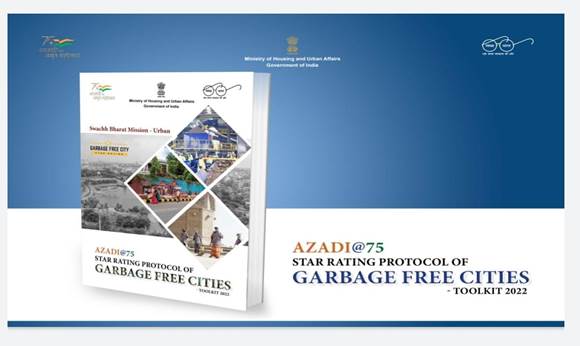
 On the eve of “Good Governance Day”, Ministry of Housing and Urban Affairs (MoHUA), Government of India today launched the ‘Azadi@75 Star Rating Protocol of Garbage Free Cities- Toolkit 2022′, the most important governance tool of waste management – the Star Rating Protocol for Garbage Free Cities.

On 1st October 2021, the Hon’ble Prime Minister launched Swachh Bharat Mission-Urban 2.0, with the overall vision of creating “Garbage Free Cities” (GFC), thereby placing India on a new trajectory of growth towards an ecosystem of holistic sanitation and waste management. For achieving this vision, a key objective under SBM-U 2.0 is to make every urban local body at least 3-star Garbage Free as per the Star Rating protocol.


In the recently concluded certification exercise for GFC, nearly 50% of ULBs (i.e., 2,238 cities) participated in the certification exercise, of which a total of 299 cities have been certified – 9 cities rated as 5-star, 143 cities rated as 3-star and 147 cities as 1-star.

Seeing the impact Star Rating certification has made to improve on-ground waste management scenario of the cities to become ‘Garbage Free Cities’, release of Government of India funds has been made conditional, subject to a ULB achieving at least 1-star certification. Hence, there is a need to ensure that every ULB participates in and get itself GFC certified, to avail Central funds and to achieve the intended objectives under SBM-U 2.0. To do this, it was felt necessary to revamp the existing GFC protocol and make the assessment process simpler, while retaining its robustness, so that every ULB is motivated to apply for the GFC certification.

Key revisions in the protocol are:

i.          the earlier 25 components/ indicators have now been reduced to 24, of which only 16 indicators are mandatory for 1-star and 3-star levels. The remaining 8 indicators are aspirational in nature, and will be relevant for 5-star and 7-star aspirants;

ii.         the multi-step calculation of the previous GFC protocol has now been changed to a  single step marking, which will help ULB to easily self-assess themselves  for applying;

iii.        the revised protocol is aligned with SBM-U 2.0 priorities, with higher weightages (50%) allotted to Door-to-Door Collection, Source Segregation, Waste processing & Dumpsite remediation;

iv.        the entire process of applying for certification and subsequent assessment have been simplified and made completely digital, paperless; for example, digital declarations, geo-tagged waste-processing facilities, end-to-end digital monitoring of progress;

v.         new components pertaining to IEC, capacity building, revenue from sale of waste by-products have been added to encourage cities to build an ecosystem to strengthen the waste management system.  

vi.        continuous assessment throughout the year to help cities plan assessment

Speaking at the event, Shri Durga Shanker Mishra said that the objective of coming out with the toolkit is to make things simple and easy to understand, while retaining the stringency of criteria. He called upon all the cities to participate in the rating process, with full preparations. Shri Mishra said that simplification of the toolkit will propel all the cities to attain at least 3-star rating, and many of them will try to get higher rating. He said that MoHUA will handhold the cities needing any guidance and training. The Secretary also called upon the City administrators and public representatives to involve people in large number in this mission, and intensify the IEC activities, particularly in the local languages and dialects. He said that achieving the Prime Minister’s vision of making the cities neat and clean will not only increase the land value and investments in the city, but will also make the people proud of their habitats. He said that the Indian cities with high ratings will be comparable to the best in the world.

Elaborating on the Star Rating Certification, the Mission Director Ms Roopa Mishra said that there has been upward and forward movement in the process but many ULBs have to do some catch-up, and this toolkit will facilitate the process.


With the vision of making cities ‘Garbage Free’, SBM-U 2.0 is focused on achieving 100% waste processing along with remediation of legacy dumpsites, construction and demolition waste and plastic waste management. The new protocol combined with the continuous assessment through-out the year will further encourage cities to participate and realise the vision of “Garbage Free Cities”


‘J&K Real Estate Summit- 2021-Unlocking Opportunities’

 Minister of Housing and Urban Affairs and Petroleum and Natural Gas Shri Hardeep Singh Puri today said that Real Estate being the second largest employer in the country, with the multiplier effect will create innumerable opportunities in J&K in terms of employment, investment and hence economic growth. The Minister said this while addressing the first ever ‘Real Estate Summit- 2021’ at Convention Centre, Jammu.
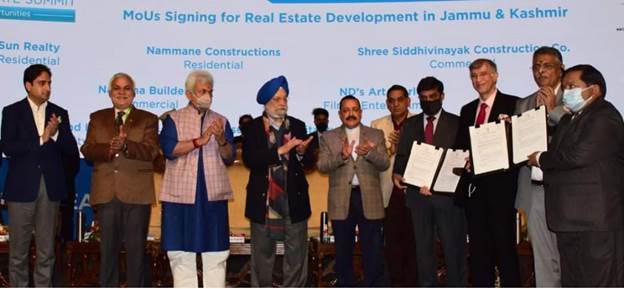
 

The Real Estate Summit- 2021 is organized by the Department of Housing & Urban Development Department, Government of Jammu and Kashmir in collaboration with the Ministry of Housing and Urban Affairs, Government of India.

Sh. Hardeep Singh Puri in his address said that the natural endowments in the UT of J&K & resilience of its people are second to none in the world which is now needed to be translated into economic development, prosperity and ease of living. The Minister further said that this first ever Real Estate Summit will rectify the past and will have a  multiplier effect in J&K in the coming years.

Sh. Puri also said that the demand for real estate construction in J&K is not only in housing but also in tourism, hospitality, warehousing, which is at least 2.5 to 3.0 lakh units. The Minister further said that J&K has land and ready demand & this summit today will accelerate that process in due course of time.

Sh. Puri expressed satisfaction that the Real Estate Regulatory Authority Act (RERA) and the Tenancy Act have been implemented in J&K which will help in the ease of doing business here.  Sh. Puri also said that the Metro Railway Project in J&K is in the final stages of approval.

Sh. Puri also said that the implementation of the flagship schemes like AMRUT, Swachh Bharat Mission, Smart City Mission, PMAY etc. in J&K are much appreciated and the figures of implementation are very encouraging.  Sh. Puri emphasized that a Davos like platform must be created in J&K having nice topography for which the J&K Government will be fully supported by MoHUA.

Union Minister of State (Independent Charge) Science & Technology; Minister of State (Independent Charge) Earth Sciences; MoS PMO, Personnel, Public Grievances, Pensions, Atomic Energy and Space, Dr. Jitendra Singh in his address during the summit said that J&K is now entering the mainstream journey of PM Modi’s New India & the first ever ‘Real Estate Summit’ today is one of its important links to connect it to the mainstream India.

Dr. Singh said that the investment proposals in J&K will reach Rupees one lakh crore in the coming years.  As envisaged by PM Sh. Narendra Modi, Dr. Singh said that J&K should be at par in terms of economic development with the other states and UTs of the country in various sectors.

Dr. Singh also said that all the Central Laws- be that the Prevention of Corruption Act, RTI Act, CVC Act etc. are now applicable to the UT of J&K like other states and UTs in the country. He further said that all the erstwhile laws in J&K which were the impediments in the progress and development of J&K have been either repealed or amended.

Dr. Singh also said that the important development projects that were earlier stalled were taken care of after 2019 like the Shahpur Kandi Dam Project. The Minister further said that a new dawn of development has emerged in J&K after 2019 like the establishment of two AIIMS, eight medical colleges, IIT, IIM, IIMC, North India’s First Biotechnology Park, National Highway Projects etc.

             Dr. Singh also said that if J&K wants to be part of global India as India being a part of global world, it has to follow all the parameters followed by the rest of the country to seek all the benefits which are made available by the government.

Dr. Singh reiterated that soon after PM Sh. Narendra Modi took oath as the PM of India on 26th May, 2014, one of his earliest declarations of intent was that his government would resolve to bring those regions of the country on the path of development which have missed the development journey of the rest of India so as to make them at par with the developed regions of the country.

Lieutenant Governor J&K, Sh. Manoj Sinha in his address said that this first ever Real Estate Summit in J&K will have a multiplier effect on J&K in terms of investment, employment, GDP etc. LG further said that the erstwhile laws have been amended after 2019 and all the Central Laws have been applied for the welfare of the people of J&K as the erstwhile laws were the real hurdles in the development of the UT. LG emphasized that with the opening of plethora of avenues in J&K after abrogation of Article 370, the time will come that it would become Davos of New India.

Secretary MoHUA, Sh. Durga Shanker Mishra said that a paradigm shift in terms of development has been witnessed in every sector in J&K after 2019. He further impressed that the UT has now become the real paradise on earth with the opening of many development sectors like real estate creating plethora of opportunities for the people in terms of employment, investment etc.

During the summit, Shri Hardeep Singh Puri e-launched ‘Auction of Assets Portal’, Affordable Rental Housing Complexes Scheme at Sunjwan, Jammu, J&K RERA portal, Housing Schemes and J&K Housing Mission Portal.

During the summit, many MoUs were exchanged between NAREDCO National & NAREDCO J&K Chapter, NAREDCO & LEAD, NAREDCO & NAR, NAREDCO & J&K Housing and Urban Development Department, JK Industry & Commerce Department and Haldiram and JK Housing Board &Central Government Employees Welfare Housing Organization.

Chief Secretary J&K, Sh. Arun Kumar Mehta, Vice Chairman NAREDCO, Dr. Niranjan Hiranandani, President NAREDCO, Sh. Rajan Bandelkar, Principal Secretary, Housing and Urban Development Department JK, Sh. Dheeraj Gupta, Mayor Jammu, Sh. Chander Mohan Gupta, Mayor Srinagar, Sh. Junaid Matoo besides senior officers of UT and Central Government & delegates from many states were also present in the summit.


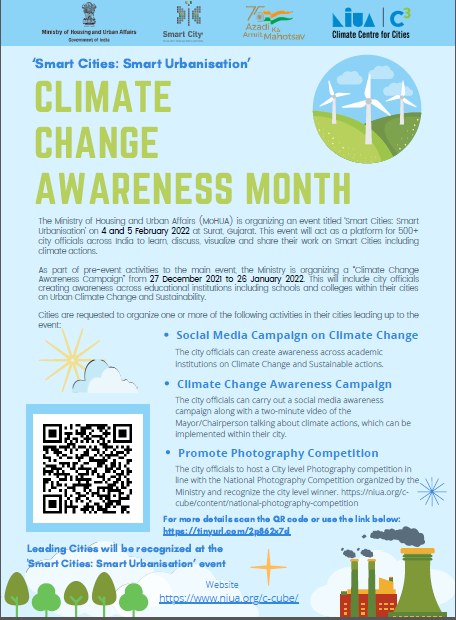
Climate Awareness Campaign and National Photography Competition

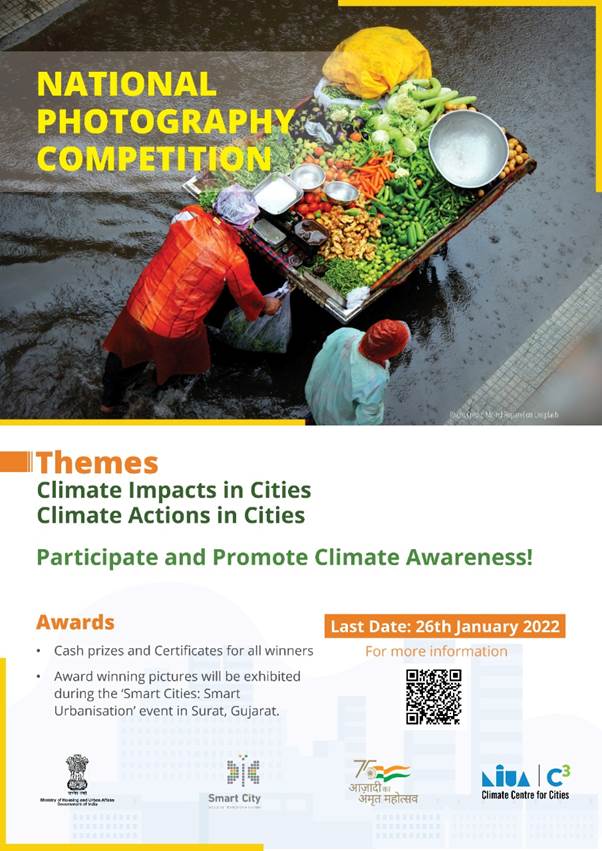
 The Ministry of Housing and Urban Affairs (MoHUA) is organizing Climate Change Awareness Campaign and National Photography Competition. The competition will be open to all participants till 26th January, 2022, as part of pre-event activities leading to the ‘Azadi Ka Amrit Mahotsav- Smart Cities: Smart Urbanization’ event on 4th and 5th of February, 2022 at Surat, Gujarat. Both the campaign and competition aims to sensitize the challenges posed by climate change, enrich the participants with ideas to solutions, and promote climate action in cities.

Climate Awareness Campaign:

The campaign will include Municipal Commissioners and key heads of urban local bodies and Smart City CEOs creating awareness across educational institutions including schools and colleges within their cities to align young minds to the challenges and solutions associated with Urban Climate Change and Sustainability. Cities will be organizing one or more of the following activities in their cities leading up to the event:

  • Climate Change Awareness Campaign: The city officials will create awareness across academic institutions on Climate Change and Sustainable actions.
  • Social Media Campaign on Climate Change: The city officials will carry out a social media awareness campaign where City leaders like Mayors/Municipal Commissioners/Smart City CEOs will be talking about climate actions, that can be implemented within their city. The issues that will be taken up for discussion include inter alia plantation drive, cleaning of water bodies, recycling of e-waste, promoting the adoption of solar energy within residential and commercial buildings, or any other initiative which promotes climate adaptation or mitigation actions.
  • Promote Photography Competition: A City level Photography competition will be organised based on the theme of climate change.

Details of the events are available at https://niua.org/c-cube/content/climate-change-awareness-campaign

National Photography Competition:

The participants are invited to submit photographs which are either focusing on the impacts of climate change on Indian cities and actions taken by individuals, communities or city authorities to adapt/ mitigate climate change. To participate in the competition, photographs should be submitted in two categories:

  • Climate Impacts in Cities
  • Climate Actions in Cities

The selection of photographs will focus on content, composition and technique. All interested photographers and climate enthusiasts can visit https://niua.org/c-cube/content/national-photography-competition for details of participation. The submission of photograph shall close on 26th January 2022 at 11:59 pm.

Azadi Ka Amrit Mahotsav

Azadi Ka Amrit Mahotsav is an initiative of the Government of India to celebrate and commemorate 75 years of progressive India and the glorious history of its people, culture and achievements. This Mahotsav is dedicated to the people of India who have not only been instrumental in bringing India thus far in its evolutionary journey but also hold within them the power and potential to enable Prime Minister Modi’s vision of activating India 2.0, fuelled by the spirit of Atmanirbhar Bharat.

Azadi ka Amrit Mahotsav is an embodiment of all that is progressive about India’s socio-cultural, political, and economic identity. The official journey of “Azadi ka Amrit Mahotsav” commenced on 12th March 2021 which starts a 75-week countdown to our 75th anniversary of Independence.

NEAT 3.0 and AICTE prescribed technical books in regional languages

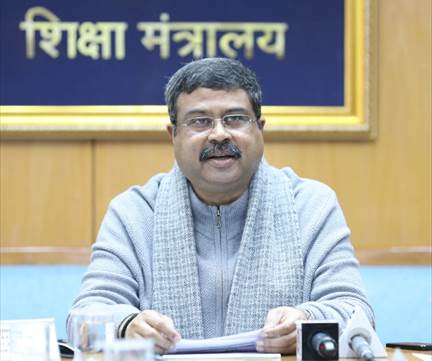
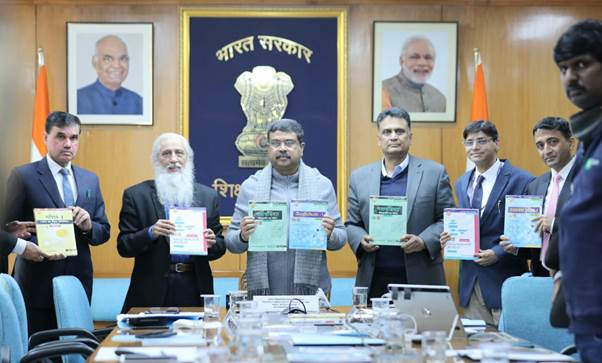
 Union Education Minister and Skill Development Minister Shri Dharmendra Pradhan launched NEAT 3.0, a single platform to provide the best-developed ed-tech solutions and courses to students of the country. The Minister also launched AICTE prescribed technical books in regional languages.

11c4c756-47a6-4f6a-8ee7-efa1bf06f7ee.jpg

c487de0f-7471-481c-ae1a-8ff5030aeafe.jpg

Speaking on the occasion Shri Pradhan said that NEAT will be a game-changer in bridging the digital divide, especially among the economically disadvantaged students and also in fulfilling the knowledge-based requirement of India and the world. The Minister informed that 58 global and Indian start-up ed-tech companies are onboard NEAT and are offering 100 courses & e-resources for bettering learning outcomes, developing employable skills and overcoming learning loss. He hoped that the e-content & resources and Digital frameworks like NEAT are a step in the right direction in minimising learning loss.

The Minister encouraged AICTE to integrate courses in NEAT with skill India to tap the opportunities in emerging areas of skill to boost employability and prepare our youth for the future. He urged that AICTE and ed-tech companies to offer e-resources in the least possible cost. Shri Pradhan complimented the global ed-tech companies and Indian start-ups who are a part of NEAT 3.0. He said that all ed-techs are welcome to work with a collaborative approach for making education accessible & affordable. But, ed-techs must remember that there is no place for monopoly and exploitation, he added.

The Minister expressed his happiness that today, more than 12 lakh socially and economically disadvantaged students have received free ed-tech course coupons worth over ₹253 crore under NEAT 3.0. This is one of the biggest gift to the student community from Prime Minister Shri Narendra Modi in the new year 2022, he added. He stated that India will lead the global economy in the 21st century and will be the most preferred market for trade & economy.

On technical books in regional languages, Shri Pradhan said that our diverse languages are our strength and harnessing them key to building an innovative society. He further said that learning in regional languages will further develop the critical thinking capacity & enable our youth to become global citizens.

NEAT:

National Educational Alliance for Technology (NEAT) is an initiative to provide the use of best-developed technological solutions in the education sector to enhance the employability of the youth on a single platform for learners’ convenience. These solutions use Artificial Intelligence for a personalized and customized learning experience for better learning outcomes and skill development in the niche areas. AICTE, MoE is acting as the facilitator in the process while ensuring that the solutions are freely available to a large number of socially and economically backward students. NEAT has 58 Education Technology Companies with 100 products that help to develop employable skills, capacity building, and bridge learning gaps.

Secretary, Higher Education Shri Sanjay Murthy; Chairman, AICTE Prof. Anil Sahasrabudhe; Vice Chairman, AICTE, Prof. M P Poonia, Prof. Rajiv Kumar, Member Secretary, AICTE and senior officials of the Ministry were present on the occasion.

*****

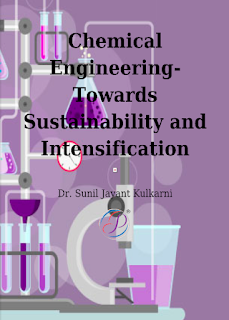
Chemical Engineering- Towards Sustainability and Intensification

 Advances in chemical engineering are focused on intensification of reactions, unit operations and mechanical operations. Intensification facilitates reduction in cost, size and increase in conversion, separation and selectivity. In case of distillation, reactive distillation can reduce energy cost and increase product quality considerably compared to conventional reactor- separator method. Similar advantages can be considered for reaction adsorption and other reactive separations. 

Use of non-renewable energy sources can reduce burden on conventional feed stocks and reduce carbon foot prints. Nano materials are gaining importance due to their unique properties. Application of nanomaterial for process intensification is being explored in mass transfer, heat transfer and reaction engineering. 

The composition of flue gases depends on raw material and process. It is important to have adequate knowledge of these aspects while selecting treatment methods. Various chemical conversion methods are effective for the treatment of flue gases. The recovery of components from flue gases involves adsorption, absorption, stripping, and desorption methods.

 This book contains one chapter on food adulteration also. Food adulteration is very increasing and dangerous phenomenon. It is being practiced from ancient times. Adulteration for maximizing profit is very commonly practiced unethical practice. There is need for increasing moral and ethical values. There is need for people friendly methods for analysing or at least identification of adulterations. Also use of branded items can minimize harms due to adulteration.

The chapters in this book are focused on non-renewable energy (chapters 1, 5, 9), water treatment and recycle (chapters 4, 10, 11, 12), use of advanced materials for catalysts (chapters 2, 3, 13), flue gas heat recovery (14), Intensification of unit operations (5, 6, 7, 8) and adulteration in food products.

Book Title

Chemical Engineering- Towards Sustainability and Intensification

Author’s Name

Dr. Sunil Jayant Kulkarni

Genre

Science and Technology

ISBN No.

978-93-92180-01-9

Language

English

Publication Year

2021

Edition

First Edition