Global Warming

Global warming refers to the gradual rise in the overall temperature of the atmosphere of the Earth. There are various activities taking place which have been increasing the temperature gradually. Global warming is melting our ice glaciers rapidly. This is extremely harmful to the earth as well as humans. It is quite challenging to control global warming; however, it is not unmanageable. The first step in solving any problem is identifying the cause of the problem. Therefore, we need to first understand the causes of global warming that will help us proceed further in solving it.  

Causes of Global Warming

1. Oil and Gas

Oil and Gas is used all the time in almost every industry. It is mostly used in automobiles, buildings, manufacturing, and the electricity production. When we burn coal, oil and gases it largely adds to the climate problem.  Fossil fuel consumption is also harmful to wildlife and the environment because of its toxicity, which kills plant life and makes areas uninhabitable.

2. Deforestation

Deforestation is the clearing of woodland and forest for the purpose of harvesting wood or making space for farms or ranches. Because trees and forests convert carbon dioxide into oxygen, when they are cut down, the stored carbon is released into the atmosphere. Deforestation can also occur naturally which has a greater effect because of the fumes released from the fire.

3. Waste  

Humans create more waste now than ever before, because of the amount of packaging used and the short life cycle of products. Many products, garbage, and packaging are not recyclable, resulting in their disposal in landfills. When landfill waste decomposes/breaks down, hazardous gases are released into the atmosphere, contributing to global warming.

4. Power Plants 

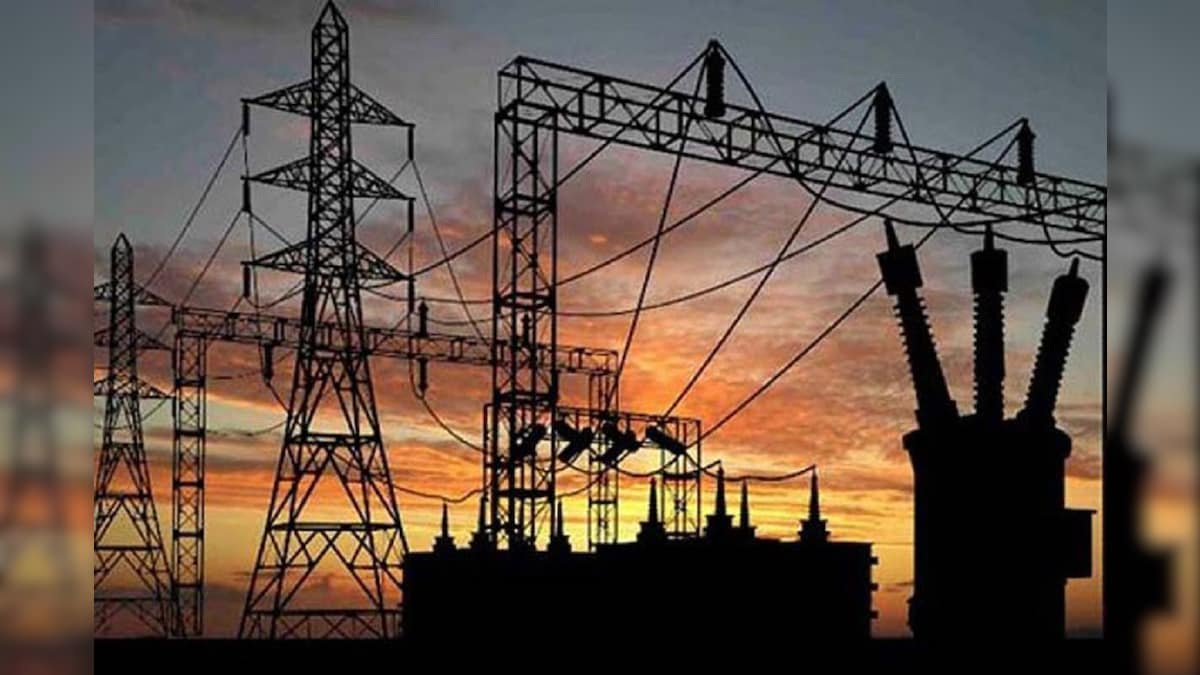
Power plants work by burning fossil fuels, and as a result, they emit a variety of pollutants. The p ollution they produce  that not only ends up in the atmosphere but also in waterways, contributing significantly to global warming. Coal combustion in power plants is responsible for around 46% of total carbon emissions.

5. Oil Drilling 

Oil drilling is responsible for 30 % of methane emissions and about 8% of carbon dioxide emissions. Oil drilling is a method of extracting petroleum oil hydrocarbons from the ground. As a result of this process, additional gases are released into the atmosphere, contributing to climate change. It is also harmful to wildlife and the environment.

6. Transport and Vehicles 

The large amount of transportation is done through cars, planes, boats and trains, almost all of which rely on fossil fuels to run. Carbon and other pollutants are released into the atmosphere when fossil fuels are burned. As a result, transportation is partly responsible for the greenhouse gas emissions. This effect could be reduced with the introduction of electric vehicles.

7. Consumerism 

Customers may buy any goods at any time because of technological and industrial advancements. This means that we are producing  more and more goods each year, and now we are overproducing them. The majority of the products we buy aren’t very sustainable, hence we’re producing more waste than ever before due to the shorter lifespan of electronics and textiles.

8. Farming

Because farming consumes a lot of green land, local habitats may be devastated to make room for farming. These animals emit a large number of greenhouse gases, such as methane, and they also produce a large amount of trash. Factory farming is responsible for even more climate issues because of the extra pollution it produces and the more animals it can hold.

9. Industrialization 

Industrialization has a number of negative consequences. All of the waste generated by this industry ends up in landfills or in our environment. Chemicals and materials used in industrialization have the potential to damage both the atmosphere and the soil underneath it.

10. Overfishing

Fish is one of humans main sources of protein and a lot of the world now rely on this industry. The amount of people buying and consuming fish has resulted in a decrease in marine life. Overfishing has also resulted in a loss of ocean variety. 

Ways to Prevent Global Warming

There are many changes we can bring about in our life both big and small to prevent global warming and save our planet. Firstly, we must stop deforestation in all forms. Do not cut down more trees as it will only worsen the level of carbon dioxide in the air. Instead, encourage people to plant even more trees to create a fine balance in nature.

Moreover, it reduces the usage of energy everywhere. It does not matter if you are at your home or at your office, the higher the energy used the more the carbon dioxide produced. Thus, do not waste electricity as it requires the burning of fossil fuels. As a result of the burning of fossil fuels, greenhouse gases in the atmosphere increase rapidly and contribute to global warming. Moreover, reduce the carbon footprint and do not travel through planes that often.

Most importantly, replace all your ordinary bulbs with LED lights. It will help in reducing the use of energy by a massive amount. Similarly, do not waste that energy. Instead of becoming more dependent, we need to reduce our dependence on fossil fuels and electricity right away.


MUSIC AND ITS IMPORTANCE

1.MUSIC IS THE KEY TO CREATIVITY:

A Creative mind has the ability to make discoveries and creates innovation.Listening to instrumental music challenges one to listen and tell a story about what one hears.It requires maximum right brain usage.The strength of all the Arts including writing, painting, dance, and theatre have the ability to create a similar effect.

2.MUSIC MAKES EDUCATION ENJOYABLE:

Music teaches us self discipline and time management skills that you cannot get anywhere else. When you study an instrument on a regular basis you work on concrete ideas and take small steps to achieve larger goals. This way of thinking organises the wiring in your brain to start looking at Learning in a new light.Music can be very engaging in the classroom and is a great tool for memorization. I’m sure if more teachers used  song to teach the multiplication tables, kids would retain that information much quicker.In raising children, Music education can be used to keep kids focused and keep them off the streets. Instead of running around and causing mischief, your child may be practicing piano or rehearsing music with friends.

3.MUSIC IS THE LANGUAGE OF THE UNIVERSE:

You’ve heard this time and time again, but what does it mean exactly? Music is universal in that there are no boundaries to understanding music. Even animals like Birds, Dogs, and Whales can understand music to a certain degree.It transcends all boundaries of communication because you can speak and tell stories to someone on the other side of the planet, even though you both don’t speak the same language. But I believe its important for one to have an open mind in order to be in touch with that sense of understanding.

4.MUSIC HAS SPIRITUAL POWERS:

No one really knows where Music came from but there are many theories that suggest music predates the existence of Mankind. One of the most commonly known uses for music was religious and sacred tribal events.Even today, many people claim that music is the key to God and to a holy, more fulfilling life through the Church.

5.MUSIC CAN CREATE A MOOD AND MAKE YOU FEEL EMOTION:

I’m sure you can remember a moment where a song has made you particularly sad or very excited and happy. But how does organized tones create such an effect on our senses? No one really knows why or where it comes from but there are many studies that have been done to show that there is an agreement of which emotions pertain to certain scales, chords, and harmonies.Music can whisk you away on an extended journey. Music can make time feel frozen. Music also has the power to suggest movement. All these things deal with the human senses.

6.MUSIC BRINGS PEOPLE TOGETHER:

MUSIC transcends all boundaries of communication because you can speak and tell stories to someone on the other side of the planet, even though you both don’t speak the same language. But I believe it’s important for one to have an open mind in order to be in touch with that sense of understanding.You’ve heard this time and time again, but what does it mean exactly? Music is universal in that there are no boundaries to understanding music. Even animals like Birds, Dogs, and Whales can understand music to a certain degree.There is a certain type of connection that comes when you make music in a group. The same is true for those who are listening to music in a group and interacting with music through Dance. This type of behaviour is rooted in our history and our discoveries as human beings.

CONCLUSION:

What is amazing about music is that it is imbedded within all of us. Everyone can understand it and feel something if they open themselves up. Playing music with other musicians is an incredible feeling. Some people describe it as rowing down a river together.

Music has a very important role in human life because everyone likes to listen to music. The person who listens to music with pleasure in his life knows the importance of music in the real-life world, if a person is interested in music, then that person is always happy in his life, and remains stress-free in every problem. Listening to music gives peace and joy to the mind, listening to music inspires a person to do something better in life.

Music can transform the emotions and feelings of the people within no time. It can lessen the stress, pain, struggle, distraction and bring positivity and calmness in our daily life. Music holds the power to bring people together in different ways. Music can make us expressive and help us in understanding our feelings and emotions in a better manner.

Should courts declare prostitution legal in India?

In general, the word ‘prostitution’ refers to the situation of women which means in Latin terms ‘expose publicly’. It means for hire, sexual activity by either giving or receiving one’s body. It is common lewdness of women in exchange of some value or gain. It can be considered as a business that exploits an individual’s vulnerability, particularly the women and children and also violates the human rights completely and making them object to transaction of money by use of force and power for the purpose of sex, bondage or labour. In India, prostitution is regarded as one of the oldest profession. In Indian society, prostitution is a problem of serious concern and its solution is seemingly difficult. It is a gender specified phenomenon where mainly the victims are girls and women and the men being the perpetrators. The dispensing chance of prostitution is nil if observed practically, thus it is a still a bitter reality today. The form of existence has altered but the outlook and sight has remain unchanged. One can describe the picture of prostitutes as any sex worker or prostitute found either in remote or public place staring at the public with a smile of welcoming gesture as well as approach.

Globally, consistent stand have been taken criticizing the gross violation of human resources and has encouraged the government to take strict measures against it. It was observed that providing a mandate of legal importance would prompt a safe and better society and environment for women. A platform should be provided to access justice in case of gross violation. The prostitutes or the sex workers should be made aware of their rights, financial aids, interests, health and freedom to deny or choose to take medical check ups on regular basis and other important benefits.

As under the act, prostitution is neither punishable nor illegal. In the context of India, though the Court has marked prostitution to be unethical yet explicitly, it is not illegal. Certain acts such as managing, pimping and owning of bordello, luring or engaging an individual into prostitution, dependence on prostitution as a source of income, trafficking of children and women for the prostitution purpose, etc. are considered illegal under the Immoral Traffic (prevention) Act, 1956 (ITPA). In India, a large number of bordellos are run illegally in some of the major cities like Delhi, Mumbai and Kolkata.

“Every country has made the laws to regulate prostitution so it might remain within its legal limits and without unduly violating upon the institutions of the marriage and family.”

– Law Commission Report of India

The societies in which prostitution is regarded legal have inferred that regulation of the profession is best as it is impossible to be ceased. India should also acquire understanding from such societies and thus take preventive actions. Today, there are millions of prostitutes in India and a quarter of them are believed to be minors, making Child prostitution and increased HIV virus incidences as among the most gruesome issues in India.

Prostitution should be made legal considering the following facts:

  • Medical checkups on regular basis will reduce the spread of STDs- Provision of adequate tools of birth control and conduction of regular medical checkups will result in the reduction of risk of sexual transmitted diseases which would possibly be transmitted from workers to customers and vice-versa. Thus, creating a safe and healthy society.
  • Protection of minors- Today a great number of minors are involved in prostitution. Therefore, by legalizing, the minors can be removed from this profession and their rights can be preserved safely.
  • Removal of middlemen and pimps- The legalization would reduce the criminal conduct and the sex worker’s wages would be increased as there would be no requirement of the middlemen and pimps. this would eventually lead to an upgradation in the industry system.
  • The count of sexual assaults and rapes would be reduced- Considering it as an easy alternative, the people would satisfy their sexual urge by directly resorting to the prostitutes instead of committing any heinous offence.
  • Protection of the rights of sex workers- Any sex worker could file complain and can prevail justice if denied agreed payment or ben a victim to any sexual assault.
  • Right to use body according to free will- Nobody prevails the right to put pressure on any individual to adhere a person’s standard in terms to morality.

Thus, it can be concluded that sex trade is here to stay and it can be ceased by any means, thus by recognizing it as a legitimate form of work would provide guaranteed benefits to the parties involved. The legalization of prostitution would preserve the rights of the sex works along with the job protection and also provide them a chance to live a normal life which they deserve.

If I Ran The World

Now go to Daisy at Home to get the If Kids Ran the World themed menu. We invite you to share your dinner photos with us any time of the month on our Family Dinner Book Club Facebook page. If Kids Ruled the World Leo and Diane Dillon is a story about kids helping make our world a better place. .If it’s so inspiring that kids rule the world, read it aloud and it will impact your student community.

This book is a true celebration of childhood, play and imagination. This is the pinnacle of Dr. Seuss, celebrating the young imagination and creating a fantasy world that will delight and captivate readers of all ages. Description Leo and Diane Dillon, two-time Caldecott Medalists, show children how to create a more generous and peaceful world through play where everyone can share with each other. Two-time Caldecott Medalists Leo and Diane Dillon show how children can use play to create a more generous and peaceful world for all.

Diane Dillon lives in Brooklyn, New York. Leo and Diane Dillon are two of the most famous illustrators of our time. Leo and Diane created award-winning picture books, book covers, magazines and other works of art until Leo’s death in 2012. This is their last collaboration. Their long list of awards includes two Caldecott Medals, a NAACP Image Award, five Coretta Scott King Awards and Honors, four Boston Globe-Horn Book Awards, and induction into the Society of Illustrators Hall of Fame. They also won Coretta Scott King awards in 2003 for Rap a Tap Tap Heres Bojangles – Think of That and in 2005 for Virginia Hamilton’s People Could Fly – Picture Book.

The Dillons’ contributions to art and illustration, and their lifelong dedication to the diversity of children’s books, makes it uncomfortable to criticize If Kids Ruled the World. Criticism is further tempered by the fact that the book was the last edition the couple created together: Leo died before the book was finished.

Particularly helpful is the emphasis on sharing all the good things that come alive in the world the child has created. The story presents idealistic opportunities for global camaraderie and justice for all people – if only children ruled the world. In the colorful tree house, the children’s rainbow identifies the most important needs in our complex world, while the following branches feature boys and girls who happily help others.

If kids rule the world, even adults are better off. I like that the author points out that if children rule the world, then there will be more kindness and harmony. They say that if children rule the world, young people will make sure everyone has enough to eat and everyone can wear whatever they want without being ridiculed.

The book enlightens the reader about what would happen if children were in charge of the world. This book has so little to do with the world in which real children live, and it seems that this is a gesture, not a call to action. Leo Dillon’s latest book with Diane Dillon imagines what the world would be like if kids were in charge.

The Dillons, in their latest collaboration (Leo died in 2012), are turning the creation of this ideal world into a game; no holiness, no sense of tiresome duty. Perhaps Dillon’s intent was to show diversity, but a scene like this suggests that the past is irrelevant to the present.

They do not think about the poor and do not think about the proper development of the nation and the world as a whole, which shows how self-centered and selfish the rulers of the world are. In the current world scenario, every person who wants to be the president or prime minister of a country has only one goal – to rule the country or the world for the sake of money and power. The world cannot depend only on the rich; the poor also play a very important role in the whole environment.

I would just like to be a guiding light for the world and not impose thoughts on people that are not suitable for me as a ruler or even the people of the world as citizens. Seriously, if I really ruled this world, I would make sure that every person is happy in everything they do, and also respect each other or even the life of the other. That when you leave, you will be a better person than when you started.

It makes us doubt everything and in some cases robs us of the will to live. Our idea of ​​what looks good in the context of work no longer matches.

This means that in a world where we work more independently of others, there will be less feedback. Many agencies will move to campus or shared workspaces instead of a store front. Sarah and I take turns showing the children table decoration crafts.

On the 15th of each month, we share the title of the featured book. Satisfy your voracious literary appetite with a lifetime supply of free books in all formats and genres, as well as books, videos, and audiobooks that don’t wait. Pair it with ever-expanding shelf space so you never have room for your collection.

All people, regardless of gender or socioeconomic status, have the opportunity to learn to read and write. At birth, new mothers will be encouraged to attend parenting courses to learn how to care for their baby, including feeding and accompanying the baby through the various stages of his or her young life. If the child is out of wedlock, the mother will receive additional advice on how to cope emotionally and financially if she does not have family support.

Organize a conversation for the company’s senior management (both men and women) so that you can also share it with your boss, team, or HR. Women leaders can create ROI in their organizations, industries and the world right now. And putting the world in the hands of women would be too simplistic.

If you have a solid idea of ​​how to make a difference and are brave enough to lead the way, then I believe the world needs you right now. Because I’m willing to bet that your ideas, talents and drive can make the world a better place, and I love being a woman who supports you.

But I can’t do all this work alone, so I’m going to select a few key senators, representatives, and governors to serve as my advisory committee. But I suspect that after experiencing all the upgrades and upgrades to our core services, I will garner the most votes.

Finally, to say that I would do all this if I had to manage this world is easier than to actually implement them. I also understand that you may be the type of woman who wants to better understand what they’re getting into before jumping into a conversation. do not worry.

Philosophy in different parts of the world

The word philosophy means ‘ love of wisdom ’ in Greek. It is the pursuit of wisdom , truth and knowledge. It is the study of life’s fundamental questions involving truth, morality, ethics, reasons, logic and existence. A human being , at some point in his life , has wondered upon questions such as ‘ why am I here’ , ‘what is truth’, ‘what is reality’ , ‘is there a free will’ , ‘ what is right and wrong’ etc. These questions come in the realm of philosophy. It is closely related to natural sciences.

History of philosophy

Western philosophy

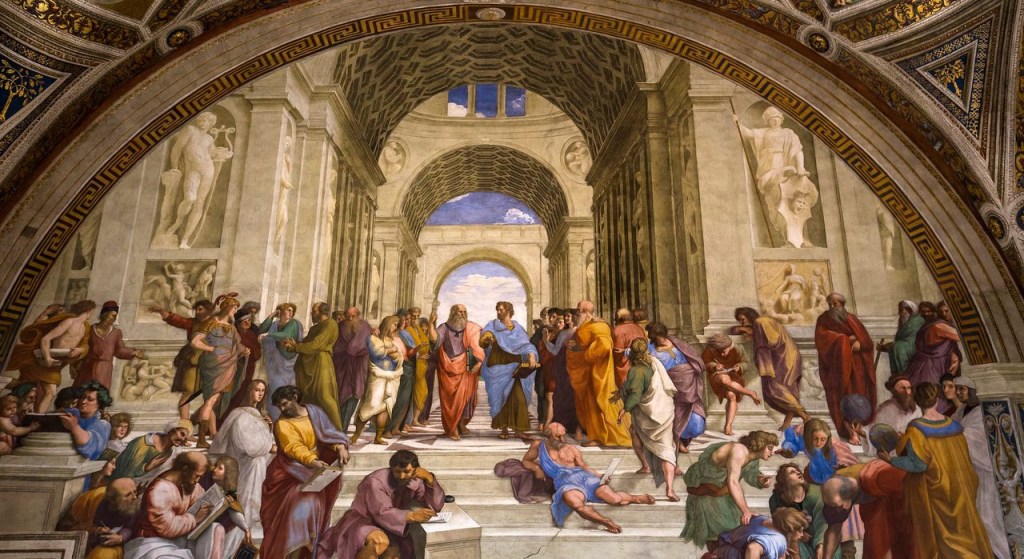
The ancient western era was dominated by Greek philosophical school of thoughts. This era was largely influenced by Socrates and Aristotle. The common topics discussed included metaphysics, cosmology, atomism and monism . In the medieval period , with the rise of the Roman Empire and Christianity , questions such as mature of God , evil & good were pondered upon. Modern philosophy concerned with developing a secular foundation and discarded the authority of religion.

Islamic Philosophy

Islamic philosophy is mostly done in Arabic . Two main schools of thought were Kalam ( which focused on Islamic theology) and Falsafa. Philosophers such as Al Kindi , Avicenna and Averroes were greatly influenced by the work of Aristotle whereas Al Ghazali was highly critical of him. The 19th and 20th century Arab world witnessed Nahda movement ( The Awakening or The Arab Renaissance). This shaped the modern Islamic philosophy.

Indian Philosophy

Indian philosophy included concepts like dharma , karma, pramana , dukha-sukha and moksh. It is grouped based on teachings of Vedas and Upanishads . The Himdu philosophers of various orthodox ( astika) schools investigated topics such as metaphysics, ethics , psychology. These schools presented different interpretation within the framework of Vedic knowledge. On the other side , the unorthodox (nastika) traditions rejected the ideas of Atman , Brahman and Ishwara . Jainism accepted atman bit discarded ishwara, vedas and brahman. Buddhism only accepted concept of rebirth and karma.

East Asian Philosophy

The Chinese philosophy saw the rise of schools such as Confucianism , Legalism and Taoism. These traditions developed metaphysical , political and ethical theories such as Tao, Yin & Yang , Ren & Li. Buddhism arrived in China through Silk route and transformed into Chinese form Zen. Many different philosophies such as that of Korea, Japan and Vietnam were influenced by the Chinese philosophy. In modern era, China and Japan philosophers have incorporated ideas of western philosophy. Kokugaku thinker from Japan returned to pure traditions called Shinto that is untainted by foreign influence.

Indigenous American Philosophy

This consists of variety of beliefs including principle of presence of ‘ The Great Spirit’ and concept of Orenda or spiritual power. The practices to access the transcendental experiences of mind came to known as Shamanism. The Nahua metaphysics proposed the concept of an ultimate universal energy which it says is single, vital , self generating sacred force.

Challenges & opportunities to combat Climate Change through technology-led Carbon Capture

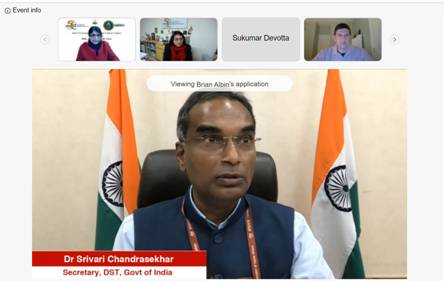
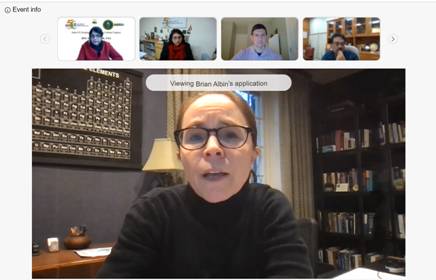
 Experts from India and US discussed the challenges and opportunities to combat climate change through technology-led Carbon Capture and Utilisation solutions at the Indo-US Scoping Workshop on Carbon Capture held on 21st  January 2022, jointly organized by DST India and DoE USA.

Dr. S Chandrasekhar, Secretary, Department of Science & Technology (DST), Govt of India, said that at the recently concluded COP-26 at Glasgow, the Hon’ble Prime Minister Shri Narendra Modi brought forth the country’s remarkable performance as well as ambitions to meet the climate goals despite being one of the fastest growing economy in the world. “The PM has given a mandate for all of us to become a net-zero emissions nation by the year 2070,” Dr. S Chandrasekhar highlighted in his opening remarks.

“Under a strict climatic regime, we can realize the identification and adoption of a right balance of portfolio of emission curtailment technologies. Carbon Capture, Utilization, and Storage (CCUS) is among one such key pathways to reduce emissions while continuing to develop sustainably at an unprecedented pace. CCUS clearly aligns with five of the seventeen Sustainable Development Goals (SDGs), namely, climate action; clean energy; industry, innovation, and infrastructure; responsible consumption and production; and partnerships to achieve the goals,” he said at the first workshop on thematic of Carbon Capture.

Dr. Chandrasekhar briefed about the recent initiatives of the Department of Science and Technology towards technology-led RD&D in the area of CCUS. He informed that DST India became part of the transnational multilateral platforms such as Mission Innovation and Accelerating CCUS Technologies (ACT) along with other member countries, including USA for Collaborative RD&D in the area of CCUS. He further added that the Department of Science & Technology, Govt of India, and Department of Energy, USA are jointly organizing these series of Indo US Scoping Workshops on Carbon Capture, Utilization, and Storage scheduled to be held from 21st  January 2022 to 25th  February 2022 for exploring the complementary strengths and gaps in the area of CCUS between the two countries and evolve collaborative techno- led endeavours for together working towards achieving net Zero Carbon goals.

Dr. Jennifer Wilcox, Acting Assistant Secretary, Office of Fossil Energy and Carbon Management (FECM), U.S. Department of Energy (USDOE), USA, said that India is a valuable partner in developing new technologies to help in combating climate & clean energy goals. This partnership was underscored when last year Prime Minister Shri Narendra Modi launched a new “India-US Climate and Clean Energy Agenda 2030 Partnership,” which envisages bilateral cooperation on strong actions in the current decade to meet the goals. 

Dr. Wilcox gave an overview of the US initiatives regarding clean energy and said it is a global crisis and requires a global response in clean energy technologies and an international partnership to achieve carbon net-zero status. She hoped that this workshop would provide an opportunity to broaden and deeper collaborations & engagements.

The participants comprised of academicians, researchers, experts, industry, and policymakers from domains of Carbon Capture, Utilization, and Storage, Climate Change, and Environmental Engineering,  The Experts from both countries delivered their technical insights and views for broad discussion within the contours of the proposed thematics of Carbon Capture, around complementary strengths and gaps to evolve future collaborative endeavours between India and USA to collectively work towards achieving carbon net Zero status.


*****

Indigenous Sensor, Weapons & EW Suite for LCA Tejas and Air Independent Propulsion for submarines

 Defence Research and Development Organisation (DRDO) will display two tableaux during the forthcoming Republic Day Parade on January 26, 2022. The tableaux are ‘Suite of Indigenously Developed Sensors, Weapons and Electronic Warfare Systems for LCA Tejas’ and ‘Air Independent Propulsion System (AIP)’ developed for the submarines of Indian Navy. 

The first tableau displays an indigenously-developed Advanced Electronically Scanned Array Radar called ‘Uttam’; five different aerial launched weapons and an Electronic Warfare (EW) Jammer to further enhance the capabilities of fourth generation LCA (Light Combat Aircraft) Tejas. The ‘Uttam’ radar is highly compact and modular state-of-the-art sensor to provide situational awareness to the pilot. The radar is developed by Bangalore-based electronics laboratory.

 The five aerial launched weapons include air–to-air missile ‘Astra’ which is an all-weather, active radar homing missile with beyond visual range striking capabilities; ‘Rudram’, a new generation anti-radiation missile with a capability to destroy adversary’s radar and communication systems; ‘Smart Anti Airfield Weapon, meant to destroy the ground targets and airfields; a long range guided glide bomb ‘Gaurav’ and ‘Tactical Advanced Range Augmentation’, an advanced precision strike weapon meant for ground targets. These weapons are developed using complex technologies by Hyderabad-based DRDO laboratories. 

Tejas is fitted with ‘Advanced Self Protection Jammer’ designed to provide protection from acquisition radars, fire control radars, anti-aircraft artillery and airborne multirole radars. Developed by electronic laboratory at Hyderabad, it provides the electronic warfare capability for the LCA. Integration of these weapons, radar and EW systems with LCA is an important step towards increasing the indigenous content of systems and makes the LCA mission ready.

 The second tableau showcases indigenously-developed AIP System for propelling the Indian Naval submarines underwater. The AIP System is powered by indigenously-developed fuel cells with a novel onboard hydrogen generator. It is one of the most advanced AIP Systems in the world where Fuel Cell Technology is used to generate onboard power. The AIP allows a submarine to be submerged for longer periods compared to conventional diesel-electric submarines and makes the sub-surface platform more efficient by making it quieter than even a nuclear submarine. 

At present, the AIP is customised for P-75 class of submarine. Once fitted, it will allow the submarine to stay under water for longer time without the need to surface frequently. This will substantially enhance the underwater endurance of the submarine. This niche technology is available only with very few countries in the world. The DRDO has developed this technology with the collaboration of academia and industry.

Commitment towards women empowerment through its R- Day tableau

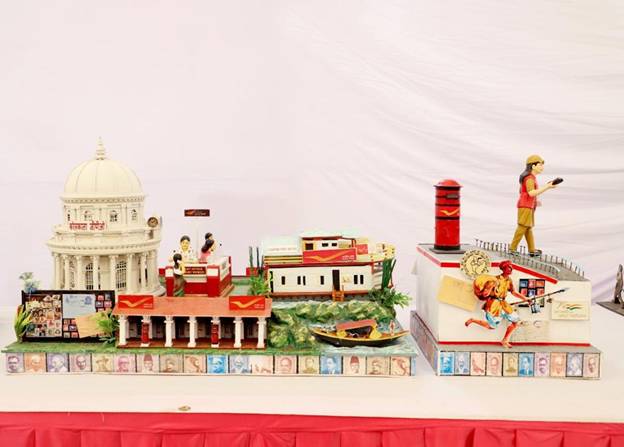
 India Post has been serving the nation since the last 167 years, standing unabated in its dedication and undying passion of rendering postal, financial and government services, in the remotest corners of the country. As the nation celebrates Azadi Ka Amrit Mahotsav, commemorating the seventy fifth year of independence, India Post, through the Republic-Day tableaux, has attempted to reaffirm its commitment towards women empowerment both within and through the Post offices.

THE THEME OF INDIA POST R-DAY TABLEAUX IS INDIA POST:75 YEARS@ RESOLVE-WOMEN EMPOWERMENT”


The tableaux shall showcase the following elements:

FRONT PORTION:

India Post stands as a model employer of women and with its mandate for financial inclusion almost 50% account holders of the India Post Payments Bank as well as the Post Office Savings Bank are women.  

The tableau displays the robust outreach and the modern face of India Post that ties the entire country in one thread and aims to portray its focus on women empowerment through the ‘All Women Post Offices’.  Divyang friendly post offices as portrayed by the ramp reiterate our social commitments. 

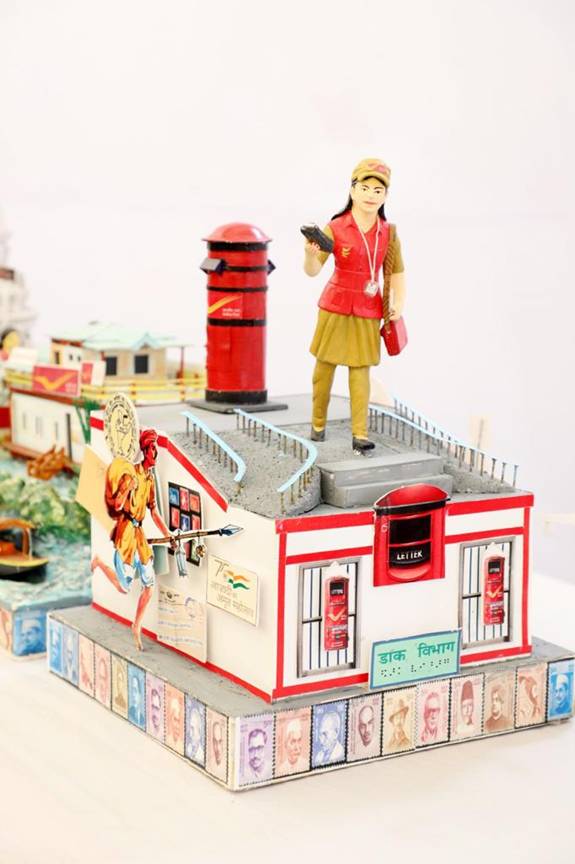
Post Woman:The tableau presents the modern face of India Post featuring a young post woman with a digital device in one hand and a postman’s bag in the other, thus conveying the message of blending technology with tradition. Standing tall beside her is the ubiquitous red-letter box that reflects people’s unabated faith in India Post. Also displayed are India Post Services like speed post, e-commerce, ATM Cards etc. which are trusted by millions of customers. The image of the postwoman is juxtaposed with that of the Harkara on high relief projecting the transition of India Post over the decades.  The two images are set in the foreground of the ubiquitous red-letter box.

The recently concluded “75 Lakh Postcards to PM Campaign” is also showcased.


REAR TRAILER:


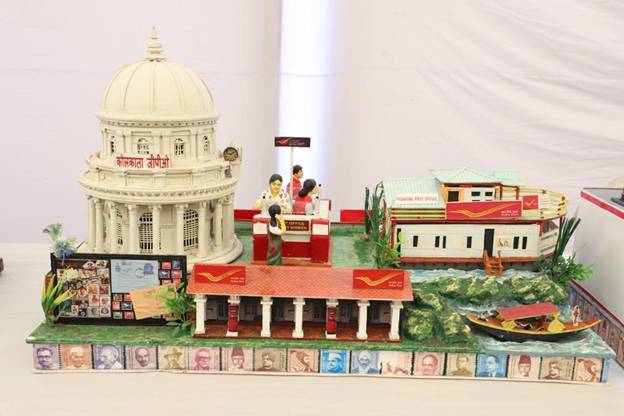
FLOATING POST OFFICE: The trailer features the Floating Post Office of Srinagar emphasizing the SUKANYA SAMRIDDHI YOJANA, a scheme under Hon’ble PM’s initiative of Beti Bachao Beti Padhao campaign.

All WOMEN POST OFFICE: The All Women Post Office showcases India Post’s resolve and a step towards gender equality.

The 3D images of the post office counters where we see women officials rendering multifarious service to the customers such as Aadhar enrolment as well as Postal ATM Counters, emphasizes India Post’s resolve towards women empowerment. In case of India Post Payments Bank, almost 50% account holders (2.24 Cr.) are women and 98% of such accounts have been opened at doorsteps.

KOLKATA GPOAt the rear is the Kolkata GPO; the oldest GPO, a proud witness to the journey of India Post and one of the iconic heritage buildings of India.

THE LOWER PART OF THE TRAILER: Adorning the tableau, a collage of stamps pertaining to the country’s freedom struggle, digitally printed on khadi and meant to be displayed in different post offices across the country after the Republic Day.

GROUND ELEMENT: However, the uniqueness of the tableaux lies in its foot soldiers who are real-life postmen/post women from different parts of India. They stand symbolic to the transition of India Post from the harkaras to the postmen in bicycles and e-bikes, thus highlighting our journey.


Financial Support Being Extended Under ‘Sub-Mission on Agriculture Mechanization’

 In amajor boost to promote precision farming in India, the Union Ministry of Agriculture and Farmers Welfare has issued guidelines to make drone technology affordable to the stakeholders of this sector. The guidelines of “Sub-Mission on Agricultural Mechanization” (SMAM) have been amended which envisages granting upto 100% of the cost of agriculture drone or Rs. 10 lakhs,whichever is less, as grant for purchase of drones bythe Farm Machinery Training & Testing Institutes, ICAR institutes, Krishi Vigyan Kendras and State Agriculture Universities for taking up large scale demonstrations of this technology on the farmers’ fields.

The Farmers Producers Organizations (FPOs) would be eligible to receive grant up to 75% of the cost of agriculture drone for its demonstrations on the farmers’ fields.

A contingency expenditure of Rs.6000 per hectare would be provided to implementing agencies that do not want to purchase drones but will hire drones for demonstrations from Custom Hiring Centres, Hi-tech Hubs, Drone Manufacturers and Start-Ups. The contingent expenditure to implementing agencies that purchase drones for drone demonstrations would be limited to Rs.3000 per hectare. The financial assistance and grants would be available until March 31, 2023.

In order to provide agricultural services through drone application, 40% of the basic cost of drone and its attachments or Rs.4 lakhs, whichever less would be available as financial assistance for drone purchase by existing Custom Hiring Centers which are set up by Cooperative Society of Farmers, FPOs and Rural entrepreneurs. The new CHCs or the Hi-tech Hubs that will be established by the Cooperative Societies of Farmers, FPOs and Rural entrepreneurs with financial assistance from SMAM, RKVY or any other Schemes can also include Drone as one of the machines along with other agricultural machines in the projects of CHCs/Hi-tech Hubs.

Agriculture graduates establishing Custom Hiring Centers would be eligible to receive 50% of the basic cost of drone and its attachments or up to Rs.5 lakhs in grant support for drone purchases. Rural entrepreneurs should have passed class tenth examination or its equivalent from a recognized Board; and should have remote pilot license from Institute specified by the Director General of Civil Aviation(DGCA) or from any authorized remote pilot training organization.

The subsidized purchase of agriculture drones for CHCs/Hi-tech Hubs will make the technology affordable, resulting in their widespread adoption. This would make drones more accessible to the common man in India and will also significantly encourage domestic drone production.

The drone operations are being permitted by Ministry of Civil Aviation (MoCA) and Director General of Civil Aviation (DGCA) through the conditional exemption route. MoCA has published ‘Drone Rules 2021’ vide GSR No. 589(E) dated 25th August 2021 to regulate the use and operation of Drones in India. The Department of Agriculture & Farmers Welfare has also brought out Standard Operating Procedures (SOPs) for use of Drone application with pesticides for crop protection in agricultural, forestry, non-cropped areas, etc. and for Drone Application in Spraying for Soil and Crop Nutrients. The demonstrating institutions and all the providers of agricultural services through drone application have to comply with these rules/regulations and SOPs

Click Here for SOP for Use of Drone Application

*****

APS/JK

Limit of 5 persons for door to door campaign enhanced to 10 persons

 The Election Commission of India today held a review meeting with the Secretary, Ministry of Health and Family Welfare, Government of India through virtual mode. The Commission also held virtual meetings with Chief Secretaries, Chief Electoral Officers and Health Secretaries of Goa, Manipur, Punjab, Uttarakhand and Uttar Pradesh.

Chief Election Commissioner Shri Sushil Chandra along with Election Commissioners Shri Rajiv Kumar and Shri Anup Chandra Pandey accompanied by Secretary General and concerned Deputy Election Commissioners held a comprehensive review of the present situation with respect to status and projected trends of COVID pandemic in the five poll going states. The Commission also reviewed Vaccination status and action plan for expeditiously completing vaccination for 1st, 2nd and booster dose for eligible persons amongst polling personnel. The Commission deliberated on relaxing restrictions for physical rallies in the wake of prevailing situation.

After taking into consideration inputs and ground reports from these officers, the Commission also deliberated on requirements of the campaign period in phases where candidate list will be finalised on January 27, 2022 for Phase 1 and on January 31, 2022 for Phase 2.

After considering the present situation, facts and circumstances as also the inputs received in these meetings, Commission has decided as follows:

(1) No road show, Pad-yatra, cycle/bike/vehicle rally and procession shall be allowed till January 31, 2022.

(2) Since contesting candidates for Phase 1 elections will be finalised on January 27, 2022, Commission has decided to allow physical meetings of concerned Political parties or contesting candidates in designated open spaces with a maximum of 500 persons or 50% of the capacity of the ground or the prescribed limit set by SDMA, whichever number is lesser, from January 28, 2022 till February 8, 2022 (excluding the silence period).

(3) Since contesting candidates for Phase 2 elections will be finalised on January 31 2022, Commission has decided to allow physical meetings of concerned Political parties or contesting candidates with public in designated open spaces with a maximum of 500 persons or 50% of the capacity of the ground or the prescribed limit set by SDMA, whichever number is lesser, from February 1, 2022 till February 12, 2022 (excluding the silence period).

(4) The Commission has also enhanced the limit of door to door campaign. Instead of 5 persons, now 10 persons, excluding security personnel, will be allowed for door to door campaigns. Other instructions on door to door campaigns will continue.  

5) Commission has already granted relaxation for the political parties to the extent that indoor meetings of a maximum of 300 persons or 50% of the capacity of the hall or the prescribed limit set by SDMA is allowed.

(6) Commission has also allowed video vans for publicity with usual COVID restrictions at designated open spaces with a maximum of 500 viewers or 50 % of the capacity or the limit set by SDMA, whichever number is lesser, in the poll going States subject to public convenience and no hindrance to smooth flow of traffic. (Instructions in this regard are being sent to the CEOs separately).

(7) Political parties and contesting candidates shall ensure the compliance of COVID appropriate behaviour & guidelines and Model Code of Conduct at all occasions during the activities connected with elections.

(8) It shall be the responsibility of the DEO concerned to identify and to notify the designated spaces in advance for the aforesaid purposes.

(9) All remaining restrictions as contained in the Revised Broad Guidelines for Conduct of Elections, 2022 issued on January 8, 2022 shall continue to operate.

All concerned State/District authorities shall ensure full compliance of these instructions.

The Commission will review these instructions at a subsequent date.

***

Eliminating the barriers of the progress of the country

 The DMs shared their experience which has led to improvement of performance of their districts on a host of indicators. The Prime Minister sought direct feedback from them about the key steps taken by them which has resulted in success in the districts, and about the challenges faced by them in this endeavour. He also asked them about how working under the aspirational districts programme has been different from their work done earlier. The officers discussed how JanBhagidari has been a key factor behind this success. They spoke about how they kept people working in their team motivated on a daily basis, and made efforts to develop the feeling that they were not doing a job but were performing a service. They also spoke about increased inter-departmental coordination and benefits of data driven governance. 

If you wish to get solutions for your electrical need, you can visit at https://lyntec.com/

CEO, NITI Aayog gave an overview of the progress and implementation of the Aspirational District programme. He mentioned how the programme leveraged competitive and cooperative federalism, driven by a Team India spirit. The efforts have resulted in these districts performing remarkably better in every parameter, a fact which has been recognized independently by global experts as well. The best practises like smart classroom initiative from Banka, Bihar; Mission Aparajita to prevent child marriages in Koraput, Odisha etc. were replicated by other districts as well. Analysis of performance of districts vis-a-vis stability of tenure of key officials of the district was also presented.

Rural Development Secretary gave a presentation on a mission to uplift 142 selected districts, on the lines of the focussed work done in the aspirational districts. Centre and State will work together to uplift these identified districts to address the pockets of under-development. 15 sectors corresponding to 15 Ministries and Departments were identified. In the sectors, key performance indicators (KPIs) were identified. The aim of the government is to ensure that the KPIs in the selected districts surpass the state average in the next one year and that they come at par with national average in two years. Each concerned Ministry/Department has identified its set of KPIs, on the basis of which, districts were selected. The initiative is aimed at achieving saturation of various schemes by various departments in the districts in mission mode, in convergence with all stakeholders. Secretaries of various Ministries and Departments presented an overview of an action plan about how their ministries will go about in achieving these targets.

Addressing the officials, the Prime Minister noted that when the aspirations of others become your aspirations, when fulfilling the dreams of others becomes the measure of your success, then that path of duty creates history. Today we are seeing this history being made in the aspirational districts of the country, he added.

The Prime Minister noted that various factors led to a situation where aspirational districts, in the past, started lagging behind. In order to facilitate holistic development, special hand-holding was done for the aspirational districts. The situation has changed now as today, Aspirational Districts are eliminating the barriers of the progress of the country. The Aspirational Districts are becoming an accelerator instead of an obstacle. The Prime Minister underlined the expansion and redesigning that has taken place due to the campaign in the Aspirational Districts. This has given a concrete form to the federal spirit and culture of the Constitution, the basis of which is the team work of centre-state and local administration, the Prime Minister said.

The Prime Minister stressed that for development in aspirational districts, a direct and emotional connect between the administration and the public is very important. A sort of ‘top to bottom’ and ‘bottom to top’ flow of governance. Important aspect of this campaign is technology and innovation, he said. The Prime Minister also mentioned districts where excellent results have been obtained by the use of technology and innovation in the fields like malnutrition, clean drinking water and vaccination.

The Prime Minister noted that convergence is a major reason for the country’s success in the aspirational districts. All resources are the same, government machinery is the same, officials are the same but the results are different. Seeing the entire district as a unit enables the officer to feel the enormity of her efforts and give a sense of purpose of life and satisfaction of bringing meaningful change.

The Prime Minister noted that during the last 4 years, Jan-Dhan accounts have increased by 4-5 times in almost every aspirational district. Almost every family has got a toilet and electricity has reached every village. A new energy has been infused in people’s lives, he said. The Prime Minister said due to a tough life the people of Aspirational Districts are more hard-working, courageous and capable of taking risks and this strength should be recognized.

The Prime Minister remarked that aspirational districts have proved due to the elimination of silos in implementation optimum utilisation of resources takes place. He emphasized the exponential benefits of this reform and said when silos end, 1+1 doesn’t become 2, 1+1, becomes 11. We see this collective power in the Aspirational Districts today, the Prime Minister said. Elaborating on the approach of governance in the Aspirational Districts, the Prime Minister said that, firstly, people were consulted in identification of their problems. Second, the working style kept on being refined on the basis of experiences in the Aspirational Districts and measurable indicators, real time monitoring of progress, healthy competition among the districts and replication of good practices were encouraged. Thirdly, through reforms like stable tenures of the officers, creation of effective teams was encouraged.  THis helped in getting big results even with limited resources. The Prime Minister asked for developing detailed guidelines for field visits, inspections and night halts for proper implementation and monitoring.  

The Prime Minister drew the attention of the officers towards the changed mindset of New India. He reiterated that today, during the Azadi ka Amrit Kaal, the country’s goal is to achieve 100% saturation of services and facilities. That is, we have a long way to go compared to the milestones we have achieved so far and have to  work on a much bigger scale. He stressed time-bound targets for taking roads to all the villages of the districts, ayushman cards, bank account  to every person, Ujjwala gas connection, insurance, pension housing for everyone. He called for a two year vision for every district. He suggested that every district can identify 10 tasks to be completed in the next 3 months to improve ease of living for common people. Similarly, 5 tasks may be associated with the Azadi Ka Amrit Mahotsav to achieve historical success in this historical epoch.

The Prime Minister said the country is witnessing a silent revolution in the form of Digital India. No district should be left behind in this. He stressed the importance for digital infrastructure reaching every village and becoming a means of door-step delivery of services and facilities. He asked NITI Aayog to devise a mode of regular interaction between the district DMs. Central Ministries were asked to document the challenges of these districts. 

The Prime Minister said various ministries and departments of the government have prepared a list of 142 districts which are not so much lagging in development but are weak on one or two parameters. The Prime Minister emphasized the need to  work with the same collective approach as is being done in the Aspirational Districts. “This is a new challenge for all the governments- the government of India, the state government, the district administration, and the government machinery. Now we have to complete this challenge together”, Shri Modi said

The Prime Minister urged the Civil Servants to remember their first day in their Services and recall the passion and urge to serve the country. The Prime Minister asked them to move forward with the same spirit.

Impact Of Increasing Oil Prices On Indian Economy

The latter will come true as more than half of India’s remittances will go through the Gulf countries, which are likely to see better economic conditions with higher oil prices. In terms of numbers, a $10-a-barrel rise in crude oil prices would increase spending on commodity imports by about $20 billion, offset in part by a $6-billion increase in oil exports and dollars in workers’ remittances. The cost of imports will be halved if the price of crude oil continues to hover around $30 a barrel. In addition, every $10 increase in crude oil prices has a direct impact on a country’s current account (CAD) deficit.

Thus, when crude oil reaches $85 per barrel, the oil deficit will rise to $106.4 billion, or 3.61% of India’s GDP. According to a report by the Reserve Bank of India (RBI), every $10/barrel rise in crude oil prices would lead to an additional deficit of $12.5 billion, equivalent to 43 basis points of India’s GDP. According to an analysis by the Reserve Bank of India, every $10-a-barrel rise in crude oil prices would result in an additional $12.5 billion deficit. Higher prices affect the current account deficit, which means that the value of imported goods and services exceeds the value of exports.

Changes in commodity prices can affect the economic ecosystem at all levels, from family budgets to corporate income and national GDP. Rising oil prices have a negative impact on several factors such as the stock market, currency, inflation, transportation and manufacturing sectors, and government spending. Rising oil prices will drive up the cost of energy, which, combined with the oncoming winter and increased commercial activity as the pandemic eases, will have a major impact on the economies of most countries of the world. India, which relies on imports for more than 80% of its fuel consumption and already has fuel prices above Rs 100 for both petrol and diesel in most cities, will be no exception.

Rising crude oil prices have helped lift the price of gasoline and diesel in India to record highs. High crude oil prices are the result of less drilling by shale gas producers in the United States, disruptions to crude oil supplies due to hurricanes in the Gulf of Mexico, and runaway fuel demand as the global economy stabilizes. -19 pandemic, which significantly reduced economic activity. With the global economic recovery following COVID-19, global demand for crude oil increased in 2021, driving prices up sharply. Crude oil prices have risen steadily since early 2021, when Brent crude traded at around $52 a barrel, fueled both by hopes of improved demand thanks to regional economic recovery and reduced supply from major oil producing countries.

Crude oil prices hit a two-year high, with Brent oil rising above $71 a barrel on Wednesday, reaching its highest level since May 2019, when major oil-producing countries announced they were joining plans to gradually increase crude oil production. World crude oil prices rose to their highest level in 13 months, driven by strong demand prospects amid a global economic recovery and supply disruptions in the Middle East. In February and March 2020, crude oil prices accelerated their decline in response to the coronavirus pandemic and the expected sharp decline in oil demand. The fall in prices is associated with an increase in supply due to hydraulic fracturing.

This was followed by price increases again since 2004, and this upward trend in the cost of oil continues to this day. In addition, since 1996 there have been high fluctuations in oil prices. If we look at the evolution of crude oil prices since the 1950s (see attached chart), price spikes have mostly been accompanied by geopolitical tensions or other factors. leading to a supply shortage.

Due to the pandemic, these oil-producing countries continue to slowly increase production, which leads to higher oil and gas prices. According to the IEA, oil production in non-OPEC Plus countries will increase by 710,000 bpd in 2021. 5.4 million bpd in 2021 and another 3.1 million bpd in 2022.

Since none of the largest oil-producing countries in the world is likely to increase oil supplies, experts predict that by 2019 the price could even reach $100 per barrel. Despite a 430% jump in Brent oil prices since March 2020, oil seems cheap. long term vision. Goldman Sachs expects Brent oil prices to exceed $80 on average in the third quarter of this calendar year, with peaks above that price; JP Morgan expects crude oil to top $80 in the last quarter of 2021, and Bank of America expects Brent oil prices to hit $100 by next summer.

Any rise in global crude oil prices directly affects India as the country imports over 80% of its oil. India paid over $110 billion for oil imports in 2017. Thus, if oil prices double within a year, a country’s import spending will also double over the same period.

Since India imports most of its fuel, it needs more dollars to buy crude oil, which results in liquidity being squeezed. This is bad news for India, which depends on imports for 85% of its crude oil needs and is the third largest importer of fossil fuels in the world.

Given India’s dependence on oil imports and the current pressure on the country, New Delhi is pushing OPEC to increase oil production to contain prices. Analysts say a rise in production by major oil producers is probably India’s biggest hope for a short-term solution, as some economists warn of the risk that crude oil prices could approach $100 a barrel by the end of this year. At the same time, oil-producing countries will be careful enough to maintain a balance in production so that prices do not collapse.

There will also be a significant impact on the Consumer Price Index (CPI) and the CPI inflation rate could be 5% in FY23 due to higher oil prices. The report predicts that rising oil prices could also lead to WPI-based inflation rates of 12% and 6% in FY22 and FY23 respectively. % of crude oil will lead to an increase in India’s Wholesale Price Index (WPI). by almost 0.9%.

An increase in oil prices by 15-25% within one year will affect the Indian economy in different ways. As a general rule, a $10 per barrel increase in crude oil prices would have a negative impact on the current account deficit of $10-11 billion (or 0.4% of GDP). Therefore, rising crude oil prices could increase India’s spending, thereby negatively impacting India’s budget deficit, the difference between total government revenue and total spending.

Managing Different Ailments

Heart disease and cancer account for more than half of all deaths in New York State. About half of all American adults have at least one chronic disease, a long-term health problem that requires ongoing medical attention, such as diabetes, arthritis, depression, heart disease, or cancer. A diagnosis of cancer, heart disease, or another serious illness can be devastating. When someone you care about has experienced a serious illness or is facing a life-threatening illness, it can be hard to know what to say or do.

You must also take steps to manage your attitudes, emotions, and relationships. If you’ve been diagnosed with cancer, stress management can help you reduce anxiety, relieve fatigue and sleep disturbances, and improve your mood. By learning to manage stress, you can maintain a positive physical, emotional, and spiritual outlook on life. Following the recommended treatment plan can help control symptoms and stress.

Because the effective management of chronic conditions depends on the patient’s actions, all interactions with healthcare professionals should focus on the patient’s strengths and difficulties in managing the condition. Disease management plans should emphasize preventing exacerbations and complications, using evidence-based practice recommendations and patient empowerment strategies, while evaluating clinical, economic, and human outcomes to improve patients’ overall health and quality of life. Disease management programs are designed to slow the progression of chronic diseases by identifying and treating them more quickly and effectively, thereby improving the health of people with chronic diseases and reducing the costs associated with preventable complications.

Disease management is a system of coordinated medical interventions and communications for specific groups of patients with conditions in which self-care efforts can be implemented. Disease management is defined as “a system of coordinated medical interventions and communications for populations with conditions in which the patient’s self-management efforts are significant. For people who can access healthcare professionals or peer support, it (and often family/friends/guardians) share knowledge, responsibilities and care plans with healthcare professionals and/or colleagues.

It provides them with the medical care, information, skills and resources they need to effectively manage their disease on a daily basis. A long-term illness or chronic health condition is any condition that lasts six months or more, such as asthma, arthritis, cancer, obesity, diabetes, chronic pain, or heart disease. Chronic diseases have specific symptoms, but they can also cause invisible symptoms such as pain, fatigue, and mood disturbances. Stress can contribute to or exacerbate many different health problems, including cardiovascular disease, high blood pressure, gastrointestinal disorders, chronic pain, postoperative and wound healing, and some of the side effects of cancer and its treatments.

However, applying stress management techniques can help you deal with these health issues. Even after a heart attack or heart surgery, for example, stress management can help by enhancing the benefits of cardiac rehabilitation or by reducing the amount of medication needed to control blood pressure. Treatment for pain associated with a chronic disease may include pain medication, physical therapy (such as physical therapy), and other treatments such as cognitive behavioral therapy. Interventions to improve patient management can bring positive outcomes, including better monitoring, fewer symptoms, improved physical and psychosocial functioning, and reduced use of care.

Data describing the outcomes of complex and structured disease management interventions in hospitalized patients in clinical and community settings suggest that they may be usefully associated with several chronic diseases. A 2015 systematic review of randomized controlled trials examining the effects of chronic disease management programs on adults with asthma found that a coordinated planning approach involving more health care providers than usual can have positive health effects. Functional and perceived quality of life. In a 2008 study, of 15 care coordination (disease management) programs over a two-year period, “several programs improved patient behavior, health, or quality of care” and “no programs reduced overall costs. or net cost”. Despite the small number of studies, CIS interventions have shown benefits for both professionals and patients, especially in type 2 diabetes and hypertension.

This is inconsistent with the results of our 2006 review and may indicate the increasing complexity of CIS interventions with computerized feedback and reminder systems, physician feedback, and access to computerized DS tools [23]. The next most common element of ICC as a primary intervention associated with statistically significant improvement in outcomes was DSD, which benefited from physiological measures of disease control and health care worker behavior in patients with type 2 diabetes and hypertension, but had no effect on other conditions.

Objective A addresses the need to translate and replicate an important evidence base for chronic disease self-management programs. Health status of MCC patients. Examples include basic research aspects of the medical treatment of MCC patients; epidemiological studies of the impact of various types of comorbidities on disease trajectories; the effectiveness, efficiency, and comparative effectiveness of promising health promotion and self-management intervention trials; and Assess the impact of health management strategies. These issues include managing emotions (eg, depression, fear, and depression); medication use and side effects; adherence to diet and physical activity; and communication with healthcare professionals. 15 Several conceptual models have been developed in an attempt to move from case management to a broader approach to chronic disease management. In recent decades, the types of healthcare systems (66), the specific roles of clinicians, and the specific clinical skills needed to help patients cope with chronic conditions have been recognized (21).

In contrast, disease management programs focus on multiple aspects of patient care and maximize the health of certain patient groups. The concept of disease management is the prevention or minimization of the consequences of disease through comprehensive treatment, thereby reducing health care costs and improving the quality of life of people with chronic diseases. The continuum of care is an opportunity to strengthen the doctor-patient relationship, empower patients, and provide support during the most challenging stages of chronic disease. By identifying the subjective perceptions and symptoms of the disease, the attending physician formally acknowledges the validity of the patient’s experience.

Self-care — now commonly defined as a person’s actions to acquire or maintain a desired level of health regardless of interaction with a physician — is generally considered an inappropriate term for chronic disease management, given that most conditions require full participation. doctor and the use of accepted treatment regimens as part of the patient’s treatment regimen.

In most if not all major chronic diseases, the core of important concepts related to changes in patient behavior includes a knowledge base for management (38, 49).

Taking action early will help you understand and manage the many consequences of chronic disease. The most important step you can take is to seek help as soon as you feel you cannot handle the situation.

Rape in Prison

Under Section 375 of IPC, Rape is defined as “Sexual intercourse with a woman against her will, without her consent, by coercion, misrepresentation or fraud or at a time when she has been intoxicated or duped, or is of unsound mental health and in any case she is less than 18 years of age.” It is important to note down in this regard that in the definition of rape, woman word is mentioned which can be inferred as that the act will only amount to rape when it will be committed against the women. It does not recognize the rape committed against the men as well as against the transgender. That is why there is no explicit law in IPC for them and that further makes the situation worse and vulnerable.


Prison is a institution in the society which is known to be a reformative institution where people are placed because they did not abide by the laws of the society and caused disruption and distress in that. And since it is the part of the society, crimes exist here also. To be more specific, rape culture and sexual violence do exist in the institution of prison.


Touching the private parts of the inmates in order to have a sexual intercourse with them is a common and rigorous practice which is seen in the prison whether it be willfully or forcefully. It doesn’t matter that how the act is happening. It is immaterial. According to the research, the new inmates which come to the prison are more vulnerable because they are not aware of the prison culture where everything be it the laws, policies, staffs, rules and regulations are stringent because of the reason that it is made to make a non law abiding citizen into a law abiding citizen. It is often seen that because of all these things the inmates already residing in the prison for a long time, become so strong and powerful that they commit acts against new inmates and the new ones are unable to do anything. They can’t even complain to the authorities and staffs because they are not sympathetic towards them. All they see is that they are criminals and since they have caused so much sufferings to the victim they are getting in return and for that matter, it’s their karma and punishment forgetting the fact that they are sent here for transformation and not for the sole purpose of punishment. That is why, they do not pay any heed towards the sexual assaults and violence happening in the prison.


Adding to this, it is basically done for the favors. In a layman’s language, men believe that they are homosexuals. They need to fulfill their sexual desires. If a woman is there for that fulfillment, it is good but if they are not present there then it can be fulfilled against men also. Fulfillment matters. For this very reason, it is done. In the case of willful consent, it is not a free consent. It’s the consent merely given because the weaker is not able to resist more or will be benefitted if he complies with hiS stronger counterpart. He will get benefits like luxury and in some case essentials also which in the normal circumstances, he wouldn’t get. And in the case of force, there is nothing to say about. It is done forcefully.


Lastly, I want to conclude with the opinion that it is not that only women are vulnerable for the crime of rape. Men and LGBTQ+ community are also facing that and in the prison rape culture is now a common practice. For that matter, authorities should take this in account and make laws for that purpose because after all, JUSTICE IS FOR ALL AND ALL SHOULD HAVE ACCESS TO JUSTICE. It should not be forgotten that prisons are reformative institutions and not a punishment institution.

Shashi Tharoor and his ideology on British rule in India

An author, politician and former International civil servant, Shashi Tharoor, once said – ” India matters to me and i would like to matter to India.”
He is currently a third-term Lok Sabha MP representing the Thiruvananthapuram constituency. People mostly regard him as “Oxford dictionary”, because of his impeccable knowledge of English Literature. Shashi Tharoor, in his book named An Era of Darkness: The British empire in India that was published in the year 2016 talked about colonization and the
disastrous effects it had on Indians. In his book, he explained about the evils of British rule and how it affected us Indians, deeply explaining how we were being trampled upon by the Britishers and treated as animals without any freedom. Tharoor wrote in details how the Britishers looted India off of it’s rich resources, culture and wealth. In one of the most famous lines from the book, he writes:

“They (the British) basked in the Indian sun and yearned for their cold and fog-ridden homeland; they sent the money they had taken off the perspiring brow of the Indian worker to England; and whatever little they did for India, they ensured India paid for it in excess. And at the end of it all, they went home to enjoy their retirements in damp little cottages with Indian names, their alien rest cushioned by generous pensions supplied by Indian taxpayers.” Tharoor has remarked that every single thing or development that occured in British India such as establisment of Railways, parliamentary democracy, rule of law and others were simply done for their own benefits and luxury and not for Indians or for India’s progress and betterment. Tharoor explains that though some British legacies proves to be useful today, however they were just mere side effects that came along with colonial authoritarianism.
Tharoor genuinely believes that after 200 years of immense brutality and injustice to Indians, Britain owes an apology to India and Indians. Some of the most outrageous events in history of India took place under British reign. For instance, according to recent studies, the Bengal Famine of 1943 that costed millions of lives was caused not only by drought but also by the complete failure of the policy of British India under the Ministry of Winston Churchill, who is remembered as the man who caused the Bengal famine. Furthermore, the horrendous Jallianwala Bagh massacre was a heinous crime committed under British Raj. Today, Indian society is divided along lines of caste, creed, religion and culture but it is little known fact that the Colonial Government ignited such divides and pitted one community against the other. Shashi Tharoor did a marvellous job with the book and made us realise what we had forgotten with passage of time.