ARRANGED MARRIAGE VS LOVE MARRIAGE

Everyone knows this fact that all marriage are decided in heaven but there are some couple who accept love marriage. Everywhere this is a good topic of group discussion regarding which is best love marriage or arrange marriage. Many people from India voted for arranged marriage. Whereas in others countries love marriage is preferred the most. Love marriages contain pros and cons. Lets we come to know about these pros and cons of this love marriage. This kind of marriage is very special. Both partners must have the right to keep their own choice. If there is a love present in their relationship then this love marriage is good and continue for a longer duration of time. In many cases this love marriage cannot go for a longer duration of time.
  1. This is good for these people who want to find their partner of their own choice. They have right to choose their partner.
  2. They are mature enough to judge that what is good and bad for themselves. They know very well the bad and good effect related to love marriages.
  3. Each partner is aware about the good qualities and bad qualities related to their life partner. They can easily adjust their behaviour and nature according to their needs. If you know your partner properly then it is very easy for you to adjust all types of conflict between both partners.
  4. Love looks true and contain a lot of emotion and feeling in love marriage. They cannot made force to love each other. It comes from their heart.
  5. In love marriage there’s a strong bond of love existing in their life which can make it easy for them to share every hidden thing with each other.
  6. Generally equality prevails in love marriages
  7. Planned love life leads to happy families.

CONS OF LOVE MARRIAGE:

  1. This kind of marriage is based on attraction and when this attraction ends then it might end the relationship between two partners.
  2. If by any means your parents are not for it and you go the marriage anyway then you be come alone for the rest of your life which means that you don’t have your family around with you.
  3. The chances of divorce are much greater in love marriage than in arranged marriage.
  4. After marriage a lot of new things and changes in their behaviour could be noticed when it’s already too late for two people to get out of this relationship.

PROS OF ARRANGED MARRIAGE:

  1. Most of the arranged marriage cases are made on the basis of culture, religion and caste and therefore supported and respected by family and parents.
  2. Any arrange marriage is complete only after a lot of adjustment. This remains in the mind of the girl and the boy too, which is why of them would try their level best to keep their relationship alive and keep giving chance to each other. India happens to record the least amount of divorce cases around the world.
  3. As in arranged marriage both the partners are unknown to each other, it helps them want to know each other and that builds a strong and healthy love in between them.
  4. Parents or well-wishers always think about the economic condition and future conditions.
  5. Some studies reveal that love in love marriage fade after a point whereas love in arrange marriage tend to increase only.

CONS OF ARRANGED MARRIAGE:

  1. First disadvantage of arranging marriage is that both the parties are unaware and feel uncomfortable with each other. If it remains then in that case the marriage becomes a burden.
  2. It could be possible that the thinking, behaviour, nature may not match with the significant other which might lead to quarrels between the partners.
  3. Arrange marriage sometimes lacks communication hence leading to two people failing to understand each other due to lack of communication.
  4. Forced marriages still prevail leading to unhappiness among two people.

CONCLUSION:

Whether it is a love marriage or an arranged marriage, the relationship will work only if both the partners are serious and honest in the relationship. Life should be selected on your own and shouldn’t be forced on someone. These days people are taking time to know each other before marriage even in arranged marriage which is a sign of progressive society.

Web 3.0

Previous versions of Internet Era

Web 1.0: The first version of the web was started with the development of the web browser in 1991. It consisted of static websites with content written by a few people and organizations. Other people can only read the content, they cannot comment or provide new information, so it is just one-way communication. It worked very well but had one big problem there was no way to make money off it. For instance, a Web 1.0 startup called Google had heavy traffic, but couldn’t encash it.

Web 2.0: The next version of the web, which is web 2.0 was started approximately from 2004. It allowed consumers to add content through comments, blogs etc. People began creating a lot of content on social media websites as well. So, people can read and write on this version of the web, which allowed two-way communication.

What is Web 3.0 ?

Any innovation starts with a vision. So, many people had different version on how the next version of the web should be. The majority of them wanted a web that ensured data privacy and free speech. The invention of Blockchain technology, which enables peer-to-peer online payment transfers without the interference of banks, gave hopes of creating the decentralized web, where user privacy and free speech are guaranteed. The latest technologies, such as blockchain technology, artificial intelligence, and the Internet of Things, are being used to create Web 3.0.

Web 3.0 is defined as a decentralized web, where content does not lie in the hands of big corporations. Instead, it uses peer-to-peer infrastructure, so the information cannot be censored by corporations or the government. So, it can ensure free speech.

However, the reality may or may not match the vision. It may change somewhat from the vision or take a whole different direction.

The vision of web 3.0

  • Web 3.0 will most likely be a decentralized internet. Now there are already so many Decentralized applications (dApps), which are based on blockchain technology to give more control to users over their data and finances.
  • As the data is not controlled by big companies, user privacy will be guaranteed.
  • The accuracy of the information may also be improved by making Artificial intelligence learn to distinguish between good and bad data. AI is already being used to accomplish this goal. Google, for example, uses Artificial Intelligence to delete millions of fake reviews.

  • Web 3.0 allows 3D graphics in apps. Big tech companies have already begun to invest metaverse – virtual environments. Some of the most popular metaverses include Decentraland, Sandbox, and CryptoVoxels. Metaverses are made possible with the help of Virtual Reality (VR) and Augmented Reality (AR) technologies. We may use our digital avatars to interact, shop, and play games in the virtual world. There, we can use cryptocurrencies for financial transactions.
  • Web 3.0 is already being included by several websites and apps. According to some experts, web 3.0 will not be able to totally replace web 2.0 in the near future. Instead, both will run simultaneously.

Challenges with Web 3.0

  • Vastness: The internet is huge and it contains billions of pages and the SNOMED CT medical terminology ontology alone includes 370,000 class names, and existing technology has not yet been able to eliminate all semantically duplicated terms.
  • Vagueness: User queries are not really specific and can be extremely vague at the best of times. Fuzzy logic is used to deal with vagueness.
  • Uncertainty: The internet deals with scores of uncertain values. For example, a patient might present a set of symptoms that correspond to many different distinct diagnoses each with a different probability. Probabilistic reasoning techniques are generally employed to address uncertainty.
  • Inconsistency: Inconsistent data can lead to logical contradiction and unpredictive analysis.

Conclusion

Web 3.0 is the next step in the internet’s evolution, and its foundations have already been set. According to current standards, web 3.0 will be a huge advance in network technology since it will be a hyper-intelligent network capable of understanding information like a human. Aside from the technological marvels proposed by web 3.0, it also proposes the application of certain ideas that will drastically alter existing mode of operation of today’s networks.  And we as the end-users will usher into a new era of networking, one that will further blur the lines between the physical and the digital space.

How ‘ The Great Himalayas ’ were formed?

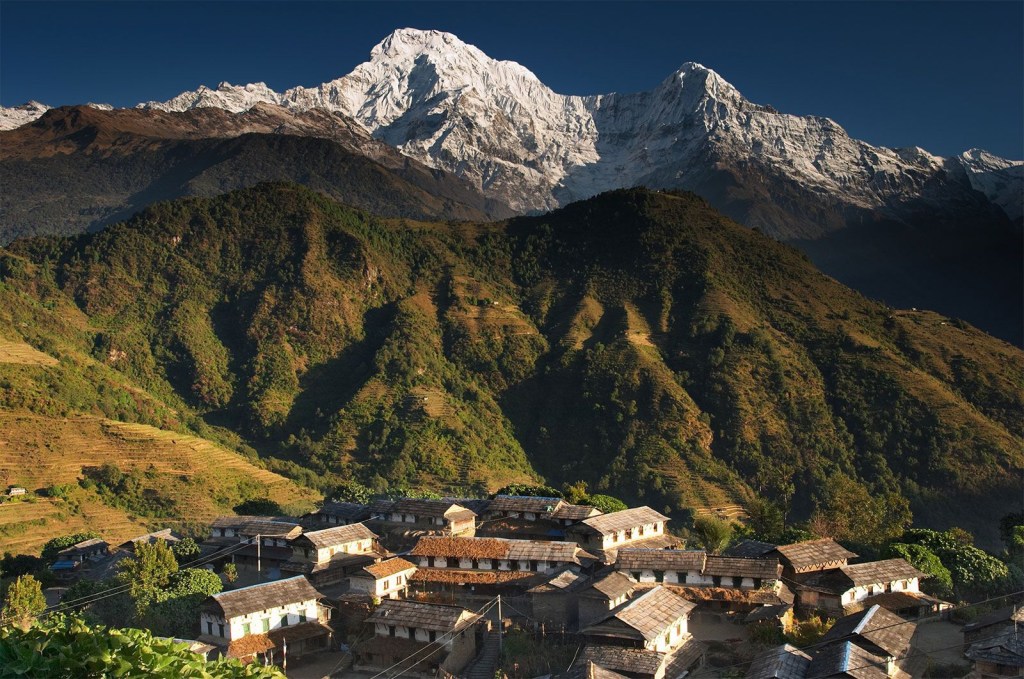
The Himalayan mountain range stretches from Brahmaputra to the Indus River. It ranges over 2500 km and about 250 km thick. So how were these Great Himalayas built?

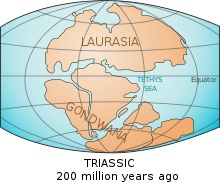
During the late Neoprotozoic era (1000mya-541mya) and early Palaeozoic (541-252mya) , the Indian tectonic plate was a part of the southern Gondwana land .This was separated by the Eurasian plate by the large Tethys ocean . In the early Carboniferous period , an early stage of rifting developed between the Indian subcontinent and the Gondwana land.

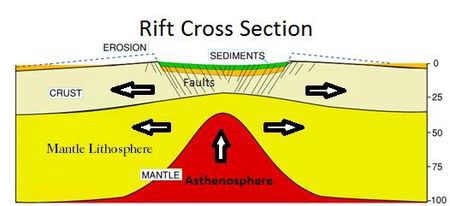
What is a Rift?

A rift is a zone where the lithosphere layer is stretched or pulled apart. In the early stage ,the upper part of the lithosphere starts to extend . As it evolves,some of the fault zones start to connect with each other and become even larger bounding faults .The crust becomes thin causing the rise of Asthenosphere. This way two new tectonic plates are formed from the older single one.

In the Norian period(210 mya), after a major drifting episode the Gondwana land split into two parts. The Indian subcontinent became a part of East Gondwana along with Australia and Antarctica. Later in the early Cretaceous(130 -125 mya), the Indian plate broke off from Australia and Antarctica with the ‘formation’ of Southern Indian Ocean.

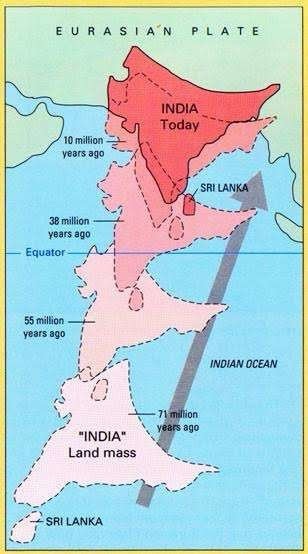
At the end of Cretaceous period ,the Indian plate started drifting northward at speeds of about 18 to 20 cm per year which is the highest among all the continental drifts. It covered a distance of more than 6000 km in that time and rotated about 45° counterclockwise relative to the Eurasian plate. Interaction of the Eurasian plate with the coming Indian plate started at about 65 million years ago with the oceanic crust of the latter subducting under the Eurasian plate.

This started the formation of the youngest mountain ranges of the world , The Great Himalayas . This collision was so strong that till present also the Indian plate is colliding northward and the Himalayas continue to rise more than 5 mm a year but due to the stretching of Eurasian plate horizontally and effect of gravity this rising is affected.

Effect on Climate

According to a report of ‘Nature’ magazine, the Himalayan range ormation may have also started Asia’s monsoon about 8 million years ago and contributed to several ice ages that began 2.5 million years ago. The mountain’s and Tibetan Plateau’s uplift gave rise to a dry Central Asia that resulted in the formation of Gobi and Mongolian deserts.

This may have caused a dustier phase in the earth’s atmosphere . The Himalayan range obstructs the passage of cold continental air from north into India in winter and also forces the south westerly monsoon winds to give up most of their moisture before crossing the range northward.

The Himalayas are gigantic and lively and on the other hand they are calm and tranquil, perfect for the soul to grow spiritually.

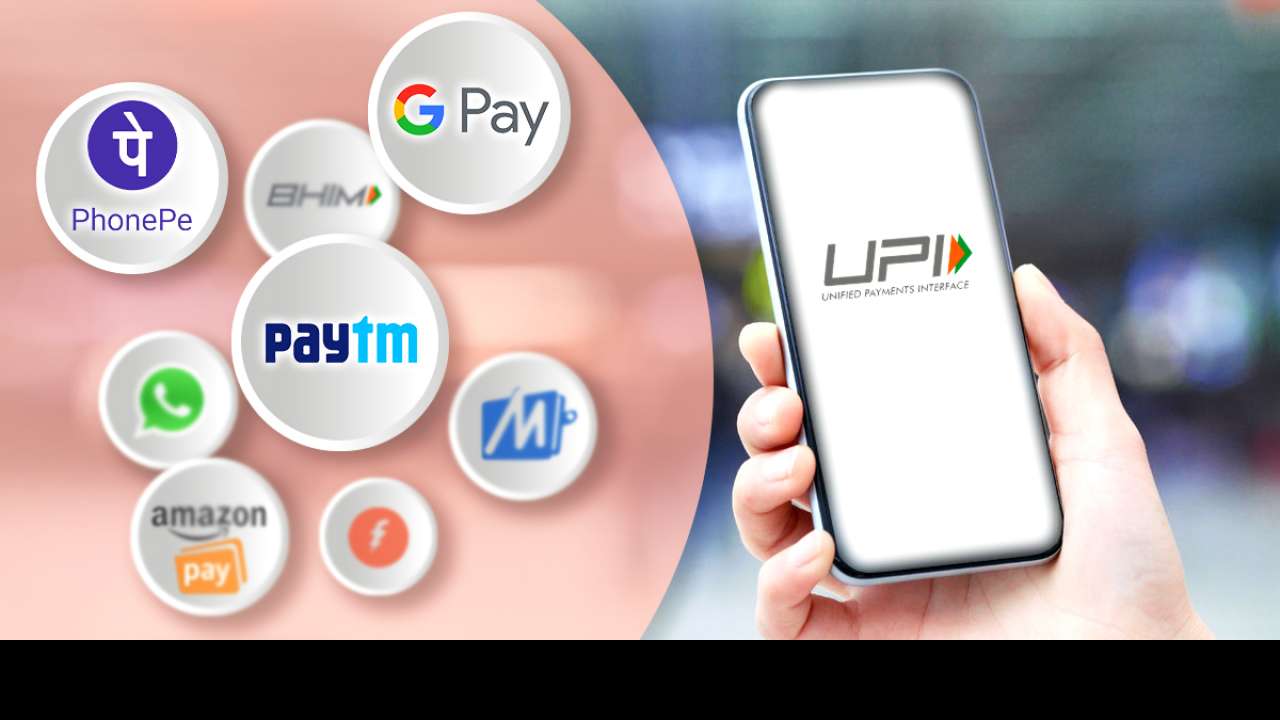
How to use UPI? What is UPI?

UPI stands for Unified Payments Interface is an instant real-time payment system. Every shop at every corner of India started accepting UPI payments. You do not need to carry a wallet every time go out, you can use UPI App on your smartphone to purchase anything that you want. It is very secure and safe to use UPI.

What is UPI?

UPI is developed by the National Payments Corporation of India (NPCI) in the year 2016 and is regulated by the Reserve Bank of India (RBI). UPI works by instantly transferring funds between two bank accounts on a mobile app. The platform has 150 million monthly active users in India with plans to achieve 500 million by 2025.

Features of UPI :

  • Easy to use and works on 24×7 basis
  • Pay at online shops, groceries and restaurants instantly
  • Book travel tickets, utility bills, mobile recharge, and transfer money to any account online
  • UPI is very secure as UPI transactions use highly secure encryption format

UPI Apps :

  • BHIM (Owned by NPCI)
  • Google Pay
  • PhonePe
  • Paytm
  • Mobikwik
  • WhatsApp Pay
  • Samsung Pay
  • Amazon Pay

How to set UPI?

You can use any UPI app to pay and transfer money from and to UPI-enabled banks. Almost all major banks support UPI. Your mobile number must be registered with your bank account for verification purposes.

To set up UPI you need a UPI-supported bank account. Using any UPI app you can set UPI ID and UPI pin. Before creating a UPI ID you need to verify your account using a debit card. Now you are all set to use UPI.

How to transfer money?

You can scan the QR code to pay directly to the receiver. Other methods include using the Virtual Payment Address (VPA) of the receiver or using account number and IFSC code. There is an upper limit per UPI transaction of Rs. 1 lakh per account per day. Banks can also set their own sub-limits for transactions.

Happy UPI !!

Have you started using UPI? Share your experience in the comment section.

Taking care of Mental Health

For the people of the older generation, health means physical health. Ofcourse, health should be related to the taking care of body’s normal functioning and mechanism but where the reasoning lack is that health does not only constitute to physical health but also mental health. Taking care of the most delicate part of our body. Giving priority to that flesh through which our whole body functions and operates. It’s prioritising that. But from years, that head is always neglected in terms of taking care of. Very little attention or no attention is payed towards it even after knowing the fact that it is important to take care of.


But this thinking is now changing. Now, people do pay heed and take care of their mental health apart from physical health. They consider that and place it equivalent to mental health because just like with a broken leg, we can’t move and with a disturbed mind we cannot focus. Breakdown of any one of them will cause problems to us. It is argued that this fact was already known to everybody but then also it was neglected but the real fact is that yes it was known to everybody that without a good mental health, we’ll not able to have a proper functioning of our mind. But the degree of disturbance was not known. The extent to which it can affect and cause problems in our daily life was not known until the doctors and researchers published the reports regarding that.


According to the research, scientists have found that taking care of mental health is very important and even more important than physical health because physical problems need money to be treated but for mental health, individual themselves have to take care of. The therapist can only advice what to do and what not to do but at the end of the it’s the individual himself that has follow everything. He himself has to cure that. And not taking care of it is like pushing yourself in the well. It’s a suicide. So, it’s very important that the person should prioritise his mental health and take care of.


The next question which then comes in the mind is How do we take care of our mental Health? What it means to take care? So the answer would be always keep your mind in a happy state. Ofcourse, there will be some or the other kind of pressure and tension in daily lives of the people and it is normal also but a limit should always be set for it. If the tension and pressure rises above that limit, consider it as a bad sign and start making efforts to keep the mind in a happy state. Recognise that what the mind wants and then make efforts in accordance to that. Also, it is very important to distance ourself from those who are the root cause of tension. They should be kept a particular distance. Because at the end of the day, a person is always left alone with his body and soul. People will come and go. And that is why the first responsibility of the individual is take care of himself. No other person will come and do that.

IIT Kharagpur Wins the CoreNet Global Academic Challenge 6.0

 A team of four undergraduate students from the Indian Institute of Technology, Kharagpur emerged as winners at the CoreNet Global Academic Challenge 6.0, sponsored by Cushman and Wakefield, KI and IA: Interior Architects. The team comprised of Siddhant Samarth (Third Year Undergraduate, Department of Civil Engineering), Pratim Majumdar (Third Year Undergraduate, Department of Chemical Engineering), Rishita Raj (Second Year Undergraduate, Department of Mechanical Engineering) and Utkarsh Agrawal (Third Year Undergraduate, Department of Manufacturing Science and Engineering), and were guided by Prof. Jenia Mukherjee (Department of Humanities and Social Sciences). The team from IIT Kharagpur was one of the four teams to progress into the final round out of 1300 teams all over the world and were pitted against the University of Washington, New York University and the University of Denver in the final round hosted online on 18th March 2021. This is the first time that a squad from India has emerged as winners in the CoreNet Global Academic Challenge since the inception of the competition in 2015.


CoreNet Global is a non-profit association, headquartered in Atlanta, Georgia (US), representing more than 11,000 executives in 50 countries with strategic responsibility for the real estate assets of large corporations. The organization’s mission is to advance the practice of corporate real estate through professional development opportunities, publications, research, conferences, designations and networking in 46 local chapters and networking groups globally. CoreNet Global’s mission is to advance the practice of corporate real estate through professional development opportunities, publications, research, conferences, and chapters and networking groups. CoreNet Global aims to broaden its network, raise the profile of corporate real estate, serve as the profession’s voice and thought leader and champion the profession’s development and maturity. Every year, Corenet Global invites students from around the world to think creatively about a problem facing real estate professionals for renowned companies like Google, Duke Energy, AstraZeneca, Whirlpool, and many others, institutions from all over the globe will compete to address challenges like creating an employee experience that attracts millennials while retaining all other generations of employees; or reducing the gap between the speed of business and the typical speed of real estate.


The team from IIT Kharagpur worked on a hypothetical case on developing an environmentally resilient Corporate Real Estate Portfolio while gauging the impact of the pandemic, for Blue Banc, a fictitious financial institution based in London, England.


“This was uncharted territory but appeared to be a really insightful field to all of us. Right from the start, we were careful to maintain an innovative approach and establish a wide paradigm of solutions in order to accommodate each and every aspect necessary for constructing a green real estate portfolio. We first developed a benchmarking mechanism, then went on to create an internal Carbon market for ensuring scrupulous investments, and then resorted to Real Options analysis to develop strategic timeframes, and then went on to address the issue of determining an ideal location for establishing a new branch using scoring methodologies, Haversine distancing and qualitative force analysis. Our solution culminated with the idea of introducing various innovative financial products and moulding our ideas according to the impact of the pandemic. Our Faculty Advisor, Prof. Jenia Mukherjee constantly bolstered us through the entire endeavour not only through her extremely encouraging words but also by throwing light on the social implications of each of our ideas, and minutely going through each ingredient of our solution and commenting on the loopholes. Your performance, of course, is automatically maximized if you have the support of such an outstanding professor”, the ecstatic team of Siddhant, Pratim, Rishita and Utkarsh mentioned right after they were announced as the winners of this esteemed competition.


Prof. Jenia Mukherjee from the department of Humanities and Social Sciences was elated after the win and said, “Right after the team shared the prospective ideas with me, I was quite confident that this squad had the potential to present something ingenious, and they just needed out to smoothen out the edges and counter the loopholes, since each and every aspect in itself was so innovational and widely applicable. Kudos to Siddhant for creating the Green Scoring model from scratch, to Pratim for setting up the internal Carbon market and creating a tactical timeline using Binomial Real Options, to Rishita for developing and working on the method of Haversine Distancing, Location scoring and force analysis and to Utkarsh for gauging each aspect through the lens of the COVID-19 Crisis and suggesting a plan of action accordingly. I am definitely sure that these pioneering ideas in themselves can be developed into full-fledged implementable models through further research, and it will not be long when one day, these hypothetical solutions are at last witnessed in action in the corporate ambit.”


The team would be awarded $5000, complimentary student membership in CoreNet Global (retail value: $25) and a copy of The Essential Guide to Corporate Real Estate (retail value: $49.99).

Prof. Mukherjee, Pratim, Siddhant, Rishita and Utkarsh have been personally congratulated by the Regional Experience Director, CoreNet Global (Mumbai) India. They have been asked to share the presentation to the members of the India Chapter in a webinar next month.

***

Period- A Taboo

In some parts of India, menstruation is considered as a unholy thing and the girl or woman who menstruates is often kept seperately for the time being. When her period will be gone, she can come in the house and chat with her family but at the time of the menstruation she is not allowed to come in the house. She is not even allowed to enter the kitchen and cook for herself or anybody. Basically, she is given a room differently where she have to cook, wash and do all her chores in a particular area. Sometimes, this room is located outside the house where there is no amenity present. And the regret which follows for a girl is that she can’t even complain because the people who are giving her this kind of treatment are none other than her own family. She has no choice to accept or reject it. She has to follow what her family orders and instructs.


When a girl or woman menstruates, there are lot of hormonal changes in her body. Sometimes, that hormonal changes even lead to very painful periods and heavy flow of blood. The breasts are stored, cramps occur, backache, mood swings, pain in the stomach and many more. It lead to a lot of things which cannot be put into the words. But all this while they are left alone to handle and take care of themselves. They are not given any assistance or support regarding that which sometimes deepen the problem.


Also, when they live outside the house all alone, there is no security given. The family believe that no one will come to them but according to the reports published, crimes do take place when girls and women reside outside the house during their menstrual cycle. The main reason behind the crimes which happen is that when they menstruates, no one pays a visit to them. At that time they become vulnerable. Then there comes the sick- minded people who want to take the advantage of both the situation and of the woman. For them, it is their golden opportunity to grab a woman and do whatever comes in their mind. As a result, women are often molestated and raped. There is no one to protect them in that situation.


This happens in the parts of rural India where the old culture and idealogy still prevails and due to the lack of education, people are adamant to change any of their ritual in this respect as well as in all the other respects. They do not want to change themselves. And because of this nature only, people residing there become backward in thinking and menatality. They tend to take the society backwards.


Lastly, I would like to conclude with my opinion that education is very important in changing the mentality of the individuals. Without that they will never understand that the rituals they follow and idealogies adopt are something which will ruin the society in the coming future if not changed. They will become the hurdle in the development of the country. Also, there is a need to recognise that these traditions are old enough and it needs to be scrapped as early as possible. Menstruation and menstruating women should not be considered as unhold. Now, the mentality should be changed.

Convocation Ceremony of Visva-Bharati University

 The Prime Minister, Shri Narendra Modi addressed the Convocation Ceremony of Visva-Bharati University today through a video conference. Governor of West Bengal and Rector of Visva-Bharati, Shri Jagdeep Dhankhar, Union Education Minister Shri Ramesh Pokhriyal ‘Nishank’ and MoS for Education Shri Sanjay Dhotre were also present on the occasion.

The Prime Minister while addressing the convocation quoted the poem of Gurudev Ravindra Nath Tagore on Veer Shivaji which inspired him and called for unity of India. PM stressed that the students and the faculty were not just a part of a university, but also bearers of a vibrant tradition. He said Gurudev named the University as Visva Bharati meaning Global University since he expected that anyone who comes to learn in Visva Bharati will see the whole world from the point of view of India and Indianness. So he made Visva Bharati such a place to learn, which can be seen in the rich heritage of India. He gave a call for assimilating and researching about the Indian heritage and working towards solving the problems of the poorest of the poor. He said Visva Bharati for Gurudev Tagore was not just a knowledge imparting institution but an attempt to reach the topmost goal of Indian culture, which is to achieve oneself.

The Prime Minister said Gurudev believed that we have to discover ourselves among the varied Ideologies and differences. PM said that Tagore used to be proud of Bengal but at the same time, he was equally proud of India’s diversity. And it was due to Gurudev’s vision that humanity thrives under the open sky of Santiniketan. He praised Visva Bharati as an unending sea of ​​knowledge in itself, the foundation of which was laid for experience-based education. He said there is no limit to creativity and knowledge. It was with this thought that Gurudev founded this great university. PM urged the students to always remember that knowledge, thought and skill are not static but a dynamic and continuous process. He said responsibility comes with knowledge and power. Just as one has to be restrained and sensitive while in power, every scholar also has to be responsible towards those who do not have knowledge.

Recalling the historical strength of the traditional Indian education system, the Prime Minister referred to Gandhian Shri Dharampal’s book ‘The Beautiful Tree- Indigenous Indian Education in the Eighteenth Century’. He said that the 1820 survey had said that there was more than one gurukul in every village which were linked with the local temples and literacy rate was estimated to be very high. This was recognized by the British scholars also. Shri Modi said, Gurudev Ravindranath developed systems in Visva Bharti which were the medium of modernising Indian education and freeing it from the shackles of slavery.

Similarly, the new National Education Policy also breaks old restrictions and allows students to realize their full potential. It allows flexibility in selection of subjects and medium of instruction. The policy promotes entrepreneurship and self employment; research and innovation. ‘This education policy is a major milestone in the making of an Aatmnirbhar Bharat’, said the Prime Minister. The Prime Minister informed that scholars have recently been given free access to lakhs of journals by the Government. This year’s budget has proposed 50 thousand crore in 5 years for research through the National Research Foundation. This Education Policy has made provision for the Gender Inclusion Fund that will give the girls new confidence. Higher dropout rate of girls was deeply studied and arrangements were made for entry-exit options and yearly credit in the degree courses.

Calling Bengal inspiration for Ek Bharat-Shreshth Bharat, the Prime Minister said that Visva Bharati will play a big role in the 21st century knowledge economy, taking Indian knowledge and identity to every corner of the world. Shri Modi called upon the students of the prestigious institute to prepare a vision document for next 25 years about the 25 biggest goals of Visva Bharati in 2047. The Prime Minister asked the students to spread awareness about India. Visva Bharati should lead all educational institutions to carry India’s message and enhance India’s image globally. The Prime Minister concluded by calling upon the students to find ways to make nearby villages Aatmnirbhar and taking their products globally.

Union Education Minister appreciated the academic activities that Visva-Bharati has undertaken during the COVIND 19 pandemic. The Minister dwelled in detail on the New Education Policy which, he also mentioned, is based on Gurudev’s idea of Education. He also suggested that Visva-Bharati is capable of taking lead in imparting learning as per the directions that the NEP has provided. In order to accomplish the goal, Shri Pokhriyal insisted on creating an effective task force by bringing together academic faculties from various fields. Speaking on the decision to create a new Visva-Bharati campus at Ramgarh, Uttarakhand, he informed that steps in this direction have already been taken.

Speaking on the occasion Shri Dhotre congratulated the passing out students and extended his best wishes for the future endeavours. On New Education Policy, he said it has adopted a multidisciplinary approach, emphasises on early childhood care and education and imparting learning in the local language, vocational education and focus on research and innovation.  Under the leadership of Prime Minister Shri Narendra Modi, this policy will make India the global knowledge superpower of 21st century.  

The Rector and Governor of West Bengal, Shri Jagdeep Dhankhar expressed his happiness by being part of this convocation at Amrakunja which has footsteps of Gurudev Rabindranath Tagore. He admired the strong leadership that the Prime Minister has been providing to come out the crisis that has emerged due to the pandemic. In his address, he also appreciated the role of the Union Education Minister and his colleagues in bringing out a New Education Policy for the country.


*****

Student attendance on the rise in KVs across the Country

 Kendriya Vidyalayas across the Country have resumed face-to-face teachings for various classes as per the guidelines issued by the MHA and State Governments. KVs started opening from the month of October in a phased manner.

According to the data compiled on February 11, 2021 from all the KVs, an average of 42% Students of Class 9, 65% Students of Class 10, 48% Students of Class 11 and 67% Students of Class 12 are physically attending classes all over the Country. These figures are dynamic and trends indicate consistent increase every day. Face-to-face classes for class 1 to 8 have also been started in some KVs where State Governments have permitted to open Schools for junior grades.

Regular contact with the Parents and Guardians is being established by the Schools in case of any apprehension from students/parents. Students are being permitted with the prior consent of their guardians.

The SOPs issued by the State and Central Governments are being followed completely in view of the Corona Pandemic. All KVs are clearly advised to follow staggered timings for the students of various classes and ensure adequate safety measures including maintenance of proper physical distance in the classrooms.

However, for students who are not attending the School, the provision of online classes is also running. Students are also in touch with their teachers through various digital platforms.

*****

Biomedical Waste Crisis

The present situation

At present, there is poor segregation of biomedical waste and other general solid waste. As a result, biomedical waste such as masks, gloves, and personal protective equipment (PPE) kits is mixed in with regular waste and ends up in landfills and open dump yards. This has an impact on the health of waste collectors as well as the environment.

In India, there are currently around 40 lakh garbage pickers. Due to the increasing biomedical waste in the time of the Covid pandemic, almost all are susceptible to health risks. According to the World Health Organization (WHO), depositing biomedical waste in open dump yards might lead to the spread of drug-resistant bacteria.

As per the Central pollution control board (CPCB), 616 tons of biomedical waste was being generated per day in 2019. On an average, India generated about 183 tonnes of COVID-19 related bio-medical waste per day in September 2021. 

How to deal with biomedical waste

  • Rules on the segregation of biomedical waste from normal solid waste should be implemented strictly with hefty fines.
  • The general public should be educated on how to properly dispose of biomedical waste such as gloves and masks. According to the CPCB, Masks and gloves should be cut into pieces to prevent misuse, and garbage should be kept separate for 72 hours before being given to municipal workers in a separate bag.
  • Currently, India’s biomedical waste treatment facilities can manage 840 tons of medical waste per day. This capacity should be enhanced, and also they should be monitored well.
  • More investment and human resources should be brought into handling biomedical waste.
  • Greener options for destroying biomedical waste, such as bio-methanisation (converting biomedical waste into electricity), should be explored and implemented on a broad scale. The majority of biomedical waste is currently incinerated (destruction by burning).
  • Sanitation workers should be provided with protective equipment.
  • Regular checks on the disposal of biomedical waste at diagnostic centers and hospitals can help in the effective implementation of guidelines.

Reducing biomedical waste waste generation as much as possible by effective practices such as wearing cloth masks, reusable gloves, and so on can help in reducing the burden of the destruction of the biomedical waste.

Conclusion

More investment and human resources are needed to deal with the growing amount of biological waste. Effective management of biomedical waste is very essential to ensure a cleaner environment and healthy humans.

MARRIAGE IN TODAY’S SOCIETY

If there’s one thing that all the world’s various cultures have in common, it is marriage. Beliefs, diets and languages vary greatly, but the desire people have to share their lives with another seems universal. Why then, is marriage so popular?

Marriage is the most important institution of human society. It has been the backbone of human civilisation.It is a universal phenomenon. Psychologists have said that people have a deep need for emotional security which marriage provides. Knowing that one has a partner in life makes it easier to cope with the problems of daily life. On the other hand, the fact that many single people are content to live alone suggests that the “emotional need” theory is incomplete.

Human Beings have certain urges like hungers, thirst and sex. Society works out certain rules and regulation for satisfaction of these urges. The rules and regulations which deal with regulation of sex life of human beings are dealt in the marriage institution. We can say that the marriage is as old as the institution of family. Both these institutions are vital for the society. Family depends upon the Marriage. Marriage regulates sex life of human beings.

FUNCTIONS OF MARRIAGE:

Marriage is an institutionalised relationship within the family system. It fulfils many functions attributed to the family in general. Family functions include basic personality formation, Status ascriptions, socialisation, tension management and replacement of members, economic cooperation, reproduction, stabilisation of adults, and the like.

Many of these functions, while not requiring marriage for their fulfilment are enhanced by the marital system. In fact, evidence suggests that marriage is of great significance for the well-being of the individual. Researches suggest that in comparison to unmarried people, married people are found to be more happier, healthier, less disturbed and less depressed and less prone to premature deaths. Marriage, rather than becoming less important or unimportant maybe increasingly indispensable.

SOCIETY’S UNDERSTANDING:

A marriage in our society is perceived as a mere ritual to bring two families together. I don’t see it as a tradition that meeds to be followed just for the sake of it. You might not agree with the way I see this beautiful bond of two souls but I think the meaning of marriage is much greater than what the society tries to define it. Marriage isn’t a social or traditional compulsion. Two people decide to spend their lives together. They don’t enter into an agreement of compromise. Yes, there are times when we need to make some sacrifices for our loved ones but it shouldn’t be taken for granted which in todays society is quite common.If there has to be a lifetime commitment between two people there could be no commitment greater than the commitment of love.

Only Love, respect and compassion for each other can keep a relationship alive. If a marriage relationship continues without these three elements, it becomes a burden for a lifetime and a relationship of mutual benefits. A marriage in our society is considered as a means of generation survival. The old perspectives and traditions followed for years don’t let the meaning of marriage grow out of its restricted bindings. While some families feel the excruciating pain of seeing away their daughters away forever, for some families it means nothing more than a well renowned tradition that is supposed to be followed at a certain point of time. In our society nobody thinks about the two people who have to spend the rest of their lives together. A marriage can’t just remain to be a simple mechanism of complying with some conventional ceremonies.

Money spent as marriage expenses is still perceived a s a status symbol in our society. It’s disgusting to even think that this occasion is judged as a status symbol when its actually a moment of purity and a new beginning for two souls.

CONCLUSION:

Our society and family should think from the perspective of the newly married couple rather than being too self centered, demanding and enforcing financial burdens in the name of traditional values because at the end its just about the two people to choose to spend the rest of their lives with each other with the commitment of forever respecting, loving and being compassionate towards each other.