
India lost a great Academician on 28 January 2022: Tribute to Prof. Radhakrishna

On 28 January 2022 in the wee hours, our country lost a great Professor, an erudite scholar and kind-hearted down to earth person, popularly known as Professor R. Radhakrishna. Prof. Radhakrishna is a prolific researcher, respected teacher, able academic administrator, and notable institution builder. I had the opportunity to interact on many occasions for academic matters. I felt lucky enough when he included me in a Government of India Committee namely “Report of the Committee on Credit Related Issues under SGSY” (published in February 2009). He was an erudite scholar with immense knowledge in Social Science in general and Economics in particular. Undoubtedly, he was a down to earth human person and such a great personality seldom can be seen.

Prof. Radhakrishna did his post-graduation in Economics and Statistics from Andhra University and subsequently completed Ph.D. in Economics from Gokhale Institute of Politics and Economics (Pune University). ​He was a scholar par excellence  ​as his​ ​Ph.D., thesis on indifference surfaces won acclaim from world-famous E​conometrician​ Prof ​ Gerhard Tintner.

Prof. Radhakrishna held several important positions inter alia of which were Chairman, Commission on Inclusive and Sustainable Agricultural Development of AP(2015-16); Chairman, National Statistical Commission, (2009-12); Director/Vice-Chancellor, Indira Gandhi Institute of Development Research (2001- 07); Vice-Chancellor, Andhra University (1998-2001); Member Secretary, ICSSR (1994-97); Director, CESS (1985-1994); Professor of Economics, University of Hyderabad (1980-85); Professor, Sardar Patel Institute of Social Economic Research (1973-80) and Visiting Fellow, University College of Wales, Aberystwyth, U.K. (1976-77). He served as an expert in numerous international organisations such as the Australian Centre for International Agricultural Research, 1997; Management of Social Transformation (MOST), UNESCO, 2004 and UNDP Regional Bureau for Asia and Pacific, 2005. Professor was also a Consultant to several international bodies including Internal Institute for Applied Systems Analysis, Vienna, World Bank, Asian Development Bank, UNDP, and FAO.

It is pertinent to mention that based on the recommendations made in the Committee on ‘Credit Related Issues under SGSY’, the Ministry of Rural Development; Government of India launched the National Rural Livelihood Mission popularly known as NRLM in 2011. He was also a member of the three important Planning Commission Expert Groups related to Poverty –a) Task force on projections of Minimum needs and Effective Consumption Demand, 1977-78; b) Expert Group on Estimation of Proportion and Number of Poor, 1989-93 (Lakdawala Committee) and c) Expert Group to Review the Methodologies on Estimation of the Poor, 2006-08 (Tendulkar Committee). He was also Chairman of UGC Committees to review Universities and ICSSR Review Committee to review its research institutes in north-west India.   

He was associated with many academic and research institutions in his lifetime. Some of which were Chairman or Board Member: Chairman, Madras Institute for Development Studies; Board Member, Madras School of Economics;  Chairman, Centre for Development Alternatives, Ahmadabad; and presently Chairman, Institute for Development Studies, Andhra Pradesh. Till his death, he was President of the Indian Society of Agricultural Marketing and Chairman, Indian Association of Social Science Institutions. He was President-elect of the Indian Society of Agriculture Economics (2019). He was the Conference President of the Indian Economic Association (2016), Indian Econometric Society (2008), Indian Society of Labour Economics (2002), Indian Society of Agricultural Marketing (1996), and Association of Asian Social Science Research Councils (1995).

He served in the editorial boards of several peers reviewed academic journals inter alia of which are Journal of Quantitative Economics, Asia Pacific Journal of Rural Development, Journal of Asian Economics and IASSI quarterly etc. He successfully guided 25 doctoral students. He published a large number of books and more than 100 original research papers in national and international journals. Some of his publications which were appreciated inter alia are ‘India’s Public Distribution System: A National and International Perspective (1998)’; ‘Empowering Rural Labour (1998)’; ‘India Development Report 2008 and Handbook of Poverty in India’: ‘Policy Perspective (2005)’. In recognition of his huge academic contributions, he was awarded VKRV Rao Prize in Economics in 1985, and Telugu Atma Gaurava Puraskaram for his eminence in Social Sciences by the Government of Andhra Pradesh in 1998. He was Jawaharlal Nehru National Fellow (ICSSR) during 2009-11.

His compendium of books published by Academic Foundation in 2017 is on the themes of Indian Economy, Agriculture, Food Security and Nutrition; Growth, Poverty and Well-being; Econometrics of Consumer Behaviour; and Inflation, Consumption and Welfare was highly appreciated. 

Prof Radhakrishna will be remembered generations after generations by the academicians, research scholars, and others who are in the field of Social Science in general and Economics in particular for his immense contribution in the fields of Economics, poverty, agriculture, food security, employment and rural development.

(The author is grateful to Prof. E Revathi, Director, Centre for Economic and Social Studies, Hyderabad for providing necessary information about Prof. R. Radhakrishna)
Implementation of New Education Policy

 A number of action points/activities for implementation in school education as well as higher education are mentioned in the National Education Policy 2020 which inter-alia include following:-

  1. Ensuring Universal Access at All Levels of schooling from pre-primary school to Grade 12;
  2. Ensuring quality early childhood care and education for all children between 3-6 years;
  3. Introducing New Curricular and Pedagogical Structure (5+3+3+4);
  4. Ensuring no hard separations between arts and sciences, between curricular and extra-curricular activities, between vocational and academic streams;
  5. Establishing National Mission on Foundational Literacy and Numeracy;
  6. Emphasis on promoting multilingualism and Indian languages; The medium of instruction until at least Grade 5, but preferably till Grade 8 and beyond, will be the home language/mother tongue/local language/regional language.
  7. Assessment reforms – Introducing Board Exams on up to two occasions during any given school year, one main examination and one for improvement, if desired;
  8. Setting up of a new National Assessment Centre, PARAKH (Performance Assessment, Review, and Analysis of Knowledge for Holistic Development);
  9. Equitable and inclusive education – Ensuring special emphasis to be given on Socially and Economically Disadvantaged Groups(SEDGs);
  10. Establishing a separate Gender Inclusion fund and Special Education Zones for disadvantaged regions and groups;
  11. Robust and transparent processes for recruitment of teachers and merit based performance;
  12. Ensuring availability of all resources through school complexes and clusters;
  13. Setting up of State School Standards Authority (SSSA);
  14. Providing Exposure of vocational education  in school and higher education system;
  15. Increasing GER in higher education to 50%;
  16. Introducing Holistic Multidisciplinary Education with multiple entry/exit options;
  17. Introducing Common Entrance Exam for Admission to HEIs to be offered by NTA;
  18. Establishment of Academic Bank of Credit;
  19. Setting up of Multidisciplinary Education and Research Universities(MERUs);
  20. Setting up of National Research Foundation(NRF);
  21. Framing ‘Light but Tight’ regulation;
  22. Setting up of single overarching umbrella body for promotion of higher education sector including teacher education and excluding medical and legal education- the Higher Education Commission of India (HECI)-with independent bodies for standard setting- the General Education Council; funding-Higher Education Grants Council (HEGC); accreditation- National Accreditation Council (NAC); and regulation- National Higher Education Regulatory Council (NHERC);
  23. Expansion of open and distance learning to increase GER.
  24. Internationalization of Education.
  25. Professional Education will be an integral part of the higher education system. Stand-alone technical universities, health science universities, legal and agricultural universities, or institutions in these or other fields, will aim to become multi-disciplinary institutions.
  26. Teacher Education – Introduction of 4-year integrated stage-specific, subject- specific Bachelor of Education.
  27. Establishing a National Mission for Mentoring.
  28.  Creation of an autonomous body, the National Educational Technology Forum (NETF) to provide a platform for the free exchange of ideas on the use of technology to enhance learning, assessment, planning, administration. Appropriate integration of technology into all levels of education.
  29. Achieving 100% youth and adult literacy.
  30. Introducing multiple mechanisms with checks and balances to combat and stop the commercialization of higher education.
  31. All education institutions will be held to similar standards of audit and disclosure as a ‘not for profit’ entity.
  32. The Centre and the States will work together to increase the public investment in Education sector to reach 6% of GDP at the earliest.
  33.  Strengthening of the Central Advisory Board of Education to ensure coordination to bring overall focus on quality education.
  34.  Ministry of Education: In order to bring the focus back on education and learning, it may be desirable to re-designate MHRD as the Ministry of Education (MoE).

A detailed consultation process with various stakeholders including educationists have been held before and after announcement of National Education Policy 2020. Suggestions have been invited from States / UTs Government and also from other stakeholders through MyGov platform. Department of School Education & Literacy has constituted subject-wise/theme-wise implementation committees of experts for implementation of National Education Policy 2020. Similarly, UGC and AICTE have also constituted Expert Groups on various themes of higher education sector for formulation of Implementation Plan of National Education Policy.

As per National Education Policy 2020, implementation of the Policy requires multiple initiatives and actions, which will have to be taken by multiple bodies in a synchronized and systematic manner. Therefore, the implementation of this Policy will be led by various bodies including Ministry of Education, CABE, Union and State Governments, education-related Ministries, State Departments of Education, Boards, NTA, the regulatory bodies of school and higher education, NCERT, SCERTs, schools, and HEIs. Since Education is in the concurrent list of Constitution of India, hence, State/UT Government will play a vital role in the implementation of the National Education Policy. Ministry of Education has communicated to all States/UT Governments for taking steps for implementation of NEP 2020. In this direction, Ministry of Education had organised ‘Shikshak Parv’ from 8th September to 25th September, 2020 to deliberate on various themes and implementation of NEP 2020 aimed at eliciting suggestions. Ministry had also organised a Conference of Governors on “Role of National Education Policy in Transforming Higher Education”. In the conference, Governors and Lt. Governors of State and Union Territories, Education Minister of State and UTs, Vice Chancellors of State Universities and other dignitaries participated. Majority of states have taken steps toward implementation of NEP 2020. Further, Ministry and other implementing agencies under its purview have started taking initiatives towards implementation of NEP 2020.

Webinar on ‘International Mother Language Day’

 Vice President of India, Shri M. Venkaiah Naidu today inaugurated the Webinar on the occasion of ‘International Mother Language Day’. The Webinar on ‘Fostering Multilingualism for Inclusion in Education and Society’ is being organised jointly by the Ministry of Education, Ministry of Culture and IGNCA. The Vice President also inaugurated the International Virtual Calligraphy Exhibition. Union Minister for Education, Shri Ramesh Pokhriyal ‘Nishank’’; Minister of State (Independent Charge) for Culture Shri Prahlad Singh Patel; Minister of State for Education Shri Sanjay Dhotre and Member Secretary, IGNCA, Dr. Sachidanand Joshi were also present through the virtual medium.  All the speakers spoke in length about the importance of the Mother tongue and the need for its preservation which will be a treasure for our future generations.

The Vice President, Shri M Venkaiah Naidu today called for making mother tongue the primary medium of instruction, at least until Grade 5. He suggested that educating a child in a language that is not spoken at home can be a big impediment to learning especially at the primary stage. Referring to multiple studies, Shri Naidu said that teaching through the mother tongue in the initial stages of education can boost a child’s self-esteem and enhance his or her creativity. Calling the New Education Policy a visionary and progressive document, he urged for implementing the Policy in letter and spirit.

Speaking at the inaugural session, the Vice President focused on five key sectors to promote the use of mother tongue. Apart from emphasizing the use of mother tongue in primary education, the other highlighted areas are the use of local languages in administration, court proceedings and to deliver judgments in them. He also wanted gradual increase in the use of indigenous languages in higher and technical education. The final emphasis was on everyone to proudly and preferably use their mother tongue in their homes.

Shri Venkaiah Naidu said that with hundreds of languages coexisting, linguistic diversity is one of the cornerstones of our ancient civilization. Observing how our mother tongues can evoke an emotional response in the people, Shri Naidu called them an ‘important link to our socio-cultural identity’, ‘a repository of our collective knowledge and wisdom’ and thus needs to be protected, preserved and promoted.

On this occasion, Shri Naidu appreciated various government initiatives for a multilingual society such as the National Translation Mission, the Bharatavani project and the proposed setting up of a Bharatiya Bhasha Vishwavidyalaya (BBV) and Indian Institute of Translation and Interpretation (IITT).

In conclusion, the Vice President reiterated that languages are nourished only by constant use and that every day must be a Matribhasha Diwas. He called for all-round commitment and efforts to reclaim mother tongues and to ‘feel proud to speak freely and confidently in one’s mother tongue’ in homes, community, meetings and administration.

Speaking on the occasion Shri Pokhriyal said that the importance of language lies not only in national unity but also in strengthening the culture of the country. Research has proved that 90% of a child’s brain develops by the age of 6 and for the holistic development of our children, it is necessary that the knowledge is acquired in the mother tongue, he added.

Shri Pokhriyal highlighted that National Education Policy- 2021 has given maximum attention to the development of mother tongues. The Government has emphasized on promoting multilingualism with our policy so that our children can get acquainted with the vast wealth of languages ​​of our country. He further said that it is the first education policy that empowers students with the subject and language of their choice. The policy recommends that as far as possible, the medium of instruction shall be, at least till class 5, (preferably up to grade 8 and beyond) mother tongue / vernacular / regional language. Shri Pokhriyal said that this education policy calls for many new initiatives that will help in building a truly multilingual society in India.

Shri Prahlad Patel said every mother tongue has a world of its own, has its own character, has its own expressions. While we have to learn other languages, the mother tongue on the other hand develops in us naturally. Everyone feels a sense of attachment and affinity while speaking their mother tongue. The way in which culture influences the development of our personality, in the similar manner one’s mother tongue also strengthens one’s personality.

Addressing the participants Shri Dhotre said that consequent to the declaration of 21st February as the International Mother Language Day, (Matribhasha Diwas) UNESCO in 1999, this day is being celebrated every year since 2015 in a grand manner by involving all the higher educational institutions/schools across the country to organize various activities like Debating, Singing, Essay Writing and Painting competitions, Music and Dramatic performances, Exhibitions etc. Shri Dhotre highlighted that the purpose of the celebrations is to promote the preservation and protection of all languages spoken by the people globally and also to promote awareness of linguistic and cultural diversity and multilingualism of the languages. He further said that the Government has adopted a proactive approach to promote all Indian languages and strengthen the mother tongue in the Indian education system.

****

Initiatives by Navodaya Vidyalaya Samiti to ensure continuity of education

 Navodaya Vidyalaya Samiti (NVS) with the support of Ministry of Education, MHA and state administration ensured safe return of 3173 migrated students of Class-IX during COVID pandemic period. By imparting online training to teachers and conducting online classes, NVS made all efforts to ensure no academic loss to students. For students without proper devices, proper education is being ensured by providing study materials, AAC and printed assignments.  The following activities in academics and capacity building were undertaken:  

  1. Academics
  • Opening of JNVs: NVS developed SOP for opening of JNVs on the basis of SOP issued by MOE, MHA & MoHFW by incorporating the salient features of state administration guidelines.  Accordingly, Students of classes X and XII have reported in JNVs for physical classes with their parents’ consent. 406 JNVs have been reopened in states/UTs where permission to open residential schools have been given. Bridge courses and special classes are being carried out for the students to fill up the learning gaps.  National Pre board Exams have been completed for classes X and XII. 
  • Launch of Vigyan Jyoti Phase-2: Vigyan Jyoti Project is an ambitious collaborative initiative between Dept. of Science & Technology and Navodaya Vidyalaya Samiti for promotion of Girls Students in JNVs. Vigyan Jyoti Project (Phase I) is going successfully in 58 JNVs since December 2019.  The same is extended to 42 more JNVs in Phase-II.
  • Fulbright Teacher Exchange Program:  Mr Vivekananda Gosh, JNV Kolar Karnataka & Mr Amit Kumar, JNV Shimla Himachal Pradesh have been selected for the Fulbright Teaching Excellence Achievement (FTEA) & The Fulbright Distinguished Awards in Teaching Program for International Teachers (FDAI) for 2020-21.

B.    Capacity building  Programmes in collaboration with other organizations

  1. Six Days’ Training Programme for Regional Language Teachers in collaboration with CIIL, Mysore in light of NEP-2020

Keeping in view the importance of Regional languages as per NEP-2020, 45 Malayalam, 106 Marathi, 94 Kannada & 69 Telugu language teachers of NVS have been trained.

  1. Five Days’ Online Training Programme on Pedagogical Leadership for NVS Principals in collaboration with NIEPA New Delhi

NEP-2020 has outlined the Role of Principals focussing on preparing & implementing Pedagogical Plans based on Competency based Education. NVS in collaboration with NIEPA, New Delhi is organizing Five Days’ Online Training for preparing Principals as Master Trainers to impart further training to their fellow Principals on Pedagogical Leadership in two batches of 50 Participants in each batch. The training programme for the first batch is scheduled from 22nd February, 2021 and second programme is scheduled in the month of April, 2021.

C. Kala Utsav 2020- NVS Performance

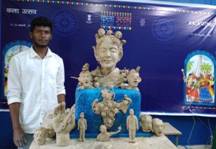
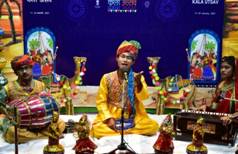
In Kala Utsav-2020, RUPESH DEBBARMA from JNV Gomti, Tripura won first prize in Folk Music and D VENKAT RAO from JNV East Godavari, AP won first prize in 3D Sculpture. 


D VENKAT RAO from JNV East Godavari, AP who won first in 3D Sculpture


RUPESH DEBBARMA from JNV Gomati, Tripura who won first in Folk Music

*****