THE NOTION OF DEATH IN ANDREW MOTION’S “THE LAST CALL”

Sir Andrew Motion, known for his narrative poetry is an English poet novelist and a biographer. He served as the Poet Laureate of England from 1999 to 2009. The “Last Call” is a short poem about the thoughts of a person who is at the edge of death. In a humourous way he thinks about his situation. Usually death is presented in a dark or melancholic manner. But here the narrator accepts death in a more positive light.

As the title implies, death, the last call comes to the narrator. Death is personified as “he” and the narrator,l says that he calls him to “come near”. Here, the narrator decides to answer the call of death with pity. But later the poet finds that death loves him. So then the poet reciprocates the love and he loves death back. Thud there is a constant love for each other and he embraces death.

The omnipresence of death is represented by the poet. Everyone knows that death is inevitable. Death is a companion for everyone from birth itself. Every living being are gradually moving towards death in their life. So this awareness about the omnipresence and inevitability of death is the reason for the poet’s acceptance of death. The transformation from pity to genuine love is the result of this belief that death is one’s constant companion. Thus in the short, humoristic way poet represents the notion of death. Death is presented in a more light, positive way by Andrew Motion.

“VIEW OF A PIG”: THEMES

Ted Hughes popularly known as animal poet portrays animal as better than humans. He has love and devotion for nature as well as animals. He believes that animals do not live under the fear of morality. Even though the themes of Hughes’ poetry is nature and animals, he do not romanticize them. But for Hughes poetry is a “journey into the inner universe” and “an exploration of the genuine self”.

In this 1959 poem “View of a Pig”, Hughes represents the pig through which he implies human characteristics. The pig mentioned in the poem is not just dead, but “too dead”, “less than lifeless”. The pig is referred to as’it’ in a cold way. The vast sized pig lie its “eyes closed” , and “it was like a sack of wheat”. Even though the narrator observes pig for a long time, he doesn’t feel pity for dead pig. He is frustrated, by thinking that how this pig could be moved. In the lines “the gadh in its throat was shocking”, is the first indication of the cause of its death. But that was shocking, not pathetic. The eating habit of the pig is mentioned as “they eat cinders, dead cats”. For a long time the narrator stared at the pig without feeling any remorse.

While analysing in a postmodern context, the themes of passivity, alienation and the lack of humanity of the post war era can be found in the observer’s behaviour. The poem can be also analysed in the finality of death. Hughes merely depicts the weight of the pig like “sack of wheat” to show that there is no life, only the body is left. The animal slaughter and industrial farming and also the cruelty of human beings can also be found in the poem.

How to use Groww? Create Demat account in Groww App

Groww is an investing platform for investors. Groww provides many options to invest in. You can invest in stocks, mutual funds, gold bonds, and IPOs. Groww is available on android devices, ios devices, and also available as a web application.

Groww is owned by Nextbillion Technology, headquarters at Bangalore, Karnataka, India. Groww app provides all charts and analysis at your fingertips.

Download link :

Android – Google Play Store

iOS – App Store

Web App Link: Groww Web App

Features provided by Groww App:

  • User-friendly interface for beginners
  • Zero account opening charge
  • Free Demat account opening and zero AMC charges
  • 0% commission on direct funds
  • Deposit money using UPI
  • Groww is safe and secure with more than 20 million trusted users in India

Create Demat account in Groww App:

  1. After downloading Groww app you have to login using either google account or any other email id and you will receive an OTP for email verification.
  2. In the next step you will enter your mobile number and for verification you need to enter the OTP received on entered mobile number.
  3. Next, enter your PAN number and date of birth
  4. Then you need to choose your occupation, salary and trading experience from the options shown
  5. Enter your mother and father’s name.
  6. Now you need to enter your bank account number and IFSC code. Groww will credit Rs.1 to your bank account to verify your account.
  7. After successful bank verification, you have to take selfie and upload in Groww and then you need to give signature.
  8. Then using Aadhaar eSign, you need to verify aadhaar using OTP verification on your mobile number linked with aadhaar.
  9. You have completed the account creation process. Groww will take maximum 2 days to verify your documents and you will get notified after successful verification.

After verification, you can start investing in different investment options.

Groww is a SEBI registered advisor under the name of Finvantage Investment Adviser Private Limited based out of Bangalore. Their registration number is INA20008981.

The Era Of Digitalisation

Even those who remain in their current positions will need to be trained in the emerging new technologies of the digital age. This transformation could be a key proposition as organizations seek specialized skills in their workforce to achieve their business goals and add value to the business. Of course, improving the quality of solutions through digital transformation is not only about technology companies.

Companies that understand the technologies of the digital age know that customers have a choice. This is why digital marketing and strategy is mainstream and the focus for starting digitalization. To succeed in this new digital age, businesses must use digital technologies in everything. Start digitizing, the truth is that innovation will never stop.

The era of digital transformation has arrived for companies of all sizes and types, from Fortune 500 companies to startups. The influence of digital technologies prevails in all areas of our lives, and therefore the current era is also called the “digital age”. The process of digitization began about fifty years ago with the advent of information technology and digital electronics.

Today, we are probably alone in the midst of a transformation between the pre-digital era and the post-digital era. To truly understand this progression, it is important to see where we come from and where we are going. When trying to understand what the digital age is, it is important to understand that it is driven by technology.

India’s industry has shifted to digitalization, with some industries able to recognize and capitalize on the benefits earlier than others. With access to “big data” and artificial intelligence algorithms, companies in the digital age can make data validate almost any conclusion they want. In 2020, we have been consuming more information through digital data and video at home, in our hands, and on demand. Digital technologies open up enormous opportunities in accessing, storing and transmitting information, and digital reading environments offer ways to present information that is difficult or impossible to obtain in the form of text on paper.

Digitization improves many processes in several ways, email and automation being one of them. Just like electricity and its impact on corporate and individual life, digital technologies will also become ubiquitous. Along with these advances, the changes in network speeds with the deployment of 5G and the devices capable of accessing those speeds will further advance the technology of the digital age. Social networks are taking over the digital world and their population is increasing year by year.

With multiple social media platforms available around the world, many companies are considering social media as an integral part of their marketing strategy. It is a wise decision for a company to include social media in their marketing campaign as they are online 24/7 waiting for a customer to check out a product to purchase or a potential customer who is looking for a service to use in their business.

From time to time, no matter which social media platform a company uses, the algorithms change. Well, digitization is any process in which information is converted into a virtual or digital format and organized into bits. To explore this new form of work, characterized by rapid change and transformation, mainly digital publications of literature and statistics were used.

Based on this data, several papers are being prepared, some of which have already been presented at the Digilog talks, the EPSA conference and the DVPW congress. The practical part presents the advantages and disadvantages of digital nomadism, opportunities and challenges, and based on this, possible recommendations for action and possible future strategies for employees, self-employed workers and traditional companies are obtained. The theoretical part explains and delimits the terms underlying the work, and presents the concept and development of digital nomadism.

Digitalization targets a wide range of cutting-edge issues seen by the Company, which include ensuring adequate broadband bandwidth to provide legitimate and versatile association administrations (correspondence administrations) with data for all segments of the population at large, which varies by age, gender and occupation. . Government agencies have sent out various plans to people working in different fields to promote digitization and also to reassure people that this is a reliable, fast and beneficial change. In all scenarios, it seems to be beneficial to enhance the digital skills of stakeholders.

We show that digital agricultural policies do more than replace analog technologies used in traditional agricultural policies. In particular, it provides opportunities for better spatial targeting and tool customization, including results-based grants.

Digital transformation can also improve the quality of solutions through managed and incremental product launches. Every company’s path to digital transformation will be different because each company has unique needs and goals.

As digitalization disrupts society and business models, it presents both a challenge and an opportunity for compliance managers. This transformation is more than ever a compelling argument to emphasize the importance of business ethics in the conduct of any business. Walk the Talk management sets the tone for values ​​throughout the organization, not just by maximizing efficiency, monitoring business processes, and automating compliance reviews. He will explain what will be required of traditional employees and digital nomads in the future, what opportunities and risks will present and what adjustments traditional companies will have to make.

In the near future, companies as a relevant target group will be interested in digital nomads on two fronts. Using digital technology and understanding them are two completely different beasts. Nearly 80 percent of companies are reportedly pursuing digital initiatives, and nearly 70 percent believe they need to invest in digital strategies to remain competitive.

This era of modernization is being supported in Belgium by the rebuilding plan of Wallonia, a community organization created to provide direct support to local authorities in the field of information technology and digitization in order to achieve the following dual goal. Hence, in order to promote and work with this developing new idea of ​​digitization, the government sent a program called “Computerized India”. However, it remains unclear what the digitalization of the sector will mean for future agricultural policy.

These include 1) digitalization of the sector in line with current directions at current rates as a base case, 2) strong digitalization of the regulatory government, 3) use of autonomous agricultural technologies, and 4) digitalization of the food business. Technology-based pricing strategies, such as dynamic pricing, have become widespread across industries around the world. If you want to find your products and/or services on search engines like Google, Bing, and others, you can include search engine optimization (SEO) in your list of digital marketing strategies and strategies. The search engine is definitely and will be on the list, especially in digital marketing.

They do this to make it easier to manage, control and monitor water consumption in real time. An amplification of this is digital or modern nomadism, in which people work multi-locally from home, in the office, in specially equipped co-working spaces or on the street in so-called transit zones, such as at the airport. However, if a company invests resources in alleviating its operational and implementation weaknesses by leveraging digital transformation (in this case, by automating manual processes), it can bring the continuous added value of mobile capabilities to market faster.

Covid-19: Biodiversity Conservation– Our Solutions Are In Nature

The social energy generated by the COVID-19 pandemic provides an opportunity to develop and implement many new ways to build sustainable and adaptable relationships between people and the rest of nature. The public can be prepared for a recovery that includes effective and sustainable biosecurity with elements of human health, biodiversity conservation, and climate change adaptation as a package based on sustainable development principles. A biosecurity approach that simultaneously tackles the COVID-19 pandemic, biodiversity loss, and climate change crises can leverage economic incentives for greener national economies.

Increase investment in the conservation, sustainable use, and restoration of biodiversity. Set biodiversity spending targets for COVID-19 stimulus measures and recovery plans. . For example, the German International Climate Initiative (IKI) is implementing a €68 million Crown response package that will, among other things, provide financial support for the conservation of nature reserves in IKI partner countries to address the immediate impacts of COVID-19 (Platform Redesign 2020, 2020 [101 ]). For example, the EU has introduced a new biodiversity strategy as part of its Green Deal, which proposes introducing new conservation and land-use planning targets, including a commitment to ensure that at least 30% of Europe’s land and seas are protected areas by 2030.

In other countries, the integrated protection of biodiversity has been recognized as a key component of a successful green recovery from COVID-19. While the overall environmental impact of the blockade and other pandemic policies has been mixed, COVID-19 has helped highlight the importance of protecting biodiversity. Because the COVID-19 pandemic is similar to the COVID-19 pandemic but is of greater global concern than recent past zoonotic pandemics such as SARS, the current pandemic provides additional opportunities to reframe conservation monitoring in favor of public health (Jones et al.., 2008; Morse et al. al., 2012; Zinsstag et al., 2011), as well as to understand the biodiversity changes associated with the global extent of human isolation and the long-term effects of sustaining the social and behavioral changes associated with the pandemic (Bates et al., 2020; Cheval et al. ., 2020; Soga et al., 2021; CS1, CS2, CS3, CS5, and CS6).

Understanding how the current epidemic will affect biodiversity conservation in the short and long term, and to what extent this impact will differ from past disturbances, is critical to achieving biodiversity conservation outcomes in an uncertain future. The global COVID-19 pandemic shows how changes in the scale, type, and extent of human activity can affect biological conservation. Conservation of natural habitats, in turn, requires profound changes in human food production and human encroachment on remaining natural habitats.

Decisions to prevent pandemics and protect nature must be permanently elevated to the highest levels of government. In the absence of this awareness, protecting the environment and biodiversity in a post-COVID-19 world may be pushed further down the national and international agenda. Conservation research is unlikely to be a government priority during the post-pandemic economic recovery, and conservation biologists need to communicate the many benefits that this research and biodiversity itself brings to society.

The diversion of funds for more urgent purposes, as well as travel restrictions, are likely to have a direct impact on research activities such as long-term monitoring programs, prioritizing conservation of species and ecosystems, social-ecological research involving humans, and poorly studied expeditions. places. Immediate impact Conservation and development projects that require human presence, such as monitoring protected areas, treating plant and wildlife diseases, and eradicating invasive alien species, may fall by the wayside. Concerns persist that the COVID-19 pandemic will trigger hasty government action that will harm conservation efforts or spark a social backlash against species considered to be vectors of zoonoses, with negative consequences for the local conservation of these species and their habitats (MacFarlane & Rocha, 2020). ). There are huge risks that when COVID-19 vaccines are available and memories of the crisis fade, so will the resolve to prevent pandemics while conserving biodiversity.

There is no doubt that our immediate priority in dealing with the pandemic must be to protect people and prevent its spread, but our long-term strategy must be to combat deforestation, biodiversity loss and the illegal wildlife trade. There are countless benefits to strategizing and investing in natural solutions for the planet’s holistic well-being. We need to understand the simple fact that nature does not need people, but people need nature.

Covid-19 has provided us with a great opportunity to re-examine our lost relationship with nature and to put nature at the center of our decision-making. COVID-19 is our opportunity to redefine our relationship with nature and rebuild a more environmentally responsible world. Combatting the current coronavirus (COVID-19) pandemic and protecting against future global threats requires proper management of hazardous medical and chemical waste; robust integrated management of nature and biodiversity; A good recovery”, a clear commitment to creating “green” jobs and facilitating the transition to a carbon-neutral economy.

The current pandemic is a wake-up call for all of us to build a resilient economy together, conserve nature and biodiversity, to regain lost glories. Because the theme of the International Day for Biodiversity 2021 suggests that we are part of the solution for nature, and solutions are indeed nature’s. Other zoonoses and devastating global pandemics are inevitable unless we fundamentally rethink our relationship with nature.

The emergence of COVID-19 has highlighted the fact that by destroying biodiversity, we are destroying the system that sustains human life. The positive and negative impacts of Covid-19 on biodiversity resources are predictable as the current pandemic intensifies as population grows around the world. The Covid-19 pandemic has affected virtually every sector and sector of biodiversity conservation at the local, regional and global levels (Corlett et al., 2020).

Its impact on biodiversity conservation is numerous and can be both negative and positive, but the negative impact outweighs the positive (Muhumuza and Balkwill, 2013; Roe et al., 2015; Corlett et al., 2020). Like previous outbreaks, Covid-19 has resulted in the inability to manage protected areas and implement conservation programs due to a complete lockdown (Corlett et al., 2020). The consequences of Covid-19 are inevitable as anthropogenic pressure on the natural ecosystem is reduced due to the blockage of social and economic activities. Protecting biodiversity contributes to social and economic resilience4 Integrating biodiversity into the recovery from COVID-19 is important not only to prevent future pandemics; it is also vital to economic sustainability and human well-being.

Investing in nature has immediate and long-term benefits for economic development and social stability, health and well-being, and climate resilience and biodiversity conservation. Based on this experience, we must be part of the solution to create nature through reforestation, preserving existing forests and other landscapes that are home to biodiversity.

These civil society engagement efforts can become more effective tools for biodiversity conservation and awareness raising. Since the beginning of the pandemic, there have been numerous changes in national and international conservation policy and practice. Growing political interest in biodiversity conservation is fueled by the recognition that our economy is heavily dependent on nature and that proper protection and management of biodiversity ecosystems can help address other social challenges, including climate change.

Communication Gap in today’s Youth

The most significant problem which today’s youth are widely facing is the problems associated with the generation gap. They are neither considered to be that big enough to take all the duties and responsibilities on their own shoulders nor they are considered to be that young to be all pampered and treated like a child.


To begin with, it will not be wrong to say that generation gap is now placed equivalent to the communication gap. It is so called because the younger ones are not able to freely express themselves to the elder ones. There are many reasons for that but the main and foremost reason is that they feel the elder ones will not understand. They will not obviously consider their point of view and what will finally happen is the judgement taking place. They will be judged and that fear of being judged stops them from sharing anything with their elder ones. Apart from being judged, one another fear is also present of being punished. It is a true fact because there are parents present out there who punish their children when their child shares anything with them. They are punished for their acts as well as for their thoughts. This is the reason that children from the very initial stage of their life stops sharing anything with their parents or elder ones.


Further, when these children become youth they are faced with numerous problems and there is no one out there who can guide them or give any advice. In their childhood, they stopped sharing their thoughts with their parents and now this has become their habit. In normal case, this habit would not pose as much problem as in the cases when there is a conflict between a parent and a child. It will bring sourness in their relationship when communication will not happen.


Often, then the youth face the major problem. The problem where they are neither considered old enough to take up all the responsibilities nor too young to be pampered like a child. There exists a strong dilemma in which they have to juggle and make a place for themselves, take their own decisions whether it be personal or social.


This leads to the change in their temperament. It starts rising high often. They become frustrated. In some cases, youths become silent and in some cases they become very arrogant and rude. Their indiscipline is quite evident in their acts or actions.


Lastly, I want to conclude with my opinion that habit of sharing and communicating is very important from the very initial stage of one’s life. If one will not communicate their thoughts, opinions and ideas with their elder ones or parents, they will not be shown the right thing to do. In a nutshell, they will not be guided and shown the right path. This communication will further solve their problems in the future or at best pave the way to come out from the problem. Better communication will lead to better understanding. The parents will understand that what their child is facing. They can assure them regarding that. And so less and less pressure will be taken by the today’s youth. It will help them making their own place.

Startups to leverage " Deep Tech " to build solutions for local & global markets

 The Minister of Commerce and Industry, Consumer Affairs, Food and Public Distribution, Shri Piyush Goyal today called upon the Indian industry to aim for raising 75 unicorns in the 75 weeks to the 75th anniversary of Independence next year.

“We have added 43 unicorns added in 45 weeks, since the start of ‘Azadi ka Amrit Mahotsav’ on 12th March, 2021. Let us aim for atleast 75 unicorns in this 75 week period to 75th Anniversary of Independence,” he said, while releasing the NASSCOM Tech Start-up Report 2022.

Shri Goyal said Startup India started a revolution six years ago and today ‘Startup’ has become a common household term. Indian Startups are fast becoming the champions of India Inc’s growth story, he added.

“India has now become the hallmark of a trailblazer & is leaving its mark on global startup landscape. Investments received by Indian startups overshadowed pre-pandemic highs. 2021 will be remembered as the year Indian start-ups delivered on their promise, – fearlessly chasing opportunities across verticals – Edtech, HealthTech & AgriTech amongst others,” he said.

Shri Goyal lauded the ITES (Information Technology Enabled Services) industry including the Business Process Outsourcing (BPO) sector for the record Services exports during the last year.

“Services Export for Apr-Dec 2021 reached more than $178 bn despite the Covid19 pandemic when the Travel, Hospitality & Tourism sectors were significantly down,” he said.

Shri Goyal said the Prime Minister Shri Narendra Modi has declared 16th January as the National Startup Day, showing his commitment to take the innovation culture to every nook and corner of the country.

“We all celebrated this innovation spirit through Startup India Innovation Week, during the last week as part of ‘Azadi ka Amrit Mahotsav’. PM’s interaction with Startups a week ago has supercharged the courage of our innovators,” he said.

Shri Goyal said the Government has taken several steps to boost startup ecosystem, –

  • Removing problems of ‘Angel tax’, simplification of tax procedure & allowing self-certification and self-regulation towards which we are moving
  • Reducing burden of over 26,500 compliances
  • Decriminalization of 770 compliances

Shri Goyal said the New India is today being led by new troika of Innovation, Technology & Entrepreneurship (ITE), which in a way has grown further from the original ICE (Information, Communication & Entertainment).

“I remember when ICE was introduced many years ago, we were excited about the new information age. Today, that same vibrancy & excitement is witnessed in the way our startups are growing in the ITE areas,” he said.

Shri Goyal said India’s unique digital infrastructure – Aadhaar, Digilocker, Fastag, Cowin, UPI etc. have enabled Access & Affordability.

“The Cowin portal showed the world that Indian could run world’s largest vaccination programme efficiently & effectively, with complete mapping & monitoring done digitally. UPI has helped new age technologies in reaching the common man at affordable prices,” said Shri Goyal.

“The next “UPI moment” will be the ONDC (Open Network for Digital Commerce). The first-of-its-kind globally, ONDC to enable interoperability between eCommerce companies, providing equal opportunity to small & large players, will help control digital monopolies & make industry more inclusive for buyers & sellers alike, empowering MSMEs to unlock innovation & value,” he added.

Shri Goyal unveiled a five-point plan as the way forward for the NASSCOM:

     1. Emphasize on basic & core needs of people, – providing better access to financial          services, education & healthcare; solutions to problems of farmers, etc.

     2. Focus on High growth & Job creating sectors, – Advertising & Marketing, Prof. services, Fitness & Wellness (Yoga becoming popular globally), Gaming, Sports, Audio-Visual services

     3. More & more startups should leverage Deep tech to build solutions for local & global markets, – AI, IoT, Big Data, Data Analytics, Blockchain, Virtual Reality, 3D Printing, Drones, etc.

     4. We have a lot of potential in Startups from Tier-2 & 3 cities. If we give them more support & proper mentoring, they could also play a much greater in the years to come.

     5. India will assume G20 presidency in 2023 – suggest ideas on themes resonating with our vision to solve global issues.

Shri Goyal hoped this momentum of the Indian Startup ecosystem will continue in the current year and the years to come.

“While 2021 was a year in which we defied all odds, 2022 will be the breakthrough year which will unlock country’s exponential value. ‘India at 100’ will be renowned as a Startup nation. But as PM Modi said yesterday in his speech- the “Amrit Kaal,” the coming 25 years – are the period of utmost hard work, sacrifice and tapasya,” he said.

*****

Netaji lived, lives and will continue to live in the Hearts of Indian People

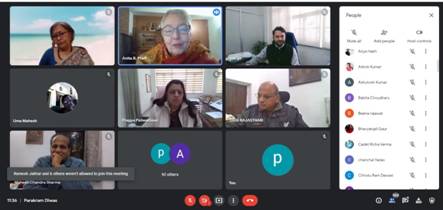
 As part of   125th birth anniversary celebrations of Netaji Subhas Chandra Bose, Press Information Bureau and Regional Outreach Bureau, Government of India, Jaipur organized a webinar in connection with “Parakram Diwas”. As part of Azadi ka Amrit Mahotsav, Government of India has declared the birth anniversary day of Netaji Subhas  Chandra Bose on 23rd January to be celebrated as Prakram  Diwas every year. Dr. Anita B. Pfaff (Daughter of Netaji Subhas Chandra Bose) and Ms. Renuka Malakar (Grandniece of Netaji Subhas Chandra Bose) participated in today’s webinar as key note speakers. Sh. Mahesh Chandra Sharma (Senior Journalist) also addressed the webinar as a guest speaker.

(Dr. Anita Bose Pfaff addressing the webinar)

Dr. Anita Bose Pfaff, daughter of Netaji Subhas Chandra Bose who joined the webinar from Germany, said that Netaji lived, lives and will continue to live in the hearts of Indian people. Though her father Netaji was a devout Hindu but he  had respect for all the religions. Dr. Anita said that her father dreamt of an India where all religions coexist peacefully. She said that Netaji was a champion of gender equality. His vision was to build a nation where men and women not only have the same rights but can also deliver same duties. It is on the women themselves to emancipate, women should win and they can win. Dr. Anita Bose also gave a detailed description on the life and contribution of Netaji Subhas Chandra Bose in the freedom struggle and nation building. She said that Netaji had a vision for financial and economic strength of India and had set up a planning commission even before India got independence.

Ms. Renuka Malakar, the grandniece of Netaji Subhas Chandra Bose, former Secretary General and currently Trustee of Netaji Subhash Bose INA Trust Delhi-India, said in her address that Netaji had extreme love for his countrymen. Youth of India are its future. She urged that the youth should keep the nation uppermost in their minds and if it happens no one can stop India from progressing.

(Ms. Renu Malakar addressing the webinar)

While elaborating on the life of Netaji Subhas Chandra Bose, Senior journalist and writer Sh. Mahesh Chandra Sharma said that as Netaji gave top most priority to the nation, youth should also strive for the nation which is united, powerful and free from religious and cast based discrimination. He said that the dedication of Netaji Chandra Bose towards the nation remain the inspiration for the youth in India.


Earlier in the webinar, Dr. Pragya Paliwal Gaur, Additional Director General (Region) PIB delivered the inaugural and welcome speech. Dr Paliwal first welcomed and thanked Dr. Anita Bose Pfaff, daughter of  Netaji, for giving her precious time and it was an honor to have her and Ms. Renuka Malakar in the webinar of Press Information Bureau.  She said that in order to honor and remember Netaji’s indomitable spirit and selfless service to the nation, Govt of India has decided to celebrate his birthday on the 23rd day of January every year as “ParakramDiwas” to inspire people of the country especially the youth.

The webinar was attended by more than 200 participants which included soldiers of BSF, cadets of NCC, young volunteers of  Nehru Yuva Kendra Sangathan and other officials from various part of the country. In the end, a video made by the Ministry of Information &Broadcasting on role of Netaji Subhas Chandra Bose in the freedom struggle of India was also played during the webinar. Sh. Pawan Singh Faujdar, Deputy Director PIB Jaipur, conducted the webinar.

*****

Simplicity of operations and transparency should be the focus of National Single Window System (NSWS)

 The Minister of Commerce and Industry, Consumer Affairs, Food and Public Distribution, Shri Piyush Goyal has said simplicity of operations and transparency should be the focus of the National Single Window System (NSWS). Chairing a review meeting of the NSWS platform, Shri Goyal said there should be complete end-to-end testing of one set of approvals for each of the integrated Ministries on the NSWS portal.

The digital platform of NSWS facilitates investors to identify and apply for approvals. It supports information across 32 Central Ministries/ Departments and the platform has 14 States onboard namely Andhra Pradesh, Assam, Goa, Gujarat, Himachal Pradesh, Karnataka, Madhya Pradesh, Maharashtra, Odisha, Punjab, Tamil Nadu, Telangana, Uttar Pradesh and Uttarakhand. The process for inclusion of 6 more States is in progress.

Shri Goyal said, in order to ensure faster approvals and save time, better communication strategy should be planned. To spread awareness about the platform, he directed that presentations be made before large corporations and to the Indian Missions abroad.

The Minister said a Chief Information Security Officer should be nominated to work exclusively for the security and risk monitoring of the NSWS portal. There should be no duplication of efforts and no physical interface, he said. “If any physical interface and interaction is needed, then it will be done through video conferencing on NSWS; Video Conferencing should be recorded and remain documentary evidence,” said Shri Goyal during the review meeting held on 19th January.

The minister stressed on the importance of user feedback. “It is critical to meet timelines which can be possible through continuous upgradation of the system,” he said.

Shri Goyal said that a meeting with States and UTs be organised next month to bring more states onboard the NSWS.

The Know Your Approvals (KYA) service is live on the NSWS with 544 approvals across 32 Central Ministries/ Departments. A total of 3,259 approvals are listed. Efforts are under progress to ensure that 13 more Ministries/Departments are onboarded by 31st March 2022 with another 360 approvals/registrations.

The first approval through the NSWS portal has been granted on 11 January 2022 to M/s CMR-Kataria Recycling Private Limited for the Vehicle Scrappage Facility RVSF, Kheda, Gujarat with a capacity of 67,000 vehicles. The approval has been made possible within a timeline of 63 days since RVSF application was submitted online on 08 November 2021.


*****

Meghalaya

 Many congratulations to all the people of Meghalaya on the golden jubilee celebration of the statehood! Today, I applaud everyone who has contributed to the building and development of Meghalaya. Some of the great personalities who raised their voice for Meghalaya’s statehood 50 years ago are present at the ceremony. I salute them too!

Friends,

I have had the privilege of visiting Meghalaya many times. I had come to Shillong to attend the North Eastern Council meet for the first time when you gave me the opportunity to serve as the Prime Minister. It was an unforgettable experience as a Prime Minister to participate in this event in Shillong after a gap of three-four decades. I am glad that the people of Meghalaya have strengthened their identity of being close to nature in the last 50 years. Meghalaya is becoming an attractive place for the country and the world for its beautiful waterfalls, for its clean and serene environment and for connecting with your unique tradition.

Meghalaya has given the message of nature and progress, conservation and eco-sustainability to the world. Our brothers and sisters from Khasi, Garo and Jaintia communities deserve special appreciation for this. These communities have encouraged life in harmony with nature and have also contributed appreciably in enriching art and music. The tradition of Whistling Village i.e., Kongthong village encourages our eternal sense of connection to the roots. Every village in Meghalaya has a rich tradition of choirs.

This land is full of talented artists. The Shillong Chamber Choir has given a new identity and new height to this tradition. Along with art, the talent of the youth of Meghalaya has been strengthening the pride of the country in sports as well. When India is on its way to becoming a major power in sports, the country has high hopes from Meghalaya’s rich sports culture. While the sisters of Meghalaya have revived the art of bamboo and cane weaving, the hardworking farmers here are cementing Meghalaya’s identity as an organic state. The cultivation of golden spice and Lakadong turmeric is now famous all over the world.

Friends,

The Central Government has sincerely tried to accelerate the development journey of Meghalaya in the last seven years. The central government is fully committed especially to better road, rail and air connectivity. Work is being done on a priority basis for ensuring new markets for the local organic products in the country and abroad. Under the leadership of young Chief Minister Conrad Sangma ji, efforts are being made to ensure central schemes for the masses at a fast pace. Meghalaya has benefited greatly from programs like the PM Gramin Sadak Yojana and the National Livelihood Mission. The number of households receiving tap water in Meghalaya has increased to 33 percent due to the Jal Jeevan Mission, whereas it was just one percent of the households (getting tap water) two-three years ago till 2019. When the country is moving towards using drone technology on a large scale for the delivery of public facilities, Meghalaya has become one of the first states in the country to deliver corona vaccines through drones. This is a picture of a changing Meghalaya.

Brothers and sisters,

Meghalaya has achieved a lot, but it still has a lot to achieve. Apart from tourism and organic farming, efforts are also needed for the development of new sectors in Meghalaya. I am with you for all your efforts. We will work together to achieve the goals you have set for this decade. Best wishes to all of you!

Thank you, Khublei Shibun, Mithla

Jai Hind!

Tripura is becoming a land of opportunities

 The Prime Minister, Shri Narendra Modi paid tribute to the people who have contributed to the establishment and development of Tripura. He acknowledged the dignity and contribution of the state from the period of Manikya Dynasty. He praised the unity and collective efforts of the people of the state. He was speaking on the occasion of the 50th Statehood day of Tripura today.

The Prime Minister underlined the three years of meaningful development and said that Tripura is becoming a land of opportunities under the aegis of relentless efforts of the double engine government.  Highlighting the state’s excellent performance on many of the development parameters, the Prime Minister said that through the construction of the connectivity infrastructure, the state is fast becoming the hub of the trade corridor. Today, along with roads, railways, air and inlay waterways are also connecting Tripura with the rest of the world. The double engine government fulfilled the long pending demand of Tripura and got access to the Chittagong sea port in Bangladesh. The state received the first cargo from Bangladesh through Akhaura Integrated Check Post in 2020. The Prime Minister also mentioned the recent expansion of Maharaja Bir Bikram Airport.

The Prime Minister talked about good work in the state regarding providing pucca houses to the poor and use of new technology in housing construction. These Light House Projects (LHP) are going on in six states and Tripura is one of them. He said that the work of the last three years is just a beginning and Tripura’s real potential is yet to be realized. He said that the measures in the fields ranging from transparency in the administration to infrastructure development will prepare the state for decades to come. Campaigns like saturation of benefits and facilities in all the villages will make the lives of the people of Tripura easier and better, he said.

 The Prime Minister said as India will attain 100 years of Azadi, Tripura will also complete 75 years of statehood. “This is a great period for new resolutions and new opportunities”, the Prime Minister added.

***********

First Convocation ceremony of Indian Institute of Petroleum and Energy (IIPE)

 The Vice President, Shri M. Venkaiah Naidu today called for increasing indigenous production of crude oil through strong R&D efforts to ensure energy security of the country. 

Calling for ‘Atma Nirbharta’ in the country’s energy mix, Shri Naidu suggested focussing more on increasing domestic exploration of petroleum, harnessing the full potential of renewable sources and aiming for excellence and innovation in the energy industry.

Noting that India is the world’s third largest consumer of crude oil and yet import-dependent for more than 80 percent of its needs, Shri Naidu underlined the importance of increasing production, not only to save foreign exchange but also to ensure energy security. He noted various policy reforms of the government such as the Hydrocarbon Exploration Licensing Policy (HELP) aimed at increasing exploration in new sedimentary basins.

The Vice President was attending the First Convocation ceremony of the Indian Institute of Petroleum and Energy (IIPE) in Visakhapatnam. IIPE is a dedicated university for petroleum research and was recognized as an Institution of National Importance in 2017 through an Act of Parliament.

Noting the impact of population and industrialisation on increased energy demand, Shri Naidu said that ‘India’s primary energy demand is expected to grow at an average rate of more than 3% till 2045 as compared to less than 1% growth for the rest of the world.’

In this regard, Shri Naidu called upon IIPE and other energy institutes to  bridge the supply gap of skilled manpower for the petroleum sector and build stronger industry-institute linkages with the prominent market players.

He also suggested encouraging Ph.D. students to undertake research on problems faced by the industry and thus ‘bring a multi-disciplinary approach into academic research, which is the aim of National Education Policy 2020.’

Observing that India is blessed with ample renewable sources such as solar, wind and tidal power, the Vice President suggested fully tapping the potential of these sources of energy as part of the efforts to reduce the use of fossil fuels.

To achieve this, he suggested institutes specialising in energy should also seek to diversify their portfolio and take up projects which have a component of renewable energy research. “Even a tiny improvement in the efficiency of harnessing green sources will deliver great benefits of scale to our economy and ecology”, he noted.

The Vice President expressed confidence that IIPE will show the way forward by becoming an exemplar in the domain of energy research. He appreciated the efforts of the administration and complimented the graduating students for their achievements. Shri Naidu presented awards to the gold medalists from the batches 2016-20 and 2017-21.

On this occasion, the Vice President called for caution and utmost adherence to COVID-19 protocol as the country is going through the third wave of the pandemic. Appreciating the government’s efforts for vaccination, he called upon civil society groups, students, medical professionals and others to reach out to as many people as possible and encourage people to get vaccinated. “It is now well established that vaccination drastically reduces the need for hospitalisation, including admission to ICU. Vaccination can indeed save lives,” he observed.

Shri Rameswar Teli, Union Minister of State for Petroleum and Natural Gas, Labour and Employment, Dr. Seediri Appala Raju, Andhra Pradesh Minister for Animal Husbandry and Fisheries & Dairies Development, Prof P.K. Banik, President of the Board of Governors, IIPE, Prof VSRK Prasad, Director, IIPE, Vice Chancellors of various Universities, other dignitaries and the graduating students participated in the event.

Following is the full text of the speech:

“Sisters and brothers,

I am indeed honoured to be here for the First Convocation ceremony of the Indian Institute of Petroleum and Energy (IIPE) in Visakhapatnam.

At the outset, I wish to congratulate all the graduating students for acquiring a degree of high contemporary relevance from this institution. My best wishes to all of you as you mark an important milestone in your journey of learning. I would like to convey my appreciation to the teachers who nurtured the students to be proficient in their disciplines and imparted the necessary skills to make them competent professionals.

Sisters and brothers,

We are meeting at a difficult time when the world is undergoing another wave of the pandemic. The Governments at the Centre and in various states are taking all measures to prevent the spread of the virus, including the implementation of the world’s largest vaccination drive. It is imperative that we complement these efforts as responsible citizens and do our bit in protecting ourselves and our community.

I call upon civil society groups, students, medical professionals and the government to reach out to as many people as possible and encourage people to get vaccinated. It is now well established that vaccination drastically reduces the need for hospitalisation, including admission to ICU. Indeed, vaccination can save lives and those harboring doubts must shed their hesitancy and get vaccinated at the earliest.

Friends,

It is truly a matter of delight for me to attend the first convocation of this institute. I remember that the foundation stone for the campus at Vangali village was laid by me as the then Minister for Urban Development along with the then Minister of Petroleum and Natural Gas.

I have been informed that the campus could not be shifted to the new premises due to some legal issues. However, I am glad to know that with the concerted efforts of the Ministry of Petroleum and Natural Gas, the Government of Andhra Pradesh and the institute, things are looking bright and soon, the institute is likely to be shifted to the new campus.

Sisters and brothers,

Petroleum and its byproducts have played a critical role in propelling the progress of the world in modern times. From the discovery of the first oil reserves in Digboi, Assam in 1889, the industry has seen a phenomenal rise in India, greatly aiding the country’s progress post-independence.

India today is the third-largest consumer of crude oil in the world. While petroleum comprises an important component of India’s energy mix, we are still import-dependent for more than 80 percent of our oil needs. It is indeed important to focus on increasing indigenous crude oil production and reducing imports to not only save precious foreign exchange but also to ensure energy security.

With increasing population, urbanization and industrialization, the use of petroleum products is only expected to increase. For India, the primary energy demand is expected to grow at an average rate of more than 3% till 2045 as compared to less than 1% growth for the rest of the world.

This highlights the importance of local exploration of petroleum and shifting to alternative sources. To this end, the government’s policy reforms such as Hydrocarbon Exploration Licensing Policy (HELP) aim at increasing domestic production, liberalizing exploration of new sedimentary basins, including ultra-deepwater blocks.

In this quest for ‘Atma Nirbharta’ in energy security, institutions like IIPE have a central role to play. As a dedicated university for petroleum research, IIPE should take the lead in two aspects: One, in bridging the supply gap of skilled manpower for the Petroleum Sector and two, to aim for excellence in research of petroleum and its by-products. It was thus duly recognized as an Institution of National Importance in 2017, and IIPE should live up to that expectation in the years ahead.

Overall, there is a need to invest in research institutes in a big way and create the ecosystem for innovation to thrive and help the country to become ‘energy secure’ in the coming years.

Sisters and brothers,

As we strive for excellence in the hydrocarbons’ research, it is important to promote ‘industry-institute’ linkages to boost R&D outcomes. Sponsored research, collaboration and consulting with industries are integral to today’s R&D landscape and institutes in this area should explore opportunities with all prominent private players. I am happy to know IIPE has collaborated with oil majors in the country such as HPCL, IOCL and even entered into MoUs with foreign universities to pursue joint research.

More such mutually beneficial tie-ups between academia and industry must be explored. In addition, bottlenecks in our patenting regime must be resolved, Ph.D. students must be encouraged to undertake research on problems faced by the industry. Such a move towards partnership will also bring a multi-disciplinary approach into academic research, which is the aim of National Education Policy 2020.

Sisters and brothers,

Fossil fuels, despite having driven the world’s economic engines for a long time, have a big downside. Combustion of these fuels emits pollutants, whose deleterious effects on the planet have been well documented.

The potential of small and renewable sources of energy needs to be fully tapped as part of the efforts to reduce the use of fossil fuels. I am happy to note that solar, wind, small hydro, and tidal energies are being well explored and their costs also have been coming down over the years.

Thus, as the world is looking for clean and sustainable energies, institutes specializing in energy should also seek to diversify their portfolio by adopting a multidisciplinary approach to energy and bringing out alternative solutions. Even a tiny improvement in the efficiency of harnessing green sources will deliver great benefits of scale to our economy and ecology.

India in particular is blessed to have ample sunlight throughout the year, good wind power potential in the Southern and Western Regions and inexhaustible tidal energy in the seas. A great start has been made with the formation of the International Solar Alliance, an initiative led by India.

While many institutions have been taking up renewable energy seriously, we must also invest in training the workforce with the latest technologies in the renewable sector. This will open up great employment opportunities while also driving the green energy sector.

Universities must also take up research work and projects which have a component of renewable energy research.  While IIPE is presently offering Petroleum Engineering and Chemical Engineering at UG levels and Ph.D., I am happy to note that the institute is planning to promote research in alternative energy sources.

Sisters and brothers,

I am confident IIPE, a young institution as it is, will show the way forward by becoming an exemplar in the domain of energy research. Despite being a new institution, IIPE, has shown good promise already due to the untiring efforts of the administration, faculty and most importantly, its students. My appreciation and best wishes to all of you for your future endeavors!

Once again, I am very happy to be present at the First Convocation of this promising National Institute. On this momentous occasion, I once again congratulate the graduating students for acquiring their coveted degrees, prizes and medals.

Thank you all.

Namaskar. Jai Hind.”


*****

FAMILY❤

Family is one of the greatest gift and blessing from the Lord. Without family you can not feel love, care , satisfaction and happiness. They are the most treasured blessing that no one can take away from us. It is also like a fragile thing you consider as the most precious gem in your whole life.

Family is a basic unit in the society traditionally consisting of parents and children. It does not need to be blood related in order to be a family. Family is home, they are the ones who gives you unconditional love. They are the people who comforts you towards difficulties in life. The ones who I can count on in times of love problem. Family, the people whom I call my world, my world because they are the people who guides me taught me how to walk and talk

My family has always supported me without any claim, from the moral teachings to love and support. For me, my family is like a strong pillar on which I can rely blindly whenever I need support. My family is always there to inspire and support me to overcome all life challenges and accomplish things. A relation is a unique kind of love that gives you all the lessons you need to live a healthy lifestyle.

WHY FAMILY IS IMPORTANT?

Families are wealth, which not everyone is lucky enough to have. Sometimes, those who have don’t value this gift. Families are important because they assist in our development. They grow us all into a full-fledged human with individual identity. They always offer us a sense of comfort and a safe place to flourish within. We learn to socialize and develop our intellect through our families. Studies demonstrate that people who live with their families tend to be happier than those who live alone. In times of trouble, they serve as your pillar.

When the entire world questions you, families are the only ones who believe in you. Similarly, they ‘re the first to cheer you up when you’re down and out. Having a supportive family by your side is a great blessing. In ups and downs, my family has always been at my side. They taught me how to be a better human being. I will be grateful to my family forever for what they did to me. Without them, I can’t imagine my life. They are my first instructors and friends.

Families are the pillars of strength because they give us the courage to face the world. They are always there when we need them. Even in the loneliest of times, families make us feel better.

Most of us teenagers, having mistakes of not giving valuable or importance to our family.Sometimes we get mad at ththem.for some reasons, but we should always put in our mind that life is too short and family is very precious.

Let me add again a special word about family .Our family is the most precious things we have. The friends we have today may not be our friends in the future ,but our family? They will always be our family that will always be there for us during ups and downs and love us no matter what .

The value of family is priceless , no one could ever buy them and it cannot be described by a single word.

Before I end this speech, I would like you to reflect on this quotation

“FAMILY IS NOT THE IMPORTANT THING ,THEY ARE EVERYTHING “

PORTRAYAL OF FADING PASSION IN THE POEM “ONE FLESH”

“One Flesh” written by Elizabeth Jennings is a poem which shows the narrator’s reaction towards the passionless marriage of her parents. She explores their never in a melancholic tone. The title can be related to Bible in the Book of Genesis, in the creation of Adam and Eve. There the two individuals were ‘one flesh’ and could not be divided. This concept also extends to marriage where two individuals become one entity. Here the parents of the narrator were also ‘one flesh’ as mentioned in the title. They are the remnants of a former passion. Speaker says that she has rarely seen her parents touch or when they did that was fake or an act of necessity. Their relationship does not seem genuine. Poet describes the relation as ‘flotsam’ which shows their relationship growing colder. Poet also says that “whose fire from which I came, has now grown cold?”. The poet views her parents behaviour as chaste, or they are preparing themselves for the lives of chastity. During those times chastity was of utmost importance. So the narrator ends the poem by saying that all people, including her parents’ final destination is chastity.

Even though at an age they engage in passionate relationship they ultimately return to abstinence. Poet also questions whether the parents know they are old. The parents lie close but, they are not speaking to one another. They are mentally apart, their minds drifts to different places. The poet says that they are wasting precious moments they are together. For the speaker time seems to be a feather, which is withering away. Even though poet is able to find the feather parents are not realising that time is not left.

Tryst With Destiny

Tryst with Destiny” was an English-language speech delivered by Jawaharlal Nehru, the first Prime Minister of India, to the Indian Constituent Assembly in the Parliament, on the eve of India’s Independence, towards midnight on 14 August 1947. The speech spoke on the aspects that transcended Indian history

It is considered to be one of the greatest speeches of the 20th centuryand to be a landmark oration that captures the essence of the triumphant culmination of the Indian independence movement against British colonial rule in India.

Tryst with destiny means to make a deal secretly with your destiny. This speech was given by Jawaharlal Nehru on the eve of India’s independence.

10 Lines on Nehru Speech Tryst with Destiny

1 The Tryst With Destiny Full Speech lasted nearly 8 minutes, that is, a total of 1099 words were delivered in the oratory style of his day.

The very opening words of Nehru’s Speech-“India’s Tryst With Destiny” are infused with the poetic style that is characteristic of the speeches and writing of Nehru.

In A Tryst With Destiny, Nehru gives a lively picture of the historical richness of India and expresses his hope for an equally great, if not greater, future for India.

The traditional personification of India as a woman, considered to be a “mother” has been done which is popular in Indian literature.

Nehru warns against petty prejudice and divisive criticism in the latter part of the speech that refers to the problems of caste, race and religion that have plagued India for centuries.

He warns against the dangers of communalism and narrow mindedness, using speech figures reflective of “Where The Mind Is Without Fear” by Rabindranath Tagore

He calls the people of Pakistan as his “Brothers and Sisters”, in line with Gandhi’s ideal of Vasudhaiva Kutumbakam.

A Tryst With Destiny Book written by Stanley Wolpert traces Jawaharlal’s rapid rise to the presidency of India’s National Congress.

The Tryst With Destiny Speech is renowned worldwide, even today

What does tryst with destiny symbolise? 

Tryst with destiny means to make a deal secretly with your destiny. This speech was given by Jawaharlal Nehru on the eve of India’s independence. The speech talks about how all Indians came together to fight against the British and got freedom after the struggle of 89 years with lots of lives lost. The speech symbolises that India was destined for freedom and after all those years the independent India vision was achieved.

What was the central message of the speech?

Tryst with destiny? India had suffered a great deal during the rule of Britishers. The speech’s central message was to end poverty and ignorance in India. The diseases, inequality had to be diminished from the country and unless there is no end to the suffering of people the work of truly free India is not complete. Jawaharlal Nehru was an ambitious man and his mission was to wipe every tear from every eye in India. 

What are the unique aspects of the speech tryst with destiny?

There was a great use of metaphors used in the speech by Jawaharlal Nehru explaining the tale of India in a poetic form. Throughout the speech, our country was addressed as “she” and there was a reference made “India will awake”. The independence of India is compared to the hope and freedom of a star. Nehruji did paint a beautiful picture of India through the speech. These were the few unique factors of the speech. Every student should take the learning off the creativity and the metaphors and poetic comparisons made while writing any speech