Indian universities achieve top-200 positions in QS World University Rankings 2022

 Three Indian Universities have achieved top-200 positions in QS World University Rankings 2022. IISc Bengaluru ranked number 1 in the world for research. QS Quacquarelli Symonds, global higher education analysts has today released the 18th edition of the world’s International University rankings.

Union Education Minister Shri Ramesh Pokhriyal ‘Nishank’ congratulated IIT Bombay for securing 177th position , IIT Delhi for securing 185th rank  and  IISc Bengaluru for securing 186th position in universities rankings. 

Shri Pokhriyal said that India is taking a leap in the field of Education & Research and is emerging as a Vishwaguru. We are equally proud to have a Guru like Prime Minister Shri Narendra Modi who has constantly been thinking about the welfare of students, faculty staff and all other stakeholders associated with the Indian Education sector, he added.

The Minister further said that the initiatives such as National Education Policy – 2020 and Institute of Eminence are instrumental in ranking our colleges and institutes globally. This can be felt by looking at the university rankings declared by QS & Times Group, he added.

*****

All India Survey on Higher Education (AISHE) 2019-20

 Union Education Minister Shri Ramesh Pokhriyal ‘Nishank’ today announced the release of the report of All India Survey on Higher Education 2019-20. This Report provides key performance indicators on the current status of Higher education in the country.

Shri Pokhriyal noted that in the last five years from 2015-16 to 2019-20, there has been a growth of 11.4% in the student enrolment. The rise in female enrolment in higher education during the period is 18.2%. He emphasized that the continuous focus given by the government under the leadership of Prime Minister Shri Narendra Modi on education of girls, women empowerment and empowerment of socially backward classes are well reflected by the increased participation of women, SCs and STs population in Higher Education as shown by the Report.

Minister of State Shri Sanjay Dhotre said, “The results published in this report are indicators of the success of the policies adopted by Prime Minister Shri Narendra Modi in the higher education sector of the Country. I hope this report will help our policy makers to further improve the higher education scenario of the country.”

Secretary, Higher Education Shri Amit Khare said that this report is the 10th in the series of All India Survey on Higher Education (AISHE) annually released by D/o Higher Education. The continuous rise in the enrolment, number of institutions, gender parity is a part of our country’s major move towards improving access, equity and quality in light of National Education Policy 2020, he added.

 Key features of All India Survey on Higher Education Report 2019-20

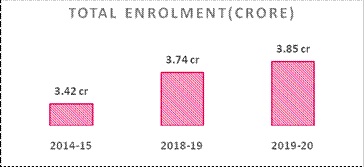
1. Total Enrolment in Higher Education stands at 3.85 crorein 2019-20 as compared to 3.74 crore in 2018-19, registering a growth of 11.36 lakh (3.04 %). Total enrolment was 3.42 crore in 2014-15.


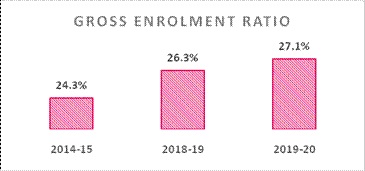
2. Gross Enrolment Ratio (GER), the percentage of students belonging to the eligible age group enrolled in Higher Education, in 2019-20 is 27.1% against 26.3% in 2018-19 and 24.3% in 2014-2015.

3. Gender Parity Index (GPI) in Higher Education in 2019-20 is 1.01 against 1.00 in 2018-19 indicating an improvement in the relative access to higher education for females of eligible age group compared to males.

4. Pupil Teacher Ratio in Higher Education in 2019-20 is 26.

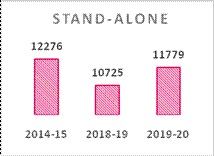
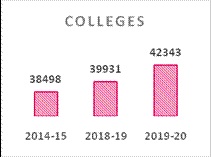
In 2019-20: Universities: 1,043(2%); Colleges: 42,343(77%) and stand-alone institutions: 11,779(21%).


6. 3.38 crore Students enrolled in programmes at under-graduate and post-graduate level.  Out of these, nearly 85% of the students (2.85 crore) were enrolled in the six major disciplines such as Humanities, Science, Commerce, Engineering & Technology, Medical Science and IT & Computer.

7. The number of students pursuing PhD in 2019-20 is 2.03 lakh against 1.17 lakh in 2014-15.

8. The Total Number of Teachers stands at 15,03,156 comprising of 57.5% male and 42.5% female.

Click below to see the report:

*****


How To Tame Frizzy Hair?

Frizzy Hair

Frizzy hair is the effect of different individual hair fibers running in multiple directions, which is why frizzy hair has a rough feel to it. As a result, hair appears dry and frizzy instead of smooth and defined.

Frizzy hair happens when the cuticle layer of your hair is raised, which allows moisture to pass through and swell the strands. But, what is the cuticle layer? The cuticle layer refers to the outermost layer of the hair strand that protects the innermost layers of the hair shaft.

What Causes Frizzy Hair?

“There are essentially four primary factors that cause frizz,”. “The first is the environment, such as humidity. Hair fibers act like sponges and when exposed to moisture, the hydrophobic bonds created with styling products break as moisture moves in and out of the hair fiber. Then there’s the diameter of the hair fiber itself. As we learned previously, frizz is misaligned hair fibers and the thicker the hair fiber, the more difficult it is to reshape and realign. The third cause is related to how curly a person’s hair is. The curlier the hair, the greater the challenge it is to align the hair fibers.”

Curly hair can be prone to frizz, but certain hairstyles work to tame frizz and define your beautiful, curly hair. Lastly, The amount of damage to the hair leads to frizz. For instance, split ends, cuticle loss and breakage gives hair that frizzy look because the hair fibers aren’t uniform or aligned.”

Tips to avoid frizzy hair

  1. Avoid using a terry cloth towel to dry your hair. Cloth towels can add damaging friction to your hair. Instead of drying your hair with a terry cloth towel, air dry your hair or use a microfiber towel.
  2. Avoid using a traditional bristle hairbrush. Certain hairbrushes can damage hair cuticles and lead to frizz. Switch to a widetooth comb to prevent breakage.
  3. Avoid using an old blow dryer. Traditional hair dryers use hot air to quickly dry your hair. Excess heat can damage your hair and lead to frizz. Instead, pick an ionic hair dryer to reduce damage while drying your hair.
  4. Avoid washing your hair every day. Washing your hair too often can deplete your hair of moisture and raise your hair cuticles, both of which contribute to frizz. Instead, wash your hair 2-3 times a week to prevent frizz.

What causes Frizz?

Frizzy hair isn’t always easy to deal with and varies based on your hair type. Therefore, knowing what frizzy hair is and what causes it is the first step.

  • Frizzy hair happens when all the different individual hair fibers are running in multiple directions.
  • There are four primary factors that cause frizz: the environment, diameter of the hair fiber itself, level of curl, and the amount of damage.
  • Avoid long and hot showers, excess exfoliation, and hot tools like traditional hairdryers and flat irons to prevent frizz.

Hair serum for frizz free hair

Hair serums may not be the magical elixir for thinning hair or hair loss, much less to promote hair growth. But it’s definitely the go-to frizzy hair treatment. A serum is formulated with a mix of argan oil, jojoba oil, and sunflower oil. Besides that, it features a custom blend of synthetic and naturally derived ingredients, including vitamin E, depending on your favourite hair goals. 

One of the greatest benefits of using a hair serum is its ability to block out humidity and create a sleek, polished finish. Simply put, there’s no better product to use when you’re trying to create that perfect glossy hair look.

Rather than just applying your serum to damp hair before heat styling, we suggest also using it in place of your hairspray to help tame any unruly strands. 

Simply rub a small amount of serum through the palm of your hands. Then, using two fingers, gently apply it to the strands using a pressing motion anywhere you want a smoother hair texture.

Serum only on the tresses and not the roots:

The idea of having super-shiny hair from root to tip may sound like a good idea in theory. But trust us when we say that, unlike a scalp treatment, you’ll want to avoid applying your serum directly on your roots or scalp. This holds especially true for those with naturally-fine  or oily hair, as even the most lightweight serums have the potential to weigh the hair down, cause product buildup, and make your roots look greasy.

For that reason, we always recommend applying your serum to the ends first and slowly working your way up to the mid-shafts. This will not only ensure that you don’t overload on the product, but that you’re also only applying it to the part of your hair that needs it most.

Don’t Apply Right Away:

Unlike hair oils, hair serums tend to be a little thicker in consistency, which can make working them into your hair a bit more difficult for some.

Our tip? Don’t try applying your hair serum as soon as you dispense it. Instead, try warming up the product between your hands for a few seconds so that it has the chance to break down and liquify a bit, giving you a little more slip. This’ll not only help your serum perform better but also ensure a more seamless, even application.

Don’t Over-Apply:

Whether your hair is long or short, thin or thick, there’s a fine line between looking perfectly polished and flat and greasy. That’s why it’s important to start with a small amount of serum and then gradually work in more only as needed.

When in doubt, start with the least number of pumps recommended for your hair type and then slowly build from there. Whatever you do, just remember: a little goes a long way.

Benefits of Honey

Honey is a liquid sweetener that bees make. After they collect nectar from flowers, they take it back to the hive and regurgitate it. Then, the other bees chew it until it becomes honey. The bees deposit the honey into tiny, waxy storage units called honeycombs. They fan it with their wings to dry it out. This process makes it stickier.

“Honey gets its sweetness from its chemical makeup,”. “It’s made up of two simple sugars called glucose and fructose, along with some minerals.”

Types of honey

The U.S. boasts more than 300 different types of honey. You can buy it:

  • Raw: Raw honey comes straight from the hive. “Raw honey is the least processed and probably has the most antioxidants,” Ilic says. Despite its raw status, it’s considered safe to eat except for children younger than 1, who should avoid all honey.
  • Pasteurized: Pasteurized honey has been processed to remove imperfections and improve its shelf life. “It can also be spiked with added corn syrup or other sweeteners,” Ilic notes. “Not all honey sold in the stores is the same even though it all starts naturally in the hive.”

Why is some honey light and others dark?

Whether honey is light or dark in color depends on which kind of plant the bees who made it took the nectar from. “For instance, dark buckwheat yields dark honey,”. “But nutritionally, there’s evidence that darker honey has less water and more antioxidants than light-colored honey.”

Honey has so many different tastes you can enjoy compared to plain sugar, she adds. “It can be sweeter or more bitter, depending on the flower source.”

Light honey varieties

Light-colored honey tends to be mild in flavour. Varieties include:

  • Acacia honey: It has floral scents and sweetness but doesn’t change the taste of what you put it in, such as tea and oatmeal.
  • Clover honey: This honey is common in the U.S. “It has a floral, sweet taste and a bit of a sour aftertaste,”. “It’s good for baking, sauces and dressings.”

Dark honey varieties

Dark honeys are known for their stronger flavours. Examples include:

  • Buckwheat honey: “This full-flavored honey can be used in marinades,” says Ilic.
  • Manuka honey: Manuka honey comes from the nectar and pollen of the Manuka bush in New Zealand. “Studies have shown it contains antioxidants, along with antibacterial and antifungal properties. It’s also expensive,” adds Ilic. It’s traditionally used topically to treat burns, cuts and sores.

Is crystallized honey bad?

Store honey in a cool location away from sunlight. But sometimes, even in the perfect spot, honey can crystallize and solidify. “Honey with a higher ratio of glucose versus fructose crystallizes sooner,”. “Glucose may also attach to the little particles of honeycomb and pollen in raw honey and is more likely to crystallize as a result.”

But crystallized honey is still safe to eat: It can be used as a spread, like butter. You can also re-liquefy it by putting the container in a warm water bath.

Honey’s health benefits

Honey contains antioxidants, minerals, enzymes that have many potential health benefits. There’s also evidence that honey can:

  • Soothe coughs: The World Health Organization (WHO) and the American Academy of Pediatrics both endorse honey as a natural cough remedy. 
  • Treat wounds and burns: Pharmaceutical-grade manuka honey dressings have been used in clinical settings to treat burns and pressure ulcers.

“Many other claims have been made about the health benefits of honey – some based on very small studies, others overstated and based on mixed study results,”. “Additional studies are needed.”

How to add honey to your diet

While honey has health qualities that other sugars only dream of, it’s still an added sugar — and eating too much of it can wreak havoc on your health. The American Heart Association recommends:

  • Women: Consume no more than 6 teaspoons daily of added sugars (100 calories).
  • Men: Consume no more than 9 teaspoons daily of added sugars (150 calories).

Those limits include all sources of added sugar in your diet, so use honey in moderation to avoid exceeding the limits. “Try sweetening plain yogurt with a light drizzle of honey and add your own fruit, instead of eating flavoured yogurt with too much added sugar.” You could also use honey in sauces and marinades or as a skin mask.

Learning how to learn!

“Focused” and “Diffused” Modes

When learning, there are times in which you are focused and times in which you allow your mind to wander. Both modes are valuable to allow your brain to learn something.
Take regular breaks, meditate, think about other things, and give yourself plenty of time in both modes.

Chunking

This is the idea of breaking what you want to learn into concepts. The goal is to learn each concept in a way that they each become like a well-known puzzle piece. 
To master a concept, you not only need to know it but also to know how it fits into the bigger picture.

Beware of Illusions of Competence

There are many ways in which we can make ourselves feel like we have “learned” a concept. Instead of highlighting or underlining, rather take brief notes that summarize key concepts.

Recall

Take a couple of minutes to summarize or recall the material you are trying to learn. It goes a long way to taking something from short-term memory to long-term learning.

Bite-Sized Testing

To avoid breakthrough illusions of competence, you should test yourself as you’re encountering new material. The recall is a simple example of this mini-testing.

Over-Learning

Do not spend too much time in one sitting going over the same material over and over again. The law of diminishing returns certainly applies. Spread it out over many sessions and many different modes of learning.

Interleaving

Once you have a basic understanding of what you are trying to learn, practice jumping back and forth between problems that require different techniques. This will solidify your understanding of the concepts by learning how to choose to apply them in various situations. Knowing when to apply a particular concept is as important as knowing how.

Process over Product

When facing procrastination, think of the process over the product.
Instead of thinking that you have to get X done, rather think to spend an hour on X. It is then not overwhelming and doesn’t require a long breakdown of tasks.

Metaphors and Analogies

They are often talked about as helpful study techniques. 
Try to make a deliberate effort to teach what you learn to someone else and, in doing so, you will likely be forced to explain concepts with relatable metaphors and analogies.

Study Groups / Teamwork

This has proven to be most beneficial to maintain continued progress and hold each other accountable. Finding the right group is key.

Reference

https://medium.com/learn-love-code/learnings-from-learning-how-to-learn-19d149920dc4

SARAH’S : A CHANGE IN THE NOTION OF MOTHERHOOD

Jude Anthony Joseph’s 2021 Malayalam film Sarah’s is making a revolutionary turn in Malayalam cinema by changing the notions of pregnancy, abortion and motherhood. The protagonist Sarah is a woman who is not willing to get pregnant and to bcome a mother. As she gets older day by day this decision gets stronger. she even marries a man on this agreement. The tension arises when she becomes pregnant, by a contraceptive failure. But even after this Sarah is stronger with her opinion of her own pregnancy, but her husband, family and the society compells her to continue this pregnancy without considering her opinion. But towards the end the decision made by Sarah on her pregnancy is something revolutionary. This kind of representation of womanhood and motherhood is very rare in Mollywood.

Through the character of Sarah the film portrays the fact that women are not just medium of reproduction. The direction also shows themes like modern sexual relations, legal side of abortions etc. Through the medium of satire the movie comments on old notions of motherhood. And also states that there is no need to glorify motherhood, if that affects the mental physical and emotional state of mother. The movie says that parenthood is not a social norm. The film even not glorifies abortion. It opens a discussion that when and why a person can decide it. The comment ” Better not be a parent, than a bad parent” is thoughtful. The film can be considered as an ode to women about parenthood, identity and opinion.

IMPORTANCE OF SELF LOVE

Self love, which is the “consideration of one’s own happiness or advantage” is a basic human necessity. It is a kind of appreciation for oneself that results in the well being of one’s physical, psychological and spiritual self. It includes actions and thoughts which is for one’s own needs and not sacrificing one’s well being to please others. The habit of self love and self appreciation is considered as compulsory for the psyche of human. Because people who love themselves are less likely to suffer from anxiety, depression and such similar psychological conditions. It also lessens procrastination and increases the focus to work.

Loving oneself is a different task, but to develop the habit is easy. One of the practice to develop self love is to stop comparing oneself with others. This comparison is natural, but if it sometime leads to danger. There is no need for comparison because every individual is unique m Apart from this one needs to focus on his or her self energy and spirit. Neglecting other’s opinion is also an important habits with regard to self love. Constructive criticism is important for one’s personality development. But worrying about other’ opinion and thinking what the society thinks before doing anything is a bad practice. It is human to make mistakes. Nobody is perfect. With each mistakes one learn each lessons. So the freedom to do mistakes is an important factor in self love. Good decision making, forbidding how one’s body look, avoidance of toxic people, understanding and rejecting fears and finding beauty in simple things are some steps to develop the habit of self love.

Another important factor is the freedom to feel pain and happiness equally. Limitations in feelings like happiness, pain and fear are dangerous. It is human to experience every emotion in its fullest form. These experiences will make one to realize oneself. Giving priority to oneself is a good practice. Even though it is in every one, women is more accustomed to putting other’s first.

When a person practices self love, others will also start feeling love with himself or herself. As a result of this one’s confidence increases and it leads to success in professional and personal life. It helps to understand one’s passion and this habit attracts others. Thus self love is a necessary habit in one’s physical psychological and spiritual well being.

Kinds Of Essay

An essay is a short composition in prose. It discusses, either formally or informally, one or more topics. This term was first applied to Montaigne’s volumn of informal pieces. This volume was first published in 1580. After seventeen years, Francis Bacon used the English word ‘essay’ to describe his brief philosophic discourses. With the development of periodicals, the essay become a popular form. Addison, Steel, Lamb, Hazlitt, and Pater made it their major concern.

The Aphoristic Essay Bacon was the first to write proper essays in English. Though he was inspired by the French writer Montaigne, his essays are more objectives and impersonal than those of the French master. Bacon’s essays are written in an aphoristic style. They contain mostly short, crisp sentences with a didactic bent. Bacon called his essay’s ‘counsels civil and moral’ and ‘dispersed meditations’. Aphoristic essays are known for their precision of style and balancing structure. No superfluous words are used and sentences flow rapidly. They seem abrupt and rugged but express the ideas directly and clearly. As a critic says, the sentences in an aphoristic essay are in a state of ‘literary undress’

The Character Essay In the earlier part of the 17th century, the essay took the form of character sketches in the writings of Joshep Hall, John Earle, and Sir Thomas Overbury. They were inspired by the Greek philosopher Theophrastus and the Roman Seneca. The early character essays were marked by minute details and were often presented in a humorous and satirical manner. Such essays were almost like pen pictures of various types of men and women. Some traits of the character essay can be seen even in Addison’s essays on Sir Roger de Coverley.

The Critical Essay Dryden introduced this type of essay during the Restoration period. Though the critical essay retained the traditional form, its theme was literary criticism. Dryden’s Prefaces and other prose writings can be included in this category. The critical essay is the main objective. However, it often exhibits traits of the personal essay because critical opinions are generally colored by the personality of the writer. In the 19th century, the critical essay flourished in the writings of Emerson, Hazlitt, Arnold, Carlyle, and Ruskin. The 20th century has seen a host of critics who made valuable contributions to the critical essay. Among them, T.S.Eliot and F.R.Leavis are the most important.

The Periodical Essay The periodical essay became popular in the 18th century especially with the publication of the ‘Tatler’ and the ‘The Spectator’. The essay that began to appear in the periodicals drew their inspiration from the social life of the people. The periodical essay was adapted for literary criticism and the delineation of character. Addison’s essay delineating the character of ‘The Spectator’ and the several essays by Steele and Addison on the imaginary character Sir Roger de Coverley is the examples of how journalistic writings could attain artistic perfection.

The Personal Essay In the Personal Essay, the personal element predominates. Charles Lamb is known as the greatest writer of the personal essay in English Literature. There is no formal or logical development of thought in an essay. The various points are mentioned haphazardly. Its author likes to enjoy the freedom of conversation. So, he is informal and often chatty. Hazlitt, De Quincey, and Charles Lamb brought the personal essay to a level that has remained unsurpassed. George Orwell, E.M. Forster, James Thurber, and E.B. White are excellent model practitioners of the personal essay.

Twentieth Century Essay In the 20th century, the development of the essay is encouraged by a large number of periodicals and newspapers. Many of the modern essays appear in the form of articles and are often collected and published in book form. In the modern essay, the distinction between the personal and the objective is hardly noticeable. It is at once expository, reflective, and descriptive and one of its main elements is humor. Some of the important modern essayists are G.K.Chesterton, A.G.Gardiner, F.L.Lucas, Max Beerbohm, and Hilaire Belloc

https://track2training.org/2022/01/11/what-is-an-essay/

The Old Man and The Sea

The Old Man and the Sea is a novella written by the American author Ernest Hemingway in 1951 in Cayo Blanco (Cuba), and published in 1952. It was the last major work of fiction written by Hemingway that was published during his lifetime. One of his most famous works, it tells the story of Santiago, an aging Cuban fisherman who struggles with a giant marlin far out in the Gulf Stream off the coast of Cuba.

In 1953, The Old Man and the Sea was awarded the Pulitzer Prize for Fiction, and it was cited by the Nobel Committee as contributing to their awarding of the Nobel Prize in Literature to Hemingway in 1954.

CHARACTER  SKETCH

SANTIAGO

Santiago is the protagonist of the novella. He is an old fisherman in Cuba who, at the beginning of the book has not caught anything for eighty-four days. The novella follows Santiago’s quest for the great catch that will save his career. Santiago endures a great struggle with an uncommonly large and noble marlin only to lose the fish to rapacious sharks on his way back to land Despite this loss. Santiago ends the novel with his spirit undefeated. Santiago represents Hemingway himself searching for his next great book.

MANOLIN

Manolin is Santiago’s only friend and companion. Santiago taught Manolin to fish, and the boy used to go out to sea with the old man until his parents objected to Santiago’s bad luck. Manolin still helps Santiago pull in his boat in the evenings and provides the old man with food and bait when he needs it. Manolin is the reader’s surrogate in the novel, appreciating Santiago’s heroic spirit and skill despite his outward lack of Success.

The Marlin

Although he does not speak and we do not have access to his thoughts, the marlin is certainly an important character in the novella. The marlin is the fish Santiago spends the majority of the novel tracking, kiling, and attempting to bring to shore The marlin is larger and more spirited than any Santiago has ever seen. Santiago idealizes the marlin ascribing to it traits of great nobility, a fish to which he must prove his own nobility if he is to be worthy to catch it

Summary and Review

This is a story about an old fisherman who is on somewhat of an unlucky streak. The only other fisherman who still believes in him is a young boy who has helped him fish in the past. The boy often takes care of the old man, who lives in a shack and often goes hungry.

The old man goes out, as he does every day, and tosses his line over the edge of the boat. He waits until something sharp pulls on the line. The fish is so strong that it begins to pull the boat.

The fish is resilient and continues to pull the boat further and further through the night. On the second day, the old man realizes he needs food and catches a dolphin, which he eats.

On the third day, he finally outlasts the fish and harpoons him. He drags the marlin to the side of the boat and is happy with his catch. However, he has to defend his catch against the slew of sharks.

He manages to kill several sharks, but by the time he makes it back to town, the marlin is nothing but bones. Exhausted, he barely makes it back to his shack, where he is greeted by the boy.

While other authors have dealt with man against nature, this story concentrates on that theme through its length, as well as the narrative. Hemingway often puts the reader into the mind of the old man with dialogue, but also internal monologue. This may present the old man as crazy, but it also reveals his emotions as he battles the fish over three days.

This, of course sets up the tragic ending where he is left to fight off the sharks from his prize catch that nearly took his life. The guy spent three days out at sea and had nothing to show for it when he got back. The ending is somewhat questionable as well. The old man is still poor, but the boy, and the other fishermen, have newfound respect for him. You may not be able to teach an old dog new tricks, but he may still be able to impress you.

India’S Weekly Cases Rise With Covid And Omicron

At the DDMA meeting, it was discussed that the restrictions imposed on Delhi should also be introduced in the National Capital Territory region to prevent an increase in the number of cases.

Tighter restrictions are expected in the coming days as the number of cases continues to grow. Italy has banned public New Years celebrations, as well as all concerts and outdoor events, until January 31st in an effort to contain an increase in infections caused by the omicron variant. Delhi is imposing a weekend curfew to limit the rise in omicron cases in an Indian city. Delhi, where daily cases are increasing more than fivefold in a week, is moving into a 55-hour period from Friday evening to Monday morning.

As Tamil Nadu and Himachal Pradesh join a growing list of states that have blocked night curfews under new curfews to tackle the expanding pandemic, the Union government has announced a 6.3-fold increase in COVID cases over the past eight years. days – occurs in cities and the Omicron variant is the predominant circulating strain. India reported 90,928 new daily COVID-19 cases on Thursday, nearly four times since the start of the year, mostly from cities where Omicron has overtaken Delta, according to health officials. India reported 179,723 new cases on Monday, mostly in the country’s largest cities – New Delhi, Mumbai and Kolkata, where Omicron has overtaken Delta as the most common strain of the virus.

According to data from the Ministry of Health, India added 58,197 new coronavirus cases in a single day, the highest level in about 199 days, bringing the total number of cases to 3.50.18.358, which also indicates that the number of active cases exceeds 200,000. About 81 days later. India reported 33,750 new infections on Monday, which is only a small part of the number reported by the United States and many European countries, but an increase of 22% from the previous day, the highest total in more than three months. Given the low vaccination rate and other factors, some experts worry that the new variant may hit India more than other countries. On Friday, at least 15,000 new Covid-19 cases were reported in Maharashtra, Delhi and West Bengal.

India on Saturday reported 141,986 new cases, the highest one-day increase since May 31 last year, according to Indian Health Ministry CNN data. India on Saturday reported more than 1,000 new cases of coronavirus infections for the second day in a row, and also maintains an upward trend in the one-day increase in infections for the 11th straight day. Italy also recorded a record number of new coronavirus cases for the second day in a row.

There were 119,789 new cases of Covid-19 in the UK yesterday, another record. Records in the country say nearly half a million people have died from coronavirus infection to date, but a recent study estimates the real figure to be 3.2 million deaths as of last July. The death toll from covid-19 in India could be six to seven times higher than officially recorded. Russia has reported 741 deaths from COVID-19 in the past 24 hours due to the ongoing spike in cases.

India has recorded 325 deaths in 24 hours, officials said, but only one was associated with Omicron. India has confirmed at least 2,135 cases of Omicron and one death associated with this variant in an elderly man with diabetes. India reported 35,368,372 cases of Covid on Saturday, including 483,463 deaths and 3,071 cases of the Omicron variant, according to the Ministry of Health. To date, India has recorded over 35 million cases of Covid and about 482,000 deaths from the virus.

In the first half of 2021, India experienced a huge second wave of coronavirus infection, resulting in overwhelming hospitals and oxygen shortages across the country. While the omicron variant appears to cause less severe disease than the delta variant, India’s huge population, densely populated cities, and understaffed hospitals mean that healthcare systems could still be overwhelmed. Other experts, however, hope that the wave of Omicron in India will be similar to other countries, where the huge increase in infections has not yet led to a corresponding significant increase in hospital admissions.

In other news, IIT-Kanpur professor and mathematician, Manindra Agrawal, predicted that in big cities such as Delhi and Mumbai, the spike in Covid cases could be halted very soon, perhaps by the middle of this month. Covid-19 cases may have stabilized in London and could begin to decline in other parts of the UK within 3 weeks, the epidemiologist and government adviser said. CALCUTTA, January 6. Reuters India’s daily COVID-19 cases surged to 117,100 on Friday, a fivefold increase in a week and is on the verge of exceeding the previous peak of infection as the rapidly spreading omicron variant replaces the delta in cities.

The ministry said the number of active cases increased to 7 23 619, representing 2.03 percent of total infections, while the national COVID-19 cure rate fell to 96.62 percent. It crossed the 20,000 mark on Saturday, along with Mumbai, which had 20,318 new cases. On Thursday, he reported more than 90,000 cases, almost six times more than last week, which experts said was caused by the Omicron variant. India on Wednesday 5 January reported its first death related to the Rajasthan variant of the Omicron coronavirus as the number of new COVID-19 cases topped 70,000 in what the Union government called “exponential growth” with acceleration “steeper than ever.” that is reflected R-value, which is not higher than during the peak of the second brutal wave.

At the end of the first week of January 2022, India’s coronavirus (Covid-19) pandemic looks dire with rapidly growing one-day cases, even as the number of Omicron variants continues to rise. Prime Minister Scott Morrison said Australia must “weather” the fast-growing outbreak of the Omicron virus as the country’s total COVID-19 cases topped a million, with more than half of the cases reported in the past week alone.

NEW DELHI-With the surge of new Omicron variants, India may be caught in a third wave of intense coronavirus infections within a few weeks. NEW DELHI-On Monday, medical and front-line staff, as well as people over 60 with health problems, lined up at vaccination centers across India to receive a third dose of the vaccine for infections associated with elevated omicron variants. As the number of newly confirmed coronavirus infections soared to more than 179,000 on Monday, almost eight times the number in a week, India introduced these doses, which India calls “warning” injections rather than booster injections.

Meanwhile, India has started delivering booster doses of the COVID-19 vaccine to frontline workers and elderly people with variants of Omicron, resulting in a nearly eight-fold increase in daily infections since the start of the year. The Delhi government said on Monday that 84% of all samples tested in the capital between December 30 and 31 were Omicron infections. The city began mass testing of all its residents on Sunday after 20 children and adults tested positive for COVID-19, at least two of whom have the Omicron variant.

The Deadly Fashion Trends that Actually Killed People

Beauty is the subject of a magnificent exhibition of around 150 objects assembled in the British Museum—Defining Beauty: the Body in Ancient Greek Art. One quoted epigram from Socrates sums up the central idea of this show—”It is a disgrace to grow old through sheer carelessness before seeing what manner of man you may become by developing your bodily strength and beauty to their highest limit.” But as Ian Jenkins, a Senior Curator at the museum, argued in a talk at the preview, this exhibition is really about “the quarrel between art and philosophy”.

The definition of beauty has changed a lot with time. The feminine beauty ideal, which also includes female body shape, varies from culture to culture. The feminine beauty ideal traits include but are not limited to: female body shape, eyelid shape, skin tones, height, clothing style, modified facial features, hairstyle and body weight. From a very young age, women are raised to live up to unrealistic beauty standards put upon them by society. They are expected to be hairless all over their body, have to be slim with no tummy but big butt, smell like daisies and roses all the time, not have regular bodily fluids and gases, and be an all-around perfect Barbie. It is hard to live up to something so unobtainable especially starting at an age as low as three. Having a normalized yet extraordinary societal implication drilled into you as soon as you are out of the womb is and can be mentally and physically draining. Social media, magazines, newspapers, and even televisions tend to push high and barely achievable standards. You must look a certain way for society to at least acknowledge your “beauty” even when you have tried to mold yourself to please them. Even then there is always criticism behind it all. Women have to be slim but not too slim, thick but not too thick to where you have a tummy. Women can wear makeup but not too much because it would look like we are trying too hard. We can show skin but not too much because we would get shamed. It is considered weird or impolite for a woman to even have bodily gases. What can we do but try to love ourselves as is?

All these beauty standards are not modern things. These are going on from the past and today I am going to show you how women used to make their body beautiful by using the following “so called” beauty stuffs or hacks which were actually killing their body.

1) ORGAN CRUSHING CORSETS

The ideal of what a woman’s body should look like has changed dramatically over time and varies by culture. One of the most well-known historical attempts at changing a woman’s body shape, corseting of the waist to make an hourglass figure left lasting effects on the skeleton, deforming the ribs and misaligning the spine. Corset-wearing was common in the 18th and 19th centuries across Europe and across different socioeconomic classes. Women wore corsets to shape their bodies away from nature and toward a more ‘civilized’ ideal form. A woman would wear her corset for almost her entire life. Very young children were placed in corsets, as advertisements from Paris at the time mention sizing “pour enfants & fillettes.” Even in pregnancy, special corsets were made to fit a woman’s growing belly and, later, her need to nurse her baby. Side gussets or special snaps over the breasts, were used to accommodate their changing form while still allowing them to follow the fashion of the time. While scholars still debate the extent to which patriarchal control over women’s bodies and women’s own clothing choices affected corseting practices, it is clear that long-term use of these garments caused changes in women’s skeletons. By looking at the variation in corsets and their physical effects on the spine, and correlating those observations with age-at-death.

Corsets
The corsets crushing the organs inside

2) EATING TAPEWORMS TO LOSE WEIGHT

Individuals seeking to lose weight are constantly confronted with a variety of diets, supplements, and weight-loss regimens to choose from. Whether in magazines, on television or on the Internet, the consumer can be bombarded with any number of advertisements that claim to offer them the opportunity to lose weight with their products. However, individuals need to be cautious and well-informed when considering what products to use, as certain weight-loss marketing claims are not only misleading but also potentially detrimental to your health. The use of tapeworms for weight-loss purposes illustrates this risk. Sometimes the affected individual may notice a segment of the tapeworm in their feces. More serious complications can also occur in some individuals. Tapeworms rarely can cause obstruction of the intestines, requiring surgery in order to resolve the blockage. Infection with the pork tapeworm (Taenia solium) can sometimes result in a disease called cysticercosis, which occurs when the eggs of the pork tapeworm are ingested by humans. The larvae can then penetrate the intestinal wall and disseminate into the bloodstream to other parts of the body, leading to the formation of cysts throughout the body. These cysts can sometimes spread to the brain (neurocysticercosis), leading to headaches, confusion, seizures, and rarely, death.

Advertise on Tapeworm Tablets for Weight loss

3) HOBBLE SKIRTS

A hobble skirt was a skirt with a narrow enough hem to significantly impede the wearer’s stride. It was called a “hobble skirt” because it seemed to hobble any woman as she walked. Hobble skirts were a short-lived fashion trend that peaked between 1908 and 1914. Hobble skirts were directly responsible for several deaths. In 1910, a hobble-skirt-wearing woman was killed by a loose horse at a racetrack outside Paris. A year later, eighteen-year-old Ida Goyette stumbled on an Erie Canal bridge while wearing a hobble skirt, fell over the railing, and drowned.

The Hobble Skirt

4) THE STIFF HIGH COLLAR

Not only women but men were also the prey for this so-called fashion trends. The detachable collar sound innocuous enough, but in reality it was a deadly hidden killer. Known as the “Vatermorder” (father killer), this collar was designed to keep the necks of men straight and, er, erect (you can guess what parallels they were attempting to draw there). This meant that they were essentially corsets for the throat. The stiff, high collar could easily cut off blood circulation and air supply, leading to death by asphyxiation at the slightest pressure or swelling, and there were even reports of the torture collars literally cutting through the neck of the wearer.

Father Killer Collar

5) FOOT BINDING

There’s nothing worse that a woman galumphing around the place with her normal-sized feet, is there? Well, something just had to be done. Foot binding was practiced by the Chinese for more than a thousand years, and is thought to have claimed the lives of more than a million women during that time. First, a girl of around four years old was treated to a nice foot spa of vinegar and botanicals. He toenails were then removed, her feet broken and bent in on themselves and wrapped in tight bandages. The broken and bound feet were highly susceptible to infection, and bits often dropped off due to lack of blood supply. If a girl’s feet were still considered too big, shards of broken tile were sometime inserted into the bindings to encourage the toes to fall off through infection. Death by septic shock was common, as was gangrene and broken bones from “falling off” bound feet.

Foot binding tradition from China

Types of Diet for Healthy weight loss

1.The Paleo Diet

The Paleo diet claims that you should eat the same foods that your hunter-gatherer ancestors ate before agriculture developed.

The theory is that most modern diseases can be linked to the Western diet and the consumption of grains, dairy, and processed foods.

While it’s debatable whether this diet really provides the same foods your ancestors ate, it is linked to several impressive health benefits.

How it works: The paleo diet emphasizes whole foods, lean protein, vegetables, fruits, nuts, and seeds, while discouraging processed foods, sugar, dairy, and grains.

Some more flexible versions of the paleo diet also allow for dairy like cheese and butter, as well as tubers like potatoes and sweet potatoes.

2. The Vegan Diet

The vegan diet restricts all animal products for ethical, environmental, or health reasons.

Veganism is also associated with resistance to animal exploitation and cruelty.

How it works: Veganism is the strictest form of vegetarianism.

In addition to eliminating meat, it eliminates dairy, eggs, and animal-derived products, such as gelatin, honey, albumin, whey, casein, and some forms of vitamin D3.

3. Low-Carb Diets

Low- Carb diets have been popular for decades — especially for weight loss.

There are several types of low-carb diets, but all involve limiting carb intake to 20–150 grams per day.

The primary aim of the diet is to force your body to use more fats for fuel instead of using carbs as a main source of energy.

How it works: Low-carb diets emphasize unlimited amounts of protein and fat while severely limiting your carb intake.

When carb intake is very low, fatty acids are moved into your blood and transported to your liver, where some of them are turned into ketones.

Your body can then use fatty acids and ketones in the absence of carbs as its primary energy source.

Some people may experience an increase in “bad” LDL cholesterol.

In extremely rare cases, very low-carb diets can cause a serious condition called nondiabetic ketoacidosis. This condition seems to be more common in lactating women and can be fatal if left untreated

However, low-carb diets are safe for the majority of people.

4. The Dukan Diet

The Dukan diet is a high-protein, low-carb weight loss diet split into four phases — two weight loss phases and two maintenance phases.

How long you stay in each phase depends on how much weight you need to lose. Each phase has its own dietary pattern.

How it works: The weight loss phases are primarily based on eating unlimited high-protein foods and mandatory oat bran.

The other phases involve adding non-starchy vegetables followed by some carbs and fat. Later on, there will be fewer and fewer pure protein days to maintain your new weight.

5. The Ultra-Low-Fat Diet

An ultra low fat diet restricts your consumption of fat to under 10% of daily calories.

Generally, a low-fat diet provides around 30% of its calories as fat.

Studies reveal that this diet is ineffective for weight loss in the long term.

Proponents of the ultra-low-fat diet claim that traditional low-fat diets are not low enough in fat and that fat intake needs to stay under 10% of total calories to produce health benefits and weight loss.

How it works: An ultra-low-fat diet contains 10% or fewer calories from fat. The diet is mostly plant-based and has a limited intake of animal products.

Therefore, it’s generally very high in carbs — around 80% of calories — and low in protein — at 10% of calories.

6. The Atkins Diet

The Atkins diet is the most well-known low-carb weight loss diet.

Its proponents insist that you can lose weight by eating as much protein and fat as you like, as long as you avoid carbs.

The main reason why low-carb diets are so effective for weight loss is that they reduce your appetite.

This causes you to eat fewer calories without having to think about it

How it works: The Atkins diet is split into four phases. It starts with an induction phase, during which you eat under 20 grams of carbs per day for two weeks.

The other phases involve slowly reintroducing healthy carbs back into your diet as you approach your goal weight.

7. The HCG Diet

The HCG diet is an extreme diet meant to cause very fast weight loss of up to 1–2 pounds (0.45–1 kg) per day.

Its proponents claim that it boosts metabolism and fat loss without inducing hunger

HCG (human chorionic gonadotropin) is a hormone present at high levels during early pregnancy.

It tells a woman’s body it’s pregnant and maintains the production of hormones that are important for foetal development. It has also been used to treat fertility issues

How it works: The diet is split into three phases. During the first phase, you begin taking HCG supplements.

During the second phase, you follow an ultra-low-calorie diet of only 500 calories per day, along with HCG supplement drops, pellets, injections, or sprays. The weight loss phase is prescribed for 3–6 weeks at a time.

In the third phase, you stop taking HCG and slowly increase your food intake.

In addition, most HCG products on the market are scams and don’t contain any HCG. Only injections are able to raise blood levels of this hormone.

Moreover, the diet has many side effects, including headaches, fatigue, and depression. There is also one report of a woman developing blood clots, most likely caused by the diet.

8. The Zone Diet

The Zone diet is a low-glycemic load diet that has you limit carbs to 35–45% of daily calories and protein and fat to 30% each.

It recommends eating only carbs with a low glycemic index (GI).

The GI of a food is an estimate of how much it raises your blood glucose levels after consumption.

The Zone Diet was initially developed to reduce diet-induced inflammation, cause weight loss, and reduce your risk of chronic diseases

How it works: The Zone Diet recommends balancing each meal with 1/3 protein, 2/3 colorful fruits and veggies, and a dash of fat — namely monounsaturated oil, such as olive oil, avocado, or almonds.

It also limits high-GI carbs, such as bananas, rice, and potatoes.

9. Intermittent Fasting

Intermittent fasting cycles your body between periods of fasting and eating.

Rather than restricting the foods you eat, it controls when you eat them. Thus, it can be seen as more of an eating pattern than a diet.

The most popular ways to do intermittent fasting are:

  • The 16/8 method: Involves skipping breakfast and restricting your daily eating period to eight hours, subsequently fasting for the remaining 16 hours of the day.
  • The eat-stop-eat method: Involves 24-hour fasts once or twice per week on non-consecutive days.
  • The 5:2 diet: On two non-consecutive days of the week, you restrict your intake to 500–600 calories. You do not restrict intake on the five remaining days.
  • The Warrior Diet: Eat small amounts of raw fruits and vegetables during the day and one huge meal at night.

How it works: Intermittent fasting is commonly used for weight loss because it leads to relatively easy calorie restriction.

It can make you eat fewer calories overall — as long as you don’t overcompensate by eating much more during the eating periods.

Furthermore, intermittent fasting has been linked to increased levels of human growth hormone (HGH), improved insulin sensitivity, improved cellular repair, and altered gene expressions.

Animal studies also suggest that it may help new brain cells grow, lengthen lifespan, and protect against Alzheimer’s disease and cancer.

In addition, some people should avoid fasting, including those sensitive to drops in blood sugar levels, pregnant women, breastfeeding moms, teenagers, children, and people who are malnourished, underweight, or nutrient deficient.

Conclusion:

There is no perfect weight loss  diet.Different diets work for different people, and you should pick one that suits your lifestyle and tastes.The best diet for you is the one that you can stick to in the long term.


Yoga And Good Health

The science of Yoga has two aspects, the physical and the spiritual one. Therefore the relation of yoga with health has also two aspects. Firstly, the benefits that one gets through the physical aspect of Yoga and secondly the benefits that one gets through the spiritual aspect of Yoga.

The physical aspect has to do with the physical body; through asanas, pranayama, proper eating and cleansing techniques yoga leads to proper breathing, proper blood circulation, proper function of nervous system, proper function of endocrine system and flexibility and strengthening of muscles, all of which help one to obtain and maintain a healthy body.

The spiritual aspect of yoga has to do with the energy body and the spirit; again through asanas, pranayama, cleansing techniques and meditation yoga cleanses the energy body and leads to realisation of the oneness with the Supreme Being and the immortality of the soul. Cleaning the energy body is very important since problems to the energy body reflect to the physical.

Realising the oneness with the Supreme Being helps one to escape from the anxiety and the fear that our society generates, to feel total happiness and bliss and therefore be free of depression, stress and anxiety diseases.

The physical and spiritual benefits of Asanas, Pranayama, proper eating, cleansing techniques and meditation will be presented in the following paragraphs.

Asanas

Asanas can be divided in the following categories: Standing, twists, forward bend, backbend, inversion, balancing and relaxation asanas.

Every category has its own advantages.

Standing asanas develop strength, increase awareness of alignment. They are helpful in releasing poor posture and creating a strong, healthy body. Standing postures help to clean different chakras in the energy body.

For instance, the triangle pose cleans the manipura and the ajna chakra, the warrior poses clean the manipura, while the eagle pose cleans the anahata chakra. All of the standing poses work on the muladhara chakra, since the legs are used in all of them.

Twists increase the flexibility of the spine and lengthen all the muscles, tendons, and ligaments; they also strengthen and balance the deep spinal muscles providing in this way a healthy spine; furthermore they provide an internal massage to the internal organs and increase the blood circulation to all the valuable organs and glands, harmonising in this way the hormonal activity. Twists are very helpful asanas for detoxification of the body. All of the twists work on cleaning the manipura chakra.

Forward bending asanas stretch the hamstrings along with hips and also lengthen the spine. As with the twists they message abdominal organs, increase blood circulation and tone all the abdominal organs. Forward bending asanas are also very effective in curing depression, because they calm the nervous system. Forward bending asanas clean mostly the manipura, the swadisthana and the muladhara chakras.

Backward bending asanas on the one hand provide stretching and toning to the abdomen, the pelvis and the chest and on the other hand strengthen the back muscles, the buttocks, the legs and the arms. They also help to open the chest area promoting deep breathing. With back bends one feels that the heart opens and fills with energy and love. In many backbends the blood circulation in the thymus gland is increased and the gland is stimulated; therefore the immune system is strengthened. Backward bending asanas work mainly in the anahata and the swadisthana chakra, while some work also in the manipura chakra.

Inversion asanas mainly bring fresh blood to the brain and rest the heart and the veins by reversing the flow of the blood in the body. In this way the blood circulation is improved and the brain rejuvenated. The thyroid gland, the pituary gland and the hypothalamus are stimulated by the additional blood supply and therefore the whole endocrine system is enhanced. Inversion asanas work mainly in the vishuddhi and the sahasrara chakra.

Balancing asanas mainly increase the body awareness and focus the mind. Through balancing asanas one learns to be patient and persistent to achieve ones goal. Balancing asanas also strengthen the abdominal muscles and the muscles of the legs. Balancing asanas mainly help to focus and clean the ajna and the muladhara chakras.

Relaxation postures provide full relaxation to the muscles of the body and therefore relaxation, peace and harmony to the mind. During relaxation the body gains all the benefits from the previous asanas.

Pranayama

People in today’s world have a swallow upper chest breathing due to stress and the quick rhythms of life, instead of a deep diaphragmatic abdominal breathing. The swallow upper chest breathing has as a result fewer amounts of fresh oxygen and prana to enter to the human body, causing diseases, headaches and more. Pranayama is the control of prana, the life-force, the most important ingredient of the air that enters the body by breathing.

Through pranayama one learns to control the breath, one learns to use the diaphragm for deep diaphragmatic abdominal breathing, the lungs and the respiratory muscles are exercised, the body is energised and the bloodstream is oxygenated. Yogic breathing additionally massages the abdomen. Daily practising of yogic breathing trains the thoracic, diaphragmatic and abdominal muscles to operate efficiently all the day even during sleeping.

Another very important factor of yogic breathing concerning health is the exhalation. The exhalation, in most of the breathing techniques, is double time of the inhalation. This is a very significant factor for a healthier body. During exhalation the carbon dioxide is expelled from the lungs. The longer the exhalation the more carbon dioxide is expelled and therefore a greater amount of fresh oxygen can enter the lungs.

Additionally yogic breathing tones the nervous system, calms and concentrates the mind. Yogic breathing can also be used to energise, to relax, to vitalise and to disperse anxiety or fear.

Spiritually yogic breathing can be used to achieve equanimity and serenity of mind, slow controlled breath can bring calmness, quietness and stillness to body, mind and spirit. Pranayama can be used to clean the energy channels and the chakras of the body and also to enter more easily to a meditative state.

Finally through yogic breathing several diseases, for example asthma and bronchitis, colds, insomnia, headaches as well as stress, anxiety and depression can be cured.

Yoga and proper eating

Yoga promotes a lacto-vegetarian diet. A lacto-vegetarian diet includes all of the milk product, vegetables, fruits, nuts, seeds, oats, beans, rice, potatoes and more. All the ingredients that the body needs are found in greater quantities and in better quality in the lacto-vegetarian diet than in the meet consuming diet.

A meet consuming diet has many toxins, an excess amount of uric acid that can be dangerous for the body, moreover less antiscorbutic acid that prevents many diseases is contained in meat.

Furthermore vegetarian food keeps the blood with an alkaline pH, while meat makes the pH of the blood acidic. Acidic pH of the blood can lead to many diseases. Additionally it is better to take the energy needed from the plant kingdom where plants take their energy straight from the sun, than from the animal kingdom where animals take their energy from plants or other animals, because this energy is “second or even third hand energy”.

Another advantage of lacto-vegetarian diet is that it is rich in vitamins and organic calcium, while in animal tissues one can not find a balanced combination of proteins, calcium and vitamins. For all the above mentioned reasons the yogic diet promotes a healthier condition of the body.

 Yoga and cleansing techniques

The proper yogic lifestule includes the performance of six hygienic duties. These are Dhauti or washing, Basti or colonic irrigation, Neti or nasal cleansing, Nauli or recti isolation, Trataka or cleansing vision and Kapalabhati or cleansing breath.

They are all cleansing acts that help the body get rid of impurities, phlegm and excess fat. They prepare the body for receiving all the benefits from pranayama and asanas. These six cleansing acts cleanse the digestive, respiratory, eliminatory and nervous systems and therefore help the body stay clean and healthy.

Meditation

Meditation is a variety of methods that aim to make the mind quiet, steady and open. Its final goal is to achieve knowledge and union with the Absolute, the universal spirit. In Raja yoga meditation is to withdraw the senses, concentrate to one point or idea, sustain this concentration and finally enter a superconcious state called Samadhi.

The benefits of meditating are many. Meditation is a kind of mental hygiene. It clears the mind, it brings serenity and equanimity. It calms and tones the nervous system; it lightens the spirit and clarifies consciousness. Meditation can also be used just to relax and bring harmony within. Through meditation one can be protected against the stress of today’s life. Meditation calms the mind by making space between the thoughts.

The benefits of meditation do not stop there, through mediation the blood pressure is lowered, the muscles are relaxed and the brain waves show a new slow pattern, different from the patterns observed during sleep or hypnosis or normal awaking state, meditation also helps one to open up to brilliant emotions like peace, joy, love and happiness and this can help one to have better relationship with anyone around him, therefore leading to a more peaceful and loving world.

All of the above mentioned factors help a person to achieve a generally healthier condition of the body and to retard old age.

However yoga can be used to treat many different diseases with different combinations of asanas, breathing techniques, cleansing techniques and eating plans. For every different disease a different combination of the above mentioned has to be used. One has to know exactly the different benefits of asanas, breathing and cleansing techniques to combine them properly to obtain the best results.

Certainly many protocols exist already, written by recognized yogis like Swami Sivananda Saraswati, Swami Satyananda Saraswati, Dr Swami Karmananda and more. Possibly the best solution, when one wants to treat a specific disease, is to follow the existing protocols, because these yogis are wise and unmistakable.

Noise Pollution

What Is Noise Pollution?

Noise pollution is generally defined as regular exposure to elevated sound levels that may lead to adverse effects in humans or other living organisms. According to the World Health Organization, sound levels less than 70 dB are not damaging to living organisms, regardless of how long or consistent the exposure is. Exposure for more than 8 hours to constant noise beyond 85 dB may be hazardous. If you work for 8 hours daily in close proximity to a busy road or highway, you are very likely exposed to traffic noise pollution around 85dB.

This type of pollution is so omnipresent in today’s society that we often fail to even notice it anymore:

  • street traffic sounds from cars, buses, pedestrians, ambulances etc.
  • construction sounds like drilling or other heavy machinery in operation
  • airports, with constant elevated sounds from air traffic, i.e. planes taking off or landing
  • workplace sounds, often common in open-space offices
  • constant loud music in or near commercial venues
  • industrial sounds like fans, generators, compressor, mills
  • train stations traffic
  • household sounds, from the television set to music playing on the stereo or computer, vacuum cleaners, fans and coolers, washing machines, dishwashers, lawnmowers etc.
  • events involving fireworks, firecrackers, loudspeakers etc.
  • conflicts generate noise pollution through explosions, gunfire etc. The dysfunctions, in this case, are likely caused by the conflict and insecurity and less by the noise pollution in itself, although that compounds stress levels too.

Human Diseases Caused by Noise Pollution

Whether we realize we are subjected to it or not, noise pollution can be hazardous to our health in various ways.

  • Hypertension is, in this case, a direct result of noise pollution caused elevated blood levels for a longer period of time.
  • Hearing loss can be directly caused by noise pollution, whether listening to loud music in your headphones or being exposed to loud drilling noises at work, heavy air or land traffic, or separate incidents in which noise levels reach dangerous intervals, such as around140 dB for adult or 120 dB for children.
  • Sleep disturbances are usually caused by constant air or land traffic at night, and they are a serious condition in that they can affect everyday performance and lead to serious diseases.
  • Child development. Children appear to be more sensitive to noise pollution, and a number of noise-pollution-related diseases and dysfunctions are known to affect children, from hearing impairment to psychological and physical effects. Also, children who regularly use music players at high volumes are at risk of developing hearing dysfunctions. In 2001, it was estimated that 12.5% of American children between the ages of 6 to 19 years had impaired hearing in one or both ears
  • Various cardiovascular dysfunctions Elevated blood pressure caused by noise pollution, especially during the night, can lead to various cardiovascular diseases.
  • Dementia isn’t necessarily caused by noise pollution, but its onset can be favoured or compounded by noise pollution.
  • Psychological dysfunctions and noise annoyance. Noise annoyance is, in fact, a recognized name for an emotional reaction that can have an immediate impact.

Effects of Noise Pollution on Wildlife and Marine Life

Our oceans are no longer quiet. Thousands of oil drills, sonars, seismic survey devices, coastal recreational watercraft and shipping vessels are now populating our waters, and that is a serious cause of noise pollution for marine life. Whales are among the most affected, as their hearing helps them orient themselves, feed and communicate. Noise pollution thus interferes with cetaceans’ (whales and dolphins) feeding habits, reproductive patterns and migration routes, and can even cause hemorrhage and death.

Other than marine life, land animals are also affected by noise pollution in the form of traffic, firecrackers etc., and birds are especially affected by the increased air traffic.

Social and Economic Costs of Noise Pollution

The World Health Organization estimates that one out of three people in Europe is harmed by traffic noise. More than the purely medical effects of noise pollution on the individual, there is a significant social and economic impact. Since noise pollution leads to sleep disturbance, it affects the individual’s work performance during the day, it leads to hypertension and cardiovascular disease and costs the health system additional time and money, and it negatively affects school performance in children.

Tips for Avoiding Noise Pollution

  • Wear earplugs whenever exposed to elevated noise levels
  • Maintain a level of around 35 dB in your bedroom at night, and around 40 dB in your house during the day
  • If possible, choose your residential area as far removed from heavy traffic as you can
  • Avoid prolonged use of earphones, especially at elevated sound levels
  • If possible, avoid jobs with regular exposure to elevated sound levels

The women’s way of Hitchhiking

Who doesn’t like to travel! Every form of travelling, be it through a travel agent or solo or picking up friends and exploring random places renders you lifelong cherish able experiences.

Travel is indeed more about people and places you come across in the tour. But very often we miss people and keep walking places. But this, is not the case with hitchhiking. To go with a dictionary meaning, it says hitchhiking to be a means of transportation (which is quite funny) that is gained by asking random individuals, usually strangers, for a ride in their vehicle. This definition is a life pact for some and for many a concern for their security. Travelling with locals on their vehicles gives you insights about their life and also the essence of beauty and devil of that place. As the saying goes one can learn more experiences from the experiences of others. All you need to do is go to any random place you have in mind, raise your thumb, ask for a ride when any vehicle stops by- paid or free that depends on the driver.

See the source image
Thumbs Up !

For men, hitchhiking is relatively safe. Women have to be more concerned with their safety because of rising cases of public violence against them. Asking a complete stranger for a ride won’t always lead to the destination decided. According to statistics attempted rape chances of female hitchhikers had been 1-2 out of 1000 lifts. So, is hitchhiking safe for women? the answer is both yes and no. And I believe this shouldn’t stop you from adventures.

I think a high school girl Hitchhiking is stupid. It was dangerous then and it is dangerous now.

Bo Derek

Knowing and hearing that hitchhiking is dangerous for women is the most annoying thing to come across. Like any other task men can do, women can perform it as well. Hitchhiking is no exception. The only thing different in case of female hitchhikers is that we have to go ready with both action and prevention measures. Many a times faking is key to save yourself from unavoidable situations. Keeping a loud whistle, pepper spray, etc. handy is a good preparatory measure.

Being mentally equipped with faking tactics always help. For instance, if the driver you are riding with offers to take you to your destination, which is exactly something you don’t want, in such a case then you can make up a scenario explaining them that you have someone waiting for you here. Such tactics will help you keep safe and enjoy the journey in solitude which is what you desire.

Other point to consider is the place you go hitchhiking. There are many scenic places you can enjoy but not all can be fit for hitchhiking. The culture and affairs of the place matters a lot. You can’t go hitchhiking alone in Syria or Saudi with your track pants on. That would be crazy. And thus, researching about the tour place beforehand is wise and perceptive. Choosing the right destination for both men and women matters. And this is truer with women.

A hitchhiker’s guide is a hundred percent accurate. Reality, however, is not as reliable.

Eoin Cofler

The travel accounts of Ana Barkan gives great insight on hitchhiking. The next time you plan one, read the stories and be prepared for the best and the worst (trust me the worst is rare).

Hitchhiking is fun and like any other travel sport, this is a great one to include in our bucket list only if you not desire to make it your life.